“Common Core” or “Rotten to the Core” — You Decide

Common Core - Setting Standards

by Diane Rufino

Common Core is an educational curriculum being forced upon the states by the Obama administration, which is scheduled to be mostly implemented this year in the 45 states that have adopted it. Common Core eliminates local control over K-12 curriculum in math and English, instead imposing a one-size-fits-all, top-down curriculum that will also apply to private schools and homeschoolers.

Common Core was has been promoted in a manner that sounds good and commendable – “States working together to create national standards for education… standards that are designed to be robust and relevant in the real world.”  Common Core describes itself as “internationally benchmarked,” “robust,” “aligned with college and work expectations,” “rigorous,” and “evidence-based.”

Common Core proponents claim that it is not a federal mandate, instead using language like “state-led” and “voluntary.” The Common Core website asserts, “The federal government was NOT involved in the development of the standards.” It states that Common Core is not a national curriculum, but “a clear set of shared goals and expectations for what knowledge and skills will help our students succeed. If you go to the Common Core website, this is what you will find:  Common Core is focused in two areas: Mathematics standards and English Language Arts standards.  It was created by the National Governors Association Center for Best Practices (NGA) and the Council of Chief State School Officers (CCSSO).

If the initiative sounds so hunky dory, why is there a growing resistance to this initiative in many states around the country, including right here in North Carolina?  Well, state and local groups who are bothering to do their homework and look into the details of Common Core have concluded that what the public has been told about this initiative has not been the truth. In fact, none of what the Common Core establishment is pushing is true.
For instance, even though the Common Core establishment is claiming that the NGA and CCSSO are behind the initiative, this is merely offered to give the public the illusion that the agenda is “state-led.” Common Core standards were actually initiated by private interests in Washington DC and not by state lawmakers. Both the NGA and the CCSSO are both DC-based trade associations (organizations founded and funded by businesses that operate in a specific industry). In fact, most of the creative work was done by ACHIEVE, Inc, a progressive non-profit group based out of DC which has received much of its funding by the Bill and Melinda Gates Foundation. (Bill and Melinda Gates are super liberals). The truth is that the Melinda and Bill Gates Foundation planned and funded all the development, did all the reviewing, and is now involved in the promotion of the Common Core, including selecting most of the figures on the various development committees.

So, we see that Common Core was not, in fact, created by the states. But 45 states so far (including NC in 2010) have adopted the Common Core standards, so that must mean that the initiative is a good thing, yes?

Let’s see.

Even though the NGA is cited as the author of Common Core, the federal government has had a big hand in it. The Department of Education helped create Common Core, it has poured millions of dollars into two consortia that are created the national tests aligned with Common Core. The states who adopted Common Core did so primarily so they wouldn’t lose their “Race to the Top” federal funding and therefore have to come up with state funding for education. They needed to adopt Common Core to remain eligible for federal funding.  (“Race to the Top” is Obama’s education initiative, announced in 2009).  Right away we can understand why states were so quick to jump on the bandwagon.

So with this federal coercion and with the federal government involved, what does Common Core actually mean for the states?  Well, the Common Core establishment no longer claims that its standards are internationally benchmarked (no longer linked to competitive international performance). The website now claims that the standards are simply “informed by” the standards of other countries (although there is no clarification as to what “informed by” means).  The public school curriculum will be streamlined in both math and English language arts, but will not have any input by the individual states. Instead, the curriculum will be developed by private associations and non-profits based in Washington DC.  Fordham University, a proponent of Common Core, admits that several states had education standards superior to those advanced in Common Core and some states had standards that were at least just as good. This has led many to describe Common Core as a “Race to the Middle.”  It means that eventually, over time, the states will give up complete control over the curriculum in their public schools. They will not be allowed to make any changes to the curriculum or to the Common Core standards. Parents will have greatly diminished opportunity to get involved in the education of their children. The two private testing consortia, being funded by the US Department of Education, have admitted in their grant applications that they would use the money to create curriculum models for the nation.

What does this mean for our children?  It means that in many cases, the standards that were developed were not based on research, public dialogue, state input, or input from educators.  Nowhere is this fact more astoundingly true than in the case of the early childhood standards – more specifically Kindergarten through grade 3.  There were 135 people on the committees and panels that wrote and reviewed the Common Core standards. Not a single one of them was a K-3 classroom teacher or early childhood development expert. It means that children will be subject to a one-size-fits-all education scheme which assumes all students can learn in the same manner and at the same pace. Diane Ravitch, a historian of education and Professor of Education at New York University who has long advocated for national standards, says she cannot support Common Core because she fears it will cause a precipitous decline in test scores, based on arbitrary cut scores, which will have a disparate impact on students who are English language learners, students with disabilities, and students who are poor and low-performing. A school in the Mid-West had piloted the Common Core assessments and the failure rate rocketed upwards, especially among the students with the highest needs. He said the exams looked like AP exams and were beyond the reach of many students. When Kentucky piloted the Common Core, proficiency rates dropped by 30 percent. The Chancellor of the New York Board of Regents has already warned that the state should expect a sharp drop in test scores.  And there are even more serious concerns, which are addressed below. Perhaps the most importantly criticisms are the fact that its standards are not research-driven nor inspired and therefore not tested and the initiative calls for a massive invasion of privacy in order to collect data (“data mining”) and establish an inclusive file on students to document their educational (emotional, and psychological) development.

US Secretary of Education, Arne Duncan, has called criticisms of the Common Core State Standards “a conspiracy theory in search of a conspiracy,” but everyone is encouraged to take a close look at Common Core, weigh the positives and negatives, and decide the merit of the criticisms for themselves.

Not many people are aware of Common Core. If you would have asked the average person back in January of this year if they heard of it, maybe 20-25 percent would have answered in the affirmative. To make matters worse, 76 percent of teachers nationwide don’t think their states are prepared to implement Common Core and only 17 percent feel confident that the initiative will improve student education and performance.

The Common Core State standards are scheduled to go into effect in 2014 and the 45 states that have adopted the program are currently phasing in the programs reforms. As mentioned above, the standards so far are in math and English language arts, but they will extend to science and then history (social studies).

In the years to come we will be able to assess if the Common Core has indeed made students “college—and career—ready.” The only shame is that it requires experimenting on such precious young subjects.

My state of North Carolina adopted Common Core in 2010.  The state Board of Education adopted it unanimously because it didn’t want to lose the federal “Race to the Top” funding.  The state legislature didn’t vote on it, nor have they taken any serious steps to put the brakes on its implementation. North Carolina schools began implementing the math and English language arts standards in the fall of 2012, although Common Core will fully go into effect in 2014 when the tests (funded by the federal government) are provided.  At this time, most NC legislators think we are already too far down the road with Common Core and too dependent on federal education funding to break free and opt out.  Opting out would require one of two actions: (i) a decision by the state Board of Education (which would actually be feasible since many of the members who supported Common Core have been removed from the Board by newly-elected Republican Governor Pat McCrory and replaced with those who are skeptical of it); or (ii) action by the NC General Assembly to opt out (and refuse funding) or halt implementation. In April 2013, NC house members passé House Bill 733 (H.B. 733) which creates a 20-member committee to study the Common Core standards and to make a report to the legislature in 2014 and 2015 and to make a final report in 2016, at which time the committee will be dismantled. If the bill called for a 1-year study, critics might be able to conclude that NC legislators are serious about figuring out if Common Core is good for its students and stopping a potentially bad program, but since the study is much longer and since Common Core will continue to be implemented and more firmly entrenched during that entire time, the bill may simply be illusory.

What are some of the Criticisms of Common Core?

1).  The government is bribing the states with funding to adopt and implement Common Core.  Funding to the states from the federal government through the Obama administration’s signature school reform initiative, Race to the Top, is effectively tied to state” adopting Common Core. Further, the White House threatens to deny funding to states through Title 1 of the Elementary and Secondary Education Act (ESEA) to states that fail to adopt “standards that prepare students for ‘college and career.’” (Common Core is the only game in town when it comes to proposing wide national standards, so the general language fits the Obama administration’s intentions just fine.) Indeed, as reported by Education Week, President Obama’s proposal to tie re-authorization of the ESEA would require states to either join with their counterparts—as does the Common Core system—in adopting common standards or collaborate with state universities to establish education standards.

The ESEA is a United States federal statute enacted in 1965 as part of President Lyndon B Johnson’s “War on Poverty” which funds primary and secondary education and is historically the most far-reaching federal legislation affected education ever passed by Congress. However, the act explicitly forbids the establishment of a national curriculum and all of the federal legislation affecting schools following the ESEA (The General Education Provisions Act, the Department of Education Organization Act, the No Child Left Behind Act) were all solidly aligned on forbidding federal control over the curriculum. These laws have been frustrating for would-be education reformers, Republicans and Democrats. The Obama administration’s Department of Education, facing the same legal obstacles, worked with the NGA Center and CCSSO to develop standards states would be free to adopt but were tied to Race to the Top’s hundreds of millions of dollars to states that chose to adopt the Common Core. In a nineteen-page analysis of the legal standing of the Common Core State Standards, The Road to a National Curriculum, Department of Education documents are quoted directly, explaining “The goal of common K-12 standard is to replace the existing patchwork of State standards that results in unequal expectations based on geography.”

Worthy goal or not, the Department of Education’s intentions directly contradict the last fifty years of Congress declaring the school curriculum off-limits to the US government.

2). It uses a one-size fits all approach. The Common Core standards were founded on a severely flawed idea – that every child can learn the same way and at the same pace. It assumes that every child across America will “be on the same page at the same time.” Let’s say, for example, that your child has a learning disorder. He or she will be left behind, as Common Core has no provision for helping those that can’t keep up.

The proposed standards focus exclusively on teaching isolated reading and math skills starting in kindergarten. Academic learning is separated from social, emotional, and physical growth. But theory, research, and experience tell us that meaningful learning in young children does not come from rote skills. Children build knowledge through hands-on experience with materials, peers, and teachers in meaningful ways that relate to what they already know, to their developmental levels, and their interests. If adopted, the national standards will lead to more rote learning by all young children, but especially our poorest young learners who are in overcrowded classrooms with less qualified teachers who will have to resort to more direct instruction rather than hands-on, experiential learning. Even if we did see better test scores after an implementation of national standards, it’s unlikely that children would be able to apply the skills learned by rote to real-life situations, use them to solve new problems, or discover the satisfactions inherent when learning is meaningful. This will set young children up for failure later on when they go to college when transfer of knowledge and self-motivation become crucial to school success.

3).  In many cases, the Common Core standards are lower than already existing state standards.  Approximately 15 states have existing English language arts standards that are higher than the Common Core standards while most experts agree that ALL states have existing math standards that are higher than Common Core math standards.

So, will Common Core improve the education of our school children?  Asking states to lower their standards does not instill confidence that education will be improved.  So far, the projections and experiences leave one reasonably skeptical.

Consider the case of Massachusetts. In the 1990’s Massachusetts conducted school reforms that, within a few years of their adoption, caused math and verbal SAT scores to improve from below national averages to the state finishing first in all four categories of the National Assessment of Educational Progress by 2005. The state’s reforms are also helping narrow race- and poverty-based achievement gaps.  NAEP data show that between 2002 and 2009, scores for African-Americans and Hispanics on both fourth- and eighth-grade ELA testing improved more rapidly than those of white students. In 2008, educational standards expert E.D. Hirsch Jr. said, “If you are a disadvantaged parent with a school-age child, Massachusetts is . . . the state to move to.”

But under pressure to join the Obama administration’s Race to the Top, Massachusetts began to back away from its successful reforms. The concern is that by adopting the Common Core—the only way to qualify for the federal benefits tied to the Common Core—Massachusetts has to lower its existing standards. Texas, California, Virginia, and Minnesota face similar concerns.

4).  Up until forty years ago, this nation had the best system of education – both K-12 and colleges and universities – in the world. One of the traits that made American education great was its diversity. Elementary and secondary school students can choose among private, parochial, public, technical charter, virtual and home schools. College students can choose from an array of 2-year associate or technical colleges. Students wanting to attend a four-year institution have options ranging from small private liberal arts colleges to large public research universities. The diversity in institutional type, curriculum, and governance has been a hallmark strength of American education. That diversity has helped to produce the best system of education in the world. Since when is our diversity a bad thing?

Yet uniformity (and NOT diversity) is what Common Core is all about. The CC program is sold on the idea that national standards will improve education for all.  That’s only true if the new standards are proven better than existing standards. The standards are marketed as a combination of the best practices and “internationally benchmarked.”  The truth is that the standards are NOT internationally benchmarked, nor are they research-based. The standards were not developed by educators nor by researchers. They have never been tested and they are to be taught according to unproven methods of instruction. In some cases (e.g., Massachusetts, California, and Virginia, as mentioned above) the standards may be inferior to existing state standards. In the case of Massachusetts, in order to adopt CCS the state had to scuttle academic standards that were widely regarding as the best in the country. It is true that in many states Common Core Standards were equal to or inferior to state standards. How is forcing a state to adopt inferior standards good public policy?

5).  Common Core will require “Data Mining,” which is a huge invasion of an individual’s right to privacy.  States who have adopted Common Core to continue being eligible for Obama’s “Race to the Top” federal funding  will be obliged to implement a State Longitudinal Database System (SLDS) used to track students. They will track students by obtaining personally identifiable information which will involve a huge violation of privacy. The information collected will not only include the student’s test scores and perhaps other measures of academic proficiency, but will be much more extensive, including demographic, emotional, and psychological data.  How will some of this data be collected?  Students will be extensively questioned, while being observed by facial-monitoring equipment and by sensors strapped to their bodies. They will also be neuro-psychologically tested. In its February report, the US Dept. of Education displayed photographs of the actual technology that will be used on students, when the department’s plan is fully implemented. What they call the “four parallel streams of affective sensors” will be employed to effectively “measure” each child. The “facial expression camera,” for instance, “is a device that can be used to detect emotion…. The camera captures facial expressions, and software on the laptop extracts geometric properties on faces.” Other devices, such as the “posture analysis seat,” “pressure mouse,” and “wireless skin conductance sensor,” which looks like a wide, black bracelet strapped to a child’s wrist, are all designed to collect “physiological response data from a biofeedback apparatus that measures blood volume, pulse, and galvanic skin response to examine student frustration.”   So far, 24 states have agreed to a deal with the government to receive a $20 million grant in exchange for implementing such data mining.

“Personally Identifiable Information” will be extracted from each student, which will include the following data: parents’ names, address, Social Security Number, date of birth, place of birth, mother’s maiden name, etc. On the other hand, according to the SLDS brief, “Sensitive Information” will also be extracted, which delves into the intimate details of students’ lives:
1. Political affiliations or beliefs of the student or parent;
2. Mental and psychological problems of the student or the student’s family;
3. Sex behavior or attitudes;
4. Illegal, anti-social, self-incriminating, and demeaning behavior;
5. Critical appraisals of other individuals with whom respondents have close family relationships;
6. Legally recognized privileged or analogous relationships, such as those of lawyers, physicians, and ministers;
7. Religious practices, affiliations, or beliefs of the student or the student’s parent; or
8. Income (other than that required by law to determine eligibility for participation in a program or for receiving financial assistance under such program).

Students’ personal information will be submitted to a database managed by inBloom, Inc., a private organization funded largely by the Bill and Melinda Gates Foundation. The fact that Common Core Standards require children’s personal information to be provided to a database that can be expected to sell or share the data to unspecified companies is worrisome to many parents and educators. “It leads to total control and total tracking of the child,” said Mary Black, curriculum director for Freedom Project Education, an organization that provides classical K-12 online schooling. “It completely strips the child of his or her own privacy.”

6).  The curriculum replaces the classics with government propaganda. According to the American Principles Project: “They de-emphasize the study of classic literature in favor of reading so-called ‘informational texts,’ such as government documents, court opinions, and technical manuals.” Over half the reading materials in grades 6-12 are to consist of informational texts rather than classical literature. Historical texts like the Gettysburg Address are to be presented to students without context or explanation. Professor Sandra Stotsky of the University of Arkansas criticized the English Common Core standards as “empty skill sets that weaken the basis of literary and cultural knowledge needed for authentic college coursework.”  The most significant change for English CCS is a requirement that 50 percent or more of class readings in grades six through 12 be from “informational” or nonfiction texts. Advocates say the change in reading material will better prepare students to be college ready.  But the changes will mean the curriculum will no longer include many of the classic works of literature. Professor Stotsky says the move will limit a student’s exposure to great literature and limit the opportunity to think critically and communicate, skills that are vitally necessary for success in college and also for success later in life.  Professor Stotsky also points out that there is no research to suggest that college readiness is promoted by informational or nonfiction reading in English high school classes

The math standards are even more dismal.  Most experts say that Common Core math standards are worse than all existing state standards.  The initiative calls for less content —  less emphasis on geometry, multiplication, algebra, and calculus.  Mathematics Professor R. James Milgram of Stanford University, the only mathematician on the Validation Committee, refused to sign off on the math standards, because they would put many students two years behind those of many high-achieving countries. Other education experts agree. For example, Algebra 1 would be taught in 9th grade, not 8th grade for many students, making calculus inaccessible to them in high school. The quality of the standards is low and not internationally benchmarked. Common Core denies this on its website as a “myth,” but Professor Milgram’s opposition contradicts this.

In math, much of the criticism is focused on pedagogy.  Under Common Core, students will be asked to explain the “why” of a problem before merely performing the calculation. The changes result in needlessly complicating the teaching of basic math to students who are unlikely to have the context to properly understand such queries.  The changes have serious consequences. First, it means standards will be taught by teachers who are still grappling to understand the curriculum and not familiar with ways or resources to successfully teach various subjects.  Second, the changes also mean children will not learn traditional methods of adding and subtracting until the fourth grade. Multiplication skills will likely be delayed until fifth or sixth grade. Because of the back-loading, students who might normally have the opportunity to take calculus while in high school won’t have the time to do so because the number of prerequisite courses is started too late. Do these changes improve a student’s math skills and really represent a better curriculum?

The Common Core website, of course denies that its curriculum tells teachers what to teach. The site, in fact, claims that is a myth: “These standards will establish what students need to learn, but they will not dictate how teachers should teach.” This is like saying, teachers will be required to teach sex education and evolution, but they can choose whether to teach it using assignments, movies, class discussion or reading.  Teachers will, more than ever, teach to the test only. It will be to the child’s benefit (and to the teacher’s benefit) not to teach him/her critical thinking and problem solving, but rather to memorize desired information (teaching to the test only) since the measure of education will be the test scores. It will be the dumbing down of our children. The measure of a successful teacher will be the test scores as well.

7).  Common Core is a Nationalized Federal government takeover of our Education system which runs afoul of the Tenth Amendment, as education is a right reserved to the States.  The government certainly doesn’t have the power to create a one-size-fits-all take-over of education on all levels yet it uses its power of conditional spending to achieve the same purpose (an end-run around the Constitution).  Though educational grants tied to “Race to the Top” and now “Common Core,” the federal government is doing what is expressly prohibited by the Constitution: directing, supervising and controlling the curriculum, and dictating its direction. Government commandeering of education is a States’ Rights issue. If the federal government has enough money to bribe the states to adopt its policies with taxpayer money, then the government is clearly overtaxing the American people. It should tax less and allow the states to tax more so at least the states can use its people’s money to serve their interests.

8).  The Federal Government has standardized the education curriculum that will apply to all public schools, charter schools, private schools, Christian schools and homeschooling. No one is safe from this new mandate.

The Common Core standards do not “technically” affect homeschoolers or even private schools for that matter, unless they receive federal funding.  However, the big concern for home schools and private schools is that if the adoption of the CCSS leads to a national curriculum and ultimately national testing it will pressure them to teach their students according to the standards as well. Recent statements from the College Board announce that they are making the move to changing the SAT to reflect the CCSS as well. If the SAT is based on one curriculum, this move will seriously affect private school and home school students who take the SAT. This may also cause colleges to accept only students who have an education based on the CCSS. Essentially, the future is wrought with questions for homeschoolers and privately educated students if the Common Core Standards are nationally implemented.

9).  Common Core will force consistency and uniformity across the nation. As long as the States are bribed and coerced into adopting a national one-size-fits-all education scheme, then education in general will suffer severely because the states, as 50 independent laboratories of experimentation, will be precluded from trying to innovate and improve education and find solutions to the problems that plague our current education system. In other words, this imposed uniformity will stifle the innovation that federalism fosters.

10).  Common Core changes the mission of the public education system from teaching children academic basics and knowledge to training them to serve the global economy in jobs selected by workforce boards.  Theoretically, we could see a lot of  corporate and lobbying involvement. Lisa Harris, a retired teacher and education activist, says that what she sees with Common Core is that instead of children being encouraged to succeed and excel to the highest level they can, the agenda is to replace the system whereby child chooses his/her career or determines where he/she wishes to pursue with one where the workplace or the career chooses the child. And then they track the students all along the way to slot them into whatever the workforce needs are (compare to Communism). With Common Core, the child will be railroaded into a particular career based on emotional and psychological data and then tracking them. As one analyst put it: “We are all born free and our lives are like an unfinished canvas. It is if we are all artists with a blank canvas. We are born to live and paint our masterpiece. It should be we ourselves who paint that masterpiece and not the government telling us what to paint.”

11).  Common Core will also track teachers – compiling data, testing them, and keeping files on them. Teacher tracking information will be made public on school websites. Ordinarily, this would be a good thing and help keep teachers accountable to the education of children, but one has to wonder what kind of data the government will track and whether it will be presented fairly and reflecting the true ability of the teacher’s abilities or just his/her ability to “teach to the tests.”

12).  Common Core is the ultimate liberal “bait and switch.” Obama, the ultimate “transformation” president, has baited the states with “Race to the Top” federal education funding. The Race to the Top funding follows the “No Child Left Behind” funding. States have become dependent on the  federal funding and in this time of economic distress, have little opportunity to either raise state taxes or find other ways to raise funding for education (to separate themselves from the Race to the Top). While the government has the states dependent on federal funding for education, it has made the “switch.”  The Obama administration has switched to Common Core standards. With these standards, and especially with the teaching of informational texts rather than classics which involve analysis and critical thinking, the indoctrination of America’s youth will proceed with warp speed. The Father of Communism, Vladimir Lenin, said: “Give me four years to teach the children and the seed I have sown will never be uprooted.” Common Core appears to have all of the earmarks of the old USSR’s programming system for children – with several new innovative and chilling twists, of course. History has shown that state-run information control, which begins with education, has always lead to disastrous results (USSR, Germany, Cuba).

In fact, the U.S. Department of Education has already started a Common Core “technical review process” of test “item design and validation.” The test writing stage is where the specifics of content, or in this case progressive ideologies, are inserted. Test questions need content and context, and since Common Core is about subjective processes, the content can be added without ever notifying the public. This is where the sleight of hand can come in. After content is tied to test questions, textbook manufacturers can write the necessary content into their products, the teachers will have to teach from the progressively-driven textbooks, and the circle will effectively be complete. Herein we see the dirty little Common Core secret: If the government can control what is tested then it controls the curriculum.

13).  The role of education is not to teach students what to think in preparation for job placement. The role of education, the proper role, is to teach children HOW to think, how to process information, how to analyze, interpret, and infer, and how to solve problems. Proper education teaches children and  young adults to think in order  to deal with the ever-changing circumstances of our rapidly changing world. Trade school and career institutions, on the other hand, are the proper environment to be trained for job placement. Teaching specifically for job placement becomes obsolete as quickly as the technology of today yields to the new of tomorrow.

14).  The Common Core model is an untested model. It has not been field-tested anywhere.  There is no evidence to support the theories upon which the Common Core experiment is built. Diane Ravitch, one of the most voices in education and a long-time advocate of national standards, cites this as one of her strongest criticisms of Common Core.

15).  The promoters of the Common Core standards claim they are based in research. They are not. There is no convincing research, for example, showing that certain skills or bits of knowledge (such as counting to 100 or being able to read a certain number of words), if mastered in kindergarten, will lead to later success in school. In fact, two recent studies show that direct instruction can actually limit young children’s learning. At best, the standards reflect guesswork, not cognitive or developmental science. Moreover, the Common Core Standards do not provide for ongoing research or review of the outcomes of their adoption—a bedrock principle of any truly research-based endeavor. It’s bad enough to set up committees to make policy on matters they know little or nothing about. But it’s worse to conceal and distort the public reaction to those policies. And that’s exactly what happened.

Likewise, the standards, in many cases, were not designed by those who professionals who are most qualified to offer input. As mentioned above in the summary of  Common Core, standards that were developed were not based on research, public dialogue, state input, or input from educators.  The standards for Kindergarten through grade 3, for example, were designed and reviewed by 135 people, with not one of them being a K-3 classroom teacher or early childhood development expert. The National Association for the Education of Young Children, the foremost professional organization for early education in the U.S, had no role  in the creation of the K-3 Core Standards. More than 500 early childhood professionals, including educators, pediatricians, developmental psychologists, and researchers (including many of the most prominent members of those fields), signed a joint statement of disapproval of the standards – The Joint Statement of Early Childhood Health and Education Professionals on the Common Core Standards Initiative.  Their statement reads in part: “We have grave concerns about the core standards for young children…. The proposed standards conflict with compelling new research in cognitive science, neuroscience, child development, and early childhood education about how young children learn, what they need to learn, and how best to teach them in kindergarten and the early grades….”  The statement’s four main arguments are actually grounded in what science has clearly taught us about child development…. facts that any education policymaker should and need be aware of:

(i).  The K-3 standards will lead to long hours of direct instruction in literacy and math. This kind of “drill and grill” teaching has already pushed active, play-based learning out of many kindergartens.

(ii). The standards will intensify the push for more standardized testing, which is highly unreliable for children under age eight.

(iii). Didactic instruction and testing will crowd out other crucial areas of young children’s learning: active, hands-on exploration, and developing social, emotional, problem-solving, and self-regulation skills—all of which are difficult to standardize or measure but are the essential building blocks for academic and social accomplishment and responsible citizenship.

(iv). There is little evidence that standards for young children lead to later success. The research is inconclusive; many countries with top-performing high-school students provide rich play-based, nonacademic experiences—not standardized instruction—until age six or seven.

16).  Several states are concerned about the effect of public-private partnerships on true capitalism (competition and efficiency) and on individual representation. The emphasis that Common Core puts on “job placement” puts the focus of our education system primarily on the economy and not on the well-being of our children. Evidence for this lies in the fact that many education experts point out there is no evidence to support the theories upon which the Common Core experiment is built.

What is a public-private partnership? What purposes were they supposedly created to serve?  Public-private partnerships (PPP) describe a government service or private business venture which is funded and operated through a partnership of government and one or more private sector companies. They really amount to economic control and they are a key component to the design of a collectivist system. (See Dr. Steven Yates, professor of Philosophy at the Mises Institute; Dr. Yates often speaks and writes about the undermining of our free enterprise economy).

17).  At its “core,” Common Core is a social engineering experiment. Common Core’s lead architect, David Coleman, explains that the initiative is all about standards. It’s about preparing students for a competitive work force in this developing age. But just as we can understand a program or policy by looking at its architect (Ezekiel Emmanuel and the IPAB, or “death panel” created by Obamacare; Margaret Sanger and Planned Parenthood; Obama and the administration’s hostility to religion; Adolf Hitler and the final solution, etc), a look at Coleman’s background is equally enlightening.

David Coleman says he believes in the value of a liberal-arts education. The problem is nobody asked what a liberal-arts education means to him. Reading his background puts new meaning to the word “liberal” in liberal arts. American Thinker did an expose on him. Coleman lives in trendy Greenwich Village and was educated at Yale, Oxford, and Cambridge universities (all liberal). He has never been a classroom teacher and wants to replace traditional subjects with broad learning. He believes there is “a massive social injustice in this country” and that education is “the engine of social justice.” His upbringing is certainly in line with this progressive mindset. His mother and greatest influence, Elizabeth Coleman, president of Bennington College in Vermont, is of the view that school curriculum should be designed to address “political-social challenges.” She emphasizes an “action-oriented curriculum” where “students continuously move outside the classroom to engage the world directly.” In short: indoctrination through propaganda in education as the vehicle for social transformation.

Mrs. Coleman founded a social justice initiative – the Center for the Advancement of Public Action (she called it a “secular church”) – “which invites students to put the world’s most pressing problems at the center of their education.” She was a professor of humanities at the far left New School for Social Research, which was begun by progressives in 1932 and modeled itself after the neo-Marxist social theory of the Frankfurt School. She fights for “social values,” and a “secular democracy,” saying “fundamentalist …values (are) the absolutes of a theocracy.”

The foundational philosophy of Common Core is to create students ready for social action so they can force a social-justice agenda. Common Core is not about students who actually have a grasp of the intricate facts of a true set of what E.D. Hirsch would call “core knowledge.” Common Core is about, as David Feith would say “an obsession with race, class, gender, and sexuality as the forces of history and political identity.” Nationalizing education via Common Core is about promoting an agenda of Anti-capitalism, sustainability, white guilt, global citizenship, self-esteem, affective math, and culture sensitive spelling and language. This is done in the name of consciousness raising, moral relativity, fairness, diversity, and multiculturalism.

Common Core is not actually about standards, it’s about gaining control over the education system in a futile attempt to create a Progressive utopia using the important sounding academic umbrella of “standards.” But ask yourself, haven’t educators always had standards, guidelines, or benchmarks to guide curriculum?  What is different all of sudden?  The difference is that we have an administration that has put progressive secularism at the top of its agenda.  All we need to do is connect the dots.

Is there a rush to put a stop to this initiative?   YES.  The standards are set to go into effect this year. If states don’t opt out, then they turn their backs on one of their absolute most critical responsibilities – the exercise of a sovereign STATE function in the education of their children. It isn’t acceptable to pawn this responsibility off on the federal government and it is offensive, in light of the Tenth Amendment, to accept federal bribe money to implement its instrumentalities of indoctrination. Education involves state values and unique demographics, but overall demands that parents’ reasonable expectations are rewarded with an education that is as exceptional as possible and one that isn’t described as a “Race to the Middle.”  In North Carolina, for example, our state constitution puts great emphasis on the importance of a good education. Finally, If enough states don’t resist the initiative, then College Boards will alter the SAT to reflect the Common Core standards and college admissions will be skewed towards this fundamental transformation of American education. The official dumbing down of Americans will have taken place.

Five states so far have dropped out of Common Core – Nebraska, Alaska, Texas, Virginia, and Minnesota – and now Kansas and Oklahoma are taking measures to drop out. Oklahoma just passed a bill (House Bill 1989) which would prohibit the sharing of its students’ personal information. And Indiana has recently passed legislation that puts a pause on the implementation of Common Core in the state so that legislators, parents, teachers and school boards can have the time they were denied previously, to actually vet and analyze the Common Core agenda. Indiana’s Governor Pence, skeptical of Common Core, says the standards are less rigorous than Indiana’s prior standards and adopting them would mean giving up too much power over the setting of standards.


References:

Heritage Foundation Conference (panel discussion) on Common Core: “Putting the Brakes on Common Core” – http://www.youtube.com/watch?feature=player_embedded&v=P40GaKlIwb8   (Panelists included Lindsey Burke of the Heritage Foundation, Jim Stergios of Pioneer Institute, Ted Rebarber of Accountability Works, Heather Crossin of Hoosiers Against Common Core, and Christel Swasey. Michele Malkin was a guest speaker)

Bob Luebke, “Common Core Will Impose an Unproven One-Size-Fits-All Curriculum on North Carolina,” Civitas Institute, March 18, 2013. Referenced at:  http://www.nccivitas.org/2013/common-core-imposes-one-size-fits-all-curriculum/

Bob Luebke, “Common Core: Worse Than You Think,” Civitas Institute, April 11, 2013.  Referenced at:  http://www.nccivitas.org/2013/common-core-worse-than-you-think/

Dean Kalahar, “Common Core: Nationalized State-Run Education,” American Thinker, April 12, 2013.  Referenced at:  http://www.americanthinker.com/2013/04/common_core_nationalized_state-run_education.html

Mallory Sauer, “Data Mining Students Through Common Core, New American, April 25, 2013.  Referenced at:  http://www.thenewamerican.com/culture/education/item/15213-data-mining-students-through-common-core

Rachel Alexander, “Common Core Curriculum: A Look Behind the Curtain of Hidden Language,” Christian Post, April 18, 2013.  Referenced at:  http://www.christianpost.com/news/common-core-cirriculum-a-look-behind-the-curtain-of-hidden-language-92070/

Data Mining, on the Glen Beck Show –  http://www.youtube.com/watch?v=7NjqOBEc3HU

Valerie Strauss, ” A Tough Critique of Common Core on Early Childhood Education,” The Washington Post, January 29, 2013.  Referenced at:  http://www.washingtonpost.com/blogs/answer-sheet/wp/2013/01/29/a-tough-critique-of-common-core-on-early-childhood-education/

Reality Check: The Truth About Common Core –  http://www.youtube.com/watch?v=6AdiCGgxj58

Kelsey Rupp, “The Twisted Nature of Common Core,” Carolina Journal, April 1, 2013.  Referenced at:  http://carolinareview.org/2013/04/the-twisted-nature-of-the-common-core/

Posted in Uncategorized | Tagged , , , , , , , , , | 13 Comments

Self-Governing Individuals Are Necessary for a Self-Governing Society

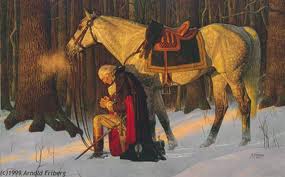
Christian Heritage - George Washington in Prayer


by Diane Rufino

Self-governing individuals are necessary to have a self-governing society. That is, only a moral and disciplined people are capable of being governed by a limited government. Those who are not need greater government. The Pilgrims taught us this when they established the successful colony in Plymouth.

The term “self-governing” refers to the ability of individuals to exercise control over oneself. It is the internal obligation one feels  to do the right thing. It is the willingness of individuals to consciously choose and hold onto productive principles that apply in diverse situations. Self-government means self-reliance, self-discipline, and self-improvement. As Thomas Paine said, self-governing individuals are necessary to have a self-governing society.  Representative democracy ultimately depends on the moral character of the people and of the representatives elected.  As James Madison, chief architect of the Constitution, wrote: “To suppose that any form of government will secure liberty or happiness without any virtue in the people, is a chimerical idea.”

Self-governing individuals are necessary in order that the United States can hope to maintain a government of constitutional limits and of a size and scope that can be accountable to the people.

The debate at the core of the growing socialist nature of our government is how much should government do to help those who are less fortunate than others?  An entire political party and an entire social movement has been created to answer that question: Total redistribution and equality of status. They are devoted to  redefining what the United States stands for, the nature of government, and the new rights that individuals are entitled to and those that government can now regulate in the name of social justice. They are devoted to the tearing down of the fundamental institutions on which successful self-government is based, such as the family, church, and an education system that educates and not indoctrinates. They are devoted a tireless agenda of trying to “do good without God.”

But good government depends on the character and virtue of the people it represents.

Character is built by overcoming obstacles. People can and do raise themselves out of poverty. The success stories of millions of immigrants paint a picture of the long-run rewards of discipline, perseverance, and

sacrifice. If those stories are to continue, we must protect our liberties, accept our responsibilities, and practice virtue.  We must never lose sight of the primary functions of government, as laid out in our Declaration of Independence; otherwise, we have a government in charge of defining its functions rather than We the People defining our government. If we wish to hold on to the grand notion, established for this nation by our Founders, that sovereign power to govern rests first and foremost with the People, then we honor our founding principles.   According to the Declaration, protecting persons and protecting property are the two main functions of good government. When government steps beyond those legitimate functions, it steps outside the bounds of justice. As James Madison wrote: “That is not a just government, nor is property secure under it, where the property which a man has in his personal safety and personal liberty, is violated by arbitrary seizures of one class of citizens for the service of the rest.”

But the more fundamental debate that is going on in this country is the one which speaks directly to the character of each individual. And that debate is ultimately the one over religion and its proper role in our society.

Character is defined by the set of moral qualities that a person possesses or one’s moral strength. Character is the inner strength to do what is right even when no one is looking.

There is a deeply-embedded understanding in this country, stemming from our very founding settlers, patriots, and Founding Fathers, that religion and morality are fundamentally linked. Morality has roots in religious doctrine. In the Old Testament, God handed down a series of commandments to guide man’s conduct. Man is free indeed, but even the Bible teaches that he should not be free to do everything he pleases. And so we have the Ten Commandments (on which common law, including criminal law, has been based).  In the New Testament, God has established a new covenant with all who believe. And so we see a strong them of forgiveness, compassion, selflessness, and love in those books. Jesus himself summed up his Father’s commandments in two great commandments: the command to love God with all one’s heart and mind (see Deuteronomy 6:5), and the command to love the neighbor as the self (see Leviticus 19:18). Morality sees its roots therefore in the desire to always do good and do what is right. Religion provides the motivation and the reason to do good. It provides meaning to live a moral life. Thomas Paine believed that the moral duty of man consists in imitating the moral and beneficence of God.

There are moral limits to human behavior that are intertwined into our very nature.  They not simply accidents or norms born out of history. There are permanent standards of what is right and wrong, and what is natural and what is unnatural. We regard such limits as something that must be conserved to protect character from avarice, envy, unhealthy ambition, entitlement, a sense of superior self-worth, and destruction. As Russell Kirk noted in his book, The Conservative Mind, we have a “belief in a transcendent order, or body of natural law, which rules society as well as conscience.”

Our Founding Fathers saw morality as dependent on religious principles rather than on some internal value system because they believed that morality is based on timeless truths.    Despite the various religious beliefs of our Founders, they shared a strong common belief that moral truths exist and are necessary for people to responsibly self-govern their own affairs. And that’s why we see the historical record full of advice from them to remain a moral and religious people.

Lasting virtue is never forced; it is not passed in our genes. It is born out of a respect for certain fundamental and eternal truths based on right versus wrong, good versus bad, fair versus unfair. It is born out of love and deep respect for one’s fellow man and for the rights that he values for everyone.

And so we see that the debate has intensified over whether religion is critical to self-government. I would argue that there is no element more important to one’s individual behavior than the influence of religion and the power of the conscience. And that’s why I believe that our Founders intended for the government to encourage the full expression of religious rights and not try to prevent it (using its arbitrary “Wall of Separation” to chill that expression).

Unfortunately, all too often we hear that government and schools aren’t supposed to legislate or teach morality. But if we look at the roots of government and the purpose of law, we find out that the exact opposite is true.

One of the great early philosophers, Marcus Tullius Cicero (106 BC – 43 BC), also the leading lawyer, orator, and Roman senator of his day (during the rule of Julius Caesar), also advanced that position. He wrote volumes on what is the true nature of law and government.  In his book On the Republic, Cicero wrote: “True law is right reason in agreement with nature; it is of universal application, unchanging and everlasting.”

When Cicero wrote that true law is “right reason,” he assigned it an objective, universal quality. To Cicero, reason is the most divine of all human characteristics as it is reason that separates man from all other creatures that God created and is therefore the one quality that man and God have in common. As he wrote: “That animal which we call man… full of reason and prudence, has been given a certain distinguished status by the Supreme God who created him; for he is the only one among so many different kinds and varieties of living beings who has a share in reason and thought, while all the rest are deprived of it.”  Because law comes from right reason, and reason is divine as one human aspect that connects us to God while separating us from the rest of the creatures on the planet, it stands to reason that the law that comes from reason contains a divine element as well.

In the second part of his quote, Cicero claimed that law is also “in agreement with nature.” What Cicero meant by this is that law is in agreement with our nature as human beings.

The significance of this understanding – that Law has divine and natural elements to it – is that it makes law universal, infallible and unchangeable. If laws were human and made by humans, then they would be imperfect just as humans are. They could change, mold and evolve with time just as people and societies do. They could also be different and diverse just as humans are. But just as God, by definition, is the epitome of universality and infallibility, any law that comes from God must be perfect as well. It must be single and universal and transcend all time and all cultures. Cicero clearly recognized this when he wrote, “there will not be different laws at Rome and at Athens, or different laws now and in the future, but one eternal and unchangeable law will be valid for all nations and all times, and there will be one master and ruler, that is, God, over us all…”

What this all boils down to is summed up nicely in a statement by Cicero: “God’s law is ‘right reason.’ When perfectly understood it is called ‘wisdom.’ When applied by government in regulating human relations it is called ‘justice.”  Justice, he explained, “originates in our natural inclination, as being created by God in His image, to love our fellow men.”

Cicero was assassinated by order of Marc Antony some forty years before the birth of Christ. It is interesting that Cicero taught the same message that Jesus himself would teach in his short time on Earth.

Religion Was Central to the Success of the American Experiment —

Religious principles and biblical precepts were central to the success of the American experiment. The belief in God and his creation was at the very core of their belief in Natural law and the natural ordering of society and liberty. It was their belief that allowed them to gravitate towards the government philosophy of John Locke, on which our nation’s values were based.  Religious principles form the basis of the ideals stated in the Declaration of Independence, the ordered liberty embodied in our Constitution, and the conviction we have as a nation to recognize the inherent dignity in all human life and to send our brave men and women all over the globe to fight for the rights of others.  Religious principles were, and still are, essential to the security of the freedom we claim to stand for and to the foundation that grounds our nation’s founding ideals. In short, the great American Experiment was founded on religion and needs that support if posterity is to enjoy what is promised in the Declaration of Independence.

The key to America’s religious liberty success story is its focus on the sovereignty of the individual and its constitutional order. The Founders argued that virtue derived from religion is indispensable to limited government. The Constitution therefore guaranteed religious free exercise while prohibiting the establishment of a national religion. This Constitutional order produced a constructive relationship between religion and state that balances citizens’ dual allegiances to God and earthly authorities without forcing believers to abandon (or moderate) their primary loyalty to God. This reconciling of civil and religious authorities, and the creation of a Constitutional order that gave freedom to competing religious groups, helped develop a popular spirit of self-government. All the while, religious congregations, family, and other private associations exercise moral authority that is essential to maintaining limited government. The American Founders frequently stated that virtue and religion are essential to maintaining a free society because they preserve “the moral conditions of freedom.”

James Madison said that men should conduct themselves as if they “have a duty towards the Creator.”  (See his 1786 Memorial and Remonstrance). “This duty is precedent, both in order of time and in degree of obligation, to the claims of Civil Society,” he wrote.

Thomas Paine and Benjamin Franklin, two of our most important Founding Fathers, did not necessarily see eye-to-eye on religion. Franklin was raised in a devout Puritan home and Paine was a Deist. As a deist, Paine believed that God created the world but then allowed it to operate according to natural laws. Deists believe God does not intervene in the lives of his human creations. Rather, morality should come from reflecting on benevolence of God in creating such a perfect and finely-ordered world. Franklin, on the other hand, believed strongly in an active, ever-present God.

Although Franklin was raised in a devote Puritan home, he did not fully embrace the Calvanism of his upbringing. As an adult, he put his faith in an active God who watched over his natural creation and could, on occasion, intervene in the lives of his human creation as well.

Franklin and Paine often sparred over God’s role in the world and in people’s lives. At one point Mr. Franklin wrote to Mr. Paine to  implore him to put his deist sentiments aside and emphasize the importance of religion in his writings:

   … You yourself may find it easy to live a virtuous life, without the assistance afforded by religion; you having a clear perception of the advantages of virtue, and the disadvantages of vice, and possessing a strength of resolution sufficient to enable you to resist common temptations. But think how great a portion of mankind consists of weak and ignorant men and women, and of inexperienced, inconsiderate youth of both sexes, who have need of the motives of religion to restrain them from vice, to support their virtue, and retain them in the practice of it till it becomes habitual, which is the great point for its security. And perhaps you are indebted to her originally, that is, to your religious education, for the habits of virtue upon which you now justly value yourself. You might easily display your excellent talents of reasoning upon a less hazardous subject, and thereby obtain a rank with our most distinguished authors. For among us it is not necessary, as among the Hottentots, that a youth, to be raised into the company of men, should prove his manhood by beating his mother.

         If men are so wicked with religion (as Paine often complained), what would they be if without it. I intend this letter itself as a proof of my friendship, and therefore add no professions to it; but subscribe simply yours,

Ben Franklin

In other words, he argues that because God is active in the affairs of man, there is pressure for men to keep virtuous.  Religion, he explains, is a check on the pernicious tendencies of man.

Benjamin Franklin indeed believed in an active God who presided over the destinies of his creations and was involved in the affairs of men. He would write: “Without the Belief of a Providence that takes Cognizance of, guards and guides, and may favour particular Persons, there is no Motive to Worship a Deity, to fear its Displeasure, or to pray for its Protection.” That is why he believed that faith and prayer were essential in order that Providence continue His blessings on our nation. He also believed that God answered prayer. In July 1787, during the meeting of the Constitutional Convention in Philadelphia when tempers were flaring among the delegates, Franklin called for prayer to bring reconciliation to the political differences of the body.  As James Madison noted in his Journal from the of the Constitutional Convention, the distinguished 86-year-old delegate from Philadelphia delivered the following words:

Mr. President,

        The small progress we have made after four or five weeks close attendance and continual reasonings with each other, our different sentiments on almost every question, several of the last producing as many ‘nays’ and ‘ays,’ is methinks a melancholy proof of the imperfection of the Human Understanding. We indeed seem to feel our own want of political wisdom, some we have been running about in search of it. We have gone back to ancient history for models of Government, and examined the different forms of those Republics which having been formed with the seeds of their own dissolution now no longer exist. And we have viewed Modern States all round Europe, but find none of their Constitutions suitable to our circumstances.

         In this situation of this Assembly, groping as it were in the dark to find political truth, and scarce able to distinguish it when presented to us, how has it happened, Sir, that we have not hitherto once thought of humbly applying to the Father of lights to illuminate our understandings?  In the beginning of the Contest with Great Britain, when we were sensible of danger we had daily prayer in this room for the divine protection. Our prayers, Sir, were heard, and they were graciously answered. All of us who were engaged in the struggle must have observed frequent instances of a Superintending providence in our favor. To that kind providence we owe this happy opportunity of consulting in peace on the means of establishing our future national felicity. And have we now forgotten that powerful friend? I have lived, Sir, a long time, and the longer I live, the more convincing proofs I see of this truth- that God governs in the affairs of men. And if a sparrow cannot fall to the ground without his notice, is it probable that an empire can rise without his aid?  We have been assured, Sir, in the sacred writings, that ‘except the Lord build the House they labour in vain that build it.’  I firmly believe this; and I also believe that without his concurring aid we shall succeed in this political building no better than the Builders of Babel: We shall be divided by our little partial local interests; our projects will be confounded, and we ourselves shall become a reproach and bye word down to future ages. And what is worse, mankind may hereafter from this unfortunate instance, despair of establishing Governments be Human Wisdom and leave it to chance, war and conquest.

        I therefore beg leave to move, that henceforth prayers imploring the assistance of Heaven, and its blessings on our deliberations, be held in this Assembly every morning before we proceed to business, and that one or more of the Clergy of the City be requested to officiate in that service.

Roger Sherman, delegate from Connecticut, seconded the motion.

While many refer to the 55 delegates to the Constitutional Convention and those men, like Thomas Jefferson and John Adams, who drafted the Declaration of Independence as our “Founding Fathers,” the term (or group) actually includes many others, such as those whose actions and writings led to the American Revolution.  However, for this discussion, it is worth noting that this core group of 55 delegates to the Constitutional Convention  represents the general religious sentiments of those who shaped the political foundations of our nation. As confirmed by public record, the delegates to the Convention included 28 Episcopalians, 8 Presbyterians, 7 Congregationalists, 2 Lutherans, 2 Dutch Reformed, 2 Methodists, 2 Roman Catholics, 1 unknown, and 3 deists (those who believe that God created the world but then allowed it to operate according to natural laws. Deists believed God did not intervene in the lives of his human creation). Overall, 93% of the delegates were members of Christian churches. And all – that is, a full 100% – were deeply influenced by a biblical view of mankind and government.

Where did our biblical view of mankind and government come from?  It stemmed from the Christian roots of our thirteen original colonies.  Beginning in the seventeenth century, settlers from Spain, France, Sweden, Holland, and Great Britain claimed land in the New World and formed colonies along its eastern coast. Spain controlled the West Indies. The French owned land from Quebec all the way down to the end of the Mississippi River in New Orleans. And the British colonized most of the Atlantic coast from Massachusetts down to Georgia.

The first permanent settlement was the English colony at Jamestown, which was established in 1607 in what is now Virginia. Similar to the other colonial charters granted by Britain, the First Charter of Virginia emphasized the Christian character of the colony’s purpose. The Charter read: “We, greatly commending and graciously accepting of, their desires for the furtherance of so noble a work, which may, by the providence of Almighty God, hereafter tend to the glory of His Divine Majesty in the propagating of the Christian religion to such people as yet live in darkness and miserable ignorance of the true knowledge and worship of God.”

In 1620, the Pilgrims followed and set up a colony at Plymouth, in what is now Massachusetts. Many of the Pilgrim women and children didn’t survive the first winter. Yet they refused to return to England and they refused an opportunity to live in the Netherlands. They wanted the opportunity  to establish a political commonwealth governed by biblical standards where they could raise their children and live according to the teachings of Christ.  The Mayflower Compact, their initial governing document, clearly stated that what they had undertaken was for “the glory of God and the advancement of the Christian faith.”  William Bradford, the second governor of Plymouth, said: “The colonists cherished a great hope and inward zeal of laying good foundations for the propagation and advancement of the Gospel of the kingdom of Christ in the remote parts of the world.”  Plymouth became the first fully self-governing colony.

In June 1630 the Puritan colony of Massachusetts Bay was established. In that year, Governor John Winthrop landed in Massachusetts with 700 people in 11 ships to serve God and establish a pure church – pure in worship and in doctrine.  (The Pilgrims and Puritans wanted to establish a new land where they could live the teachings of the gospel). Massachusetts Bay would begin the Great Migration, which lasted sixteen years and brought more than 20,000 Puritans to New England.  While still on his ship, the Arbella, Winthrop wrote the sermon he would deliver to the new colonists as they were ready to set out and establish their first settlement.  The sermon was titled “A Model of Christian Charity.”  In that sermon, he sought to articulate the reasons for the new colony. He talked about avoiding a shipwreck.  “Now the only way to avoid this shipwreck and to provide for our posterity is to follow the Counsel of Micah, to do Justly, to love mercy, to walk humbly with our God.”  The “shipwreck” that he referred to was the wrath of God that falls on peoples or nations who fail to do God’s will. To avoid the shipwreck, they would have to establish a truly godly society. Winthrop talked about the need to love one another and serve one another – to be merciful, kind, compassionate, sharing, and selfless. This part of the sermon was clearly reminiscent of the Sermon on the Mount.

But the sermon would be remembered for the term he used to coin the Puritan experiment – “A city upon a Hill.”  These words would not only inspire the Puritans that traveled with him, but they would also be used by American presidents hundreds of  years later to yet again inspire Americans to greatness. These were the words that Winthrop delivered to his fellow Puritans as they were ready to disembark from the ship: “For we must consider that we shall be as a City upon a hill. The eyes of all people are upon us. So that if we shall deal falsely with our God in this work we have undertaken and so cause him to withdraw his present help from us, we shall be made a story and a byword throughout the world.”  Indeed when people vow to live according to religious principles and devote themselves to promoting their faith, they invite scrutiny. They place themselves under a microscope, where all too often those who are looking through the lens are looking to find criticism.

In 1638, a colony was established in New Haven, in what is now Connecticut, by Reverend John Davenport and Theophilus Easton. A year later, the Fundamental Orders of Connecticut, often called the world’s first written constitution, was adopted. It read, in part: “For as much as it hath pleased Almighty God by the wise disposition of His Divine Providence so to order and dispose of things that we the inhabitants and residents…; and well knowing where a people are gathered together the Word of God requires that to maintain the peace and union of such a people there should be an orderly and decent government established according to God, to order and dispose of the affairs of the people at all seasons as occasion shall require.”

The same John Winthrop who established the Massachusetts Bay Colony would also lead the first American experiment in establishing a federation. In 1643, he organized the New England Confederation. He wrote that the aim of the colonists of Plymouth, New Haven, Massachusetts, and Connecticut was “to advance the kingdom of our Lord Jesus Christ, and to enjoy the liberties of the gospel thereof in purities and peace.”

In 1683, Rhode Island was established by Christians. Their charter, the Rhode Island Charter of 1683, began with these words: “We submit our person, lives, and estates unto our Lord Jesus Christ, the King of kings and Lord of lords, and to all those perfect and most absolute laws of His as given to us in His Holy Word.”  In 1681, a charter was granted to William Penn, a Quaker, to establish the colony of Pennsylvania. King Charles II granted him a large tract of land in America to repay debts the king owed to Penn’s father. (As it turns out, the tract of land would also include Delaware).  Penn wanted to start a colony where Quakers like himself could live without persecution. He printed advertisements about his colony in six different languages and sent them across Europe. Quakers, Mennonites, Lutherans, Dunkards (Church of the Brethren), Amish, Moravians, Hugenots (French Protestants), Catholics, and Jews from England, Wales, Scotland, Ireland, Sweden, Germany, and Holland began were attracted to his colony. In 1701, he drafted the Pennsylvania Charter of Privileges which gave un unprecedented amount of control to the People in their government. It read, in part:  “All persons who profess to believe in Jesus Christ, the Savior of the World, shall be capable to serve this government in any capacity, both legislatively and executively.”

William Penn was inspired by 1 Thessalonians 4:9 when he established Pennsylvania. (“But concerning brotherly love you have no need that I should write to you, for you yourselves are taught by God to love one another.”)   To emphasize his plan to have a place where Christians would work together, he planned and named their city “Philadelphia,” which is Greek for “City of Brotherly Love.”  His concept was that religion is not to be limited to a Sunday ceremonial ritual, but should be an integral aspect of everyday life, demonstrated by working with others in love and respect.

Perhaps William Penn was inspired by the Puritans. The Puritans believed that religion should form the foundation of their society, in government, education, and work ethic.  The Puritan work ethic placed a high moral value on doing a good job because work has such high intrinsic value. To the Puritan, all of life was to be lived in relation to God, a principle which gave sacred significance to every activity. Work was valued as a vital part of their service and worship to God, and they took the Bible seriously when it said: ‘And whatever you do in word or deed, do all in the name of the Lord Jesus, giving thanks to God the Father through Him.’ (Colossians 3:17)  Just as the Israelites were instructed to work six days and then rest on the seventh (Exodus 20: 9-10), the Puritans regarded work and worship as a lifestyle of obedience to God.

From the first colony at Jamestown to the colonies in Massachusetts to the Pennsylvania colony, the Bible was used as the inspiration and the rule of life and governance in the settlements. The evidence of the profound effect of God’s word and teachings of Jesus Christ on our early Americans and early leaders is overwhelming.

[Other English colonies would spring up all along the Atlantic coast, from Maine to Georgia. As more and more people arrived in the colonies, European countries realized a greater stake in the New World.  Disputes arose over territory. By the 1700s, the countries with the largest presence were England and France. Eventually, the two great nations fought the French and Indian War (1754-1763).  England won and took control of Canada, as well as retaining control of all the English colonies along the eastern coast – the thirteen colonies. (It is the debt from this war that the King and Parliament passed on to the colonists through taxation schemes, inspiring the protests “No Taxation Without Representation !”).  We know how the rest of American history plays out.]

We’ve enjoyed so much freedom for so long that we forget how and why we are able to so enjoy it in the first place. Men and women crossed the Atlantic not to find fertile fields and enjoy successful harvests, but rather to secure liberty for their souls. And specifically, the freedom they were seeking when they established their colonies and their charters was the freedom to worship freely and to live as they wanted to, according to God’s laws.


The Founding of Our Country Rests on a Simple Truth —

The founding and settling of our great country rests on a simple truth.  People flocked from all over the world in search of the freedom to establish colonies where they could openly live and govern themselves according to their religious dictates. They didn’t come  here to have Sunday service with their family. They came here for the freedom to incorporate the teachings of the Bible intimately in their everyday life, everyday speech, everyday conduct, everyday worship, and in their very government. The Bible even inspired them in the manner in which to establish their communities. Our earliest settlers, the Pilgrims and Puritans, in particular, carried the secret to successful self-government with them across the Atlantic.  Their greatest contribution was the notion that only a religious and moral people could be trusted to govern themselves successfully. Only a religious and moral people could be trusted with liberty.

Our children are taught in school that the Pilgrims were a group of stoic, starched creatures in black and white clothes with shiny buckled black shoes and hats who had a successful harvest which inspired them to share their bounty with the Indians, who had helped them become successful farmers. They are the group that gave us Thanksgiving. Our children are never taught the real legacy of the Pilgrims. The truth is that they were devout, hard-working, family-loving, persevering people who were committed to establishing a successful colony based on self-government and religious freedom.

The Pilgrims were part of the Puritan movement (a separatist movement, from the Church of England). They became spiritually aware when the printed English Bible became available. They could read the gospel of Jesus Christ firsthand and not have to wait to hear scripture read in the Church, headed by the King of England. This relatively small band of men, women, and children had a strong desire to serve God as they saw fit, free from the Church of England and the religious policies of the King.  Being identified as “separatists” or “purists” made them potential traitors to the Crown and made them outcasts.  In order to exercise religious freedom, they would have to leave England, settle in Holland (perhaps one of the only places they could be free from persecution) for eleven years, and eventually make their way back to England to commission a ship to take them to the New World. They faced many trials and tribulations along the way, including imprisonment. Finally, the Pilgrims were able to commission two ships to take them to the New World, one being the Mayflower. Shortly after departing, however, the second ship took on a leak and had to return to England. As a result, not all of the Pilgrims were able to make the journey.

When the Mayflower finally reached the coast of Massachusetts, in 1620, the Pilgrims and members of the crew signed a compact, the Mayflower Compact, before departing the ship. The Compact expressed  their desire to be rid of British law and to establish a form of self-government based on just and equal laws and for the advancement of the Christian faith.  In the New World, government would be established to serve their interests and they would be masters of their government, unlike in England, where the government was the master of the people who exist to serve the interests of government.

The Pilgrims ordered their society on eternal truths, including faith, morality, justice, mercy, and education. In fact, there is an enormous granite monument erected in Plymouth, MA, to memorialize their dependence on these truths.  The monument is called “The National Monument to the Forefathers in Plymouth, MA.” It is also referred to as “The Pilgrim’s Monument” or the “Matrix of Liberty.”

The “Matrix of Liberty” is structured and built to show the interdependence of these truths. The center of the monument is a giant women holding a Bible and pointing to the Heavens.  She is Faith.  At each of the four corners of the base of the monument is a pillar, representing Morality, Law, Education, and Liberty.  The pillars have a certain order, starting with Morality and ending with Liberty.

Looking at the monument in sequential fashion, one can understand the ordered foundation of the Pilgrim society.

Faith –  She is pointing to God because her faith is in the God of the Bible and in Jesus Christ. She is holding the Geneva Bible which is open, indicating that she is actively reading it.  She has a star on her forehead to signify that she has wisdom, which comes from the Bible. She believes in Jesus Christ, who was sent to Earth to set man free.  The first pillar is faith.  Faith is necessary for all the other pillars.

Morality –  The statue is of a woman with no eyes, holding a Bible.  She has no eyes to signify that morality is an internal characteristic.  Morality means the “heart is right.”  To achieve morality, the heart must be transformed according to the word of God.

Law –  The statue is of a woman holding the scales of justice. There must be some degree of order in society and order is established by a set of laws.  Laws are based on God’s law.  They protect and promote goodness and punish and prevent evil. Hence, law must be morally just.  She is holding the scales of justice to indicate that the law applies equally to everyone.  Laws must be fair and equitable. Punishment, for example, must be in set in fair relation to the offense.  Finally, society should be merciful, just as God offers mercy and grace.

Education –  The statue is of a mother teaching her children. She is holding an open Bible and pointing to the Ten Commandments.  Parents should educate and train their children in morality and religion so that they will grow up to be responsible citizens, capable of maintaining a free and ordered society.

Liberty –  The statue is of a chiseled warrior, carrying a sword and draped in the skin of a lion. The lion’s head is draped over his shoulder.  He is called “Liberty Man.” The sword represents strength and the lion represents tyranny.  The man is strong because he has faith and is moral.  He has been educated and has defeated tyranny because his laws are strong and just.  If all the other pillars are promoted in society, its people can be trusted with their self-government and will be strong enough to pass on liberty to the next generation. In other words, Liberty Man is the result of obeying the “Matrix of Liberty.”

The so-called “Matrix of Liberty,” and the values and priorities it represents, is the real legacy of the Pilgrims. Not the black and white dress or suit with the shoes with the black buckle.  Not the hair up in a bun with a white kerchief or the turkey feast.  Yet no one celebrates this.  Public schools only teach about the successful harvest, and not the successful formula for self-government and religious liberty.

The Pilgrims were British subjects looking for religious liberty, yet with the Mayflower Compact, they devised a special formula to protect all liberty. The Compact created a system of self-government for their colony but the key was in effective individual self-government. Together, it was a special formula. At the core of that formula is the recognition that only a religious and moral people can be entrusted with the responsibility of securing so great a gift as Liberty.  This is America’s Christian heritage.  Our Christian heritage is the reason we have a government system centered around the individual, bound to protect his sovereign rights, and sufficiently limited in order that people can govern their lives and organize their communities according to appropriate values.  Our Christian heritage is inextricably connected to our founding principles. [The word “principle,” deriving from a Latin root, means “first things”]

We see how American leaders throughout our history have acknowledged and emphasized the importance of this heritage. We see how the belief in America’s Providential destiny inspired almost all of our great patriots and fighting men and women.

Take Nathan Hale, for example. Nathan Hale (1755-1776) was a young school teacher when the Revolutionary War broke out in April 1775 at Concord and Lexington. Nathan’s friend witnessed the siege of Boston and wrote a letter in which he said: “Our holy religion, the honor of our God, a glorious country, and a happy constitution is what we have to defend.”  Soon after receiving that letter, Hale joined his five brothers and they fought for America’s independence in the Revolutionary War. He quickly rose to the rank of captain.

Hale fought under General George Washington in New York at the time British General William Howe was building up his troops on Long Island. Washington took his army onto Manhattan Island. At the battle of Harlem Heights, he asked for a volunteer to go on a spy mission behind enemy lines and it was Hale who stepped forward.  For a week, he went unnoticed and gathered information on the position of British troops. While trying to return to the American side, however, he was captured. Because of the notes and incriminating papers that Hale on his person, the British immediately knew he was a spy. Howe ordered the 20-year-old Nathan Hale to be hanged without a trial.

Widely regarded as America’s first spy, patriot Nathan Hale was hanged on September 22, 1776. As a last request, he asked for a Bible and some paper to write letters to his loved ones. He was denied the Bible but was able to write letters. The British read what he wrote and in an act of cruelty, destroyed them. It was told that they didn’t want future Americans to know what a truly devout and honorable man he was. Before he gave his life for his country, he made a short speech which ended with these famous words: “I only regret that I have but one life to lose for my country.”

George Washington himself believed that America was under the divine protection of Providence and was destined to win its revolution against Great Britain. During the war, he wrote to Reverend William Gordon:  “No man has a more perfect reliance on the all-wise and powerful dispensations of the Supreme Being than I have, nor thinks His aid more necessary.”  He issued General Orders on May 2, 1778 to his troops, instructing that “While we are zealously performing the duties of good Citizens and soldiers we certainly ought not to be inattentive to the higher duties of Religion. To the distinguished Character of Patriot, it should be our highest Glory to add the more distinguished Character of Christian. The signal Instances of providential Goodness which we have experienced and which have now almost crowned our labours with complete Success, demand from us in a peculiar manner the warmest returns of Gratitude and Piety to the Supreme Author of all Good.”

When his army, the Continental Army, disbanded on June 14, 1783, Washington wrote a letter – an “Earnest Prayer” – to the governors of the thirteen states. In that letter, he said: “The task is now accomplished. I now bid adieu…. I now make it my earnest prayer that God would have you, and the State over which you preside, in his holy protection; that he would incline the hearts of the citizens to cultivate a spirit of subordination and obedience to government, to entertain a brotherly affection and love for one another, for their fellow-citizens of the United States at large, and particularly for brethren who have served in the field; and finally that he would most graciously be pleased to dispose us all to do justice, to love mercy, and to demean ourselves with that charity, humility, and pacific temper of mind, which were the characteristics of the Divine Author of our blessed religion, and without an humble imitation of whose example in these things, we can never hope to be a happy nation.”

After serving two terms as our nation’s first president, Washington delivered a heart-felt farewell address (1796), offering words of wisdom for the country he loved and devoted his entire life: “Of all the dispositions and habits which lead to political prosperity, religion and morality are indispensable supports. In vain would that man claim the tribute of patriotism, who should labor to subvert these great pillars of human happiness, these firmest props of the duties of men and citizens. The mere politician, equally with the pious man, ought to respect and to cherish them.”

President Calvin Coolidge would later offer these words about our great General and first President: “Washington was the directing spirit, without which there would have been no independence, no Union, no Constitution, and no republic. . . . We cannot yet estimate him. We can only indicate our reverence for him and thank the Divine Providence which kept him to serve and inspire his fellow man.”

John Jay, the author of five of the Federalist Papers and the first Chief Justice of the Supreme Court, said: “Providence has given to our people the choice of their rulers, and it is the duty and as well as the privilege and interest of our Christian nation to select and prefer Christians for their rulers.”  Jay referred to the United States without hesitation as a “Christian nation.”

Our second president, John Adams, also a co-author of the Declaration of Independence and important founding patriot, believed just as strongly as Washington in the importance of religion and morality in maintaining the integrity of the nation that was so thoughtfully created.  On June 21, 1776, he wrote: “Statesmen may plan for liberty, but it is religion and morality which alone can establish the principles upon which freedom can securely stand.  The only foundation of a free constitution is pure virtue, and if this cannot be inspired into our people in great measure, than they may change their rulers and their forms of government but they will never obtain lasting liberty.”

In a letter to the Officers of the First Brigade of the Third Division of the Militia of Massachusetts on October 11, 1798, President John Adams wrote these famous words: “We have no government armed with power capable of contending with human passions unbridled by morality and religion. Avarice, ambition, revenge, or gallantry would break the strongest cords of our Constitution as a whale goes through a net. Our Constitution was made only for a moral and religious people. It is wholly inadequate to the government of any other.”

What Adams was saying was not theological or religious but pragmatic. He was declaring that religion is necessary to maintain national morality; not that it’s some mystic force that favors believers over non-believers. Adams was advising future Americans how to continue to secure their liberty and happiness. “Let us with caution indulge the supposition that morality can be maintained without religion,” George Washington once wrote.  “Reason and experience both forbid us to expect that national morality can prevail in exclusion of religious principle.”

When Thomas Jefferson ran for president in 1799, Jedidiah Morse preached an insightful Election Sermon on the importance of religion. Morse (1761-1826) was a member of the clergy, an educator, and the father of Samuel Morse, inventor of the telegraph and the Morse Code.  In his Sermon, he asked what would happen if the religious foundations were destroyed:

“Our dangers are of two kinds – those which affect our religion and those which affect our government. They are, however, so closely allied that they cannot, with propriety, be separated. The foundations which support the interest of Christianity are also necessary to support a government like our own, designed to protect freedom and equality…..

      To the kindly influence of Christianity we owe that degree of civil freedom and political and social happiness which mankind now enjoys. In proportion as the genuine effects of Christianity are diminished in any nation, either through unbelief or the corruption of its doctrine, or the neglect of its institutions, the same proportion of the people will recede from the blessings of genuine freedom and experience the miseries of complete despotism. I hold this to be a truth confirmed by experience.  If so, it follows that all efforts made to destroy the foundations of our holy religion will ultimately tend to subvert our political freedom and happiness. Whenever the pillars of Christianity shall be overthrown, our present republican forms of government, and all the blessings which flow from them, must fall with them.”

There was a time when the laws of God were taken into consideration in US courts. In 1802, Judge Nathaniel Freeman delivered the following charge to the Massachusetts Grand Juries: “The laws of the Christian system, as embraced by the Bible, must be respected as of high authority in all our courts, and it cannot be thought improper for the officers of such government to acknowledge their obligation to be governed by its rule…..  Our government, originating in the voluntary compact of a people who in that very instrument profess the Christian religion, it may be considered, not as the republic Rome was, a pagan republic, but as a Christian republic.”

There was also a time when children were taught about American’s founding values and in particular, how religious principles are linked to liberty. Noah Webster (1758-1843) was an American lexicographer, textbook author, political writer, and editor. He has been called the “Father of American Scholarship and Education.”  In his public school textbook History of the United States, published in 1832, he included:

“Almost all the civil liberty now enjoyed in the world owes its origin to the principles of the Christian religion. It is the sincere desire of the writer that our citizens should early on understand that the genuine source of correct republican principles is the Bible, particularly the New Testament or the Christian religion.

       The religion which has introduced civil liberty is the religion of Christ and his Apostles, which enjoins humility, piety, and benevolence; which acknowledges in every person a brother or a sister, and a citizen with equal rights. This is genuine Christianity, and to this we owe our free constitutions of government.

       The moral principles and precepts contained in the Scriptures ought to form the basis of all of our civil constitutions and laws….  All the miseries and evils which men suffer from – vice, crime, ambition, injustice, oppression, slavery, and war – proceed from their despising or neglecting the precepts contained in the Bible.”

Of course, when Webster was referring to the biblical basis of civil liberty, he was referring to Luke 10:27 (“You shall love… your neighbor as yourself.”)

Robert Winthrop, a lawyer who served as the Speaker of the US House from 1847-49, delivered an address to that body in which he talked about the foundation on religion that was needed to forge the moral strength needed to support our free institutions and our nation:

“The voice of experience and the voice of our own reason speak but one language….  Both united in teaching us that men may as well build their houses upon the sand and expect to see them stand, when the rains fall and the winds blow and the floods come, as to found free institutions upon any other basis than that of morality and virtue, of which the Word of God is the only authoritative rule and the only adequate sanction.

        All societies of men must be governed in some way or other. The less they have of stringent state government, the more they must have of individual self-government. The less they rely on public law or physical force, the more they must rely on private moral restraint.

       Men, in a word, must necessarily be controlled either by a power within them or a power external to them; either by the Word of God or by the strong arm of man; either by the Bible or the bayonet.

       It may do for other countries and other governments to talk about the state supporting religion. Here, under our own free institutions, it is religion which must support the state.”

Daniel Webster (1782-1852), a leading American statesman, was known as being one of our greatest orators. He served as a US congressman and then senator, and even as Secretary of State under three different presidents. In a speech given before the Historical Society of New York on February 23, 1852, he talked about the need of religion for continued happiness and prosperity:

“If we and our posterity shall be true to the Christian religion, if we and they shall live always in the fear of God and respect His commandments, if we and they shall maintain just moral sentiments and such conscientious convictions of duty as shall control the heart and life, we may have the highest hopes of the future fortunes of our country; and if we maintain those institutions of government and that political union, exceeding all praise as much as it exceeds all former examples of political associations, we may be sure of one thing… that while our country furnishes material for a thousand masters of the historic art, it will afford no topic for a Gibbon. It will have no decline and fall. It will go on prospering and to prosper. 

       But if we and our posterity reject religious institutions and authority, violate the rules of eternal justice, trifle with the injunctions of morality, and recklessly destroy the political constitution which holds us together, no man can tell how sudden a catastrophe may overwhelm us that shall bury all our glory in profound obscurity.”

Theodore Roosevelt, the 26th President of the United States, hit on the same theme in 1917 when he delivered the following address to the nation:

“The most perfect machinery of government will not keep us as a nation from destruction if there is not within us a soul. No abounding material prosperity shall avail us if our spiritual senses atrophy. The foes of our own household shall surely prevail against us unless there be in our people an inner life which finds its outward expression in a morality not very widely different from that preached by the seers and prophets of Judea when the grandeur that was Greece and the glory that was Rome still lay in the future.

       In his Farewell Address to his countrymen, George Washington said: ‘Morality is a necessary spring of popular government…. and let us with caution indulge the supposition that morality can be maintained without religion. Whatever may be conceded to the influence of refined education on minds of peculiar structure, reason and experience both forbid us to expect that national morality can prevail in exclusion of religious principle.’

        His words were given expression when the European movement with which the American people were in most compete sympathy – the French Revolution – had endeavored to destroy the abuses of priestcraft and bigotry by abolishing not only Christianity but religion…..   The result was a cynical disregard of morality and a carnival of cruelty and bigotry, committed in the name of reason and liberty, which equaled anything ever done by  Tomas Torquemada and the fanatics of the Inquisition in the name of religion and order. Washington wished his fellow countrymen to walk clear of such folly and iniquity.  As in all cases where he dealt with continuing causes, his words are as well worth pondering now as when they were written….

      In this actual world, a churchless community, a community where men have abandoned and scoff at or ignore their Christian duties, is a community on the rapid downgrade.  It is perfectly true that occasional individuals or families may have nothing to do with church or with religious practices and observances and yet maintain the highest standard of spirituality and of ethical obligation. But this does not affect the case in the world as it now is, any more than that exceptional men and women under exceptional conditions have disregarded the marriage tie without moral harm to themselves interferes with the larger fact that such disregard if at all common means the complete moral disintegration of the body politic.”

As our nation entered the 20th century and assumed its role to protect and enlarge individual liberty around the world, we often wonder how it was that young men could so willingly and selflessly volunteer to fight under the most horrific of circumstances. After World War I, the United States hoped it would never have to see conflict and warfare on that scale again. But on December 7, 1941, with the attack on Pearl Harbor, it was suddenly thrust into a war that was even deadlier, bloodier, and more widespread. 16 million Americans fought in World War II.  Over 406,000 died and over 600,000 were injured. What was it that made these men so willing to put their lives on the line for their country?

The answer can probably be explained, at least in part, by the story of one young marine, Mitchell Paige. Paige was awarded the Congressional Medal of Honor for his actions at the Battle of Guadalcanal in the Solomon Islands.  In that battle, US Marines took control of the airfield from the Japanese. On October 26, 1942, Paige held his position even after all of the other Marines in his platoon were killed or wounded. He continued to operate four machine guns by himself for hours even after the last fellow Marine fell.  He single-handedly stopped an entire Japanese regiment. Had the American position been compromised and the airfield returned to Japanese hands, it is possible that the outcome of the war in the Pacific and even the entire war would have changed.

In the years following, Paige was repeatedly asked why he was willing to put his life on the line for his country. He repeatedly referred to his “undying love of country.”  He said that the answers took him back to a Pennsylvania three-room country school where the children were so steeped in the traditions of America that they literally felt themselves a part of a glorious heritage, where the teacher opened the school day with a Bible verse and the Pledge of Allegiance, and where they memorized all the great documents that established the bedrock of America, such as the Gettysburg Address.  He believed he was blessed by God by living in the United States.

General Douglas MacArthur, Supreme Commander of the Allied Forces in the Pacific during WWII, knew that religion was indispensible to the character of America (and to his fighting men) but also could see a progressive decay that was stemming from government. In December 1951, he delivered these words of warning: “In this day of gathering storms, as moral deterioration of political power spreads its growing infection, it is essential that every spiritual force be mobilized to defend and preserve the religious base upon which this nation is founded; for it has been that base which has been the motivating impulse to our moral and national growth. History fails to record a single precedent in which nations subject to moral decay have not passed into political and economic decline. There has been either a spiritual reawakening to overcome the moral lapse or a progressive deterioration leading to ultimate national disaster.”

On Flag Day, June 14, 1954, President Dwight D. Eisenhower signed into law Joint Resolution 243 which added the phrase “One Nation Under God” to the Pledge of Allegiance. Commenting on the Resolution, Eisenhower stated: “In this way we are reaffirming the transcendence of religious faith in America’s heritage and future. In this way we shall constantly strengthen those spiritual weapons which forever will be our country’s most powerful resource in peace and war.”

Although the federal courts were in high gear at this time using the “Wall of Separation” to take the Ten Commandments, prayers, bible lessons, and moments of silence out of the classrooms and to take nativity scenes, crosses, and bible verses off of every public building and out of every public square, our national leaders continued to acknowledge the religious principles that founded our nation and inspired its founding documents. In a speech given in February 1961, President John F. Kennedy spoke about our nation’s guiding principle:

“This country was founded by men and women who were dedicated or came to be dedicated to two propositions: first, a strong religious conviction, and secondly, a recognition that this conviction could flourish only under a system of freedom.

       I think it is appropriate that we pay tribute to this great constitutional principle which is enshrined in the First Amendment: the principle of religious independence, of religious liberty, of religious freedom. But I think it is also important that we pay tribute and acknowledge another great principle – that of religious conviction. Religious freedom has no significance unless it is accompanied by conviction. And therefore the Puritans and Pilgrims of my own section of New England, the Quakers of Pennsylvania, the Catholics of Maryland, the Presbyterians of North Carolina, the Methodists and the Baptists who came later… all shared these two great traditions which, like silver threads, have run through the warp and the woof of American history.

       No man who enters upon the office to which I have succeeded can fail to recognize how very president of the United States has placed special reliance upon his faith in God. Every president has taken comfort and courage when told that the Lord ‘will be with thee. He will not fail thee nor forsake thee. Fear not – neither be thou dismayed.’  While they came from a wide variety of religious backgrounds and held a wide variety of religious beliefs, each of our presidents in his own way has placed a special trust in God. those who were strongest intellectually were also strongest spiritually.

      Let us go forth to lead this land that we love, joining in the prayer of General George Washington in 1783, ‘that God would have you in His holy protection, that He would incline the hearts of the citizens to entertain a brotherly love and affection for one another…. and finally, that He would most graciously be pleased to dispose us all to do justice, to have mercy, and to demean ourselves with the characteristics of the Divine Author of our blessed religion, without who we can never hope to be a happy nation.’  

       The guiding principle and prayer of this nation has been, is now, and shall ever be “In God We Trust.”

In proclaiming the National Day of Prayer, on December 5, 1974, President Gerald Ford quoted President Eisenhower’s 1955 message: “Without God there could be no American form of government, nor an American way of life. Recognition of the Supreme Being is the first – the most basic – expression of Americanism. Thus, the Founding Fathers of America saw it, and thus with God’s help, it will continue to be.”

In August 1984, President Ronald Reagan spoke at an ecumenical prayer breakfast in Dallas and talked about the importance of faith to the future and fate of our country:

“We establish no religion in this country, nor will we ever. We command no worship. We mandate no belief. But we poison our society when we remove its theological underpinnings. We court corruption when we leave it bereft of belief. All are free to believe or not believe; all are free to practice a faith or not. But those who believe must be free to speak of and act on their belief and to apply moral teaching to public questions.

       I submit to you that the tolerant society is open to and encouraging of all religions. And this does not weaken us; it strengthens us….

       Without God, there is no virtue because there is no prompting of the conscience. Without God, we’re mired in the material that a flat world tells us only what the senses perceive. Without God, there is a coarsening of society. And without God, democracy will not and cannot long endure. If we ever forget that we’re One Nation Under God, then we will be a nation gone under.”

In his Second Inaugural Address, in 1985, President Reagan once again referred to the Divine inspiration that shaped our nation:

“History is a ribbon, always unfurling.. History is a journey. And as we continue our journey, we think of those who traveled before us.  Now we hear again the echoes of our past: a general falls to his knees in the hard snow of Valley Forge; a lonely president paces the darkened halls and ponders his strength to preserve the Union; the men of the Alamo call out encouragement to each other; a settler pushes west and sings a song and the song echoes out forever and fills the unknowing air.

       It is the American sound. It is hopeful, big-hearted, idealistic, daring, decent, and fair. That’s our heritage; that is our song. We sing it still. For all our problems, our differences, we are together as of old, as we raise our voices to the God who is the Author of this most tender music. And may He continue to hold us close as we fill the world with our sound – sound in unity, affection, and love – one people under God, dedicated to the dream of freedom that He has placed in the human heart, called upon now to pass that dream on to a waiting and hopeful world.”

Our Christian Heritage  —

What exactly do we mean by “Our Christian Heritage”?

We certainly don’t refer to it as a way to suggest that Christianity be the official religion of the United States.  We have the First Amendment to protect us from the establishment of any one religion, so that our religious conscience is free from the coercion or criticism of other religions (or non-religion) and no one is forced to support an offensive religion with their tax dollars.

Our Christian heritage finds its roots in the very foundation of our government. Its principles and values affect many aspects of our lives, none more profoundly than the very form of government that we enjoy and benefit from.  The concept of the sovereign person, being “created in God’s image,” the inherent dignity of every human being, tolerance towards others, charity, service, equality before the law, and personal responsibility all come from the Christian message. Every person, old or young, strong or weak is equal before the Lord.

Religion plants the seeds of morality and ethics. It promotes strong families, which are the bedrock of a healthy, ordered, productive society.  It gives the representative a servant’s heart.  It sets guidelines for conduct that benefit society as a whole.  It structures government that is closest to the individual, where it can be most responsive.  It establishes notions of fairness and equity.  It establishes proper priorities for a strong community. When we speak today of the Christian heritage, we speak of institutions (mostly government) that come from the Hebrews and values that we owe to the Judeo-Christian culture. The basis of our law comes from Natural Law and from God’s Law.

In other words, religion provides the foundation of good (personal) self-government so that our governments, federal and state, can effectively resign themselves to their essential tasks and stay out of the lives of its citizens as much as possible.

There is no clearer expression of  our Christian roots than in our very Declaration of Independence.  The Declaration, adopted by the Second Continental Congress on July 4, 1776, declared that the 13 American colonies were “free and independent States” and that “all political connection between them and the State of Great Britain is and ought to be totally dissolved” (ie, secession). But for us, as citizens, it is an enduring proclamation of our rights and our superior status with respect to government. In it, our Founding Fathers were quick to protect our fundamental rights – the Rights to Life, Liberty, and the Pursuit of Happiness – in the most secure manner they knew – by explaining that God, as the Creator of the Universe and Man, is the source of those rights. Because individual rights derive from man’s relationship with his Creator and not from any government, government has no right to take them away. In fact, as the Declaration states in the second paragraph, the primary purpose of government is to protect and secure man’s inalienable rights in an organized society. The placement of Judeo-Christian values and biblical morality into our founding documents and laws was clearly intentional.  As Benjamin Rush, a delegate from Pennsylvania and one of the signers of the Declaration, said: “Without religion there can be no virtue, and without virtue there can be no liberty, and liberty is the object and life of all republican governments.”

While most people are quick to note the religious roots in the second paragraph of the Declaration, it is the first paragraph which immediately justifies the independence of the American people on the laws of God. The first paragraph reads:

When in the course of human events, it becomes necessary for one people to dissolve the political bands which have connected them with one another, and to assume among the powers of the earth, the separate and equal station to which the Laws of Nature and of Nature’s God entitles them, a decent respect to the opinions of mankind requires that they should declare the causes which impel them to the separation.”

The Declaration proclaimed “to a candid world” that in the United States of America, the power over natural rights vests in the Individual and not in any government. The decisions regarding the exercise of Life, Liberty, and the Pursuit of Happiness, as well as the right to protect and defend them, belong to the People.  These individual rights are so important, according to our nation’s Founders,  that government’s primary function must be to protect them.  Furthermore, in order that government can never assume any power that the People don’t want it to have, the Declaration states that governments are to instituted among Men, deriving their just powers from the consent of the governed. This is our doctrine of Individual Sovereignty. Never before had any country adopt such a progressive idea!  Rights had always been enjoyed at the mercy of a King (such as the Magna Carta) or granted as seen fit by governments. In the US, power vests originally and inalienably in the People and as such, the People can reclaim it.  This doctrine was offered as justification for the American Revolution and provided the basis for our grand American experiment. The message in the Declaration is clear – the responsibility over government is given to the People and with them alone rests the security of their freedom.

Just so the people would fully understand, and maybe more importantly that lawyers would never be confused, the term “Laws of Nature and of Nature’s God” was defined by renown jurist and legal writer Sir William Blackstone, as well as other legal scholars, as the laws that God, as Creator of the universe, had established for the governance of people, nations, and nature. Blackstone’s Commentaries on the Law, which was the primary legal treatise of the time and the one on which the Founders relied, explained “the laws of nature” as the will of God for man, which can be ascertained by people through an examination and understanding of God’s creation, the text of the Bible, and to a certain degree, instinct or reason (reason being the one gift given to man when he was “created in His image” to separate him from the beasts and other creatures). Blackstone wrote:

Man, considered as a creature, must necessarily be subject to the laws of his Creator, for he is entirely a dependent being…  And consequently, as man depends absolutely upon his Maker for everything, it is necessary that he should in all points conform to his Maker’s will. This will of his Maker is called the Law of Nature.  This Law of Nature, being coeval (co-existent) with mankind and dictated by God Himself, is of course superior in obligation to any other. It is binding over all the globe, in all countries, and at all times; no human laws are of any validity, if contrary to this…..

       And if our reason were always clear and perfect, the task would be pleasant and easy. We should need no other guide but his (the Law of Nature). But every man now finds the contrary in his own experience; that his reason is corrupt, and his understand full of ignorance and error. This has given manifold occasion for the benign interposition of Divine Providence, which hath been pleased, at sundry times and in diverse manners, to discover and enforce its laws by an immediate and direct revelation. The doctrines thus delivered are what we call the Revealed or Divine Law, and they are to be found only in the Holy Scriptures….

      Upon these two foundations, the Law of Nature and the Law of Revelation, depend all human laws; that is to say, no human laws should contradict these.”

Frederick Douglass (1818-1895), a leading abolitionist and perhaps the most prominent African-American in pre-Civil War history, stated: “The Declaration of Independence is the ring-bolt to the chain of your nation’s destiny; so, indeed, I regard it. The principles contained in that instrument are saving principles. Stand by those principles. Be true to them on all occasions, in all places, against all foes, and whatever cost.”

The Framers of the US Constitution did not establish the federal government to “do good.”  Rather, the government was to perform certain functions that would benefit all the states equally so that they could act like they were part of a Union rather than a group of independent States, each duplicating certain key functions.  In fact, as a first principle, our Founders took great pain to make sure that government would “do no harm” – to either the States or to the Individual.  In his first inaugural address, in 1801, Thomas Jefferson defined “the sum of good government” as “a wise and frugal government, which shall restrain men from injuring one another, shall leave them otherwise free to regulate their own pursuits of industry and improvement, and shall not take from the mouth of labor the bread it has earned.”

Government’s primary responsibility, as outlined in Article I, Section 8 is to defend the nation from attack, to maintain an Army and Navy, to declare war, to establish a uniform policy on immigration, to coin money, to promote intellectual property (useful arts), to regulate commerce, to establish a post office, and the like. In other ways, thanks to the Bill of Rights and the symbiosis with the Declaration of Independence, government has a pronounced subsidiary role: to help promote Life, Liberty, and the Pursuit of Happiness, to support the work of the families, religious communities, and other institutions of civil society that shoulder the primary burden of forming upright and decent citizens, caring for those in need, encouraging people to meet their responsibilities to one another while also discouraging them from harming themselves or others or misappropriating the property of others.

Governmental respect for individual freedom and the autonomy of non-governmental spheres of authority is, then, a requirement of political morality. Government must not try to run people’s lives or usurp the roles and responsibilities of families, religious bodies, and other character- and culture-forming authoritative communities. The usurpation of the just authority of families, religious communities, and other institutions is unjust in principle… often seriously so.  And that’s why the record of big government in the twentieth century is not a successful one. It has done very little good in the long run (other than protecting people from exploitation in labor and regulating for the health and safety in food/drugs) and in fact, has caused more harm to society than good.  Never before has there been such a deficit of character and morality.

Our Founding Fathers knew that if God should ever be taken out of the nation’s value system, our rights as citizens would no longer be absolute and they would instead become subject to the relative values of those who are in a position to make or change the laws… such as Congress, a scheming president, or activist judges. Universal moral laws that promote the good of all people, as individuals (not as a collective), and that protect the innocent and vulnerable are slowly and steadily eroded when government declares that it is not supposed to legislate morality. When that happens, there is necessarily a paradigm shift.  There is such a shift because the opposite of morality is immorality. If government doesn’t legislate to serve moral ends, then it legislates for immoral ones. Soon, the government assumes the moral (or immoral) license to do what it thinks best.

Much has been written in recent years to try to dismiss the fact that America was founded upon Judeo-Christian Biblical principles. But this is merely part of a larger attempt by progressives to revise our history and use it in the teaching (indoctrination) of our youth to engineer a “new” America – an America not defined by her founding principles and values.

This is not to say that all of the Founding Fathers were Christians. Clearly, some were not. But what is most important is that even those who were not Christians were deeply influenced by the principles of Christianity. Those principles nevertheless helped to shape their political ideals. But without a doubt, there was a predominant Christian consensus in colonial America that shaped the Founders’ thinking and their writing of our founding documents and laws and resulted in the republic that we have today. Atheists may complain about and seek to undermine our Christian heritage, but the right to think and express themselves as they do was granted to them by Christians. Atheists want “good without God” and work tirelessly to remove the spiritual underpinnings that form the framework for our rights, our republic, and our laws. But what they don’t understand is that without the belief and social acknowledgement that our individual human rights are linked to our relationship with God (Creator), then our rights are not secure at all. If rights don’t come from a Creator, then they must come from government. And if they come from government, then they are not inalienable and government is free to take them away when it suits their purposes. That’s why atheists can’t hope to establish a society of their own and are dependent upon the values that come from Christianity.

Bringing the Message Home —

When I was a young girl, I spent a lot of time in the Methodist Church across the street from me. My mother worked both a day and a night job and I didn’t like to be home alone. When I saw the lights on in the church, I would pick up my books and go there. Aside from learning about our Savior’s unconditional love and the power of His act of salvation upon the cross, one message that stood out from my time in the church was that we are to love our neighbors as we love ourselves. Another message I took home from my early days in the church was this: “What you have (health, mind) is God’s gift to you. What you do with them is your gift to God.”  In other words, there is some sort of personal obligation to invest in oneself, develop talents and gifts, become educated, and use them to contribute in some way in order to benefit society as a whole. And in contributing, one should hopefully be mindful to honor and glorify the Father.  In my world, as a young girl, I not only saw religion as a code that established guidelines for conduct and behavior, but I also came to see it as a force that encouraged me to be the best human being possible and to contribute productively to my community.

As I mentioned, my mother wasn’t around much and certainly I didn’t see much of my father as well. I didn’t have an authoritarian figure to watch over me night and day.  I barely had one for a few hours at the end of the day. Yet I did well in school, never missed a day, never got in trouble, never broke a law, and never caused my mother any grief.  Why?  Because I was able to govern myself successfully. I had an internal system of laws that restrained my conduct and helped me understand what was right and wrong.

Isn’t this what the Pilgrims had in mind?  Isn’t this what our Founders had in mind?

Imagine if all children and young adults had the same kind of influence in their lives as I had.

A few weeks ago, I was fortunate enough to listen to some remarks that Pitt County district court Judge Brian DeSoto delivered to a group of conservatives.  He began by reading from the Declaration of Independence: “We hold these truths to be self-evident, that all men are created equal, that they are endowed by their Creator with certain unalienable Rights, that among these are Life, Liberty and the Pursuit of Happiness.” Brian emphasized that the Declaration only recognizes the right to pursue happiness; it doesn’t recognize a right to happiness. As he explained, our Founders were wise enough to understand that the right to happiness was a recipe for disaster. That, in fact, was a government philosophy embraced in Europe but one  that was explicitly rejected by our Founders.

I got to thinking what these two messages – the Declaration’s use of “pursuit” and the message I took from my church as a young girl – have in common. Both are based on Natural Law; that is, the natural basis of our humanity. They are both grounded on the notion that Man has free will and understands the consequences of his actions.

Freedom, like life itself, is a gift.  They are precious gifts indeed and ultimately provide us with the opportunity to reach our full human potential. But because they are based on the exercise of free will, we as individuals have to take responsibility. If we want to honor God with our life and our deeds, then we have to make the necessary choices.  We have to develop the gifts we are given.  If we want to enjoy property and happiness, we must first pursue them, which means we’ll first need to invest some energy, hard work, sacrifice, and perhaps creativity and/or ingenuity.  If we wish to preserve our rights as individuals for our posterity, we must take a good look at the government we have allowed to govern us.

Success (as embodied in the term “Happiness”) is not always easily achievable. It demands sacrifice. The person who sets out to find success understands that he may also fail. But it is in the “pursuit” that we find the greatest exercise of freedom.  And freedom is always worth the risk.  Once freedom is gone, people rarely get it back.  Going back to Judge DeSoto’s remarks, if our government takes away the right to fail, as it has been doing with its growing entitlement programs, individuals cease exercising their free will.  If individuals cease to exercise their free will, government will fill the gap and take away fundamental individual rights.

John Calhoun, the controversial Senator from South Carolina who wrote exquisite expositions on America’s founding principles yet openly supported slavery, perhaps explained it best:

To make equality of condition essential to liberty would be to destroy both liberty and progress. The reason is, that inequality of condition, while it is a necessary consequence of liberty, is, at the same time, indispensable to progress. In order to understand why this is so, it is necessary to bear in mind, that the main spring to progress is, the desire of individuals to better their condition; and that the strongest impulse which can be given to it is, to leave individuals free to exert themselves in the manner they may deem best for that purpose, as far at least as it can be done consistently with the ends for which government is ordained,—and to secure to all the fruits of their exertions. Now, as individuals differ greatly from each other, in intelligence, sagacity, energy, perseverance, skill, habits of industry and economy, physical power, position and opportunity,—the necessary effect of leaving all free to exert themselves to better their condition, must be a corresponding inequality between those who may possess these qualities and advantages in a high degree, and those who may be deficient in them. The only means by which this result can be prevented are, either to impose such restrictions on the exertions of those who may possess them in a high degree, as will place them on a level with those who do not; or to deprive them of the fruits of their exertions. But to impose such restrictions on the exertions on them would be destructive of liberty,—while, to deprive them of the fruits of their exertions, would be to destroy the desire of bettering their condition. It is, indeed, this inequality of condition between the front and rear ranks, in the march of progress, which gives so strong an impulse to the former to maintain their position, and to the latter to press forward into their files. This gives to progress its greatest impulse. To force the front rank back to the rear, or attempt to push forward the rear into line with the front, by the interposition of the government, would put an end to the impulse, and effectually arrest the march of progress.

It’s true that our Bill of Rights do not necessarily encompass all the rights that individuals today believe they are entitled to. What they do is define a minimum moral standard. What we do with our freedom after meeting that minimum moral character is what determines the type of society we live in and the moral character of the nation. For example, welfare rights are not morally justified. To allow people to live and procreate on other people’s money is simply immoral. Taking money away from one family for another is unethical. As Thomas Jefferson once said: “To compel a man to subsidize with his taxes the propagation of ideas which he disbelieves and abhors is sinful and tyrannical.”

It was the exercise of free will that enabled our 236-year-old country, conceived in freedom and liberty, into the wealthiest, the most productive, the most creative, the most industrious and the most generous nation on Earth. Likewise, it will be the exercise of free will that will determine whether people will live their lives to honor God and help to restore the values upon which our nation was grounded.

In Conclusion —

The results are in…..  Everywhere Christianity has been able to penetrate culture and society, it has been successful. It has been so successful that others, such as atheists and extremists, have flocked to Christian empires to enjoy its freedom and prosperity. The humanization that derives from Christianity has touched the heart of civilization and civilization will never be the same again.

Here in the United States, our Christian heritage explains our notions of ordered Liberty and government. The preservation of that liberty has always depended on two things:  a constitution that limits the amount of government in people’s lives and a citizenry that requires little government. We still have our Constitution to protect us from the reaches of government, although the government has jumped into warp speed to redefine the scope of its own powers and to audaciously exceed the power that was originally granted to it by the States and the People – the true sovereigns. What we don’t have is a citizenry that is disciplined enough and moral enough to require as little government as possible. They have not been using their free will wisely or responsibly. When laws are too numerous, they are just as dangerous to the exercise of liberty as having no law at all.

When government and law replace individual manners and morals as the basis for social order, government and the law will fail, and so will society. The task before us is to exercise free will responsibly and in line with certain traditional values so that we can be self-governing citizens capable of preserving liberty and passing that American legacy onto our children and grandchildren.  The task is to limit government and recommit ourselves to a decent civil society.  If we wish to energize the moral state of the union, government will have to return to the principles of freedom and justice that stand behind the Constitution, and people will have to return to moral principles. They will need to demand that government get out of the way and allow religion to permeate their societies in order to establish moral codes and enable individuals to better govern themselves (so that government doesn’t have to).  Only when people can govern themselves successfully can we ever hope of scaling back government and getting it out of our lives and within constitutional bounds.

This won’t happen by itself.  People will have to stand up and do their part.

As Ron Paul warned in his final address to Congress (2012), the American people must return to virtue before the government will trust them with freedom. This statement alone, from a man who liberty-conscious as Dr. Paul, should serve as a wake-up call. He talks about a government “who will trust the people with freedom.”  A good and decent, moral people would have the opposite concern. They would question whether they could trust their government with THEIR freedom.

Raghavan Iyer commented on what he believes to be the current path of the United States:  “There has been a dangerous transition from the idea of a government of limited powers over citizens with inalienable rights to the idea of the unlimited sovereignty and the material welfare of the majority. It is an easy step from here to the perilous position reached by most democracies today, in which individual liberties are violated in the name of national security and prestige at home and abroad, in which the mute and meek are often sacrificed at the alters of public utility and political necessity.”

I hope Americans can return to good.

References:

Diane Rufino, “Kirk Cameron’s Film ‘Monumental’ Reminds Us of Our Christian Heritage,” September 13, 2012.  Referenced at:  http://www.forloveofgodandcountry.com

Maurice Bisheff, Ph.D., “The Moral and Political Thought of Thomas Paine,” The Institute of World Culture, October 14, 2006.  Referenced at:  http://www.religionpaine.org/article_bisheff01.html

Message from John Adams to the Officers of the First Brigade of the Third Division of the Militia of Massacusetts, October 11, 1798.  Referenced at: http://www.beliefnet.com/resourcelib/docs/115/Message_from_John_Adams_to_the_Officers_of_the_First_Brigade_1.html

Joseph Ashby, “Is Religion Necessary,” American Thinker, January 3, 2009.  Referenced at:  http://www.americanthinker.com/2009/01/is_religion_necessary.html

Benjamin Franklin’s Letter to Thomas Paine.  Referenced at:  http://www.wallbuilders.com/libissuesarticles.asp?id=58

John Fea, “Religion and Early Politics: Benjamin Franklin and His Religious Beliefs,” Pennsylvania Heritage Magazine, Volume XXXVII, Number 4 – Fall 2011.  Referenced at:  http://www.portal.state.pa.us/portal/server.pt/community/history/20018/benjamin_franklin_and_his_religious_beliefs/1014592

“Franklin’s Appeal for Prayer at the Constitutional Convention” –  http://www.wallbuilders.com/libissuesarticles.asp?id=98

Murray Rothbard, “What Really Happened at Plymouth?,” Lew Rockwell.  Referenced at:  http://www.lewrockwell.com/rothbard/rothbard130.html

“‘The City Upon a Hill,’ by John Winthrop: What’s It All About?,” The Historic Present, June 28, 2010.  Referenced at:  http://thehistoricpresent.wordpress.com/2010/06/28/the-city-upon-a-hill-and-puritan-hubris/

Robert P. George, “Law and Moral Purpose,” First Things, January 2008.  Referenced at:  http://www.firstthings.com/article/2007/12/001-law-and-moral-purpose-16

Rep. Ron Paul’s Farewell Remarks to Congress – http://abcnews.go.com/blogs/politics/2012/11/ron-paul-departs-with-our-constitution-has-failed/

Michael and Jana Novak, “Washington’s Providence,” Alliance Defending Freedom.  Referenced at: http://www.alliancedefendingfreedom.org/Faith-and-Justice/5-3/Opinion

“Southern Heritage Quotes: John C. Calhoun on Liberty,” The Occidental Dissident, December 12, 2011.  Referenced at:  http://www.occidentaldissent.com/2011/12/07/southern-heritage-quotes-john-c-calhoun-on-liberty/

Raghavan Iyer, Parapolitics: Toward the City of Man, Concord Grove Press, Oxford (1979).

Russell Kirk, The Conservative Mind: From Burke to Eliot, Regnery Publishing (2001).

Posted in Uncategorized | Tagged , , , , , , , , , , , , , , , , , , , , , , , , , , , , , , | 13 Comments

The Constitutionality of Federal Gun Control Laws

Second Amendment - Poster (vulture)    by Diane Rufino

On January 16, 2013, President Obama signed 23 Executive Orders which he claimed are aimed at reducing gun violence.  Now begins the initiative to bring his comprehensive gun control scheme to Congress. The cornerstone of the scheme will include more inclusive and scrutinous background checks and a ban on assault weapons.  The National Rifle Association, however, doesn’t buy the story that the administration is selling. In fact, it believes there is a more ominous plan down the road.  The NRA is using a Justice Department memo it obtained, dated January 4, 2013 and written by one of the Justice Department’s top crime researchers, to argue that the Obama administration itself doesn’t believe that its proposed gun control plans will work to cut down on violence. Rather, it believes it will ultimately need to seize firearms and require national gun registration.  These, of course are ideas that the White House has not proposed and claims it does not support.

At this point, President Obama wants to ban assault weapons and ammunition magazines that exceed 10 rounds.  He and his fellow gun law proponents argue that no one should need more than that.  And the President is pushing for universal background checks for nearly all gun purchases. Today, checks are only mandatory on sales by federally licensed gun dealers, not transactions at gun shows or other private sales.

The Memo critiques the effectiveness of gun control proposals, including many that were put forward by the executive orders and now by proposed legislation, such as the registration and the assault weapon and ammunition magazine bans.

The memo says straw purchases and gun thefts are the largest sources of firearms used in crimes, and says such transactions “would most likely become larger if background checks at gun shows and private sellers were addressed.”  (Straw purchases are when criminals and those who are legally prohibited from owning a firearm have another person make the purchase for them). The memo says requiring background checks for more gun purchases could help, but also could lead to more illicit weapons sales. Criminals are not going to submit to background checks honestly.  They will continue to use false names and offer false information.

At the same time, President Obama is looking to stack the federal courts with anti-gun judicial nominations. For example, he is presently pushing Caitlin Halligan, currently the NY’s Solicitor General and an attorney with a long track record in favor of gun control, for the DC Court of Appeals. In fact, one Senate Republican said that she is the most “anti-Second Amendment nominee Obama has ever put forward.”  The final transformation of America will eventually occur at the hands of federal court judges who haven’t studied the writings of the Founding Fathers and who don’t understand the scheme of ordered liberty they envisioned for this country.

On January 18, Beaufort County, NC was the first local entity in the nation to take a stand against the President’s agenda to regulate gun rights and to stand up for the phrase in the Second Amendment which reads “The right of the people to have and bear arms shall not be infringed.” The Beaufort County Board of Commissioners passed the strongest Second Amendment Protection Resolution to date in North Carolina. Other counties in the state have followed suit, including Pitt, Franklin, Lenoir, and Cherokee – with varying degrees of strength and effectiveness). And still there are other counties who would like to adopt resolutions but have reservations as to what they can do legally.

The bottom line is that state and local elected representatives, as well as state and local civil servants, swear an oath to the US Constitution. They pledge a solemn vow, invoking the name of our Creator, to support and defend the Constitution of the United States.  The oath is not to support a “living constitution”; nor is it a promise to support any and all actions of the federal government, which is organized under the Constitution. The oath is to obey and support only lawful orders. After all, a legal framework with defined limitations is what is at the heart of our constitutional republic. In America, government is tasked with constraining people in unlawful conduct, but it is also obliged to constrain itself as well.  The framework was designed for a specific purpose, and that purpose is articulated most splendidly in the Declaration of Independence – for the free exercise of our God-given rights and liberties.

In helping those counties, those local Sheriffs, and those state officials assess the legality of taking a position seemingly antagonistic to the federal government, there are a series of questions to ask and answer.

Is the Particular Federal Law Supreme? –

The issue at stake is which federal laws are to be considered “Supreme,” and thus trump state law where there is any conflict and preclude any state from interfering with or frustrating the federal scheme. The Supremacy Clause (Article VI, clause 2) reads: “This Constitution, and the Laws of the United States which shall be made in pursuance thereof; and all treaties made, or which shall be made, under the authority of the United States, shall be the supreme law of the land; and the judges in every state shall be bound thereby, anything in the constitution or laws of any state to the contrary notwithstanding.”

The general rule – the correct rule – is that constitutional federal law trumps state law where it conflicts. The state law must therefore yield to the federal law.  This was the government’s argument when it challenged Arizona’s immigration bill, SB 1070.  In that case, the Supreme Court found that the government is indeed supreme on immigration, but nonetheless upheld parts of the Arizona bill because it concluded that they furthered and assisted the federal scheme.

The problem is the incorrect assumptions  too many government officials make – at both the federal and state level.  These assumptions are as follows: (1)  That every federal law is supreme law of the land under the Supremacy Clause; and  (2) That every federal law is constitutional.

Blind allegiance to the perceived supremacy of the federal government is disloyalty to the Constitution and to the United States.  In fact, it is a crime. Chief Justice John Marshall explained this in the landmark case Marbury v. Madison (1803):

With respect to the Constitution’s requirement, in Article VI, that federal officials, including judges, take an oath to “preserve, protect, and defend the Constitution of the United States.”)  “Why does it direct the judges to take an oath to support it?

The particular phraseology of the Constitution of the United States confirms and strengthens the principle, supposed to be essential to all written constitutions, that a law repugnant to the Constitution is void; and that courts, as well as other departments, are bound by that instrument. It is also not entirely unworthy of observation that, in declaring what shall be the supreme law of the land, the Constitution itself is first mentioned; and not the laws of the United States generally, but those only which shall he made in pursuance of the Constitution, have that rank.

Why does a judge swear to discharge his duties agreeably to the Constitution of the United States, if that Constitution forms no rule for his government? If it is closed upon him, and cannot be inspected by him?  If such be the real state of things, this is worse than solemn mockery. To prescribe, or take this oath, becomes equally a crime.”

Chief Justice Marshall used the example of a federal judge, but mockery and disloyalty apply to all those officials who accept and pledge the responsibility that the oath demands.

Is it Constitutional? –

In looking at federal law, the first question you should ask is whether it is constitutional.  Because under the Supremacy Clause, only laws made in pursuance to the Constitution are supreme.  If they are not, they are not only unconstitutional but they are also not supreme law.

As we all know, individuals are free to do whatever they want, unless they are constrained by the law.  Government, on the other hand, can only act pursuant to the powers they are expressly delegated in the Constitution.  Government needs express authority to act, and when it acts pursuant to powers not delegated or oversteps powers that are intended to be limited, then those acts have no legitimacy and are not enforceable upon the people. That is the contract that the people have with the federal government, under the US Constitution.  Same goes for the states and the state constitutions.

So, the first question to ask is whether the particular federal law has a proper constitutional foundation.  All of our Founding Fathers agreed that any act that violates the Constitution is null and void and not a valid, enforceable law.  Our entire Constitution consists of limitations and a series of checks and balances. Our Founders talked at length about the checks and balances in the Constitutional Convention. They talked about the separation of powers and the jealous arrangement whereby each branch would jealously guard their own powers from the encroachment of any of the other branches. They would gladly do so to prevent one branch from becoming too powerful in the exercise of government and  too powerful over the other two branches.  Furthermore, our Founding Fathers build our government on a federal scheme. We are a federation of sovereign states and not a consolidation of people.  Our system is federal and not national.  In our federal scheme, as embodied by the Tenth Amendment, the precious balance of power and limitations imposed by the Constitution was intended to be kept in check by the tension presented by having two sovereigns – or Dual Sovereignty.  A “sovereign” possesses supreme power.  A sovereign state, for example, has the supreme power to legislate for its safety, security,  people, and best interests.  Under our system of Dual Sovereignty, the federal government is deemed to be sovereign (again, the Supremacy Clause) when it acts pursuant to its constitutionally limited and legitimate powers (17 or so in Article I, Clause 8, and about 21 total in the entire Constitution).  It is a limited sovereign.  The states, on the other hand, as articulated in the Tenth Amendment, retain and reserve the great bulk of remaining powers to legislate and regulate within their territories and are therefore sovereign with respect to those powers.  James Madison addresses the nature of the division of powers best in Federalist Papers No. 45:

“The powers delegated by the proposed Constitution to the federal government are few and defined. Those which are to remain in the State governments are numerous and indefinite. The former will be exercised principally on external objects, as war, peace, negotiation, and foreign commerce; with which last the power of taxation will, for the most part, be connected. The powers reserved to the several States will extend to all the objects which, in the ordinary course of affairs, concern the lives, liberties, and properties of the people, and the internal order, improvement, and prosperity of the State. The operations of the federal government will be most extensive and important in times of war and danger; those of the State governments, in times of peace and security.”

Even the design of the government itself was premised on the federalist scheme so that the States themselves would intimately provide a necessary check on the power of the federal government. At the Constitutional Convention in 1787, when James Madison initially proposed that the federal government be given a “negative” (ie, “veto” power over acts of the state legislatures that it deemed frustrated the goals of the government, the states successfully countered back with the exact opposite – a state “negative” over the federal government. In discussing the second branch of the legislature – the Senate – the delegates specifically talked about this branch providing an immediate “negative” (ie, a “veto” power) over the actions of government. The Senate was intended to be the physical presence of the States within the structure of the government, always able to protect their interests and protect their sovereign powers.  (Of course, this notion of a state “negative” is the basis of the doctrine of nullification). The states provided a federal balance in other aspects as well.

In Federalist No. 45, Madison explained:

“The State governments may be regarded as constituent and essential parts of the federal government; whilst the latter is nowise essential to the operation or organization of the former. Without the intervention of the State legislatures, the President of the United States cannot be elected at all. They must in all cases have a great share in his appointment, and will, perhaps, in most cases, of themselves determine it. The Senate will be elected absolutely and exclusively by the State legislatures. Even the House of Representatives, though drawn immediately from the people, will be chosen very much under the influence of that class of men, whose influence over the people obtains for themselves an election into the State legislatures. Thus, each of the principal branches of the federal government will owe its existence more or less to the favor of the State governments, and must consequently feel a dependence, which is much more likely to beget a disposition too obsequious than too overbearing towards them.”

In Federalist No. 78, Alexander Hamilton articulated the danger in overstepping the bounds of federal power and federal authority:

“There is no position which depends on clearer principles, than that every act of a delegated authority, contrary to the tenor of the commission under which it is exercised, is void. No legislative act, therefore, contrary to the Constitution, can be valid. To deny this, would be to affirm, that the deputy is greater than his principal; that the servant is above his master; that the representatives of the people are superior to the people themselves; that men acting by virtue of powers, may do not only what their powers do not authorize, but what they forbid.”

Recently, Tennessee’s Attorney General, Robert Cooper, wrote a legal opinion stating that Tennessee’s    proposed piece of legislation, SB0250 (“An Act to amend Tennessee Code Annotated, Title 4,

Chapter 54, relative to the Tennessee Firearms Freedom Act”), is unconstitutional because it violates the Supremacy Clause of the US Constitution.  SB0250 was written to expand and amend the Tennessee Firearms Freedom Act to address federal actions in the state. Specifically, the bill adds the following section to the Firearms Freedom Act:

(a) The general assembly declares that any federal action prohibited by this chapter relating to firearms, firearms accessories or ammunition, whether made in Tennessee or not, is not authorized by the United States constitution and violates the restrictions contained therein and is hereby declared to be invalid in this state; that said federal action shall not be recognized by this state; and that said federal action is rejected by this state and shall be null and void and of no effect in this state.

(b) Any federal action shall be deemed an intentional violation of state sovereignty and shall be unenforceable within the borders of Tennessee if the federal action does or attempts to:

(1) Infringe on, ban, regulate, or restrict state government, local government or civilian ownership, transfer, possession or manufacture of a firearm, a firearm accessory or ammunition in this state;

(2) Require any state government, local government or civilian owned firearm, firearm accessory, or ammunition in this state to be registered or tracked in any manner; or

(3) Impose federal taxes, fees or any other charges on any state government, local government or civilian owned firearm, firearm accessory, or ammunition that are payable to any government entity.

(c) No public official, employee, or agent of this state or any of its political subdivisions shall:

(1) Act to impose, collect, enforce, or effectuate any penalty in this state that violates the public policy set forth in this section; or

(2) Cooperate with or assist with the enforcement of federal action prohibited by this chapter.

Attorney General Cooper wants the legislature and the People of the Tennessee to believe that the following federal acts and constitutional and therefore supreme:  (i) a ban on firearms; (ii) tracking of ammunition; (iii) federal taxes on firearms and their accessories;….

Where exactly in the Constitution did the states delegate the power to regulate firearms?  It doesn’t. What the States did demand, on the other hand, was the Second Amendment, which states that: “A well regulated militia being necessary to the security of a free state, the right of the people to keep and bear arms shall not be infringed.”

Some argue that the federal government has some regulatory authority under the Commerce Clause, but that argument would be wrong.  Again, we have the Second Amendment (and in fact, the Bill of Rights in general).  The Preamble to the Bill of Rights states the intention of the States in adopting them:  “The Conventions of a number of the States, having at the time of their adopting the Constitution, expressed a desire, in order to prevent misconstruction or abuse of its powers, that further declaratory and restrictive clauses should be added: And as extending the ground of public confidence in the Government, will best ensure the beneficent ends of its institution.”   As we all know, the States refused to ratify the US Constitution until a Bill of Rights, proposed by the States themselves, was added.  So we see that the Bill of Rights, and in this case the Second Amendment, puts further restrictions on the federal government. These “declaratory and  restrictive clauses” further restrain the government in the exercise of their delegated powers.  As an example, Congress was delegated the power to regulate interstate Commerce (“to make regular”).  After the Bill of Rights was added, the government was prohibited from using the Commerce power to infringe on the right of the people to have and bear arms.

The Second Amendment states specifically and succinctly – “the right of the people to have and bear arms shall not (must not) be infringed.”  There simply is no wiggle room.  The federal government, therefore, has no authority to regulate in this area and thus, the federal acts mentioned above are not constitutional.

Does the Federal Judiciary Have Exclusive Power to Make Determinations of Constitutionality? —

The second question to ask is which branch/tribunal/entity has the exclusive power to make the determination of constitutionality.  The Supreme Court, in Marbury v. Madison (1803) has delegated that power to itself.  It was not delegated to the federal courts in the US Constitution.  Nowhere in Article III is the Supreme Court given “exclusive” jurisdiction.  Alexander Hamilton wrote about the weight to be afforded the federal judiciary in Federalist No. 78:

“Whoever attentively considers the different departments of power must perceive, that, in a government in which they are separated from each other, the judiciary, from the nature of its functions, will always be the least dangerous to the political rights of the Constitution; because it will be least in a capacity to annoy or injure them. The Executive not only dispenses the honors, but holds the sword of the community. The legislature not only commands the purse, but prescribes the rules by which the duties and rights of every citizen are to be regulated. The judiciary, on the contrary, has no influence over either the sword or the purse; no direction either of the strength or of the wealth of the society; and can take no active resolution whatever. It may truly be said to have neither FORCE nor WILL, but merely judgment; and must ultimately depend upon the aid of the executive arm even for the efficacy of its judgments.

If there should happen to be an irreconcilable variance between the two (the legislative and the judicial branches), that which has the superior obligation and validity ought, of course, to be preferred; or, in other words, the Constitution ought to be preferred to the statute, the intention of the people to the intention of their agents. Nor does this conclusion by any means suppose a superiority of the judicial to the legislative power. It only supposes that the power of the people is superior to both; and that where the will of the legislature, declared in its statutes, stands in opposition to that of the people, declared in the Constitution, the judges ought to be governed by the latter rather than the former. They ought to regulate their decisions by the fundamental laws, rather than by those which are not fundamental.”

Under the contractual nature of the Constitution (ie, the States negotiated the terms of the Constitution and were its signers, thus agreeing to be bound by its terms including the surrender of some of their sovereign power which is the necessary “detriment” or “consideration” which contract law uses to find a valid contract), the states are the legitimate parties and are therefore in the legal position to explain the terms under which they signed.  In other words, the States are in the proper position to define the extent of the powers that they delegated to the federal government.  The government itself is not a party to the contact and in fact, is its creation.  And as the plain words of the Constitution express and the Federalist Papers explain, the right to be the exclusive interpreter of the Constitution was not delegated to the Supreme Court (or the federal courts in general).

Mr. Robert Cooper, the Tennessee AG, mentions the possibility that the federal acts might be unconstitutional.  At the end of the brief he filed, Cooper wrote: “While the bills themselves declare that certain federal firearms regulations are unconstitutional, that determination  rests with the federal judiciary and not a state legislature.”  He rests his assertion on the Marbury v. Madison case, which was mentioned above.  But he misconstrued Chief Justice Marshall’s ruling.  Chief Justice Marshall merely asserted in that case that the Supreme Court CAN, in fact, nullify an act of Congress by declaring it unconstitutional. But nowhere does he assert that the Court has exclusive authority to rule on constitutionality.  The discussion of this topic is addressed below:

“The people have an original right to establish, for their future government, such principles as, in their opinion, shall most conduce to their own happiness is the basis on which the whole American fabric had been erected. The exercise of this original right is a very great exertion; nor can it, nor ought it, to be frequently repeated. The principles, therefore, so established, are deemed fundamental. And as the authority from which they proceed is supreme, and can seldom act, they are designed to be permanent. This original and supreme will organizes the government, and assigns to different departments their respective powers. It may either stop here, or establish certain limits not to be transcended by those departments. The government of the United States is of the latter description. The powers of the legislature are defined and limited; and that those limits may not be mistaken, or forgotten, the Constitution is written. The distinction between a government with limited and unlimited powers is abolished if those limits do not confine the persons on whom they are imposed, and if acts prohibited and acts allowed are of equal obligation.

The Constitution is either a superior paramount law, unchangeable by ordinary means, or it is on a level with ordinary legislative acts, and, like other acts, is alterable when the legislature shall please to alter it. If the former part of the alternative be true, then a legislative act contrary to the Constitution is not law: if the latter part be true, then written constitutions are absurd attempts on the part of the people to limit a power in its own nature illimitable. Certainly all those who have framed written constitutions contemplate them as forming the fundamental and paramount law of the nation, and consequently, the theory of every such government must be, that an act of the legislature, repugnant to the constitution, is void.

The particular phraseology of the Constitution of the United States confirms and strengthens the principle, supposed to be essential to all written constitutions, that a law repugnant to the Constitution is void; and that courts, as well as other departments, are bound by that instrument.”

The Marbury v. Madison case sent up a red flag to Thomas Jefferson who was perhaps our most important and prolific Founding Father.  In reaction to Chief Justice Marshall’s opinion in Marbury, Jefferson grew terribly suspicious of the Supreme Court and warned that judicial review would lead to despotism. He wrote:

“The germ of dissolution of our federal government is in the constitution of the federal judiciary: an irresponsible body, working like gravity by night and by day, gaining a little today and a little tomorrow, and advancing its noiseless step like a thief, over the field of jurisdiction until all shall be usurped from the States, and the government of all be consolidated into one. To this I am opposed; because, when all government, domestic and foreign, in little as in great things, shall be drawn to Washington as the centre of all it will render powerless the checks provided of one government on another and will become as venal and oppressive as the government from which we separated.”

Attorney General Cooper also cited Cooper v. Aaron, a Supreme Court case from 1958 which held that state government officials are bound to comply with Supreme Court rulings and court orders based upon the Supreme Court’s interpretation of the Constitution. This case addressed the remnants of the Jim Crow South and Arkansas’ refusal to enforce the desegregation mandate of Brown v. Board of Education (Cases I and II, 1953 and 1954, respectively).  Cooper referenced Cooper v. Aaron to assert the supremacy of the federal judiciary and to affirm that its rulings cannot be challenged by any state.

Again, Cooper v. Aaron rests on a fallacious or bastardized interpretation of Marbury. Such a notion obliterates the notion of a constitutional system and makes the Supreme Court the sovereign.  I shouldn’t even have to point out the absurdity of the Court making itself supreme.

Edwin Meese, Attorney General under President Ronald Reagan, said this about the Cooper decision: “The logic of Cooper v. Aaron is at war with the Constitution, at war with the meaning of the rule of law.”  We need look no farther than the Dred Scott case (1857).  The Dred Scott decision not only denied even free blacks citizenship but went on to declare all those of African descent to be inferior and suitable only to serve others. To see the inherent flaw in this idea of judicial supremacy would be to accept that the Dred Scott decision was the legitimate law of the land.  Abraham Lincoln would not accept it.  In response to the ruling, he said: “If the government, upon vital questions affecting the whole of the people is to be irrevocably fixed by decisions of the Supreme Court, the people will have ceased to be their own rulers, having to that extent practically resigned their government into the hands of that imminent tribunal.”

If we accept the misguided notion that the Supreme Court is the final interpreter of the meaning and intent of the Constitution, then we have to accept that the decision in Dred Scott is the law of the land (which is still good Supreme Court jurisprudence by the way since it was only overturned legislatively, if you will, by constitutional amendment).  The justices in that case didn’t interpret the Constitution; rather, they used the bench for a most insidious function – to make social policy.  Dred Scott was a slave who traveled with his slave master from a slave state to a non-slave state.  He then challenged his bondage.  The question, therefore, before the Court was not only whether he should be considered free but whether he even had the legal right (as a black man) to challenge his slave status.  Justice Taney wrote the opinion:

“We think they are not, and that they are not included, and were not intended to be included, under the word “citizens” in the Constitution, and can therefore claim none of the rights and privileges which that instrument provides for and secures to citizens of the United States. On the contrary, they were at that time considered as a subordinate and inferior class of beings who had been subjugated by the dominant race, and, whether emancipated or not, yet remained subject to their authority, and had no rights or privileges but such as those who held the power and the Government might choose to grant them.

It is true, every person, and every class and description of persons who were, at the time of the adoption of the Constitution, recognized as citizens in the several States became also citizens of this new political body, but none other; it was formed by them, and for them and their posterity, but for no one else. And the personal rights and privileges guaranteed to citizens of this new sovereignty were intended to embrace those only who were then members of the several State communities, or who should afterwards by birthright or otherwise become members according to the provisions of the Constitution and the principles on which it was founded. It was the union of those who were at that time members of distinct and separate political communities into one political family, whose power, for certain specified purposes, was to extend over the whole territory of the United States. And it gave to each citizen rights and privileges outside of his State which he did not before possess, and placed him in every other State upon a perfect equality with its own citizens as to rights of person and rights of property; it made him a citizen of the United States.

It becomes necessary, therefore, to determine who were citizens of the several States when the Constitution was adopted. In the opinion of the court, the legislation and histories of the times, and the language used in the Declaration of Independence, show that neither the class of persons who had been imported as slaves nor their descendants, whether they had become free or not, were then acknowledged as a part of the people, nor intended to be included in the general words used in that memorable instrument.”

When the Supreme Court itself acts outside and above the bounds of constitutional power, which party can declare such?

That was a problem that Thomas Jefferson’s addressed  in 1804: “The Constitution meant that its coordinate branches should be checks on each other. But the opinion which gives to the judges the right to decide what laws are constitutional and what not, not only for themselves in their own sphere of action but for the Legislature and Executive also in their spheres, would make the Judiciary a despotic branch.”

The fact is that the men who drafted our founding documents – James Madison and Thomas Jefferson – did not subscribe to the notion that only the federal courts could determine constitutionality.  Jefferson wrote this: “The several States composing the United States of America, are not united on the principle of unlimited submission to their General Government;….  that the government created by this compact was not made the exclusive or final judge of the extent of the powers delegated to itself; since that would have made its discretion, and not the Constitution, the measure of its powers.”  [Resolutions of 1798].

James Madison wrote: “The states, then, being the parties to the constitutional compact, and in their sovereign capacity, it follows of necessity that there can be no tribunal, above their authority, to decide, in the last resort, whether the compact made by them be violated; and consequently, that, as the parties to it, they must themselves decide, in the last resort, such questions as may be of sufficient magnitude to require their interposition.”  [Report of 1800]

The Impact of the American Revolution on the Drafting and Intent of the Second Amendment

A third inquiry might be a look at the (historical) events that shaped and guided the Founders and the drafters of the Second Amendment.

As we all remember from our early American history, the Boston Tea Party prompted a very strong response from the King of England.  It would be the series of intolerable acts known as the Coercive Acts which would offend so greatly the colonists notion of freedom that independence became the only solution.

All of the particular provisions of the Coercive Acts were offensive to Americans, but it was the Quartering Act and the possibility that the British might deploy the army to enforce them that primed many colonists for armed resistance. The Patriots of Lancaster County, Pennsylvania, resolved: “That in the event of Great Britain attempting to force unjust laws upon us by the strength of arms, our cause we leave to heaven and our rifles.”

The Royal Governor of Massachusetts, General Thomas Gage, had forbidden town meetings from taking place more than once a year. When he dispatched the Redcoats to break up an illegal town meeting in Salem, 3000 armed Americans appeared in response, and the British retreated. Gage’s aide John Andrews explained that everyone in the area aged 16 years or older owned a gun and plenty of gunpowder.  They could not tolerate this.

Military rule would be difficult to impose on an armed populace. Gage had only 2,000 troops in Boston. There were thousands of armed men in Boston alone, and more in the surrounding area. Gage’s response to the problem was to deprive the Americans of gunpowder.

Although colonial laws generally required militiamen (and sometimes all householders, too) to have their own firearm and a minimum quantity of powder, not everyone could afford it. Consequently, the government sometimes supplied “public arms” and powder to individual militiamen. Policies varied on whether militiamen who had been given public arms would keep them at home. Public arms would often be stored in a special armory, which might also be the powder house.

Before dawn on September 1, 1774, 260 of Gage’s Redcoats sailed up the Mystic River and seized hundreds of barrels of powder from the Charlestown powder house.  The “Powder Alarm,” as it became known, was a serious provocation. By the end of the day, 20,000 militiamen had mobilized and started marching towards Boston.  In Connecticut and Western Massachusetts, rumors quickly spread that the Powder Alarm had actually involved fighting in the streets of Boston, but accurate reports were provided just in time and war was temporarily averted.  The message, however, was unmistakable: If the British used violence to seize arms or powder, the Americans would treat that violent seizure as an act of war, and would fight.

Tension continued to grow as the British continued to seize firearms and gunpowder and block the importation of arms and ammunition to America in an effort to disarm the rebellious colonists.

On March 23, 1775, Patrick Henry would give his famous fiery speech to the Virginia legislature, which had to meet in secret at St. John’s Church in Richmond because the British were clamping down on their rights to govern themselves. In that speech, he delivered those famous words: “Give Me Liberty or Give Me Death!”  What was the reason for those words?  Well, at the time, King George had declared all 13 North American colonies to be in a state of open rebellion. Lord Dunsmore, the Royal Governor of Virginia, had ordered all the gunpowder in Williamsburg seized and stored aboard his ship anchored in the Virginia harbor, to keep it out of the hands local patriot forces. In his speech, Henry argued that the British plainly meant to subjugate America by force. Because every attempt by the Americans at peaceful reconciliation had been rebuffed, the only remaining alternatives for the Americans were to accept slavery or to take up arms. And so he urged that Virginia organize a militia to stand up to the British.

In just 3 weeks, the American Revolution would begin.

On the night of April 18, the royal governor of Massachusetts, General Thomas Gage was ordered by King George III to suppress the rebellious Americans, had ordered 700 British soldiers to confiscate weapons stored in the village of Concord and capture Sons of Liberty leaders Samuel Adams and John Hancock, who were both reported to be staying in the village of Lexington.

As word of General Gage’s intentions spread through Boston, it prompted the patriots to set up a messaging system to alert the countryside of any advance of British troops. Paul Revere arranged for a signal to be sent by lantern from the steeple of North Church – one if by land, two if by sea.  On the night of April 18, 1775 the lantern’s alarm sent Revere, William Dawes and other riders on the road to spread the news. The messengers cried out the alarm, awakening every house, warning of the British column making its way towards Lexington. In the rider’s wake there erupted the peeling of church bells, the beating of drums and the roar of gun shots – all announcing the danger and calling the local militias to action. In the predawn light of April 19, the beating drums and peeling bells summoned between 50 and 70 militiamen to the town green at Lexington. As they lined up in battle formation, they heard the sound of the approaching Redcoats. Soon the British column emerged through the morning fog.  At Lexington Green, one eyewitness report claims that British Major Pitcairn ordered the Bostonians to “Lay down your arms, you damned rebels, or you are all dead men.”  At that moment a shot was fired. It may very well have been accidental. Nonetheless, hearing the shot, British troops fired upon the small group of militia, killing eight men and wounding ten more. The militia then retreated into the woods.  And so started the first battle in the American Revolutionary War.

What transpired after the day of “the shot heard ’round the world” was perhaps more significant in some respects. That event was Gen. Gage’s attempt to confiscate the arms of all the inhabitants of Boston. Disarming the militiamen in the countryside had a plausible purpose—the Crown was the “legitimate” government and the militiamen were engaged in rebellion. But to disarm every peaceable inhabitant of Boston without them having committed any unlawful act or threatening any transgression was conclusive evidence to the colonists, including many not yet committed to fight for either side, that their fundamental rights as Englishmen were being destroyed.

What happened in the days leading up to skirmish on Lexington Green, when the British sought to disarm the colonists, and what happened in the days following Lexington and Concord, with the wholesale confiscation of firearms from the people of Boston, remained fresh in the minds of our Founders and framers.  It would have a profound impact on them and play a major role in the construction and adoption of the Second Amendment.

The Meaning of the Second Amendment –

And a fourth question to ask is what was the meaning of the Second Amendment when it was passed (because each of our first ten amendments holds a special place in America’s understanding of ordered liberty as the nation was congealed in 1788-89). The following are crucial points to be considered:

(a)  The 2nd Amendment to the Constitution of the United States reads as follows, “A well regulated militia, being necessary to the security of a free state, the right of the people to keep and bear arms, shall not be infringed.” The amendment, as written, is very clear.  First the right to keep and bear arms is not subject to any qualification, conditions, or degrees. Secondly, the right shall (ie, “must”) not be infringed. What is it about the phrase “shall not be infringed” that the government and critics fail to understand?  Since the amendment is a prohibition on government, it is a restraining order on government.  Henry St. George Tucker, a lawyer who put his career on hold to fight the American Revolution, set out in 1790 to write an American edition of Blackstone’s Commentaries on the Law of England.  In 1803 he completed and published it.  Commonly referred to as “American Blackstone,” it was the definitive treatise on American law and became essential reading for every lawyer of the day.  In explaining the American right to keep and bear arms, Tucker wrote these words:  “The right of the people to keep and bear arms shall not be infringed and this without any qualification as to their condition or degree, as is the case in the British government.”  In the appendix to his text, Tucker provided a fuller explanation of the Second Amendment:  “This may be considered as the true palladium of liberty…. The right of self defense is the first law of nature: in most governments it has been the study of rulers to confine this right within the narrowest limits possible. Wherever standing armies are kept up, and the right of the people to keep and bear arms, is under any colour or pretext whatsoever, prohibited, liberty, if not already annihilated, is on the brink of destruction….”

(b)  The Preamble to the Bill of Rights, as with any preamble, states the intent and purpose of the particular amendments. The Preamble reads:

The Conventions of a number of the States, having at the time of their adopting the Constitution, expressed a desire, in order to prevent misconstruction or abuse of its powers, that further declaratory and restrictive clauses should be added: And as extending the ground of public confidence in the Government, will best ensure the beneficent ends of its institution.

         RESOLVED by the Senate and House of Representatives of the United States of America, in Congress assembled, two thirds of both Houses concurring, that the following Articles be proposed to the Legislatures of the several States, as amendments to the Constitution of the United States, all, or any of which Articles, when ratified by three fourths of the said Legislatures, to be valid to all intents and purposes, as part of the said Constitution..

On December 15, 1791, Virginia became the 10th of 14 states to ratify, thus giving the Bill of Rights the two-thirds majority of state ratification necessary to make it legal.

(c)  The Second Amendment doesn’t grant rights; it recognizes rights. The Second Amendment, which embodies the most fundamental right of self-defense, self-protection, and self-preservation, was considered by our Framers as obvious, “natural,” and a “self-evident truth.”  The Declaration of Independence articulates clearly that while individuals have the inalienable right of Life, Liberty, and the Pursuit of Happiness, they also have the natural right to defend them. In fact, it is precisely the primary role of government. The Declaration states: “That to secure these rights, Governments are instituted among Men, deriving their just powers from the consent of the governed, –That whenever any Form of Government becomes destructive of these ends, it is the Right of the People to alter or to abolish it, and to institute new Government, laying its foundation on such principles and organizing its powers in such form, as to them shall seem most likely to effect their Safety…”     According to the Declaration, the rights of self-defense, self-protection, and self-preservation are as fundamentally and inherently endowed as the rights to Life, Liberty, and the Pursuit of Happiness.

The framers, tasked with defining the foundation of our new nation, were immersed in the prevailing republican thought of the day, as articulated in the writings of Locke, Montesquieu, Rousseau, Madison, Hamilton, Jefferson, and others, which discussed “natural rights” in some detail.  Others, known as the anti-Federalists, argued that at least some of the rights needed to be made explicit in the Bill of Rights to avoid having future generations with less understanding of republican theory weaken in their defense of those rights. The right to keep and bear arms is a natural right of individuals under the theory of democratic government. This was clearly the understanding and intent of the Framers of the U.S. Constitution and was a long-established principle of English common law at the time the Constitution was adopted, which is considered to be a part of constitutional law for purposes of interpreting the written Constitution.  Alexander Hamilton summed the position well in Federalist Papers No. 28: “If the representatives of the people betray their constituents, there is then no recourse left but in the exertion of that original right of self-defense which is paramount to all positive forms of government, and which against the usurpations of the national rulers may be exerted with infinitely better prospect of success than against those of the rulers of an individual State. In a single State, if the persons entrusted with supreme power become usurpers, the different parcels, subdivisions, or districts of which it consists, having no distinct government in each, can take no regular measures for defense. The citizens must rush tumultuously to arms, without concert, without system, without resource; except in their courage and despair.”  [http://constitution.org/leglrkba.htm%5D

 (d)  The Second Amendment also recognizes the right, power, and duty of the people to organize into militias and defend their state.  Indeed, at the time the Second Amendment was adopted, it was understood that the people were the militia. George Mason said it best during the debates in the Virginia Ratification Convention on June 16, 1788: “I ask, sir, what is the militia? It is the whole people..” [See Elliot’s Debates, Vol. 3]  In Federalist Papers No. 29, Alexander Hamilton indicated that a well-regulated militia is the people in a state of preparedness. Tench Coxe, in his article “Remarks on the First Part of the Amendments to the Federal Constitution,” (written under the “A Pennsylvanian”) in the Philadelphia Federal Gazette, June 18, 1789, explained: “Whereas civil rulers, not having their duty to the people duly before them, may attempt to tyrannize, and as military forces, which must be occasionally raised to defend our country, might pervert their power to the injury of their fellow citizens, the people are confirmed by the article [the Second Amendment] in their right to keep and bear their private arms.”

And what was the purpose of a state militia?  Our Founding Fathers understood an armed citizenry was necessary for more than just protecting the state’s security and interests. US Rep. Elbridge Gerry (Mass) spoke on this topic when debating the Second Amendment from the floor of the Congress after James Madison proposed the draft of the Bill of Rights: “What, Sir, is the use of a militia? It is to prevent the establishment of a standing army, the bane of liberty …. Whenever Governments mean to invade the rights and liberties of the people, they always attempt to destroy the militia, in order to raise an army upon their ruins.”  [See Annals of Congress at 750; August 17, 1789]  George Mason repeated the same admonition in the Virginia Ratification Convention (June 1788): ” … to disarm the people – that was the best and most effectual way to enslave them.”

And Noah Webster effectively articulated the principles underlying our Constitution and Bill of Rights in his publication An Examination of the Leading Principles of the Federal Constitution (Philadelphia 1787).  He wrote: “Before a standing army can rule, the people must be disarmed; as they are in almost every kingdom in Europe.  The supreme power in America cannot enforce unjust laws by the sword; because the whole body of the people are armed, and constitute a force superior to any band of regular troops that can be, on any pretense, raised in the United States. A military force, at the command of Congress, can execute no laws, but such as the people perceive to be just and constitutional; for they will possess the power, and jealousy will instantly inspire the inclination, to resist the execution of a law which appears to them unjust and oppressive.” But perhaps no one is more qualified to explain the intent of the Second Amendment than Thomas Jefferson who was the man responsible for finally convincing James Madison to draft them. Jefferson wrote: “No Free man shall ever be debarred the use of arms.” In 1787, he wrote: “What country can preserve its liberties if its rulers are not warned from time to time that their people preserve the spirit of resistance? Let them take arms.” [Letter to William Stephens Smith; See Jefferson’s Papers 12:356]  Even Supreme Court Justice Joseph Story understood the purpose of an armed citizenry (and hence the intent of the Second Amendment): “The militia is the natural defense of a free country against sudden foreign invasions, domestic insurrections, and domestic usurpation of power by rulers. The right of the citizens to keep and bear arms has justly been considered, as the palladium of the liberties of the republic; since it offers a strong moral check against the usurpation and arbitrary power of rulers; and will generally … enable the people to resist and triumph over them.”  [Commentaries on the Constitution of the United States, p. 3:746-7, 1833

(e)  While the U.S. Constitution does not adequately define “arms,” we have a clear understanding of its historical context.  The Federalist Papers and other writings of the Founding Fathers and their contemporaries mention “arms” to suggest it has a rather broad definition. For example, in Federalist No. 29, Alexander Hamilton emphasized the deterrent effect of a citizen militia against the U.S. Army: “If circumstances should at any time oblige the government to form an army of any magnitude, that army can never be formidable to the liberties of the people while there is a large body of citizens, little, if at all, inferior to them in discipline and the use of arms, who stand ready to defend their own rights and those of their fellow-citizens.” A reading of Federalist No. 26 will help us understand that when our Founders envisioned the fundamental right of individuals to take up arms against an oppressive government, they understood that sometimes the oppressor was protected by state-of-the-art weaponry (as were the British forces). In other words, the body of citizens must be armed and disciplined accordingly to be a formidable force against a tyrannical government. When the Second Amendment was adopted, the common understanding was that “arms” comprised those weapons that could be carried and discharged/operated by hand, including muzzle-loaded muskets and pistols, swords, knives, bows with arrows, and spears. However, a common-law definition reads “light infantry weapons which can be carried and used, together with ammunition, by a single militiaman, functionally equivalent to those commonly used by infantrymen in land warfare.” That certainly includes modern rifles and handguns, full-auto machine guns and shotguns, grenade and grenade launchers, flares, smoke, tear gas, incendiary rounds, and anti-tank weapons.  It would not, however, include heavy artillery, rockets, or bombs, or lethal chemical, biological or nuclear weapons. The standard, therefore, has to be that “arms” includes weapons which would enable citizens to effectively resist government tyranny.  The rule should be that “arms” includes all light infantry weapons that do not cause mass destruction.  If we follow the rule that personal rights should be interpreted broadly and governmental powers narrowly, which was the intention of the Framers, instead of the reverse, then “arms” must be interpreted broadly.  [http://constitution.org/leglrkba.htm%5D

(f)  Nowhere in the Constitution of the United States is the federal government vested with the authority to impose acts, laws, executive orders, rules, or regulations relating to civilian firearms, firearm accessories, or ammunition. The right to “keep and bear arms” is absolute and not subject to any qualification, conditions, or degrees.  [Although some may argue that the government has some regulatory power under the Commerce Clause, the Bill of Rights was adopted as a further limitation on this power; See (b)]  Samuel Adams emphasized this point in Massachusetts’ Ratification Convention (January 1788): “That the said Constitution shall never be construed to authorize Congress to infringe the just liberty of the press or the rights of conscience; or to prevent the people of the United States who are peaceable citizens from keeping their own arms … ”  Thomas M. Cooley, renowned jurist (1824-1898), wrote in his text General Principles of Constitutional Law, Third Edition [1898]: “The right [to bear arms] is general. It may be supposed from the phraseology of this provision that the right to keep and bear arms was only guaranteed to the militia; but this would be an interpretation not warranted by the intent. The militia, as has been explained elsewhere, consists of those persons who, under the laws, are liable to the performance of military duty, and are officered and enrolled for service when called upon…. If the right were limited to those enrolled, the purpose of the guarantee might be defeated altogether by the action or the neglect to act of the government it was meant to hold in check. The meaning of the provision undoubtedly is, that the people, from whom the militia must be taken, shall have the right to keep and bear arms, and they need no permission or regulation of law for the purpose. But this enables the government to have a well regulated militia; for to bear arms implies something more than mere keeping; it implies the learning to handle and use them in a way that makes those who keep them ready for their efficient use; in other words, it implies the right to meet for voluntary discipline in arms, observing in so doing the laws of public order.”

In light of the authority above, it would appear that all federal acts, laws, executive orders, rules or regulations tending to infringe upon the right of law-abiding persons to have and bear firearms, firearm accessories, or ammunition are in violation of the 2nd Amendment, as well as the 10th Amendment and Supremacy Clause, of the US Constitution.

The Heller and McDonald Decisions —

It just so happens that at this point in time, the Supreme Court has confirmed the original meaning of the Second Amendment.

The District of Columbia v. Heller (2009) and McDonald v. City of Chicago (2010) cases marked the first time in about 70 years that the Supreme Court was willing to consider the meaning of the Second Amendment.  For the first time, the Court was presented with the question of whether the Second Amendment protects an individual’s right to bear arms for private purposes.  In Heller, the Court held that the Second Amendment protects an individual right to possess a firearm unconnected with service in a militia and to use that firearm for traditionally lawful purposes, such as self- defense. The Court based its holding on the text of the Second Amendment and its history, as well as applicable language in state constitutions adopted soon after the Second Amendment.

The McDonald case came to the high Court from the Seventh Circuit, where the panel of judges held that states had the right to enact gun bans because the Fourteenth Amendment did not require the states to respect the rights protected under the Second Amendment.  Luckily, the Supreme Court reversed the Seventh Circuit.  It held that, indeed, the Fourteenth Amendment makes the Second Amendment right to keep and bear arms for the purpose of self-defense applicable to the states.  In analyzing whether a particular right protected in the Bill of Rights applies to the States through the Fourteenth Amendment, the Court has come up with a threshold determination and that question asks whether the particular right is one that is “fundamental to the Nation’s scheme of ordered liberty” or one that is “deeply rooted in this Nation’s history and tradition.”  If the Court determines that it is so, then the Court will declare that the particular right is appropriately applied to the states through the Fourteenth Amendment.  Based on the review done in Heller and the decision it reached, the Court in the McDonald case recognized that the right to self-defense was one such “fundamental” and “deeply rooted” right.  Justice Clarence Thomas went through a detailed analysis to explain just how deeply-rooted that right is.

Prior to the Heller case, the last case the Supreme Court heard on the Second Amendment was United States v. Miller, in 1938.  It was a questionable decision then and unfortunately, because of the Court’s doctrine of stare decisis (“that which has been decided”: otherwise known as court “precedent”), the Court was still bound by it.  Actually, the argument was never asserted in Miller that the Second Amendment protects the individual right to bear arm. Yet the Supreme Court nevertheless upheld a federal gun control law and said that the Second Amendment only protects arms that are reasonably related to the maintenance of a state militia.

Since that horrible decision, federal circuit and federal district courts have ruled on dozens and dozens of cases in which gun control laws were challenged under the Second Amendment and they have consistently read the Second Amendment to protect a state’s right to preserve a militia and have it armed…  but not as an individual right to bear arms for private purposes unrelated to militia services.  So, while the militia theory of the Second Amendment, or collective rights theory of the Second Amendment, had only been vaguely mentioned by the Supreme Court in Miller, it had become the dominant law of the land in the federal courts in the 70 years prior to Heller.

In the meantime, scholars began to study the Second Amendment and its history.  Over the years, much historical, academic, scholarly material were collected which completely undermined the argument that the Second Amendment protected only a state’s right to preserve a militia and not an individual’s right to bear arms. Over the last 30 years there has been literally a tidal wave of scholarship looking into the original meaning and purpose of the Second Amendment.  The overwhelming majority of studies have sided with view that our Founders sought to protect the individual’s right to bear arms for self-defense.  And it was this new-found understanding and appreciation of the Second Amendment that guided the Court’s decision in Heller and then McDonald.

In February 2003, the six residents of Washington, D.C. filed a lawsuit in the District Court for the District of Columbia, challenging the constitutionality of provisions of the Firearms Control Regulations Act of 1975, a local law (part of the District of Columbia Code) enacted pursuant to District of Columbia home rule. This law restricted residents from owning handguns, excluding those grandfathered in by registration prior to 1975 and those possessed by active and retired law enforcement officers. The law also required that all firearms including rifles and shotguns be kept “unloaded and disassembled or bound by a trigger lock.” A district court judge dismissed the lawsuit. The US Court of Appeals for the D.C. Circuit, however reversed the dismissal and struck down provisions of the FCRA as unconstitutional. In 2008, the case (District of Columbia v. Heller) came before the Supreme Court.  The issue presented was whether the Second Amendment protects an individual right to keep and bear arms for the purpose of self-defense.  The Court held that it does and as such, the DC ordinance which banned the possession of handguns in the home was struck down as an unconstitutional violation of a fundamental and essential individual right.

In 2009, 75-year-old Chicago resident Otis McDonald took the initiative to protect himself from the increased threat of crime in his neighborhood of Morgan Park. Since buying a house there in 1971, he watched as the neighborhood fell into the hands of gangs and drug dealers. His lawn was regularly littered with refuse and his home and garage had been broken into a combined five times, with the most recent robbery committed by a man McDonald recognized from his own neighborhood.  An experienced hunter, McDonald legally owned shotguns, but believed them too unwieldy in the event of a robbery, and wanted to purchase a handgun for personal home defense.  But he was unable to do so under Chicago’s city-wide gun ban. Pursuant to the ban, all handguns were prohibited (after 1982) and all firearms had to be registered. In 2008, he joined three other Chicago residents in filing a lawsuit challenging the ban as an unconstitutional violation of the Second Amendment.  The case (McDonald v. City of Chicago) was heard by the Supreme Court in 2009.

The question presented to the Court was whether the Second Amendment right to keep and bear arms is incorporated as against the States by the Fourteenth Amendment’s Privileges or Immunities or Due Process Clauses.  In other words, the Court was asked to determine whether the US Constitution protects the Second Amendment against infringement or violation by the States.  Writing for the majority, Justice Clarence Thomas answered in very strong terms that it does.

American Thinker gave an excellent presentation of the case: “The most important job of the government is the protection of its people. That protection involves their physical safety and the security of their property. It means providing police presence to deter criminals before they commit crimes and harsh penalties for offenders whose crimes were not deterred. The fact is that most crimes cannot be deterred because the bad guys don’t generally mug people in front of the officer on patrol. Since the police can’t be everywhere, people need a way to protect themselves.  And that was how Otis McDonald felt when he walked into a Chicago police station and applied for a .22-caliber pistol two years ago. As the lead plaintiff in the lawsuit challenging Chicago’s 28-year handgun ban, McDonald was a sympathetic figure: an elderly man trying to protect himself from violent hoodlums preying upon his neighborhood.  He was also a neighborhood activist, proposing alternative policing strategies to make his neighborhood safer; his efforts earned him death threats from local gangs.”

The Supreme Court was given statistics from the Chicago Police Department which showed that the City’s handgun murder rate actually increased since the ban was enacted and that Chicago residents now face one of the highest murder rates in the country.  They were given statistics to show that guns increasingly end up in the hands of criminals, gang members, and others who are mal-intentioned.  It is also a statistical fact that legal gun owners are exponentially less likely to commit a crime.  Bob Weir, a former detective sergeant in the New York City Police offered his views on gun control laws: “We have often heard a scenario in which a law-abiding citizen, unable to wait for assistance any longer, took action against an intruder and lived to talk about it. One of the scariest scenes I can imagine is one in which I’m awakened in the middle of the night by strange sounds coming from another room of the house and I have no weapons to protect my family….  During my twenty years as a cop, I took a lot of guns off the bad guys, none of which were registered. How could they be? Bad guys aren’t allowed to have registered guns! Only good guys have that right. Hence, when you make gun possession illegal for the good guys, the bad guys will be the only ones with guns.”

It is also worth noting that in the weeks leading up to the decision, Chicago suffered a surge in gun violence, with between 26-55 shootings per week and many of them being fatalities.  Bob Weir commented: “We’ll never know if some of those lives would have been spared had the victims been armed. But one thing seems obvious: If the guys with illegal guns knew that the rest of the population was unarmed, they could kick down any door and have their way with the residents. The only thing stopping them now is the knowledge that many people have guns and are willing to use and capable of using them to protect their families. We’ve all heard tape recordings of people who dialed 911 as someone was breaking into their home only to be told that the police may be several minutes away.  In cases where the caller was armed, shots could be heard as the intruder gained entry and tried to attack the caller.”

Police will often joke that many street gangs are equipped with enough firearms to take on the Taliban. In New Jersey, a Trenton-area gang threatened war on the Trenton Police. They sent an anonymous letter to the Trenton Times warning that at the hour of their choosing, they would bomb the building. Eventually the Trenton police would uncover an incredible arsenal of weapons that the gang had compiled. No gun control law could have prevented that arsenal. Such laws only strengthen the black market. Furthermore, our law enforcement and criminal justice system has often proven inadequate to protect law-abiding citizens who become victims of crime and inadequate to disarm the thugs that roam freely throughout the country.

To make matters worse, the DC Court of Appeals had handed down a ruling in 1981 that should weigh heavily on anyone even contemplating giving up gun rights to the government. It held that a city has no legally enforceable duty to protect its citizens from crime. That case was Warren v. District of Columbia.  It involved three women who were living in a townhouse in DC. Under DC law at the time, they were forbidden not only to own handguns but also mace, pepper-spray, and other non-lethal tools of self-defense.  Late one evening in March 1975, two thugs broke into the townhouse and attacked the woman downstairs at the time. They began beating her and then raped here. The other two women, hearing the struggle, called 911 and were told that police were being sent.  As the transcript later showed, the dispatcher reported only that there was a domestic disturbance. The squad car that responded simply drove past the residence, didn’t observe any sign of a disturbance, and drove on his way. The women upstairs then called 911 again and were again told that help was on its way. This time, the dispatcher didn’t even bother to send out a radio call.  Believing their friend was dying, the women called down to the intruders, telling them that “Police are on their way!” Instead of fleeing, the thugs went upstairs and forced the women at knifepoint to the apartment below.  For the next 14 hours, the three women were held captive, raped repeatedly, beaten, abused, and forced to commit sex acts upon one another for the intruders’ entertainment. Luckily, the women were spared their lives.

The women sued the District of Columbia for failing to provide police assistance and lost. The DC Court of Appeals agreed and ruled that the city had no legal duty to protect its citizens, even when its employees have given assurances that help would be provided.  Under the ruling, the government is free from responsibility in protecting its citizens even as it is also free to ensure that they cannot protect themselves either.

The Heller and McDonald cases have undermined the government in one aspect of the Warren decision. The government cannot prevent law-abiding citizens from exercising their right to keep and bear arms for self-protection. The Supreme Court, in those cases, held that the right to own a gun (bear arms) is a fundamental right, one that is firmly rooted in our history and heritage, and as such, citizens cannot be denied this right by the federal government or by any State. But we are standing on the precipice of putting the government back in the exact position it was under Warren – absolved from responsibility to protect us and free to prevent us from protecting ourselves.

But permitting the government to condition, qualify, and regulate the right of self-defense will put the power back in the hands of criminals, will put law-abiding citizens at risk, and will set the country on the same path of government gun control that has defined the tyrannical regimes of Europe, Asia, and Africa.  The bottom line is that the measures are unconstitutional and the power to stand up to such unconstitutional measures lies with the States and with each state and local elected official and state and local civil servant who has taken a solemn vow to support and defend the US Constitution.  Unfortunately, as John F. Kennedy once said: “Those who make peaceful revolution impossible will make violent revolution inevitable.”

The American people are not going to stand by peacefully and allow their right of self-defense to be eroded. Government must serve the rights of the people.


References:
Tennessee SB0250 –  http://legiscan.com/TN/text/SB0250

Michael Maharrey, National Communications Director for the Tenth Amendment Center, addresses the arguments made by Tennessee Robert Cooper in his brief against SB0250 –  http://www.youtube.com/watch?v=65o_vo8nUIU

The Intent of the Second Amendment –  http://constitution.org/leglrkba.htm

Federalist No. 45 –  http://www.constitution.org/fed/federa45.htm

Federalist No. 78 –  http://www.constitution.org/fed/federa78.htm

Marbury v. Madison, 5 U.S. 137 (1803)

Cooper v. Aaron, 358 U.S. 1 (1958)

Dred Scott v. Sanford, 60 U.S. 373 (1856)

McDonald v. City of Chicago, 153 U.S. 535 (Oct. 2009)

District of Columbia v. Heller, 554 U.S. __ (2008)

Warren v. District of Columbia (444 A.2d. 1, D.C. Ct. of Ap. 1981)

Bob Weir, “Thanks to Otis McDonald and the Supremes,” American Thinker, July 3, 2010.

James Madison: Report on the Virginia Resolutions  (Jan. 1800)  –  http://press-pubs.uchicago.edu/founders/documents/v1ch8s42.html

Thomas Jefferson: Resolutions Relative to the Alien & Sedition Act (November 10, 1798) – http://press-pubs.uchicago.edu/founders/documents/v1ch8s41.html

The Legal and Historical Roots of  the Second Amendment (video) – http://www.secondamendmentdocumentary.com/

The Police Have No Legal Duty to Protect Its Citizens (from the legal documentary “In Search of the Second Amendment”) –  http://www.youtube.com/watch?v=lb3rAglRsqU

Alo Konsen, “The Second Amendment Definition of ‘Arms’,” 2003.  Referenced at: http://brainshavings.com/the-right-to-keep-and-bear-what/

Publius Huldah explains why federal gun control laws are unconstitutional –http://publiushuldah.wordpress.com/2013/03/03/publius-huldah-shows-federal-gun-control-is-unlawful/

“Obama Gun Control Ban: Confiscate Firearms, NRA Claims,” Newsday New York, January 23, 2013.  Referenced at:   http://newyork.newsday.com/news/nation/obama-gun-control-plan-seize-firearms-nra-claims-1.4697883

“Here are Obama’s 23 Executive Orders,” Forbes, January 16, 2013 –   http://www.forbes.com/sites/rickungar/2013/01/16/here-are-the-23-executive-orders-on-gun-safety-signed-today-by-the-president/


The 23 Gun Violence Reduction Executive Actions:

1. Issue a Presidential Memorandum to require federal agencies to make relevant data available to the federal background check system.

2. Address unnecessary legal barriers, particularly relating to the Health Insurance Portability and Accountability Act, that may prevent states from making information available to the background check system.

3. Improve incentives for states to share information with the background check system.

4. Direct the Attorney General to review categories of individuals prohibited from having a gun to make sure dangerous people are not slipping through the cracks.

5. Propose rulemaking to give law enforcement the ability to run a full background check on an individual before returning a seized gun.

6. Publish a letter from ATF to federally licensed gun dealers providing guidance on how to run background checks for private sellers.

7. Launch a national safe and responsible gun ownership campaign

8. Review safety standards for gun locks and gun safes (Consumer Product Safety Commission).

9. Issue a Presidential Memorandum to require federal law enforcement to trace guns recovered in criminal investigations.

10. Release a DOJ report analyzing information on lost and stolen guns and make itwidely available to law enforcement.

11. Nominate an ATF director.

12. Provide law enforcement, first responders, and school officials with proper training for active shooter situations.

13. Maximize enforcement efforts to prevent gun violence and prosecute gun crime.

14. Issue a Presidential Memorandum directing the Centers for Disease Control to research the causes and prevention of gun violence.

15. Direct the Attorney General to issue a report on the availability and most effectiveuse of new gun safety technologies and challenge the private sector to developinnovative technologies.

16. Clarify that the Affordable Care Act does not prohibit doctors asking their patients about guns in their homes.

17. Release a letter to health care providers clarifying that no federal law prohibits them from reporting threats of violence to law enforcement authorities.

18. Provide incentives for schools to hire school resource officers.

19. Develop model emergency response plans for schools, houses of worship and institutions of higher education.

20. Release a letter to state health officials clarifying the scope of mental health services that Medicaid plans must cover.

21. Finalize regulations clarifying essential health benefits and parity requirements within ACA exchanges.

22. Commit to finalizing mental health parity regulations.

23. Launch a national dialogue led by Secretaries Sebelius and Duncan on mental health.

Reference:  http://www.forbes.com/sites/rickungar/2013/01/16/here-are-the-23-executive-orders-on-gun-safety-signed-today-by-the-president/


Posted in Uncategorized | Tagged , , , , , , , , , , , , , , , , , , , , , , , , , , , , , , , , , , , | 5 Comments

Unite for Freedom !

Freedom - eagle

by Diane Rufino, January 31, 2013

A message to the Tea Party, 9/12 groups, the Republican Liberty Caucus, Ron Paul supporters, and other Liberty-minded groups and individuals….  

In this article, I hope to convince grassroots conservatives to unite in the coming year to re-assert founding values and strengthen principles of Liberty and to reject the contorted view of the Constitution that President Barack Obama is pushing on the American people.

First, let’s view the results of the 2012 election, as much as it pains me to do so —

1).  Obama received a majority of the electoral votes –  332 to 206

2).  He won the popular vote: 50 – 48%

3).  Independents made up 29% of the vote this time, and Romney beat Obama by five points among those voters. This was an increase over 2008 when McCain didn’t capture any of the independent vote.

4).  Surprisingly, Mitt Romney received less votes in November than McCain got in 2008. Romney received 2-3 million less votes than McCain.  Romney lost the 2012 election not so much because he got fewer votes than Barack Obama but because he got fewer votes than John McCain in 2008.

5).  Obama received 60.6 million votes in 2012, almost 9 million less than he received in 2008. Again, if Romney could have had even a slightly better showing than McCain had in 2008, he would have won the presidency.

6).  Outside the South, President Obama defeated Romney 55 – 45%.  In the South (minus Virginia and Florida), Romney took the lead 60 – 40%.  As the Daily Beast put it: “Romney got elected president of the old confederacy.”

7).  Romney won North Carolina by 2% of the vote

8).  Obama only received 39% of the white vote – the worst showing among whites since Mondale. Yet outside the South, whites didn’t turn out as strongly for Romney either.  In fact, the share of votes cast by whites was at its lowest (at 72%) since 1992.

9).  Romney won among white voters by 20 percentage points.  That was up from John McCain’s edge of 12 percentage points in 2008.  Of all those who voted for Romney, 88% were white.

10).  Non-whites made up 28%  of the electorate, up a bit from 27% in 2008.  This group largely backed Obama: 71% of Hispanics (up 4 points from 2008) and 93% of blacks (down 3-4 points from 2008).

11).  Romney, on the other hand, received only 2% of the black vote and 29% of the Hispanic vote.

12).  Young voters were important to giving Obama his first term.  Voters under age 30 showed up again this time:  They represented 19% of all voters, one point higher than 2008.  But this time, they didn’t back Obama as strongly this time.  In 2008, they backed him 66%, but in November their support dropped by 6 points.

13).  Seniors backed Romney by 56 to 44%, mostly unchanged from 2008.

14).  Married women backed Obama by 11 points (down from 2008) while married women backed Romney by 7 points (a far better showing than McCain got).

15).  Men, in general, backed Romney (by 7 percentage points), but married men backed him by an even wider margin (almost 2-1).

16).  White Catholics went for Romney by a margin of 59-40%.

17).  Romney apparently didn’t fare as well as he could have among Mormon voters.  George W. Bush received more support from the Mormon community in 2004 than Romney did in November.

18).  While Romney won the presidential debates, the attention that Obama received in the wake of Hurricane Sandy, particularly with bloated NJ Governor Chris Christie, helped him in the polls in the days leading up to the election. (Never mind that the government has yet to provide any assistance to the victims). 42% of voters said Obama’s handling of the hurricane disaster influenced their vote in a positive way. The Benghazi scandal, on the other hand, which far exceeded any wrong-doing that Richard Nixon did in the Watergate affair, seemed to have no negative impact on voters.  4 Americans serving their country in a hostile part of the world notified the State Department that their lives were in danger from radical extremists and requested additional security, but were denied. Hilary Clinton watched in real time as Ambassador Chris Stevens, computer specialist Sean Smith, and former Navy Seals Tyrone Woods and Glen Doherty were overcome by a terrorist assault on the US Consulate and a safe house.  An urgent request from the CIA for military back-up and air support during the attack was denied. US forces were told to stand down and 4 Americans were left to be slaughtered.

19).  Republicans lost 6 seats in the US House

20).  Republicans lost 3 seats in the US Senate

The fatal mistake that we made was in thinking that voter turn-out would be like that of 2010 when Republicans made historic gains in state government and in Washington DC.  The single cause of Romney’s defeat was the failure of Republicans and conservatives to get out the vote.  3 million Republican voters stayed home on Election Day.  If those Republicans had voted, Mitt Romney would have won the popular vote by 180,000.

Why did Republicans stay home?  The only conclusion is that they weren’t motivated by the Republican party’s election message.  They weren’t inspired by the Republican party.  They weren’t convinced that Mitt Romney was a better alternative than Barack Obama. They didn’t see a clear-cut difference between the candidates.

On the bright side, however, thirty (30) Republican state governors were elected.

On Saturday, January 5th, Pat McCrory was sworn in as the new Governor of my state of North Carolina.  The last time NC had a Republican governor was 24 years ago. And for the first time in 144 years, a Republican Governor will meet a Republican Legislative Majority.

The NC General Assembly picked up an additional nine Republican seats (for a total of 77 out of 120 seats) and an additional two Republican Senate seats (for a record total of 33 out of 50).

But unfortunately the NC GOP could not get an outstanding slate of conservative candidates elected to the NC Council of State.  Ed Goodwin, Mike Causey, John Tedesco, Mike Royal, and Debra Goldman all lost their races. How could that be?  Many, including the candidates themselves, believe that the failure of the state GOP to provide adequate funding to their campaigns, when it could have done so, was what cost them the victories.

So let’s look at where we are now that the 2012 election is over and what the challenges are ahead.

On Monday, January 20, Obama was sworn in again as President.  I could barely summon the fortitude to watch  the event. I’ve changed the diapers of my four children with no problem, and endured their episodes of projectile vomiting, but I couldn’t stomach to listen to this man.  Just like a mother knows from the sounds her infant makes what vile mess awaits her, that’s how I feel about Barack Obama. The notion of a socialist/Marxist, globalist as the President of the greatest republic in the world, premised on the greatest respect for individual liberty and property rights, offended me to the very core. The lessons of Nazi Germany and Communist Russia are playing out right now here in the United States.  An ignorant and uninformed electorate, sufficiently devoid of morals and personal responsibility, more concerned in classifying themselves as a particular ethnic or social group than unifying into one common culture, was swayed by the charisma and promises of “hope” by a demagogue. We’ve given this man great political power and now we wait to see what he will do with it.  It struck me how our country, in all its greatness and with its supposed dependence on the Rule of Law, is not insulated from the seeds of tyranny.

In his inauguration speech, Obama laid out his agenda in stark terms: More spending on the same failing big government programs and another push for his global warming agenda to drive up energy prices and take away more of our freedoms in their name of sustainability and wealth redistribution. More centralization of power and more centralized planning over people’s lives and property. We were treated once again to a lecture on Obama’s interpretation of the Constitution and the meaning of our founding principles. And once again he talked about the transformation of America to meet the needs of a new day.  It’s clear once again that he is willing to trample on the Constitution anytime it interferes with his ends.  We are seeing it right now with his gun control initiative.

We have many challenges ahead and I hope they will serve to make our resolve stronger and unite the many conservative groups on common goals. These challenges include the mounting fiscal showdown, the government’s outright declaration of war on the wealthy and its wealth distribution polices, the administration’s open support of a gay rights agenda, Obamacare and its implementation, the re-interpretation of our Constitution, and the rising storm against Gun Rights.

We already see the start of the same old fight.  House Republicans are insisting on spending cuts in exchange for agreeing to a 3-month deal to temporarily raise the debt ceiling. But President Obama has already warned that he will not negotiate. He wants the rich to pay and pay and pay so that he doesn’t have to make any cuts in government programs.  Only in America can the rich people – who pay 86% of all income taxes – be accused of not paying their “fair share” by people who don’t pay any income taxes at all.

Welcome to 2013 where the gravest problem threatening the nation is spending, where our Democratic president refuses to make spending cuts, where the Democratic Senate lawlessly refuses to pass a budget, and where Democrats frustrate congressional GOP efforts to enact spending and entitlement reform, yet the public is conned into believing that Republicans are the problem. Almost all polls show that the American people blame Republicans for the fiscal mess (either because they refuse to give in or because they haven’t aren’t standing strong enough).

The question is whether the debt ceiling deal, the “No Budget, No Pay” bill that the US House passed and just recently the Senate, which will delay pay to members of the House or Senate if they don’t approve a budget by mid-April.  According to Section 2 of the bill, a payroll administrator would withhold Congress members’ pay after April 15, 2013, if one or both houses of Congress couldn’t agree on a fiscal year 2014 budget. The money will be held in an escrow account and given back to Congress members when a budget is passed or at the end of the current 113th Congress in January 1, 2015.  Of course the deal lacks any meat since the 27th Amendment, our most recent constitutional amendment, would most likely prevent the holding of Congress’ pay.  The 27th Amendment essentially prohibits a sitting Congress from adjusting its compensation.

Obamacare is moving forward. By November, the exchanges will be open and those without an employer health plan can start enrolling in the government scheme. And next year, the Individual Mandate kicks in. To fund this massive socialist entitlement plan, the government will deep further into our pockets.  This will be in addition to the “American Taxpayer Relief Act” which Congress recently passed to allow the expiration of the payroll tax cut to have more money taken out of people’s paychecks. (The mean increase, by the way, is $1,635).  Embedded in Obamacare are approximately 6 new taxes which will hit everyone, while 21 new taxes will hit the wealthy (mostly affecting small business owners).  Personal and real property will become less and less valuable to us and our children (perhaps even becoming a liability). Because poorer Americans will be exempt from the Individual Mandate and the insurance fee and the wealthy will have no problem paying the “penalty,” Obamacare will be the largest tax increase on the middle class in this country’s history. As Rand Paul said: “Just because a couple of people on the Supreme Court declare something to be “constitutional” does not make it so. The whole bill remains unconstitutional..”   The four Justices who dissented wrote: “The values that should have determined our decision today are caution, minimalism, the understanding that the Federal Government is one of limited powers, and federalism.  But the Court’s majority undermined those values at every turn.  The decision creates overreaching taxing power and undermines state sovereignty. The adherence to those core values is central to liberty, and when we destroy it, we place liberty at peril.  Today’s decision should have vindicated, should have taught, this truth;  Instead, our judgment today has disregarded it.”

What the Court has done is to clear the way for  a very broad use of the tax power, even to the point of coercing people into doing what the government wants them to do and punishing them for their inactivity.  We think we have free will, as human beings, but according to the government, we may have to be burdened with taxes to enjoy that luxury. Under the precedent set by the healthcare decision, government can now impose pretty much any mandate of any kind.  It could force people to purchase broccoli or cars or other product.  It could force people to join a gym and exercise, take contraceptives, limit families to two children, or any other government initiative.  We must continue to fight this bill in every way we can.

The Obama administration has succeeded in updating the National Defense Authorization Act (NDAA), which continues to include the offensive provisions which allows the President, and the Defense Department and Homeland Security personnel he surrounds himself with, to target American citizens as belligerents, thereby detaining them indefinitely, interrogating them, and stripping them of their constitutional (Bill of Rights) protections. He have already seen Obama’s willingness to use the NDAA against Americans.

Last August, a 26-year-old former marine and citizen of the state of Virginia, Brandon Raub, wrote the following posts on facebook: “The bill of rights is being systematically dismantled.”  “Your leaders are planning to merge the United States into a one world banking system. They want to put computer chips in you. These men have evil hearts. They have tricked you into supporting corporate fascism. But there is hope. BUT WE MUST TAKE OUR REPUBLIC BACK.”  For those words, the government showed up at his home, arrested him, and committed him involuntarily and indefinitely to a mental hospital. The government made the decision to take his rights away. (Luckily, his mother and a sharp lawyer were able to fight the unlawful arrest). But having the mental institution on his record might prevent him from exercising his Second Amendment rights.

Also last year, the FAA, at the behest of Congress, made the decision to allow low-flying, unmanned drones to patrol the US skies to aid local law enforcement. By the end of the decade, there will be as many as 30,000 drones in our skies. Drone manufacturers are currently working on prototypes that would be equipped with fire power. These drones are so sophisticated that they will be able to read license plates, lettering on envelopes, faces, and at night, to detect activity through heat emission. Routine aerial surveillance would profoundly change the character of public life in America.  It is said that at any given time, every American is likely breaking between 3-8 laws each day — simply because there are so many laws that we can’t possibly know them all. The only reason we aren’t arrested or stopped or cited is because police themselves can’t keep up with all the laws and plus, resources are limited in most localities. But imagine with the extra tools to spy on citizens??  Remember, you can be denied a license to carry guns if you are convicted of breaking the law.

In 1996, Congress overwhelmingly passed the federal Defense of Marriage Act (DOMA) to protect marriage as the union of one man and one woman for the benefit of children and society.  But the Obama Administration has disregarded this law and neglected its duty to defend DOMA in court.

In March, the US Supreme Court will hear arguments in two crucial marriage cases: One involves the constitutionality of DOMA and the other involves the constitutionality of Proposition 8, which is California’s voter-approved constitutional amendment protecting marriage as the union of one man and one woman.

The potential impact of these two cases on the future of marriage can be potentially be disastrous.  The question is whether we trust the Supreme Court to do the right thing?

Years ago, the government had an interest in the education and morality of its children to ensure the best America possible. I remember the days when every student stood to salute the flag, acknowledged God, and then got a good, solid education, based on the time-honored principles of competition and responsibility. I remember when the family was the most important structure in society. I remember when church bells rang throughout my town and everyone’s lives somehow centered around the church and its activities. Now the government proclaims that it has no business legislating morality. Now the government has an interest in our youth for the primary purpose of indoctrinating them with the mindset that traditional social policies are unfair and discriminatory and should be challenged.

In 2001, Congress passed No Child Left Behind and now we have different standards set for different students and education has never been so bad in the United States. If a child doesn’t get enough sleep, he qualifies for a disability.  If he doesn’t want to study hard, he qualifies for another disability. Children learn that in life, they all get to play by different rules.  Administrators don’t want to spend their energies disciplining children so they put the responsibility on the teachers so that valuable education time is spend managing problem children, at the expense of those who want to learn. Teachers don’t want to spend time disciplining, so they dumb down their lessons, requirements, assignments, and tests. Teachers and school administrators don’t want these troubled, bad students to keep returning so they move them along, often by setting lower standards so they can pass the classes. They use group assignments, often pairing smart students up with those who struggle. They share one grade.  But diversity and tolerance is promoted… which all too often seems to be the aim of the public school agenda. Academic excellence continues to yield in the name of fairness, diversity and social justice.

Currently, the Obama administration is bribing the states with federal dollars to implement his “Common Core” program, which is the administration’s radical make-over of our children’s public school core curriculum. Michele Malkin says the program should be called “Rotten to the Core.”  Grammar classes will be deemed irrelevant; literature classes will de-emphasize the classics because too many of the classic authors are white.  History lessons covering western civilization and our Founding Fathers will be attacked as being racist. With respect to the math reforms alone, Stanford University has concluded that the Common Core scheme would place American students two years behind their peers in other high-achieving countries.

Remember, America’s downfall began with the entitlement generation and it will continue with the proliferation of the “low-information voter.”  And that, of course, starts right in our schools and in our homes….. It starts with the no-knowledge student.   The same can also be said about the voter without morals and values.

Probably most offensive to us, as Americans, are the 23 Executive Orders that Obama signed into law on January 16 to regulate gun rights. We knew Obama was coming for our guns. The school shootings just provided him the opportunity.  We all know that psychopaths are attracted to schools precisely because they are gun-free zones and because they want to vent their anger in the most audacious way. We know that firearms are merely instruments. They don’t shoot themselves. It’s malevolent souls, like those who shoot helpless children in their classrooms, who are the problem, not the Second Amendment.

We don’t have a God-given right to the Second Amendment, but we do have a God-given to self-protection and self-preservation. And that’s what the Second Amendment is all about. It protects our right to Life, and by extension, Liberty and Property.  If we are denied the ability to protect those basic rights, then we are not truly free. The Second Amendment was not written to protect the rights of hunters, it was written to protect the rights of the hunted; whether those that are hunting us or our family are common criminals or a tyrannical government that no longer respects the Constitution, the Rule of Law, or our God-given rights as human beings.

Requiring Americans to register themselves and their firearms, have a photograph taken, have fingerprints on file, and submit to psychiatric evaluations when the government defines what classifications of free speech are considered dangerous is a prerequisite for government monitoring and then confiscation, which then is the prerequisite for subjugation and totalitarianism. In the extreme cases, it is a prerequisite for the extermination of political enemies.

Everyone concerned for their Second Amendment security should contact their state representatives, their County Commissioners, and their local Sheriff’s department (the enforcement agency closest to the individual) and inquire whether each intends to honor their oath to support and defend the US Constitution (and state constitution, which also contains a Bill of Rights).  Please urge your representatives and local officials to adopt resolutions which declare the intent to preserve and protect the rights to have and bear a firearm.  Resolutions are being adopted all over – from the state of Wyoming to Beaufort County in North Carolina.  Model resolutions are available from the NC Tenth Amendment Center. (http://www.northcarolina.tenthamendmentcenter.com)

We need to start treating abuses of the constitution as felonies.

The unconstitutional, fiscal, social, educational, moral, and criminal problems we suffer today are not the problem. They are the symptoms and the consequences of a people who have turned from God and become a society that encourages the “instant gratification” nature in many of us. It’s the American people who need fixing before we can hope to fix the country and our government.  A good and moral people require few laws and therefore a small government is possible. And a small government allows for the greatest exercise of freedom.  People who can’t control their conduct are one of the reasons we have an out-of-control government and a judiciary that thinks they need to deconstruct the Constitution in order to fashion new social norms for these types of people.

As Tea Partiers, we constantly refer back to the Constitution and our founding principles. It’s our respect for the Constitution and Founding Fathers that gave rise to our movement.  Governments are an extension of Natural Law – to address the social nature of man and to keep us in ordered societies and to protect our God-given rights. Constitutions, on the other hand, are not of divine origin. They are man-made instruments that restrain the government and prevent it from oppressing the people it is supposed to serve and protect. Laws restrain people but Constitutions restrain government.  Luckily for us, our Constitution was divinely-inspired.

The brilliance of our Constitution is the separation of government powers, each branch jealously guarding its sphere of authority, and the complex system of checks and balances, which includes the states (under the Tenth Amendment) and an engaged and vigilante electorate. Without these effective checks and balances, we would cease to have a constitutional republic. We would, in effect, have a democracy, the one thing our Founders wanted to avoid.  The rule of a constitutional majority would simply become the rule of the numerical majority – where the majority would be able to use the full resources of the federal government for its selfish purposes.  In times of stress, such as our economic depression and rising unemployment, the rule of the majority can easily become the rule of the mob – with the majority taking what it wants from the minority.  Again, this is precisely what our Founders struggled to avoid.  Freedom is God-given, but it is up to us, as men and women, to make sure it is secured from the evil tendencies of government.

The attacks on our freedoms and our property rights are a symptom of a deep problem – an unfortunate shift in the political wind and a calculated re-engineering of American society. Those in power get away with it because we let them.  And there are several reasons for this:
(a)  a fundamental disrespect for the Bible and our Constitution
(b)  a failure to stick to our traditional American values
(c)  a failure to hold our representatives to their oaths of office..  (we keep electing them);  and
(d)  a failure to find candidates to represent the party who are not afraid to ask the tough question: “What would Thomas Jefferson do?”

We are facing an unprecedented level of central planning over our lives, our fortunes, and our Pursuit of Happiness. What are our rights worth if the government regulates us so much that we can’t exercise them freely and safely?  What President Obama implied in his inaugural speech, as he so heavily relied on the memory of Abraham Lincoln, is that the pursuit of happiness is the pursuit of equality of result. Not the equality of opportunity, but the equality of result. He implied that would do what he could to use the government to make everybody more equal, in terms of their income and their life’s work. He didn’t talk about the rightful reward for effort, sacrifice, and achievement. He didn’t talk about the reward for success, which is the natural incentive and which keeps a civilization moving forward and becoming more successful.  It was an income-leveling speech… which signals the death of our John Locke foundation of government and the nation’s view of Natural Rights.

As columnist Keith Koffler wrote: “Jefferson, Adams, Madison and Franklin trusted the people with a Republic. Liberals say the people can no longer be trusted alone with such things…..   Jefferson wanted to guarantee the pursuit of happiness. Obama wants to guarantee happiness. The former is the philosophy of capitalism. The latter is Socialism, which uses government to reduce freedom, not create it. This is not what the Founders intended.”

It was unthinkable to hear the leader of the United States, the nation founded on the recognition of man as an inherently free creature, and a former Harvard-educated constitutional lawyer, argue during his speech that America has evolved to the extent “our founding documents” no longer require us to “define liberty in exactly the same way.”  The truth is that Obama’s ideology contradicts the Constitution he is sworn to uphold and he is putting his ideology above the one thing that protects the freedom our Creator has endowed us with – the Constitution. Because of this president, we can expect the ideological divide to grow wider over the next four years and time-honored social foundations to be sufficiently eroded.  Put on your seat belts folks….   The carnage we can expect as a result of his divide-and-conquer policies and his policies of national transformation will be immense.

As if this all isn’t enough, the rumor that Obama might seek to repeal term limits for the Presidency so he can run again in 2016 is coming true.  On January 4, Democratic US House rep, Jose Serrano (NY), introduced a piece of legislation – Joint House Resolution 15 (H.J. Res. 15) – proposing “an amendment to the Constitution of the United States to repeal the twenty-second article of amendment, thereby removing the limitation on the number of terms an individual may serve as President.”  It is currently referred to the Committee on the Judiciary.

What is it about “tyrant” and “dictator” that is attractive to people? And why is the government trying so hard to make it a reality for this particular president?

But while the pendulum of political ideology swings back and forth, tipping right now at the far left, we have to wonder if the momentum will ever bring it back over to the right. History shows a recurrent movement back and forth  in our country, between idealistic big governmental activists and their conservative counterparts who oppose centralized government and believe that government is best when it governs least. These historical cycles have usually lasted for one generation, approximately 20 to 25 years.  It’s been 25 years since Ronald Reagan left office.  It’s been 25 years since we last enjoyed a president who actively sought to turn back “big government.”

Let’s hope there is a political equivalent of the laws of physics: “For every action there is an equal but opposite reaction.” What goes around comes around.

What will the Republican Party offer in 2016?

I got a call from the GOP sometime before Christmas, asking for money. It was a call from a Washington DC number.  Still being in a funk over the results of the presidential election, I wasn’t in a donating mood. But the guy wouldn’t stop asking so I asked him what the GOP plans to do going forward to energize the conservative base?  This is what he told me  —
1).  It will have to support some kind of amnesty – to attract the Hispanic vote  (An analysis of the Hispanic community, however, shows that  Hispanic voters are not voting for Democrats because the Democratic party is for amnesty or for open borders. The reason they vote for Democrats is the same reason other groups vote for Democrats.. for the hand-outs).
2).  The GOP platform can continue to show its support of the Right to Life and the rights of the Unborn but it should not pursue policy to limit or take any abortion rights or funding from those who believe otherwise.
3).  The GOP platform can continue to show its moral disapproval of Gay Marriage but it should not pursue policy to deny rights to gays/lesbians.

In other words, the Republican Party intends to sell out its principles and abandon the hope of restoring moral principles to this once moral nation.  It is planning to pander to social groups.  What party does that remind you of?

The Democratic Party.

If the GOP doesn’t believe in the Rule of Law, if it believes there are special rights for special groups, and if it is willing to concede our founding principles for a more fair outcome, then it has ceased to be Republican party. It is just another liberal party and should waive the white flag of surrender. If you think it is acceptable that our choice in 2016 will be the party of Nancy Pelosi and Harry Reid and the party of unprincipled conservatives, then our country is lost. If you believe that we should resign ourselves to a culture  that lacks the moral courage to discourage envy and covetousness, then you have rejected the American ideal of “Equal Opportunity” in favor of the French model of “Equality of Outcome.”

We have to stand the course and fight as best we can issue by issue, at this point. If we still believe in the notion that we have a government of the people, by the people, for the people, then we have to put the power back in the foundation where it came from – us.  We the People.  That’s what the Declaration of Independence proudly proclaims.

We have 4 more years with a President who fundamentally stands for everything we oppose and who is as ambitious at transforming America as Kim Kardashian is at finding a husband…. or as ambitious as Chris Christie is at finding a donut shop.  Obama has made, perhaps, one too many a mistake by going after our Gun Rights. That might be the issue we can hope to build stronger coalitions against this administration. We HAVE to win more seats in the House and Senate in 2014, and we HAVE to figure out, once and for all, the winning strategy for 2016.  Or we may never see a Republican in the White House again.

If you believe, as the Republican Liberty Caucus believes and as many Tea Party groups believe, that with hard work and determination we can wrestle the GOP from the grips of those who would sell its soul and restore her, then I beg you to please take to heart what you will hear and learn here today.

Again, we have to get involved to make a difference.  The success or failure will rest with us…..   working together.

APPENDIX

I.    Obama’s 23 Executive Orders to Regulate Gun Ownership:

1). Issue a Presidential Memorandum to require federal agencies to make relevant data available to the federal background-check system.

2). Address unnecessary legal barriers, particularly relating to the Health Insurance Portability and Accountability Act, that may prevent states from making information available to the background-check system.

3). Improve incentives for states to share information with the background- check system.

4). Direct the attorney general to review categories of individuals prohibited from having a gun to make sure dangerous people are not slipping through the cracks.

5). Propose rulemaking to give law enforcement the ability to run a full background check on an individual before returning a seized gun.

6). Publish a letter from the Bureau of Alcohol, Tobacco and Firearms and Explosives (ATF) to federally licensed gun dealers providing guidance on how to run background checks for private sellers.

7). Launch a national safe and responsible gun ownership campaign.

8). Review safety standards for gun locks and gun safes (Consumer Product Safety Commission).

9). Issue a Presidential Memorandum to require federal law enforcement to trace guns recovered in criminal investigations.

10). Release a Department of Justice report analyzing information on lost and stolen guns and make it widely available to law enforcement.

11). Nominate an ATF director.

12). Provide law enforcement, first responders, and school officials with proper training for active shooter situations.

13). Maximize enforcement efforts to prevent gun violence and prosecute gun crime.

14). Issue a Presidential Memorandum directing the Centers for Disease Control to research the causes and prevention of gun violence.

15). Direct the attorney general to issue a report on the availability and most effective use of new gun-safety technologies and challenge the private sector to develop innovative technologies.

16). Clarify that the Affordable Care Act does not prohibit doctors asking their patients about guns in their homes.

17). Release a letter to healthcare providers clarifying that no federal law prohibits them from reporting threats of violence to law enforcement authorities.

18). Provide incentives for schools to hire school resource officers.

19). Develop model emergency-response plans for schools, houses of worship and institutions of higher education.

20). Release a letter to state health officials clarifying the scope of mental health services that Medicaid plans must cover.

21). Finalize regulations clarifying essential health benefits and parity requirements within Affordable Care Act exchanges.

22). Commit to finalizing mental-health parity regulations.

23). Launch a national dialogue led by Secretaries Sebelius and Duncan on mental health.

Reference:   http://www.newsmax.com/headline/obama-guns-executive-orders/2013/01/16/id/471689#ixzz2JgW48lwc  (“Obama’s Executive Orders to Address Gun Violence Reduction?)

Also see:  Scott Coffina, “Gun Control by Executive Order,” National Review Online, January 16, 2013.  Referenced at:  http://www.nationalreview.com/articles/337789/gun-control-executive-order-scott-coffina?pg=1

II.    Obama’s First Term by the Numbers 

At the beginning of January 2013, the RNC Research arm released a list of how much President Obama’s first four years cost in terms of deficits, regulations, stimulus spending, and the underemployed and unemployed individuals. The following are a few of those figures:

  • $25.4 Trillion: Projected federal debt in 2022 due to Obama’s binge spending (Office of Management and Budget, 7/27/12).
  • $16.4 Trillion: Current national debt (U.S. Treasury Department, Accessed 1/17/13).
  • $9.2 trillion: Amount Obama’s FY2013 budget would add to the debt through FY2022 (OMB, 7/27/12).
  • $5.8 Trillion: Added to the national debt since Obama took office (U.S. Treasury Department, Accessed 1/17/13).
  • $2.6 Trillion: True cost of ObamaCare once fully implemented (Office of the Speaker of the U.S. House of Representatives, Report 1/6/11).
  • $1.75 Trillion: Annual cost of federal regulations (Small Business Administration, September 2010).
  • $1.18 Trillion: Total cost of Obama’s first stimulus with interest (CBO, 1/31/12).
  • $1.17 Trillion: American debt held by China (U.S. Treasury Department, Accessed 1/17/13).
  • $1.090 Trillion: Federal budget deficit for FY2012–Fourth Highest in U.S. History (CBO, 10/5/12).
  • $833 Billion: Price tag of Obama’s first failed stimulus (CBO, 8/23/12).
  • $820 Billion: Amount of taxes in ObamaCare (CBO 3/13/12).
  • $518 Billion: Amount of regulatory burden since Obama took office (American Action Forum, 1/14/13).
  • $447 Billion: Price tag of Obama’s second stimulus (The White House, 9/8/11).
  • $236.7 Billion: Amount of regulatory burden in 2012 (American Action Forum 1/14/13).
  • $188 Billion: Taxpayer funds for Fannie May and Freddie Mac (ProPublica, Accessed 10/10/12).
  • $28.5 Billion: Outstanding government investment bailouts of the auto industry (Treasury Department, 1/10/13).
  • $24.3 Billion: Amount government expects to lose on bailouts of auto industry (Treasury Department, 1/10/13).
  • $535 Million: Stimulus loan to the failed solar company Solyndra (The Oakland Tribune, 11/4/10).
  • 46.2 Million: Number of Americans receiving food stamps (Department of Agriculture, 1/4/13).
  • 22.7 Million: Americans unemployed, underemployed, or have given up looking for work (Bureau of Labor Statistics, Accessed 1/17/13).
  • 12.2 Million: Unemployed Americans (Bureau of Labor Statistics, Accessed 1/17/13).
  • 2.6 Million: Unemployed workers that have given up looking for work (Bureau of Labor Statistics, Accessed 1/17/13).
  • 757,000: Unemployed veterans (Bureau of Labor Statistics, Accessed 1/17/13).
  • 226,000: Unemployed post-9/11 era veterans (Bureau of Labor Statistics, Accessed 1/17/13).
  • 89,000: The number of stimulus checks sent to dead or incarcerated people (The Wall Street Journal, 10/7/10).
  • $53,224: Your share of the national debt (U.S. Treasury Department, Accessed 1/17/13).
  • $18,804: Increase in your share of the national debt since Obama took office (U.S. Treasury Department, Accessed 1/17/13).
  • 45,696: Pages of new rules added to the federal register during Obama’s first two years in office (Competitive Enterprise Institute, 2011).
  • $15,500: Annual cost per household from federal regulations (Small Business Administration, September 2010).
  • 61%: The amount by which new offshore leases for oil and natural gas drilling has declined under Obama (FactCheck.org, 10/19/12).
  • $3,065: Amount of increase of average cost of family health care premiums since Obama took office (The Kaiser Family Foundation, 2012).
  • 7.8%: The current unemployment rate, which is the same as when Obama took office (Bureau of Labor Statistics, Accessed 1/17/13).
  • Since Obama took office, the unemployment rate for women has increased from 6.9% to 7.8% (Bureau of Labor Statistics, Accessed 1/4/13).
  • In December 2012, the unemployment rate for women spiked from 7.6% to 7.8% (Bureau of Labor Statistics, Accessed 1/4/13).
  • Since Obama took office, the African American unemployment rate has increased from 12.7% to 14.0% (Bureau of Labor Statistics, Accessed 1/4/13).
  • In December 2012, the African American unemployment rate increased from 13.2% to 14.0% (Bureau of Labor Statistics, Accessed 1/4/13).

Reference:  Figures compiled by the Republican National Committee


Posted in Uncategorized | Tagged , , , , , , , , , , , , , , , , , , , , | 2 Comments

Honoring the Oath

Diane - Speaking at the Honor the Oath Rally - Jan. 9, 2013

by Diane Rufino, January 9, 2013

On January 9, I spoke at the “Honor the Oath” Rally in Raleigh, NC, organized by the Carolina Liberty PAC and a former NC state legislator.  That was the day that members of the NC General Assembly took their oath of office.

The rally was intended to invite citizens to Raleigh to celebrate the start of the new legislative session, witness the swearing of the oath ceremony, talk to their legislators (especially about the health insurance exchange situation), and to listen to the remarks of various grassroots organization leaders, state representatives, Congressman Walter Jones, NC GOP chairman Robin Hayes, and concerned citizens. It was a beautiful day for an outside rally. In fact, it was a  perfect day –  warm and sunny, with free lemonade available for everyone. Everyone was happy and excited to come together, celebrate the occasion, and listen to one another profess their love and allegiance to the state of North Carolina and their commitment to honest and constitutional government.

The following is the transcript to my remarks at the rally.
 

“HONOR the OATH” RALLY –  Diane Rufino

This afternoon, several groups have come together to celebrate the start of the new state legislature and to remind our elected officials to honor their oath.  The rally was organized by the Liberty movement. Speakers include those from the Liberty Party, the Republican Party, the Tea Party, and the Tenth Amendment Center. I hope going forward we will all learn to appreciate each other’s priorities and learn to work together – for the common good.

All of our groups play an important role in the big picture. Republicans are the solid block that continues to provide the political power for conservative values. The Tea Party highlights and educates on constitutional violations. Liberty groups remind us that freedom is inextricably linked to a limited government.  And the Tenth Amendment Center focuses on solutions. We are part of the beautiful pie that wants to reclaim America.

It’s a great honor to be here today to talk about the importance of honoring the Oath of Office.

Like 2010, 2012 was another historic year where the people of North Carolina showed their determination to become active in their state government and help determine the direction of the state.  First we became educated, because we know the one indispensible tool of good government is knowledge. (James Madison wrote that “a people who want to be their own governors must arm themselves with the power which knowledge gives.”)  Next, we identified disciplined conservative candidates, and then we put our personal lives on hold to work to get them elected.  And most of them did.  The historic election results speak to what we can accomplish when we educate and energize.

But our determination to have our voice – our real voice – heard in government didn’t end at the ballot box.  Now we are up here to remind those who have been elected to make good on their promises and to honor their oaths.

But make no mistake, we have no intention of blending back into the scenery or going away.  There’s too much work to be done.

But for now, for today –  this next step in representative government – the Oath of Office – is very important to us.

The oath of office for members of the NC General Assembly and for Governor is required by the North Carolina state Constitution, in Article II, Section 12, and Article III, Section 4,  respectively.  [Re-affirmed in Article VI, Section 7].  For each office, the oath is very simple and actually represents 3 separate pledges.  The first simply states that the Legislator or Governor will support the Constitution and laws of the United States.  Secondly, he or she will support the Constitution and laws of North Carolina.  And finally, he or she will faithfully perform the duties pertaining to the office.  However, Chapter 11 of the NC General Statutes sets out in greater specificity the second part of the oath.  It reads:

“I, ___________, do solemnly and sincerely swear that I will support the Constitution of the United States; that I will be faithful and bear true allegiance to the State of North Carolina, and to the constitutional powers and authorities which are or may be established for the government thereof; and that I will endeavor to support, maintain and defend the Constitution of said State, not inconsistent with the Constitution of the United States, to the best of my knowledge and ability; so help me God.”    (§ 11-7).

What happens – symbolically – when a representative takes his or her oath of office?   It ceremonially transfers the sovereign powers of We the People to that representative so that he or she can govern on behalf of us.  It is a transition of power, all the while forcing that representative to solemnly promise to abide by the limits of that power, as set out in both Constitutions.  It reminds the representative that he is a servant of the people and not an agent of the government. He is an agent of the People.

The oath of office for representatives and the Governor are examples of promissory oaths.  The oath is a declaration of intent, invoking the name of God so that He may witness that promise. As Chapter 11 of our NC General Statutes explains, it is a solemn appeal to Almighty God, as the omniscient witness of truth and the just and supreme avenger of falsehood.  It is a religious act by which the representative invokes God not only to witness the truth and sincerity of his promise but also to avenge his imposture or violated faith. In other words, the oath-taker invites God to take notice of any breach, should that happen, and punish him as he sees fit.

Oaths are given and taken so seriously and solemnly because they are crucial to the end of good and honest government.

And the end of good government, as we know, is the protection of individual liberty and the Pursuit of Happiness. Constitutions protect us from government. That is their purpose. They set boundaries. They define the relationship between the government and the individual.  A Constitution is the “People’s Document.”

Likewise, a representative is a servant of the people. And it is an awesome power that he is given to govern on our behalf.  But Spiderman taught us a very important lesson: “With great power comes great responsibility.”

We want our representatives to use their power responsibly…and constitutionally.

As we know, Constitutions are based on certain bedrock American principles and one key principle is government restraint. After all, the American experiment can be summed up in one simple equation:  “Limited Government = Maximum Liberty.”  In fact, one of the features of our Constitution –  the Bill of Rights – was incorporated as a specific check on government power.

But a Bill of Rights was a constitutional feature even before the US Constitution. It originated with the states.  Virginia was the first to enact a constitution that was prefaced with a formal “Bill of Rights.”  That was June 2, 1776 and it was written by George Mason. It was called the Virginia Declaration of Rights.  Not only would this crucial charter of freedom serve as the inspiration for Thomas Jefferson’s Declaration of Independence, but it also served as a template for all the other states, including North Carolina.

When Jefferson’s Declaration of Independence was adopted by the Continental Congress on July 4, 1776 and when North Carolina received the news that the colonies had formally declared their independence from Great Britain, one of the first things she did was to write a constitution. And in that first constitution, state legislators incorporated 25 guarantees of personal freedom so that the constitution would complement the Declaration of Independence. Most of those guarantees are still in the current state constitution.  They are the NC Declaration of Rights.

A Bill of Rights is a statement of sovereignty.  It is not an agreement, a contract or a conditional grant. It is a statement of common Natural Law.  It acknowledges that all men are born equally free and independent, and have certain inherent and natural rights – to life, liberty, property, security, and to resist oppression.  It memorializes the notion that individuals cannot, by any compact, Constitution, government, or government action, be deprived or divested of those rights.

The US Bill of Rights was meant to prevent a repeat of the abuses that compelled our forefathers to take up arms against Great Britain.   It was meant as a shield to protect the people against tyranny, so that the sacrifices and bloodshed by our forefathers would not be in vain.

The Bill of Rights is particularly significant to North Carolina.  Without the Bill of Rights, North Carolina would have never ratified and joined the Union. The Bill of Rights was the states’ answer to the question: “How can we prevent the encroachments of government?”  When James Madison submitted his proposed draft of the Bill of Rights to the First Congress in July 1789 so they could adopt it and send it on to the States for ratification, he delivered a speech to explain them.  As he explained: “The particular amendments comprising the Bill of Rights were crafted to “limit and qualify the powers of government.”

It was not individual freedom that the states wanted.  That’s not what North Carolina wanted.  After all, under the American system, all men were created with inalienable rights that come from our Creator and not government.  No, our Founders and state leaders wanted freedom from government.

The Bill of Rights doesn’t grant rights. Rather, it recognizes rights. It requires that the government not interfere with those rights. In other words, our Founders and state leaders wanted constitutional liberty. They figured if such limitations were incorporated into the Constitution, courts will be especially protective of those rights and will safeguard them against every attempt by the government to violate them. Well, that’s what states like North Carolina and Virginia and others hoped for.  It was a hopeful plan.

The fact is that the plan was not the brainchild of the Federalists, who won the day at the Constitutional Convention in Philadelphia. It wasn’t the brainchild of James Madison, initially an avowed Nationalist. The Constitution was amended by the States because of the influence of the anti-Federalists – the ones who wrote volumes to criticize the proposed Constitution for concentrating too much power in a central government.

North Carolina ultimately embraced the anti-Federalist position. She wanted a Union of states and not states United.  One anti-federalist, the Centinel, reminded those who had to consider the merits of the Constitution that republican governments only work well and are successful in relatively small territories.  And so the Centinel warned: “It is not practical to establish and maintain one government on the principles of freedom in so extensive a territory. The only plausible system by which so extensive a country can be governed consistent with freedom is a confederation – or federation – of republics, possessing all the powers of internal government and united in the management of their general and foreign concerns….”  In other words, a Union of independent republics.  A Union of Sovereign States.

Another anti-Federalist, Nathaniel Ames, of Massachusetts, wrote: “The state governments represent the wishes and feelings of the people. They are the safeguards of our liberties – they will afford a shelter against the abuse of power, and will be the natural avengers of our violated rights.”  Patrick Henry of Virginia, himself a strong anti-Federalist, agreed.  He referred to the proposed government under the new Constitution, without a Bill of Rights, as a “consolidated and a dangerous” one.  He said: “The States are the character and soul of our federation.”

Taken together, the anti-Federalists concluded that the United States could only exist successfully as a nation if “distinct republics connected under a federal head.  The state governments must be the principal guardians of the peoples’ rights…. In them must rest the balance of government.”

And so the States demanded a Bill of Rights or they would not adopt the Constitution and form a Union. Many sent a set of proposed amendments from their ratification conventions, including drafts for the 9th and 10th amendments.  North Carolina proposed 20 amendments

In the end, the Bill of Rights was adopted to further limit the power of government. In the end, the ant-Federalists won the day.  North Carolina got her way.

If there is ever any doubt as to the intent of the Bill of Rights, we need only consult its Preamble:  The Preamble to the Bill of Rights says that the states adopted the set of amendments expressly in order to prevent any misconstruction or abuse of government powers.  In fact, the Preamble calls the amendments “Restrictive clauses.”  The Bill of Rights supersedes all other parts of our Constitution and restricts the powers delegated under the Constitution to the government.  While amendments one through eight (1-8) have some historical context, stemming almost verbatim from various British compacts/charters, the Ninth and Tenth Amendments are uniquely American.

North Carolina’s Declaration of Rights is found in the first section of her constitution, in Article I.  It declares and protects the rights and interests of its citizens, even though minimum protection is already afforded by the US Constitution.  And that minimum protection is being eroded.  Washington DC too often uses a skewed perspective. Instead of asking: “Are citizen’s rights being violated by this law?” government asks: “Is the violation of citizen’s rights justified because of an important government objective?”  And too often the answer all three branches give us is “yes.”  When our rights get in the way of a government objective, we lose. We lose the very reason we need the government in the first place. Government has too many objectives, including unconstitutional ones.

Taking note of what is going on at the federal level, we have to be reminded that part of our state representative’s oath is to support the US Constitution. As a citizen who wants her God-given rights protected, I urge our representatives NOT to take the skewed approach of Washington DC and ask the proper question: “Are citizens’ rights being violated by the particular federal law.”  And if they are, the oath would require them not to support that piece of legislation.

I stand here to ask our leaders to Honor their Oath as a Republican Woman, as a Tea Party leader, as the Deputy Director of the NC Tenth Amendment Center, and as an ordinary citizen.

As a Republican Woman, I know that government is best when it governs least.  I know that government is best when it is closest to the people and NOT controlled by an intellectual elite that is centered in the far-distant capitol of Washington DC.  I have confidence that people can plan their lives better than the government can plan them. I have more faith in human beings than the government does.

As a Republican Woman, I know that too many laws can destroy liberty just as effectively as having no laws to protect it at all.  I also know that religion and marriage and other conservative institutions are crucial to society. Like moral virtue, responsibility is first learned within the family and in the home, often by children imprinting on their parents.  Only a people who are moral, religious, and righteous require limited government.  And only such people can be trusted with a representative government.

As a Republican Woman, I know that the US Constitution is an agreement, signed by the States, on behalf of We the People, and it must be interpreted according to the spirit and intent under which it was signed. What it meant in 1787 and in 1791, when the states signed it, is what it means today.  Can you imagine a reasonable person entering into an agreement of significant consequence without knowing how that agreement will be changed or interpreted in the future?  No party would enter into such an agreement – especially with such enormous consequences as the States did in 1787.

As a Tea Party leader, I believe in a return to constitutional, limited government. I know that government has allowed itself for too long to be the sole arbiter of its own power and we are seeing the consequences of that abuse of power.  I know that government will never recognize their abuses and will continue to look for more ways to consolidate their power and extend their reach.  I know that the only way that power will ever be returned to the states and to the people is through the engagement of people like you and me who want to keep the dream alive – the American dream.  Patrick Henry, in front of the Virginia Ratifying Convention on June 5, 1788, called Liberty the greatest of all earthly blessings.  He said “Give us that precious jewel, and you may take everything else!”

As a Tea Party leader, I recognize that history is repeating itself, and once again, a free people is engaged in the endless struggle between good and evil, between liberty and tyranny. Just like colonial times when a group of liberty-minded folks – the Sons of Liberty – emerged to remind the people of this struggle, the modern-day TEA party and other Liberty-minded groups have emerged to do the same thing. And like the Sons of Liberty, which started out as a small group of “agitators” in the several colonies, the Tea Party and other Liberty-minded groups are growing in number as well.  [Don’t believe what the main stream media says!]

After November’s election and the results at the national level, I had to remind myself why I got involved in the Tea Party movement.  We all remember when the Tea Party started back in 2009.  CNBC correspondent Rick Santelli was on the floor of the Chicago exchange when he went off in a tirade over the government’s stimulus plan and bailouts.  He said it wasn’t the government’s job to use taxpayer money to keep people in their homes when they couldn’t afford those homes in the first place.  He was lashing out at a government which was expanding into areas it had no business being in, especially when its actions were going against the very nature of free markets. He called for a Chicago Tea Party.  His rant was contagious. It touched a nerve…  sort of like when the colonists protested the King over “No Taxation Without Representation.”  Santelli’s use of the term “Tea Party” reminded us of a time when ordinary citizens stood up for their rights – peacefully –  against a government that was growing intolerant of those rights.

That’s why I joined the Tea Party.  What keeps me loyal to the party is the history of this state, which is reflected proudly on our state flag.  The flag has 2 dates on it – May 20, 1775 and April 12, 1776.  The first honors the signing of the Mecklenburg Declaration of Independence and the second honors the signing of the Halifax Resolves.  On May 20, 1775, Mecklenburg, NC was the first government body in America to declare independence from the Crown of England.  This document preceded Jefferson’s Declaration of Independence.

On April 12, 1776, the provincial Congress of North Carolina met at Halifax and voted to authorize its delegates to the Continental Congress to vote for independence from Great Britain. We were the first state to take that bold step and issue such instructions.

A few years later, in 1780, Britain’s Lord Cornwallis invaded North Carolina. He passed through Charlotte but was too afraid to stay, saying that it was a “hornet’s nest of rebellion.” His experience there would be recorded as one of his most humiliating experiences in the Revolution. After fighting in North Carolina, Cornwallis would be too weak to fight on. He would go on to be defeated at Yorktown and each colony would go on to be recognized as an independent state by the British crown.

In 1788, while the state of Virginia (the home of Thomas Jefferson, James Madison, George Washington, and Patrick Henry) proposed twenty alterations to the Constitution and a separate Bill of Rights consisting of twenty items, North Carolina still wasn’t satisfied that the federal government was sufficiently limited.  It wanted an additional six amendments.

In December 1860, South Carolina seceded from the Union and 4 months later, Lincoln forced the first shot by the Confederacy at Fort Sumter.  In March 1861, Lincoln then sent a letter to NC’s Governor John Ellis and demanded 75,000 troops to subdue the states that had seceded, calling them “rebellious.” Governor Ellis promptly replied by telegram, stating: “I regard the levy of troops made by the administration for the purpose of subjugating the states of the South as a violation of the Constitution and as a gross usurption of power. I can be no party to this wicked violation of the laws of the country and to this war upon the liberties of a free people. You will get no troops from North Carolina.”  North Carolina did not intend to secede from the Union.  But given the choice between being forced by President Lincoln to take up arms and use them on its southern neighbors (which had seceded peacefully), it chose to respect the freedoms laid out in the Declaration of Independence and sever its political bonds with the federal government.

North Carolina has a proud history of standing for freedom and standing up against government oppression. I was born and raised in New Jersey but I am so proud to call North Carolina my home now. Many of you know me and know how much I love it here.

Which is why I was honored to be asked to join the Tenth Amendment Center and be involved in projects to help her restore her power, sovereignty, and pride.

As a member of the Tenth Amendment Center, I believe power has been usurped from the states and from We the People and it needs to be restored.  I believe that the Ninth and Tenth Amendments hold the answer to our future success as a free state and a free nation – just as our founding state leaders believed.  I believe that an oath to the US Constitution is an affirmation of these amendments and a duty to assert them whenever an encroachment by the federal government threatens their integrity. I believe Obamacare was one such encroachment.  I believe that in order to honor the oath, our representatives must opt out of any health insurance exchanges.

I ask:  Why did North Carolina fight so hard and protest so strongly for a Bill of Rights – specifically, for the Tenth Amendment –  if it doesn’t plan on standing behind them.

As a member of the Tenth Amendment Center, I know we suffer a constitutional crisis, and I know that there are a few things we can do to restore constitutional government:
First –  We must stop the passage of new, unconstitutional laws
Second –  We must strike down unconstitutional laws that are already on the books
Third –  The states, not the federal court system, must provide the mechanism to invalidate unconstitutional laws because the courts will never do it. The Supreme Court has been a willing accomplice, for too long, in permitting the gradual and continuous expansion of government power.

As a member of the Tenth Amendment Center, I know that the Supremacy Clause has limits to its protection.  Not everything the federal government does is supreme law. That would be tyranny.  It’s bad enough that with the government’s heavy-handedness in the economy, with its take-over of certain industries, and with its massive interventionist policies, we already have strong elements of fascism in our country.  Our legislators must not shirk their responsibilities and allegiance to our state because of a misunderstanding of the Supremacy Clause. We must never hear a state legislator say that it is not their job to second guess the decisions of the federal government….. It absolutely is. If they don’t, then we will continue to lose precious liberties to a government that thinks its objectives are more important than we are.

As a member of the Tenth Amendment Center, I know that the Civil War did not destroy states’ rights, as some of our legislators believe. All the Civil War did was settle the issue of slavery and force the South back into the Union.  Despite no major battles being fought in our state, North Carolina sent more recruits than any other Southern state to fight for the Confederacy – for the right of self-determination.  One in every 7 soldiers that lie dead on the battlefields of the Civil War was a North Carolina son.  Their sacrifice will have been completely in vain if we abandon the notion of state sovereignty.

Looking at things from a state sovereignty point of view, saying that Lincoln saved the Union by winning the Civil War is like saying a man saved his marriage by beating his wife into submission.

Any legislator who says that the Tenth Amendment has been minimized by the Civil War or honestly believes that the issue of states’ rights has been decided by that conflict should be tossed out.  The campaign to remove them in the next election should start immediately.

So now you know why I’m standing up here and why I feel passionately about the Oath of Office.

The Oath of Office is a solemn pledge that lets us know that we can trust our elected servants to conduct themselves constitutionally and ethically with the power we temporarily place in their hands.  We hope they that each representative has at least read the US Constitution and the state constitution, particularly Article I, Section 35 which reads:  “A frequent recurrence to fundamental principles is absolutely necessary to preserve the blessings of liberty.”

Knowing the limits of power under the federal Constitution and knowing the objects of good and honest government in our state is what we expect from our representatives. This is a critical first step towards preserving American liberty.  Only then can their oaths actually mean something.

And in the spirit of Oaths, why don’t we here today pledge an oath of our own – to do our civic duty and hold our representatives accountable. Before God and before one another, let us make the following pledge:

I’ll state the pledge first and then we’ll all take it together.

“I, Diane Rufino, do solemnly swear that in the interests of the State and in our republic, I will defend my Constitution, both US and state, which alone protect my inalienable God-given rights. I will support and defend them honorably, intelligently, with my fortune or to my personal misfortune.  I will hold my representatives accountable to their oaths of office by keeping an eye on their conduct and their votes. I pledge my full efforts to remove any representative from office who disgraces his oath and undermines the sovereignty of this great state, so help me God.” 

Please put your hands on your heart and repeat after me (and don’t forget to state your name)  —

“I, ________________, do solemnly swear that in the interests of the State and in our republic, I will defend my Constitution, both US and state, which alone protect my inalienable God-given rights. I will support and defend them honorably, intelligently, with my fortune or to my personal misfortune.  I will hold my representatives accountable to their oaths of office by keeping an eye on their conduct and their votes. I pledge my full efforts to remove any representative from office who disgraces his oath and undermines the sovereignty of this great state, so help me God.”


Posted in Uncategorized | 1 Comment

The 221st Anniversary of the Bill of Rights Should Inspire States to Re-Assert Their Sovereignty

Bill of Rights-scroll

by Diane Rufino, December 30, 2012

December 15 was Bill of Rights Day.  It marks the 221st anniversary of the day when the first ten amendments – our Bill of Rights – were ratified in 1791.

The Bill of Rights is among those documents classified as “Charters of Freedom.”  It belongs with the list that includes the Magna Carta, the Habeas Corpus Act, the English Petition of Right, the English Bill of Rights, the Virginia Statute for Religious Freedom, and the Virginia Declaration of Rights.  We are reminded everyday of regimes all over the world where people enjoy no fundamental rights, no freedom of religion, no freedom of speech, no freedom of assembly. We read about abusive judicial systems that lack of guarantees of due process, jury trials, and protection against self-incrimination. And we hear about oppressive police states where unreasonable searches and seizures and cruel and unusual punishment are commonplace. All of these places lack the protection of basic human rights that make this country  the land of the free.

When our Constitution was first established, it was assumed that the description of specific powers granted to the government would leave no doubt as to what the government could and could not do, and that the absence of powers over the rights of the people would leave those rights protected.  But Thomas Jefferson and others were wary of leaving such important matters up to inference. They insisted on a Bill of Rights that would state in unmistakable terms those rights of the people that must be left inviolate. In 1787, Jefferson wrote to James Madison:  “A bill of rights is what the people are entitled to against every government on earth, general or particular; and what no just government should refuse, or rest on inferences.”  September 17, 1787, the delegates to the Constitutional Convention in Philadelphia signed the final draft of the Constitution and left to go back to their states.  When Jefferson learned that the draft did not contain a Bill of Rights, he noted that it was reckless. He commented that if the states even considered ratifying it, it would amount to “a degeneracy in the principles of liberty.”

As it turned out, the Madison should have listened to Jefferson because many of the states would not ratify it without a Bill of Rights.

When the delegates at the Convention finished their work in Philadelphia, the only thing they created was a “proposal.”  That proposal for a Union, held together by the scheme of federal government outlined in Articles I – III, would have to go to all the states for ratification. Nine of the 13 states would have to ratify it for the Constitution to become effective for those ratifying states. But quickly, a fierce debate broke out in the states – between the Federalists (who were the majority at the Convention) and the Anti-Federalists (who were suspicious of the power delegated to the proposed federal government).  The Federalists, of course, argued that the Constitution should be approved, but the Anti-Federalists urged the states not to ratify it.  They were aggressive in their criticisms, and soon essays written by several of the anti-Federalists appeared in publications in the several states.  They appeared under various assumed names, such as Brutus, Cato, Centinel, Aristocrotis, and the Federal Farmer.  George Clinton, the Governor of New York, Richard Henry Lee and James Mason of Virginia, Samuel Adams, John Hancock, Elbridge Gerry, Nathaniel Ames, and James Winthrop of Massachusetts, and even Patrick Henry were anti-Federalists.  Alexander Hamilton and John Jay of New York, and James Madison of Virginia, all representing key states that were siding with the anti-Federalists, got together to write a series of 85 essays that explained the Constitution in detail and addressed the criticisms outlined in the Anti-Federalist Papers. These would become known as The Federalist Papers.

For many states, the decision to support or oppose the new plan of government came down to one issue – whether their sovereign powers and the individual liberties of the People were jeopardized by its lack of a Bill of Rights. After all, they had rebelled against Britain because it had in their view ceased to respect their age-old liberties as Englishmen—liberties enshrined in the 1215 Magna Carta and the 1689 English Declaration of Rights.  Having fought a long war to protect these rights, were they then to sacrifice them to their own government?  Others countered that a bill of rights actually endangered their liberties…  that listing the rights a government could not violate implied that unlisted rights could be restricted or abolished.  After much discussion at the Philadelphia Convention, the majority of the delegates were of the latter opinion. But that decision cost the signatures of several high-profile delegates, such as George Mason and Edmund Randolph of Virginia and Elbridge Gerry of Massachusetts.  George Mason felt that the Constitution did not adequately provide protection for the states’ rights and interests, Elbridge Gerry was not happy with the commerce power delegated to the federal government or with the taxing power which he felt might be burdensome on the states, and Randolph, a lawyer, was not content with the looseness of some of the language, fearing that future generations, and particularly the government itself, would seek sweeping changes to the meaning and intent of the document. [Edmund Randolph was the author of the Virginia Plan which was presented at the Constitutional Convention and George Mason was the author of Virginia’s Bill of Rights].

Many of the state conventions ratified the Constitution, but called for amendments specifically protecting individual rights from abridgement by the federal government. The debate raged for months. By June of 1788, with assurances that a Bill of Rights would be proposed, nine states had ratified the Constitution, ensuring it would go into effect for those nine states.  However, key states including Virginia and New York had not ratified and it wasn’t sure that they would without an actual Bill of Rights. After all, the colonies had rebelled against Britain because it had in their view ceased to respect their age-old liberties as Englishmen – liberties enshrined in the Magna Carta (“Great Charter”) of 1215 and the English Bill of Rights of 1689. Having fought a long and bitter war to protect these rights, were the states willing to sacrifice them to their own government?

In Virginia, Patrick Henry was accusing the proposed government of ‘tending or squinting toward the monarchy’ and being a ‘national’ rather than a ‘federal’ one, with no effective checks and balances against a majority or against a government determined to usurp power and no Bill of Rights to curb government power.  He warned: “This proposal of altering our Federal Government is of a most alarming nature.  You ought to be extremely cautious, watchful, jealous of your liberty, for instead of securing your rights you may lose them forever. If a wrong step be now made, the republic may be lost forever. If this new Government will not come up to the expectation of the people, and they should be disappointed – their liberty will be lost, and tyranny must and will arise. I repeat it again, and I beg Gentlemen to consider, that a wrong step made now will plunge us into misery, and our Republic will be lost.”  He continued: “Liberty, the greatest of all earthly blessings, gave us that precious jewel, and you may take everything else! … The Confederation, this same despised government, merits, in my opinion, the highest encomium; it carried us through a long and dangerous war; it rendered us victorious in that bloody conflict with a powerful nation; it has secured us a territory greater than any European monarch possesses; and shall a government which has been thus strong and vigorous, be accused of imbecility, and abandoned for want of energy? Consider what you are about to do before you part with the government … We are cautioned by the honorable gentleman who presides against faction and turbulence. I acknowledge also the new form of government may effectually prevent it; yet there is another thing it will as effectually do: it will oppress and ruin the people. … This Constitution is said to have beautiful features, but when I come to examine these features, sir, they appear to me horribly frightful; among other deformities, it has an awful squinting-it squints towards monarchy; and does not this raise indignation in the breast of every true American? Your President may easily become king; your senate is so imperfectly constructed that your dearest rights may be sacrificed by what may be a small minority; and a very small minority may continue forever unchangeably this government, although horribly defective: where are your checks in this government?”

James Madison, the principal author of the Constitution, knew that grave doubts would be cast on the Constitution if Virginia and New York (the home states of several of its chief architects, including Madison himself, and the authors of the Federalist Papers) did not adopt it.  Perhaps he got that impression after Patrick Henry addressed the Virginia Ratification Convention on June 16, 1788 and spoke the following words:

“Mr. Chairman, the necessity of a Bill of Rights appears to me to be greater in this government than ever it was in any government before.  Let us consider the sentiments which have been entertained by the people of America on this subject. At the revolution, it must be admitted that it was their sense to set down those great rights which ought, in all countries, to be held inviolable and sacred. Virginia did so, we all remember. She made a compact to reserve, expressly, certain rights.

When fortified with full, adequate, and abundant representation, was she satisfied with that representation?  No.  She most cautiously and guardedly reserved and secured those invaluable, inestimable rights and privileges, which no people, inspired with the least glow of patriotic liberty, ever did, or ever can, abandon.

She is called upon now to abandon them and dissolve that compact which secured them to her. She is called upon to accede to another compact, which most infallibly supersedes and annihilates her present one. Will she do it?  This is the question. If you intend to reserve your unalienable rights, you must have the most express stipulation; for, if implication be allowed, you are ousted of those rights. If the people do not think it necessary to reserve them, they will be supposed to be given up.

How were the congressional rights defined when the people of America united by a confederacy to defend their liberties and rights against the tyrannical attempts of Great Britain? The states were not then contented with implied reservation. No, Mr. Chairman. It was expressly declared in our Confederation that every right was retained by the states, respectively, which was not given up to the government of the United States. But there is no such thing here. You, therefore, by a natural and unavoidable implication, give up your rights to the general government.

Your own example furnishes an argument against it. If you give up these powers, without a Bill of Rights, you will exhibit the most absurd thing to mankind that ever the world saw – a government that has abandoned all its powers…. the powers of direct taxation, the sword, and the purse. You have disposed of them to Congress, without a Bill of Rights, without check, limitation, or control. And still you have checks and guards; still you keep barriers – pointed where?  Pointed against your weakened, prostrated, enervated state government! You have a Bill of Rights to defend you against the state government, which is bereaved of all power, and yet you have none against Congress, though in full and exclusive possession of all power! You arm yourselves against the weak and defenseless, and expose yourselves naked to the armed and powerful. Is not this a conduct of unexampled absurdity? What barriers have you to oppose to this most strong, energetic government? To that government you have nothing to oppose. All your defense is given up. This is a real, actual defect. It must strike the mind of every gentleman.

When our government was first instituted in Virginia, we declared the common law of England to be in force.  By this (federal) Constitution, some of the best barriers of human rights are thrown away. That system of law which has been admired and which has protected us and our ancestors, has been excluded.  Is this not enough of a reason to have a Bill of Rights?”

It was during this Ratification Convention in Virginia that Madison promised that a Bill of Rights would be drafted and submitted to the States. His promise reassured the convention delegates and the Constitution was approved in that state by the narrowest margin, 89-87. New York soon followed, but submitted proposed amendments. Two states, Rhode Island and North Carolina, refused to ratify without a Bill of Rights. North Carolina refused to ratify in July 1788, and Rhode Island rejected it by popular referendum in March 1788 and North Carolina refused to ratify it in their convention in July.

A year later, on June 8, 1789, referring to Virginia’s Declaration of Rights and the recommendations of the several state ratifying conventions, Madison proposed a series of 20 amendments to the first Congress. He had kept his promise and did so with utmost urgency, for the First US Congress only convened three months earlier, on March 4 (and George Washington had only been inaugurated as the nation’s first US President on April 31st).  In the speech he gave to Congress to propose the amendments, he said:

“It appears to me that this house is bound by every motive of prudence, not to let the first session pass over without proposing to the state legislatures some things (amendments) to be incorporated into the Constitution, as will render it as acceptable to the whole people of the United States…. It will be a desirable thing to extinguish from the bosom of every member of the community any apprehensions that there are those among his countrymen who wish to deprive them of the liberty for which they valiantly fought and honorably bled.

In some instances the states assert those rights which are exercised by the people in forming and establishing a plan of government. In other instances, they specify those rights which are retained when particular powers are given up to be exercised by the legislature. In other instances, they specify positive rights, which may seem to result from the nature of the compact. Trial by jury cannot be considered as a natural right, but a right resulting from the social compact which regulates the action of the community, but is as essential to secure the liberty of the people as any one of the pre-existent rights of nature. In other instances they lay down dogmatic maxims with respect to the construction of the government; declaring, that the legislative, executive, and judicial branches shall be kept separate and distinct: Perhaps the best way of securing this in practice is to provide such checks, as will prevent the encroachment of the one upon the other.

But whatever may be form which the several states have adopted in making declarations in favor of particular rights, the great object in view is to limit and qualify the powers of government, by excepting out of the grant of power those cases in which the government ought not to act, or to act only in a particular mode. They point these exceptions sometimes against the abuse of the executive power, sometimes against the legislative, and, in some cases, against the community itself; or, in other words, against the majority in favor of the minority.

If they are incorporated into the constitution, independent tribunals of justice will consider themselves in a peculiar manner the guardians of those rights; they will be an impenetrable bulwark against every assumption of power in the legislative or executive; they will be naturally led to resist every encroachment upon rights expressly stipulated for in the constitution by the declaration of rights. Beside this security, there is a great probability that such a declaration in the federal system would be enforced; because the state legislatures will jealously and closely watch the operation of this government, and be able to resist with more effect every assumption of power than any other power on earth can do; and the greatest opponents to a federal government admit the state legislatures to be sure guardians of the people’s liberty. I conclude from this view of the subject, that it will be proper in itself, and highly politic, for the tranquility of the public mind, and the stability of the government, that we should offer something, in the form I have proposed, to be incorporated in the system of government, as a declaration of the rights of the people.

I am convinced of the absolute necessity (of these amendments).  I think we should obtain the confidence of our fellow citizens, in proportion as we fortify the rights of the people against the encroachments of the government.”

In his speech, Madison emphasized the great concern of the states –  How to prevent the encroachments of government?  As he explained, the ten amendments to the Constitution – the Bill of Rights – were crafted to “limit and qualify the powers of government, by excepting out of the grant of power those cases in which the government ought not to act, or to act only in a particular mode.”  It was not individual freedom that the states wanted.  After all, under the American system, all men were created with inalienable rights that come from our Creator and not government.  No, our Founders and state leaders wanted freedom from government. The Bill of Rights doesn’t grant rights. Rather, it recognizes rights. It requires that the government not interfere with those rights. In other words, our Founders and state leaders wanted constitutional liberty. “If they are incorporated into the Constitution, independent tribunals of justice will consider themselves in a peculiar manner the guardians of those rights; they will be an impenetrable bulwark against every assumption of power in the legislative or executive; they will be naturally led to resist every encroachment upon rights expressly stipulated for in the Constitution by the declaration of rights.”  It was a hopeful plan.

In fact is that the plan was not the brainchild of the Federalists, who won the day at the Constitutional Convention in Philadelphia. It wasn’t the brainchild of James Madison, initially an avowed Nationalist. The Constitution was amended by the States because of the influence of the anti-Federalists. While it was the Federalists (in the true sense of their name) who rejected the Virginia Plan and supported state representation in the legislature (giving the government itself a “federal” nature),  it wasn’t enough for those who wanted more protection and security for the rights of the States and individuals.

[Note that our Founders, as early as the Constitutional Convention in 1787, came to appreciate state representation in government. They referred to it as providing a state ‘negative’ (a veto power) in government, in order to safeguard the rights, powers, and interests of the states. The same sentiment was emphasized in the state ratifying conventions, only in stronger language.  For those who question the legitimacy of nullification, we can see its very origins in the states’ representation in government. It is clear that the doctrine was part of the dialogue in our nation’s very founding and was implicit in the very design of government].

It was Thomas Jefferson who impressed upon Madison the need for a Bill of Rights. He urged him to heed the concerns of the anti-Federalists, which now became the concern of the various states.  The over-arching concern was the rise of national power at the expense of state power. For example, the Federal Farmer (authored most likely by Richard Henry Lee, of Virginia), in stressing the necessity of a Bill of Rights and protections against a consolidation of power in government, wrote: “Our object has been all along to reform our federal system and to strengthen our governments… However, the plan of government is evidently calculated totally to change, in time, our condition as a people.  Instead of being thirteen republics under a federal head, it is clearly designed to make us one consolidated government.”  George Mason, a delegate to the Philadelphia Convention who refused to support the Constitution, explained that the plan was “totally subversive of every principle which has hitherto governed us. This power is calculated to annihilate totally the state governments.” Brutus, another anti-Federalist, wrote: “The best government for America is a confederation of independent states for the conducting of certain general concerns, in which they have a common interest, leaving the management of their internal and local affairs to their separate governments.  How far shall the powers of the states extend is the question.”

Centinel, yet another Anti-Federalist, reminded readers of the nature of republics. Agreeing with Montesquieu (one of the philosophers our Founders relied heavily on), that a republic government could only survive in a small territory, the anti-Federalists came to the conclusion that America would have to be a federal republic and a union of states (and NOT the states united!).  As small republics themselves, the states would provide the foundation for republican and limited government in our new Union. “From the nature of things, from the opinions of the greatest writers and from the peculiar circumstances of the United States, it is not practical to establish and maintain one government on the principles of freedom in so extensive a territory. The only plausible system by which so extensive a country can be governed consistent with freedom is a confederation of republics, possessing all the powers of internal government and united in the management of their general and foreign concerns….”  [from Centinel]

Brutus agreed. “Neither the general government nor the state governments ought to be vested with all the powers to be exercised for promoting the ends of government. The powers are divided between them – certain ends are to be attained by the one and other certain ends by the other, and these, taken together, include all the ends of good government.”  [articulating our system of dual sovereignty].

Nathaniel Ames, of Massachusetts, wrote: “The state governments represent the wishes and feelings of the people. They are the safeguards and ornament of our liberties – they will afford a shelter against the abuse of power, and will be the natural avengers of our violated rights.”  Patrick Henry of Virginia agreed. He referred to the proposed government under the new Constitution a “consolidated and a dangerous” one, and added: “The States are the character and soul of a confederation.  If the states be not the agents of this compact, it must be one great consolidated national government, of the people of all the states…   The people sent delegates, but the states did.”

Taken together, the anti-Federalists concluded that the United States could only exist successfully as a nation if “distinct republics connected under a federal head. In this case the respective state governments must be the principal guardians of the peoples’ rights…. In them must rest the balance of government.”

The US House debated and discussed the proposed amendments, and eventually edited, re-worked, and consolidated them down into 17 amendments. The Senate took up the amendments and made their own edits and alterations, and in September, the two houses got together and reached a compromise. Twelve amendments were approved on September 25 and then sent to the States for ratification.  All in all, it has been said that only two major provisions among the proposed 19-20 original amendments were eliminated by the House and Senate.

The amendments were designed to protect the basic freedoms of US citizens from the reaches of government, namely the freedoms of speech, press, assembly, and exercise of religion, the right to bear arms for self protection, the right to be secure in one’s person, home, and privacy against government searches and seizures, the right not to be denied Life, Liberty, or Property without due process, the right of habeas corpus, the right to fair criminal and civil legal proceedings and proper procedural safeguards,  and the right to be spared cruel and unusual punishment. Additionally, one amendment (the 9th Amendment) was included to memorialize the notion that sovereign power originates in the individual and another (the 10th Amendment) was included to memorialize the federal nation of our government system (“the powers not delegated to the United States by the Constitution, nor prohibited by it to the States, are reserved to the States respectively, or to the people”).

Influenced by the English Bill of Rights of 1689, the Bill of Rights was also drawn, as mentioned above, from Virginia’s Declaration of Rights, drafted by George Mason in 1776.  While Mason refused to sign the Constitution drafted in Philadelphia, in the ratification struggle that followed, Mason and other critics agreed to support the Constitution in exchange for the assurance that amendments would be passed immediately. While our Bill of Rights was indeed strongly influenced by the plight of the British to limit the “divine” power of the King in their lives and the many charters of freedom they extracted from their rulers, James Madison saw one very important difference between those documents and the Constitution: “In Europe, charters of liberty have been granted by power. America has set the example of charters of power granted by liberty.”

On December 15, 1791, Virginia became the 10th of 14 states to approve 10 of the 12 amendments, thus giving the Bill of Rights the two-thirds majority required by Article V of the Constitution to go into effect.  Finally, the rights held most dearly by free men would not merely “rest on inference.”

In the end, the anti-Federalists won the day.

Of the two amendments not ratified, the first concerned the population system of representation, while the second prohibited laws varying the payment of congressional members from taking effect until an election intervened. The first of these two amendments was never ratified, while the second was finally ratified more than 200 years later, in 1992.

In 1789, the new Union of States was established under the US Constitution.  Its enumeration of limited powers was intended to provide a basis for unity but the flexibility the states sought to remain the sovereigns they wanted to be.  As Thomas Jefferson explained to Joseph Cabell in 1816: “The way to have good and safe government, is not to trust it all to one, but to divide it among the many, distributing to everyone exactly the function he is competent to.  Let the National Government be entrusted with the defense of the nation and its foreign and federal relations; the State governments with the civil rights, laws, police, and administration of what concerns the State generally; the counties with the local concerns of the counties, and each ward direct the interests within itself.  It is by dividing and subdividing these republics from the great national one down through all its subordinations, until it ends in the administration of every man’s farm by himself; by placing under everyone what his own eye may superintend, that all will be done for the best.”

While many Americans are familiar with the Bill of Rights and especially the ones that we hear often in the news and on pop culture law enforcement shows, no one mentions the preamble to the set of ten amendments ratified on December 15, 1791.  The Preamble to the Bill of Rights reads: “The Conventions of a number of the States, having at the time of their adopting the Constitution, expressed a desire, in order to prevent misconstruction or abuse of its powers, that further declaratory and restrictive clauses should be added: And as extending the ground of public confidence in the Government, will best ensure the beneficent ends of its institution.”  We see that the first ten amendments are intended to be “declaratory and restrictive clauses.”  This means they supersede all other parts of our Constitution and restrict the powers of our Constitution. The Bill of Rights is a declaration of restrictions to the powers delegated to the federal government.  While amendments one through eight (1-8) have some historical context and many are direct and almost verbatim texts from British compacts/charters, the Ninth and Tenth Amendments are uniquely American.

Why is it that we never hear anyone refer to this phrase when looking for support of states’ rights?  This is probably the clearest expression of intent by the States to have the government respect their bulk of reserved sovereign powers.

The Bill of Rights was meant to prevent a repeat of the abuses that compelled our forefathers to take up arms.   It was meant as a shield to protect the people against tyranny, so that the sacrifices and bloodshed by our forefathers would not be in vain. History is repeating itself, and once again, a free people is engaged in the endless struggle between good and evil, between liberty and tyranny. Just like colonial times when a group of liberty-minded folks – the Sons of Liberty – emerged from the People to remind them of this struggle, the modern-day TEA party and other Liberty-minded groups have emerged to do the same thing. And like the Sons of Liberty, which started out as a small group of “agitators” in the several colonies, the Tea Party and other Liberty-minded groups are growing in number as well.  The problem in confronting the steady consolidation of power by the federal government has been the reluctance of states to stand up to their one-time “agent” (now their “master”).  Too many state leaders ignore their oaths of allegiance to the US Constitution and ignore the Ninth and Tenth Amendments – the very amendments they fought so hard in convention for. They question their right to second-guess the decisions of the federal government.  That’s like a 12-year-old bossing his parents around and the parents capitulating because they don’t feel they have the right to second-guess his actions or constrain his conduct.  When we have leaders who are supposed to be “on our side” – on the side of limited government and maximum liberty – but don’t fundamentally believe in our core conservative and government principles, then we have a problem.  We have this problem in my home state of  North Carolina.

North Carolina has a proud history of standing up against government oppression. It was the first state to push for a Declaration of Independence from Britain, it was the first state to authorize its delegates to vote such a Declaration, and it refused to sign the Constitution unless it was amended (to make sure power could not be concentrated in a federal government). And while Virginia (the home of Thomas Jefferson, James Madison, George Washington, and Patrick Henry) proposed twenty alterations to the Constitution and a separate Bill of Rights consisting of twenty items (modeled on George Mason’s 1776 Virginia Declaration of Rights), North Carolina said they still weren’t good enough and wanted an additional six amendments.  North Carolina didn’t want to secede from the Union in 1861, but given the choice between being forced by President Lincoln to take up arms and use them on its southern neighbors (who had seceded peacefully and established a new nation), it chose to respect the freedoms laid out in the Declaration of Independence and Constitution and sever its political bonds with the federal government. With a history so rich and distinguished, it is a sad state of affairs when state leaders announce that they are powerless to question the actions of the federal government even when they know full well that the actions of our current administration are equally egregious to those committed by King George back in the 1770’s.

Other states have a similar history of freedom and have contributed greatly to our shared values and principles. What’s more, some of these states are beginning to re-assert their sovereignty under the 10th Amendment, as well as their “express desire” to “restrict the misconstruction” and “abuse” of federal powers, as they did when they adopted the Preamble and the Bill of Rights in 1791.  For example, the Montana state house passed a State Sovereignty resolution (House Joint Resolution H.J. 26) to assert state rights and define the “line in the sand” which separates the “numerous and indefinite” sovereign powers of the state from the “limited and defined”  sovereign powers of the federal government. [“The powers delegated by the proposed Constitution to the federal government, are few and defined. Those which are to remain in the State governments are numerous and indefinite. The former will be exercised principally on external objects, as war, peace, negotiation, and foreign commerce; with which last the power of taxation will, for the most part, be connected. The powers reserved to the several States will extend to all the objects which, in the ordinary course of affairs, concern the lives, liberties, and properties of the people, and the internal order, improvement, and prosperity of the State.”   James Madison, Federalist Papers No. 45]   The Resolution declared that Montana would jealously guard certain rights and would not tolerate the government intruding in them.

In a time when the government is more concerned with its own existence and power than with protecting the rights and interests of a free and sovereign people, I would suggest that more states need to adopt resolutions like the one Montana endorsed (although the state senate did not pass) and draw that “line in the sand” and reverse the injustice that has been done to the American people over the last 145 years or so.  That line in the sand is necessary to re-establish the proper balance of power between the government and the states that the Constitution, and the Bill of Rights, established in order that individual freedom is most firmly secured. It is necessary, as James Madison himself came to understand and appreciate, to maintain the strength of the individual states to “obtain the confidence of our fellow citizens, in proportion as we fortify the rights of the people against the encroachments of the government.”

Thomas Jefferson probably said it the best: “When injustice becomes law, rebellion becomes a duty.”

A State Sovereignty Bill that my state of North Carolina should consider is as follows:


MODEL LEGISLATION AFFIRMING STATES’ RIGHTS AND CONDEMNING ENCROACHMENT OF THOSE RIGHTS BY THE FEDERAL GOVERNMENT AND EXECUTIVE ORDERS

The government of the great State of North Carolina re-acknowledges and re-asserts the following:

(1).   The Constitution of the State of North Carolina declares that all political power is vested in and derived from the people; all government of right originates from the people, is founded upon their will only, and is instituted solely for the good of the whole, and that the people of North Carolina have the inherent, sole, and exclusive right of regulating the internal government and police thereof, and of altering or abolishing their Constitution and form of government whenever it may be necessary to their safety and happiness; but every such right shall be exercised in pursuance of law and consistently with the Constitution of the United States.

(2).  The aforementioned “inherent and exclusive right” may never be expressly delegated to the United States Congress.

(3).  The Constitution that is legitimately recognized by the State of North Carolina is the one interpreted according to the intent of its creation, defined by Federalist Papers, limited by the understanding of the states and assurances given them when they signed the document in their Ratification Conventions, limited by the express language included in the Preamble of the Bill of Rights, limited by the full scope of each amendment comprising the Bill of Rights (including the Ninth and Tenth Amendments), limited by the essence of the Supremacy Clause (only those laws pursuant to a valid constitutional exercise of authority are supreme; all others are not), amended strictly and legitimately according to Article V,  and spirited by the federal design of our government system (which is our most critical of checks and balances).

(4).  The People of North Carolina together form a free, sovereign, and independent body politic (ie, a state) by the name of “The State of North Carolina.”

(5).  The People of North Carolina agree that all powers not expressly delegated to the federal government in the United States Constitution and Bill of Rights must be reserved and exercised by individual states or by themselves.

(6).  Although North Carolina became an independent and completely sovereign state on December 18, 1776, it freely entered into the federal Union on July 21, 1778 when it adopted the Articles of Confederation for mutual benefit and security (“Join or Die”) and re-committed itself to the Union on November 21, 1789 when it became the twelfth state to ratify the US Constitution.

(7).  When North Carolina agreed to join the Union, it did so by social compact.  In signing the Constitution, it established a social compact (or contract) with its fellow states, to delegate certain common functions to a common, federal government in order to act like a Union of states instead of 13 independent states.

(8).  A social compact must be implemented consistent with the terms and understandings in place at the time it is entered into.

(9).  Legally, a compact, like a contract, is valid only when the terms defining the responsibilities, burdens, and benefits of that agreement are still in place.  Once the terms are materially altered, the contract no longer legally binds the parties.

(10).  One important term of the contact is the protection of states’ rights, as reflected in the 10th Amendment (“The powers not delegated to the United States by the Constitution, nor prohibited by it to the States, are reserved to the States respectively, or to the people”).

The government of the great State of North Carolina, on behalf of its People and for their protection and liberty interests, declares the following political posturing with respect to the federal government:

(1).  That the federal government was created and vested with specified powers that are “limited and defined” for the general management of the independent states but not for the internal regulation of their people and their affairs; the latter are matters rightfully left to the states themselves. To assume otherwise would be to define the government as a national one; yet that scheme was roundly rejected by the states.

(2).  That the several states of the United States, and particularly the State of North Carolina, are not united on the principle of unlimited submission to general government; rather, by ratifying the federal Constitution and Bill of Rights, they designed, created, and constituted a general government for special purposes and delegated to that government certain definite powers, while reserving to themselves all other rights.

(3).  That when the general government assumes undelegated powers, its acts are void and of no force; they are unenforceable by the states

(4).  That the government created by the federal Constitution and the Bill of Rights was not granted the right to determine the extent of the powers delegated to itself, since that would have made its discretion, and not the federal Constitution and Bill of Rights, the measure of its powers.

(5).  There are various examples of constitutional over-reach and abuse by the federal government which have already burdened the sovereign rights and interests of the State of North Carolina, as well as its People, including:

(a)  the federal power to punish crimes, under the Constitution, is limited to treason, counterfeiting of the securities and current coin of the United States, piracies, felonies committed on the high seas, offenses against the law of nations, and slavery.  The government is not authorized to punish any other crimes, and the Constitution been amended to include others.  Therefore, all acts of Congress that assume to create, define, or punish crimes, other than those enumerated in the federal Constitution, exceed the scope of the federal compact and are void and of no force.  The power to create, define, and punish other crimes is reserved by the states.

(b)  the individual rights of freedom of religion and conscience, freedom of speech, and freedom of the press are beyond the reach of the federal government and therefore reserved to the states or the people, allowing states the power to judge the appropriate scope of each right. All acts of Congress and decisions of the federal courts that abridge freedom of religion, freedom of speech, or freedom of the press violate the federal compact and are not law and are void.  [Furthermore, the Supreme Court introduced a legal fiction – the “Wall of Separation” doctrine – into First Amendment jurisprudence to abridge the right of religion and thereby frustrate the states in their ability to legislate morality, which is a legitimate state police power].

(c)  the power over the freedom of the right to keep and bear arms was reserved to the states and to the people, allowing states the right to judge how far infringements on the right to bear arms should be tolerated, rather than allowing that exercise to be defined by Congress. All acts of Congress and decisions of the federal government that attempt to abridge this freedom will violate the federal compact and will be deemed null and void and unenforceable.

(d)  that Congress has usurped the meaning of certain phrases of the federal Constitution, such as those phrases that delegate to Congress a power “to lay and collect taxes, duties, imposts, and excises, to pay the debts and provide for the common defence and general welfare of the United States” and “to make all laws which shall be necessary and proper for carrying into execution the foregoing powers, and all other powers vested by this Constitution in the government of the United States, or in any department or officer thereof,” in order to unilaterally concentrate its powers and destroy the limits placed on its authority.

(e)  that Congress and the President have usurped the Constitution’s war powers.  The Constitution divides war powers between the Congress and the President.  This division was intended by the framers to ensure that wars would not be entered into easily or unnecessarily send our citizens into battle. The Constitution’s division of powers leaves the President with some exclusive powers as Commander-in-Chief (such as decisions on the field of battle) and Congress with certain other exclusive powers (such as the ability to declare war and appropriate dollars to support the war effort).  The federal government has committed US forces without formal declarations of war.  With such laws as the Military Authorization Act and National Defense Authorization Acts, the government has done an end run on the Constitution by declaring an undefined “war on terrorism” (where “terrorism” is not a defined enemy or country, but a “tactic”) and extending the battlefield to our very United States. By defining the US as a battlefield, the government is claiming it has the power to apply the laws of war over the protections of the Bill of Rights.

(f)  that the federal government has created a new power for itself – the power to declare American citizens as “enemy combatants” in order to detain them indefinitely and suspend the protections protected for them in the Bill of Rights.  “Enemy combatants” are defined by the government as those who fight or engage in hostilities against the United States.  What constitutes conduct that justifies “enemy combatant” status is not clear. It appears that the US Constitution already addresses the situation where an American engages in hostilities against the United States or gives aid and support to an enemy. It is called “treason” and is addressed in Article III, Section 3. The government is already given the power to deal with treason and is given precise guidelines to prosecute traitors. The National Defense Authorization Act (NDAA) relies on this “new” (and unconstitutional) power in order to expand the government’s defense power.

(g)  that the federal government was created to perform common functions for all states and not to use its powers to spy on American citizens, such as patrolling the skies with drones, monitoring speech, evaluating the extent of property, and establishing political profiles.

(h)  that the US Supreme Court exceeded its power under Article III of the Constitution in the healthcare decision of June 28, 2012 (National Federation of Independent Business v. Sibelius) by expanding Congress’ taxing power rather than confining it within the scope of Article I, according to the intent of the provision (James Madison believed that the true meaning of the Constitution was to be found in the state ratifying conventions, for it was there that the people, assembled in convention, were instructed with regard to what the new document meant. Thomas Jefferson agreed as well.  He said: “Should you wish to know the meaning of the Constitution, consult the words of its friends.”).  With the decision, the Supreme Court re-characterized the Individual Mandate as a tax and not a “penalty” (as Congress itself defined) and said Congress is within its power “to impose a tax on those who have a certain amount of income but choose to go without health insurance.” The decision seems to disregard the fairness notion of “equal application of the laws.”  While the government does not have the power to order people to buy health insurance, the Court says it has the power to impose a tax to force people to do so.  In other words, the decision says that the government has unlimited power to use its taxing power to coerce Americans into conduct it desires; it has unlimited power to control every economic decision that every individual makes. This is a grave violation of the Liberty guarantee outlined in the Declaration of Independence. [There is another constitutional violation. Article I, Section 7, clause 1 of the Constitution say that all bills that raise revenue must originate in the House. The healthcare bill, which includes at least 21 embedded taxes to raise revenue to fund the healthcare scheme, originated in the Senate, as H.R. 3590.  Reminded of the offensiveness of the Stamp Act of 1765, imposed by King George, the Founders drafted the Constitution to require that taxes and tax increases originate in the House of Representatives. That is to say, they must originate in the legislative body most accountable to the people, where legislators must weigh the need for the tax against the terrible price they might pay at their next election, which is never more than two years off.  In  Federalist No. 58, James Madison defended the decision to give the origination power to the House on the ground that the Chamber that is more accountable to the people should have the primary role in raising revenue.  The Supreme Court, as part of the system of checks and balances, was supposed to “check” the legislative branch on this violation of the Constitution]

(i)  that the federal government has used its taxing power to control and coerce states, and in general, to undermine the powers of the States to regulate under the Tenth Amendment.  If the federal government has the ability to provide funding to the States for projects and policies that it wants to promote (federal grants which are “conditioned”), then it is taxing Americans too heavily. Under concepts of federalism, the government should reduce its federal income tax rate and allow the states the ability to increase its state taxation rate in order to raise the funding for its own projects. This way, states can spend money the way it sees fit for its own people and circumstances and not as the federal government demands.

(j)  That the Executive is using Executive Orders to usurp the legislative powers of Congress when its constitutional powers are limited to those of executing the laws.  As such, many Executive Orders violate the Separation of Powers and blatantly violate the Constitution.

(k)  that the federal government used the events of the secession of the southern states and the Civil War to illegally and unconstitutionally erode the sovereign powers of the individual States. The events leading up to the Civil War and then Reconstruction were so marred with unconstitutional violations that it can be argued that the government and its actions during that time were illegitimate in many respects and therefore not binding on the respective parties (ie, the States).   [For example, President Lincoln took extraordinary liberties with the office of the Presidency in initiating the Civil War and suppressing opposition, in violation of the Constitution – such as ordering actions to initiate hostilities and suspending habeas corpus and having Americans put to death for exercising freedom of speech.  Congress, after the fact, sought to affirm those violations on July 11, 1861 with a Joint Resolution in which it declared Lincoln’s “extraordinary acts, proclamations, and orders” to be “legal and valid” and “necessary for the preservation of the government.” The preservation of government was what was at stake with the signing of the Constitution. Restraining government on the States and the People was. The government cannot violate the Constitution in order to claim to uphold it. The government itself cannot use the Constitution to seek its own immortality.

(l)  that there are numerous other examples of government constitutional over-reach.

(6).  That if North Carolina accepts or continues to accept these violations and inappropriate interpretations, and continues to allow all three branches of the federal government to exercise unbridled authority, it would be surrendering its own form of government.

(7).  That the people of this state will not submit to undelegated and consequently unlimited powers.

(8).  That every state has a right to nullify all assumptions of power by others within their limits, and that without this right, states would be under the dominion and power of anyone who might try to exercise that power.

(9).  That the rights and liberties of North Carolina, and its fellow states, must be protected from any dangers by declaring that Congress is limited by the federal Constitution and Bill of Rights.

(10).  That any act by the Congress of the United States, Executive Order of the President of the United States, or decision/judicial order by a federal court that assumes a power not delegated by the federal Constitution diminishes the liberty of this State and its citizens and violates the federal contract established by the signing of the Constitution.  The State of North Carolina, on behalf of its own sovereignty and the sovereignty of it People, declares that certain reserved state powers will be guarded jealously and aggressively. Acts by the federal government that would be seen as violations of the limited nature of the US Constitution, would be subject to nullification and interposition by the State, and would result in a legitimate breach of the federal compact which ties North Carolina politically to the federal government include, but are not limited to:

(a) establishing martial law or a state of emergency within a state without the consent of the legislature of that state;

(b) requiring involuntary servitude or governmental service other than a draft during a declared war or pursuant to or as an alternative to incarceration after due process of law;

(c) requiring involuntary servitude or governmental service of persons under the age of 18 other than pursuant to or as an alternative to incarceration after due process of law;

(d) surrendering any power delegated or not delegated to any corporation or foreign government;

(e) any act regarding religion, further limitations on freedom of political speech, or further limitations on freedom of the press; or

(f) any act regarding the right to keep and bear arms or further limitations on the right to bear arms, including any restrictions on the type or number of firearms or the amount or type of ammunition any law-abiding citizen may purchase, own, or possess.

(11).  That if any act of Congress becomes law or if an Executive Order or judicial decision/judicial order is put into force related to the reservations expressed in this resolution, North Carolina’s political bond to the federal government under the federal compact (the signing of the Constitution) would be considered breached and all powers previously delegated to the United States by the federal Constitution would revert to the State and the people, respectively.

(12).  That any future government of the United States shall require ratification of three-fourths of the States seeking to form a government and shall not be binding upon any state not seeking to form a government.

(13).  That the Secretary of State send a copy of this law to the President of the United States and to each member of the United States Congress in order that they be put on notice of North Carolina’s position with respect to the Constitution, the government, and the respective rights and responsibilities of each sovereign.

[This proposed State Sovereignty Bill is of course, a bit long-winded…..]

As we celebrate 221 years with the Bill of Rights to protect our fundamental rights from government oppression, we have reason to  221st anniversary of the Bill of Rights, for there can be no better proof of the wisdom of the Framers than the endurance of the Constitution.  We appreciate their brilliance as we witness the oppressive and tyrannical consequences of a government that continually and increasingly abuses the constitutional limits and guarantees that they provided for us.

As we enter into 2013 (our 222nd year with the Bill of Rights), let us realize what the government will force us to do by the end of the year – enroll in a healthcare insurance program or be punished for it.  The government is already forcing millions of Americans to submit to repeated, egregious, and humiliating violations of their fourth amendment rights every time they fly on an airplane or visit a federal facility, forcing religious institutions to violate its own religious tenets, detaining Americans for promoting opposition to government policies, shoring up the indefinite detention provisions for American citizens in the National Defense Authorization Act (NDAA), and looking for ways to limit our second amendment rights. These policies of the federal government are no less serious than the policies of King George against the colonies.

In August 2012, a 26-year-old former marine and citizen of the state of Virginia, Brandon Raub, wrote the following posts on facebook: “The idea that men can govern themselves is the basis for every just form of government.” “The bill of rights is being systematically dismantled.” “You elected an aristocracy. They are beholden to special interests. They were brainwashed through the Council on Foreign Relations. Your leaders are planning to merge the United States into a one world banking system. They want to put computer chips in you. These men have evil hearts. They have tricked you into supporting corporate fascism. We gave them the keys to our country. We were not vigilant with our republic….  But there is hope. BUT WE MUST TAKE OUR REPUBLIC BACK.”  For those words, the government showed up at his home, arrested him, committed him involuntarily to a mental hospital, and planned to detain him indefinitely. The government made the decision to take his rights away. (Luckily, his mother and a sharp lawyer were able to fight the unlawful arrest). This happened in Virginia, the state that gave us Thomas Jefferson, James Madison, George Washington, Patrick Henry, the Virginia Declaration of Rights, and the Virginia Resolutions of 1798. This is the state that gave us such fiery speeches as “Give Me Liberty or Give Me Death!”  This famous speech in 1775 motivated the Virginia Provincial Convention to bear arms against England and then to vote for independence from England. This was a state that would not ratify the Constitution until Madison gave the delegates assurances that he would draft a Bill of Rights and the First US Congress would propose them and then send them to the states.

Fortunately, the world didn’t end on December 21st.  And so, on this 221st anniversary, let us  reflect on what we, as citizens, can do to keep the spirit of the Bill of Rights alive.  As I discussed earlier, one option is to demand that our state legislatures re-assert the sovereignty that our Founders acknowledged in the Ninth and Tenth Amendments.  If power is not carefully shared among the states and the federal government and if the states are not willing to stand up to the federal government, then this most powerful of checks and balances is useless and individual liberty is destined to suffer.  We already see it happening before our eyes.

When the federal government takes on functions not permitted to it by the Constitution, in violation of the Tenth Amendment, it is only a matter of time before it will usurp the unenumerated rights of the people, in violation of the Ninth Amendment. When the government can misappropriate the unenumerated rights of the people, it is only a matter of time before it will trample upon their enumerated rights – those most fundamental rights which are explicitly spelled out in the rest of the Bill of Rights.

The Bill of Rights still stands for liberty, even though our government won’t.

A few weeks ago, on December 15, Karen Kwiatkowski gave a speech and said: “I believe the Bill of Rights is the natural companion to the Declaration of Independence. May both of these documents inspire us all to seize the day, and live free. May the Bill of Rights guide us in our lives and work, focus our prayers, broaden our dreams, and lead us to end the tyranny, and restore our badly damaged Republic.”

Let’s hope the government doesn’t arrest and detain her for speaking those words.  And let’s hope that the Bill of Rights, the companion to the Declaration of Independence, continues to inspire us to want to live free.

References:
1791: US Bill of Rights. [With information from James McClellan, Liberty, Order, and Justice: An Introduction to the Constitutional Principles of American Government (3rd ed.); Indianapolis: Liberty Fund, 2000.  http://oll.libertyfund.org/index.php?Itemid=264&id=574&option=com_content&task=view

Edward Drake, “The Men Who Didn’t Sign the Constitution.”  http://books.google.com/books?id=k9BPrepFvZ4C&pg=PA1101&lpg=PA1101&dq=Who+didn’t+sign+the+Constitution+in+1787?&source=bl&ots=vcQKEJZ_DU&sig=HW_gI_YRM5PRvasqb9ZFKWuXEGc&hl=en&sa=X&ei=liHQUNCILY-08ASk0YG4Cw&ved=0CG0Q6AEwCQ#v=onepage&q=Who%20didn’t%20sign%20the%20Constitution%20in%201787%3F&f=false

Stewart Rhodes, “Oath Keepers Bill of Rights Day Message: Prepare to Fight for Bill of Rights,” December 15, 2012.  Referenced at:  http://oathkeepers.org/oath/2012/12/15/11145/

Montana House Joint Resolution No. 26 Affirming States Rights –http://data.opi.mt.gov/bills/2009/billhtml/HJ0026.htm

The Bill of Rights and annotations –  http://www.law.cornell.edu/constitution/billofrights

Patrick Henry’s Opening Remarks at the Virginia Ratification Convention, June 4, 1788 –  http://www.academicamerican.com/revolution/documents/HenryConst.htm

James Madison’s Speech to Congress, June 8, 1789, in which he proposed 20 amendments to the new Constitution –  http://www.revolutionary-war-and-beyond.com/james-madison-speech-june-8-1789.html

The revision history of Madison’s proposed Bill of Rights (amendments):

(a)  The amendments as James Madison proposed them on June 8, 1789:  http://www.constitution.org/bor/amd_jmad.txt

(b)  The proposed amendments consolidated by the House down to 17 in number and then passed on August 24, 1798:     http://memory.loc.gov/cgi-bin/query/r?ammem/rbpe:@field(DOCID+@lit(rbpe21200200))

(c)  The Senate product:  On September 21, 1789, a House/Senate conference was called, and the differences between the versions of the two houses were worked out. Madison was one of the House managers in the committee. Several points were agreed upon, and the House was informed of the Senate’s acceptance of the compromise bill on September 25, 1789, the official date of submission of the Bill of Rights to the states.      http://www.usconstitution.net/first12.html

Ratification of the Constitution by North Carolina, November 21, 1788 – http://www.constitution.org/rc/rat_decl-nc.htm

Federalist Papers No. 45 –  http://www.constitution.org/fed/federa45.htm

Federalist Papers No. 58  –   http://www.constitution.org/fed/federa58.htm

Ratification of the Constitution by North Carolina, November 21, 1788 – http://www.constitution.org/rc/rat_decl-nc.htm

Jack Balkin, “The Right Strikes Back: A New Legal Challenge for Obamacare,” The Atlantic, September 17, 2012. Referenced at:  http://www.theatlantic.com/national/archive/2012/09/the-right-strikes-back-a-new-legal-challenge-for-obamacare/262443/

Allah Pundit, “Say, Doesn’t the Constitution Require Tax Bills to Originate in the House?”, Hot Air, June 28, 2012.  Referenced at:  http://hotair.com/archives/2012/06/28/say-doesnt-the-constitution-require-tax-bills-to-originate-in-the-house/

Joint Resolution – “To Approve and Affirm Certain Acts of the President of the United States for Suppressing Rebellion and Insurrection” – http://www.archive.org/stream/speechofhonlwpow00powe#page/n5/mode/2up%5D

Jane Kwiatkowski, “Bill of Rights, RIP?” Lew Rockwell, December 15, 2012. Referenced at: http://www.lewrockwell.com/kwiatkowski/kwiatkowski291.html

June 16, 1788 (Virginia Ratification Convention): Patrick Henry Demands and Gets a Bill of Rights,” Free Republic, October 17, 2003. Referenced at: http://www.freerepublic.com/focus/f-news/1003306/posts

“The 14th Amendment: Equal Protection of the Laws or Tool of Usurpation?,” US Congressional Record – House, June 13, 1967; page 15641.

W. Kirk Wood, A Constitutional History: 1776-1833, University Press of America, Maryland (2009).

APPENDIX:

(A) THE BILL OF RIGHTS (with explanation)

The First Amendment: Religious Freedom, and Freedom to Speak, Print, Assemble, and Petition

We hear a good deal nowadays about “a wall of separation” between church and state in America. To some people’s surprise, this phrase cannot be found in either the Constitution or the Declaration of Independence. Actually, the phrase occurs in a letter from Thomas Jefferson, as a candidate for office, to an assembly of Baptists in Connecticut.

The first clause of the First Amendment reads, “Congress shall make no law respecting an establishment of religion, or prohibiting the free exercise thereof.” This clause is followed by guarantees of freedom of speech, of publication, of assembly, and of petitioning. These various aspects of liberty were lumped together in the First Amendment for the sake of convenience; Congress had originally intended to assign “establishment of religion” to a separate amendment because the relationships between state and church are considerably different from the civil liberties of speech, publication, assembly, and petitioning.

The purpose of the “Establishment Clause” was two-fold: (1) to prohibit Congress from imposing a national religion upon the people; and (2) to prohibit Congress (and the Federal government generally) from interfering with existing church-state relations in the several States. Thus the “Establishment Clause” is linked directly to the “Free Exercise Clause.” It was designed to promote religious freedom by forbidding Congress to prefer one religious sect over other religious sects. It was also intended, however, to assure each State that its reserved powers included the power to decide for itself, under its own constitution or bill of rights, what kind of relationship it wanted with religious denominations in the State. Hence the importance of the word “respecting”: Congress shall make no law “respecting,” that is, touching or dealing with, the subject of religious establishment.

In effect, this “Establishment Clause” was a compromise between two eminent members of the first Congress—James Madison and Fisher Ames. Representative Ames, from Massachusetts, was a Federalist. In his own State, and also in Connecticut, there still was an established church—the Congregational Church. By 1787–1791, an “established church” was one which was formally recognized by a State government as the publicly preferred form of religion. Such a church was entitled to certain taxes, called tithes, that were collected from the public by the State. Earlier, several other of Britain’s colonies had recognized established churches, but those other establishments had vanished during the Revolution.

Now, if Congress had established a national church—and many countries, in the eighteenth century, had official national churches—probably it would have chosen to establish the Episcopal Church, related to the Church of England. For Episcopalians constituted the most numerous and influential Christian denomination in the United States. Had the Episcopal Church been so established nationally, the Congregational Church would have been disestablished in Massachusetts and Connecticut. Therefore, Fisher Ames and his Massachusetts constituents in 1789 were eager for a constitutional amendment that would not permit Congress to establish any national church or disestablish any State church.

The motive of James Madison for advocating the Establishment Clause of the First Amendment was somewhat different. Madison believed that for the Federal government to establish one church—the Episcopal Church, say—would vex the numerous Congregationalist, Presbyterian, Baptist, Methodist, Quaker, and other religious denominations. After all, it seemed hard enough to hold the United States together in those first months of the Constitution without stirring up religious controversies. So Madison, who was generally in favor of religious toleration, strongly advocated an Establishment Clause on the ground that it would avert disunity in the Republic.

In short, the Establishment Clause of the First Amendment was not intended as a declaration of governmental hostility toward religion, or even of governmental neutrality in the debate between believers and non-believers. It was simply a device for keeping religious passions out of American politics. The phrase “or prohibiting the free exercise thereof” was meant to keep the Congress from ever meddling in the disputes among religious bodies or interfering with the mode of worship.

During the nineteenth century, at least, State governments would have been free to establish State churches, had they desired to do so. The Establishment Clause restrained only Congress—not State legislatures. But the States were no more interested in establishing a particular church than was Congress, and the two New England States where Congregationalism was established eventually gave up their establishments—Connecticut in 1818, Massachusetts in 1833.

The remainder of the First Amendment is a guarantee of reasonable freedom of speech, publication, assembly, and petition. A key word in this declaration that the Congress must not abridge these freedoms is the article “the”—abridging the freedom of speech and press. For what the Congress had in mind, in 1789, was the civil freedom to which Americans already were accustomed, and which they had inherited from Britain. In effect, the clause means “that freedom of speech and press which prevails today.” In 1789, this meant that Congress was prohibited from engaging in the practice of “prior censorship”—prohibiting a speech or publication without advance approval of an executive official. The courts today give a much broader interpretation to the clause. This does not mean, however, that the First Amendment guarantees any absolute or perfect freedom to shout whatever one wishes, print whatever one likes, assemble in a crowd wherever or whenever it suits a crowd’s fancy, or present a petition to Congress or some other public body in a context of violence. Civil liberty as understood in the Constitution is ordered liberty, not license to indulge every impulse and certainly not license to overthrow the Constitution itself.

As one of the more famous of Supreme Court Justices, Oliver Wendell Holmes, put this matter, “The most stringent protection of free speech would not protect a man in falsely shouting fire in a theatre and causing a panic.” Similarly, statutes that prohibit the publication of obscenities, libels, and calls to violence are generally held by the courts to conform to the First Amendment. For example, public assemblies can be forbidden or dispersed by local authorities when crowds threaten to turn into violent mobs. And even public petitions to the legislative or the executive branch of government must be presented in accordance with certain rules, or else they may be lawfully rejected.

The Constitution recognizes no “absolute” rights. A Justice of the Supreme Court observed years ago that “The Bill of Rights is not a suicide pact.” Instead, the First Amendment is a reaffirmation of certain long-observed civil freedoms, and it is not a guarantee that citizens will go unpunished however outrageous their words, publications, street conduct, or mode of addressing public officials. The original, and in many ways the most important, purpose of freedom of speech and press is that it affords citizens an opportunity to criticize government—favorably and unfavorably—and to hold public officials accountable for their actions. It thus serves to keep the public informed and encourages the free exchange of ideas.

The Second Amendment: The Right to Bear Arms —

This amendment consists of a single sentence: “A well regulated militia, being necessary to the security of a free State, the right of the people to keep and bear arms, shall not be infringed.”

Although today we tend to think of the “militia” as the armed forces or national guard, the original meaning of the word was “the armed citizenry.” One of the purposes of the Second Amendment was to prevent Congress from disarming the State militias. The phrasing of the Amendment was directly influenced by the American Revolutionary experience. During the initial phases of that conflict, Americans relied on the militia to confront the British regular army. The right of each State to maintain its own militia was thought by the founding generation to be a critical safeguard against “standing armies” and tyrants, both foreign and domestic.

The Second Amendment also affirms an individual’s right to keep and bear arms. Since the Amendment limits only Congress, the States are free to regulate the possession and carrying of weapons in accordance with their own constitutions and bills of rights. “The right of the citizens to keep and bear arms,” observed Justice Joseph Story of the Supreme Court in his Commentaries on the Constitution (1833), “has justly been considered as the palladium of the liberties of the republic, since it offers a strong moral check against the usurpation and arbitrary power of rulers, and will generally, even if these are successful in the first instance, enable the people to resist and triumph over them.” Thus a disarmed population cannot easily resist or overthrow tyrannical government. The right is not absolute, of course, and the Federal courts have upheld Federal laws that limit the sale, possession, and transportation of certain kinds of weapons, such as machine guns and sawed-off shotguns. To what extent Congress can restrict the right is a matter of considerable uncertainty because the Federal courts have not attempted to define its limits.

The Third Amendment: Quartering Troops —

Forbidding Congress to station soldiers in private houses without the householders’ permission in time of peace, or without proper authorization in time of war, was bound up with memories of British soldiers who were quartered in American houses during the War of Independence. It is an indication of a desire, in 1789, to protect civilians from military bullying. This is the least-invoked provision of the Bill of Rights, and the Supreme Court has never had occasion to interpret or apply it.

The Fourth Amendment: Search and Seizure —

This is a requirement for search warrants when the public authority decides to search individuals or their houses, or to seize their property in connection with some legal action or investigation. In general, any search without a warrant is unreasonable. Under certain conditions, however, no warrant is necessary—as when the search is incidental to a lawful arrest.

Before engaging in a search, the police must appear before a magistrate and, under oath, prove that they have good cause to believe that a search should be made. The warrant must specify the place to be searched and the property to be seized. This requirement is an American version of the old English principle that “Every man’s house is his castle.” In recent decades, courts have extended the protections of this amendment to require warrants for the search and seizure of intangible property, such as conversations recorded through electronic eavesdropping.

The Fifth Amendment: Rights of Persons —

Here we have a complex of old rights at law that were intended to protect people from arbitrary treatment by the possessors of power, especially in actions at law. The common law assumes that a person is innocent until he is proven guilty. This amendment reasserts the ancient requirement that if a person is to be tried for a major crime, he must first be indicted by a grand jury. In addition, no person may be tried twice for the same offense. Also, an individual cannot be compelled in criminal cases to testify against himself, “nor be deprived of life, liberty, or property, without due process of law”; and the public authorities may not take private property without just compensation to the owner.

The immunity against being compelled to be a witness against one’s self is often invoked in ordinary criminal trials and in trials for subversion or espionage. This right, like others in the Bill of Rights, is not absolute. A person who “takes the Fifth”—that is, refuses to answer questions in a court because his answers might incriminate him—thereby raises “a legitimate presumption” in the court that he has done something for which he might be punished by the law. If offered immunity from prosecution in return for giving testimony, either he must comply or else expect to be jailed, and kept in jail, for contempt of court. And, under certain circumstances, a judge or investigatory body such as a committee of Congress may refuse to accept a witness’s contention that he would place himself in danger of criminal prosecution were he to answer any questions.

The Fifth Amendment’s due process requirement was originally a procedural right that referred to methods of law enforcement. If a person was to be deprived of his life, liberty or property, such a deprivation had to conform to the common law standards of “due process.” The Amendment required a procedure, as Daniel Webster once put it, that “hears before it condemns, proceeds upon inquiries, and renders judgment only after a trial” in which the basic principles of justice have been observed.

The prohibition against taking private property for public use without just compensation is a restriction on the Federal government’s power of eminent domain. Federal courts have adopted a rule of interpretation that the “taking” must be “direct” and that private property owners are not entitled to compensation for indirect loss incidental to the exercise of governmental powers. Thus the courts have frequently held that rent-control measures, limiting the amount of rent which may be charged, are not a “taking,” even though such measures may decrease the value of the property or deprive the owners of rental income. As a general rule, Federal courts have not since 1937 extended the same degree of protection to property rights as they have to other civil rights.

The Sixth Amendment: Rights of the Accused —

Here again the Bill of Rights reaffirms venerable protections for persons accused of crimes. The Amendment guarantees jury trial in criminal cases; the right of the accused “to be informed of the nature and cause of the accusation”; also the rights to confront witnesses, to obtain witnesses through the arm of the law, and to have lawyers’ help.

These are customs and privileges at law derived from long usage in Britain and America. The recent enlargement of these rights by Federal courts has caused much controversy. The right of assistance of counsel, for example, has been extended backward from the time of trial to the time the defendant is first questioned as a suspect, and forward to the appeals stage of the process. Under the so-called “Miranda” rule, police must read to a suspect his “Miranda” rights before interrogation. Only if a suspect waives his rights may any statement or confession obtained be used against him in a trial. Otherwise the suspect is said to have been denied “assistance of counsel.”

The Sixth Amendment also specifies that criminal trials must be “speedy.” Because of the great backload of cases in our courts, this requirement is sometimes loosely applied today. Yet, as one jurist has put the matter, “Justice delayed is justice denied.”

The Seventh Amendment: Trial by Jury in Civil Cases —

This guarantee of jury trial in civil suits at common law “where the value in controversy shall exceed twenty dollars” (a much bigger sum of money in 1789 than now) was included in the Bill of Rights chiefly because several of the States’ ratifying conventions had recommended it. It applies only to Federal cases, of course, and it may be waived. The primary purpose of the Amendment was to preserve the historic line separating the jury, which decides the facts, from the judge, who applies the law. It applies only to suits at common law, meaning “rights and remedies peculiarly legal in their nature.” It does not apply to cases in equity or admiralty law, where juries are not used. In recent years, increasingly large monetary awards to plaintiffs by juries in civil cases have brought the jury system somewhat into disrepute.

The Eighth Amendment: Bail and Cruel and Unusual Punishments —

How much bail, fixed by a court as a requirement to assure that a defendant will appear in court at the assigned time, is “excessive”? What punishments are “cruel and unusual”? The monetary sums for bail have changed greatly over two centuries, and criminal punishments have grown less severe. Courts have applied the terms of this amendment differently over the years.

Courts are not required to release an accused person merely because he can supply bail bonds. The court may keep him imprisoned, for example, if the court fears that the accused person would become a danger to the community if released, or would flee the jurisdiction of the court. In such matters, much depends on the nature of the offense, the reputation of the alleged offender, and his ability to pay. Bail of a larger amount than is usually set for a particular crime must be justified by evidence.

As for cruel and unusual punishments, public whipping was not regarded as cruel and unusual in 1789, but it is probably so regarded today. In recent years, the Supreme Court has found that capital punishment is not forbidden by the Eighth Amendment, although the enforcement of capital punishment must be carried out so as not to permit jury discretion or to discriminate against any class of persons. Punishment may be declared cruel and unusual if it is out of all proportion to the offense.

The Ninth Amendment: Rights Retained by the People —

Are all the rights to be enjoyed by citizens of the United States enumerated in the first eight amendments and in the Articles of the original Constitution? If so, might not the Federal government, at some future time, ignore a multitude of customs, privileges, and old usages cherished by American men and women, on the ground that these venerable ways were not rights at all? Does a civil right have to be written expressly into the Constitution in order to exist? The Seven Articles and the first eight amendments say nothing, for example, about a right to inherit property, or a right of marriage. Are, then, rights to inheritance and marriage wholly dependent on the will of Congress or the President at any one time?

The Federalists had made such objections to the very idea of a Bill of Rights being added to the Constitution. Indeed, it seemed quite possible to the first Congress under the Constitution that, by singling out and enumerating certain civil liberties, the Seven Articles and the Bill of Rights might seem to disparage or deny certain other prescriptive rights that are important but had not been written into the document.

The Ninth Amendment was designed to quiet the fears of the Anti-Federalists who contended that, under the new Constitution, the Federal government would have the power to trample on the liberties of the people because it would have jurisdiction over any right that was not explicitly protected against Federal abridgment and reserved to the States. They argued in particular that there was an implied exclusion of trial by jury in civil cases because the Constitution made reference to it only in criminal cases.

Written to serve as a general principle of construction, the Ninth Amendment declares that “The enumeration in the Constitution of certain rights, shall not be construed to deny or disparage others retained by the people.” The reasoning behind the amendment springs from Hamilton’s 83rd and 84th essays in The Federalist. Madison introduced it simply to prevent a perverse application of the ancient legal maxim that a denial of power over a specified right does not imply an affirmative grant of power over an unnamed right.

This amendment is much misunderstood today, and it is sometimes thought to be a source of new rights, such as the “right of privacy,” over which Federal courts may establish jurisdiction. It should be kept in mind, however, that the original purpose of this amendment was to limit the powers of the Federal government, not to expand them.

The Tenth Amendment: Rights Retained by the States —

This last amendment in the Bill of Rights was probably the one most eagerly desired by the various State conventions and State legislatures that had demanded the addition of a bill of rights to the Constitution. Throughout the country, the basic uneasiness with the new Constitution was the dread that the Federal government would gradually enlarge its powers and suppress the States’ governments. The Tenth Amendment was designed to lay such fears to rest.

This amendment was simply a declaration that “the powers not delegated to the United States by the Constitution, nor prohibited by it to the States, are reserved to the States respectively, or to the people.” The Federalists maintained that the Framers at Philadelphia had meant from the first that all powers not specifically assigned to the Federal government were reserved to the States or the people of the States.

The amendment declares that powers are reserved “to the States respectively, or to the people,” meaning they are to be left in their original state.

It should be noted that the Tenth Amendment does not say that powers not expressly delegated to the United States are reserved to the States. The authors of the Bill of Rights considered and specifically rejected such a statement. They believed that an amendment limiting the national government to its expressed powers would have seriously weakened it.

During much of our history, the Tenth Amendment was interpreted as a limitation of the delegated powers of Congress. Since 1937, however, the Supreme Court has largely rejected this view, and the Amendment no longer has the same operative meaning or effect that it once had. [My Note: But the question is this: What right does the Supreme Court, a branch of the federal government, to decide the scope of that government’s powers? The explanation given in the Federalist Papers of Article III’s judicial branch powers is that the Supreme Court had the power to advise and to offer an opinion as to constitutionality.

Rights Versus Duties  —

Some Americans seem to fancy that the whole Constitution is a catalog of people’s rights. But actually the major part of the Constitution—the Seven Articles—establishes a framework of national government and only incidentally deals with individuals’ rights.

In any society, duties are often even more important than rights. For example, the duty of obeying good laws is more essential than the right to be exempted from the ordinary operation of the laws. As has been said, every right is married to some duty. Freedom involves individual responsibility.

With that statement in mind, let us look at some of the provisions of the Bill of Rights to see how those rights are joined to certain duties.

If one has a right to freedom of speech, one has a duty to speak decently and honestly, not inciting people to riot or to commit crimes.

If one has a right to freedom of the press (or, in our time, freedom of the “media”), one has the duty to publish the truth, temperately—not abusing this freedom for personal advantage or vengeance.

If one has a right to join other people in a public assembly, one has the duty to tolerate other people’s similar gatherings and not to take the opportunity of converting a crowd into a mob.

If one enjoys an immunity from arbitrary search and seizure, one has the duty of not abusing these rights by unlawfully concealing things forbidden by law.

If one has a right not to be a witness against oneself in a criminal case, one has the duty not to pretend that he would be incriminated if he should testify: that is, to be an honest and candid witness, not taking advantage of the self-incrimination exemption unless otherwise one would really be in danger of successful prosecution.

If one has a right to trial by jury, one ought to be willing to serve on juries when so summoned by a court.

If one is entitled to rights, one has the duty to support the public authority that protects those rights.

For, unless a strong and just government exists, it is vain to talk about one’s rights. Without liberty, order, and justice, sustained by good government, there is no place to which anyone can turn for enforcement of his claims to rights. This is because a “right,” in law, is a claim upon somebody for something. If a man has a right to be paid for a day’s work, for example, he asserts a claim upon his employer; but, if that employer refuses to pay him, the man must turn to a court of law for enforcement of his right. If no court of law exists, the “right” to payment becomes little better than an empty word. The unpaid man might try to take his pay by force, true; but when force rules instead of law, a society falls into anarchy and the world is dominated by the violent and the criminal.

Knowing these hard truths about duties, rights, and social order, the Framers endeavored to give us a Constitution that is more than mere words and slogans.

Reference: http://www.law.cornell.edu/constitution/billofrights

(B) RATIFICATION OF THE CONSTITUION by the STATE of NORTH CAROLINA
November 21, 1789.

In Convention, August 1, 1788.

Resolved, That a Declaration of Rights, asserting and securing from encroachment the great Principles of civil and religious Liberty, and the unalienable Rights of the People, together with Amendments to the most ambiguous and exceptional Parts of the said Constitution of Government, ought to be laid before Congress, and the Convention of the States that shall or may be called for the Purpose of Amending the said Constitution, for their consideration, previous to the Ratification of the Constitution aforesaid, on the part of the State of North Carolina.

DECLARATION OF RIGHTS

1st. That there are certain natural rights of which men, when they form a social compact, cannot deprive or divest their posterity, among which are the enjoyment of life, and liberty, with the means of acquiring, possessing, and protecting property, and pursuing and obtaining happiness and safety.

2d. That all power is naturally vested in, and consequently derived from the people; that magistrates therefore are their trustees, and agents, and at all times amenable to them.

3d. That Government ought to be instituted for the common benefit, protection and security of the people; and that the doctrine of non-resistance against arbitrary power and oppression is absurd, slavish, and destructive to the good and happiness of mankind.

4th That no man or set of men are entitled to exclusive or separate public emoluments or privileges from the community, but in consideration of public services; which not being descendible, neither ought the offices of magistrate, legislator or judge, or any other public office to be hereditary.

5th. That the legislative, executive and judiciary powers of government should be separate and distinct, and that the members of the two first may be restrained from oppression by feeling and participating the public burthens, they should at fixed periods be reduced to a private station, return into the mass of the people; and the vacancies be supplied by certain and regular elections; in which all or any part of the former members to be eligible or ineligible, as the rules of the Constitution of Government, and the laws shall direct.

6th. That elections of Representatives in the legislature ought to be free and frequent, and all men having sufficient evidence of permanent common interest with, and attachment to the community, ought to have the right of suffrage: and no aid, charge, tax or fee can be set, rated, or levied upon the people without their own consent, or that of their representatives, so elected, nor can they be bound by any law, to which they have not in like manner assented for the public good.

7th. That all power of suspending laws, or the execution of laws by any authority without the consent of the representatives, of the people in the Legislature, is injurious to their rights, and ought not to be exercised.

8th. That in all capital and criminal prosecutions, a man hath a right to demand the cause and nature of his accusation, to be confronted with the accusers and witnesses, to call for evidence and be allowed counsel in his favor, and to a fair and speedy trial by an impartial jury of his vicinage, without whose unanimous consent he cannot be found guilty (except in the government of the land and naval forces) nor can he be compelled to give evidence against himself.

9th That no freeman ought to be taken, imprisoned, or disseized of his freehold, liberties, privileges or franchises, or outlawed or exiled, or in any manner destroyed or deprived of his life, liberty, or property but by the law of the land.

10th. That every freeman restrained of his liberty is entitled to a remedy to inquire into the lawfulness thereof, and to remove the same, if unlawful, and that such remedy ought not to be denied nor delayed.

11th. That in controversies respecting property, and in suits between man and man, the ancient trial by jury is one of the greatest securities to the rights of the people, and ought to remain sacred and inviolable.

12th. That every freeman ought to find a certain remedy by recourse to the laws for all injuries and wrongs he may receive in his person, property, or character. He ought to obtain right and justice freely without sale, completely and without denial, promptly and without delay, and that all establishments, or regulations contravening these rights, are oppressive and unjust.

13th. That excessive bail ought not to be required, nor excessive fines imposed, nor cruel and unusual punishments inflicted.

14th. That every freeman has a right to be secure from all unreasonable searches, and seizures of his person, his papers, and property: all warrants therefore to search suspected places, or seize any freeman, his papers or property, without information upon oath (or affirmation of a person religiously scrupulous of taking an oath) of legal and sufficient cause, are grievous and oppressive, and all general warrants to search suspected places, or to apprehend any suspected person without specially naming or describing the place or person, are dangerous and ought not to be granted.

15th. That the people have a right peaceably to assemble together to consult for the common good, or to instruct their representatives; and that every freeman has a right to petition or apply to the Legislature for redress of grievances.

16th. That the people have a right to freedom of speech, and of writing and publishing their sentiments; that the freedom of the press is one of the greatest bulwarks of Liberty, and ought not to be violated.

17th. That the people have a right to keep and bear arms; that a well regulated militia composed of the body of the people, trained to arms, is the proper, natural and safe defence of a free state. That standing armies in time of peace are dangerous to Liberty, and therefore ought to be avoided, as far as the circumstances and protection of the community will admit; and that in all cases, the military should be under strict subordination to, and governed by the civil power.

18th. That no soldier in time of peace ought to be quartered in any house without the consent of the owner, and in time of war in such manner only as the Laws direct.

19th. That any person religiously scrupulous of bearing arms ought to be exempted upon payment of an equivalent to employ another to bear arms in his stead.

20th. That religion, or the duty which we owe to our Creator, and the manner of discharging it, can be directed only by reason and conviction, not by force or violence, and therefore all men have an equal, natural and unalienable right to the free exercise of religion according to the dictates of conscience, and that no particular religious sect or society ought to be favoured or established by law in preference to others.

AMENDMENTS TO THE CONSTITUTION

I. THAT each state in the union shall, respectively, retain every power, jurisdiction and right, which is not by this constitution delegated to the Congress of the United States, or to the departments of the Federal Government.

II. That there shall be one representative for every 30.000, according to the enumeration or census, mentioned in the constitution, until the whole number of representatives amounts to two hundred; after which, that number shall be continued or increased, as Congress shall direct, upon the principles fixed in the constitution, by apportioning the representatives of each state to some greater number of people from time to time, as population encreases.

III. When Congress shall lay direct taxes or excises, they shall immediately inform the executive power of each state, of the quota of such State, according to the census herein directed, which is proposed to be thereby raised: And if the legislature of any state shall pass a law, which shall be effectual for raising such quota at the time required by Congress, the taxes and excises laid by Congress shall not be collected in such state.

IV. That the members of the senate and house of representatives shall be ineligible to, and incapable of holding any civil office under the authority of the United States, during the time for which they shall, respectively, be elected.

V. That the journals of the proceedings of the senate and house of representatives shall be published at least once in every year, except such parts thereof relating to treaties, alliances, or military operations, as in their judgment require secrecy.

VI. That a regular statement and account of the receipts and expenditures of the public money shall be published at least once in every year.

VII. That no commercial treaty shall be ratified without the concurrence of two-thirds of the whole number of the members of the Senate: And no treaty, ceding, contracting, or restraining or suspending the territorial rights or claims of the United States, or any of them or their, or any of their rights or claims to fishing in the American seas, or navigating the American rivers shall be made, but in cases of the most urgent and extreme necessity; nor shall any such treaty be ratified without the concurrence of three-fourths of the whole number of the members of both houses respectively.

VIII. That no navigation law, or law regulating commerce shall be passed without the consent of two-thirds of the members present in both houses.

IX. That no standing army or regular troops shall be raised or kept up in time of peace, without the consent of two thirds of the members present in both houses.

X. That no soldier shall be enlisted for any longer term than four years, except in time of war, and then for no longer term than the continuance of the war.

XI. That each state, respectively, shall have the power to provide for organizing, arming and disciplining its own militia whensoever Congress shall omit or neglect to provide for the same. That the militia shall not be subject to martial law, except when in actual service in time of war, invasion or rebellion: And when not in the actual service of the United States, shall be subject only to such fines, penalties, and punishments as shall be directed or inflicted by the laws of its own state.

XII. That Congress shall not declare any state to be in rebellion without the consent of at least two-thirds of all the members present of both houses.

XIII. That the exclusive power of Legislation given to Congress over the federal town and its adjacent district, and other places, purchased or to be purchased by Congress, of any of the states, shall extend only to such regulations as respect the police and good government thereof.

XIV. That no person shall be capable of being president of the United States for more than eight years in any term of sixteen years.

XV. That the judicial power of the United States shall be vested in one supreme court, and in such courts of admiralty as Congress may from time to time ordain and establish in any of the different states. The judicial power shall extend to all cases in law and equity, arising under treaties made, or which shall be made under the authority of the United States; to all cases affecting ambassadors, other foreign ministers and consuls; to all cases of admiralty, and maritime jurisdiction; to controversies to which the United States shall be a party; to controversies between two or more stares, and between parties claiming lands under the grants of different states. In all cases affecting ambassadors, other foreign ministers and consuls, and those in which a state shall be a party; the supreme court shall have original jurisdiction, in all other cases before mentioned; the supreme court shall have appellate jurisdiction as to matters of law only, except in cases of equity, and of admiralty and maritime jurisdiction, in which the supreme court shall have appellate jurisdiction both as to law and fact, with such exceptions, and under such regulations as the Congress shall make. But the judicial power of the United States shall extend to no case where the cause of action shall have originated before the ratification of this constitution, except in disputes between states about their territory; disputes between persons claiming lands under the grants of different states, and suits for debts due to the united states.

XVI. That in criminal prosecutions, no man shall be restrained in the exercise of the usual and accustomed right of challenging or excepting to the jury.

XVII. That Congress shall not alter, modify, or interfere in the times, places, or manner of holding elections for senators and representatives, or either of them, except when the legislature of any state shall neglect, refuse or be disabled by invasion or rebellion, to prescribe the same.

XVIII. That those clauses which declare that Congress shall not exercise certain powers, be not interpreted in any manner whatsoever to extend the powers of Congress; but that they be construed either as making exceptions to the specified powers where this shall be the case, or otherwise, as inserted merely for greater caution.

XIX. That the laws ascertaining the compensation of senators and representatives for their services be posponed in their operation, until after the election of representatives immediately succeeding the passing thereof, that excepted, which shall first be passed on the subject.

XX. That some tribunal, other than the senate, be provided for trying impeachments of senators.

XXI. That the salary of a judge shall not be increased or diminished during his continuance in once, otherwise than by general regulations of salary which may take place, on a revision of the subject at stated periods of not less than seven years, to commence from the time such salaries shall be first ascertained by Congress.

XXII. That Congress erect no company of merchants with exclusive advantages of commerce.

XXIII. That no treaties which shall be directly opposed to the existing laws of the United States in Congress assembled, shall be valid until such laws shall be repealed, or made conformable to such Meaty; nor shall any Meaty be valid which is contradictory to the constitution of the United States.

XXIV. That the latter part of the fifth paragraph of the 9th section of the first article be altered to read thus,-Nor shall vessels bound to a particular state be obliged to enter or pay duties in any other; nor when bound from any one of the States be obliged to clear in another.

XXV. That Congress shall not directly or indirectly, either by themselves or thro’ the judiciary, interfere with any one of the states in the redemption of paper money already emitted and now in circulation, or in liquidating and discharging the public securities of any one of the states: But each and every state shall have the exclusive right of making such laws and regulations for the above purposes as they shall think proper.

XXVI. That Congress shall not introduce foreign troops into the United States without the consent of two-thirds of the members present of both houses.

SAM JOHNSTON, President

Reference: Ratification of the Constitution by North Carolina, November 21, 1788 – http://www.constitution.org/rc/rat_decl-nc.htm

Posted in Uncategorized | Tagged , , , , , , , , , , , , , , , , , , , , , , , , , , , , , , , , | 1 Comment

SECESSION: Does a State Have the Right to Secede From the Union?

         by Diane Rufino

Last year I taught classes on the Constitution, Our Founding Fathers, Our Founding Principles, The Federal Court System, The Supreme Court, and Judicial Activism.  I was struck by how many people want to learn such topics but just don’t know where to go to be educated or how to trust that they will be taught the right stuff.  But one question that came up almost every class period and by every group was this: “Do the states have the right to secede.”   Well, there were several people at the program who were instructors, and three of us being attorneys (me being the least experienced, and especially with a background in patents).  Each instructor who was asked the question gave a different answer.  I didn’t know, so that was my answer, although I explained what John Locke would have said and what the answer would be if you look at the Constitution as a Social Contract.  I also know what our Founders would have said, as clearly written in the Declaration of Independence.

So, seeing that people were generally interested in the question of secession and now with the fact that almost all 50 states have filed petitions requesting a peaceful secession from the Union (as of Nov. 14, it is reported that 47 states have filed such petitions with the White House – see later), I thought I would review  that topic in as much detail as I can.  Another reason I think the review is timely and important is because the topic of secession is one that necessarily includes the matter of States’ rights and State sovereignty and those issues are very important right now, especially seeing that our government is becoming the very powerful, concentrated institution that our Founders and the States tried so hard to prevent. It is “working like gravity by night and by day, gaining a little today and a little tomorrow, and advancing its noiseless step like a thief, over the field of jurisdiction until all shall be usurped from the States, and the government of all be consolidated into one.”

After a review of our founding principles and some research, I felt fairly confident to write this review. This article will talk about the moral and legal basis of secession – which is addressed pointedly in the Declaration of Independence under the section which lists the sovereign rights held by the individual and which is NOT addressed anywhere in the Constitution.  Thus, the right is left to the People and the States, under the 9th and 10th Amendments, respectively. Even more fundamentally, the right of secession comes from the “Compact Theory of Government,” the doctrine that holds members of society together in a government system and gives it a legal basis.

That compact theory is a term that was used commonly in the days of our founding, up until the time of the Civil War.  It was addressed in the Declaration (governments “derive their just powers from the consent of the governed”), in the Debates in the Constitutional Convention of 1787, in the various state ratification conventions, and in the various articles and declarations of secession adopted by the 11 southern states. In fact, if you read the North Carolina Ratifying Convention notes, the approximately 300 delegates specifically take note of certain fundamental government principles before deliberating on the Constitution drafted in Philadelphia.  The first principle is the Compact Theory of government. Our Declaration, while defining our nation’s ideals, is actually a secessionist document. It makes the case for the right of the American colonies to sever its political bonds with Great Britain.  And what theory did our Founding Fathers use to support their case?  The Compact Theory (“Whenever any form of government becomes destructive of these ends” – ie, it’s obligation to protect the rights of the people – “it is the right of the people to alter or abolish it, and to institute new government.”)   Furthermore, the states’ rights’ doctrines of  Nullification and Interposition, articulated by Thomas Jefferson and James Madison, respectively, are based on the compact theory. as well as on our federal system (10th Amendment) and the Supremacy Clause.

In this article, after addressing the basis for secession, I will go into detail about the Civil War to highlight Lincoln’s great misconceptions of the Constitution and our underlying government principles, which, as we know, took us down a dark and bloody path…(the abolition of slavery aside).  It is important to make this critical analysis because the only case decided by the Supreme Court on the issue of secession – Texas v. White (1869) – flows intimately from Lincoln’s administration.  His misconceptions profoundly influenced the Chief Justice, Salmon Chase, who wrote that decision.  Chase never even went to law school.  He received his legal education under the guidance of a politician, US Attorney General William Wirt!   Lincoln was good friends with Chase, a Senator from Ohio and a fellow Whig. With the formation of the new Republican Party and the election of 1860, Chase threw his support for Lincoln.  In return, Lincoln appointed him as his Treasury Secretary (1861-64).  Chase held that cabinet position throughout the Civil War and was indoctrinated with Lincoln’s view of secession. In 1864 when Chief Justice Roger Taney passed away, President Lincoln nominated Salmon Chase to the Supreme Court to replace him. Is it any wonder that the Court’s decision would perfectly reflect Lincoln’s views (while having no basis in constitutional interpretation – which is the function of the Court).

When we think of secession, we are almost programmed to think about slavery, the Confederacy, and the Civil War.  But that wasn’t the only time American states rose up in secession. But it was the only time it was unsuccessful.  The first time the states – or colonies – seceded was in 1776 when they declared their separation from Great Britain with the Declaration of Independence.  Again, the Declaration was a secessionist document. We dissolved our bonds of government with the King and Parliament. “We, therefore, the Representatives of the united States of America, in General Congress, Assembled, appealing to the Supreme Judge of the world for the rectitude of our intentions, do, in the Name, and by Authority of the good People of these Colonies, solemnly publish and declare, That these united Colonies are, and of Right ought to be Free and Independent States, that they are Absolved from all Allegiance to the British Crown, and that all political connection between them and the State of Great Britain, is and ought to be totally dissolved; and that as Free and Independent States, they have full Power to levy War, conclude Peace, contract Alliances, establish Commerce, and to do all other Acts and Things which Independent States may of right do. — And for the support of this Declaration, with a firm reliance on the protection of Divine Providence, we mutually pledge to each other our Lives, our Fortunes, and our sacred Honor.”

In the Civil War, the decision was made to sever relations with fellow states.  There was a degree of animosity towards fellow states who the southern states felt were actively hostile toward them.    Currently, some think of such a decision not out of any animosity to fellow states, as it was prior to the Civil War, but as the only way to sever the relationship and dependency on the federal government.

The Southern states seceded in 1860-61 essentially because of slavery.  If it weren’t for the antagonism between the North and South over the issue of slavery, the bigger issue of States’ rights would not have asserted.  Slavery was indeed an immoral and unjust institution.  It is sad to think that people can treat fellow human beings as nothing more than property.  But it was the bigger issue of State’s rights that we must consider when we examine the Southern States’ position with respect to secession and then the response by President Lincoln.  In particular, we are talking about the sovereign rights of a state – the right of self-determination, self-protection, and the right to control its destiny.  These are all fundamental rights belonging to a sovereign….  All sovereigns. For those of us who study the Bible, we know God is sovereign.  He has complete control.  We talk about sovereign nations.  This means there are powers that a nation has, as a nation, to govern itself properly and protect its borders and people.  As we all know, our country is based on individual sovereignty, where powers have been delegated specifically from the individual to the government for it to run the Union properly.  That is our Constitution in a nutshell.  As the Declaration lays out, our nation is founded – and grounded – on the notion that individuals are the real sovereigns. They are sovereigns in themselves, which is a “self-evident truth” (meaning that no government has to explain this; nature has made it so).  As such, individuals have the “unalienable rights to Life, Liberty, and the Pursuit of Happiness.”  And thus we see the great explanation given by Thomas Jefferson in the second paragraph of the Declaration of Independence of our fundamental rights and our foundation of government:

We hold these truths to be self-evident, that all men are created equal, that they are endowed by their Creator with certain unalienable rights, that among these are life, liberty and the pursuit of happiness. That to secure these rights, governments are instituted among men, deriving their just powers from the consent of the governed. That whenever any form of government becomes destructive to these ends, it is the right of the people to alter or to abolish it, and to institute new government, laying its foundation on such principles and organizing its powers in such form, as to them shall seem most likely to affect their safety and happiness.”

The Declaration gave the colonies a reason to fight the Revolutionary War for their independence.  The Declaration gave the States a reason to form a limited and federal government. It is the reason why our Founders and the States placed such an emphasis on the Compact Theory.

Back in 1860, the states still remembered why they fought for their independence from Britain and why they joined together in a Union  (as Ben Franklin advised, for mutual benefit – “Join or Die”).  They joined for security and on the basis that each state would be on equal footing.  They would enjoy the protections and benefits of the Constitution – EQUALLY.  The issue of slavery aside, the Southern States dissolved their association with the Northern States because the association had become hostile and had become destructive of the very reasons they joined together in the first place. They seceded for the same right of self-determination and self-government that our earlier Americans asserted for our independence from Great Britain.

In Lincoln’s mind, he was preserving the Union, but the reality is that he declared war – a bloody, costly war – on a people who peacefully, legally, and perhaps rightfully severed relations with a government that had become hostile to them and their interests, and no longer served them equally or fairly.

I am a Northerner.  And I don’t apologize for reaching that conclusion about Lincoln’s decision to invade the South.  Growing up in the North, we were taught that Abraham Lincoln was the greatest President we ever had.  He saved the Union and freed the slaves. We were taught that the South was wrong and brought the Civil War on themselves.  We were taught that Lincoln was great because of his determination to preserve the Union at all costs.  As mentioned earlier, I did some research in preparing for this review, and I’m glad I did.  I certainly learned a lot.  I learned that much of what I was taught in school was wrong and really just the government’s position on the subject.  The adoption of Lincoln’s stance on saving the Union and abolishing slavery is clearly the position the government wishes to emphasize with our children.  I wish schools could be more intellectually honest and allow the full discussion on the issues involved in secession and the Civil War.  I think it’s a shame that children indoctrinated in the public school system are so ill-equipped to appreciate the values and principles on which our country and government are based and for the most part, end up going through their entire life remembering the limited “talking points” on history and social studies that they learn in school.

In preparing to write this review, I shared what I learned with my husband, who is also a Northerner.  Even after hours of discussion and debate, he still believes that Lincoln was justified in invading the South.  He believes that slavery needed to be ended and if the South wasn’t willing to do it, then the North had every reason to (under the Declaration of Independence).  He respects Lincoln for having the courage to do that.  In his mind, the ends justified the means.

I guess you can say that we have a House divided at home now.

Personally, when referring to matters of liberty and the Constitution, I find it offensive to hear people use terms such as “the ends justified the means.”  It means that we are compromising on core principles. It simply means they don’t value the rule of law as laid down by our Founders. The laws are supposed to protect us equally and under all circumstances – especially in trying times.  FDR had that mentality of “the ends justify the means”  (and we had the internment of Japanese citizens and something most Americans don’t know – the seeds of the “enemy combatant” legal fiction that now allows the government to go after US citizens). Lincoln had that mentality (and we had the suspension of habeas corpus for American citizens and the disastrous precedent that our government can put its own survival over the interests of the states and the People – that it doesn’t have to observe or value the sovereign rights of citizens or states as laid out in the Declaration to “alter or abolish” their government, or at the very least to peacefully dissolve their political bonds so they can govern themselves more appropriately).  Even Teddy Roosevelt had that mentality.  And most of all, Barack Obama embraces this mentality (retribution and new social order justify the fundamental transformation of our government, even though the process of altering our Constitution is clear). Each president who adopts that mentality – and puts ambition over protections provided in the Constitution – perverts a fundamental principle of law upon which our country was founded.

Martin Niemoller, a German Pastor who fell out of favor with Adolf Hitler and was imprisoned at the Dachau concentration camp for several years, wrote:

           “First they came for the Socialists, and I did not speak out — Because I was not a Socialist.
            Then they came for the Trade Unionists, and I did not speak out –  Because I was not a Trade Unionist.
            Then they came for the Jews, and I did not speak out –  Because I was not a Jew.
            Then they came for me — and there was no one left to speak for me.”

As my priest once said: “You can’t cherry pick what you want to believe in or not. You have to stand up for the whole package.”  (He was talking about those who claim to be Christians but don’t want to acknowledge that abortion and the destruction of a fetus is against God’s law).  Liberty is a “whole package.”  There are many elements to it and to pervert one aspect is to diminish its over-all worth.

One day you’ll wish you took the time to stand up for liberty, even in if it didn’t concern you personally at the time.  As John Adams said in 1775: “A Constitution of Government once changed from Freedom, can never be restored. Liberty, once lost, is lost forever.”

Just recently, the residents of all 50 states have filed petitions with the White House requesting permission for their states to peacefully secede from the Union and to establish a new government. The movement began on November 7, the day after the election, when Louisiana residents filed the first petition. They represent people who are fed up and who feed disenfranchised by their government and they want to exercise their rights under the Declaration of Independence to dissolve their bonds with government and establish their own, new government. Since that date, the remaining 49 states have joined in, with Vermont, Maine, and Washington being the last to file.

[For more info, see:  http://dailycaller.com/2012/11/13/petitions-seeking-white-house-approval-to-secede-now-come-from-47-states/  and   http://freedomoutpost.com/2012/11/secession-movement-sweeps-all-50-states/    and     http://www.wnd.com/2012/11/now-many-states-want-to-secede-from-u-s/ ]

The Louisiana petition, which served as a pattern for  many of the new states, simply reads: “We petition the Obama administration to: Peacefully grant the State of Louisiana to withdraw from the United States of America and create its own NEW government”….   followed by two clauses from the Declaration of Independence.   The Texas petition was much more creative.  Texas articulated its argument for secession this way: “The Texas petition explains itself this way: “The U.S. continues to suffer economic difficulties stemming from the federal government’s neglect to reform domestic and foreign spending. The citizens of the U.S. suffer from blatant abuses of their rights such as the NDAA, the TSA, etc. Given that the state of Texas maintains a balanced budget and is the 15th largest economy in the world, it is practically feasible for Texas to withdraw from the union, and to do so would protect its citizens’ standard of living and re-secure their rights and liberties in accordance with the original ideas and beliefs of our Founding Fathers, which are no longer being reflected by the federal government.”     [https://petitions.whitehouse.gov/]

Of course we know how the White House will respond to those petitions: “There is no right of a state to secede from the Union.”  But we won’t buy it.  The current administration might even respond with an Executive Order, making preparations to establish martial law should the states get any more serious than a petition on the White House government site. Glen Beck thinks that it is an insane idea to file such a petition with the White House. “Now how do you think that’s going to work out?” Beck asked on his radio show. “I mean, how dumb do you have to be?  Really?  You’re putting your name on a list that goes directly to the White House, and you’re putting your name on a list and saying, ‘yeah I think we should secede, I think there should be a Civil War.’”

As will be discussed below, the states don’t need to ask permission from the federal government when they wish to dissolve their political bonds.  The creators do not have to ask their creation for permission.

I’m not analyzing the reasons for the petitions in this article, but I would love for that discussion to follow.  I imagine that part of the reason is the current economic situation and the economic oppression and inherent unfairness that comes from over regulation and taxation.  I also imagine that other reasons would be very similar to the situation between the colonies and King George prior to 1773.  Many of 27 reasons listed by Jefferson as a “history of injuries and usurpations” of the rights held by the colonists by King George mirror the same “usurpations” by our very own government.

Ron Paul teaches that secession is a very American principle. As he says: “For those who say secession is treasonous or has been settled by the Civil War, then I say ‘You don’t know your history.'”  In a short video that he put out in the wake of the secession petitions, Dr. Paul spoke:

All the states that entered the Union believed they had a right to secede.  In fact, part of New England wanted to secede very early on and no one complained. Thomas Jefferson and Patrick Henry supported the right of secession and Henry even suggested that Virginia leave the Union.

        It is very American to talk about secession.  It is very much an American principle.  What about all the strong endorsements we have given over the past decade or two to those republics which seceded from the Soviet Union. We were delighted for them.  We never said ‘No, they don’t have the right to do that.’  We never said it was treacherous. And President Woodrow Wilson dragged us into World War I because he argued that e every country ought to have the right of self-determination. Why do we think differently when it comes to our country?

      Secession is a good principle. Just think of all the benefits that would have come the past 230 years or so if the principle had been more popular. The government would have been restrained not to overburden the states with too much federal rules and regulations.  But since the Civil War, the government has grown by leaps and bounds and we have indeed suffered the consequences.

       We came together voluntarily and we should be able to separate voluntarily. You know, it’s a shame that for so long now we’ve been indoctrinated with the Pledge of Allegiance – “One Nation indivisible…”  Most people don’t know who wrote the pledge.  It was Francis Bellamy who wrote it in 1892.  Bellamy was an avowed socialist who wanted to put the concept of indivisibility into the pledge to the flag.

      I think we need a discussion about secession and what the state’s rights are.  Right now we are sick and tired of it all and there will come a time when people will take secession a lot more seriously.  There will come a time when the federal government will no longer be able to deliver and that day will come when the dollar collapses.”

In addition to secession, the other concepts which we need to embrace strongly at this point in time include the following:

(i)  States’ Rights and State Sovereignty;  the need for a robust federalist system to curb the powers of the federal government;

(2)  The right of people to limited government and limited intrusion into their lives and upon their liberties, including their right to property,

(3)  The right of people to expect their states to stick up for their liberties and their property rights;  AND

(4)  Nullification – the right and duty of each state to review laws, policies, and decisions of all branches of the federal government to make sure they are within the constitutional limits of power. If not, the state must declare it null and void (unconstitutional) and refuse to enforce…  for the purpose of protecting individual liberty.   [I have addressed Nullification in many previous articles that I have written –  see https://forloveofgodandcountry.wordpress.com

I mention property rights specifically because our Founders have warned us that If we want to surrender our human liberties to our government, then letting it control our property is the surest way to do that.  There is a reason that Jefferson included the 3 most fundamental liberties as co-equals:  “Life, Liberty, and Pursuit of Happiness” (ie, “Property”) in the charter of our free nation.  A person can’t enjoy Life without the rights to enjoy his property and other liberties.  A person can’t enjoy his property without his other liberty rights.  And a person can’t enjoy his Liberty if he can’t enjoy his property and the right to live his life freely (without interfering with another’s rights).  Government doesn’t need to take physical title to a person’s property without rendering it useless or meaningless.  Ronald Reagan spoke eloquently on this in his 1964 speech “A Time for Choosing.

QUESTION:   Why do I believe a review on the topic of secession is important?

–>   To reflect upon what we, as a people and as a state, hold most near and dear, and what we are willing to tolerate from a federal government.  We need to decide when enough is enough.  We have to decide where to draw the line in the sand as to how much government intrusion in our lives is too much.

–>   To reflect how far we’ve lost touch with the appreciation of liberty that our founders and forefathers had. Remember how the colonists wouldn’t even tolerate a very minor tax on tea.  As James Madison said: “The people of the United States owe their independence and their very liberty to the wisdom of protesting against a minute tax on tea and recognizing the underlying oppression in that tax.”

–>   To remind ourselves of the importance of the 10th Amendment.   As South Carolina wrote in its Ordinance of Secession of Dec. 20, 1860: “By this (US) Constitution, certain duties were imposed upon the several States, and the exercise of certain of their powers was restrained, which implied their continued existence as sovereign States. But to remove all doubt, the 10th Amendment was added. Thus was established, by compact between the States, a Government with definite objects and powers, limited to the express words of the grant.  This limitation left the whole remaining mass of power subject to the clause reserving it to the States or to the people, and rendered unnecessary any specification of reserved rights.”

***   Remember this term  “compact.”  South Carolina specifically referred to the Union as a “compact between the states.”  Remember this term “compact.”

Can we put off this discussion?  I don’t think so.  I think if people can simply grasp the government’s position on the Commerce Clause and healthcare (see the discussion of Wickard v. Filburn, later) alone and its intention to control and regulate people and their property, then they just might begin to understand the urgency and the Constitutional crisis we are in with respect to our government.   And then to realize, as we here in North Carolina have had to do, that our own State has no intention of sticking up for its people – for individual liberty. The overwhelming number of people in North Carolina, across party lines, are skeptical of the of the healthcare bill (the Patient Protection and Affordable Care Act , or PPACA, or “Obamacare”) and don’t want the federal government telling them to buy its healthcare plan.  Both houses of the NC Assembly passed a bill, very similar to Virginia’s “Healthcare Freedom” Act, which would exempt North Carolinians from the federal healthcare bill, but NC Governor Beverly Perdue vetoed it. There were enough votes to over-ride the veto, but taking her cue from President Obama, Perdue called Democratic house members to the Governor’s mansion the evening before the over-ride vote, and then miraculously, certain of those house members who had gone on record as saying that the federal healthcare bill is a “bad bill” and citizens needed to be protected from it and had in fact voted for the NC “Protect Healthcare” Bill (H.B. 2)  switched their votes the following afternoon.  If North Carolina had valued her sovereignty and would have been willing to stick up for its 10th Amendment powers, then Governor Perdue would have signed that bill with pleasure and in fact, would have been proud to do so.

QUESTION:   What if we don’t stand up for Sovereignty and States’ Rights NOW ??

–>   There may come a time, soon, when people begin to seriously talk about secession… as a solution.

–>   We don’t want to get to that point.  Secession is a desperate act. A last resort.  It can potentially lead us down the road to another bloody revolution.

–>   Before we even get to that point, however, we must know that conservative leaders will be targeted by the government as “Rightwing Extremists”  (See report issued by Janet Napolitano and Homeland Security on April 7, 2009 entitled: “Rightwing Extremism: Current Economic and Political Climate Fueling Resurgence in Radicalization and Recruitment”)  AND  our second amendment right to bear arms will likely be taken away because of the threat of domestic violence and an “imminent threat to the security of the nation.”  The President will no doubt cite Article IV, Section 4 for authority to do that.

Article IV, Clause 4 reads: ” The United States shall guarantee to every State in this Union a Republican Form of Government, and shall protect each of them against Invasion; and on application of the Legislature, or of the Executive (when the Legislature cannot be convened) against domestic Violence.”

QUESTION:  How many times have we asserted our individual liberties, with respect to government?   

–>  Only once, in 1787 (and then in the state ratifying conventions).   The English have done it many times (beginning with the Magna Carta in 1215 to the English Bill of Rights, 1689).  Each time they were granted greater liberties and government was limited.  Maybe Americans should give that some thought.

QUESTION:  How many times have the States asserted its liberties with respect to a central or federal government?

–>  Twice.   The American Revolution  & the Civil War.  The colonies were established as sovereign entities. They soon adopted constitutions and established themselves as independent, sovereign states (almost as 13 independent countries in the New World).  The Southern States were stripped of sovereign power after the Civil War, and in punishing them, all of the States eventually lost the one thing that was valued most of all in our Founding – their independence. The trend since has been to strip them further of their rights and power.  Rather than the autonomous States who carried such weight and power in the design and planning of our nation, they are now little more than a uniform group of states, subservient to the federal (now a “national”?) government because of the massive growth and concentration of power and beholden to it for funding.  In short, the states have grown weaker… infinitely weaker.  And this erodes a very important foundation for our individual liberties – “federalism.”

I remember one discussion I was having regarding the 14th Amendment and how it has been used to neuter the States in the 20th century. The 14th Amendment, a Civil Rights amendment, was intended to put the full force of federal law on the Southern States to give the freed slaves the full rights and privileges of citizenship. Today, it is used to strip the states of the power of regulating in many areas it had traditionally been allowed to regulate (especially under its Police Powers – the power to regulate for the health, safety, welfare, and morality of its people) – including in the area of education (prayer and morality out of school), religion (separation of church and state), association, abortion, sodomy, and criminal rights.  As the gentleman explained: “The States can’t be trusted.”  The gentleman I was having the discussion with feels the 14th Amendment was and continues to be an important amendment. (I believe it has outlived its purpose).  As the gentleman explained: “The States can’t be trusted.”  My response was: “The federal government can’t be trusted but no one is trying to limit its power with an amendment !!”

–>  The Civil War, which Lincoln touted as a “new birth of freedom” was actually the beginning of our demise.  We lost much of our liberty.  For with the Civil War, this country destroyed the very foundation upon which our country could most effectively curb tyranny – the right of states to remain sovereign, free, strong, and independent states… to retain those powers, so numerous and indefinite, “which extend to all the objects which, in the ordinary course of affairs, concern the lives, liberties, and property of the People, and the internal order, improvement, and prosperity of the State.” (James Madison, Federalist No. 45)  This was our Tenth Amendment.

In the aftermath of the Civil War, the era of big, centralized government was ushered in.

QUESTION:  Who makes those decisions now as to which areas a State can regulate?  

–>  Those decisions are usually made (often with strong-arm tactics) by a Constitutionally-abusive president such as FDR or Obama – those blinded by the need for socialist policies.  Or they could be made by the nine members of the Supreme Court – 4 or 5 of whom have no allegiance to the words and spirit of the Constitution.   (See Wickard v. Filburn, which will be discussed later)

I think it’s important for a people every hundred years or so to put themselves in the position that the feudal barons were in back in 1215 when they forced King John to sign the Magna Carta and especially to put themselves in the position that our founding colonies were in when they were standing up for their liberties and trying to establish that perfect formula to protect those liberties with respect to government that historically would always tend to become tyrannical and destructive of the ends for which it was established. The gradual encroachment on human liberties over the years has been staggering and we’ve sat back and allowed it to happen. How many colonists do you think would have let that happen? The British asserted their rights in 1215, then in 1628 (Petition of Right), then in 1679 (Habeas Corpus Act), and then in 1689 (English Bill of Rights).  Each time they exercised their voice, the King or Parliament drafted a document limiting the powers of government.  Each of the documents listed above are a recognition of individual liberty and a promise to limit government with respect to the rights held by the people.  We have the Constitution and the Bill of Rights, and to this day, because of the progressive and socialist nature of government and the progressive nature of the federal courts, we really have no idea what our actual rights are with respect to government. This should never be tolerated.

Let us remember the days when the colonists wouldn’t even tolerate a very minor tax on tea.  As James Madison said: “The people of the United States owe their independence and their very liberty to the wisdom of protesting against a minute tax on tea and recognizing the underlying oppression in that tax.”

And those days, the States were responsive to their people. When the people rallied and protested over the Stamp Act and the small tax on tea, as violating their natural rights, the States, one by one, in Convention, called for a declaration of independence from Britain.  Since when did the States become the very puppets of a government that was supposed to “serve” them?  Since when did the States become willing puppets of a government that disregards their very sovereignty?  It’s no wonder that the bully in DC continues to be one.

Before examining the question of whether a state has the right to secede from the Union, consider these quotes:

“The principle, on which the war was waged by the North, was simply this: That men may rightfully be compelled to submit to, and support, a government that they do not want, and that resistance, on their part, makes them traitors and criminals.  No principle, that is possible to be named, can be more self-evidently false than this or more self-evidently fatal to all political freedom.  Yet it triumphed in the field, and is now assumed to be established.  If it really be established, the number of slaves, instead of having been diminished by the war, has been greatly increased…   For a man, thus subjected to a government that he does not want, is a slave.  And there is no difference, in principle – but only in degree – between political and chattel slavery.  The former, no less than the latter, denies a man’s ownership of himself and the products of his labor; and asserts that other men may own him, and dispose of him and his property, for their uses, and at their pleasure.”  – Lysander Spooner (Nineteenth-Century lawyer, abolitionist, entrepreneur)

“The Union was formed by the voluntary agreement of the States, and in uniting together, they have not forfeited their Nationality, nor have they been reduced to the condition of one and the same people.  If one of the States chose to withdraw its name from the contract, it would be difficult to disprove its right of doing so…”     -–  Alex de Tocqueville, Democracy In America

” Could our Founding Fathers have ever forbade the right of secession, or ever dreamed of secession as illegitimate, when it was precisely their own righteous secession, the escape from British abuse which literally forged the steely bonds of their cause – those which actually bound our Founding Patriots together when they mutually pledged to each other ‘our Lives, our Fortunes and our sacred Honor’?”    — Thomas Paine, June 25, 2009, in his article “The Truth About Session”

“If the Declaration of Independence justifies the secession from the British empire of 3,000,000 of colonists in 1776, we do not see why it would not justify the secession of 5,000,000 of Southerners from the Federal Union in 1861.”    –-  New York Tribune, December 17, 1860

“The American people, North and South, went into the [Civil] War as citizens of their respective states, they came out as subjects … What they lost they have never gotten back.”     -–  H.L. Mencken

“If there be a principle that ought not to be questioned within the United States, it is that every man has a right to abolish an old government and establish a new one. This principle is not only recorded in every public archive, written in every American heart, and sealed with the blood of American martyrs, but is the only lawful tenure by which the United States hold their existence as a nation.”      — James Madison

“To deny this right [of secession] would be inconsistent with the principle on which all our political systems are founded, which is, that the people have in all cases, a right to determine how they are governed.”     —  William Rawle, the author of the leading constitutional-law treatise of the early-nineteenth century, A View of the Constitution of the United States (1825)

QUESTION:  What does the word “Secession” mean ?

–>  A separation from a community of a part of that community.

–>  One party’s voluntary withdrawal, or disassociation, from another party or from a Union of parties

–>  Secession necessitates no attack, no usurpation, no threats, no takeover, no violence.  It is a peaceful act.  Violence only enters the picture when there is a tyrant ruler.  Coercion and armed force are the favorite instruments of such rulers to halt a secession from their corrupt empire.

QUESTION:  What did our Founders say about secession?  What about our founding principles?

–>  Our Founders understood that certain fundamental rights are inherent in man because of his relationship with the Creator.  They reasoned: “How can we give consent to a government to make rules for us if we don’t have the original power to make rules for ourselves?“

–>  This is known as the Individual Sovereignty doctrine, advanced by the great philosopher on government, John Locke.

–>  It was the sovereign people (“We the People”) for who the Constitution was created.

–>  If a sovereign people can create a government, then they can also dissolve it.

As our Founders understood, certain fundamental rights are inherent in man because of his relationship with the Creator.  They reasoned: ‘How can we give consent to a government to make rules for us if we don’t have the original power to make rules for ourselves?“  This is known as the Individual Sovereignty doctrine, advanced by the great philosopher on government, John Locke. It was the sovereign people (“We the People”) for who the Constitution was created.

In order to understand the premise for John Locke’s theory on government, ask this question:  Which comes first –  individuals or governments?   We know the answer. Individuals, with certain fundamental sovereign rights, form into communities. They delegate their power over their rights and property to a local government to protect them. As John Locke explained: “Individuals have sovereign rights which no government can take away.  (Government can only exercise power on behalf of the people).  As such, government is morally obliged to serve people, namely by protecting life, liberty, and property.”

John Locke was one of the first great thinkers of the Enlightenment Era (or age of Reason).  He believed in the sovereignty of the individual – the inherent rights of the individual to self-protection.  Locke understood that the individual has natural rights to life, liberty and property, and therefore has the right to protect them.  It is from this basic premise that he explored the role of government.  We can read his views in his extensive essays entitled The Two Treatises of Government, published in 1688 and 1689.  In the first treatise, Locke refutes the belief in the divine right of Kings.  It is the second treatise, we see the essentials of Locke’s political theory.  In essence, he builds on Cicero’s “Natural Law” theory where man derives his existence and therefore his natural rights from God.  Locke takes the theory one step further and applies it to the intended role of government.

So Locke’s fundamental assertion, as was Cicero’s, is that the state of  nature has human beings enjoying most of their natural rights without the state. That is, the rights are not granted by the state. The fact that property could be freely exchanged, sold, or accumulated in that natural condition led Locke to argue that governments ought not interfere with most aspects of the economy and society. Moreover, no people living in a natural state of freedom would consent to have all their liberty taken away.  Liberty is not the government’s to take away. Therefore, any government requires the consent of the people to “protect the rights of life, liberty, and property” that the people themselves have the natural authority to do. (The right of self-protection).  This, therefore, makes government ‘conditional.’  It also dictates that the role of the state ought to be limited to protecting life, liberty, and property from those few predatory members of the human race whom Locke referred to as the “quarrelsome and the contentious.” According to Locke, everyone is entitled to live once they are created (Life), everyone is entitled to do anything they want to so long as it doesn’t conflict with the first right (Liberty), and everyone is entitled to own all they create or gain through gift or trade so long as it doesn’t conflict with the first two rights (Property).  Since the role of government is limited, its power should also be limited. Locke proposed that government be limited through a separation of powers scheme, where each branch checks the other.

It is easy to see how our Founder’s were influenced by John Locke when designing our government and drafting our founding documents.

QUESTION:  What is the purpose of a constitution?

–>  Locke wrote that the decision by a group of people to delegate authority to a government creates a constitution, a written agreement that sets limitations on government power and represents the consent of the people.  Laws established for the community naturally flow from this initial agreement and therefore a constitution is superior to ordinary laws created by any legislature. Locke’s idea of government is one of a limited constitutional regime.

Locke saw constitutions as “social contracts” or “social compacts.”

QUESTION:  What is a “social contract”  (or “social compact”)?

–>  A social contract is an agreement intended to explain the appropriate relationship between individuals and their governments.  People form an implicit social contract, ceding their natural rights to an authority to protect them from abuse.  According to the dictionary, a social contract (aka, social compact) is a voluntary agreement among individuals by which, according to any of various theories, such as those put forth by Hobbes, Locke, or Rousseau, organized society is brought into being and invested with the right to secure mutual protection and welfare or to regulate the relations among its members.

Locke saw constitutions as social contracts or social compacts.  He explained that people escape their primitive state by forming into communities and thus entering a social contract under which the state provides protective services to its citizens. Locke regarded this type of contract as revocable.  A government depends on the consent of those who are governed, which may be withdrawn at any time, thus dissolving the agreement and thereby invalidating the government.  [In the case of a federation of states, for example, one state would no longer “give consent” and therefore dissociate itself from the contract, thereby dissolving its bond with the other states].

In his Republic, Plato introduced social contract theory. In a scenario involving Socrates, Socrates refused to escape from jail to avoid being put to death. He argued that since he had willingly remained in Athens all of his life despite opportunities to go elsewhere, he had accepted the social contract  (thus he agreed to abide by the local laws, including submitting to the justice process). The idea of the social contract is one of the foundations of the American political system. This is the belief that the state only exists to serve the will of the people, and they are the source of all political power enjoyed by the state. They can choose to give or withhold this power. The origin of the term social contract can be found in the writings of Plato. However, English philosopher Thomas Hobbes expanded on the idea when he wrote Leviathan in response to the English Civil War. In this book he wrote that in the earliest days there was no government. Instead, those who were the strongest could take control and use their power at any time over others. Hobbes’ theory was that the people mutually agreed to create a state, only giving it enough power to provide protection of their well-being. However, in Hobbes’ theory, once the power was given to the state, the people then relinquished any right to that power. In effect, that would be the price of the protection they sought. John Locke, on the other hand, saw the relationship as still favoring the individual and the rights inherently bestowed on him.  He believed that revolution was not just a right but an obligation if the state abused its given power against the individual.

Thomas Paine, in his Rights of Man, wrote:”The fact therefore must be that the individuals themselves, each in his own personal and sovereign right, entered into a contract with each other to produce a government: and this is the only mode in which governments have a right to arise, and the only principle on which they have a right to exist.”

This all makes sense.  Local governments and social contracts/compacts make sense.  A local government can provide services easier than individuals who must go to work and do other things. What is your fundamental liberty worth when you can’t travel because you have to stay around to guard and protect your property?  So, some government is necessary for maximum liberty.  But the individual is careful to make sure that only certain services are delegated. As Madison explained in The Federalist No. 45, power was always meant to remain closest to the people. He wrote: ” The powers delegated by the proposed Constitution to the federal government are few and defined.  Those which are to remain in the state governments are numerous and indefinite. The powers reserved to the several states will extend to all the objects which, in the ordinary course of affairs, concern the lives, liberties, and property of the people, and the internal order, improvement, and prosperity of the state.”

But a federal or central government was something different.  It is a government that isn’t close to the people.  And our Founders understood that.  For that reason, the Constitution was written for We the People to outline exactly what powers We are willing to delegate away – “in order to form a more perfect Union, establish Justice, insure domestic Tranquility, provide for the common defense, promote the general Welfare, and secure the Blessings of Liberty to ourselves and our Posterity.”  And the Federalist Papers explain the scope of those powers.  They are very limited and specifically listed. The Constitution was ratified by the States in reliance on such an understanding.

QUESTION:  Who are the parties to the social contract / compact that is our US Constitution?

–>  The states, acting in the interests of “We the People.”  Citizens selected their delegates who then debated the decision to ratify or not ratify the Constitution and join with fellow states to delegate certain of their powers to a federal government.  The Federal government was – is – NOT a party to the compact.  In fact, it wasn’t even actually created at the time many of the states signed of the Constitution. The government, therefore, has no enforcement power over the compact.  Only the parties – the states – do.

QUESTION:  How can the social contract / compact be dissolved?

–>  In every compact or contract between two or more parties, there is mutual obligation. The failure of one of the contracting parties to perform a material part of the agreement entirely releases the obligation of the other. This, in fact, was the position of the state of South Carolina in its Declaration of Secession. It went one step further and said that where no arbiter is provided, each party is left to his own judgment to determine the fact of failure on a contracting party, with all its consequences.

–>  There are those who oppose this view and say that in order to break a social contract/compact, all parties must agree.

–>  Note that Secessionists analogized the Constitution to a treaty, not a contract – on the ground that each state was more like a sovereign nation than a human being. And under treaty law, unilateral rescission is permissible.

–>  As we’ll see in Texas v. White, the only Supreme Court case to address the issue of secession, the court included the federal government as a party to the social compact and also supported the view that a state could not be secede unless the federal government and the other states agreed to it.

John C. Calhoun, representative from South Carolina and Vice President under John Quincy Adam said: “The error is in the assumption that the General Government is a party to the constitutional compact. The States formed the compact, acting as sovereign and independent communities.”  Calhoun, for one, was a strong proponent of slavery and pushed for secession on that issue up until his death in 1850.  For years, he urged the North to  “stop agitating the slavery question.”  He predicted the Civil War.  On the floor of the Senate in February 1837, he asserted that slavery was more a “positive good” than it was a “necessary evil.”

Calhoun was also a strong believer in states’ rights and nullification (states could declare null and void federal laws which they held to be unconstitutional), a doctrine championed by Thomas Jefferson and advocated by the Anti-Federalists. Calhoun wrote an essay in 1828 entitled “South Carolina Exposition and Protest,” in which he argued that a state could veto any law it considered unconstitutional.

In 1850, he published a book called “Disquisition on Government,” in which he argued that a written constitution would never be sufficient to contain “the plundering proclivities of a central government.”  He argued that some mechanism is necessary for a consensus among the citizens of the states to limit the actions of Congress when they exceed constitutional boundaries. Consequently, Calhoun proposed giving citizens of the states veto power over federal laws that they believed were unconstitutional.  He called this consensus of citizens the “concurrent majority.”  This veto power would be supported by Jefferson’s nullification doctrine.  To Calhoun (and Jefferson), states’ rights meant that the citizens of the states were sovereign over the federal (he called it a “central”) government which they had created as their agent.  He also argued that since States are sovereign over the government and possess the right of self-determination and self-preservation, they inherently have the right of secession.

[Note:  Between 1937 and 1995, not a single federal law was declared unconstitutional by the Supreme Court. Not one piece of legislation was seen as exceeding the scope of Congress’s commerce power.  So much for the argument made in Marbury v. Madison(1804) that the federal courts have the power of  “judicial review” to hold the branches of Congress and the states to their constitutional limits (in order to, of course, to protect the delicate balance of power and to safeguard liberty). Instead, the courts have allowed, even endorsed, the federal government to expand beyond its enumerated responsibilities. The progressive Court of the 20th century has gradually allowed the government to encroach on individual liberty and by expanding and re-interpreting the Constitution, has denied the American people the ability to limit their government.]

Calhoun believed the doctrine of nullification could lead to secession and in fact that very scenario almost played out in 1832.

In 1832, there was a major confrontation between South Carolina and the government over state interests and sovereignty.  It is referred to as the “Nullification Crisis.”  South Carolina believed that certain federal tariffs were unconstitutional and it passed an ordinance that nullified” them. The tariffs at issue favored northern manufacturing interests over southern agricultural concerns. The South Carolina legislature declared them unconstitutional and passed an ordinance nullifying them.  (Such tariffs you might recall, were cited as one of the reasons for the secession of several of the southern states). In response to the South Carolina’s nullification measure, Congress passed the Force Bill, which empowered the President to use military power to force states to obey all federal laws. President Andrew Jackson then sent US Navy warships to Charleston harbor. South Carolina turned around and nullified the Force Bill. Tensions cooled after both sides agreed to the Compromise Tariff of 1833, proposed by Senator Henry Clay to change the tariff law in a manner which satisfied Calhoun, who by then was in the Senate.

We have looked at the reasons individuals establish governments, we have looked at local government vs. federal governments, we have studied the concept of “social contracts,” we have reviewed our founding principles and reflected about what our Founders had to say about secession and the right to dissolve bonds with government.  But just in case there are those who are still unsure as to whether a state has the right to secede from the Union, we can look at legal authority.

QUESTION:  Does a State have the legal authority  to secede from the Union?

–>   Article VII sets out the provision for original ratification, and Article IV empowers Congress to admit new States.  But there is no provision of the Constitution that authorizes a state to leave the Union or bars it from doing so. The Constitution does not say anything about states leaving.

–>  There is no specific power granted to the federal government to prevent or reverse secession and the power to secede is not specifically denied to the states.  Therefore, therefore that power is retained by the states, as guaranteed by the 10th Amendment.

–>  The Declaration of Independence is itself a document justifying secession.

–>  Texas v. White (1869).  The Supreme Court said “Yes,” but not unilaterally. (However, the decision has been put into question by the actions of President Grant and the government in setting conditions for the southern states to be “re-admitted” to the Union).

QUESTION:  Which was the first state to secede from the Union?

–>  South Carolina.  It adopted its Ordinance of Secession on Dec. 24, 1860.

South Carolina’s Declaration of Secession is noteworthy among the declarations of the seceding states for the following reasons:

1).  It acknowledges the state’s earlier intention (in 1852) to secede from the Union:  “The people of the State of South Carolina, in Convention assembled, on the 26th day of April, 1852, declared that the frequent violations of the Constitution of the United States, by the Federal Government, and its encroachments upon the reserved rights of the States, fully justified this State in then withdrawing from the Federal Union; but in deference to the opinions and wishes of the other slaveholding States, she forbore at that time to exercise this right.  Since that time, these encroachments have continued to increase, and further forbearance ceases to be a virtue.”

2).  It is structured very similarly to the Declaration of Independence written by Thomas Jefferson.  “To the remaining United States of America and to the nations of the world, South Carolina declares the immediate causes which have led to this act (secession).”  (Also see the language above)

3).  It explains the great principles asserted by the Colonies (States), as reflected clearly in the Declaration of Independence:  (a)  the right of a State to goverm itself; and (b) the right of a people to abolish a Government when it become destructive of the ends for which it was instituted.  The fact is that each state was recognized by the mother country in the Treaty of Paris (1793) as a FREE, SOVEREIGN AND INDEPENDENT STATE.

4).  It gives a very good overview of the history of the colonies:

“In pursuance of their Declaration of Independence, each of the thirteen States proceeded to exercise its separate sovereignty; adopted for itself a Constitution, and appointed officers for the administration of government in all its departments – Legislative, Executive and Judicial. For purposes of defense, they united their arms and their counsels; and, in 1778, they entered into a League known as the Articles of Confederation, whereby they agreed to entrust the administration of their external relations to a common agent, known as the Congress of the United States, expressly declaring, in the first Article “that each State retains its sovereignty, freedom and independence, and every power, jurisdiction and right which is not, by this Confederation, expressly delegated to the United States in Congress assembled….   Under this Confederation, the war of the Revolution was carried on, and on September 3, 1783, the contest ended, and a Treaty was signed by Great Britain in which she acknowledged the independence of the Colonies.

In 1787, Deputies were appointed by the States to revise the Articles of Confederation, and on 17th September, 1787, these Deputies recommended for the adoption of the States, the Articles of Union, known as the Constitution of the United States. The parties to whom this Constitution was submitted, were the several sovereign States; they were to agree or disagree, and when nine of them agreed the compact was to take effect among those concurring; and the General Government, as the common agent, was then invested with their authority.  By this Constitution, certain duties were imposed upon the several States, and the exercise of certain of their powers was restrained, which necessarily implied their continued existence as sovereign States. But to remove all doubt, an amendment was added, which declared that the powers not delegated to the United States by the Constitution, nor prohibited by it to the States, are reserved to the States, respectively, or to the people. On the 23d May, 1788, South Carolina, by a Convention of her People, passed an Ordinance assenting to this Constitution, and afterwards altered her own Constitution, to conform herself to the obligations she had undertaken.”

5).  It reinforces that the government is subject to the two great principles asserted in the Declaration of Independence (see earlier) –    ”We hold that the Government thus established is subject to the two great principles asserted in the Declaration of Independence….”

6).  It explains the legal nature of the Constitution – as a compact (contract; an agreement; a social contract) – and acknowledges the parties to such compact (the states).  It also explains that as such, the Constitution is subject to the law of contracts:

“Thus was established, by compact between the States, a Government with definite objects and powers, limited to the express words of the grant. This limitation left the whole remaining mass of power subject to the clause reserving it to the States or to the people, and rendered unnecessary any specification of reserved rights…..   We hold that the mode of its formation subjects it to the law of compact.  We maintain that in every compact between two or more parties, the obligation is mutual; that the failure of one of the contracting parties to perform a material part of the agreement, entirely releases the obligation of the other; and that where no arbiter is provided, each party is remitted to his own judgment to determine the fact of failure, with all its consequences.

We assert that fourteen of the States have deliberately refused, for years past, to fulfill their constitutional obligations, and we refer to their own Statutes for the proof.”

7).  Just as Jefferson submitted “facts to a candid world” of the history of repeated injuries and usurpations by King George of England, all having in direct object the establishment of an absolute Tyranny over the States, South Carolina listed proof that the Northern states deliberately failed to live up to their Constitutional obligations and therefore the compact is null and void:

(i)  First, those states intentionally interfered with or ignored the Fugitive Slave Clause of the Constitution (Article IV, Sect. 2) –  Any person held in service or slave in one state must be delivered back to that owner.

This clause “was so material to the compact, that without it that compact would not have been made.  The greater number of the contracting parties held slaves, and they had previously evinced their estimate of the value of such a stipulation by making it a condition in the Ordinance for the government of the territory ceded by Virginia , which now composes the States north of the Ohio River….

(ii)  The General Government, as the common agent, passed laws to carry into effect these stipulations of the States. For many years these laws were executed. But an increasing hostility on the part of the non-slaveholding States to the institution of slavery, has led to a disregard of their obligations, and the laws of the General Government have ceased to effect the objects of the Constitution…. Thus the constituted compact has been deliberately broken and disregarded by the non-slaveholding States, and the consequence follows that South Carolina is released from her obligation.

(iii)  The ends for which the Constitution was framed are declared by itself to be ‘to form a more perfect union, establish justice, insure domestic tranquility, provide for the common defense, promote the general welfare, and secure the blessings of liberty to ourselves and our posterity.’  These ends it endeavored to accomplish by a Federal Government, in which each State was recognized as an equal, and had separate control over its own institutions. The right of property in slaves was recognized by giving to free persons distinct political rights, by giving them the right to represent, and burdening them with direct taxes for three-fifths of their slaves; by authorizing the importation of slaves for twenty years; and by stipulating for the rendition of fugitives from labor.

We affirm that these ends for which this Government was instituted have been defeated, and the Government itself has been made destructive of them by the action of the non-slaveholding States. Those States have assume the right of deciding upon the propriety of our domestic institutions; and have denied the rights of property established in fifteen of the States and recognized by the Constitution…”

(iv)  The Northern States have showed added hostility to the Southern states “by elevating to citizenship, persons who, by the supreme law of the land (Dred v. Scott), are incapable of becoming citizens; and their votes have been used to inaugurate a new policy, hostile to the South, and destructive of its beliefs and safety.”

(v)  “On March 4, 1861, Abraham Lincoln will take possession of the Government.  He has announced that the South shall be excluded from the common territory, that the judicial tribunals shall be made sectional, and that a war must be waged against slavery until it shall cease throughout the United States…. The guaranties of the Constitution will then no longer exist; the equal rights of the States will be lost. The slaveholding States will no longer have the power of self-government, or self-protection, and the Federal Government will have become their enemy.”

Other states, such as Georgia and Texas, offer many more reasons for the decision to secede.

Secession  –

Americans seceded twice in our relatively short history as a nation.  We seceded from the British Empire over its taxation of the colonies without representation and a denial of other fundamental human liberties.  Thomas Jefferson set those reasons out very clearly for “a candid world” to see in the Declaration of Independence.  Some of those reasons were:

  • He has refused his Assent to Laws, the most wholesome and necessary for the public good.
  • He has refused to pass other Laws for the accommodation of large districts of
    people, unless those people would relinquish the right of Representation in the
    Legislature, a right inestimable to them and formidable to tyrants only.
  • He has called together legislative bodies at places unusual, uncomfortable, and
    distant from the depository of their public Records, for the sole purpose of
    fatiguing them into compliance with his measures.
  • He has dissolved Representative Houses repeatedly, for opposing with manly
    firmness his invasions on the rights of the people.
  • He has obstructed the Administration of Justice, by refusing his Assent to Laws
    for establishing Judiciary powers.
  • He has made Judges dependent on his Will alone, for the tenure of their offices,
    and the amount and payment of their salaries.
  • He has erected a multitude of New Offices, and sent hither swarms of Officers to
    harass our people, and eat out their substance.
  • He has kept among us, in times of peace, Standing Armies without the Consent of
    our legislatures.
  • He has affected to render the Military independent of and superior to the Civil
    power.
  • He has combined with others to subject us to a jurisdiction foreign to our constitution, and unacknowledged by our laws; giving his Assent to their Acts of pretended Legislation:
  • For Quartering large bodies of armed troops among us:
  • For protecting them, by a mock Trial, from punishment for any Murders which they should commit on the Inhabitants of these States:
  • For cutting off our Trade with all parts of the world:
  • For imposing Taxes on us without our Consent:
  • For depriving us in many cases, of the benefits of Trial by Jury:
  • For taking away our Charters, abolishing our most valuable Laws, and altering
    fundamentally the Forms of our Governments:
  • For suspending our own Legislatures, and declaring themselves invested with power to legislate for us in all cases whatsoever.
  • He has abdicated Government here, by declaring us out of his Protection and waging War against us.
  • He has plundered our seas, ravaged our Coasts, burnt our towns, and destroyed the lives of our people.
  • He has excited domestic insurrections amongst us, and has endeavored to bring on the inhabitants of our frontiers, the merciless Indian Savages, whose known
    rule of warfare, is an undistinguished destruction of all ages, sexes and conditions.

– In every stage of these Oppressions We have Petitioned for Redress in the most humble terms:  Our repeated Petitions have been answered only by repeated injury. A Prince whose character is thus marked by every act which may define a Tyrant, is unfit to be the ruler of a free people.

The Southern states seceded in 1861 over what they felt were years of hostility to their sovereign interests. The high protective tariffs of 1828 and 1832 were a particular cause of contention.

In 1824, a high protective tariff was proposed by the US Congress. The purpose was to protect industry in the North which was being driven out of business by low-priced imported goods (by putting a tax on them).  On May 19, 1828, it was passed by the US Congress. It came to be labeled the “Tariff of Abominations” by the Southern states because of the negative effects it had on the Southern economy. It was a high tariff on finished products (as opposed to raw materials).  In 1828, which part of the country was producing “finished products”?   The North.  The North had the industry.  The South was still an agrarian society.  Its economy was supported by its exports – of cotton, sugar, and more. Southerners relied heavily on sales in the world market for their produce so that the protective tariffs did not offer them any service (only a detriment).  The South was harmed directly by having to pay higher prices on finished goods.  It used to buy them through imports but the tariffs made them too expensive.  The choice then was to pay the high prices or buy from the North (which was also expensive for them). The South was also harmed indirectly because reducing the exportation of British goods to the US made it difficult for the British to pay for the cotton they imported from the South.  Furthermore, because the United States enacted the high protective tariffs on foreign products, those countries retaliated on raw materials exported by the Southern states.  Other countries weren’t buying their products.  The demand for raw cotton abroad was greatly reduced.  The South responded by lowering the price on their products, cotton in particular. The North took advantage of this and bought the cotton at the lower value for their manufacturing looms.

To make matters worse, the exports of the South, along with the tariffs and customs revenues, were the only important sources of tax revenue that supported the federal government.  Some have estimated that 30% of the U.S. population (the South) was providing at least 70% of the income to the government.  In other words, the South was disproportionately supporting the federal government and yet was being disserved by it with oppressive policies.

On the one hand, the government needed the revenue that the South brought in to fund the government, but on the other hand punished them, through various policies, to harm their interests and economies. So, when the South seceded, the major source of government revenue was lost.  To some historians, the war against the South was a convenient vehicle to ensure the southern revenue base was retained to fund the treasury.

One complaint against King George could easily have been made by the Southern States against the federal government:  “For cutting off our Trade with all parts of the world.”

As Lincoln’s election became evident, secessionists made clear their intent to leave the Union before he took office the following March.  On December 20, 1860, South Carolina took the lead by adopting an ordinance of secession.  By February 1, 1861, Florida, Mississippi, Alabama, Georgia, Louisiana, and Texas followed. Six of these states then adopted a constitution and declared themselves to be a sovereign nation, the Confederate States of America.  Virginia, Arkansas, North Carolina, Tennessee, Missouri, and Kentucky soon followed. President Buchanan and President-elect Lincoln refused to recognize the Confederacy, declaring secession illegal.  Lincoln, committed to the ideal of republicanism, saw secession as an act of anarchy and was committed to restoring the republic (the Union).  In his first inaugural address, on March 4, 1861, Lincoln said:  “Plainly, the central idea of secession is the essence of anarchy.  A majority, held in restraint by constitutional checks and limitations and always changing easily with deliberate changes of popular opinions and sentiments, is the only true sovereign of a free people.  In rejecting the majority principle, anarchy or despotism in some form is all that is left.”  In that same inaugural address, he also said: “I hold that in contemplation of universal law and of the Constitution, the Union of these States is perpetual. Perpetuity is implied, if not expressed, in the fundamental law of all national governments. It is safe to assert that no government proper ever had a provision in its organic law for its own termination.”

In a message to Congress later that year, on July 4, he wrote: “The distinct issue, ‘Immediate dissolution or blood’…embraces more than the fate of these United States. It presents to the whole family of man the question of whether a constitutional republic or democracy — a government of the people, by the same people — can or cannot maintain its territorial integrity against its own domestic foes. It presents the question whether the discontented individuals — too few in numbers to control the administration, according to organic law, in any case — can always, upon the pretenses made in this case or on any other pretenses, or arbitrarily without any pretense, break up the government and thus practically put an end to free government upon the earth. It forces us to ask: ‘Is there, in all republics, this inherent and fatal weakness?  Must a government, of necessity, be too strong for the liberties of its own people, or too weak to maintain its own existence?’”

In a letter to newspaper editor Horace Greeley dated August 22, 1862, Lincoln wrote:  “My paramount object in this struggle is to save the Union, and is not either to save or destroy slavery.  If I could save the Union without freeing any slave, I would do it; and if could save it by freeing all the slaves, I would do it; and if I could save it by freeing some and leaving the others alone, I would also do that.”

And in his annual message to Congress on Dec. 1, 1862, he said: “Fellow-citizens, we cannot escape history. We of this Congress and this administration, will be remembered in spite of ourselves. No personal significance, or insignificance, can spare one or another of us. The fiery trial through which we pass, will light us down, in honor or dishonor, to the latest generation. We say we are for the Union. The world will not forget that we say this. We know how to save the Union. The world knows we do know how to save it. We — even we here — hold the power, and bear the responsibility. In giving freedom to the slave, we assure freedom to the free – honorable alike in what we give, and what we preserve. We shall nobly save, or meanly lose, the last best hope of earth.”

Lincoln justified the war based on legal terms. (And certainly in moral terms as well).  He believed the Constitution was a contract (and for one party to get out of a contract all the other parties had to agree); in fact, he believed the original states joined together with the intent of forming a perpetual union. He believed they memorialized that intent expressly
in the Articles of Confederation. The Articles stated both in the Preamble and in the body that the union “thus created” is “perpetual.”  Article XII stated: “The Articles of this confederation shall be inviolably observed by every state, and the union shall be perpetual; nor shall any alteration at any time hereafter be made in any of them; unless such alteration be agreed to in a Congress of the united States, and be afterwards confirmed by the legislatures of every state.” (The term “perpetual” was actually used five times in the Articles).  According to Lincoln, the Constitution, drafted to address the limitation of the Articles, merely created a more perfect ‘perpetual’ union.

So strongly did Lincoln believe this that he stated as such in his first inaugural address: “I hold that in contemplation of universal law and of the Constitution the Union of these States is perpetual. Perpetuity is implied, if not expressed, in the fundamental law of all national governments. It is safe to assert that no government proper ever had a provision in its organic law for its own termination.”

Apparently, this was not the position that Lincoln always held. On the floor of the 30th Congress on January 13, 1848, Lincoln delivered this message: “Any people anywhere, being inclined and having the power, have the right to rise up and shake off the existing government and to form one that suits them better. Nor is this right confined to cases in which the people of an existing government may choose to exercise it. Any portion of such people that can, may make their own of such territory as they inhabit. More than this, a majority of any portion of such people may revolutionize, putting down a minority intermingling with or near them who oppose their movement.”

With respect to the sovereign powers “retained by the States,” (10th Amendment), Lincoln believed that the power or right to secede was not one of them.  According to Lincoln, secession was not such a power since it is “a power to destroy the government itself.” To leave the Union would be to destroy the government.

Lincoln also cited two other constitutional sources for his belief that secession is illegal – The Supremacy Clause and the Guarantee Clause.  The Supremacy Clause, in Article VI, states:  “The Constitution, and the Laws of the United States which shall be made in Pursuance thereof . . . shall be the Supreme Law of the Land; and the Judges in every State shall be bound thereby, any Thing in the Constitution or Laws of any State to the Contrary notwithstanding.”  Perhaps Lincoln saw secession as violating federal law, particularly the law against acts of treason.

Article IV, Section 4, clause 1 (The Guarantee Clause), states that “The United States shall guarantee to every State in this Union a Republican Form of Government.”  This clause was cited by President Lincoln to justify a war to prevent secession.

So, those were Lincoln’s reasons to ignore the fact that the Southern states had seceded from the Union and formed a new sovereign nation – the Confederate States of America – and then to wage war to bring those states back into the Union.  I had always been told that Lincoln was a brilliant man, a brilliant attorney, and a brilliant thinker.  I think perhaps I will just think of Abraham Lincoln, our 16th President, as one of the finest speechwriters and orators in history.  His Gettysburg Address, his letter to the grieving mother who lost five sons, his First Inaugural Address, and his Second Inaugural Address will always be among the most eloquent in our history.  But I have serious problems in
his legal and Constitutional justifications for the Civil War.  A list of some challenges includes the following:

1).  Lincoln believed the Constitution to be a contract that and that for one party (one State) to get out of that contract, all the other parties (States) had to agree.  Lincoln represents contract law incorrectly.  Parties are only concerned about mutual consent to dissolve the contract when they wish to be relieved of any remaining obligations.  (That is, when they don’t wish to be liable for breach of contract damages). There is absolutely no principle or tenet in contract law which says that a party is required to remain committed to an agreement it no longer wishes to be.  In contract law, there are such plausible defenses such as “frustration of contract” where the goal of the contract have been rendered no longer necessary by some act unrelated to the conduct of one of the contracting parties. Furthermore, a party is relieved of the contract when one of the contracting parties does something intentional to devalue the value of that contract. There is nothing requiring a state to remain loyal to a constitution that has become destructive of the ends for which it was created.  (Who wouldn’t argue that the conduct of government today is out of control and bears like resemblance to the one that was created by compact in 1787-1790?

2).  Lincoln asserted that secession amounts to anarchy or even despotism.  Anarchy is defined as “without government or laws; lawlessness. The South quickly established a new Constitution and laws. There was no period of lawlessness or a lack of government, either for the United States of America or for the Confederate States of America.  Anarchy is what we have now with the federal government refusing to enforce the laws it was entrusted by the American people to enforce.  It is what we have in Arizona and in every sanctuary city for illegal immigrants.  It is what is responsible for the killing and slaughter of citizens at the hands of illegal drug traffickers and illegal immigrants, who have no business being here.  [This alone is ample grounds for the sovereign people or even the States to dissolve their compact with the federal government today].

3).  Lincoln asserted that the Union as established under the Articles of Confederation was perpetual.  He noted that the full title of the Articles read –  “Articles of Confederation and Perpetual Union Between the States.”  But the country was no longer organized under the Articles. It was organized under the Constitution, in order to “form a more perfect union” (and not a “perpetual union”).  Was that merely an inconvenient detail?  Did he assume that the US Constitution was an extension of the Articles and that if the states belonged to a perpetual union then they must no longer be sovereign?  But the very organization under the Articles created a loose confederation of sovereign states and a weak central government.  Most of the power remained with the state governments and in fact, the reason our Founders tended towards a new constitution was because the Articles was a weak document – it lacked enforcement ability. The government under the Articles could not raise tax revenue to pay the war debts or regulate commerce among the States. But the real failure on Lincoln’s part was in failing to appreciate the significance of the word “perpetual” in an 18th century compact. For an agreement, or compact, to be “perpetual,” it simply meant that it had no built-in sunset provision.

4).  Lincoln asserted that the states could never leave the Union because the Union is ‘perpetual.’ He went even further to say that “Perpetuity is implied, if not expressed, in the fundamental law of all national governments.”  (1861).  I question whether Lincoln never read the Founding Fathers or read about our founding history.  We know his position on ‘immortality’ is both incorrect and illogical because our Founders, in fact, wrote plenty on the topic of dissolving one’s bonds with government.  Our founding colonists understood their fundamental right to sever bonds with a government that becomes tyrannical and abusive. In explaining the reasons for our formal separation from Great Britain in the Declaration of Independence, Thomas Jefferson first made a grand statement of individual liberties, one being “that whenever any Form of Government becomes destructive of these ends, it is the Right of the People to alter or to abolish it, and to institute a new Government.”  We all understand that the Declaration explicitly supports the right of a people to alter or abolish government.  John Locke, the English philosopher who wrote extensively on the design and role of government, and on whose works our Founders most relied, also acknowledged the right of a people to abolish a government that becomes illegitimate. Locke wrote: “The people “are absolved from obedience when illegal attempts are made upon their liberties or properties” because “self-defense is a part of the law of Nature.”

5).  Furthermore, William Rawle, the author of the leading constitutional-law treatise of the early-nineteenth century, entitled A View of the Constitution, wrote:  “To deny this right [of secession] would be inconsistent with the principle on which all our political systems are founded, which is, that the people have in all cases, a right to determine how they are governed.”  [Note that William Rawle, a lawyer from Philadelphia, taught classes on the Constitution at West Point, including the topic of secession. He taught from this book.  Ulysses S. Grant and Robert E. Lee were two of his students].

6).  None of our Founders believed governments were intended to be perpetual. If Lincoln had been around during the American Revolution, and if his logic prevailed, then we would all still be Englishmen.

7).  If governments were intended to be perpetual, then how could Lincoln have even justified the Constitution?  Wouldn’t he have considered the “perpetual” Articles of Confederation to be the one true instrument and government?   Furthermore, if governments were meant to be never-ending, as Lincoln reasoned, then it would follow that our current Union is illegitimate, and we must revert to the arrangement under the Articles of Confederation?  (I think most states and even the People might like that idea !!)

8).  If compacts are perpetual, how were the States able to withdraw from the Articles of Confederation?  In adopting the Articles of Confederation, the States had withdrew from the Articles of Confederation.  Surely Lincoln noticed that all of the states, over a period of three years, did so despite clearly stated wording that their Union was perpetual. (North Carolina and Rhode Island were the last to ratify, in Nov. 1789 and May 1790, respectively).  After all, the Articles clearly stated that “the Union shall be perpetual.”  Why didn’t Lincoln suggest the Articles to be, in fact, the legitimate compact?  How was Lincoln able to rationalize the fact that states withdrew from the Articles (without an agreement or firm assurances from all states that they would re-form under the US Constitution)?  Didn’t they, in fact, destroy the government in doing so?  The Founders required unanimous consent by the thirteen States before making any changes to the Articles of Confederation. Yet in spite of this requirement, and just seven years after its ratification, nine of the thirteen States tacitly this ‘perpetual’ Union when they ratified the Constitution.

9).  Lincoln cites the fact that the Articles of Confederation uses the word “perpetual” several times in describing the Union.  Article II of the Articles apparently contrasted the phrase “perpetual union.”  It stated: “Each state retains its sovereignty, freedom and independence and every Power, Jurisdiction and right, which is not by this confederation expressly delegated to the United States, in Congress assembled.”  [Article II of the Articles was the equivalent of and precursor to the 10th Amendment of the Constitution].  Just because parties aspire to a ‘perpetual’ union doesn’t mean that it will in fact happen.  Men and women take a vow of marriage with the expectation that their union will be perpetual, and we know how that plays out in many cases.  “Perpetual” was a legal term used in the 18th century which did not mean “everlasting.”  Instead, the word indicated the lack of an intended or included “sunset” provision which would automatically terminate the original contract upon the stated date or term.

10).  The Articles of Confederation ended by proposing a new form of government which was to be submitted to the States, and, if ratified by nine of them, should go into effect as between the States so ratifying it. If only nine consented, what was to become of the other four, and what of the faith to a perpetual union?  James Madison, author of the Constitution, the document which would effectively dissolve the Union under the Articles of Confederation, explained the “fluid” nature of the Union this way:  “The State Ratifying Convention (convened by the people themselves) was the supreme authority which, according to the American theory, could alter or abolish their government, and by which, nine States concurring, it was proposed to dissolve the “perpetual union” of the confederation and establish a new one among themselves. In this connection the distinguished member from Massachusetts remarked: “If nine out of thirteen [States] can dissolve the compact, six out of nine will be just as able to dissolve the future one hereafter.”

11).  [Taken from an article written by Jefferson Davis:  “The Doctrine of States’ Rights”]  The Constitution to form a more perfect union was adopted, not, as has been most unjustifiably asserted, by the people of the United States in mass, but by the people of the States, each acting in its own convention and ratifying at different dates, the first being December 7, 1787, the last May 29, 1790. Though the States by a voluntary compact created a general government and delegated to it enumerated powers, reserving all else to themselves, it has been attempted to deduce from these limited grants a supremacy for the agent over the States, and, consequently, to deny to the States of the Union the sovereignty they possessed as States of the confederation.  No one has attempted to show by what grant of the Constitution it can be claimed that the States have surrendered their sovereignty, and it seems absurd to assume that by implication the great object for which our fathers staked all save honor could have been lost. But they were too watchful to leave the question open for argument. Therefore, though the body of the instrument was thought by its framers to be sufficiently explicit in its limitation of the powers of the general government to those expressly delegated, yet, in an abundance of caution, almost contemporaneously with the ratification of the compact, two amendments were proposed and adopted in the following words:

“Article IX. The enumeration in the constitution of certain rights shall not be construed to deny or disparage others retained by the people.”

“Article X. The powers not delegated to the United States by the Constitution, nor prohibited by it to the States, are reserved to the States respectively, or to the people.”     [Jefferson Davis]

Since the federal government is vested only with DELEGATED powers, it is natural that the remaining powers inherent with a sovereign must be RESERVED.  Reassumption is the correlative of delegation.  The right of a state to take back its powers when it believes them to be abused is inherent in the nature of the compact that is the US Constitution.  In other words, the states could “resume” their status as independent states.

12).  Despite Lincoln’s unfounded extrapolation that perpetuity was implied, it was not.  The most glaring and definitive proof of this is that the notion was expressly rejected in the state ratifying conventions.  Several states – including Virginia, New York, and Rhode Island – inserted into their official ratification clauses (“Resumptive clauses”) declaring and affirming that the states could take back their own sovereign power if it was abused by the government.

(i)  New York declared: “That the Powers of Government may be reassumed by the People, whensoever it shall become necessary to their Happiness.”

(ii)  Rhode Island declared: “That the powers of government may be reassumed by the people whensoever it shall become necessary to their happiness.”

(iii)  Virginia declared: “Having fully and freely investigated and discussed the proceedings of the federal Convention, and being prepared to decide thereon, do in the name and in behalf of the People of Virginia, declare and make known that the powers granted under the Constitution being derived from the People of the United States may be resumed by them whensoever the same shall be perverted to their injury or oppression.”

13).  While many elements of the Articles made it into the final Constitution, the word “perpetual” was noticeably not included. Lincoln rationalized that the phrase “a more perfect union” referred to the “perpetual union” created by the Articles.  However, there was absolutely no evidence to support his claim. The Founders never offered any definition for their words “to form a more perfect Union.”  The fact is that Gouverneur Morris wrote the Preamble on his own, almost as an afterthought.  It was not debated in the Convention.  He wanted a statement setting forth the reasons why the Constitution was drafted for the People. The better conclusion is that the word was intentionally disregarded and that it was given no thought whatsoever. Obviously, the Founders felt “a more perfect” Union was the better expression of their intentions and expectations in creating the Constitution. Perhaps the Founders felt it was more likely than not that a government would eventually outlive its usefulness and would be replaced by one better suited to the needs of the people.

14).  The recurrent fatal flaw in Lincoln’s logic is that the withdrawal of a State would destroy the Union. It was upon this premise that he was so determined to preserve the “perpetual union.”  It was for this reason that he was not willing to read the power or right of secession in the 10th Amendment (“it is a power to destroy the government itself”) He made this assertion often.  ..  that it would destroy the government.  Lincoln repeatedly made this assertion that the withdrawal of a State would destroy the Union. This argument was flawed for two reasons: (i) there is nothing in the Constitution that requires the number of states to remain constant; and (ii) secession of even 13 states did not dissolve the Union.  (How useless or ineffective could it have been rendered if it won the war?)

15).  Even if we fully accept Lincoln’s theory of a perpetual Union, allowing States to secede does not change the perpetual nature of the Union—unless of course, ALL the States dissolve the compact.  The only way that would happen if there was uniform frustration with that compact. . As long as the withdrawal of States did not dissolve the Union, the number of States remaining in the Union would not change its perpetual nature.  New States could join the Union and other States could secede from that Union.  A perpetual Union would not demand that the same number of states remain the same. If that were the case, then wouldn’t we be limited to only thirteen states today?

16).  Lincoln believed that the power or right to secede was not one of the rights left to the States in the 10th Amendment.  According to Lincoln, secession was not such a power since it is “a power to destroy the government itself.” To leave the Union would be to destroy the government.  Was the government destroyed even after 13 states seceded from the Union?  Lincoln’s reasoning was therefore proved flawed. If the government was destroyed, as Lincoln contended it would be with the secession of even one state, then what institution – what sovereign – ordered a million troops to fight the South?  Which one issued the Emancipation Proclamation?   Lincoln made his frequently repeated assertion that the withdrawal of a State would destroy the Union. This was his fatally-flawed argument because there is  States could leave and the Union would still remain viable.

17).  Lincoln claimed to have power to preserve the Union (wage war) under the Supremacy Clause of the Constitution.  However, the supremacy  of the Constitution and laws made in pursuance thereof is only a valid argument if the Constitution actually requires a state to remain part of the Union or if the state is in the Union.  If the Constitution doesn’t (our Constitution is in fact silent on the subject), or if a state has separated from the Union, then the seceding state has no allegiance to the US Constitution.

18).  Lincoln also claimed legal authority to invade the South based on the Guarantee Clause.  As with the Supremacy Clause, the Guarantee Clause only applied to a state that isin the Union.

19).  Lincoln asserted that the power to secede was not a power the Founders intended for the States (for, according to Lincoln, that would be the power to destroy the government).   If the Founders didn’t intend the right of the People or States to abolish their bonds with government, then why was the Second Amendment included in our Bill of Rights?  The Second Amendment was designed to guarantee the right of the people to have “their private arms” to prevent tyranny and to overpower an abusive standing army or select militia.

20).  Lincoln apparently liked to cherry-pick which Constitutional provisions he liked and which he just intended to ignore (like the fundamental rights to writs of habeas corpus !!).  He cited Article IV, Section 4, clause 1 to support the war against the South (Guarantee Clause – “TheUnited States shall guarantee to every State in this Union a Republican Form of Government.”), yet in the same breath, he was willing to violate the very next clause, which states: “TheUnited States shall protect each of them (the States) against Invasion; and on Application of the Legislature, or of the Executive (when the Legislature cannot be convened) against domestic violence.”  (Article IV, Section 4, clause 2).

21).  Actually, I’m having a very hard time understanding at all how Lincoln could justify invasion with the Guarantee Clause. By invading the South, the federal government, acting under the Supreme law of the land, breached its obligation to “guarantee to each state a republican form of government” by destroying those very governments. If Lincoln believed that the states were merely in rebellion and engaging in anarchy rather than having seceded (because according to him, states don’t have that power or right), then as President, didn’t he have a duty to protect them from any violence, not to engage them in violence?

22).  It was disingenuous for Lincoln to try justifying the Civil War under Article IV, Section 4 because that would have implied that the southern states under the Confederacy would be denied a republican form of government.  Yet nothing could be farther from the truth.  In fact, Article IV of the Constitution of the Confederate States of America almost exactly mirrored  Article IV of the US Constitution and read: “The Confederate States shall guarantee to every State that now is, or hereafter may become, a member of this Confederacy, a republican form of government; and shall protect each of them against invasion; and on application of the Legislature or of the Executive (when the Legislature is not in session) against domestic violence.”

22).  It is my opinion that Lincoln’s very act of war against the Confederate states is an acknowledgment under Article IV, Section 4 that the states had legally left the Union.  The decision to invade rather than “protect from invasion” would seem to me an act of war.  War is waged on an aggressor (which the South clearly wasn’t) or on another sovereign under a manifest destiny type mentality (or moral crusade).

24).  Slavery was doomed to fail.  It was a matter of time.  Just like communism in Soviet Russia.  Compare the actions of two Presidents, Lincoln and Ronald Reagan.  Ronald Reagan didn’t just believe that the Soviet Union and communism could fail, he believed it was inevitably destined to fail.  Rather than wage war on a debilitated and economically fragile Soviet Union and endure human casualties, he helped accelerate that process through peaceful means and sound economic policies.  Couldn’t Lincoln have pursued the same path and spared the lives of 600,000 Americans and the ravaging of the South?  Why didn’t the government purchase the freedom of the slaves and then pursue policies to help modernize southern agriculture (to end the dependence on human servitude)?

25).  Lincoln claimed the Supremacy Clause of Article VI justified his position that secession was impermissible.  Again Lincoln uses selective justification for the War.  He used the Supremacy Clause as grounds to save the Union but ignored it while the government was growing hostile to southern interests by disregarding the Fugitive Slave Clause [Article IV, Section 2, Clause 3 – ” No Person held to Service or Labour in one State, under the Laws thereof, escaping into another, shall, in Consequence of any Law or Regulation therein, be discharged from such Service or Labour, but shall be delivered up on Claim of the Party to whom such Service or Labour may be due.”]  In other words, he ignored the Supremacy Clause when it was obvious that the government’s position on the Fugitive Slave Clause was putting the Union on a course for division, but yet invoked it to invade the South to save the Union.  All of a sudden, Lincoln decided to claim the supremacy of the Constitution.

26).  Questions of constitutional law cannot be settled on a battlefield:  “If indeed secession was a state and a people’s right, all the Union’s victory proved was that the stronger party in a constitutional conflict may violate the law with impunity.”  (Jim Ostrowski)  In the case of the Civil War, the Union’s victory not only violated the Constitution, but it violated natural law as well.  Remember, the right to “negate secession” is not a power delegated to the federal government and the right secession is not prohibited to the States by the Constitution.  Therefore, secession is a right retained by the States.  In the alternative, the issue of secession is a political question and political questions are outside the jurisdiction of federal courts.

27).  We Americans generally believe that the Gettysburg Address is the greatest and most stirring speech given by a US President. But did Lincoln get his facts right?  Those who understand the causes of the Civil War and have read the Declarations of Secession know that it was the South, not the North, that was fighting for a government of the people, by the people and for the people. As American journalist, H. L. Menchen (1880-1956), commented on Lincoln’s Gettysburg Address: “The Gettysburg speech was at once the shortest and the most famous oration in American history…the highest emotion reduced to a few poetical phrases. Lincoln himself never even remotely approached it. It is genuinely stupendous. But let us not forget that it is poetry, not logic; beauty, not sense. Think of the argument in it. Put it into the cold words of everyday. The doctrine is simply this: that the Union soldiers who died at Gettysburg sacrificed their lives to the cause of self-determination — that government of the people, by the people, for the people, should not perish from the earth. It is difficult to imagine anything more untrue. The Union soldiers in the battle actually fought against self-determination; it was the Confederates who fought for the right of their people to govern themselves.”

28).  Lastly, I criticize once again Lincoln’s ability to cherry-pick the fundamental principles he wished the government to recognize.  On the one hand, he read the Declaration’s promise that “All Men are Created Equal” as a mandate to end slavery, yet on the other hand, he chose to ignore the equally important principle that “whenever any Form of Government becomes destructive of these ends, it is the Right of the People to alter or to abolish it, and to institute new Government, laying its foundation on such principles and organizing its powers in such form, as to them shall seem most likely to effect their Safety and Happiness.”


Looking at things from a state sovereignty point of view, saying that Lincoln saved the Union by winning the Civil War is like saying a man saved his marriage by beating his wife into submission. 


The Declaration of Independence wasn’t intended as a one-time “Get Out of Jail Free” card !!

QUESTION:   Didn’t the  Civil War establish the rule that secession is not an option for any State?

–>   Absolutely not.  As mentioned earlier, questions of constitutional law cannot be settled on a battlefield.  And again, Jim Ostrowski said it best:  “If indeed secession was a state and a people’s right, all the Union’s victory proved was that the stronger party in a constitutional conflict may violate the law with impunity.”

–>   The Civil War only showed that violent coercion can be used to rob men of their very lives, liberty, and property.  It showed that a President, unchecked, could overstep his constitutional bounds by waging war against a non-threatening, peaceful nation.  The Confederate States withdrew from the Union lawfully, civilly, and peacefully, after enduring several decades of excessive and inequitable federal tariffs (taxes) which were heavily prejudiced against Southern commerce and decades of hostility over slavery.  Refusing to recognize the Confederate secession, Lincoln called it a “rebellion,” “anarchy,” and a “threat” to “the government” (without ever explaining exactly how “the government” was “threatened” by a lawful, civil, and peaceful secession) and acted outside the lawfully defined scope of either the office of president or the U.S. government in general, to coerce the South back into the Union.

QUESTION:  What reasons did the Southern States give for secession?

–>  South Carolina:  It seceded basically over two abuses by the federal government and the hostile Northern states, acting in violation of the Constitution and improperly through the federal government.  (Violations of Article IV, Section 2 of the US Constitution regarding the Fugitive Slave clause and the Fugitive of Justice clause).  South Carolina’s Declaration of Secession is a wonderful restatement of the reasons the states sought to “form a more perfect Union” and establish the US Constitution.  “We affirm that those ends for which the government was instituted have been defeated and the government itself has been made destructive of them by the action of the non-slaveholdng States. Those states have assumed the right of deciding upon the rights and property of our state and upon the propriety of our domestic institutions…  On the 4th of March, the Republican Party (ie, Lincoln)  will take possession of the government.  The guarantees of the Constitution will then no longer exist; the equal rights of the states will be lost.  The slaveholding States will no longer have the power of self-government, or self-protection, and the Federal Government will have become their enemy…. We therefore solemnly declare that the Union between this State and the other States of North Carolina is dissolved and South Carolina has resumed her position among the nations of the world as a separate and independent State.”

[Remember that the Treaty of Paris, signed by Great Britain on Sept. 3, 1783, officially ending the Revolutionary War and acknowledging our independence, stated in Article I:

–  ” His Britannic Majesty acknowledges the said United States, viz: New Hampshire, Massachusetts Bay, Rhode Island and Providence Plantations, Connecticut, New York, New Jersey, Pennsylvania, Delaware, Maryland, Virginia, North Carolina, South Carolina and Georgia, to be FREE, SOVEREIGN AND INDEPENDENT STATES; that he treats with them as such; and for himself, his heirs and successors, relinquishes all claims to the government, propriety and territorial rights of the same and every part thereof.”]

–>  Mississippi:  It essentially seceded  over the issue of slavery(property rights) and the hostility by the Northern States towards the Southern States and their interests over that issue.  The Mississippi state convention listed out the several reasons for secession (as Jefferson had done in the Declaration of Independence for our separation from England).  “Utter subjugation awaits us in the Union, if we should consent longer to remain in it. It is not a matter of choice, but of necessity. We must either submit to degradation, and to the loss of property worth four billions of money, or we must secede from the Union framed by our fathers, to secure this as well as every other species of property. For far less cause than this, our fathers separated from the Crown of England.”

–>  Florida:  No reasons given.  “The State of Florida hereby withdraws herself from the confederacy of States existing under the name of the United States of America and from the existing Government of the said States; and that all political connection between her and the government of said States ought to be totally annulled, and the State of Florida is hereby declared a sovereign and independent nation.”

–>  Alabama:  It also essentially seceded  over the issue of slavery(property rights) and the hostility by the Northern States towards the Southern States and their interests over that issue.   “This is an ordinance to dissolve the union between the State of Alabama and the other States united under the compact titled ‘The Constitution of the United States of America’…….  The election of Abraham Lincoln and Hannibal Hamlin to the offices of president and vice-president of the United States of America, by a sectional party, avowedly hostile to the domestic institutions and to the peace and security of the people of the State of Alabama, preceded by many and dangerous infractions of the Constitution of the United States by many of the States and people of the Northern section, is a political wrong so insulting and menacing as to justify the people of the State of Alabama to withdraw from the Union.”

–>  Georgia:  It also essentially seceded  over the issue of slavery(property rights) and the hostility by the Northern States towards the Southern States and their interests over that issue.  The Mississippi state convention listed out the several reasons for secession (as Jefferson had done in the Declaration of Independence for our separation from England) as well as a detailed history of the events pitting the pro-slavery South and the anti-slavery North leading to the election of Abraham Lincoln.  For the last ten years we have had numerous and serious causes of complaint against our non-slaveholding confederate States with reference to the subject of African slavery. They have endeavored to weaken our security, to disturb our domestic peace and tranquility, and persistently refused to comply with their express constitutional obligations to us in reference to that property (by not returning slaves to their Southern owners), and by the use of their power in the Federal Government have striven to deprive us of an equal enjoyment of the common Territories of the Republic (frustrating the spread of slavery into the western territories). This hostile policy of our confederates has been pursued with every circumstance of aggravation which could arouse the passions and excite the hatred of our people, and has placed the two sections of the Union for many years past in the condition of virtual civil war.”

–>  Louisiana:  No reasons given.  ” We declare that the State of Louisiana hereby resumes all rights and powers heretofore delegated to the Government of the United States of America; that her citizens are absolved from all allegiance to said Government; and that she is in full possession and exercise of all those rights of sovereignty which appertain to a free and independent State.”

–>  Texas:  Texas’ Declaration of Secession is in a special class by  itself – with its language.  Like South Carolina and Georgia, it lists several reasons for secession and goes into great detail.  “By the disloyalty of the Northern States and their citizens and the imbecility of the Federal Government, infamous combinations of incendiaries and outlaws have been permitted in those States and the common territory of Kansas to trample upon the federal laws, to war upon the lives and property of Southern citizens in that territory, and finally, by violence and mob law, to usurp the possession of the same as exclusively the property of the Northern States….  The Federal Government has for years almost entirely failed to protect the lives and property of the people of Texas against the Indian savages on our border, and more recently against the murderous forays of banditti from the neighboring territory of Mexico; and when our State government has expended large amounts for such purpose, the Federal Government has refuse reimbursement therefore, thus rendering our condition more insecure and harassing than it was during the existence of the Republic of Texas…

The Northern States have deliberately, directly or indirectly violated the 3rd clause of the 2nd section of the 4th article [the fugitive slave clause] of the federal constitution, and laws passed in pursuance thereof; thereby annulling a material provision of the compact, designed by its framers to perpetuate the amity between the members of the confederacy and to secure the rights of the slave-holding States in their domestic institutions – a provision founded in justice and wisdom, and without the enforcement of which the compact fails to accomplish the object of its creation. Some of those States have imposed high fines and degrading penalties upon any of their citizens or officers who may carry out in good faith that provision of the compact, or the federal laws enacted in accordance therewith.

In all the non-slave-holding States, in violation of that good faith and comity which should exist between entirely distinct nations, the people have formed themselves into a great sectional party, now strong enough in numbers to control the affairs of each of those States, based upon an unnatural feeling of hostility to these Southern States and their beneficent and patriarchal system of African slavery, proclaiming the debasing doctrine of equality of all men, irrespective of race or color – a doctrine at war with nature, in opposition to the experience of mankind, and in violation of the plainest revelations of Divine Law. They demand the abolition of negro slavery throughout the confederacy, the recognition of political equality between the white and negro races, and avow their determination to press on their crusade against us, so long as a negro slave remains in these States.

For years past this abolition organization has been actively sowing the seeds of discord through the Union, and has rendered the federal congress the arena for spreading firebrands and hatred between the slave-holding and non-slaveholding States.  By consolidating their strength, they have placed the slave-holding States in a hopeless minority in the federal congress, and rendered representation of no avail in protecting Southern rights against their exactions and encroachments….

The People of Texas dissolve all political connection with the government of the United States of America and the people thereof.”

–>  Virginia:  No reasons were given.  “The people of Virginia in their ratification of the Constitution of the United States of America, adopted by them in convention on June 25, 1787, having declared that the powers granted under said Constitution were derived from the people of the United States and might be dissolved whensoever the same should be perverted to their injury and oppression. The Federal Government has perverted said powers not only to the injury of the people of Virginia, but to the oppression of the Southern slave-holding States. Therefore, We the People of Virginia, do declare that the union between the State of Virginia and the other States under the Constitution is hereby dissolved, and that the State of Virginia is in the full possession and exercise of all the rights of sovereignty which belong and appertain to a free and independent State.  And they further declare that said Constitution of the United States of America is no longer binding on any of the citizens of this State.”

–>  Arkansas:  No reasons given.   “We declare that the State of Arkansas hereby resumes to herself all rights and powers heretofore delegated to the Government of the United States of America; that her citizens are absolved from all allegiance to said Government of the Unites States, and that she is in full possession and exercise of all the rights and sovereignty which appertain to a free and independent State.”   (same wording as Louisiana).

–>  North Carolina:   No reasons given.  [It is believed that North Carolina really didn’t want to secede but it felt that it would be positioned as a Union state stuck between two Confederate states and would therefore suffer terrible casualties of war].  ” We declare that the union now subsisting between the State of North Carolina and the other States, under the title of the United States of America, is hereby dissolved, and that the State of North Carolina is in full possession and exercise of all those rights of sovereignty which belong and appertain to a free and independent State.”

–>  Tennessee:  No reasons given.  ” We, the people of the State of Tennessee, waiving any expression of opinion as to the abstract doctrine of secession, but asserting the right, as a free and independent people, to alter, reform, or abolish our form of government in such manner as we think proper, declare that all the laws and ordinances by which the State of Tennessee became a member of the Federal Union of the United States of America are hereby abrogated and annulled, and that all the rights, functions, and powers which by any of said laws and ordinances were conveyed to the government of the United States, and to absolve ourselves from all the obligations, restraints, and duties incurred thereto; and do hereby henceforth become a free, sovereign, and independent State.”

–>  Missouri:  It seceded over the hostile invasion of the South and the government’s hostility to the Southern states. ”  Whereas the Government of the United States, in the possession and under the control of a sectional party, has wantonly violated the compact originally made between said Government and the State of Missouri, by invading with hostile armies the soil of the State, attacking and making prisoners the militia while legally assembled under the State laws, forcibly occupying the State capitol, and attempting through the instrumentality of domestic traitors to usurp the State government, seizing and destroying private property, and murdering with fiendish malignity peaceable citizens, men, women, and children, together with other acts of atrocity, indicating a deep-settled hostility toward the people of Missouri and their institutions; and  whereas the present Administration has utterly ignored the Constitution, subverted the government as constructed and intended by its makers, and established a despotic and arbitrary power instead thereof:  Therefore, all political ties of every character new existing between the Government of the United States of America and the people and government of the State of Missouri are hereby dissolved, and the State of Missouri resumes its sovereignty and again takes its place as a free and independent republic amongst the nations of the Earth.”

–>  Kentucky:  It seceded over the hostile invasion of the South and the brutal treatment of Kentucky citizens and property because of its sympathetic position to the fifteen independent Southern states. “We hereby forever sever our connection with the Government of the United States and declare Kentucky to be a free and independent State, clothed with all power to fix her own destiny and to secure her own rights and liberties.”

QUESTION:   Didn’t the Supreme Court settle the question of secession inTexas v. White, 74 U.S. 700 (1869)?

–>  The Court held that while a state doesn’t have the right of unilateral secession, there is an exception for secession “through revolution, or through consent of the States.”

The decision is actually unsettling or curious because at it turned out, the actions of President Ulysses S. Grant were in contradiction to the Court’s holding.

This case deals with title to $10 million worth of US bonds issued by the government to the state of Texas in 1851 as compensation for a border dispute, to be redeemable in 1864.  Well, in 1861, Texas seceded from the Union and took up arms in defense of the Confederacy.  Five years later, in 1866, the reconstruction government tried to reclaim the bonds. (It filed suit with the Supreme Court under Article III original jurisdiction, as a State filing suit against a citizen of another state).

Facts:  In 1851, Congress authorized the transfer of $10 million worth of United States bonds to the state of Texas as compensation for her claims in connection with the settlement of her boundary. The bonds were payable to the state or bearer and were to be redeemable in 1864. On February 2, 1861, a Texas state Convention drafted and adopted Articles of Secession and on Feb. 23, that document was ratified by a majority of the voters of the State. The convention, which had adjourned before the vote was taken, reassembled on March 2 and instructed the delegates already sent to the Congress of the seceding States to apply for admission into the Confederation and to assent to its provisional constitution.

Texas also proceeded to make the necessary changes in its State constitution to reflect its new status.  The words “United States” were stricken out wherever they occurred and the words “Confederate States” substituted, and all members of the legislature, as well as other officers of the State, were required by the new constitution to take an oath of fidelity to this new Confederate Constitution and the laws of the new confederacy.  Officers of the State of Texas were required to appear and formally take an oath of allegiance to the Confederate States. [The governor and secretary of state, refusing to comply, were summarily ejected from office].  Members of the legislature took the oath without incident and then proceeded on April 8 to provide by law for their choice of electors for President and Vice President of the Confederate States. The representatives of the State in the Congress of the United States were withdrawn, and, as soon as the seceded States became organized under a constitution, Texas sent senators and representatives to the Confederate Congress.

“In all respects, by acts of the legislature, and by votes of the citizens, the relations of Texas to the Union were broken up and new relations to a new government were established for them.”

In 1862, during the Civil War, when Texas joined the rebellion against the United States, a Texas legislature authorized the use of the bonds to purchase war supplies. Four years later, in 1866, the reconstruction government tried to reclaim the bonds.

As the Court then asked:  “Did Texas, in consequence of these acts, cease to be a State?  Or, if not, did the State cease to be a member of the Union?”

Questions Presented:  Could Texas constitutionally reclaim the bonds?  Could it avail itself of Original Jurisdiction before the Supreme Court?

The decision would turn on whether Texas, as a consequence of its acts of adopting Articles of Secession and fighting against the United States, ceased to be a State, for if the State of Texas was not, at the time of filing its suit or even when it came before the Supreme Court, one of the United States, it would have no jurisdiction over the suit and would be dismissed.

Decision:  In a 5-to-3 decision written by Chief Justice Salmon Chase, the Court held that Texas did indeed have the right to bring suit and that individuals such as White had no claim to the bonds in question. The Court held that individual states could not unilaterally secede from the Union and that the acts of the insurgent Texas legislature, even if ratified by a majority of Texans, were “absolutely null.”  Even during the period of rebellion, however, the Court found that Texas continued to be a state.  According to Chase, entry of Texas into the United States was its entry into “an indissoluble relation” and only through revolution or mutual consent of the state and the other states could that state legally leave the Union.

[Concise:  While a state doesn’t have the right of unilateral secession, there is an exception for secession “through revolution, or through consent of the States.”]

Chief Justice Chase wrote:

        “The Union of the States never was a purely artificial and arbitrary relation. It began among the Colonies, and grew out of common origin, mutual sympathies, kindred principles, similar interests, and geographical relations. It was confirmed and strengthened by the necessities of war, and received definite form and character and sanction from the Articles of Confederation. By these, the Union was solemnly declared to “be perpetual.” And when these Articles were found to be inadequate to the exigencies of the country, the Constitution was ordained “to form a more perfect Union.” It is difficult to convey the idea of indissoluble unity more clearly than by these words. What can be indissoluble if a perpetual Union, made more perfect, is not?

        But the perpetuity and indissolubility of the Union by no means implies the loss of distinct and individual existence, or of the right of self-government, by the States. Under the Articles of Confederation, each State retained its sovereignty, freedom, and independence, and every power, jurisdiction, and right not expressly delegated to the United States. Under the Constitution, though the powers of the States were much restricted, still all powers not delegated to the United States nor prohibited to the States, are reserved to the States respectively, or to the people. And we have already had occasion to remark at this term that the people of each State compose a State, having its own government, and endowed with all the functions essential to separate and independent existence, and that, “without the States in union, there could be no such political body as the United States.”  Not only, therefore, can there be no loss of separate and independent autonomy to the States through their union under the Constitution, but it may be not unreasonably said that the preservation of the States, and the maintenance of their governments, are as much within the design and care of the Constitution as the preservation of the Union and the maintenance of the National government. The Constitution, in all its provisions, looks to an indestructible Union composed of indestructible States.

       Therefore, when Texas became one of the United States, she entered into an indissoluble relation. All the obligations of perpetual union, and all the guaranties of republican government in the Union, attached at once to the State. The act which consummated her admission into the Union was something more than a compact; it was the incorporation of a new member into the political body. And it was final. The union between Texas and the other States was as complete, as perpetual, and as indissoluble as the union between the original States. There was no place for reconsideration or revocation, except through revolution or through consent of the States.

       Considered therefore as transactions under the Constitution, the ordinance of secession, adopted by the convention and ratified by a majority of the citizens of Texas, and all the acts of her legislature intended to give effect to that ordinance, were absolutely null. They were utterly without operation in law. The obligations of the State, as a member of the Union, and of every citizen of the State, as a citizen of the United States, remained perfect and unimpaired. It certainly follows that the State did not cease to be a State, nor her citizens to be citizens of the Union. If this were otherwise, the State must have become foreign, and her citizens foreigners. The war must have ceased to be a war for the suppression of rebellion, and must have become a war for conquest and subjugation.

       Our conclusion therefore is that Texas continued to be a State, and a State of the Union, notwithstanding the transactions to which we have referred. And this conclusion, in our judgment, is not in conflict with any act or declaration of any department of the National government, but entirely in accordance with the whole series of such acts and declarations since the first outbreak of the rebellion.

        ….. While Texas was controlled by a government hostile to the United States, and in affiliation with a hostile confederation, waging war upon the United States, senators chosen by her legislature, or representatives elected by her citizens, were entitled to seats in Congress, or that any suit instituted in her name could be entertained in this court. All admit that, during this condition of civil war, the rights of the State as a member, and of her people as citizens of the Union, were suspended. The government and the citizens of the State, refusing to recognize their constitutional obligations, assumed the character of enemies, and incurred the consequences of rebellion.

        There being then no government in Texas in constitutional relations with the Union, it became the duty of the United States to provide for the restoration of such a government. But the restoration of the government which existed before the rebellion, without a new election of officers, was obviously impossible, and before any such election could be properly held, it was necessary that the old constitution should receive such amendments as would conform its provisions to the new conditions created by emancipation, and afford adequate security to the people of the State…… The President of the United States issued a proclamation appointing a provisional governor for the State and providing for the assembling of a convention with a view to the reestablishment of a republican government under an amended constitution, and to the restoration of the State to her proper constitutional relations. A convention was accordingly assembled, the constitution amended, elections held, and a State government, acknowledging its obligations to the Union, established.

        The power exercised by the President was derived from his constitutional functions, as commander-in-chief, and, so long as the war continued, it cannot be denied that he might institute temporary government within insurgent districts occupied by the National forces, or take measures in any State for the restoration of State government faithful to the Union, employing, however, in such efforts, only such means and agents as were authorized by constitutional laws.

        But the power to carry into effect the Guaranty Clause is primarily a legislative power, and resides in Congress.  ‘Under the fourth article of the Constitution, it rests with Congress to decide what government is the established one in a State. For, as the United States guarantee to each State a republican government, Congress must necessarily decide what government is established in the State before it can determine whether it is republican or not.’

       The action of the President must therefore be considered as provisional… The governments which had been established and had been in actual operation under executive direction were recognized by Congress as provisional, as existing, and as capable of continuance…..  The necessary conclusion is that the suit was instituted and is prosecuted by competent authority.

       …. Title of the State was not divested by the act of the insurgent government in entering into this contract.”

Texas v. White, 74 U.S. 700 (1869).

[Note that Salmon Chase was appointed by Abraham Lincoln as a cabinet member and was a leading Union figure during the war against the South].

It is noteworthy that President Lincoln considered Texas, but no other state, to have “been a State out of the Union.”  [He argued that that the original 13 states “passed into the Union” even before 1776; united to declare their independence in 1776; declared a “perpetual” union in the Articles of Confederation two years later; and finally created “a more perfect Union” by ratifying the Constitution in 1788].

It is also noteworthy that two years after that decision, President Grant signed an act entitling Texas to U.S. Congressional representation, readmitting Texas to the Union.

Either the Supreme Court was wrong in claiming Texas never actually left the Union or the Executive (President Grant) was wrong in “readmitting” a state that, according to the Supreme Court, had never left.    Both can’t be logically or legally true.

To be clear:  Within a two year period, two branches of the same government took action with regard to Texas on the basis of two mutually exclusive positions — one, a judicially contrived “interpretation” of the US Constitution, argued essentially from silence, and the other a practical attempt to remedy the historical fact that Texas had indeed left the Union, the very evidence for which was that Texas had recently met the demands imposed by the same federal government as prerequisite conditions for readmission.  If the Supreme Court was right, then the very notion of prerequisites for readmission would have been moot — a state cannot logically be readmitted if it never left in the first place.

This gross logical and legal inconsistency remains unanswered and unresolved to this day.

QUESTION:   What of Justice Antonin Scalia’s Letter Stating that there is NO right of Secession?

In 2006, one of the two most conservative members on the Supreme Court, Justice Antonin Scalia (the other is Justice Clarence Thomas) penned a brief letter to a screenwriter who had written to him asking for background information for a script he was preparing.  Scalia’s response was this: “I am afraid I cannot be of much help with your problem, principally because I cannot imagine that such a question could ever reach the Supreme Court. To begin with, the answer is clear. If there was any constitutional issue resolved by the Civil War, it is that there is no right to secede. (Hence, in the Pledge of Allegiance, “one Nation, indivisible.”) Secondly, I find it difficult to envision who the parties to this lawsuit might be. Is the State suing the United States for a declaratory judgment? But the United States cannot be sued without its consent, and it has not consented to this sort of suit. I am sure that poetic license can overcome all that — but you do not need legal advice for that. Good luck with your screenplay.”

I talk to people about the Constitution all the time and the one thing that I hear, especially from liberals and young people, is that the Constitution needs to be a “Living Document” because there is no way that 18th century colonists could have predicted the problems and advances we would have today. They point to the internet, the high divorce rate, the increase in homosexuality and their “rights” to be married, the increase in diversity, the increase in the number of atheists in the country, the increase in poverty and unemployment, and more. Unfortunately, these people have no idea how much our Founding Fathers knew because human nature tends to be predictable under similar circumstances. Arguably, however, the only thing that they couldn’t have fathomed is the internet. As bad as things are now… as crazy as things are with people exploring all kinds of lifestyle choices and sexual preferences and making all kinds of individual statements, our Founders have studied cultures far worse. There is nothing in this country that our Founders didn’t appreciate from looking at the Roman Empire, the Greeks, the Egyptians, the Saxons, the Normans, medieval England.…  In fact, I wrote a paper now that makes the argument that it is precisely because our Founders studied the fates of almost all the regimes of history that they uniquely understood that power must always remain in the people’s hands and they must always have the power over the life and death of their government (particularly when it becomes oppressive). For that reason, they gave us a government grounded on timeless principles. These principles were announced in the Declaration and were embodied within the framework of our Constitution…. principles such as the sovereignty of the Individual (inherent, inalienable rights), the fact that government serves the people and not vice versa, and the right to abolish a government that becomes destructive of the rights and interests of the people. Our Constitution is not a “living document” because it’s foremost goal is to protect these fundamental principles. And so, very simply but eloquently and brilliantly, our Founders gave us a limited government, with several checks and balances so that it can always be in service of and accountable to the people. Believing that our Constitution is no longer a strict document but one that “lives and breathes” is an undisciplined license to chip away at all those protections that are given to us as against our government.

That is why, in a nutshell, that I believe that secession is a fundamental principle. I believe it is as fundamental as the declaration that our rights are endowed by our Creator – inherent, fundamental, and inalienable.. never to be separated from us by a government. The very birth of our nation was a result of secession. The Declaration of Independence was a secessionist document pure and simple. If you compare it to the Articles of Secession submitted by South Carolina, for example, there isn’t much difference at all. They fundamentally state the very same things.

The Civil War was not a war over the “right” of secession, and that’s naive and ludicrous for Justice Scalia to suggest to.  A fundamental right (as it is, and it was listed in the Declaration) is “unalienable,” which means it can never be permanently divested from the sovereign.  Our rights to Life, Liberty, and Property are unalienable.  We can never lose them. Because these rights come from our Creator (Nature’s God), they precede government and hence government can never take them away.  The right of secession (“abolishing” government) is also a fundamental right.  Jefferson listed it side-by-side with the rights of Life, Liberty, and the Pursuit of Happiness.

The Civil War It was a war over an act of secession. The states remaining in the Union (the northern states and western states), led by President Lincoln, were determined not to let the southern states break their bonds of allegiance. It was a war declared by President Lincoln to forcibly restore the Union. It was an act of aggression blinded by the personal and incorrect views of the Constitution, as well as the personal perceptions of the Union, by a tyrant president. It was a war forced upon the South to deny them their rightful exercise of self-determination. The only thing settled by the Civil War is that the stronger army defeated the weaker army and unto the victors go the spoils of war. Hence, the North succeeded in forcing the southern states to re-join the Union… against their will and against their fundamental rights of self-determination. Court decisions are all over the place on secession, but no court of law can take away the rights of free men because the most fundamental principle upon which our country was founded is that the individual is the source of all rights and powers. It is from the individual that government precedes. Governments enjoy powers that are borrowed from the people so that they can serve the people. People delegate their power and they can take it back. Courts are instruments of government and therefore can never trump the individual.

That’s why we have all the nullification movements springing up. That’s why states are passing “Sovereignty Resolutions.” They are stepping up to re-assert their sovereignty and their rightful position as parties to the compact that created the Union and therefore to the agreement that created the government. Government is “their creation” on behalf of the people.

When I talk to groups about the original intent of government and “Nullification” and even secession, I ask them this question: “Imagine that our President is Adolf Hitler. He is beginning to take away staples such as the right to speak out freely, to assemble, to publish news, to own a gun, to be secure in your home, to own property, and to be free from searches and seizures by government. How would you want your government to operate? Would you want those checks and balances to work faithfully? Would you want your state to stand up to him and shield you from his tyrannical demands? Would you want your state to dissolve all political bonds with him and take your chances as an independence sovereign state rather than submit, fearfully, your property and even your life? What is life worth when a government holds all the power over that life – making all major decisions for you and restricting your choices?

It was unfortunate that a conservative justice of the caliber of Antonin Scalia chose to take a position opposing secession. Again, I believe he twisted the constitutional issue upon which the Civil War was fought. In fact, there was no constitutional issue at the core of the Civil War.  The Constitution is SILENT on the matter of secession.  It was a principle and not a constitutional issue… It was (and is) the very principle which guided our very creation as an independent nation.. the right of a people to chose their form of government. Another principle was the one which voluntarily pulled us together as nation of sovereign states – the law of compact.

Justice Scalia understands the power of contract (compact). He is a strict constructionist who looks to the intent of parties when they enter into an agreement. No state intended to be organized and permanently bound into a federation with a government that could ultimately destroy their sovereignty and interests. The greatest concern on the part of the states at the time of the adoption of the US Constitution was their sovereignty. They debated very strongly over whether the creation of the Union thru the Constitution would undermine their sovereignty. The Federalist Papers assured them that the only loss of sovereignty would be in the very limited areas of regulation assigned to the federal government (see Federalist No. 45). Look what Scalia wrote in his scathing dissenting opinion this past June in the Arizona v. United States decision (state immigration law SB 1070; decided June 25, 2012): “But there has come to pass, and is with us today, the specter that Arizona and the States that support it predicted:  A Federal Government that does not want to enforce the immigration laws as written, and leaves the States’ borders unprotected against immigrants whom those laws would exclude. So the issue is a stark one. Are the sovereign States at the mercy of the Federal Executive’s refusal to enforce the Nation’s immigration laws? A good way of answering that question is to ask: Would the States conceivably have entered into the Union if the Constitution itself contained the Court’s holding? Today’s judgment surely fails that test. If securing its territory in this fashion is not within the power of Arizona, we should cease referring to it as a sovereign State.”

Many states don’t agree with Justice Scalia, and as we all know, the states are stronger than the federal government. The states created the federal government. It is their creation. The creators never have to get permission from their creation.  It just isn’t logical, or legal under the compact theory.  As Federalist No. 45 makes abundantly clear, the bulk of power remains (“is reserved”) to the states. This is our Tenth Amendment. Just ask the state of Montana if it agrees with Justices like Scalia. In 2008, while it was waiting for the US Supreme Court to hand down its opinion in District of Columbia v. Heller (second amendment case), the Montana State Legislature passed a resolution, a “State Sovereignty” Resolution – H.J. 26 – asserting its state sovereignty and announcing that if the Supreme Court failed uphold the 2nd Amendment as an individual right to have and bear arms, then the state of Montana would consider it a fatal breach of the Compact and therefore it would nullify and void its bonds with fellow states.  In other words, it threatened secession if the Supreme Court took away gun rights.

[Heller was the first time in seventy years that the Supreme Court heard a case regarding the central meaning of the Second Amendment and its relation to gun control laws. The District of Columbia passed legislation barring the registration of handguns, requiring licenses for all pistols, and mandating that all legal firearms must be kept unloaded and disassembled or trigger locked. A group of private gun-owners brought suit claiming the laws violated their Second Amendment right to bear arms. The government claimed the 2nd Amendment only applies to militias, such as the National Guard, and is not an individual right. The federal district court in DC sided with the government and upheld the federal ban on private gun ownership. The Court of Appeals reversed. With four liberals on the Court who believed that the second amendment was only a collective right and Justice Anthony Kennedy as the justice who sits on the fence, the right to have and bear arms was precariously close to being destroyed]. Montana was not willing to take a chance. It was not going to sit by, as a neutered, lobotomized party, and allow the government to fundamentally alter the terms of the US Constitution.

Of course Scalia’s letter gives a powerful reason why the Supreme Court should not be the ultimate arbiter of legal decisions in this country. The Court is itself a branch of the federal government, and the federal government has shown a steady increase in the desire to concentrate power in itself. Nullification is a rightful remedy that puts checks on all branches of the federal government, including the courts. We need to get more people and more states to embrace this concept…. AND QUICKLY !!

QUESTION:  Does the Supreme Court have the authority to make a decision about whether a state may secede or not, especially in deciding that it doesn’t?

–>  In Marbury v. Madison, Chief Justice Marshall articulated the concept of judicial review, writing that federal courts must hold the Executive and Legislative branches to their Constitutional limits. He also wrote that Justices and judges are bound by their oaths. They are bound by the “particular phraseology” and meaning of the Constitution in their analyses.

–>  Marbury would support the notion of a strict reading of the Constitution (which is
silent on the issue of secession).  As James Madison explained: “Every word of the Constitution decides a question between power and liberty.”

QUESTION:  What do you say to those who believe that states must ask the government for permission to leave the Union or take their chances with the federal court system?  (which is the most popular, and incorrect, assumption) ?

The Declaration of Independence reads:  “We hold these truths to be self-evident, that all men are created equal, that they are endowed by their Creator with certain unalienable Rights, that among these are Life, Liberty and the pursuit of Happiness.–That to secure these rights, Governments are instituted among Men, deriving their just powers from the consent of the governed,  —That whenever any Form of Government becomes destructive of these ends, it is the Right of the People to alter or to abolish it, and to institute new Government, laying its foundation on such principles and organizing its powers in such form, as to them shall seem most likely to effect their Safety and Happiness. Prudence, indeed, will dictate that Governments long established should not be changed for light and transient causes; and accordingly all experience hath shown, that mankind are more disposed to suffer, while evils are sufferable, than to right themselves by abolishing the forms to which they are accustomed. But when a long train of abuses and usurpations, pursuing invariably the same Object evinces a design to reduce them under absolute Despotism, it is their right, it is their duty, to throw off such Government, and to provide new Guards for their future security.”

The Declaration announces that it is the right of the people to abolish their government.  It doesn’t say that they People must first clear it with a court of competent jurisdiction.  The right is an inherent one, just as the rights of Life, Liberty, and Property are.  “God who gave us life gave us liberty” and therefore, liberty is indivisible from life itself.  I look back at our founding, and great men like Thomas Jefferson, James Madison, and John Adams embraced a concept known as ‘ordered liberty’ which was reflected in our founding documents and is the basis for our republic.  Ordered liberty stems from “Natural Law” which acknowledges that that there is a natural order to the universe: Creator – Universe – People – Governments.  There is a Creator who created the universe and then created people. People, in turn, form into communities, and in order to keep their communities ordered, they establish local governments.  Finally, local governments give rise to central governments. Natural law is what spontaneously arises when there is no government, because of “who we are” and who created us.  Individuals precede law.

Because of this “natural order,” man has (and should have) a relationship with his Creator.  At the very least, it should be one of respect. John Locke, Thomas Hobbes, and Montesqieu and others applied this concept to government.  In an ordered society, first you have man as an individual. Only when individuals come together to live in a society is there a need for government.  So individuals, with sovereign/ inherent liberty rights, precede government. Therefore, since individuals are the ones who agree to be governed and how to be governed – because after all, it is for their mutual benefit and must serve their interests – the purpose of government, first and foremost, is to protect individual rights (particularly those of Life, Liberty, and Property, and all those rights and liberties associated with them).  Individuals have the right to defend themselves and their property. True law derives from this right, not from the arbitrary power of a government.

Governments are created by compact – an inherent agreement by the people to obey laws in return for the protection of their rights and the service of their liberty interests.  Many governments are evidenced by a constitution, although it isn’t necessary, although a written instrument sets out in particular detail the relationship between itself and the People ..  that is, the bounds of its authority. Governments therefore are supposed to be limited. While some laws are necessary to promote and even enlarge individual liberty, too many laws burden liberty and oppress people.  The balance shifts.  Instead of protecting and serving the People, it becomes their master.  And then that is when we get to the point where the People review the situation and decide whether it is appropriate to form a different compact, or as Thomas Jefferson so eloquently stated: “to institute a new Government, laying its foundation on such principles and organizing its powers in such form, as to them shall seem most likely to effect their Safety and Happiness.”

I certainly don’t advocate secession. We lost almost 620,000 young men when the South seceded from the Union and Lincoln fought to deny them that opportunity.  But it has to be an option as a matter of last resort otherwise we slide down the path to tyranny without a way to salvage the liberty that our Founders secured in way that only a limited government can assure.

Our country was founded on the liberty right of self-determination and the notion that it is a free people who determine the proper size and scope of government. The People, in fact, made that decision back in 1787-88 when they selected members to their state conventions to ratify the Constitution (a compact) which created their government.

Why would a state file a lawsuit against the government, in federal court – a branch of that very government ?   Can they truly that court to be a fair and neutral umpire in assessing the right of a state to sever its ties with the federal government?  The States have essentially been down that road and the Supreme Court has said that the compact can’t be dissolved.

Furthermore, why would a state file a lawsuit in federal court when it is well-known that its judges and justices alter and interpret the Constitution willy nilly and often in contradiction to the words, warnings, and intention of our Founding Fathers and the intention of the states as they often made abundantly clear in their ratification conventions when they ratified the Constitution.  Why would the states take their chances with federal judges who would easily misconstrue the terms of the contract (which they view as a “Living Document”).  It is a mindset that clearly serves the federal government’s purposes best..    In fact, it serves the federal government’s purposes exclusively and in almost all cases, it is does so at the expense of the States.

The purpose of secession is not to harm the nation or endanger the Union, but rather to preserve liberty and the historic experiment that our Founders began when they wrote the Declaration of Independence and US Constitution.  Secession is the rightful remedy to preserve the principles and values upon which our country was founded and embodied in the American Revolution. The principle underlying secession is that of social compact.  That is the principle which underlies government –  the understanding of how people agree to be governed and agree to abide by laws.  People always precede government.  It’s only when people group together in a community that government is needed to serve common interests and “protect. and enlarge” individual liberty.  After all, what is an individual’s liberty in life and property worth if he can’t leave his home and land in order to work and travel because he must protect his family and property from evil-intentioned individuals? Hence, that’s the role of government.  A social compact is like a contract. Constitutions are the instruments to memorialize the intentions of people with respect to their government.  Constitutions protect the individual.  Just like contracts protect those who enter into them and sign them. The Constitution is an agreement (contract), signed by the States on behalf of the People.  What it meant in 1787 is what it is supposed to mean today. That’s the WHOLE PURPOSE of a written Constitution (otherwise, repeal it and start over again, or amend it legally)  Can you imagine a reasonable person entering into an agreement of significant consequence without knowing how that agreement will be changed or interpreted in the future? Would you like the contract to the purchase of your home to be re-interpreted and provisions changed at will during the life of that contract?  And especially by the party that has more power than you?  No reasonable party would ever enter into such an agreement – especially with such enormous consequences as the States did in 1787-88.

It is said that nations typically follow a predictable path of progression: From bondage to spiritual faith; then from spiritual faith to great courage; then from courage to liberty; then from liberty to abundance; then from abundance to complacency; then from complacency to apathy; then from apathy to dependence; and finally, from dependence back into bondage.  We are at the “dependency” stage.  We think the federal government – all branches – are the answer.  We assume they are the final arbiters of what the Constitution means, what government should be, what government should do, and what laws the people MUST obey.  (A perfect example is the desire of Justices Ruth Bader Ginsberg, Sonia Sotomayor, and Elena Kagan to have a second amendment case reach the Supreme Court again after another liberal justice has been appointed to the Supreme Court so they can “get it right this time.”  District of Columbia v. Heller was a narrow 5-4 decision. These liberal justices believe strongly in government gun control – despite the overwhelming authority to the contrary – and Ginsberg has already gone public urging another case to come before the high court “after Obama wins a second term.”)

QUESTION:  Is it true that both California and Texas have such a right in the agreements they signed to join the Union?

–>   I have read that this is not true.  There are no direct provisions.  However, in both the original (1836) and the current (1876) Texas Constitutions, Article I states that “All political power is inherent in the people … they have at all times the inalienable right to alter their government in such manner as they might think proper.”

References:
1).  Wickard v. Filburn, 317 U.S. 111 (1942)

2).  Texas v. White, 74 U.S. 700 (1869).  Referenced at: http://www.usconstitution.net/constfaq_a4.html ]

3).  US Constitution Online.  http://www.usconstitution.net/constfaq_a4.html

4).  Chuck Braman, “The Political Philosophy of John Locke and Its Influence on the Founding Fathers and the Political Documents They Created,” 1996.
Referenced at: http://www.chuckbraman.com/Writing/WritingFilesPhilosophy/locke.htm]

5).  William Rawle, A View of the Constitution of the United States. Philadelphia: H.C. Carey and I. Lea, 1825.]

6).  “Texas Secession Facts,” Texas Secede!.  Referenced at: http://www.texassecede.com/faq.htm

7).  Thomas Paine, “The Truth About Secession,” NoCompromiseMedia , June 25, 2009.  Referenced at:  http://nocompromisemedia.com/2009/06/25/the-truth-about-secession/ ]

8).  “Wickard v. Filburn,” Common Sense Americanism.  Referenced at: http://www.csamerican.com/sc.asp?r=317+U.S.+111

9).  “Wickard v. Filburn – Supreme Court Extends Commerce Power To Production.”  Referenced at: http://law.jrank.org/pages/13433/Wickard-v-Filburn.html

10). http://www.constitution.org/primarysources/primarysources.html   (Primary Sources)

11).  Federal Directory of Departments and Agencies: http://www.usa.gov/directory/federal/index.shtml

12).  “Lincoln on Secession,” The Real Abraham Lincoln.  Referenced at: http://pointsouth.com/lincoln/secession.htm

13).  James Ostrowski, “Was the Union Army’s Invasion of the Southern States a Lawful Act?,” Secession, State, and Liberty, New Brunswick, N.J.: Transaction Publishers, 1998).  Referenced at:  http://www.lewrockwell.com/ostrowski/ostrowski31.html]

14).  Senator Russell Pearce, “9th Circuit Court of Appeals’ SB 1070 Decision Demonstrates Contempt for Constitution,” Intellectual Conservative, April 16, 2011.  Referenced at: http://www.intellectualconservative.com/2011/04/16/9th-circuit-court-of-appeals-sb-1070-decision-demonstrates-contempt-for-constitution/

15).  James Simpson, “Breaking – Power to the People! Repeal Amendment Gaining Strength,” Emerging Corruption, November 27, 2010.  Referenced at: http://emergingcorruption.com/2010/11/breaking-power-to-the-people-repeal-amendment-gaining-strength/

16).  “Is, as Lincoln Said, The Union Perpetual?”, Secession University.  Referenced at: http://secessionu.wordpress.com/is-the-union-perpetual/

17).  Schecter Poultry Corp. v. United States, 295 U.S. 495 (1935).  See Cornell University Law School.  Referenced at:  http://www.law.cornell.edu/supct/html/historics/USSC_CR_0295_0495_ZS.html.

18).  Currin v. Wallce, 306 U.S. 1 (1939).

19).  Thomas Woods, The Politically Incorrect Guide to American History, 2004, Regnery
Publishing, Washington DC.

20).  Marco Rubio, Speech at the Ronald Reagan Library, Aug. 24, 2011.

21).  Ex parte Milligan, 71 U.S. 71 (1866).

22).  Ronald Reagan, “A Time fod Choosing.”  Referenced at: http://www.reagan.utexas.edu/archives/reference/timechoosing.html

23).  Jim Ostrowski, “Secession.”   Referenced at: http://jimostrowski.com/articles/secession.html

24).  ”Middlebury Institute/Zogby Poll: One in Five Americans Believe States Have the Right to Secede,” Zogby International, July 23, 2008.

25).  Thomas J. DiLorenzo, “The Men Who Destroyed the Constitution,” Lew Rockwell.
Referenced at:  http://www.lewrockwell.com/dilorenzo/dilorenzo105.html

26).  Gene Healy, “The Squalid 14th Amendment,” Lew Rockwell.  Referenced at: http://www.lewrockwell.com/orig/healy1.html

27).  Andrew Napolitano, The Constitution in Exile, Thomas Nelson Publishing (April 18,
2006).

28).  David Martosko, “Petitions Seeking White House Approval to ‘Secede’ Now Come From 47 States,” Daily Caller, November 13, 2012.  Referenced at:  http://dailycaller.com/2012/11/13/petitions-seeking-white-house-approval-to-secede-now-come-from-47-states/

29).  “How Many States Want to Secede from the US?,” WND, November 12, 2012.  Referenced at:   http://www.wnd.com/2012/11/now-many-states-want-to-secede-from-u-s/

30).  White House Petitions –  https://petitions.whitehouse.gov/

31).  Diane Rufino, “We Need to Repeal the 17th Amendment and Get More States to Adopt State Sovereignty Resolutions!,” NCRenegade, July 26, 2012.  Referenced at:  http://ncrenegade.com/editorial/we-also-need-to-repeal-the-17th-amendment-and-get-more-states-to-adopt-state-sovereignty-resolutions/

32).  Mytheos Holt, “There is No Right to Secede: See the Alleged Letter Where Justice Scalia Shoots Down Idea of Leaving the Union,”The Blaze, November 13, 2012.  Referenced at:  http://www.theblaze.com/stories/there-is-no-right-to-secede-see-the-letter-where-justice-scalia-shoots-down-idea-of-leaving-the-union/

33).  “Secession (and This Blog) are Back in the News,” New York Personal Injury Law Blog.  Referenced at:  http://www.newyorkpersonalinjuryattorneyblog.com/2012/11/secession-and-this-blog-are-back-in-the-news.html

34).  Tim Brown, “Secession Movement Sweeps All 50 States,” Freedom Outpost, November 13, 2012.  Referenced at:  http://freedomoutpost.com/2012/11/secession-movement-sweeps-all-50-states/   [All Petitions Available by Links off this site]

35).  Ron Paul video on the Right of Secession.  http://nesaranews.blogspot.com/2012/11/all-50-states-file-secession-petitions.html

36).  Diane Rufino, “What is the Significance of the Constitution and Can Nullification Save It?”, January 25, 2012.  Referenced at:  https://forloveofgodandcountry.wordpress.com

37).  Diane Rufino, “Nullification: A Concept Whose Time Has Come,” June 23, 2012.  Referenced at:  https://forloveofgodandcountry.wordpress.com

38).  Diane Rufino, “Nullification and The NDAA,” May 31, 2012.  Referenced at:  https://forloveofgodandcountry.wordpress.com

39).  Diane Rufino, “Nullify Now!,” July 13, 2012.  Referenced at:  https://forloveofgodandcountry.wordpress.com

40).  Diane Rufino, “Nullification and the Myths,” August 31, 2012.  Referenced at:  https://forloveofgodandcountry.wordpress.com

41).  Jefferson Davis, “The Doctrine of States’ Rights,” The Abbebille Review, June 2014.  Referenced at: http://www.abbevilleinstitute.org/review/the-doctrine-of-states-rights/

42).  Dr. Robert Owens, “The Uncivil War,” November 1, 2013.  Referenced at:  http://drrobertowens.com/tag/resumption-clauses-constitution/

Posted in Uncategorized | 24 Comments

2016: Obama’s America or The People’s America?

              by Diane Rufino, November 9, 2012

As Obama gets set to begin his second term (sob, sob, barf, barf), he’ll no longer have his predecessor (George Bush) to blame for the bad economy. He can only blame the administration before him which was HIS. We know there are a few things we can expect, and none of them are good:

1). The looming fiscal cliff

2). Unemployment (Obamacare officially kicks in in 2014; it will hamper jobs like never before.  Obamacare is directed at businesses that have at least 50 full-time employees. How many small businesses will lay off workers to reduce their out-of-pocket costs?  How many will think twice about growing their business because the cost to do so is just too expensive?)

3). Greater tension in the Middle East (particularly with Israel, as Iran moves forward with its nuclear program)

4). “Backroom” deals with Russia (as he clearly indicated off microphone with the Russian Prime Minister)

5). Sequestration and deep military cuts (in order to pay for entitlements, thereby shifting the primary focus of government from National Security to General Welfare)

6). The end of the Bush-era tax cuts

7). The greatest tax increase on the middle class in the nation’s history (Obamacare contains 21 hidden taxes. New taxes. 7 of them are levied on ALL citizens regardless of income. And 14 additional ones will hit businesses and those making over $250,000. All of these taxes are necessary to supplement the Individual Mandate – also a “tax” according to Justice John Roberts – to pay for the President’s healthcare bill).

8). Greater demands on the wealthy to “pay their fair share” and greater sacrifices on those who are successful, causing them to reconsider major life decisions (such as getting married, buying a house, having children, having additional children, helping their children go to college, vacations, andpaying off debt, including college debt), while requiring no sacrifice on the part of those on entitlements (such as requiring an education, mandatory birth control, a transition to employment within 3- or 5-years, legal US status, drug screening, community service, making sure their children maintain a solid grade point average in school, etc).  In other words, the dynamic will continue to favor dependency because the government rewards that behavior over success and hard work.

9). Young people sacrificing their dream and resigning themselves to a less significant career

10). Appointments to the Supreme Court. One possibility is Hilary Clinton (who agreed to take the fall for Obama in the Benghazi attack of September 11th, during which the government allowed 4 American officials and former Navy Seals to be murdered by refusing to send help, which was already poised to be deployed). The threat this term, besides a Supreme Court decision upholding Gay Marriage and further eroding Religious Rights, is an attack on our Second Amendment rights. We can expect the administration to seek to define precise limits of this right with the intent of limiting individuals to the kinds of weapons they can possess, and how many and how much ammunition.

11). There is a rumor going around that Obama has his team of attorneys looking for a way to get around the constitutional limit of 2 terms as president.  Will he attempt to make himself dictator – and fulfill the prophecy of the “Savior” to all those Americans who want the government to take care of them and to solve all problems? Adolf Hitler rose to power under similar circumstances. Be careful what you wish for.

Let us not be so cavalier with the system that our Founders crafted for us, the one secured by the blood of over a million Americans, and the one that the rest of the world looks to.

The dust barely settled from Tuesday’s election before attention turned, as it should, to the looming fiscal cliff threatening the U.S. economy in the new year. The election outcome didn’t change the fact that America is headed down a path to financial oblivion. In fact, awarding Barack Obama with another four years will most likely assure us of getting to that cliff.  Economists have warned us that we have at most 4 years to turn things around or we will face a severe depression on the magnitude of that suffered by Greece.  And we already see the market players’ response to the election, as reflected by the market’s sharp downturn in the election’s aftermath. They don’t have confidence in the Obama administration. They know his policies and they don’t see how our problems can be solved. Americans rejected the candidate with experience in turning debt and crisis around. The market downturn indicates that businesses and investors believe things will only get worse.

Thanks to the political shenanigans of our elected representatives, a perfect storm of tax hikes and sequestration (which are automatic spending cuts) will hit all at once in January. All of the Bush-era tax rates will expire, sending the five tax brackets anywhere from 20% to 50% higher. The payroll tax cut will expire, costing the average worker over $1,000 next year. The Alternative Minimum Tax patch will also lapse, as will the lower death tax rate. More Obamacare taxes kick on, particularly on the already-targeted top-bracket taxpayers.

Automatic federal spending cuts across the board (except for entitlements, of course) that will be triggered, and the defense cuts in particular, will hurt both our capability and the economy. Indeed, the day after the election, Boeing announced that its defense division will suffer a 30% cut in management jobs, and several facilities in California will close. For obvious reasons, the administration demanded that defense contractors wait until after the election to announce cuts.

House Speaker John Boehner (R-OH) announced that Republicans would be open for a deal.  He said that they might be open to increased revenues, but only if Democrats agree to keep income tax rates from going up and accede to reduced spending and entitlement reform. Boehner made clear that higher revenue should (and would) come from “a growing economy, energized by a simpler, cleaner, fair tax code, with fewer loopholes and lower rates for all” – which, of course, was the Romney-Ryan plan.  The House Speaker added a day later, “Raising tax rates is unacceptable.”  There was a time when a promise like that would be received with resounding approval by the American people.  But in this new era of America – in Obama’s America – only half of Americans have to fear the federal income tax code.  And so only those who enjoy the freedom from the code could care less when a tax increase is on the table.

We expect an ugly fight from Democrats, who blew up the deficit only to complain that Republicans won’t play the role of tax collector to pay for it. This is especially true of Barack Obama, who has been making the case to the American people that Republicans won’t compromise, while it’s been the Democrats who haven’t put forth any budget plans and it was the Democrats who worked behind closed doors to pass Obamacare – without considering any input from Republicans (such as tort reform) and without a single Republican vote.  President Obama would rather push the economy over the cliff than give up his “new economic patriotism” — i.e., the belief that the wealthy should pay higher tax rates.  How many times have we heard his campaign pitch “The rich need to pay their fair share!”  How many times should they pay taxes on their income or their gains?  According to the Congressional Budget Office (CBO), those higher rates will hit small businesses extremely hard and likely result in recession.  Also according to the CBO,  the cliff will cause unemployment to spike beyond 9%.

Meanwhile, massive deficits continue unabated. When Obama took office in 2009, the national debt was $10.6 trillion. As of Nov. 1, 2012, it stood at an obscene $16.2 trillion, and his budget proposals will push that number north of $25 trillion by 2022. The U.S. per-person share of government debt, according to the International Monetary Fund, now exceeds $53,400. That’s 35% higher per capita than Greece, which has seen a catastrophic economic collapse.

The federal government has racked up more debt since 2008 than it did in the first 224 years of the Republic. In other words, it took all the presidents from George Washington to Bill Clinton to match the debt built up under Obama’s first four years. And as Michelle Obama tweeted before the election, “If this is what the President can do in 4 years, imagine what he can do in twice the time.”  That should scare every right-thinking American out of his or her shoes.  We simply won’t survive as a free nation.  The wealth distribution that will have to result from such a transformation of our system or from an economic crisis will warp speed us into a socialist country.

A good friend of mine tweeted this after the election: “I’ll do Michelle Obama one better…  For the first time in my life, I’m ashamed of my country.”

If that’s not enough, the Treasury Department noted last week that the government will again hit the debt ceiling by the end of this year. Yet the only plan Treasury has to address our ballooning debt is to continue printing more money to finance it.  Inflation will continue to rise.  Our national debt will soon be too risky for nations like China to purchase.

The fact that the White House and Congress remain essentially unchanged after the election certainly doesn’t bode well for the nation’s economic plight. Obama undoubtedly views his victory as a mandate for more socialist policies and class warfare.  In his second term, he will seek to complete what he set out to do in his first term – the fundamental transformation of the greatest nation ever created by man.  What sins or failures of our past can justify this transformation?

A government that can create economic stress is in a good position to constrain our liberties. A hungry man thinks about food, not freedom.

In 1700, Alexander Fraser Tyler wrote: “A democracy cannot exist as a permanent form of government. It can only exist until the voters discover that they can vote themselves money from the Public Treasury. From that moment on, the majority always votes for the candidate promising the most benefits from the Public Treasury with the result that a democracy always collapses over loose fiscal policy always followed by dictatorship. The average age of the world’s greatest civilizations has been two-hundred years. These nations have progressed through this sequence: From bondage to spiritual faith; from spiritual faith to great courage; from courage to abundance; from abundance to complacency; from complacency to apathy; from apathy to dependence; from dependence back again into bondage.”

I’ve written many articles, but the one that is most popular is one I wrote on Secession in 2011.  Never before in modern history have so many people taken an interest in secession and the division of the country into two separate nations.  Why?  They simply want to have at least one place that still is free and protects those that desire freedom above all else.  They are not getting that in the United States anymore.  So what do we do?  Do we let tempers flare?  Do we allow frustrations to intensify?  Do we laugh at these “crazy people” and assume they are just venting?   Do we take them as seriously as Barbra Streisand and Susan Sarandon and Alec Baldwin who promised to leave the country if George Bush was elected (but never left)?

There is a breaking point, you know.  We all know this from our own lives and from watching the news every time there is a workplace shooting or a suicide or a person kills his or her family because things are just so bleak.  The more the Obama administration senses the frustration with government, the more it will seek to restrain the one right the people still have – the right to own and bear arms.  The more the government senses frustration, the more Executive Orders Obama will pass to put government forces on alert to step in our states and into our communities to keep the peace. We are talking about martial law.

So, what do we do?  Do we perpetuate this cycle of government oppression and individual frustration?  Do we let tempers flare and frustrations intensify and entertain the idea of a divided country?

No, we offer them Thomas Jefferson’s remedy of Nullification and ask them to join the movement to peacefully end the “transformation” that Obama and others before him have done to destroy our constitutional republic.

We ask people to study their history and remember that the nation was founded by individual states who came together to mutually concede which limited powers they would delegate to the federal government, for their benefit, so that they could find protection and prosperity in a Union. The federal government was supposed to respect their borders and individuality and not work feverishly to erase them and to establish a one-size-fits-all approach.  The states who drafted, debated, interpreted, and ratified the Constitution (creating the federal government) are the rightful parties to declare what those powers delegated to the government are.  Therefore, Nullification is power of the states to declare when the government has overstepped its legal bounds under the Constitution and to remind the government that without a rightful exercise of power (as the Supremacy Clause explains), the particular federal law, policy, or federal court decision is null and void and unenforceable on the States and its people.  Nullification is the rightful remedy, as Thomas Jefferson articulated, to restore proper constitutional bounds of power and therefore secure individual liberty. James Madison articulated a similar doctrine – Interposition – which states that states are duty-bound to use nullification and refuse to enforce such law, policy, or decision within their borders.

It takes good and decent, concerned citizens to make a difference.

Recall the Sons of Liberty, with members such as Samuel Adams and John Hancock and Paul Revere and Patrick Henry. The Sons of Liberty, which started out as a small secret organization, set in motion a series of events that eventually resulted in our country’s independence.  In fact, it’s most doubtful that the Revolution would have happened without this group of liberty-minded agitators.  How did they get things rolling?  They started with simple acts of civil disobedience – like protesting a tax on documents (the Stamp Act) and dumping some tea into the Boston Harbor because they opposed the tax on tea.  They organized demonstrations, forced officials of the Crown to resign, circulated petitions, published newspaper articles, and distributed handbills. They started in Connecticut, spread to Massachusetts and New York, and soon there was a group in every one of the 13 colonies.  When the stamps arrived in the colonies from England which would be affixed to various documents, including newspapers, pamphlets, deeds, licenses, and other legal documents, diplomas, bibles, calendars, and playing cards, the Sons of Liberty organized to threaten and intimidate those officials appointed to apply the stamps. Thanks to the Sons of Liberty, the Stamp Act could not be enforced.  When the King responded with further oppressive measures – which Jefferson would refer to as “abuses and usurpations” of their rights – the patriotic resistance grew.  By 1766, there were thousands of members in each colony.  Soon others were encouraged to address their grievances against the Crown by similar acts of disobedience.  And we all know what eventually happened.  We fought the Revolutionary War and gained our independence.

We don’t want another war but we do want our independence again.  And Nullification is the answer.  Otherwise, I fear, there will be a revolution.

References:
Breitbart News: “Obamacare: Seven New taxes on Citizens Making Less than $250,000,” June 29, 2012.  Referenced at:  http://www.breitbart.com/Big-Government/2012/06/29/Seven-new-taxes

The Patriot Post Digest of November 9, 2012.   http://patriotpost.us/editions/15407/

Diane Rufino, “What is the Significance of the Constitution and Can Nullification Save It?, January 25, 2012.  Referenced at:  https://forloveofgodandcountry.wordpress.com

Diane Rufino, “Nullification and the NDAA,”  May 31, 2012.  Referenced at: https://forloveofgodandcountry.wordpress.com

Diane Rufino, “Nullification: A Concept Whose Time Has Come,” June 23, 2012.  Referenced at: https://forloveofgodandcountry.wordpress.com

Diane Rufino, “Nullification Now!,” July 13, 2012.  Referenced at: https://forloveofgodandcountry.wordpress.com

Diane Rufino, “Nullification & the Myths,” January 25, 2012.  Referenced at: https://forloveofgodandcountry.wordpress.com


Posted in Uncategorized | Tagged , , , , , , , , , , , , , , , , , , , , , , , , , , , , , , , , , , , , , , , , , | 3 Comments

On the Eve of the Most Important Election of Our Lifetime – Let’s Hope We Get It Right

       by Diane Rufino, November 5, 2012

When a curious woman approached Benjamin Franklin as he was leaving the Constitutional Convention in Philadelphia in September 1787 and asked him what kind of government the delegates had given the people, he replied: “…A Republic, Ma’am, if you can keep it.”  That’s hopefully what we’re doing here, with this forum, and other such forums around the state and around the country…   we’re learning how to keep our republic.

Once the Constitution was ratified by the States, the American experiment began. The Constitutional republic that our Founders envisioned and provided became a place of freedom and opportunity for countless millions of people from all over the world. The experiment was successful because our system was based on enduring principles which recognized that human beings, although imperfect, are capable of excellence when left to pursue happiness while endowed with certain liberties that their government is obligated to protect and while also enjoying a government that was designed to step aside to allow the human spirit to soar. Here in this country, for the first time, human rights were grounded on the grand notion that man is born with certain God-given rights and not on the premise that rights are granted by government. Furthermore, our Founders declared that government is created by the people for the People, for their own convenience and for the protection of their most fundamental, God-given rights – to Life, Liberty and the Pursuit of Happiness. Our Founders knew that the best way to protect those rights was to have a limited government, of defined powers, and dependent upon the consent of the people, who themselves, would understand and cherish those principles.

As we look around the world and notice how difficult it is for democracy and freedom to take hold and flourish, our country seems like a political miracle.  It is indeed a terrible, but awesome, burden that we carry for all people yearning to be free and independent to make sure that our experiment proves to be on solid ground, on solid principles, and therefore a continued success story.  We may be Republican or Democrat or Independent or Libertarian, but it is our collective faith in our founding documents, the Declaration of Independence and the Constitution, that makes us American.

In 1776, Thomas Jefferson drafted a Declaration of Independence that would come to define our nation. It continues to be our moral compass.  It is a remarkable proclamation of human rights — brilliant in its concept, clarity, and choice of words. The Constitution of the United States is also a remarkable document. It is an extraordinary mix of governmental limits, checks and balances, and divisions – all intended to secure and enlarge for posterity the individual’s sovereignty as proclaimed in the Declaration.  Our Founders made sure to give us a government of limited and clearly-defined responsibilities, reserving to the States the true power over We the People, where it can be most responsive to us and our interests. The genius of the Founding Fathers was their ability not only to grasp the revolutionary ideas of their time, but also to devise a means of implementing those ideas in practice, a means of translating them from the realm of philosophic abstraction into that of a political reality. This is the unique and grand heritage to which every American citizen is born and to which posterity is entitled.. .  Or as one author of the anti-Federalist papers, Robert Yates, put it: “for ages to come and millions yet unborn.”

We were first introduced to our founding principles when the colonies advanced their cause for separation from Great Britain with the Declaration of Independence.  In their case to a “candid world,” they explained that the American colonies viewed liberty and the role of government in a different way than the British and as such, their society was incompatible with their mother country.  It was within their right of self-determination, they argued, to break their political bonds with the King and Parliament and secede from their union with the mother country and form an independent nation.  In the Declaration, Jefferson wrote: “When, in the course of human events, it becomes necessary for one people to dissolve the political bands which have connected them with another, and to assume among the powers of the earth, the separate and equal station to which the Laws of Nature and of Nature’s God entitle them, a decent respect to the opinions of mankind requires that they should declare the causes which impel them to the separation.”

With regard to the colonies’ unique view of liberty and role of government, the Declaration states: “We hold these truths to be self-evident that all men are created equal, that they are endowed by their Creator with certain unalienable Rights, that among these are Life, Liberty and the pursuit of Happiness… That to secure these rights, Governments are instituted among Men, deriving their just powers from the consent of the governed,  –That whenever any Form of Government becomes destructive of these ends, it is the Right of the People to alter or to abolish it, and to institute a new Government.”  Listen to these words..    Written into our first founding document is the profound truth that the power of government comes from the people.  The people are the sovereign beings from which the power and authority of government is derived and for which government must serve.  That was quite different from the approach recognized in other countries — where governments were ruled by the Divine Right of Kings or barbaric tyrants. The rights of the people were always an afterthought.  The Declaration of Independence represented a profound paradigm shift in the understanding of the basis of government.

Thomas Jefferson and our other founders embraced the philosophy of John Locke who in the late 17th century wrote about the rights of Man and the proper purpose and relationship of government.  Locke took the concept of Natural law (Man has rights because of his humanity) and applied it to government, and we see his vision – and indeed his very words – in the Declaration. Jefferson’s second paragraph, in short, was John Locke’s philosophy on government.  But his philosophy was not universally embraced.  In fact, it was quickly replaced by one which stated that the proper role of government was one that created the greatest happiness for the greatest number of people. The “Individualist” approach of John Locke was replaced by the “Collectivist” or “Utilitarian” approach of those to follow – such as Jeremy Betham.  Our Founders specifically rejected the collectivist approach and opted for the philosophy which saw each person as unique and endowed with fundamental rights that he can rightfully protect from the plunder, destruction, misappropriation, and misuse by others. In fact, that would be the very basis of our government – to protect the individual rights of Life, Liberty, and Property from the plunder, destruction, misappropriation, and misuse by others – and also by the government itself.  How grateful we should be that of all the countering government philosophies to choose from, they chose the one articulated by John Locke to define our nation.

So how did we get from the Declaration of Independence to the Constitution, and how are they related?  The Declaration was essentially a resolution passed by the Second Continental Congress to inform King George III that America had decided to separate from Britain.  It essentially had no legal effect on the colonies, but it did provide a common statement of ideals that the states readily adopted and which they wanted to announce to  the rest of the world. The Preamble makes such bold claims as the following: (1) that “All Men are Created Equal”; (2) that Man has inalienable (nontransferable) natural rights to “Life, Liberty, and the Pursuit of Happiness”; (3) that the role of government is to protect those rights; (4) that government is “instituted among men” (representative government) and its power comes from “the consent of the governed” (that is, it has no power except that which the people give it); and (5) that when a government becomes counterproductive of that goal, it is the right and duty of the People to “alter or abolish” that government. The American people cite these provisions as among our founding core principles. But the actual legal basis for our government, including its scope as well as its limits, comes from the Constitution. The Constitution defines the legal relationship between the individual and his government. The Constitution that was drafted in Philadelphia and signed on September 17, 1787 was only a proposal to the states. It was the states which had to agree to the terms and ratify it so that the federal government thus created could carry out mutually beneficial services in order that they could function as a Union rather than 13 independent states. And only after proper explanations and guarantees of  the limited nature of the Constitution, assurances that the states would not lose any sovereign powers not duly delegated, and a promise that a Bill of Rights would be added, the states finally adopted the document.

Relying on Locke and other brilliant thinkers (including Montesquieu on the “Separation of Powers” and “Checks and balances” doctrines and Adam Smith on free markets), our Founders indeed came up with a unique, magical formula, not embraced in any other country, which, with every detail, limits government and enlarges individual liberty like never before.  That unique formula, in a sentence, is this:  Maximum Liberty = Minimum Government.  Our Founders took those human rights and liberties that the British had fought so long and hard to keep from the reaches of the King and secured them more firmly for us – by acknowledging the sovereignty of the individual as the basis of community and government.  Individual liberty is not secure when government cares more about its own interests than those of the People.

Though battered and bruised, the Constitution of the United States still remains the framework for our nation’s government.

After decades of detachment from what’s been going on in government and in the courts and generations of ignorance of our founding documents, we are turning back to the principles that define us as “the land of the free.”  But what we’ve realized is that while we’ve been busy living our lives, enjoying the comfort that no other nation in the world offers, and trusting that the government has been educating us on important lessons about our country in the public school system,  the Constitution had being eroded and shredded. We wonder if it still protects our fundamental rights as strongly as it was intended.  We wonder if it will be intact and will have the integrity in the future to protect the rights and interests of our children and grandchildren, or will it just continue to be clay in the hands of an ambitious government.  I believe the Constitution is so fundamentally re-interpreted and is so radically altered with such amendments as the 14th, 16th, and 17th that we may never get back the protections of liberty that our Founders tried so hard to secure in the Constitutional Convention and the state Ratification Conventions. We have lost vital government “checks and balances” elements with those amendments, including the total destruction of one of the fundamental pillars of government – the equal protection of each person’s property.  I believe our real concern right now is whether the government will now try to erode our more precious document – the Declaration of Independence. We can already see how it is transforming our system from an “individual” centered model to a “collectivist” or “utilitarian” one.

This issue is an important one –  LIBERTY MUST BE PROTECTED AND DEFENDED.  The task falls to We the People.  Liberty must be deserved or no free society can long survive. So how will we know when we deserve it?  First, we must be good enough as human beings to be trusted with liberty because with it comes great responsibility. And second of all, we must protect it from “injuries and usurpations,” particularly by our own government.  That means we must be eternally vigilant and responsible in our election of representatives. We must be educated and informed and we must hold their feet to the fire.  After all, the greatest check on government is accountability to the American people and the power of the ballot box.  The words that should guide and motivate every American are those that Ronald Reagan spoke to us: “Freedom is never more than one generation away from extinction. We didn’t pass it to our children in the bloodstream. It must be fought for, protected, and handed on for them to do the same.”

The Constitution was indeed written for those who have the most to lose and therefore would have the greatest incentive to be vigilant, educated, and decent –  We the People. We were supposed to keep an eye on our government.  We were supposed to be responsible depositories of power.  We were supposed to be a good and moral and religious people – a people who lived decent, restrained, law-abiding lives who required little government over them and therefore could be trusted with the government that our Founders gave us and capable of passing liberty on to successive generations.

Although we hear arguments today by atheists and agnostics who disavow the role of Christianity in the founding of our nation, our founding settlers and Founding Fathers knew the real role of religion. There may have been no place for religion in our Constitution (for then we would be duplicating the religious oppression of the King and his National Church of England), but it was intended to serve a critical role in the lives of those who sought to remain free.  Only a moral and religious people are fit for liberty.  John Adams and George Washington gave us this advice.  A moral and religious people have no need for a big government.  A moral and religious people need few laws to regulate them for their conduct is decent and ethical. Only a society that places proper emphasis on religion and morality can expect to secure liberty for themselves and their posterity. England’s Lord Acton wrote: “Liberty is the prevention of control by others. This requires self-control and therefore, religious and spiritual influences, as well as education and knowledge.”  John Adams wrote: “The design of Christianity was not to make men good riddle-solvers or good mystery-mongers, but to make them good men, good magistrates, and good subjects, good husbands and good wives, good parents and good children, good masters and good servants.”  He also wrote: “We have no government armed in power capable of contending with human passions unbridled by morality and religion. Our Constitution was made only for a religious and moral people. It is wholly inadequate for the government of any other.”

We know that our country is suffering a constitutional crisis. In fact, we often question whether our representatives even know what the Constitution says or means. But in this crisis, we are learning the true brilliance of that document for we can see the direct consequences of a government that has refused to abide by its limits.

It’s no secret that the size and scope of government has dramatically increased. For example, in the last decade, private sector jobs increased by only 1%.  Federal jobs, on the other hand, increased by more than 15%.  The fact is that while people were losing their jobs and families were struggling to keep their homes and put food on their tables, government was growing.  And while ordinary folks, like all of us, just wanted to work and protect and build our businesses, Congress used the recession to grow government. Congress has used every opportunity to grow government.  Both Republicans and Democrats have been complicit.  We all know that government positions pay a lot better than private sector jobs and they’re much more likely to be secure. After all, as Reagan said, the closest thing to eternal life is a government bureau.

Do you think people who work for the government will vote for spending cuts?  Do you think they’ll vote to eliminate government jobs and therefore decrease the size of government?  Approximately 16% of the voting population work for government.  Most people have at least one person close to them – a spouse, a parent, a child – who holds such a job and will therefore most likely vote with them so they can keep their job… especially in this economy.  So that means that at least 32% of voters will vote to support the current size of government..   When that number reaches 50%, then its GAME OVER.  Big government will be here to stay and the fundamental transformation of government, which we know will threaten individual liberty, will have taken place……  not by rebellion, not by protest.. not by evil intent.. but by stealth.

Today, most ‘laws’ actually are rules and regulations enacted by bureaucrats in government agencies, not statutes passed by elected lawmakers.  Even when Congress does pass legislation, such as the Dodd-Frank financial reform law or Obamacare, lawmakers leave many blanks and expect rule-makers to fill them in. That means the bureaucracy, staffed with federal ‘experts,’ essentially exists as an unelected fourth branch of government.  There are over 1,300 government departments and agencies. It is said that there are so many rules and regulations that any one of us, at any given time, is breaking at least one of them.  If the government wanted to come after you for any reason, they can surely find one.

Furthermore, under the guise of an undefined War on Terror (which is not a country or a defined enemy, but a tactic), the all three branches are turning the watchful eyes of government inward, on We the People. First of all, there is the official Homeland Security Report – the “Rightwing Extremism” Report – issued in April 2009 which says that conservative groups such as veterans, gun rights groups, religious groups, constitutional groups, and those who dare to express frustration with government are potential “domestic terrorists” who pose a greater threat of violence in this country than radical Islamists. Apparently, the easiest way to get on that list is to go around mentioning the Founding Fathers, or dare to cling to your guns and religion. The president has expanded his powers under the Patriot Act, in the National Defense Authorization Act (NDAA) so that now he can target American citizens with indefinite detention, torture, and even death by simply accusing them of being enemies of the state. He has personally killed at least two American citizens by drone attack…. denying them habeas corpus or the benefit of charging them with a crime.

You might ask: Isn’t the Supreme Court supposed to define what is constitutional and isn’t it supposed to protect our rights?  Well, consider this:  In 2008, the Supreme Court decided an extremely important case called District of Columbia v. Heller, a second amendment rights case.  It was a narrow 5-4 decision.  The 4 liberal justices wanted to support the government’s right to regulate gun ownership and ban guns when they see fit.  They don’t believe the second amendment gives individuals the right to own and bear arms. They believe that individuals have that right only when they are part of a militia.  Our second amendment rights are only very narrowly protected at this point by the Supreme Court. The government claims that even though the second amendment has been upheld, the Court left open the scope of that right. Justice Ruth Bader Ginsberg has publicly stated that she wants the issue to come before the high court again when another liberal justice has been appointed by President Obama so that “they can get it right.”  If this doesn’t concern you, consider the healthcare decision which I’m sure felt like a sucker punch to your gut.  I know it took my breath away.  When you look at those Supreme Court decisions that evidence a clear departure from our founding intention to create a limited government, this is one of them.  With that decision, Justice John Roberts has announced that not only can the government tax us when we engage in certain conduct but it can also tax us on what we don’t do.  What good is your freedom when your conduct is no longer that of your own choosing?  What good is it to hold the title to property when the government holds the power over the life and death of that property?

Forgive me if I appear suspicious of the federal courts.  Thomas Jefferson warned us about the power of Supreme Court and the inherent corruptibility of an institution vested with great power but ruled by men motivated by the same interests and political ambitions as ordinary men.  He accused them of coming too close to playing God.  He described the Supreme Court as working, like gravity, day and night, gaining a little today and a little tomorrow, until it finally usurps all the power from the States and hands it to the federal government.

Our Founders separated government power into three branches of government — legislative, executive and judicial — so that they would check each other…  not so they can conspire with each other to destroy our liberty interests.  Each branch was supposed to keep each other in line, not look the other way.  Our Constitution has managed to hold up for more than two centuries, with only occasional modifications through the years.  Those are the 27 amendments.  As the Constitution dictates, it is the amendment process outlined in Article V that is the proper way to make changes to the document; NOT by judicial interpretation and NOT by re-classifying the Constitution as a LIVING DOCUMENT.

Patrick Henry once said: “A monstrous national government was not the solution….  Many had to die to be free from such a regime.”

200 years ago, our Founders pledged their lives, their fortunes, and their sacred honor to pursue the course for liberty.  Today, our politicians routinely sell out their sacred honor for the chance to become career politicians.  And just as sad, we have a huge segment of the voting population who has abandoned the promise of liberty for the security of a government check or government service.

Without liberty, we are slaves. Maybe not to be constrained with whips and chains, but rather with rules and regulations, conditions, taxation, fines, and imprisonment.  If we can accept that, then we are ready for a master and deserve one. On March 23, 1775, Patrick Henry stood before the Virginia House of Burgesses, to address the growing tensions between the colonies and Britain and to urge the body to adopt a resolution to organize a state militia.  He said: “The question before the House is one of dire importance to this country. I consider it as nothing less than a question of freedom or slavery.”  He ended that speech with the immortal words: “I know not what course others may take; but as for me, give me liberty, or give me death!”

In that speech he talked about the futility of petitioning a government that has no intention of respecting the rights of the people or giving up its power over them. The colonies tried reasoning with King George for 10 years.  Patrick Henry said: “We have done everything that could be done to avert the storm which is now coming. We have complained, we have protested, we have petitioned; we have pleaded; we have prostrated ourselves before the throne, and we have implored the British ministry to step in on our behalf to arrest the tyrannical hands of the King and Parliament.”

I summon the words of Patrick Henry not to urge dissent but rather to remind us of what the American Revolution was all about. It was about liberty.  I also hope his stirring words will help get us off the couch and active once again in our government and to engage us in solutions.

The bottom line is that we have to scale back the size and scope of government.

It’s no longer a topic for discussion. It’s a moral imperative.  If we want to preserve liberty for our children and grandchildren, then we have to scale back government.  We can’t trust government to take the initiative to divest its expanded powers or to restore the proper constitutional balance of power – which is defined in the 9th and 10th Amendments.  Throughout the years, on every occasion, the three branches of the federal government have sought to enlarge its powers, not constrain or restrain them.  Thomas Jefferson knew this would happen.  Within the first years of our new republic, as government was already re-interpreting the Constitution, he asked: “What can we do when the government – all three branches – refuses to be bound by the limits of the Constitution?  He told us there are 3 options:  Judicial review (that is, take our chances with the federal courts), secession, or nullification. The courts, he reasoned, could not be trusted.  In 1820, after witnessing how the Supreme Court was working with great speed to re-interpret the Constitution, he wrote: “To consider the Judges of the Superior Court as the ultimate arbiters of constitutional questions would be a dangerous doctrine which would place us under the despotism of an oligarchy. They have with others, the same passion for party, for power, and for the privileges of their corps – and their power is the most dangerous as they are in office for life, and not responsible, as the other functionaries are, to the Elective control. The Constitution has elected no single tribunal.  I know no safe depository of the ultimate powers of society but the people themselves.”  And the following year later, he wrote: “The germ of dissolution of our federal government is in the constitution of the federal judiciary: an irresponsible body, working like gravity by night and by day, gaining a little today and a little tomorrow, and advancing its noiseless step like a thief, over the field of jurisdiction until all shall be usurped from the States, and the government of all be consolidated into one. To this I am opposed; because, when all government, domestic and foreign, in little as in great things, shall be drawn to Washington as the centre of all it will render powerless the checks provided of one government on another and will become as venal and oppressive as the government from which we separated.”

Jefferson said that secession, while always a viable option, must be viewed as the most extreme measure and avoided at all costs.  But Nullification, he articulated, is the rightful remedy.  It is the remedy grounded firmly in our federal system and legally available by the nature of the compact that brought the states into agreement regarding their common agent – the federal government.  It puts the power in the hands of the parties that had the power to begin with – the states and the People.

People like to dismiss and discredit Nullification by labeling it a racist doctrine. They claim that because the racist Southern Democrats tried to use it in their states to resist the de-segregation mandate imposed by the Supreme Court in Brown v. Board of Education, it is somehow unconstitutional and not a legitimate doctrine.  Yet these same critics would be happy to accept a decision by the US Supreme Court – a branch of the federal government – that held that negroes are “beings of an inferior order and altogether unfit to associate with the white race, either in social or political relations; and are so far inferior that they have no rights which the white man is bound to respect; and that the negro might justly and lawfully be reduced to slavery.”  [Dred Scott decision, 1857]. Either you accept the right of a state to challenge any act of the federal government that exceeds constitutional bounds (which the southern states did with the Brown decision, as unfortunate as that challenge was), or you resign yourself to the fact that the government is always right, always has the final say, always has the power to define its own limits of power, and always trumps the parties that in fact created it.  Only one position protects liberty.

The responsibility falls upon citizens like us to educate ourselves on Nullification and vet candidates in our state legislature and on the local level who embrace this Jeffersonian remedy.

Probably the most important of our founding principles is this: Government derives its just powers from the consent of the governed. We have a bottom-up system, where power derives from the Individual.  Not a top-down scheme. The Constitution is our document to limit government and NOT the government’s document to try to regulate us.   As Patrick Henry wrote: “The Constitution is not an instrument for the government to restrain the people, it is an instrument for the people to restrain the government – lest it come to dominate our lives and interests.”  Government serves the interests of the people.  The people are not supposed to serve the interests of government.

Again, the Constitution was written for those who have the most to lose and therefore would have the greatest incentive to be vigilant and educated –  We the People.  And so we must be its faithful guardians. “For those to whom much is given, much is required.” We can’t allow the government to redefine it or abuse it to the point where we the people are left without the means of defending our God-given rights.

We have survived for two and a quarter centuries.  But our republic is in dangerous peril. We are confronted with a fierce urgency and an ideological conundrum.  We stand between the forces that wish to ‘transform‘ America and the forces that wish to ‘restore‘ her.  We all know that transformation implies a contempt or dissatisfaction, whereas restoration implies honor and respect.

The big question, of course, is this:  If we do nothing, what will become of our Inalienable Rights?  Government has already strayed away from its intended purpose.  All levels of government have abused their powers. The federal government is no longer constrained by the document that alone gives it permission and limits on what it can legally do — that is our Constitution.  It no longer protects our Life, Liberty, and Property.  It actively looks for ways to regulate each of our most precious human rights. It attacks our Life with the Obamacare.  It attacks our Liberty with the Patriot Act, the National Defense Authorization Act, the TSA at our airports, and with the Supreme Court’s healthcare decision (since according to Justice John Roberts, the government not only has the power to tax Americans when they engage in certain activities, but they can also tax them when they refuse to engage in conduct that the government wants them to engage in; ie, it has the power to use taxation to coerce people into doing something that the government wants them to do).  And it attacks our Property with the federal income tax system and Agenda 21.  The government’s evil, liberty-killing scheme is funded by the power of plunder that was granted it under the 16th Amendment.  The government plunders our very natural human resources — our Property….   the fruit and improvements of our property, the products of our labor, and the creations of our mind.  Individuals have become pawns of a government that seeks primarily to advance its own agenda rather than serve their individual liberty interests.  And right now, the government is using the economy to control us and advance its socialist/utilitarian agenda.

A government that can create economic stress is in a good position to constrain our liberties. A hungry man thinks about food, not freedom.

Last year Glen Beck wrote this: “The riddle today is the same one faced by our Founding Fathers when they began their experiment.  Societies need government.  Governments elevate men into power, and men who seek power are prone to corruption.  It spreads like a disease.  And sooner or later the end result is always a slide into tyranny. That’s the way it’s always been.  And so this government of the United States, so brilliantly and deliberately structured by our Founders, was designed to keep that weakness of human nature in check.  But it required the people to participate daily, to be vigilant.  And we have not.  It demanded that we behave as though government is our servant, but we have not. So while we slept, the servant has become our master.”

It looks as though the focus of government has shifted on its end and we have barely raised an eyebrow.  The “injuries and abuses” that the colonies would not tolerate from King George are being repeated by our own government but no one has even taken notice or even cares.  Maybe liberty can’t survive.  Maybe it is inherently destructive of its own ends. Maybe complacency is a fatal flaw in human beings. People who suckle at the government teat are not exactly the guardians of liberty that our Founders had in mind.

I want to end with this bit of history:  In his opening speech at the Virginia Ratifying Convention in 1788, Patrick Henry warned:  “A wrong step now will plunge us into misery and our republic will be lost.”  He pleaded: “Liberty is the greatest of all earthly blessings. Give us that precious jewel and you may take everything else.  There was a time when every pulse of my heart beat for American liberty and which, I believe, had a counterpart in the breast of every true American.”  He went on to urge his fellow delegates to regard the Constitution with suspicion and caution.  He feared it might lead to too much government power, at the expense of the States, thereby negating the reason for the American Revolution.

Let those words remain with us: “A wrong step now will plunge us into misery and our republic will be lost. Liberty is the greatest of all earthly blessings.”

Please vote intelligently and responsibility on November 6th.

Posted in Uncategorized | Tagged , , , , , , , , , , , , , , , , , , , , , , , , , , | Leave a comment

Why Have African-Americans Abandoned the Republican Party When the Republican Party Has Never Abandoned Them?

     by Diane Rufino

“I have no separate feeling about being an American citizen and colored. I am merely a fragment of the Great Soul that surges within the boundaries. My country, right or wrong.”    —  Zora Neale Hurston.

The history of African-Americans is a history of cruelty and callousness. But then it became a history of triumph and character.  As Frederick Douglass once said, in the beginning we watched how a man was made a slave, but then we saw how a slave was made a man.

When the delegates from twelve of the original thirteen states met in Philadelphia in 1787 (Rhode Island didn’t participate) to draft a new constitution that would “create a more perfect union,” the hope, and indeed the plan, was to abolish slavery. At first, South Carolina, Georgia, and North Carolina refused to join that union if the institution was outlawed, but then North Carolina gave in, noting that it already had a state law which banned the slave trade (although not directly).  But South Carolina and Georgia were steadfast and unyielding.  The plan for a Union would not work without those states.  [1]

Thomas Jefferson said: “There is preparing, I hope, under the auspices of heaven, a way for a total emancipation.” George Washington said, near the end of his life, wrote these words:  “It is among my first wishes to see some plan adopted by which slavery in this country shall be abolished by law. I know of but one way by which this can be done, and that is by legislative action; and so far as my vote can go, it shall not be wanting.”  Patrick Henry said, “We should transmit to posterity our abhorrence of slavery.”  And George Mason, of Virginia, who refused to sign the Constitution because it did not abolish slavery outright, was particularly passionate on the subject: “Slavery is slow poison, which is daily contaminating the minds and morals of our People. Practiced in acts of despotism and cruelty, we become callous to the dictates of humanity, and all the finer feelings of the soul. Taught to regard a part of our own species in the most abject and contemptible degree below us, we lose that idea of the dignity of Man, which the hand of nature had implanted in us, for great and useful purposes…..    Every master of slaves is born a petty tyrant. Slaves bring the judgment of heaven on a country. As nations cannot be rewarded or punished in the next world they must be in this. By an inevitable chain of causes and effects, Providence punishes national sins, by national calamities.”  [Mason’s prediction about “national calamities” would come to pass in 1861].

A compromise was needed to bring South Carolina and Georgia together with the other states.

In the final draft of the Constitution, as submitted on September 17, 1787, a provision was intentionally included in Article I, respecting the duties of the legislative branch.  In Section 9 (“Limits on Congress”), our drafters included the following prohibition: “The migration or importation of such persons as any of the states now existing shall think proper to admit, shall not be prohibited by the Congress prior to the year one thousand eight hundred and eight, but a tax or duty may be imposed on such importation, not exceeding ten dollars for each person.”  In other words, the government could not ban the importation of slaves for 20 years after the adoption of the Constitution.

The compromise on slavery occurred because the delegates as a whole agreed with Roger Sherman of Connecticut, who made the observation that it was better to let the Southern states import slaves than to part with those states.

As the designated year 1808 approached, those opposed to slavery began making plans for legislation that would ban, or outlaw, the trans-Atlantic slave trade.

In fact, in 1805, the first such piece of legislation was introduced by a senator from Vermont. The following year, in his annual address to Congress, President Thomas Jefferson urged Congress to pass the bill, which it did.  The law was finally passed by both houses of Congress on March 2, 1807, and then signed it into law on March 3, 1807 by Jefferson.  However, given the restriction imposed by Article I, Section 9 of the Constitution, the law would only become effective on January 1, 1808.

The 1807 law ending the importation of slaves did nothing to stop the buying and selling of slaves within the United States and that turned out to be another battle for another day.  This issue of slavery would not be resolved until the end of the Civil War and then with the passage of the 13th Amendment.

The condition of the Negro during the time of slavery here in the United States can be summed up by a sermon delivered in 1808 by Bishop Absalom Jones:

The history of the world shows us, that the deliverance of the children of Israel from their bondage, is not the only instance, in which it has pleased God to appear in behalf of oppressed and distressed nations, as the deliverer of the innocent, and of those who call upon his name. He is as unchangeable in his nature and character, as he is in his wisdom and power. He has seen the affliction of our countrymen, with an eye of pity. He has seen the wicked arts, by which wars have been fomented among the different tribes of the Africans, in order to procure captives, for the purpose of selling them for slaves. He has seen ships fitted out from different ports in Europe and America, and freighted with trinkets to be exchanged for the bodies and souls of men. He has seen the anguish which has taken place, when parents have been torn from their children, and children from their parents, and conveyed, with their hands and feet bound in fetters, on board of ships prepared to receive them. He has seen them thrust in crowds into the holds of those ships, where many of them have perished from the want of air. He has seen such of them as have escaped from that noxious place of confinement, leap into the ocean; with a faint hope of swimming back to their native shore, or a determination to seek early retreat from their impending misery, in a watery grave. He has seen them exposed for sale, like horses and cattle, upon the wharves; or, like bales of goods, in warehouses of West India and American sea ports. He has seen the pangs of separation between members of the same family. He has seen them driven into the sugar; the rice, and the tobacco fields, and compelled to work–in spite of the habits of ease which they derived from the natural fertility of their own country in the open air, beneath a burning sun, with scarcely as much clothing upon them as modesty required. He has seen them faint beneath the pressure of their labors. He has seen them return to their smoky huts in the evening, with nothing to satisfy their hunger but a scanty allowance of roots; and these, cultivated for themselves, on that day only, which God ordained as a day of rest for man and beast. He has seen the neglect with which their masters have treated their immortal souls; not only in withholding religious instruction from them, but, in some instances, depriving them of access to the means of obtaining it. He has seen all the different modes of torture, by means of the whip, the screw, the pincers, and the red hot iron, which have been exercised upon their bodies, by inhuman overseers: overseers, did I say? Yes: but not by these only. Our God has seen masters and mistresses, educated in fashionable life, sometimes take the instruments of torture into their own hands, and, deaf to the cries and shrieks of their agonizing slaves, exceed even their overseers in cruelty. Inhuman wretches! though You have been deaf to their cries and shrieks, they have been heard in Heaven. The ears of Jehovah have been constantly open to them: He has heard the prayers that have ascended from the hearts of his people; and he has, as in the case of his ancient and chosen people the Jews, come down to deliver our suffering country-men from the hands of their oppressors. He came down into the United States, when they declared, in the constitution which they framed in 1788, that the trade in our African fellow-men, should cease in the year 1808.  He came down into the British Parliament, when they passed a law to put an end to the same iniquitous trade in May, 1807.  He came down into the Congress of the United States, the last winter, when they passed a similar law, the operation of which commences on this happy day.”

Bishop Jones delivered that sermon on January 1, 1808, in St. Thomas’s, or the African Episcopal, Church, Philadelphia, in recognition of the legislation that was passed that day by the US Congress to abolish the African slave trade.

By 1820, most of the Founding Fathers were dead and Thomas Jefferson’s party, the Democratic-Republican Party, had become the majority party in Congress, outnumbering the Federalists.  In fact, 1820 is said to be the year which marked the death of the Federalist Party.  With this new Democratic-Republican Party in charge, a change in congressional policy emerged.  At the time, a law that was enacted in 1789, prohibiting slavery in federal territory, was still on the books. In 1820, the Democratic-Republican Congress passed the Missouri Compromise and reversed that earlier policy and thereby permitted slavery in almost half of the federal territories. Several States were subsequently admitted as slave States.  For the first time since the Declaration of Independence and the Constitution, slavery was being officially promoted by congressional policy. Yet, the only way for the Congress to promote slavery was to ignore the principles in the founding documents. As Founding Father and President John Quincy Adams explained:  “The first step of the slaveholder to justify by argument the peculiar institutions of slavery is to deny the self-evident truths of John Quincy Adams the Declaration of Independence. He denies that all men are created equal. He denies that they have inalienable rights.”

Jefferson’s Democratic-Republican Party would lay the foundation for the Democratic Party.  In 1828, the Democratic-Republicans split over the choice of a successor to President James Monroe, and the party faction that supported many of the old Jeffersonian principles, led by Andrew Jackson and Martin Van Buren, became the Democratic Party.  Andrew Jackson is considered our first Democratic president.  Ironically, the Democratic party believed in strict adherence and strict interpretation of the Constitution, as well as limited government and states’ rights, and it opposed a national bank and the concentration of wealth in the hands of a few.  [2]

The Democrats soon became the leading party in Congress and they passed several pro-slavery laws, including the infamous 1850 Fugitive Slave Law.  The Fugitive Slave Law required Northerners to return escaped slaves back into slavery or else pay huge fines. In many instances, the law became little more than an excuse for southern slave hunters to kidnap free blacks in the North and carry them into slavery in the South.

In 1854, the democratically-controlled Congress passed another law which strengthened slavery – the Kansas-Nebraska Act. Even though Democrats in Congress had already expanded the federal territories in which slavery was permitted through their passage of the Missouri Compromise, the compromise retained a ban on slavery in the particular territory that would later become the states of Kansas and Nebraska. But through the Kansas-Nebraska Act, the Democrats were able to repeal that ban and therefore allow slavery to be introduced into parts of the new territory where it previously had been forbidden, thereby increasing the national area in which slavery would be permitted. This law led to what was called “bleeding Kansas,” where pro-slavery forces came pouring into the territory that was previously free and began fighting violent battles against the anti-slavery inhabitants there.

Northern leaders such as Horace Greeley (famous NY newspaper editor of his day), Ohio Senator Salmon Chase (a senator from Ohio, and Massachusetts Senator Charles Sumner (senator from Massachusetts, known as a powerful orator) could not sit back and watch the flood of pro-slavery settlers cross the parallel. They began to toss around the idea for a new party.  In 1854, six anti-slavery members of Congress – belonging to the Democratic Party, the Whig Party, and the Free Soil Party – wrote an article entitled “Appeal of the Independent Democrats” which was widely published in major newspapers all over the states and territories and which criticized the Kansas-Nebraska Act.  The six authors were as follows:

Salmon P. Chase  (Senator from Ohio; member of the Free Soil Party; later to become Lincoln’s Secretary of Treasury and then appointed by him to the Supreme Court where he later wrote an opinion announcing that states have no right to secede from the Union)

Charles Sumner (Senator from Massachusetts; although he helped found the Free Soil Party, he took his seat in the US Senate in 1851 as a Democrat. Sumner was known as a powerful orator. In fact, in 1856, after he delivered an intensely anti-slavery speech called “The Crime Against Kansas” on the Senate floor, he was almost beaten to death by a senator from South Carolina)

J. R. Giddiugs   (anti-slavery congressman from Ohio; member of the Whig Party who would befriend a fellow Whig, Abraham Lincoln)

Edward Wade  (Congressman from Ohio, member of the Free Soil Party)

Gerritt Smith  (Congressman from New York, member of the Free Soil Party; staunch abolitionist)

Alexander De Witt  (Congressman from Massachusetts, member of the Free Soil Party)

The “Appeal of the Independent Democrats” stated:

      “The original settled policy of the United States, clearly indicated by the Jefferson provision of 1784 and the Northwest Ordinance of 1787, was non-extension of slavery.  In 1803 Louisiana was acquired by purchase from France and the plain language of the treaty under which the territory had been acquired from France emphasized that national policy……

     We appeal to the people. We warn you that the dearest interests of freedom and the Union are in imminent peril. Demagogues may tell you that the Union can be maintained only by submitting to the demands of slavery. We tell you that the Union can only be maintained by the full recognition of the just claims of freedom and man. The Union was formed to establish justice and secure the blessings of liberty. When it fails to accomplish these ends it will be worthless, and when it becomes worthless it cannot long endure.

     We entreat you to be mindful of that fundamental maxim of Democracy—EQUAL RIGHTS AND EXACT JUSTICE FOR ALL MEN. Do not submit to become agents in extending legalized oppression and systematized injustice over a vast territory yet exempt from these terrible evils.

     We implore Christians and Christian ministers to interpose. Their divine religion requires them to behold in every man a brother, and to labor for the advancement and regeneration of the human race.

     Whatever apologies may be offered for the toleration of slavery in the States, none can be offered for its extension into Territories where it does not exist, and where that extension involves the repeal of ancient law and the violation of solemn compact. Let all protest, earnestly and emphatically, by correspondence, through the press, by memorials, by resolutions of public meetings and legislative bodies, and in whatever other mode may seem expedient, against this enormous crime.

      For ourselves, we shall resist it by speech and vote, and with all the abilities which God has given us. Even if overcome in the impending struggle, we shall not submit. We shall go home to our constituents, erect anew the standard of freedom, and call on the people to come to the rescue of the country from the domination of slavery. We will not despair; for the cause of human freedom is the cause of God.”

Following the publication of this “Appeal,” spontaneous anti-slavery demonstrations occurred throughout 1854.  Sentiment was quickly building for this new political party which would oppose slavery and help secure equal civil rights for negroes.  It would become known as the Republican Party.  The Republican Party name was christened in an editorial written by newspaper magnate Horace Greeley. Greeley printed in June 1854: “We should not care much whether those thus united against slavery are designated ‘Whig,’ ‘Free Democrat’ or something else.  We  think some simple name like ‘Republican’ would more fitly designate those who had united to restore the Union to its true mission of champion and promulgator of Liberty rather than propagandist of slavery.”

By 1855 it would already have a majority in the US House of Representatives.  By 1856, it held its first nominating convention, in Philadelphia, where it announced that it had become a unified political force.  It’s first presidential candidate would be Abraham Lincoln in 1860.  And his platform would specifically include a pledge not to permit slavery to exist into any US territory that was not already a state.

Before Lincoln would run for president, there would be one more insult to the negro – the infamous Dred Scott decision of 1857. This decision would energize the growing abolitionist movement.

In Dred Scott v. Sandford, the Supreme Court addressed the issue of whether a slave who escaped from a slave state to a free state is considered free.  And the words and thought which flowed from the minds of such supposed constitutional scholars entrusted with the bench of the highest court in the land represented the lowest point in American constitutional jurisprudence.

On March 6th, 1857, Chief Justice Roger B. Taney, a Democrat, a staunch supporter of slavery, and one intent on protecting the South from northern aggression, delivered the majority opinion. He summed the case up in one question: “The question is simply this: Can a negro, whose ancestors were imported into this country (from Africa), and sold as slaves, become a member of the political community formed and brought into existence by the Constitution of the United States, and as such become entitled to all the rights, and privileges, and immunities, guaranteed by that instrument to the citizen?  One of which rights is the privilege of suing in a court of the United States in the cases specified in the Constitution.”

Taney answered: “We think they are not, and that they are not included, and were not intended to be included, under the word ‘citizens’ in the Constitution, and can therefore claim none of the rights and privileges which that instrument provides for and secures to citizens of the United States. On the contrary, they were at that time considered as a subordinate and inferior class of beings, who had been subjugated by the dominant race, and, whether emancipated or not, yet remained subject to their authority, and had no rights or privileges but such as those who held the power and the Government might choose to grant them.”

Seven of the nine justices agreed that Dred Scott should remain a slave, but Taney did not stop there. He referred to blacks as an “inferior race” and an “unfortunate race” and a degraded and unhappy race.”  He said they are “beings of an inferior order, and altogether unfit to associate with the white race, either in social or political relations; and so far inferior, that they had no rights which the white man was bound to respect; and that the negro might justly and lawfully be reduced to slavery.”  He ruled that blacks, whether slaves or as free men, are descended from an inferior race which was never intended to be included among the class of persons protected by our Declaration of Independence or Constitution.  As he explained, the framers of the Constitution believed that blacks “had no rights which the white man was bound to respect; and that the negro might justly and lawfully be reduced to slavery for his benefit. He was bought and sold and treated as an ordinary article of merchandise and traffic, whenever profit could be made by it.” Justice Taney ruled that as a slave, Scott was not a citizen of the United States, could never be a citizen, was therefore not entitled to any rights or privileges afforded by the Constitution, and therefore had no right to bring suit in the federal courts on any matter.  In other words, because blacks (Africans, as Taney referred to them) are an inferior race, they are only fit to serve the interests of other human beings. No African, therefore, can ever be protected by the Constitution.  Referring to the language in the Declaration of Independence that includes the phrase, “all men are created equal,” Taney reasoned that “it is too clear for dispute, that the enslaved African race were not intended to be included, and formed no part of the people who framed and adopted this declaration….”

In addition, he declared that Scott had never been free, due to the fact that slaves were personal property; thus the Missouri Compromise of 1820 was unconstitutional, and the Federal Government had no right to prohibit slavery in the new territories. The court appeared to be sanctioning slavery under the terms of the Constitution itself, and saying that slavery could not be outlawed or restricted within the United States.

There was a growing abolitionist movement in the United States at the time, particularly in the northern states.  And the Dred Scott decision gave further fuel to ignite the movement.  As mentioned above, Abraham Lincoln ran in 1860 on a platform which promised to end the spread of slavery. He would prohibit slavery in any territory of the United States; only those states already established would be able to keep the institution. He believed if slavery was contained, it would easily die a natural death.  [3]

When Lincoln won the election, and even before he was inaugurated, the southern states began to secede from the Union.  South Carolina led the way.  Eleven southern states would secede and form a new nation – the Confederate States of America – with their own constitution, government, and leaders. Their new constitution permitted slavery outright.  President Lincoln, believing the states had no right to secede, attacked the Confederacy (at Fort Sumter) and engaged them a Civil War from 1861-1865.

The Civil War was fought for many reasons but one instigating factor was slavery, indeed.  While the North did not invade the South for the purpose of abolishing slavery, in 1863, it became politically expedient for Lincoln to announce that slaves will be emancipated.  He figured it would energize the war effort, hasten the defeat of the South, and end the war.  And so, on January 1, as the nation approached its third year of horrible bloodshed, Lincoln issued his Emancipation Proclamation which declared that “all persons held as slaves within the rebellious states are, and henceforward, shall be free.”  The 1963 Emancipation Proclamation was a great boost for moral, particularly among slaves and abolitionists.

Despite this expansive wording, the Emancipation Proclamation was limited in many ways.  First, it would be seen as a temporary war measure, since it was solely based on Lincoln’s war powers. Furthermore, the Proclamation did not free any slaves in the border states nor itself make slavery illegal. It applied only to states that had seceded from the Union, leaving slavery untouched in the loyal border states. It also expressly exempted parts of the Confederacy that had already come under Northern control. Most important, the freedom it promised depended upon Union military victory.  What it did, however, was to invigorate the abolitionist sentiment in the north, and more importantly, it changed the character of the war.  The war went from being a war to re-unite and save the Union to a war to free the slaves.  After Lincoln delivered the Proclamation, every advance of federal troops expanded the domain of freedom. Moreover, the Proclamation announced the acceptance of black men into the Union Army and Navy, enabling the liberated to become liberators. By the end of the war, approximately 186,000 black soldiers and sailors had fought for the Union and for freedom.  But how to overcome the limitations of the Emancipation Proclamation and memorialize the intent and spirit it represented?

A constitutional amendment would have to be the answer.

Even before the war had come to an end, in April 1865, an amendment to the US Constitution was drafted to abolish slavery and a vote was taken in Congress.  It would be the 13th Amendment, which provides: “Neither slavery nor involuntary servitude shall exist within the United States, or any place subject to their jurisdiction.”  The Senate proposed the amendment in February of 1864 and passed it two months later.  But the House refused to pass it.  President Lincoln then got involved.  If the House wouldn’t pass it, then he would make sure the amendment was added to the Republican Party platform for the upcoming Presidential election. His efforts must have worked because the House passed the joint resolution (the 13th Amendment) on January 31, 1865, by a vote of 119 to 56.  It was a very partisan amendment, with 100% of House republicans voting in favor and only 23% of democrats supporting it. It was then sent to the states for adoption.  Note that the Civil War had not yet been won at this point.  The bloody war would not end until April 9, when the great General Robert E. Lee surrendered the Army of Northern Virginia (the confederate army) to the victorious General Ulysses S. Grant at Appomattox, Virginia.

The 13th Amendment was finally ratified on December 6, 1865 when 27 out of the 36 states ratified it (= 3/4 of the states, as required by Article V of the Constitution).  Unfortunately, Lincoln would not live to see the day when slavery would be officially abolished in the country for he was assassinated on Good Friday, April 14.

When the war ended, and the Confederate States of America were defeated, plans had to be made for the individual southern states to re-enter the Union.  Conditions had to be required. And as it turned out, some degree of punishment would be inflicted as well.  While the 13th Amendment received the approval of 3/4 of the states and became effective as part of the Constitution, many of the southern states were still bitter and not willing to recognize blacks as anything other than slaves or an inferior race of people. Slavery may have been abolished by the Constitution but it didn’t mean that they, as states, had to treat them any differently.  Blacks may have been free, but the states weren’t about to permit them to be citizens.  And so Congress came up with the Civil Rights Act.

That was still the year of 1865.

In 1865,  Republican Senator Lyman Trumbull (of Illinois) proposed the Civil Rights Act.  (He was also the co- drafter of the 13th Amendment).  The Civil Rights Act declared that people born in the United States and not subject to any foreign power are entitled to be citizens, without regard to race, color, or previous condition of slavery or involuntary servitude.  It also said that any citizen has the same right as a white citizen to make and enforce contracts, sue and be sued, give evidence in court, and inherit, purchase, lease, sell, hold, and convey real and personal property.  The Civil Rights Act passed both houses of Congress, but President Andrew Johnson vetoed it – in 1865 and then again in 1866.  But in 1866, a 2/3 majority in each house overcame the veto and the bill became law (hence, the official name of the legislation – the Civil Rights Act of 1866).  But that victory didn’t come without a fight by the Democrats.  Democrats tried to stall the passing of this legislation by declaring it was unconstitutional, but Trumball, an attorney and former chief justice of the Illinois Supreme Court, countered by arguing that Congress had power to enact it in order to eliminate a discriminatory “badge of servitude” prohibited by the Thirteenth Amendment.  [In the 20th century, the US Supreme Court would ultimately adopt Trumbull’s rationale in finding congressional power to ban racial discrimination by states and by private parties].

To eliminate any doubt about its constitutionality and to make sure that no subsequent Congress would later repeal or alter its core provisions, Republican members of  Congress decided to memorialize the Civil Rights Act in a constitutional amendment. The Civil Rights Act of 1866 would become our 14th Amendment.  Republican members of the US Congress took advantage of the fact that the southern states were not yet restored to the Union.  In order to be sure that they had the required majority of Senators to pass the amendment (2/3, as required by Article V of the Constitution), they pulled a fast one.  They simply refused to seat Senators from the southern states.

The 14th Amendment declares that free slaves are citizens – not only of the United States but also of the state in which they reside – and as such are entitled to all the privileges and immunities of citizenship.  (“All persons born in the United States and subject to the jurisdiction thereof are citizens of the United States and of the state they reside.”)   It also provides that freed slaves cannot be deprived of Life, Liberty, and Property without Due Process and that they are entitled to the Equal Protection of the laws.  The Citizenship Clause and the Equal Protection Clause of the 14th Amendment paralleled the “citizenship” language and the “nondiscrimination” language, respectively, in the Civil Rights Act of 1866.  (They would not be re-admitted until 1868- 1870).

Specifically, the 14th Amendment reads:   Section 1:  “All persons born or naturalized in the United States, and subject to the jurisdiction thereof, are citizens of the United States and of the State wherein they reside. No State shall make or enforce any law which shall abridge the privileges or immunities of citizens of the United States; nor shall any State deprive any person of life, liberty, or property, without due process of law; nor deny to any person within its jurisdiction the equal protection of the laws.”

The Citizenship Clause provides a broad definition of citizenship that expressly overruled the infamous Dred Scott decision of 1857, which declared that all blacks – slaves as well as free – were not and could never become citizens of the United States.  The Due Process Clause prohibits state and local governments from depriving persons of life, liberty, or property without certain steps being taken to ensure fairness. This clause has been used to make most of the Bill of Rights applicable to the states, as well as to recognize substantive and procedural rights. And the Equal Protection Clause requires each state to provide equal protection under the law to all people within its jurisdiction. This clause was the basis for the Supreme Court’s decision in Brown v. Board of Education (1954), which precipitated the dismantling of racial segregation in our schools.

The 14th Amendment was proposed on June 13, 1866, as House Joint Resolution 127, and was then immediately sent to the states for ratification.  At that time, the eleven defeated confederate states were not yet re-admitted to the Union. Nonetheless, as with the 13th Amendment, they were asked to ratify the 14th Amendment, which all refused to do – except Tennessee, which adopted it immediately and was therefore permitted re-admission. It was re-admitted on July 24, 1866. (Tennessee had been conflicted even from the very beginning as to whether it wanted to secede or not.  In fact, after the state legislature voted to secede from the Union, a large portion of the population tried to secede from Tennessee and remain with the Union).  In addition, the 14th Amendment was decidedly rejected by the border states as well. By March 1867, twenty states had ratified and thirteen had rejected the proposed amendment. With the southern and border states refusing to adopt the 14th Amendment, it failed to secure the 3/4 of states necessary for ratification as required under Article V.   And so the amendment failed to pass.

After learning that the proposed amendment’s failure, the Republicans (specifically referred to as the “Radical Republicans”) in Congress responded by passing the Reconstruction Act of March 2, 1867, which essentially put the south under martial law and restricted their abilities to govern themselves and to participate in the federal government.  Under the congressional plan, the former confederacy (minus Tennessee) was broken up into five military districts. Each district was under the control of federal troops and headed by a particular northern Civil War general.  This was the notorious Reconstruction Era, which would have longstanding impressions on the southern states.  The purpose of Reconstruction, as was made clear by the Reconstruction Act, was to punish the South.  The law set out to determine the conditions under which the southern states would be permitted to return to the Union, how they would be re-seated in government, how they would govern themselves, what would become of their “rebellious” leaders, and how they would treat their freedmen.  All this would be determined while the states were under martial law and under the scrutiny of the federal government.  Specifically, in order to be re-admitted to the Union , the states would have to rewrite their constitutions to disqualify former Confederate officials from office and guarantee black males the right to vote.  Most importantly, the states would have to ratify the 14th Amendment.  Once these conditions were met and military rule was ended, then could the former confederate states be re-admitted to the Union.  As one Republican (northern) representative described the situation: “The people of the South have rejected the constitutional amendment and therefore we will march upon them and force them to adopt it at the point of the bayonet.”

By July 9, 1868, with ratification by North Carolina, Louisiana, and then South Carolina, enough states had ratified the 14th Amendment so that it was certified to become part of the US Constitution.  It would not be until 1870 that the last southern state, Georgia, would be re-admitted and the Union would be reconstituted.  [4]

Let’s return again to the year 1865.  In that year, the Republican Congress created the Bureau of Refugees, Freedman, and Abandoned Lands (aka, “Freedman’s Bureau”) to help freed slaves transition from bondage to freedom.  An Inquiry Commission was tasked with assessing the needs of Freedman to justify whether such a Bureau was  worthwhile, and in their Final Report, the Commission concluded:

“Let us beware the temptation to treat the colored people with less than even justice, because they have been, and still are, lowly and feeble. Let us bear in mind that, with governments as with individuals, the crucial test of civilization and sense of justice is their treatment of the weak and the dependent.

God is offering to us an opportunity of atoning, in some measure, to the African for our former complicity in his wrongs. For our own sakes, as well as for his, let it not be lost. As we would that He should be to us and to our children, so let us be to those whose dearest interests are, by His providence, committed for the time to our charge.

As regards the question, What amount of aid and interference is necessary or desirable to enable the freedmen to tide over the stormy transition from slavery to freedom?   We have chiefly to say that there is as much danger in doing too much as in doing too little. The risk is serious that, under the guise of guardianship, slavery, in a modified form, may be practically restored. Those who have ceased, only perforce, to be slave-holders, will be sure to unite their efforts to effect just such a purpose. It should be the earnest object of all friends of liberty to anticipate and prevent it. Benevolence itself, misdirected, may play into the hands of freedom’s enemies, and those whose earnest endeavor is the good of the freedman may, unconsciously, contribute to his virtual re-enslavement.

The refugees from slavery, when they first cross our lines, need temporary aid, but not more than indigent Southern whites fleeing from secessionism, both being sufferers from the disturbance of labor and the destruction of its products incident to war. The families of colored men, hired as military laborers or enlisted as soldiers, need protection and assistance, but not more than the families of white men similarly situated. Forcibly deprived of education in a state of slavery, the freedmen have a claim upon us to lend a helping hand until they can organize schools for their children. But they will soon take the labor and expense out of our hands, for these people pay no charge more willingly than that which assures them that their children shall reap those advantages of instruction which were denied to themselves.

For a time we need a freedman’s bureau, but not because these people are negroes, only because they are men who have been, for generations, despoiled of their rights. The Commission has, in supplemental report made to you last December, recommended the establishment of such a bureau, and they believe that all that is essential to its proper organization is contained, substantially, in a bill to that effect reported on April 12 from the Senate Committee on Slavery and Freedmen.”

The Freedman’s Bureau established schools to teach freed slaves how to read and write and provide them with a basic education. The Bureau also provided food, set up courts to protect emancipated slaves’ contractual and other civil rights, and founded savings banks to protect their assets. The crowning achievement of the Freedman’s Bureau was its significant accomplishments in the area education, particularly in the face of the hostile political environment towards blacks at the time. By the end of 1867, the number of schools had doubled and the number of blacks (adults and children) being educated had tripled.  At the same time, the number of banks (including the “Freedman’s Saving & Trust Company,” chartered by Congress) had increased and freedmen were saving at a rate of four times higher than the previous year to purchase homestead plots and businesses.

Unfortunately, the activities of groups such as the Ku Klux Klan (KKK), as well as state action in the form of Black Codes and then Jim Crow, would present barriers to the Republican’s plan to advance the freed slaves and make sure that the Civil Rights Act of 1866 would fail to secure their civil rights. The KKK, as we’ll soon see, was started in 1866 to frustrate the attempts of Republicans to infect the South.  Black Codes were laws that were passed in the 1860’s by the Southern states (and varying from state to state), to maintain the inferiority of freed blacks and to undermine their civil rights. The black codes were passed in retaliation to the abolition of slavery and the defeat by the North.  They had their roots in the former slave codes, which were premised on the notion that Africans were property, or chattel (and therefore, had very few, if any, legal rights).  Black Codes were distinct from Jim Crow. Jim Crow refers to an era ushered in later in the 19th century, following Reconstruction.

As mentioned earlier, 1867 was the start of the Reconstruction Era.  In order to be re-admitted to the Union , the former confederate states would have to endure military rule until they met the conditions set forth in the Reconstruction Act –  including rewriting their constitutions to disqualify former Confederate officials from office, guaranteeing black males the right to vote, and ratifying the 14th Amendment.  During Reconstruction, military governors oversaw the registration of voters, in order that freed slaves were not disenfranchised. Under the scrutiny of federal troops, elections were held in which the freed slaves could vote. At the same time, while whites who held leading positions under the Confederacy were not only barred from running for office but were also temporarily denied the right to vote.  It was a profoundly bitter time for the South.

Reconstruction was never part of Lincoln’s plan to restore the Union.  We have to take him at his word.  In his second Inaugural Address, he declared: “With malice toward none, with charity for all, with firmness in the right as God gives us to see the right, let us strive on to finish the work we are in, to bind up the nation’s wounds, to care for him who shall have borne the battle and for his widow and his orphan, to do all which may achieve and cherish a just and lasting peace.”

As one reference describes that period of time for the South: “Reconstruction is the period after the war when the South was under martial law and when the people basically lost their rights as Americans, was a terrible time for the citizens of the former Confederate States of America. It was intended by the US Congress as punishment for secession. The South was controlled by military leaders, who may have been excellent commanders in battle, but were pretty much universally horrible as governors. A ‘carpetbagger’ government was put in place… Men who were generally scoundrels and often criminals served as ‘rulers’ of the states and communities. They appointed former Union sympathizers and former slaves in positions of authority, to infuriate and humiliate the people. This was pretty much a lawless time throughout much of the south, not unlike that in the western territories. [Former Civil War General Nathaniel Bedford] Forrest described that government as ‘I believe that party to be composed, as I know it is in Tennessee, of the worst men on Gods earth – men who would not hesitate at no crime, and who have only one object in view – to enrich themselves.’ ”  [ http://www.freesociety.com]

Reconstruction would last for 17 years and would be responsible for much of the resentment that the South continues to feel for the North and for the government in general.

In ten out of the eleven seceding southern states (again, all except Tennessee), black freedmen and white transplants from the North (known as “carpetbaggers” because many brought their belongings in large carpet bags)  and white Southerners who switched allegiance and supported Reconstruction (known as “scalawags“) joined together to establish republican bi-racial state governments during the Reconstruction era. They introduced various reconstruction programs, secured massive federal aid to re-build railroads and other transportation, established public school systems, and raised taxes to fund it all.  They also helped freed blacks become involved in the local government, become educated, and become employed. These groups, however, were seen as outsiders and/or traitors and were attempting to transform the South into a society that it wasn’t ready to accept. They would have to be stopped.  Thus was born the Ku Klux Klan.

History teaches us that the Ku Klux Klan was a violent organization aimed at terrorizing and intimidating former slaves. They operated as a secret society – a bunch of cowards with white gowns and masks, often carrying guns and a noose.  We know the Klan’s record of burning crosses and lynching negroes. We know its record on civil rights.

But the reason the Ku Klux Klan was formed was for a far different purpose.  The KKK was founded in 1866 in Pulaski, Tennessee, by six former Confederate officers of the Civil War.  These men approached distinguished General Nathan Bedford Forrest, one of the great heroes of the war, with the idea of a “police force” and asked for his “blessings,” for he held the love and respect of the people.  He gave his blessings, and in return, he was appointed their first leader. He was the first Grand Wizard.  He would describe the organization as a social club and as “a protective political military organization.”  It was initially formed to help take care of poor Confederate widows.  They also fought crime and “took care” of criminals.  In other words, they basically restored order to the South, where for years there was none.

In an interview, General Forrest had this to say: “Yes, sir. It is a protective political military organization. I am willing to show any man the constitution of the society. The members are sworn to recognize the government of the United States. It does not say anything at all about the government of Tennessee. Its objects originally were protection against Loyal Leagues and the Grand Army of the Republic; but after it became general it was found that political matters and interests could best be promoted within it, and it was then made a political organization, giving its support, of course, to the democratic party…….Since its organization, the leagues have quit killing and murdering our people. There were some foolish young men who put masks on their faces and rode over the country, frightening negroes, but orders have been issued to stop that, and it has ceased. You may say, further, that three members of the Ku-Klux have been court-martialed and shot for violations of the orders not to disturb or molest people.”

But soon, the Klan took on a more aggressive nature.  It began to “persuade” freed blacks to assume their former status and to “scare” them into not voting or running for any elected office, as well as to harass and intimidate northern transplants, southern republicans, and other southerners who were supportive of the Union.

Controversy exists over whether Forrest actually played an active part in the organization and when he decided to sever his associate with it.  Within a year or two of the Klan’s founding,  Forrest was asked if he was a member and he answered: “I am not, but am in sympathy and will co-operate with them. I know that they are charged with many crimes that they are not guilty of.”  In 1869  he asked the KKK to disband, stating: “being perverted from its original honorable and patriotic purposes, becoming injurious instead of subservient to the public peace.”

Again, the KKK, as originally intended, did not target Negroes.  In fact, Forrest gave many speeches and talks around the Memphis area from 1866, the year the KKK was founded, until 1874.  Most of these speeches talked of peace, patriotism for the US Constitution, and trying to bring the country back together.  On several occasions, he addressed black groups, to which he spoke these words: “We are born on the same soil, breathe the same air, live on the same land, and why should we not be brothers and sisters?”  This is hardly the rhetoric of the Ku Klux Klan that it would later become — a murderous hate group.

[Someone once asked Robert E. Lee to name the greatest soldier produced on either side during the war and he replied, “A man I have never seen, sir. His name is Forrest.”  William Tecumseh Sherman, General of the Army of the Potomac, who during the War called him “that devil Forrest,” also had a high opinion of Forrest and said, “Forrest was the most remarkable man our Civil War produced on either side.” ]

As we all know, the KKK would continue on to spread into nearly every Southern state, launching a “reign of terror” against Republican leaders – black and white.  It would become the “militant arm” of the Democratic Party.  Forrest’s grandson, Nathan Bedford Forrest II, a democrat and Grand Dragon of the KKK, wrote in the September 1928 edition of the Klan’s The Kourier Magazine: “I have never voted for any man who was not a regular Democrat.  My father  never voted for any man who was not a Democrat.  My grandfather was the head of the Ku Klux Klan in the Reconstruction days….  My great-grandfather was a life-long Democrat….  My great-great-grandfather was…one of the founders of the Democratic party.”

In Dr. Eric Foner’s book, A Short History of Reconstruction, he wrote: “In effect, the Klan was a military force serving the interests of the Democratic party, the planter class, and all those who desired the restoration of white supremacy.  It aimed to destroy the Republican party’s infrastructure, undermine the Reconstruction state, reestablish control of the black labor force, and restore racial subordination in every aspect of Southern life.”  [pg. 184].  He provides many accounts of the horrific acts of terror inflicted by Democrats on black and white Republicans.  Professor Foner recounts one such act of  terror: “Jack Dupree was a victim of a particularly brutal murder in Monroe County, Mississippi. Assailants cut his throat and disemboweled him, all within sight of his wife, who had just given birth to twins.  He was ‘president of a republican club‘ and known as a man who ‘would speak his mind.’”   [pp. 184-185].

After examining the abundant evidence concerning this violence, US Senator Roscoe Conkling concluded that the Democratic Party was determined to exterminate blacks in those States where Democratic supremacy was threatened.  As a response to Democratic violence in the South, and in order to further secure the civil rights of blacks, Congress passed the 15th Amendment, explicitly guaranteeing voting rights for blacks.

The 15th Amendment – the final of the three post-war civil rights amendments was proposed by the US Congress on February 26, 1869.  It was ratified by the states in 1870.  It was the first-ever constitutional expansion of voting rights.  Like the two previous civil rights amendments, it was passed along partisan lines. Not a single one of the 56 Democrats in Congress at that time voted for the 15th Amendment.  Not a single Democrat, either from the North or the South, supported granting explicit voting rights to black Americans. Several fierce advocates of equal rights, like Senator Charles Sumner of Massachusetts, abstained from voting because it did not go far enough, in their opinion.  They wanted the amendment to prohibit such arbitrary schemes which states might use to restrict black suffrage, such as literacy tests and poll taxes. Yet, despite the opposition from Democrats, the 15th Amendment did pass, thanks to the overwhelming support by Republican legislators. With the passage of this Amendment, leading abolitionist Wendell Phillips joyfully exclaimed, “We have washed color out of the Constitution!”

Reconstruction officially ended with the presidential election of 1876, which is discussed below. The newly-elected president, Rutherford B. Hayes, removed the remaining federal soldiers from the military districts and the southern states were once again free to resume their traditional state functions. Once the soldiers were gone, however, southern Democrats started mistreating the black people again with no fear of punishment because there were no soldiers to enforce the new laws, including the Civil Rights Act of 1866 and the civil rights amendments.  As Republican influence was waning in the former confederacy, there was little political protection for the emancipated blacks from the Republican Party. It would only get worse in the years following the end of martial law.

The period that followed Reconstruction was known as “Redemption.”  Redeemers were part of the Southern Democrats who sought to oust the Republican coalition of freedmen, carpetbaggers, and scalawags and “redeem” the states from the Republicans back to the Democrats.  Redemption would be complete before the election of 1880.

It wasn’t until 1876 that the Southern Democrats were finally able to regain state political control. And it occurred thanks to the efforts of the Ku Klux Klan and other more formal paramilitary (terrorist/intimidation) groups affiliated with the Democratic Party, such as the White League and the Red Shirts.  And it most specifically occurred thanks to the fraud and controversy which surrounded the 1876 election between Republican presidential candidate Rutherford B. Hayes and Democrat Samuel J. Tilden.  By 1876, only 3 states – Louisiana, South Carolina, and Florida – were not yet “redeemed.”  The election ended up with 20 disputed electoral votes.  On election night, as the votes were counted and the results circulated about the country by telegraph, it was clear that Tilden had won the popular vote.  His final popular vote tally would be 4,288,546. The total popular vote for Hayes was 4,034,311. But the election was deadlocked. Tilden had 184 electoral votes, one vote short of the required majority. Four states – Oregon, South Carolina, Louisiana, and Florida – had disputed elections, and those states held 20 electoral votes.

A special commission, the Electoral Commission, was established by Congress to resolve those votes. There were 15 members – 7 members from the Democratic House, 7 members from the Republican Senate, and one member from the Supreme Court (who turned out to be a Republican). The commission voted along strict partisan lines to award all the disputed voted to Hayes, making him the winner by an electoral count of 185-184.  Infuriated Democrats threatened to contest the election results until a deal was struck with Republicans. The Democrats would agree to support the commission’s finding in exchange for removing federal troops from the South, naming a Southerner to the Hayes’ cabinet, and allocating federal aid to the South.  The Democratic Party regained power in South Carolina in 1877 and other states quickly followed.  Thus was the quick rise and fall of the Republican Party in the South.

The 1880’s began the period known as the Jim Crow era.  This was the era where democratic state legislatures attempted to roll back the advances on behalf of freed slaves and other blacks by the Republicans. It was during this time that democratic state legislatures disfranchised most blacks and many poor whites through a combination of state constitutional amendments and electoral laws. They segregated blacks from white society and plantation owners found new ways to bind their former slaves as miserably-paid workers through sharecropping and other contractual arrangements. For all intents and purposes, many blacks found themselves in virtually the same position they had occupied before their emancipation.

In 1896, the Supreme Court heard the case of Plessy v. Ferguson, which addressed a  Louisiana Jim Crow law that segregated rail cars. Homer Plessy, a black man, tried to board a “whites-only” train in Louisiana when the car designated for blacks was full.  Once he boarded, he was forcibly removed and jailed. He sued the state, claiming the Louisiana segregation laws violated both his 13th and 14th Amendment rights. The Supreme Court, by a vote of 8-1, ruled that the 14th Amendment did not include a requirement that the races needed to be co-mingled and therefore upheld the doctrine of “Separate but Equal” when it came to facilities for blacks.  Segregation was justified, providing the facilities and services were essentially equal.  Plessy marked the beginning of a 58-year period where Jim Crow laws were largely unchallenged and condoned by the federal government.  It not only perpetuated the white supremacist beliefs of the time, but also made it possible for states to make and enforce Jim Crow laws with impunity.

As admirable and inspiring as blacks were in the years following their liberation, a stark contrast in human nature was seen by the forces against them. Groups like the KKK and southern democrats behaved shamefully, deplorably, and inhumanely. Blacks began a distinguished, dignified, and long-overdue chapter in their history after the Civil War, but the opposite was true for the groups who acted in opposition to their freedom and to their rapid success. Many southern Democrats despised blacks and Republicans and they utilized every means possible to keep them from voting – including not only the use of devious and cunning means but also the direct use of violence. Here’s the thing. After slavery was abolished, ALL freed slaves and other blacks were Republicans. [In the South, whites were mostly Democratic, but some could be Republican. Southern whites loyal to the antebellum South were mostly Democratic. Whites who sympathized with the North and wanted civil rights for blacks were Republican (scalawags). The worst thing you could be in the Reconstruction era South, and in the years that followed, was a Republican. And the most offensive Republican was a black one.

By 1900, democrats actually began actively to seek a repeal of the 14th and 15th Amendments.  As democratic Senator Ben Tillman from South Carolina explained:  “We made up our minds that the 14th and 15th Amendments to the Constitution were themselves null and void; that the civil rights acts of Congress were null and void; that oaths required by such laws were null and void.”  Prominent democratic leader A. W. Terrell of Texas said that the 15th Amendment guaranteeing black voting rights was “the political blunder of the century.”

Democrats from both the North and the South agreed with Terrell and Tillman, and several asked for a repeal of the  amendments.  Louisiana Senator Samuel McEnery, who was one of those democrats, was confident that the effort would succeed.  He even declared: “I believe that not a single southern Senator would object to such a move.”  Fortunately, the attempt failed.

In 1901, at the same time that democrats were seeking to roll back the civil rights amendments, republican President Teddy Roosevelt infuriated many democrats by inviting Booker T. Washington, a mulatto former slave who went on to become the leader of the Tuskegee Institute, to the White House.  Washington became the first American of African descent to dine with a President at the White House.  He served as an advisor to three republican US presidents – William McKinley, Roosevelt, and William Taft.  Democrat President Woodrow Wilson, however, would not seek his counsel.

In 1915, the pro-Klan movie “Birth of a Nation” by D.W. Griffith was released to help beef up the ranks of the Ku Klux Klan.  It was based on a book called “The Clansman” which was written by an avid racist, Thomas Dixon Jr.  Dixon’s text incorporated some material from Woodrow Wilson’s book, “History of the American People” – particularly the part portraying the Ku Klux Klan in a sympathetic light.  For example, it includes this piece from Wilson’s book: “The white men were roused by a mere instinct of self-preservation until at last there had spring into existence a great Ku Klux Klan, a veritable empire of the South, to protect the Southern country.”  This section also made it into Griffith’s movie.  Democratic president Woodrow Wilson (1913-1921) held a private showing of this racist Klan-recruiting film at the White House.  It was the first film to ever be shown at the White House.  How racist was this film?  It would become a major recruiting tool.  It would be so successful that it helped the Klan to reach its peak membership of almost two million. Could the success in recruitment stem, perhaps, from an endorsement of the film from the highest office in the land?

President Woodrow Wilson was the first southerner to be elected to the White House since 1844 and only the second Democrat to be elected since Reconstruction. While he is respected as a scholar (serving as president of Princeton University) and viewed as a man of peace, especially in the public school system (he presented his “Fourteen Points of Peace” to Congress for establishing a lasting peace in Europe after WWI and wanted so badly to establish his particular version of a League of Nations), he was also regarded as an outright racist and a white supremacist. There is certainly an abundance of historical documentation to support this statement. While serving as the president of Princeton, Wilson discouraged black from applying to the university.  And then when he served as Governor of New Jersey, he refused to confirm the hiring of blacks in his administration. As Wilson was known to say: “Segregation is not humiliating; it’s a benefit!” As historians explain, he was a product of the pre- and post-war South and was brought up under the assumption at the time that the black race was inferior to the Saxon people. He was also bitter over the forced policies of Reconstruction on the southern states.  He feared what might arise from a South “ruled by an ignorant and inferior race.”  Ironically, in the election of 1912, “an unprecedented number” of blacks left the Republican Party to cast their vote for Wilson, a Democrat because they were encouraged by his promises of support for minorities.

But once he took office however, he acted contrary to his campaign promises. Black leaders quickly noticed that he put segregationist white southern democrats in charge of many executive departments.  He fired most of the blacks who held appointed posts within the federal government, and then permitted his segregationist cabinet appointees to establish official segregation policies in the Post Office, Treasury, and Navy, which until that time had been desegregated.  (Many of these would remain segregated clear into the Truman administration, in the 1940’s). Suddenly, under his authority, photographs were required of all applicants for federal jobs and new facilities were designed to keep the races working there separated (including separate toilets and lunch rooms).  And then the democrat-controlled House proposed passed a bill making it a felony for any black person to marry a white person in Washington DC.

In the early 20th century, African-Americans needed a President to offer them hope.  In many parts of the country, mostly in the South however, whites made them feel inferior.  State laws enshrined a presumption of inferiority. And the Supreme Court had upheld those laws, thereby allowing the perpetuation of such laws and establishing cruel stereotypes.  In the early 1860’s, Abraham Lincoln was one such president who offered hope.  In a time when it wasn’t necessarily acceptable, he formed a strong friendship with a man of color – Frederick Douglass, a freed slave.  Douglass was welcome at the White House and was often there to speak with the President.  The mutual affection the men had for each other inspired Douglass to write these words in his memoirs after Lincoln was assassinated: “I have often said elsewhere what I wish to repeat here, that Mr. Lincoln was not only a great president, but a great man — too great to be small in anything. In his company I was never in any way reminded of my humble origin, or of my unpopular color.”

But Woodrow Wilson would not be that kind of president.  His government policies would remind black Americans of their humble origin and of their unpopular color.  It would remind them of the low expectations that the country still had of them.  Robert Kennedy once spoke most eloquently about the importance of standing up for the rights of others. “Each time a man stands up for an ideal, or acts to improve the lot of others, or strikes out against injustice, he sends forth a tiny ripple of hope… and crossing each other from a million different centers of energy and daring those ripples build a current that can sweep down the mightiest walls of oppression and resistance.”

The Jim Crow effectively ended in 1954 when the Supreme Court struck down school segregation in the Brown v. Board of Education case.  The case addressed de jure (legislative) segregation in public schools.  Segregation was permissible at the time, supported by the Plessy standard – “separate-but-equal.” As long as facilities were fairly equal, the Supreme Court did not interpret the 14th Amendment to require a physical mixing of the races. With Plessy v. Ferguson, the Supreme Court kept the spirit of Jim Crow alive by proclaiming from the highest legal tribunal that segregation was permissible under the 14th Amendment’s notion of Equal Protection of the laws.  But after looking at the particular case of public school segregation, Chief Justice Earl Warren, who delivered the Court’s opinion, declared that the doctrine of “separate-but-equal” doctrine of Plessy had no place in public education. It was a personal opinion that he held strongly and which he apparently withheld during his Senate confirmation for the high court.  He was appointed to the Supreme Court in 1953 by President Harry Truman just in time for oral arguments in the Brown case.  As soon as the Senate confirmed him, he told his colleagues on the bench that he believed racial segregation violated the Constitution and that only if one considered African Americans inferior to whites could the practice be upheld.

Chief Justice Earl Warren was a Republican. In fact, he ran as a Republican for the seat of Governor of California, which he won. He served three terms. 

Brown v. Board of Education, 347 U.S. 483 (1954), was a landmark United States Supreme Court case in which the Court declared state laws establishing separate public schools for black and white students unconstitutional. The decision overturned the Plessy v. Ferguson decision of 1896 which allowed state-sponsored segregation. Handed down on May 17, 1954, the Warren Court’s unanimous (9–0) decision stated that “separate educational facilities are inherently unequal.” As a result, de jure racial segregation was ruled a violation of the Equal Protection Clause of the Fourteenth Amendment of the United States Constitution. This ruling paved the way for integration and was a major victory of the civil rights movement.  It is said that the case was decided by the results of a “doll test.”

The doll test at the heart of the Brown decision was designed by Mamie and Kenneth Clark, African-American (husband and wife) psychologists, to study the effects of segregation and racism on the self-esteem of black children.  In the test, black children were put in a room with two types of dolls – a white doll with blonde hair and a brown doll with black hair – and then observed to see which dolls they preferred to play with. The children were then asked questions inquiring as to which doll is the nice doll, which one looks bad, which one has the nicer color, etc.  (Mamie used a similar test as the basis of her master’s thesis).  All the black children preferred the white dolls.  The findings of the Clarks’ doll test were submitted to the Supreme Court as evidence of the negative impact of segregation on the mental and psychological status of black schoolchildren. The Clarks concluded that the children felt the impact of segregation and felt a sense of inferiority.

The key holding of the Court was that, even if segregated black and white schools were of equal quality in facilities and teachers, segregation by itself was harmful to black students and unconstitutional. They found that a significant psychological and social disadvantage was given to black children from the nature of segregation itself (drawing on the “doll study” research). This aspect was vital because the question was not whether the schools were “equal,” which under the Plessy standard, they should have been, but whether the doctrine of “separate-but-equal” was constitutional with respect to public education. The justices answered with a strong “no.”  Chief Justice Warren wrote:

Does segregation of children in public schools solely on the basis of race, even though the physical facilities and other “tangible” factors may be equal, deprive the children of the minority group of equal educational opportunities? We believe that it does… Segregation of white and colored children in public schools has a detrimental effect upon the colored children. The impact is greater when it has the sanction of the law, for the policy of separating the races is usually interpreted as denoting the inferiority of the negro group. A sense of inferiority affects the motivation of a child to learn. Segregation with the sanction of law, therefore, has a tendency to [retard] the educational and mental development of negro children and to deprive them of some of the benefits they would receive in a racially integrated school system… We conclude that, in the field of public education, the doctrine of “separate but equal” has no place. Separate educational facilities are inherently unequal. Therefore, we hold that the plaintiffs and others similarly situated for whom the actions have been brought are, by reason of the segregation complained of, deprived of the equal protection of the laws guaranteed by the Fourteenth Amendment.”

The decision did not sit well with Southern Democrats.  After 90 years, they still weren’t willing to allow blacks to “sit at the same table” with whites.

In a campaign known as “Massive Resistance,” Southern white legislators and school boards enacted laws and policies to evade or defy the U.S. Supreme Court’s Brown ruling and its mandate to desegregate schools “with all deliberate speed.”  [Brown v. Board of Education II (1955), where the Supreme Court specifically addressed the relief that would be appropriate in light of the 1954 Brown decision].  In 1956, nearly every congressman in the Deep South – 101 in all (out of the 128 total in the region) – signed a document entitled the “Southern Manifesto,” drafted by Senator Strom Thurmond, to repudiate the decision.  19 Senators and 77 members of the US House from the southern states signed it.  Of all the 101 southern legislators who signed the document, all were Southern Democrats – except two congressman from Virginia who were Republicans. The Southern Manifesto said the Brown decision not only represented “a clear abuse of judicial power,” but it was an unconstitutional interpretation. It argued that the Constitution does not grant the government the power to legislate in the area of education and it has no power to force states to integrate their schools. Furthermore, the signers urged their state officials to resist implementing the Court’s mandates.

Two years later, in response to the Southern Manifesto and in response to southern opposition in general, the Supreme Court revisited the Brown decision in Cooper v. Aaron (1958), asserting that the states were bound by the ruling and affirming that its interpretation of the Constitution was the “supreme law of the land.”

The Southern Manifesto on Integration (of March 12, 1956) read:

      The unwarranted decision of the Supreme Court in the public school cases is now bearing the fruit always produced when men substitute naked power for established law.

     The Founding Fathers gave us a Constitution of checks and balances because they realized the inescapable lesson of history that no man or group of men can be safely entrusted with unlimited power. They framed this Constitution with its provisions for change by amendment in order to secure the fundamentals of government against the dangers of temporary popular passion or the personal predilections of public officeholders. 

     We regard the decision of the Supreme Court in the school cases as clear abuse of judicial power. It climaxes a trend in the Federal judiciary undertaking to legislate, in derogation of the authority of Congress, and to encroach upon the reserved rights of the states and the people. 

     The original Constitution does not mention education. Neither does the Fourteenth Amendment nor any other amendment. The debates preceding the submission of the Fourteenth Amendment clearly show that there was no intent that it should affect the systems of education maintained by the states. 

     The very Congress which proposed the amendment subsequently provided for segregated schools in the District of Columbia. 

     When the amendment was adopted in 1868, there were thirty-seven states of the Union. Every one of the twenty-six states that had any substantial racial differences among its people either approved the operation of segregated schools already in existence or subsequently established such schools by action of the same law-making body which considered the Fourteenth Amendment. 

     As admitted by the Supreme Court in the public school case (Brown v. Board of Education), the doctrine of separate but equal schools “apparently originated in Roberts v. City of Boston (1849), upholding school segregation against attack as being violative of a state constitutional guarantee of equality.” This constitutional doctrine began in the North – not in the South – and it was followed not only in Massachusetts but in Connecticut, New York, Illinois, Indiana, Michigan, Minnesota, New Jersey, Ohio, Pennsylvania and other northern states until they, exercising their rights as states through the constitutional processes of local self-government, changed their school systems. 

      In the case of Plessy v. Ferguson in 1896 the Supreme Court expressly declared that under the Fourteenth Amendment no person was denied any of his rights if the states provided separate but equal public facilities. This decision has been followed in many other cases. It is notable that the Supreme Court, speaking through Chief Justice Taft, a former President of the United States, unanimously declared in 1927 in Lum v. Rice that the “separate but equal” principle is “within the discretion of the state in regulating its public schools and does not conflict with the Fourteenth Amendment.” 

     This interpretation, restated time and again, became a part of the life of the people of many of the states and confirmed their habits, customs, traditions and way of life. It is founded on elemental humanity and common sense, for parents should not be deprived by Government of the right to direct the lives and education of their own children. 

     Though there has been no constitutional amendment or act of Congress changing this established legal principle almost a century old, the Supreme Court of the United States, with no legal basis for such action, undertook to exercise their naked judicial power and substituted their personal political and social ideas for the established law of the land. 

     This unwarranted exercise of power by the court, contrary to the Constitution, is creating chaos and confusion in the states principally affected. It is destroying the amicable relations between the white and Negro races that have been created through ninety years of patient effort by the good people of both races. It has planted hatred and suspicion where there has been heretofore friendship and understanding. 

      Without regard to the consent of the governed, outside agitators are threatening immediate and revolutionary changes in our public school systems. If done, this is certain to destroy the system of public education in some of the states. 

     With the gravest concern for the explosive and dangerous condition created by this decision and inflamed by outside meddlers. 

     We reaffirm our reliance on the Constitution as the fundamental law of the land. 

     We decry the Supreme Court’s encroachments on rights reserved to the states and to the people, contrary to established law and to the Constitution.

     We commend the motives of those states which have declared the intention to resist forced integration by any lawful means. 

     We appeal to the states and people who are not directly affected by these decisions to consider the constitutional principles involved against the time when they too, on issues vital to them, may be the victims of judicial encroachment. 

     Even though we constitute a minority in the present congress, we have full faith that a majority of the American people believe in the dual system of government which has enabled us to achieve our greatness and will in time demand that the reserved rights of the states and of the people be made secure against judicial usurpation. 

     We pledge ourselves to use all lawful means to bring about a reversal of this decision which is contrary to the Constitution and to prevent the use of force in its implementation. 

     In this trying period, as we all seek to right this wrong, we appeal to our people not to be provoked by the agitators and troublemakers invading our states and to scrupulously refrain from disorder and lawless acts.

Signed by:

Members of the United States Senate:
Alabama:  John Sparkman and Lister Hill.
Arkansas:  J. W. Fulbright and John L. McClellan.
Florida:  George A. Smathers and Spessard L. Holland.
Georgia:  Walter F. George and Richard B. Russell.
Louisiana:  Allen J. Ellender and Russell B. Lono.
Mississippi:  John Stennis and James O. Eastland.
North Carolina:  Sam J. Ervin Jr. and W. Kerr Scott.
South Carolina:  Strom Thurmond and Olin D. Johnston.
Texas:  Price Daniel.
Virginia:  Harry F. Bird and A. Willis Robertson.

Members of the United States House of Representatives:
Alabama:  Frank J. Boykin, George M. Grant, George M. Andrews, Kenneth R. Roberts, Albert Rains, Armistead I. Selden Jr., Carl Elliott, Robert E. Jones and George Huddleston Jr.
Arkansas:  E. C. Gathings, Wilbur D. Mills, James W. Trimble, Oren Harris, Brooks Hays, F. W. Norrell.
Florida:  Charles E. Bennett Robert L. Sikes, A. S. Her Jr., Paul G. Rogers, James A. Haley, D. R. Matthews.
Georgia:  Prince H. Preston, John L. Pilcher, E. L. Forrester, John James Flint Jr., James C. Davis, Carl Vinson, Henderson Lanham, Iris F. Blitch, Phil M. Landrum, Paul Brown.
Louisiana:  F. Edward Hebert, Hale Boggs, Edwin E. Willis, Overton Brooks, Otto E. Passman, James H. Morrison, T. Ashton Thompson, George S. Long.
Mississippi:  Thomas G. Abernethy, Jamie L. Whitten, Frank E. Smith, John Bell Williams, Arthur Winsted, William M. Colmer.
North Carolina:  Herbert C. Bonner, L. H. Fountain, Graham A. Barden, Carl T. Durham, F. Ertel Carlyle, Hugh Q. Alexander, Woodrow W. Jones, George A. Shuford.
South Carolina:  L. Mendel Rivers, John J. Riley, W. J. Bryan Dorn, Robert T. Ashmore, James P. Richards, John L. McMillan.
Tennessee:  James B. Frazier Jr., Tom Murray, Jere Cooper, Clifford Davis.
Texas:  Wright Patman, John Dowdy, Walter Rogers, O. C. Fisher.
Virginia:  Edward J. Robeson Jr., Porter Hardy Jr., J. Vaughan Gary, Watkins M. Abbitt, William M. Tuck, Richard H. Poff, Burr P. Harrison, Howard W. Smith, W. Pat Jennings, Joel T. Broyhill.

[From Congressional Record, 84th Congress Second Session. Vol. 102, part 4. Washington, D.C.: Governmental Printing Office, 1956. 4459-4460]

***  Joel Broyhill and Richard Poff of Virginia were the only Republicans to sign the Southern Manifesto.  All the others were Southern Democrats

It was not unexpected that Strom Thurmond would draft something like the “Southern Manifesto.”  In 1948, after serving as Governor of South Carolina, he ran for President. But he didn’t run as any ordinary Democrat.  He ran as a Dixiecrat, which was an extremist wing of the Democratic Party – also known as the States’ Rights Democratic Party.  In 1948, the Dixiecrats issued their nine-point platform.  Points four through six read as follows:

(4)  We stand for the segregation of the races and the racial integrity of each race; the constitutional right to choose one’s associates; to accept private employment without governmental interference, and to earn one’s living in any lawful way. We oppose the elimination of segregation, the repeal of miscegenation statutes, the control of private employment by Federal bureaucrats called for by the misnamed civil rights program. We favor home-rule, local self-government and a minimum interference with individual rights.

(5)  We oppose and condemn the action of the Democratic Convention in sponsoring a civil rights program calling for the elimination of segregation, social equality by Federal fiat, regulations of private employment practices, voting and local law enforcement.

(6)  We affirm that the effective enforcement of such a program would be utterly destructive to the social, economic and political life of the Southern people, and of other localities in which there may be differences in race, creed or national origin in appreciable numbers.

As a presidential candidate, Thurmond said: “All the laws of Washington and all the bayonets of the Army cannot force the nigger into our homes, our schools, our churches.”  He lost the election but carried four of the states from the deep South (Louisiana, Mississippi, South Carolina, and Alabama).  In 1954, he was elected to the US Senate, as the only successful write-in candidate. And thus began his infamous career in Washington DC.

Fast-forward to the year 1963.

On August 23, 1963, civil rights organizers held a massive march on Washington DC, calling for legislative action to end discrimination. Set on the steps of the Lincoln Memorial and broadcast to a television audience, Dr. Martin Luther King Jr. would deliver a stunningly eloquent speech that helped advance the cause of civil rights and define a standard of civility.  He spoke the timeless words “I have a dream that my four children will one day live in a nation where they will not be judged by the color of their skin but by the content of their character.”  This was the Dream.

He invoked powerful imagery:

We have come to our nation’s capital to cash a check. When the architects of our republic wrote the magnificent words of the Constitution and the Declaration of Independence, they were signing a promissory note to which every American was to fall heir. This note was a promise that all men, yes, black men as well as white men, would be guaranteed the unalienable rights of Life, Liberty, and the Pursuit of Happiness.

      It is obvious today that America has defaulted on this promissory note insofar as her citizens of color are concerned. Instead of honoring this sacred obligation, America has given the Negro people a bad check, a check which has come back marked “insufficient funds.” But we refuse to believe that the bank of justice is bankrupt. We refuse to believe that there are insufficient funds in the great vaults of opportunity of this nation. So we have come to cash this check — a check that will give us upon demand the riches of freedom and the security of justice…..

       Let us not wallow in the valley of despair.  I say to you today, my friends, so even though we face the difficulties of today and tomorrow, I still have a dream. It is a dream deeply rooted in the American dream. I have a dream that one day this nation will rise up and live out the true meaning of its creed: “We hold these truths to be self-evident: that all men are created equal.”

Dr. King was a Republican. He believed in the “opportunity” afforded Americans under the Declaration of Independence – the “equal” opportunity.  He talked about Natural Rights… Inalienable Rights.  He didn’t preach about equal outcomes or equal things.  He didn’t preach about dependency on government or a political party.  He preached about accomplishment…  the intangible qualities of character and dignity and the tangible ones of education and success.  He preached about a colorless society; one that is based on the dignity of every human being and the notion of common brotherhood.  “I have a dream that one day on the red hills of Georgia the sons of former slaves and the sons of former slave owners will be able to sit down together at the table of brotherhood.”

Author Zora Neale Hurston once wrote: “I am not tragically colored.  There is no great sorrow dammed up in my soul, nor lurking behind my eyes…. Even in the helter-skelter skirmish that is my life, I have seen that the world is to the strong regardless of a little pigmentation more or less.  No, I do not weep at the world – I am too busy sharpening my oyster knife.”   (1928)

The 1960’s was the era of the great Civil Rights movement.  It was John F. Kennedy who originally pushed for Civil Rights legislation, after the 1963 summer of racial violence. But he knew he didn’t have the support he needed in the House. The House was controlled by Democrats.  As was the Senate. He was hopeful, however, when meetings with Senate Republicans showed that he had firm support among them.  But just two days after the House announced the bill would be heard, Kennedy was assassinated. LBJ asserted he would continue the support for Civil Rights legislation.

But in 1964, the legislation would never have passed without Republican support.  In the US House, 78% of Republicans supported while only 58% of Democrats did.  In the Senate, Democrats showed even less support.  In fact, the ‘Southern-bloc’ of the Senate Democrats – 18 of them – launched a 57-day filibuster which they intended would prevent the Senate from passing the bill. They boldly declared: “We will resist to the bitter end any measure or any movement which would have a tendency to bring about social equality and intermingling and amalgamation of the races in our (Southern) states.”   Democratic Senator Strom Thurmond (of South Carolina) said: “These Civil Rights Proposals, which the President has sent to Capitol Hill for enactment into law, are unconstitutional, unnecessary, unwise and extend beyond the realm of reason. This is the worst civil-rights package ever presented to the Congress and is reminiscent of the Reconstruction proposals and actions of the radical Republican Congress.”

On the morning of June 10, 1964, Democratic Senator Robert Byrd (of West Virginia), who entered politics as the “Exalted Cyclops” and recruiter for the Ku Klux Klan, filibustered the Senate for over 14 hours – the second longest filibuster ever in our nation’s history.  As part of this filibuster, he cited a racist study that claimed black people’s brains are statistically smaller than white people’s brains.  Only 17 years earlier, he urged the re-birth of the Klan, claiming that “It is needed like never before.”  [And just before that, in 1945, he wrote:  “Rather I should die a thousand times, and see Old Glory trampled in the dirt never to rise again, than to see this beloved land of ours become degraded by race mongrels, a throwback to the blackest specimen from the wilds.”]  When he died at age 92, Democrats still referred to him as the “Conscience of the Senate.”

You can’t make this stuff up.

Republican Senate Minority Leader, Everett Dirksen (Illinois) condemned the filibuster and offered the final remarks in support of the legislation: “Stronger than all the armies is an idea whose time has come. The time has come for equality of opportunity in sharing in government, in education, and in employment.  It will not be stayed or denied. It is here!”  Republicans then rallied to support a cloture vote – which means a vote to end a filibuster. Never in history had the Senate been able to muster enough votes to cut off a filibuster on a civil rights bill.

The clerk then proceeded to call the roll. When the decisive 67th vote was reached, Senate Republicans cheered and many Democrats slumped over in disgust.  In the end, 80% of Senate Democrats voted ‘nay’ on the legislation and only 20% voted to support it.  Because of his strong support of the bill and his efforts to hold Republicans together and build support for the cloture vote, Senator Dirksen – again, a Republican – is generally seen as the hero of the 1964 Civil Rights Act.

The following year, Senator Dirksen, together with Senate Majority leader Mike Mansfield, introduced the 1965 Voting Rights Act.

How is it possible that we have forgotten so much of our nation’s history?  In an era where so much attention is given to the accomplishments of each political party, how is it that the Republican party continues to get short-changed?

How is it that our nation’s leaders, our media, and especially our school system are not reminding the American people of the proud achievements of Republican leaders and the Republican Party with respect to Human Dignity and Equal Rights?  At what point did these achievements magically impute to the Democrats?  Are African-Americans suffering some sort of selective amnesia regarding their history?  Africanesia?   How is the Democratic Party – the party of slavery, secession, segregation, and now socialism – all of a sudden the party of fairness and equal rights?

Why have African-Americans aligned themselves so tightly and blindly to the Democratic Party – the party which historically has stood for the racist policies of the antebellum South  and the vindictive policies of Redemption and Jim Crow?  In promising African-Americans a new American Dream – one of greater government rights and benefits – rather than the American Dream enshrined in the Declaration of Independence, as Dr. Martin Luther King Jr. often spoke about, is the Democratic Party fulfilling the warning that the Freeman Bureau addressed in its Inquiry Commission of 1865 – that with respect to the amount of government aid to provide, “there is as much danger in doing too much as in doing too little. The risk is serious that, under the guise of guardianship, slavery, in a modified form, may be practically restored. Those who have ceased, only perforce, to be slave-holders, will be sure to unite their efforts to effect just such a purpose.”  Too much aid is the enemy of a free man. It will only “contribute to his virtual re-enslavement.”   

And so I ask this question:  Why have African-Americans abandoned the Republican Party when the Republican Party has never abandoned them?

The Republican Party has never thought them worthy of enslavement, either physically or virtually.

References:

David Barton, “What is Slavery?” and  “The Fugitive Slave Law.”   Referenced at:  http://www.davidbarton.biz/page/2/

David Barton, “Civil Rights Acts”  and  “Civil Rights Amendments to the Constitution.  Referenced at:  http://davidbartonushistory.weebly.com/

The Dred Scott decision (1857)  –  http://americancivilwar.com/colored/dred_scott.html  and   http://www.pbs.org/wgbh/aia/part4/4h2933t.html

The 13th Amendment:  Ratification and Results, Harp Week.   Referenced at:  http://13thamendment.harpweek.com/HubPages/CommentaryPage.asp?Commentary=05Results

The 14th Amendment: Congressional Passage, Harp Week.   Referenced at:  http://14thamendment.harpweek.com/HubPages/CommentaryPage.asp?Commentary=03Passage

Gene Healy, “The Squalid 14th Amendment,” Lew Rockwell, August 1999.  Referenced at:  http://www.lewrockwell.com/orig/healy1.html   [Originally posted in Liberty Magazine]

Southern Manifesto on Integration –  http://www.pbs.org/wnet/supremecourt/rights/sources_document2.html

TheLies and Racism of Woodrow Wilson.  http://www.worldfuturefund.org/wffmaster/Reading/war.crimes/US/Wilson.htm

Bishop Absalom Jones, “A Thanksgiving Sermon,” Anglican History.  Referenced at:  http://anglicanhistory.org/usa/ajones/thanksgiving1808.html    [The “Thanksgiving Sermon” was preached January 1, 1808, in St. Thomas’s, or the African Episcopal, Church, Philadelphia, in recognition of the abolition of the African slave trade, on that day, by the Congress of the United States].

Zora Neale Hurston, “How It Feels to Be Colored Me,” The World Tomorrow, May 1928.  Referenced at:  http://xroads.virginia.edu/~ma01/grand-jean/hurston/chapters/how.html

Joseph E. Fallon, “Power, Legitimacy, and the 14th Amendment.”  Referenced at:   http://southernloyalists.tripod.com/id18.html

“George Mason’s Views on Slavery,” Gunston Hall.  Referenced at:  http://gunstonhall.org/georgemason/slavery/views_on_slavery.html

The Original Intent of the 14th Amendment.   http://www.14thamendment.us/index.html

Alex Knepper, “Remembering Byrd’s Racism,”  Frum Forum, June 29, 2010.  Referenced at:  http://www.frumforum.com/remembering-robert-byrds-racism/

Frances Rice, “KKK Terrorist Arm of the Democratic Party,”  National Black Republican Association.  Referenced at:  http://www.nationalblackrepublicans.com/index.cfm?fuseaction=pages.DYKKKKTerroristArmoftheDemocratParty&page_id=93

Dr. Eric Foner, A Short History of Reconstruction; Harper & Row Publishers, Inc., 1990.   [Dr. Foner is the DeWitt Clinton Professor of History at Columbia University].

Our Nation’s Archives: A History of the United States in Documents (ed. Erik Bruun and Jay Crosby); Black Dog & Leventhal Publishers, 1999.  [pg. 417 and pp. 731-34]

Inquiry Commission Report (for Freedman’s Bureau) –  Preliminary Report  –  http://www.civilwarhome.com/prelimcommissionreport.htm

Inquiry Commission Report (for Freedman’s Bureau)  –  On the Topic of Slavery  –  http://www.civilwarhome.com/commisionreportchapt1.htm

Inquiry Commission Report (for Freedman’s Bureau) –  On the Topic of Emancipation –  http://www.civilwarhome.com/commissionreportchapt2.htm

Inquiry Commission Report (for Freedman’s Bureau) –  Conclusion: “The Future in the US of the African Race” http://www.civilwarhome.com/commissionreportchapt3.htm

Nathan Bedford Forrest –  http://www.freeinfosociety.com/article.php?id=184     [“The Cause for which you have so long and so manfully struggled, and for which you have braved dangers, endured privations, and sufferings, and made so many sacrifices, is today hopeless. The government which we sought to establish and perpetuate, is at an end. Reason dictates and humanity demands that no more blood be shed. Fully realizing and feeling that such is the case, it is your duty and mine to lay down our arms — submit to the “powers that be” — and to aid in restoring peace and establishing law and order throughout the land.”]

NOTES:

[1]  North Carolina’s ban on the slave trade at the time of the Philadelphia Convention was not an express ban.  “Maryland and Virginia he said had already prohibited the importation of slaves expressly. North Carolina had done the same in substance.”

See James Madison’s Notes on the Constitutional Convention: http://www.constitution.org/dfc/dfc_0525.htm  or  http://avalon.law.yale.edu/18th_century/debates_514525.asp  (the Avalon Project)

Specifically, the Slavery debate: http://www.academicamerican.com/revolution/documents/ConstDebate.html

[2]  The Federalist Party was the party of most of our Founding Fathers and Jefferson’s Democratic-Republican Party would go on to give birth to the Democratic Party, although elements of the platform ultimately made it into the Republican Party as well, such as the requirement for strict interpretation of the Constitution and limited government.

[3]  The Republican Platform was announced in Philadelphia in 1856 –  http://www.ushistory.org/gop/convention_1856republicanplatform.htm

[4]  It is argued that the 14th Amendment was never properly ratified.

Before an amendment can be ratified, it must first be proposed. The Constitution provides two methods of proposing an amendment: (i) An amendment can be proposed by 2/3 of the states;  or (ii) It can be proposed by 2/3 of both houses of Congress. The method was used in the case of the 14th Amendment was the latter – the congressional method.  Section V of the Constitution addresses the amendment process and explains that “no state without its consent, shall be deprived of its equal suffrage in the Senate.”  When Congress proposed the amendment in 1866, twenty-three Senators were unlawfully excluded from the U. S. Senate in order for the republicans to secure a 2/3 vote for the adoption of proposed amendment. Those excluded included both senators from each of the eleven southern states and one Senator from New Jersey. This alone is sufficient to invalidate the so-called fourteenth because it was never properly proposed.).

Furthermore, history records that Tennessee was the first state to ratify the 14th Amendment – on July 24, 1866.  But did Tennessee improperly ratify it?  The Tennessee legislature was not in session when the proposed amendment was sent, so a special session of the legislature had to be called. The Tennessee Senate ratified the proposed amendment. However, the Tennessee House could not assemble a quorum as required in order to legally act. Finally, after several days and “considerable effort, two of the recalcitrant members were arrested and brought into a committee room opening into the Chamber of the House. They refused to vote when their names were called, whereupon the Speaker ruled that there was no quorum. His decision, however, was overruled, and the amendment was declared ratified on July 19, 1866, by a vote of 43 to 11, the two members under arrest in the adjoining committee room not voting.”


Posted in Uncategorized | Tagged , , , , , , , , , , , , , , , , , , , , , , , , , , , , , , , , , , , , , , , , , , | 3 Comments