OBAMACARE: What You Should Know (and Why We Need to Nullify It)

     by Diane Rufino

The official name of the sweeping healthcare reform bill is the Patient Protection and Affordable Care Act (Public Law 111–148).  It passed the House of Congress narrowly, by a vote of 220 – 215.  It was signed into law on March 23, 2010 by President Obama. We unaffectionately call it “Obamacare” because of the ruthless energy the president used to get it passed, including not giving members of Congress the opportunity to read it.  He called Democrats into closed quarters and despite not having enough votes beforehand, magically he was able to convince them to switch their loyalty from the People to the Government. Not a single Republican voted for the bill, and 39 Democrats refused to vote for it as well. Imagine the breach of confidence those Democrats committed when they voted for the bill without even knowing what they were imposing on the American people.

When we learned about the healthcare plan, we understood that it was going to make healthcare available to 32 million Americans who currently are uninsured. We were told that for those of us who already had insurance, either through our employer or a private plan, or through Medicaid or Medicare, we would be able to keep it.  For those who don’t have insurance or have been denied insurance because of a pre-existing condition, however, they would be able to obtain coverage either through a state-based insurance exchange system (including an expanded Medicaid program) or under newly-expanded Medicare guidelines. Those with pre-existing conditions would not be penalized for those conditions and would be able to purchase insurance at the same rate as those healthier individuals.  What we didn’t know was that by 2014, every citizen would be forced to purchase insurance or be penalized.  What we didn’t know was that up to 16,000 new IRS agents would be hired under the bill to go after those who didn’t purchase insurance and to have direct access to their bank accounts.  What we didn’t know was that healthy young men and women would be forced to purchase insurance for the sole purpose of paying for other’s coverage. What we didn’t know that the bill was full of new taxes and penalties.

House Speaker Nancy Pelosi hailed the bill as “the greatest initiative for the economy.”

Obamacare was sold to the American people by the President and Speaker Pelosi as a fundamental right.  On the House floor, she announced: “Did you know the president’s controversial health care law helps guarantee “life, liberty, and the pursuit of happiness?  I appreciate his leadership in helping us honor what our founders put forth in our founding documents, which is life, liberty, and the pursuit of happiness. And that is exactly what the Affordable Care Act helps to guarantee – a healthier life, the liberty to pursue happiness, to be free of the constraints that lack of healthcare might provide to a family….  If you want to be photographer, a writer, an artist, a musician, you can do so. If you what to start a business, if you want to change jobs, under the Affordable Care Act, you have that liberty to pursue your happiness.”

I’ve never heard someone interpret any of our founding documents so broadly.

Rep. Candice Miller (R-Mich) admonished the Democrats for being so intent on passing a “jobs-killing, tax-hiking, deficit-exploding bill.” She said: “We are going to have a complete government takeover of our health care system faster than you can say, ‘This is making me sick’.”   Obviously she knew more than most of the other Congressmen knew.

When making promises and assurances to the Congress and to the American people in his attempt to gain support for the healthcare scheme, President Obama emphasized over and over again: “I can make a firm pledge. Under my plan, no family making less than $250,000 a year will see any form of tax increase. Not your income tax, not your payroll tax, not your capital gains taxes, not any of your taxes.”  Well, funny how that promise; that guarantee, that disclaimer of “no new tax increase” in combination with the term “penalty” that appeared no less than 18 times in the text of the healthcare bill managed to convince Chief Justice John Roberts that the Individual Mandate was in fact a “tax.”

So, in spite of what President Obama promised, we has gifted us the largest middle-class tax hike in history.

Which brings us to the healthcare decision….

The Healthcare Decision —

 The bottom line is that we are stuck with Obamacare.  The Supreme Court handed down that sentence on June 28 of this year in a decision I like to call “Supreme Nonsense.” As we all may recall, 26 states joined together in a lawsuit right after the healthcare bill was enacted (titled Florida v. Sibelius) and challenged the Individual Mandate under the Commerce Clause (the very basis the Congress gave for its authority to legislate) and the Medicaid expansion provision under the Tenth Amendment (claiming that it coerced, or forced, the states into doing something on behalf of the government).  Without the Individual Mandate, the states argued that the bill must fail in its entirety for it is that provision that requires the coverage and which is the primary source of funding. Without the mandate, the stated goals of the bill are defeated.

First, the Chief Justice voted with his four conservative colleagues in concluding that the Individual Mandate violated the Commerce Clause.  They defined the scope of the Commerce Clause and established a “bright line” rule to guide future federal intrusion into the personal lives of Americans. On a positive note, this decision will restrict American Presidents and future Congresses for a generation and more. Furthermore, the Chief Justice agreed with the states that the Medicaid expansion program violated the Tenth Amendment (states’ rights) and impermissibly coerced them and their resources.  But the decision didn’t end there, unfortunately.

As if out of nowhere, Roberts lobbed a curveball to ordinary Americans (who thought they understood the plain meaning of the Constitution) and to legal scholars as well.  He sided with the four liberal members of the Court and classified the Individual Mandate as something the administration took great pains to not classify it as – a “tax.”  He embraced a position denied by the White House.  Roberts wrote that the mandate provision “need not be read to do more than impose a tax. That is sufficient to sustain it.”  He upheld the Individual Mandate, as he explained, under Congress’ expansive tax and spend powers.  As he wrote:  “The individual mandate cannot be upheld as an exercise of Congress’s power under the Commerce Clause,” Roberts wrote. “That Clause authorizes Congress to regulate interstate commerce, not to order individuals to engage in it. In this case, however, it is reasonable to construe what Congress has done as increasing taxes on those who have a certain amount of income, but choose to go without health insurance. Such legislation is within Congress’s power to tax.”

Chief Justice Roberts went out of his way to salvage the Individual Mandate which most scholars believed was unconstitutional.  As Merrill Matthews wrote in Forbes magazine: “In essence, Roberts reached down and pulled out a drowning man who had gone under for the third time.”

By narrowing Congress’ commerce and spending powers, Roberts moved the law in a decidedly conservative direction. Yet by invoking the taxing power, he saved not only the people but also Congress from the consequences of their political choices. Let’s hope that the decision will help the President suffer from the consequences of his blind ambition by losing in November.  I hope the American people will have the courage to do what the Chief Justice refused to do — stand up to a President and democratic congressmen who never once gave even the slightest consideration to the fact that the individual mandate was likely unconstitutional.  Not one.  As Nancy Pelosi responded when asked about the provision’s constitutionality: “Are you serious?  Are you serious?”  Another democratic congressman, Rep. Phil Hare (D-Ill) said to an inquiring reporter:  “I don’t know. I don’t worry about the Constitution on this, to be honest….  It doesn’t matter to me.”

Again, the bottom line is that Obamacare survived judicial scrutiny, whether legitimately or under a flawed application of constitutional interpretation.  The Individual Mandate, as both a premium and a penalty, is a tax. Obamacare is paid for by a tax, and in fact, many additional new taxes.  But the tax is not uniform. The Obamacare tax does not apply to those who presently are untaxed, and it will not apply to the more wealthy, who will be excused because they carry health insurance anyway.  So the tax will fall to the middle-class and in fact, the healthcare bill imposes the biggest tax on the middle-class in the entire history of the United States. (And that doesn’t even factor in all the other taxes included in Obamacare).

[Consider that the median US family income is about $50,000.  Family health coverage can easily run $20,000 a year, to increase sharply year after year.  In this scenario, the coverage mandate is essentially a 40% tax on that family, which is now required by law to ensure that every family member has qualifying coverage. ($20,000 is 40% of $50,000).  Because the cost of the coverage will be similar even though incomes vary significantly, the lower the income the higher the effective tax rate, thereby making the tax the most regressive tax in US history, as well].

The most offensive parts of the healthcare bill, as addressed above, are the Individual Mandate, the Medicaid expansion provision, and the series of taxes that will be levied one on top of another, and to be applied stepwise in the next ten years, as a means to pay for the plan. There are at least 21 new taxes embedded in the bill. Obama pulled the old “bait and switch,” which is defined as “an illegal tactic in which a seller advertises one product with the intention of persuading customers to purchase a more expensive product.”  He sold us on a product that would cost us one price and impose little burden on the middle-class when in fact, the product comes at a much higher price and at a much greater consequence (to liberty).

As Judge Andrew Napolitano explained the decision: “When we pay our taxes in April, we’re paying taxes on income that we earned. We went out and earned it. When you put gas in the car, you’re paying a tax on the gasoline that you bought. If you use tobacco products, you’re paying federal taxes on tobacco products that you purchased. In each of those cases you are affirmatively engaging in behavior that you know is taxable. But this is the first time in the history of the country that the Court has permitted the Congress to tax people for doing nothing. To punish them for refusing to do what the government wants them to do. That is a very, very dangerous precedent.”

Simply put, the government is going to take a lot more money from the people who earn it — mostly from wealthier Americans who as I explained above, will most likely not even feel it (although $250,000 doesn’t really get you much these days, especially if you live in parts of the northeast, Florida, California, and Arizona) and from most small businesses who will most certainly feel it.  It will result in those businesses hiring fewer people, laying off more employees, cutting hours, closing facilities, and thus increasing already high unemployment.

The healthcare decision was most unfortunate and has put the new demons over the American people.

The “Job-Killing” Bill

Many people have a basic idea of what Obamacare does. Because the bill was so unwieldy and complicated, many are only now discovering many of its details and implications. You can hide a lot of needles inside a haystack that contains 2,700 pages. Three of those needles included the Individual Mandate (an act of coercion by the federal government), the Independent Advisory Payment Board (IPAB, also known as the “death panels”), and the Medicaid expansion program which will put an enormous burden on the states.  I’ll discuss them in more detail.

We now know that Obamacare will be the largest tax increase on the middle class in US history.  It is already chilling job creation because employers are afraid of what will come down the pipes with Obamacare, and it will KILL any new jobs because of the massive increase in taxes on those who earn over $250,000.  As you know, most small business owners organize as an LLC or an association, which means they file as an “individual” under the tax code.  And most small business owners are able to classify as earning over $250,000.  So they will be hit the hardest by Obamacare, as well as by Obama’s plans to increase taxes on that group if he is re-elected.  They will not be able to absorb all the new taxes and still be able to invest in expanding their business, especially when it means they will have to pay healthcare benefits for all new employees (in addition to those they already employ).

—   On Wednesday, October 10th, we heard on the news that a Florida billionaire, David Siegel (owner of Westgate Resorts) sent a letter to his 7,000 employees, informing them that he could be forced to lay some of them off if President Obama wins a second term.  He said that the Obama administration was a threat to their jobs.  He warned that “if any new taxes are levied on me, or my company, as our current President plans, I will have no choice but to reduce the size of this company. I can longer support a system that penalizes the productive and gives to the unproductive.  My motivation to work and to provide jobs will be destroyed, and with it, so will your opportunities.”

—  That same day, Darden Restaurants announced that it will cut worker hours to part-time in order to meet the rising healthcare costs imposed by Obamacare. Darden Restaurants includes chains such as McDonalds, White Castle, Ruby Tuesdays, Jack-in-the-Box, and many others.  Darden has been providing healthcare benefits to its part-time employees which it thought was more than fair, but now under the healthcare bill, which is inflexible on this matter, employees who work 30 hours or more must be provided the same all-inclusive plan that full-time employees receive. Furthermore, companies that do not comply will be penalized.  So Darden is going to respond by cutting all non full-time employees down to under 30 hours.  [Note that these restaurants, along with Unions, were granted waivers from Obamacare, but they were only temporary.  They were 1-year waivers in order to give these organizations time to figure out how to adapt.  And now we know…  They are going to cut worker hours].

Parts of Obamacare have already affected you or someone you know, and the economy has already been affected.  We hear so much about the depressed jobs numbers.  How many jobs could be created today if businesses, especially small businesses, didn’t have to worry about how Obamacare will negatively impact them?  We can only imagine how many jobs are instantly able to be created if we only had an administration that wasn’t intent on punishing business in order to establish a socialist scheme. We already have the highest business tax in the entire world.

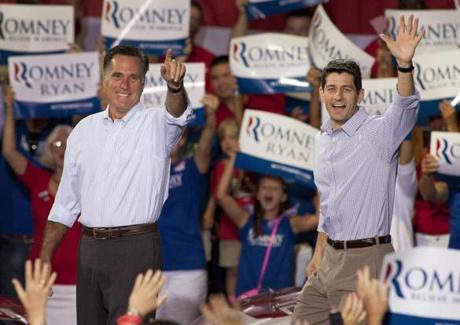
If Mitt Romney is elected, he has promised to repeal Obamacare on his first day in office.  I predict that we will immediately see an increase in job creation and an improvement in our economy.  As Paul Ryan and Mitt Romney understand, the economy depends on production and that means jobs.  The biggest driver of revenue to the federal government isn’t higher tax rates….  it’s economic growth.  Growth is the key to fiscal sustainability. And low tax rates are the key to growth.  We can never hope to lower taxes if Obamacare is implemented.

If Obama is re-elected, we can hope to repeal it, but he will never sign it.  That will require a supermajority.  And we will only have a supermajority if a whole lot more Republicans are elected into both houses of Congress, especially the Senate.  We can also look into defunding it.

Repeal and Dismantlement —

Obamacare was intended and designed to withstand attempts by Republicans to make it go away.  We saw how easily the Supreme Court was able to convert the Individual Mandate “penalty” into a “tax.”  We are seeing how the plan goes into effect piece by piece, to be fully implemented by 2014 but still requiring further appropriations into 2019.  The massive 2,700-page health care law is deliberately designed to make defunding and dismantling difficult.  Dismantling will be difficult because Obamacare has created so many new governmental agencies.  Although original estimates reported that it created 159 new government agencies, the Congressional Research Service later concluded that the actual number of new agencies, boards, etc., “is currently unknowable,” because so many of them are empowered to spawn additional entities, just as weeds grow by sending out runners and seeds.  Defunding will be particularly tricky because the law is designed to be difficult to uproot, just like a plant with an elaborate root system.

How does the healthcare bill frustrate efforts by Congress to defund the bill?

—   First, approximately $120 billion in funding appropriations were included in the bill which Obama signed.  Appropriations were made immediately.  This violates the typical Congressional process of appropriations. The normal process typically involves enacting authorization bills that authorize spending, and then follows those with separate legislation that actually appropriates the money.

—  Second, by making advance appropriations for tens of billions of dollars up to the year 2019, these provisions of Obamacare seek to remove spending decisions from the reach of the current Congress and from future Congresses and Presidents. Although Obamacare was not pitched to the public as a mandatory spending entitlement, the details of the legislation reveal an intent to block any future Congress from controlling spending on Obamacare.

—  To defund Obamacare, it is insufficient simply to deny future funding. Until the full law can be repealed, at least the existing and advance appropriations need to be rescinded, just as the House voted last year to repeal billions of dollars from previous appropriations to 123 federal programs.  Unfortunately this vote was void because of a parliamentary procedure violation.  That was most unfortunate.

—  With the healthcare bill, the Congressional Democrats sought to bind future Congresses to spending obligations with Obamacare – for a full decade in advance.  This is an outrageous effort.  It may not be unconstitutional per se, but in a system that gives citizens the right to have input in the affairs of Congress thru the ballot box, spending decisions should be made by those who currently hold office, not by those who have resigned or been turned out by the voters.

What are some efforts so far to make Obamacare go away?  Eric Cantor introduced H.R. 2 – “Repeal of the Job-Killing Health Care Law Act” – in the US House where it passed on January 19, 2011. The Act simply states: “The Act is repealed, and the provisions of law amended or repealed by such Act are restored or revived as if such Act had not been enacted.”  H.R. 2 was sent to the Senate where it was put on the calendar but it still has not been allowed to come up for a vote.  Also, on July 9th of this year, Congress introduced H.R. 6088 – “Total Repeal of the Unfair Taxes on Healthcare Act” –  which would amend the tax code to repeal certain tax increases enacted as part of health care reform. The Act is still in committee.

The healthcare bill can go away if:  (i) Congress repeals it (see H.R. 2);  (ii) Congress disapproves it under the Congressional Review Act of 1996;  (iii) Congress defunds it;  (iv) the Supreme Court reverses its opinion; or (v) the States nullify it and are willing to interpose on behalf of their citizens.  I will discuss this last option at the end.

Why Obamacare is Bad for America and for Americans

1).  First, you should know that members of Congress have EXEMPTED themselves from Obamacare.  If it was such a good healthcare plan, why did they exempt themselves?  In Federalist Papers No. 57, James Madison listed five ways that members of the House of Representatives can show their fidelity to their constituents and earn their trust.  He wrote: “As a fifth circumstance in the situation of the House of Representatives, restraining them from oppressive measures, that they can make no law which will not have its full operation on themselves and their friends, as well as on the great mass of the society. This has always been deemed one of the strongest bonds by which human policy can connect the rulers and the people together. It creates between them that communion of interests and sympathy of sentiments, of which few governments have furnished examples; but without which every government degenerates into tyranny. If it be asked, what is to restrain the House of Representatives from making legal discriminations in favor of themselves and a particular class of the society?  I answer: the genius of the whole system; the nature of just and constitutional laws; and above all, the vigilant and manly spirit which actuates the people of America — a spirit which nourishes freedom, and in return is nourished by it.”

2).  So far, over $105 billion has been appropriated to fund Obamacare, not including the $760 billion stolen from Medicare. This program is not going to help the economy; it’s going to hurt it.  Government spending will be uncontrollable.

3).  Under the law, most individuals who can afford it will be required to obtain basic health insurance coverage or pay a fee (termed a “penalty” in the healthcare bill) to help offset the costs of caring for uninsured Americans.  This is the notorious Individual Mandate (Section 5000).  In other words, everyone must purchase private health insurance or pay a fine.  This is the cornerstone of the healthcare reform bill. As Justice Kennedy emphasized at oral arguments, he was very concerned about the status of young people with respect to the healthcare bill. He noted that the government wasn’t exactly been honest about its intentions with the bill, which was to find a way to offset the burden that uninsured individuals place on healthcare.  Kennedy said that if the administration was really interested in preventing young people (many who are uninsured) from being such a burden, the healthcare plan would allow them to buy only catastrophic health insurance (instead of the plan that includes well visits, preventative care).  Catastrophic health insurance is all that 20-30 year-olds really need; It’s the only product that makes any economic sense for them. But Obamacare doesn’t allow that. So, as Kennedy emphasized, we see what the healthcare bill is really all about. It’s about using 20-30 year-olds to subsidize the plan, to subsidize insurance for those who can’t afford it.  It’s about using young healthy people to fund the program.  It’s about a social scheme.  And now we know…  the government’s plan is to subsidize health insurance for everyone, especially those who are uninsured and sick (approximately 20% of all uninsured). The plan forces insurance companies to cover the sick. But it doesn’t want to use the typical means to pay for this – such as tax subsidies.  Instead, the government wants to reach OUTSIDE the market and COMPEL a whole bunch of healthy people into that market so they can be used to subsidize the program and help bring healthcare premiums down.  In fact, this was the finding by Congress: that bringing young healthy people into the market will bring down the health insurance premium by about 15% for everyone.  Unfortunately, though, it will force them to buy something they don’t need or want. This provision kicks in in 2014.  By 2014, most citizens and legal residents must carry an expensive health insurance or pay a penalty.

4).  A small number of Americans will be exempt from the tax. Those exempted include: (i) people with religious objections; (ii) American Indians with coverage through the Indian Health Service; (iii) undocumented immigrants; (iv) those without coverage for less than three months; (v) those serving prison sentences; (vi) those whose income is below the poverty level.  This list of exemptions provides for abuse and group exemptions for certain religious groups.

5).  Obamacare will impose 5 major classifications of taxes in 2013 alone, aside from the Individual Mandate (which is the core funding provision, which will hit in 2014):

(i)  The Medical Device Manufacturing Tax  (a 2.3% tax on medical device makers which will raise the price of every pacemaker, prosthetic limb, stent, operating table, and much more.  Most of the manufacturers are small companies).

(ii)  The High Medical Bills Tax – This onerous tax provision will hit Americans who face the highest out-of-pocket medical bills. Currently, Americans are allowed to deduct medical expenses on their 1040 form to the extent the costs exceed 7.5% of one’s adjusted gross income.  The new ObamaCare provision will raise that threshold to 10%, subjecting patients to a higher tax bill. This tax will hit pre-retirement seniors the hardest. Over the next ten years, affected Americans will pony up a minimum total of $15 billion in taxes thanks to this provision.

(iii)  Flexible Spending Account Cap  –  The 24 million Americans who have Flexible Spending Accounts will face a new federally imposed $2,500 annual cap. These pre-tax accounts, which currently have no federal limit, are used to purchase everything from contact lenses to children’s braces. With the cost of braces being as high as $7,200, this tax provision will play an unwelcome role in everyday kitchen-table health care decisions.

The cap will also affect families with special-needs children, whose tuition can be covered using Flexible Spending Account funds. Special-needs tuition can cost up to $14,000 per child per year. This cruel tax provision will limit the options available to such families, all so that the federal government can squeeze an additional $13 billion out of taxpayer pockets over the next ten years. The targeting of Flexible Spending Accounts by President Obama and congressional Democrats is no accident. The progressive left has never been fond of the consumer-driven accounts, which serve as a small roadblock in their long-term drive for a one-size-fits-all government health care bureaucracy.  At this point already, under Obamacare, families cannot use these accounts to pay for over-the-counter medication.

(iv)  Surtax on Investment Income –  Under current law, the capital gains tax rate for all Americans rises from 15 to 20% in 2013, while the top dividend rate rises from 15 to 39.6%.  The new Obamacare surtax takes the top capital gains rate to 23.8%  and top dividend rate to 43.4%. The tax will take a minimum of $123 billion out of taxpayer pockets over the next ten years.  This new tax will hit capital gains, dividends, rents, and royalties, discouraging investment and harming economic growth.

(v)  Medicare Payroll Tax increase –  In 2013, the employee portion of the Medicare payroll tax will increase from 1.45 to 2.35% for families earning $250,000 or more and individuals earning $200,000 or more. The income threshold is not indexed for inflation, so more and more middle-income families will be hit by the tax hike as time goes on. This tax soaks employers to the tune of $86 billion over the next ten years. Another provision, as emphasized in the Ryan plan, is a 3.8% Medicare tax on unearned income of “high-income” taxpayers which could apply to proceeds from the sale of single family homes, townhouses, co-ops, condominiums, and even rental income, depending on your individual circumstances and any capital gains tax exclusions. This 3.8% tax on home sales and unearned income will raise more than $124 billion to pay for Obamacare. As you can understand, there is a reason why the authors of Obamacare wrote the law in such a way that the most brutal tax increases take effect conveniently after the 2012 election. It’s the same reason that the bill was pushed thru Congress before anyone had a chance to read it.  It’s the same reason that members of Congress (and I’m sure President Obama himself) exempted themselves from it.  And it’s the same President Obama, congressional Democrats, and the mainstream media conveniently neglect to mention these taxes.

6).  You’ve probably all heard that Obama raided $760 billion dollars from Medicare to pay for Obamacare. But what we didn’t find out until later is that he has no plan to pay that money back. The embedded taxes in Obamacare for Medicare, from what I understand, are to provide for the vast numbers of seniors who will be on the program in the coming years and to provide them with more preventative benefits and coverage. (but not for greater care for major illness).  In fact, over-all, Obamacare will reduce the amount of future spending growth in Medicare thru the IPAB.  So while more seniors will be on Medicare, spending will not increase accordingly.

7).  Medical records will be centralized with the government – in a national database.  Put in other terms, the government will have the ability to seize your medical records.  In order to make information more readily available for doctors during their appointments, the government intends to create a national database containing every person’s medical history.  [This is potentially a violation of the 4th and 5th Amendments – a seizure of a person’s privacy, as well as a taking of private property].  People are the owners of their medical records, and the doctors are their custodians.  With the creation of such a database, healthcare decisions will be dictated by government bureaucrats and NOT the doctor or patient.

8).  Perhaps the most offensive part of the bill is the Independent Payment Advisory Board (IPAB) – a 15-member panel of bureaucrats tasked with finding ways to cut Medicare spending (that is, it’s role is to ration care in order to keep the costs of the program contained). It is also called the “death panel.” It will take effect in 2014, although there is talk that Obama will try to have it take effect earlier.  By law, no more than 7 of the members can be physicians. Board members are appointed by the President and confirmed by the Senate. Its decisions cannot be easily challenged. In order to override IPAB’s proposal, opponents must assemble a simple majority in the House and then a three-fifths majority in the Senate and finally, the president’s signature.  That makes IPAB more than an advisory board. It’s a super-legislature whose members are more powerful than members of Congress As one leading challenger of the bill has said: “The IPAB is ‘independent’ in the worst sense of the word: it is independent of Congress, the President, the judiciary and the American people. The IPAB is a death panel not only by virtue of its awesome powers to control health-care decisions for millions of Americans, but because its creation and existence are antithetical to our republican form of government and the freedoms it was designed to protect. Here is another bit of info about the IPAB…   It appears that in order to repeal the IPAB, a repeal bill MUST be passed by 2017; otherwise we are stuck with it.  Furthermore, to pass the repeal, there  must be a 3/5 supermajority……  and then even after that vote, it would – by law, continue at least until 2020.   [IPAB – See Sections 3403 and 10320]  In fact the House has already voted to repeal the IPAB, but the Senate, under Harry Reid, will not take up the measure.

9).  Illegal immigrants are not covered by Obamacare.  So they will still be able to receive healthcare, mostly by going to the emergency room, and continue to burden the healthcare system so that costs and prices will continue to go up.  The burden of Illegal immigrants on the healthcare system was one of the very drivers of its cost increases.

10).  Parents of dependent children will be required to keep their adult children on their policies until age 26.  One of the provisions in Obamacare is a requirement that group health plans that provide dependent coverage of children make that coverage available until age 26.  Will this provision can be considered a good one to some, there are many parents that look forward to the day that their children become adults so that they can wean themselves from supporting them.  Provisions like this will be seen as a burden by couples who work and can afford health insurance.  When deciding how many children to have, this provision will have to be something they need to consider, in addition to college tuition, etc, etc.  Those who can’t afford the premiums and are supplemented by the government can, once again, reproduce without responsibility.

11).  New plans must cover 100% of wellness or pregnancy exams (even if the person is beyond child-bearing age)

12).  Other problems with the healthcare bill include:

(i)  It penalizes marriage.  Obamacare creates new taxpayer-funded subsidies for the low and middle classes to purchase health coverage, but the structure of the subsidies allows two individuals to claim more in subsidies alone than if married. This discriminates against married couples and discourages marriage at almost all age and income levels.

(ii)  It violates religious liberty. We’ve all heard of the Contraceptive Mandate.   Churches are in an uproar over this.  The Department of Health and Human Services included the full range of contraceptives, including abortion-inducing drugs, among the women-specific preventive services that Obamacare requires insurers to include with no cost-sharing. This mandate violates Americans’ conscience rights and religious liberty. Its narrow exemption for religious employers will force many who find these products morally objectionable—including religious charities, hospitals, and schools—to pay for them.

(iii)  It puts over half of all Americans on a government program. Because of Obamacare’s huge expansion of Medicaid and creation of taxpayer-funded subsidies to purchase health coverage, more than half of all Americans will be dependent on a government health care program (Medicare, Medicaid, or the government exchanges) by the end of this decade.

13).  There is no tort reform provision in the bill

14).  The government cannot run any program or agency efficiently.  It has a history of bankruptcy and failure.  For example:

(i) The U.S. Postal Service was established in 1775 – they’ve had 234 years to get it right; it is broke, and even though heavily subsidized, it can’t compete with private sector FedExp and UPS services. The U.S. Postal Service will lose over $7 billion this year and will require yet another “bailout.”  [The Postal Service is a CONSTITUTIONAL obligation;  Healthcare is NOT).

(ii)  Social Security was established in 1935 – they’ve had 74 years to get it right; it is broke. There is nothing in the Social Security Trust Fund except IOUs from the government.

(iii)  Fannie Mae was established in 1938 – they’ve had 71 years to get it right; it is broke. Freddie Mac was established in 1970 – they’ve had 39 years to get it right; it is broke. Together Fannie and Freddie have now led the entire world into the worst economic collapse in 80 years.

(iv)  The War on Poverty was started in 1964 – they’ve had 45 years to get it right; $1 trillion of our hard earned money is confiscated each year and transferred to “the poor”; it hasn’t worked.

(v)  Medicare and Medicaid were established in 1965 – they’ve had 44 years to get it right; they are both broke; and now our government dares to mention them as models for all US health care.

(vi)  AMTRAK was established in 1970 – they’ve had 39 years to get it right; last year they bailed it out as it continues to run at a loss!

(vii)  In 2009, a trillion dollars was committed in the massive political payoff called the Stimulus Bill. It shows NO sign of working; it’s been used to increase the size of governments across America, and raise government salaries while the rest of us suffer from economic hardships. It has yet to create a single new private sector job. Our national debt projections (approaching $10 trillion) have increased 400% in the last six months.

(viii)  “Cash for Clunkers” was established in 2009 and went broke in 2009 –  after 80% of the cars purchased turned out to be produced by foreign companies, and dealers nationwide are buried under bureaucratic paperwork demanded by a government that is not yet paying them what was promised.

With a perfect 100% failure rate and a record that proves that each and every “service” shoved down our throats by an over-reaching government turns into disaster, how could any informed American trust our government to run or even set policies for America’s health care system, which is over 17% of our economy?

15).  Obamacare only achieves its goals if:  (i) everyone is forced to participate and those that can pay do pay; and (ii) the states provide Medicaid expansion to get as many people signed up and on the program as possible.  The goal of course is to provide affordable care to everyone and to keep costs contained over the course of the program.  Hence, the title of the bill.  With the Supreme Court’s decision, however, states are no longer mandated to add people to Medicaid.  They have the option of opting out of the expansion provision and therefore do not have to set up the exchanges. In fact, several states have been adamant about not creating the health care exchanges, namely Texas, Louisiana, Michigan, South Carolina, and Florida. New Jersey Governor Chris Christie vetoed setting up an exchange in his state in May of this year, and Governor John Lynch of New Hampshire (a Democrat) also vetoed the initiative in his state.  The question is this:  If enough states opt out, will the goals of the bill be frustrated to the point that universal healthcare will not be viable as a government entitlement program because of the increased costs that will result?

16).  If Obama is re-elected, the fear – or, the likely reality – is that we are stuck with Obamacare. By extension – because of its chilling effect on the economy, the new norm here in the United States might be 8%-9% unemployment (most of it part-time with no benefits) and most people living on the government dole.  The question is where will the money continue to come from?

We’ve Lost our Fundamental Liberties —

The average American would love to believe that as long as he or she isn’t annoying anyone or isn’t infringing on anyone’s legitimate rights, he or she should be left alone to enjoy his life and property —  to pursue happiness.  But there are too many government regulatory agencies to allow that to be true. This is not a nation where people are left alone anymore. This is a nation where they are hounded from the moment they are born until the moment they die by the arms of a regulatory state run by men and women weaned on the ideology of big government, socialism, and the idea that the government’s job is to protect our green planet and to promote the greatest benefit to the greatest number of people).  Sadly, this is a nation, founded on the inherent power of the individual over his life, liberty, and property, where just being left alone is the greatest of luxuries.

All of this begs the bigger question:  What has become of our Inalienable Rights?  Government has strayed away from its intended purpose.  All levels of government have abused their powers. The federal government is no longer constrained by the document that alone gives it permission and limits on what it can legally do — that is our Constitution.  It no longer protects our Life, Liberty, and Property.  It attacks our Life with the Obamacare.  It attacks our Liberty with the Patriot Act, the National Defense Authorization Act, and even the TSA at our airports.  And it attacks our Property with the federal income tax system and Agenda 21.  The government’s evil, liberty-killing scheme is funded by the power of plunder that was granted it under the 16th Amendment.  The government plunders our very natural human resources — our Property….   the fruit and improvements of our property, the products of our labor, and the creations of our mind. But then again, a government that can create economic stress is in a good position to constrain our liberties. A hungry man thinks about food, not freedom.

Finally, I don’t like the notion of a planned society.  We’ve seen how many of them have ended – Nazi Germany, Communist Russia, Communist China, Pol Pot’s Cambodia, Kim Jung Il’s North Korea, to name a few.  Obamacare puts our lives under the power of bureaucrats and experts. They claim to be experts, but in what field. One such “expert” who helped craft the IPAB (“death panel”) is an expert in cost effectiveness. Ezekiel Immanuel.  He has a cold inhuman approach to healthcare.   I don’t trust when government gets involved in questions that talk about what is good for man, and what justice should be.  I don’t trust when government enters those debates that talk about what things are worth having at what price and who should have them.  And I certainly don’t trust when government gives an opinion on the value of life.  I saw what they did with the unborn in Roe v. Wade.  A decision that asks whether a person’s life is worth living on certain terms (as with an unfortunate diagnosis), is a decision that should be left to that person alone and according to the God-given right of self-preservation, he should be entitled to pursue whatever medical options he can.  Finally, I don’t like a program that demands my obedience to government or be penalized for it.  That was Nazi Germany.

Nullification

The US republic is unique.  Government can pass no law or take no action unless the authority for such law or action is specifically granted in the Constitution.  That is the essence of our limited government.  It is also the understanding of the states when they signed the Constitution (a compact, or contract) and formed the American Union.

What happens when the government oversteps its constitutional powers?   Well, initially we are instructed to let our constitutional system play out since our government has a clear separation of powers in its three branches and is designed with a series of checks and balances.  Each of the branches is expected to act as a jealous guardian of its powers and responsibilities so that no other branch tries to intrude on the others.

When these procedural safeguards break down, then it is up to the States to take matters into their hands.  The States, as sovereign entities, under our federalist system are the final check in the series of checks and balances. It is sovereign versus sovereign.  Alexander Hamilton explained it best in Federalist Papers No. 26: “….The State legislatures, who will always be not only vigilant but suspicious and jealous guardians of the rights of the citizens against encroachments from the federal government, will constantly have their attention awake to the conduct of the national rulers, and will be ready enough, if anything improper appears, to sound the alarm to the people, and not only to be the VOICE, but, if necessary, the ARM of their discontent.”

Since the states can no longer control the Congress from within, as the Constitution originally provided in Article I, Section 3 by appointing Senators (“The Senate of the United States shall be composed of two Senators from each State, chosen by the Legislature thereof…”), it’s most effective, and “rightful,” remedy is Nullification and Interposition.  The answer is Nullification.  This is the doctrine articulated by Thomas Jefferson which states that the Constitution, by word and by creation, empowers states to nullify laws passed by Congress. That is, it allows states to decide when laws passed by Congress have exceeded the powers granted by the Constitution and to rightfully declare that they are null and void and therefore unenforceable.  The Constitution, through the Supremacy Clause of the Sixth Amendment, acknowledges the residuary sovereign powers that reside with the states to govern themselves and their citizens.  Our system of federalism (embodied in the Tenth Amendment) empowers the States to stand up to the federal government.  And the compact nature of our Constitution gives the States the legal authority. The states, as the parties to the Constitution, are the ones who rightfully can reign in the government in its application of that document.  The States, as creators of the federal government, have the final authority to determine the limits of the power of that government.  Under this compact theory, the States and not the federal courts are the ultimate interpreters of the extent of the federal government’s power.  In other words, the states are the rightful parties who can enforce the Constitution.

Thomas Jefferson wrote in the Kentucky Resolves of 1799: “That the several states who formed that instrument, being sovereign and independent, have the unquestionable right to judge of its infraction; and that a Nullification, by those sovereignties, of all unauthorized acts done under color of that instrument, is the RIGHTFUL REMEDY.”

A similar doctrine, called Interposition, was advocated by James Madison and takes nullification one step further. It imposes a duty upon each state to intercede or insert itself (to step in) between its people and the government in order to prevent them from unconstitutional laws, executive policies, and even federal court decisions.  James Madison wrote in the Virginia Resolves of 1798:

The powers of the Federal Government, as resulting from the compact, to which the states (alone) are the parties, as limited by the plain sense and intention of the instrument constituting that compact; as no farther valid than they are authorized by the grants (of power) enumerated in that compact; and that in case of a deliberate, palpable, and dangerous exercise of other powers, not granted by said compact, the states who are parties thereto have the right, and are duty-bound, to INTERPOSE for arresting the progress of the evil, and for maintaining within their respective limits, the authorities, rights, and liberties appertaining to them….”

As the Constitution’s absolute sovereign creator, the People are not – and were never intended to be – subordinate to their creation, the federal government.  The government was created as an agent, to both the States and the People.  The people have final authority.  An agent serves its master and never the other way around.  The Constitution is merely “a description, (or memorialization), of those powers which the people have ultimately delegated to their Magistrates, to be exercised for definite purposes.”  The people therefore, according to Madison, are entitled to interposition by their State governments when their agent, the federal government, fails to conform with constitutional dictates.  [Note: To make clear – the States spoke for the People through the State Conventions which were selected by the People].

Thomas Jefferson and James Madison were enraged when the Alien and Sedition Acts were enacted in 1796 in response to the Quasi War with France. The Acts were designed to round up and deport aliens that the government deemed problematic and to detain and imprison those who dared to criticize, disparage, and malign members of the government (except the VP, who just happened to be Jefferson at the time!!) either in word or in print. They believed the laws were unconstitutional. Jefferson complained to Madison that both acts showed “no respect” for the Constitution.  Madison called the Alien Act “a monster” that would “forever disgrace its parents,” the Founders that demanded a limited government and a Bill of Rights.  The two men corresponded  about what remedy should be taken in response.  They didn’t trust the judicial review process for the Court at the time was dominated with Federalists, and it was the Federalists in Congress who passed the laws and it was the Federalist president, John Adams, who signed them into law and who didn’t believe they offended the Constitution.  In general, they didn’t trust the Supreme Court to be the ultimate interpreter of the Constitution. They also understood that an oppressive government would lead states or even parts of states to secede and that was an extreme situation that should be avoided as aggressively as possible. They concluded that it was up to the states to declare when acts of the government exceeded constitutional authority and then to declare them null and void.  And so they came up with their doctrines of nullification and interposition.

The Alien and Sedition Acts prompted Madison and Jefferson to organize protests. They did so by drafting a series of resolutions that would be adopted by the legislatures of Virginia and Kentucky to pronounce the unconstitutionality of the Acts.  The resolutions that Madison authored were adopted in 1798 by the Virginia legislature and became the Virginia Resolves, while the resolutions that were drafted by Jefferson drafted were eventually adopted in modified form by the Kentucky legislature. (The Kentucky Resolves of 1798; another set of resolutions were adopted in 1799).  In passing the resolutions, both legislatures expressed the judgment that the two federal laws were unconstitutional. The Kentucky Resolves stated that its purpose was to protest the Acts while the Virginia Resolves were more forceful.  It declared that “necessary and proper measures will be taken” to maintain the authorities, rights, and liberties” of the States and the people and then appealed to the other states to join in the protest. The governor of Virginia was instructed to transmit copies of the Resolves to the other state legislatures in the hope that those bodies would adopt similar measures.

The Kentucky and Virginia resolutions highlight a grave flaw in the Constitution of 1787:  the states did not  explicitly provide or designate an umpire to settle disputes between the states and the central government.  The Constitution is quiet on that subject.  The Federalist Papers, the ultimate authority on the meaning and intent of the Constitution, only gives the Supreme Court the power to offer an “opinion” to the other branches and no binding authority.  [Federalist No. 78 says the federal Judiciary “has no influence over either the SWORD or the PURSE (executive or legislative branches) …. It may truly be said to have neither FORCE nor WILL, but merely judgment.”].  It was the Supreme Court itself which redefined its powers in Marbury v. Madison (1803), vaulting its status to the final arbiter of the meaning and intent of the Constitution.  If the Supreme Court is to remain the unchallenged ultimate arbiter of the Constitution, as the Court unanimously proclaimed in Cooper v. Aaron (358 U.S. 1 [1958]), then the caprice of the national government and not the Constitution is the supreme law of the land.  Clearly, if the national government is the judge of its own powers, it will construe them broadly and dispose of any hopes for limited government.

Thomas Jefferson wrote on this topic in 1820:  “To consider the Judges of the Superior Court as the ultimate arbiters of constitutional questions would be a dangerous doctrine which would place us under the despotism of an oligarchy. They have with others, the same passion for party, for power, and for the privileges of their corps – and their power is the most dangerous as they are in office for life, and not responsible, as the other functionaries are, to the Elective control. The Constitution has elected no single tribunal.  I know no safe depository of the ultimate powers of society but the people themselves.”   

He wrote again in 1821: “The germ of dissolution of our federal government is in the constitution of the federal judiciary: an irresponsible body, working like gravity by night and by day, gaining a little today and a little tomorrow, and advancing its noiseless step like a thief, over the field of jurisdiction until all shall be usurped from the States, and the government of all be consolidated into one. To this I am opposed; because, when all government, domestic and foreign, in little as in great things, shall be drawn to Washington as the centre of all it will render powerless the checks provided of one government on another and will become as venal and oppressive as the government from which we separated.”    

Jefferson warned in very strong terms that the federal judiciary is not to be trusted.  He inferred that in the absence of a designated umpire, the parties to the compact are the ultimate arbiters of the Constitution.  His reasoning is sound and needs to be re-asserted, just as states are now re-asserting the doctrines of Nullification and Interposition.

We arguably have an unconstitutional law with Obamacare. Arguably, the government has overstepped its constitutional powers.  It has over-stepped its bounds as a government of limited powers and one obligated to protect our Life, Liberty, and Property and not to attack those precious liberties.  It simply doesn’t have the authority to legislate for healthcare. That is a state function, under its state police powers (to regulate for the health, safety, welfare, and morality of its people).  It is the same argument that Jefferson and Madison made with the Alien Act of 1796.  Congress didn’t have the constitutional authority to pass such legislation. Now, there may be some who will say that the government can use its taxing/spending powers to regulate for the “general welfare,” but read further for my argument on the taxing power.  Additionally, the “general welfare” clause refers to the people of the United States, in general, and not just certain groups of people.  Everyone must be served, equally. With Obamacare, the poor and other uninsured are served.  A 2011 census showed that 15% of Americans are living in poverty. There are additional people who are uninsured because they have been denied on account of pre-existing conditions.  These people will benefit from Obamacare. But the young, healthy people forced into the system for no other reason than to provide the ‘tax’ revenue to support health insurance and care for the uninsured are not receiving a benefit but rather, a burden. The government is plundering their property.

Furthermore, Obamacare has abused its powers under the Commerce Clause (the power the administration gave for its authority to pass Obamacare), as the Supreme Court agreed.  It has abused its powers under the taxing power as well, as Judge Andrew Napolitano has explained: “The ruling basically gives power on a platter to Congress – power that it never had before, power that it never exercised before. It sets a dangerous precedent for all sorts of non-action that government can place a tax on….  But this is the first time in the history of the country that the Court has permitted the Congress to tax people for doing nothing. To punish them for refusing to do what the government wants them to do. That is a very, very dangerous precedent.”

We just need to walk through the steps to see if we’ve allowed our constitutional system the opportunity to work for us in stopping this unlawful act of Congress.  Again, I am assuming, as a great many other intelligent, constitutionally-literate, and patriotic Americans are assuming, that Obamacare is unconstitutional both in the first instance (no power to legislate for healthcare) and under any other power in Article I (Commerce or Taxing/Spending):

(i)  First, did the Separation of Powers stop the bad bill?  No, it didn’t.  President Obama, head of the Executive branch, should not have signed the bill, passed by the Legislative branch, into law.

(ii)  Did the people contact their representatives and did Congress respond to the peoples’ wishes by repealing the bad bill?  No, they did not.  A gallop poll in February of this year showed that 72% of all Americans (including 56% of Democrats) believe the Individual Mandate is unconstitutional and want it struck down or repealed.  These polls are no secret to members of Congress.  Letters and calls are delivered constantly and protests have been held in Washington DC.  Yet the House and the Senate (especially the Senate) has remained firm on the bill. Congress intends for it to stand.

(iii) Third, did the Supreme Court strike the unlawful bill down?   No, it didn’t.

(iv)  Can the people fix the problem at the ballot box?  That is still yet to be seen.  Will this year’s voters retire those representatives who have violated their oaths and failed to tie legislation to a legitimate source of constitutional authority?  Will the new Congress repeal the bad bill?

Obamacare must be stopped.  Government must be stopped.  The unstoppable growth of government must be stopped.  Obamacare will lead to an unprecedented growth in the number of agencies it will require to implement the program and then, perhaps, even incidental programs to keep people from needing healthcare.  If President Obama is re-elected, or if Mitt Romney is elected and fails to repeal Obamacare, then the States must be prepared and willing to use Nullification and Interposition in order to protect the liberties of the American people which are secure only as long as the Constitution is faithfully adhered to.

Just like the early Americans who supported the unconstitutional acts of the Federalists, such as the Alien and Sedition Acts, and did not question them, modern Americans have been dupes in forging their own chains.  The chains have gotten stronger and have been fastened tighter. We are on the verge of losing the precious liberties and safeguards we were blessed with by our divinely-inspired Founders.  We need a revival of the Spirit of  1776.  We need to recapture the constitutional urgency that men like Jefferson and Madison felt in 1798 and 1800.  And then we need to promote Nullification as never before and if need be, declare Obamacare null and void and make sure it is unenforceable upon the American people.

I’d like to believe what Thomas Jefferson said in 1799:

“The spirit of 1776 is not dead. It has only been slumbering. The body of the American people is substantially republican. But their virtuous feelings have been played on by some fact with more fiction; they have been the dupes of artful maneuvers, and made for a moment to be willing instruments in forging chains for themselves.” 


If anyone would like to support the Nullify Obamacare movement, please sign the petition with your state Tenth Amendment Center.

For example, if you live in NC, the site is  – http://northcarolina.tenthamendmentcenter.com/nullifyobamacare/

If you live in Pennsylvania, the site is –  http://pennsylvania.tenthamendmentcenter.com/nullifyobamacare/

If you live in Florida, the site is –  http://florida.tenthamendmentcenter.com/nullifyobamacare/

And so on.

 
If anyone would like to help the NC Tenth Amendment Center bring a Nullify Now! tour to North Carolina, please purchase a ticket and donate –  http://www.thepoint.com/campaigns/campaign-0-2969?show_tab=invite


References:

The IPAB –  http://www.hoover.org/publications/defining-ideas/article/103021

50 Dangers from Obamacare –  http://www.coachisright.com/special-reports/50-dangers-from-obamacare/

Rand Paul, “The Five Major Obamacare Taxes That Will Hit Your Wallet in 2013,”  FOX News, July 9, 2012. http://paul.senate.gov/?p=news&id=570

Defunding Obamacare –  http://blog.heritage.org/2011/03/09/defunding-obamacare-istook-testifies-in-the-house/

The 10 Terrible Provisions of Obamacare – http://blog.heritage.org/2012/03/07/the-10-terrible-provisions-of-obamacare-you-may-not-have-heard-of/

Companies Cut Jobs to Cut Healthcare Costs, FOX News –  http://video.foxbusiness.com/v/1891838208001/

Jonathon M. Siedl, “Pelosi Defends Obamacare Using the Declaration of Independence,” The Blaze, March 22, 2012.  Referenced at:  http://www.theblaze.com/stories/pelosi-defends-obamacare-using-declaration-of-independence/#

Christian Fritz, “Interposition and the Heresy of Nullification: James Madison and the Exercise of Sovereign Constitutional Powers,” The Heritage Foundation, February 21, 2012.  Referenced at:  http://www.heritage.org/research/reports/2012/02/interposition-and-heresy-of-nullification-james-madison-exercise-of-sovereign-constitutional-powers     [I, along with the Tenth Amendment Center, take issue with  the thesis of this article ]

Daniel Greenfield, “There Ain’t No More Middle Ground,” Sultan Knish, June 30, 2012.  Referenced at:  http://sultanknish.blogspot.com/2012/06/there-aint-no-more-middle-ground.html?utm_source=feedburner&utm_medium=email&utm_campaign=Feed%3A+FromNyToIsraelSultanRevealsTheStoriesBehindTheNews+%28from+NY+to+Israel+Sultan+Reveals+The+Stories+Behind+the+News%29

Andrew Kirrell, “Judge Napolitano on Obamacare Ruling: ‘Gives Power on a Platter to Congress to Tax Anything,” Mediaite, July 3, 2012.   Referenced at:   http://www.mediaite.com/tv/judge-napolitano-on-obamacare-ruling-gives-power-on-a-platter-to-congress-to-tax-anything/

Merrill Matthews, “Is Obamacare the largest Tax Increase in US History?,” Forbes, June 29, 2012.  Referenced at:  http://www.forbes.com/sites/merrillmatthews/2012/06/29/is-obamacare-the-largest-tax-increase-in-u-s-history/

Mike Sacks, “Supreme Court Healthcare Decision: The Individual Mandate Survives,” Huffington Post, June 28, 2012.  Referenced at:  http://www.huffingtonpost.com/2012/06/28/supreme-court-health-care-decision_n_1585131.html

Rep. Phil Hare (D-Ill) comments to reporter –  http://reason.com/blog/2010/04/02/i-dont-worry-about-the-constit

“A History Lesson on Government-Run Programs,” Soda Head –  http://www.sodahead.com/united-states/a-history-lesson-on-government-run-programs/blog-147103/

Comments by Democratic Congressmen on the Constitution –  http://commonsensewonder.blogspot.com/2012/03/democratic-congressman-and-senators-on.html

Thomas Jefferson’s Reactions –  http://www.streetlaw.org/en/Page/284/Thomas_Jeffersons_Reaction

Angie Drobnic Holan, “Smokers, Tanning Aficionados, the Happily Uninsured: More Taxes Coming at Ya!,” PolitifFact.com, April 8, 2010.  Referenced at:  http://www.politifact.com/truth-o-meter/promises/obameter/promise/515/no-family-making-less-250000-will-see-any-form-tax/

Paul Jacob, “The Supreme Oxymorons,” Townhall, July 1, 2012.  Referenced at: http://townhall.com/columnists/pauljacob/2012/07/01/the_supreme_oxymorons/page/2

The 17th Amendment repealed Article I, Section 3 which provided that Senators would be appointed by the state legislatures and provided that they would be elected by the people.

A 2011 census shows that 15% of Americans, on average, are living in poverty.  [28% of blacks are living in poverty, whites are in single digits, and Hispanics and Asians are tied somewhere in the middle]

Terence P. Jeffrey, “Gallop: 72% of All Americans and 56% of Democrats Say Obamacare Mandate is Unconstitutional,” CNS News, February 27, 2012.  Referenced at:  http://cnsnews.com/news/article/gallup-72-all-americans-and-56-democrats-say-obamacare-mandate-unconstitutional

William J. Watkins, “The Kentucky and Virginia Resolutions” –  http://www.constitution.org/lrev/kentvirg_watkins.htm

The Virginia Resolves of 1798 –  http://www.lexrex.com/enlightened/laws/virg1798.htm

The Kentucky Resolves of 1798 and 1799 – http://www.lexrex.com/enlightened/laws/kentres.htm

APPENDIX: 
 
I.   50 DANGERS of OBAMACARE (broken down by category):

1).  For those concerned with the damage this plan will do to business:
Pg 22 mandates that the Government will audit books of ALL EMPLOYERS that self insure. So every employer in the United States will be subjected to a health insurance audit just as all taxpayers are subject to audit. Of course, we will have to pay for an entire new bureaucracy to do this–the Internal Health Revenue Service?
Pg 42 recognizes the power of the Health Choices Commissioner to determine your health benefits. You will have no choice.
Pg 50, section 152 states that free, taxpayer-paid health care will be given to the 30 million non-citizens in the USA, even illegal aliens.
Pg 30, Sec 123 states that there will be a government committee that decides what treatments you are allowed and what your overall benefits are.
Pg 29, lines 4-16 basically mandates the rationing of health care as is being done in Canada.
Pg 42 recognizes the power of the Health Choices Commissioner to determine your health benefits. You will have no choice.
Pg 58 states that government will have possession of all your health care records & history including finances and you will have to have a National ID Healthcard.
Pg 59, lines 21-24 gives direct access to your banks accounts to compel you to pay any out-of-pocket or premium costs electronically without your previous consent.
Pg 72, lines 8-14 creates a Health Care Exchange to bring private health insurance plans under government control. This part of the bill reveals Obama’s lies about being able to keep your plan if you like it. Any health insurance plan which does not completely rework itself to conform to these regulations will be dropped from the exchange and those insured will have to pick one of the plans in the exchange. This is why the Congressional Budget Office determined that over 20 million will lose the coverage they are now enjoying if Obamacare is implemented.
Pg 145, line 15-17 any employer not currently insuring their employees must enroll employees into public plan option, with no choice of private insurance allowed.
Pg 126, lines 22-25 mandates that employers must pay for health insurance even for part-time workers and their families, which will certainly lead to massive layoffs.
Pg 149, lines 16-24 all employers with an annual payroll bigger than $400k who does not pay to enroll employees in public insurance option will pay an 8% tax on all payroll.
Pg 167, lines 18-23 any individual who is self-employed and does not have health insurance will be taxed 2.5% of income and forced to accept public health insurance. So paying for health care out of pocket will be banned from the face of the earth.

2).  For those concerned with the inherent unfairness in this plan:
Pg 65, sec 164 provides for a political payoff from the Democrats and Obama; a special subsidized plan for retirees and their families in unions community groups like ACORN.
Pg 102, lines 12-18 mandates that all Medicaid eligible will be automatically enrolled in Medicaid based upon income and insurance status. No choice.
Pg 124, lines 24-25 states that no private company or individual can have the right to sue the federal government for medical price fixing, basically eliminating your right to seek redress in the courts regarding your medical care.
Pg 469 mandates “Community Based Home Medical Services” through non profits like ACORN. Happy yet that we elected a community organizer to the White House?

3).  For those afraid of healthcare rationing:
Pg 85, line 7 provides specifics for benefit levels for all health plans, giving government the right to ration everyone’s healthcare.
Pg 239, line 14-24 mandates that available physician services will be reduced for Medicaid recipients. Many poor people including many seniors will be affected.
Pg 272, Sec. 1145 regulates the operation of certain types of cancer hospitals, again rationing the care of cancer patients.

4).  For those concerned with the costs of this plan:
Pg 91, lines 4-7 mandates that doctor’s offices, clinics and hospitals provide language-appropriate services, basically ordering them to hire translators at the expense of the American taxpayer.
Pg 95, lines 8-18 allows the government to hire non-profit community groups like ACORN and Americorps to sign up people for the government health plan.
Pg 170, lines 1-3 exempts non-resident aliens from the individual health care taxes, so Americans citizens will pay for these aliens, legal and illegal alike.
Pg 489, Sec 1308 force taxpayers to pay for Marriage & Family therapy under the public insurance plan.

5).  For those concerned with the damage this plan will do to the medical profession:
Pg 127, lines 1-16 dictates doctors’ payment and therefore income which will reduce what doctors earn and lead to greater shortages of doctors and more rationing of care.
Pg 150, lines 9-13 mandates that employers with an annual payroll between $251K & $400K who does not pay to enroll employees in public insurance option will pay a 2-6% tax on all payroll.
Pg 241, line 6-8 mandates that all doctors receive the same pay, regardless of specialty. This will vastly reduce the number of specialists available in the United States, a common problem where medicine is socialized like Canada.
Pg 253, line 10-18 allows the federal government to set the value of doctor’s time, professional judgment.
Pg 265, Sec 1131 mandates and controls the productivity of all health care providers including surgeons!
Pg 280, Sec 1151 allows the government to penalize hospitals for what is deemed to be preventable re-admissions. So instead of being sued for malpractice, the government will be the punitive body when mistakes are made.
Pg 298, lines 9-11 mandates that if a doctor treats a patient during initial admission and that result in a re-admission, the doctor will be subject to federal penalties. Gee do you think that’s going to drive up the cost of malpractice?
Pg 317, lines 13-20 will create prohibitions on ownership and investment in the health service industry for doctors.
Pg 317-318, lines 21-25, and 1-3 will prohibit the expansion of all hospitals.
Pg 321, lines 2-13 allows hospitals apply for an exception to the expansion rule but they must seek community input first!
Pg 335, lines 16-25, Pg 336-339 mandates the establishment of outcome based health care and insidious idea that actually limits the treatment choices made by patients with their doctors, based upon the patient’s health and condition. This will result in the oldest, weakest and sickest patients being denied treatments simply because the statistics for success in their demographic category are poor! This is a form of health care rationing that will save money at the expense of seniors to help buy insurance for the uninsured, most of whom are young and healthy!
Pg 341, lines 3-9 allows the government to disqualify Medicare Advantage Plans and HMO forcing people into the government run public plan.

6).  For those concerned with violations of individual rights violations in this plan:
Pg 195 officers & employees of the new Health Care Administration will have access to all Americans personal financial records and accounts.
Pg 203, line 14-15 actually says that “The tax imposed under this section shall not be treated as tax.” Yes, it says that.
Pg 268, Sec 1141 regulates the rental & purchase of power driven wheelchairs.
Pg 379, Sec 1191 mandates the creation of even more bureaucracy in the Telehealth Advisory Committee.
Pg 425, lines 4-12 mandates “Advance Care Planning Consultation,” another insidious vehicle to save money by encouraging seniors who are in poor health to be more accepting of death rather than fighting to stay alive and healthy and with their loved ones.
Pg 425, lines 17-19 mandates that all senior patients will be consulted regarding living wills, durable powers of attorney.
Pg 425, lines 22-25, 426 lines 1-3 provides an approved list of end of life resources, to help guide seniors about the process of dying!
Pg 427, lines 15 mandates program for orders on the end of life, actually giving the government a say in how your life ends!
Pg 429, lines 1-9 dictates the frequency with which an Advance Care Planning Consultant will have to meet with patients as their health deteriorates.
Pg 429, lines 10-12 give an Advance Care Planning Consultant the power to order end of life plans for a patient.
Pg 354, Sec 1177 will arbitrarily restrict the enrollment of special needs children and adults.
Pg 429, lines 13-25 will only allow certain doctors, not necessarily your own physician, to write an end of life order.
Pg 430, lines 11-15 allows the government to decide what level of treatment you will have at end of life.
Pg 494-498 allows government to define mental illnesses and what services will be allowed to treat, again rationing this care.


II.   OVERVIEW of HOW OBAMACARE IS & WILL BE PHASED IN 

Obamacare was passed and signed into law on March 21, 2010.

—  Maximum Out-of-Pocket Premium as Percentage of Family Income and federal poverty level
—  PPACA includes numerous provisions to take effect over several years beginning in 2010. Policies issued before particular provisions take effect are grandfathered from many of these provisions, while other provisions may affect existing policies.
— Guaranteed issue will require policies to be issued regardless of any medical condition, and partial community rating will require insurers to offer the same premium to all applicants of the same age and geographical location without regard to gender or most pre-existing conditions (excluding tobacco use)
—  A shared responsibility requirement, commonly called an Individual Mandate, requires that all individuals not covered by an employer sponsored health plan, Medicaid, Medicare or other public insurance programs, purchase and comply with an approved private insurance policy or pay a penalty, unless the applicable individual is a member of a recognized religious sect exempted by the Internal Revenue Service, or waived in cases of financial hardship.
—  Health insurance exchanges will commence operation in each state, offering a marketplace where individuals and small businesses can compare policies and premiums, and buy insurance (with a government subsidy if eligible).
—  Low income individuals and families above 100% and up to 400% of the federal poverty level will receive federal subsidies on a sliding scale if they choose to purchase insurance via an exchange (those at 150% of the poverty level would be subsidized such that their premium cost would be 2% of income, or $50 per month for a family of four).
—  The text of the law expands Medicaid eligibility to include all individuals and families with incomes up to 133% of the poverty level, and simplifies the CHIP enrollment process. In National Federation of Independent Business v. Sebelius, the Supreme Court effectively allowed states to opt out of the Medicaid expansion, and some states have stated their intention to do so. In states that choose to reject the Medicaid expansion, individuals and families at or below 133% of the poverty line, but above their state’s existing Medicaid threshold, will not be eligible for coverage; additionally, subsidies are not available to those below 100% of the poverty line. As many states have eligibility thresholds significantly below 133% of the poverty line, and many do not provide any coverage for childless adults, this may create a coverage gap in those states.
—  Minimum standards for health insurance policies are to be established and annual and lifetime coverage caps will be banned.
—  Firms employing 50 or more people but not offering health insurance will also pay a shared responsibility requirement if the government has had to subsidize an employee’s health care.
—  Very small businesses will be able to get subsidies if they purchase insurance through an exchange.
—  Co-payments, co-insurance, and deductibles are to be eliminated for select health care insurance benefits considered to be part of an “essential benefits package” for Level A or Level B preventive care.
— Changes are enacted that allow a restructuring of Medicare reimbursement from “fee-for-service” to “bundled payments.”

Summary of Funding
The PPACA’s provisions are intended to be funded by a variety of taxes and offsets. Major sources of new revenue include a much-broadened Medicare tax on incomes over $200,000 and $250,000, for individual and joint filers respectively, an annual fee on insurance providers, and a 40% excise tax on “Cadillac” insurance policies. The income levels are not adjusted for inflation, with bracket creep eventually increasing taxes on middle incomes. There are also taxes on pharmaceuticals, high-cost diagnostic equipment, and a 10% federal sales tax on indoor tanning services. Offsets are from intended cost savings such as changes in the Medicare Advantage program relative to traditional Medicare.

Summary of tax increases: (ten year projection)  —
–>  Increase Medicare tax rate by .9% and impose added tax of 3.8% on unearned income for high-income taxpayers: $210.2 billion
–>  Charge an annual fee on health insurance providers: $60 billion
–>  Impose a 40% excise tax on health insurance annual premiums in excess of $10,200 for an individual or $27,500 for a family: $32 billion
–>  Impose an annual fee on manufacturers and importers of branded drugs: $27 billion
–>  Impose a 2.3% excise tax on manufacturers and importers of certain medical devices:$20 billion
–>  Raise the 7.5% Adjusted Gross Income floor on medical expenses deduction to 10%: $15.2 billion
–>  Limit annual contributions to flexible spending arrangements in cafeteria plans to $2,500: $13 billion
–>  All other revenue sources: $14.9 billion
–>  Summary of spending offsets: (ten year projection)
–>  Reduce funding for Medicare Advantage policies: $132 billion
–>  Reduce Medicare home health care payments: $40 billion
–>  Reduce certain Medicare hospital payments: $22 billion
–>  Original budget estimates included a provision to require information reporting on payments to corporations, which had been projected to raise $17 billion, but the provision was repealed.

Provisions
The PPACA is divided into 9 titles and contains provisions that became effective immediately, 90 days after enactment, and six months after enactment, as well as provisions phased in through to 2020.

Below are some of the key provisions of PPACA. For simplicity, the amendments in the Health Care and Education Reconciliation Act of 2010 are integrated into this timeline.

Effective at enactment (2010):
—  The Food and Drug Administration is now authorized to approve generic versions of biologic drugs and grant biologics manufacturers 12 years of exclusive use before generics can be developed.
—  The Medicaid drug rebate (paid by drug manufacturers to the states) for brand name drugs is increased to 23.1% (except the rebate for clotting factors and drugs approved exclusively for pediatric use increases to 17.1%), and the rebate is extended to Medicaid managed care plans; the Medicaid rebate for non-innovator, multiple source drugs is increased to 13% of average manufacturer price.
—  A non-profit Patient-Centered Outcomes Research Institute is established, independent from government, to undertake comparative effectiveness research.[44] This is charged with examining the “relative health outcomes, clinical effectiveness, and appropriateness” of different medical treatments by evaluating existing studies and conducting its own. Its 19-member board is to include patients, doctors, hospitals, drug makers, device manufacturers, insurers, payers, government officials and health experts. It will not have the power to mandate or even endorse coverage rules or reimbursement for any particular treatment. Medicare may take the Institute’s research into account when deciding what procedures it will cover, so long as the new research is not the sole justification and the agency allows for public input.[45] The bill forbids the Institute to develop or employ “a dollars per quality adjusted life year” (or similar measure that discounts the value of a life because of an individual’s disability) as a threshold to establish what type of health care is cost effective or recommended. This makes it different from the UK’s National Institute for Health and Clinical Excellence.
—  Creation of task forces on Preventive Services and Community Preventive Services to develop, update, and disseminate evidenced-based recommendations on the use of clinical and community prevention services.
—  The Indian Health Care Improvement Act is reauthorized and amended.
—  Chain restaurants and food vendors with 20 or more locations are required to display the caloric content of their foods on menus, drive-through menus, and vending machines. Additional information, such as saturated fat, carbohydrate, and sodium content, must also be made available upon request. But first, the Food and Drug Administration has to come up with regulations, and as a result, calories disclosures may not appear until 2013 or 2014.
— States can apply for a ‘State Plan Amendment” to expand family planning eligibility to the same eligibility as pregnancy related care (above and beyond Medicaid level eligibility), through a state option rather than having to apply for a federal waiver.
—  Adults with existing conditions became eligible to join a temporary high-risk pool, which will be superseded by the health care exchange in 2014.  To qualify for coverage, applicants must have a pre-existing health condition and have been uninsured for at least the past six months. There is no age requirement. The new program sets premiums as if for a standard population and not for a population with a higher health risk. Allows premiums to vary by age (4:1), geographic area, and family composition. Limit out-of-pocket spending to $5,950 for individuals and $11,900 for families, excluding premiums.
—  The President established, within the Department of Health and Human Services (HHS), a council to be known as the National Prevention, Health Promotion and Public Health Council to help begin to develop a National Prevention and Health Promotion Strategy. The Surgeon General shall serve as the Chairperson of the new Council
—  A 10% sales tax on indoor tanning took effect.
—  Insurers are prohibited from imposing lifetime dollar limits on essential benefits, like hospital stays, in new policies issued.
—  Dependents (children) will be permitted to remain on their parents’ insurance plan until their 26th birthday, and regulations implemented under PPACA include dependents that no longer live with their parents, are not a dependent on a parent’s tax return, are no longer a student, or are married.
—  Insurers are prohibited from excluding pre-existing medical conditions (except in grandfathered individual health insurance plans) for children under the age of 19.
—  All new insurance plans must cover preventive care and medical screenings rated Level A or B by the U.S. Preventive Services Task Force.  Insurers are prohibited from charging co-payments, co-insurance, or deductibles for these services.
—  Individuals affected by the Medicare Part D coverage gap will receive a $250 rebate, and 50% of the gap will be eliminated in 2011.  The gap will be eliminated by 2020.
—  Insurers’ abilities to enforce annual spending caps will be restricted, and completely prohibited by 2014.
—  Insurers are prohibited from dropping policyholders when they get sick.
—  Insurers are required to reveal details about administrative and executive expenditures.
—  Insurers are required to implement an appeals process for coverage determination and claims on all new plans.
—  Enhanced methods of fraud detection are implemented.
—  Medicare is expanded to small, rural hospitals and facilities.
—  Medicare patients with chronic illnesses must be monitored/evaluated on a 3-month basis for coverage of the medications for treatment of such illnesses.
—  Companies which provide early retiree benefits for individuals aged 55–64 are eligible to participate in a temporary program which reduces premium costs.
—  A new website installed by the Secretary of Health and Human Services will provide consumer insurance information for individuals and small businesses in all states.
—  A temporary credit program is established to encourage private investment in new therapies for disease treatment and prevention.
—  All new insurance plans must cover childhood immunizations and adult vaccinations recommended by the Advisory Committee on Immunization Practices (ACIP) without charging co-payments, co-insurance, or deductibles when provided by an in-network provider.


Effective in 2011:
—  Insurers must spend 80% (for individual or small group insurers) or 85% (for large group insurers) of premium dollars on health costs and claims, leaving only 20% or 15% respectively for administrative costs and profits, subject to various waivers and exemptions. If an insurer fails to meet this requirement, there is no penalty, but a rebate must be issued to the policy holder. This policy is known as the ‘Medical Loss Ratio’.
—  The Centers for Medicare and Medicaid Services is responsible for developing the Center for Medicare and Medicaid Innovation and overseeing the testing of innovative payment and delivery models.
—  Flexible spending accounts, Health reimbursement accounts and health savings accounts cannot be used to pay for over-the-counter drugs, purchased without a prescription, except insulin.
—  All health insurance companies must inform the public when they want to increase health insurance rates for individual or small group policies by an average of 10% or more. This policy is known as ‘Rate Review’. States are provided with Health Insurance Rate Review Grants to enhance their rate review programs and bring greater transparency to the process.

Effective in 2012:
—  Employers must disclose the value of the benefits they provided beginning in 2012 for each employee’s health insurance coverage on the employee’s annual Form W-2’s. This requirement was originally to be effective January 1, 2011, but was postponed by IRS Notice 2010–69 on October 23, 2010.  Reporting is not required for any employer that was required to file fewer than 250 Forms W-2 in the preceding calendar year.
—  New tax reporting changes were to come in effect. Lawmakers originally felt these changes would help prevent tax evasion by corporations. However, in April 2011, Congress passed and President Obama signed the Comprehensive 1099 Taxpayer Protection and Repayment of Exchange Subsidy Overpayments Act of 2011 repealing this provision, because it was burdensome to small businesses. Before PPACA businesses were required to notify the IRS on form 1099 of certain payments to individuals for certain services or property over a reporting threshold of $600. Under the repealed law, reporting of payments to corporations would also be required. Originally it was expected to raise $17 billion over 10 years. The amendments made by Section 9006 of PPACA were designed to apply to payments made by businesses after December 31, 2011, but will no longer apply because of the repeal of the section.
—  All new plans must cover certain preventive services such as mammograms and colonoscopies without charging a deductible, co-pay or coinsurance. Women’s Preventive Services – including well-woman visits, support for breastfeeding equipment, contraception and domestic violence screening – will be covered without cost sharing. This is also known as the contraceptive mandate.

Effective in 2013:
—  Income from self-employment and wages of single individuals in excess of $200,000 annually will be subject to an additional tax of 0.9%. The threshold amount is $250,000 for a married couple filing jointly (threshold applies to joint compensation of the two spouses), or $125,000 for a married person filing separately. In addition, an additional Medicare tax of 3.8% will apply to unearned income, specifically the lesser of net investment income or the amount by which adjusted gross income exceeds $200,000 ($250,000 for a married couple filing jointly; $125,000 for a married person filing separately.)
—  Beginning January 1, 2013, the limit on pre-tax contributions to flexible spending accounts will be capped at $2,500 per year.
—  Religious organizations that were given an extra year to implement the contraceptive mandate are no longer exempt.

Effective in 2014:.
—  Insurers are prohibited from discriminating against or charging higher rates for any individuals based on gender or pre-existing medical conditions.
—  The Individual Mandate kicks in. Either individuals carry mandatory health insurance or they are required to pay a fine (government will be linked directly to the person’s bank account). Obamacare will impose an annual penalty of $95, or up to 1% of income over the filing minimum, whichever is greater, on individuals who are not covered by an acceptable insurance policy; this will rise to a minimum of $695 ($2,085 for families), or 2.5% of income over the filing minimum, by 2016.  Exemptions to the mandatory coverage provision and penalty are permitted for religious reasons or for those for whom the least expensive policy would exceed 8% of their income.
—  Insurers are prohibited from establishing annual spending caps.
—  In 2014, the state-run health exchanges will be set up in participating states (note that the Supreme Court decision left the states room to opt out of this “medicaid expansion” provision). Medicaid eligibility will be expanded to include those with incomes up to 133% of the Federal poverty line ($29,000 for a family of four)., including adults with dependent children.  New subsidies will become available for with incomes up to 400% of the poverty level ($88,000 for a family of four).  Those who don’t purchase insurance will be assessed penalties:
2014 – The greater of $95 or 1% of income.
2015 – $325 or 2% of income.
2016 – $695 or 2.5% of income

As written, PPACA withheld all Medicaid funding from states declining to participate in the expansion. However, the Supreme Court ruled, in National Federation of Independent Business v. Sebelius, that this withdrawal of funding was unconstitutionally coercive, and that individual states had the right to opt out of the Medicaid expansion without losing pre-existing Medicaid funding from the federal government. As of July 10, 2012, the governors of several states: Texas, Florida, Mississippi, Louisiana, South Carolina, New Jersey, and New Hampshire had announced that they would decline to participate in the Medicaid expansion.

—  Two years of tax credits will be offered to qualified small businesses. In order to receive the full benefit of a 50% premium subsidy, the small business must have an average payroll per full-time equivalent (“FTE”) employee, excluding the owner of the business, of less than $25,000 and have fewer than 11 FTEs. The subsidy is reduced by 6.7% per additional employee and 4% per additional $1,000 of average compensation. As an example, a 16 FTE firm with a $35,000 average salary would be entitled to a 10% premium subsidy.

Impose a $2,000 per employee penalty on employers with more than 50 employees who do not offer health insurance to their full-time workers (as amended by the reconciliation bill).

—  For employer sponsored plans, set a maximum of $2,000 annual deductible for a plan covering a single individual or $4,000 annual deductible for any other plan. These limits can be increased under rules set in section 1302.

—  The CLASS Act provision would have created a voluntary long-term care insurance program, but in October 2011 the Department of Health and Human Services announced that the provision was unworkable and would be dropped, although an Obama administration official later said the President does not support repealing this provision.

—  Pay for new spending, in part, through spending and coverage cuts in Medicare Advantage, slowing the growth of Medicare provider payments (in part through the creation of a new Independent Payment Advisory Board), reducing Medicare and Medicaid drug reimbursement rate, cutting other Medicare and Medicaid spending.

—  Revenue increases from a new $2,500 limit on tax-free contributions to flexible spending accounts (FSAs), which allow for payment of health costs.

—  Establish health insurance exchanges, and subsidization of insurance premiums for individuals in households with income up to 400% of the poverty line.

Effective in 2015:

—  CMS begins using the Medicare fee schedule to give larger payments to physicians who provide high-quality care compared with cost.

Effective in 2018:

—  All existing health insurance plans must cover approved preventive care and checkups without co-payment.

—  A 40% excise tax on high-cost or high-end (“Cadillac”) insurance plans worth over $27,500 for families ($10,200 for individuals) is introduced.  [Dental and vision plans are exempt and will not be counted in the total cost of a family’s plan].

***  Appropriations in Obamacare continue until 2019.


Tax Calculations:

Taxes begin in 2014 and rise in years following. In each year, the tax consists of the higher of a dollar amount or a percentage of household income. For a given household, the tax applies to each individual, up to a maximum of three. Following is the schedule of taxes:

2014: The higher of $95 per person (up to 3 people, or $285) OR 1.0% of taxable income.
2015: The higher of $325 per person (up to 3 people, or $975) OR 2.0% of taxable income.
2016: The higher of $695 per person (up to 3 people, or $2,085) OR 2.5% of taxable income.
After 2016: The same as 2016, but adjusted annually for cost-of-living increases.

Here are some sample tax calculations.  (Note: line-to-line changes in variables are in bold type)

2014; family of 2; taxable income = $26,000;  tax = $260; because $260 (= $26,000 x 1%) is higher than $190 (= $95 x 2).

2014; family of 3; taxable income = $26,000; tax = $285; because $285 (= $95 x 3) is higher than $260 (= $26,000 x 1%).

2016; family of 3; taxable income = $26,000;  tax = $2,085; because $2,085 (= $695 x 3) is higher than $650 (= $26,000 x 2.5%).

2016; family of 3; taxable income = $85,000;  tax = $2,125;  because $2,125 (= $85,000 x 2.5%) is higher than $2,085 (= $695 x 3).

2016; family of 8; taxable income = $85,000;  tax = $2,125;  because $2,125 (= $85,000 x 2.5%) is higher than $2,085 (= $695 x 3).

2016; family of 8; taxable income = $300,000;  tax = $7,500;  because $7,500 (= $300,000 x 2.5%) is higher than $2,085 (= $695 x 3).

Posted in Uncategorized | 4 Comments

The President’s Got Some S’plaining to Do

    by Diane Rufino

The President’s got some s’plaining to do !!  For those who’ve been following the Embassy attacks of 9/11 and then the assassinations of ambassador Chris Stevens, his computer aid Sean Smith, and 2 former Navy SEALS, Glen Doherty and Tyrone Woods, it was obvious that the President and his State Department were not on the same page.  The statement released by the administration – The Embassy of the United States in Cairo condemns the continuing efforts by misguided individuals to hurt the religious feelings of Muslims….” – was quickly retracted by the White House.  Libyan President Mohammed el-Megarif, Secretary of State Hillary Clinton, and many administration officials have described what happened in Benghazi as a terrorist attack, yet the President still refuses to do so.  Our agencies had plenty of intel to indicate that our officials in the Middle East would be in danger come the anniversary of 9/11 yet they never thought to share it with the ones who were in harm’s way. According to senior diplomatic sources, as reported by UK newspaper The Independent and others, our State Department had credible information at least 48 hours ahead of the attack in Benghazi that Americans and American missions might be targeted.  Not a single warning was given to our diplomats, no “high alert” status was announced, security wasn’t upgraded, and personnel movement wasn’t restricted.

In the days leading up to the attack, ambassador Stevens notified the State Department that he feared there was a growing al Qaeda presence in Libya and even feared for his life.  He believed that they were making him a target.  Yet he was moved from the heavily-secure embassy in Tripoli to the unsecured compound in Benghazi, where he was a sitting duck for militants.  To this day, the FBI has not been to the compound to investigate the assassination of Ambassador Stevens, Smith, Doherty, and Woods.  We have been told that it’s too dangerous for them to go there. The FBI has yet to set foot in Benghazi.  We have been told that it is too dangerous for them to go there.  But we know that’s a bold-face lie.  In just 3 days after the attack, CNN reporters had no problem sorting through the rubble that is now the US consulate.  In fact, they found a hard cover journal containing 7 pages of hand-written notes by Ambassador Stevens (documenting his anxiety and suspicions). The journal revealed that he was aware of, and worried about, “the never-ending security threats” that he was facing in Benghazi, and specifically about “the rise in Islamic extremism” and “growing al Qaeda presence in Libya,” and “being on an al Qaeda hit list.”  One has to wonder why the State Department didn’t do more to protect Ambassador Stevens and other U.S. personnel.  [Perhaps it was a good thing that CNN found that journal before the government got its hands on it; otherwise, we would never have learned that Stevens feared for his safety and his life and the State Department had been aware of that].

I watch plenty of forensics and crime scene investigation shows and know that the general rule is that evidence is destroyed after 24 hours. By its absence, the FBI has made a decision not to investigate the death of our men.  Low-life scumbag drug dealers and gang members are afforded more attention when they are gunned down than our ambassador, our computer expert, and our ex-Navy SEALS.

Craig Andresen wrote a hard-hitting piece about the “information that is evolving” and being released to us from the White House.  He isn’t buying the government’s story that more information is needed before President Obama can officially label the fateful events in Libya on September 11 as a “terrorist attack.”

Andresen wrote:

“On September 16th, Susan Rice, our U.N. Ambassador told us: ‘First of all, we had a substantial security presence with our personnel…with our personnel and the consulate in Benghazi. Tragically, two of the four Americans who were killed were there providing security. That was their function. And indeed, there were many other colleagues who were doing the same with them.’  Rice was speaking, of course, of Navy SEALS Tyrone Woods and Glen Doherty.

On September 20th we were told by administration officials: ‘The two former SEALS, Tyrone Woods, 41, and Glen Doherty, 42, were not employed by the State Department diplomatic security office and instead were what is known as personal service contractors who had other duties related to security. They stepped into action, however, when Stevens became separated from the small security detail normally assigned to protect him when he traveled from the more fortified embassy in Tripoli to Benghazi.’

Then, on September 23rd, we learned that: ‘Woods and Doherty were killed in the firefight at the annex, according to official reports.’  That annex, some 2 miles away from the Consulate compound where Ambassador Stevens and State Department official (computer expert) Sean Smith were murdered, was attacked in a second wave of the terrorist attack a couple of hours after the initial attack.”

It was amazing how the story evolved over 12 days.  How did the State Department not know what its personnel were assigned to do?  How was Secretary of State Hillary Clinton NOT notified immediately of the deaths of Smith, Woods and Doherty?  (We all heard the reports that no one knew the whereabouts of Stevens for several hours). Wouldn’t she have gotten that “3:00 am phone call”?   How was the State Department NOT quickly briefed on what happened as to the events as the violence unfolded?   Glenn Beck has a theory. He believes Chris Stevens was a CIA agent and the administration is taking its time in order to cover up its complicity.

[The gist of Beck’s allegation is that the U.S. government surreptitiously dropped weapons into Libya during the uprising against the Gaddafi regime, but with extremist forces moving in and Libya teetering on the edge of complete chaos, it needed to get those weapons out of the country before they fell into the wrong hands. That was why Stevens was in Benghazi: He brokered the original deal and so he was sent in, with CIA handlers, to clean it up].

But there is no doubt that what happened in Benghazi on the night of September 11 was a terrorist attack. Many labeled it as such almost immediately. Within days after the attack, Libya’s president, Mohammed el-Megarif, went public to say that he believed al Qaeda was behind the deadly attack.  In an exclusive interview with NPR in Benghazi, el-Megarif says foreigners infiltrated Libya over the past few months, planned the attack and used Libyans to carry it out.  How did the administration handle his statement?  Essentially it said that the Libyan president must be wrong and that it had better intel. A few days later, Jay Carney, the White House spokesperson said it was “self-evident” that the violence was a terrorist attack in a press briefing about a week after the attack. “It is our view as an administration, the president’s view, that it was a terrorist attack,” Carney told reporters. On September 21, Clinton addressed a group of reporters and told them: “What happened in Benghazi was a terrorist attack” and promised that the U.S. would track down “the terrorists who murdered four Americans.”

Nineteen (19) days after the attack, Obama still refuses to use that language.

Despite what President Obama continues to profess (even before the United Nations), the attack was not a violent protest in response to a short video that disparages the prophet Mohammed.  By all accounts (including actual footage), there were there were no protesters at the site before the attack. The protest had broken up about an hour before the attack began, which came in two assaults, first with rocket-propelled grenades on the consulate, then with mortars at a safe house. In an interview with NBC, Libyan president said that the anti-Islam film that sparked violent protests in many countries “had nothing to do with” a deadly attack on the U.S. Consulate in Benghazi. He noted that the assault happened on September 11 and that the video had been available for months before that.  El-Megarif noted that if it were really the case that the video sparked outrage, then the reaction would have happened months ago.  “No, he said, “They chose this date, 11th of September to carry a certain message.”

Andresen’s article continued:

“We now know that this administration KNEW this was a terrorist attack within 24 hours of the attack. The State Department, under the guidance of Hillary Clinton would have known FULL WELL who was or, was NOT attached to Ambassador Stevens’ security detail.  That means that the State Department and thus, the administration, before making a single statement regarding this attack,  would have known full well that neither Doherty nor Woods were attached to Ambassador Stevens.

Is Obama waiting for intelligence to evolve or is he involved in a cover-up?  While the Obama administration is calling it ‘Evolving’ Intel, I can tell you that what it really is — ‘DE-volving’ Intel.  It’s scandalous.

Am I leaping to conclusions here?   Ask yourself this before you answer:  Why was our Embassy in the Bahamas more well protected on 9-11-2012 than was our Consulate and our Ambassador in Benghazi on that very same day???”

The American people are not getting the truth from this administration.  They are hiding something.  From this government’s involvement in the Arab Spring in Libya (and in Egypt as well), in the events leading up to the anniversary of 9/11, to the protests and attacks on 9/11 and the killing of Americans, and now to the suppression of information, the botched investigation, and refusal to acknowledge terrorist involvement…….  the government is not being honest with the American people.  In fact, it is acting as a rogue element, unanswerable to the American people and dedicated to a policy that will bring harm to us and to Israel, and will jeopardize our safety and security. It is emboldening our enemies, weakening our position, advancing the effectiveness of terrorism as a tactic, and putting the men and women who bravely step up to serve our country abroad recklessly in harm’s way.

Mark my words..  the only thing that will come out of the TARGETED DEATHS of Ambassador Stevens, Sean Smith, Glen Doherty, and Tyrone Wells in Libya on 9/11 by Islamists will be the eventual censorship of free speech here in OUR COUNTRY.

References:
Craig Andresen, “Weekend Edition: Lies Upon Lies to Cover-Up Blood on His Hands,” The National Patriot, September 30, 2012.  Referenced at:  http://www.thenationalpatriot.com/2012/09/30/weekend-edition-lies-upon-lies-to-cover-up-blood-on-his-hands/

Andy Chalk, “Glenn Beck Claims Murdered EVE Player was CIA,” Escapist Magazine, September 28, 2012.  Referenced at:  http://www.escapistmagazine.com/news/view/119854-Glenn-Beck-Claims-Murdered-EVE-Player-Was-CIA

Libyan President to NBC: Anti-Islam Film Had Nothing to Do with US Consulate Attack,” NBC News, September 26, 2012.  Referenced at:  http://worldnews.nbcnews.com/_news/2012/09/26/14105135-libyan-president-to-nbc-anti-islam-film-had-nothing-to-do-with-us-consulate-attack?lite

“Ambassador Stevens’ Journal Speaks from the Grave of Death Threats,” Larouche Pac, September 24, 2012.  Referenced at:  http://larouchepac.com/node/24012

Posted in Uncategorized | 1 Comment

A Government of Implied Powers?

by Diane Rufino

This article is in response to an article in the Beaufort Observer entitled “What Needs to be Done about Abuse of Power by the Federal Government?” which in turn was based on Calvin H. Johnson’s article “The Constitution or Liberty” in  The Freemen.

The US Constitution was designed to accomplish two goals:  Form a government vigorous enough to conduct the affairs of the nation (overcome the limitations of the Articles of Confederation), yet limited enough so that it did not endanger the rights of its citizens or encroach upon the sovereign powers of the States (other than those expressly delegated to it by them).

Stanton Richmond wrote an article that claims that the drafters of the Constitution had no intention of limiting the national government’s powers to the 16 items listed in Article I, Section 8, of the Constitution. He cites the fact that they declined to incorporate a provision from the Articles of Confederation into the new Constitution which read: “Each state retains its sovereignty, freedom, and independence, and every power, jurisdiction, and right, which is not by this Confederation expressly delegated to the United States, in Congress assembled.” He asserts that they did so because they believed the federal government needed implied powers.  Richmond is correct when he says that the Constitution needed to provide more power to the government, but the only real difference in the government provided by the Constitution is the power to regulate commerce and an expanded taxing power.  In Federalist No. 61, James Madison wrote: “What are to be the objects of federal legislation? Those which are of most importance are commerce, taxation, and the militia.” Recall that we nearly lost the Revolutionary War because the provisional government could not enforce taxation from the states.  It could only “ask” them to send funding for the war, and many states did not answer that request.

The opening phrase to Article I reads: “The Congress shall have Power To lay and collect Taxes, Duties, Imposts and Excises, to pay the Debts and provide for the common Defense and general Welfare of the United States; but all Duties, Imposts and Excises shall be uniform throughout the United States.”  Our framers did not intend this as an independent, limitless grant of power.  It was included to ‘qualify’ the powers set forth in Section 8.  It was not, as Mr. Richmond, indicative of a government that was intended to have both express and expansive implied powers. I will explain this more fully below, and through examples.

When the Constitution was drafted in Philadelphia in September 1787, not all the states were pleased with it.  Many weren’t.  Many were skeptical and distrustful.  In fact, a series of essays, articles, and papers appeared in papers all over the colonies criticizing the new Constitution and urging that it not be adopted.  These were called the Anti-Federalist Papers.  One of the most energetic criticism of the proposed new government was its enlarged taxing power. The states felt it would become so extensive and unlimited that it would cripple state legislatures and therefore swallow up the states, ultimately forming the very government that Madison initially proposed — a nationalist system (concentrated national government, with weak states).  The very presence and participation of Alexander Hamilton at the Constitution Convention also gave the states great worry for he was a known monarchist. He wanted to replicate the British system in America with a powerful central government and a president who would be appointed for life.  That’s why Patrick Henry declined to participate as a delegate for Virginia at the Convention. He said: “I smell a Rat in Philadelphia, tending towards the Monarchy.”

In Anti-Federalist No. 33, for example, Brutus (pseudo name) wrote about the states’ fear with respect to the taxing power:

       “This (taxing) power, exercised without limitation, will introduce itself into every corner of the city, and country-it will wait upon the ladies at their toilet, and will not leave them in any of their domestic concerns; it will accompany them to the ball, the play, and assembly; it will go with them when they visit, and will, on all occasions, sit beside them in their carriages, nor will it desert them even at church; it will enter the house of every gentleman, watch over his cellar, wait upon his cook in the kitchen, follow the servants into the parlor, preside over the table, and note down all he eats or drinks; it will attend him to his bedchamber, and watch him while he sleeps; it will take cognizance of the professional man in his office, or his study; it will watch the merchant in the counting-house, or in his store; it will follow the mechanic to his shop, and in his work, and will haunt him in his family, and in his bed; it will be a constant companion of the industrious farmer in all his labor, it will be with him in the house, and in the field, observe the toil of his hands, and the sweat of his brow; it will penetrate into the most obscure cottage; and finally, it will light upon the head of every person in the United States. To all these different classes of people, and in all these circumstances, in which it will attend them, the language in which it will address them, will be GIVE! GIVE!  A power that has such latitude, which reaches every person in the community in every conceivable circumstance, and lays hold of every species of property they possess, and which has no bounds set to it, but the discretion of those who exercise it – I say, such a power must necessarily, from its very nature, swallow up all the power of the state governments. I shall add but one other observation on this head, which is this: It appears to me a solecism, for two men, or bodies of men, to have unlimited power respecting the same object. It contradicts the … maxim, which saith, “no man can serve two masters,” the one power or the other must prevail, or else they will destroy each other, and neither of them effect their purpose. It may be compared to two mechanic powers, acting upon the same body in opposite directions, the consequence would be, if the powers were equal, the body would remain in a state of rest, or if the force of the one was superior to that of the other, the stronger would prevail, and overcome the resistance of the weaker. But it is said, by some of the advocates of this system, that “the idea that Congress can levy taxes at pleasure is false, and the suggestion wholly unsupported. The preamble to the Constitution is declaratory of the purposes of the [our] union, and the assumption of any power not necessary to establish justice, etc., provide for the common defense, etc., will be unconstitutional.

…. Besides, in the very clause which gives the power of levying duties and taxes, the purposes to which the money shall be appropriated are specified, viz., to pay the debts and provide for the common defense and general welfare.”‘

        Neither the general government nor the state governments ought to be vested with all the powers proper to be exercised for promoting the ends of government. The powers are divided between them-certain ends are to be attained by the one, and certain ends by the other; and these, taken together, include all the ends of good government. This being the case, the conclusion follows, that each should be furnished with the means, to attain the ends, to which they are designed.

       To apply this reasoning to the case of revenue, the general government is charged with the care of providing for the payment of the debts of the United States, supporting the general government, and providing for the defense of the union. To obtain these ends, they should be furnished with means. But does it thence follow, that they should command all the revenues of the United States? Most certainly it does not. For if so, it will follow, that no means will be left to attain other ends, as necessary to the happiness of the country, as those committed to their care. The individual states have debts to discharge; their legislatures and executives are to be supported, and provision is to be made for the administration of justice in the respective states. For these objects the general government has no authority to provide; nor is it proper it should. It is clear then, that the states should have the command of such revenues, as to answer the ends they have to obtain. To say, that ‘the circumstances that endanger the safety of nations are infinite,’ and from hence to infer, that all the sources of revenue in the states should be yielded to the general government, is not conclusive reasoning: for the Congress are authorized only to control in general concerns, and not regulate local and internal ones… The peace and happiness of a community is as intimately connected with the prudent direction of their domestic affairs, and the due administration of justice among themselves, as with a competent provision for their defense against foreign invaders, and indeed more so.

       Upon the whole, I conceive, that there cannot be a clearer position than this, that the state governments ought to have an uncontrollable power to raise a revenue, adequate to the exigencies of their governments; and, I presume, no such power is left them by this constitution.”

The Federalist Papers were the answers to the criticisms and distrusts of the Constitution by the States articulated in the series of Anti-Federalist Papers. The Federalist Papers were written  by Alexander Hamilton and John Jay (both of NY) and by James Madison (of VA).  It was no insignificant coincidence that these men wrote them. At the time, the two largest and most powerful states, New York and Virginia, were not supportive of the Constitution and it was feared that if these states did not ratify, the hope for a contiguous Union would be frustrated.  And so these men wrote the series of papers to explain the meaning and intent of the Constitution, to offer assurances, and to dispel fears (particularly that the proposed government would take too much power from the States), with the ultimate hope that it would convince the delegates of NY and VA to ultimately ratify (which they eventually did in 1788).

Alexander Hamilton answered the criticisms of anti-Federalist No. 33 in Federalist No. 31: “As revenue is the essential engine by which the means of answering the national exigencies must be procured, the power of procuring that article in its full extent must necessarily be comprehended in that of providing for those exigencies.”  [Here we see the beginning of the explanation of the “Necessary and Proper” Clause, which is continued in No. 33].  In No. 31, Hamilton also assured: “The State governments, by their original constitutions, are invested with complete sovereignty.”

In Federalist No. 32, he continued:

       “Although I am of opinion that there would be no real danger of the consequences which seem to be apprehended to the State governments from a power in the Union to control them in the levies of money, because I am persuaded that the sense of the people, the extreme hazard of provoking the resentments of the State governments, and a conviction of the utility and necessity of local administrations for local purposes, would be a complete barrier against the oppressive use of such a power; yet I am willing here to allow, in its full extent, the justness of the reasoning which requires that the individual States should possess an independent and uncontrollable authority to raise their own revenues for the supply of their own wants. And making this concession, I affirm that (with the sole exception of duties on imports and exports) they would, under the plan of the convention, retain that authority in the most absolute and unqualified sense; and that an attempt on the part of the national government to abridge them in the exercise of it, would be a violent assumption of power, unwarranted by any article or clause of its Constitution.

       An entire consolidation of the States into one complete national sovereignty would imply an entire subordination of the parts; and whatever powers might remain in them, would be altogether dependent on the general will. But as the plan of the convention aims only at a partial union or consolidation, the State governments would clearly retain all the rights of sovereignty which they before had, and which were not, by that act, EXCLUSIVELY delegated to the United States. This exclusive delegation, or rather this alienation, of State sovereignty, would only exist in three cases: where the Constitution in express terms granted an exclusive authority to the Union; where it granted in one instance an authority to the Union, and in another prohibited the States from exercising the like authority; and where it granted an authority to the Union, to which a similar authority in the States would be absolutely and totally CONTRADICTORY and REPUGNANT.

       The necessity of a concurrent jurisdiction in certain cases results from the division of the sovereign power; and the rule that all authorities, of which the States are not explicitly divested in favor of the Union, remain with them in full vigor, is not a theoretical consequence of that division, but is clearly admitted by the whole tenor of the instrument which contains the articles of the proposed Constitution. We there find that, notwithstanding the affirmative grants of general authorities, there has been the most pointed care in those cases where it was deemed improper that the like authorities should reside in the States, to insert negative clauses prohibiting the exercise of them by the States.”

As stated above, Federalist No. 33 discusses the “Necessary and Proper” Clause.  The “Necessary and Proper Clause” is the last clause of Article I, Section 8 and reads: “Congress shall have the power… To make all Laws which shall be necessary and proper for carrying into Execution the foregoing Powers, and all other Powers vested by this Constitution in the Government of the United States, or in any Department or Officer thereof.”   In No. 33, Hamilton wrote:  “But it may be again asked, Who is to judge of the NECESSITY and PROPRIETY of the laws to be passed for executing the powers of the Union? I answer, first, that this question arises as well and as fully upon the simple grant of those powers as upon the declaratory clause; and I answer, in the second place, that the national government, like every other, must judge, in the first instance, of the proper exercise of its powers, and its constituents in the last. If the federal government should overpass the just bounds of its authority and make a tyrannical use of its powers, the people, whose creature it is, must appeal to the standard they have formed, and take such measures to redress the injury done to the Constitution as the exigency may suggest and prudence justify.”

It should be noted that contracts often include a provision which grants authority to do those things that are necessary and proper to fulfill the obligations under the agreement.

The way I read the Constitution, in light of what is explained by Hamilton in Federalist No. 31, 32, and 33, and in light of what is written in the totality by the remainder of the Federalist Papers, is this:  There is some authority vested in the federal government to define the scope of its powers, but only to the extent that any laws made to govern in such areas must be both “necessary” and “proper.”  The word necessary means “needful, indispensable, required..”  Since there is an clear effort on the part of our drafters and authors of the Federalist Papers to assure the States that their sovereign rights would remain intact (minus those powers delegated to the federal government) and their status would not be compromised because of the creation of a federal government, it is more than reasonable to assume that the scope of federal power would be limited to the division established in the Tenth Amendment.  Thus, all grants of authority to the federal government are limited by what is absolutely necessary and proper and by reserved state rights.  Since the Federalist Papers were written as assurances to the States, they were justified in relying on them when they ratified the Constitution.

This is just one example of an implied power or an elastic power.  [See later for a brief overview of the case interpreting the “Necessary and Proper” clause –  McCulloch v. Maryland (1819)].  The bottom line is that unless the federal government is given authority to legislate in a particular area or to use executive powers in certain situations, the government is prohibited and the States retain the powers (under the Tenth Amendment).

But the real test of intent is what the States themselves explained in their ratification conventions, because their ratification was premised on THEIR UNDERSTANDING of its terms and intent, and what assurances were given them.  The states were the “signing parties” to the Constitution which then established the federal government. The significance of the states in the process is just like a buyer signing a contract with a seller for the purchase of an expensive house. The parties ultimately sign that contract only after thorough discussion and explanation of the conditions and provisions because they know their signature will bind them to the obligations and responsibilities (and the benefits).  The contract cannot take on new meaning in the future without relieving the signing parties of their obligations.  A contract that is altered allows the parties to walk away.

But don’t take it from me. James Madison himself urged that the true meaning of the Constitution was to be found in the state ratifying conventions, for it was there that the people, assembled in convention, were instructed with regard to what the new document meant. Jefferson agreed as well.  He said: “Should you wish to know the meaning of the Constitution, consult the words of its friends.”

It would be ridiculous to think the states would have assented agreement to a government with enough powers to swallow them up and destroy them.

For example, let’s look at the Virginia and NC Ratification Conventions.  In June 1788, at the Virginia Convention, delegate Patrick Henry spoke out aggressively against the ratification of the Constitution. He feared the government would have a tendency to concentrate power and destroy the sovereignty of the States, thereby destroying the liberty rights and interests of the people.  In his opening speech, he spoke:

Liberty, the greatest of all earthly blessing — give us that precious jewel, and you may take everything else! But I am fearful I have lived long enough to become an old-fashioned fellow. Perhaps an invincible attachment to the dearest rights of man may, in these refined, enlightened days, be deemed old-fashioned; if so, I am contented to be so. I say, the time has been when every pulse of my heart beat for American liberty, and which, I believe, had a counterpart in the breast of every true American; but suspicions have gone forth — suspicions of my integrity — publicly reported that my professions are not real. Twenty-three years ago was I supposed a traitor to my country? I was then said to be the bane of sedition, because I supported the rights of my country. I may be thought suspicious when I say our privileges and rights are in danger. But, sir, a number of the people of this country are weak enough to think these things are too true. I am happy to find that the gentleman on the other side declares they are groundless. But, sir, suspicion is a virtue as long as its object is the preservation of the public good, and as long as it stays within proper bounds: should it fall on me, I am contented: conscious rectitude is a powerful consolation. I trust there are many who think my professions for the public good to be real. Let your suspicion look to both sides. There are many on the other side, who possibly may have been persuaded to the necessity of these measures, which I conceive to be dangerous to your liberty. Guard with jealous attention the public liberty. Suspect everyone who approaches that jewel. Unfortunately, nothing will preserve it but downright force. Whenever you give up that force, you are inevitably ruined.

       I am answered by gentlemen that, though I might speak of terrors, yet the fact was, that we were surrounded by none of the dangers I apprehended. I conceive this new government to be one of those dangers: it has produced those horrors which distress many of our best citizens. We are come hither to preserve the poor commonwealth of Virginia, if it can be possibly done: something must be done to preserve your liberty and mine. The Confederation, this same despised government, merits, in my opinion, the highest encomium: it carried us through a long and dangerous war; it rendered us victorious in that bloody conflict with a powerful nation; it has secured us a territory greater than any European monarch possesses: and shall a government which has been thus strong and vigorous, be accused of imbecility, and abandoned for want of energy? Consider what you are about to do before you part with the government. Take longer time in reckoning things; revolutions like this have happened in almost every country in Europe; similar examples are to be found in ancient Greece and ancient Rome — instances of the people losing their liberty by their own carelessness and the ambition of a few. We are cautioned by the honorable gentleman, who presides, against faction and turbulence. I acknowledge that licentiousness is dangerous, and that it ought to be provided against: I acknowledge, also, the new form of government may effectually prevent it: yet there is another thing it will as effectually do — it will oppress and ruin the people.

      This new plan will bring us an acquisition of strength — an army, and the militia of the states. This is an idea extremely ridiculous: gentlemen cannot be earnest. This acquisition will trample on our fallen liberty. Let my beloved Americans guard against that fatal lethargy that has pervaded the universe. Have we the means of resisting disciplined armies, when our only defence, the militia, is put into the hands of Congress?

       My great objection to this government is, that it does not leave us the means of defending our rights, or of waging war against tyrants.  I address my most fervent prayer to prevent our adopting a system destructive to liberty.”

He feared the spirit of the American Revolution, and all that our founders hoped to accomplish by its independence from Britain, would be extinguished by accepting it.  He urged that provisions be added to protect the fundamental rights of freemen, such as the right of habeas corpus and a trial by jury, and the sovereign rights of the States.  In fact, he even urged that Virginia join with other states and form a separate nation should further restraints not be given in the Constitution. Henry’s hostility to the Constitution served a beneficial purpose. It was necessary to put the new instrument through fire in order to test it and eventually to define it. Henry certainly put it through fire. Not only that, but he was one of our leading Founders who forced the adoption of the first ten amendments.  In effect, he should be included as one of the great makers of the Constitution.

North Carolina also had reservations about the Constitution as originally drafted.  The first NC Convention was held in July 1788 in Hillsborough and the delegates declined to adopt the Constitution unless a Bill of Rights was added to further limit the reach of government.  William Lenoir refused to support is adoption because he felt that the Constitution needed to be amended to specifically protect the sovereign rights of the States from any attempt by the government to overstep constitutional bounds and enlarge its powers. After assurances were given that a Bill of Rights would be added, NC finally ratified in December of that year.

Obviously, the size and scope of the federal government was foremost on their minds. The States weren’t ready to sacrifice their powers or the liberty of its people. It is therefore important to realize the mindset of the States, the questions and concerns that entered their state debates, their reservations in roundly approving the Constitution, and the limitations applied as a function of their clarifying statements in the Conventions. These are much more pertinent to the interpretation of federal powers than any Supreme Court decision.  After all, the Court itself is a branch of the government, created under the Constitution and empowered under its own judicial decisions rather than by the Constitution or constrained by the explanations given in the Federalist Papers.

The question is “What can be done when the federal government oversteps its constitutional bounds?” In the past, the Supreme Court has responded by enlarging government powers. They’ve done this by applying a liberal or progressive reading to the Constitution that by all accounts was intended to be interpreted strictly. Thomas Jefferson said: ” “On every question of construction let us carry ourselves back to the time when the Constitution was adopted, recollect the spirit manifested in the debates, and instead of trying what meaning can be squeezed out of the text or invented against it, conform to the probable one which was passed.” Madison and others have given similar warnings.

But Thomas Jefferson never trusted the federal judiciary. In fact, he saw the Supreme Court as part of the problem. For one, it was itself a branch of the federal government and thus not an impartial arbiter. As reason for his distrust, he pointed to several early Supreme Court cases, one in particular being McCulloch v. Maryland (1819).  In that case, the Court took an expansive reading of the “Necessary and Proper” clause. Congress established a national bank and the state of Maryland challenged it as an unconstitutional exercise of power.  Maryland argued that there was no power under Article I, Section 8 for Congress to establish a national bank. The government countered by asserting that it was within its taxing powers.  The Supreme Court then had to interpret the breadth of the “Necessary and Proper” clause and the case pit Jefferson’s (and Madison’s) version of the Constitution against Hamilton’s version of the Constitution.  Constitution did not

According to Jefferson (who sided with Maryland) the establishment of a national bank was illegal under the Constitution.  His argument before Congress was this: “The second general phrase is, ‘to make all laws necessary and proper for carrying into execution the enumerated powers.’ But they can all be carried into execution without a bank. A bank therefore is not necessary, and consequently not authorized by this phrase. It has been urged that a bank will give great facility or convenience in the collection of taxes.  This might be true.  Yet the Constitution allows only the means which are ‘necessary,’ not those which are merely ‘convenient’ for effecting the enumerated powers.”  Jefferson further explained that the power to establish a national bank was addressed by the states in their ratification conventions and specifically rejected.  According to the states, if the Constitution had indeed granted such a power, that would be cause enough to reject the document.

Alexander Hamilton’s response to Jefferson’s interpretation went something like this: “Well that depends on what the meaning of ‘necessary’ is.” [Remember when Bill Clinton pulled that stunt].  Using tortured logic, Hamilton explained that “necessary” often means no more than “incidental, useful, or conductive to.”  He argued that the government had implied powers, such as the power to establish a national bank.

And so, establishing an early precedent for a disgraceful track record, the Supreme Court rejected the logic of Jefferson and the intent of the States in ratifying the Constitution and interpreted “necessary” to be “convenient.”  Convenient for who?  The federal government, of course.

As Jefferson reasoned, the Supreme Court was a branch of the institution which engaged in a power struggle with the states. Secondly, it was comprised of human beings, who like the rest of mankind, are subject to passions, ambitions, allegiances, whims, and depravities.  We wrote: “To consider the Judges of the Superior Court as the ultimate arbiters of constitutional questions would be a dangerous doctrine which would place us under the despotism of an oligarchy. They have with others, the same passion for party, for power, and for the privileges of their corps – and their power is the most dangerous as they are in office for life, and not responsible, as the other functionaries are, to the Elective control. The Constitution has elected no single tribunal.  I know no safe depository of the ultimate powers of society but the people themselves.”  In a letter he wrote in 1821, he wrote: “The great object of my fear is the Federal Judiciary.  That body, like gravity, ever acting with noiseless foot and unalarming advance, gaining ground step by step and holding what it gains, is engulfing insidiously the special governments into the jaws of that which feeds them.”

With respect to the critical division of power between the States and the government, one can easily see how “fair” the high court has been to the States and how vigorous it has been in respecting the powers that belong to them.  In modern times, the Supreme Court has declared a federal law unconstitutional for violating the Tenth Amendment on only 3-4 occasions.  At least that’s all I can recall at the moment.  In 1992, there was New York v. US, where the Court overturned a federal law that forced states to dispose of radioactive waste as it directed.  In 1997, there was Printz v. US, where the Courtoverturned parts of the Brady Handgun Violence Prevention Act.  And this year, with the healthcare decision, the Court announced that the Medicaid expansion provision amounted to federal coercion of the States.

The proper and constitutional remedies available to the States and to the People when the government oversteps its constitutional authority are judicial review, nullification (and interposition, a related remedy), and secession.  Judicial review is untrustworthy and has been explained above.  Secession is extreme, but a proper remedy, as provided in the Declaration of Independence (itself a secessionist document) and not addressed at all in the Constitution (nor it should be, for it is an inherent right of the people – the right of self-determination with respect to their form of government).  Thomas Jefferson wrote a series of resolutions in 1798 (which Kentucky adopted as the Kentucky Resolutions of 1798) to declare that the Alien & Sedition Acts passed by Congress were unconstitutional, as violating the First Amendment’s guarantee of free speech or having no constitutional authority to pass the legislation. In those resolutions, Jefferson articulated the States’ remedy of Nullification, which he called “the Rightful Remedy.”

Nullification is premised on the legal, government, and constitutional principle that any law passed without a proper grant of authority is null and void, and unenforceable.  Nullification is the inherent right and duty of every State to declare when the federal government (their creation) has exceeded the bounds of authority delegated to it under the Constitution and then to refuse to allow that law to be enforced within its borders.

The states have the power under the compact nature of the Constitution’s ratification. The States, as signing parties to the Constitution, are the proper parties to determine the extent of the powers delegated to the federal government and to decide when abuses have been committed.  In ratifying the Constitution thru state ratifying conventions (to be distinct from state legislatures; ratifying conventions are more representative of the people), the States were agreeing to be bound to the conditions and obligations imposed by the document for the purpose of uniting together for common purposes and goals.  It is just like the example I gave earlier of the Buyer and Seller who enter into a contract for a home. It is only the Buyer and Seller who have the clearest understanding of the meaning of that contract.  If the Buyer agreed to pay $450,000.00 for the home and the Seller agreed to sell it for that price, then no party can later claim that the purchase/sale price was anything other than $450,000.

The federal government, a creation of the Constitution, was established as an “agent” or “servant” of the States, and therefore not a party to the compact. The government has no legal position to define its own powers.  Today, we assume the Supreme Court is the ultimate tribunal with respect to the meaning and interpretation of the Constitution.  But let’s never forget that under the Federalist Papers, the Supreme Court was only supposed to offer an “opinion.”  See Federalist No. 78, in which Alexander Hamilton wrote:  “The judiciary is beyond comparison the weakest of the three departments of power. It can never attack with success either of the other two branches. The Executive not only dispenses the honors, but holds the sword of the community. The legislature not only commands the purse, but prescribes the rules by which the duties and rights of every citizen are to be regulated. The judiciary, on the contrary, has no influence over either the sword or the purse; no direction either of the strength or of the wealth of the society; and can take no active resolution whatever. It may truly be said to have neither FORCE nor WILL, but merely judgment; and must ultimately depend upon the aid of the executive arm even for the efficacy of its judgments.”

Nullification has a constitutional basis under the Supremacy Clause (Article VI) and the Tenth Amendment.  The Supremacy Clause states This Constitution, and the Laws of the United States which shall be made in pursuance thereof…shall be the supreme law of the land.”  In other words, not every law that the government imposes is to be considered supreme law; only those passed pursuant to an express grant of authority are supreme. The states are free to legislate in all other areas.  The Tenth Amendment states that “the powers not delegated to the federal government (see Article I, Section 8) nor prohibited to the States (Article I, Section 10) are reserved to the States.”  Therefore, the States are supposed to be jealous guardians of their domain of power under the carefully-defined division of power under our federalist system, memorialized in the Tenth Amendment.  The proper balance of power is the ultimate protector of our “God-given rights.”

Alexander Hamilton wrote this in Federalist No. 26“….The State legislatures, who will always be not only vigilant but suspicious and jealous guardians of the rights of the citizens against encroachments from the federal government, will constantly have their attention awake to the conduct of the national rulers, and will be ready enough, if anything improper appears, to sound the alarm to the people, and not only to be the VOICE, but, if necessary, the ARM of their discontent.”

In conclusion, I am compelled to expound on the position that the federal government has implied powers.  When the government takes that position, it is dangerous and leads, almost without exception, to an insidious enlargement of government powers.  And that’s why I wanted to clarify that the government itself should never be the allowed to have sole power to interpret the extent of its powers.  It is the responsibility of the States (thru elections and nullification) to stand guard and remind the government, from time to time, that its powers are limited under the Constitution.

People who are willing to sacrifice their liberty by succumbing to the mindset that government is free to unilaterally enlarge its powers and that the Supreme Court should be the final tribunal as to the meaning and intent of the Constitution are ready for a master and deserve one. Shame on professors and constitutional groups who espouse this vision of our nation’s government system.  They’ve betrayed the ideals of our American Revolution and are willing to substitute one tyrant for another.  Our government is quickly becoming our master and we have become its legislatively-controlled slaves.

By the way,  I encourage everyone to read:  Professor M. Stanton Evan’s article –  “The States and The Constitution” of July 7, 2010, in First Principles.

References:
Professor M. Stanton Evan, “The States and The Constitution,” First Principles, July 7, 2010.  Referenced at:  http://www.firstprinciplesjournal.com/articles.aspx?article=448

Delma Blinson, “What Needs to be Done About Abuse of Power by the Federal Government?” Beaufort Observer, September 23, 2012.  Referenced at:  http://www.beaufortobserver.net/1editorialbody.lasso?-token.folder=comm/2012/09/22&-token.story=262792.112112&-token.mgmtpreview=y

Calvin H. Johnson, “The Constitution or Liberty, The Freemen, September 21, 2012.  Referenced at:  http:// http://www.thefreemanonline.org/columns/tgif/the-constitution-or-liberty/

The Anti-Federalist Papers –  http://www.utulsa.edu/law/classes/rice/constitutional/antifederalist/antifed.htm

The Federalist Papers –  http://thomas.loc.gov/home/histdox/fedpapers.html

McCulloch v. Maryland, 17 U.S. 316 (1819).   Referenced at:  http://www.law.cornell.edu/supct/html/historics/USSC_CR_0017_0316_ZS.html

The First North Carolina Ratifying Convention, July 1788 –  http://www.constitution.org/rc/rat_nc.htm

Patrick Henry, speech at the Virginia Ratifying Convention, June 1788 – http://www.unc.edu/~gvanberg/Courses/Henry%20June%205.htm

Posted in Uncategorized | 3 Comments

Nullification: Jefferson and Madison vs. a “Staff” Writer

by Michael Maharrey, Tenth Amendment Center


This is a response to the article published by the NC Institute for Constitutional Studies – “Nullification: An Unconstitutional Remedy.”  [August 23, 2012.  Referenced at:  http://ncicl.org/article/776]

Also reference Diane Rufino’s previous article “Nullification and the Myths.”

Interestingly, opponents of nullification rarely, if ever, challenge James Madison and Thomas Jefferson’s reasoning head on.

Those who manage to get past the straw-man arguments centering around racism and the Civil War generally go straight to constitutional jurisprudence and Supreme Court rulings to make their case. But the principles of nullification articulated by Madison and Jefferson reject the authority of the Supreme Court as the final arbiter, based on the fundamental nature of delegated powers, and opponents never directly challenge their reasoning. Anti-nullifiers simply march right along declaring doctrine fatally flawed with statements like this one by the author of an article published by the North Carolina Institute for Constitutional Law.

 “It has been flatly rejected and repudiated by a unanimous U.S. Supreme Court. Cooper v. Aaron, 358 U.S. 1, 17 (1958).”

The North Carolina Institute for Constitutional Law follows the lead of the SCOTUS and flatly rejects nullification as well, based primarily on the “supremacy” of the Supremes and a laundry list of other nullification opponents. He couldn’t make his utter disdain for the doctrine any clearer.

“Nullification has a dubious historical track record, finds no support in the Constitution, is clearly rejected by several constitutional provisions, lacks any serious legitimacy as a legal doctrine, and has been repudiated by the Supreme Court.  Reverence for the Constitution and the rule of law require rejection of the doctrine of nullification.”

The staffer deserves some credit. He does a fair job of presenting the history of nullification, even including the fact that northern states relied on the principles to battle the draconian fugitive slave laws in the 1850s. And for the most part, he resists the temptation to categorically paint nullification with the racist brush, taking a milder approach, asserting the principles have “a checkered past.”

But despite his reasoned approach and utilization of numerous academic references, the staffer falls into the same shallow arguments as his less sophisticated counterparts.

In general, the writer relies on a subtle method to make nullification seem unreasonable. In the introduction, he asserts “nullification has never been widely accepted as a solution to alleged unconstitutional federal actions” and builds on that premise throughout the article, creating the impression that no thinking person could possibly embrace the doctrine. For instance, he points out that 10 northern states flatly rejected the Kentucky and Virginia resolutions. But he leaves out important political context and never mentions that those same states embraced nullification just a decade later when politically expedient. Those northern states that vehemently opposed nullification when it applied to the Alien and Sedition acts embraced the principles to resist Jefferson’s embargo, and later, military conscription during the War of 1812.

The illegitimacy of the staffer’s subtle reasoning becomes apparent when pulled out into the open. He tries to prove nullification flawed by arguing that “most people reject it,” as if most people denying a fact makes it untrue. Most people rejected the notion that the earth revolved around the sun for hundreds of years. Their doubts clearly didn’t alter the course of the planets.

The staff writer does attempt to make a “constitutional” argument against nullification, first asserting that the Supremacy Clause forbids state action against any federal act.

“The Supremacy Clause declares that federal laws are ‘the supreme Law of the Land…any Thing (sic) in the Constitution or Laws or any State to the Contrary notwithstanding.’ U.S. Const. art. VI, cl. 2”

Like almost every proponent of centralized power, the writer completely ignores a key phrase in the Supremacy Clause.

This Constitution, and the Laws of the United States which shall be made in Pursuance thereof…shall be the supreme Law of the Land. (Emphasis added)

Any federal act not “made in pursuance of the Constitution” does not stand as the supreme law of the land. It is, in fact, an illegal usurpation of power. The Supremacy clause does not bind state governments or the people to follow unconstitutional acts.

That leads to an important question: who decides constitutionality?

The North Carolina Institute for Constitutional Law staff writer insists the Supreme Court does. In fact, this stands as the cornerstone of his argument against nullification, as we’ve already seen.

The writer asserts that nullification lacks legitimacy because the Supreme Court says so, but the principles of nullification rest on the premise that the states, not the Supreme Court, make the final determination as to the constitutionality of an act. Jefferson spells this out in the Kentucky Resolutions of 1798.

That the several States composing, the United States of America, are not united on the principle of unlimited submission to their general government…that the government created by this compact was not made the exclusive or final judge of the extent of the powers delegated to itself; since that would have made its discretion, and not the Constitution, the measure of its powers; but that, as in all other cases of compact among powers having no common judge, each party has an equal right to judge for itself, as well of infractions as of the mode and measure of redress.

The staff writer’s position makes the created lord over the creator, insisting that the federal government gets to decide the extent of its own power. This makes as much sense as allowing a Cowboys player to serve as a referee in a football game between the Dallas and the New York Giants.

St. George Tucker wrote the first systematic commentary on the U.S. Constitution in 1803. It served as an important handbook for American law students, lawyers and judges in the first half of the nineteenth century. He grasped the absurdity of elevating the SCOTUS to the role of sole and final arbiter of the Constitution.

“The Federal Government is the creature of the States. It is not a party to the Constitution, but the result of it – the creation of that agreement which was made by the States as parties. It is a mere agent, entrusted with limited powers for certain objects; which powers and objects are enumerated in the Constitution. Shall the agent be permitted to judge of the extent of his own powers, without reference to his constituent?”

James Madison expounded on this idea in the Report of 1800.

“The (Virginia) resolution supposes that dangerous powers, not delegated, may not only be usurped and executed by the other departments, but that the judicial department also may exercise or sanction dangerous powers beyond the grant of the Constitution; and, consequently, that the ultimate right of the parties to the Constitution, to judge whether the compact has been dangerously violated, must extend to violations by one delegated authority, as well as by another; by the judiciary, as well as by the executive, or the legislature.

“However true, therefore, it may be, that the judicial department, is, in all questions submitted to it by the forms of the Constitution, to decide in the last resort, this resort must necessarily be deemed the last in relation to the authorities of the other departments of the government; not in relation to the rights of the parties to the constitutional compact, from which the judicial as well as the other departments hold their delegated trusts. On any other hypothesis, the delegation of judicial power would annul the authority delegating it; and the concurrence of this department with the others in usurped powers, might subvert forever, and beyond the possible reach of any rightful remedy, the very Constitution which all were instituted to preserve.”

Madison, Jefferson and Tucker grasp a simple but profoundly important concept: if the federal government gets to define the extent of its own authority, the federal government possesses unlimited power, leaving the people defenseless and without remedy when that government exercises powers it was never meant to have. Surely, that was not the intention of the ratifiers, who clearly stated that they understood the Constitution limited the new government to carefully prescribed roles.

Of course, our writer will quickly assert that Madison renounced the principles of nullification in the 1830s, pointing out that he vigorously objected to John Calhoun’s interpretation of the doctrine to nullify the “Tariff of Abominations.” But the staffer apparently never looked deeply into Madison’s later arguments against nullification. In fact, he addressed as specific scheme concocted by South Carolina asserting state nullification bound other states.

In his 1835 Notes on Nullification, Madison wrote:

That the doctrine of nullification may be clearly understood it must be taken as laid down in the Report of a special committee of the House of Representatives of S. C. in 1828. In that document it is asserted, that a single State has a constitutional right to arrest the execution of a law of the U. S. within its limits; that the arrest is to be presumed right and valid, and is to remain in force unless ¾ of the States, in a Convention, shall otherwise decide.  

In other words, Madison was not objecting to the principles of nullification in general, but the specific application created by South Carolina. Did Madison reject nullification outright? No. He did agree with our writer that it was outside of the constitutional structure itself. But he continued to hold that it was a legitimate act when all remedies prescribed by the Constitution fail to restrain usurped power i.e. through the courts, legislative remedies or at the ballot box. He went on to write:

She (Virginia) asserted moreover & offered her proofs that the States had a right in such cases, to interpose, first in their constituent character to which the govt of the U. S. was responsible, and otherwise as specially provided by the Constitution; and further, that the States, in their capacity of parties to and creators of the Constitution, had an ulterior right to interpose, notwithstanding any decision of a constituted authority; which, however it might be the last resort under the forms of the Constitution in cases falling within the scope of its functions, could not preclude an interposition of the States as the parties which made the Constitution and, as such, possessed an authority paramount to it.

In this view of the subject there is nothing which excludes a natural right in the States individually, more than in any portion of an individual State, suffering under palpable and insupportable wrongs, from seeking relief by resistance and revolution.

So you see; Madison never actually turned his back on the fundamental principle of nullification – resistance.  In fact, he even outlined the process.

The plain answer is, that the remedy is the same under the government of the United States as under all other Govts. established & organized on free principles. The first remedy is in the checks provided among the constituted authorities; that failing the next is in the influence of the Ballot-boxes & Hustings; that again failing, the appeal lies to the power that made the Constitution, and can explain, amend, or remake it. Should this resort also fail, and the power usurped be sustained in its oppressive exercise on a minority by a majority, the final course to be pursued by the minority, must be a subject of calculation, in which the degree of oppression, the means of resistance, the consequences of its failure, and consequences of its success must be the elements.

The principles of nullification logically flow out of the delegation of powers that created the federal government in the first place. Nullification simply asserts that power ultimately remains with the people of the several states, and that they have a right to take action when the general government they created acts outside of its delegated powers. Nullification does not stand outside of the constitutional system; it is fundamental to it. To deny nullification is to deny the sovereignty of the people of the states, which is to deny the very foundation of the American system. If one accepts the construct of the Union as Madison, Jefferson and most importantly the ratifying conventions understood it, nullification logically follows.

When the federal government takes on power it was never given, the people and the states must possess a remedy in the last resort. Nullification morally, philosophically and constitutionally stands as the rightful remedy.

That the powers of government may be reassumed by the people whensoever it shall become necessary to their happiness; that every power, jurisdiction, and right, which is not by the said Constitution clearly delegated to the Congress of the United States, or the departments of the government thereof, remains to the people of the several states, or to their respective state governments, to whom they may have granted the same.

The principles of nullification logically flow out of the delegation of powers that created the federal government in the first place. Nullification simply asserts that power ultimately remains with the people of the several states, and that they have a right to take action when the general government they created acts outside of its delegated powers. Nullification does not stand outside of the constitutional system; it is fundamental to it. To deny nullification is to deny the sovereignty of the people of the states, which is to deny the very foundation of the American system. When the federal government takes on power it was never given, the people and the states must possess a remedy in the last resort. Nullification morally, philosophically and constitutionally stands as the rightful remedy.

“Where powers are assumed which have not been delegated, a nullification of the act is the rightful remedy: that every State has a natural right in cases not within the compact, (casus non fœderis) to nullify of their own authority all assumptions of power by others within their limits: that without this right, they would be under the dominion, absolute and unlimited, of whosoever might exercise this right of judgment for them.” – Jefferson

Reference:
Nullification: An Unconstitutional Remedy,” NC Institute for Constitutional Law, August 23, 2012.  Referenced at:  http://ncicl.org/article/776

Posted in Uncategorized | 1 Comment

BENGHAZI: Obama Apologies; Romney Criticizes


by Diane Rufino

On Tuesday, September 11 (the 11th anniversary of the barbaric attacks on the US), tensions grew in Cairo, Egypt, apparently over a short provocative anti-Islamic video portraying the prophet Mohammed in a negative light (accusing him of being a womanizer, pedophile, and a fraud).  At 6:30am EST, the US embassy there released a statement:  “The Embassy of the United States in Cairo condemns the continuing efforts by misguided individuals to hurt the religious feelings of Muslims – as we condemn efforts to offend believers of all religions. Today, the 11th anniversary of the September 11, 2001, terrorist attacks on the United States, Americans are honoring our patriots and those who serve our nation as the fitting response to the enemies of democracy. Respect for religious beliefs is a cornerstone of American democracy. We firmly reject the actions by those who abuse the universal right of free speech to hurt the religious beliefs of others.”   This statement was released before protesters stormed the embassy there and before the attack on the diplomatic team in Benghazi. A statement by a US embassy reflects the official policy of the US State Department.

About four hours later, crowds began to form in Cairo. They shouted “We are all Osama bin Laden!” and “Obama, we are here to sacrifice for Osama!”   Over the next several hours, the protesters, becoming a mob, stormed the embassy compound.  They made their way into the courtyard of the embassy, tore down the American flag, ripped it up and burned it. They then raised their own flag, a black Islamic flag with the words of the shahada, which is the Islamic creed which reads “There is no god but Allah, and Mohammed is his messenger.”  In fact, black Islamic flags were flying everywhere.

There was a reason the protesters used black flags. The black flag was the personal flag of Muhammad. Known as Al Uqab or the Eagle, this large black banner was said to be made from the headscarf of his wife, Aisha. Although he had a smaller white flag, commonly known as the Young Eagle, the black flag was the one used most frequently throughout his life and his conquests. This flag flew during the conquest of Mecca and continued to be a powerful symbol of Islam during the rule of the Abbasid Caliphate following Muhammad’s death. The black flag is an integral part of Islamic symbolism and remains one of the only permissible symbols evoking the Prophet Muhammad and the early days of Islam.  And so, while the protesters gathered to show outrage over the independent film and its accusations against Mohammed, the black flag was significant.

About 3:30pm EST, according to the Washington Examiner, the US Embassy in Cairo tweeted, “This morning’s condemnation still stands, as does our condemnation of unjustified breach of the Embassy.”   Apparently, even up until 6:30pm, twelve hours after the original statement, the Embassy was still tweeting and standing by its official position.

That night in Libya, militants attacked the US embassy in Benghazi, destroying the compound with hand grenades, rocket-propelled grenades, and automatic weapons. They would eventually kill our ambassador to Libya, Chris Stevens, computer expert Chris Smith, and two ex-Navy Seals who provided security – Glen Doherty and Tyrone Woods.  Stevens was separated from his security detail by thick smoke and US officials were unable to account for his whereabouts until his body was identified.  The first of our men to be found dead was Sean Smith when US security forces went thru the demolished and burnt embassy compound building. He died of smoke asphyxiation. Secretary of State Hilary Clinton would confirm his death at 10:08pm. The news of the death of Stevens and the two others was not announced by the U.S. government until after 7:00am on Wednesday, September 12, after his body was recovered and delivered to a nearby hospital. It was reported that Stevens likely died of asphyxiation and that Doherty and Woods were killed by militant gunfire.


Glen Doherty, Tyrone Woods, Sean Smith


Sometime before the deadly attack in Benghazi, the tweets from the US Embassy were deleted from the twitter thread.  Moments after Clinton confirmed the sad news about Sean Smith on Tuesday night, the White House issued a statement disavowing the apology by the US Embassy:  “The statement by Embassy Cairo was not cleared by Washington and does not reflect the views of the United States government.”

At 10:24pm on Tuesday night, Mitt Romney took an opportunity to issue this statement: “I’m outraged by the attacks on American diplomatic missions in Libya and Egypt and by the death of an American consulate worker in Benghazi. It’s disgraceful that the Obama administration’s first response was not to condemn attacks on our diplomatic missions, but to sympathize with those who waged the attacks.

Of course, Romney was attacked and criticized for what he said but Obama, who never condemned the actions of the terrorists, was coddled by the press.  In fact, members in the liberal press conspired to attack Romney on his position and to try to corner him into making a statement that might hurt his credibility.  Ah, how the left conspires…

The following day, Wednesday, Obama chose to miss a briefing by the Defense Department regarding the ongoing drama in Benghazi and the attacks on other American embassies in order to attend a campaign event in Las Vegas.

Obama’s pitch for re-election went on as scheduled, even though tensions were continuing to grow in the Middle East and government officials were trying to find out who or which groups were responsible for the deaths of the 4 American diplomats and servicemen.  He told the crow: “We’ve had a tough day today.  We lost four Americans last night, who were killed when they were attacked at a diplomatic post in Libya.  And they were serving overseas on our behalf, despite the dangers, despite the risks, to help one of the world’s youngest democracies get on its feet.  They were working to advance the interests and the values that we hold dear as Americans.  And as Americans, we stand united -– all of us -– in gratitude for their service, and we are mindful of their sacrifice, and we want to send out heartfelt prayers to their loved ones who grieve today… So tonight, let’s think of them and thank them. I want to assure you, we will bring their killers to justice.”

Not once did he condemn the attacks. Not once did he criticize radical Islam.  But immediately after his short statement about the attack in Benghazi, he reminded his Nevada audience that they are a swing state, made a joke, and then asked for their votes.  He never missed a cue.  And didn’t bat an eye (or hold back a tear).

“What happens in Benghazi stays in Vegas,” as one blogger commented.

As we can be fairly sure, at the time the events were unfolding in Benghazi and in Cairo, Secretary Clinton knew full well that the independent film about Mohammed has even less to do with the protests, the attacks, and the savage killings than did the Danish cartoons or the schoolteacher’s teddy bear or any of the other insults of Islam. The 400-strong assault force in Benghazi showed up with RPGs and mortars. That’s not a spontaneous movie protest; that’s an act of war.  And it was better planned and executed than the dying superpower’s response to it. Secretary Clinton and President Obama are misleading the American people when they suggest otherwise. We are in a war against Islam.  Maybe not against those who want to live in peace, but certainly the militant, fanatical faction.

On Wednesday morning, as Obama was getting ready for a day of campaigning, doing a spot on David Letterman, and making an appearance on a hip-hop radio show hosted by “The Pimp with a Limp,” Mitt Romney went on TV to say a few remarks:

        “It is with tragic news and heavy hearts that we consider that individuals who have served in our diplomatic corps were brutally murdered across the world.

       This attack on American individuals and embassies is outrageous. It’s disgusting. It breaks the hearts of all of us who think of these people who have served during their lives the cause of freedom and justice and honor. We mourn their loss and join together in prayer that the spirit of the Almighty might comfort the families of those who have been so brutally slain.

        Four diplomats lost their life, including the U.S. ambassador, J. Christopher Stevens, in the attack on our embassy at Benghazi, Libya. And of course, with these words, I extend my condolences to the grieving loved ones who have left behind as a result of these who have lost their lives in the service of our nation. And I know that the people across America are grateful for their service, and we mourn their sacrifice.

       America will not tolerate attacks against our citizens and against our embassies. We’ll defend, also, our constitutional rights of speech and assembly and religion. We have confidence in our cause in America. We respect our Constitution. We stand for the principles our Constitution protects. We encourage other nations to understand and respect the principles of our Constitution, because we recognize that these principles are the ultimate source of freedom for individuals around the world.

       I also believe the administration was wrong to stand by a statement sympathizing with those who had breached our embassy in Egypt instead of condemning their actions. It’s never too early for the United States government to condemn attacks on Americans and to defend our values. The White House distanced itself last night from the statement, saying it wasn’t cleared by Washington, and that reflects the mixed signals they’re sending to the world.

      The attacks in Libya and Egypt underscore that the world remains a dangerous place and that American leadership is still sorely needed. In the face of this violence, America cannot shrink from the responsibility to lead. American leadership is necessary to ensure that events in the region don’t spin out of control. We cannot hesitate to use our influence in the region to support those who share our values and our interests.

      Over the last several years we stood witness to an Arab Spring that presents an opportunity for a more peaceful and prosperous region but also poses the potential for peril if the voices — forces of extremism and violence are allowed to control the course of events. We must strive to ensure that the Arab Spring does not become an Arab winter.”

Mitt Romney is right.  We respect our Constitution. We stand for the principles our Constitution protects. We can’t apologize for the freedom we allow. The independent, provocative film released on YouTube that is critical of Islam’s prophet Mohammed is protected under the First Amendment of our Constitution.  As vile as that film may be, it is protected speech.  As offensive and insulting as the film depicting Jesus Christ as a homosexual (Corpus Christi) is, it is also protected speech.  When Keith Olbermann told President George Bush, the leader of the free world, to “shut the hell up,” he was protected under the Constitution.

While we would hope that those who put out something for public consumption would use common sense, a degree of sensitivity, and a sense of decency, none of those are required as conditions for the exercise of our First Amendment liberties.

The bottom line is that we cannot allow acts of terror, based on the very intolerance that they accuse us of, to act as a veto on the exercise of our constitutional liberties.

***  I offer my deepest condolences to the families of Chris Stevens, Glen Doherty, Tyrone Woods and Sean Smith.  I am saddened that they had to die because of the reckless act of an amateur filmmaker and the soft policies of a government that thinks appeasement is a proper response to terrorism.  Their smiling faces will remind me of the happiness they enjoyed as Americans and the pride they felt in serving a country they loved and believed in. My daily prayer will continue to be that fellow Americans will be safe in the violent nations of the Middle East and no other mother’s heart will ache because of a life tragically cut short on account of hatred and intolerance.

Posted in Uncategorized | Tagged , , , , , , , , | 2 Comments

The Film “Monumental” Reminds Us of Our Christian Heritage

by  Diane Rufino


A review of Kirk Cameron’s movie, “Monumental: In Search of America’s National Treasure.”

We often hear people talk about America’s Christian heritage.  Usually it is in the context of some government action or judicial decision which denies this heritage.  There is no denying that our government and other forces are operating in warp speed to remove all vestiges of our Christian roots, while at the same time attempting to reclassify our Founders as other than Christians and attempting to define and rewrite our very history.

And they are making tremendous headway.  We saw the extent of the hostility towards our religious heritage when the delegates to Democratic Convention voted to remove the word “God” from its platform.  The convention chairman, Antonio Villaraigosa, declared that the votes were sufficient to keep “God” in the platform but anyone who watched the vote knew the opponents really won the day.

But those who understand the significance of our Christian heritage are fighting to keep that heritage alive.

Kirk Cameron, the adorable teen actor from the (1985-1992) sitcom Growing Pains, is one who understands the significance.  Furthermore, he understands that America needs a re-commitment to the values our founding Christians brought with them in the 17th century to colonies like Plymouth and Massachusetts Bay to salvage our “rotting soul.”  Cameron says that when he looks around, he notices that the fruit on the tree of American liberty is rotten and the roots are poisoned.  “As I look around I get this sinking feeling that we’re off track, that there’s something sick in the soul of our country.  When I examine the fruit that’s hanging on the tree of America, I can see that it’s rotting. And that concerns me deeply.”  His observations led him on a journey to find out the secret formula that made America great.  He set out to find our “national treasure.”

I’m retracing the footsteps of our Founders from England to America in the hope of discovering our true “national treasure.” I want to listen to them, to learn from them. Because I suspect Forefathers knew we were a forgetful people, that someday we would lose our way as a nation. So they left us a map that would guide us back to the source of America’s success.

      What I’ve discovered is amazing! The key to transforming our nation and securing our children’s future is not complicated. Best of all, it’s not hidden away like something out of the Da Vinci Code. It’s been right in front of us all along, and I can’t wait to show it to you in this film.”

What he found was a simple truth.  Our Pilgrim and Puritan forefathers carried the secret to successful self-government with them across the Atlantic.  Their greatest contribution was the notion that only a religious and moral people could be trusted to govern themselves successfully. Only a religious and moral people could be trusted with liberty. Cameron documented his journey in a movie called Monumental: In Search of America’s National Treasure.

What do we mean by “Our Christian Heritage”?

We certainly don’t refer to it as a way to suggest that Christianity be the official religion of the United States.  We have the First Amendment to protect us from the establishment of any one religion, so that our religious conscience is free from the coercion or criticism of other religions (or non-religion) and no one is forced to support an offensive religion with their tax dollars.

Our Christian heritage finds its roots in the very foundation of our government.  Its principles and values affect many aspects of our lives, none more profoundly than the very form of government that we enjoy and benefit from.  The concept of the sovereign person, being “created in God’s image,” the inherent dignity of every human being, tolerance towards others, charity, service, equality before the law, and personal responsibility all come from the Christian message. Every person, old or young, strong or weak is equal before the Lord.

Religion plants the seeds of morality and ethics. It promotes strong families, which are the bedrock of a healthy, ordered, productive society.  It gives the representative a servant’s heart.  It sets guidelines for conduct that benefit society as a whole.  It structures government that is closest to the individual, where it can be most responsive.  It establishes notions of fairness and equity.  It establishes proper priorities for a strong community. When we speak today of the Christian heritage, we speak of institutions (mostly government) that come from the Hebrews and values that we owe to the Judeo-Christian culture. The basis of our law comes from Natural Law and from God’s Law.

And as Kirk Cameron emphasizes in his movie Monumental, America was founded by settlers – Pilgrims and Puritans – who wanted to establish a new land where they could live the teachings of the gospel.

But this is only the surface. Everywhere Christianity has been able to penetrate culture and society, it has been successful. It has been so successful that others, such as atheists and extremists, have flocked to Christian empires to enjoy its freedom and prosperity. The humanization that derives from Christianity has touched the heart of civilization and civilization will never be the same again.

The gospel was introduced to America with the Pilgrims and the Puritans, and the timing of their voyages to America was significant. It coincided with two major events: First the Bible was translated from Latin into English in the late 16th century and then in 1610, the work went to press, becoming available in print the following year.  It became known as “The King James Bible” in honor of England’s king at the time. Monumental begins with Kirk Cameron’s research into the Pilgrims and their famous voyage to the New World on the Mayflower.  He traces their steps, from point to point, as they escaped from England to start a new colony, Plymouth Colony, in an unknown and uncharted new land.  The story is told by Cameron, in the form of a narration and in dialogue with experts, as he goes from point to point along the Pilgrim’s escape route from England.

We learn how the Pilgrims were part of the Puritan movement (a separatist movement, from the Church of England).  We learn how they became spiritually aware when the printed English Bible became available. They could read the gospel of Jesus Christ firsthand and not have to wait to hear scripture read in the Church, headed by the King of England. This relatively small band of men, women, and children had a strong desire to serve God as they saw fit, free from the Church of England and the religious policies of the King.  Being identified as “separatists” or “purists” made them potential traitors to the Crown and made them outcasts.  In order to exercise religious freedom, they would have to leave England, settle in Holland (perhaps one of the only places they could be free from persecution) for 11 years, and eventually make their way back to England to commission a ship to take them to the New World.  Monumental chronicles their trials and tribulations. We learn how God protected them and how their faith helped them endure each of the many setbacks that threatened to derail their mission. We learn that the Pilgrims and members of the crew signed a compact, the Mayflower Compact, in 1620 before departing the ship to express their desire to be rid of British law and to establish a form of self-government based on just and equal laws and for the advancement of the Christian faith.  In the New World, government would be established to serve their interests and they would be masters of their government, unlike in England, where the government was the master of the people who exist to serve the interests of government.

By the time the film moves on to Plymouth, Cameron has already shown the Pilgrims to be far more courageous and principled that the stoic, starched creatures in black and white clothes with buckled black shoes that we learned about in elementary school. They were devout, hard-working, family-loving, persevering people who were committed to establishing a successful colony based on self-government and religious freedom.

One of the most striking parts of the movie was when Cameron visited a monument that I had never heard of –  “The National Monument to the Forefathers in Plymouth, MA” (also referred to as “The Pilgrim’s Monument”).  In the film, the monument is referred to as the “Matrix of Liberty.”  The “Matrix of Liberty” is an enormous granite monument devoted to the principles that the Pilgrims embraced in Plymouth to order their society. The Pilgrims ordered their society on eternal truths, including faith, morality, justice, mercy, and education.  In fact, the monument is structured and built to show the interdependence of these truths. The center of the monument is a giant women holding a Bible and pointing to the Heavens.  She is Faith.  At each of the four corners of the base of the monument is a pillar, representing Morality, Law, Education, and Liberty.  The pillars have a certain order, starting with Morality and ending with Liberty.

The monument describes the ordered foundation of the Pilgrim society.  Here is how Cameron described Faith and the four pillars:

Faith –  She is pointing to God because her faith is in the God of the Bible and in Jesus Christ. She is holding the Geneva Bible which is open, indicating that she is actively reading it.  She has a star on her forehead to signify that she has wisdom, which comes from the Bible. She believes in Jesus Christ, who was sent to Earth to set man free.  The first pillar is faith.  Faith is necessary for all the other pillars.

Morality –  The statue is of a woman with no eyes, holding a Bible.  She has no eyes to signify that morality is an internal characteristic.  Morality means the “heart is right.”  To achieve morality, the heart must be transformed according to the word of God.

Law –  The statue is of a woman holding the scales of justice. There must be some degree of order in society and order is established by a set of laws.  Laws are based on God’s law.  They protect and promote goodness and punish and prevent evil. Hence, law must be morally just.  She is holding the scales of justice to indicate that the law applies equally to everyone.  Laws must be fair and equitable. Punishment, for example, must be in set in fair relation to the offense.  Finally, society should be merciful, just as God offers mercy and grace.

Education –  The statue is of a mother teaching her children. She is holding an open Bible and pointing to the Ten Commandments.  Parents should educate and train their children in morality and religion so that they will grow up to be responsible citizens, capable of maintaining a free and ordered society.

Liberty –  The statue is of a chiseled warrior, carrying a sword and draped in the skin of a lion. The lion’s head is draped over his shoulder.  He is called “Liberty Man.” The sword represents strength and the lion represents tyranny.  The man is strong because he has faith and is moral.  He has been educated and has defeated tyranny because his laws are strong and just.  If all the other pillars are promoted in society, its people can be trusted with their self-government and will be strong enough to pass on liberty to the next generation. In other words, Liberty Man is the result of obeying the “Matrix of Liberty.”

The so-called “Matrix of Liberty,” and the values and priorities it represents, is the real legacy of the Pilgrims. Not the black and white dress or suit with the shoes with the black buckle.  Not the hair up in a bun with a white kerchief or the turkey feast.  Yet no one celebrates this.  Public schools only teach about the successful harvest, and not the successful formula for religious liberty and other fundamental liberties.

The Pilgrims were British subjects looking for religious liberty, yet with the Mayflower Compact, they devised a special formula to protect all liberty. It is a magical recipe centered on the word of God and that provides a blueprint for the government of a free people and its protection. At the core of that recipe is the recognition that only a religious and moral people can be entrusted with the responsibility of securing so great a gift as Liberty.  This is America’s Christian heritage.  Our Christian heritage is the reason we have a government system centered around the individual, bound to protect his sovereign rights.  Our Christian heritage is inextricably connected to our founding principles. [Note that the word “principle” comes from a Latin root that means “first things.”]  Now that we know what this heritage is, we can see it clearly in our charter of freedom, the Declaration of Independence, and our very Constitution.

Did the “Matrix of Liberty” have any influence on our Founding Fathers?  The last leg of Kirk Cameron’s journey to find our “national treasure” took him to Aledo, Texas where he met with David Barton, founder of Wallbuilders. Barton has an extensive collection of original documents and books from the era of our Founding Fathers.  He was able to convince Cameron, using their writings and through the very fact that Congress published thousands of Bibles for public schools to use to instruct students, that indeed, the Pilgrim’s special formula had been embraced by the Founders when they crafted our government and secured our rights.

John Adams said: “Our Constitution was made only for a moral and religious people. It is wholly inadequate to the government of any other.”  In his farewell address (1796), George Washington spoke: “Of all the dispositions and habits which lead to political prosperity, religion and morality are indispensable supports. In vain would that man claim the tribute of patriotism, who should labor to subvert these great pillars of human happiness, these firmest props of the duties of men and citizens. The mere politician, equally with the pious man, ought to respect and to cherish them.”  John Jay, author of five of the Federalist Papers and the first Chief Justice of the Supreme Court, said: “Providence has given to our people the choice of their rulers, and it is the duty and as well as the privilege and interest of our Christian nation to select and prefer Christians for their rulers.”

In the United States, we enjoy a representative government. “That to secure these rights, Governments are instituted among Men, deriving their just powers from the consent of the governed…”  Abraham Lincoln reaffirmed that fact in the Gettysburg Address – “A nation by the people, of the people, for the people….”  The Constitution is a restraint on self-government. It forms the basis of our republic, which essentially means that we have a form of government defined by laws so that complete power is never in the hands of the majority (which can become a mob).  A republic respects the sovereignty of each individual, while in a democracy the majority exerts sovereign rights.  In a republic, the sovereignty of the people is exercised through representatives they choose, to whom those powers are specially delegated and limited by the Constitution. For example, the Bill of Rights guarantees that no matter what the will of the majority is, they can never deny fellow Americans certain fundamental rights.

Our elected government officials do not exercise force and power by divine right. The authority they possess for making laws that the average citizen is expected to obey comes ultimately from the Constitution.  Without explicit authorization, they have no power.  Of course it takes principled, ethical, moral, and educated individuals to give proper respect to his or her oath of office and serve the people within constitutional bounds.

Our Founding Fathers were keenly aware of the limits of human reason and of the temptations of political power.  History had taught them well. They drafted our Constitution with limiting language precisely because they knew that their successors would need constant reminders of the values that they believed were critical and of the foundational principles on which the government was built.

The preservation of liberty depends on two things:  a constitution that limits the amount of government in people’s lives and a citizenry that requires little government. We still have our Constitution to protect us from the reaches of government, although the government is slowly exceeding the power that was originally granted to it.  What we don’t have is a citizenry that is disciplined enough and moral enough to require as little government as possible. When laws are too numerous, they are just as dangerous to the exercise of liberty as having no law at all.

A just and enduring government depends equally on the integrity and faithful adherence to the Constitution and the morality of its people.

The full title of Kirk Cameron’s film is “Monumental: In Search of America’s National Treasure.”  So what is America’s “national treasure”?   It is its Christian heritage.  It is the lasting legacy of the Pilgrims in our founding documents and on our national fabric.

How does it all end?  We won’t know how our republic will end because that is ultimately up to the character and commitment of the American people. But the film Monumental ends with an optimistic message…..  for those who will heed it, that is. Cameron reminds us that we are in a constitutional crisis and according to many evangelicals and believers, we are on target to be destroyed in the end times because of the choices our nation has made.  But he is not ready to give up on the United States.  He tells us: “I still have children in this world. I want a bright future for them.”  The solution, he says, lies in the Pilgrim’s statue – the “Matrix of Liberty.”  The solution is a return to the values, principles, and priorities that defined the first American government established here in the New World.  Unfortunately, the statue is hidden away in a small remote park, tucked among residential developments in Plymouth, Massachusetts and not displayed proudly along with the rest of our history, where everyone can see it – in Washington DC.  We don’t advance our republic by ignoring our Christian heritage.  We save our republic by re-embracing it.

Posted in Uncategorized | 1 Comment

Nullification & The Myths


by Diane Rufino


The NC Institute for Constitutional Law (NCICL) recently published an article about nullification, asserting that it not a legitimate constitutional remedy.  In a state where support is growing for nullification, it was quite disheartening to read the intellectually-deficient position the NCICL took on this basic constitutional remedy articulated by our greatest Founding Father, Thomas Jefferson.  In this paper, I will examine the arguments in that article and explain why, in fact, nullification is more legitimate than ever.

Before discussing nullification, let’s first get to know this great man, Thomas Jefferson, who contributed so much to our great American experiment.  He authored the Declaration of Independence, is the father of our religious liberty, and to a great extent, provided the blueprint for our Bill of Rights.  He gave us a unique system of government centered on the inalienable rights of the individual and not the divine right of kings.  The power of government would derive from the people, who were sovereign over their humanity.  As sovereigns, individuals would have the right to alter or abolish governments that were destructive of their rights. Never before had a nation placed such importance on the People, as individuals and not in the collective. In the early days of the republic, he fought for the strict interpretation of the Constitution against the Federalists (the party of Alexander Hamilton and his supporters) who sought to broaden the scope of Congress’ powers by claiming implied powers.  Jefferson is widely considered the most brilliant and well-read of our Founders.  And for all his contributions to the design of our government, we often say that it is based on Jeffersonian principles.

Jefferson emphasized the need for a republican form of government.  He believed it was the only form of government not at war with the fundamental rights of mankind.  He summed up the design of an effective, “safe” republican form of government this way: “The way to have good and safe government, is not to trust it all to one, but to divide it among the many, distributing to everyone exactly the function he is competent to.  Let the National Government be entrusted with the defense of the nation and its foreign and federal relations; the State governments with the civil rights, laws, police, and administration of what concerns the State generally; the counties with the local concerns of the counties, and each ward direct the interests within itself.  It is by dividing and subdividing these republics from the great national one down through all its subordinations, until it ends in the administration of every man’s farm by himself; by placing under everyone what his own eye may superintend, that all will be done for the best.”  (letter from Thomas Jefferson to Joseph C. Cabell, 1816).

Compare what Jefferson wrote in that letter to Joseph Cabell to the explanation James Madison provided in Federalist No 45 as to the federal nature of our government.

“The powers delegated by the proposed Constitution to the federal government are few and defined. Those which are to remain in the State governments are numerous and indefinite. The former will be exercised principally on external objects, as war, peace, negotiation, and foreign commerce; with which last the power of taxation will, for the most part, be connected. The powers reserved to the several States will extend to all the objects which, in the ordinary course of affairs, concern the lives, liberties, and properties of the people, and the internal order, improvement, and prosperity of the State.

The operations of the federal government will be most extensive and important in times of war and danger; those of the State governments, in times of peace and security. As the former periods will probably bear a small proportion to the latter, the State governments will here enjoy another advantage over the federal government. The more adequate, indeed, the federal powers may be rendered to the national defense, the less frequent will be those scenes of danger which might favor their ascendancy over the governments of the particular States.”

In his description of a “good and safe government,” Jefferson seemed to affirm the brilliance of the federal system that our founders designed for us in 1787.

The task for our Founders in Philadelphia in 1787, of course, was to design an effective government to serve the interests of the several states and bind them in a Union based upon common goals yet honor the charter of freedom that Jefferson wrote to define the character of our nation.  Once the delegates decided on the nature of the government – a federal government of limited powers – the next step was to determine how to keep the government limited to its expressly-enumerated powers, and how to prevent it from encroaching on the rights of the States and the Individual.

The primary political philosopher of the Constitution, James Madison, brilliantly sought to address this problem by dispersing government power among many power centers.  He understood that the separation of powers was essential to prevent the consolidation of government and the formation of centralized, authoritarian tyranny to which all governments are prone. In those early days, the greatest concentration was in the state governments, themselves divided into separate branches.  At the federal level (or as Madison called it, the “general government”), power was divided into the House of Representatives, the Senate, and the president.  If any one of the power centers tried to invade the domain of the others or more dangerously, to expand its power outside the bounds of the Constitution, the other power centers, always mindful of the precarious balance, would be highly motivated to mobilize and thwart those ambitions.  With the inherent power drive of each center checked by the others, the citizens could maintain their own freedom from the travails of overweening government power. Yet another check the Founders gave us on government power was the Supreme Court, which was vested with the duty of interpreting the Constitution and laws and “rendering an opinion” as to the constitutionality of the laws or power grab from any of the other branches.  The power to actually strike down laws it deems unconstitutional was actually granted to the Supreme Court by itself in the early case of Marbury v. Madison (1803).

Our Founders spent considerable time and attention in preventing the government from concentrating, enlarging, and abusing its power. As Jeffrey Barrett in American Thinker wrote: “The Founders were insightful students of human nature and understood that the drive to amass ever greater power was as fundamental an appetite in many human beings as thirst, hunger, and sex drive.  This presented a problem for the Founders, who wanted to establish a society of ordered liberty, a society where the citizen enjoyed the maximum freedom from government interference consistent with a stable and orderly community.”

But power corrupts.  Jefferson warned that “human nature is the same on both sides of the Atlantic” and would eventually lead to the same result.  He had studied the failed regimes of history and was aware that in the history of government, all republics tended to decay into tyranny.  Rome, the most successful republic, was able to survive for almost 500 years, but the average lifespan of a republic was between 200-300 years.  Jefferson said: “Experience hath shown, that even under the best forms of government, those entrusted with power have, in time, and by slow operations, perverted it into tyranny.”

Tyranny is what happens when power is transferred from the people and concentrated in a central government. “What has destroyed liberty and the rights of man in every government which has ever existed under the sun?  The generalizing and concentrating all cares and powers into one body, no matter whether of the autocrats of Russia or France, or of the aristocrats of a Venetian Senate.”  (Jefferson)

If we’ve learned anything from the recent John Roberts/Supreme Court decision to uphold  Obamacare’s Individual Mandate as constitutional, it is that constitutionalists cannot rely on any branch of the federal government to curb the steady rise of federal government power that has taken place over the last hundred years.

Jefferson insisted that the Constitution must be strictly interpreted.  He wrote: “On every question of construction let us carry ourselves back to the time when the Constitution was adopted, recollect the spirit manifested in the debates, and instead of trying what meaning can be squeezed out of the text or invented against it, conform to the probable one which was passed.”  His insistence on strict construction was based on two enduring concerns.  One was his commitment to individual liberty. He knew that “the natural progress of things is for liberty to yield and government to gain ground.”  His second broad concern was to restrain and limit government so that people might enjoy their rights. It was not safe, he thought, to confide too much power in government. “I am not a friend to a very energetic government. It is always oppressive. It places the governors indeed more at their ease, at the expense of the people.”

James Madison, considered the Father of the Constitution, agreed with a strict construction approach. His advice was this: “Do not separate text from historical background. If you do, you will have perverted and subverted the Constitution, which can only end in a distorted, bastardized form of illegitimate government.”  Both Jefferson and Madison believed that strict limits on federal power were essential for liberty.

Nullification —

Nullification is an extension of Jeffersonian principles. It is a states‘ rights doctrine, coined and articulated by Thomas Jefferson in the Kentucky Resolves of 1798 and 1799.  Nullification provides that a state has the unquestionable right to judge when a federal law, or other federal action, has exceed constitutional bounds  and then refuse to enforce it.  Nullification is proper when an act of the federal government assumes power not delegated by the US Constitution.  Jefferson called nullification the “Rightful Remedy.”

The reason for nullification is to further the very goal that our Founders addressed in the design of government – to prevent liberty from yielding and government from gaining ground.  Nullification is necessary to maintain the precarious balance of sovereignty enshrined by our Constitution and also by the Ninth and Tenth Amendments.  It is necessary to prevent the government from the natural tendency to concentrate more power in itself.  Jefferson asked what the appropriate remedy would be when the government attempted to abuse its powers.  He recognized three options: judicial review, secession, and nullification.  The first, he felt, was untrustworthy and the second, he felt was too extreme.  Nullification was the sensible, constitutional, level-headed approach.  In the Kentucky Resolves of 1798, Jefferson wrote: “The several states who formed that instrument, being sovereign and independent, have the unquestionable right to judge of its infraction; and that a NULLIFICATION, by those sovereignties, of all unauthorized acts done under color of that instrument, is the RIGHTFUL REMEDY.”  Nullification enables abuses of the Constitution to be nipped in the bud, thereby preventing any escalation of frustration which might lead to something extreme – such as secession.

“If every infraction of a compact of so many parties is to be resisted at once as a dissolution, none can ever be formed which would last one year. We must have patience…. and separate from our companions only when the sole alternatives left are the dissolution of our Union with them or submission to a government without limitation of powers. Between these two evils, when we must make a choice, there can be no hesitation. But in the meanwhile, the States should be watchful to note every material usurpation on their rights; to denounce them as they occur in the most peremptory terms; to protest against them as wrongs to which our present submission shall be considered, not as acknowledgments or precedents of right, but as a temporary yielding to the lesser evil, until their accumulation shall overweigh that of separation.”  (Letter from Thomas Jefferson to William Branch Giles, 1825)

Unfortunately, it wasn’t long after the US Constitution was ratified and the Union was formed that Congress began testing the limits of its power.  The first major constitutional question that came up concerned the creation of a (national) Bank of the United States.  Jefferson was Secretary of State at the time and President Washington asked for the opinions of his heads of departments. He wrote Washington that ours is a government of delegated powers. “The incorporation of a bank,” he said, “and the powers assumed by this bill, have not, in my opinion, been delegated to the United States by the Constitution.”  He went on to explain each of the enumerated powers, explained why the power to incorporate/charter a bank was not delegated, and finally recommend that the bill be vetoed.  Washington would eventually side with Hamilton.

In 1796, in response to the Quasi War with France, the federal government enacted four pieces of legislation that became known as the Alien and Sedition Acts of 1798. [The Naturalization Act, the Alien Friends Act, the Alien Enemies Act, and the Sedition Act].   The Naturalization Act increased the residency requirement for American citizenship from five to fourteen years and the Alien Enemies Act authorized the president to imprison or deport aliens considered “dangerous to the peace and safety of the United States,” in violation of due process.  The Sedition Act established fines and jail time for “any person who shall write, print, utter, or publish, or shall cause or procure to be written, printed, uttered, or published, or shall knowingly and willingly assist or aid in writing, printing, uttering, or publishing any false, scandalous and malicious writing or writings against the government of the United States, or either House of the Congress of the United States, or the President of the United States, with intent to defame the said government, or either House of the said Congress, or the said President, or to bring them, or either of them, into contempt or disrepute; or to excite against them, or either of any of them, the hatred of the good people of the United States, or to stir up sedition within the United States.”

Although there were no deportations under the Alien Act, many were convicted for violations of the Sedition Act.  Many honorable men were silenced, including those who fought in the War for Independence and one US Congressman. Those particularly impacted were political writers and newspaper editors, whose livelihoods were built on the critical analyses of government.  As one convicted writer, Thomas Cooper, wrote about the impact of the convictions and subsequent trials: Americans “may learn some useful lessons… they will hold their tongues and restrain their pens on the subject of politics.”

The Aliens & Sedition Acts immediately sent up constitutional red flags to many of our Founders, although it appeared to be partisan in nature.  Congress, dominated by Federalists, pointed to the “General Welfare” Clause, the “Necessary and Proper” Clause, and its war powers for justification to pass these pieces of legislation. The President at the time, John Adams, was a Federalist, and he believed the Constitution could be liberally-interpreted so as to permit these regulations. The Vice President, Thomas Jefferson, on the other hand, a Democrat-Republican, subscribed to a strict interpretation approach. It was his opinion that the Naturalization Act exercised a power nowhere found in the Constitution and the Sedition Act violated the protections of free speech in the First Amendment.  James Madison shared in his opinion.

Confronted with an obvious trend – the self-serving liberal interpretation of the Constitution and concentration of power in the federal government, despite the intentions to establish a government of limited powers – Thomas Jefferson took the opportunity presented by the Alien & Sedition Acts to articulate the rightful remedy to push back against such abuses of power. The series of resolutions that Jefferson wrote and shared with Virginia and Kentucky state representatives was adopted as the Kentucky Resolves of 1798.

1.  Resolved, that the several States composing the United States of America, are not united on the principle of unlimited submission to their general [federal] government; but that, by a compact under the style and title of a Constitution for the United states, and of amendments thereto, they constituted a general government for specific purposes – delegated to that government certain definite powers, reserving each State to itself, the residuary mass of right to their own self-government; and that whensoever the general government assumes undelegated powers, its acts are unauthoritative, void, and of no force;  that to this compact each State acceded as a State, and is an integral part, its co-States forming, as to itself, the other party:  that the government created by this compact was not made the exclusive or final judge of the extent of the powers delegated to itself; since that would have made its discretion, and not the Constitution, the measure of its powers; but that, as in all other cases of compact among powers having no common judge, each party has an equal right to judge for itself, as well of infractions as of the mode and measure of redress.

In that same year, after a series of conversations with Jefferson, James Madison wrote a similar resolution for the Virginia assembly. He took Jefferson’s remedy and added an affirmative duty on the part of the states to insert itself, or to interpose, between the federal government and the people (for whom the Constitution is to protect), when that government becomes abusive with its powers.  James Madison’s remedy is thus termed “Interposition.”  In the Virginia Resolves of 1798, he declared Virginia’s responsibility in response to the Alien & Sedition Acts of 1796:

That this Assembly doth explicitly and peremptorily declare, that it views the powers of the Federal Government, as resulting from the compact, to which the states (alone) are the parties, as limited by the plain sense and intention of the instrument constituting that compact; as no farther valid than they are authorized by the grants (of power) enumerated in that compact; and that in case of a deliberate, palpable, and dangerous exercise of other powers, not granted by said compact, the states who are parties thereto have the right, and are duty-bound, to INTERPOSE for arresting the progress of the evil, and for maintaining within their respective limits, the authorities, rights, and liberties appertaining to them…

       That the General Assembly expresses its deep regret that a spirit has been manifested by the federal government to enlarge its powers by forced constructions of the constitutional charter which defines them; and that indications have appeared of a design to expound certain general phrases (which, having been copied from the very limited grant of powers in the former Articles of Confederation, were the less liable to be misconstrued) so as to destroy the meaning and effect of the particular enumeration which necessarily explains, and limits the general phrases; and so as to consolidate the states, by degrees, into one sovereignty, the obvious tendency and inevitable result of which would be, to transform the present republican system of the United states into an absolute, or at best, a mixed monarchy…..

In November 1799, the Kentucky legislature approved follow-up resolutions, for the purpose of addressing the comments of those states who had not received Jefferson’s resolutions favorably.  It was in the Kentucky Resolutions of 1799 that the word “nullification” was used for the first time in an official document to describe Jefferson’s states’ rights’ remedy.

Resolved, That this commonwealth considers the federal Union, upon the terms and for the purposes specified in the late compact, conducive to the liberty and happiness of the several states: That it does now unequivocally declare its attachment to the Union and to that compact, agreeably to its obvious and real intention, and will be among the last to seek its dissolution:  That if those who administer the general government be permitted to transgress the limits fixed by the federal compact (ie, the US Constitution), but a total disregard to the special delegations of powers therein contained, an annihilation of the state governments, and the creation, upon their ruins, of a general consolidated government, will be the inevitable consequence: That the principle and construction, contended by the state legislatures, that the general government is the exclusive judge of the extent of the powers delegated to it, stop nothing short of despotism – since the discretion of those who administer the government, and not the Constitution, would be the measure of their powers. That the several states who formed that instrument, being sovereign and independent, have the unquestionable right to judge of its infraction; and that a Nullification, by those sovereignties, of all unauthorized acts done under color of that instrument, is the RIGHTFUL REMEDY:  That this commonwealth does, under the most deliberate reconsideration, declare that the said Alien and Sedition laws are, in their opinion, palpable violations of the Constitution; and however cheerfully it may be disposed to surrender its opinion to a majority of its sister states, in matters of ordinary or doubtful policy, yet, in momentous regulations like the present, which so vitally wound the best rights of the citizen, it would consider a silent acquiescence as highly criminal.

The essential goal behind nullification is that the federal government cannot be permitted to hold a monopoly on constitutional interpretation. If the federal government were to be permitted the exclusive right to judge the extent of its own powers, warned James Madison and Thomas Jefferson in 1798, it will continue to grow – regardless of elections, the separation of powers, and other much-touted limits on government power. A constitution is, after all, only a piece of paper. It cannot enforce itself.  Checks and balances among the executive, legislative, and judicial branches, a prominent feature of the Constitution, provide little guarantee of limited government, since these three federal branches can simply unite against the independence of the states and the reserved rights of the people. Recall how Congress worked with President Obama to push the healthcare reform bill, knowing full well it was an abuse of the Commerce Clause power.

[It should be noted that the Supreme Court continued unabated on its course to consolidate great power in the US Congress.  Even after Jefferson’s attempts to hold the Supreme Court to a strict construction of the Constitution, in 1819 in the landmark case of McCulloch v. Maryland, 17 U.S. (4 Wheat.) 316 (1819), the Court supported a liberal reading of one of its critical clauses. That case involved a Maryland law that taxed all banks in the state.  The government had chartered a National Bank, which had a branch in Baltimore.  Maryland taxed the Bank but the government refused to accept the tax, claiming it was exempt and that Maryland was interfering with the legitimate function of the government.  Maryland challenged the legitimacy of the Bank claiming that the government had no power to create one. Chief Justice John Marshall held that although none of the enumerated powers of Congress explicitly authorized the incorporation of the National Bank, the “Necessary and Proper” Clause should be read broadly enough to provide the basis for Congress’s action.  In that decision, the high Court ignored the meaning and intent of the “Necessary and Proper” Clause as explained by James Madison, the author and drafter of the Constitution and instead chose to accept the view of Alexander Hamilton, who exposed a very broad reading of the clause.  Hamilton, a monarchist, was roundly rejected in his political views at the Constitutional Convention because the prevailing view in fact was that of the Federalists who stood for limited powers].

So what did the NC Institute have to say about Nullification?

The NC Institute for Constitutional Law (NCICL) on Nullification —

The NCICL began its article with these words: “Recently, some groups have attempted to revive the doctrine of nullification, which holds that a state can invalidate what it believes are unconstitutional federal laws based on states’ rights under the Tenth Amendment to the U.S. Constitution.  Nullification is not a new idea, having come to life in the Kentucky and Virginia Resolutions of 1798 and again at various points in U.S. history. However, nullification not only lacks any basis in the Constitution but also is directly contrary to the most basic principles of federal supremacy and judicial review contained in the Constitution.  [U.S. Constitution, Article VI, Clause 2 (ie, the Supremacy Clause) and Marbury v. Madison].  It should be no surprise, then, that nullification has never been widely accepted as a solution to alleged unconstitutional federal actions, and it has been flatly rejected and repudiated by a unanimous U.S. Supreme Court. Cooper v. Aaron, 358 U.S. 1, 17 (1958). Though nullification may be an attractive option for those who feel the federal government has encroached too far on the powers of the states and the rights of citizens, it is not a constitutional remedy.”

The NCICL then gave a short review of the history of Nullification, claiming it is a “checkered past.”  What the NCICL failed to do, however, was to clarify that the “checkered past” is mostly the result of state action cited by history incorrectly as “nullification.” For example, the article notes: “In the mid-1900s segregationists in southern states used nullification to rationalize opposition to desegregation. For instance, in order to prevent federally mandated integration, Arkansas passed an amendment to its state constitution to prohibit desegregation.”  Nullification stands for the principle that any law passed without a valid grant of power is null and void from its inception and is therefore unenforceable.  A law that is legitimate and pursuant to a legitimate grant of power cannot be subject to nullification.  A state or local government that refuses to enforce a valid exercise of legislative power is merely violating federal law.  It is not nullifying it.  The federal government can theoretically send in Federal Marshals to arrest the governor and the state legislature or local officials, whatever the case may be.  It can bring suit in federal court to force it to comply.  Desegregation was the federally-mandated remedy in accordance with certain valid decisions by the Supreme Court, such as Brown v. Board of Education.  The amendment to the Arkansas state constitution was in violation of the Supremacy Clause. It cannot, in literal terms, be considered a nullification action.

Opponents of nullification like to discredit it by associating it with secession. They claim it was used as a prelude to the Civil War. Furthermore, they claim it was used to as the vehicle to intentionally perpetuate slavery.   The NCICL hasn’t done this, thank goodness.  But many state representatives, in an effort to obscure the real intention behind nullification, have eagerly made that connect.  Nullification is the proper remedy to curb the constitutional abuses of the federal government.  That is it.  Secession is an entirely different remedy, and is often used for different circumstances, such as when the government itself is simply not working out.  Nullification, when used properly to fight government tyranny, is an effective  means to prevent secession.  What do I mean used “properly”?  If a state legitimately believes the government has overstepped its bounds under the Constitution and can justify that interpretation in light of the federal compact, then the government itself has the obligation to respect that decision by the state.  Government is bound by the Constitution.  After all, it is a document used to enforce limits on the government, not people. Furthermore, all officials are bound by oath to support and defend the Constitution.  [“I, [name], do solemnly swear that I will support and defend the Constitution of the United States against all enemies, foreign and domestic…”].  The government must respect limits on its power, including when those limits are forced by the states, pursuant to legal and constitutional authority.  So the power to prevent secession actually lies within the government’s power and discretion.

The NCICL continued to discredit nullification by alleging that James Madison only half-heartedly supported nullification/interposition and in fact, never supported it after 1800. The staff writer noted: “During the Nullification Crisis of the 1820’s and 30’s, John C. Calhoun and other South Carolinians claimed to take up Madison and Jefferson’s mantle as they pushed for nullification of federal tariffs on imported goods.  James Madison, who was still living, disputed their claims. Madison intensely criticized and rejected Calhoun’s theory of nullification, saying that allowing a single state to nullify a federal law ‘would ‘altogether distract the Govt. of the Union and speedily put an end to the Union itself.’ According to Madison, it was not the goal of the Resolutions to ‘assert a right in the parties to the Constitution of the United States individually to annul within themselves acts of the Federal Government, or to withdraw from the Union.’”  The writer never once entertained the possibility (indeed, likelihood) that Madison didn’t support Calhoun’s use of nullification because he believed the tariff to be a valid exercise of Congress’ constitutional authority. Furthermore, the text of the Virginia Resolutions clearly indicates that each state “has a duty to watch over and oppose every infraction” of the Constitution, and each state is “duty bound” to maintain its constitutional liberties within its “respective” territory.  Hence, Madison did indeed contemplate nullification by a single state (rather than by all the states jointly).

The paper was not completely misleading though.  For example, it stated: “The Kentucky and Virginia Resolutions earned only negative response from the North and gained no traction in the South.  In fact, the Resolutions were never endorsed by another state, and were affirmatively rejected by ten states.  During the Nullification Crisis in South Carolina, Madison went to great lengths to distance himself from the nullifiers. The South Carolina movement failed to gain support from any other state.”  This is all true.  But just because nullification was not roundly endorsed by a majority of states, or even by many states (only 2 endorsed it), doesn’t mean the remedy is not a rightful and legal remedy.  It doesn’t mean it is not still available to them. It merely means the states weren’t ready to stand up to the federal government at the particular point in time.  Perhaps Madison tried to distance himself because he felt the high tariffs which gave rise to South Carolina’s Ordinance of Nullification weren’t worth the likely escalation towards secession.  The key to nullification/interposition is in the language of the Virginia Resolves of 1798.  Madison wrote that such a remedy should only be used in “case of a deliberate, palpable, and dangerous exercise of other powers, not granted by the compact, in order to arrest the progress of the evil…”

For many years, the individual states have been timid about asserting their rights under the Tenth Amendment.  But that doesn’t mean they can’t exercise the full extent of their sovereignty. It doesn’t mean the Tenth Amendment has been eroded or marginalized in any way.  In fact, we are seeing a resurgence in state sovereignty.  A number of states have introduced Sovereignty Resolutions in their state legislatures. Some of them have included particular acts of the federal government which would be considered so egregious as to cause a fatal breach of the compact holding the state in the Union.  One such act is any attempt on the part of the federal government to re-interpret the Second Amendment to deny individuals the right to own and possess firearms (for self-protection and to protect against government).  Likewise, we are seeing a resurgence of the doctrine of nullification among states.

You can’t cherry-pick when it comes to the Constitution (although many love to do just that).  Either you agree to be bound by the entire document or it means nothing.  The same Supremacy Clause that protects the federal government’s authority under the Constitution and all laws and treaties made in furtherance thereof also implies that laws not made in furtherance of the Constitution are not considered ‘supreme law.’  Hence the Supremacy Clause directly supports the very premise of Nullification.

The article then went on to sound downright ridiculous. It claimed that there is no support for nullification in the US Constitution – either in the Tenth Amendment or the Supremacy Clause.  Wow, I had to scratch my head at that point.  Could it be that the organization consulted a different constitution than the one we all know and love?  The article asserted: “The Tenth Amendment does not authorize nullification. It states: ‘The powers not delegated to the United States by the Constitution, nor prohibited by it to the States, are reserved to the States respectively, or to the people.’ The Supremacy Clause declares that federal laws are ‘the supreme Law of the Land…anything in the Constitution or Laws or any State to the Contrary notwithstanding.’  Moreover, the Supremacy Clause declares that “the Judges in every State shall be bound thereby.’ ”

Furthermore, the Raleigh-based organization claimed that nullification lacks legitimacy because it has been rejected by none other than the Supreme Court.  First it asserted that “the legal community and courts thoroughly repudiated the doctrine.”  Then it stated: “The unanimous Court in Cooper quoted former Chief Justice Marshall who, speaking for a previous unanimous Court, said:  ‘If the legislatures of the several states may, at will, annul the judgments of the courts of the United States, and destroy the rights acquired under those judgments, the Constitution itself becomes a solemn mockery . . . .’  [Cooper v. Aaron, 358 U.S. at 18 (quoting United States v. Peters, 5 Cranch 115, 136 (1809)]. In other words, states cannot nullify federal laws.”

Finally, the article concluded with these words: “While many Americans justifiably feel that the federal government has overstepped its constitutional bounds in recent years, the doctrine of nullification is not the answer.  Nullification has a dubious historical track record, finds no support in the Constitution, is clearly rejected by several constitutional provisions, lacks any serious legitimacy as a legal doctrine, and has been repudiated by the Supreme Court. Reverence for the Constitution and the rule of law require rejection of the doctrine of nullification.”

The article cites law review articles, the US Constitution, and Supreme Court decisions (Marbury v. Madison and Cooper v. Aaron).  It never once addressed the Kentucky Resolutions or the Virginia Resolutions.  It never consulted the men who wrote the Constitution or the Federalist Papers in order to find out the intent behind the document, including the Tenth Amendment and even the very Supremacy Clause on which it relies so heavily to repudiate the remedy of Nullification.

A Rebuttal —

 As I stated at the beginning, I am terribly disappointed in the position that the NC Institute for Constitutional Law decided to take on nullification in their article.  Unfortunately, some of our NC state legislators also share a similar position on the subject.  But a great many States’ Rights and other constitutional organizations happen to believe as I do – that the NCICL got it completely wrong.  They misinterpreted the Constitution, as well relied on misplaced legal authority.  I’d like to point out the flaws in the article regarding the constitutional analysis, as I understand them.  I’d also like to emphasize that my position is taken from the Founders themselves and in fact, I will state that position using their words and not mine.

1).  Where the Authority Comes From.  First, the NCICL states that “Nullification holds that a state can invalidate what it believes are unconstitutional federal laws based on states’ rights under the Tenth Amendment to the U.S. Constitution.”  Well, that is not entirely correct.

Nullification begins with the central premise that a federal law that exceeds the power granted in the Constitution violates the Constitution and is therefore no law at all.  It is void and has no effect.  It has no force of law.  It is unenforceable.  That is because it is based on invalid constitutional authority. This is precisely what is enshrined in the Supremacy Clause.  That clause states: “This Constitution, and the Laws of the United States which shall be made in pursuance thereof; and all treaties made, or which shall be made, under the authority of the United States, shall be the supreme law of the land; and the judges in every state shall be bound thereby, anything in the Constitution or laws of any state to the contrary notwithstanding.”  The Constitution created a government of LIMITED POWERS.  Only laws made in pursuance of those limited and defined powers are to be considered “supreme law.”  In other words, the Supremacy Clause only applies if the federal government is acting in pursuit of its constitutionally mandated powers. Laws made outside of those powers or in abuse of those powers are not supreme and therefore states are free to regulate.

The next step in Nullification is the principle which allows states to stand up to the federal government and to declare that said law is unconstitutional and will not be enforced in the particular state.  And that is where the NCICL is correct.  It is the Tenth Amendment which stands for that proposition.  This principal of dual sovereignty is America’s most important contribution to political science and the last in our series of checks and balances on government power (not to mention the election process).  Thomas Jefferson expressed the importance of having a separation of powers: “To preserve the republican form and principles of our Constitution and cleave to the salutary distribution of powers which that has established. These are the two sheet anchors of our Union. If driven from either, we shall be in danger of foundering.”  (in a Letter to Justice William Johnson, June 12, 1823)

Finally, the legal authority comes from the nature of the Constitution itself, which is a compact (or contract).  Since it was the several states which formed that instrument (which thus created the federal government), they best understand the nature and extent of the powers that they agreed to delegate and as Jefferson explained, “they being sovereign and independent, have the unquestionable right to judge of its infraction.”  As parties to the federal compact, Jefferson explained that the states must be forever vigilante and must step up, in a constitutional manner, to oppose every attempt, by any branch, to violate that compact.

Thomas Jefferson wrote: “Every State has a natural right in cases not within the compact (casus non faederis) to nullify of their own authority all assumptions of power by others within their limits. Without this right, they would be under the dominion, absolute and unlimited, of whosoever might exercise this right of judgment for them.”  (draft of the  Kentucky Resolves of 1798).  Every state at the time of ratification understood that the ratification of the Constitution and their joining the Union was dictated by the law of compact.

2).  The Supremacy Clause.   The NCICL claims that nullification lacks any basis in the Constitution.  The article states: “Nullification not only lacks any basis in the Constitution but also is directly contrary to the most basic principles of federal supremacy and judicial review contained in the Constitution.”  It then cites the Supremacy Clause. (U.S. Constitution, Article VI, Clause 2).

Despite what position the NCICL might take, the Supremacy Clause of the US Constitution in fact expressly embodies the core principle of nullification. It does so clearly on its face.  It has been explained as such by our Founding Fathers and the very framers of our Constitution.  The Supremacy Clause does not say and does not mean that ALL laws passed by the Federal Government are the supreme law of the land.  It only refers to “This Constitution, and the Laws of the United States which shall be made in pursuance thereof…” Only laws passed pursuant to delegated powers are supreme.  Laws passed outside the scope of such powers are null and void and can be disregarded.  When you consider and acknowledge what the Constitution stands for, then this becomes as clear as the nose on one’s face.  The Constitution is a document that was written and ratified to enforce law on government.  It was written to limit the conduct of government to specific grants of responsibility. It is not a carte blanche provision.

The concept of federal supremacy was articulated by Chief Justice John Marshall, who led the Supreme Court from 1801 to 1835.  In 1819, he wrote: “The government of the Union, although limited in its power, is supreme within its sphere of action.”

The undisciplined view that the government is protected in all that it does by the Supremacy Clause is one of the biggest obstacles to nullification. We have to help root out this ignorance. It is a mindset that will help the government on its way to tyranny.  States aren’t supposed to be complicit in federal tyranny but rather are supposed to oppose every instance of it.

We also must root out the mindset that states have lost their footing vis-a-vis the federal government ever since the surrender was made at Appomattox to end the Civil War, and thus the Supremacy Clause has somehow been indirectly enlarged. Just because a handful of states chose to exert their sovereign right to change their form of government – a right that is enshrined in the Declaration of Independence and not denied in the Constitution – but were subdued and defeated by the Army of the federal government in the Civil War does not mean that the states have surrendered any of their reserved powers to the government.  The stigma of the Civil War cannot be used to propagate false constructions of the Constitution. The protection of liberty depends on the States acting in full exercise of their sovereignty (minus the limited powers delegated to the federal government) but also being mindful that they should do what they can to ensure the survival and integrity of the Union. States should not be legally bound to SERVE the federal government through such false constructions of the Constitution, which essentially is the position that the NCICL takes.  Our government design was intended to be the other way around – the federal government was to serve the states.  Per our charter of freedom, Jefferson’s Declaration of Independence , Liberty comes first.  And the magical formula originally enshrined in the Constitution by our Founding Fathers was this:  Limited Government = Maximum Liberty.

And we also have to root out the mindset that states must surrender their sovereignty to the gradual and strained constructions of the Constitution which have happened over the years by liberal Supreme Court justices who have shown no conservative restraint in their interpretation of the Constitution.  A contract, once signed, cannot be changed in material terms.  And the material term at issue is the limited nature of federal power.

But you don’t have to take my word for this interpretation.  Just look at what our Founders wrote at the time the Constitution was drafted:

–  “But it is said that the laws of the Union are to be the SUPREME LAW of the land. But what inference can be drawn from this, or what would they amount to, if they were not to be supreme? It is evident they would amount to nothing. A LAW, by the very meaning of the term, includes supremacy. It is a rule which those to whom it is prescribed are bound to observe. This results from every political association. If individuals enter into a state of society, the laws of that society must be the supreme regulator of their conduct. If a number of political societies enter into a larger political society, the laws which the latter may enact, pursuant to the powers entrusted to it by its constitution, must necessarily be supreme over those societies, and the individuals of whom they are composed. It would otherwise be a mere treaty, dependent on the good faith of the parties, and not a government, which is only another word for POLITICAL POWER AND SUPREMACY. But it will not follow from this doctrine that acts of the large society which are NOT PURSUANT to its constitutional powers, but which are invasions of the residuary authorities of the smaller societies, will become the supreme law of the land. These will be merely acts of usurpation, and will deserve to be treated as such. Hence we perceive that the clause which declares the supremacy of the laws of the Union, like the one we have just before considered, only declares a truth, which flows immediately and necessarily from the institution of a federal government. It will not, I presume, have escaped observation, that it EXPRESSLY confines this supremacy to laws made PURSUANT TO THE CONSTITUTION; which I mention merely as an instance of caution in the convention; since that limitation would have been to be understood, though it had not been expressed.”  (Alexander Hamilton, Federalist Papers No. 33)

–  “There is no position which depends on clearer principles than that every act of a delegated authority, contrary to the commission under which it is exercised, is void. No legislative act, therefore, contrary to the Constitution, can be valid.”   (Alexander Hamilton, Federalist Papers No. 78)

—  “I consider the foundation of the Constitution as laid on this ground:  That ‘all powers not delegated to the United States, by the Constitution, nor prohibited by it to the States, are reserved to the States or to the people. [10th Amendment].  To take a single step beyond the boundaries thus specifically drawn around the powers of Congress is to take possession of a boundless field of power, no longer susceptible of any definition.'”  (Jefferson wrote this in an opinion he wrote concerning a National Bank, at the request of President George Washington)

—  “The purpose of a written constitution is to bind up the several branches of government by certain laws, which, when they transgress, their acts shall become nullities; to render unnecessary an appeal to the people, or in other words a rebellion, on every infraction of their rights, on the peril that their acquiescence shall be construed into an intention to surrender those rights.”   (Jefferson’s Notes on Virginia, 1782)

3).  The Tenth Amendment.   In its introduction, the NCICL claimed that nullification is based on the Tenth Amendment yet later in the article, it stated that “the Tenth Amendment does not authorize nullification.” I addressed the issue of authority above.  It comes from the federal compact itself, founded on the law of compact.

The principle of Federalism – or separation of powers — was incorporated into the Constitution through the Tenth Amendment. “The powers not delegated to the United States by the Constitution, nor prohibited by it to the States, are reserved to the States respectively, or to the people.” The Tenth Amendment is what makes the distinction between states’ rights and federal powers. With respect to the limited, enumerated powers that are granted to the federal government in the Constitution, the federal government is supreme (hence, it is sovereign). In all other areas of government, the States are considered supreme (they are sovereign). Hence, the concept of DUAL and COMPETING sovereigns. It is this division of power which keeps power centered where our Founders intended it to be… at least, that was the idea.  Federalism is widely regarded as one of America’s most valuable contributions to political science. It is the constitutional division of powers between the national and state governments – one which provides the most powerful of all checks and balances on the government of the people.  It is the foundation upon which our individual rights remain most firmly secured.  The implication, of course, is that the States have to be vigilante and guard their sovereign rights and powers from a central government that will always seek to invade the domain of states’ rights in order to enlarge and concentrate its own powers.  As history has always shown, governments have goals and objectives of their own, often in conflict with the rights of the States (and of the individual as well). To take it one step further, which both Thomas Jefferson and James Madison advocated, the states have an obligation – a duty – to stand up to any conduct on the part of the government which exceeds powers granted to it under the Constitution.

Nullification, as explained above, is based primarily on the Supremacy Clause, but also on the Tenth Amendment.  And yes, the Tenth Amendment does provide the basis for asserting a power that resides in the State and therefore not available for the federal government.  If the power is therefore not available to the federal government, any law attempted to be passed pursuant to that power would be invalid, null, and void.  Under the law of compact, the states would have the authority to call the federal government out on conduct that exceeds the authority granted in the compact document – the Constitution.  Nullification would therefore be the proper remedy.

As mentioned earlier, James Madison explained the constitutional division of powers in Federalist Papers No. 45: “The powers delegated to the federal government are few and defined. Those which are to remain in the state governments are numerous and indefinite. The former will be exercised principally on external objects, such as war, peace, negotiation, and foreign commerce.. The powers reserved to the several states will extend to all the objects which, in the ordinary course of affairs, concern the lives, liberties, and properties of the people.”  Furthermore, Thomas Jefferson who declared the boundaries of government on the individual in the Declaration of Independence, emphasized that the states are not “subordinate” to the national government, but rather the two are “coordinate departments of one simple and integral whole.  The one is the domestic, the other the foreign branch of the same government.”

4).  The Supreme Court.   The final claim the NC Institute for Constitutional Law makes is that nullification lacks legitimacy because it has been rejected by the Supreme Court.

First of all, would there even be any doubt that any branch of government would like to disavow nullification.  It is a direct threat to their power and their authority.  Hasn’t the Supreme Court become far more powerful than any of our Founders could have imagined?

The position of our Founders can be summarized by two schools of thought.  On one hand, Thomas Jefferson never trusted the federal courts, especially the Supreme Court.  He never saw the wisdom in trusting six individuals (the make-up of the Court at the time).  On the other hand, the drafters of the Constitution envisioned the judiciary as the weakest branch, not capable of much more than offering an opinion as to the constitutionality of the actions of the other branches.

Thomas Jefferson, a Founding Father and drafter of our founding documents, saw the Supreme Court as part of the problem.  Remember how the Court, almost from the beginning, tried to give the government powers the states never intended it to have (that’s why it was the states which were challenging the government on the power grabs !!)  For one, it was itself a branch of the federal government and thus not an impartial arbiter. How could it be expected to be a fair umpire for the States?  As Jefferson reasoned, the Supreme Court was a branch of the institution which engaged in a power struggle with the states. Secondly, it was comprised of human beings, who like the rest of mankind, are subject to passions, ambitions, allegiances, whims, and depravities. As he wrote:

To consider the Judges of the Superior Court as the ultimate arbiters of constitutional questions would be a dangerous doctrine which would place us under the despotism of an oligarchy. They have with others, the same passion for party, for power, and for the privileges of their corps – and their power is the most dangerous as they are in office for life, and not responsible, as the other functionaries are, to the Elective control. The Constitution has elected no single tribunal.  I know no safe depository of the ultimate powers of society but the people themselves.”

In a letter to a friend in 1821, Jefferson wrote:  “The great object of my fear is the Federal Judiciary.  That body, like gravity, ever acting with noiseless foot and unalarming advance, gaining ground step by step and holding what it gains, is engulfing insidiously the special governments into the jaws of that which feeds them.”  (Letter to Spencer Roane, 1821)

In a letter that same year to another friend, he wrote: “It has long, however, been my opinion, and I have never shrunk from its expression, (although I do not choose to put it into a newspaper, nor, like a Priam in armor, offer myself its champion,) the germ of dissolution of our federal government is in the constitution of the federal judiciary: an irresponsible body, (for impeachment is scarcely a scare-crow,) working like gravity by night and by day, gaining a little today and a little tomorrow, and advancing its noiseless step like a thief, over the field of jurisdiction until all shall be usurped from the States, and the government of all be consolidated into one. To this I am opposed; because, when all government, domestic and foreign, in little as in great things, shall be drawn to Washington as the centre of all it will render powerless the checks provided of one government on another and will become as venal and oppressive as the government from which we separated.”  (Letter to Charles Hammond, August 18, 1821)

And in a letter penned 1823, he wrote: “At the establishment of our constitutions, the judiciary bodies were supposed to be the most helpless and harmless members of the government. Experience, however, soon showed in what way they were to become the most dangerous; that the insufficiency of the means provided for their removal gave them a freehold and irresponsibility in office; that their decisions, seeming to concern individual suitors only, pass silent and unheeded by the public at large; that these decisions, nevertheless, become law by precedent, sapping, by little and little, the foundations of the Constitution, and working its change by construction, before any one has perceived that that invisible and helpless worm has been busily employed in consuming its substance. In truth, man is not made to be trusted for life, if secured against all liability to account.”   (Letter to Monsieur A. Coray, October 31, 1823).

As to the weight to be given the judiciary in the scheme of checks and balances, Alexander Hamilton gave this explanation in Federalist No. 78:

“Whoever attentively considers the different departments of power must perceive, that, in a government in which they are separated from each other, the judiciary, from the nature of its functions, will always be the least dangerous to the political rights of the Constitution; because it will be least in a capacity to annoy or injure them. The Executive not only dispenses the honors, but holds the sword of the community. The legislature not only commands the purse, but prescribes the rules by which the duties and rights of every citizen are to be regulated. The judiciary, on the contrary, has no influence over either the sword or the purse; no direction either of the strength or of the wealth of the society; and can take no active resolution whatever. It may truly be said to have neither FORCE nor WILL, but merely judgment; and must ultimately depend upon the aid of the executive arm even for the efficacy of its judgments.

This simple view of the matter suggests several important consequences. It proves incontestably, that the judiciary is beyond comparison the weakest of the three departments of power; that it can never attack with success either of the other two; and that all possible care is requisite to enable it to defend itself against their attacks. It equally proves, that though individual oppression may now and then proceed from the courts of justice, the general liberty of the people can never be endangered from that quarter; I mean so long as the judiciary remains truly distinct from both the legislature and the Executive. For I agree, that “there is no liberty, if the power of judging be not separated from the legislative and executive powers.”  And it proves, in the last place, that as liberty can have nothing to fear from the judiciary alone, but would have everything to fear from its union with either of the other departments; that as all the effects of such a union must ensue from a dependence of the former on the latter, notwithstanding a nominal and apparent separation; that as, from the natural feebleness of the judiciary, it is in continual jeopardy of being overpowered, awed, or influenced by its co-ordinate branches; and that as nothing can contribute so much to its firmness and independence as permanency in office, this quality may therefore be justly regarded as an indispensable ingredient in its constitution, and, in a great measure, as the citadel of the public justice and the public security.

William Jasper, editor of The New American, an affiliate of the John Birch Society, wrote: “Clearly, a federal law which is contrary to the Constitution is no law at all; it is null, void, invalid. And a Supreme Court decision, which is not a ‘law,’ has no ‘supremacy,’ even if it is faithfully interpreting the Constitution.  So it is the height of absurdity to claim that a Supreme Court decision that manifestly violates the Constitution is the ‘supreme law of the land.’”

Jeannette Doran, of the NCICL, was asked to join a forum including strict constitutionalists to debate Jefferson’s remedy of nullification.  She declined.  When asked why she didn’t want to participate, she simply responded: “I simply do not believe a debate is necessary. As NCICL’s paper makes clear, nullification efforts lack legitimacy.”

Conclusion —

The NC Institute for Constitutional Law claims that “Nullification not only lacks any basis in the Constitution but also is directly contrary to the most basic principles of federal supremacy…” It claims that the Supremacy Clause settles the issue of nullification.  This is simply a misguided interpretation and analysis of nullification.  The NCICL might be apologists for the federal government or they might be supporters of the “Living Document” approach to constitutional interpretation so that they personally want to illegitimize this re-emerging remedy, but they simply cannot disregard nullification on the bases they provided.

There should be no need for someone like me to articulate why nullification is indeed a legitimate concept and a legitimate exercise of state power to resist federal tyranny, or for anyone else for that matter.  Our Founders did a far better job of that than I ever could.  They did a better job than any of us could.  Alexander Hamilton did a good job of it in the Federalist Papers. Thomas Jefferson did an excellent job in the Kentucky Resolves of 1798 and 1799.  James Madison did a superb job in the Virginia Resolves of 1798.  And John Calhoun did an outstanding job in his Fort Hill Address.  Any of our Founders and any of these primary documents can be used to argue successfully against the NCICL’s position.

I don’t know about anyone else, but when it comes to what our Constitution means and what our legal remedies are, I take my cue from Thomas Jefferson and James Madison and Alexander Hamilton, and not from a modern-day Supreme Court or self-serving branch of the federal government, or even a constitutional organization like the NCICL.  The history of the federal government – all 3 branches – is a history of repeated attempts to enlarge and concentrate its power.  Anybody who fundamentally understands the purpose and goals of the Constitution – to establish a LIMITED government of defined responsibilities that serves and unites the states but respects the bounds of sovereignty – knows that the Supremacy Clause does NOT give protection to EVERY action/law/policy of the federal government. Rather, the Supremacy Clause affirms the very nature of the Constitution – that when laws are made in pursuance of legitimate grants of power, they are supreme and to be treated as such by courts throughout the country. The reverse is therefore true. When laws are not made in pursuance of legitimate grants of power and are instead an exercise in abuse of power, then they are illegitimate and are null and void.

I suppose the next article to come from the NCICL will assert that the Founders aren’t the real authorities to consult any longer for the meaning of the Constitution.

While groups like the NCICL and even elected state officials denounce nullification as an illegitimate exercise of state power, you have to ask yourself one question:  If this remedy is off the table, what are the meaningful options left to states who are frustrated in their attempts to stand up to growing federal tyranny?  Do they take their chances with a rogue Supreme Court?  Is that what our Founders had in mind by a “limited” government that “serves” the states and respects their sovereignty and sovereign concerns?  I don’t think so.

The government can push its position that nullification lacks legitimacy because the Supreme Court says so (or alludes to it).  Supporters of big government can continue to associate nullification wrongly and deceptively with slavery and the perpetration of Jim Crow.  And state representatives can refuse to support it, thereby killing the spirit that once refused to ratify the Constitution until it incorporated the Tenth Amendment so that states’ rights would remain strong and relevant.

But what if Nullification is the best shot we have of restoring our republic?  Would  we be willing to take another look at this remedy that Thomas Jefferson articulate for us?   After all, our distinct group of Founders, so educated in government theory and so inspired to secure the liberty won by the states in the Revolutionary War, would have left us a way to preserve that liberty so that the combined history of England and America in advancing the rights of men with respect to government would not be sacrificed.  That safeguard is the combination of federalism and nullification.

There will be opponents that will never see the wisdom in this most important of checks and balances. But that’s because so far we’ve been insulated from the kind of evil that the rest of the world has suffered.  Imagine that sometime in the near future, because the world has become an ever-increasing scary place, on the verge of war and great economy stress, and because Americans want security more than freedom, we happen to elect a charismatic president who makes a lot of promises.  That President is Adolf Hitler. What would you hope would happen in this country.  How would you hope  your system of government would operate?  Would you hope that the states blindly follow whatever policies this President Hitler puts in place?  What if he did here what he did in Germany and passed the Enabling Act, which suspended the peoples’ rights of speech, press, and assembly?  What if he nationalized the church?  What if he enacted a policy of stripping certain citizens of their property and citizenship?  And what if he then proceeded to round us up and put us in detention or death camps…. because after all, at that point we wouldn’t be entitled to any rights that the laws protect.  Would you want your state officials to say: “It’s not our job to second guess President Hitler and the federal government?”   Or would you hope and pray that your state would stand up, assert its sovereignty, protect you and fellow citizens from harm, and refuse to enforce Hitler’s policies in your state?  That’s the worst-case scenario, I know.  But it makes you think about the importance of all the checks and balances that we have in our American system.  Let’s not take any for granted, and especially let’s not call into question the legitimacy of a safeguard like Nullification/Interposition by placing more emphasis on the federal government’s position over the Founders’.

I suppose this leaves us with the question:  “Is it possible for us today to reclaim Jefferson’s legacy?”

Our greatest Founding Father left us with this advice:  “The ground of liberty is to be gained by inches; we must be contented to secure what we can get from time to time, and eternally press forward for what is yet to get.”  No matter how much liberty we have lost, no matter how serious our constitutional crisis is, or how oppressive government has become, it is still possible to “press forward.”  But we need his remedies. If lovers of liberty are persistent enough, Jefferson’s principles will prevail and we will once again have the freedom which he helped our ancestors to secure.

References:
Nullification: An Unconstitutional Remedy,” NC Institute for Constitutional Law, August 23, 2012.  Referenced at:  http://ncicl.org/article/776

Clarence B. Carson, “Judicial Monopoly Over the Constitution: Jefferson’s View,” The Freeman, October 1983, Volume 33, Issue 10.  Referenced at:  http://www.thefreemanonline.org/columns/judicial-monopoly-over-the-constitution-jeffersons-view/

Federalist Papers (a list of all, with titles) – http://thomas.loc.gov/home/histdox/fedpapers.html

Federalist No. 78 –  http://thomas.loc.gov/home/histdox/fed_78.html

Jeffrey Barrett, “Madison Revived,” American Thinker, July 8, 2012.  Referenced at: http://www.americanthinker.com/2012/07/madison_revived.html

The Kentucky Resolves of 1798 –  http://www.princeton.edu/~tjpapers/kyres/kyednote.html

The Kentucky Resolves of 1799 –  http://www.constitution.org/cons/kent1799.htm

The Virginia Resolves of 1798 –  http://www.constitution.org/cons/virg1798.htm

Virginia Report of 1799 (report to the House of Delegates, regarding the Alien & Sedition Acts) – http://www.constitution.org/rf/vr_1799.htm

Thomas Jefferson, on the topic of Republican Government (letter to Joseph C. Cabell, February 2, 1816) –  http://press-pubs.uchicago.edu/founders/documents/v1ch4s34.html

Thomas Woods, Nullification: How to Resist Federal Tyranny in the 21st Century; Regnery Publishers, 2010.

Posted in Uncategorized | Leave a comment

In Remembrance of 9/11


by Diane Rufino

Please remember to lower your flags to half mast in honor of the innocent American lives lost and sacrificed on that horrific morning 11 years ago.

In remembrance of the day that will forever seer the concept of ‘evil’ in our minds, let’s look back at that fateful morning, exactly 11 years ago today to that series of horrific events which unfolded before our unbelieving eyes……

It was almost 8:40 am on the morning of Tuesday, September 11, 2001.  It was a beautiful, clear, sunny morning.  Both towers of the World Trade Center, in lower Manhattan, were slightly less than half full.  Flight 11, heading from Boston to LA, had already been hijacked and had broken contact with air controllers.  At about that time, Betty Ong, an attendant on Flight 11, called American Airlines Operations Center, to report that the plane had likely been hijacked.  She reported that the first class attendant, the purser, and a first class passenger had been stabbed but no one really knew what was going on.  Flight attendant Amy Sweeney also called American Airlines. She was scared.  She said the plane was flying erratically and had all of a sudden made a rapid descent. She said: “I can see the water. I can see the buildings. The plane is flying so low.”  The transcript shows that she then took a slow, deep breath and calmly said: “Oh my God!”  The phone went dead for both Amy and Betty at 8:45.  At 8:46 am, Flight 11 crashed into the North Tower. The plane struck the 93rd through 99th floors of the 110-story building. No one above the crash line survived; approximately 1,360 people died.  Below the crash line, approximately 72 died and more than 4,000 survived.  87 people perished onboard  Flight 11. In addition to Betty and Amy, Sara Low was also a flight attendant who lost her life.  Her father described her as being prone to silliness and having an infectious personality, one that could calm even the most nervous traveler.  He said: “My life stopped when my daughter died.”

About the time of the crash, air controllers noticed that Flight 175 fell off the radar. And a few minutes later, they learned that Flight 77 had been hijacked.  It was then that they then suspected that Flight 175 had also been hijacked. In fact, both pilots on board that plane had already been stabbed to death.

At 8:55 am, Karl Rove took President Bush aside and told him of the crash at the North Tower. They were headed to an elementary school in Sarasota, Florida.  At first they believed it was likely an accident, perhaps a pilot who had suffered a heart attack.

At 9:03 am, Flight 175 crashed into the South Tower.  Millions watched the crash live on television. The plane struck the 77th through 85th floors of the 110-story building.  Approximately 100 people were killed or injured in the initial impact; and 600 people in the tower would eventually die.  A woman on the 83rd floor made a last call to 9/11. She said: “The floor is completely engulfed in smoke.  We’re on the floor and we can’t breathe…. I don’t see any more air. … I’m going to die, aren’t I?”

The death toll from the South Tower was far lower than in the North Tower because when the occupants learned of the attack on its neighbor, about 2/3 immediately evacuated the building.

The combined death toll from the two towers was estimated at 2,606.  60 people perished on board Flight 175.  343 first responders – firefighters and paramedics – would also perish. And 23 officers of the NYPD as well.  Firefighter Terence Hatton — who earned 19 medals in 21 years — died before his wife even had the chance to tell him that she was pregnant.

At least 200 people fell or jumped to their deaths from the burning towers.  We remember the footage of people gathered in groups at the windows in a last minute attempt to get some oxygen.  We remember many of them jumping in order to avoid a fiery death. The reporters called them “jumpers.”  We can’t imagine being faced with such a hopeless choice. Our hearts ached as we watched the footage.

NYC Mayor Rudy Guiliani, who arrived at the scene immediately, has been forever touched by what he witnessed that morning.  He said: “As I looked up, my eyes caught on a man on the 100th floor of the North Tower near the top.  I realized I was watching the man throwing himself out. I watched him go all the way down and hit…  I just stood there and watched.. frozen, because it was so incomprehensible.  Over the course of time I saw several other people jumping, I can’t remember how many.  Two of them were holding hands. Of the many memories that stick in your mind from that day, that’s the one I remember every single day.”

At the time the second plane struck the South Tower, President Bush was in a second grade classroom promoting his education policy and listening to the children read a story about a pet goat.  At 9:06 am, Chief of Staff, Andrew Card, seized a pause in the reading exercise to whisper to him that a second plane had crashed into the Towers.  President Bush continued briefly to listen to the children read their story so as not to relay any sense of alarm to them and in front of the cameras.

At 9:16 am, the FAA learned that Flight 93 might also have been hijacked but could not get confirmation.  At 9:20 CNN and Fox News commentator, Barbara Olson, a passenger on board Flight 77, called her husband, Ted Olson, Solicitor General at the Justice Department to tell him that the plane had been hijacked and that passengers were ordered to the back of the plane.  The FAA then learned that Flight 77, originally en route from Dulles Airport to Los Angeles, had circled around and was heading towards Washington DC.

At 9:28 am, the hijackers on board Flight 93 took out knives and stabbed pilots, flight attendants, and passengers. Then they relocated the remaining passengers to the back of the plane and threatened to detonate a bomb.  Air control was able to hear Arab voices on the radio.

At 9:29, President Bush delivered his first address to the nation that day –  from the elementary school, in front of about 200 children:  He said: “Today we’ve had a national tragedy. Two airplanes have crashed into the World Trade Center in an apparent terrorist attack on our country.”

At 9:34 am, the FAA noticed that Flight 77 was missing. It had dropped from radar.  At 9:36, it crashed into the first floor of the Pentagon, along the west wall.  All 64 people on the plane perished and 124 people working in the building were killed.  A further victim would die in a hospital several days later.  Donald Rumsfeld ran from his office on the other side of the Pentagon and went immediately to the crash site.  He helped carry victims on stretchers and helped medics set up IVs.

At 9:42 am, Mark Bingham, on board Flight 93, called his mother and said, “I’m on a flight from Newark to San Francisco and there are three guys who have taken over the plane and they say they have a bomb.”  He didn’t stay on the phone long, but he repeated several times: “I love you Mom. I love you very much.”   Fellow passenger, Todd Beamer, was able to make a call for 13 minutes, to a GTE customer service supervisor, who then immediately notified the FBI.  He said that the plane was hijacked by 3 people and they killed the pilot and co-pilot.  He said the hijackers had locked themselves in the cockpit and appeared not to know how to fly the plane.  Whether they realized it or not at the time, Mark and Todd both attended the same high school – Los Gatos High. They were both athletes. Flight 93 was en route at that point for Washington DC.  F-16 fighter jets were in the air, tracking it and poised to shoot it down.

At 9:57 am, it is believed that Flight 93 passengers, led by Todd Beamer, Mark Bingham, Tom Burnett, and Jeremy Glick, took a food cart and used it as a battering ram and shield to storm the cockpit.  As they rallied to take control of the plane, Todd recited the 23rd Psalm and ended with these words: “Are you ready guys.  Let’s Roll.”

At 9:59 am, eyewitnesses at Ground Zero heard a series of loud explosions and then the unimaginable happened… the South Tower collapsed.

At 10:06 am, Flight 93 began to break up in mid-air before it finally crashed into an empty field in a place called Shanksville, about 80 miles southeast of Pittsburgh, and about 124 miles or 15 minutes from Washington, D.C.   Debris was found very far away from the crash site and in fact, very little wreckage was found there.  All 40 passengers were sacrificed.

At 10:28 am, eyewitnesses at Ground Zero heard another huge explosion and then the North Tower collapsed. They said they could hear the sound of twisting and crushing metal.  (If you close your eyes, I’m sure you can recall all these events as clearly as when they happened 10 years ago. I know I can)

Mayor Guiliani was asked how many had died and he answered:  “The number of casualties will be more than any of us can bear.

2,606 people died in the towers or on the ground.  The death toll could have been much worse.  An estimated 15,000 people made it out of the World Trade Towers to safety after the first plane crash.   246 people on the four planes died. There were no survivors.  The hijackers turned our beloved Twin Towers into slaughterhouses.

Shortly after the towers fell, Kevin Shea, an off-duty firefighter, was found on West Street, with a broken neck, severed thumb, internal injuries, and very little memory of what he had done as the buildings burned.  He suffered slight amnesia but was keenly aware that 12 other firefighters from his fire company who raced to the World Trade Center never made it out alive. Firefighter Anthony Sanseviro was in tears, mourning the death of his longtime friend and fellow firefigher Danny Suhr, who was struck by a falling body and killed as they were running to the burning towers.

At 3:15 pm, President Bush had arrived back in DC.  Condoleeza Rice greeted him with these words: “We’re at war, sir.” Bush asked CIA Director George Tenet who he thought was responsible for the day’s attacks and Tenet replied: “al-Qaeda. The whole operation looked, smelled, and tasted like bin Laden.” Tenet then told him that passenger manifests showed that three known al-Qaeda operatives were on board Flight 77.

At 8:30 pm, President Bush prepared to address the nation –  to address 320 million Americans who had witnessed an unspeakable tragedy. He gave these words: “Today, our fellow citizens, our way of life, our very freedom came under attack in a series of deliberate and deadly terrorist acts. The victims were in airplanes or in their offices: secretaries, business men and women, military and federal workers, moms and dads, friends and neighbors. Thousands of lives were suddenly ended by evil, despicable acts of terror. The pictures of airplanes flying into buildings, fires burning, huge — huge structures collapsing have filled us with disbelief, terrible sadness, and a quiet, unyielding anger. These acts of mass murder were intended to frighten our nation into chaos and retreat. But they have failed.  Our country is strong.

A great people has been moved to defend a great nation. Terrorist attacks can shake the foundations of our biggest buildings, but they cannot touch the foundation of America. These acts shatter steel, but they cannot dent the steel of American resolve. America was targeted for attack because we’re the brightest beacon for freedom and opportunity in the world. And no one will keep that light from shining. Today, our nation saw evil — the very worst of human nature — and we responded with the best of America… with the daring of our rescue workers, with the caring for strangers and neighbors who came to give blood and help in any way they could….

I have directed the full resources of our intelligence and law enforcement communities to find those responsible for these evil acts and to bring them to justice. We will make no distinction between the terrorists who committed these acts and those who harbor them.”

Before going to bed that night, President Bush would write this in his diary: “The Pearl Harbor of the 21st century took place today.… We think it’s Osama bin Laden.”

Those working at the scene hoping to find any survivors were horrified. There were places they walked where they saw body parts — parts of human bodies…  hands, legs. Mayor Guiliani would later report: “We recovered about 19,000 body parts – a very small percentage of intact bodies.  About half of the families got something they were able to bury and the other half got nothing.”

Today – 10 years later – we stand here not as Men or Women, Young or Old, Rich or Poor, or members of any ethnic group.  We do not stand here as laborers or professionals or housewives or public servants. Or as Christians or non-Christians. We are Americans.  On the morning of 9/11, our enemies didn’t target any one group over another. They targeted Americans.  Firefighters and other first responders risked their lives to save those dying and in danger..  They didn’t see the scared and suffering in terms of race, religion, gender, or profession. They simply saw them as fellow Americans.

The spirit that the terrorists tried so hard to kill on September 11 has never been stronger.  The attacks only solidified our commitment that America will survive and freedom will ring.  The attacked forged a new generation of patriots.  Men and women have been inspired in force to join the armed services.  Over 3 million have volunteered.

Today is a day to remember the attack on our country, the overwhelming response by first responders, and the tremendous outpouring of support and love for fellow Americans.  Today we honor those who died for no reason other than they happened to be where they were on that morning.  The display of the flag at half-mast, the participation in remembrance services, the watching of footage on TV, and the saying of prayers is about respect and an unspoken duty to keep 9/11 from fading in significance. It’s about a solemn promise to fellow Americans to keep their spirit and sacrifice alive.  As Scottish poet Thomas Campbell wrote: “To live in hearts we leave behind is not to die.”  3000 unarmed, innocent Americans were targeted for death in NYC and Washington DC because they were Americans.  It could have easily been my husband or my child who was on one of those planes, or your husband, wife, or child.

Today we renew our respect for firefighters and others who quickly and unconditionally respond to emergency and tragedy.  We recall the contribution from the brave firefighters who lost friends and family and even their own lives.  We thank the clergy who performed last rights and comforted those who were injured and dying.  Their words and presence meant more than we can ever know.  343 firemen and paramedics lost their lives on that fateful morning.  They crawled up fiery blackened, smoke-filled staircases to save complete strangers… And they willingly did so.  We have such fondness and respect for our firefighters.  They are a special breed.  You see, the death card is one that every firefighter carries in his hand. He hopes he never has to play it, but it’s always there.  Every time we hear a siren or a fire truck wail, we instantly know that a life will be saved.  Sadly, we never know if the fireman’s life will be sacrificed.

As we recall the barbaric events of the morning of 9/11 and the human tragedy that unfolded before our eyes, and as we participate in remembrance services, we look for the soothing words that only members of the clergy can deliver.  Reverend Michael Bresciani said: “If a hundred clergy were called to pray at the ceremony they could do nothing to bring back those lost in the 9/11 attack.”  But it would have been an act of respect, of consolation, and above all, a welcome reprieve from the indignations the families have already endured (including the fact that certain perpetrators of 9/11 have yet to be brought to justice, let alone even tried, a triumphant mosque near Ground Zero that is moving forward in its development, and an atheist suit that has been filed to remove the cross – a remnant from the crumbled towers – that was intended to be part of a memorial display).  People look to clergy for comfort and empathy, and in fact, it was in this very capacity that Father Mychal Judge, chaplain of the NY Fire Department, lost his life at the site of the flaming Towers.  He was in the lobby of the South Tower administering last rites when it collapsed.  Debris flew everywhere, striking Father Mychal in the head.  It was reported that at the time he was struck, he was praying out loud:  “Jesus, please end this right now! God, please end this!”  When I was in high school, Father Mychal served at St. Joseph’s parish in my hometown of East Rutherford, in north Jersey.  I was in a youth group at the time.

It is said that the test of any religion, government, political system, or educational system is the type of man or person that it forms.  Let us think about that as we reflect on the events of 9/11 and let us hope that the events of that day will forever inspire us to put forth the best leaders in the world, committed to freedom, peace, and security.

May all those who died on 9/11 rest in peace and may we continue to remember what happened on that horrible day…

Posted in Uncategorized | 1 Comment

MOVIE REVIEW: “2016: Obama’s America” by Dinesh D’Souza


by Diane Rufino

Beginning in August, we learned of a controversial documentary that would be released in select theatres in time for this presidential election season.  2016: Obama’s America. It would tell the story of just who Barack Obama is and how his story defines his presidency and his plans for America.  The documentary is based on the research accumulated by bestselling author Dinesh D’Souza, who traveled to three continents to gather first-hand information on the history of our president. Dinesh immersed himself in those cultures, tried to understand their politics, and conducted interviews with Obama and Soetero family members.  The documentary is based on D’Souza’a book, Obama’s America, which itself built on his earlier, New York Times bestseller, The Roots of Obama’s Rage.  The movie is produced by Gerald Molen, who has produced some of Hollywood’s more memorable films – Jurassic Park, Hook, Minority Report, Rain Man, and academy-award winner, Schindler’s List.

The question was whether the documentary would see the light of day and whether it would be shown in enough theatres to get the message out.  At first, chances looked slim.  North Carolinians who went to the movie website were told that only 2 theatres in their state would be showing it.  Then magically, and quickly, more and more theatres began to be added to the list.  A miracle!!  In an era when liberals control the media, media outlets, and the film industry, no one could have expected the film to be shown even in a place like my town of Greenville, NC !!   We remember the hassle we went through to try to see the Atlas Shrugged.

As it turned out, people have been flocking to see the documentary.  I went to see it on a Friday night, and even though Sylvester Stallone’s movie The Expendables 2 and Will Ferrell’s movie The Campaign were showing, the showing was packed.  Absolutely packed !!  The earlier showings were full as well.  Not packed necessarily, but full.

2016: Obama’s America is already a commercial success!  It has become the top-grossing conservative political film of all time since its expanded opening on Friday, August 24.  As of Monday, August 27, the film had grossed an estimated $10.5 million, according to BoxOfficeMojo.com…   This amidst the scurry of getting children ready and back to school and sending college-age children off to campus !!

Director and star Dinesh D’Souza is hoping that “2016: Obama’s America” will eventually eclipse the total earned by Michael Moore’s left-leaning 2004 film Fahrenheit 9/11, which ranks as the highest-grossing documentary in box-office history.  It also had the backing and promotion of a major motion picture studio – Lions Gate (which 2016 did not have).

As the movie’s website explains: “2016: Obama’s America takes audiences on a gripping visual journey into the heart of the world’s most powerful office to reveal the struggle of whether one man’s past will redefine America over the next four years. The film examines the question: ‘If Obama wins a second term, where will we be in 2016?’ Across the globe and in America, people in 2008 hungered for a leader who would unite and lift us from economic turmoil and war. True to America’s ideals, they invested their hope in a new kind of president, Barack Obama. What they didn’t know is that Obama is a man with a past, and in powerful ways that past defines him – who he is, how he thinks, and where he intends to take America and the world.

Had Americans not obsessed over the color of Barack Obama’s skin, delighted in the fact that we could relieve our collective guilt for keeping African-Americans repressed, and not gushed at the chance to elect a young, handsome ‘rock star’ in the office of the presidency and instead paid more attention to his cultural identity, maybe he would not be in the White House today.  The key to understanding him, as D’Souza suggests, lies with his identification with his father, his deep-seeded need to make him proud, and his adoption of a cultural and political mindset rooted in post-colonial Africa

Again, as the website announces:  “America as we know it – wealthy, powerful, assertive – is not what Obama wants. He wants a smaller America, a poorer America, an America unable to exert its will, an America happy to be one power among many, an America in decline so that other nations might rise – all in the name of global fairness. To Obama, the hated “one percent” isn’t just wealthy Americas; it is America itself.  In Obama’s view, America needs to be taken down a notch.”

In the documentary, as in his book, Obama’s America, D’Souza lays out what Obama plans to do in a second administration  (hence the year  in the title 2016).  He predicts a makeover of America so drastic that the “shining city on a hill” will become a shantytown in a rather dangerous global village.

As mentioned above, author Dinesh D’Souza traveled all across the country and to Africa and Asia (Indonesia) in order to research the background of the enigma who the American people have entrusted with the presidency of the United States.  Obama’s father lived most of his life in Kenya, an African nation once colonized by the British (The British Protectorate of Kenya).  In 1959, he received a grant and was admitted to study at the University of Hawaii, where he ultimately met Ann Dunham (“Stanley Ann Dunham”) in a Russian language class in September of 1960.  She would drop out of school shortly after that, after becoming pregnant by Barack Sr., who was still married to another woman – a woman named Kezia, back in Kenya – with whom he’s had two children.  Ann and her foreign lover were married in a secretive ceremony in 1961, to which no one was invited.  She was 3 months pregnant at the time.  Barack Jr. was born on August 4,  in Honolulu, as the reports go.  Dunham and Obama Sr. separated in June 1962, when he moved to Massachusetts to pursue further education – this time at Harvard.  In 1964, she filed for divorce after finding out that he was, in fact, married to Kezia.  Barack Sr. simply moved on to another – an American school teacher – who bore him 2 more children. They moved to Kenya in 1965 after he received his Masters from Harvard in economics. In 1965, Ann re-married as well.  She married Lolo Soetero, an Indonesian student she met when she resumed her studies at the University of Hawaii.  Lolo was Muslim.

Although Obama Sr. and Dunham divorced, she continued to hold him in the highest regard.  She was mesmerized by his intellect and his radical ideology. She shared his left-leaning, third-world view.  As D’Souza details in 2016, Soetero tried very hard to provide Ann, Barack Jr., and the daughter they had together with a good quality of life. He quickly worked himself up in the business world, but instead of making Ann happy, it only increased the tension in their marriage. During their years in Indonesia, Dunham became increasingly interested in the country’s culture, while Soetoro became more interested in Western culture, and their relationship was in conflict over differing values. He was becoming too “westernized” for her.

At that time, Obama was sent to spend the summer with his grandparents, Stanley and Madelyn Dunham, in Hawaii.  That was 1970 and he was getting ready to enter the 4th grade.  During that summer, his grandparents took him to interview with the Punahou School, the most prestigious prep school in Hawaii.

Ann sought to separate Obama (young “Barry”) from Lolo’s growing pro-Western influence.  She went him back to Hawaii to live with her parents so he could be educated at Punahou, where he would be indoctrinated with the anti-colonial views of the Hawaiian natives who believed they were coerced and marginalized by the US government for sugar cane and other resources, in becoming the 50th state. “Oppression studies, if you will. Obama got plenty of that when he was here in Punahou,” D’Souza says in the documentary, standing on the school’s campus.

Although Obama barely knew his father – he would only visit him once, in Hawaii in 1971 when he was 10 years old – Obama is clearly obsessed with this undefined and unfulfilled relationship. Perhaps as is the case when a child feels “abandoned” by a parent, he is going through extreme pains to find a connection with him in order to ultimately make him proud, even posthumously. D’Souza sees a clue for this explanation in Obama’s book title: Dreams From My Father, and not Dreams of My Father. Obama admits in the book that his father’s struggle and politics are “my birthright.”  The father died at age 46 in a car crash, after drinking heavily. D’Souza believes that this short life and the estranged relationship is what reinforced rather than weakened the president’s ties to his father.  Obama went to great lengths to try to figure out who he was and why his mother had such great respect for him, as a thinker.

What is the source of Obama’s political rage?  D’Souza concludes that his “birthright” includes the rage of Third World nations which have been victimized by ‘colonial’ nations like Britain and the United States.  What is the dream that he got ‘from’ his father?  D’Souza believes that it is the demise of the stature and influence of such countries in the world so that Third World nations can rise and take their rightful place, finally enjoying wealth and prosperity because of an opportunity to compete.

Indonesia and Kenya were both colonized and exploited to some degree by the Dutch and the British, respectively. They are both poor nations.  Obama came to believe that third-world nations are poor because of this colonization and exploitation and for that reason, he is pushing a policy of neutralizing world powers to level the playing field for third world nation.  This is the basis of Obama’s “anti-colonial” approach.  This is the dream ‘from’ his father.  Given a second term, Obama would continue down a destructive path for the United States, and the stability of a world that ultimately seeks freedom and respect for the dignity of human life.  He would further reduce the power of the United States (both economically and militarily), he would favor the empowerment and rise of the Third World, greatly reduce Israel’s influence, further distance the US from that gem in the Middle East, shred the US Constitution in order to erode individual rights and stifle ambition (which is one reason for America’s economic power), concentrate power in the presidency, and cede the U.S. role as a superpower.

Is Obama’s patriotism secretly rooted in the Third World?  Does he intend to weaken the United States to offer retribution for its many years of interfering in the affairs of others?  Is that why he apologizes for this country?  Is that why he bows to Islamic leaders and is distancing the US from our ally in the Middle East – Israel?  In the film, through family and other contacts in Kenya, we learn that that Obama’s father, Barack Hussein Obama Sr., viewed Israel with distrust and referred to it as “a Trojan Horse in the Middle East.”

The movie taught me many things but one thing that stood out very clear is that Obama is a Muslim at heart.  So far, he is using the force of the US government to encourage and empower Muslims everywhere, from New York City and Dearborn to Egypt to Syria and other areas experiencing Arab Spring.  If given another term, he will give the Muslim world the one thing they want most — the ability to destroy Israel.  This became evident first when D’Souza showed a map of Europe and the Middle East which showed a huge area that was shaded gray.  He labeled the gray region the “United States of Islam.” He predicted that if things continue on the path that that they are on, we might soon see a powerful, consolidated Islamic state.  Taking note of current world affairs, the erosion of western values because of the growing demand for tolerance of Islam, the bloodshed in the Middle East, the growth of the Muslim Brotherhood, the infiltration of vulnerable nations by terror networks, the attacks and beheadings of Christians, the glorification of Islam by President Obama, acknowledgement and celebration of Ramadan in the White House, and the politics of guilt by our government with respect to the Muslim world (even though we were attacked on 9/11 with wholesale slaughter), it was not hard to understand how D’Souza came up with this potential new empire – the “United States of Islam.”

This goal to see Israel (the “Trojan Horse”) destroyed became further evident when D’Souza detailed Obama’s current nuclear strategy.  Obama has cut our nuclear warhead arsenal from 5000 to 1500 and intends to take that number to 300 and then to 0.  I believe when he spoke off-mic to the Russian official about upcoming promises and assurances to Russia (in his second term), this is precisely what he was referring to.  No other problematic nation in the world is cutting their nuclear weapons. Iran is building its arsenal.  With a nuclear-free America, we offer no assistance to Israel. There will no longer be a deterrent in the eyes of the Islamic world.  On paper we can be “friends” to Israel but in reality Obama is giving Islamists the green light to annihilate Israel.

While the documentary was especially compelling and clearly the result of impeccable research, as defines all of Dinesh D’Souza’s books, I was left wishing that he could have spent more time on three topics – the authorship of Obama’s book Dreams From My Father, the authenticity of his Hawaii “Certificate of Live Birth,” and the roots of Obama’s Muslim faith.

Dreams of My Father was first published in 1995, as Barack Obama was preparing to launch his political career, and five years after being elected the first African-American president of the Harvard Law Review (in 1990).  There is speculation that Obama’s book – described as a book about “race and inheritance” and promoted as his memoir – was not written by him, but rather was written by domestic terrorist Bill Ayers.  I was hoping D’Souza would have addressed this claim, and if it is indeed true that Ayers penned the book, what was the relationship between he and the-Senator Obama.

In the movie, D’Souza states that Obama was born in Hawaii.  He says “it was announced in two newspapers.”  Yet Obama has never released an authentic birth certificate.  It has never been produced.  I’ve gone through many stages in my life, and at several of those stages, including my marriage and education, I had to produce my birth certificate.  What we all know, thanks to Arizona’s Sheriff Joe Arpaio and his Cold Case possee, is that  the Hawaii birth certificate that Obama released in 2011 and which the White House posted on its official site is a proven forgery.  Other sources (British records) show that Obama was born on August 4, 1961 in Mombasa, Kenya (officially, the “British Protectorate of Kenya”) and not in Hawaii.

Aside from his marxist/socialist leanings, his disrespect for the US Constitution, his embarrassment over the history of the United States, his traitorous position with respect to Israel, and his rebellion against all traditional American institutions, one of the most offensive aspects of Obama’s presidency is his promotion of Islam and the Muslim agenda.  We find it offensive that just 11 years after the brutal, cold-hearted massacre of 3000 innocent American lives in planes and in twisting, burning, crashing high-rise towers, we have a president that celebrates Ramadan in the White House, yet declines to offer a prayer from the White House in honor of the National Day of Prayer, which acknowledges our Christian heritage.  In the United States, Christians have never slaughtered their fellow countrymen. We find it offensive that while Obama claims to be a Christian, he spent his time in a church that spewed hatred – thanks to Reverend Jeremiah Wright.  Yet he consistently refers to Islam as a religion of peace.  Is Barack Obama a Muslim or Christian?  His actions tell us that in his heart and conscience, he is a Muslim. We are told that his father, Barack Hussein Obama Sr, was a Muslim. There are some accounts, however, that say he converted to Christianity before he met Ann Dunham, but was forced to do in order to study at the boarding school he attended (a Christian boarding school).  We have also read that Lolo was a Muslim as well.  But reports say that he was very relaxed when it came to religion.  So where did Obama’s deep Muslim roots come from?   2016 didn’t address this question.

For me, the documentary made its point very clear: No matter what our personal opinion may be of Barack Obama, there is one common truth.  We didn’t know him when we elected him.  For me this profound realization begs the question:  How is it that we’ve reached a point where we are so cavalier with our country, our foundations, and our Constitution as to elect an unknown who has seen to use his time in the Senate to vote “Present” rather than strengthen American values?  Looking at the movie, it is clear that his decision to vote “Present” was a crafted and scripted plan so that he could run on ‘Hope & Change” without a record to define that campaign promise.

Let us reflect on who the culprits are.  The American people are guilty, of course.  They elected him.  But they were constrained to some degree by the choice given them and naive because they think it’s reasonable to trust the powers above them to do the right thing.  But the Democratic Party didn’t do the right and honorable thing.  It intentionally deceived and lied to the American people by putting forth a candidate not loyal to America and not even able to prove he is a natural born citizen.  They knew his background.  They knew his ties to Chicago corruption. They knew his mentors and his distorted views of race relations, thanks to 20 years of Reverend Wright. They knew of his deep-seeded resentment of America because of what he wrote in his book.  The Democratic Party was dishonest in taking advantage of Obama’s race and the guilty conscience that Americans collectively feel in the history of their country over slavery and civil rights by putting forth a radical-minded candidate who would promote a collectivist government agenda.

The way I see it is that since political parties are so heavily regulated by the federal government, this government action is sufficient to indict the government in this massive scheme of fraud and deception.  Will the election of Barack Obama be this era’s “Kennedy Assassination” ?

Every American who is concerned as to the direction our country is heading, who isn’t naive enough to believe that Obama isn’t making a profound footprint on the international scene, and who wants to understand who this man is that we elected on a huge leap of faith should see this important and well-researched documentary.  It’s time we connect the dots.


References:

Barack Obama’s Kenyan Birth Certificate –  http://thepowerhour.com/news4/obama_kenyan_birth_certificate.htm

L.E. Okenga, “Obama, the African Colonial,” The Obama File.  Referenced at:  http://theobamafile.com/_opinion/TheAfricanColonial.htm

Joseph Farah, “Where Was Obama Born?”  WND, November 26, 2008.  Referenced at:  http://www.wnd.com/2008/11/81964/

Barack Obama Sr. timeline –  http://www.barack-obama-timeline.com/barack_obama_sr/

2016: Obama’s America.  Official Website:  http://2016themovie.com/

Posted in Uncategorized | 1 Comment

The Path to National Redemption


by Diane Rufino

This week marks the start of the Republican National Convention in Tampa. Mitt Romney and Paul Ryan will be named the GOP ticket for November’s election.  We already know that Barack Obama and Joe Biden will be the Democratic ticket.

So now we know who the candidates and personalities will be.  The big question is what the election itself will be about. We know the bottom line.  The election of 2012 will determine the type of country we wish to be going forward.  It’s a moral question, and one that must be decided by a country that is steadily and quickly losing its morality.  The moral question is whether we should have more spending and bigger government with less liberty or less spending with a smaller government and more liberty. Do we continue with a mindset towards individual liberty or with a mindset that government’s role includes taking care of people cradle to grave and stimulating and controlling the economy.  Entitlements entitle the government to bargain away human liberty and stimulus money only stimulates one thing – the size, scope, and power of government.

In the movie “The Pride of the Yankees,” Lou Gehrig’s mother is disappointed when she finds out her son has given up plans to finish college and become an engineer. She tells him: “In America, you can be anything.  We didn’t come here from Italy for you to play ball.”  (She didn’t understand that professional baseball players make a lot of money).  Her point was that the decision of foreigners back in the early-mid 20th century to leave their homes, their countries, and their families was one that was balanced by the enormous opportunity to become personally successful in America.  The ambition of our forefathers and our immigrant ancestors has been dulled by the entitlement mentality and the eagerness of our government to put everyone on some kind of government program, making them dependent on the government and on the Democratic party as well.

Mark Levin, author of Ameritopia: The Unmaking of America,” puts the election in these terms: “The truth is, ladies and gentlemen — the truth is, if you’re a parent or a grandparent, this election is not about us.  It’s not about parents and grandparents. This election is about our children and our grandchildren. Now, we’ve lost perspective. We’re losing our focus. The president of the United States, as I have said before, is the greatest political child abuser in modern American history.”  The reason he is so harsh on the president, he explains, is because “government spending and debt,  at 100% percent of the gross domestic product (GDP), will put the country in a vulnerable position when my children and grandchildren are older.”

On his radio program, he said: “We talk about the debt, which is almost $16 trillion, that’s 100% of the GDP.  That’s over 100% of all goods and services produced by our economy in any given year. We talk about the unfunded liabilities, which I estimate to be over $70 trillion now, some estimate it to be over $100 trillion. It’s mind-numbing.  Now the fact of the matter is, those of us who are in our 50s, 60s, 70s, 80s, 90s….. we’re going to be dead and gone when our children and their children are going to have to deal with this.  All of these politicians you see on TV today, they’re going to be distant memories, if they’re memories at all. They’re going to be gone.  And all of this doublespeak, all this political gamesmanship.”  He pleaded with his listeners to remove Obama from office.  “We have to save our society – our culture, our economy, and our rule of law. We have to save it for our children and our grandchildren, or they’re going to live in some kind of a tyranny.”

In a sense, we are talking about national redemption.  Political redemption.  We need to talk about spiritual redemption as well, but that’s a topic for another day.

Redemption us defined as “deliverance or rescue.”  (Free Dictionary)  It is “the action of saving or being saved from sin, error, or evil.” (Dictionary.com)   For example, we can talk about “God’s plans for the redemption of his world.”  Another definition is “the recovery of something mortgaged.”  (Free Dictionary)

This November, we need the GOP to put forth a plan for the redemption of our country. We need the Romney and Ryan to outline a plan that will recover the country from a mortgaged future that will bind and saddle our children and grandchildren. The government is financing its programs by deficit spending – that is, borrowing now and taxing later.  In other words, Congress and the President are forcing future generations to pay for our problems, for problems we generated.  We are shifting the costs of this massive spending scheme to our children. We are mortgaging their future.  Every dollar the government spends, even if borrowed, has to come out of someone’ pocket and therefore preempts the use of that dollar somewhere else in the economy, both now and in the future.

On June 5, Congressman Paul Ryan posted the most recent report by the Congressional Budget Office (CBO)  – “The Long-Term Budget Outlook” – on his US House website.  The report outlined a very bleak fiscal and economic future, and underscored the painful consequences for American families should policymakers fail to advance fiscally responsible reforms.  Some of the key points from the CBO’s “Budget Outlook” include:

  • The Federal government’s unsustainable government spending will increase the likelihood of a devastating crisis: The CBO report states that “Growing debt also will increase the probability of a sudden fiscal crisis, during which investors would lose confidence in the government’s ability to manage its budget and the government will thereby lose its ability to borrow at affordable rates.”
  • The CBO report affirms that the massive health-care overhaul fails to address the explosion in health care costs. Mandatory federal spending on health care will increase by 93% from 5.4% of GDP today to 10.4%  of GDP over the next 25 years.
  • The CBO projects that government spending as a share of the economy will increase by nearly 53%  between now and 2037, up from its historical average of roughly 20%. Taxes are projected to rise to the historical average in the years ahead, yet the unprecedented growth in government spending is projected to rise much faster, driving an unsustainable explosion in debt.
  • The long-term budget outlook continues to worsen with each passing year Congress fails to act. While total debt has already eclipsed the size of the entire US economy, debt held by the public is on pace to eclipse the economy shortly after 2022.
  • The crushing burden of debt is driven primarily by the nation’s largest entitlement programs – Social Security, Medicare, and Medicaid – along with the compounding growth in interest payments on the debt. Government spending on health care entitlements, Social Security, and interest on the national debt will consume 100% of total revenues by 2025.
  • According to the CBO report, the federal government’s interest payments alone are projected to consume 9.5% of our entire economy by 2037, up from about 1.4% today.
  • The CBO reports warns of the economic consequences of the President and his administration’s insistence on increasing tax rates and raising barriers to job creation and economic growth. With the respect to counterproductive efforts to reduce the deficit by increasing tax rates, CBO states that “the extent that additional tax revenues were generated by boosting marginal tax rates, those higher rates will discourage people from working and saving, further reducing output and income.”

So today, August 27, the Republican National Convention opened in Tampa, Florida.  Americans will soon get a sense of what the dynamics will be for the election season.  And of course, we will find out who the major players will be.  Conservatives want to know if they have a ticket that can beat Obama.  They want to know if the message will resonate with conservatives and especially independents.  They want to know if their ideas will offer a suitable alternative to those disillusioned with the failed policies of the Democrats.  Tea Partiers want to know what the dialogue will be on Constitutional governance, reducing the size of government, restoring fiscal conservatism, cutting back on regulations and promoting free markets, and emphasizing personal responsibility.

But there is a slight problem.  Tropical storm Isaac has made an unwelcomed visit to the coast of Florida and it’s likely to rain on the RNC’s parade (or convention).

So where do we stand at this time?  We are headed for a cliff.  Since January 2009, Obama’s policies have increased our national debt by over 45%.  We are headed for a recession if things don’t change. That recession could hit as early as beginning of next year. We are heading towards bankruptcy. Social programs make up most of our debt and Obama is increasing dependence on government. Obamacare is looming and in fact, provisions are already being implemented.  It will present the largest middle class tax hike in history, they say.  70% of businesses say they cannot hire new employees or expand because of this healthcare bill.  Obama is turning the full force of Homeland Security, the Justice Department, the State Department, and the Department of Defense inwards on American citizens.

We know of the National Defense Authorization Act (NDAA) which permits the targeting, indefinite detention, torture, and even death of American citizens, and we know the President has used unmanned drones to kill Americans abroad, but most of us don’t know that in May of this year, the US House passed a law that would allow American citizens to be targeted with the same government propaganda campaigns that it communicates to our global enemies and friends.  Not only did Obama assume power under the Afghanistan Authorization for Use of Military Force (AUMF) as a justification for being able to enter American homes to grab people, detain them indefinitely, and disregard their rights of habeas corpus and other Bill of Rights, but now his can use “U.S. propaganda intended to influence foreign audiences to be used on the domestic population.” In other words, Obama is using war powers against American citizens by unilaterally accusing them of being enemies of the United States and wants to engage in propaganda campaigns to influence and control them.  Does this sound like Nazi Germany and other totalitarian regimes?   As one commentator wrote: “Nothing speaks more urgently to the creeping fascism of American politics than the assertion by our representatives, who apparently have never read a book on Germany in the 1930s-1940s or on the Soviet Union in the Stalin period, that forbidding the Department of Defense and the State Department from subjecting us to government propaganda “ties the hands of America’s diplomatic officials, military, and others by inhibiting our ability to effectively communicate in a credible way.” And mind you, they want to use our own money to wash our brains!”

Despite the politics of oppression, Obama is still leading in national polls for the presidential election. An average of all the national polls shows Obama leading by 1.2% (as of August 27).  Rasmussen, the most consistently reliable national poll, shows Obama ahead by 3%.  A breakdown of blue states vs. red states gives an electoral college standing of 221 electoral votes for Obama and 181 electoral votes for Romney.

The battle for the White House, according to Real Clear Politics (which takes an average of all polls) stands as follows, and I’ve listed the number of electoral votes for each state:

Solid for Obama (142 electoral votes) –  CA (55), DC (3), IL (20), MA (21), RI (4), DE (3), HW (4), MD (10), NY (29), VT (3)

Likely for Obama – ME (4), NJ (14), WA (12)

Leaning towards Obama – CT (7), MN (10), NM (5), OR (7), PA (20)

Either Way – CO (9), FL (29), IA (6), MI (16), MO (10), NV (6), NH (4), NC (15), OH (18), VA (13), WI (10).

Leaning towards Romney – AZ (11), GA (16), IN (11), SC (9)

Likely for Romney – MT (3), ND (3), SD (3), TN (11), TX (38)

Solid for Romney (76) – AL (9), AR (6), KS (6), LA (8), NE (5), WV (5), MS (6), OK (7), UT (6), WY (3), AK (3), ID (4), KY (8)

There are 11 states – swing states or battleground states – that will determine this election and determine the course of our country for the next 4 years.  Those states are Colorado, Florida, Iowa, Michigan, Missouri, New Hampshire, Nevada, North Carolina, Ohio, Virginia, and Wisconsin. Last week, Real Clear Politics announced that Obama has lost his lead in all of those swing states, except NH.  The greatest movement was in Colorado, Ohio, and Wisconsin. Last week Obama was leading in Florida by only 1% and only slightly higher in Ohio.  Today’s Real Clear Politics shows Romney and Obama in a tie now in both those battleground states.  In  Missouri, Romney is leading now by 4.3% and in North Carolina, he is leading by 1%.  The question is whether Paul Ryan’s home state of Wisconsin will vote for the GOP ticket.  Currently Obama is still leading by 1.4%.

It is worth noting that in these swing states, the two most important issues are the economy and Obamacare.  According to polling data, in Wisconsin, Ohio, and Florida, voters who strongly disapprove of the healthcare bill greatly outnumber those who approve of the bill.  So healthcare is a big issue.  In Florida, this is countered by the concern for Medicare.  Remember the liberal superPAC ad that shows Ryan throwing grandma off the cliff.  Romney and Ryan still have to clear the record on the Medicare issue.  Once the facts are made known, Florida should go to Romney.  What are the facts?

—  Who is the candidate putting Medicare at risk?  Obama took $760 billion out of Medicare to help fund Obamacare.

—  Ryan seeks to secure and save Medicare, not destroy it.  For those seniors 55 and older, there is no change in the program with his plan.  Nothing changes for them. They have nothing to worry about.  Those who are 54 and younger, starting in 2023, they will receive a fixed amount of money from the government to pick either private health insurance or a federal plan modeled on Medicare.  Ryan says that will keep the program solvent.

As you probably already know, Ryan’s plan first and foremost calls for the repeal of Obamacare.  Second, it puts more emphasis on managing disease and treating health issues rather than wellness, unlike what Obamacare does.

And that is the status of the race – red vs. blue – going into the Republican National Convention.

The question on everyone’s mind is whether Romney and Ryan unveil a winning strategy in Tampa?

We already know that Romney is committed to getting our finances in order. He intends to turn this country around, just as he did for the Olympics in 2002 when he served as president and CEO of the Olympics Organizing Committee. To show that commitment, he selected as his running mate a member of the US House who has served for 14 years, was elected by a traditionally democratic state, serves on the House Budget Committee, has a firm grasp of economics and numbers, and is the only member of Congress to come up with a budget plan to meaningfully address the national debt and put our country back on the path of prosperity. The budget plan he proposed in 2011 was passed by the House but rejected by the Senate.  The budget plan he proposed this year – The 2013 Path to Prosperity– was overwhelmingly passed by the House.

What a stark contrast Congressman Paul Ryan is to then-Senator Barack Obama.  Ryan is a thinker with the discipline and courage to propose bold solutions to real problems.  He is not afraid to talk straight with the American people about their shared interest in the economy.  Obama can’t even articulate what “Hope and Change” means. All he can do is use his ethnic appeal to accuse wealthier Americans of not “doing enough,” while telling dependent Americans he will give them more.

The Path to Prosperity is a blueprint for American renewal. It will cut more than $5 trillion in spending from the President’s budget over the next 10 years, will put the nation on a path to pay off our national debt, offers pro-growth reforms to our broken and burdensome tax code, saves and strengthens the social safety net, and will balance the budget in 20 years.

Ryan’s budget plan sets forth a model of government guided by the timeless principles of our great American experiment: free enterprise and economic liberty; limited government and spending restraint; traditional family and community values; and a strong national defense. While it’s true that our government has strayed from these timeless principles, Ryan’s plan budget offers a set of fundamental reforms that will restore those principles and put the nation back on the right track.

Specifically, The Path to Prosperity will do the following:

(1).  Repeal of Obamacare.  Ryan’s plan calls for the repeal of Obamacare.

(2). Change Washington’s Culture of Spending.  Ryan’s budget plan offers responsible spending cuts now and structural reforms of government spending programs going forward, to ensure that government spending remains on a sustainable path. Under this budget, government spending will fall from its current elevated level of 24% of the economy to below 20% by 2015. Relative to the President’s budget, this budget cuts spending by more than $5 trillion over the next ten years, producing $3 trillion in lower deficits.  By restoring discipline to Congressional spending, this budget also tackles the drivers of our debt and averts the fiscal crisis ahead – by cutting debt as a share of the economy by roughly 15% over the next decade.

(3).  Strengthening Health and Retirement Security.  Ryan’s budget puts an end to empty promises from Washington, offering instead real security through reasonable reforms. Medicare is facing an unprecedented fiscal challenge. Its failed reliance on bureaucratic price controls, combined with rising health care costs, is jeopardizing seniors’ access to critical care and threatening to bankrupt the system – and ultimately the nation. According to the Medicare trustees, without substantial changes, the Medicare program will collapse in 2024. This budget saves Medicare by fixing flaws in its structure so it will be there for future generations. By putting these solutions in place now, this budget ensures that changes will not affect those in and near retirement in any way. No changes will be made to Medicare for anyone 55 and older.

When younger workers become eligible for Medicare a decade or more from today, they will be able to choose from a list of guaranteed coverage options, including traditional Medicare. This flexibility will allow seniors to enjoy the same kinds of choices in their plans that members of Congress and federal employees enjoy. Starting in 2023, Medicare will provide a payment to subsidize the cost of the plan, which seniors can then use to pick either private health insurance or a federal plan modeled after Medicare. By forcing plans to compete against each other to serve the patient, the government will help ensure the best medical program for the dollar.  It will therefore guarantee affordability. In addition, Medicare will provide increased assistance to lower-income beneficiaries and to those with greater health risks. Plans will not be able to “cherry pick” beneficiaries or deny coverage to those with pre-existing conditions.  And there will be a strengthened safety net for the poor and sick. This essential reform offers one of the benefits of Obamacare (no denial because of pre-existing conditions) yet empowers individuals to make healthcare decisions based on their own situation. It will guarantee that Medicare can fulfill the promise of health and security for America’s seniors.

In contrast, President Obama’s health care law takes $500 billion from the Medicare Trust Fund to pay for the costs of his new health care entitlement. With no serious plan to save and preserve Medicare for current and future seniors, the President would allow parts of Medicare to go bankrupt in 2024. The President’s law also empowers a board of unelected bureaucrats, known as the Independent Payment Advisory Board, or IPAB, to cut Medicare through formulaic rationing and determine what services your doctor and hospital can and cannot give you, hurting both Medicare recipients and health care providers. Conversely, Ryan’s budget plan ends the raid on the Medicare Trust Fund by repealing the President’s health care law, including IPAB, and ensures that any potential savings in current law would go to help Medicare, not to pay for new entitlements. In addition to repealing the health care law’s new rationing board and its unfunded long-term care entitlement, the budget stabilizes plan choices for current seniors.

This budget also calls for action on Social Security by requiring both the President and the Congress to put forward specific ideas and legislation to ensure the sustainable solvency of this critical program. The risk to Social Security, driven by demographic changes – namely 10,000 baby boomers retiring every day – is nearer at hand than most acknowledge. According to the 2011 Social Security Trustees Report, beneficiaries will face a painful 23% benefit cut in 2036 when the Social Security Trust fund is exhausted. Both parties must work together to chart a path forward on common-sense reforms, and this budget provides the nation’s leaders with the tools to get there.

(4).  Pro-Growth Tax Reform.  The current tax code for individuals is too complicated, with high marginal rates that discourage hard work and entrepreneurship.  Ryan’s plan embraces the widely acknowledged principles of pro-growth tax reform by proposing to consolidate tax brackets and lower tax rates, to just two rates of 10% and 25%, while clearing out the burdensome tangle of loopholes that distort economic activity and primarily benefit the wealthiest Americans.

American businesses are also overburdened by the highest corporate income tax rates in the developed world. The perverse incentives created by the corporate income tax do a lot of damage to both workers and investors, yet the tax itself raises relatively little revenue. Ryan’s budget improves incentives for job creators to work, invest, and innovate in the United States by lowering the corporate rate from 35% (the highest in the industrialized world) to a much more competitive 25% (the international average) and by shifting to a territorial system that will ensure a level playing field for American businesses.

It is also important to remember that most small businesses file their taxes as individuals, and not as corporations. Ryan notes that 9 out of 10 small businesses in Wisconsin file their taxes as individuals.  These small businesses, known as “sub-chapter S corporations,” limited liability corporations (LLCs), and partnerships, employ more than half of all private sector workers. The President is proposing that the top tax rate for these businesses be raised to 45% in January of 2013. With two thirds of the net new jobs in America being created by small businesses, the President’s tax proposal is a plan to kill job creation. Some of our foreign competitors are lowering their tax rates on businesses to as low as 15%. As noted above, our budget lowers the top individual tax rate to a more competitive 25% while broadening the tax base by eliminating loopholes and tax shelters.

(5).  Providing for the Common Defense.  With American men and women in uniform currently engaged with a fierce enemy and dealing with emerging threats around the world, Ryan’s budget takes several steps to ensure that national security remains government’s top priority. It  rejects proposals to make thoughtless, across-the-board cuts in funding for national defense. Instead, it provides $554 billion for national defense spending, an amount that is consistent with America’s military goals and strategies. The budget preserves necessary defense spending to protect vital national interests today and ensures future real growth in defense spending to modernize the armed forces for the challenges of tomorrow.

The defense budget is slated to be cut by $55 billion, or 10%, in January of 2013 through the sequester mechanism enacted as part of the Budget Control Act of 2011. This reduction would be in addition to the $487 billion in cuts over ten years proposed in President Obama’s budget. The President’s proposal for defense spending represents a budget-driven strategy, not a strategy-driven budget.  Ryan’s budget eliminates these additional cuts in the defense budget by replacing them with other spending reductions. Spending restraint is critical, and defense spending needs to be executed with effectiveness and accountability. But government should take care to ensure that spending is prioritized according to the nation’s needs, not treated indiscriminately when it comes to making cuts. The nation has no higher priority than safeguarding the safety and liberty of its citizens from threats at home and abroad.

The Ryan budget plan also honors the brave soldiers, sailors, airmen, and marines who have served our country and made tremendous sacrifices on behalf of this nation. Not only does it match the President’s FY2013 request for $61.34 billion to spend on veterans, it calls for more than $16.6 billion in additional spending on veterans and their families over the next ten years. As a country, we must remember the sacrifices of our veterans and their families, who have bravely served our nation, and this budget proves committed to providing the best care possible for them and uniformed service members.

Not exactly a “radical” and “extreme” plan, as President Obama accused it of being.

[After reading what Paul Ryan’s plan provides, you will notice that there are several advertisements – “approved by President Obama” – which appear not to be truthful].

The budget that Rep. Paul Ryan wrote came up for a vote before the House on March 29 and was passed by a margin of 228 – 191.  Americans were encouraged that the House again voted in favor of a Paul Ryan budget plan instead of continuing down the path of debt, doubt, and decline.  Before voting to pass this budget proposal, the House had the opportunity to vote on President Obama’s budget proposal for FY2013. The House unanimously rejected the President’s proposal, by a vote of 0 – 414, a clear indication that Republicans and Democrats alike did not believe the President put forth a credible plan to address America’s challenges.

The economy is the number one issue in this upcoming election. People want jobs.  Fathers and mothers want to earn a living for their family.  They want the dignity that comes with earned success and not the indignation that comes from accepting a hand-out without producing anything or offering a service in return.  Our elderly and disabled want to know that our economy is strong enough to protect the programs on which they depend.  Businesses want to trust that the government supports their efforts to invest and grown their operations and create jobs and not punish them for taking risks or for their success. Is it reasonable that small businesses must incur the debt and provide their female employees contraceptives so they can live a sexually-free lifestyle?  Is that the role of a business owner?

We all secretly, or openly, are looking for certain promises from the Republicans at their convention this week. For those disillusioned Democrats, they want to know that if they take the chance and vote against their party, they will not be worse off in the next 4 years.  Independents, who have been frustrated with both parties, have to hear something from Mitt Romney and Paul Ryan that affirm their faith in American and not add to their distrust of government.  And Republicans want to be inspired so they can organize their communities as they’ve never been able to do before.

To defeat Obama, the Romney-Ryan duo must contrast our great Legacy of Liberty with the oppressive socialist doctrines advocated by the Left. They must energize the largest conservative grassroots movement in history and enlist the support of American Patriots from all walks of life. They must alert fellow countrymen that we are on the downside of the fatal cycle of human liberty and the only way to turn things around is by restoring constitutional integrity and governance.

We see the same themes and issues that Ronald Reagan highlighted when he ran for the presidency in 1980.  Under Jimmy Carter, Americans were suffering from out-of-control social programs, a recession, inflation, high unemployment, deficit spending, and runaway taxes. He asked the country if they were better off than they were 4 years earlier.  He asked the people if they believe that a small, political elite in Washington can plan their lives for them better than they can. He urged a return to the timeless government principles our Founding Fathers wanted for us.  Mitt Romney needs to do the same thing. Unlike Reagan, Romney is not necessarily a great speaker.  But that shouldn’t stop him from talking about great things and great ideas.  Like Reagan did.

The election of 1980, an election poised on the choice to the American people of opposing government ideology, was not unlike the election we face in November.  Extreme government control with limited freedom OR limited government with extreme freedom !!

At several events and fundraisers (2011 and 2012), President Obama attempted to compare himself to Reagan. Not to cheapen a good line, but I voted for Ronald Reagan in 1980, and Barack Obama is no Ronald Reagan.

In his acceptance speech of 1980, Reagan proclaimed:

“I want my candidacy to unify our country; to renew the American spirit and sense of purpose.  I want to carry our message to every American, regardless of party affiliation, who is a member of this community of shared values…… Never before in our history have Americans been called upon to face three grave threats to our very existence, any one of which could destroy us.  We face a disintegrating economy, a weakened defense and an energy policy based on the sharing of scarcity.  The major issue of this campaign is the direct political, personal and moral responsibility of Democratic Party leadership – in the White House and in Congress – for this unprecedented calamity, which has befallen us.  They expect you to tell your children that America has had her day in the sun and that the future will be one of sacrifice and few opportunities.

We need a rebirth of the American tradition of leadership at every level of government and in private life as well.  Back in 1976, Mr. Carter said, ‘Trust me.’ And a lot of people did.  Now, many of those people are out of work.  Many have seen their savings eaten away by inflation.  Many others on fixed incomes, especially the elderly, have watched helplessly as the cruel tax of inflation wasted away their purchasing power.

‘Trust me’ government asks that we concentrate our hopes and dreams on one man; that we trust him to do what’s best for us.  My view of government places trust not in one person or one party, but in those values that transcend persons and parties.  The trust is where it belongs – in the people.  The responsibility to live up to that trust is where it belongs, in their elected leaders.  That kind of relationship, between the people and their elected leaders, is a special kind of compact.

Three hundred and sixty years ago, in 1620, a group of families dared to cross a mighty ocean to build a future for themselves in a new world.  When they arrived at Plymouth, Massachusetts, they formed what they called a ‘compact’; an agreement among themselves to build a community and abide by its laws.  This single act – the voluntary binding together of free people to live under the law – set the pattern for what was to come.

A century and a half later, the descendants of those people pledged their lives, their fortunes and their sacred honor to found this nation. Some forfeited their fortunes and their lives; none sacrificed honor.

Isn’t it once again time to renew our compact of freedom; to pledge to each other all that is best in our lives, for the sake of this, our beloved and blessed land?

We must overcome something the present administration has cooked up: a new and altogether indigestible economic stew, one part inflation, one part high unemployment, one part recession, one part runaway taxes, one party deficit spending and seasoned by an energy crisis.  It’s an economic stew that has turned the national stomach.

Ours are not problems of abstract economic theory. Those are problems of flesh and blood; problems that cause pain and destroy the moral fiber of real people who should not suffer the further indignity of being told by the government that it is all somehow their fault.

Can anyone look at the record of this administration and say, ‘Well done?’  Can anyone compare the state of our economy when the Carter Administration took office with where we are today and say, ‘Keep up the good work?’  Can anyone look at our reduced standing in the world today and say, ‘Let’s have four more years of this?’

I believe the American people are going to answer these questions the first week of November and their answer will be, ‘No!  We’ve had enough.’  And, then it will be up to us, beginning next January 20th, to offer an administration and congressional leadership of competence and more than a little courage.

We must have the clarity of vision to see the difference between what is essential and what is merely desirable, and then the courage to bring our government back under control and make it acceptable to the people.

I believe it is clear our federal government is overgrown and overweight. Indeed, it is time for our government to go on a diet. Therefore, my first act as chief executive will be to impose an immediate and thorough freeze on federal hiring. Then, we are going to enlist the very best minds from business, labor and whatever quarter to conduct a detailed review of every department, bureau and agency that lives by federal appropriations. We are also going to enlist the help and ideas of many dedicated and hard working government employees at all levels who want a more efficient government as much as the rest of us do. I know that many are demoralized by the confusion and waste they confront in their work as a result of failed and failing policies.

Our instructions to the groups we enlist will be simple and direct. We will remind them that government programs exist at the sufferance of the American taxpayer and are paid for with money earned by working men and women. Any program that represents a waste of their money — a theft from their pocketbooks–must have that waste eliminated or the program must go — by executive order where possible; by congressional action where necessary. Everything that can be run more effectively by state and local government we shall turn over to state and local government, along with the funding sources to pay for it. We are going to put an end to the money merry-go-round where our money becomes Washington’s money, to be spent by the states and cities exactly the way the federal bureaucrats tell them to.

I will not accept the excuse that the federal government has grown so big and powerful that it is beyond the control of any president, any administration or Congress.  We are going to put an end to the notion that the American taxpayer exists to fund the federal government.  The federal government exists to serve the American people. On January 20th, we are going to re-establish that truth.

Also on that date we are going to initiate action to get substantial relief for our taxpaying citizens and action to put people back to work.  None of this will be based on any new form of monetary tinkering or fiscal sleight-of-hand. We will simply apply to government the common sense we all use in our daily lives.

Work and family are at the center of our lives; the foundation of our dignity as a free people. When we deprive people of what they have earned, or take away their jobs, we destroy their dignity and undermine their families.  We cannot support our families unless there are jobs; and we cannot have jobs unless people have both money to invest and the faith to invest it.

There are concepts that stem from an economic system that for more than 200 years has helped us master a continent, create a previously undreamed of prosperity for our people and has fed millions of others around the globe.  That system will continue to serve us in the future if our government will stop ignoring the basic values on which it was built and stop betraying the trust and good will of the American workers who keep it going.

The American people are carrying the heaviest peacetime tax burden in our nation’s history – and it will grow even heavier, under present law, next January.  We are taxing ourselves into economic exhaustion and stagnation, crushing our ability and incentive to save, invest and produce.

This must stop.  We must halt this fiscal self-destruction and restore sanity to our economic system.

I have long advocated a 30% reduction in income tax rates over a period of three years. This phased tax reduction would begin with a 10% ‘down payment’ tax cut in 1981, which the Republicans and Congress and I have already proposed.  A phased reduction of tax rates would go a long way toward easing the heavy burden on the American people.  But, we should not stop here.

Within the context of economic conditions and appropriate budget priorities during each fiscal year of my presidency, I would strive to go further.  This would include improvement in business depreciation taxes so we can stimulate investment in order to get plants and equipment replaced, put more Americans back to work and put our nation back on the road to being competitive in world commerce.  We will also work to reduce the cost of government as a percentage of our gross national product.

The first task of national leadership is to set honest and realistic priorities in our policies and our budget and I pledge that my administration will do that.

When I talk of tax cuts, I am reminded that every major tax cut in this century has strengthened the economy, generated renewed productivity and ended up yielding new revenues for the government by creating new investment, new jobs and more commerce among our people.

The present administration has been forced by us Republicans to play follow-the-leader with regard to a tax cut. But, in this election year we must take with the proverbial ‘grain of salt’ any tax cut proposed by those who have given us the greatest tax increase in our history.  When those in leadership give us tax increases and tell us we must also do with less, have they thought about those who have always had less – especially the minorities?  This is like telling them that just as they step on the first rung of the ladder of opportunity, the ladder is being pulled out from under them.  That may be the Democratic leadership’s message to the minorities, but it won’t be ours.  Our message will be: we have to move ahead, but we’re not going to leave anyone behind.  Thanks to the economic policies of the Democratic Party, millions of Americans find themselves out of work. Millions more have never even had a fair chance to learn new skills, hold a decent job, or secure for themselves and their families a share in the prosperity of this nation.

It is time to put America back to work; to make our cities and towns resound with the confident voices of men and women of all races, nationalities and faiths bringing home to their families a decent paycheck they can cash for honest money.

For those without skills, we’ll find a way to help them get skills.  For those without job opportunities, we’ll stimulate new opportunities, particularly in the inner cities where they live.  For those who have abandoned hope, we’ll restore hope and we’ll welcome them into a great national crusade to make America great again!

When we cast our eyes abroad, we see an equally sorry chapter on the record of the present administration.  We are not a warlike people.  Quite the opposite. We always seek to live in peace. We resort to force infrequently and with great reluctance – and only after we have determined that it is absolutely necessary.  We are awed–and rightly so – by the forces of destruction at loose in the world in this nuclear era.  But neither can we be naive or foolish.  Four times in my lifetime America has gone to war, bleeding the lives of its young men into the sands of beachheads, the fields of Europe and the jungles and rice paddies of Asia.  We know only too well that war comes not when the forces of freedom are strong, but when they are weak.  It is then that tyrants are tempted.  We simply cannot learn these lessons the hard way again without risking our destruction.

Of all the objectives we seek, first and foremost is the establishment of lasting world peace. We must always stand ready to negotiate in good faith, ready to pursue any reasonable avenue that holds forth the promise of lessening tensions and furthering the prospects of peace.  But let our friends and those who may wish us ill take note: the United States has an obligation to its citizens and to the people of the world never to let those who would destroy freedom dictate the future course of human life on this planet.  I would regard my election as proof that we have renewed our resolve to preserve world peace and freedom. This nation will once again be strong enough to do that.

It is impossible to capture in words the splendor of this vast continent which God has granted as our portion of this creation.  There are no words to express the extraordinary strength and character of this breed of people we call Americans.

Everywhere we have met thousands of Democrats, Independents, and Republicans from all economic conditions and walks of life bound together in that community of shared values of family, work, neighborhood, peace and freedom.  They are concerned, yes, but they are not frightened.  They are disturbed, but not dismayed.  They are the kind of men and women Tom Paine had in mind when he wrote, during the darkest days of the American Revolution, ‘We have it in our power to begin the world over again.’

Nearly 150 years after Tom Paine wrote those words, an American president told the generation of the Great Depression that it had a ‘rendezvous with destiny.’  I believe that this generation of Americans today has a rendezvous with destiny.

Tonight, let us dedicate ourselves to renewing the American compact.  I ask you not simply to ‘Trust me,’ but to trust your values–our values–and to hold me responsible for living up to them.  I ask you to trust that American spirit which knows no ethnic, religious, social, political, regional, or economic boundaries; the spirit that burned with zeal in the hearts of millions of immigrants from every corner of the Earth who came here in search of freedom.

Some say that spirit no longer exists.  But I have seen it – I have felt it – all across the land; in the big cities, the small towns and in rural America. The American spirit is still there.  The time is now, my fellow Americans, to recapture our destiny, to take it into our own hands. But, to do this will take many of us, working together.  I ask you tonight to volunteer your help in this cause so we can carry our message throughout the land.”

And then he ended with these words:   “I’ll confess that I’ve been a little afraid to suggest what I’m going to suggest – I’m more afraid not to – that we begin our crusade joined together in a moment of silent prayer. God bless America.”

Isn’t this the same message we want to hear again, in 2012?  As conservatives?  As independents?   As disillusioned and demoralized Democrats?  As Tea Partiers?  As Americans?  Isn’t this the message we need to hear?

With the economy in shambles as it is and with our national debt mounting as quickly as it is, and with the only response Obama offers is more blame, division, and class warfare, don’t we need bold solutions like Reagan offered?  We already know that Paul Ryan’s budget plan includes a tax restructuring reform like the Gipper implemented. And we know his plan puts us on a path that will rescue the debt from our children and will relieve us from the need to increase taxes.  Our social programs will be safe.

The lesson of 1980 is this:  Out of severe inflation, economic depression, joblessness, and high taxes came an era of extreme prosperity.  It was possible simply by the exchange of policies – the former centered around government and the latter centered around the individual.

Romney and Ryan must make Americans truly see that they are not better off today than they were 4 years ago. And then they must follow it up with a bold free-enterprise plan for economic recovery.  Ryan has to explain his Path to Prosperity plan in a way that Americans can understand it.  They must boost American morale, and continue to speak forcibly about Obama’s failed socialist regime.

They must touch the patriotic core in all of us and ask if we truly want to transform this great land of ours, as Obama is committed in doing, or restore it to its intended glory.  They must remind Americans what Obama told a crowd at Georgetown University in April 2009 when he talked about his new ‘foundation’ and the task he faced of re-building this country, according to the policies that his administration designed. He used such words as “reform” and “transform.”  He talked about needing “new legal authority” to make the changes necessary. He said that the Reagan model (that is, of limited government) was not a sustainable model for long-term prosperity” and needed to be abandoned.

Romney needs to condemn this idea that a President needs “new constitutional powers.” to do so.

Thomas Jefferson is always a good Founder to quote. He’s my favorite.  I hope Romney finds wisdom in all that he’s written.  For example, in 1816, Jefferson wrote to a friend:  “To preserve the independence of the people, we must not let our rulers load us with perpetual debt. We must make our election between economy and liberty, or profusion and servitude.”

The election has to be about liberty. It can’t be about temporary solutions.  It has to be about reapplying our founding principles and restoring a culture of liberty.

Paul Ryan ended his rally speech on Wednesday, August 22 in Raleigh NC with these words: “Vote as if liberty still matters.”

With a message like that, I have optimism that the Romney-Ryan ticket will deliver a message as important and bold as the message Ronald Reagan delivered in 1980.  The Republican National Convention just might be exciting after all…  and perhaps historic as well.

References:

Real Clear Politics (accessed on August 27, 2012).  http://www.realclearpolitics.com/epolls/2012/president/nc/north_carolina_romney_vs_obama-1784.html

Mark Levin, “Obama Mortgaging Our Children’s Future,” Daily Caller, August 16, 2012.  Referenced at: http://dailycaller.com/2012/08/16/levin-obama-the-greatest-political-child-abuser-in-modern-american-history/

“CBO Report: Danger Ahead Unless America Charts New Course,” June 5, 2012.  Referenced at:  http://paulryan.house.gov/news/documentsingle.aspx?DocumentID=298284

“Bipartisan Congressional Bill Would Authorize the Use of Propaganda On Americans Living Inside America,” Washington Blog, May 18, 2012.  Referenced at: http://www.foxnews.com/politics/2012/05/18/house-oks-642-billion-defense-bill-eds/#ixzz24mw4u47J

Paul Ryan, “The GOP Path to Prosperity,” Wall Street Journal, June 5, 2011.  Referenced at: http://online.wsj.com/article/SB10001424052748703806304576242612172357504.html

Ronald Reagan’s GOP Acceptance Speech (July 17, 1980) – http://www.nationalcenter.org/ReaganConvention1980.html

Posted in Uncategorized | 1 Comment