Here is a list of “problems” that conservatives have offered to explain why they are at the point of giving up:
Democrats are incessantly harassing Donald Trump, using the courts, claiming violations of the Constitution, and weaponizing all levels of government, to get rid of the one individual they believe they need to – Donald Trump. They tried everything they could in his first administration but it wasn’t enough. In particular, they cite Section 3 of the 14th Amendment as the reason he should be prohibited from running for president [“Section 3. No person shall be a Senator or Representative in Congress, or elector of President and Vice-President, or hold any office, civil or military, under the United States, or under any State, who, having previously taken an oath, as a member of Congress, or as an officer of the United States, or as a member of any State legislature, or as an executive or judicial officer of any State, to support the Constitution of the United States, shall have engaged in insurrection or rebellion against the same, or given aid or comfort to the enemies thereof. But Congress may by a vote of two-thirds of each House, remove such disability.’]
Democrats are willing to destroy our precious democracy (ie, our election process) and our rule of law for political power and ambition. Democrats are tearing apart the country in a manner not seen since the Civil War era, apparently convinced that democracy can’t be trusted (ie, people themselves can’t be trusted) and so it must be sacrificed as the price of destroying a man so evil and ineffective – Donald Trump. In 1860, the election of Abraham Lincoln was the final straw in a Union that was hopefully going to stay together. With his election, South Carolina immediately seceded, and then 10 other states followed the following year. With the election 100 years later, in 1960, the country faced another constitutional crisis, where protests were out of control and government agency leaders felt they could be more responsible controlling the federal government than President John F. Kenney. It was in the early years of the 1960s that a plan was hatched to have him assassinated in Dallas, TX. Overnight, with the ascension of Lyndon B. Johnson to the White House, government policies reversed course.
Americans are at each other’s throats, politically and psychologically, and the country appears to be fatally divided. Revolution and/or secession seems to be brewing. Thomas Jefferson once said: “If ever this vast country is brought under a single government, it will be one of the most extensive corruption, indifferent and incapable of a wholesome care over so wide a spread of surface. This will not be borne, and you will have to choose between reform and revolution. If I know the spirit of this country, the one or the other is inevitable.” After that, he said: “God forbid we should ever be 20 years without such a rebellion.” After that, he said: “The tree of liberty must be refreshed from time to time with the blood of patriots and tyrants.” Then he said: “I am not among those who fear the people. They, and not the rich, are our dependence for continued freedom.” Then he said: “I hold it that a little rebellion now and then is a good thing.” And finally, he said: “I am not among those who fear the people. They, and not the rich, are our dependence for continued freedom.” In general, Jefferson reminded us that the spirit of our Founding must be preserved by citizens who love liberty enough to be vigilante. (“Very many and very meritorious were the worthy patriots who assisted in bringing back our government to its republican tack. To preserve it will require unremitting vigilance.”)
Taxes are way too high
Gas prices are too high, with food costs predictably following. Money doesn’t go very far any more
We are letting into our country far too many illegal aliens. The government refuses to enforce our lengthy immigration laws (“lengthy” in the amount of time it takes for an emigrant to become a legal US citizen)
The US has a lack of respect on the international stage
There is a gross abuse of our election laws and election processes
There has been a steady and growing revision and elimination of our nation’s history. (Examples: The removal of Confederate statues and monuments, the name changes of streets and buildings, etc)
American citizens have little confidence in their governments – national, state, and local
There is political and social indoctrination in the classroom and in our universities
WOKE-ism is the new social plan.
The “new American” is a member of the DEI crowd (diversity, equity, and inclusion). Gone are the proper education and the appreciation of the history of our nation’s founding, founding documents, and founding principles.
We place too much emphasis on court opinions.
There are too many laws. Americans are convinced that there are so many that they are inadvertently breaking at least 1 each day.
There is too much selective enforcement of laws. Democrats choose when and where to ignore or break laws when it suits their political ambition. Republicans either ignore it or refuse to play the same game. [This reminds me of a discussion that was had between England’s Sir Thomas More and his daughter’s fiancé, William Roper following a viewing of Robert Bolt’s play A MAN FOR ALL SEASONS. Speaking about the topic of the Rule of Law, More insisted that man must first break a law before he could be arrested. Roper disagreed, arguing “Would you cut a great road through the law to get to the Devil?” (In other words, if one believes that it’s OK to break/ignore certain laws and if this should happen over and over, when do laws essentially become meaningless)
Religion has become a “bad thing.” Liberals are finding that it poses a significant obstacle to their agenda.
WHAT WILL IT TAKE TO GET YOU INVOLVED?
If the incessant litigation and schemes against Trump are ramping up your anger against Democrats, then get out and VOTE FOR TRUMP. If you have been grateful for Trump’s policies (2017-2021) and are outraged at the attempt to bar him from having his name on the 2024 presidential ballot by asserting the third section of the 14th Amendment (which is a post-Civil War clause of the 14th Amendment, forced upon the defeated Confederate states, never intending to be used in an election year by an opposition party to disbar a rival presidential candidate), then get out and VOTE FOR TRUMP. If his name is not on the ballot, then WRITE IT IN. Trump is NOT an insurrectionist. January 6 was merely a frenzied protest that caused no violent or physical harm to anyone in the government. [*** By the way, the 14th Amendment challenge asserted by the Democrats is the ultimate act of election interference. It is also an act of treason].
If the incessant and ambitious schemes of the Democrats (DNC) at the expense of the Constitution, our fundamental American systems and institutions, and your individual liberty, enrages you and causes you to feel like giving up, you should join groups, visit the state legislature regularly, write to our legislators, write letters to the Editor, sit in on local boards of election, volunteer to serve, etc. By the way, while Democrats apparently don’t trust “democracy” (don’t trust people to vote) as the basis to get rid of Trump once and for all, yet they encourage their citizens who are registered as Democrats (and non-citizens).
Revolution is necessarily a good thing – that is, if one believes government power should be wielded from D.C. If sovereign power is delegated downward, towards the local level (closest to the people), then that would be a different story. In referring to revolution, he warned: ““The tree of liberty must be refreshed from time to time with the blood of patriots & tyrants.” The key, most of our Founding Fathers understood, was to keep the new republic fairly small. The ancient Greeks understood this and that is the reason they organized themselves into individual city states, each with their own rule and their own form of democracy. Our Republic was ever intended to be able to manage and govern 50 states and a population of 336,673,595 (mid-2024). There is no way that the limited number of legislators in D.C. could effectively manage the issues and concerns of that many people. The momentous growth of the federal government over the past many years, and the self-importance that our federal courts display today have made a mockery of the government system articulated by Jefferson in his Declaration of Independence. “A government of the people, by the people, and for the people” has, right under our noses, morphed into “a people taken care of by their government.” Liberty is always the best reason to get involved, to volunteer, to run for office, to become a hero to others (to inspire others).
If you can’t stand the high federal taxation rate or if the increase in federal IRS agents has finally gotten under your skin, talk to conservative legal organizations about filing suit (class-action lawsuits) challenging the government’s spending of taxpayer money
The case US v. Texas, addressed last year by the Supreme Court may perhaps be a correct opinion in that the Court upheld provisions in the US Constitution that gives the federal government the authority to enforce immigration policies (Longstanding Supreme Court precedent recognizes Congress as having “plenary” power over immigration, giving it almost complete authority to decide whether foreign nationals ( “aliens,” under governing statutes and case law) may enter or remain in the United States. But while Congress’s power over immigration is well established, defining its constitutional underpinnings is more difficult. The Constitution does not mention immigration, but parts of the Constitution address related subjects. The Supreme Court has sometimes relied upon Congress’s powers over naturalization (the term and conditions in which an alien becomes a U.S. citizen), foreign commerce, and, to a lesser extent, upon the executive branch’s implied Article II foreign affairs power, as sources of federal immigration power. While these powers continue to be cited as supporting the immigration power, since the late 19th century, the Supreme Court has described the power as flowing from the Constitution’s establishment of a federal government. The United States government possesses all the powers incident to a sovereign, including unqualified authority over the nation’s borders and the ability to determine whether foreign nationals may come within its territory. The Supreme Court has generally assigned the constitutional power to regulate immigration to Congress, with executive authority mainly derived from congressional delegations of authority). The remedy, which was never addressed by any justice, is NULLIFICATION. If a State doesn’t believe an opinion to be constitutional
(Remember, federal courts are tasked with interpreting laws in light of the US Constitution. That is their only task. They cannot make new laws and they cannot alter laws to make them “more constitutional.” Also, one should read Alexander Hamilton’s explanation of Article III in The Federalist No. 78, in which he assures all the states that the federal judiciary will always be the weakest of the three branches)
Federalist No. 78: “According to the plan of the convention, all the judges who may be appointed by the United States are to hold their offices during good behaviour, which is conformable to the most approved of the state constitutions; and4 among the rest, to that of this state. Its propriety having been drawn into question by the adversaries of that plan, is no light symptom of the rage for objection which disorders their imaginations and judgments. The standard of good behaviour for the continuance in office of the judicial magistracy is certainly one of the most valuable of the modern improvements in the practice of government. In a monarchy it is an excellent barrier to the despotism of the prince: In a republic it is a no less excellent barrier to the encroachments and oppressions of the representative body. And it is the best expedient which can be devised in any government, to secure a steady, upright and impartial administration of the laws.
Whoever attentively considers the different departments of power must perceive, that in a government in which they are separated from each other, the judiciary, from the nature of its functions, will always be the least dangerous to the political rights of the constitution; because it will be least in a capacity to annoy or injure them. The executive not only dispenses the honors, but holds the sword of the community. The legislature not only commands the purse, but prescribes the rules by which the duties and rights of every citizen are to be regulated. The judiciary on the contrary has no influence over either the sword or the purse, no direction either of the strength or of the wealth of the society, and can take no active resolution whatever. It may truly be said to have neither force nor will, but merely judgment; and must ultimately depend upon the aid of the executive arm even5 for the efficacy of its judgments.”
If gas prices are too high, get rid of the administration that caused such an insult. If the cost of living has gotten too much, get rid of the administration that caused such an insult. GET RID OF THE DEMOCRATS !
Elect politicians and government officials who will command respect on the international stage. Elect TRUMP and MARK ROBINSON.
Do you trust the “coincidental” reports of a “new pandemic’ (remarkably at the start of this new presidential election). These reports are code for “election abuse.” DON’T TRUST THE REPORTS, and RESIST THE COERCION to get vaccinated. More importantly, vote for responsible conservative candidates who will address the tendency to vote illegally and fraudulently.
If the incessant and ambitious schemes of the Democrats (DNC), especially as it relates to the revision and elimination of certain aspects of our nation’s history, enrages you and causes you to feel like giving up (“What can I do? I give up.”), you should join groups, visit the state legislature regularly, write to our legislators, write letters to the Editor, sit in and participate in pubic expression on local boards of election, engage in public expression at county commissioner meetings, volunteer to serve, etc.
If the growing ignorance and skepticism of Americans in their nation’s history (including founding history) and founding documents and principles causes you worry and fear, get involved with the state and with local politics (the Department of Public Instruction (DPI), per Section IX of the state Constitution) and local boards of education. If there is a chance (speak to your state reps about this), vote to take power away from the DPI and give more power to the local boards. Tutor your children or grandchildren, or even a group of students. Volunteer to tutor in the school system on this topic.
If the incessant and ambitious schemes of the Democrats (DNC), especially as it relates to the INDOCTRINATION in the classroom and at colleges and universities, you should join groups or start groups, visit the state legislature regularly, write to our legislators, write letters to the Editor, sit in and participate in pubic expression on local boards of election, engage in public expression at county commissioner meetings, volunteer to serve at either, etc.
Woke-ism is a noun derived from African-American Vernacular English (AAVE) meaning “alert to racial prejudice and discrimination.” Beginning in the 2010s, it came to encompass a broader awareness of social inequalities such as racial injustice, sexism, and denial of LGBT rights. Woke, an adjective, has also been used as shorthand for some ideas of the American Left involving identity politics and social justice, such as white privilege and reparations for slavery in the United States.
Section IX of the NC State Constitution The North Carolina Constitution, specifically Section 2(1), establishes the General Assembly’s ultimate authority and responsibility for the public education system in the state. This authority extends to the creation and oversight of the Department of Public Instruction (DPI). The DPI plays a crucial role in organizing and managing public education, ensuring equal opportunities for all students.
If the national trend to “wait for the Supreme Court to rule” and if you are not concerned that the justices are political appointments by the President, NOTE that the Supreme Court got it wrong on many occasions: Here are just a few notable ones – Dred Scott v. Sandford (1857 – probably the most notorious of all; the bar to citizenship has been overturned by the 14th Amendment), Texas v. White (1869 – secession is unconstitutional; Secession is ALWAYS extra-constitutional; it’s the final act of a frustrated and subjugated sovereign State), Pace v. Alabama (1883 – affirming Alabama’s anti-miscegenation law under the US Constitution. In 1967, the Court reversed in Loving v. Virginia), Plessy v. Ferguson (1896 – “Separate but Equal” doctrine. The Court rejected this policy, as it relates to public education in 1957 in Brown v. Board of Education), Korematsu v. US (1944 – affirming the constitutionality of Japanese internment camps on the west coast; it’s case has not been overturned), Roe v. Wade (1973 – granting women the unfettered right to an abortion. The Supreme Court rejected this opinion and reversed in the 2023 case Dobbs v. Jackson Women’s Health Organization), Bowers v. Hardwick (1986 – affirms state law banning sodomy. The Court reversed in 2003 in the case Lawrence v. Texas), Federal Communications Commission v. Pacifica Foundation (1978 – allowing the government to regulate indecent speech over the broadcast medium. The decision reaffirmed the notion that the government has a freer hand to regulate the broadcast medium than other forms of media), and Bostock v. Clayton County (2013 – asserting that Title VII of the Civil Rights Act of 1964 protects employees against discrimination because of sexuality or gender identity; this is the domain of the nation’s legislative branch).
The “new American” is radically different from prior generations. Many are obese and/or covered in tattoos and facial earrings. Baby-boomer adults get nervous when listening to them. We can, and do, refer to them as Generation Zers. Surveys conducted in the fall of 2018 (more than a year before the coronavirus outbreak) among Americans ages 13 and older found that Gen Zers are progressive and pro-government (they believe government should absorb more power), most see the country’s growing racial and ethnic diversity as a good thing, and they’re less likely than older generations to see the United States as superior to other nations. Generation Z represents the leading edge of the country’s changing racial and ethnic makeup. A bare majority (52%) are non-Hispanic white – significantly smaller than the share of Millennials who were non-Hispanic white in 2002 (61%). One-in-four Gen Zers are Hispanic, 14% are black, 6% are Asian and 5% are some other race or two or more races. Generational categories, such as baby boomers, Generation X, millennials, and Generation Z, are ubiquitous in American culture, featuring prominently in news stories, marketing materials, and published research. Despite their prevalence, there is not a universally accepted definition of generational boundaries, and even the labels themselves are points of contention. Being a member of a more diverse generation increases the probability of regular social interactions with people who do not share your racial or religious background, sexual identity, or sexual orientation.
If you believe that there are too many laws (and there are !), it is important that you speak to your state and federal representatives about it. They most certainly feel the same as you. Americans are convinced that there are so many that they are inadvertently breaking at least 1 each day and this causes fear which then prevents them from getting involved to do anything about it. They don’t want to be labeled as a “trouble-maker” or “political opponent.” But laws that still linger on the books are still active and can come back to haunt us. They MUST go.
If you believe there is too much selective enforcement of laws and believe that Democrats choose when and where to ignore or break laws when it suits their political ambition, Republicans either ignore it or refuse to play the same game. [This reminds me of a discussion that was had between England’s Sir Thomas More and his daughter’s fiancé, William Roper following a viewing of Robert Bolt’s play A MAN FOR ALL SEASONS. Speaking about the topic of the Rule of Law, More insisted that man must first break a law before he could be arrested. Roper disagreed, arguing “Would you cut a great road through the law to get to the Devil?” (In other words, if one believes that it’s OK to break/ignore certain laws and if this should happen over and over, when do laws essentially become meaningless)
The right to exercise one’s religious beliefs is guaranteed in the 1st Amendment to the US Constitution. The very first part of that amendment reads: “The First Amendment to the United States Constitution prevents the government from making laws that: regulate an establishment of religion (the “Establishment Clause”); prohibit the free exercise of religion (the “Free Exercise Clause”). Religion plays a significant role in shaping the virtue and morality of Americans. Sadly, its influence has evolved over time, most often targeted and discriminated against by liberal (“Woke”) groups who see religion as a barrier to their lifestyle choices. The importance of religion includes the following:
Offers guidance on how to life one’s life
Teaches us gratitude and humility
Gives us a purpose in life
Gives us hope, faith, and belief for a better and brighter future during hard times
Guides us to know what is right and what is wrong
Promotes unity in society
Teaches us how to treat one another
Unites races, genders, and social standings as one
Promotes morals and values in society
Guides legislators and government officials in making good and productive laws
The Founding Fathers recognized the importance of religion and morality. George Washington stated that they are “indispensable supports” for political prosperity. John Adams emphasized that statesmen may plan for liberty, but it is religion and morality that establish the principles upon which freedom securely stands. Alexis de Tocqueville credited religion for the “goodness” of America. Given the importance of religion for the virtue and morality of Americans, the US Supreme Court did a lot of damage in three decisions (a minimum of three): First was the 1947 Everson v. Board of Education case, a so-called landmark case. Hugo Black, formerly a member of the KKK and then appointed to the Court in 1937 by FDR, historically and dishonestly pulled a phrase from a personal letter sent to the Danbury (CT) Baptists from Thomas Jefferson. The phrase read: “the First Amendment was intended to erect ‘a wall of separation between church and State’…that must be kept high and impregnable. We could not approve the slightest breach.” Second was the 1962 case of Engel v. Vitale where the Court ruled that no official state prayer, even if it was neutral, would be permitted in public school classrooms. And the third, the 1963 case initiated by Madalyn Murray O’Hair Abington School District v. Schempp, where the Court ruled that no Biblical or other religious passages would be permitted in public school classrooms. After these opinions, violence among youths began to soar and the number of abortions (illegal at the time) began to do so as well. In summary, while religious commitment has shifted, religion continues to play a vital role in shaping virtue, morality, and societal values among Americans.
Something that every conservative NC citizen should do is VOTE to change the state constitution (specifically, Article I – the right to honest elections and Article IX – the creation and deposition of authority with the Department of Instruction.
SACRIFICING DEMOCRACY TO DESTROY TRUMP ? (mostly by Victor Davis Hanson, The Epoch Times)
The magazine THE NEW AMERICAN and its parent organization, The John Birch Society have been warning for generations that the blessings of liberty that we’ve enjoyed as Americans are increasingly endangered by the growth of government (at all levels – national, state, and local) beyond their constitutional restraints and the corresponding erosion of responsibility. I have been promoting this warning for many years now. In fact, that is the reason I started the Tea Party in my county 15 years ago.
America’s drift from fundamental principles of good, effective, and responsible government has been by design and has been inevitable. Bad policies have caused our country to go off course, but these policies can be changed.
At the founding meeting of the John Birch Society in 1958, founder Robert Welch warned of the direction the policymakers of his time were talking about:
“Greatly expanded government spending – for missiles (for so-called homeland defense), for foreign aid, and for every conceivable means to keep persons loyal to government – is wasteful.”
“Higher and higher taxes”
“An increasingly unbalanced budget, despite the call for higher taxes, is taking the country in the wrong direction.”
“Wild inflation of our currency, leading rapidly towards its ultimate repudiation, is also taking the country in the wrong direction.”
“Government controls of prices, wages, and material, supposedly to combat inflation, is giving reason to redefine the purpose of the federal government.”
“Greatly increased socialistic controls over every operation of our economy and every aspect of our daily lives threatens to invalidate the second paragraph of the Declaration of Independence, our Bill of Rights, and our notion of individual liberty.”
“Far more centralization of power in Washington DC and the practical elimination of our State lines is practically destroying our fundamental government structure of ‘Dual Sovereignty’ and rendering the Tenth Amendment obsolete.”
“The steady advance of federal aid and control over our educational system, which is leading to the complete federalization of our nation’s public education system, has engrained in the minds of Americans that a federal Department of Education is constitutional.”
Welch also warned about other plans to take the United States off course, including “the gradual surrender of American sovereignty, piece by piece and step by step, to various international organizations, of which the United Nations is the most notable example.”
Those warnings were issued more than six decades ago, and unfortunately, they have held up well against the best of time. Tyranny has been creeping in. Donald Trump changed the course while he was in office and even promised he would do so when he promised to return the government to the people in his 2017 presidential inaugural message. Yet, even though many have recognized the ominous signs of tyranny as the country has increasingly gone off course, many others have dismissed the continuing warnings of the John Birch Society and its publications, including THE NEW AMERICAN, and conservative speakers and journalists as alarmists and as those adopting a conspiracy theory mindset.
But since 2020, there has been a seismic shift in the understanding of the American people that something is seriously wrong. In 2020, government authorities used the COVID-19 pandemic to require Americans to wear masks, to compel them to take experimental vaccines, and to prohibit them from going to church, to school, or to work. The same year also witnessed widespread rioting that the Left justified as a natural response to the supposedly “systemic racist” system in the wake of the death of George Floyd.
The pandemic was also used as a rationale for the unprecedented ramp-up of mail-in voting and the use of drop boxes that contributed to the large-scale voting irregularities that marred the 2020 presidential election. Was the pandemic a scientific “emergency” as the Biden administration and as most state governors claimed, or was it a ruse to permit the voting irregularities that put Joe Biden in the White House?
Then there was January 6, 2021, and the arrest and imprisonment of hundreds of pro-Trump supporters who went to the Capitol building to hear Trump speak and to protest the flowed election results. The fact that the January 6 protesters are being treated differently than left-wing rioters has not been lost on the American people. All of a sudden, a dual system of justice became obvious.
If the relentless harassment of Donald Trump hasn’t been enough, the ordeal of the January 6 protesters is a powerful wake-up call that our precious freedoms are receding. Yet, while this awakening is leading many to become involved in the freedom movement, others are fearful to speak out because of the prospect of government retribution. To those that fall in the latter category, please consider a warning that has been handed down from Hiram Mann: “No man escapes when freedom fails. No man escapes when the best men rot in filthy jails. And those who cry ‘appease, appease’ are hanged by those they tried to please.” Reference: Victor Davis Hanson, “Sacrificing Democracy to Destroy Trump,” The Epoch Times, January 17-24, 2024. Referenced at: https://www.theepochtimes.com/opinion/sacrificing-democracy-to-destroy-trump-5564265
I’m a Christian, unapologetically. That means I am motivated by the love of God, the teachings of His Son, Jesus Christ, and of course, the history of the Israelites. So, when I hear about the discrimination, the persecution, and the attempted wholesale genocide of the Jewish race, first and foremost, it repulses me, and secondly, it hurts me to the core. To dehumanize and debase a group of people, to reduce them to the status of rats and vermin, to blame them for all society’s ills, is unconscionable.
Since this post is about Auschwitz and the Nazi World War II agenda, it’s only fitting that we look at Hitler’s antisemitic roots. One only needs to look at his seminal work, Mein Kampf (“My Struggle”), which he wrote in 1923 while in prison following the failed Beer Hall Putsch. In that manifesto, Hitler outlines his political ideology and future plans for Germany. For the purposes of this article, we will look at his views of the Jewish race:
Fighting Jews as Defending God [p.60 of Mein Kampf] —
The Jewish doctrine of Marxism rejects the aristocratic principle of Nature and replaces the eternal privilege of power and strength by the mass of numbers and their dead weight. Thus it denies the value of personality in man, contests the significance of nationality and race, and thereby withdraws from humanity the premise of its existence and its culture. As a foundation of the universe, this doctrine would bring about the end of any order intellectually conceivable to man. And as, in this greatest of all recognizable organisms, the result of an application of such a law could only be chaos, on earth it could only be destruction for the inhabitants of this planet.
If, with the help of his Marxist creed, the Jew is victorious over the other peoples of the world, his crown will be the funeral wreath of humanity and this planet will, as it did thousands of years ago, move through the ether devoid of men.
Hence today I believe that I am acting in accordance with the will of the Almighty Creator: by defending myself against the Jew. I am fighting for the work of the Lord
On the “Big Lie” [p.134of Mein Kampf] —
All this was inspired by the principle – which is quite true in itself – that in the big lie there is always a certain force of credibility; because the broad masses of a nation are always more easily corrupted in the deeper strata of their emotional nature than consciously or voluntarily; and thus in the primitive simplicity of their minds they more readily fall victims to the big lie than the small lie, since they themselves often tell small lies in little matters but would be ashamed to resort to large-scale falsehoods. It would never come into their heads to fabricate colossal untruths, and they would not believe that others could have the impudence to distort the truth so infamously. Even though the facts which prove this to be so may be brought clearly to their minds, they will still doubt and waver and will continue to think that there may be some other explanation. For the grossly impudent lie always leaves traces behind it, even after it has been nailed down, a fact which is known to all expert liars in this world and to all who conspire together in the art of lying. These people know only too well how to use falsehood for the basest purposes. From time immemorial, however, the Jews have known better than any others how falsehood and calumny can be exploited. Is not their very existence founded on one great lie, namely, that they are a religious community, where as in reality they are a race? And what a race! One of the greatest thinkers that mankind has produced has branded the Jews for all time with a statement which is profoundly and exactly true. Schopenhauer called the Jew “The Great Master of Lies”. Those who do not realize the truth of that statement, or do not wish to believe it, will never be able to lend a hand in helping Truth to prevail.
On the Protocols of the Elders of Zion [p.279 of Mein Kampf] —
To what an extent the whole existence of this people is based on a continuous lie is shown incomparably by the Protocols of the Elders of Zion, so infinitely hated by the Jews. They are based on a forgery, the Frankfurter Zeitung moans and screams once every week: the best proof that they are authentic … For once this book has become the common property of a people, the Jewish menace may be considered as broken.
On the Weapons of the Jews [pp. 293-296of Mein Kampf] —
His unfailing instinct in such things scents the original soul in everyone, and his hostility is assured to anyone who is not spirit of his spirit. Since the Jew is not the attacked but the attacker, not only anyone who attacks passes as his enemy, but also anyone who resists him. But the means with which he seeks to break such reckless but upright souls is not honest warfare but lies and slander.
Here he stops at nothing, and in his vileness he becomes so gigantic that no one need be surprised if among our people the personification of the devil as the symbol of all evil assumes the living shape of the Jew.
The ignorance of the broad masses about the inner nature of the Jew, the lack of instinct and narrow-mindedness of our upper classes, make the people an easy victim for this Jewish campaign of lies.
The Jew’s domination in the state seems so assured that now not only can he call himself a Jew again, but he ruthlessly admits his ultimate national and political designs. A section of his race openly owns itself to be a foreign people, yet even here they lie. For while the Zionists try to make the rest of the world believe that the national consciousness of the Jew finds its satisfaction in the creation of a Palestinian state, the Jews again slyly dupe the dumb Goyim. It doesn’t even enter their heads to build up a Jewish state in Palestine for the purpose of living there; all they want is a central organization for their international world swindle, endowed with its own sovereign rights and removed from the intervention of other states: a haven for convicted scoundrels and a university for budding crooks.
With satanic joy in his face, the black-haired Jewish youth lurks in wait for the unsuspecting girl whom he defiles with his blood, thus stealing her from her people. With every means he tries to destroy the racial foundations of the people he has set out to subjugate. Just as he himself systematically ruins women and girls, he does not shrink back from pulling down the blood barriers for others, even on a large scale. It was and it is Jews who bring the Negroes into the Rhineland, always with the same secret thought and clear aim of ruining the hated white race by the necessarily resulting bastardization, throwing it down from its cultural and political height, and himself rising to be its master.
For a racially pure people which is conscious of its blood can never be enslaved by the Jew. In this world he will forever be master over bastards and bastards alone. And so he tries systematically to lower the racial level by a continuous poisoning of individuals.
He works systematically for revolutionization in a twofold sense: economic and political.
In the political field he refuses the state the means for its self-preservation, destroys the foundations of all national self-maintenance and defense, destroys faith in the leadership, scoffs at its history and past, and drags everything that is truly great into the gutter.
The end is not only the end of the freedom of the peoples oppressed by the Jew, but also the end of this parasite upon the nations. After the death of his victim, the vampire sooner or later dies too.
On July 31, 1941, Hermann Göring, writing under instructions from Hitler, ordered ordered Reinhard Heydrich, who was the SS general and Heinrich Himmler’s number-two man, to submit “as soon as possible a general plan of the administrative, material, and financial measures necessary for carrying out the desired final solution of the Jewish question.” Goering recounted briefly the outline for that “final solution” that had been drawn up on January 24, 1939: “emigration and evacuation in the best possible way.” The Jews would be rounded up and sent to extermination camps, designed purposefully for their killing and annihilation. No Jew was to be treated humanely and no Jew was intended to survive.
It is not known when Hitler formed the intention of the “final solution of the Jewish question” on the scale of the European continent. The Wannsee Conference considered only the details of the undertaking: the methods for organizing the deportation and ensuring the cooperation of the civilian administration. Overall, the plans called for the murder of 11 million Jews living in Germany, the occupied territory, the states opposed to the Third Reich, and the allied and neutral countries. Apparently, there is no documented link connecting Hitler to the concentration camps and the Final Solution. However, note his commentary on the Jewish race in his book Mein Kampf and the many times he spoke disparagingly against the Jews, including how they betrayed Germany and how they are responsible for the crucifixion of Christ.
Heydrich already had some experience with organizing such a plan, having reintroduced the cruel medieval concept of the ghetto in Warsaw after the German occupation of Poland. Jews were crammed into filthy overcrowded walled areas of major cities and held as prisoners, as their property was confiscated and given to either local Germans or non-Jewish Polish peasants. Behind this horrendous scheme, carried out month by month, country by country, was Hitler, who set the agenda for his Nazi party. His hatred of the Jews became Germany’s hatred of the Jews.
On January 20, 1942, a conference was held outside of Wannsee, Germany for the purpose of talking about what the Nazis planned to do about the “Jewish question.” At the conference, Heydrich outlined the expansion of Nazi mass murder (genocide) to encompass 11 million Jews in Europe. The carefully revised minutes of the conference, revised by Adolf Eichmann, became known as the Wannsee Protocol. This program of what would become mass, systematic extermination was to encompass “all the territories of Europe under German occupation.” Holocaust scholars have long recognized the significance of the Wannsee Protocol as a crucial piece of evidence for understanding the evolution of Nazi decision making regarding the Holocaust.
As explained above, Heydrich met with Adolf Eichmann, chief of the Central Office of Jewish Emigration, and 15 other officials from various Nazi ministries and organizations at Wannsee, a suburb of Berlin. The agenda was simple and focused: to devise a plan that would render a “final solution to the Jewish question” (= mass murder or genocide) in Europe. Various gruesome proposals were discussed, including mass sterilization and deportation to the island of Madagascar. Heydrich proposed simply transporting Jews from every corner Europe to concentration camps in Poland and working them to death. Objections to this plan included the belief that this was simply too time-consuming. What about the strong ones who took longer to die? What about the millions of Jews who were already in Poland? Although the word “extermination” was never uttered during the meeting, the implication was clear: anyone who survived the egregious conditions of a work camp would be “treated accordingly.”
The first killing center set up in occupied Polish lands was the camp at Chełmno (or “Chelmno on the Ner”). The village of Chelmno (German: Kulmhof) is located about 30 miles northwest of Łódź along the Ner River, a tributary of the Warta River in today’s west central Poland. Jews brought in from the ghettos in the Wartheland were being killed there beginning from December 1941. Three more camps, somewhat larger, were opened at Bełżec, Sobibor, and Treblinka (in what was known as “Aktion Reinhard”) somewhat later, between March and July 1942. Months later, the “gas vans” in Chelmno, which were killing 1,000 people a day, proved to be the “solution” they were looking for—the most efficient means of killing large groups of people at one time. [The minutes of this conference were kept with meticulous care, which later provided key evidence during the Nuremberg war crimes trials].
The murdering of prisoners in gas chambers began even earlier, when 575 sick and disabled prisoners were sent to their deaths at the euthanasia center in Germany at the end of June 1941. 388 were sent to the Nazi concentration camp at Buchenwald in Germany. Dozens died within weeks in the quarries of Buchenwald and then on May 22, the remaining 340 were sent south to Mauthausen concentration camp, which was 21 miles from the castle at Hartheim, located in Alkoven (near Linz), Austria. In 1940 the castle had been turned into a killing centre, where 30,000 people with physical disabilities and mental illnesses were murdered until a public outcry brought the campaign to a halt in August 1941. Jews, Communists, sick persons, homosexuals, political opponents, the disabled, and other ‘undesirables’ were sent there to die, at the hands of Aktion T4, a poison gas. According to the Hartheim statistics, a total of 18,269 people were murdered in the gas chamber at Hartheim in the period of 16 months between May 1940 and 1 September 1941.
At the beginning of September, the SS used Zyklon B gas in the cellars of block 11 to kill about 600 Soviet POWs and another group of patients from the camp hospital. Soviet POWs and Jews brought from Upper Silesia were killed in the gas chamber in crematorium I over the following months. It was probably at the end of March or in April 1942 that the Germans began killing sick prisoners and Jews in a provisional gas chamber in Birkenau (the so-called “little red house”). The tempo of atrocities increased in June and July 1942, with transports of Jews sent to Auschwitz being subjected to systematic “selections” during which SS doctors sentenced people classified as unfit for labor to death.
At the same time, the Germans set about liquidating the ghettos in occupied Poland. July 22, 1942, when the deportation of Jews from Warsaw to the death camp in Treblinka began, is regarded as a symbolic date. A decided majority of the Polish Jews were killed in a little over half a year, after which the SS began liquidating the Aktion Reinhard camps. However, the last great death camp, Auschwitz, remained in existence until the beginning of 1945. It was mainly Jews from Western and Southern Europe, from the liquidated labor camps, and the ghettos in Sosnowiec and Łódź, who died in the gas chambers there.
In 1941, with the invasion of the Soviet Union, Germany embarked on the path of genocide, the physical annihilation of an entire people—which the Nazis euphemistically termed the “Final Solution of the Jewish Question.” When World War II ended in 1945, the Nazis and their collaborators had killed some six million Jews in Europe, representing two-thirds of the Jewish population in prewar Europe. Surviving Auschwitz and other concentration camps was virtually impossible. It was really all a matter of luck, chance, and being in the right place at the right time. There is an audio theater on the second floor of the US Holocaust Museum in Washington D.C. (termed “Voices of Auschwitz”) which presents the compelling testimony of Holocaust survivors.
A Typical Day at Auschwitz –
Auschwitz was the largest extermination center established by the Nazis for the systemic killing of the “reviled” Jewish population. It is probably the most famous of the Nazi concentration/extermination camps and has become the symbol of the Holocaust and willful extreme and discriminatory evil. Nazis murdered between 1.1 million and 1.5 million people there, including more than one million Jews. It comprised 44 camps in the “Auschwitz” system (collectively known as “Auschwitz-Birkenau”) and was/is located in Poland along its southern border; most concentration camps were located in Poland.
Once Jews from Germany, Poland, Hungary, Russia, and other parts of Europe were segregated from society, they were rounded up and relocated to “ghettos,” such as the Warsaw ghetto and the Lodz ghetto (the largest ones in Poland). One camp survivor, Billy Harvey, remembers: “We were in the ghetto for six weeks under terrible sanitation conditions. We were freezing, we had very little food to eat. One day the train arrived…they pushed into one cattle car as many people they possibly can, so that we were crushed like sardines. There were no windows on the cattle car. When the sliding doors slammed closed on us, the only light came through the wooden cracks. Seventy (70) women and children packed shoulder to shoulder in a cattle car, with little food and only a single sanitation bucket to share. When the train arrived at Auschwitz, we saw piles of rotting bodies and thick gray ash clouding the air and heard the endless barking of dogs. We heard messages and classical music being broadcast over a loudspeaker, we saw Nazi guards with guns stationed high up in watch towers, and we witnessed Nazis SS officials stationed at regular intervals shouting in German at us to help us get adjusted.”
Selections of mass Jewish transports took place on three railroad unloading platforms, or ramps. SS doctors made most of the decisions about who was qualified for labor, and who was killed immediately.
The first unloading ramp, located adjacent to the main camp, was in use throughout the period when the camp was in operation and mainly served the main camp. The second ramp (the so-called “Alte Judenrampe”) went into operation in 1942. It was located between the Auschwitz and Birkenau camps. This is where the majority of the mass transports of Jews arrived between 1942 and May 1944. The third ramp was built from 1943 inside the Birkenau camp and went into operation in May 1944 in connection with the anticipated arrival of transports of Hungarian Jews. (All three ramps also served as embarkation points for prisoners transferred later on from Auschwitz to sub-camps and other concentration camps).
At first, selections of mass Jewish transports took place sporadically. It was only after July 4, 1942 that selections took place regularly. Almost all the mass transports of Jews to Auschwitz after that date were subject to selection.
The selection procedure carried out on the ramps was as follows: Families were divided after leaving the train cars and all the people were lined up in two columns. The men and older boys were in one column, and the women and children of both sexes in the other. Next, the people were led to the camp doctors and other camp functionaries conducting selection. They judged the people standing before them on sight and, sometimes eliciting a brief declaration as to their age and occupation, decided whether they would live or die. Many were exterminated immediately. Age was one of the principal criteria for selection. As a rule, all children below 16 years of age (from 1944, below 14) and the elderly were sent to die. Generally speaking, it wasn’t possible to survive in Poland as a Jew without knowing someone who could provide some sort of assistance. As a statistical average, about 20% of the people in the transports were chosen for labor. They were led into the camp, registered as prisoners, and assigned the next numbers in the various series. There was a women’s camp and a men’s camp. Of the approximately 1.1 million Jews deported to Auschwitz, about 200 thousand were chosen in this way. The remainder, about 900 thousand people, were killed immediately in the gas chambers (ie, the “showers”).
As prisoners arrived, young children, the elderly and infirm were separated and immediately sent to take “showers,” which pumped deadly Zyklon-B poison gas into the chambers. Daily mass executions, starvation, disease, and torture transformed Auschwitz into one of the most lethal and terrifying concentration camps and extermination centers of World War II. Escape from Auschwitz was almost impossible. Electrically-charged barbed-wire fences surrounded both the concentration camp and the killing center. Guards, equipped with machine guns and automatic rifles, stood in the many watchtowers. The lives of the prisoners were completely controlled by their guards, who on a whim could inflict cruel punishment, including immediate death, on them. Prisoners were also mistreated by fellow inmates who were chosen to supervise the other in return for special favors by the guards.
Most prisoners at Auschwitz survived only a few weeks or months. Those who were too ill or too weak to work were condemned to death in the gas chambers. Some committed suicide by throwing themselves against the electric fences. Others resembled walking corpses, broken in body and spirit. Yet other inmates were determined to stay alive.
Children, especially twins, could be selected at any time for barbaric medical experiments conducted without anesthesia by the infamous Nazi Dr. Josef Mengele. These included injecting serum directly into children’s eyeballs to study eye color and injecting chloroform into the hearts of twins to determine if the siblings would die at the same time and in the same way, transfusions of blood from one twin to the other, injections of pathogenic agents into their bodies, organ removal, castration, and amputation.
As the Final Solution was under way (1943-January 1945), a typical day at Auschwitz would be as follows: Jewish persons rounded up from the ghettos would be loaded onto (cargo or cattle) trains and shipped to the camp. They had no idea what to expect, let alone the possibility that their families would be torn apart and most immediately killed. The train rides would last for 2 days or so (up to 7 days), with the passengers having to stand the entire time. Auschwitz wanted to welcome the new Jewish “cargo” with a happy comforting environment. There was peaceful melodious music blasting over loudspeakers and officers to “help them” adjust to their new home. Of course, it was all a ruse; totally misleading. They were there essentially to be killed or to die from disease, starvation, or dehydration. The “final solution” meant just that – to finally rid them from the German and the occupied Eastern European populations.
Upon arrival in the Auschwitz camp, transferees were forced to hand over all their belongings. Their belongings were routinely packed and shipped to Germany for the Reich, for distribution to civilians, or for use by German industry.
The first round of selection was those for immediate extermination and confiscation of their property. The second round was for “slave labor” and confiscation of their property. And the third was for the final removal of the Jewish population (= The Final Solution). In 1944, there were five (5) gas chambers working at full capacity, every single day. They looked like large showers. Jews walking off the overcrowded (cargo) trains were initially separated according to gender and age and herded into them. They were specifically instructed to “remember where you put your clothes because you are going to get them back.” They were led to believe, by repeated announcements over loudspeakers, that the camp had a disease outbreak and they needed to disinfect all new inmates. Over the loudspeaker, new transports were told that they would need to take a shower to be disinfected before being processed. Of course, “shower” in most cases meant “gassed.”
This system of primary selection was designed to keep everyone calm; they would never actually have the chance to retrieve their clothes. Once inside, the chambers were sealed and then an SS officer would deliver a cannister of nerve agent (Xyklon B) to be used on the Jewish “rats.” It would take 15-20 minutes for the gassing and then afterwards, the dead bodies would be taken to the crematoriums and burned. They had no idea that the train ride was to a death factory.
A minority of Jews were selected for forced labor. Their hair was shaved, and their identification number (camp tattoo) on their left arm. The work of sorting the possessions brought to the camp by the Jews was done, forcibly, by these Jews which had been selected for such a task. They would assess each item, each package, and then selected items for the Reich. By the time the sorting was done, those who brought the items to the camp were already dead.
One female survivor recalled: “In Auschwitz, everything you could imagine resulting from insane evil and inhuman behavior took place. At 4:00 am, prisoners were told to wake up and to strip naked. They would be led outside, still naked and sometimes with snow all around, through a gate and into a field where they would have to stand until the afternoon. During that time, women’s SS guards, with sticks and whips, would inspect their bodies and assess their abilities to provide work. They looked for Jewish women who were sick or too weak. Those deemed useless were sent off to be gassed or shot and thrown into ditches.”
Those that survived the “selection” process had a “Jew slave” tattoo engraved on their lower arm, had their heads shaven, and then hoarded into wooden barracks that were filthy, filled with skeletonized prisoners, often rampant with disease, vermin, and lice, and without much heat. The barracks were filled with wooden beds stacked in rows of three (36 rows of 3 bunk-beds each) that were expendable because those inhabiting the barracks were expendable themselves. Some that survived the initial selection process were led off specifically to shovel human ashes, which were in huge piles.
The “prisoners” were given a metal bowl which was their “meal ticket”; those in the front of the line for food got the bowl filled with mostly liquid and those at the end of the line risked not getting any food at all. Those in the middle would usually be the ones that got a decent bowlful of food (for an extermination camp, that is). There were areas which served as toilets. However, there was no toilet paper.
There was an orchestra at the camp and the Nazis were always looking for inmates to play in it. The camp was constantly full of dogs barking, and also was engulfed in a continual stench of burning bodies.
Before killing women, “worker” Jews cut off their hair. Masses of hair were packed in bags. Twenty kilos, twenty-two kilos, raw material for German factories. Seven thousand kilograms of hair, 140,000 murdered women. The Nazis traded in death. They made fertilizers of human bones and delivered them to the Strenn firm. They sold hair to factories in the nationalized upholstery industry. Another branch collected spectacles (glasses), another tore out dentures from corpses’ mouths to get hold of gold teeth, and yet another collected and sorted clothing. All such trophies took up the space of 35 storehouses. To be clear, this work was done primarily by Jewish transportees selected to be “worker Jews.” It was the ultimate insult – to reduce their fellow race to nothing more than items, possessions, and body parts.
Men were forced to wear ragged, striped pants and jackets and women were forced to wear work dresses. Both were issued ill-fitting work shoes, usually clogs. They had no change of clothing and slept in the same clothes they worked in. Each day was a struggle for survival under unbearable conditions. Prisoners were housed in primitive wooden barracks that had no windows and were not insulated from the heat or cold. There was no bathroom – only a bucket. Each barrack held about 36 wooden bunkbeds and inmates were squeezed in five or six across on the wooden plank. As many as 500 Jews were lodged in a single barrack.
Inmates were always hungry. Food consisted of watery soup made with rotten vegetables and meat, a few ounces of bread, a bit of margarine, tea, or a bitter drink resembling coffee. Diarrhea was common. People weakened by dehydration and hunger fell easy victim to the contagious diseases that spread through the camp.
Some inmates worked as forced laborers inside the camp – for example, in the kitchen or as barbers. Women often sorted the piles of shoes, clothes, and other prisoner belongings, which would be shipped to Germany for use there. The storage warehouses at Auschwitz, located near two of the crematoria, were called “Kanada” because the Poles regarded that country as a place of great riches. At Auschwitz, as at hundreds of other camps in the Reich and occupied Europe where the Germans used forced laborers, prisoners were also employed outside the camps – for example, in coal mines and rock quarries, and on construction projects, digging tunnels and canals. Under armed guard, they shoveled snow off roads and cleared rubble from roads and towns hit during air raids. A large number of forced laborers eventually were used in factories that produced weapons and other goods that supported the German war effort. Many private companies, including I.G. Farben and Bavarian Motor Works (BMW), which produced automobile airplane engines, and Emalia (Oskar Schindler’s enamel company). All these private companies eagerly sought the use of Jewish prisoners as a source of cheap labor.
Auschwitz survivor, Mindu Hornick, remembers: “We were pushed through to the main gate, and once we entered there we thought we’d entered hell. There were bodies everywhere, and there were these watch towers with machine guns pointing at us…this terrible grey ash falling around us. There were the barking dogs, viciously walking around, there were loudspeakers always and these SS men walking around, with shiny boots and guns on their back. I mean, we were just frightened out of our wits.”
Edith Eger, yet another survivor, painfully recalls: “In Auschwitz you couldn’t fight, because if you touched the guard you were shot. I actually saw that. It happened right in front of me. You couldn’t flee because if you touched the barbed wires, you were electrocuted. When we took a shower, we didn’t know whether gas is coming out of the water.”
And yet another survivor told of this horror: “I saw some soldiers toss a baby up and shoot it in mid-air for fun and from then on I had no doubt about what awaited us here.”
Romanian-born Elie Wiesel talked about his arrival at Auschwitz, as a 15-year-old teen, in the summer of 1944: “Every yard or so, an SS guard held his gun trained on us. Hand-in-hand, we followed the crowd. We were told ‘Men to the left; women to the right.’ Those 8 words were spoken indifferently – without emotion. For part of a second, I glimpsed my mother and sister moving to the right and saw them disappear into the distance while I walked on with my father and the other men. I did not know at that moment that I was parting from my mother and sister forever. The selection process carried out by SS doctors and wardens took place 24 hours a day, 7 days a week as train after train unloaded its human cargo. Most Jews, as it turned out, were sent immediately to the left – to their deaths.”
During the summer of 1944 and until the liberation of the camp in 1945, overcrowded trains of Hungarian Jewish transports arrived at Auschwitz for extermination. There were so many that were to be “gassed” in the showers that the spill-over was sent to the grove closest to the crematorium and told to sit and relax among the trees until they were given further instructions. These were their last moments alive. The SS kept the victims in complete ignorance as to what lay in store for them.
Behind the lines of high-tension barbed wire at Auschwitz, more than 4 million men, women, and children were scientifically murdered by gassing. Extermination was the fate of all who were “not fit to be the active beasts of burden” for the Reich. The sick, old persons, and pregnant women were sent directly to the gas chamber. In the camp, prisoners were forcibly separated from their loved ones, some were torn to pieces by savage dogs, others shot point-blank for no reason at all, many beaten at random, and still others forced to turn on fellow Jews. Inmates feared “selection” most because one could be selected at random (or for one reason or another) for immediate extermination, whether for the gas chamber or to face a firing squad. The wire that encased the camp was of high-tension which means that anyone who even touched it was killed immediately. In fact, it was the easiest way for inmates to kill themselves.
Everything at Auschwitz was done with horrific precision, including the “slave” or camp numbers on their arms. As one survivor recalls: “Upon arrival, we noticed ghost-like figures with shaved heads and wearing tattered clothes, with great big eyes, staggering and screaming out in all languages.”
LIBERATION OF THE CAMP –
As the Red Army marched closer and closer and broke through the German defenses, the SS decided it was time to evacuate the camp. They planned what prisoners thought of as death marches – lengthy, forced journeys from Auschwitz toward other concentration and death camps. Starting on January 17, 1945, prisoners were forced into long columns and told to walk westward toward territory still held by Germany. Only those in good health (a relative term in camps racked with malnutrition and disease) could participate, and those who fell were shot and left behind. The death marches, which occurred in extremely cold conditions, killed up to 15,000 prisoners. Those who remained were forced into open freight cars and shipped further into the Reich, where they were relocated to various camps still under German control. The guards who remained at the camp, continued to cover up evidence, including burning warehouses full of plundered possessions. By January 21, most SS officers had left Auschwitz for good.
Most of the 9,000 prisoners who remained at Auschwitz were in dire health. Others had hidden in the hopes they could escape. Conditions were appalling—there was no food, no fuel, no water. Some prisoners scavenged among the possessions the SS had not managed to destroy. A small group of healthier prisoners attended to the sick.
On January 27, 1945, Auschwitz was liberated by Soviet soldiers. When Soviet soldiers poured into the camp, they found warehouses filled with massive quantities of other people’s belongings. Most of the people who owned them were already dead. Such belongings included: 7 tons of hair, more than 88 pounds of eyeglasses, 3,800 suitcases, 40,000 pairs of shoes, hundreds of prosthetic limbs, 379 striped uniforms, 246 prayer shawls, 514,843 pieces of men’s, women’s, and children’s clothing, and more than 12,000 pots and pans brought to the camp by victims believing they would eventually be resettled.
But though the camps that made up Auschwitz seemed silent and abandoned at first, soldiers soon realized they were filled with people—thousands of them, left to die by SS guards who evacuated the camps after trying to cover up their crimes. As they saw the soldiers, the emaciated prisoners hugged, kissed and cried.
The scouts were followed by troops who entered the camp. They were shocked by what they saw there: piles of ash that had once been human bodies. People living in barracks that were encrusted with excrement. Emaciated patients who became ill when they ate the food they offered.
Eva Mozes Kor was 10 years old when she spotted the soldiers. She was one of a group of hundreds of children who had been left behind, and she had endured medical experiments during her imprisonment. She remembered how the soldiers gave her “hugs, cookies and chocolates. We were not only starved for food but we were starved for human kindness.”
That kind of human kindness characterized the liberation. The shocked soldiers helped set up hospitals on site, and townspeople volunteered to help. For months, Polish Red Cross workers labored to save the dying and treat the living, working without adequate food or supplies and helping prisoners get in touch with their loved ones. About 7,500 survived.
In February, civilians were brought into the camp grounds to witness the horror of their regime. Civilians and soldiers recovered corpses from the common graves of the Auschwitz-Birkenau compound. Some 1.3 million Jews (and homosexuals and political opponents) were sent to the camp and according to the Holocaust Museum in D.C., more than 1.1 were exterminated (or obliterated).
Survivor Edith Eger remembers: “All I could tell you was that it was quite dark, I saw just kind of darkness, and we didn’t know who’s alive and who’s not alive. I was in a very bad state, I was already among the dead, and then I looked up. It was a man. I saw tears in the eyes, and M&Ms in his hand.”
Survivor Billy Harvey remembers: “As the Allies approached, the Nazis evacuated Harvey and other prisoners to Buchenwald by cattle car. People were]dying left and right from hunger. When they died, we took their clothes off to try to keep warmer. When we arrived back to Buchenwald, they came to collect all the dead people from the cattle car to transport them to the crematorium. I was frozen. I was put among the dead people. When I arrived to the crematorium, the prisoner who worked there discovered that I was still alive. He saved my life. I woke up in the barrack. When I opened my eyes, I thought I was in a five-star hotel. Nobody was hollering at me. Nobody was beating me. I was age of 21. I weighed 72 pounds. I could not stand up well on my feet. But I was so happy to be alive. Next day, I ask the people to carry me outside. I wanted to get some fresh air. They carried me outside. I hear a gentleman speak with the French accent.”
Survivor Henry Korman expressed his anger: “I resent the Americans for knowing what was going on but doing nothing about it until 1944. As soon as Hitler wrote Mein Kampf they should have known what was going on.”
Georgii Elisavetskii, one of the first Red Army soldiers to step into Auschwitz, recalls vividly: “They rushed toward us shouting, fell on their knees, kissed the flaps of our overcoats, and threw their arms around our legs… I remember their faces, especially their eyes which betrayed their ordeal.”
After five years of hell, Auschwitz was liberated at last.
The lesson from Nazi Germany in the late 1930’s until 1945, the conclusion of World War II in Europe was that not only did an evil race dared to fight for world domination, but it’s secret project was to exterminate and annihilate Jews. Genocide. Jews in Germany and in Europe were stripped of their very human dignity. They were forced to strip completely naked, had their hair shaved off, and had their names erased, having an identification number tattooed on them instead. No human dignity and no self-respect.
Never before has there been an “industrialized” extermination of human beings based on propagandized demonization and pure hatred such as what happened at the hands of the Nazis. The gross inhumanity of human beings towards other human beings is unmatched in history.
Video: “One Day at Auschwitz,” YouTube – https://www.youtube.com/watch?v=mZYgzW2fS0o [Commentary by Kitty Hartmarson, a Holocaust survivor. She and her mother survived Auschwitz but 30 members of her family were killed]
Holocaust – the mass murder of Jewish people under the German Nazi regime during the period 1941–5. More than 6 million European Jews, as well as members of other persecuted groups such as Romani, gay people, and disabled people, were murdered at concentration camps such as Auschwitz.
Americans, it seems, have never been more polarized about religion and politics. With minds made up and combat-ready, we have a hard time bridging the chasms that divide us. It boils down to virtue and morality, as well as views regarding the Constitution and the foundations and principles upon which our American union was founded. Morality and principled views are seen to be critical when it comes time to forge large, cohesive, cooperative groups.
Conservatives have complained for years (since the Obama administration) that they have been discriminated against and targeted by the weaponized departments and agencies of the federal government. They have been silenced, they’ve had their essential First Amendment rights of Free Speech and Expression violated, they’ve been targeted by the IRS, Homeland Security, and the Justice Department, they’ve been stigmatized, they’ve been slandered and even tarnished by libelous verbiage, they’ve been targeted on social media by “fact-checkers” (and even been thrown off the platform), and they’ve been outright physically harassed (SWAT team surveillance, search and seizure of personal property). They see a dual system of justice. If you dare to think differently, you have been, and will be, slandered (or trashed in print or on social media, “libel”).
We, as Americans, classify ourselves as either Democrats or Republicans, as liberals and even progressives or conservatives. We either respect the foundations and principles that our Founding Fathers created and memorialized (in our founding documents) or we dismiss them as being outdated and unworkable for our current times. The division is so stark that we often find it impossible to work side by side. We see this country as one facing its fatal demise, facing the impracticability of the Constitution defining our Republic, and sliding towards a civil war, philosophical division, or secession. I often believe the latter is most desirable.
Former President Trump remains obsessed with what he repeatedly calls, the “Greatest Political Crime in the History of the U.S., the Russian Witch-Hunt.”
The investigation into Russian interference and Donald Trump has sprung so many offshoots, it’s hard to keep track. Here’s a comprehensive list. It’s long and detailed, and suspicious. And utterly sickening and despicable.
While most Americans today remember Watergate as five DNC burglars leading inexorably to Richard Nixon’s resignation two years later, history recalls that the case and special prosecutor’s investigation at the time were much broader; ultimately 69 people were charged as part of the investigation, 48 of whom pleaded guilty or were found guilty at trial. And most conservatives remember the unscrupulous D.C. Democrats efforts to impeach him. I remember that most vividly as I traveled to the nation’s Capitol to witness those attempts. It was disgraceful.
After back-to-back bombshells by federal prosecutors and special counsel Robert Mueller, it was increasingly clear that, as 2018 wound down, Donald Trump faces a legal assault unlike anything previously seen by any president—at least 17 distinct court cases stemming from at least seven different sets of prosecutors and investigators, all related to a politically-fabricated sham – Russiagate (aka, the fabricated Russian Collusion scandal). When Trump lost the 2020 presidential election, we thought (HOPED) that the relentless harassment would finally end. But it did not. It continued and perhaps, to many, it continued on a more vicious and unconstitutional basis. In short, the relentless political and personal persecution of Donald Trump is threatening to destroy our precious American Republic.
While the media has long short-handed Mueller’s probe as the “Russia investigation,” a comprehensive review of the cases unfolding around the president and the question of Russian influence in the 2016 presidential campaign harkens back to another lesson of Watergate: Deep Throat’s dictum, “Follow the money.”
If one remembers, with respect to the Russian Collusion scandal, the constellation of investigations involves questions about foreign money and influence targeting the Trump campaign, transition, and White House from not just Russia but as many as a half-dozen countries. Prosecutors had been studying nearly every aspect of how money flowed both in and out of Trump’s interconnected enterprises, from his hotels to his company, to his campaign, and ultimately to his inauguration. The FBI initiated an investigation into Russian government efforts to influence the 2016 presidential election. While President Trump once said that he’d see investigations into his business dealings as crossing a “red line,” it appears that Trump himself obliterated that line, intermingling his business and campaign until it was impossible for prosecutors to untangle one without forensically examining the other. Or so the D.C. Democrats would have us believe.
The incessant harassment and slandering of Donald Trump began during his 2016 presidential campaign (thanks to Hillary Clinton for that) and has increased in vitriol and aggressiveness ever since. It’s obvious how deep their hatred of him has grown. America got a glimpse of this hatred when the Democrat-controlled House tried twice to impeach him and when Speaker of the House, the deranged Nancy Pelosi, ripped up his State of the Union remarks live on television immediately after Trump concluded. [By the way, those remarks have been summed up as among the very best ever given]. The incessant harassment of Trump has inspired groups to support him, to support his 2024 presidential candidacy, to get involved in election integrity, and to get involved in local politics.
Eventually, calls were made for the appointment of a Special Counselor. Robert Mueller was appointed as the Special Counsel to oversee the FBI investigation of Russian government efforts to influence the 2016 presidential election and related matters. The appointment was made by Deputy Attorney General Rod J. Rosenstein on May 17, 2017. The decision was “apparently” made in the interest of the public to ensure that the investigation was conducted independently and again “apparently” without any political considerations. The Mueller investigation primarily focused on three major points:
Russian interference in the 2016 United States election.
Trump associates and their connection to Russian officials and espionage
Possible obstruction of justice by Trump and his associates
The Mueller investigation culminated with the Mueller report, which concluded that the Trump campaign likely welcomed Russian interference and expected to benefit from it. The Mueller Report and its findings were used to support several government and state-sponsored lawsuits against individuals and organizations that otherwise would never have caused anyone to take notice. I’ve listed several below.
Obviously, some of the investigations I’ve listed below may, or will eventually, overlap. Many of the players, particularly those like Michael Cohen, may end up central to multiple cases. And the existence of an investigation does not necessarily mean convictions will follow. There’s also plenty we don’t know about who else Mueller and other investigators might have in their sights, or who might be cooperating. Notably, most of the open investigations involve known cooperators, not to mention likely millions of documents, telephone calls, recordings, emails, communications, and tax returns assembled by the special counsel and other prosecutors.
Here is a rundown of the various known investigations involving Donald Trump and the sham allegations relating to his 2016 presidential candidacy – from local, state, and federal prosecutors:
INVESTIGATIONS BY SPECIAL COUNSEL, ROBERT MUELLER —
1. The Russian Government’s Election Attack: The special counsel moved aggressively to outline and charge the Russian government’s core attack on the 2016 election, which included both active cyber intrusions and data theft by the military intelligence unit GRU and the GRU’s attempted attacks on the US voting system, as well as online information influence operations by the Internet Research Agency, known by the moniker “Project Lakhta.” Numerous threads from this investigation remain unseen—including a possible cooperator inside the Internet Research Agency, Putin’s own involvement, whether any Americans contributed knowingly to the attack, the role of the FSB’s “Cozy Bear” hackers, and whether or how Russia’s expensive and multipronged attack coordinated with contacts between Russian nationals and the Trump campaign over the course of 2016, including the June 2016 Trump Tower meeting. Mueller has also investigated the role of late GOP activist Peter Smith, who had apparently tried to locate stolen emails and make contact with Russian hackers. It’s also unclear what has sparked Mueller’s apparent continued interest in Trump’s campaign tech firm, Cambridge Analytica.
Status: 12 Russian military intelligence officers from the GRU indicted, 13 people indicted from the Internet Research Agency, alongside three Russian companies, and a guilty plea from one California man who unwittingly aided their identity theft. Manafort aide Sam Patten cooperated with investigators.
2. WikiLeaks: Whether WikiLeaks’ publishing of the emails stolen by Russian hackers connects from Moscow to Trump Tower itself remains an open question. But a leaked aborted plea agreement from conspiracy theorist Jerome Corsi makes clear that Trump associates had at least some advance knowledge of what WikiLeaks was planning to publish. How any of that may connect with looming charges facing WikiLeaks founder Julian Assange and another apparently abandoned deal for him to leave the Ecuador embassy in London is also unclear.
Status: Both Trump aide Roger Stone and Jerome Corsi were indicted.
3. Middle Eastern Influence: Potentially the biggest unseen aspect of Mueller’s investigation has been his year-long pursuit of Middle Eastern influence targeting the Trump campaign, which the Daily Beast reported: “The ‘Russia investigation’ is set to go global.” The investigation appeared to have centered on the role of the UAE, Saudi Arabia, and Israel, which were eager to help the campaign and, in some cases, have business ties to Trump or presidential son-in-law Jared Kushner. Kushner specifically appears to have been a key focus of these foreign efforts: [The New Yorker and other news outlets have carefully traced how China, Qatar, and Saudi Arabia targeted the White House senior adviser].
Status: Two key figures have cooperated: Middle East would-be power broker George Nader and Blackwater mercenary group founder Erik Prince.
Status of any action against Jared Kushner: Jared Kushner, Donald Trump’s son-in-law and senior adviser, has insisted he “did not collude” with Russia during the presidential election, and dismissed the significance of a meeting with Donald Trump Jr and a Russian lawyer. In an 11-page statement released early on July 24, 2017 before his appearance in front of the Senate intelligence committee, Kushner claimed he had four contacts with Russian officials during the presidential election and transition, but said they were part of his role as a Trump campaign point man for foreign governments. “I did not collude, nor know of anyone else in the campaign who colluded, with any foreign government….. I had no improper contacts. I have not relied on Russian funds to finance my business activities in the private sector.”
4. Paul Manafort’s Activity: Paul Manafort was Donald Trump’s former campaign chairman who briefly ran the 2016 campaign before being ousted amid questions about his consulting work for Ukrainian political figures, which earned him millions. After Trump was elected president, the Justice Department continued to investigate Manafort, indicting him as part of the investigation by Special Counsel Robert S. Mueller III into the Trump campaign. He pleaded guilty and was convicted of financial crimes in 2017 by a Virginia jury and sentenced to more than seven years in prison but released early in 2020 due to health concerns surrounding the coronavirus pandemic. He was pardoned by then-President Trump, on December 23, 2020 (as he was preparing to leave office) but that wasn’t the end of his legal troubles. Soon afterwards, in April 2022, he was sued by the Justice Department, which was seeking $3 million over undeclared foreign bank accounts.
Status: Paul Manafort has agreed to pay $3.15 million he owes to the US government over misrepresentations he made on his tax returns almost a decade ago, bringing to a close the former Trump campaign chairman’s financial tangles in court. Manafort hadn’t disclosed to the Treasury Department nearly two dozen bank accounts in Cyprus, St. Vincent and the Grenadines and the UK that he used for political consulting business he did in Ukraine in 2013 and 2014, according to court filings. The offshore accounts had tens of thousands of dollars in them, making it necessary for him to report them to the IRS. But on his tax returns, Manafort said he had no foreign bank accounts. In other words, he pleaded not guilty to charges of money laundering.
5. Investigation of Papadopoulos. George Papadopoulos was a foreign policy adviser on the 2016 Trump campaign. He was charged with lying to FBI agents regarding Russian involvement in the election and pleaded guilty.
Status: The government recommended a sentence in line with what Alex van der Zwaan, the Dutch attorney who also pleaded guilty to lying to the FBI in special counsel Robert Mueller’s probe, received: 30 days in jail. Papadopoulos, was also ordered to pay a fine of $9,500, was the second person sentenced in Mueller’s investigation.
6. Case Against General Michael Flynn. A criminal case was filed against former National Security Advisor and retired US. Army Lt. General Michael Flynn (United States v. Flynn) in the US District Court for the District of Columbia of making false statements to the FBI. (The lawsuit stemmed from a 2016 investigation by the FBI during the Obama administration over Flynn’s suspected ties to Russia; in 2017, he pled guilty to lying to the FBI regarding his association with Russian contacts). Shortly after the 2020 election, the former head of the Defense Intelligence Agency (DIA) received a pardon from Trump.
The filing states that as a result of the government’s actions Flynn was “falsely branded as a traitor to his country, lost at least tens of millions of dollars of business opportunities and future lifetime earning potential, [and] was maliciously prosecuted and spent substantial monies in his own defense.” Defendants named in the filing include the Department of Justice, FBI, former Special Counsel Robert Muller, former FBI Director James Comey, and former FBI employees Peter Strzok and Lisa Page. The suit argues that Flynn was unfairly targeted by federal investigators because of his “lawful association with the 2016 Presidential campaign of Donald J. Trump and his position as National Security Advisor in the Trump Administration.”
Status: Former National Security Advisor and retired US. Army Lt. Gen. Michael Flynn is now suing the U.S. government on grounds of wrongful prosecution. As the filings reads: “wrongful and malicious” and a “gross abuse of process” and is seeking $50 million in compensatory damages.
7. The Trump Tower Moscow Project: Just days before attorney Michael Cohen was sentenced to three years in federal prison for the eight felonies he pleaded guilty to in August, Robert Mueller surprised everyone with a ninth charge. Cohen admitted that he lied to Congress about the status of the Trump Organization’s pursuit of a Trump Tower Moscow, a proposed project that extended longer into the campaign and proceeded into more serious conversations than previously admitted. The special counsel also noted how the project would be worth “hundreds of millions” of dollars, far more than a normal Trump licensing deal, leading to questions about why it would have been so lucrative. The case also connects the Trump Organization’s business deals, and the campaign, directly to the office of Russian president Vladimir Putin, whose government was at the time busily engaged in the attack on the US election. Moreover, according to statements by congressional investigators and documents released from Congress’s own Russia investigation, other figures, including Donald Trump Jr., may face legal exposure about their own testimony on the Trump Tower Moscow project.
Status. As of this past July, Michael Cohen, the former Trump lawyer turned ferocious critic, has settled his lawsuit seeking $1.3 million in legal fees from the Trump Organization in New York state Supreme Court, in Manhattan. He has pleaded guilty to lying to Congress about the status of the project and is cooperating with investigators.
8. Other Campaign and Transition Contacts With Russia: As mainstream media journalists have pieced together, at least 14 Trump associates had contact with Russia during the campaign and transition, from foreign policy aide Carter Page to would-be attorney general Jeff Sessions. Questions continue to surround many of those contacts, not least of all the Trump Tower meeting in June 2016 that included Trump Jr., Jared Kushner, and Paul Manafort, and which involved hints that the meeting was only “part of Russia and its government’s support for Mr. Trump,” as the email setting up the meeting first promised.
Status: Both national security adviser Michael Flynn and foreign policy aide George Papadopoulos have pleaded guilty to charges related to their campaign and transition contacts with Russia. Cohen and Flynn have both provided extensive cooperation to Mueller about the campaign and transition contacts.
9. Obstruction of Justice Against Then-President Trump: Part of the reason for the Mueller Inquiry was to look for obstruction of justice by then-President Donald Trump. The House’s decision to appointment Robert Mueller as Special Counsel stemmed from their determination to show that Trump’s decision to fire FBI director James Comey was an attempt to obstruct the initial stages of the Russia investigation. But Mueller appeared to have assembled a broader obstruction-of-justice case against Trump, one that could potentially argue that the president’s public statements intentionally misled the public in an attempt to limit the scope of the Russia investigation. Even if Mueller decided that there was enough evidence to bring such a case, it seemed more likely that it would have passed along to Congress for consideration of impeachment rather than prosecuted in court.
Status: No action was ever taken in this matter.
Side Note – The investigation of Tony Podesta. On September 24, 2019, federal prosecutors ended an investigation into Democratic lobbyist Tony Podesta and former Rep. Vin Weber, R-Minn., in a case connected to lobbying for Ukraine and Paul Manafort without filing criminal charges.
The investigation by the Southern District of New York (federal trial court), which focused on whether several prominent Washington lobbyists violated foreign lobbying rules, grew out of special counsel Robert Mueller’s inquiry into the finances of Manafort, a former Trump campaign chairman, as mentioned above.
10. Allegations by Stormy Daniels against Trump: Sexual Abuse. The case involves a hush-money scheme during the 2016 presidential election. Trump’s former lawyer Michael Cohen paid $130,000 to the adult film star Stormy Daniels to quash her story about having an extramarital affair with the former president. Trump has denied the affair took place. Prosecutors accuse the former president of illegally reimbursing Cohen for the hush-money payment by falsely classifying the transaction, executed by the Trump Organization, as legal expenses.
In January 2018, the Wall Street Journal reported that Cohen arranged a payment of $130,000 to Daniels a month before the 2016 election to prevent her from speaking publicly about the alleged affair with Trump.
In August 2018, Cohen pleaded guilty to federal charges of bank fraud, tax fraud and campaign finance violations in New York. Cohen claimed that Trump arranged the payment to Daniels, but the then-president was not charged.
— In July 2021, the Trump Organization and its longtime chief financial officer, Allen Weisselberg, were indicted on tax fraud charges.
— In August 2022, Weisselberg pleaded guilty to 15 charges, and he agreed to testify against the Trump Organization as part of his deal with prosecutors.
— In December 2022, the Trump Organization was found guilty on all counts of criminal tax fraud and falsification of business records.
— In January, the office of the Manhattan district attorney, Alvin Bragg, began presenting evidence to a grand jury on Trump’s role in the hush-money scheme.
— In March, Bragg’s office indicted Trump on 34 felony charges of falsifying business records.
— In April, Trump pleaded not guilty to all counts, and he was released from custody on his own recognizance.
Status: Trump’s most recent court date in the case was set for early this month, December 4. In July, the US district judge Alvin Hellerstein rejected Trump’s bid to move the case out of state court to federal court. The trial, nonetheless, is scheduled to begin in Manhattan on March 25, 2024.
11.Allegations by E. Jean Carroll against Trump: Sexual Abuse. This second sexual harassment case centers on allegations by writer E. Jean Carroll that Trump sexually assaulted her at a department store in 1996. Trump has denied the allegations while repeatedly attacking Carroll’s character, and his actions are now at the center of two civil lawsuits.
— In June 2019, Carroll published an excerpt of her memoir, in which she accused Trump of sexually assaulting her in a dressing room at the Bergdorf Goodman department store in Manhattan. Trump quickly issued a statement denying the accusation, claiming he had never met Carroll.
— In November 2019, Carroll filed a defamation lawsuit against Trump, accusing him of having “smeared her integrity, honesty and dignity”.
The case was repeatedly delayed amid legal wrangling over whether the federal government was allowed to step in to represent Trump in the case because he was a government official at the time. A judge eventually rejected that effort, ruling the justice department could not fill Trump’s shoes in the case because he was not acting in his official capacity as a government official when he made the defamatory comments about Carroll.
— In November 2022, on the same day that the Adult Survivors Act went into effect in New York, Carroll filed a second lawsuit against Trump accusing him of defamation and sexual battery. The Adult Survivors Act gave victims of sexual violence over the age of 18 a one-year window to file civil lawsuits against their alleged abusers, despite the statute of limitations.
— In March, a judge denied Carroll’s request to consolidate the two lawsuits into one. Instead, the first lawsuit was put on pause as the second lawsuit moved forward.
— In April, the trial for Carroll’s second lawsuit began. Carroll testified to the New York jury that Trump forcibly pulled down her tights in the department store dressing room, and the experience left her unable to explore romantic relationships. She also claimed that she was fired from her job as an advice columnist for Elle Magazine, where she worked for 26 years, because of Trump’s defamatory comments.
— In May, the jury found Trump liable for sexual abuse and defamation, although the former president was not found liable for rape. The jury awarded Carroll about $5 million in damages, but because it was a civil case, Trump did not face criminal charges in connection to the judgment. Trump has filed an appeal in the case.
Status: In June, a federal judge ruled that the original defamation lawsuit, in which Carroll is seeking damages of $10 million, could move forward. A trial date has been set for January 2024.
12. Investigation of Carter Page (and his “alleged” connections to the 2016 Trump campaign). Carter Page, a former foreign policy adviser to the 2016 Trump campaign, was the subject of four Foreign Intelligence Surveillance Act (FISA) warrants, which allowed the FBI to monitor his online communications and scrutinize his ties to Russia. The FBI obtained the warrants based on allegations that Page was coordinating with the Russian government in an espionage conspiracy to influence the 2016 election. However, two of the four surveillance warrants against Page were declared invalid by the Justice Department, as the FBI had made a series of misstatements and omissions in the applications to get secret court warrants to eavesdrop on Page. The Justice Department’s concession to the court means the department now believes, at a minimum, the surveillance of Page should have ended after the second warrant expired in early 2017. The Justice Department has not taken a position on the validity of the other two surveillance authorizations on Page.
Carter Page fought the law, and the law lost.
The former Trump campaign adviser was one of the first four suspects identified by the FBI in the early days of its investigation of President Trump’s 2016 campaign aides, and the only one of that group to have his electronic communications secretly targeted by a U.S. foreign intelligence court. But when the dust settled three years later, he was also the only one of the four without a criminal conviction — a feat all the more remarkable in that he did much of it without a lawyer.
Former Trump National Security Adviser Michael T. Flynn pleaded guilty to lying to the FBI during a relatively brief interview at the White House in early 2017. Former Trump campaign aide George Papadopoulos pleaded guilty to lying to agents in a separate interview that same month. Former Trump campaign chairman Paul Manafort pleaded guilty in one case and was convicted in another for a host of financial crimes.
Page, who is now 52, defiantly testified before Congress without a lawyer. He spoke to the FBI for about 10 hours in March 2017, also without a lawyer. He went on television, repeatedly, to declare his innocence and offer sometimes hard-to-follow explanations for his trips to Moscow and his meetings there. It was a bold strategy. Page declared that the year-long surveillance of his communications was an abuse of government power, and he received a significant measure of vindication when Inspector General Michael Horowitz issued a 434-page report, concluding that the FBI made 17 significant errors or omissions in its applications to the Foreign Intelligence Surveillance (FISA) Court to surveil Page. Yes, the FBI and DOJ used a process that was riddled with errors and mistakes, and then engaged in intentional overall sloppiness to secure the warrants.
Senate Judiciary Committee Chairman Lindsey O. Graham (R-S.C.) said, “If I was Mr. Carter Page, I’d hire me a lawyer and I’d sue the hell out of the United States.” Acting as his own attorney, Page has already sued the government, claiming that news stories about the investigation made him a victim of terrorism, but a judge rejected that argument. He has filed a separate suit alleging violations of the Privacy Act, which was also rejected/
He said the report is “a positive initial step, but it is just that,” arguing that the Justice Department needs to change how it handles FISA investigations, because, as he described it, FISA has become a high national priority.
Page, who had worked in Moscow years earlier as an investment banker, met with a Russian official in January 2013 at an energy conference in New York. That official, Victor Podobnyy, was known as a Russian diplomat to the United Nations but was in fact a Russian intelligence agent, according to U.S. officials. In the months that followed, Page provided Podobnyy documents about the energy business. Prosecutors filed charges against the Russian suspects in the case in 2015. Court papers did not identify Page, but he was on the FBI’s radar. In March 2016, Trump named Page as one of his foreign policy advisers. The next month, counterintelligence officials opened an investigation of him.
That summer, as the political parties had their nominating conventions, files and emails stolen from the Democratic National Committee were released publicly via the anti-secrecy group WikiLeaks. U.S. intelligence officials had already determined that Russian intelligence hackers had stolen the files. Were the Russians now using them to try to influence the election?
In late July, an Australian diplomat, Alexander Downer, notified the U.S. government that at a meeting in Great Britain with Trump campaign advisor George Papadopoulos, the latter suggested that the Russians were interested in helping the campaign. That tip led senior FBI officials in Washington to open its investigation of Papadopoulos and take over the inquiry of Page. As investigators pursued Page, they realized that other agents in the bureau had been sitting on an explosive set of allegations against him made by a former British intelligence officer, Christopher Steele, who had been hired by the American firm Fusion GPS with more than $1 million flowing from the Clinton campaign and Democratic National Committee (DNC) to the law firm of Perkins Coie. Perkins Coie used the money to fund opposition research company Fusion GPS.
That set of allegations, which has become known as the Steele dossier, was used by FBI agents to get approval from a FISA court in October 2016 to secretly monitor Page’s communications. The court-approved surveillance was reauthorized three times, amounting to a year of surveillance. The inspector general found major problems with the assertions the FBI made to the court — relying on damaging accusations that the FBI could not substantiate, and not disclosing exculpatory information. Among the most damning findings in the report was that an FBI lawyer had retroactively altered an email to make it look as though Page was not a source for the CIA, when in fact the agency had told the FBI as early as August 2016 that it had a previous relationship with Page.
The inspector general’s report does not identify the CIA by name, but people familiar with the case said that it was the agency in question. Page announced on television that he had spoken to the CIA in the past, forcing officials to scramble to figure out whether that was true. To determine whether Page was a secret agent of Russia, the FBI sent a confidential informant to talk to him about his alleged relationship with Manafort. But in that secretly recorded conversation, Page denied knowing Manafort, saying that Manafort wouldn’t even respond to Page’s emails, according to the inspector general’s report.
But the investigation continued. In April 2017, while Page’s calls and emails were still under surveillance, The Washington Post reported what the FBI had been doing. Page said the activity was “unjustified, politically motivated government surveillance,” comparing the eavesdropping to secret recordings the FBI and the Justice Department made against civil rights leader Martin Luther King Jr. in the 1960s. In short, Page was alleging FBI abuse.
Rather than hire a lawyer, Page decided to speak out, giving media interviews and asking lawmakers to dig into his case. “I want to get as much information out there as possible.” he told reporters in early 2017. Page ultimately hired a lawyer to help him navigate his interviews with prosecutors working for Robert S. Mueller III, but for the most part he remained a one-man, non-lawyer advocate for his cause.
Status: Carter Page fought the law, and the law lost. Thank God! The Trump campaign, was not charged with any crime. However, he was subjected to government surveillance due to his Russian ties during the 2016 presidential campaign. Federal investigators obtained permission from the FISA court to wiretap Page, and the surveillance continued for roughly one year. The FBI and DOJ used a process that was riddled with errors, mistakes, and overall sloppiness to secure the warrants. Two of the four surveillance warrants granted by the secretive FISA court have since been declared invalid and the Department of Justice has rightfully acknowledged that it was negligent in using the FISA court as it did. Page sued the DOJ and FBI and an array of ex-FBI officials, including former Director James Comey, former top counterintelligence official Peter Strzok, and former FBI lawyer Kevin Clinesmith, who was convicted of doctoring an email related to the FISA application. In the lawsuit, Page accused the federal agencies and ex-officials of violating his constitutional rights and demanded $75 million in damages. Unfortunately, district judge Dabney Friedrich rejected his lawsuit.
12. The Attempted Impeachment of Donald Trump. The D.C. Democrats were determined in their attempts to remove Donald Trump from the presidency, and to that end, the US House held impeachment hearings against him. In fact, they attempted to impeach him twice – first on December 19, 2019 and again on January 13, 2021.
The first impeachment trial adopted two articles of impeachment against Trump: abuse of power and obstruction of Congress. On February 5, 2020, the Senate voted to acquit Donald Trump. Trump’s impeachment came after a formal House inquiry found that he had solicited foreign interference in the 2020 U.S. presidential election to help his re-election bid, and then obstructed the inquiry itself by telling his administration officials to ignore subpoenas for documents and testimony. The inquiry reported that: (a) Trump withheld military aid, and (b) withheld an invitation he extended to Ukrainian president Volodymyr Zelenskyy to the White House in order to influence Ukraine to announce an investigation into Trump’s political opponent Joe Biden, and to promote a discredited conspiracy theory that Ukraine, not Russia, was behind interference in the 2016 presidential election. A phone call between Trump and Zelenskyy on July 25, 2019, was particularly important according to Congressional testimony from Lt. Col. Alexander Vindman, a member of the National Security Council who listened to the call from the White House Situation Room.
Trump was impeached for the second time on January 13, 2021. Ten Republican representatives voted for the second impeachment, the most pro-impeachment votes ever from a president’s party. This was also the first presidential impeachment in which the majority caucus voted unanimously for impeachment. Trump was indicted on August 1, 2023 for the conduct for which he was impeached but again, the Senate refused to remove him from office.
Impeachment alone isn’t the only step to take a President out of office; it is actually the first part of a two-pronged process. To impeach an official, the House of Representatives must pass articles of impeachment, which formally accuse the President of misbehavior. Once the House votes to impeach, the Senate must hold a trial to decide if the President should be removed from office. The House Judiciary Committee informally begins the probe and its final vote finalizes it. By authorizing the inquiry, the White House is forced to cooperate. Only two US presidents before Trump were “impeached” by the House – Andrew Johnson and Bill Clinton. Both were saved by a vote of the Senate. The House and Senate threatened President Richard Nixon with guaranteed impeachment and removal and offered him the chance to save his reputation by resigning his office, an option he decided to take.
To be impeached, a President or other federal official must have committed one of the violations described by the Constitution as “treason, bribery, or other high crimes and misdemeanors.” But history shows that if a President is to be impeached, the biggest factor may be political will — whether members of a President’s own party are willing to turn against him, and whether enough members of Congress believe that trying to remove the President is worth the risk of losing popular support.
On January 11, 2021. he House of Representatives of the 117th U.S. Congress adopted one article of impeachment against Trump of “incitement of insurrection,” (or as the press referred to it – “an act of sedition”) and “lawless action at the Capitol” stating that he had incited the January 6 attack of the U.S. Capitol. The article was introduced with more than 200 co-sponsors.
Many Republican Senators opposed the impeachment charges. On January 8, Senator Lindsey Graham (R–SC) tweeted that impeachment “will do more harm than good.” In a follow-up tweet, he implied that Pelosi and Schumer wanted to impeach Trump because they were concerned about their own political survival. Also, on January 11, Graham tweeted “It is past time for all of us to try to heal our country and move forward. Impeachment would be a major step backward.” On January 11, three senators spoke out against impeachment. Senator Cindy Hyde-Smith (R-MS) said “Let’s get through the 10 days. He will leave the office and let’s get on with things.” Senator John Hoeven (R-ND) said “We need to work together to heal the divisions in our nation and impeachment would instead serve to further divide our country.” Senator Rick Scott (R-FL) said “I’m not going to do what the Democrats are doing. I think we need to lower the rhetoric. We need to get some unity going.” On January 13, seven senators spoke out against impeachment. Senator Bill Hagerty (R-TN) said “At a time when the United States needs national healing and a true commitment to the rule of law, the American people should look to their legislators not to deepen partisan division, but to bring us together. There are seven days to go in the President’s term, and he has fully committed to a peaceful transfer of power.”
On January 20, Senator John Boozman (R-AR) said “With Trump already being gone, impeachment would be a significant expense and waste of time.” On January 21, five senators spoke out against impeachment. Senator Chuck Grassley (R-IA) said “It’s one thing, according to the constitution, to impeach a president, but can you impeach a citizen? Because now it’s not President Trump, it’s citizen Trump.”] Senator Josh Hawley (R-MO) said “Democrats appear intent on weaponizing every tool at their disposal — including pushing an unconstitutional impeachment process — to further divide the country. Missourians will not be canceled by these partisan attacks.”[187] Senator Mike Braun (R-IN) said “I think the key point is, is it constitutional to do this when somebody is out of office — and then, is it purely retribution when you try to push it forward.”[188] Senator Ron Johnson (R-WI) said “I believe an impeachment trial of a former president is unconstitutional and would set a very dangerous precedent.”[189] Senator Ted Cruz (R-TX) said “It seems that Senate Democrats, the response they have to that is they want to start the new Congress the very first thing, with a vindictive and punitive impeachment trial.”
Status: President Donald Trump was impeached twice by the U.S. House but saved each time by the Senate.
13. The January 6, 2021 “Capitol Riot” Event. In the early afternoon of Wednesday, January 6, 2021, two months after the defeat of 45th U.S. president Donald Trump in the 2020 presidential election, an assembly of his supporters showed up at the US Capitol building in Washington D.C. to hear him speak.
Here is a transcript of Trump’s Remarks at the US Capitol on January 6: “Well, thank you very much. This is incredible. The media will not show the magnitude of this crowd. Even I, when I turned on today, I looked, and I saw thousands of people here. But you don’t see hundreds of thousands of people behind you because they don’t want to show that. We have hundreds of thousands of people here and I just want them to be recognized by the fake news media. Turn your cameras please and show what’s really happening out here because these people are not going to take it any longer. They’re not going to take it any longer. Go ahead. Turn your cameras, please. Would you show? They came from all over the world, actually, but they came from all over our country.
I just really want to see what they do. I just want to see how they covered. I’ve never seen anything like it. But it would be really great if we could be covered fairly by the media. The media is the biggest problem we have as far as I’m concerned, single biggest problem. The fake news and the Big tech. Big tech is now coming into their own. We beat them four years ago. We surprised them. We took them by surprise and this year they rigged an election. They rigged it like they’ve never rigged an election before. And by the way, last night they didn’t do a bad job either if you notice.
I’m honest. And I just, again, I want to thank you. It’s just a great honor to have this kind of crowd and to be before you and hundreds of thousands of American patriots who are committed to the honesty of our elections and the integrity of our glorious republic. All of us here today do not want to see our election victory stolen by emboldened radical-left Democrats, which is what they’re doing. And stolen by the fake news media. That’s what they’ve done and what they’re doing. We will never give up, we will never concede. It doesn’t happen. You don’t concede when there’s theft involved.
Our country has had enough. We will not take it anymore and that’s what this is all about. And to use a favorite term that all of you people really came up with: We will stop the steal. Today I will lay out just some of the evidence proving that we won this election and we won it by a landslide. This was not a close election.
You know, I say, sometimes jokingly, but there’s no joke about it: I’ve been in two elections. I won them both and the second one, I won much bigger than the first. OK. Almost 75 million people voted for our campaign, the most of any incumbent president by far in the history of our country, 12 million more people than four years ago.
And I was told by the real pollsters — we do have real pollsters — they know that we were going to do well and we were going to win. What I was told, if I went from 63 million, which we had four years ago, to 66 million, there was no chance of losing. Well, we didn’t go to 66, we went to 75 million, and they say we lost. We didn’t lose.
And by the way, does anybody believe that Joe had 80 million votes? Does anybody believe that? He had 80 million computer votes. It’s a disgrace. There’s never been anything like that. You could take third-world countries. Just take a look. Take third-world countries. Their elections are more honest than what we’ve been going through in this country. It’s a disgrace. It’s a disgrace. Even when you look at last night. They’re all running around like chickens with their heads cut off with boxes. Nobody knows what the hell is going on. There’s never been anything like this.
We will not let them silence your voices. We’re not going to let it happen, I’m not going to let it happen. (Audience chants: “Fight for Trump.”) Thank you.
And I’d love to have if those tens of thousands of people would be allowed. The military, the secret service. And we want to thank you and the police law enforcement. Great. You’re doing a great job. But I’d love it if they could be allowed to come up here with us. Is that possible? Can you just let him come up, please?
And Rudy, you did a great job. He’s got guts. You know what? He’s got guts, unlike a lot of people in the Republican Party. He’s got guts. He fights, he fights.
And I’ll tell you. Thank you very much, John. Fantastic job. I watched. That’s a tough act to follow, those two. John is one of the most brilliant lawyers in the country, and he looked at this and he said, “What an absolute disgrace that this can be happening to our Constitution.”
And he looked at Mike Pence, and I hope Mike is going to do the right thing. I hope so. I hope so. Because if Mike Pence does the right thing, we win the election. All he has to do, all this is, this is from the number one, or certainly one of the top, Constitutional lawyers in our country. He has the absolute right to do it. We’re supposed to protect our country, support our country, support our Constitution, and protect our Constitution.
States want to revote. The states got defrauded. They were given false information. They voted on it. Now they want to recertify. They want it back. All Vice President Pence has to do is send it back to the states to recertify and we become president and you are the happiest people. And I actually, I just spoke to Mike. I said: “Mike, that doesn’t take courage. What takes courage is to do nothing. That takes courage.” And then we’re stuck with a president who lost the election by a lot and we have to live with that for four more years. We’re just not going to let that happen.
Many of you have traveled from all across the nation to be here, and I want to thank you for the extraordinary love. That’s what it is. There’s never been a movement like this, ever, ever. For the extraordinary love for this amazing country, and this amazing movement, thank you. (Audience chants: “We love Trump.”)
By the way, this goes all the way back past the Washington Monument. You believe this? Look at this. That is. Don’t worry, we will not take the name off the Washington Monument. We will not cancel culture.
And they could use Rudy back in New York City. Rudy. They could use you. Your city’s going to hell. They want Rudy Giuliani back in New York. We’ll get a little younger version of Rudy. Is that OK, Rudy?
We’re gathered together in the heart of our nation’s capital for one very, very basic and simple reason: To save our democracy. You know, America is blessed with elections. All over the world they talk about our elections. You know what the world says about us now? They said, we don’t have free and fair elections.
And you know what else? We don’t have a free and fair press. Our media is not free, it’s not fair. It suppresses thought, it suppresses speech and it’s become the enemy of the people. It’s become the enemy of the people. It’s the biggest problem we have in this country. No third-world countries would even attempt to do what we caught them doing. And you’ll hear about that in just a few minutes.
According to the Democrats, the assembly turned fanatical and attacked the Capitol Building in Washington, D.C. The “assembly” sought to keep Trump in power by preventing a joint session of Congress from counting the Electoral College votes to formalize the victory of President-elect Joe Biden. According to the House select committee that investigated the incident, the attack was the culmination of a seven-part plan by Trump to overturn the election.
Called to action by Trump, thousands of his supporters gathered in Washington, D.C., on January 5 and 6 to support his claim that the 2020 election had been “stolen by emboldened radical-left Democrats” and to demand that Vice President Mike Pence and Congress reject Biden’s victory. Starting at noon on January 6, at a “Save America” rally on the Ellipse, Trump gave a speech in which he repeated claims of election irregularities, and though he encouraged his supporters to march to the Capitol to peacefully make their voices heard, he said, “If you don’t fight like hell, you’re not going to have a country anymore.” Sounds like the Democrats are harassing American citizens who, through disappointment with the election they fought so hard to win, felt entitled to exercise their Constitutional guarantee to free speech and expression. During and after his speech, thousands of attendees walked to the Capitol; hundreds breached police perimeters as Congress was beginning the electoral vote count.
On that afternoon, according to Democrats, “a group of Trump’s supporters staged a violent attack on the US Capitol in an effort to disrupt the congressional certification of Joe Biden’s victory in the 2020 election.” A bipartisan Senate report later concluded that seven people died in connection to the insurrection. Five people died either shortly before, during, or following the event: one was shot by Capitol Police, another died of a drug overdose, and three died of natural causes, including a police officer. Many people were injured, including 138 police officers. Four officers who responded to the attack died by suicide within seven months. As of July 7, 2022, monetary damages caused by attackers have exceeded $2.7 million.
The House impeached Trump for inciting the insurrection, but the former president was acquitted by the Senate. He now faces criminal charges over his role in the attack.
— In June 2021, the House of Representatives voted to create a select committee to investigate the causes and consequences of the January 6 attack.
— In May 2022, a grand jury investigating the January 6 attack issued a subpoena to the National Archives requesting all White House documents given to the House select committee, indicating that federal prosecutors were following similar lines of inquiry.
— In November 2022, shortly after Trump announced his re-election campaign, the attorney general, Merrick Garland, appointed Jack Smith as special counsel to oversee both the federal investigation into Trump’s efforts to overturn the results of the 2020 election and the classified documents case.
— In December 2022, the House select committee voted unanimously to refer Trump to the Department of Justice for potential criminal charges over his role in the attack. The suggested charges include obstructing an official proceeding, conspiring to defraud the government and inciting or assisting an insurrection.
The grand jury has continued to issue subpoenas and hear witness testimony in recent weeks. Jared Kushner, Trump’s son-in-law and former White House adviser, testified before the panel in June, the New York Times reported. Trump said on Truth Social on July 18 that he received a letter informing him that he is a target in Smith’s investigation into efforts to overturn the 2020 election. According to the Guardian’s reporting, Smith’s letter cited three potential charges against Trump, including conspiracy to violate civil rights and obstruction of an official proceeding.
— On August 1, Trump was informed he was indicted by a grand jury on four counts involving trying to overturn the 2020 election.
— On August 3, Trump was arrested and arraigned in Washington. He pleaded not guilty to all four felony counts.
— In October, Chutkan issued a limited gag order barring Trump from attacking prosecutors, witnesses and other parties connected to the election-interference case.
Status: On August 28, US district court judge Tanya Chutkan set a trial date of March 4, 2024, rejecting Trump’s request to delay the trial until 2026.
14. 2020 Election Meddling Case in Georgia. As part of his frantic efforts to overturn the results of the 2020 presidential election, Trump instructed the Georgia Secretary of State, Brad Raffensperger (Rep), to “find” enough votes to rob Joe Biden of his win in the battleground state. The Fulton county district attorney, Fani Willis, has been investigating Trump’s efforts to overturn Biden’s victory in Georgia for more than two years.
— In May 2022, a special purpose grand jury was seated to hear evidence in the case.
— In August 2022, prosecutors informed Rudy Giuliani, one of Trump’s former lawyers, that he was a target of the grand jury’s investigation.
— In January, the grand jury finished its final report after hearing from 75 witnesses, and a judge recommended that the panel be dissolved. Willis suggested at the time that decisions of charges in the case were “imminent”, but no such announcement has yet been made.
— In February, portions of the grand jury report were made public, although a judge ruled the full report would remain secret. The publicly released portions revealed that the grand jury suspected multiple witnesses may have lied and committed perjury, but they did not shed light on whether Trump will face criminal charges.
— In late February, the forewoman of the grand jury revealed the panel had recommended that multiple people be indicted for interfering with the election. The names of those people were not disclosed, but the forewoman told the Atlanta Journal-Constitution: “You’re not going to be shocked.”
— In April, Willis said she expected to announce charging decisions this summer.
— In May, a court filing showed that half of the so-called fake electors who sought to declare Trump the winner of Georgia had accepted immunity deals from prosecutors.
— On August 14, Trump and 18 others were named in a 98-page indictment at the Fulton county courthouse.
— On August 24, Trump surrendered at Fulton county jail, where he became the first former US president to ever have his mugshot taken. He was released on a $200,000 bond.
— In October, the former Trump lawyer Sidney Powell pleaded guilty to six misdemeanor counts in connection to efforts to overturn the Georgia election results. Powell, who agreed to cooperate with prosecutors in the case, was sentenced to six years’ probation, a $6,000 fine and $2,700 in restitution to the state of Georgia.
Status: Trump was found liable in one lawsuit and another lawsuit will be going to trial.
INVESTIGATIONS BY THE US DEPT. OF JUSTICE, TO BE HEARD IN FEDERAL COURT IN THE STATE OF FLORIDA —
15. Confiscation of “Classified Documents from Trump’s Mar-A-Lago Estate. In the weeks before he left the White House in January 2021, Trump and his aides allegedly packed up hundreds of classified documents with his personal belongings and transported those documents to his Mar-a-Lago resort in Florida. Federal officials repeatedly tried to recover the classified materials, but prosecutors say Trump intentionally withheld dozens of documents from investigators and misled them as they attempted to locate the missing files.
— In May 2021, the National Archives sent a letter to Trump’s lawyers asking them to return all presidential records, after officials realized that several important documents were missing.
— In January 2022, Trump’s aides transferred 15 boxes of records to the National Archives. Some were marked as classified national security information, prompting a referral to the Department of Justice.
— In May 2022, a grand jury convened by the Department of Justice issued a subpoena to Trump, requiring him to return all remaining classified documents.
— In August 2022, a federal judge approved a search warrant for Mar-a-Lago amid concerns that additional classified documents remained in Trump’s possession. FBI agents carried out the search days later, and they recovered more than 100 documents with classified markings.
— In November 2022, shortly after Trump announced his re-election campaign, the attorney general, Merrick Garland, appointed Jack Smith as special counsel to oversee both the documents case and the federal investigation into Trump’s efforts to overturn the results of the 2020 election.
— In June, Smith indicted Trump on 37 federal counts, including 31 violations of the Espionage Act. Trump pleaded not guilty to all charges and was released on bail.
Judge Aileen Cannon set a trial start date of August 14, in line with Smith’s request for a “speedy trial.” Smith requested an December 11th start date for the trial, while Trump’s team asked the judge to postpone the trial indefinitely.
— In July, Trump’s valet and co-defendant in the documents case, Walt Nauta, pleaded not guilty to five criminal charges.
— On September 15, Judge Cannon selects Raymond Dearie, a former chief judge of the US District Court for the Eastern District (federal court), as the special master.
— On September 21, A federal appeals court allows the Justice Department to regain access to the seized records. The judges ruled that there was no evidence that Trump declassified the documents, and questioned why he needed the classified documents.
— October 4, Trump files an emergency request asking the U.S. Supreme Court to allow the special master to review the 100 classified documents. An earlier court ruling had removed those documents from the special master’s review. On October 13, the Court denied Trump’s motion.
— On November 15, Trump announces he will run for president in 2024.
— On November 18, Garland appoints Jack Smith as special counsel to investigate the handling of documents found at Mar-a-Lago. Smith is also directed to investigate whether anyone illegally interfered with the transfer of power after the 2020 election.
— On December 1, the U.S. Court of Appeals for the 11th Circuit reversed Cannon’s order allowing a special master. As the judge’s order states: “The law is clear. We cannot write a rule that allows any subject of a search warrant to block government investigations after the execution of the warrant.”
Status: Trump continues to plead not guilty. Judge Cannon has rejected his motion to delay the trial until after the 2024 presidential election but agreed to push the trial date to May 20, 2024.
INVESTIGATIONS BY THE US ATTORNEY FOR THE SOUTHERN DISTRICT OF NEW YORK –
16. Campaign Conspiracy and the Trump Organization’s Finances: Despite the myriad cases unfolding from the special counsel, the White House’s most immediate legal jeopardy increasingly appears to stem from federal prosecutors in New York digging into Trump’s alleged financial shenanigans. Perhaps the biggest political bombshell from 2017 has been the new revelations around Michael Cohen, “Individual 1” (as court documents have identified Trump), and the hush money payments to cover up extramarital affairs in the final weeks of the 2016 election. Prosecutors have written that Donald Trump himself directed the payments—an indication that they have solid documentary evidence that hasn’t become public yet—and have apparently lined up nearly every other participant in the scheme as a cooperator.
Status: After hearing from 40 witnesses in over two and a half months, Judge Arthur Engoron, sounded almost wistful as he presided over the last day of testimony in former President Donald Trump’s civil business fraud trial. “In a strange way, I’m gonna miss this trial,” he said.
Things aren’t over yet in the case, in which New York Attorney General Letitia James has accused Trump of inflating his wealth on financial statements used to secure loans and make deals.
Closing arguments are scheduled for early January 2024. The judge has already ruled that Trump is liable for making fraudulent statements, but other claims and a potential final penalty still need to be decided. Trump denies any wrongdoing. He says the financial documents actually understated his net worth and came with caveats that should shield him from liability.
17. Inauguration Funding: W. Samuel Patten is an American political consultant and lobbyist who received international attention in spring 2018 in relation to the Special Counsel investigation led by former FBI director Robert Mueller. This was due to Patten’s relationship with Konstantin Kilimnik, a subject of the investigation. In summer 2018, attention intensified due to Patten’s emergence as a subject of the investigation in his own right, followed by his guilty plea, after being charged in August 2018 with violating the Foreign Agents Registration Act for failing to register as a foreign agent with the Justice Department when he represented the Opposition Bloc, a Ukrainian political party, from 2014 through 2018.
On April 12, 2019, Patten was sentenced to three years’ probation, ordered to complete 500 hours of community service and ordered to pay a $5,000 fine after pleading guilty in August 2018 to violating the Foreign Agents Registration Act (FARA) by failing to register as a foreign agent for his work on behalf of the Opposition Bloc, a Ukrainian political party. [Former Trump campaign manager Paul Manafort also worked for the group].
Late in 2018, The Wall Street Journal broke word that prosecutors were digging into the record $107 million raised and spent by the Trump inauguration committee, potentially with concerns about where that money came from and where it went, based in part on documents and evidence seized during the Michael Cohen investigation. Journalists have long raised questions about where the inauguration money went, and the FBI expressed concern about the Russian elites who appeared at the event. We already know that at least some shady money was involved: Manafort associate Sam Patten’s plea agreement includes that he helped a Ukrainian businessman funnel $50,000 to the inauguration.
Status: No court activity yet beyond Patten, but he is cooperating with investigators.
18. Trump SuperPAC Funding: Related to the news about the inauguration inquiries was word that prosecutors are digging into the funding of a Trump SuperPAC, Rebuilding America Now, where Paul Manafort also played a role.
Status: No public court activity yet, but Manafort aide Sam Patten is cooperating with investigators.
19. Foreign Lobbying: Robert Mueller handed off information he uncovered during the Manafort money laundering probe to prosecutors in New York. According to news reports, he referred questions about at least a trio of other lobbyists—Tony Podesta, Vin Weber, and Greg Craig—and whether they allegedly failed to appropriately register as foreign agents for work related to Ukraine. Podesta abruptly closed his eponymous lobbying firm last year, and Mueller had previously been interested in the work done by Mercury LLC, Weber’s firm, as well as the law firm Skadden Arps, where Craig worked until earlier this year. Skadden Arps also employed the Dutch lawyer Alex van der Zwaan, who pleaded guilty to lying to investigators about his contacts with Rick Gates.
Status: Rick Gates is cooperating with investigators.
INVESTIGATIONS BY THE DEPARTMENT OF JUSTICE –
20. FISA Court Investigation. In the last weeks of December 2019, FISA, the secret federal court, created on October 20, that approves orders for conducting surveillance on suspected foreign terrorists or spies, issued a strong and highly unusual public rebuke to the FBI, ordering the agency to say how it intends to correct the errors revealed the previous week by the Justice Department report on one aspect of the FBI’s investigation of Donald Trump’s 2016 campaign. Justice Department Inspector General Michael Horowitz said the FBI made serious and repeated mistakes in seeking under the Foreign Intelligence Surveillance Act, or FISA, to conduct surveillance of Carter Page, a former Trump campaign adviser. The FBI’s submission to the court made assertions that were “inaccurate, incomplete, or unsupported by appropriate documentation,” the report said.
The Foreign Intelligence Surveillance Court (FISC), also known as the FISA Court, is a US federal court established under the Foreign Intelligence Surveillance Act of 1978 (FISA). The court was founded on October 25, 1978. It was created to oversee requests for surveillance warrants against foreign spies inside the United States by federal law enforcement and intelligence agencies. Established by Congress, the secret Court consists of 11 federal judges chosen by the Supreme Court’s chief justice and meets in secret in a federal courthouse in Washington. It has long been criticized by civil libertarians who consider it simply an arm of the government and not sufficiently independent.
Rosemary Collyer, the presiding judge on the Foreign Intelligence Surveillance Court, said in the unusual public order that the report “calls into question whether information contained in other FBI applications is reliable.” She ordered the FBI “to explain in writing by January 10, 2020 how it intends to remedy those problems.”
Judge Collyer said the FBI’s handling of the Page case “was antithetical to the heightened duty of candor” required by the law that established the surveillance court. Judges on the court rely entirely on the government’s submissions. Because they are the only documents the court sees, the government has a heightened duty of candor, she explained.
Her order said the FBI must explain “what it has done, and plans to do, to ensure the statements of facts in each FBI application accurately and completely reflects information possessed by the FBI.”
Inspector General Michael Horowitz had already announced (the previous week) that he has already opened a new review, looking at whether the FBI is complying with its duty to provide accurate information to the FISA court in seeking to conduct surveillance of Americans in terrorism and spying investigations. FBI Director Christopher Wray announced shortly after the inspector general’s report was issued that he has ordered changes in how the FBI submits requests to the FISA court. “The FBI has some work to do,” he said.
Status: In response to Judge Collyer’s order, the FBI said (in a statement) that it is committed to working with the FISA Court and the Justice Department to ensure the accuracy and completeness of the process. “FISA is an indispensable tool in national security investigations,” the FBI said.
“This was not the first time the government abused its surveillance powers, nor was it the first time the intelligence court was made aware of surveillance abuses,” said Neema Singh Guliani According to the spokeswoman for the ACLU: “Congress must radically reform the FISA process to increase accountability, and to ensure that there is a meaningful opportunity to challenge the government’s allegations in FISA applications. We can’t trust the secret intelligence court alone to police this process.”
INVESTIGATIONS BY NEW YORK CITY, NEW YORK STATE, & OTHER STATE ATTORNEYS GENERAL —
21. Tax Case (Financial Fraud). In the wake of a New York Times investigation that found Donald Trump had apparently benefited from upwards of $400 million in tax schemes, city officials said they were investigating Trump’s tax payments, as did the New York State Tax Department. Longtime lawyer and Trump fixer Cohen also reported in his own court filing that he met with investigators from the New York Attorney General’s Office, although the court filings didn’t explain what the investigation entailed.
In February 2019, Trump’s former lawyer, Michael Cohen, testified to Congress that the then president had repeatedly lied on financial forms about the value of his assets to procure better tax and loan terms. “It was my experience that Mr. Trump inflated his total assets when it served his purposes, such as trying to be listed amongst the wealthiest people in Forbes and deflated his assets to reduce his real estate taxes,” Cohen told the House oversight committee.
His testimony triggered a civil inquiry, led by New York attorney general Letitia James, into the Trump Organization’s business practices:
— In December 2021, Trump filed a lawsuit against James in an attempt to block her investigation from moving forward. Pointing to James’s public criticism of the former president, Trump’s legal team argued the investigation was politically motivated and infringed upon his constitutional rights.
— In April 2022, Judge Engoron held Trump in contempt for failing to respond to a subpoena from James’s office and imposed a fine of $10,000 per day until the former president fully responded to the subpoena. The contempt order was lifted two weeks later but only after Trump agreed to pay a fine of $110,000.
— In May 2022, a federal judge dismissed Trump’s lawsuit against James, rejecting the former president’s claims that the investigation violated his rights.
— In August 2022, Trump was deposed by lawyers from James’s office, but he refused to answer their questions. Over four hours of questioning, Trump invoked his fifth amendment right against self-incrimination more than 400 times.
— In September 2022, James filed a lawsuit against Trump, his three eldest children and his company, accusing the former president of falsely inflating his net worth to secure more favorable loan terms and gain tax benefits. The lawsuit seeks $250m and several sanctions to severely curtail Trump’s business dealings in New York, including a five-year ban on acquiring real estate there. Because James’s investigation was a civil inquiry, she did not bring criminal charges against Trump, but she referred potential criminal concerns to federal prosecutors in Manhattan and the IRS.
— In November 2022, Trump filed a federal lawsuit in Florida seeking to block James from gaining access to files from a family trust that owns the Trump Organization. The lawsuit was largely viewed as frivolous, and according to the New York Times, Trump’s own lawyers advised him against filing it.
— In November 2022, Engoron granted James’s request to install an independent monitor to oversee the Trump Organization’s finances before the case goes to trial. The monitor’s duties included preventing the Trump Organization from transferring assets to another entity in advance of a potential financial penalty.
— In January 2023, Engoron rejected Trump’s motion to have James’s lawsuit dismissed, describing some of the arguments presented by Trump’s legal team as “frivolous”.
— In late January 2023, Trump dropped his federal lawsuit against James after a Florida judge raised serious doubts about its merits.
— In April 2023, Trump was questioned for several hours in connection to the case. Unlike his first deposition, Trump reportedly did not invoke his fifth amendment right against self-incrimination and instead answered lawyers’ questions about the case.
— In June 2023, a New York appellate court dismissed Ivanka Trump from James’s lawsuit, ruling that the statute of limitations had expired because she was no longer working at the Trump Organization by 2016.
— In August 2023, James’s office said in a filing it was “ready for trial”, after Trump’s legal team repeatedly failed to get the trial delayed. The trial is set to begin 2 October.
— On September 26, Engoron issued a summary judgment finding that Trump had committed fraud by inflating the value of his assets, marking a major win for James ahead of the trial.
— On October 2, the trial began with opening statements and testimony from Trump’s former accountant. Trump was in attendance for the opening of the trial, and throughout the day, he attacked James and Engoron, claiming political persecution.
Status: The trial concluded this month (December 2023) and found Trump guilty. Litigation is not over.
22. Emoluments Lawsuit: The attorneys general for Maryland and DC sent out subpoenas earlier this month for Trump Organization and hotel financial records relating to their lawsuit alleging that the president is in breach of the so-called Emoluments Clause of the Constitution, which appears to prohibit the president from accepting payments from foreign powers while in office. The lawsuit’s discovery phase could push voluminous amounts of information into public view about how foreign governments have funneled business to Trump’s organization, like how the Saudi government evidently purchased more than 500 rooms at Trump’s hotel in DC in the months after the election.
Status: In January 2021, the US Supreme Court put an end to two lawsuits that had accused President Donald Trump of violating the Constitution’s emoluments clauses by profiting from his hotels and restaurants in New York and Washington. The Court dismissed them as being moot. The move means that there will be no definitive Supreme Court ruling on the meaning of the two provisions of the Constitution concerning emoluments, a term that means compensation for labor or services. One provision, the domestic emoluments clause, bars the president from receiving “any other emolument” from the federal government or the states beyond his official compensation. The other provision, the foreign emoluments clause, bars anyone holding a federal “office of profit or trust” from accepting “any present, emolument, office, or title, of any kind whatever, from any king, prince, or foreign state” without the consent of Congress. [
23. The Trump Foundation: The New York Attorney General sued the Trump Foundation this summer, charging it with, as The New York Times summarized, “sweeping violations of campaign finance laws, self-dealing and illegal coordination with the presidential campaign.” A judge just ruled last month that the lawsuit can proceed. Now the incoming attorney general has promised even more wide-ranging inquiries in the Trump business world.
Status: Case is proceeding, having cleared initial court hurdles.
24. Investigation and Impeachment of Joe Briden. Note that this is about an “inquiry” into potential charges of impeachment. Last month (November 2023), the US House of Representatives has voted to formally open an impeachment inquiry into President Joe Biden, moving forward a process that has been promised by Republican leaders since they regained control of the lower chamber in midterm elections in 2022. The president responded to the vote by saying his opponents were attacking him “with lies,” but the official announcement set in train a process which could lead to impeachment – the ultimate penalty for a president. House Republicans informally began the probe into Biden three months ago, but last month’s vote by the House Judiciary Committee formalized it. Republicans say that by authorizing the inquiry, the White House will be forced to cooperate.
Republicans have accused the president and his family of profiting from his time as vice-president and have zeroed in on his son, Hunter, who had business ventures in Ukraine and China during that period.
Congressional investigators have obtained nearly 40,000 pages of subpoenaed bank records and dozens of hours of testimony from key witnesses. In July, one of Hunter Biden’s former business associates, Devon Archer, gave sworn testimony to congressional investigators that Hunter had sold his foreign clients “an illusion of access to his father.” Archer recounted how Hunter would put his father on speakerphone to impress clients and business associates, however he also stated that Joe Biden was never directly involved in their financial dealings. Republicans have also pointed to a couple of falsehoods in Biden’s public statements about his son’s business dealings. For example, during the 2020 presidential campaign, Biden said that his son had never made any money off business transactions in China. That was later contradicted by Hunter Biden himself.
Status: The US House Judiciary Committee has authorized an impeachment inquiry into President Joe Biden. The vote was along party lines, with every Republican rallying behind the politically charged process despite lingering concerns among some in the party that the investigation has yet to produce evidence of misconduct by the president. The committee chairmen are now authorized to further their case that President Biden benefitted from Hunter Biden’s business dealings. [It is important to note that this is an ongoing investigation and no formal charges have been filed against President Biden yet. The impeachment inquiry is still in its early stages and it is unclear whether it will lead to formal charges against the President].
25. Investigation of Hillary Clinton. The source of the fabricated Russia Collusion Conspiracy and all it entailed, was Hillary Clinton and her failed 2016 presidential campaign. Yet, with all the information collected and confirmed, as well as her bizarre behavior, no investigations were undertaken, no indictments filed, and most importantly and despicably, no charges were ever filed against her.
Status: No investigations have been authorized or conducted and no lawsuits against her have been filed, if you can believe that.
I think I have made a strong case for the politically-motivated and fatally vengeful actions of the liberal/progressive left as opposed to the views of the conservative right. The D.C. Democrats, as well as the Democratic Party in general has, and continues to, harass Donald Trump for the political goal of making sure he never runs or becomes president again. The conservative right, especially those fighting to see him run for president on the 2024 ballot, are doggedly supportive of the US Constitution, for an equitable system of justice, and for rational and considered thought and action. The left has dominated all three areas. The most powerful arguments can be made in these two areas: Donald Trump and Hillary Clinton, and Donald Trump and Joe Biden. The treatments of these two very flawed and criminal Democrats have been, to use a term coined by Hillary Clinton – “Deplorable.” It’s simply not fair for a former president that has done so much for our country to be treated so utterly unconscionable.
President Trump remains obsessed with what he repeatedly calls, the “Greatest Political Crime in the History of the U.S., the Russian Witch-Hunt.” Do you believe this? Do you believe he needs to be punished by the various institutions and agencies of the government and by the liberal/progressive voting block?
“We hold these truths to be self-evident, that all men are created equal, that they are endowed by their Creator with certain unalienable Rights, that among these are Life, Liberty and the pursuit of Happiness.” – Thomas Jefferson, second paragraph of the Declaration of Independence (1776)
In this simple, yet eloquent declaration of independence, it is apparent that our founding values and principles include the right of equality and to inalienable (non-transferable) rights that include life (most important), liberty (a very close second), and the pursuit of happiness (often interpreted as the pursuit of property and all the happiness it brings).
The foundations of the government of the United States are oriented around the ideas of liberty, self-governance, and equality as articulated in the natural rights tradition of John Locke and others. This tradition holds that, by nature of their existence, human beings possess rights, independent of any governing or societal power. In the maintenance of these rights natural rights thinkers saw the greatest possibility for individuals to flourish through the freedom to direct their own lives. The people maintain their freedom and rights through formal institutions of government and informal community traditions and institutions. This maintenance requires the people to be vigilant and informed in order to ensure that these institutions are directed towards their right ends. It was an understanding of these fundamental principles that informed the design of the United States Constitution and Bill of Rights. In fact, it was the Declaration of Independence that pronounced to “a candid world” that the American colonies were separating from Great Britain and denouncing its long-held tradition that its government is based on the principle of “the divine right of kings.” In fact, it listed all 27 grievances against the King and Parliament and announced that the colonies would thereafter be independent and would establish governments based on the principle of “Individual Sovereignty” which is the notion that it is the People who are the ultimate sovereigns and that, as the Declaration states: “…… That to secure these rights, Governments are instituted among Men, deriving their just powers from the consent of the governed, –That whenever any Form of Government becomes destructive of these ends, it is the Right of the People to alter or to abolish it, and to institute new Government, laying its foundation on such principles and organizing its powers in such form, as to them shall seem most likely to effect their Safety and Happiness….”
Having been an essential and influential Founding Father, President John Adams, in a speech (1798) to the military warned: “We have no government armed with power capable of contending with human passions unbridled by morality and religion. Avarice, ambition, revenge or gallantry would break the strongest cords of our Constitution as a whale goes through a net. Our Constitution is designed only for a moral and religious people. It is wholly inadequate for any other…..”
We all learned in our history classes that the earliest settlers came to the North American continent to establish colonies that were free from the tyrants and other controls that existed in European societies (the “divine right of kings”). They wanted to escape the controls placed on many aspects of their lives by kings and governments, priests and churches, noblemen and aristocrats. As Benjamin Franklin articulated in 1774: “The ordaining of laws in favor of one part of the nation, to the prejudice and oppression of another, is certainly the most erroneous and mistaken policy. An equal dispensation of protection, rights, privileges, and advantages, is what every part is entitled to, and ought to enjoy.”
In their quest and determination to escape the control of Great Britain, the American colonies, to a great extent, succeeded. In 1776, the British colonial settlers declared their independence from England in Jefferson’s famous Declaration of Independence and established a new nation, the united States of America – a federation of individual and sovereign States. In so doing, they defied the king of England and declared that the power to govern would lie in the hands of the people, the original, natural, and ultimate sovereigns.
They were now free from the divine right and power of the British kings. In 1787, when they wrote the Constitution for their new nation, they separated church and state so that there would never be a government-supported church. This greatly limited the power of the church. Also, in writing the Constitution they expressly forbade titles of nobility to ensure that an aristocratic society would not develop. There would be no ruling class of noblemen in the new nation.
The historic decisions made by those first settlers have had a profound effect on the shaping of the American character. By limiting the power of the government and the churches and eliminating a formal aristocracy, the early settlers created a climate of freedom where the emphasis was on the individual. The united States came to be associated in their minds with the concept of individual freedom…. With Liberty! This is probably the most basic of all the American values. Scholars and outside observers often call this value individualism, but many Americans use the word freedom. It is one of the most respected and popular words in the United States today.
By freedom, Americans mean the desire and the right of all individuals to control their own destiny without outside interference from the government, a ruling noble class, the church, or any other organized authority. It’s what we mean when we talk about Liberty. The desire to be free of controls was a basic value of the new nation in 1776, and apparently, it has continued to attract people from other countries and territories to America.
There is, however, a cost for this benefit of individual freedom: self-reliance. Individuals must learn to rely on themselves or risk losing freedom. Ronald Reagan once warned the American people: “Freedom is never more than one generation away from extinction. We didn’t pass it to our children in the bloodstream. It must be fought for, protected, and handed on for them to do the same, or one day we will spend our sunset years telling our children and our children’s children what it was once like in the United States where men were free.” (Translated to mean that citizens must learn to stand on their own two feet; they must take responsibility for themselves).
This strong belief in self-reliance continues today as a traditional American value. It is perhaps one of the most difficult aspects of the American character to understand, but it is profoundly important. Most Americans believe that they must be self-reliant in order to keep their freedom. If they rely too much on the support of their families or the government or any organization, they may lose some of their freedom to do what they want. Even if they are not truly self-reliant, most Americans believe they must at least appear to be so. In order to be in the mainstream of American life—to have power and/or respect—individuals must be seen as self-reliant. For example, if adult children return home to live with their parents because of economic conditions or a failed marriage, most members of the family expect this to be a short-term arrangement, until the children can find a job and be self-reliant. Although receiving financial support from charity, family, or the government is possible, it is usually expected to be for a short time, and it is generally not admired. Ideally, most Americans would and should say that people have a responsibility for taking care of themselves.
It is important to understand what most Americans mean when they say they believe in equality of opportunity.
They do not mean that everyone is—or should be—equal. However, they do mean that each individual should have an equal chance for success. Americans see much of life as a race for success. For them, equality means that everyone should have an equal chance to enter the race and win. In other words, equality of opportunity may be thought of as an ethical rule. It helps ensure that the race for success is a fair one and that a person does not win just because he or she was born into a wealthy family or lose because of race or religion. This American concept of “fair play” is an important aspect of the belief in equality of opportunity.
However, the price to be paid for this equality of opportunity is competition. If much of life is seen as a race, then a person must run the race in order to succeed; a person has the responsibility to compete with others, even though we know not everyone will be successful. If every person has an equal chance to succeed in the United States, then many would say that it is every person’s duty to try. It’s not a duty but a privilege of being in this country.
In recent years, with a declining economy, Americans are questioning whether the “American Dream” is in fact dead. For the most part, the American Dream has not meant that the average American can really go from rags to riches. It has traditionally meant that by working hard, parents can enable their children to have a better life when they grow up. “I want my children to be better off than me.” Every generation could be a little more prosperous and successful than their parents. While the distance between the very rich 1% and the rest of the population has dramatically increased over the last years, the overwhelming majority of Americans still believe in the ideal of the American Dream; that is, if they work hard they and their children can have a better life. The ideal of upward mobility still exists in America. However, we must distinguish between idealism and reality in understanding the relationship between whatAmericans believe and how they live. Some who find that they are working longer hours for less money still hope that the American Dream will exist again, if not for them, then for their children.
The fact that American ideals are only partly carried out in real life does not diminish their importance. Most Americans still believe in them and are strongly affected by them in their everyday lives. It is easier to understand what Americans are thinking and feeling if we can understand what these traditional American cultural values are and how they have influenced almost every facet of life in the United States.
But let’s get back to the topic of this article – “Are We Forgetting America’s Founding Values?” The American system of government is built upon a philosophical foundation that makes an argument for a constitutional republic. The principles contained below define the protections built into the Constitution for this purpose. In understanding these principles, We the People are better able to protect and advance freedom and opportunity for all. The list is not comprehensive but provides a starting place for the investigation of the American experiment in self-government:
Natural/Inalienable Rights – Rights which belong to humans by nature and can only be justly abridged through due process. Examples are life, liberty, and property (and the happiness that property brings).
Liberty – The power to think and act as one sees fit without restraint except by the laws of nature and interfering with someone else’s rights.
Equality – All individuals have the same claim as human beings to natural rights and treatment under the law.
Justice – Having a political order that protects the rights of all equally and treats everyone equally under the law.
Consent & Republican Government – There are principles of republicanism contained in the US Constitution that provide the foundations upon which the sovereignty of the people within government is maintained:
Majority Rule/Minority Rights – Laws are made with the consent of the majority but do not infringe on the inalienable rights of the minority.
Consent of the Governed/Popular Sovereignty – The power of government comes from the people.
Democracy – A form of government in which ultimate authority is based directly on the will of the people.
Republic – A constitutional form of government with elected representatives who represent and serve the interests of the the will of the people.
Patriotism – Pride in one’s citizenship and and love of country.
Limited Government – To keep the governing power to its proper scope, government must be limited and provide recourse for citizens to be protected from arbitrary power.
Rule of Law – Government and citizens all abide by the same laws regardless of political power. Those laws must be stable and justly applied.
Due Process – The government must apply law and rules equally to all people.
To keep government within these limited bounds, there must be rules that bind both individual citizens and government action:
Separation of Powers: The branches of government each have powers to limit the powers of the other branches and to prevent any branch from becoming too powerful.
Checks and Balances: Constitutional powers are distributed among the branches of government allowing each to limit the application of power of the other branches and to prevent expansion of power of any branch.
Federalism: (restated in the Tenth Amendment) The national and state governments have a balance of separate and shared powers. The people delegate certain powers to the national government, while the states retain other powers; and the people retain all powers not delegated to the governing bodies. As James Madison wrote in his essay, Federalist No. 47 in 1788: “The accumulation of all powers, legislative, executive, and judiciary, in the same hands, whether of one, a few, or many, and whether hereditary, self-appointed, or elective, may justly be pronounced the very definition of tyranny.”
The Bill of Rights: As a final recourse against government abuse, the Founding generation codified a list of rights that they believed were essential to the maintenance of their constitutional governing structure, including:
Freedom of Religion – The right to choose one’s religion or form of worship, if any, without interference; freedom of conscience. (First Amendment)
Freedom of Speech, Press, and Assembly – The right to express one’s opinions freely, orally or in writing and the right to gather with others in groups of one’s choice without arbitrary or unreasonable restrictions. (First Amendment)
The right to be safe and secure in one’s home – Only if the government can show “probable cause” can it secure a warrant to search a citizen’s home and personal effects. (Fourth Amendment)
Private Property -The natural right of all individuals to create, obtain, and control their possessions, beliefs, faculties, and opinions as well as the fruits of their labor. (Declaration of Independence)
The reminder that the list of rights in the first ten amendments do not exhaust the rights reserved to the American citizen. (Ninth Amendment)
The maintenance of our republican government requires the people be vigilant, informed, and virtuous, ensuring that governing institutions are directed towards their right ends. Good habits, or virtues, promote self- government and help guarantee that communities orient themselves towards advancing the spirit of a common purpose. A people who can first govern themselves and their actions so as not to deny any other individual of his or her essential rights and privileges can be trusted to establish a government that best serves them and their legitimate interests. They can be trusted to establish a government that treats everyone on an equal basis, without a bias towards friends, family, and political party. A list of those civic virtues include:
Patrotism – 38 percent of Americans today claim that patriotism is very important to them, compared to 70 percent 25 years ago. You can imagine what a mess our society would be if only 38 percent of people had positive self-esteem. What we have here is the immature cry of spoiled, entitled people—people who have had it too easy; people who seem to believe that we don’t live in a very nice country because not everybody has every good thing given to them on a silver platter. They should see more of the world and then they might better appreciate what we have here in America. Once again, we see the diseased fruit of entitlement and the cult of negativity.
Courage – The ability to take constructive action in the face of fear or danger. To stand firm as a person of character and do what is right, especially when it is unpopular or puts one at risk.
Honor – Demonstrating good character and being trustworthy.
Humility – A recognition that one’s ignorance is far greater than one’s knowledge. Putting others ahead of ourselves in thought, word, and deed. A willingness to give others credit and to admit when we are wrong.
Integrity – To tell the truth, expose untruths, and keep one’s promises.
Justice – Equal Justice, that is. Upholding of what is fair and right. Respecting the rights and dignity of all.
Moderation – The avoidance of excess or extremes.
Prudence – Practical wisdom that applies reason and other virtues to discern right courses of action in specific situations.
Respect – Regard for and defending the equal rights and inherent dignity of all human beings, including oneself.
Responsibility – Acting on good judgment about what is right or wrong even when it is not popular. Individuals must take care of themselves, their families, and their fellow citizens/others in civil society and a republic and be vigilant to preserve their own liberty and the liberty of others.
Equally, there are social and civic vices, of which we currently seeing the consequences. These social and civic vices include:
Cowardice – Failing to take constructive action in the face of fear or danger. A lack of firmness or conviction.
Contempt – Showing disregard, disdain, or lack of consideration for someone or something worthy of action or admiration.
Selfishness – the tendency to put one’s own interests above others, often disregarding their feelings or needs
Extremism – Acting in excess or to an extreme. Lacking restraint.
Dishonor – Failing to demonstrate good character, integrity, and acting deceptively.
Self-Deception – Acting on a belief that a false idea or situation is true. Being deluded or deceived by ideas that endanger the humanity of others and movements that are unjust.
Injustice – To harm others by applying unequal rules and damaging another’s inalienable rights and dignity.
Hubris – To have excessive pride, vanity, and arrogance that usually leads to a tragic fall.
Imprudence – Acting without care or thoughtfulness for consequences. Exercising lack of wisdom appropriate to situations.
Irresponsibility – Acting on poor judgment or failing the trust others place in you.
It is important to remember a few things about our traditional American values:
(1) They are articulated masterfully in our Declaration of Independence (1776), which I sadly believe is not being taught in today’s classrooms. If Americans truly understood and appreciated the thoughts and advice of our Founding Fathers in that document, we wouldn’t be in the mess we are today. At the very least, we are in a Constitutional crisis. I highly advise everyone to read the Declaration and especially focus on the list of grievances against the King. Read the list again and think about what is going on now in our own country. After over 200 years of ignoring the explanations and advice given to each State in the Federalist Papers (Madison, Hamilton, and Jay), I often think we have more to fear today from our own government in DC than the colonists had to fear from the British Parliament and the King. We have become the very creature that our Founders tried so hard to prevent.
I wrote an article (a very long one) about how government has, for too many years and even starting in George Washington’s administration, usurped powers not delegated to it in the Constitution (taking them away from the rightful parties – the States and the People) and transforming itself into an overly-energetic institution, ignoring the will of the People who elected its officials and using its departments (several of which are unconstitutional) and agencies as weapons to silence and harass those groups and individuals that pose a threat to their power. Yes, the actions against Donald Trump come to mind. Remember, our Founding Fathers were rightly suspicious of the accumulation of governmental power by one person or a governmental body, which, as James Madison once explained, would be “the very definition of tyranny.”
(2) Our values are traditional, foundational, and fundamental. They reject the “divine rights of Kings” and acknowledge that the country is controlled by the will of the People, the original and ultimate sovereign. That is the reason that the Declaration of Independence is considered a founding document. It was intended as a companion to the US Constitution – intended to enlighten those reading it and understanding it. Government, as stated in the second paragraph of the Declaration, is instituted for the primary purpose of protecting every individual’s inalienable and God-given rights. This is the formula for Liberty. As Secretary of State Thomas Jefferson wrote to then-President George Washington in 1791 offering advice on the constitutionality of a national bank (which was proposed by Treasury Secretary Alexander Hamilton): “I consider the foundation of the Constitution as laid on this ground that ‘all powers not delegated to the United States, by the Constitution, nor prohibited by it to the states, are reserved to the states or to the people.’ To take a single step beyond the boundaries thus specially drawn around the powers of Congress, is to take possession of a boundless field of power, no longer susceptible of any definition.” – Thomas Jefferson, Opinion on the Constitutionality of a National Bank, 1791 (President George Washington
(3) As the wise Aristotle said, “The whole is greater than the sum of its parts.” The relationship among these values – the rights and the responsibilities – creates our nation’s foundation. They create a “limited government” – a government “of the people, by the people, and for the People” and a set of virtuous and moral guidelines on how each of us needs to conform our behavior in an ordered society. Unfortunately, we now have an unlimited government and our current generation is more criminal than intellectual.
(4) America’s history teachers need to teach these values and principles to our students, and we, as parents, need to re-enforce them to our children. We have a duty. We enjoy freedom and liberty (to an extent) but they are slowly slipping away. The very least we can do as American citizens is to teach our children to love this country, to respect her, and to be patriotic. It has been these traditional values that have served a fledgling new country and have sustained us through the years. They are essential to this nation’s continued success. And so, it is imperative that we share them with future generations.
I’ve been told that our nation’s motto is “Truth & Tradition.” Our goal must be to bring back these traditional American values back into our national discourse and our nation’s classrooms and homes.
APPENDIX – Quotes from our Founding Fathers on their Novel Plan to Federalize the Individual and Sovereign States under the US Constitution
Individual Liberty
“Liberty must at all hazards be supported. We have a right to it, derived from our Maker. But if we had not, our fathers have earned and bought it for us, at the expense of their ease, their estates, their pleasure, and their blood.” – John Adams, 1765
“Without liberty, law loses its nature and its name, and becomes oppression. Without law, liberty also loses its nature and its name, and becomes licentiousness (disregarding accepted rules or conventions).” – James Wilson, Of the Study of the Law in the United States, 1790
“In Europe, charters of liberty have been granted by power. America has set the example … of charters of power granted by liberty. This revolution in the practice of the world, may, with an honest praise, be pronounced the most triumphant epoch of its history, and the most consoling presage of its happiness.” – James Madison, Essays for the National Gazette, 1792
“Those who would give up essential Liberty, to purchase a little temporary Safety, deserve neither Liberty nor Safety.” – Benjamin Franklin
““We have no government armed with power capable of contending with human passions unbridled by morality and religion. Avarice, ambition, revenge or gallantry would break the strongest cords of our Constitution as a whale goes through a net. Our Constitution is designed only for a moral and religious people. It is wholly inadequate for any other….” — President John Adams, in a speech to the military, 1798
“Democracy is two wolves and a lamb voting on what to have for lunch. Liberty is a well-armed lamb contesting the vote!” – Benjamin Franklin
Federalism
“The powers delegated by the proposed Constitution to the federal government are few and defined. Those which are to remain in the State governments are numerous and indefinite.” – James Madison, Federalist 45, 1788
“The powers not delegated to the United States by the Constitution, nor prohibited by it to the States, are reserved to the States respectively, or to the people.” – Tenth Amendment, 1791
“I consider the foundation of the Constitution as laid on this ground that ‘all powers not delegated to the United States, by the Constitution, nor prohibited by it to the states, are reserved to the states or to the people.’ To take a single step beyond the boundaries thus specially drawn around the powers of Congress, is to take possession of a boundless field of power, no longer susceptible of any definition.” – Thomas Jefferson, Opinion on the Constitutionality of a National Bank, 1791 (President George Washington ignored his advice and went ahead to support a national bank, as proposed by his Secretary of the Treasury, Alexander Hamilton)
Limited Government
“The general government is not to be charged with the whole power of making and administering laws: its jurisdiction is limited to certain enumerated objects, which concern all the members of the republic, but which are not to be attained by the separate provisions of any.” – James Madison, Federalist 14, 1787
“It will not be denied that power is of an encroaching nature and that it ought to be effectually restrained from passing the limits assigned to it.” – James Madison, Federalist 48, 1788
“I am not a friend to a very energetic government. It is always oppressive.” – Thomas Jefferson, Letter to James Madison, 1787
“The propriety of a law, in a constitutional light, must always be determined by the nature of the powers upon which it is founded.” – Alexander Hamilton, Federalist No. 33 (1788)
Separation of Powers
“An elective despotism was not the government we fought for; but one in which the powers of government should be so divided and balanced among the several bodies of magistracy as that no one could transcend their legal limits without being effectually checked and restrained by the others.” – James Madison, Federalist No. 84 (1788)
“The accumulation of all powers, legislative, executive, and judiciary, in the same hands, whether of one, a few, or many, and whether hereditary, self-appointed, or elective, may justly be pronounced the very definition of tyranny.” – James Madison, Federalist No. 47 (1788)
“A dependence on the people is, no doubt, the primary control on the government; but experience has taught mankind the necessity of auxiliary precautions.” – James Madison, Federalist No. 51 (1788)
“The principle of the Constitution is that of a separation of Legislative, Executive and Judiciary functions, except in cases specified. If this principle be not expressed in direct terms, it is clearly the spirit of the Constitution …” – Thomas Jefferson, letter to James Madison, 1797
Representative Government
“As good government is an empire of laws, how shall your laws be made? In a large society, inhabiting an extensive country, it is impossible that the whole should assemble to make laws. The first necessary step, then, is to depute power from the many to a few of the most wise and good.” – John Adams, Thoughts on Government, 1776
“Pure democracies have ever been spectacles of turbulence and contention; have ever been found incompatible with personal security, or the rights of property; and have, in general, been as short in their lives as they have been violent in their deaths.” – James Madison, Federalist No. 10 (1787)
“I have no fear that the result of our experiment will be that men may be trusted to govern themselves without a master.” – Thomas Jefferson, Letter to David Hartley, 1787
“We may define a republic to be … a government which derives all its powers directly or indirectly from the great body of the people and is administered by persons holding their offices during pleasure for a limited period, or during good behavior.” – James Madison, Federalist No. 39 (1788)
“All Men Are Created Equal”
“The ordaining of laws in favor of one part of the nation, to the prejudice and oppression of another, is certainly the most erroneous and mistaken policy. An equal dispensation of protection, rights, privileges, and advantages, is what every part is entitled to, and ought to enjoy.” – Benjamin Franklin, Emblematical Representations, ca. 1774
“We hold these truths to be self-evident, that all men are created equal, that they are endowed by their Creator with certain unalienable Rights, that among these are Life, Liberty and the pursuit of Happiness.” – Declaration of Independence, 1776
“I can only say that there is not a man living who wishes more sincerely than I do, to see a plan adopted for the abolition of slavery.” – George Washington, Letter to Robert Morris, 1786
“It is much to be wished that slavery may be abolished. The honour of the States, as well as justice and humanity, in my opinion, loudly call upon them to emancipate these unhappy people. To contend for our own liberty, and to deny that blessing to others, involves an inconsistency not to be excused.” – John Jay, Letter to R. Lushington, 1786
Private Property
“One of the most essential branches of English liberty is the freedom of one’s house. A man’s house is his castle.” – James Otis, on the Writs of Assistance, 1761
“The moment the idea is admitted into society that property is not as sacred as the laws of God, and that there is not a force of law and public justice to protect it, anarchy and tyranny commence.” – John Adams, A Defence of the Constitutions of the Government of the United States of America, 1787
“Government is instituted to protect property of every sort; as well that which lies in the various rights of individuals, as that which the term particularly expresses. This being the end of government, that alone is a just government which impartially secures to every man whatever is his own.” – James Madison, Essay on Property, 1792
“A wise and frugal government, which shall leave men free to regulate their own pursuits of industry and improvement, shall not take from the mouth of labor the bread it has earned. This is the sum of good government.” – Thomas Jefferson, First Inaugural Address, 1801
On January 11, 1989, President Ronald Reagan delivered, in part, this farewell message to the American people:
“Ours was the first revolution in the history of mankind that truly reversed the course of government, and with three little words:“We the People.” “We the People” tell the government what to do; it doesn’t tell us. “We the People” are the driver; the government is the car. And we decide where it should go, and by what route, and how fast. Almost all the world’s constitutions are documents in which governments tell the people what their privileges are. Our Constitution is a document in which “We the People” tell the government what it is allowed to do. “We the People” are free. This belief has been the underlying basis for everything I’ve tried to do these past 8 years.
But back in the 1960’s, when I began, it seemed to me that we’d begun reversing the order of things — that through more and more rules and regulations and confiscatory taxes, the government was taking more of our money, more of our options, and more of our freedom. I went into politics in part to put up my hand and say, “Stop.” I was a citizen politician, and it seemed the right thing for a citizen to do.
I think we have stopped a lot of what needed stopping. And I hope we have once again reminded people that man is not free unless government is limited. There’s a clear cause and effect here that is as neat and predictable as a law of physics: As government expands, liberty contracts.”
The conflict of the mid-60s and 70s between government and the People has returned. It has returned with a vengeance. We read the Declaration of Independence and want to believe what it says. We need to believe what it says. If it is nothing more than a superfluous outdated document, then the foundation upon which the US Constitution was drafted and enforced is essentially eroded and worthless. The American experiment would be over – destroyed within by its own ambitious leftist faction.
The Left is a party of un-patriotic, ungrateful, lazy, and supremely ignorant Americans determined to fundamentally transform and up-end our once-admirable republic. The Left seeks to destroy her principles and her critical and foundational institutions by vilifying them and making a mockery of them, slowly and steadily using the courts to get rid of them. Lawyers are liberal in nature. Judges tend to be liberal in nature as well. Taking chances by suing parties in court often pays off – judge-shopping and court shopping are common legal practices and it often takes years to finally adjudicate (making the issue a jurisprudent “precedent”). Take the cases of citizenship for African-Americans (Dred Scott), sodomy, abortion, and election control. We all concede to the “official opinion” of the US Supreme Court and other federal courts. How often do we say: “Well, the Supreme Court officially ruled on this issue.”
The Left seeks to transform and fundamentally change the ideals o this country, most notably in its support of a change in the “government-citizen” relationship and in its acceptance of the view that the federal government needs to increase its power and control over the States and the People. It pursues this general agenda by stealing elections, disabling a sitting president with wild and false accusations, and weaponizing the many departments and agencies of the government (most of which are unconstitutional). It has used the weaponized government offices to target political opponents (again, most notably Donald Trump) with harassment and the tarnishing of reputations with knowingly false information, with the ultimate goal of vilifying their existence. It has erased certain aspects of our nation’s history, such as slavery, Reconstruction, Jim Crow, and the Civil Rights decade (1960s with Martin Luther King Jr. leading the charge) and has not only successfully resurrected the notion of systemic racism but has also introduced a new concept – demonization of the white population for its sense of entitlement and its historic mistreatment of members of the black race.
Examples include the harassment of Donald Trump (which continues to this day), Russian Collusion scandal, FISA court fraud, the sanctioning of election fraud and other irregularities, a mockery of an impeachment case against a sitting president, the harassment of conservative media personnel, the harassment of ordinary American citizens, the use of an unfortunate and irresponsible incident in Minneapolis where George Floyd (a career) criminal to re-ignite the racism of Reconstruction, a constant promise to “deny” the American people their second amendment right to “keep and bear firearms,” a constant vengeful legal strategy to go after ordinary citizens (including students) for exercising their Constitutional rights to free speech and to exercise their religious beliefs, and the arrests made in connection with the “January 6” Insurrection” incident.
Citizens are now fearful of their government, something that our Founding Fathers worked hard and dutifully to prevent, as well as fearful of the mainstream media and liberal courts. The Declaration of Independence, second paragraph, reads: “The history of the present King of Great Britain is a history of repeated injuries and usurpations, all having in direct object the establishment of an absolute Tyranny over these States.” In fact, it is this preface that precedes the list of grievances against the King of Britain and Parliament, justifying the declaration of independence of the American states.
Government is supposed to be “of the People, by the People, and for the People” (again, per the Declaration of Independence) and NOT supposed to be above the US Constitution and above the Rule of Law. Government should work FOR the People and not against them or their interests. It should not have any power to assume new powers and authority, usurping them the rightful parties – the individual States and the People. Always be mindful of our government structure – federalism (also, read the Bill of Rights, in particular the 9thand 10th amendments).
The Left is pursuing strategies to create an abusive and totally tyrannical government in the United States, allowing it to treat political opponents as “enemies” or “insurrectionists” and allowing it to treat ordinary citizens as worker bees and political slaves.
Once again, let’s be reminded that that man is not free unless government is limited. There’s a clear cause and effect here that is as neat and predictable as a law of physics: “As government expands, liberty contracts.”
APPENDIX – The Declaration of Independence reads (second paragraph):
“We hold these truths to be self-evident, that all men are created equal, that they are endowed by their Creator with certain unalienable Rights, that among these are Life, Liberty and the pursuit of Happiness.–That to secure these rights, Governments are instituted among Men, deriving their just powers from the consent of the governed, –That whenever any Form of Government becomes destructive of these ends, it is the Right of the People to alter or to abolish it, and to institute new Government, laying its foundation on such principles and organizing its powers in such form, as to them shall seem most likely to effect their Safety and Happiness. Prudence, indeed, will dictate that Governments long established should not be changed for light and transient causes; and accordingly, all experience hath shewn, that mankind are more disposed to suffer, while evils are sufferable, than to right themselves by abolishing the forms to which they are accustomed. But when a long train of abuses and usurpations, pursuing invariably the same Object evinces a design to reduce them under absolute Despotism, it is their right, it is their duty, to throw off such Government, and to provide new Guards for their future security.–Such has been the patient sufferance of these Colonies; and such is now the necessity which constrains them to alter their former Systems of Government. The history of the present King of Great Britain is a history of repeated injuries and usurpations, all having in direct object the establishment of
by Leonard M. Scruggs (with a Comment at the end by Diane Rufino), September 26, 2023
FORWARD: The Battle for Historical Truth (from Leonard Scrugg’s book THE UN-CIVIL WAR: Shattering the Historical Myths), by Leonard M. Scruggs
Shortly before his death at the Battle of Franklin, Tennessee, on November 30, 1864, Confederate General Patrick Cleburne reminded his comrades in arms of the possible cost of surrender: “Surrender means that the history of this heroic struggle will be written by the enemy, that our youths will be trained by Northern school teachers who have been taught from Northern school books which detail THEIR version of the war and taught to regard our gallant dead as traitors and our maimed veterans as fit subjects of derision.”
This was particularly true during the Reconstruction years from 1865 through 1877. Not only was the South exploited economically, it was also subjected to continuous political despotism in an attempt to remold its social and political structures in the image of Northern radicalism. The concomitant objective of this tyrannical reign was to maintain the dominant national party in power without serious opposition. In addition, many Northern politicians campaigning at home “waved the bloody shirt,” reminding Northern voters how much invading the South had cost in Northern blood and treasure. Demonization of the South and the cause of Southern independence (which, by the way, was a peaceful and well-organized feat) continued to be a dominant feature of Northern politics for many decades.
In an address to graduates of Hampden Sidney College in Virginia in 1887, prominent theologian Robert L. Dabney advised them that Northern interests were straining every nerve to falsify or misrepresent history in order to justify the late war and sustain Northern national dominance. He warned them that “With a gigantic sweep of mendacity, this literature aims to falsify or misrepresent everything – the very facts of history, the principles of the former Constitution as admitted in the days of freedom by all statesmen of all parties…..The whole sway of their commercial and political ascendency is exerted to fill the South with this false literature. Its sheets come up, like the frogs of ancient Egypt, into our houses, our bed chambers, our very feeding troughs.”
Union propaganda generally served up a self-justifying misrepresentation of the war as a morality play in which a noble Union Army marched forth to battle for the glorious and noble purpose of emancipating down-trodden slaves from evil Southerners. This explanation has been continued in an even more strident and self-righteous form in modern political correctness. These often-repeated assertions attempt to claim the moral high ground for Northern aggression and to discredit the South’s resistance to that aggression as “morally wrong.”
No serious student of the so-called “Civil War” believes that the Union invaded the South to emancipate the slaves. Slavery was non-existent in the North and so, why would they care how the southern states chose to base their economy. Such ignorance, however, is commonplace. Even today, mistreatment and discrimination against African-Americans is blamed on the South’s dependence on slavery and its belief that slaves are a lower-class of human beings. This propagandistic version of the war is commonly taught in public schools, and, in ignorance, even in many Christian schools. Yet it has little basis in fact. Slavery was an issue between the North and South, but not in the propagandistic, fabricated moral sense usually assumed. The extension of slavery into new territories was an issue. The Northern States wanted to preserve the new states for free labor without unfair competition from slave labor, but they also feared the possible social consequences of bringing in large numbers of African-Americans into the new territories. Most Northern legislatures severely restricted the entry of such individuals, slave or free, into their states. Southern political leaders, on the other hand, felt that legislation preventing Southern immigrants from bringing their slaves into the new territories violated their property rights and was designed to assure Northern dominance in the new states and the national Congress. It was in the latter sense a matter of political numbers – part of an ongoing national struggle for legislative dominance in Congress. It was the fear of unfettered Northern political dominance that made limited Constitutional government and States’ Rights paramount to the interests of Southern States.
President Woodrow Wilson was once asked how the role of slavery became so distorted and exaggerated as to be used as the cause of the Civil War. Wilson gave this succinct answer: “It was necessity to put the South at a moral disadvantage by transforming the contest from a war waged against states fighting to defend their Constitutional right to independence into a war waged against states fighting for the maintenance and extension of slavery….”
In the decades before the “Civil War,” the political parties that dominated the North and South had come to have almost opposite interpretations of the US Constitution. The Republican Party that emerged in the late 1860s as the dominant party in the North was essentially a big-business/big-government party willing to sacrifice the Constitution to national industrial and political greatness. Yet the South believed in the vision of our Founding Fathers that the Constitution, Constitutional government, and especially States’ Rights were essential to its political and economic well-being. At that time, the terms “Conservative” and “Democrat” were virtual political synonyms.
Southerners also believed that they were being forced to submit to a government whose character had been hijacked and sacrificed to sectionalism. This sectionalism had been most flagrant in the protective tariffs passed to benefit Northern interests (northern industry and infostructure) and imposed against strong Southern opposition beginning in 1834. This culminated in the passage of the Morrill Tariff, signed into law on February 2, 1861, which imposed tremendous hardship on the South for the benefit of Northern industry. This legislation, endorsed publicly by Abraham Lincoln as he campaigned in 1860, nearly tripled the tariff burden on the South and virtually forced the cotton-producing states to secede. The immediate cause of armed conflict, beyond the bloodless confrontation at Fort Sumter, was Lincoln’s call for 75,000 troops on April 15 to put down the “rebellion” of seceding states and assure that the tariff would continue to be collected.
Few modern writers recognize that there was also an underlying religious conflict between the North and South that went to more fundamental depths than the debate over slavery. Secular propaganda has succeeded in framing the issue as a debate over slavery, but the truly essential issue was a debate over the authority and interpretation of Scripture, with the South taking the conservative side of the debate. Southern Biblical conservatives had their allies in the North, but one Southern cleric remarked that the North and South had fundamentally different interpretations of the Constitution and the Bible.
There were several decades from the late 1890s until the end of the 1950s that saw a reconciliation of the North and South. This was largely the result of efforts by the veterans on both sides of the war. Despite differences, each side treated the other with respect and even admiration. Southern cultural symbols thrived in a relatively friendly atmosphere of mutual understanding.
In the early 1960s, however, legitimate civil rights issues began to be pushed beyond the pale of Constitutional government, sound judgment, and fairness. Liberal politicians and demagogues then began to use the issues of slavery and race again as a weapon to shut down debate on issues like school-busing for the purpose of racial balance, racial quotas and preferences, and other coercive methods of social change reminiscent of Reconstruction, This eventually led to tyrannical social and academic political correctness being imposed on any discussion of issues related to race, slavery, and the “Civil War.” These intellectual chains have also spread to any issue that conflicts with the new dominant philosophy of secular humanism. Unfortunately, the chains of political correctness are most heavily forged in academia, where children imprint on their teachers and adopt their lessons. Degrees, grants, scholarships, promotions, publication opportunities, intern opportunities, ad academic prestige are often dependent on adherence to politically correct dogma and presuppositions.
NOTE: Secular humanism is a nonreligious worldview that values human reason, ethics, and naturalism. Secular humanists do not rely on faith, doctrine, or mysticism, but on compassion, critical thinking, and human experience. They reject religious dogma, supernaturalism, and superstition as the basis of morality and decision-making.
One purpose of this book is to expose the historical errors and myths about the inappropriately-named Civil War that have been imposed on an ignorant and uninterested public, largely unaware that historical truth has been obscured by political agenda and an ambitious government. It has been the narrative of political correctness.
Reference: Leonard M. Scruggs,THE UN-CIVIL WAR: SHATTERING THE HISTORICAL MYTHS Foreward) Published by Universal Media, 2011.
BLOGGER’S COMMENT: I have been saying all the things Mr. Scruggs discussed in his book’s “Foreword: The Battle for Historical Truth” for over 40 years. You can imagine how happy I was to finally read his highly-acclaimed book, “The Un-Civil War – Shattering the Historical Myths.” As you may already know, I am a lawyer, and in particular, a Constitutional attorney. I take the Constitution seriously – as a social compact, agreed upon by the people of this country, organized into individual States, and being ratified by their delegates in conferences specifically designated for the debate on the Constitution of 1787 and ultimately to its adoption or rejection. The Constitution, essentially a contract, was an agreement among the States, as its parties, intended to create a Union and a “common government” for that purpose. The federal government, or “common government,” was never intended to usurp powers from other rightful sovereigns that it felt it needed or wanted. And this is exactly what Lincoln did in 1861, almost immediately after he was inaugurated as our sixteenth president. He was our nation’s greatest tyrant. He obviously never read the Declaration of Independence, a secessionist document as well as one that articulates inalienable and God-given rights. He tricked South Carolina into “initiating hostilities” at Fort Sumter and proceeded to invade and subjugate the Confederate States in order to “bring them back into the Union” – for which he had absolutely no authority to do. He has been nationally celebrated for all this and in recognition, he has been given the most important monument on Washington DC’s “National Mall” – opposite from the Washington Monument. His monument, in its design and placement on the Mall, signifies that he reunited the states. Lincoln looks out to see Washington, as if they were of one vision. Oh please.
We, the American colonies “seceded” from Great Britain because of its long history of tyrannical kings, its abuse of its subjects, and conduct of the “present King” (King George) and Parliament towards the colonists, which Jefferson articulated as “a history of repeated injuries and usurpations, all having in direct object the establishment of an absolute Tyranny over these States.” Great Britain had the right to use force to bring us back into its fold, which it tried hard to do, with the Revolutionary War…. which is one very important reason why the Founders designed our government to be ideologically different from that of Great Britain and to be “of the People, by the People, and for the People” (second paragraph, Declaration of Independence).
Why would we, the United States, glorify Lincoln so visually and respectfully when he was exactly the type of leader that the Declaration characterized as a perfect reason for political separation (secession) – an absolute tyrant? He is glorified and honored by the federal government and perhaps that makes perfect sense; he did more than any other president to transform the “common” government into the government we have today.
If you have an opinion on this matter, please feel free to share. If you need to do your own research, I’d suggest reading this book and maybe a book or two by Thomas DiLorenzo.
No serious student of the Civil War believes that the Union invaded the South to emancipate the slaves. Such ignorance, however, is commonplace. This propagandistic version of the war is commonly taught in public schools, and, in ignorance, even in many Christian schools. Yet it has little basis in fact. Slavery was an issue between the North and South, but not in the propagandistic, fabricated moral sense usually assumed. The extension of slavery into new territories was an issue. The Northern States wanted to preserve the new states for free labor without unfair competition from slave labor, but they also feared the possible social consequences of bringing in large numbers of blacks into the new territories. Most Northern legislatures severely restricted the entry of blacks, slave or free, into their states. Southern political leaders, on the other hand, felt that legislation preventing Southern immigrants from bringing their slaves into the new territories violated their property rights and was designed to assure Northern dominance in the new states and the national Congress. It was in the latter sense a matter of political numbers – part of an ongoing struggle for legislative dominance in Congress. It was the fear of unfettered Northern political dominance that made limited Constitutional government and States Rights paramount to the interests of Southern states.
Southerners believed they were being forced to submit to a government whose character had been sacrificed to sectionalism. This sectionalism had been most flagrant in the protective tariffs passed to benefit Northern industry and imposed against strong Southern opposition beginning in 1824 (indeed, South Carolina nearly seceded over the issue; refer to the Nullification Crisis of 1832). This culminated in the passage of the Morrill Tariff, signed into law on February 2, 1861, which imposed tremendous hardship on the South for the benefit of Northern industry. This legislation nearly tripled the tariff burden on the South and virtually compelled the cotton producing states to secede. The immediate cause of armed conflict beyond the bloodless Fort Sumter confrontation was, however, Lincoln’s call for 75,000 troops on April 15 to put down the “rebellion” of seceding states and assure the tariff was collected.
Woodrow Wilson was once asked how the role of slavery became so distorted and exaggerated as a cause of the Civil War. Wilson gave this succinct answer: “It was necessary to put the South at a moral disadvantage by transforming the contest from a war waged against states fighting for their independence into a war waged against states fighting for the maintenance and extension of slavery.”
Reference: Excerpt from Leonard “Mike” Scrugg’s book: THE UN-CIVIL WAR: SHATTERING THE HISTORICAL MYTHS (the Foreward)
——————————————————————————————-
THE CONFEDERATE FLAG IS NOT A SYMBOL OF RACISM
There are those who say that the display of the Confederate Battle Flag is insensitive. They say it is a symbol of slavery and offends many people. But their offense is based on ignorance of its true origin and history. Their offense is based on decades of unquestioned propaganda attempting to justify an unjust war and its deplorable tyranny and conduct.
One of the underlying causes of the war was the growing religious difference between the North and the South. By 1850, the original Calvanism of the New England Puritans had been in steep decline for generations. The Calvanism and orthodox Christianity of the Puritan fathers was being eroded and displaced by Deism, Unitarianism, Universalism, and Transcendentalism…the antecedents of modern liberalism. A few strong bastions, like Princeton, remained, but the majority of Scripture, the sovereignty of God, and the centrality of Christ’s redeeming grace were fighting a losing battle against secularism and numerous heresies. The godly zeal of the first Puritans had been replaced by zeal to reform society by government force. On the other hand, the South was not only holding fast to traditional Christian teachings, but was experiencing a dramatic revival, culminating in more than 150,000 conversions in the Confederate Army alone during the war. And so, when it came time to decide on a design for the Confederate Battle Flag – to identify the Confederate troops on the battlefield – the CSA (Confederate States of America) looked to the St. Andrews flag, adopted by the Scots to identify themselves as a Christian people. St. Andrew is the patron saint of Scotland. (When Saint Andrew was to be put to death and martyred, he requested to be crucified on a diagonal cross. He, like his brother Peter, felt himself unworthy to be crucified on the upright cross of Christ. And so, the Confederate Battle Flag or “Southern Cross” was adopted with the intention of signifying the Christian heritage of the Southern people. “The flag should be a token of humble acknowledgement of God and be a public testimony to the world that our trust is in the Lord our God,” explained the designer of the flag, William Miles.
The men who carried the Southern cross into battle never meant it to be a symbol of slavery. Their letters and diaries prove it was far from their minds. Not many of them owned slaves or favored its continued existence for very long in the future. Less than 25% of Southern households owned slaves. So far as slavery was concerned, they only wanted the right to deal with it in their own way, in their own time, state-by-state, just as the Northern states had done. The Union Army did not invade the South to free slaves. They invaded the South to prevent the political and economic independence. Lincoln’s Emancipation Proclamation came after more than 19 months of war (with the South having the upper hand) and did not actually free any slaves in the Union or Union-held areas of the Confederacy. It was done as a war measure in hopes of causing disorder and mayhem in the South. Only later was the slavery issue used in an attempt to give tyranny a pious justification.
The right to define the meaning of the Confederate Battle Flag, or any flag, belongs to those who, by their history and by the blood they shed in loyalty to it, own its heritage, Radical and lawless groups often display the United States flag, but this does not change its true meaning to fair-minded people. Nor should fair-minded people rightly associate the Confederate Battle Flag with evil. Groups such as the NAACP and SPLC (Southern Poverty Law Center, a hate group) have no right to define the meaning of Confederate flags any more than the French have the right to define the meaning of the Italian flag or any other flag but their own. Redefining and slandering someone else’s heritage and symbols is incredibly arrogant and stirs up needless strife. Honorable people pursuing a just and civil society do not seek to dishonor and marginalize the heritage and symbols of others. To Confederate soldiers and their families, the Confederate Battle Flag symbolized their Christian heritage and resistance to tyranny. They were fighting for the right of Southern States and their people to determine their own political destiny, just as their Revolutionary War forefathers had fought the British. They were fighting against the evil of unjust taxation and many other abuses of power perpetrated by Northern political factions, in violation of the US Constitution and the compact that brought the States together in the first place. They were fighting to free themselves of a Northern political dominance that had enriched the Northern states at the expense of the Southern states, thus oppressing them unfairly. After many years of hardship and blood spent on the battlefield, the Southern Cross came to symbolize the courage and blood of the Confederate soldier and the Southern people. They believed in the justice and righteousness of their cause, and when the surrender at Appomattox came, they gave up their regimental banners with tears and heartbreak.
Those in the South and those whose ancestors served the Southern cause, we must honor the memory of those fallen in the great struggle beneath the Southern Cross.
The Reverend James Power Smith, the last surviving member of Stonewall Jackson’s staff, had this to say in 1907: “No cowardice on any battlefield could be as base and shameful as the silent acquiescence in the scheme which was teaching the children in their homes and schools that the commercial value of slavery was the cause of the war, that prisoners of war held in the South were starved and treated with barbarous inhumanity, that Jefferson Davis and Robert E. Lee were traitors to their country and false to their oaths, that the young men who left everything to resist invasion, and climbed the slopes of Gettysburg and died willingly on a hundred fields were rebels against a righteous government.”
Let us ask these questions: How long would a prosperous or social peace based on such disrespect for truth last? How long would a peace built on suppression of a people’s cherished heritage last? How long would a peace built upon suppressing the memory, valor, and virtue of the revered forebearers of a great number of the Southern people last? Does anyone outside of a madhouse believe such reckless villainy would not, in a very short time, reap a whirlwind of social destruction? What could possibly be a surer cause of social strife, bitterness, and economic and political turmoil? Can anyone believe that peace and prosperity can be achieved by discarding the heritage of a numerous people to gain political favor of another? It is more likely to shatter all hope of peace. Can a society set itself against tolerance and mutual respect and have peace? No fair-minded person can accept such corrupt reasoning.
Reference: Excerpt from the BOOK – THE UNCIVIL WAR: SHATTERING THE HISTORICAL MYTHS, by Leonard M. (“Mike”) Scruggs. (Chapter 1)
This post is essentially a book review, of Leonard “Mike” Scruggs’ book THE UN-CIVIL WAR: Shattering the Historical Myths Un-Civil War: Shattering the Historical Myths (Universal Media, 2011). The first part is an actual book review, by Tadashi Hama and the remaining 2 sections are from the very beginning of the book.
I highly recommend this book to everyone. You can purchase it on Amazon.com for about $19.00 or less (used options) and on Ebay.
BOOK REVIEW: The Un-Civil War: Shattering the Historical Myths by Leonard M. Scruggs. Reviewed by Tadashi Hama
The most destructive conflict in American history, in terms of both lives lost and property destroyed, the so-called American Civil War, has been poorly represented in modern American history classes and, concurrently, everywhere else. Author Leonard Scruggs points out that the American “Civil War” was “not really a civil war”—the Southern states had no desire of imposing their political will on Washington, D.C. Rather, the Southern states sought to free itself from Washington, D.C. To Northerners, Southern resistance to the narrow interests of Northern industrialists and Northern radical Republicans was entirely unacceptable. The war to Northerners was a “War to Prevent Southern Independence. It was not a glorious crusade to free slaves.” A key misconception of the so-called Civil War is that President Abraham Lincoln waged war against the South to end African slavery. Scruggs points out that ending slavery was not the most critical issue at the time—ending slavery was important only to extremist abolitionists. The greater issue that loomed over America before the first shots were fired was the Republican’s ham-handed imposition of their political and economic will onto the Southern States.
The conventional narrative is that Southern secessionists fought to preserve African slavery. In fact, few Southerners at the time had an economic interest in slavery. Scruggs points out that an average of 26% of Southern households owned slaves and that about 20% of Confederate soldiers owned slaves. Furthermore, Scruggs points out slave-owners were more than willing to do away with slavery if it did not involve “extreme economic hardship,” as the South’s agrarian and export dependent economy was inextricably tangled with slave (that is, cheap, imported) labor. Indeed, the South’s agricultural exports, including cotton, made it the “richest section of the country in 1860.” There were calls well before 1861 for gradual emancipation and compensation to slave-owners. What extremist abolitionists and their Republican allies had in mind, however, was immediate emancipation of all black slaves. What the newly freed but under-educated and unemployed blacks were to do after that was not fully spelled out by Republicans.
For President Lincoln, Scruggs points out, freed blacks were to be deported, either sent back to Africa or to colonize Central America; Lincoln did not see any hope of blacks and whites living together. Lincoln was hardly alone in this line of thinking—Northern states such as Indiana, Ohio, Oregon, and Michigan enacted laws that pointedly excluded blacks from white society. Northern states had long-standing laws against interracial marriage. As a member of the state legislature, Lincoln “fully approved” of prohibiting blacks entry into “free state” Illinois.
Was slavery ever an issue before the outbreak of the so-called Civil War? Before becoming president, candidate Lincoln campaigned on leaving slavery as is in states that allowed it but for prohibition of slavery in the new Western territories. A constitutional amendment (what Scruggs calls the “first Thirteenth Amendment”) that prohibited Congress from interfering with slavery in any state was introduced and passed the U.S. House on February 28, 1861 and then the Senate on March 2, 1861. This amendment was proposed at the time to “reassure Southern States that were threatening to leave the Union that there was not and never would be any danger of any Congressional or Federal interference with slavery in the States.”
Did anyone at the time think that slavery was the key war issue? Following the outbreak of hostilities in April 12, 1861, President Lincoln ordered state governors to supply an army of 75,000 to “put down the Southern rebellion.” A joint Congressional resolution of July 22, 1861 stated that the war was not for the purpose of “overthrowing or interfering with the rights or established institutions [i.e. slavery] of those [Confederate] states, but to … preserve the Union.” In fact, “Northerners actually feared that emancipated Southern slaves might emigrate to the North.” Scruggs points out that even the purpose of the war was clear even to Karl Marx in October 1861: “The war between the North and South is a tariff war. The war is further, not for any principle, does not touch the question of slavery, and in fact turns on the Northern lust for power.” Lincoln himself stated in 1861 to abolitionist Horace Greeley that his main goal was to save the Union: “If I could save the Union without freeing any slaves, I would do it…”
Rather than slavery, Scruggs shows that the conflict was due to Northern imposition of economically crushing tariffs. American government revenue at the time was derived largely through tariffs. While the South economically dominated the rest of the US through its exports, the South was heavily dependent on the North and Europe for manufactured goods. Tariffs instituted by Northerners, usually over the strenuous objection of Southerners, not only brought in money to fund the government but also protected Northern manufactures from foreign competition. Furthermore, Scruggs points out that revenues from tariffs benefited mostly the North – “80% or more of these tax revenues were expended on Northern public works and industrial subsidies.”
Tariffs on foreign imports in the first half of the 19th century ranged from 15% to a high of 50%, which, in 1832, evoked the “Nullification Crisis.” South Carolina “called a state convention and nullified the… tariffs as unjust and unconstitutional.” A compromise was eventually worked out, which forestalled armed conflict, with the tariff reduced to 15%.
The newly-formed Republican Party, apparently bereft any historical insight, adopted high protective tariffs as major part of its platform. In 1860, the Republican-dominated House approved a tariff bill, sponsored by Republican Representative and “steel manufacturer” Justin Morrill of Vermont, which raised the tariff from 15% to 37%, with an increase to 47% in three years. During the 1860 presidential campaign, candidate
Lincoln supported the Morrill Tariff. With such a tariff, Southerners saw Washington, D.C. and Northern industries raking in economic windfalls at their expense. At the very least, this goes against the spirit of the Constitution wherein it states that “Congress shall have Power to lay and collect Taxes… and provide for the … general welfare … but all Duties, Imposts and Excises shall be uniform throughout the United States.”
By the time the Senate approved the Morrill Tariff bill on March 2, 1861, seven Southern states had seceded from the US and none of the remaining Southern Senators voted for it. President James Buchanan signed the bill into law and President-elect Lincoln vowed to “enforce it even on seceding Southern states.”
Scruggs notes a lesser-known but insidious by-product of the war: the rise of the Union League of America (also known as the “Loyalty League”). Union Leagues were formed in 1862 by Republicans throughout the North in response to early Confederate victories and to counter rising pro-Democratic sympathy in the North. At first, the goals of the Union League were to “support the war, the troops and the Republican Party.” Towards the end of the war, local Unionists in Southern states formed Union Leagues. Key leadership positions in these Southern groups transitioned to Northern “carpetbagger politicians and Federal Army officers.” Membership was “almost exclusively of former slaves and black soldiers of the Federal Army.” Indeed, carpetbaggers installed as governors in former Confederate states during Reconstruction used Union Leagues as their own “black militia” to keep themselves in power. The goals of the Southern Union Leagues were to ensure that blacks registered to vote and to vote Republican. Newly freed blacks were a substantial electorate in many former Confederate states, ranging from about 25% in Tennessee to almost 60% in South Carolina. Union Leaguers resorted to terrorism, including lynching, against blacks to ensure that they voted “correctly.” Union Leaguers also used their newly found privilege as the Republicans’ militia to wreck revenge on Southern whites, with looting, arson and murder.
Scruggs presents for the historically curious other hard facts about the so-called American Civil War. Thinking broadly, one should wonder why it is that demonstrable falsehoods are passed off as genuine history and why unpleasant but true history is diligently ignored.
In the end, based on a distorted view of history, ostensibly intelligent Americans meekly yield to the political and economic demands of supposedly victimized ethnic minorities. In fact, Americans are now willing to yield their own rights and dignity for the sake of social harmony. As Scruggs notes: “… Even in the South there are those who are willing to accept an ignominious degradation of truth and venomous slander against the honor of the Confederate soldier in order to maintain social peace.” Such is the effect of a masochistic view of history. We should take heed that this thinking is not unique to Americans.
For too long, many universities have wrongly concluded that the touchstone of an individual’s identity is not challenges bested, skills built, or lessons learned, but the color of their skin. This Nation’s constitutional history does not tolerate that choice.
As soon-to-be President James Garfield observed: “The 14th Amendment will hold every American citizen, without regard to color or creed, the protective shield of law.” In doing so, Senator Jacob Howard said that the Amendment would give to the humblest, the poorest, the most despised of the race the same rights and the same protection before the law as it gives to the most powerful, the most wealthy, or the most haughty.” As the Court articulated in Brown v. Board of Education: “The fundamental principle in education is that racial discrimination is unconstitutional.” An admission policy that favors certain applicants over others, based in skin color, denies another class of applicants their chance of admission. It’s still discrimination. The US Constitution continues to pledge racial equality.
The core purpose of the Equal Protection Clause of the 14th Amendment is to “do away with all governmentally-imposed discrimination based on race.” The Amendment further guarantees that “the law in all the States shall be the same for the black as for the white, that all persons, whether colored or white, shall stand equal before the laws of the States.” The clear and central purpose of the Amendment, therefore, was to eliminate all official state sources of invidious racial discrimination in the states.”
Students for Fair Admissions v. Harvard, 600 U.S. ___ (2023), decided last week, is a landmark decision of the U.S. Supreme Court in which the court held that race-based affirmative action programs in college admissions processes violate the Equal Protection Clause of the Fourteenth Amendment. The case is the first high-profile case on behalf of plaintiffs who were not white and who had academic credentials that were much harder to criticize and dismiss. With its companion case, Students for Fair Admissions v. University of North Carolina, the Supreme Court effectively overruled Grutter v. Bollinger (2003) and Regents of the University of California v. Bakke (1978) which validated some affirmative action in college admissions provided that race had a limited role in decisions. The current consolidated case, however, stayed true to the opinion in Brown v. Board of Education, written by Chief Justice Earl Warren in 1954 which, again, held that segregation of races in education violates the equality principle (“all men are equal in the eyes of the law”) articulated in the 14thAmendment.
The group, Students for Fair Admissions (SFA), filed suit in federal court challenging such policies at Harvard University and the North Carolina university system (UNC). They challenged that the policies are unlawful under the Equal Protection Clause of the 14th Amendment, asserting that race-based admissions policies go against the fundamental constitutional promise of equal treatment. “In view of the Constitution, in the eye of the law, there is in this country no superior, dominant, or ruling class of citizens. There is no caste system here. Our Constitution is color-blind and it neither knows nor tolerates classes among citizens.”
The organization (SFA), led by conservative legal strategist Edward Blum, represents a group of anonymous Asian Americans rejected from Harvard. After a brief pause spurred by the Supreme Court’s ruling in Fisher v. University of Texas (2016), the District Court for the District of Massachusetts ruled that Harvard’s admissions process does not discriminate against Asian Americans. SFA petitioned the Supreme Court in 2021; the Supreme Court granted both cases certiorari and consolidated them under Students for Fair Admissions v.Harvard in January 2022, but following the appointment of Justice Ketanji Brown Jackson—a member of the Harvard Board of Overseers at the time—the cases were split with Jackson recusing from the Harvard case while participating in the North Carolina one.
QUESTION PRESENTED TO THE SUPREME COURT:
The question presented is whether the admissions systems used by Harvard College and the UNC college/university system are lawful under the Equal Protection Clause of 14 Amendment.
BACKGROUND:
Affirmative action is a policy aimed at increasing opportunities for people who are underrepresented in certain areas of society. It is based on the use of policies, legislation, programs, and procedures to eliminate, remedy, and prevent discrimination against such groups based on their gender, race, sexuality, creed or nationality. Affirmative action applies to education and employment.
The historical and legal background of the case spans several decades from the 1978 case Regents of the University of California v. Bakke over the 2003 case Grutter v. Bollinger to the 2016 case Fisher v. University of Texas (2016). The U.S. Supreme Court ruled in Regents of the University of California v. Bakke, a 1978 landmark decision, that affirmative action could be used as a determining factor in college admission policy but that the University of California, Davis School of Medicine’s racial quota was discriminatory. The Court upheld this case in Grutter v. Bollinger, a 2003 landmark decision. Concurrently, the Court ruled that the points system used by the University of Michigan to favor underrepresented minorities was unconstitutional in Gratz v. Bollinger. The Court vacated Fisher v. University of Texas (2013) and upheld the lower court’s decision to apply strict scrutiny to the University of Texas at Austin’s race-conscious admissions policy in Fisher v. University of Texas II (2016). In Fisher II, strict scrutiny requires that the use of race serve a “compelling governmental interest”—like the educational benefits that stem from diversity—and be “narrowly tailored” to satisfy that interest. Furthermore, institutions that receive federal funding, such as Harvard University, are subject to Title VI of the Civil Rights Act of 1964, which prohibits racial discrimination.
Affirmative action in the United States is considered to be a wedge issue among Asian Americans, and the practice draws criticism from white and Asian Americans, but support from African Americans and mixed support from Hispanic and Latino Americans. In polling for affirmative action, answers vary depending on how the question is asked, suggesting ambivalence. Among Democrats and Republicans, there is a divide. For example, Chief Justice John Roberts questioned the benefits of diversity in a physics class in Fisher II. Justices Clarence Thomas and Samuel Alito have opposed affirmative action while the remaining three conservative justices had no track record of opposing affirmative action prior to the ruling. Note that in a 1999 article in The Wall Street Journal, Justice Brett Kavanaugh signaled he would end the policy.
SFA filed a lawsuit in federal district court against Harvard University on November 17, 2014, representing a group of anonymous Asian American plaintiffs who had been rejected from Harvard. Although the initial court hearing focused on the issue of discrimination against Asian American applicants, instead of trying to challenge affirmative action in general, by the time it reached the US Supreme Court, the issue became one of the constitutionality of affirmative action in general, in education.
Certain Asian American advocacy groups filed amicus briefs in support of SFFA, believing that they or their children are discriminated against in college admission processes. Other Asian American advocacy groups filed amicus briefs in support of Harvard. On May 15, 2015, a coalition of more than 60 Asian American organizations filed federal complaints with the United States Department of Education and Department of Justice against Harvard University. The coalition asked for a civil rights investigation into what it described as Harvard’s discriminatory admission practices against Asian American applicants. The complaints at the Department of Education were dismissed in July 2015 because a lawsuit making similar allegations had already been filed by Students for Fair Admissions (SFA) in November 2014. However, in 2017, the coalition resubmitted their complaints to the Department of Justice under the Trump administration. The DOJ opened an investigation into allegations against Harvard’s policies and that investigation was ongoing even as late as February 2020.
In the lawsuit, the plaintiffs asserted that Harvard imposes a soft quota of “racial balancing” that artificially depresses the number of Asian-American applicants admitted to Harvard. The plaintiffs maintained that the percentage of Asians admitted to Harvard was suspiciously similar year after year despite dramatic increases in the number of Asian American applicants, as well as the overall increase in the Asian American population. During the lawsuit, the plaintiffs gained access to Harvard’s individualized admissions files from 2014 to 2019 and aggregate data from 2000 to 2019. The plaintiffs also interviewed and deposed numerous Harvard officials. From these sources, the plaintiffs alleged that Harvard admissions officers consistently rated Asian American applicants, as a group, lower than others on “positive personality traits,” such as likability, courage, and kindness. The plaintiffs alleged that Asian Americans scored higher than applicants of any other racial or ethnic group on other admissions measures like test scores, grades and extracurricular activities, but the students’ personal ratings significantly hampered their admissions chances. The plaintiffs also claimed that alumni interviewers (who, unlike admissions officers within Harvard, actually met with individual applicants) gave Asian Americans personal ratings comparable to white applicants. Harvard’s admissions staff testified that they did not believe that different racial groups have better personal qualities than others, but nevertheless, Asian applicants as a racial group received consistently weaker personal scores over the period surveyed, and Harvard’s admissions office rated Asian Americans with the worst personal qualities of any racial group. African-Americans, on the other hand, consistently scored the lowest on the academic rating, but highest on the personal rating. Hence the admissions policy of “soft quota of racial balancing.”
Peter Arcidiacono, a Duke University economist testifying on behalf of the plaintiffs, concluded that Asian American applicants as a group performed stronger on measures of academic achievement (which Arcidiacono measures using applicants’ SAT and ACT scores) and extracurricular activities. Despite this, they received a statistically significant penalty relative to white applicants in the “Personal Rating” and “Overall Rating” assigned by Harvard officials. As a result, the plaintiffs allege Asian American applicants have the lowest chance of admission of all racial groups in the United States, despite scoring highest in all objective measurements. Arcidiacono testified that removing the personal score penalty of Asian applicants relative to white applicants would result in a 16% increase in the number of admitted Asian Americans. He also stated that if Harvard were to remove all other factors for admissions preference— racial preferences for under-represented minorities, penalties against Asian Americans, and legacy and athlete preferences— the number of Asian-American admits would increase by 1,241 over six years, a 50% increase.
Harvard, of course, continues to deny engaging in discrimination and said its admissions philosophy of considering race as one of many factors in its admissions policy complies with the law. The school also says that it receives more than 40,000 applications, that a large majority of applicants are academically qualified, and as a result, it must consider more than grades and test scores to determine admission for its 2,000 available slots. Harvard also claims that its personal rating “reflects a wide range of valuable information in the application, such as an applicant’s personal essays, responses to short answer questions, recommendations from teachers and guidance counselors, alumni interview reports, staff interviews, and any additional letters or information provided by the applicant.” The school also said the percentage of Asian American students admitted has grown from 17% to 21% in a decade, while Asian Americans represent around 6% of the U.S. population. Harvard further claimed that it had studied more than a dozen race-neutral admissions alternatives and allegedly found none “promote Harvard’s diversity-related educational objectives as well as Harvard’s … admissions program while also maintaining the standards of excellence that Harvard seeks in its student body.”
Various students, alumni and external groups filed amici briefs on both sides.
The case (in federal district court) was paused until the Supreme Court issued its decision in Fisher II, which it did on June 23, 2016. The case resumed, and a three-week bench trial was held in Massachusetts federal district court in Boston in October 2018. In October 2019, Judge Allison D. Burroughs ruled that Harvard College’s admissions policies do not unduly discriminate against Asian Americans. While the system is “not perfect,” Burroughs ruled, it nonetheless passes constitutional muster. In her ruling, Burroughs states that there were “no quotas” in place at Harvard, despite acknowledging that the school attempts to reach the same level of racial diversity each year and “uses the racial makeup of admitted students to help determine how many students it should admit overall.”
In February 2020, SFA filed an appeal in the United States Court of Appeals for the First Circuit. The court heard oral arguments in mid-2020 and ultimately ruled in late 2020 in favor of Harvard, concluding that Judge Burroughs had not erred in her ruling and major factual findings. The Justice Department filed friend-of-the-court briefs in both the initial hearing and the appeal, arguing that Harvard imposes “a racial penalty by systematically disfavoring Asian American applicants.”
The SFA then petitioned the Supreme Court to review both the First Circuit’s decision in the Harvard case, which focused on the impact of the admissions process on Asian Americans, and a similar decision from the Middle District of North Carolina, Students for Fair Admissions v. University of NC, et al., which focused on the impact on both Caucasian and Asian American applicants at the University of North Carolina college/university campuses and which had been decided in the school’s favor in October 2021. Both petitions sought the court to overturn Grutter v. Bollinger. In Students for Fair Admissions v. Harvard, the plaintiffs (SFA) asked if Harvard’s admission practices were in violation of Title VI of the Civil Rights Act given possible race-neutral selection processes, while in North Carolina, they asked if a university can reject a race-neutral admission process if they believe they need to protect the diversity of the student body and quality of education.
Harvard filed an opposing brief seeking to have SFA’s petition rejected by the Supreme Court. In June of 2021 the Court requested that the federal government submit a brief of its stance on the case and in December the Solicitor General of the United States under the Biden administration urged the Supreme Court to reject the appeal. However, the Supreme Court certified both petitions on January 24, 2022 and consolidated them under the case Students for Fair Admissions v. Harvard. As mentioned above, after Ketanji Brown Jackson testified during her confirmation hearing that she would recuse herself from the case because she is on the Harvard Board of Overseers, the Supreme Court separated the two cases, allowing her to participate in the UNC case. Both cases were argued on October 31, 2022.
The Court received thirty-three amicus briefs in support of SFA, and sixty in support of Harvard and UNC.
Among those in support of SFA, fourteen senators and 68 representatives, as well as 19 states, wrote that Grutter was inconsistent with the Equal Protection Clause. Others wrote that the admission policies at Harvard and the University of North Carolina were discriminatory in that any favoritism towards one race results in discrimination towards others. Other arguments in the SFA-supporting briefs, including those from Cato Institute and the Pacific Legal Foundation, considered that affirmative action policies are generally arbitrary, do not enhance diversity on campuses, and violate the allowance for federal funding under Title VI as well.
Judicial Watch and the Allied Educational Foundation (AEF), most notably, filed such briefs. Each organization argued that the Supreme Court should reject its 1978 opinion in Regents of University of California v. Bakke. Since that earlier opinion, there have been at least 26 separate opinions, each attempting to explain the constitutional rationale for allowing race-based preferences (discrimination) while clearly such preferences directly conflict with the original meaning and text of the Equal Protection Clause (of the 14th Amendment). The Judicial Watch brief highlighted how race-based discrimination, as well as the resulting quota mentality, is permeating government. They quote Vice President Kamala Harris’ attack on equality and implicit call for race-based quotes: “There’s a big difference between equity and equality. Equality suggests that ‘everyone should get the same amount.’ The problem with that is that not everyone is starting out from the same place…. Equitable treatment means we should all end up in the same place.”
Referencing VP Harris’ statement and other Biden administration actions promoting racial favoritism, the Judicial Watch brief noted: “There is, however, no constitutional guarantee that ‘we will all end up in the same place.’ The foregoing statement reveals a distorted view of the Equal Protection Clause that would guarantee racially proportionate outcomes under the name of equity, and not the equality of opportunity the Equal Protection Clause has always guaranteed. These are more than mere words or theories. Racial preferences have increasingly become incorporated in real-world, governmental decisions and policies. For example, US Department of Agriculture (USDA) officials recently sought to use race as a basis for deciding who receives governmental loan forgiveness…. In a similar vein, New York issued guidelines governing which COVID-19 patients are eligible to receive life-saving monoclonal antibodies and therapeutics which required that the patient be a person of color or Hispanic ethnicity.”
On the other hand, in support of the universities, both the Biden administration and several current and former senators wrote that historically, both the legislative and executive branches have worked to combat racial imbalances through affirmation action and are not intended to violate Title VI. Sixty-five senators and representatives stated that despite both Brown and Grutter, segregation at K–12 schools continues to worsen, and affirmative action policies are needed to fight racial imbalance. Several groups, including the American Bar Association, the American Psychological Association, and the American Civil Liberties Union, wrote to support that racial diversity is essential to college and beyond.
COURT ANALYSIS AND RULING:
Chief Justice Roberts delivered the opinion of the Court (41 pages). Justices Thomas, Gorsuch and Kavanaugh contributed ‘concurring opinion’ (58 pages, 25 pages, and 8 pages, respectively) and Justice Sotomayor (joined by Justice Kagan) and newly-appointed Justice Brown contributed ‘dissenting opinions’ (69 pages and 29 pages, respectively). Both the Harvard and North Carolina cases were decided jointly on June 29, 2023, with the Court ruling that race-based admissions adopted by both Harvard University and UNC were unconstitutional under the Equal Protection Clause of the 14th Amendment. Jackson had recused herself in Harvard, making its decision based on a 6–2 vote, while she joined the dissents in North Carolina, resulting in a 6–3 vote there. The majority opinion, written by Roberts, stated that race cannot be a conscious factor in admissions to universities, unless a particular university can demonstrate, in measurable terms, “how a particular applicant’s race has impacted his or her life and which can then contribute to the university.”
Representing the majority opinion, Justice Roberts wrote that the Equal Protection Clause of the 14th Amendment was never intended to support the judicial construct “separate but equal” is a valid interpretation of Section 1 of the Amendment (see Plessy v. Ferguson, 1896) but rather, applies “without regard to any difference of race, of color, or of nationality” and thus must apply to every person. As such, the 14th Amendment stands for the general rule: “Eliminating racial discrimination means eliminating all of it.” Furthermore, Roberts added this guideline: “For the guarantee of equal protection cannot mean one thing when applied to one individual and something else when applied to a person of another color.”
Roberts wrote that the affirmative action programs “lack sufficiently focused and measurable objectives warranting the use of race, unavoidably employ race in a negative manner, involve racial stereotyping, and lack meaningful end points. We have never permitted admissions programs to work in that way, and we will not do so today.” He continued: “What cannot be done directly cannot be done indirectly. The Constitution deals with substance and not shadows. The prohibition against racial discrimination is levelled at the thing (the evil practice) and not simply the name… A benefit to a student whose heritage or culture motivated him or her to assume a leadership role or attain a particular goal must be tied to that student’s unique ability to contribute to the university. In other words, the student must be treated and assessed on his or her experiences as an individual, and not on the basis of the skin color.”
He ended the opinion with these words: “Many universities have for too long done just the opposite. And in doing so, they have concluded, wrongly, that the touchstone of an individual’s identity is not challenges bested, skills built, or lessons learned but rather on the color of their skin. Our constitutional history does not tolerate that choice.”
Justices Thomas, Gorsuch, and Kavanaugh each submitted their own concurring opinions. In his concurrence, Justice Thomas laid out an originalist argument for the “colorblind constitution” and also cited statistics that indicate race-conscious admissions to universities are done at the expense of a student’s individual value. As he observed and noted: “The solution to our nation’s racial problems cannot come from policies grounded in affirmative action or some other conception of equity. Racialism simply cannot be undone by different or more racialism. Instead, the solution announced in the second founding is incorporated in our Constitution: that we are all equal and should be treated equally before the law without regard to our race. Only that promise can allow us to look past our differing skin colors and identities and see each other for what we truly are – individuals with unique thoughts, perspectives, and goals, with equal dignity and equal rights under the law.” [The term “second founding” is used by the Supreme Court and some scholars to describe the period after the Civil War when the 13th, 14th, and 15th Amendments were ratified and the Supreme Court began interpreting them. The term refers to the idea that the Reconstruction Amendments represented a second founding of the United States, a re-founding of sorts that corrected some of the flaws in the original Constitution.]
He ended his concurrence with this perhaps pessimistic message: “While I am painfully aware of the social and economic ravages which have befallen my race and all who suffer discrimination, I hold out enduring hope that this country will live up to its principles so clearly enunciated in the Declaration of Independence and the Constitution of the United States: that all men are created equal, are equal citizens, and must be treated equally before the law.”
In a dissenting opinion joined by Justice Kagan, Justice Sotomayor wrote that “Ignoring race will not equalize a society that is racially unequal. What was true in the 1860s, and again in 1954, is true today: Equality requires acknowledgment of inequality.” Sotomayor wrote that the majority opinion’s “interpretation of the 14th Amendment is not only contrary to precedent and the entire teachings of our history … but is also grounded in the illusion that racial inequality was a problem of a different generation.” (Compare this analysis to the analysis by Justice Thomas in his concurring opinion)
In a separate dissenting opinion, Justice Jackson wrote: “With let-them-eat-cake obliviousness, today, the majority pulls the ripcord and announces ‘colorblindness for all’ by legal fiat. But deeming race irrelevant in law does not make it so in life…. It would be deeply unfortunate if the Equal Protection Clause actually demanded this perverse, ahistorical, and counterproductive outcome. To impose this result in that Clause’s name when it requires no such thing, and to thereby obstruct our collective progress toward the full realization of the Clause’s promise, is truly a tragedy for all of us.”
PRIOR CASES (“PRECEDENT”) RELIED ON & REFERENCED BY THE COURT:
The prior landmark cases touching on affirmative action policies in education include:
Plessy v. Ferguson (1896; “separate but equal” is permissible interpretation of the Equal Protection Clause of the 14thAmendment; the case was cited by the Supreme Court in SFA v. Harvard for its important lone dissent by Justice John Marshall Harlan who intuitively explained: “The white race deems itself to be the dominant race in this country. And so it is in prestige, in achievements, in education, in wealth and in power. … But in view of the constitution, in the eye of the law, there is in this country no superior, dominant, ruling class of citizens. There is no caste here. Our constitution is color-blind, and neither knows nor tolerates classes among citizens. In respect of civil rights, all citizens are equal before the law. The humblest is the peer of the most powerful. The law regards man as man, and takes no account of his surroundings or of his color when his civil rights as guaranteed by the supreme law of the land are involved.”);
Brown v. Board of Education (1954; ‘separate can never be equal’ and thereby over-turning Plessy v. Ferguson in the isolated case of public education);
Regents of the University of California v. Bakke (1978; the Court upheld the use of affirmative action, allowing race to be one of several factors in college admission policy; however, the court ruled that specific racial quotas, such as the 16 out of 100 seats set aside for minority students by the University of California, Davis, School of Medicine were impermissible);
Grutter v. Bollinger (2003; the case was the first case in the new millennia that the Supreme Court hears about affirmative action in education, asking the Court whether University of Michigan Law School’s use of racial preferences in student admissions violates the Equal Protection Clause, which the Court concluded that it does not. The Court was rightfully concerned that such policies will themselves devolve into outright illegitimate stereotyping. However, the Court wisely included in its majority opinion that there should be NO educational affirmative action policies at the end of 25 years),
Fisher v. University of Texas at Austin I (2013; the Court ruled that the strictest of constitutional criteria, strict scrutiny, should be applied to determine the constitutionality of a race-sensitive admissions policy but then, using that standard, found the Univ. of Texas’ affirmative action policy is constitutional in its consideration of student acceptance), and
Fisher v. University of Texas at Austin II (2016; the Court again was asked to review the constitutionality of the affirmative action admissions policy at the Univ. of Texas at Austin); the ruling landed a devastating blow to the cause of a color-blind Constitution).
The conclusion of the Court in reviewing these cases, particularly the cases after Brown, is that judges have far too often deferred to the responses of the universities which has been “trust us.”
In this most recent case Students for Fair Admissions v. Harvard, the US Supreme Court ruled that the student plaintiffs (SFA) made the more compelling case in attacking the discriminatory admissions policies and demanding that they be struck down as unconstitutional. Indeed, it has been a long time coming for the Supreme Court to honestly interpret the Constitution and the 14th Amendment to require that our higher education system adhere to them and stop the blatant and unconstitutional race-based discrimination.
To be honest, this decision could not have come at a better time, with the liberal/progressive left pushing CRT in public elementary and high schools and embracing outright racial discrimination, racial separatism, and racial segregation under the insincere and hypocritical guise of “anti-racism.”
With this case, the demands of the Grutter v. Bollinger case (2003), which addressed the race-based admissions policy used by the University of Michigan Law School and which, in six separate occasions throughout the opinion, emphasized that within 25 years, there should be no more race-based admissions policies, were finally achieved. The Supreme Court made it clear in Students for Fair Admissions v. Harvard that such policies could no longer be justified or tolerated, or consistent with the Constitution.
by Thomas DiLorenzo, The New American, June 26, 2023
In an essay titled “A Strategy for the Right,” the late economist and libertarian scholar Professor Murry N. Rothbard called John C. Calhoun’s “Disposition on Government” one of the most brilliant essays on political philosophy ever written.” Published in 1850, the year of his death, Calhoun’s Disposition warned – and explained – how the American political system could devolve into tyranny, and how to stop that from happening. Americans are not living under the living under the tyranny that Calhoun feared, proving once again the prescience and brilliance of his Disquisition.
Calhoun’s 173-year-old treatise is not just a diagnosis of how we got here, but a roadmap for escaping from this tyranny and being rid of the “woke” totalitarian Marxists among us who are so hell-bent on destroying America.
WHO WAS JOHN C. CALHOUN?
John C. Calhoun was born into a family of Scots-Irish immigrants in the South Carolina upcountry in 1782. He had two uncles who were killed by British soldiers during the Revolution, and his father, Patrick, was a frontier scout. His early education included intimate knowledge of the American Revolution from his family history as well as his studies. He was mostly home-schooled, which prepared him to enter Yale University, where he was the 1804 class valedictorian. His mentor was Yale University president Timothy Dwight, a renowned expert on Lockean (John Locke) political philosophy.
Calhoun was a Jeffersonian philosophically. Professor Clyde Wilson (retired professor from the University of South Carolina and current professor with the Calhoun Institute), the editor of The Collected works of John C. Calhoun, has written that Calhoun viewed all American issues through the lens of the great philosophical divide between Thomas Jefferson, the decentralist/states’ rights/strict constitutional construction advocate, and his political nemesis Alexander Hamilton, who championed centralized, monopolistic, and “energetic” government, including a “permanent president” elected for life. Hamilton denounced the Constitution after its ratification, calling it a “frail and worthless fabric” because of its limitations on state power. It was Hamilton who invented the “implied powers” (aka, not listed in the Constitution) theory of constitutional interpretation; the perversion of the Contract and Commerce Clauses of the Constitution; and other subterfuges designed to turn the document into a de facto rubber stamp on anything the government wanted (or needed) to do – as long as it was “properly” interpreted by people such as himself. That is why Jefferson and his political heirs, such as Calhoun, considered the brilliant Machiavellian Hamilton to be a dangerous threat to American freedom.
Calhoun was the last of the Founding fathers, philosophically speaking, and considered his Disquisition on Government to be a statement of his “understanding of society and government” and his “bequest to posterity,” writes Clyde Wilson.
Calhoun was a member of “the great triumvirate” in American politics of the early 19th century, along with Daniel Webster and Henry Clay. In that capacity he served as a member of Congress from South Carolina, Secretary of War under President James Monroe, U.S. Senator from South Carolina, Secretary of State under President John Tyler and James Polk, and Vice President of the United States during the administration of John Quincy Adams and Andrew Jackson. It is these life experiences, along with this deep knowledge of the literature of liberty of the time, especially the Lockean tradition that fueled the Revolution, that he relied on in writing the Disquisition.
CALHOUN ON GOVERNMENT AND SOCIETY Calhoun was a brilliant expositor of the natural-rights philosophy that rights to life, liberty, and property are God-given; that the primary purpose of government is to secure these from domestic and foreign enemies of freedom; and the realization that there is always a danger that governments can be perverted in a way that they destroy rather than protect these God-given rights. In this, his writings are very much in sync with a French contemporary of his, Frederic Bestiat, who articulated his views of natural rights philosophy in his famous book “The Law,” published in 1850, the same year that both of these great men died.
To Calhoun, “society” is ordained by God for our benefit and government is created by men and its only legitimate purpose is to secure our natural rights to life, liberty, and property. This is the purpose of constitutions, he explained. However, the powers invested in governments to prevent injustice and oppression, he wrote in the Disquisition, “will, if left unguarded, be by them converted into instruments to oppress the rest of the community.” Government, after all, “has itself a strong tendency to disorder and abuse of its powers.” The purpose of government today is for those who run it to plunder and oppress those who do not. This is reminiscent of Jefferson’s dictum that “a government big enough to give you everything you want is strong enough to take everything you have.”
By “society,” Calhoun meant the myriad of local communities established by Americans without direction by any government. As Clyde Wilson writes in his “Calhoun: A Statesman for the 21st Century,” the original colonists were not wards or employees of government but “people who conquered a wilderness with their own labor and capital and at the risk of their own life and limb.” Thus, the American Revolution was not a revolution in society, writes Wilson, but “the action of the existing societies of the 13 colonies to preserve themselves against the interference of a distant government…… the preservation of living societies from the schemes of rulers.”
This is the true meaning of “consent of the governed.” “Consent” was given to ratify the Constitution by the separate political communities of the sovereign states and they reserved the right to withdraw that consent (secede) should the government that they created as their agent interfere with their “happiness” as the ratification documents of New York, Virginia, and Rhode Island specifically declared. The Constitution was not ratified by a majority vote of the general population, but by separate political communities organized at the state level by the “free and independent states,” as they are called in the Declaration of Independence, at state political conventions. This was required by Article VII of the Constitution itself.
To the Jeffersonians, “consent” did not mean a mere majority of any popular vote, especially since elections and vote-counting could always be rigged — as they fully understood, being keen students of political history. A “leading error,” Calhoun wrote, is to “confound the numerical majority with the people” and their consent. This will eventually destroy constitutional government, said Calhoun, for it implies that all that is needed for perfect government is “the right of suffrage — and the allotment to each division of the community a representation in the government, in proportion to numbers.” In reality, majority rule is nothing more than one part of society coercing and plundering another part (the minority), the very “violence of faction” that James Madison warned of in The Federalist, No. 10, writing that, historically, it had destroyed popular governments everywhere by creating a pervasive sense of injustice. The whole purpose of the Constitution, said Madison, was to limit this “violence of faction” by electoral majorities.
Calhoun was battling the top Hamiltonian “nationalist” statists of his day, such as Supreme Court Justice Joseph Story and U.S. Senator Daniel Webster. In his famous 1833 Commentaries on the Constitution of the United States, Story wrote that “the majority must have a right to accomplish that object by the means, which they deem adequate for the end…. The will of the majority of the people is absolute and sovereign, limited only by its means and power to make its will effectual.” (Emphasis added.) This “power,” of course, is the coercive power of a heavily armed government. “Trust in the efficacy of frequent elections,” said Massachusetts Senator Daniel Webster in his 1830 Senate debate over protectionist tariffs and nullification with Senator Robert Hayne of South Carolina. History has proven that to be one of the most farcical statements ever made by an American politician.
What all of this means is that the Constitution was meant to be society’s vehicle for controlling the state, not the state’s vehicle for controlling society — as it is today, where the limits of everyone’s freedoms are periodically decreed by five black-robed government lawyers with lifetime tenure.
The bigger error, Calhoun wrote, is “the prevalent opinion that a written constitution … is sufficient, of itself, without the aid of any organism, except such as is necessary to separate its separate departments, and render them independent of each other, to counteract the tendency of the numerical majority to oppression and the abuse of power.” The separation of powers would never be sufficient to enforce the Constitution, in other words, contrary to Madison’s theory on the subject. History has proven Calhoun to be right and Madison wrong on that point.
The party in power – whichever party – will be opposed to the constitutional restrictions intended to limit it. “As the major and dominant party, they will have no need of these restrictions…. The ballot-box … would be ample protection to them.” (Especially if the party in power administered the elections!) “They would … regard these limitations as unnecessary and improper restraints; and endeavor to elude them, with the view of increasing their power and influence.”
The “minor, or weaker party,” on the other hand, will make its strict construction arguments for actually enforcing the Constitution, but “the party in favor of the restrictions” will inevitably “be overpowered,” wrote Calhoun. It is folly, he said, to believe that “the party in power” and “in possession of the ballot box” and “the physical force of the country” could “be successfully resisted by an appeal to reason, truth, justice, or the obligations imposed by the constitution.”
The “end of the contest” would then be “the subversion of the Constitution.”
This will occur, said Calhoun, because of a kind of class struggle in society, but not the Marxist class struggle between the capitalist and working “classes.” Instead, in a democracy, “One portion of the community must pay in taxes more than it receives back in disbursements while another receives in disbursements more than it pays in taxes.” Society will be divided into two classes: net taxpayers versus net tax consumers. “The necessary result … is to divide the community into two great classes; one consisting of those who … pay the taxes, and, of course, bear exclusively the burthen of supporting the government; and the other, of those who are the recipients of their proceeds.”
The right of suffrage causes this condition and can in no way counteract it. It does not perfect government but turns it into an authoritarian tyranny of “absolute government,” as Calhoun called it.
Echoing Calhoun, economist Hans-Hermann Hoppe described democracy as “a soft variant of communism” in his book Democracy: The God That Failed. After all, if one single “social plan” is imposed by force on all of society by government (i.e., communism), it makes no difference whether that is done by a dictator or by a legislature. Socialism is socialism.
In order to generate genuine consent, and not the phony “consent” of electioneering, each portion of the society must be given “a negative on the others,” said Calhoun. This “negative power” may be called “veto, interposition, nullification, check or balance of power,” and this is what makes a constitution a useful tool for societal control of its own government. It is what makes the people the masters rather than the servants of the state. He called this idea the “concurrent majority.”
Calhoun was always a unionist and viewed nullification of laws thought to be unconstitutional as an alternative to secession. In this he was following in the footsteps of Jefferson and Madison, authors of the Kentucky and Virginia Resolutions of 1798, respectively, which nullified the abolition of free speech invoked by the Adams administration’s Sedition Act by declaring that it would not be enforced within their borders. (The Adams administration used its “Sedition Act” to imprison journalists sympathetic to Jefferson’s Democratic-Republican Party, and even imprisoned an opposition member of Congress, Representative Matthew Lyon of Vermont, a member of Jefferson’s party, for criticizing Adams in the House of Representatives. The Sedition Act declared “malicious” talk about the government to be illegal, with the government itself determining what is “malicious.”)
Jefferson’s Kentucky Resolution, for example, stated: “Resolved, that the several states composing the United States of America, are not united on the principles of unlimited submission to their General Government,” and “Whensoever the General Government assumes undelegated powers, its acts are unauthoritative, void, and of no force.” Madison’s Virginia Resolution said virtually the same thing. New England, Ohio, Wisconsin, Delaware, and South Carolina would invoke Jeffersonian nullification on a variety of issues, from banking to immigration policy to trade policy, that they believed were unconstitutional during the antebellum era.
Calhoun also believed nullification would encourage the enforcement of constitutional limits on government by letting the powers that be know that unconstitutional legislation designed by one faction of the country only to plunder another faction could be ignored or nullified, rendering their plundering efforts useless. Compromise rather than plunder would then be encouraged, he argued. Moreover, with protections of a concurrent majority in place, the franchise could be expanded, wrote Calhoun.
Under simple majority rule, on the other hand, an expansion of the franchise would guarantee an expansion of political plunder by more and more enfranchised factions. The protections of a concurrent majority would encourage “patriotism, nationality, harmony, and … promoting the common good” instead of “faction, strife, and struggle for party ascendancy,” he wrote. As an added benefit, Calhoun argued, the type of people attracted to government would be less sleazy and corrupt, and more patriotic and public-spirited.
CALHOUN’S ECONOMIC POLICIES
In the 1820s, the South was largely an agricultural society that sold as much as three-fourths of its agricultural products overseas. Most manufacturing, such as it was, was in the Northern states, and they had been pursuing the Hamiltonian policy of high tariffs and a protectionist trade policy to shield themselves from competition and raise prices. They also championed what we today call “corporate welfare” or “crony capitalism.” Their first political success was a tariff increase in 1824 that garnered only three of 107 “yes” votes in the House of Representatives from Southern states and two of 25 “yes” votes in the U.S. Senate.
The South was in agreement with modest “revenue tariffs” of 10-15 percent that would fund the constitutional functions of government, but believed that they were being plundered by high, protectionist tariffs. Protectionist tariffs forced them to pay significantly more for farm tools, clothing, shoes, and much more, with little benefit from the tariff revenue. Almost all of the benefit went to Northern manufacturers who, being isolated from international competition, raised their prices and profit levels. To make it worse for the South, protectionist tariffs impoverished their European trading partners, whose profits from American markets dried up. This made them less able to buy American exports — primarily cotton, rice, and tobacco grown in the South. This is why Bastiat labeled protectionist tariffs “legal plunder.”
Emboldened by their success with the 1824 tariff and their newfound dominance in Congress, the Northern states then passed the hated “Tariff of Abominations” in 1828 that raised the average tariff rate to nearly 50 percent. Some items, such as imported woolen blankets, had a 200-percent tariff attached. The price of woolen blankets and dozens of other items skyrocketed.
Led by Calhoun, South Carolina invoked the principle of Jeffersonian Nullification. An ordinance of nullification was enacted at a political convention that declared the tariff act to be “unauthorized by the Constitution of the United States and violated the true meaning and intent thereof.” It was therefore “null, void, no law.” All tariff enforcement in Charleston Harbor was suspended.
President Andrew Jackson threatened to enforce the tariff, but in the end a compromise was reached in 1833 — and secession avoided — with a lowering of tariffs over the next 10 years. Nullification had worked just the way Calhoun explained it should work as an alternative to secession that could keep the union together by encouraging regional compromise. By 1860, the average tariff rate was the lowest ever during the 19th century — 15 percent. (But it was raised to the 60-percent range by Lincoln and the Republican party, where it remained for the next half century.)
Calhoun made many speeches on the subject of free trade, with the clear intent of educating the public. In an 1842 speech, he hit the nail on the head regarding the true purpose of protectionism by asking, “Protection against what? Against violence, oppression, or fraud?… No…. It is against low prices.” He also pointed out that the tendency of protectionist tariffs is “to make the poor poorer and the rich richer.”
Do the protectionists “ask that a tax should be laid on the rest of the community, and the proceeds divided among them?” he asked. “No: that would be rather too open, oppressive, and indefensible.” Squelching competition with protectionist tariffs achieves the same result, but in a much more obfuscating way that makes it easy to pull the wool over the public’s eyes. It should rightly be called “monopoly” or “plunder,” he suggested.
In that same 1842 speech, Calhoun announced his economic ideas to be “Free Trade: Low Duties: No Debt: Separation from Banks: Economy: Retrenchment: and Strict Adherence to the Constitution.” Competition, no deficit spending in peacetime; no collusion between bankers and Big Government; cutting government spending; and spending only on the items listed as the legitimate constitutional functions of the federal government, in other words.
Free trade was literally “the cause of civilization and peace,” he said. By “cause of civilization,” he meant the benefits of the international division of labor, not today’s corrupt, socialistic “trade deals” with their thousands of pages of regulations written by corporate lobbyists and their political puppets. That is not free trade, but the opposite: socialist central planning. The latter point about peace was perhaps best expressed by Frédéric Bastiat when he said, “If goods can’t cross borders, armies will.” People who prosper together through trade and commerce, who become business associates and even friends, are less inclined to wage war on each other.
The Deep State of his day hated and despised Calhoun for these views, and to this day he is demonized and marginalized because of such ideas (as is Jefferson for that matter, especially by the “court historians” of the academic history profession).
CALHOUN’S FOREIGN POLICIES
A onetime secretary of war, Calhoun believed that the purpose of national defense is to defend America and Americans from foreign adversaries, not forcing our version of “salvation” on other countries. He was an anti-imperialist, another reason why the Deep State of his time despised him. Diametrically opposed to Calhoun was John Adams, who wrote in his diary that he considered America to be “the opening of a grand scheme and design in Providence for the illumination of the ignorant, and the emancipation of the slavish part of mankind all over the earth.” (Emphasis added.) Adams can be thought of as the original “neocon.” Fast-forward several hundred years, and one hears his voice in President George W. Bush promising that his “war on terror” will eliminate evil from the world.
In a speech regarding the Mexican-American War (1846-1848), Calhoun disputed the idea “lately urged in a very respectable quarter” that “it is the mission of our country to spread civil and religious liberty all over the globe … even by force, if necessary. It is a sad delusion.” At the end of the Mexican-American War, there were those in Congress who wanted to essentially conquer and occupy Mexico. To this Calhoun said, “I am at a loss to see how a free and independent republic can be established in Mexico under the protection and authority of its conquerors. I can readily understand how an aristocracy or a despotic government might be, but how a free republican government can be so established under such circumstances, is to me incomprehensible.” He could very well have been discussing the U.S. government’s 21st-century military adventures in Iraq and Afghanistan under the guise of “nation-building.”
Calhoun believed that the Mexican war was a Caesar-crossing-the-Rubicon moment. It was a “deed … from which the country would not be able to recover for a long time if ever.” He wrote to his daughter Anna, “Our people have undergone a great change. Their inclination is for conquest and empire.” That, he believed, was a mortal threat to American prosperity and freedom.
CALHOUN’S ROADMAP FOR A NEW AMERICA?
America is already experiencing a soft secession movement, with conservative citizens leading the charge in moving away from the socialist disasters of New York, California, Illinois, and almost all of the big cities run by the hard-left Democratic Party political machines. They are moving to more conservative, or even libertarian, parts of the country such as Florida, Texas, South Carolina, Montana, Idaho, and elsewhere. (Of course, each of these states also has its islands of “woke” socialism, usually around the state capitals, university towns, and inner cities with large welfare populations.)
Peaceful American disunion is inevitable in the opinion of your author. It may not happen tomorrow or next week, but it will happen. We are at the end of the road of a country of some 330 million people ruled, essentially, by a few hundred (or perhaps a few dozen) political oligarchs who control one or the other of the two major political parties. The day will come when there will be a new America and new Americans. The old America will remain in the socialist hellholes of New York City, Chicago, Baltimore, San Francisco, etc., while the segment of the population that still values freedom and prosperity over tax slavery and imperialism will go elsewhere. They will take to heart the advice of the author of the Declaration of Independence that, when government becomes destructive of the consent of the governed, it is the people’s right to alter or abolish it and institute a new government more conducive to their safety and happiness.
The ideas of John C. Calhoun, the inheritor of the Jeffersonian political tradition in America, provide a roadmap for these freedom-seeking Americans of the future. As for the role of government in the new American societies of the future, Calhoun would counsel peace and “a wise and masterful inactivity” that would give all Americans the greatest chance to enjoy prosperity and to live as free human beings.
Thomas Jefferson himself would most assuredly approve of a coming American disunion. In an August 12, 1803 letter to John C. Breckenridge regarding the New England secession movement (which culminated in the 1814 Hartford Secession Convention), Jefferson wrote that, should there be a “separation” into two confederacies, “God bless them both, & keep them in the union if it be for their good, but separate them, if it be better.”
*** Thomas DiLorenzo is the famed author of such books as: “The Real Abraham Lincoln,” “Lincoln Unmasked,” and “How Capitalism Saved America: The Untold History Of Our Country, From The Pilgrims To The Present.”



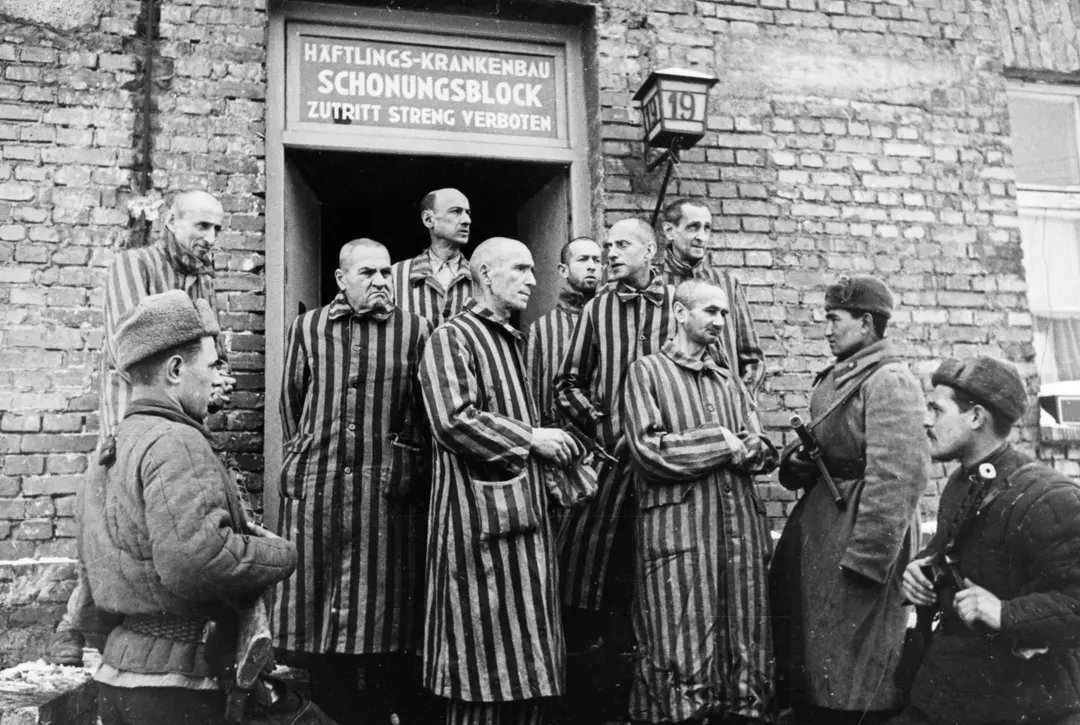




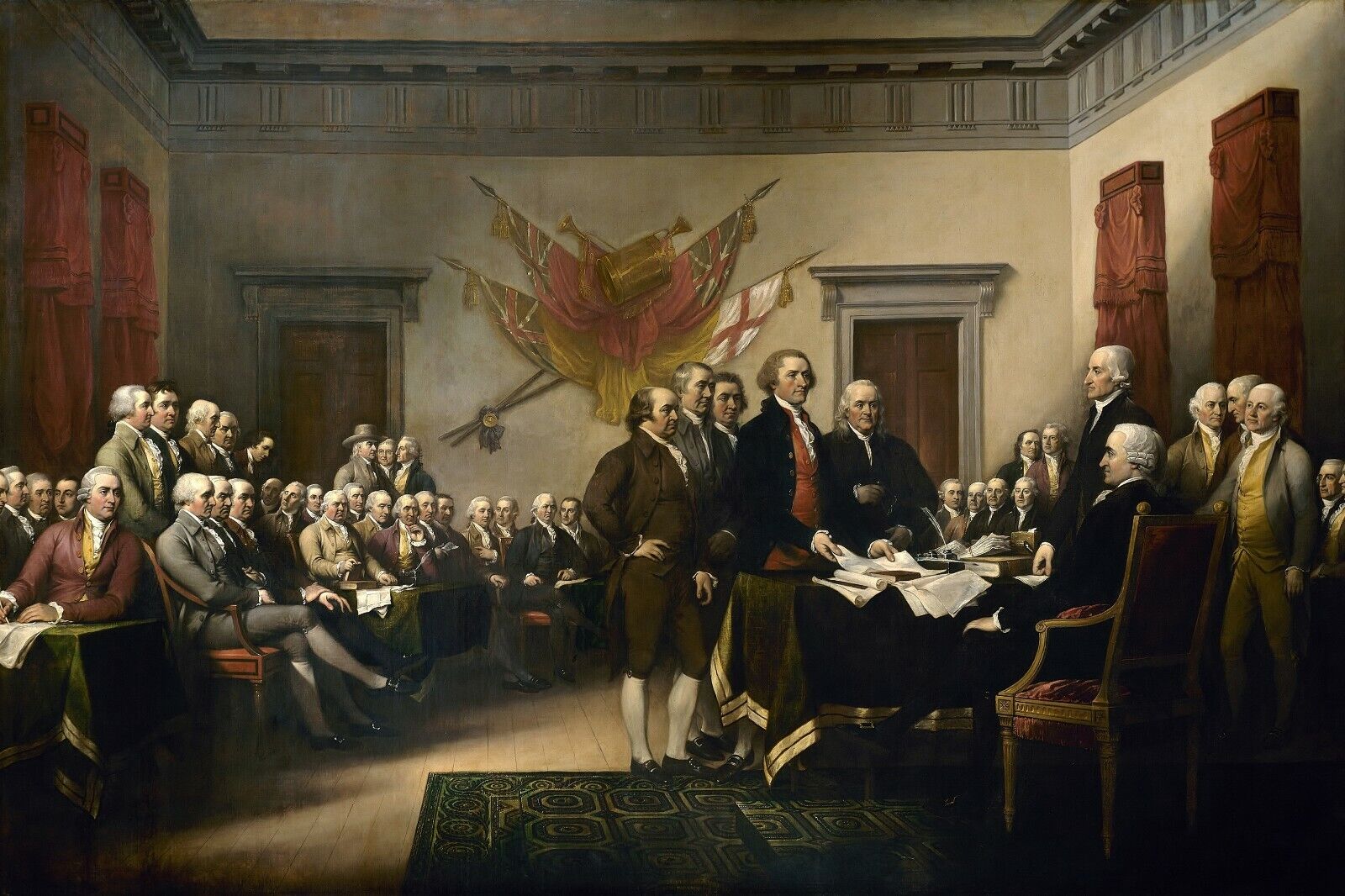


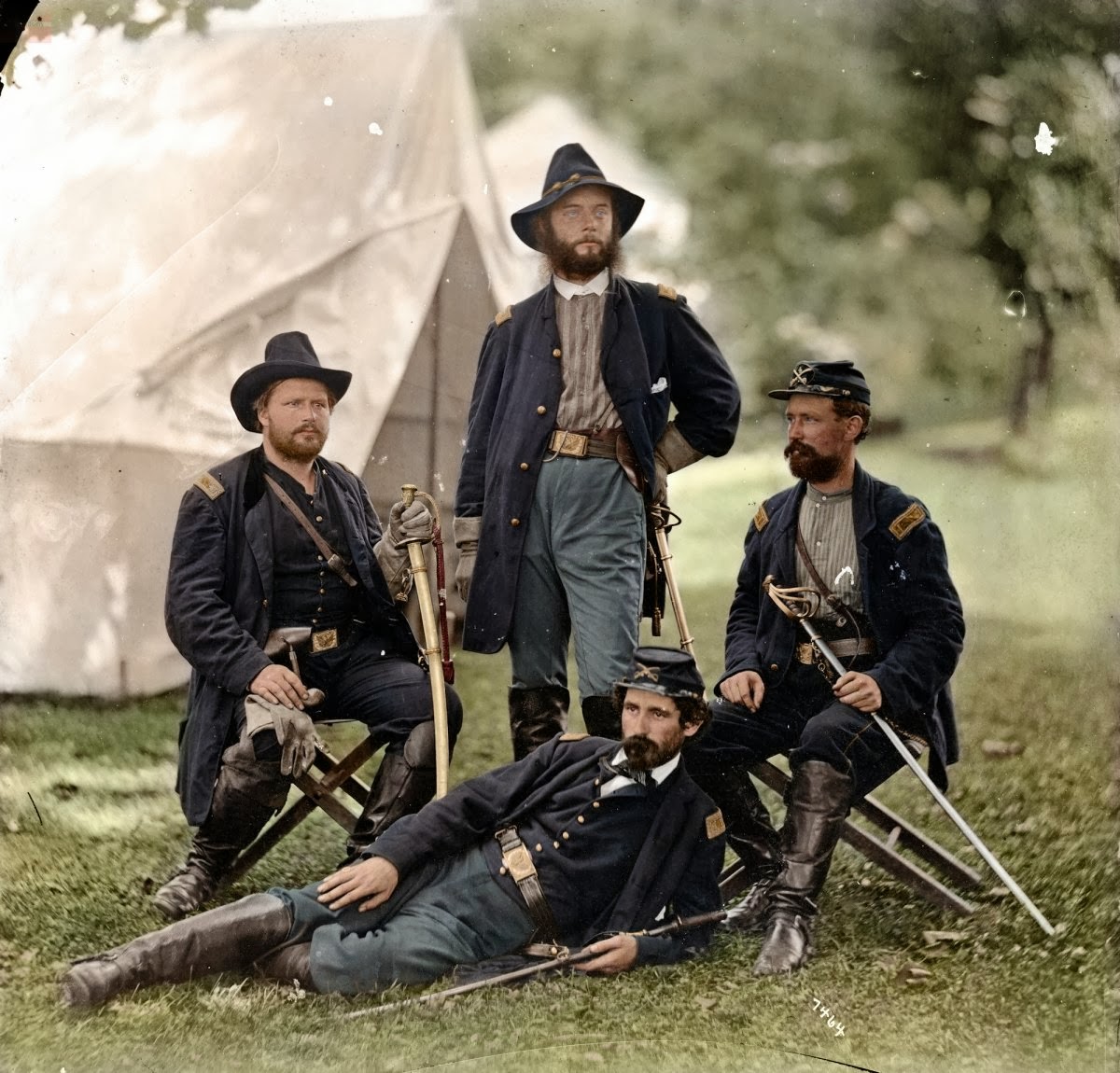




 Forloveofgodandcountry's Blog