NULLIFICATION: The Truths and the Fallacies

Nullify Now - North Carolina (Thomas Jefferson quote)

by Diane Rufino

PART I:  Nullification is the Rightful Remedy to Limit the Federal Government to its Constitutional Objects

Nullification is the theory that says that actions of the federal government that are passed, imposed, or exercised in excess or abuse of the express authority granted in the Constitution are not enforceable. If there is no proper foundation for the action, then that action is null and void and a state has the right, in fact the duty, to refuse to enforce it on its people. Nullification is an essential principle to ensure that the People are insulated from federal tyranny.

Nullification is a legal theory rooted firmly in constitutional history and based on the very limitations articulated in the US Constitution, specifically the Tenth Amendment and Article VI, Section 2 (“Supremacy Clause”). It is based on the federal nature of our government (separation of powers; “dual and competing sovereigns”), on the Supremacy Clause (only those laws made “in pursuance to the Constitution” are supreme and therefore trump state law), and most strongly, on the compact nature of the Constitution (the states formed the Constitution as a compact, agreeing to delegate some of their sovereign power – certain specified powers – to the federal government and reserving all other powers to themselves. Each state, as a party to the compact, has a “right to judge for itself” the extent of the federal government’s powers).  The compact – the social compact – that the states signed in forming the Union in 1789, is similar to contract law. Contracts, as we all know, outline the obligations and benefits to each of the signing parties. The parties are likewise bound by the express language of the contract. We understand this theory and this issue of contract construction as we all have signed contracts. If one party attempts to change the terms or exceed authority under the contract, the other party can either chose to ignore the perverted exercise of contract power or can break the contract altogether.

The fundamental basis for government and law in this country, as in most societies, is the concept of the social compact (or social contract). Social compact is an extension of Natural Law (upon which our Declaration is based) which states that human beings begin as individuals in a state of nature and then organize into societies for mutual benefit. They create a society by establishing a contract whereby they agree to live together in harmony for their mutual benefit, after which they are said to live in a state of society. This contract involves the retaining of certain natural rights, an acceptance of restrictions of certain liberties, the assumption of certain duties, and the pooling of certain powers to be exercised collectively. James Madison confirmed the nature of the US Constitution as a social compact in Federalist No. 39.

The key features of a social compact are: (i) retention of natural rights; (ii) common defense of those rights; and (iii) limitation of government power.

Now, it is true that the compact assures that the Constitution and the laws made in pursuance to it (Article VI) shall be valued as the supreme law of the land, but the converse is equally true. All power not expressly granted is reserved by the States and on those objects, state law is supreme law. This is our system of dual sovereignty. That is the brilliant design feature of our American government system which our Founders believed would ensure the protection of our God-given rights. But unfortunately, our Founders thought the government could be trusted to respect its boundaries, to protect that “precious jewel” that is liberty. They believed that if the branches of government were “advised” that their particular actions were unconstitutional, they would quickly remedy the situation and undo what they had done.

Hah, fat chance that was going to happen. It was only a few years into the operation of the federal government when it attempted, successfully too, to enlarge its powers and redefine the terms of the Constitution. And that’s when our most important Founders – Thomas Jefferson and James Madison – had to remind state leaders why we fought the Revolutionary War in the first place and what their fears had been when considering ratifying the Constitution. That’s when Jeffersonian Nullification was born. It was born out of the notion that the federal government must not be permitted to hold a monopoly on constitutional interpretation, for if it has the unchecked power to judge the extent of its own powers, it will continue to grow and encroach on the rights and liberties of the People and the States.

In his written assurances to the States that the Constitution was delegating only limited powers from them to a federal government, Alexander Hamilton wrote in Federalist No. 78: “Every act of a delegated authority, contrary to the tenor of the commission under which it is exercised, is void. No legislative act, therefore, contrary to the Constitution, can be valid. To deny this, would be to affirm, that the deputy is greater than his principal; that the servant is above his master; that the representatives of the people are superior to the people themselves; that men acting by virtue of powers, may do not only what their powers do not authorize, but what they forbid.”

In order that the States (and the People) be completely assured of what precise objects that their sovereign power was being delegated to the government for, James Madison explained it in the clearest of terms in Federalist No. 45:

The powers delegated by the proposed Constitution to the federal government are few and defined. Those which are to remain in the State governments are numerous and indefinite. The former will be exercised principally on external objects, as war, peace, negotiation, and foreign commerce; with which last the power of taxation will, for the most part, be connected. The powers reserved to the several States will extend to all the objects which, in the ordinary course of affairs, concern the lives, liberties, and properties of the people, and the internal order, improvement, and prosperity of the State.

      The operations of the federal government will be most extensive and important in times of war and danger; those of the State governments, in times of peace and security. As the former periods will probably bear a small proportion to the latter, the State governments will here enjoy another advantage over the federal government. The more adequate, indeed, the federal powers may be rendered to the national defense, the less frequent will be those scenes of danger which might favor their ascendancy over the governments of the particular States.”    

In Federalist No. 26, Alexander Hamilton wrote: “The State legislatures, who will always be not only vigilant but suspicious and jealous guardians of the rights of the citizens against encroachments from the federal government, will constantly have their attention awake to the conduct of the national rulers, and will be ready enough, if anything improper appears, to sound the alarm to the people, and not only to be the VOICE, but, if necessary, the ARM of their discontent.”

And with this duty to protect its citizens against encroachments from the federal government – to be both their VOICE and their ARM of discontent – we see the seeds that were sown for Nullification and Interposition (the duty to intercede and prevent the usurpation and “arrest the evil”).

Our Founders understood the nature of power….  Power can only be checked by power.

In the Kentucky Resolutions of 1799, which questioned the constitutionality of the Alien & Sedition Acts, Thomas Jefferson wrote:

If those who administer the general government be permitted to transgress the limits fixed by the federal compact (ie, the US Constitution), but a total disregard to the special delegations of powers therein contained, an annihilation of the state governments, and the creation, upon their ruins, of a general consolidated government, will be the inevitable consequence: That the principle and construction, contended by the state legislatures, that the general government is the exclusive judge of the extent of the powers delegated to it, stop nothing short of despotism – since the discretion of those who administer the government, and not the Constitution, would be the measure of their powers. That the several states who formed that instrument, being sovereign and independent, have the unquestionable right to judge of its infraction; and that a Nullification, by those sovereignties, of all unauthorized acts done under color of that instrument, is the RIGHTFUL REMEDY:  That this commonwealth does, under the most deliberate reconsideration, declare that the said Alien and Sedition laws are, in their opinion, palpable violations of the Constitution…

In the Virginia Resolutions of 1798, also addressing the unconstitutionality of the Acts, James Madison wrote:

That this Assembly doth explicitly and peremptorily declare, that it views the powers of the Federal Government, as resulting from the compact, to which the states (alone) are the parties, as limited by the plain sense and intention of the instrument constituting that compact; as no farther valid than they are authorized by the grants (of power) enumerated in that compact; and that in case of a deliberate, palpable, and dangerous exercise of other powers, not granted by said compact, the states who are parties thereto have the right, and are duty-bound, to INTERPOSE for arresting the progress of the evil, and for maintaining within their respective limits, the authorities, rights, and liberties appertaining to them…

       That the General Assembly expresses its deep regret that a spirit has been manifested by the federal government to enlarge its powers by forced constructions of the constitutional charter which defines them; and that indications have appeared of a design to expound certain general phrases (which, having been copied from the very limited grant of powers in the former Articles of Confederation, were the less liable to be misconstrued) so as to destroy the meaning and effect of the particular enumeration which necessarily explains, and limits the general phrases; and so as to consolidate the states, by degrees, into one sovereignty, the obvious tendency and inevitable result of which would be, to transform the present republican system of the United states into an absolute, or at best, a mixed monarchy..

Historians and constitutionalists explain the Jeffersonian theory of Nullification in a way that is slightly misleading. They teach us that constitutional theory allows a state the right (and perhaps even the duty) to nullify, or invalidate, any federal law which that state has determined to be outside the powers delegated to the government under the Constitution. In other words, they say, a state has the right to determine when a federal law is unconstitutional and therefore decide not to enforce it.

Nullification is actually simpler than that. We live in a country founded on the notion of Individual Sovereignty – that man is supreme and government flows from the sovereign rights and powers of the individual. In our free society, founded on the supremacy of individual rights, constitutions were drafted to list those powers that the people agreed to delegate to their government for the protection of their rights and the orderly management of their communities. The US Constitution was no different. All other powers were retained by the People. Laws are only enforceable in such a constitutional republic when there is express authority granted by the People to do so. Consequently, when the federal government passes a law that exceeds or abuses power delegated in the Constitution, that law is AUTOMATICALLY  NULL and VOID.  It is automatically unenforceable on a free people. Judges are SUPPOSED to declare it void (to put that official check on the legislative branch and force them to repeal the law), but even if they don’t, the law is already null and void.  The federal judiciary was originally intended to be a “check” and was supposed to “advise” only. It was intended to be the weakest of all branches.

So, under the doctrine of Nullification, the states don’t really declare laws to be null and void.  Rather, they recognize that certain laws are null and void. Then they exercise their duty to maintain the integrity of our free society by refusing to enforce any unconstitutional law on their citizens.

PART 2:  Nullification is a Constitutional Principle, Exercised by our Founding Generations

There is no easier way for tyranny to take hold than for a People to remain silent when they know, or should know, what their rights are. There is no easier way for a government to usurp the natural rights of a People to govern themselves than to stand by and let that government legislate when it has no authority to do so.

The early colonists certainly didn’t miss an opportunity to stand up for their rights. In fact, the Sons of Liberty formed (much like today’s Tea Party and Tenth Amendment Center) to point out where Britain was violating their rights and to help organize opposition and protest. Samuel Adams, the leader of the Sons of Liberty in Boston, wrote the following in 1769 with these words:

DEARLY BELOVED,

REVOLVING time hath brought about another anniversary of the repeal of the odious Stamp Act,—an act framed to divest us of our liberties and to bring us to slavery, poverty, and misery. The resolute stand made by the Sons of Liberty against the detestable policy had more effect in bringing on the repeal than any conviction in the Parliament of Great Britain of the injustice and iniquity of the act . It was repealed from principles of convenience to Old England, and accompanied with a declaration of their right to tax us; and since, the same Parliament have passed acts which, if obeyed in the Colonies, will be equally fatal. Although the people of Great Britain be only fellow-subjects, they have of late assumed a power to compel us to buy at their market such things as we want of European produce and manufacture; and, at the same time, have taxed many of the articles for the express purpose of a revenue; and, for the collection of the duties, have sent fleets, armies, commissioners, guard acostas, judges of admiralty, and a host of petty officers, whose insolence and rapacity are become intolerable. Our cities are garrisoned; the peace and order which heretofore dignified our streets are exchanged for the horrid blasphemies and outrages of soldiers; our trade is obstructed ; our vessels and cargoes, the effects of industry, violently seized; and, in a word, every species of injustice that a wicked and debauched Ministry could invent is now practiced against the most sober, industrious, and loyal people that ever lived in society. The joint supplications of all the Colonies have been rejected; and letters and mandates, in terms of the highest affront and indignity, have been transmitted from little and insignificant servants of the Crown to his Majesty’s grand and august sovereignties in America.

These things being so, it becomes us, my brethren, to walk worthy of our vocation, to use every lawful mean to frustrate the wicked designs of our enemies at home and abroad, and to unite against the evil and pernicious machinations of those who would destroy us.”

Son of Liberty

From a small, secret group of agitators in Boston and in Connecticut, the Sons of Liberty grew to the point that there was a group in every one of the thirteen colonies. They organized demonstrations, circulated petitions, published newspaper articles, distributed flyers and handbills, and in general did all they could to bring the message of liberty to the colonists. But it was their simple acts of civil disobedience – like protesting a tax on tea by dumping 342 chests of tea into the Boston Harbor, protesting the tax on documents (Stamp Act) by forcing officials to the Crown to resign or to refrain from unloading ships from Britain, or forming angry mobs in response to the Quartering Act – which prevented the enforcement of some of the acts of Parliament that the colonists found intolerable. It was when the King responded with further punitive and oppressive measures – which Jefferson would refer to as “abuses and usurpations” – it was clear the colonies would have to declare their independence in order to remain free.

By frustrating the enforcement of the Stamp Act and the other intolerable, the Sons of Liberty exercised their early right of nullification. They recognized that the British Parliament had no right to legislate for them when they were not provided representation, as guaranteed in their English Bill of Rights of 1689. Any piece of legislation that is passed without proper authority is automatically null and void and cannot be rightfully enforced. This is the basis of the doctrine of Nullification. The Sons of Liberty stood up for this principle and energized the colonists to stand up for their rights and especially their right NOT TO SUBMIT to laws that were not properly passed in accordance with their government charters.

Nullification, as you can see, is an important check and balance on the power of the federal government, which seeks, at every turn, to enlarge and concentrate its powers and to pervert the meaning and intent of the Constitution. There has been no greater enemy than the federal courts which now openly, flagrantly, and arrogantly declare that the Constitution is a “living, breathing document” that is to be re-interpreted willy nilly and as they, the judges, believe will best reflect and serve the social norms of the day. 

In fact, Nullification is probably the most important check and balance of them all. Dual and co-equal sovereigns, each jealously guarding their respective sphere of power, will maintain that delicate balance of power that our Founding Fathers designed and which the States themselves agreed to. It’s the same way that two skilled attorneys, adversarial in nature (the prosecution and the defense) will aggressively provide that justice is served. And it’s the same way that two political parties, one to the left in its ideology and the other to the right, will ultimately assure that policy remains somewhat in the middle so that our society is tolerable for everyone.

In Federalist No. 33, Alexander Hamilton asked and answered an important question: “If the federal government should overpass the just bounds of its authority and make a tyrannical use of its powers, the people, whose creature it is, must appeal to the standard they have formed, and take such measures to redress the injury done to the Constitution as the exigency may suggest and prudence justify.”  Hamilton doesn’t limit the measures that people can use to redress the situation when government oversteps the bounds of its authority.  According to Hamilton, the remedy should be in proportion to the violation. If we are to take Hamilton at his word for the government’s taxing power, we should, with the same enthusiasm, take him at his word for the ability to push the government back within the bound of the Constitution.

Referring to the title of this article, the truth is that Nullification is a valid constitutional doctrine reserved “in case of a deliberate, palpable, and dangerous exercise of other powers, not granted by said compact (US Constitution).”  James Madison, Virginia Resolutions of 1798. The states, who wrote, debated, amended (Bill of Rights), and ratified the Constitution to create the federal government are the rightful parties who have the authority, and are indeed “duty-bound, to interpose (intercede) for arresting the progress of the evil, and for maintaining within their respective limits, the authorities, rights, and liberties appertaining to them.”  Virginia Resolutions of 1798.  The truth is that Nullification, while not under that express term, was an important principle and an important tool to prevent abusive and unconstitutional laws from being enforced on the colonists/colonies and then on the citizens of the various “united” States and the states themselves when the US Constitution was adopted. The fallacy is that the Constitution itself, through the Supremacy Clause, renders Nullification an illegitimate remedy. The fallacy is that the Supreme Court, as the ultimate authority on the intent and meaning of the Constitution, has rejected the doctrine. The fallacy is that Nullification was the favored state remedy of slavery proponents and white supremists. And the fallacy is that the Civil War distinguished rightful remedies to limit government power.

Part 3:  Opponents of Nullification Attempt to Discredit our Founding Principles With Various False Criticisms

            A.  The Misrepresentation of the Supremacy Clause and Proper Constitutional Bounds 

Critics are quick to say that the theory of nullification has never been legally upheld and in fact, the Supreme Court expressly rejected it – in Ableman v. Booth, 1959, and Cooper v. Aaron, 1958. They say that the courts have spoken on the subject and have held that under the Supremacy Clause of the Constitution, federal law is superior to state law, and that under Article III of the Constitution, the federal judiciary has the final power to interpret the Constitution. Therefore, the critics conclude, that the power to make final decisions about the constitutionality of federal laws lies with the federal courts, not the states, and the states do not have the power to nullify federal laws but rather, are duty-bound to obey them.

The fatal flaw in their arguments, however, is that they believe that the judiciary, a branch of the same federal government that tends to overstep their constitutional bounds, is somehow above the law and not subject to the remedy of Nullification as the other branches are. As will be discussed later, the federal judiciary was the first branch to enlarge its powers, in the case of Marbury v. Madison.

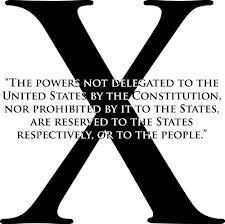
Another fatal flaw in their argument is that somehow, the Supremacy Clause is a rubber stamp that labels every federal law, every federal court decision, and every federal action “supreme.” They, and especially the justices of the Supreme Court, refer to the Supremacy Clause as if it were the Midas Touch – a magical power that turns EVERYTHING the federal government does, including by all three branches, to gold. Nothing is farther than the truth. The Supremacy Clause states simply: “This Constitution, and the laws of the United States which shall be made in pursuance thereof; …shall be the supreme Law of the Land; and the Judges in every State shall be bound thereby…”  The is no debate that the Constitution, as originally drafted and defended, and as intended and ratified, designed a government of limited powers. Therefore it follows that only laws passed to legislate for the limited functions listed in the Constitution are supreme. Regarding objects and designs not expressly listed in the Constitution, the Ninth and Tenth Amendment remind us that they are reserved to the People or the States, respectively, and the federal government can claim no such supremacy. The Supremacy Clause states a preemptive doctrine that asserts sovereignty just as equally as the Ninth and Tenth Amendments assert sovereignty.

Hamilton continued in Federalist No. 33: “It is said that the laws of the Union are to be the supreme law of the land. But what inference can be drawn from this, or what would they amount to, if they were not to be supreme? It is evident they would amount to nothing. A law, by the very meaning of the term, includes supremacy. It is a rule which those to whom it is prescribed are bound to observe. This results from every political association. If individuals enter into a state of society, the laws of that society must be the supreme regulator of their conduct. If a number of political societies enter into a larger political society, the laws which the latter may enact, pursuant to the powers entrusted to it by its constitution, must necessarily be supreme over those societies, and the individuals of whom they are composed. But it will not follow from this doctrine that acts of the large society which are not pursuant to its constitutional powers, but which are invasions of the residuary authorities of the smaller societies, will become the supreme law of the land. These will be merely acts of usurpation, and will deserve to be treated as such. Hence we perceive that the clause which declares the supremacy of the laws of the Union, like the one we have just before considered, only declares a truth, which flows immediately and necessarily from the institution of a federal government. It will not, I presume, have escaped observation, that it expressly confines this supremacy to laws made pursuant to the Constitution; which I mention merely as an instance of caution in the convention; since that limitation would have been to be understood, though it had not been expressed.

Critics also like to discredit Nullification by associating it with the more controversial episodes in our history.  A popular claim is that Nullification was used to perpetuate slavery because it was embraced by Southern leaders who did not want blacks to take their place as free and equal men in their societies. They especially link Nullification to South Carolina’s colorful Senator John C. Calhoun who was not only a vocal proponent of the doctrine and used it to justify his state’s refusal to recognize the Tariff of Abominations in 1832, but he was a strong supporter of slavery and a white supremist. They like to say that Nullification led to the tariff crisis (or Nullification Crisis of 1832) pitting the South against the North and eventually precipitating the Civil War. They allege that the Civil War settled the question of Nullification.

There are so many flaws in these arguments.

Between 1798 and the beginning of the Civil War in 1861, several states threatened or attempted nullification of various federal laws, including the Tariff of 1828, the Tariff of 1832, the Fugitive Slave Act of 1850, and even the 1854 ruling by the Wisconsin Supreme Court which held that Wisconsin didn’t have to comply with the Fugitive Slave Act. None of these efforts were legally upheld, although all were successful in providing the relief they sought.

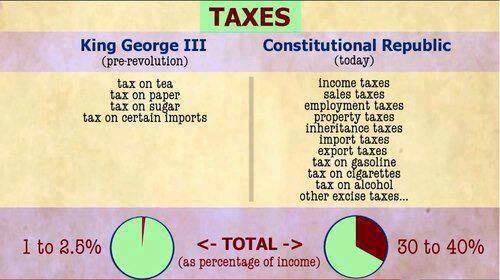
In the late 1820’s, the nation suffered an economic downturn, with South Carolina being hit especially hard. The government enacted high protective tariffs (high tariffs on imports, particularly finished goods). The North, industrial as it was, manufactured finished goods but needed raw materials (such as cotton, sugar, etc) while the South, an agrarian society, purchased almost all finished products from imports. It also made most of its money from its export of cotton, tobacco, and sugar. The tariff, as the South viewed it, harmed the South while at the same time providing an enormous benefit to the North. With the higher prices on imported finished goods, it had the effect of “protecting” the products of the North. In other words, the finished goods of the North would be preferred over imports because of the price. The South would be forced to buy products from the North, thus enriching the North. On the other hand, because of the United States’ high protective tariffs, other countries retaliated by imposing high tariffs on American imports, which greatly harmed the South. To compete, the South had to lower her prices. Like a vulture, the Northern industries noticed that Southern cotton, sugar, etc weren’t selling and took advantage of the fact that they could buy her goods at reduced prices. South Carolina was opposed most vehemently to the protective tariffs. South Carolina believed that a “common government” should serve both regions equally and in this case, it was harming the South in order to enrich the North. South Carolina alleged that the tariffs were extremely detrimental to her well-being.

In the summer of 1828, South Carolina state representative Robert Barnwell Rhett appealed to the governor and to his constituents to resist the majority in Congress regarding the high tariff (referred to as the “Tariff of Abominations”). Rhett emphasized the danger of doing nothing:

But if you are doubtful of yourselves – if you are not prepared to follow up your principles wherever they may lead, to their very last consequence – if you love life better than honor,…. prefer ease to perilous liberty and glory, then awake not!  Stir not!  Impotent resistance will add vengeance to your ruin. Live in smiling peace with your insatiable Oppressors, and die with the noble consolation that your submissive patience will survive triumphant your beggary and despair.”

Also in 1828, John Calhoun published his “Exposition and Protest,” although anonymously, in which he discussed Nullification. (He was Andrew Jackson’s Vice President at the time and Jackson was strongly opposed to Nullification):

If it be conceded, as it must be by everyone who is the least conversant with our institutions, that the sovereign powers delegated are divided between the General and State Governments, and that the latter hold their portion by the same tenure as the former, it would seem impossible to deny to the States the right of deciding on the infractions of their powers, and the proper remedy to be applied for their correction. The right of judging, in such cases, is an essential attribute of sovereignty, of which the States cannot be divested without losing their sovereignty itself, and being reduced to a subordinate corporate condition. In fact, to divide power, and to give to one of the parties the exclusive right of judging of the portion allotted to each, is, in reality, not to divide it at all; and to reserve such exclusive right to the General Government (it matters not by what department to be exercised), is to convert it, in fact, into a great consolidated government, with unlimited powers, and to divest the States, in reality, of all their rights. It is impossible to understand the force of terms, and to deny so plain a conclusion.”

In 1832, inspired by Calhoun’s defense of Nullification as the rightful remedy to not suffer unconstitutional federal legislation (he strongly supported and promoted the Kentucky and Virginia Resolutions, by Thomas Jefferson and James Madison, respectively), South Carolina decided to use the doctrine to escape the oppression of the tariff.  Its position was that Nullification could be used by a state to resist a federal law that was not specifically authorized by the U.S. Constitution.  South Carolina then assembled a democratically-elected convention and issued an Ordinance of Nullification. This ordinance declared that the federal Tariffs of 1828 and 1832 were unconstitutional and therefore null and void within the sovereign boundaries of South Carolina.

The Ordinance of Nullification read:

Whereas the Congress of the United States by various acts, purporting to be acts laying duties and imposts on foreign imports, but in reality intended for the protection of domestic manufactures and the giving of bounties to classes and individuals engaged in particular employments, at the expense and to the injury and oppression of other classes and individuals, and by wholly exempting from taxation certain foreign commodities, such as are not produced or manufactured in the United States, to afford a pretext for imposing higher and excessive duties on articles similar to those intended to be protected, bath exceeded its just powers under the constitution, which confers on it no authority to afford such protection, and bath violated the true meaning and intent of the constitution, which provides for equality in imposing the burdens of taxation upon the several States and portions of the confederacy: And whereas the said Congress, exceeding its just power to impose taxes and collect revenue for the purpose of effecting and accomplishing the specific objects and purposes which the constitution of the United States authorizes it to effect and accomplish, hath raised and collected unnecessary revenue for objects unauthorized by the constitution.

      We, therefore, the people of the State of South Carolina, in convention assembled, do declare and ordain and it is hereby declared and ordained, that the several acts and parts of acts of the Congress of the United States, purporting to be laws for the imposing of duties and imposts on the importation of foreign commodities, and now having actual operation and effect within the United States, and, more especially, an act entitled “An act in alteration of the several acts imposing duties on imports,” approved on the nineteenth day of May, one thousand eight hundred and twenty-eight and also an act entitled “An act to alter and amend the several acts imposing duties on imports,” approved on the fourteenth day of July, one thousand eight hundred and thirty-two, are unauthorized by the constitution of the United States, and violate the true meaning and intent thereof and are null, void, and no law, nor binding upon this State, its officers or citizens; and all promises, contracts, and obligations, made or entered into, or to be made or entered into, with purpose to secure the duties imposed by said acts, and all judicial proceedings which shall be hereafter had in affirmance thereof, are and shall be held utterly null and void.”

The Ordinance of Nullification was not received well and soon escalated to what came to be referred to as the Nullification of 1832. Andrew Jackson was inflamed and was intent on arresting Calhoun and having him hang in Washington DC. He also had Congress pass the Force Bill which authorized the use of military force against any state that resisted the tariff acts. It was feared that South Carolina would secede if pushed, and so, the members of the US Senate and then House came together to work out a solution. In 1833, Senator Henry Clay and Senator Calhoun proposed a compromise bill to resolve the Crisis. The Tariff of 1833 (also known as the Compromise Tariff of 1833), would gradually reduce the tariff rates over a 10-year period to the levels set in the Tariff of 1816 – an average of 20% lower.  The compromise bill was accepted by South Carolina and passed the US Congress and thus effectively ended the Nullification Crisis.  South Carolina got the relief it sought.

As a side note, Abraham Lincoln, who ran on the Republican Platform for president in the election of 1860, was originally a Whig and was still a Whig at heart. He was a true follower of Senator Henry Cabot Lodge.  As such, he was a strong supporter of protective tariffs and promised to raise the tariff to the 1828 rate. Is it any wonder why tensions in the South were elevated with the election of Lincoln?

            B.  The Misrepresentation of Nullification with respect to Slavery

One of the biggest criticisms is that that Nullification was asserted for the purpose of perpetuating slavery. The record, however, is absolutely clear on this issue. Frustration of the federal Fugitive Slave Law was accomplished by nullification efforts all over the North and because of the success of those efforts, slaves were encouraged to seek their freedom and the movement to end slavery was able to gain momentum.

Although the concepts of States’ Rights and Nullification are historically associated with the South, they were employed by northern states to resist the Fugitive Slave Act of 1850. While the southern states defied the federal government by refusing to accept the abominable tariffs, the northern states defied the government by refusing to enforce the Fugitive Slave Act, which they believed was an unconstitutional commandeering of the state and at its core, a repugnant law that offended their conscience. Under this law, stringent measures were imposed to catch runaway slaves. These included:

  • Penalizing federal officials that did not enforce the law
  • Rewarding federal officials that did enforce law
  • Requiring free citizens to help capture runaway slaves
  • Fining or imprisoning citizens helping runaways escape
  • Prohibiting runaways from testifying on their own behalf in court
  • Denying jury trials to runaways

Special federal commissions, not courts, worked with U.S. marshals to handle runaway cases. Commissioners and marshals who failed to hold captured runaways could be sued, thus compelling them to enforce the law. They received $10 for every runaway delivered to a claimant, but only $5 for cases in which the runaway was freed. This provided a financial incentive to send even free black men and women into slavery. The law not only jeopardized the liberty of every black citizen, but it also infringed on the freedom of white citizens by forcing them to hunt for runaways against their will.

State and local governments openly defied the law:

1).  The legislatures of Maine, Massachusetts, Connecticut, Rhode Island, Michigan, and Wisconsin passed “personal liberty laws” making it nearly impossible to enforce the Fugitive Slave Act in those states.

2).  The Wisconsin Supreme Court declared that the Tenth Amendment protected states from repugnant federal laws like the Fugitive Slave Act, specifically citing the Virginia and Kentucky Resolutions of 1798 as the basis for its opinion.

3).  The Chicago City Council called northern congressmen who supported the act “traitors” like “Benedict Arnold and Judas Iscariot.”

4).  When the U.S. Supreme Court ruled that states could not free federal prisoners convicted of helping runaways, the Wisconsin legislature called “this assumption of jurisdiction by the federal judiciary… an act of undelegated power, void, and of no force…”  (The Wisconsin Supreme Court nullified the Supreme Court’s decision.  See discussion below)

In addition to local governments, the people themselves took matters into their own hands:

1).  In Syracuse, New York, in 1851 a jury effectively nullified the law by acquitting all but one of 26 people who had been arrested for freeing William “Jerry” Henry. Among those 26 persons arrested and tried was a US Senator and the former Governor of NY.  Jerry ultimately escaped to Canada.

2).  When Joshua Glover was captured by U.S. marshals in Milwaukee, Wisconsin, the sheriff supported local opinion by freeing Glover and jailing the marshals; Glover also escaped to Canada.

3).  In Pennsylvania, a mob of free blacks killed a slaveholder attempting to capture a runaway.

4).  Military force was needed to disperse a mass meeting after a black man was apprehended in Detroit.

5).  Throughout Ohio, town meetings branded any northern official who helped enforce the law “an enemy of the human race.”

6).  Other cities and states refused to help enforce the law simply because it was too expensive. Returning one runaway to the South cost the city of Boston $5,000. Boston officials never enforced the law again. All of these acts of defiance and nullification were ironically adopted from principles first introduced and later invoked by southerners.

When Wisconsin residents refused to enforce the Fugitive Slave Law and return escaped slave, Glover, an ensuing series of arrests would give the state Supreme Court the opportunity to use Nullification to proclaim the law’s unconstitutionality. The case would be known as In re Booth.

What has become known as the Booth case is actually a series of decisions from the Wisconsin Supreme Court beginning in 1854 and one from the U.S. Supreme Court, Ableman v. Booth, 62 U.S. 514 (1859), leading to a final published decision by the Wisconsin Supreme Court in Ableman v. Booth, 11 Wis. 501 (1859). These decisions reflect Wisconsin’s attempted nullification of the federal fugitive slave law, the expansion of the state’s rights movement and Wisconsin’s defiance of federal judicial authority. The Wisconsin Supreme Court in Booth unanimously declared the Fugitive Slave Act of 1850 unconstitutional. The U.S. Supreme Court overturned that decision but the Wisconsin Supreme Court refused to file the U.S. Court’s mandate upholding the fugitive slave law. That mandate has never been filed.

When the U.S. Constitution was drafted, slavery existed in this country. Article IV, Section 2 provided that:  “No person held to service or labor in one state under the laws thereof, escaping into another, shall in consequence of any law or regulation therein, be discharged from such service or labor, but shall be delivered up on claim of the party to whom such service or labor may be due.”

Based on this provision, Congress in 1793 passed a law that gave slave owners the power to have a runaway slave arrested in any state and returned.  The law remained intact until 1850, by which time the moral sentiment of the North against slavery had become aroused; the Liberty Party had been organized, the underground railroad had flourished and many northern men and women refused to act as slave catchers or assist in perpetuating slavery. Because of the increasing difficulty the slave holders faced in reclaiming runaway slaves, Congress passed the Fugitive Slave Act of 1850. The law placed the mechanism for capturing runaway slaves in the hands of federal officers. It provided that these cases would be heard by a federal judge or court commissioner and allowed the slave owner to prove the debt owed by the slave but precluded testimony from the fugitive entirely. The new law also increased the penalties for resistance and for concealment of fugitives.

Although it was intended as a compromise, the new law actually fueled the flames of anti-slavery sentiment and from 1854 to 1861, Wisconsin politics was dominated by the question of whether the state had to defer to the federal government’s efforts to enforce the Fugitive Slave Act.

In the spring of 1852, a slave named Joshua Glover escaped from a Missouri plantation and made his way to Racine, where he found work at a sawmill. Two years later, his owner tracked him down and had him apprehended by federal marshals under the Fugitive Slave Act. Glover was held in the Milwaukee County Jail pending a hearing.  When Sherman M. Booth, editor of the Milwaukee abolitionist newspaper, The Free Democrat, heard of the capture, he is said to have mounted his horse and galloped through the streets of Milwaukee shouting: “Freemen! To the rescue! Slave catchers are in our midst! Be at the courthouse at 2:00!” Booth’s lawyers then persuaded a Milwaukee County Court judge to issue a writ of habeas corpus (a judicial order freeing Booth) directing the U.S. marshal to bring Glover before the county judge and justify his detention

Before the hearing could take place, Booth appointed a committee to prevent the “kidnapping” of Glover by the federal authorities. After Booth made a fiery speech, a mob led by one of the other committeemen, John Ryecraft, battered down the jail doors, freed Glover and spirited him away to Canada.  Federal authorities charged Booth with assisting Glover’s escape. Booth was released on bail but two months later, at his own request, he was delivered to the U.S. Marshal. Booth’s surrender was calculated to bring a test case in the state courts challenging the constitutionality of the fugitive slave law. On the day after the surrender, Booth’s attorney, Byron Paine (later a justice of the Wisconsin Supreme Court), successfully applied to Wisconsin Supreme Court Justice Abram D. Smith for a writ of habeas corpus. At that hearing, Smith asked the parties to address the constitutionality of the fugitive slave law. Paine, citing Thomas Jefferson’s writings, said states have the right to impose their authority when their sovereign rights are violated by the federal government. Paine argued that Congress had no authority to make laws based on the fugitive slave clause of the Constitution and that the Act of 1850 was unconstitutional because it denied a trial by jury and vested judicial powers in court commissioners. On June 7, 1854, Smith ordered that Booth be released, finding the warrant of commitment defective and the fugitive slave law unconstitutional.

When the US Attorney General learned of the decision, he appealed it to the US Supreme Court. The case –  Ableman v. Booth – was heard in 1859, just one year before slavery would a major issue of the presidential election.  In that case, the Supreme Court upheld the constitutionality of the Law and further held that Wisconsin did not have the power to nullify the Fugitive Slave Act.  In a decision written by Justice Roger Taney (who also wrote the infamous Dred Scott decision): “No power is more clearly conferred by the Constitution and laws of the United States than the power of this court to decide, ultimately and finally, all cases arising under such Constitution and laws.” [pg. 62]

The justices of the Wisconsin Supreme Court justices were then instructed to file the U.S. Supreme Court’s mandates reversing the judgments and dismissals in the Booth case. Although there had been some changes to the bench in the years since the case was heard, the majority opinion was that the federal court had no power to review the judgments of the state Supreme Court and Wisconsin was well within its right to nullify the Fugitive Slave Law, and so the justices voted not to file the mandates in the Booth cases. The Wisconsin Supreme Court would write: “The Supreme Court said that the States cannot, therefore, be compelled to enforce the Fugitive Slave Act. We regard the action of the Supreme Court of the US, in assuming jurisdiction in the case before mentioned, as an arbitrary act of power, unauthorized by the Constitution. This assumption of jurisdiction by the federal judiciary is an act of undelegated power, and therefore without authority, void, and of no force.”

[Booth was subsequently arrested by federal agents and placed in a state penitentiary. Since Wisconsin did not assert its duty to interpose and prevent federal agents from such conduct, Booth remained in custody. But only a few short months later, on the eve of Lincoln’s inauguration, President Buchanan would pardon him].

Wisconsin successfully nullified the Fugitive Slave Law in its state.  It did not back down. It did not reverse the judgment on Booth, as the US Supreme Court instructed. Although the Civil War would start in less than two years and the affections that bound North and South together would be strained, the state of Wisconsin maintained its position on the constitutionality of the Fugitive Slave Law and held to its conviction that it was unenforceable in its borders.

Contrary to the critics’ position that Nullification was used to promote and support slavery, the only real time we saw it used with regard to slavery is in an effort to discourage enforcement of laws to return slaves that have successfully escaped and to therefore encourage their escape to the north.

The critics of Nullification go even further and try to discredit Nullification by blaming it, for example, for Arkansas’ refusal to integrate their schools following the Brown v. Board of Education decision in 1953 which demanded that school segregation be ended immediately.  Martin Luther King Jr. himself vilified Nullification in his “I Have a Dream” speech in Washington DC in 1963.  He said: “I have a dream that my four little children will one day live in a nation where they will not be judged by the color of their skin but by their character.  I have a dream today. I have a dream that one day down in Alabama, with its vicious racists, with its governor having his lips dripping with the words of interposition and nullification; that one day right down in Alabama little black boys and black girls will be able to join hands with little white boys and white girls as sisters and brothers.”

To condemn Nullification for one bad application would require that we also condemn the Supreme Court because of its Dred Scott decision.  Besides, there are many constitutional scholars who don’t wonder if the Brown decision was decided using an interpretation that itself was unconstitutional. While it should be universally agreed that purposeful segregation of the races based on the assumption that blacks are an inferior race had to end. It was a shameful policy that has rocked our moral conscience as a nation. But, to use the very same criteria (race), especially as in the bussing cases, to remedy for the past sins of segregation has been challenged as an unconstitutional exercise of judicial power. A violation of the 14th Amendment is a violation of the 14th Amendment, whether it’s used for bad or for good.

C.  Misrepresentation because of Political Correctness  

There is nothing more harmful to liberty and nothing more harmful in a free society than to shut down ideas and avenues of redress under the pretext that it “is offensive” to certain groups of people. Certainly, one of the oldest tricks in the book is the one whereby supporters of a centralized energetic government demonize the message that empowers its people. And that’s what has happened with Nullification and the Civil Rights Movement.

Martin Luther King Jr. used the words Nullification and Interposition for effect and to elicit passions that evoke memories of slavery and efforts by the South to deny them Civil Rights. Had he been honest, he would have also praised Nullification for providing the North with the reason not to enforce the Fugitive Slave Laws and condemning runaway slaves to a life of continued forced servitude as nothing more than personal property.

It was Arkansas’ actions in response to the Brown v. Board of Education decision that led to the Cooper v. Aaron case and appeared to give Nullification opponents ammunition. In the wake of the Brown case, the school district of Little Rock, Arkansas formulated a plan to desegregate its schools but most other school districts in the state opposed the Supreme Court’s rulings and attempted to find ways to perpetuate segregation. As a result, the Arkansas state legislature amended the state constitution to oppose desegregation and then passed a law relieving children from mandatory attendance at integrated schools. The school board of Little Rock, however, ignored then mandate and continued on with the desegregation program. In fact, it was this decision that led to the incident known as the “Little Rock Nine” incident (or the “Little Rock School Crisis of 1957”).  In 1957, the NAACP enrolled nine black children at Little Rock Central High. Arkansas’ Governor Orval Faubus energetically opposed the desegregation plan and even deployed the Arkansas National Guard to block the entrance to the school. On September 9, the Little Rock School District issued a statement condemning the governor’s deployment of soldiers to the school, and on September 24, President Eisenhower ordered the 101st Airborne Division of the US Army to Little Rock and federalized the entire 10,000-member Arkansas National Guard, taking it out of the hands of Faubus. The crisis was over and the nine students were finally permitted to attend Little Rock Central.

On February 20, 1958, five months after the integration crisis, members of the Arkansas state school board (along with the Superintendent of Schools) filed suit in the US District Court for the Eastern District of Arkansas, urging suspension of Little Rock’s plan of desegregation. They alleged that public hostility to desegregation and that the opposition of Governor Faubus and the state legislature created an intolerable and chaotic situation. The relief the plaintiffs requested was for the black children to be returned to segregated schools and for the implementation of the desegregation plan to be postponed for two and a half years. The case would make its way to the Supreme Court later that same year.

In that case, Cooper v. Aaron, the Supreme Court, in a unanimous decision in Cooper  v. Aaron, noted that although the school board had apparently acted in good faith, it was nonetheless constitutionally impermissible under the Equal Protection Clause to maintain law and order by depriving the black students their equal rights under the law.  It began its analysis by noting that Justice John Marshall, in 1803 in the landmark case of  Marbury v. Madison, declared that “It is emphatically the province and duty of the judicial department to say what the law is.” The Marbury decision established the basic principle that the federal judiciary is supreme in the exposition of the law of the Constitution.  The Cooper opinion then went on to state: “The interpretation of the Fourteenth Amendment enunciated by this Court in the Brown case is the supreme law of the land under Article VI of the Constitution (the Supremacy Clause) which therefore makes it of binding effect on the States.”  Furthermore, the Court reasoned, since every state official takes an oath to support the US Constitution, they are bound to solemnly support the Constitution and such rulings. The Court then rejected the notion that a state has no duty to obey a federal court order that it believes to be unconstitutional.  In other words, the Court rejected nullification and interposition. “In short, the constitutional rights of children not to be discriminated against in school admission on grounds of race or color declared by this Court in the Brown case can neither be nullified openly and directly by state legislators or state executive or judicial officers nor nullified indirectly by them through evasive schemes for segregation whether attempted ingeniously or ingenuously.”

It is worth noting that the Framers and Founding Fathers never assigned the Supreme Court the responsibility that Justice Marshall assumed for the Court in Marbury v. Madison – that it shall be the sole province of the Supreme Court to declare what the Constitution says and means. It is a power that the Court, a branch of the federal government, assigned and delegated to itself. And that decision has never been challenged, even though the Federalist Papers speak differently of the function of the federal judiciary.

Furthermore, the Supreme Court has no more the right to declare Nullification an improper check and balance on the power of the federal government as it does on the Separation of Powers doctrine or the President’s Veto power.

Some legal scholars have publicly criticized the Court’s rationale in Cooper. Perhaps the most famous criticism comes from former US Attorney General (under Ronald Reagan) and brilliant constitutional attorney, Edwin Meese III, in his law review article entitled The Law of the Constitution. In that article, Meese accused the Supreme Court of taking too much power for itself by setting itself up as the sole institution responsible for the interpretation of the Constitution. He wrote that while judicial interpretation of the Constitution binds the parties of the case, it should not establish a supreme law of the land that must be accepted by all persons.

             D.  Misrepresentation by an Incorrect Assessment of the Civil War  

Perhaps one of the most popular arguments given by the opponents of Nullification is that the Civil War settled the issue.

Of course, this is a preposterous assertion. Core constitutional principles weren’t destroyed, even though President Lincoln did everything in his power to destroy the Constitution itself. Just because a constitutional government was suspended and the proper role of the federal government was temporarily derailed does not mean our system was abandoned. The US Constitution was never rejected and supplanted by another. Our supreme law was merely modified by a few amendments and the southern states were punished (severely) for their audacity in seceding.

Opponents allege that it was the Southern States and their seditious spirit (ie, embracing Nullification) that led to the Civil War. It seems that it never occurred to them to read the Inaugural Address of Jefferson Davis, President of the Confederate States of America, where he talked about their pure allegiance to the spirit of the American Revolution and the principles embodied in the Declaration of Independence.

As Thomas Jefferson so aptly explained, the power of Nullification is that it accomplishes peacefully what rebellion would accomplish forcibly..  and that is a rejection of a government that refuses to abide by its constitutional bounds.  Nullification is a gentle nudge, by the States, to put the federal government on notice that it has violated the terms and spirit of the Constitution, and therefore putting the ball back in its court so it can take the proper steps and remedy the situation. That’s why Jefferson, in fact, one of the reasons he termed it the “Rigthful Remedy.”  Nullification doesn’t lead to Secession, it prevents it.  Only when the federal government refuses to abide by the boundaries the people have entrusted it do the People have to consider more extreme measures.

In his book Is Davis a Traitor, Albert Taylor Bledsoe writes: “The subjugation of the Southern States and their acceptance of the terms dictated (forced upon them) by the North in the War of Coercion may be considered as having shifted the Federal Government from the basis of compact to that of conquest, and thereby extinguished every claim to the right of secession for the future.”

Whether one believes we have been conquered by our own government determines what they believe about Nullification and Secession. Whether one believes Bledsoe’s assessment or not speaks volumes about whether that person cherishes liberty.

Our Declaration of Independence proclaims that in America, individual liberty is grounded firmly in Natural Law and God’s law. To secure that foundation, our country adopted the government philosophy of John Locke which says that people have rights preexisting government, government exists to protect those rights, and government should not stand in the way of its own dissolution should it violate those rights. This is the express message of the Declaration.

It’s obvious that in the wake of the Civil War, the nature of government has fundamentally changed and that the relationship between itself and the people has been transformed. But while there are those who accept the notion that with the War of Coercion the government took a stand against the rights of the individual (and won) and who believe we must submit to this new system, the question really boils down to this….  Did the government have the right to coerce the States and the People to fight a war for ITS own preservation and domination?  Did it have the right to subjugate the Southern States against their will?  NO, it did not. Nowhere did the government have the right to act as it did and therefore the consequences are NULL and VOID.

Those who support Nullification still believe in the fundamental truth that people have rights that preexist government and that government exists primarily to protect our rights from those that do not respect them and NOT to control us and coerce us into serving its goals.

As Jefferson Davis indeed predicted, the northern victors would succeed in teaching history which vindicates their efforts and violations. And so, through our public schools, the great majority of books, government opinion, and even the significance of the Lincoln Memorial on the national mall, we are led to believe that Abraham Lincoln was our most important and beloved president. The reality, according to historian Larry Tagg in his book  The Unpopular Mr. Lincoln: America’s Most Reviled President, is that he was the most hated of all American presidents during his lifetime. He was so thoroughly hated in the North (especially in New York) that the New York Times editorialized a wish that he would be assassinated. Thomas DiLorenzo, who has done extensive research on Lincoln, said the hatred was perfectly understandable.  Lincoln committed so many constitutional violations that even Congress’ collective head was spinning. The Congressional record is full of discussion as to the extent of his violations. He illegally suspended Habeas Corpus, imprisoned tens of thousands of Northern political critics without due process, and shut down over 300 opposition newspapers. If they still tried to use the mail to distribute news, he called out the army, seized their property, and prevented their access to the US mail. He enforced military conscription with the murder of hundreds of New York City draft protesters in 1863 and with the mass execution of deserters from his army. He deported a congressional critic (Democratic Congressman Clement Vallandigham of Ohio); confiscated firearms; and issued an arrest warrant for the Chief Justice of the Supreme Court (Roger Taney) when he issued an opinion that only Congress could legally suspend Habeas Corpus. He blocked southern ports without authorization of Congress (which is far and above the type of action necessary to quash a rebellion; it’s an act of war). Most of all, he waged an unnecessary war, not authorized by Congress, that resulted in the death of 1 in every 4 young men (3.4% of the population at the time; 3.4% of today’s population would be approximately 8.5 million Americans). The real legacy of the Civil War, is Lincoln’s “false virtue” – that he felt justified in trampling all over the Declaration of Independence, the US Constitution, and the sovereign rights of the states in order to do what he personally believed was necessary.  To say Lincoln saved the Union by waging the Civil War is like saying a man saved his marriage by beating his wife into submission.

For those who believe that the Civil War settled the question of whether Nullification is a proper remedy, then I ask this: How is it that a constitutional remedy can be destroyed by unconstitutional conduct by the President of the United States and the US Congress?  How the essential principles of self-preservation and self-government proclaimed in the Declaration of Independence be destroyed by the very institution that that document assured would be established to protect those rights?  How can a liberty-minded people buy into this fatal argument that it is OK for the US government, a creature of the People themselves, to take a hostile position with respect to the Declaration of Independence and deny them the promise “that whenever any Form of Government becomes destructive of these ends, it is the Right of the People to alter or to abolish it, and to institute new Government, laying its foundation on such principles and organizing its powers in such form, as to them shall seem most likely to effect their Safety and Happiness.”  How is it that a nation so singular in its purpose when it fought the Revolutionary War (to secede from an oppressive government, in order to live free and govern themselves accordingly) has deteriorated to the point that its people can no longer make the essential connection between their Constitution and the principles proclaimed in the Declaration which underlie it?  It was all about liberty and freedom – the condition of independence (liberty) and the right to go about our business without being controlled or subjugated (freedom). In explaining why it was so important for our founding colonists to stand up against the growing tyranny of the British King and Parliament, Mercy Otis Warren perhaps articulated it best when he said, in 1774, “in order to preserve inviolate, and to convey to their children the inherent rights of men, conferred on all by the God of nature, and the privileges of Englishmen claimed by Americans from the sacred sanction of compacts.” And so the Declaration proclaimed the supremacy of Man (“to assume among the powers of the earth, the separate and equal station to which the Laws of Nature and of Nature’s God entitle him”) and outlined the purpose of government (to secure and protect his rights). By the very words of the Declaration, man has inalienable rights that no government can take away and he has the right to defend them and preserve them. That’s why the document provides that man can “alter or abolish” his government when it becomes destructive of his rights and the free exercise thereof. In other words, the rights of man would always trump the power of government; and while man has the right of self-preservation, the government has no such right.

The Constitution merely designed a government according to the moral dictates of the Declaration. That’s why it was limited in scope and permeated with so many checks and balances in order that it remain so. Thomas Paine wrote: “A constitution is not the act of a government, but of a people constituting a government; and government without a constitution is power without a right. All power exercised over a nation, must have some beginning. It must be either delegated, or assumed. There are not other sources. All delegated power is trust, and all assumed power is usurpation. Time does not alter the nature and quality of either.” Rights of Man (1791-1792)

The Supreme Court, in one of its earliest cases – Vanhorne’s Lessee v. Dorance (1795), which addressed a property matter as between the states of Pennsylvania and Connecticut – Judge Paterson explained: “What is a Constitution?  It is the form of government, delineated by the mighty hand of the people, in which certain first principles of fundamental laws are established.  The Constitution is certain and fixed; it contains the permanent will of the people and is the supreme law of the land…”  [Indeed, the unprecedented task confronting the Court in its infancy was that of interpreting our new written constitution so as not to disturb the settled, existing framework of the document as written, intended, and understood by the States when they signed it. That task was short-lived].

We are NOT free when we wait for the government or for the Supreme Court to tell us what our rights are or tell us that avenues that were once open to us to restrain the power and influence of government over our once-free lives are no longer available (because they threaten the power of government).

Again, the government was instituted to protect that rights of self-government and self-determination for us; not to destroy them. And if we believe that we have the right to define our government and reclaim the rights that We the People are endowed with that a government is trying to take away or has taken away, then we have to believe in Nullification. It is the rightful constitutional remedy that restores the proper balance of sovereign power – peacefully.

Unfortunately, all too often the government is more concerned in controlling the governed rather than controlling itself, and so the responsibility falls to us to control it.

E.  The Misrepresentation that the Courts Have the Final Word

In 1958, in the case Cooper v. Aaron, the Supreme Court rejected the doctrines of Nullification and Interposition, asserting that states have no right to refuse to enforce federal law (even when that law is one created from the bench rather than the legislature). A person who is brainwashed into believing that the federal judiciary was established to be the one final tribunal to declare what the Constitution means and which laws are constitutional and therefore bind all states and persons to those decisions has not done his or her homework. That person is a sheep.. the kind of citizen that an all-powerful government treasures and hopes to multiply.

Our Founders had something quite different in mind. Sure, Founders like Alexander Hamilton believed it best that one tribunal speak on constitutionality – for consistency. But that voice was only to render an opinion and not to have the power of supremacy.

With respect to the Founders’ intentions for the federal judiciary (as an independent branch), I tend to follow the view that Hamilton set forth in Federalist No. 78:

Whoever attentively considers the different departments of power must perceive that, in a government in which they are separated from each other, the judiciary, from the nature of its functions, will always be least in a capacity to annoy or injure them. The Executive not only dispenses the honors, but holds the sword of the community. The legislature not only commands the purse but prescribes the rules by which the duties and rights of every citizen are to be regulated. The judiciary, on the contrary, has no influence over either the sword or the purse; no direction either of the strength or of the wealth of the society; and can take no active resolution whatsoever. It may truly be said to have neither FORCE nor WILL, but merely judgment; and must ultimately depend upon the aid of the executive arm even for the efficacy of its judgments.

      This simple view of the matter suggests several important consequences. It proves incontestably, that the judiciary is beyond comparison the weakest of the three departments of power; that it can never attack with success either of the other two; and that all possible care is requisite to enable it to defend itself against their attacks. It equally proves, that though individual oppression may now and then proceed from the courts of justice, the general liberty of the people can never be endangered from that quarter….. Liberty can have nothing to fear from the judiciary alone, but would have everything to fear from its union with either of the other departments; that as all the effects of such a union must ensue from a dependence of the former on the latter, notwithstanding a nominal and apparent separation; that as, from the natural feebleness of the judiciary, it is in continual jeopardy of being overpowered, awed, or influenced by its co-ordinate branches; and that as nothing can contribute so much to its firmness and independence as permanency in office, this quality may therefore be justly regarded as an indispensable ingredient in its constitution, and, in a great measure, as the citadel of the public justice and the public security.

      Some perplexity respecting the rights of the courts to pronounce legislative acts void, because contrary to the Constitution, has arisen from an imagination that the doctrine would imply a superiority of the judiciary to the legislative power. It is urged that the authority which can declare the acts of another void, must necessarily be superior to the one whose acts may be declared void. As this doctrine is of great importance in all the American constitutions, a brief discussion of the ground on which it rests cannot be unacceptable.

       There is no position which depends on clearer principles, than that every act of a delegated authority, contrary to the tenor of the commission under which it is exercised, is void. No legislative act, therefore, contrary to the Constitution, can be valid. To deny this, would be to affirm, that the deputy is greater than his principal; that the servant is above his master; that the representatives of the people are superior to the people themselves; that men acting by virtue of powers, may do not only what their powers do not authorize, but what they forbid.

       If it be said that the legislative body are themselves the constitutional judges of their own powers, and that the construction they put upon them is conclusive upon the other departments, it may be answered, that this cannot be the natural presumption, where it is not to be collected from any particular provisions in the Constitution. It is not otherwise to be supposed, that the Constitution could intend to enable the representatives of the people to substitute their will to that of their constituents. It is far more rational to suppose, that the courts were designed to be an intermediate body between the people and the legislature, in order, among other things, to keep the latter within the limits assigned to their authority. The interpretation of the laws is the proper and peculiar province of the courts. A constitution is, in fact, and must be regarded by the judges, as a fundamental law. It therefore belongs to them to ascertain its meaning, as well as the meaning of any particular act proceeding from the legislative body. If there should happen to be an irreconcilable variance between the two, that which has the superior obligation and validity ought, of course, to be preferred; or, in other words, the Constitution ought to be preferred to the statute, the intention of the people to the intention of their agents.

Nor does this conclusion by any means suppose a superiority of the judicial to the legislative power. It only supposes that the power of the people is superior to both; and that where the will of the legislature, declared in its statutes, stands in opposition to that of the people, declared in the Constitution, the judges ought to be governed by the latter rather than the former. They ought to regulate their decisions by the fundamental laws, rather than by those which are not fundamental.

      This exercise of judicial discretion, in determining between two contradictory laws, is exemplified in a familiar instance. It not uncommonly happens, that there are two statutes existing at one time, clashing in whole or in part with each other, and neither of them containing any repealing clause or expression. In such a case, it is the province of the courts to liquidate and fix their meaning and operation. So far as they can, by any fair construction, be reconciled to each other, reason and law conspire to dictate that this should be done; where this is impracticable, it becomes a matter of necessity to give effect to one, in exclusion of the other. The rule which has obtained in the courts for determining their relative validity is, that the last in order of time shall be preferred to the first. But this is a mere rule of construction, not derived from any positive law, but from the nature and reason of the thing. It is a rule not enjoined upon the courts by legislative provision, but adopted by themselves, as consonant to truth and propriety, for the direction of their conduct as interpreters of the law. They thought it reasonable, that between the interfering acts of an EQUAL authority, that which was the last indication of its will should have the preference.

      But in regard to the interfering acts of a superior and subordinate authority, of an original and derivative power, the nature and reason of the thing indicate the converse of that rule as proper to be followed. They teach us that the prior act of a superior ought to be preferred to the subsequent act of an inferior and subordinate authority; and that accordingly, whenever a particular statute contravenes the Constitution, it will be the duty of the judicial tribunals to adhere to the latter and disregard the former.

It can be of no weight to say that the courts, on the pretense of a repugnancy, may substitute their own pleasure to the constitutional intentions of the legislature. This might as well happen in the case of two contradictory statutes; or it might as well happen in every adjudication upon any single statute. The courts must declare the sense of the law; and if they should be disposed to exercise WILL instead of JUDGMENT, the consequence would equally be the substitution of their pleasure to that of the legislative body. The observation, if it prove anything, would prove that there ought to be no judges distinct from that body.

      If, then, the courts of justice are to be considered as the bulwarks of a limited Constitution against legislative encroachments, this consideration will afford a strong argument for the permanent tenure of judicial offices, since nothing will contribute so much as this to that independent spirit in the judges which must be essential to the faithful performance of so arduous a duty… ”     [Then Hamilton goes on to explain that judges of the federal judiciary will be insulted from the passions of temporary political whims or majorities who want the legislature to act in violation of the Constitution by account of their life tenure.  That is what, in his opinion, would keep the federal judiciary as the faithful check on the other branches by reviewing their actions for constitutionality and rendering constitutional ‘opinions’].

The intended role of the judiciary, both generally and specifically, was to serve as the “bulwarks of a limited constitution against legislative encroachments.” (Federalist No. 78). The Founders believed that the judges would “regulate their decisions” by the word and spirit of the Constitution for the preservation of that limited government which was so necessary for maximum liberty. As the “faithful guardians of the Constitution,” the judges were expected to resist any political effort to depart from its literal provisions. The text of the Constitution and the original intention of those who framed and ratified it would be the judicial standard in giving it effect and preserving its integrity.

The Court was intended to strictly interpret and offer an opinion as to the meaning of the Constitution, as well as the legality of the actions of the Executive and Legislative branches. It was intended to protect the People from unjust laws and oppressive conduct by their government. As James Madison explained, the Constitution was written the way it was in order “to first enable the government to control the governed and in the next place, to oblige it to control itself.” An independent, constitutionally-bound judiciary was the oversight which was created to remind the other branches to control itself.

From what I understand from the Federalist Papers and the intent of the Founders, the power to interpret the Constitution should reside with the federal judiciary in order that there be one tribunal that speaks with one voice, rather than opinions all over the place by each of the states. But the Supreme Court was not intended to do anymore than offer “an opinion” as to the meaning of a particular provision of the Constitution or as to the constitutionality of a particular piece of legislation. The Court was supposed to interpret strictly in accordance to the plain meaning and the spirit of the ratifying conventions. Once the Court rendered an “opinion,” it was the understanding that the other branches would respond accordingly, ie, Congress would repeal a bill that was passed without proper and express authority, or if it refused to do so, the President would veto it (under the checks and balances). States would refuse to enact legislation that violated the Supremacy Clause. In other words, how the other branches responded to the ‘opinion” was their concern, but as to the separation of powers between the legislative and executive branches (together with the state’s direct voice in the Senate), and then the voice of the States under the 10th Amendment and the people’s power at the ballot box, in the end the only actions of the government that would be enforced at the state level (ie, on the People) would be those that adhere to the language and spirit of the Constitution.

Founders like Thomas Jefferson and James Madison quickly saw the threat the federal judiciary posed to a constitutionally-limited government. It’s one of reasons why Jefferson, when discussing the possible remedies available when the federal government oversteps its constitutional boundaries, expressly rejected the federal courts. He strongly advised the States and the People NOT to trust the judiciary with their precious liberties. Again, he expressed the opinion that the States were the best and most reliable guardians of that precious jewel and that’s why Nullification was the “Rightful Remedy.”

Here are some of the warnings and comments he made about the federal judiciary (again, being mindful that he was witnessing firsthand how the Supreme Court was actively re-defining the Constitution and undermining its guarantees of individual liberty):

To consider the Judges of the Superior Court as the ultimate arbiters of constitutional questions would be a dangerous doctrine which would place us under the despotism of an oligarchy. They have with others, the same passion for party, for power, and for the privileges of their corps – and their power is the most dangerous as they are in office for life, and not responsible, as the other functionaries are, to the Elective control. The Constitution has elected no single tribunal.  I know no safe depository of the ultimate powers of society but the people themselves.”   [in a letter to William C. Jarvis, 1820]

The germ of dissolution of our federal government is in the constitution of the federal judiciary: an irresponsible body, working like gravity by night and by day, gaining a little today and a little tomorrow, and advancing its noiseless step like a thief, over the field of jurisdiction until all shall be usurped from the States, and the government of all be consolidated into one. To this I am opposed; because, when all government, domestic and foreign, in little as in great things, shall be drawn to Washington as the centre of all it will render powerless the checks provided of one government on another and will become as venal and oppressive as the government from which we separated.”    [in a letter to Charles Hammond, August 18, 1821]

The judiciary of the United States is a subtle core of sappers and miners constantly working underground to undermine the foundations of our confederated fabric. They are construing our constitution from a coordination of a general and special government to a general and supreme one alone. The opinions are often delivered by a majority of one, by a crafty Chief Judge who sophisticates the law to his mind by the turn of his own reasoning.”   [in a letter to Thomas Ritchie, December 1820]

The question whether the judges are invested with exclusive authority to decide on the constitutionality of a law has been heretofore a subject of consideration with me in the exercise of official duties. Certainly there is not a word in the Constitution which has given that power to them more than to the Executive or Legislative branches.”    [in a letter to W. H. Torrance, 1815]

The Constitution meant that its coordinate branches should be checks on each other. But the opinion which gives to the judges the right to decide what laws are constitutional and what not, not only for themselves in their own sphere of action but for the Legislature and Executive also in their spheres, would make the Judiciary a despotic branch.”    [in a letter to Abigail Adams, 1804]

The true barriers of our liberty are our State governments; and the wisest conservative power ever contrived by man, is that of which our Revolution and present government found us possessed.”   [in a letter to L. C. Destutt de Tracy, 1811]

The powers of the Supreme Court were fundamentally transformed – enlarged – by the Court itself in 1803 in the case Marbury v. Madison. In the opinion he wrote in that landmark case, Chief Justice Marshall declared that the Court had much more power than merely offering an opinion to the other branches. Not only would the Court have power to render opinions to the other branches and to “put the States and the People on notice,” it would also have enforcement power. It would be the final word on matters of the Constitution to which all sovereigns would be bound… (Unfortunately, the Court is part of the federal government and not necessarily a fair umpire for the parties to the social compact that is the US Constitution. The decision, to me, seems to contradict that which Hamilton sought to assure the States in Federalist No. 78 – that the judiciary would not be superior to the other branches such that its decisions would not be subject to checks from the other branches (or the States). And it seems to contradict what the states found so troubling with a proposed federal government that had stronger powers than the Continental Congress under the Articles – that the federal government would have the tendency to become centralized, at the expense of the States, and would have the exclusive domain to define what its powers are.

If we had remained with that pre-Marshall definition of the Court’s power, then the States would have clearly been able to check the opinion of the federal judiciary by either concurring with it and abiding happily by the decision (relying on their understanding of the Constitution through the Federalist Papers and their ratification debates) or disagreeing and thus ignoring it.

Marbury is not entirely a bad decision. Strict constitutionalists will agree that parts of Marshall’s analysis are spot on.

The facts of the case, in and of themselves, give support to the skepticism that Thomas Jefferson had of the federal judiciary and its capacity to align itself with evil-intentioned government officials rather than act as a neutral and constitutionally-restrained independent tribunal. The case arose as John Adams tried to stack the federal courts with Federalists in his final hours as President in a move to frustrate the incoming Thomas Jefferson (who, after the attempt to establish a Federal Bank and the seeming concurrence of many Federalists with Hamilton’s position of “implied government powers). Adams made the commissions and handed them to his Secretary of State to deliver them. All were delivered except for a few, one of which was the appointment for William Marbury. The appointments were made pursuant to the Judiciary Act of 1801, which Adams had Congress pass in a specific attempt to stack the courts.

After the Constitution was ratified, the first Congress passed the Judiciary Act of 1789 which established the federal court system. It established a Supreme Court (with a Chief Justice and 5 associate justices), three circuit courts, and 13 district courts (one district court for each of the 13 states). In November 1800, Adams lost his bid for re-election. Jefferson was elected President. Turns out the Congress changed hands as well. The Federalists, who had been in power, lost control of the House and Senate. But for those few months before Jefferson and the new Congress took office, the Federalists still had control. As I mentioned above, in order to frustrate his nemesis and his administration, Adams persuaded Congress to pass a new law – the Judiciary Act of 1801 – which would increase the number of judges sitting on the federal benches and therefore give him the opportunity to appoint several new federal (Federalist) judges. Section 13 of the Judicary Act provided: :The Supreme Court shall have power to issue writs of prohibition to the district courts and writs of mandamus to any courts appointed, or persons holding office, under the authority of the United States.”

Adams appointed about 39 new judges pursuant to the Judiciary Act. His Secretary of State delivered them successfully. However, he failed to deliver the commissions of 3 new justices before Adams’ term of office ended. Again, one of those commissions was to go to William Marbury. When Jefferson took office in March 1801 and learned of Adams’ attempt to pack the courts with Federalists, as well as the failure to successfully deliver the 3 commissions, he instructed his Secretary of State, James Madison, to refuse the appointments. Marbury then applied to the Supreme Court for the remedy offered him under Section 13 of the Judiciary Act.

The case asked 3 questions: (1) Does Marbury have a right to the appointment? (2) Does the law afford him a remedy? and (3) Is the law that affords that remedy constitutional? Chief Justice Marshall concluded that Marbury had a right to the appointment and that the Judiciary Act offered him a remedy to assert that right. But the case boiled down to the question of whether Section 13 conflicted with the Constitution, and he concluded that it did. It improperly enlarged the original jurisdiction of the Supreme Court. Article III established original jurisdiction and Congress does not have the power to alter the Constitution (only the amendment process can do that).

In reaching the decision that Section 13 is unenforceable, Justice Marshall articulated several principles that re-enforce the notion of limited government, social compact, original intent, and yes, nullification. He wrote:

The question whether an act repugnant to the Constitution can become the law of the land is a question deeply interesting to the United States, but, happily, not of an intricacy proportioned to its interest. It seems only necessary to recognize certain principles, supposed to have been long and well established, to decide it.

      That the people have an original right to establish for their future government such principles as, in their opinion, shall most conduce to their own happiness is the basis on which the whole American fabric has been erected. The exercise of this original right is a very great exertion; nor can it nor ought it to be frequently repeated. The principles, therefore, so established are deemed fundamental. And as the authority from which they proceed, is supreme, and can seldom act, they are designed to be permanent.

      This original and supreme will organizes the government and assigns to different departments their respective powers. It may either stop here or establish certain limits not to be transcended by those departments.

      The Government of the United States is of the latter description. The powers of the Legislature are defined and limited; and that those limits may not be mistaken or forgotten, the Constitution is written. To what purpose are powers limited, and to what purpose is that limitation committed to writing, if these limits may at any time be passed by those intended to be restrained? The distinction between a government with limited and unlimited powers is abolished if those limits do not confine the persons on whom they are imposed, and if acts prohibited and acts allowed are of equal obligation. It is a proposition too plain to be contested that the Constitution controls any legislative act repugnant to it, or that the Legislature may alter the Constitution by an ordinary act.

     Between these alternatives there is no middle ground. The Constitution is either a superior, paramount law, unchangeable by ordinary means, or it is on a level with ordinary legislative acts, and, like other acts, is alterable when the legislature shall please to alter it.

     If the former part of the alternative be true, then a legislative act contrary to the Constitution is not law; if the latter part be true, then written Constitutions are absurd attempts on the part of the people to limit a power in its own nature illimitable.

      Certainly all those who have framed written Constitutions contemplate them as forming the fundamental and paramount law of the nation, and consequently the theory of every such government must be that an act of the Legislature repugnant to the Constitution is void. This theory is essentially attached to a written Constitution and is consequently to be considered by this Court as one of the fundamental principles of our society. the particular phraseology of the Constitution of the United States confirms and strengthens the principle, supposed to be essential to all written Constitutions, that a law repugnant to the Constitution is void, and that courts, as well as other departments, are bound by that instrument.”

 From these and many other selections which might be made, it is apparent that the framers of the Constitution contemplated that instrument as a rule for the government of courts, as well as of the Legislature.  The particular phraseology of the Constitution of the United States confirms and strengthens the principle, supposed to be essential to all written constitutions, that a law repugnant to that Constitution is void and that courts, as well as other departments, are bound by that instrument.

      If the courts aren’t bound by the phraseology of the Constitution, why does it direct the judges to take an oath to support it? This oath certainly applies in an especial manner to their conduct in their official character. How immoral to impose it on them if they were to be used as the instruments, and the knowing instruments, for violating what they swear to support! The oath of office, too, imposed by the Legislature, is completely demonstrative of the legislative opinion on this subject. It is in these words: 

      ‘I do solemnly swear that I will administer justice without respect to persons, and do equal right to the poor and to the rich; and that I will faithfully and impartially discharge all the duties incumbent on me as according to the best of my abilities and understanding, agreeably to the Constitution and laws of the United States.’

      Why does a judge swear to discharge his duties agreeably to the Constitution of the United States if that Constitution forms no rule for his government? If such be the real state of things, this is worse than solemn mockery. To prescribe or to take this oath becomes equally a crime.

      It is also not entirely unworthy of observation that, in declaring what shall be the supreme law of the land, the Constitution itself is first mentioned, and not the laws of the United States generally, but those only which shall be made in pursuance of the Constitution, have that rank. [pp. 176-182]

The problem arose when Marshall announced that the Court would possess the power of deciding upon the “operation” of the law being scrutinized. The Court would made the final decision and all branches, all state courts, etc would be bound by its decision.

The problem with believing the indoctrination that when the Supreme Court speaks, the issue of supremacy is determined without question is that it compromises our notion of Liberty and our fundamental belief that our government is a creature of the People, constrained by the Rule of Law.

The central point behind nullification is that the federal government cannot be permitted to hold a monopoly on constitutional interpretation. If the federal government has the exclusive right to judge the extent of its own powers, it will, without a shadow of a doubt, continue to grow, regardless of elections, the separation of powers, and the various checks and balances. There should be no more powerful indictment of this statement than the Supreme Court’s approval of Obamacare and its ringing endorsement of an unlimited taxing power.

Part 4: Why Nullification? 

The TRUTH about Nullification is that it is legitimate and is the only way to effect a meaningful check on the federal government when the executive, legislative, and judicial branches unite on an incorrect interpretation of the Constitution and threaten the independence of the States and the reserved rights of the People. The federal government CANNOT be permitted to hold a monopoly on constitutional interpretation. If the federal government has the exclusive right to judge the extent of its own powers, as Madison and Jefferson warned in 1798-99, it will continue to grow – regardless of elections, the separation of powers, and other limits on government power. Nullification has always been available to push the government back within the boundaries of the Constitution but for too long, those hostile to the Constitution have insinuated – FALSELY – that the doctrine was the reason for the Civil War and for segregation, thereby trying to use shame to invalidate it.

We should take a cue from Patrick Henry. When others were celebrating the Constitution and rejoicing that a more effective compact was created, Henry urged them to cool their heads and take a step back and look carefully at the document they were asked to ratify.  It was his opinion that the government created by the Constitution would tend to concentrate power, strip power from the states, and become no better than England’s monarchy (“it squints toward monarchy”).  He urged Virginia to reject the Constitution. He reminded the delegates that trade, power, and security should not be the first concerns on their mind.  He said the proper inquiry should be “how your liberties can be better secured, for liberty ought to be the direct end of your government.”

On that first day of the Virginia Ratifying Convention, June 5, 1788, Patrick Henry addressed the delegates with these words:

Liberty, the greatest of all earthly blessing — give us that precious jewel, and you may take everything else!  Guard with jealous attention the public liberty. Suspect everyone who approaches that jewel. Unfortunately, nothing will preserve it but downright force. Whenever you give up that force, you are inevitably ruined.   

       When the American spirit was in its youth, the language of America was different..  Liberty, sir, was then the primary object. We are descended from a people whose government was founded on liberty: our glorious forefathers of Great Britain made liberty the foundation of everything. That country is become a great, mighty, and splendid nation; not because their government is strong and energetic, but, sir, because liberty is its direct end and foundation. We drew the spirit of liberty from our British ancestors: by that spirit we have triumphed over every difficulty. But now, sir, the American spirit, assisted by the ropes and chains of consolidation, is about to convert this country into a powerful and mighty empire. If you make the citizens of this country agree to become the subjects of one great consolidated empire of America, your government will not have sufficient energy to keep them together. Such a government is incompatible with the genius of republicanism. There will be no checks, no real balances, in this government. What can avail your specious, imaginary balances, your rope-dancing, chain-rattling, ridiculous ideal checks and contrivances? But, sir, we are not feared by foreigners; we do not make nations tremble. Would this constitute happiness, or secure liberty? I trust, sir, our political hemisphere will ever direct their operations to the security of those objects.”

The jury is still out on this thing we call the Great American Experiment. We separated from Great Britain when we insisted on governing ourselves consistent without our own values. Those values were articulated in the Declaration of Independence. Contrary to the “divine right of Kings” which was the system respected in Britain, the American colonies would establish a government “of the people, by the people, and FOR the people.” It would go one step further.. it would establish a government whose powers were derived from the people themselves (so that the people could always take them back when they were fed up with that government). While the British people had to stand up for their rights many times, Americans have never done so since the Revolutionary War. The British protested and demanded that the King respect their rights in 1100 (resulting in the 1100 Charter of Liberties), in 1215 (the Magna Carta or “Great Charter”), in 1628 (the Petition of Right of 1628), in 1641 (The Grand Remonstrances of 1641), in 1679 (the Habeas Corpus Act), and finally in 1689 (English Bill of Rights of 1689).  [The Grand Remonstrances and The English Bill of Rights, like our Declaration of Independence, set out lists of grievances against the King for usurpations of the rights that were proclaimed in the earlier charters]. The interesting thing about history of the British people in asserting their rights and demanding restraint from their government is that each time they did so, they were able to secure greater freedom. We can take a lesson from British history. There is another great distinction between the British and our system. When the Kings signed those charters, they often did so very reluctantly. For example, almost immediately after  King John (the infamous King John of the Robin Hood legend) signed the Magna Carta, he ignored it. It was ignored on and off until the 17th century. The point is that the rights of the people were enjoyed at the mercy of the King. There was no meaningful way to enforce the charters. Parliament tried to, but as with King Charles I (son of King James I, who granted the charters to the Pilgrims and Puritans to settle in America), when Parliament tried to force his hand, he turned around and dissolved it. Our Founding Fathers intended that our Constitution and Bill of Rights would be stand the test of time, guarantee the proper relationship between the People and government, and not jeopardize the rights and liberties of the people. That’s why they divided power among two equal sovereigns (power to check power) and why they included so many checks and balances. To deny Nullification is a dangerous decision. To deny it is to: (i) deny the wisdom of our Founders; (ii) trust your rights to a government which is growing more hostile to them by the day; and (iii) submit to the notion that government is capable of restraining itself and capable of divesting itself of all the unconstitutional powers it has already assumed and repealing such laws it has passed.

Liberty must always come first. Liberty is a gift, as KrisAnne Hall says, that we must pay forward. We don’t pay it forward by not second-guessing the actions of the federal government, especially when we know it likes to enlarge its powers at every chance.  We don’t pay it forward by accepting the government’s version that constitutional remedies that were put in place by our Founders to preserve the rights on which this country are founded are no longer valid. We pay it forward by preserving it. We do that by using every option we have to limit the intrusion of government in our lives and over our property. Our Constitution is not the living, breathing document that the progressives and federal judges claim it to be, for if that is the case, it can be twisted so completely as to destroy our understanding of it.  The only thing that is living and breathing is us, the citizens of the United States who have inherited a precious gift of freedom to live our lives and raise our families. And so let’s use the common sense and spark of brilliance that God so endowed us with when he also endowed us with free will and inherent rights.

References:

Cooper v. Aaron, 358 U.S. 1 (1958).  http://supreme.justia.com/cases/federal/us/358/1/case.html

Marbury v. Madison, 1 Cranch 137, 5 U. S. 177 (1803)

Ableman v. Booth, 62 U.S. 506 (1858).  http://supreme.justia.com/cases/federal/us/62/506/case.html

In re Booth, 3 Wis. 1 (1854).  http://www.wicourts.gov/courts/supreme/docs/famouscases01.pdf

Vanhorne’s Lessee v. Dorance, 2 U.S. 304, 308 (1795).  http://press-pubs.uchicago.edu/founders/documents/v1ch16s24.html

Robert Lowry Clinton, “The Supreme Court Before John Marshall,” Supreme Court Historical Society.  Referenced at: http://www.supremecourthistory.org/publications/the-supreme-court-before-john-marshall/

Walter Coffey, “Nullifying the Fugitive Slave Law,” February 3, 2013.  Referenced at:  http://waltercoffey.wordpress.com/2013/02/03/nullifying-the-fugitive-slave-act/

Federalist Papers No. 33 – http://www.constitution.org/fed/federa33.htm

The Kentucky Resolves of 1799 (Thomas Jefferson) –  http://avalon.law.yale.edu/18th_century/kenres.asp

The Virginia Resolves of 1798 (James Madison) –  http://avalon.law.yale.edu/18th_century/virres.asp

Edwin Meese III, “The Law of the Constitution,” October 21, 1986  (speech transcript) –  http://www.justice.gov/ag/aghistory/meese/meese-speeches.html

Patrick Henry, speech before the Virginia Ratifying Convention, June 5, 1788 –  http://www.constitution.org/rc/rat_va_04.htm#henry-01

Thomas DiLorenzo, “More on the Myth of Lincoln, Secession and the ‘Civil War,”  The Daily Bell, June 2, 2013.  Referenced at:  http://www.thedailybell.com/29156/Thomas-DiLorenzo-More-on-the-Myth-of-Lincoln-Secession-and-the-Civil-Wa

Full text of “American patriotism: speeches, letters, and other papers which illustrate the foundation, the development, the preservation of the United States of America”  —  http://www.archive.org/stream/patriotismam00peabrich/patriotismam00peabrich_djvu.txt

 

Posted in Uncategorized | Tagged , , , , , , , , , , , , , , , , , , , , , , , , , , , , , , , , , , , , , , , , , , , , , , , , , , , , , , , , | 3 Comments

The George Zimmerman Verdict

George Zimmerman trial  by Diane Rufino

Part I:  The Verdict

I was listening to the radio last night (Monday, July 15th). It was 2 days after the George Zimmerman verdict was handed down and the talk radio host decided to devote the show to people who wanted to express their opinions on it. A man called in. He recanted something he had heard, I believe, on the Glen Beck Show. An African-American professional basketball player had called in and said he didn’t understand the Zimmerman verdict. He said “a black boy is dead and what am I supposed to tell my kids about that?”  The caller himself wanted to know what the black community should tell their children.

The talk radio show host answered like this: “Tell the kids the truth. Tell them the truth as the jury saw it. Tell them the facts, as the jury heard them.”

And what are the facts and the truth?

The truth is that both George Zimmerman and Trayvon Martin had a right to be where they were that night, February 26, 2012 at the Retreat of Twin Lakes gated community in Sanford, Florida. Both had a right to do what they were doing, up until the final encounter which was the assault on George Zimmerman and the shooting of Trayvon Martin.

Trayvon Martin, who was visiting his father (who was staying with his girlfriend at a townhouse in the gated community), had a right to be walking where he was. He had a right to be concerned when he noticed George Zimmerman following him. Trayvon Martin was staying with his father after being put on a 10-day suspension from school for possession of marijuana.

George Zimmerman, as the captain of his development’s Community Watch, had a right to follow Trayvon (both in his truck and then by foot), to observe him, and to call the non-emergency number to report him.

On that evening (it was raining), Zimmerman got in his car and was going to Target to do some food shopping. He was driving through the community when he noticed Trayvon “acting suspiciously,” as he would later tell the non-emergency police dispatcher. Zimmerman didn’t recognize Trayvon as being from the community. Trayvon was in a dark hoodie and standing on the front lawn of a neighbor’s house with his gaze towards the house. Zimmerman wondered why, in the rain, he would just stand there and appear to check out the house. At that point, he considered that Trayvon might be “up to no good.” So he continued along in the community until he came to the Club House where he stopped to make the phone call to the non-emergency police. When the dispatcher asked him to report what Trayvon was doing now, Zimmerman looked down the street and observed him acting erratically and cutting through houses.

According to testimony given at the police station, after Trayvon disappeared behind some houses, he emerged and circled Zimmerman’s truck. Zimmerman was in the truck at the time. Then Trayvon disappeared behind the houses. At that point, Zimmerman was convinced that a policeman was needed at the scene to check things out. He got out of the truck, he said, to go look for an exact street address to give police so that a car could quietly come in and park behind his truck to observe Trayvon’s conduct. The dispatcher then told him “We don’t need you to follow him any more,” but then asked if he still wanted a police to be sent to the scene, to which Zimmerman replied in the affirmative. He asked again that the police meet him quietly at his truck. Instead of going back to his truck at that point, he proceeded to walk to get the address he had promised the dispatcher, which he got and reported.  He then turned around and was headed back to his truck when he was confronted by Trayvon who jumped out from behind some bushes.

Trayvon asked Zimmerman if he had a problem, to which he answered “No, I have no problem.” Trayvon then answered: “You got a problem now.”  Zimmerman said that he was going to reach in his back pocket for his cell phone but Trayvon immediately punched him so hard in the face that it broke his nose. Blood was everywhere. Then Trayvon knocked Zimmerman to the concrete sidewalk and started banging his head against it. He repeatedly said: “I’m going to kill you.”   Zimmerman said he tried as best he could to inch his way off the concrete and onto the lawn so that his head would hit grass and not concrete, but everytime he tried to sit up and inch his way, Trayvon would smash his head back down on the concrete. While he was hitting his head, Trayvon was also continuing to punch him in the face and about the head. Zimmerman was screaming for help. Trayvon then started putting his hands and his entire weight on Zimmerman’s nose and mouth, most likely to shut him up. To George, it felt like suffocation. The bottom line was that he was being prevented from breathing. Trayvon said: “You are going to die tonight.”  George Zimmerman said the pain was intolerable, especially when Trayvon put his body weight down on his broken nose. The blood going in his mouth and in his nose, together with the fact that he was starting to feel like he was losing consciousness from having his head smashed repeatedly against the concrete, made him feel he would actually lose his life. He was sure he was going to lose consciousness and not wake up.  He then reached for his gun. Trayvon saw the gun and went for it too.

We all know what happened. George got the gun and Trayvon was shot through the lungs. The bullet lodged in his heart. The autopsy confirms this account of the assault. The autopsy also showed that Trayvon had marijuana in his system. The belief is that at some point along his walk from the 7-11 (where video showed him meeting with some friends) and into the gated community (25 minutes or so), he smoked some pot.

Again, each had a right to be where they were that night and do what they were doing… up until the deadly assault.

The problem was that neither knew one another. The truth is that if either had known who each other was, the incident would never have happened. If Zimmerman knew that Trayvon was staying in the community with his father’s girlfriend, was simply taking a short cut on his way back to the townhouse, and had no evil intent, he would have continued on his way to Target. If Trayvon knew Zimmerman was the acting as the Community Watch captain, he would have understood why he was following him and observing him and he could either have: (i) simply continued on his way home, or (ii) yelled to him that he is visiting someone in the development.

But Trayvon didn’t continue home, as he should have. He circled back, and even noticing that Zimmerman had turned around and was heading back to his truck (hence was retreating and posed no threat), still felt the need to assault him, violently. Apparently, Trayvon knew Zimmerman had been in contact with police and perhaps then, he should have known or been tipped off that he was some type of community watch person. At the very least, he should have sensed there was a misunderstanding. He should have also understood that the police might have already been alerted to come to the community and he should have simply waited for them, at which point he could have reported Zimmerman for “harassment.”

Can we really know exactly what happened to precipitate the shooting?  Do we really know the series of events?  We only know what Zimmerman reported to the police when he was taken into custody.  But we do know that the autopsy and the recording to police that night at the scene (except for some gaps) all corroborate Zimmerman’s account. Do we believe the beating was sufficient to make him fear for his life and thus substantiate a “self-defense” defense? (and hence a justifiable killing). The threshold of proof is not an “objective” one (which means that others must conclude he feared for his life) but rather a “subjective” one (which means that it is sufficient that George himself feared for his life).  Zimmerman did not set out to kill Trayvon. He did not have that intent (mens rea), He did not maliciously target him. Under the “totality of the circumstances,” including the recent history of all the break-ins, Zimmerman did not act improperly. He did not “invite the assault” that put him in the situation to defend his life and take Trayvon’s. The law simply was on George Zimmerman’s side. And the jury recognized that. They were indeed instructed as to the applicable law and how to apply it to the facts.

And that’s the reason the talk radio host said what he said to the caller: “Tell them the truth, as the jury saw it.”

This case wasn’t about race. The jury reached that conclusion. An independent FBI investigation also reached that conclusion.  And race should have never been interjected to heighten passions and inflame racial wounds that made it nearly impossible for this case to be tried based on the series of events that led to Trayvon’s death, which was the deadly assault that was initiated by Trayvon himself when no direct threat to his life was posed. Trayvon Martin put George Zimmerman in the situation where he had to consider self-defense, even though violence was nowhere on Zimmerman’s mind when he set out to simply report Trayvon’s conduct to police. This case was about a kid using violence to make a point.

Zimmerman is only guilty of taking his role as Community Watch captain seriously and following someone who he believed was acting suspiciously until he was able to get a police officer to the location. He did not do anything except follow and observe. He did not confront or initiate an altercation.  Trayvon is the one who initiated the violent altercation.  Did marijuana play any part in his decision to confront Zimmerman, threaten his life, and then beat him mercilessly?

So again, this was not a case where a white man stalked and profiled a black person and treated him any differently because of his color, although the DOJ and the media certainly went out of their way to make it appear that way. Labeling George Zimmerman as “white” because he is half hispanic and half white (even though he has always maintained that he “identifies” as being Hispanic) would require us to also label President Obama as “white” because he is half white and half black.

The real reason this scenario played out is the increase in violence we suffer in our quiet residential communities. Violence, burglaries, and gang violence threatens the safety and sanctity of our homes. It puts the safety of women and children, our most vulnerable members of society, at risk. It is the reason Community Watch groups had to form in the first place. It was police departments who encourage and help communities set these groups up because they know that mere minutes and seconds can mean a life and that diligence and surveillance can prevent crimes. Police departments know that they don’t have the resources to patrol neighborhoods as judiciously as citizens would like. And that brings us to why would Zimmerman take his role as Community Watch captain seriously. There had been a rash of break-ins in the community by gang members who just happened to be dressed the very same way as Trayvon was dressed that night – in dark hoodies. Most recently, a woman and her children were home alone when gang members broke into the house. Zimmerman promised his wife that he see to it that she would never be threatened like that.

The real racial element of this case, if there is one, is the racial element posed by the gang violence that threatened residents of the gated community in Sanford, Florida.  Law enforcement agencies across the county report that gangs are comprised of a greater percentage of Hispanic/Latino and African-American/black members compared with other race/ethnicities. The most recent figures provided by law enforcement show that 46% of gang members are Hispanic/Latino, 35% are African-American/black, 11% are white, and 7% represent other ethnic groups. And gang membership/ gang violence is on the rise.

I just want to throw this out. Eve Carson was a brilliant white honors student at Chapel Hill who was kidnapped from the house she was living in (in the middle of the night) by 2 black juveniles and shot in the head, execution style, after she fulfilled her purpose… giving them her ATM card and withdrawing cash from her account. There was no reason for those 2 juveniles to be in that community, except to perpetrate a crime. They went out that evening with evil intent. Racial profiling, of course, was part of their plan. They had a history of such conduct. The white community mourned such a senseless killing, such a targeted killing… the loss of such a promising young life. The outpouring of shared grief was overwhelming. And even as the white community watched as prosecutors tried to spare one of the killers for being a juvenile (which felt like a huge insult), they respected the justice system. I know we can’t truly compare the cases since the killers of Eve Carson were found guilty (but spared the death sentence, per a direct request from the Carson family).

Like the Eve Carson, Trayvon Martin lost his life too young. It was senseless and a tragedy. It didn’t have to happen. We know George Zimmerman wishes it didn’t happen. We know he is remorseful and has to live the rest of his life knowing that he took the life of a young teen. The death of someone so young touches all of us in a particularly profound way and our natural reaction is to blame the other person. It’s hard to imagine that such a young individual can bear some responsibility for the tragedy. But we have to respect that the laws in the case are applied properly and applied fairly, as they were intended when they were enacted. And we have to try to resist the temptation to see racial animus where none exists otherwise racial tension will continue and trust never builds.

Part II:  Post-Verdict

George Zimmerman trial (parents crying)

On Friday, July 19, President Obama offered some heartfelt remarks on what it’s like to be a black youth in America. He didn’t question the jury’s verdict, but he spoke in unusually personal terms about the history and experiences that shape the way African-Americans, in particular, see cases like the present one. He spoke about what it’s like to be a black male in the United States and how it likely affected or influenced how they viewed the events of that fateful night in Sanford, Florida. I give the president a lot of credit for speaking so candidly and so personally on the topic because the last time he decided to weigh in, he did so prematurely and without knowing the facts (or reporting them fairly), and he was criticized for it. In this country, we like to give the accused the benefit of the doubt and assume he is innocent until proven guilty (unless, of course, there is a confession or incontrovertible proof of guilt). We try to avoid a rush-to-judgment. Unfortunately, on the two occasions that President Obama offered an opinion, he assisted in exacerbating racial tensions and presenting to the county a skewed version of what really happened.

In 2009, he caught heat when he criticized the Cambridge police for arresting an African-American Harvard professor named Henry Louis Gates. He assumed, and led the country to assume, that the Cambridge police engaged in stereotyping and racial profiling when they arrested professor Gates. After commenting that the Cambridge police “acted improperly,” President Obama reminded the nation that African-Americans and Hispanics in the United States have long been familiar with racial profiling by law enforcement. “There’s a long history in this country of African-Americans being stopped disproportionately by the police,” Mr. Obama said. “It’s a sign of how race remains a factor in this society.” What happened was this: A police officer responded to a call that there was a “potential burglary in progress” (A woman noticed that 2 men were trying to pry open the lock. There was no mention of race on the call). When the officer found Professor Gates trying to jimmy open the lock to his house (the taxi driver, I believe was helping him), he asked him to step back and provide ID, which was the routine protocol for such a situation. Professor Gates responded with racial insults (all caught on police radio transmission) and was then arrested for disorderly conduct. But President Obama turned it into an improper racial profiling case, and the police were the “bad guys” in the incident. Empowered by the president’s remarks, professor Gates demanded an apology by the Cambridge police and wanted the officer reprimanded. The chief of police, however, remained steadfast in his support of the officer and how he responded to the incident.

Even President Obama’s observation last March that if he had a son, he’d look like Trayvon Martin, prompted objections from some, like Abigail Thernstrom, a conservative scholar who sits on the U.S. Commission on Civil Rights. She admonished: “I don’t think the racial climate in this country is helped when the president wades into what are always turbulent, racial waters and stirs things up, which is what he did.”

And so with the backlash from these incidents, it is with courage that the President took to the podium to speak from the heart. These are the words he offered:

     “The judge conducted the trial in a professional manner. The prosecution and the defense made their arguments. The juries were properly instructed that in a — in a case such as this, reasonable doubt was relevant, and they rendered a verdict. And once the jury’s spoken, that’s how our system works.

     But I did want to just talk a little bit about context and how people have responded to it and how people are feeling. You know, when Trayvon Martin was first shot, I said that this could have been my son. Another way of saying that is Trayvon Martin could have been me 35 years ago.

     And when you think about why, in the African- American community at least, there’s a lot of pain around what happened here, I think it’s important to recognize that the African- American community is looking at this issue through a set of experiences and a history that — that doesn’t go away. There are very few African-American men in this country who haven’t had the experience of being followed when they were shopping in a department store. That includes me.

      And there are very few African-American men who haven’t had the experience of walking across the street and hearing the locks click on the doors of cars. That happens to me, at least before I was a senator. There are very few African-Americans who haven’t had the experience of getting on an elevator and a woman clutching her purse nervously and holding her breath until she had a chance to get off. That happens often.

     And you know, I don’t want to exaggerate this, but those sets of experiences inform how the African-American community interprets what happened one night in Florida. And it’s inescapable for people to bring those experiences to bear.

    The African-American community is also knowledgeable that there is a history of racial disparities in the application of our criminal laws, everything from the death penalty to enforcement of our drug laws. And that ends up having an impact in terms of how people interpret the case.

      Now, this isn’t to say that the African-American community is naive about the fact that African-American young men are disproportionately involved in the criminal justice system, that they are disproportionately both victims and perpetrators of violence. It’s not to make excuses for that fact, although black folks do interpret the reasons for that in a historical context.

      We understand that some of the violence that takes place in poor black neighborhoods around the country is born out of a very violent past in this country, and that the poverty and dysfunction that we see in those communities can be traced to a very difficult history.

      And so the fact that sometimes that’s unacknowledged adds to the frustration. And the fact that a lot of African-American boys are painted with a broad brush and the excuse is given, well, there are these statistics out there that show that African-American boys are more violent — using that as an excuse to then see sons treated differently causes pain.

       I think the African-American community is also not naive in understanding that statistically somebody like Trayvon Martin was probably statistically more likely to be shot by a peer than he was by somebody else.

      So — so folks understand the challenges that exist for African- American boys, but they get frustrated, I think, if they feel that there’s no context for it or — and that context is being denied.
And — and that all contributes, I think, to a sense that if a white male teen was involved in the same kind of scenario, that, from top to bottom, both the outcome and the aftermath might have been different.

A dialogue on race necessarily involves other perspectives. The following incident was told to me by someone I know well, who goes to the same church as my family, and who is one of the most decent, loving individuals I know. I am recounting it as best as I remember it.

One day, this woman had some children over her house for a play date with her own girls. It was getting late and the kids were hungry and asked for pizza. So she went out to order a pizza. She said she went to a Dominos (I think) and as she was looking in her purse for the coupon she brought with her, she happened to notice that the place was empty, except for the employees inside. There was a car at the very end of the parking area with 2 or 3 teens (young adults) in it, which she noticed were all African-American. They weren’t doing anything except watching what was going on inside the pizza place and watching her. It didn’t make sense why they parked off in a particularly darker part of the parking lot instead of parking in front of the door and front display since they could have had their choice of any parking spot. Except for the Dominos, the area was very dark. She said she sat in her car for awhile, over 15 minutes, catching up on a few phone calls and then making a call to her house to talk to her children and ask what kind of pizza, drinks, etc they wanted. When she noticed that the teens in the car at the far end of the parking area were still sitting there and not going inside to pick up a pizza, she said she got nervous, left the Dominos, and decided to go elsewhere for fast food. The only thought in her mind at that moment was the rash of violent crimes that had struck the establishments along that very road in the past months, all perpetrated by African-Americans. She had seen the news and had read the papers. Crime, in the area, she noted, had a color. The next part of the story, I remember very clearly. She said she couldn’t immediately go anywhere else for food for the kids because she felt sick to her stomach for what she did. She pulled over and started crying. She knew she had judged those teens, most likely incorrectly, and wondered if, out of her own heightened sense of security and fear of being harmed, she made a horrible judgment call which called into question her own character. The tears flowed because she had grown up in a house that taught inclusion and color-blindedness and because her friendships and associations were built on important things like shared interests, mutual respect, religious fellowship, and compatible personalities. Race was never a filter. Yet she left the Dominos because, all said and done, the teens were African-American. They fit a profile…. a profile that was directly linked to crime.

She said she hated herself for what she did and had never told anyone about it because of the shame she felt.

When I heard President Obama speak candidly about what goes through the mind of an African-American, I remembered what this woman had confided in me. From what I gather, she is not the only person to have such thoughts. And what I also gather is that when I hear people, often white people, confess that they’ve had such thoughts, they feel terrible about it, believe it has nothing to what’s in their hearts, and are angry that societal factors forced them to have them.

No one talks about what goes through the mind of a white person, except when it is insinuated that it involves some racial bias. White people can’t speak candidly because whatever they say on such a topic is automatically labeled as racist or twisted to sound racist. And so no one speaks up.

The reason the lady left the Dominos parking lot was because she was looking out for her own safety. She looked at the situation – the darkness of the area, the time of night, the position of the car (which didn’t make sense to her), and the length of time the teens were sitting in the car – and compared it to the rash of crime in the area. She made a judgment call, in order to err on the side of safety. She left, yes, but it offended her conscience. She didn’t leave the scene because she is a racist or because she thinks African-Americans are any different than she is. She left because of crime statistics. Her heart was right and has always been right. This woman was torn between doing what was right and doing what was also right… looking out for her safety and not judging a person either wholly or in part because of color. Unfortunately, with crime running so rampant in our communities, everyone has to take some responsibility to be proactive when it comes to safety.

The woman indeed had every right to look out for her own safety. There should be no pressure in our society to sacrifice one’s right to be safe and to err on the side of safety for the sake of outwardly showing tolerance. And people shouldn’t be judged for putting safety before tolerance. What right-minded person wouldn’t want themselves and their families to be safe and not subject to violent crime?

Sometimes a white woman clutches her bag or doesn’t go into a convenience store late at night in certain areas or avoids certain parts of town not because she is a racist but because she has been bombarded with statistics that suggest she might not be safe. That white woman would clutch her bag if she encountered anyone – regardless of color – that was dressed like a thug or carried themselves as a thug. She would just as soon clutch her bag if a white boy came across as a troublemaker.

Sometimes men volunteer for their neighborhood’s Community Watch because they want to help make sure their wives and children aren’t a victim of crime. They want their families to feel safe, which is everyone’s natural right. In a Community Watch program, part of that responsibility is making sure that a person who doesn’t belong in that community is not there for no good, which means the first responsibility is to determine who belongs and then to keep an eye on the intruder.

Without a doubt, the Trayvon Martin case has initiated a national dialogue on race relations. The hope is that all said and done, we see there is no real racial animus in our country. We hope that other factors – neutral factors – are the reasons we have the type of tension that President Obama referred to. We can address the issues that bring unnecessary attention to race, but true racism (prejudice or discrimination directed against someone of a different race simply because of a diminished opinion of that race) is much harder to fix. It’s something most of us can’t understand because we’ve grown up learning about slavery and the horrible and unjust policies of discrimination, Jim Crow, and segregation and we know that it took almost 100 years to fix darkened hearts. We know that color and ethnicity doesn’t change what’s inside all of us and our hope is that racial animus is finally a part of our nation’s past.

With that in mind, I read a commentary on race which mocks the potential such a dialogue can result in. Sally Zelikovsky wrote the following in American Thinker this week:

      “When I awoke this morning and looked at myself in the mirror, I realized that I had undergone a fundamental transformation. I was no longer myself. I had become…. a racist. I didn’t do it to myself. I’ve always been sensitive to race. I don’t support racism or racists. I’ve never considered myself racist and don’t think others would consider me a racist. How could I be one now? I never enslaved anyone, prevented them from working or voting or living in my neighborhood or joining my clubs. I don’t think there was any proof that George Zimmerman did either.

      But now I know if I ever cross or injure a black person — no matter how justified my actions might be — there is a presumption that I am a racist.

      I don’t like it at all. It isn’t true. But here I am, non-racist me trapped inside this new racist body I’ve been assigned. My actions and beliefs are irrelevant. Society has decreed this is who I am. Like alien pods taking control over our slumbering bodies, unstoppable forces have gradually been redirecting our programming as a society so that any time a minority is harmed or disliked by a white person, the precipitating cause of the harm or dislike is ipso facto racism.

      After the Zimmerman verdict, many white people woke up just like me, realizing that we will be deemed haters whenever we interact with non-whites and something goes wrong — no matter what our motivation or innermost thoughts are. Most of us didn’t grow up this way. Quite the opposite. I was taught never to hate and only to judge people by their actions and not by their color, race, gender, sexual orientation, religion, etc. Didn’t Martin Luther King say we should judge a man by “the content of his character, not by his color of his skin”?

      Use of racism to implement an agenda or get one’s way, has been building over years. This isn’t news to any of you. Anytime you fire someone who is a minority, you must have documentation backing up your non-racist justifications. Even if you have pages and testimony to bolster your decision, you still could be confronted with an unpleasant lawsuit identifying you as a ‘discriminator.’

      Even though we are supposed to be a color-blind, post-racial society, groups and individuals force us to think about race all the time. We have become a hyper-racial society. Furthermore, since very few of us want to be labeled with anything as odious as ‘racist,’ we will do anything – including keeping incompetents in our employ – to avoid the moniker. Nevertheless, as careful as many whites are to avoid doing anything that would saddle us with such epithets, time and time again it is thrust upon us with the goal of serving someone else’s purpose – regardless how we actually conduct ourselves.

            If you don’t like your black neighbor because you have a personality clash, you are a racist.
            If you complain about a black clerk in a store because she wasn’t helpful, you are a racist.
            If you oppose affirmative action, you are a racist.
            If you disagree with a black President’s ideology and disapprove of his policies, you most definitely are a racist.

      If you were a juror in the Trayvon Martin case and found George Zimmerman not guilty, you must be a racist. Heck, the entire system that acquitted Zimmerman must be racist. Those shots were fired not out of self-defense but because of racism. And we know that for a fact, because Trayvon was black and Zimmerman white.

      Whether or not he did or did not provoke the confrontation with Trayvon, the wimpy George Zimmerman’s last thoughts must have been ‘I’m going to kill a black man because I don’t like blacks’ as opposed to ‘This guy is bashing my head in and I better do something before I lose consciousness.’

      In trials like this – where you have one-on-one action with little else to go on – and you want to prove racism, you are either forced to: (1) look at surrounding evidence, statements and circumstances and try to re-construct what you think the state of mind or intent of the accused was, or (2) intuit what the accused was thinking, in other words, jump into his mind and make the leap from assumption to assumption. While there was a credible eye witness who saw Trayvon beating up Zimmerman, if hate is to be the crime on trial, then we are compelled to examine the thoughts of the perpetrator and the victim, even though we have no way of ever knowing what they really were. Until we can read someone’s thoughts as if they were files on a computer, we are treading into dangerous territory.

      These are the kind of cases that try men’s souls. For lawyers, judges and jurors, they are the hardest to prove, preside over and cast a verdict on. Because we are a system that errs on the side of innocence, requires proof beyond a reasonable doubt and lays that burden on the accuser, these cases usually don’t result in warm comfort for anyone – especially the family of either the accused or the victim. No one really wins; everyone feels like they lost; the victim’s family doesn’t get closure; the accused can never live in peace in a hyper-racial society; and the public is unsettled because any one of us, at any time, of any color, could be either Trayvon Martin or George Zimmerman.

      On top of all this, some in the public – MSNBC, loonies on the left, Al Sharpton and Jesse Jackson and the minions they have summoned to protest – want us to further restrict the self-defense laws that protect all of us in these situations. This means it would be even harder for you to shoot an intruder or rapist or pedophile when protecting yourself or your family. This means people will hesitate before coming to the aid of a neighbor or being a Good Samaritan. This means when someone robs your store at gunpoint, you have to succumb to injury or death. This means when your daughter or son is raped, they must yield and never fight back because self-defense will no longer be available to them. This would be a return to the lawlessness of the Wild West where anything goes and your only justice is revenge. Call it feudal, barbaric, mob rule or lawlessness: either way, it is the unraveling of the criminal justice system in America and a giant step back for mankind.

      Do we really want to throw the self-defense baby out with the racism bathwater?

      Most of these cases are admittedly hard to prove — that’s why our system errs on the side of innocence. It’s better to let a guilty man go free than incarcerate an innocent one. If you were the accused, believe me, this would be your mantra. I wonder if the race industry has any idea what they are clamoring for by restricting the claim of self-defense. Black-on-black crime is the overwhelming source of crime against blacks in America. If the Zimmerman protesters have their way and a black intruder breaks into the home of a black family and is shot dead by the homeowner, the homeowner will more likely be the criminal on trial than the perp, as we have seen in the Ron Dixon case in Brooklyn, where a Jamaican family man killed an intruder (whose race isn’t clear in the reports) and was shockingly sentenced to jail for illegally possessing a gun. We will be cutting off our self-defense noses to spite our racial anger faces. This all stems from intense vitriol for past sins most of us had nothing to do with and would never condone. The sins of America’s past are being visited upon America’s present and future regardless of the sensibility of doing so. My heart breaks that slavery, Jim Crow, segregation, the KKK, lynching, and discrimination ever existed. Every reasonable human being feels this way. But this continued pay back has to stop.

      Is this the future we have to look forward to? Where every move we make has to be weighed against the ethnicity, race, religion or sexual orientation of the other guy?

      To add more fuel to the fire, pundits like MSNBC’s Lawrence O’Donnell reported that one of the six Zimmerman jurors seems to be pulling back on her decision now that she’s been out of sequestration and has been exposed to the uproar over this case. If she hadn’t been sequestered, she might have rendered a very different verdict. But this is precisely why we sequester juries. The public often acts emotionally, irrationally and like a mob — motivated and reacting to concerns and agendas that go beyond justice and fairness. We intentionally sequester juries so they are not influenced by the mob but, rather, render a verdict based on the facts and evidence presented at trial, following a system of laws that are equally applied to us all, creating reliability and consistency in outcomes.

      As we are forced to introduce race into the verdict calculation, I wonder if the black men who said “This is for Trayvon” and beat up a white jogger, will be charged and prosecuted for a hate crime and be tarred as racists in the press and court of public opinion? How will the Sharpton minions insist on treating the black man who pounded a white woman in the face when, confronted with a mob of protesters, she rolled down her window to ask them to let her car pass as they needed to get her granddaughter to the hospital?

      I understand that I am a racist. But, aren’t we all racists now?

Again, the Trayvon Martin case has initiated a national dialogue on race relations. The hope is that it will be a productive one and not one that causes more mistrust or hard feelings on all sides. No one is saying that instances of racism don’t exist. They exist and we know that. We also know, more clearly than ever, that they exist now on both sides.

As long as we continue to interject race into everything, we further emphasize our differences. We continue to emphasize that our differences as more important than what we share in common. How do we teach our children that we are all the same when society stresses just the opposite? I began the article with a question that was asked by a professional basketball player: “What am I supposed to tell my children?” Aren’t we all being burdened unnecessarily with finding a way to discuss race with our children? I thought my generation grew up colorblind. Everyone I know did.

So, we know what goes through the mind and burdens the heart of African-Americans in this country. And hopefully, we can also appreciate what goes through the mind and burdens the heart of non-African-Americans. The problem is the crime we suffer in our communities. And we have to look at those who are more prone to violence and find out how to stop it so that it in order for citizens to protect themselves against it, they don’t have to violate the civil rights of those who are abiding the law or be accused of intentionally doing so. And in return, having their own civil rights violated.

References:
Zimmerman- Trayvon Interactive Map  –  http://www.hlntv.com/interactive/2013/06/17/zimmerman-trayvon-map-interactive

“National Youth Gang Survey Analysis: Demographics,” National Gang Center –  http://www.nationalgangcenter.gov/Survey-Analysis/Demographics

President Obama’s Remarks on Race –http://www.washingtonpost.com/posttv/politics/obama-tryavon-martin-could-have-been-me-35-years-ago/2013/07/19/1bd5fa26-f09b-11e2-9008-61e94a7ea20d_video.html

Scott Horsley, “Obama Breaks His Silence on the Trayvon Martin Verdict,” NPR, July 20, 2013.
Referenced at: http://www.npr.org/2013/07/20/203816155/obama-breaks-his-silence-on-trayvon-martin-verdict

Transcript, President Obama’s remarks on Race and on the Trayvon Martin Verdict, Friday, July 19 — http://www.washingtonpost.com/politics/president-obamas-remarks-on-trayvon-martin-full-transcript/2013/07/19/5e33ebea-f09a-11e2-a1f9-ea873b7e0424_story.html

Sally Zelikovsky, “Birth of a Racist,” American Thinker, July 20, 2013. Referenced at:http://www.americanthinker.com/2013/07/birth_of_a_racist.html

Posted in Uncategorized | Tagged , , , , , , , , , , , | 1 Comment

Time for Another Tax Revolution: Abolish the Federal Income Tax and the IRS With It!

IRS

by Diane Rufino, July 3, 2013

The 16th Amendment states: “The Congress shall have power to lay and collect taxes on incomes, from whatever source derived, without apportionment among the several states, and without regard to any census or enumeration.

The Sixteenth Amendment, which gave the American people the affliction of confiscatory income taxes, is 100 years old this year. It was ratified on February 3, 1913.

One hundred years of affliction is a long time. The time has come for tax reform….   No, the time has come for a tax revolution.

The IRS, which is in charge of collecting the income tax revenue, is 138 years old.  It was created by President Abraham Lincoln in 1862. It has gone from being an agency that terrorizes citizens over their tax returns to an agency that terrorizes citizens based on their speech and political viewpoint. Wouldn’t it be nice if the American people, being in charge of their government, could walk into the massive IRS building in DC and deliver the line that has made Donald Trump famous: “You’re Fired!”

The Sixteenth Amendment was proposed in 1909 and adopted in 1913. The proposal of a constitutional amendment to give Congress the power to impose an income tax began as a scheme of political maneuvering that went horribly awry.  In fact, the proponents, House and Senate Republicans who were in a battle for a new tariff bill, proposed the amendment as a political trick and expected the proposal to be killed by the States during the ratification phase, thereby making a popular and political statement that the American people in general do not want an income tax. But the plan backfired.  A brief overview of the history of the income tax, including the Sixteenth Amendment in the United States is provided below.

The Founding Fathers had rejected income taxes, as well as any other direct taxes, unless they were apportioned to each state according to population. At the time of our founding, wealth was measured in terms of property rather than income. Property was the goal of freedom. One exercised his inalienable rights to “pursue” happiness and obtain property.  Our founders didn’t talk much in terms of “income.” They rejected the income tax entirely, but when they spoke of taxes they recognized the need for uniformity and equal protection to all citizens. “All duties, imposts and excises shall be uniform throughout the United States.”  “Direct Taxes shall be apportioned among the several States.”  “No direct tax shall be laid, unless in proportion to a census.”  This is what the US Constitution  reads. Then, the 14th Amendment promised “equal protection of the laws” to all citizens.  The principle behind the progressive income tax – the more you earn, the larger the percentage of tax you must pay – would have been appalling to the founders. They recognized that, in James Madison’s words, “the spirit of party and faction” would prevail if Congress could tax one group of citizens and confer the benefits on another group.

In Federalist No. 10, Madison asked, “What are the different classes of legislators but advocates and parties to the causes which they determine?” He talked about political factions, the reasons for them, the “mischiefs” presented by them, and apportionment of taxes. He wrote, most prophetically:

A faction is a number of citizens, whether amounting to a majority or a minority of the whole, who are united and actuated by some common impulse of passion, or of interest, adversed to the rights of other citizens, or to the permanent and aggregate interests of the community.

      There are two methods of curing the mischiefs of faction: the one, by removing its causes; the other, by controlling its effects.

      There are again two methods of removing the causes of faction: the one, by destroying the liberty which is essential to its existence; the other, by giving to every citizen the same opinions, the same passions, and the same interests.

       It could never be more truly said than of the first remedy, that it was worse than the disease. Liberty is to faction what air is to fire, an aliment without which it instantly expires. But it could not be less folly to abolish liberty, which is essential to political life, because it nourishes faction, than it would be to wish the annihilation of air, which is essential to animal life, because it imparts to fire its destructive agency.

       The second expedient is as impracticable as the first would be unwise. As long as the reason of man continues fallible, and he is at liberty to exercise it, different opinions will be formed. As long as the connection subsists between his reason and his self-love, his opinions and his passions will have a reciprocal influence on each other; and the former will be objects to which the latter will attach themselves. The diversity in the faculties of men, from which the rights of property originate, is not less an insuperable obstacle to a uniformity of interests. The protection of these faculties is the first object of government. From the protection of different and unequal faculties of acquiring property, the possession of different degrees and kinds of property immediately results; and from the influence of these on the sentiments and views of the respective proprietors, ensues a division of the society into different interests and parties.

       The latent causes of faction are thus sown in the nature of man; and we see them everywhere brought into different degrees of activity, according to the different circumstances of civil society. A zeal for different opinions concerning religion, concerning government, and many other points, as well of speculation as of practice; an attachment to different leaders ambitiously contending for pre-eminence and power; or to persons of other descriptions whose fortunes have been interesting to the human passions, have, in turn, divided mankind into parties, inflamed them with mutual animosity, and rendered them much more disposed to vex and oppress each other than to co-operate for their common good. So strong is this propensity of mankind to fall into mutual animosities, that where no substantial occasion presents itself, the most frivolous and fanciful distinctions have been sufficient to kindle their unfriendly passions and excite their most violent conflicts. But the most common and durable source of factions has been the various and unequal distribution of property. Those who hold and those who are without property have ever formed distinct interests in society. Those who are creditors, and those who are debtors, fall under a like discrimination. A landed interest, a manufacturing interest, a mercantile interest, a moneyed interest, with many lesser interests, grow up of necessity in civilized nations, and divide them into different classes, actuated by different sentiments and views. The regulation of these various and interfering interests forms the principal task of modern legislation….

       The apportionment of taxes on the various descriptions of property is an act which seems to require the most exact impartiality; yet there is, perhaps, no legislative act in which greater opportunity and temptation are given to a predominant party to trample on the rules of justice. Every shilling with which they overburden the inferior number, is a shilling saved to their own pockets.

So, our founders took the view that taxation of wealth by the government should be equal and apportioned.

Before the Civil War, the government received most of it revenue through tariffs (that is, taxing goods as they came into the ports). The South, being an agricultural community, relied heavily on imports and therefore generated most of the tariff revenue for the government (at least 70%).  But then came the war, which meant ports were blockaded, ships were sunk, and in general, there was little money to spend on things that were not considered essential, and hence, there was almost no revenue from tariffs.  Besides, the southern states had seceded and formed a new county and so their tariff revenue did not go to the federal government. So during the Civil War, Congress decided to try an income tax. It devised a really clever plan to get people to pay. It made the tax returns public. Essentially what would happen was this: If your neighbor saw you driving around on a brand new plow, he’d inquire through the public record how much he reported on his income tax. In order to avoid scrutiny and accusations, the rich would pay their required taxes. And in fact, the income tax fell almost exclusively on the rich.

The financial requirements of the Civil War prompted the first American income tax in 1861. On August 5, Lincoln imposed the first federal income tax by signing the Revenue Act of 1861. Strapped for cash with which to pursue the Civil War, Lincoln and Congress came up with a tax scheme to impose a 3% tax on annual incomes exceeding $800. The Revenue Act’s language was broadly written to define income as gain “derived from any kind of property, or from any professional trade, employment, or vocation carried on in the United States or elsewhere or from any source whatever.” (Interestingly, according to the US Treasury Department, the comparable minimum taxable income in 2003, after adjustments for inflation, would have been approximately $16,000).  By 1862, however, the United States government realized that the war would not end quickly, and that revenue gained by this income tax would not be sufficient.  So the tax was repealed and replaced by another income tax, one of a progressive nature, in the Revenue Act of 1862.

Thus, it was the Revenue Act of 1862 that introduced the first progressive income tax in America.

The First Progressive Income Tax –

The Revenue Act of 1862 proved to be more effective at raising money to fund the War. It contained three main provisions: (i) it established the office of the Commissioner of Internal Revenue, a department in charge of the collection of taxes; (ii) it levied excise taxes on many (a majority of)  every day goods and services; and (iii) it introduced the first progressive tax.  Indeed, this new tax reflected the taxpayers’ “ability to pay” by separating citizens into multiple categories and taxing accordingly:

  • For individuals whose annual incomes were less than $600, no tax was collected.
  • For individuals whose annual incomes were greater than $600 and less than $10,000, a percentage of 3% of total income was demanded in tax.
  • For individuals whose annual incomes were greater than $10,000, a percentage of 5% of total income was demanded in tax.
  • The act also stated that in order to assure timely collection, income tax was “withheld at the source.”

After the war when the need for federal revenues decreased, Congress, in the Revenue Act of 1870, let the tax law expire in 1873. However, one of the challenges to the validity of this tax finally reached the Supreme Court in 1880. The challenge was brought by a taxpayer. In Springer v. United States, the taxpayer contended that the income tax on his professional earnings and personal property income violated the “direct tax” requirement of the Constitution; that is, that is needed to be apportioned among the states. The Supreme Court concluded that the income tax was not a “direct tax” but rather an “excise tax,” and hence did not need to be apportioned. The tax was upheld. [Excise taxes are taxes on the on the sale, or production for sale, of specific goods within a country. Excises are distinguished from customs duties, which are taxes on importation. Typical examples of excise duties are taxes on gasoline and other fuels, and taxes on tobacco and alcohol (sometimes referred to as sin tax].

Although the Revenue Act of 1862 was allowed to expire, government had already gotten a taste of the revenue that could be generated by taxing the income of American citizens, It wouldn’t be long before it looked once again to American purses. During the years of Reconstruction and rebuilding the nation, the growing industrial and financial markets of the eastern US generally prospered. But the farmers of the south and west suffered from low prices for their farm products, while they were forced to pay high prices for manufactured goods. Throughout the 1870′s and 1880′s, farmers formed various political organizations such as the People’s (Populist) Party and the National Farmers’ Alliance) and advocated for a graduated income tax to relieve them of their tax burden. And so, in 1894, a Democratic-led Congress passed the Wilson-Gorman tariff (a high tariff bill) which imposed the first peacetime income tax. The rate was 2% on income over $4000, which meant fewer than 10% of households would pay any income tax. The purpose of the tax was to make up for revenue that would be lost by tariff reductions. This was a controversial provision at the time and it was almost immediately struck down by the Supreme Court in 1895, in a case calledPollock v. Farmers Loan & Trust Company.  Once again, a taxpayer challenged the legality of the income tax. In Pollock, a taxpayer sued the corporation in which he owned stock, contending that they should never have paid the income tax because it was unconstitutional. In this case, the tax was paid on income from land, and Mr. Pollock argued that since a tax on real estate is a direct tax, then a tax on the income from such property must be a direct tax as well. Since the Constitution prohibited a “direct tax” unless certain conditions are met, Pollock argued that the income tax should be declared unconstitutional. (The “direct tax” argument had also been used by Mr. Springer in 1880, but because the income tax had been expired for eight years at that point, it is believed that the Court just wasn’t interested in looking closely at the wording in the Constitution and making distinctions between the different types of taxes).

The Court in Pollock held that the income tax was a direct tax and as such, it had to be apportioned among the states according to their populations, as the Constitution sets forth in Article I, Section 2, clause 3 and in Article I, Section 9, clause 4. Since the tax at issue was not apportioned, it was struck down as unconstitutional.

The provisions at issue in the Pollock (and Springer) cases are as follows:  Article I, Section 2, clause 3: “Representatives and direct Taxes shall be apportioned among the several States which may be included within this Union, according to their respective Numbers, which shall be determined by adding to the whole Number of free Persons, including those bound to Service for a Term of Years, and excluding Indians not taxed, three fifths of all other Persons.”  Article I, Section 8, clause 1 provides that “all duties, imposts, and excises shall be uniform throughout the United States.”  Article I, Section 9, clause 4 provides that “no capitation, or other direct tax shall be laid, unless in proportion to a census or enumeration herein before to be taken.”  Section 2 of the Constitution deals with the House of Representatives specifically. Section 8 gives to Congress certain enumerated powers. And Section 9 lists what is prohibited to Congress.

How does apportionment work, as per Article I, Section 2, clause 3?  How would an “apportioned” income tax work?  If an income tax is subject to apportionment, a state with one-tenth the national population, for example, has to bear one-tenth the aggregate tax liability, regardless of the state’s financial condition. Suppose the populations of Iowa and Maine were equal, but Iowa’s per capita income were twice Maine’s. The rates for an apportioned income tax would have to be twice as high in Maine, the poorer state, as in Iowa.

How is direct tax supposed to based on a census, as per Article I, Section 9, clause 4?  If the government desired to raise $10 million and New York had 20% of the total U.S. population at that time, then New York would be required to raise $2 million. If New York had 1 million residents, each resident would owe $2 in taxes. Obviously, a tax based on income could not achieve such proportionality, since incomes differed across individuals.

By the turn of the century, the progressive movement was entrenched in politics. It was the era of social unrest. The movement began after the Reconstruction era (the 1890′s) in order to modernize society to the new industrial age. The movement was based on the assumption that the old principles of our founding were no longer adequate and so it sought to reform society and the role of government by addressing certain economic, political, and cultural issues. The common view of the Progressive movement, aside from the dismantling of traditional institutions and founding principles, was that government would need to grow and be actively involved in these reforms at every level. Furthermore, it held that the existing constitutional system was too constrained and outdated and must be transformed into a dynamic, evolving instrument to effect social change. Another theme was that the focus of government on the rights of the individual would have to be surrendered to seek the best for society as a whole. In certain aspects, such as basic rights and protections for factory workers, the movement helped government serve society well. But in many other aspects, such as the movement’s inherent hostility and resentment of the wealthy and its need to increase taxation to seek social justice, government veered sharply from its constitutional course.

At the same time, as public sentiment was changing, so did the complexion of the Supreme Court. The idea of using a tax to “soak the rich” began to take root among liberals in both major parties. Several times the Democrats introduced bills to provide a tax on higher incomes but each time the conservative branch of the Republican party killed it in the Senate. The Democrats used this as evidence that the Republicans were the “party of the rich” and should be thrown out of power.

In a speech on April 14, 1906, President Theodore Roosevelt endorsed a progressive estate tax:

“It is important to this people to grapple with the problems connected with the amassing of enormous fortunes, and the use of those fortunes, both corporate and individual, in business. We should discriminate in the sharpest way between fortunes well-won and fortunes ill-won; between those gained as an incident to performing great services to the community as a whole, and those gained in evil fashion by keeping just within the limits of mere law-honesty.

      Of course no amount of charity in spending such fortunes in any way compensates for misconduct in making them. As a matter of personal conviction, and without pretending to discuss the details or formulate the system, I feel that we shall ultimately have to consider the adoption of some such scheme as that of a progressive tax on all fortunes, beyond a certain amount either given in life or devised or bequeathed upon death to any individual — a tax so framed as to put it out of the power of the owner of one of these enormous fortunes to hand on more than a certain amount to any one individual; the tax, of course, to be imposed by the National and not the State Government.  Such taxation should, of course, be aimed merely at the inheritance or transmission in their entirety of those fortunes swollen beyond all healthy limits.” 

In 1907, he stepped up his campaign for several progressive additions to the nation’s tax system. In his message to Congress on December 7, he urged lawmakers to consider an income tax:

      “When our tax laws are revised the question of an income tax and an inheritance tax should receive the careful attention of our legislators. In my judgment both of these taxes should be part of our system of Federal taxation. I speak diffidently about the income tax because one scheme for an income tax was declared unconstitutional by the Supreme Court; while in addition it is a difficult tax to administer in its practical working, and great care would have to be exercised to see that it was not evaded by the very men whom it was most desirable to have taxed, for if so evaded it would, of course, be worse than no tax at all; as the least desirable of all taxes is the tax which bears heavily upon the honest as compared with the dishonest man. Nevertheless, a graduated income tax of the proper type would be a desirable feature of Federal taxation, and it is to be hoped that one may be devised which the Supreme Court will declare constitutional.”

The inheritance tax was even more desirable, Roosevelt continued. Not only did it serve the cause of social justice, but it had been upheld by the federal courts:

“The inheritance tax, however, is both a far better method of taxation, and far more important for the purpose of having the fortunes of the country bear in proportion to their increase in size a corresponding increase and burden of taxation. The Government has the absolute right to decide as to the terms upon which a man shall receive a bequest or devise from another, and this point in the devolution of property is especially appropriate for the imposition of a tax. Laws imposing such taxes have repeatedly been placed upon the National statute books and as repeatedly declared constitutional by the courts; and these laws contained the progressive principle, that is, after a certain amount is reached the bequest or gift, in life or death, is increasingly burdened and the rate of taxation is increased in proportion to the remoteness of blood of the man receiving the bequest.”

Roosevelt rejected arguments that an estate tax would penalize thrift.

“A heavy progressive tax upon a very large fortune is in no way such a tax upon thrift or industry as a like would be on a small fortune. No advantage comes either to the country as a whole or to the individuals inheriting the money by permitting the transmission in their entirety of the enormous fortunes which would be affected by such a tax; and as an incident to its function of revenue raising, such a tax would help to preserve a measurable equality of opportunity for the people of the generations growing to manhood. We have not the slightest sympathy with that socialistic idea which would try to put laziness, thriftlessness and inefficiency on a par with industry, thrift and efficiency; which would strive to break up not merely private property, but what is far more important, the home, the chief prop upon which our whole civilization stands. Such a theory, if ever adopted, would mean the ruin of the entire country–a ruin which would bear heaviest upon the weakest, upon those least able to shift for themselves. But proposals for legislation such as this herein advocated are directly opposed to this class of socialistic theories. Our aim is to recognize what Lincoln pointed out: The fact that there are some respects in which men are obviously not equal; but also to insist that there should be an equality of self-respect and of mutual respect, an equality of rights before the law, and at least an approximate equality in the conditions under which each man obtains the chance to show the stuff that is in him when compared to his fellows.”

The Bailey Bill –

In 1909, progressives in Congress were talking once again about enacting an income tax. They were going to  attempt, once again, to attach a provision for an income tax to a tariff bill. President William Howard Taft had called Congress into a special session in 1909, shortly after his inauguration, to discuss the issue. He wanted Congress to address tariff reform. House of Representatives immediately passed a tariff bill sponsored by Sereno E. Payne (R-NY), the House Majority Leader, which called for reduced tariffs, but including an inheritance tax to make up for lost revenue. However, the Senate quickly substituted a bill, written by Senator Nelson W. Aldrich (R-RI), Senate Majority Leader and chairman of the Senate Finance Committee, which called for fewer reductions and more increases in tariffs. Aldrich was a long-time advocate of protective tariffs. His answer was to increase the amount of duty items. The problem, however, was that there was an impending budget deficit that had to be addressed. A protracted debate ensued, and progressive Republicans maneuvered to add an income tax amendment to the Aldrich bill. In April, Senators Joseph W. Bailey, a populist Democrat from Texas, and Albert B. Cummins, a progressive Republican from Iowa, introduced separate versions of an income tax provision.  A compromise version was reached between the two – which became known as the Bailey-Cummins amendment – for inclusion in the Senate bill. In response to this amendment, Senator Aldrich defiantly declared: “There will be no income tax, no inheritance tax, no stamp tax, and no corporation tax!”  It soon became evident, however, that the opposition, comprised of Democrats and progressive Republicans from the Midwest, had enough votes to force the issue in the Senate and thereby enact an income tax.  Seeking to avoid that humiliation, Aldrich met with President Taft.

In a message to a joint session of Congress on June 16, Taft first reiterated his support for tariff reform but warned of an impending budget deficit.  On June 16, in a joint message to Congress, Taft  In order to fend off Congress’ proposed initiative for an income tax but yet provide for a mechanism to raise the revenue necessary (while making tariff reduction possible!), Taft  recommended that Congress enact a tax of 2% on the income of a corporation “for the privilege of carrying on or doing business as a corporation in the United States.” (Taft predicted – accurately, as it would later turn out – that the Supreme Court would view the corporate tax as an “excise” tax and not a “direct tax”). In his message, President Taft also endorsed the idea for a constitutional amendment that would grant Congress authority to impose a progressive income tax.

The debate in Congress was whether to include the income tax provision (Bailey-Cummins amendment) or the corporate tax provision in the tariff bill. This was June. Progressive Republicans (also known as “insurgent” Republicans) were joining the Democratic block in support of the income tax.  Their position on income tax was summed up by comments made by Rep. William Sulzer (D-NY) on the House floor:

“I am now, always have been, and always will be in favor of an income tax, because, in my opinion, an income tax is the fairest, the most just, the most honest, the most democratic, and the most equitable tax ever devised by the genius of statesmanship. . . . At the present time nearly all the taxes raised for the support of the Government are levied on consumption—on what the people need to eat and to wear and to live: on the necessities of life; and the consequence is that the poor man, indirectly, but surely in the end, pays practically as much to support the Government as the rich man—regardless of the difference of incomes. This system of tariff tax on consumption, by which the consumers are saddled with all the burdens of Government, is an unjust system of taxation, and the only way to remedy the injustice and destroy the inequality is by a graduated income tax that will make idle wealth as well as honest toil pay its share of the taxes needed to administer the National Government.”

The showdown by Democrats and Progressives regarding the Bailey amendment was perhaps intentionally orchestrated. The theory was that after the regular Republicans rejected the bill, the Democrats could then point a finger at them and claim, for political purposes, that Republicans rejected the Bailey bill to protect their corrupt wealthy corporate friends. They would use the rejection as proof of such an alignment between Republicans and the wealthy.

The conservative Republicans knew what the Democrats were up to and they launched a counter move. Facing an embarrassing loss on the income tax issue, regular Republicans in the Senate decided to make a political maneuver, capitalizing on the endorsement of a constitutional amendment made by President Taft. They proposed a constitutional amendment that would impose an income tax on the rich. The theory behind their plan was that  when the States refused to ratify the amendment, the Republicans could use that failure as proof that the people, through their State legislatures, were against the idea of a new income tax.  They could then use that argument to defeat the Bailey Bill, for how could Congress approve an income tax against the rich after the people, through their state legislatures, had spoken on the issue. Conservative Republicans were sure they did their homework. They were most certain that it could and would be defeated when it went to the states for ratification. They calculated that there were more than enough conservative states to defeat the 3/4 majority that were required under Article V to approve an amendment.

Senator Norris Brown (R-NE) was the first to propose an income-tax amendment to the Constitution, on June 17, 1909, but it was rejected. On June 28, Senator Aldrich submitted a proposal (Senate Joint Resolution 40). It authorized Congress to “lay and collect taxes on incomes, from whatever source derived, without apportionment among the several states and without regard to any census or enumeration.” It passed the Senate by a vote of 77 to 0, with 15 members abstaining. On July 12, the proposal passed in the house, by a vote of 318 to 14. The resolution proposing the 16th Amendment therefore passed the 61st Congress and was submitted to the state legislatures.

Once the amendment was submitted, it was clear that it had more support than was anticipated. Rep. Sereno Payne, a conservative Republican, was so concerned and was so convinced that their plan would backfire that he took to the House floor, denounced the resolution that he himself introduced in the House, and made a last-ditch effort to appeal to Congress:

As to the general policy of an income tax, I am utterly opposed to it. I believe with William Gladstone that it tends to make a nation of liars. I believe it is the most easily concealed of any tax that can be laid, the most difficult of enforcement, and the hardest to collect; that it is, in a word, a tax upon the income of honest men and an exemption, to a greater or lesser extent, of the income of rascals; and so I am opposed to any income tax in time of peace…I hope that if the Constitution is amended in this way the time will not come when the American people will ever want to enact an income tax except in time of war.”

Not all states were initially in favor of an amendment. The gamble that the conservative Republicans were taking at first seemed to pay off.  Many states realized that the imposition of a federal income tax would mean the rise of a federal revenue bureaucracy that extended from Washington, D.C., throughout the country and into the personal and business transactions of every American and every business. Private transactions would no longer be private; government would be able to monitor what everyone was doing.

Richard E. Byrd, speaker of the Virginia House of Delegates, voiced his concerns on March 3, 1910, during the debate on whether to ratify the 16th Amendment:

“It means that the state must give up a legitimate and long established source of revenue and yield it to the Federal government. It means that the state actually invited the Federal government to invade its territory, to oust its jurisdiction and to establish Federal dominion within the innermost citadel of reserved rights of the Commonwealth. This amendment will do what even the 14th and 15th Amendments did not do — it will extend the Federal power so as to reach the citizens in the ordinary business of life. A hand from Washington will be stretched out and placed upon every man’s business; the eye of a Federal inspector will be in every man’s counting house.

      The law will of necessity have inquisitorial features, it will provide penalties. It will create a complicated machinery. Under it, businessmen will be hauled into courts distant from their homes. Heavy fines, imposed by distant and unfamiliar tribunals, will constantly menace the taxpayer. An army of Federal inspectors, spies and detectives will descend upon the state. They will compel men of business to show their books and disclose the secrets of their affairs. They will dictate forms of bookkeeping. They will require statements and affidavits. On the one hand the inspector can blackmail the taxpayer and on the other, he can profit by selling his secret to his competitor.

      When the Federal government gets a strangle hold on the individual businessman, state lines will exist nowhere but on the maps. Its agents will everywhere supervise the commercial life of the states…. I am not willing by any voluntary act to give up revenue which the State of Virginia herself needs, nor to surrender that measure of state’s rights which was, and the construction of the Federal courts have permitted to remain.”

Much to everyone’s surprise, the amendment was ratified by one state legislature after another, and on February 25, 1913, with the certification by Secretary of State Philander C. Knox (Woodrow Wilson had just taken office), the Sixteenth amendment took effect.  “Soaking the Rich” was clearly a popular policy. “Shifting the growing burden of federal finance to the wealthy” make a lot of sense to those who, at the time, were sure they weren’t in the income bracket that would be targeted.  The end run of the Republican leadership did indeed backfire.

As James Madison had feared, the seeds of class warfare were sown in the strategy of different rates for different incomes.

Not only were conservative Republicans burned by their attempt to end Congress’ scheming for a progressive income tax by in fact ensuring that such a tax would become the law of the land, but the Payne-Aldrich Tariff Act of 1909 was also passed and signed by President Taft on August 5, 1909. (The corporate tax was reduced to 1% by the time the bill was signed)

[As a side note, the bill hurt Taft greatly, and in fact, would have disastrous consequences for the Republican Party in general. Lowering the tariff caused a big split in the party by pitting producers (manufacturers and farmers) against merchants and consumers. Failure to address tax reform was another sore spot. The debate split the Republican Party into Progressives and Old Guards and led the split party to lose the 1910 congressional election. Two years later, with the 1912 presidential election, the tariff issue continued to split votes amongst Republicans in most states, resulting in Democratic candidate Woodrow Wilson being elected. That was the election where Teddy Roosevelt returned to politics to “save the Republican party from Taft” by running for president under the new political party he created, the Progressive Party – commonly called the “Bull Moose.” He had entered the race too late and Taft has already secured the GOP nomination].

It turns out that Sixteenth Amendment was Congress’ way to get around the Pollock decision (much the way the 14th Amendment got around the Dred Scott decision) and enact an income tax, progressive in nature, without having to worry about whether the tax is classified as “direct” or not and whether it needs to be apportioned among the states on the basis of population.

It should be noted that there is credible evidence to suggest that the 16th Amendment was not properly and legally ratified pursuant to the requirements set out in Article V of the US Constitution (the “Amendment Process”).   See the Appendix for a summary of this evidence, as researched by Bill Benson.

How the Income Tax Grew –

On April 21, 1913, the House Committee on Ways and Means, chaired by Rep. Oscar W. Underwood (D-AL), took up consideration of a revenue bill, which included tariff reductions as well as an income tax. The Underwood bill (H.R. 3321) was heartily approved by the Democratic-controlled House but reached opposition in the Senate. While the bill was clearly a Democratic bill, it was the Democrats and regular Republicans that wanted the most modest progressive tax rates. It was the progressives, on the other hand, that wanted higher rates.  For the conservative (regular) Republicans and the vast majority of Democrats, wealth redistribution of any significance was not among the sanctioned uses. When Robert La Follette, the progressive Republican from Wisconsin proposed a maximum individual income tax of 10% and an inheritance tax reaching 75%,  John Sharp Williams (D-MS) protested that “the object of taxation is not to leave men with equal incomes after you have taxed them.”  Explaining that the Democrats had no such radical intentions for the power to impose an income tax, Williams declared:

No honest man can wage war upon great fortunes, per se. The Democratic party never has done it, and when the Democratic party begins to do it, it will cease to be the Democratic party and become the Socialistic party of the United States; or better expressed, the Communistic Party of the United States.”

Neither traditional Democrats nor regular Republicans were willing to use income taxation to redistribute wealth.  Such a radical policy was repudiated by all but a handful of Progressives and Populists on the fringe. Senator Henry Cabot Lodge (R-MA) warned that “it will be an evil day for us when we enter on confiscation of property under the guise of taxation.”  The income tax of 1913 was intended to raise revenue to finance tariff reduction and not to level incomes or to destroy the wealthy as a class. According to those representatives who looked at the income tax objectively, they believed it was only fair that the wealthy pay the bulk of the income tax because they benefited most from the high tariffs. In other words, they felt it was only “equitable” that they should contribute their “fair share” of the cost of government via the federal income tax.

On October 3, the Underwood bill was signed into law by President Woodrow Wilson. It enacted the first income tax – a minor income tax – under the authority of the new constitutional amendment. After decades of political controversy and conflict, the federal government once again had an income tax. To be sure, this was a minor levy. Most federal revenue still came from the tariff and federal excise taxes (especially those on alcohol and tobacco products).  Corporations were subject to a flat tax of 1%, with no exemption allowed and for individuals, a tax of 1% was imposed on income above $3,000 for single taxpayers (and above $4,000 for married couples). Those were very generous exemptions, as fewer than 4% of families had an annual income

of $3,000 in 1913. As a result, less than 1% of the population (or 2% of households) was subject to income taxation the first year of the new tax regime. With regard to the progressive aspect of the tax, there was a surtax of 1% imposed on income above $20,000 and 6% on incomes above $500,000.  Thus, the maximum marginal rate reached 7% on income above $500,000. In 1913, there were very few taxpayers in that upper bracket.  The tax provided for only a handful of exemptions, exclusions, and deductions, and the same tax rate applied to both earned and unearned income.

All that would change over the next 100 years. Even more dramatically, it would require only a few years for the federal income tax to become the chief source of income for the government, far outdistancing tariff revenues.  The age of big government had officially begun.

The Underwood Act defined taxable income as:

“….. subject only to such exemptions and deductions as are hereinafter allowed, the net income of a taxable person shall include gains, profits, and income derived from salaries, wages, or compensation for personal service of whatever kind and in whatever form paid, or from professions, vocations, businesses, trade, commerce, or sales, or dealings in property, whether real or personal, growing out of the ownership or use of or interest in real or personal property, also from interest, rent, dividends, securities, or the transaction of any lawful business carried on for gain or profit, or gains or profits and income derived from any source whatever…”

And the Act then provided, in part:

  • An income tax of 1% on individual income over $3,000 (or $4,000 for married couples), up to incomes of $20,000.
  • A progressive surtax ranging from 1% to 6%, depending on income.
  • Returns for the new tax were to be kept secret
  • Exemptions for charitable organizations (using language from the 1894 and 1909 tariff bills with regard to charitable purpose – Under these statutes, tax exemption was granted to “any corporation or association organized and operated exclusively for religious, charitable, or educational purposes…” In other words, these organizations were to be considered “non-profits”; Under the 1913 bill, tax-exempt organizations could earn tax-free income from both mission-related activities and commercial business activities that were unrelated to the purpose for which they were exempt, as long as they used the net profits for exempt purposes. That would change with the Revenue Act of 1950)
  • Income taxes to be collected at the source, meaning that some kinds of income would be taxed before it reached the taxpayer, as with the modern system of tax withholding.
  • The Bureau of Internal Revenue established a Personal Income Tax Division to collect the new tax. (Recall that the IRS has its roots in the Lincoln administration. The position of Commissioner of Internal Revenue, within the Treasury Department, was created by the Revenue Act of 1862).
  • In general, it established the modern federal income tax system

When the Act was passed and sent out to the people, Congress predicted confidently that “all good citizen will willingly and cheerfully support and sustain this, the fairest and cheapest of all taxes.” And indeed it was harmless at first. The first tax ranged from merely 1% on the first $20,000 of taxable income and was only 7% on incomes over $500,000. Who could complain?  (How harmless was this tax?  Famed author, Cleon Skousen, put it this way: “If the tax was expressed in 1994 dollars, this sentence (above) would read, ‘the first tax ranged from merely 1% on the first $298,000 of taxable income and was only 7% on incomes above $7,460,000.’”)

In the beginning, hardly anyone had to file a tax return because the tax did not apply to the vast majority of America’s work-a-day citizens. As mentioned above, when the tax was first imposed, only 1% of the population was subject to a federal income tax.  In 1939, twenty-six years after the Sixteenth Amendment was adopted, only 5% of the population, counting both taxpayers and their dependents, was required to file returns. In 1994, more than 80% of the population were required to file and pay.  Today, it is 50% of the population.

Those who support this scheme of taxation are exactly what our Founders warned us about.  Thomas Jefferson wrote: “To take from one, because it is thought his own industry and that of his father’s has acquired too much, in order to spare to others, who, or whose fathers, have not exercised equal industry and skill, is to violate arbitrarily the first principle of association, the guarantee to everyone the free exercise of his industry and the fruits acquired by it.”    

Today, it is still a popular idea to tax the wealthy so that the less fortunate can live easier and more comfortably with their more modest salaries and without having any income tax liability. For example, 82% of Democrats polled in 2011 supported raising taxes on millionaires (compared to 54% of Republicans). In 2008, 58% of Americans (mind you, 48-49% weren’t required to pay income taxes) thought it was a good idea to raise taxes for the wealthy (by wealthy, they meant those who have an income in excess of $250,000)  in order to pay for “new government programs and tax cuts for those making less money,” as well as to help lower the nation’s deficit.

As our Founders would frown upon that mindset if they were here today, they would surely comment: Those who don’t respect the rights of others don’t deserve it for themselves.

American economist Thomas Sowell has written quite a lot about this mindset of allowing the government to arbitrarily decide what is considered “poverty” and what is considered “wealth.” When that happens, of course, classes of people are treated differently. Different sets of standards and rules apply, which is not what “Equal Protection of Laws” is all about. Even worse, Sowell writes, is allowing the people themselves to decide when others should be taxed. That is exactly what Founders like James Madison labored to avoid. He referred to a democracy as “mob rule.” He, as well as the other Founders, understood that individual rights could never be secure in a pure democracy. A republic – a constitutional republic – would be the system of choice.

A republic is representative government ruled by law (specifically, the US Constitution). That’s why we say that we are a nation of laws and not of men.  A democracy, on the other hand, is government ruled by the will of the majority (mob rule; “mobocracy”). Benjamin Franklin defined it as: “A democracy is two wolves and a lamb voting on what to have for lunch. Liberty is a well-armed lamb contesting the vote!” And Thomas Jefferson defined: “A democracy is nothing more than mob rule, where fifty-one percent of the people may take away the rights of the other forty-nine.”

A republic recognizes the unalienable rights of individuals (which no majority rule can violate) while democracies are only concerned with the wants or needs of a majority group. Social justice is easier to pursue when there is mob rule or when the rule of law disintegrates.

In a constitutional republic as ours, lawmaking is a slow, deliberate process, requiring approval (and surviving scrutiny) from all three branches of government, in order that cool heads prevail and the fairest laws are produced.  In a democracy, laws are passed by majority polls or voter referendums. 50% plus 1 vote (ie, the majority) is enough to take away anything away from the 50% minus 1 vote (ie, the minority). For purposes of this article, a perfect example would be this: If 51% of the people don’t pay taxes and want to keep up that lifestyle or even want more from those 49% that pay taxes, they can easily vote a tax increase. Income is no longer a protected property right in the United States, thanks to the Sixteenth Amendment, so in effect, taxation is subject to mob rule. And to the conscience of every elected official in Washington DC.

History records that democracies always self-destruct when the non-productive majority realizes that it can vote itself handouts from the productive minority by electing the candidate promising the most benefits from the public treasury. These candidates, in order to remain popular, must adopt ever-increasing tax and spend policies to satisfy the ever-increasing desires of the majority. As taxes increase, the incentive to produce decreases, causing many of the once productive to drop out and join the non-productive. When there are no longer enough producers to fund the legitimate functions of government and the socialist programs, the democracy inevitably collapses due to economic depression and chaos, and almost always, it is followed by some sort of dictatorship or socialist/communist regime. Prior to its decline (around 100-44 BC), Roman emperors couldn’t meet the demands of its poor They taxed heavily to provide “bread and circuses” (free grain, gladiator games) to the poor and the disillusioned – those who no longer valued historic Roman civic virtues. This system of state bribery worked for awhile; it placated them so that they wouldn’t riot and cause problems for the Emperor. “For the People who once upon a time took an interest in military command, high civil office, the legions, and the state of the republic, they now restrain themselves and anxiously hope for just two things: bread and circuses.” But in the end, the policies disillusioned too many Romans and the empire simply wasn’t worth fighting for any longer.

Back to Thomas Sowell and his views regarding the government’s power to arbitrarily decide what is considered “poverty” and what is considered “wealth” for purposes of re-distribution…  On that subject, he wrote:

“Leaders of the left in many countries have promoted policies that enable the poor to be more comfortable in their poverty. But that raises a fundamental question: Just who are ‘the poor’? … ‘Poverty’ once had some concrete meaning — not enough food to eat or not enough clothing or shelter to protect you from the elements, for example. Today it means whatever the government bureaucrats, who set up the statistical criteria, choose to make it mean. … Most Americans with incomes below the official poverty level have air-conditioning, television, own a motor vehicle and, far from being hungry, are more likely than other Americans to be overweight. But an arbitrary definition of words and numbers gives them access to the taxpayers’ money. This kind of ‘poverty’ can easily become a way of life, not only for today’s ‘poor,’ but for their children and grandchildren. Even when they have the potential to become productive members of society, the loss of welfare state benefits if they try to do so is an implicit ‘tax’ on what they would earn that often exceeds the explicit tax on a millionaire. If increasing your income by $10,000 would cause you to lose $15,000 in government benefits, would you do it? In short, the political left’s welfare state makes poverty more comfortable, while penalizing attempts to rise out of poverty.”   

“Soaking the Rich” or Re-distribution of Wealth? –

So, did the income tax actually “soak the rich” as the slogan described?  The wealthy, especially the super-wealthy, had anticipated the adoption of a progressive federal income tax and had created a clever device to protect their riches. It was called a “charitable foundation.” The idea was to co-sign the ownership of wealth, including stocks and securities, to a foundation and then get Congress and the state legislatures to declare all such charitable institutions exempt from taxes. By setting up boards which were under the control of these wealthy benefactors they could escape the tax and still maintain control over the disposition of their fabulous fortunes.

In fact, long before the federal income tax was in place, multimillionaires such as John D. Rockefeller, J.P. Morgan, and Andrew Carnegie had their foundations set up and operating. What they needed to do was make certain that the tax bill passed by Congress contained a provision specifically exempting their treasure houses from taxation. And sure enough, the Underwood bill included such a provision (Section 2, paragraph G). The bill borrowed language from the 1894 and the 1909 tariff bills, both of which provided exemptions for charitable organization. Under these statutes, tax exemption was granted to “any corporation or association organized and operated exclusively for religious, charitable, or educational purposes…” In other words, these organizations were to be considered “non-profits.” Under the 1913 bill, charitable (non-profit) organizations could earn tax-free income from both mission-related activities and commercial business activities that were unrelated to the purpose for which they were exempt, as long as they used the net profits for exempt purposes. (That would change with the Revenue Act of 1950; In 1950, Congress established the “unrelated business income tax,” or UBIT, which would be imposed on any activity that was not “regularly carried on” and “substantially related” to the organization’s charitable purpose).

Section 2, paragraph G provides: “Provided, however, that nothing in this section shall apply…to any corporation or association organized and operated exclusively for religious, charitable, scientific or educational purposes.” This magical provision locked up the riches of the super wealthy for all of their foundations were specifically designed to qualify under one or more of these categories.

Within a few years, President Woodrow Wilson would hijack the income tax to pay for WWI. He would tax the very wealth at 67% and then up to 77%.  On April 2, 1917, he stood before a joint session of Congress, requesting a declaration of war. This, of course, led to an even greater need for additional revenue. The debate over taxing versus borrowing to finance the war raged over several months across the country. Taxes would have to be increased.  But what taxes should be imposed, and by how much? Once again the question was raised as to whether to broaden the tax base or raise the rates on the wealthiest. The War Revenue Act of 1917 imposed a 2% tax on individual incomes over $1,000 (or $2,000 for married couples), featured graduated surtaxes reaching as high as 67% (63% on incomes over $1 million and 67% on incomes over $2 million), and increased a variety of excises and duties (including on automobiles). It also added an additional tax of 4% to the existing corporate income tax. Revenue grew exponentially. In the years prior to 1917, the Bureau of Internal Revenue (BIR) took in an average of about $281 million. In the years following the War Revenue Act of 1917, the average was $2.78 billion….   ten times the amount of tax revenue!

The Agency grew dramatically; it had to. The number of income tax returns that were filed after the Act of 1917 increased by over 1000%.

In his famous “Politics is Adjourned” address to a joint session of Congress on May 27, 1918, President Wilson made a strong pitch for more revenues. He urged: “Our financial program must sustain it to the utmost. Our financial program must no more be left in doubt or suffered to lag more than our ordnance program or our ship program, or our munitions program or our program for making millions of men ready.” In defense of the new taxes requested on war profits, he said the American people were not just willing to send their men to possible death overseas, but “to bear any burden or undergo any sacrifice” to win the war including taxes. “We need not be afraid to tax them, if we lay taxes justly.” If the American people know that the burden is being distributed equally, he went on, “they will carry it cheerfully and with a sort of solemn pride.”  Wilson made it sound almost as if Americans were actually seeking a tax increase in order to feel the joy of sacrificing their hard earned money for a righteous cause.

And so, the Revenue Act of 1918 (which actually passed in early 1919) increased taxes further. Corporations were given an exemption of $2,000, but rates were raised to 12% on net taxable income and the surcharge on the highest incomes was increased to 77%.  The income tax now occupied a central place in the federal revenue system. In 1916, income taxes had been providing 16% of federal revenue, but from 1917 to 1920, that percentage ranged as high as 58%. The tax was now a pillar of federal finance. Still, however, it remained a narrow levy on the American people. In 1920, only 5.5 million returns showed any tax due.

By 1919, there was a clear and broad consensus that held that steep wartime tax rates were unsustainable. Even Wilson himself finally agreed, and in his State of the Union that year, he suggested the possibility of reducing taxes.  A series of tax cuts (called Mellon tax cuts, for Andrew Mellon, the Treasury Secretary at the time) began in 1921, as legislators from both parties set about revising the wartime tax system. In the end, the tax cuts in the Revenue Act of 1921 were generally a disappointment for everyone and actually included a hike in the corporate tax rate.

Herbert Hoover and Franklin D. Roosevelt, using the excuses of depression and war, permanently enlarged the income tax. Under Hoover, the top rate was hiked from 24 to 63%. Under Roosevelt, the top rate was again raised – first to 79% and later to 90%.  [If he had his way, in 1941, a 99.5% marginal tax rate of 99.5% would have been imposed on all incomes over $100,000. That was his proposal. After that proposal failed, Roosevelt issued an executive order to tax all income over $25,000 at the astonishing rate of 100%. Congress later repealed the order, but still allowed top incomes to be taxed at a marginal rate of 90%].

It was one thing to impose taxes but another to collect them. The collection process was greatly facilitated in 1943 by a device created by President Franklin D. Roosevelt to pay the costs of WWII.  It was the tax withholding provision, also called “withholding from wages and salaries.” In other words, income tax would be collected at the source – collected at the payroll window before it was paid to the taxpayer.  Economists point out that this device, more than any other single factor, shifted the tax from its original design as a tax on the wealthy to a tax on the masses – mostly the middle class.

In 1946, Beardsley Ruml, then the chairman of the Federal Reserve Bank of New York, wrote an article in American Affairs in which he explained the real function of the income tax. The article was entitled “Taxes for Revenue Are Obsolete.” Ruml theorized that with the Federal Reserve, an institution and mechanism were in place to provide the federal government with a constant and virtually unlimited flow of dollars. That, of course, is inflationary, so Ruml believed that income taxes served the purpose of dampening inflation by lowering demand, a measure achieved by reducing the purchasing power of the masses by taking money out of their paychecks.

That was but one purpose of taxation, according to Ruml. The other was the redistribution of wealth from one class of citizens to another. Though done under the banner of social justice and equality, the real purpose was to supplant the decisions of a free people in a free market with the rule of the masters of a planned economy. As Ruml put it in his own words:

“The second principal purpose of federal taxes is to attain more equality of wealth and of income than would result from economic forces working alone. The taxes which are effective for this purpose are the progressive individual income tax, the progressive estate tax, and the gift tax. What these taxes should be depends on public policy with respect to the distribution of wealth and of income. These taxes should be defended and attacked in terms of their effect on the character of American life, not as revenue measures.”

T. Coleman Andrews, who served as Commissioner of the IRS for nearly 3 years during the early 1950s, made the following remarks after his resignation in 1955:

Congress, in implementing the Sixteenth Amendment, went beyond merely enacting an income tax law and repealed Article IV of the Bill of Rights, by empowering the tax collector to do the very things from which that article says we were to be secure. It opened up our homes, our papers and our effects to the prying eyes of government agents and set the stage for searches of our books and vaults and for inquiries into our private affairs whenever the tax men might decide, even though there might not be any justification beyond mere cynical suspicion.

The income tax is bad because it has robbed you and me of the guarantee of privacy and the respect for our property that were given to us in Article IV of the Bill of Rights. This invasion is absolute and complete as far as the amount of tax that can be assessed is concerned. Please remember that under the Sixteenth Amendment, Congress can take 100% of our income anytime it wants to. As a matter of fact, right now it is imposing a tax as high as 91%. This is downright confiscation and cannot be defended on any other grounds.

      The income tax is bad because it was conceived in class hatred, is an instrument of vengeance and plays right into the hands of the communists. It employs the vicious communist principle of taking from each according to his accumulation of the fruits of his labor and giving to others according to their needs, regardless of whether those needs are the result of indolence or lack of pride, self-respect, personal dignity or other attributes of men.

      The income tax is fulfilling the Marxist prophecy that the surest way to destroy a capitalist society is by steeply graduated taxes on income and heavy levies upon the estates of people when they die.

[As matters now stand, if our children make the most of their capabilities and training, they will have to give most of it to the tax collector and so become slaves of the government. People cannot pull themselves up by the bootstraps anymore because the tax collector gets the boots and the straps as well.]

The income tax is bad because it is oppressive to all and discriminates particularly against those people who prove themselves most adept at keeping the wheels of business turning and creating maximum employment and a high standard of living for their fellow men.

      I believe that a better way to raise revenue not only can be found but must be found because I am convinced that the present system is leading us right back to the very tyranny from which those, who established this land of freedom, risked their lives, their fortunes and their sacred honor to forever free themselves…

Taxation today is clearly used as a scheme of wealth distribution. In his bid for the presidency in 2008 and again in 2012, Obama talked about increasing taxes on the wealthy. His favorite line was: “We can restore the American dream where everyone gets a fair shot, everyone does their fair share, and everyone plays by the same set of rules.” He was referring to some sort of “advantage” that those who work hard and earn more money have over those who don’t have much. Even Joe Biden, in 2009, urged the wealthy to pay more in taxes, to “do their patriotic duty.”  And as we see, what President Obama wasn’t willing to do outright (raise taxes on the wealthy) because of political backlash, he did deviously.  Obamacare contains a whole host of new taxes, only a few of which apply to middle-class Americans.

Under what notion of fairness is it OK for people to be relieved in their economic “discomfort” by using the funds that taxpayers have to work 1/3 of the year for and then surrender to the government?  Under what notion of fairness is it OK for people can be relieved in their decisions not to become educated, seek training, or look for work by simply living off the finances that taxpayers have to work 1/3 of the year for and then surrender to the government?  Under what notion of fairness is it OK for people to have lots of children without adequate ability to provide for them while the funds to raise them come from taxpayers who take money from their own families (affecting their own decisions to have more children) and who have to work 1/3 of the year for and then surrender to the government?  President Obama should not surrender the American Dream of one segment of society to serve the dreams of another segment.

IRS Scandal #5 (childrens Tea Party)

Audits for Enemies –

FDR became the first president to practice on a large scale what James Madison called “the spirit of party and faction” and what Justice Stephen Field called the “war of the poor against the rich.” With a steeply progressive income tax in place, Roosevelt used the federal treasury to reward, among others, farmers (who were paid not to plant crops), silver miners (who had the price of their product artificially inflated), and southerners in the vote-rich Tennessee Valley (with dams and cheap electricity).  In the 1936 presidential election, Senator Hiram Johnson (D-CA), a Roosevelt supporter, watched in amazement as the President mobilized “the different agencies of government” to “dole out subsidies for votes.” In other words, he was using government funding to ultimately serve his re-election. Johnson calculated: “He started out with probably 8 million votes bought. The other side will have to buy their votes one by one, and they cannot hope to match his money.” In that campaign, Roosevelt defeated the Republican Alf Landon by an electoral vote of 523–8.

The flip side of rewarding supporters was investigating political opponents. It started with an investigation of Senator Huey Long of Louisiana, who had threatened to run for president against Roosevelt. Next came an audit of William Randolph Hearst, whose newspaper empire strongly opposed Roosevelt for president in 1936. Moses Annenberg, publisher of the Philadelphia Inquirer, criticized the New Deal and vehemently opposed Roosevelt’s re-election campaign in 1936 and ‘coincidently,’ became a target of a full-scale audit the following year (which was followed by a prison term). But perhaps no one was harassed more aggressively than Andrew Mellon, a powerful Republican and former Treasury Secretary. Remember it was Andrew Mellon who fought so hard to reduce the federal income tax rate, both for individuals and corporations.  The Roosevelt administration tasked the IRS and an army of tax inspectors and prosecutors to scrutinize Mellon’s financial records, especially to find out whether deductions for his vast philanthropic activities amounted to tax evasion. Even after IRS agents found nothing irregular, the Justice Department pursued the investigation. Historians have found no documents explaining the Roosevelt administration’s focus on Mellon, but a comment Roosevelt made about him in 1926 may offer a clue: Roosevelt dubbed him “the master mind among the malefactors of great wealth. A federal grand jury declined to indict Mellon for tax fraud in 1934. But the IRS was still pursuing claims against Mellon for at least $3 million in back taxes. Mellon’s “tax trial” before the Board of Tax Appeals in Pittsburgh and Washington lasted 14 months. At a private meeting with Roosevelt during the trial in 1936, Mellon offered to build the National Gallery and endow it with his own collection. Roosevelt accepted the offer, but instructed federal prosecutors to make “no change whatsoever” in the government’s position on the Mellon tax case (according to Mellon biographer David Cannadine). Mellon died the next year, and the suits, including any against his estate, died with him.

The president’s own son, Elliott Roosevelt, conceded in 1975 that “my father may have been the originator of the concept of employing the IRS as a weapon of political retribution.”

President John F. Kennedy  – together with his brother, Robert Kennedy, the Attorney General – used the IRS to go after mobsters and similar types suspected of racketeering for possible tax evasion. But JFK soon expanded the scope of IRS investigation to include political enemies as well. In November 1961, President Kennedy turned to the IRS to challenge the tax-exempt status of “right-wing extremist groups,” as well as fundamentalist Christian ministers who had been openly opposed him for president because of his religion – a Roman Catholic.  In a move not made public at the time, the Kennedy administration established an “Ideological Organizations Audit project” within the IRS, which targeted  conservative groups, such as the John Birch Society. In November, the IRS launched audits of 22 “extremist organizations,” several of which lost their tax-exempt status, jeopardizing their fundraising.

President Richard Nixon used the IRS as his own special gestapo agency. In effect, he re-directed Kennedy’s “Audit Project” to target left-wing groups. After he took office, his administration quickly created a Special Services Staff to mastermind what a memo called “all IRS activities involving ideological, militant, subversive, radical, and similar type organizations.” More than 10,000 individuals and groups were targeted for tax audits because of their political activism or slant between 1969 and 1973, including Nobel Laureate Linus Pauling (a left-wing critic of the Vietnam War) and the far-right John Birch Society. Nixon went after quite a wide range of political “enemy” groups, including anti-war groups (and the churches and other nonprofits that sheltered them), civil rights groups, reporters, and prominent Democrats.

Additionally, the IRS was also given Nixon’s enemies list to, in the words of White House counsel John Dean, “use the available federal machinery to screw our political enemies.” Luckily, as a result of Watergate investigation (1973-4) and, especially, the disclosure of White House tapes, many of these unethical, unauthorized activities became public. The tapes provided a direct line of accountability from the IRS to the Oval Office that was often missing in previous administrations. They provide unambiguous evidence that Nixon used his power to direct aides to use the IRS to get back at political enemies. In a taped conversation on Sept. 8, 1971, Nixon told his chief domestic policy adviser, John Ehrlichman, to direct the IRS to audit potential Democratic rivals, including Sens. Hubert Humphrey of Minnesota, Edward Kennedy of Massachusetts, and Edmund Muskie of Maine.  “Are we going after their tax returns? I … you know what I mean? There’s a lot of gold in them thar hills,” Nixon said.

Article 2 of the Articles of Impeachment brought against President Nixon in 1974 charged him with “acting personally and through his subordinates and agents, to endeavor to obtain from the Internal Revenue Service, in violation of the constitutional rights of citizens, confidential information contained in income tax returns for purposes not authorized by law, and to cause, in violation of the constitutional rights of citizens, income tax audits or other income tax investigation to be initiated or conducted in a discriminatory manner.”

Bill Clinton liked to deny that he would ever use the IRS to target political and personal enemies. Yet the audits speak for themselves..  The list of women, and other persons who faced tax audits – some immediately after going public with their accusations of sexual harassment or rape (Paula Jones and Juanita Broaddrick), who alleged sexual affairs (Gennifer Flowers and Liz Ward Gracen), or who agreed to offer testimony in such cases (such as Linda Tripp), as well as persons involved with the Whitewater scandal – suggests a pattern of political retaliation.  Even Bill O’Reilly was audited three times by the Clinton administration and the watchdog group, Judicial Watch, was audited as well.  It was no wonder the IRS targeted Judicial Watch. The organization alone filed more than 50 lawsuits against the Clinton administration for improper targeting of individuals by the IRS, in violation of privacy rights and IRS policy. In a meeting with Judicial Watch officials in January 12, 1999 to discuss the audits, an IRS agent boldly stated: “What do you expect when you sue the President?”

Under Clinton, the IRS was notoriously used as a tool to harass and intimidate.  As was done by the administrations before him, the IRS was tasked with auditing a wide range of organizations that were viewed as hostile to the White House agenda. These included leading conservative publications, think tanks, and interest groups, among them The American Spectator, the National Review, the Heritage Foundation, the National Rifle Association, the National Center for Public Policy Research, the American Policy Center, American Cause, Citizens for Honest Government, Citizens Against Government Waste, Progress and Freedom Foundation, Landmark Legal Foundation, and Concerned Women for America.

IRS official Paul Breslan knew exactly what the organization was doing. And a memo was used to tie Clinton himself to the audits. In the memo, White House Associate Counsel William Kennedy is documented as saying that the IRS is “on top of it.”  In a speech on the House floor in 1996, Rep. John Mica (R-FL) said: “The fact is, the White House in this case misused the IRS and the FBI in an incredible abuse of power.”  During the Clinton years, conservatives used to joke back that if Clinton didn’t have the IRS audit you, then you weren’t a real conservative.

And now we see that the Obama administration has used the IRS to single out and target Tea Party, patriot groups, and other conservative organizations in their applications for tax-exempt status.  According to a House probe, for the past 18 months (although it is likely the abuse has gone back as far as 2010), the IRS used “inappropriate criteria” – that is, focusing on groups with conservative-sounding words or phrases in their name, such as “Tea Party,” or “patriot – for scrutiny in their tax-exemption applications. As if that wasn’t bad enough, IRS agents also misappropriated the information contained in the confidential tax returns of conservative organizations and donors to GOP candidates (such as Mitt Romney) and leaked it to political enemies, in violation of federal law.

IRS - Internal Revenge Service

Conclusion –

Glenn Beck summarized the Tax Code and the IRS rather well a few years ago: “The tax code is not meant to be read and understood by the people. It’s meant as a shelter for those who’ve taken power from us, and a weapon of selective enforcement to be used against any who would dare to raise an opposing voice. The law is not for them; it’s for you.” I guess what we are seeing right now is this explanation being exposed for the truth that it offers.  Beck continued: “Right now, at least a hundred thousand federal employees together owe a billion dollars in back taxes, and the Treasury Secretary, Timothy Geithner, himself is one of them. There is no reason why the person who runs the IRS, the congressmen who writes our tax code, including repeat tax cheat Charlie Rengal, or the CEO who has friends in the White House, should get a free pass when you and I must pay taxes and pay the consequences of our decisions not to do so.”

John Adams once said: “We are a government of laws, not men.”  Somewhere along the way, we’ve lost this fundamental truth.

Also, somewhere along the way, the government has gotten off track in its goal of enlarging its powers and responsibilities. Of course, government couldn’t grow without the financial resources to do so. First it created the Federal Reserve to print the money and provide the loans it needed and then came the unlimited ability to tax citizens.  There is a fine line between taxation and plunder. What isn’t such a fine line is that which is constitutional and what is unconstitutional. The Founders wrote our Constitution for the common man to understand.  The average citizen was meant to read the Constitution and easily understand the bounds of government and its extent in his life. Again, transparency and simplicity are what is expected in a free society. Our Founders never expected the Constitution to be interpreted according to the whims and views of nine justices who too often have rejected the principles on which the nation was founded and have lost the ability “to see the forest for the trees” (meaning, they’ve lost the ability to see the most relevant points because they’re too busy focusing on smaller issues that take their eye off the big picture). The pressure of necessity (the need for government to take control of matters) has often clouded their view of what government was instituted for.

Our government is bloated because it is funding too projects not authorized by the Constitution. In addition to its constitutional responsibilities, Congress is taxing for unconstitutional purposes as well. State grants (to coerce financially what it can’t require constitutionally) is an example. And this brings us to the current state of taxation, which amounts to plunder – legal plunder.

Frederic Bestiat (1801-1850), the French economist who championed private property, free markets, and limited government, defined legal plunder: “Legal plunder can be committed in an infinite number of ways.  We have an infinite number of plans for organizing it: tariffs, protection, benefits, subsidies, encouragements, progressive taxation, public schools, guaranteed jobs, guaranteed profits, minimum wages, a right to relief, a right to the tools of labor, free credit, and so on, and so on. All these plans as a whole – with their common aim of legal plunder – constitute socialism.” 

We know our federal government was able to sell its plan of progressive income taxation – its plan of legal plunder – on its promise to “soak the wealthy.” After all, who doesn’t look at the very wealthy and conclude that they have more than enough and that they won’t miss millions of their dollars. The current administration continues to sell this plan as a “patriotic duty” and a “fairness” thing.  Bestiat explained why legalized plunder is such an attractive plan by explaining the human nature behind its mentality: “Now since man is naturally inclined to avoid pain – and since labor is pain in itself – it follows that men will resort to plunder whenever plunder is easier than work. History shows this quite clearly. And under these conditions, neither religion nor morality can stop it….   It is impossible to introduce into society a greater change and a greater evil than this: the conversion of the law into an instrument of plunder.”

Socialism recognizes that there are some people who, by their human nature and ability to develop their gifts, will be producers and there are those who will reject the opportunities to invest in themselves  and resist the need to become producers. And so, for the common good comes the policy that states: “From each according to his ability, to each according to his need.”  (the slogan popularized by Karl Marx in his 1875 Critique of the Gotha Program). In other words, only in the situation where the government organizes and arranges for the abundance of goods and services will there be enough to satisfy everyone’s needs. That’s the Marxist view.  But this is the United States. We don’t think like that. That’s not in the lifeblood that courses through our veins. We are not Russia or Germany or any other nation that looks at people only in the collective sense. People are individuals first, with individual God-given rights to be individuals.

Bestiat warned those who value freedom to be ever vigilante for legislation that “takes from some persons what belongs to them and gives it to other persons to whom it does not belong… That benefits one citizen at the expense of another by giving to that person what he has the ability to provide for himself.” He explains how essential it is that such legislation be rooted out.  “The tool of socialists is legal plunder. To prevent this, you must exclude socialism from entering into the making of laws. You must prevent socialists from entering the Legislative Palace.  If you do not succeed, legal plunder will continue to be the main business of the legislature…. Socialism is the state whereby everyone tries to live at the expense of everyone else. When plunder becomes a way of life for a group of men living together in society, they create for themselves in the course of time a legal system that authorizes it and a moral code that glorifies it.”

That’s why the time has come for the legalized plunder to stop and for the innovative, liberty-minded people of the United States to come up with a viable solution for government revenue that doesn’t imperil individual freedom and prosperity.  The Fair Tax – a national consumption tax – is one such plan.

As it is so true about history, the past holds the answers to the future. That’s why we have the saying: “Those who fail to learn from history are doomed to repeat it.”  Frederic Bestiat (1801-1850), who, like our Founders, saw the wisdom and inherent freedom in a government that was: (i) designed primarily to protect the lives, liberty, and private property of citizens from theft or aggression and the designs of evil-intentioned individuals (and from government itself) and (ii) sufficiently limited in its ability to coerce the People in their exercise of freedom as well as in their economic pursuits, wrote that men will naturally rebel against an injustice when they find that they have sufficiently become its victims. It is also human nature, he explained. This was the case of the Boston Tea Party, various other displays of civil disobedience, and eventually, the American Revolution itself.  (He also suggested a second course – instead of a rebellion against the plunder, men will capitulate on a large scale, refuse to work, invent, educate, etc and demand government provide for everyone).

Bestiat wrote that burdensome government restrictions, legalized plunder, indentured servitude, and slavery find defenders only among those who profit from them. Unfortunately, as almost 100 years of American history has shown, defenders will also be found among those who suffer from them. The question is whether the time has come for another simple act of civil disobedience — the petition and protest of honest, hard-working Americans against our current unfair system of taxation.

“In our time, many seem to think ‘the Declaration’ was penned to proclaim eternal verities about the human condition — a poetic tribute to ‘life, liberty and the pursuit of happiness’ — as if it were a collection of fine words about high-minded ideals. No!  It was a rebellion against bad governance, against political arrogance, against oppressive laws, against restriction, constraint, and imposition without representation.” (Scott Ott, of PJ Media) We call it ‘The Declaration,’ as if it merely declares our moral purpose.  But that’s not the object. Its purpose is to provide the blueprint for true and everlasting human liberty… for true ‘Independence.’  ”The members of the Second Continental Congress did not expect to forfeit their lives, fortunes, and sacred honor for stating the obvious about the ‘laws of nature and of nature’s God.’  Their necks ripened for the noose because they altered, abolished, and threw off the yoke of their government.” (Ott)  They desired to be absolved of any allegiance to a government that did not respect their rights.  They counted all as loss to obtain freedom; to be absolved of allegiance to their government, to dissolve all political connections between themselves and the state which they had always referred to as their own.

The Declaration of Independence offers a daily reminder of the exhaustive reasons for holding government accountable and rejecting it when it becomes corrupt, abusive, and oppressive…   to preserve Liberty.

The Declaration would clearly instruct us to move (peacefully) to abolish the federal income tax and to do away with the IRS.

IRS Scandal #2


RESOLUTION TO ABOLISH THE INCOME TAX and THE IRS

T. Coleman Andrews served as commissioner of IRS for nearly 3 years during the early 1950s. Following his resignation, he made the following statement:

“Congress, in implementing the Sixteenth Amendment, went beyond merely enacting an income tax law and repealed Article IV of the Bill of Rights, by empowering the tax collector to do the very things from which that article says we were to be secure. It opened up our homes, our papers and our effects to the prying eyes of government agents and set the stage for searches of our books and vaults and for inquiries into our private affairs whenever the tax men might decide, even though there might not be any justification beyond mere cynical suspicion.

      The income tax is bad because it has robbed you and me of the guarantee of privacy and the respect for our property that were given to us in Article IV of the Bill of Rights. This invasion is absolute and complete as far as the amount of tax that can be assessed is concerned. Please remember that under the Sixteenth Amendment, Congress can take 100% of our income anytime it wants to. As a matter of fact, right now it is imposing a tax as high as 91%. This is downright confiscation and cannot be defended on any other grounds 

      The income tax is bad because it was conceived in class hatred, is an instrument of vengeance and plays right into the hands of the communists. It employs the vicious communist principle of taking from each according to his accumulation of the fruits of his labor and giving to others according to their needs, regardless of whether those needs are the result of indolence or lack of pride, self-respect, personal dignity or other attributes of men 

      The income tax is fulfilling the Marxist prophecy that the surest way to destroy a capitalist society is by steeply graduated taxes on income and heavy levies upon the estates of people when they die.

[As matters now stand, if our children make the most of their capabilities and training, they will have to give most of it to the tax collector and so become slaves of the government. People cannot pull themselves up by the bootstraps anymore because the tax collector gets the boots and the straps as well.]

The income tax is bad because it is oppressive to all and discriminates particularly against those people who prove themselves most adept at keeping the wheels of business turning and creating maximum employment and a high standard of living for their fellow men.

      I believe that a better way to raise revenue not only can be found but must be found because I am convinced that the present system is leading us right back to the very tyranny from which those, who established this land of freedom, risked their lives, their fortunes and their sacred honor to forever free themselves…”

The progressive income tax was imposed on the American people in 1913 following the ratification of the Sixteenth Amendment, which states: “The Congress shall have power to lay and collect taxes on incomes, from whatever source derived, without apportionment among the several states, and without regard to any census or enumeration.” It was never intended to be a primary source of funding for government. It was merely intended to make up for revenue losses from tariffs, which were the primary source of funding for the constitutional.

Whereas, the current U.S. tax system is huge convoluted mess. The Internal Revenue Service (IRS) has six federal income tax brackets ranging from 10% to 35%, depending on “income.” This progressive tax system punishes the most productive members of society with a higher tax rate yet turns around and gives a tax credit to lower income earners that often amounts to a tax refund larger than the amount of tax paid in through withholding. The current tax system is riddled with loopholes and biases that hurt individuals who save money for the future. Not only does our tax code treat citizens differently but it is so hopelessly complicated that it frightens most taxpayers. It is far too complex, intrusive, and long; and

Whereas, once government undertakes to tax income, it acquires even more power through its authority to define “income,” “taxable income,” subsidiary terms, and the rules of exemption. The potential for abuse, capriciousness (arbitrary treatment), harassment, and corruption is great; and

Whereas, there is credible evidence to show that there were significant ratification discrepancies which call into question the legality of the Sixteenth Amendment; the evidence supports the conclusion that the Sixteenth Amendment was not properly and legally ratified by 3/4 of the states of the Union in 1913, as per Article V of the US Constitution; and

Whereas, the progressive income tax has become an instrument of government plunder of American income and property, in total disregard of our founding principle which states that property is as essential to a free man as his Life and Liberty. Rather, a heavy progressive income tax (as we have) is the second plank of the Communist Manifesto, written by Karl Marx and Friedrich Engels in 1948; and

Whereas, the current tax code is 73,954 pages of legalese (over 3 million words; taller than a giraffe and weighs 145 pounds), which the ordinary person living in the United States has no time to read or is capable of understanding, and it continues to grow and become more convoluted. (To emphasize this point, consider this: the average person can read 250 words per minute.  Assuming the average reader took no breaks, it would take 15,200 minutes, 253 hours, or 10.5 days (without a single break) to read the tax code. Ayn Rand’s famous book Atlas Shrugged has 645,000 words.  The tax code has 5.9 times that amount); and

Whereas, the progressive income tax scheme (the Tax Code) imposes a heavy burden on all American taxpayers, with respect to both money and time. Saving and collecting records and receipts is time-consuming, a hassle, and a big headache. According to the IRS, the average taxpayer spends 26.5 hours preparing and sending in their taxes. Just complying with our voluminous and complicated federal tax system costs Americans about $431 billion a year, according to economist Arthur Laffer (although other estimates go as high as $600 billion). American taxpaying families often have to hire a CPA. Furthermore, another $1000 to $2000 in embedded costs are passed on to the average consumer each year by businesses who have to add the cost of tax compliance to their “cost of doing business” and therefore to the cost of their products and services (for every dollar sent to the IRS, it costs 30 cents in compliance); and

Whereas, the progressive income tax allows the federal government to pry into the private records, private accounts, private business, and personal affairs of individual citizens in order to find out what income and property it considers to be “taxable income”; and

Whereas, with the IRS able to look at the financial records of Americans, it gives the government power to make decisions as to when certain citizens “have enough already,” and then wage war on their “excess”; an

Whereas, the average working American, poor, rich, or in-between, hates, and fears the IRS for good reason. It is able to seize one’s bank account or house without a court order, able to shut down one’s business overnight, and subject one to fines for failure to report income correctly, even when it is done innocently. In the eyes of the average American taxpayer, the tax code is unfair, overly complex, arbitrary in its requirements and exemptions, horribly politicized, harmful to individuals and the economy, helpful to the forces of Big Government, and impossible to understand without a CPA; and

Whereas, the harmful effects of the income tax are obvious. First and foremost, it has enabled government to expand far beyond its proper constitutional limits, regulating virtually every aspect of our lives. It has given government a claim on our lives and work, has created class warfare (taxpayers v. non-taxpayers), and it has destroying our privacy in the process. It takes billions of dollars out of the legitimate private economy, with most Americans giving more than a third of everything they make to the federal government. This economic drain destroys jobs and penalizes productive behavior. It has created class warfare (taxpayers v. non-taxpayers; producers v. non-producers; contributors v. takers) and in many cases, it has destroyed the incentive to work, to become more successful, and to accumulate wealth and property. The ridiculous complexity of the tax laws makes compliance a nightmare for both individuals and businesses. All things considered, our Founders would be dismayed by the income tax mess and the tragic loss of liberty which has resulted; and

Whereas, the progressive income tax is inherently corruptible and subject to arbitrary rules and application. The tendency is for government to create exemptions in return for political favors or to coerce a political agenda. The language providing guidelines for such exemptions is invariably vague, which means the IRS has room to “interpret” and decide who qualifies and who doesn’t qualify for a particular exemption. The line between vigilance and harassment is not bright and the potential for abuse is great. This power, which is inherently arbitrary, ill suits a society that sees itself as free.  Furthermore, where possible, people will naturally strive for tax exemption and will push the boundaries of tax guidelines. Such a tax scheme, therefore, encourages dishonesty and corruption; and

Whereas, the progressive income tax relieves some people from a shared responsibility to contribute to a government that serves them. Philosophically, no person or business should be exempt from a general taxation scheme. The current tax code imposes a tax burden on approximately half the US population while half are excused or exempted. The common government protects everyone equally (except under the taxation scheme) yet serves some more extensively than others. The tax code is progressive in tax burden but not progressive in services/benefits enjoyed.  The current tax scheme – the progressive income tax created by the 16th Amendment – should be replaced by a Fair Tax (a national sales tax of about 23%) so that every American does his patriotic duty, has skin in the game, and has an interest in fiscal responsibility by their government. At the very least, the progressive income tax should be replaced by a low, flat-rate income tax (Flat Tax), 10% or lower, to be applied to all wage earners; and

Whereas, the federal income tax has become a wealth distribution scheme. Taxes that are soaked from the middle and upper classes are used to fund social programs that they are not entitled to and which go towards relieving a huge segment of society of their lower economic status.  The object of federal taxation was not to leave men with equal incomes after they’ve been taxed”; and

Whereas, the IRS puts the government tax collector in a position of extraordinary power over fellow citizens (the “gorilla” role); he has the power to intimidate citizens who are unlucky enough to be audited by making them feel that they somehow “cheated” the government (rather than the most likely scenario – that they are merely “victims” of an unfair system); and

Whereas, the IRS often finds it difficult to avoid the attitude that each taxpayer is a cheat, even a criminal, who must somehow be cornered and caught. This has brought the nature of the entire income tax collection process into question; and

Whereas, thousands of complaints have poured into the IRS concerning the tactics used by some of its agents. Citizens feel they are treated as criminals rather than suspects who are innocent until proven guilty; and

Whereas, the IRS has been guilty of many transgressions and has cost the American taxpayers billions of dollars. For example, one of the things the IRS is well known for is giving incarcerated criminals who prepare fraudulent returns tens of millions of dollars in refunds they’re not entitled to. The figure actually increases annually, which means the IRS continues to do so. According to a federal audit, the latest count is that the IRS has doled out more than $35 million to criminals. A few years ago the IRS came under fire for allowing 1 million foreigners, many in the U.S. illegally, to improperly claim close to $9 billion in tax credits even though they did not provide valid Social Security numbers on their return.  Not long after that, the tax agency got in trouble for handing out $33 million in bogus electric car credits. As recently as April 2013, two dozen IRS employees were charged with stealing hundreds of thousands of dollars in government benefits, including food stamps, welfare and housing vouchers. The scheme fleeced U.S. taxpayers out of at least a quarter of a million dollars, according to federal prosecutors; and

Whereas, the IRS chills the First Amendment rights of churches and nonprofit organizations which now hesitate to use them for fear of losing tax-exempt status; and

Whereas, the most damaging aspect of the Sixteenth Amendment is the fact that it violates the unalienable rights provided in the 4th Amendment. This is the amendment which protects privacy–privacy of the home, business, personal papers and personal affairs of the private citizen. None of these are disturbed by a poll (head or capitation) tax because it is so much per person regardless of the circumstances, but when the tax is based on income, the IRS is assigned the most unpleasant task of making certain that everyone pays his fair share. This task is physically impossible without prying into the private papers, private business and personal affairs of the individual citizens. By any standard, it is a miserable assignment. Furthermore, it is impossible to run audits and surveys of all taxpayers and so the audits seldom check more than 2% of them;  and

Whereas, the Internal Revenue Service (IRS) is the closest thing to the Gestapo that the United States has ever had; administrations have used its awesome power to audit tax returns as an effective means to silence and intimidate political opponents; and

Whereas, the IRS has gotten out of control:

– The IRS has admitted to intentionally and deliberately targeting conservative groups (especially those containing the terms “Tea Party” or “patriot” in their names) since at least 2011. In some cases, conservative individuals have been targeted. The targeting was done with malicious intent;

– The IRS has admitted that it has deliberately harassed said conservative political organizations claiming tax exempt status by singling them out for additional scrutiny and investigation;

–  Lois Lerner, who heads the IRS division that oversees tax exempt groups, has admitted that at least 75 organizations were singled out because they included the words “Tea Party” or “patriot” in their applications for tax exempt status. She acknowledged that actions were clearly violations of IRS policies;

–  The IRS’ inappropriate and intimidating investigation tactics included probing questions about organizations’ board members, officers, employees, and their families. There were also demands for extraordinary detail on employee training, vending, and advertising. Among other IRS demands, they required lists of “all issues important to your organization” with requests to “indicate your position regarding each issue”;

–  The IRS intentionally and maliciously leaked confidential taxpayer information of said conservative groups to Leftist allies;

–  The IRS has admitted that it engaged in political profiling while processing applications for tax-exempt status. It searched tax applications for words like “Tea Party” and even “patriot.” Once it found those groups, it made intrusive and unconstitutional inquiries, demanding answers “upon penalty of perjury.”  [In this case it was against organizations with “tea-party” or “patriot ” in their names and other right-wing groups. Next time it could be libertarian or left-wing antiwar and pro-civil-liberties groups. No dissenter can ever rest assured he is safe from the arbitrary power of the IRS];

–  The IRS targeted conservative groups in swing states before the 2012 election. The chilling effect on such organizations because of said targeting together with alleged instances of voter fraud (showing higher than expected voter turn-out for Democrats) in the same areas calls into question the results of the election;

–  This ongoing IRS abuse continues today, as the ACLJ represents dozens of these targeted groups;

– IRS officials threw lavish parties for themselves, spending millions of dollars even as Americans struggled to keep their jobs and pay their taxes;

– Pro-life and Christian groups report extreme and intrusive demands, including one reported demand that a pro-life group promise not to picket Planned Parenthood. The intent was to chill and even shut down their First Amendment rights of free speech expression and of conscience;

– The IRS conducted mass-scale audits of adoptive families, auditing 100,000 in 2011 alone – simply because they adopted a child.

In consideration of all of the above, the ________________________  (group name) concludes that –

Taxation, other than sales tax (which is tied to contract law and includes an element of consent), is nothing less than confiscation under threat of force of the property and/or income of individuals. Progressive taxation is government plunder of the wealthy, offensive to our notions of equal treatment and equal protection under the law; and

The progressive income tax is the targeted confiscation of the fruits earned by creative, industrious, and productive individuals; it punishes success, productivity, creativity, ingenuity, hard work, investment, and risk-taking and is inconsistent with a nation committed to the freedom to “pursue happiness;  and

The progressive income tax has no place in a free society. It amounts to the plunder of property and the frustrates the Pursuit of Happiness;

Elimination of an income tax will do more than anything else to return political and government power from Washington DC back to the People; and

The IRS targeting of political opponents represents some of the most shameful abuses of government power in 20th century American history. A government organization like the IRS discriminating against political organizations is an outrageous abuse of power, and the American people have every right to demand answers and accountability; and

As recent testimony has made clear, the IRS is institutionally incapable of governing itself (let alone that it has no constitutional authority) and departments such as the legislative and executive branches are incapable of managing it, providing oversight, or providing transparency to the American people in its regard; and

The Internal Revenue Service cannot be used as a weapon against political enemies. There must be a thorough investigation of IRS abuse (as well as abuse at the hands of other government agencies), and those responsible must be punished. There is no excuse for turning the full power of the IRS – and the federal government in general – on American citizens; and

Use of the IRS as a harassment, intimidation, and bullying arm of the President’s administration has set a dangerous precedent (we’ve also seen it use Homeland Security for the same purpose); and

The IRS has successfully chilled the fundamental rights that Americans are entitled to under the US Constitution (and specifically, the Bill of Rights); and

When government goes after political opponents, that is the very definition of tyranny; and

Americans have a rightful expectation to have trust in their government. Trust in government is a hallmark of a free society.  The current IRS scandal has destroyed that trust; and

Because trust in government has been destroyed and because it appears that the IRS has become a Gestapo agency, the American people cannot be expected to allow it  to be the enforcement arm of Obamacare – the healthcare program the government has forced them to comply with; and

Therefore, be it –

Resolved, that the American people can no longer trust the IRS to enforce Obamacare, apply tax laws fairly, evenly, and without bias, and to be respectful of the information shared in healthcare records, tax records, and even private, personal information to be mined through Common Core; and

Resolved, that the  progressive federal income tax has become arbitrary, unfair, overly convoluted, and an exercise of government plunder, and the IRS has become an agency used by government for the improper scrutiny of American citizens; and

 Resolved, that the ________________________  (group name) believes the time has come to reform the tax code and by extension, abolish the Internal Revenue Service.


References:

The US Constitution

The Fair Tax –  http://www.fairtax.org

Congressional Record – House, July 12, 1909, p.4404

Congressional Record – House, July 12, 1909, p.439

Pollock v. Farmers Loan & Trust Company, 157 U.S. 429 (1895)

Federalist No. 10.  http://www.constitution.org/fed/federa10.htm

“The Income Tax Arrives,” Tax History.  http://www.taxhistory.org/www/website.nsf/Web/THM1901

“How Some States Did Not Legally Ratify the Sixteenth Amendment”  –http://www.givemeliberty.org/features/taxes/notratified.htm

Jack Kenny and John Larabell, “100 Years Ago: Instituting the Income Tax,” The New American, February 4, 2013.  Referenced at:  http://www.thenewamerican.com/culture/history/item/14410-100-years-ago-instituting-the-income-tax

Sheldon D. Pollack, “Origins of the Modern Income Tax,” Tax Lawyer Winter, Vol. 66, No. 2, Winter 2013.  (Very detailed history of the Modern Income Tax).   Referenced at:  https://www.google.com/url?sa=t&rct=j&q=&esrc=s&source=web&cd=3&ved=0CFsQFjAC&url=http%3A%2F%2Fwww.buec.udel.edu%2Fpollacks%2FDownloaded%2520SDP%2520articles%2C%2520etc%2Facademic%2520articles%2FOrigins%2520of%2520the%2520Modern%2520Income%2520Tax%2520in%2520Tax%2520Lawyer%2520Winter%25202013.pdf&ei=-67IUZLPM9On4AOuoYDAAg&usg=AFQjCNELWbU-x8YvwgSiReYZAXs18HA36A&sig2=znteVrEa3AsercrlR6YVCA

W. Cleon Skousen, “History of the 16th Amendment,” Latter Day Conservative.  Referenced at: http://www.latterdayconservative.com/articles/history-of-the-16th-amendment/

Burton Fulsom, “The Progressive Income Tax in US History,” The Freeman, May 1, 2003.  Referenced at:  http://www.fee.org/the_freeman/detail/the-progressive-income-tax-in-us-history

“History of Federal Individual Income Bottom and Top Bracket Rates,” National Taxpayers Union.  Referenced at:  http://www.ntu.org/tax-basics/history-of-federal-individual-1.html

Diane Schrader, “The Top 7 Reasons (and One Promising Way) to Abolish the IRS For Good,” News Real Blog, February 2, 2011.  Referenced at: http://www.newsrealblog.com/2011/02/02/the-top-7-reasons-and-one-promising-way-to-abolish-the-irs-for-good-1/ 

Frederic Bestiat (1801-1850) –  http://mises.org/page/1447/Biography-of-Frederic-Bastiat-18011850

“Policy Basics: Where Do Our Federal Tax Dollars Go?,” Center on Budget and Policy Priorities, March 12, 2013.  Referenced at:  http://www.cbpp.org/cms/?fa=view&id=1258

Gail Russell Chaddock, “Playing the IRS Card: Six Presidents Who Used the IRS to Bash Political Foes,”The Christian Science Monitor, May 17, 2013.  Referenced at:  http://www.csmonitor.com/USA/DC-Decoder/2013/0517/Playing-the-IRS-card-Six-presidents-who-used-the-IRS-to-bash-political-foes/President-John-Kennedy-D

“IRS Conservative Witch Hunt is Just Latest of Many Offenses,” Judicial Watch, May 17, 2013.  Referenced at:  http://www.judicialwatch.org/blog/2013/05/irs-conservative-witch-hunt-just-latest-of-many-offenses/


APPENDIX:

I.   HOW SOME STATES DID NOT LEGALLY RATIFY THE 16TH AMENDMENT – http://www.givemeliberty.org/features/taxes/notratified.htm

Bill Benson’s findings, published in “The Law That Never Was,” make a convincing case that the 16th amendment was not legally ratified and that Secretary of State Philander Knox was not merely in error, but committed fraud when he declared it ratified in February 1913. What follows is a summary of some of the major findings for many of the states, showing that their ratifications were not legal and should not have been counted.

The 16th amendment had been sent out in 1909 to the state governors for ratification by the state legislatures after having been passed by Congress. There were 48 states at that time, and three-fourths, or 36, of them were required to give their approval in order for it to be ratified. The process took almost the whole term of the Taft administration, from 1909 to 1913.

Secretary Knox had received responses from 42 states when he declared the 16th amendment ratified on February 25, 1913, just a few days before leaving office to make way for the administration of Woodrow Wilson. Knox acknowledged that four of those states (Utah, Conn, R.I. and N.H.) had rejected it, and he counted 38 states as having approved it. We will now examine some of the key evidence Bill Benson found regarding the approval of the amendment in many of those states.

In Kentucky, the legislature acted on the amendment without even having received it from the governor (the governor of each state was to transmit the proposed amendment to the state legislature). The version of the amendment that the Kentucky legislature made up and acted upon omitted the words “on income” from the text, so they weren’t even voting on an income tax! When they straightened that out (with the help of the governor), the Kentucky senate rejected the amendment. Yet Philander Knox counted Kentucky as approving it!

In Oklahoma, the legislature changed the wording of the amendment so that its meaning was virtually the opposite of what was intended by Congress, and this was the version they sent back to Knox. Yet Knox counted Oklahoma as approving it, despite a memo from his chief legal counsel, Reuben Clark, that states were not allowed to change it in any way.

Attorneys who have studied the subject have agreed that Kentucky and Oklahoma should not have been counted as approvals by Philander Knox, and, moreover, if any state could be shown to have violated its own state constitution or laws in its approval process, then that state’s approval would have to be thrown out. That gets us past the “presumptive conclusion” argument, which says that the actions of an executive official cannot be judged by a court, and admits that Knox could be wrong.

If we subtract Kentucky and Oklahoma from the 38 approvals above, the count of valid approvals falls to 36, the exact number needed for ratification. If any more states can be shown to have had invalid approvals, the 16th amendment must be regarded as null and void.

The state constitution of Tennessee prohibited the state legislature from acting on any proposed amendment to the U.S. Constitution sent by Congress until after the next election of state legislators. The intent, of course, is to give the proposed amendment a chance to become an issue in the state legislative elections so that the people can have a voice in determining the outcome. It also provides a cooling off period to reduce the tendency to approve an idea just because it happens to be the moment’s trend. You’ve probably already guessed that the Tennessee legislature did not hold off on voting for the amendment until after the next election, and you’d be right – they didn’t; hence, they acted upon it illegally before they were authorized to do so. They also violated their own state constitution by failing to read the resolution on three different days as prescribed by Article II, Section 18. These state constitutional violations make their approval of the amendment null and void. Their approval is and was invalid, and it brings the number of approving states down to 35, one less than required for ratification.

Texas and Louisiana violated provisions in their state constitutions prohibiting the legislatures from empowering the federal government with any additional taxing authority. Now the number is down to 33.

Twelve other states, besides Tennessee, violated provisions in their constitutions requiring that a bill be read on three different days before voting on it. This is not a trivial requirement. It allows for a cooling off period; it enables members who may be absent one day to be present on another; it allows for a better familiarity with, and understanding of, the measure under consideration, since some members may not always read a bill or resolution before voting on it (believe it or not!). States violating this procedure were: Mississippi, Ohio, Arkansas, Minnesota, New Mexico, West Virginia, Indiana, Nevada, North Carolina, North Dakota, Colorado, and Illinois. Now the number is reduced to 21 states legally ratifying the amendment.

When Secretary Knox transmitted the proposed amendment to the states, official certified and sealed copies were sent. Likewise, when state results were returned to Knox, it was required that the documents, including the resolution that was actually approved, be properly certified, signed, and sealed by the appropriate official(s). This is no more than any ordinary citizen has to do in filing any legal document, so that it’s authenticity is assured; otherwise it is not acceptable and is meaningless. How much more important it is to authenticate a constitutional amendment! Yet a number of states did not do this, returning uncertified, unsigned, and/or unsealed copies, and did not rectify their negligence even after being reminded and warned by Knox. The most egregious offenders were Ohio, California, Arkansas, Mississippi, and Minnesota – which did not send any copy at all, so Knox could not have known what they even voted on! Since four of these states were already disqualified above, California is now subtracted from the list of valid approvals, reducing it to 20.

These last five states, along with Kentucky and Oklahoma, have particularly strong implications with regard to the fraud charge against Knox, in that he cannot be excused for not knowing they shouldn’t have been counted. Why was he in such a hurry? Why did he not demand that they send proper documentation? They never did.

Further review would make the list dwindle down much more, but with the number down to 20, sixteen fewer than required, this is a suitable place to rest, without getting into the matter of several states whose constitutions limited the taxing authority of their legislatures, which could not give to the federal govern authority they did not have.

The results from the six states Knox had not heard from at the time he made his proclamation do not affect the conclusion that the amendment was not legally ratified. Of those six: two (Virginia and Pennsylvania) he never did hear from, because they ignored the proposed amendment; Florida rejected it; two others (Vermont and Massachusetts) had rejected it much earlier by recorded votes, but, strangely, submitted to the Secretary within a few days of his ratification proclamation that they had passed it (without recorded votes); West Virginia had purportedly approved it at the end of January 1913, but its notification had not yet been received (remember that West Virginia had violated its own constitution, as noted above).

THERE IS NO LAW REQUIRING ORDINARY AMERICAN EMPLOYEES TO PAY FEDERAL INCOME TAX !! –  http://www.youtube.com/watch?feature=player_embedded&v=1UCcW0RoNdc#at=282

***  Bill Benson wrote a book in 1985 – The Law That Never Was.  Summary:  The authority of the federal government to collect its income tax depends upon the 16th Amendment to the U.S. Constitution, the federal income tax amendment, which was allegedly ratified in 1913. After a year of extensive research, Bill Benson discovered that the 16th Amendment was not ratified by the required 3/4 of the states, but nevertheless Secretary of State Philander Knox fraudulently announced ratification.

Article V of the U.S. Constitution defines the ratification process and requires three-fourths of the states to ratify any amendment proposed by Congress. There were forty-eight states in the American Union in 1913, meaning that affirmative action of thirty-six was necessary for ratification. In February 1913, Secretary of State Philander Knox proclaimed that thirty-eight had ratified the Amendment.

In 1984 Bill Benson began a research project, never before performed, to investigate the process of ratification of the 16th Amendment. After traveling to the capitols of the New England states and reviewing the journals of the state legislative bodies, he saw that many states had not ratified. He continued his research at the National Archives in Washington, D.C.; it was here that Bill found his Golden Key.

This damning piece of evidence is a sixteen-page memorandum from the Solicitor of the Department of State, among whose duties is the provision of legal opinions for the Secretary of State. In this memorandum, the Solicitor lists the many errors he found in the ratification process.

These four states are among the thirty-eight from which Philander Knox claimed ratification:

  • California: The legislature never recorded any vote on any proposal to adopt the amendment proposed by Congress.
  • Kentucky: The Senate voted on the resolution, but rejected it by a vote of nine in favor and twenty-two opposed.
  • Minnesota: The State sent nothing to the Secretary of State in Washington.
  • Oklahoma: The Senate amended the language of the 16th Amendment to have a precisely opposite meaning.

When his project was finished at the end of 1984, Bill had visited the capitol of every state from 1913 and knew that not a single one had actually and legally ratified the proposal to amend the U.S. Constitution. Thirty-three states engaged in the unauthorized activity of altering the language of an amendment proposed by Congress, a power that the states do not possess.

Since thirty-six states were needed for ratification, the failure of thirteen to ratify was fatal to the Amendment. This occurs within the major (first three) defects tabulated in Defects in Ratification of the 16th Amendment. Even if we were to ignore defects of spelling, capitalization and punctuation, we would still have only two states which successfully ratified.


II.     Historical Income Tax Rates & Brackets


Tax Rates


Bottom bracket

Top bracket

Calendar Year

President

Rate
(percent)

Taxable Income Up to

Rate
(percent)

Taxable
Income over

1913-15

Woodrow Wilson

1 20,000 7 500,000
1916

Woodrow Wilson

2 20,000 15 2,000,000
1917

Woodrow Wilson

2 2,000 67 2,000,000
1918

Woodrow Wilson

6 4,000 77 1,000,000
1919-20

Woodrow Wilson

4 4,000 73 1,000,000
1921

Warren Harding

4 4,000 73 1,000,000
1922

Warren Harding

4 4,000 56 200,000
1923

Warren Harding

3 4,000 56 200,000
1924

Calvin Coolidge

1.5 4,000 46 500,000
1925-28

Calvin Coolidge

1? 4,000 25 100,000
1929

Herbert Hoover

4? 4,000 24 100,000
1930-31

Herbert Hoover

1? 4,000 25 100,000
1932-33

Hoover, then FDR

4 4,000 63 1,000,000
1934-35

Franklin D. Roosevelt

4 4,000 63 1,000,000
1936-39

Franklin D. Roosevelt

4 4,000 79 5,000,000
1940

Franklin D. Roosevelt

4.4 4,000 81.1 5,000,000
1941

Franklin D. Roosevelt

10 2,000 81 5,000,000
1942-434

Franklin D. Roosevelt

19 2,000 88 200,000
1944-45

FDR, then Truman

23 2,000 94 200,000
1946-47

Harry S. Truman

19 2,000 86.45 200,000
1948-49

Harry S. Truman

16.6 4,000 82.13 400,000
1950

Harry S. Truman

17.4 4,000 91 400,000
1951

Harry S. Truman

20.4 4,000 91 400,000
1952

Harry S. Truman

22.2 4,000 92 400,000
1953

Dwight D. Eisenhower

22.2 4,000 92 400,000
1954-60

Dwight D. Eisenhower

20 4,000 91 400,000
1961-63

John F. Kennedy

20 4,000 91 400,000
1964

Lyndon B. Johnson

16 1,000 77 400,000
1965-67

Lyndon B. Johnson

14 1,000 70 200,000
1968

Lyndon B. Johnson

14 1,000 75.25 200,000
1969

Richard M. Nixon

14 1,000 77 200,000
1970

Richard M. Nixon

14 1,000 71.75 200,000
1971

Richard M. Nixon

14 1,000 70 200,000
1972-73

Richard M. Nixon

14 1,000 70 200,000
1974-76

Gerald R. Ford

14 1,000 70 200,000
1977-1978

Jimmy Carter

14 1,000 70 200,000
1979-80

Jimmy Carter

814 2,100 70 212,000
1981

Ronald Reagan

13.825 2,100 69.125 212,000
1982

Ronald Reagan

12 2,100 50 106,000
1983

Ronald Reagan

11 2,100 50 106,000
1984

Ronald Reagan

11 2,100 50 159,000
1985

Ronald Reagan

11 2,180 50 165,480
1986

Ronald Reagan

11 2,270 50 171,580
1987

Ronald Reagan

11 3,000 38.5 90,000
1988

Ronald Reagan

15 29,750 28 29,750
1989

George H. Bush

15 30,950 28 30,950
1990

George H. Bush

15 32,450 28 32,450
1991

George H. Bush

15 34,000 31 82,150
1992

George H. Bush

15 35,800 31 86,500
1993

Bill Clinton

15 36,900 39.6 250,000
1994

Bill Clinton

15 38,000 39.6 250,000
1995

Bill Clinton

15 39,000 39.6 256,500
1996

Bill Clinton

15 40,100 39.6 263,750
1997

Bill Clinton

15 41,200 39.6 271,050
1998

Bill Clinton

15 42,350 39.6 278,450
1999

Bill Clinton

15 43,050 39.6 283,150
2000

Bill Clinton

15 43,850 39.6 288,350
2001

George W. Bush

15 42, 200 39.1 297,350
2002

George W. Bush

10 12,000 38.6 307,050
2003

George W. Bush

10 14,000 35.0 311,950
2004

George W. Bush

10 14,300 35.0 319,100
2005

George W. Bush

10 14,600 35.0 326,450
2006

George W. Bush

10 15,100 35.0 336,550
2007

George W. Bush

10 15,650 35.0 349,700
2008

George W. Bush

10 16,050 35.0 357,700
2009

Barack Obama

10 16,700 35.0 372,950
2010

Barack Obama

10 16,700 35.0 373,650
2011

Barack Obama

10 17,000 35.0 379,150


III.    WHERE DO OUR FEDERAL TAX DOLLARS GO?

April 12, 2013, Center on Budget and Policy Priorities

The federal government collects taxes to finance various public services. As policymakers and citizens weigh key decisions about revenues and expenditures, it is instructive to examine what the government does with the money it collects.

In fiscal year 2012, the federal government spent $3.5 trillion, amounting to 23 percent of the nation’s Gross Domestic Product (GDP). Of that $3.5 trillion, nearly $2.5 trillion was financed by federal revenues. The remaining amount (about $1.1 trillion) was financed by borrowing; this deficit will ultimately be paid for by future taxpayers. As the graph on the next page shows, three major areas of spending each make up about one-fifth of the budget:

  • Defense and international security assistance: In 2012, 19 percent of the budget, or $689 billion, paid for defense and security-related international activities. The bulk of the spending in this category reflects the underlying costs of the Department of Defense. The total also includes the cost of supporting operations in Afghanistan and other related activities, described as Overseas Contingency Operations in the budget, funding for which totaled $127 billion in 2012.
  • Social Security: Another 22 percent of the budget, or $773 billion, paid for Social Security, which provided monthly retirement benefits averaging $1,262 to 36.7 million retired workers in December 2012. Social Security also provided benefits to 2.9 million spouses and children of retired workers, 6.3 million surviving children and spouses of deceased workers, and 10.9 million disabled workers and their eligible dependents in December 2012.
  • Medicare, Medicaid, and CHIP: Three health insurance programs — Medicare, Medicaid, and the Children’s Health Insurance Program (CHIP) — together accounted for 21 percent of the budget in 2012, or $732 billion. Nearly two-thirds of this amount, or $472 billion, went to Medicare, which provides health coverage to around 48 million people who are over the age of 65 or have disabilities. The remainder of this category funds Medicaid and CHIP, which in a typical month in 2012 provided health care or long-term care to about 60 million low-income children, parents, elderly people, and people with disabilities. Both Medicaid and CHIP require matching payments from the states.

Two other categories together account for another fifth of federal spending:

  • Safety net programs: About 12 percent of the federal budget in 2012, or $411 billion, supported programs that provide aid (other than health insurance or Social Security benefits) to individuals and families facing hardship.  Spending on safety net programs declined in both nominal and real terms between 2011 and 2012 as the economy continued to improve.

These programs include:  the refundable portions of the Earned Income Tax Credit and Child Tax Credit, which assist low- and moderate-income working families through the tax code; programs that provide cash payments to eligible individuals or households, including Supplemental Security Income for the elderly or disabled poor and unemployment insurance; various forms of in-kind assistance for low-income families and individuals, including SNAP (food stamps), school meals, low-income housing assistance, child care assistance, and assistance in meeting home energy bills; and various other programs such as those that aid abused and neglected children.

Such programs keep millions of people out of poverty each year. A CBPP analysis shows that government safety net programs kept some 25 million people out of poverty in 2010. Without any government income assistance, either from safety net programs or other income supports like Social Security, the poverty rate would have been 28.6 percent in 2010, nearly double the actual 15.5 percent.

  • Interest on the national debt: The federal government must make regular interest payments on the money it has borrowed to finance past deficits — that is, on the national debt held by the public, which reached $11 trillion by the end of fiscal year 2012. In 2012, these interest payments claimed $220 billion, or about 6 percent of the budget.

As the chart above shows, the remaining fifth of federal spending goes to support a wide variety of other public services. These include providing health care and other benefits to veterans and retirement benefits to retired federal employees, assuring safe food and drugs, protecting the environment, and investing in education, scientific and medical research, and basic infrastructure such as roads, bridges, and airports. A very small slice — about 1 percent of the total budget — goes to non-security programs that operate internationally, including programs that provide humanitarian aid.

***  Estimates of spending in fiscal year 2012 were based on the most recent historical data released by the Office of Management and Budget (OMB). (The federal fiscal year 2012 ran from October 1, 2011 to September 30, 2012.)

Reference:   “Policy Basics: Where Do Our Federal Tax Dollars Go?,” Center on Budget and Policy Priorities, March 12, 2013.  Accessed at:  http://www.cbpp.org/cms/?fa=view&id=1258

Posted in Uncategorized | Tagged , , , , , , , , , , , , , , , , , , , , , , , , , , , , , , , , , , , , , , , , , , , , , , , , , , , , , , , , , , | 4 Comments

RESOLUTION – To End the Federal Income Tax and the IRS

IRS - Al Capone

by Diane Rufino, July 3, 2013

RESOLUTION TO ABOLISH THE INCOME TAX and THE IRS

T. Coleman Andrews served as commissioner of IRS for nearly 3 years during the early 1950s. Following his resignation, he made the following statement:

“Congress, in implementing the Sixteenth Amendment, went beyond merely enacting an income tax law and repealed Article IV of the Bill of Rights, by empowering the tax collector to do the very things from which that article says we were to be secure. It opened up our homes, our papers and our effects to the prying eyes of government agents and set the stage for searches of our books and vaults and for inquiries into our private affairs whenever the tax men might decide, even though there might not be any justification beyond mere cynical suspicion.

      The income tax is bad because it has robbed you and me of the guarantee of privacy and the respect for our property that were given to us in Article IV of the Bill of Rights. This invasion is absolute and complete as far as the amount of tax that can be assessed is concerned. Please remember that under the Sixteenth Amendment, Congress can take 100% of our income anytime it wants to. As a matter of fact, right now it is imposing a tax as high as 91%. This is downright confiscation and cannot be defended on any other grounds.

      The income tax is bad because it was conceived in class hatred, is an instrument of vengeance and plays right into the hands of the communists. It employs the vicious communist principle of taking from each according to his accumulation of the fruits of his labor and giving to others according to their needs, regardless of whether those needs are the result of indolence or lack of pride, self-respect, personal dignity or other attributes of men.

      The income tax is fulfilling the Marxist prophecy that the surest way to destroy a capitalist society is by steeply graduated taxes on income and heavy levies upon the estates of people when they die.

[As matters now stand, if our children make the most of their capabilities and training, they will have to give most of it to the tax collector and so become slaves of the government. People cannot pull themselves up by the bootstraps anymore because the tax collector gets the boots and the straps as well.]

The income tax is bad because it is oppressive to all and discriminates particularly against those people who prove themselves most adept at keeping the wheels of business turning and creating maximum employment and a high standard of living for their fellow men.

      I believe that a better way to raise revenue not only can be found but must be found because I am convinced that the present system is leading us right back to the very tyranny from which those, who established this land of freedom, risked their lives, their fortunes and their sacred honor to forever free themselves…”

The progressive income tax was imposed on the American people in 1913 following the ratification of the Sixteenth Amendment, which states: “The Congress shall have power to lay and collect taxes on incomes, from whatever source derived, without apportionment among the several states, and without regard to any census or enumeration.” It was never intended to be a primary source of funding for government. It was merely intended to make up for revenue losses from tariffs, which were the primary source of funding for the constitutional.

Whereas, the current U.S. tax system is huge convoluted mess. The Internal Revenue Service (IRS) has six federal income tax brackets ranging from 10% to 35%, depending on “income.” This progressive tax system punishes the most productive members of society with a higher tax rate yet turns around and gives a tax credit to lower income earners that often amounts to a tax refund larger than the amount of tax paid in through withholding. The current tax system is riddled with loopholes and biases that hurt individuals who save money for the future. Not only does our tax code treat citizens differently but it is so hopelessly complicated that it frightens most taxpayers. It is far too complex, intrusive, and long; and

Whereas, once government undertakes to tax income, it acquires even more power through its authority to define “income,” “taxable income,” subsidiary terms, and the rules of exemption. The potential for abuse, capriciousness (arbitrary treatment), harassment, and corruption is great; and

Whereas, there is credible evidence to show that there were significant ratification discrepancies which call into question the legality of the Sixteenth Amendment; the evidence supports the conclusion that the Sixteenth Amendment was not properly and legally ratified by 3/4 of the states of the Union in 1913, as per Article V of the US Constitution; and

Whereas, the progressive income tax has become an instrument of government plunder of American income and property, in total disregard of our founding principle which states that property is as essential to a free man as his Life and Liberty. Rather, a heavy progressive income tax (as we have) is the second plank of the Communist Manifesto, written by Karl Marx and Friedrich Engels in 1948; and

Whereas, the current tax code is 73,954 pages of legalese (over 3 million words; taller than a giraffe and weighs 145 pounds), which the ordinary person living in the United States has no time to read or is capable of understanding, and it continues to grow and become more convoluted. (To emphasize this point, consider this: the average person can read 250 words per minute.  Assuming the average reader took no breaks, it would take 15,200 minutes, 253 hours, or 10.5 days (without a single break) to read the tax code. Ayn Rand’s famous book Atlas Shrugged has 645,000 words.  The tax code has 5.9 times that amount); and

Whereas, the progressive income tax scheme (the Tax Code) imposes a heavy burden on all American taxpayers, with respect to both money and time. Saving and collecting records and receipts is time-consuming, a hassle, and a big headache. According to the IRS, the average taxpayer spends 26.5 hours preparing and sending in their taxes. Just complying with our voluminous and complicated federal tax system costs Americans about $431 billion a year, according to economist Arthur Laffer (although other estimates go as high as $600 billion). American taxpaying families often have to hire a CPA. Furthermore, another $1000 to $2000 in embedded costs are passed on to the average consumer each year by businesses who have to add the cost of tax compliance to their “cost of doing business” and therefore to the cost of their products and services (for every dollar sent to the IRS, it costs 30 cents in compliance); and

Whereas, the progressive income tax allows the federal government to pry into the private records, private accounts, private business, and personal affairs of individual citizens in order to find out what income and property it considers to be “taxable income”; and

Whereas, with the IRS able to look at the financial records of Americans, it gives the government power to make decisions as to when certain citizens “have enough already,” and then wage war on their “excess”; and

Whereas, the average working American, poor, rich, or in-between, hates, and fears the IRS for good reason. It is able to seize one’s bank account or house without a court order, able to shut down one’s business overnight, and subject one to fines for failure to report income correctly, even when it is done innocently. In the eyes of the average American taxpayer, the tax code is unfair, overly complex, arbitrary in its requirements and exemptions, horribly politicized, harmful to individuals and the economy, helpful to the forces of Big Government, and impossible to understand without a CPA; and

Whereas, the harmful effects of the income tax are obvious. First and foremost, it has enabled government to expand far beyond its proper constitutional limits, regulating virtually every aspect of our lives. It has given government a claim on our lives and work, has created class warfare (taxpayers v. non-taxpayers), and it has destroying our privacy in the process. It takes billions of dollars out of the legitimate private economy, with most Americans giving more than a third of everything they make to the federal government. This economic drain destroys jobs and penalizes productive behavior. It has created class warfare (taxpayers v. non-taxpayers; producers v. non-producers; contributors v. takers) and in many cases, it has destroyed the incentive to work, to become more successful, and to accumulate wealth and property. The ridiculous complexity of the tax laws makes compliance a nightmare for both individuals and businesses. All things considered, our Founders would be dismayed by the income tax mess and the tragic loss of liberty which has resulted; and

Whereas, the progressive income tax is inherently corruptible and subject to arbitrary rules and application. The tendency is for government to create exemptions in return for political favors or to coerce a political agenda. The language providing guidelines for such exemptions is invariably vague, which means the IRS has room to “interpret” and decide who qualifies and who doesn’t qualify for a particular exemption. The line between vigilance and harassment is not bright and the potential for abuse is great. This power, which is inherently arbitrary, ill suits a society that sees itself as free.  Furthermore, where possible, people will naturally strive for tax exemption and will push the boundaries of tax guidelines. Such a tax scheme, therefore, encourages dishonesty and corruption; and

Whereas, the progressive income tax relieves some people from a shared responsibility to contribute to a government that serves them. Philosophically, no person or business should be exempt from a general taxation scheme. The current tax code imposes a tax burden on approximately half the US population while half are excused or exempted. The common government protects everyone equally (except under the taxation scheme) yet serves some more extensively than others. The tax code is progressive in tax burden but not progressive in services/benefits enjoyed.  The current tax scheme – the progressive income tax created by the 16th Amendment – should be replaced by a Fair Tax (a national sales tax of about 23%) so that every American does his patriotic duty, has skin in the game, and has an interest in fiscal responsibility by their government. At the very least, the progressive income tax should be replaced by a low, flat-rate income tax (Flat Tax), 10% or lower, to be applied to all wage earners; and

Whereas, the federal income tax has become a wealth distribution scheme. Taxes that are soaked from the middle and upper classes are used to fund social programs that they are not entitled to and which go towards relieving a huge segment of society of their lower economic status.  The object of federal taxation was not to leave men with equal incomes after they’ve been taxed”; and

Whereas, the IRS puts the government tax collector in a position of extraordinary power over fellow citizens (the “gorilla” role); he has the power to intimidate citizens who are unlucky enough to be audited by making them feel that they somehow “cheated” the government (rather than the most likely scenario – that they are merely “victims” of an unfair system); and

Whereas, the IRS often finds it difficult to avoid the attitude that each taxpayer is a cheat, even a criminal, who must somehow be cornered and caught. This has brought the nature of the entire income tax collection process into question; and

Whereas, thousands of complaints have poured into the IRS concerning the tactics used by some of its agents. Citizens feel they are treated as criminals rather than suspects who are innocent until proven guilty; and

Whereas, the IRS has been guilty of many transgressions and has cost the American taxpayers billions of dollars. For example, one of the things the IRS is well known for is giving incarcerated criminals who prepare fraudulent returns tens of millions of dollars in refunds they’re not entitled to. The figure actually increases annually, which means the IRS continues to do so. According to a federal audit, the latest count is that the IRS has doled out more than $35 million to criminals. A few years ago the IRS came under fire for allowing 1 million foreigners, many in the U.S. illegally, to improperly claim close to $9 billion in tax credits even though they did not provide valid Social Security numbers on their return.  Not long after that, the tax agency got in trouble for handing out $33 million in bogus electric car credits. As recently as April 2013, two dozen IRS employees were charged with stealing hundreds of thousands of dollars in government benefits, including food stamps, welfare and housing vouchers. The scheme fleeced U.S. taxpayers out of at least a quarter of a million dollars, according to federal prosecutors; and

Whereas, the IRS chills the First Amendment rights of churches and nonprofit organizations which now hesitate to use them for fear of losing tax-exempt status; and

Whereas, the most damaging aspect of the Sixteenth Amendment is the fact that it violates the unalienable rights provided in the 4th Amendment. This is the amendment which protects privacy–privacy of the home, business, personal papers and personal affairs of the private citizen. None of these are disturbed by a poll (head or capitation) tax because it is so much per person regardless of the circumstances, but when the tax is based on income, the IRS is assigned the most unpleasant task of making certain that everyone pays his fair share. This task is physically impossible without prying into the private papers, private business and personal affairs of the individual citizens. By any standard, it is a miserable assignment. Furthermore, it is impossible to run audits and surveys of all taxpayers and so the audits seldom check more than 2% of them;  and

Whereas, the Internal Revenue Service (IRS) is the closest thing to the Gestapo that the United States has ever had; administrations have used its awesome power to audit tax returns as an effective means to silence and intimidate political opponents; and

Whereas, the IRS has gotten out of control:

— The IRS has admitted to intentionally and deliberately targeting conservative groups (especially those containing the terms “Tea Party” or “patriot” in their names) since at least 2011. In some cases, conservative individuals have been targeted. The targeting was done with malicious intent;

— The IRS has admitted that it has deliberately harassed said conservative political organizations claiming tax exempt status by singling them out for additional scrutiny and investigation;

—  Lois Lerner, who heads the IRS division that oversees tax exempt groups, has admitted that at least 75 organizations were singled out because they included the words “Tea Party” or “patriot” in their applications for tax exempt status. She acknowledged that actions were clearly violations of IRS policies;

—  The IRS’ inappropriate and intimidating investigation tactics included probing questions about organizations’ board members, officers, employees, and their families. There were also demands for extraordinary detail on employee training, vending, and advertising. Among other IRS demands, they required lists of “all issues important to your organization” with requests to “indicate your position regarding each issue”;

—  The IRS intentionally and maliciously leaked confidential taxpayer information of said conservative groups to Leftist allies;

—  The IRS has admitted that it engaged in political profiling while processing applications for tax-exempt status. It searched tax applications for words like “Tea Party” and even “patriot.” Once it found those groups, it made intrusive and unconstitutional inquiries, demanding answers “upon penalty of perjury.”  [In this case it was against organizations with “tea-party” or “patriot ” in their names and other right-wing groups. Next time it could be libertarian or left-wing antiwar and pro-civil-liberties groups. No dissenter can ever rest assured he is safe from the arbitrary power of the IRS];

—  The IRS targeted conservative groups in swing states before the 2012 election. The chilling effect on such organizations because of said targeting together with alleged instances of voter fraud (showing higher than expected voter turn-out for Democrats) in the same areas calls into question the results of the election;

—  This ongoing IRS abuse continues today, as the ACLJ represents dozens of these targeted groups;

— IRS officials threw lavish parties for themselves, spending millions of dollars even as Americans struggled to keep their jobs and pay their taxes;

— Pro-life and Christian groups report extreme and intrusive demands, including one reported demand that a pro-life group promise not to picket Planned Parenthood. The intent was to chill and even shut down their First Amendment rights of free speech expression and of conscience;

— The IRS conducted mass-scale audits of adoptive families, auditing 100,000 in 2011 alone – simply because they adopted a child.

In consideration of all of the above, the ________________________  (group name) concludes that —

Taxation, other than sales tax (which is tied to contract law and includes an element of consent), is nothing less than confiscation under threat of force of the property and/or income of individuals. Progressive taxation is government plunder of the wealthy, offensive to our notions of equal treatment and equal protection under the law; and

The progressive income tax is the targeted confiscation of the fruits earned by creative, industrious, and productive individuals; it punishes success, productivity, creativity, ingenuity, hard work, investment, and risk-taking and is inconsistent with a nation committed to the freedom to “pursue happiness;  and

The progressive income tax has no place in a free society. It amounts to the plunder of property and the frustrates the Pursuit of Happiness;

Elimination of an income tax will do more than anything else to return political and government power from Washington DC back to the People; and

The IRS targeting of political opponents represents some of the most shameful abuses of government power in 20th century American history. A government organization like the IRS discriminating against political organizations is an outrageous abuse of power, and the American people have every right to demand answers and accountability; and

As recent testimony has made clear, the IRS is institutionally incapable of governing itself (let alone that it has no constitutional authority) and departments such as the legislative and executive branches are incapable of managing it, providing oversight, or providing transparency to the American people in its regard; and

The Internal Revenue Service cannot be used as a weapon against political enemies. There must be a thorough investigation of IRS abuse (as well as abuse at the hands of other government agencies), and those responsible must be punished. There is no excuse for turning the full power of the IRS – and the federal government in general – on American citizens; and

Use of the IRS as a harassment, intimidation, and bullying arm of the President’s administration has set a dangerous precedent (we’ve also seen it use Homeland Security for the same purpose); and

The IRS has successfully chilled the fundamental rights that Americans are entitled to under the US Constitution (and specifically, the Bill of Rights); and

When government goes after political opponents, that is the very definition of tyranny; and

Americans have a rightful expectation to have trust in their government. Trust in government is a hallmark of a free society.  The current IRS scandal has destroyed that trust; and

Because trust in government has been destroyed and because it appears that the IRS has become a Gestapo agency, the American people cannot be expected to allow it  to be the enforcement arm of Obamacare – the healthcare program the government has forced them to comply with; and

 Therefore, be it —

Resolved, that the American people can no longer trust the IRS to enforce Obamacare, apply tax laws fairly, evenly, and without bias, and to be respectful of the information shared in healthcare records, tax records, and even private, personal information to be mined through Common Core; and

Resolved, that the  progressive federal income tax has become arbitrary, unfair, overly convoluted, and an exercise of government plunder, and the IRS has become an agency used by government for the improper scrutiny of American citizens; and

 Resolved, that the ________________________  (group name) believes the time has come to reform the tax code and by extension, abolish the Internal Revenue Service.  

IRS - King George v USA

References:

The US Constitution

The Fair Tax – http://www.fairtax.org

Congressional Record-House, July 12, 1909, p.4404

Congressional Record-House, July 12, 1909, p.4390

Pollock v. Farmers Loan & Trust Company, 157 U.S. 429 (1895)

Federalist No. 10.  http://www.constitution.org/fed/federa10.htm

“The Income Tax Arrives,” Tax Historyhttp://www.taxhistory.org/www/website.nsf/Web/THM1901

“How Some States Did Not Legally Ratify the Sixteenth Amendment” –  http://www.givemeliberty.org/features/taxes/notratified.htm

Jack Kenny and John Larabell, “100 Years Ago: Instituting the Income Tax,” The New American, February 4, 2013.  Referenced at: http://www.thenewamerican.com/culture/history/item/14410-100-years-ago-instituting-the-income-tax

Sheldon D. Pollack, “Origins of the Modern Income Tax,” Tax Lawyer Winter, Vol. 66, No. 2, Winter 2013.  (Very detailed history of the Modern Income Tax).   Referenced at:  https://www.google.com/url?sa=t&rct=j&q=&esrc=s&source=web&cd=3&ved=0CFsQFjAC&url=http%3A%2F%2Fwww.buec.udel.edu%2Fpollacks%2FDownloaded%2520SDP%2520articles%2C%2520etc%2Facademic%2520articles%2FOrigins%2520of%2520the%2520Modern%2520Income%2520Tax%2520in%2520Tax%2520Lawyer%2520Winter%25202013.pdf&ei=-67IUZLPM9On4AOuoYDAAg&usg=AFQjCNELWbU-x8YvwgSiReYZAXs18HA36A&sig2=znteVrEa3AsercrlR6YVCA

W. Cleon Skousen, “History of the 16th Amendment,” Latter Day Conservative.  Referenced at:  http://www.latterdayconservative.com/articles/history-of-the-16th-amendment/

Burton Fulsom, “The Progressive Income Tax in US History,” The Freeman, May 1, 2003.  Referenced at:  http://www.fee.org/the_freeman/detail/the-progressive-income-tax-in-us-history

“History of Federal Individual Income Bottom and Top Bracket Rates,” National Taxpayers Union.  Referenced at:  http://www.ntu.org/tax-basics/history-of-federal-individual-1.html

Diane Schrader, “The Top 7 Reasons (and One Promising Way) to Abolish the IRS For Good,” News Real Blog, February 2, 2011.  Referenced at: http://www.newsrealblog.com/2011/02/02/the-top-7-reasons-and-one-promising-way-to-abolish-the-irs-for-good-1/ 

Frederic Bestiat (1801-1850) –  http://mises.org/page/1447/Biography-of-Frederic-Bastiat-18011850

“Policy Basics: Where Do Our Federal Tax Dollars Go?,” Center on Budget and Policy Priorities, March 12, 2013.  Referenced at:  http://www.cbpp.org/cms/?fa=view&id=1258

Gail Russell Chaddock, “Playing the IRS Card: Six Presidents Who Used the IRS to Bash Political Foes,” The Christian Science Monitor, May 17, 2013.  Referenced at:  http://www.csmonitor.com/USA/DC-Decoder/2013/0517/Playing-the-IRS-card-Six-presidents-who-used-the-IRS-to-bash-political-foes/President-John-Kennedy-D

“IRS Conservative Witch Hunt is Just Latest of Many Offenses,” Judicial Watch, May 17, 2013.  Referenced at:  http://www.judicialwatch.org/blog/2013/05/irs-conservative-witch-hunt-just-latest-of-many-offenses/


Posted in Uncategorized | Tagged , , , , , , , , , , , , , , , , , , , , | 5 Comments

Has the Time Come For Us to Switch to the Fair Tax?

FairTax - Keep All of Your Paycheck

by Diane Rufino, July 3, 2013

Although the federal income tax system was designed and intended to make up for revenue losses due to tariff reform, it quickly became a primary means to fund the programs of our bloated federal government. The Constitution provides that Congress is authorized to tax and spend for its constitutional purposes, but the reverse is also true… it is NOT empowered to tax and spend for unconstitutional objects.  As we all know, the “General Welfare” clause, as well as the “Necessary and Proper” Clause, are not separate grants of power.

The income tax, as used by our government, has become an arbitrary tool to plunder the property, income, assets, savings, gifts, etc of American citizens, burdening their very freedom and chilling their Pursuit of Happiness. Thomas Jefferson wrote: “To take from one, because it is thought his own industry and that of his father’s has acquired too much, in order to spare to others, who, or whose fathers, have not exercised equal industry and skill, is to violate arbitrarily the first principle of association, the guarantee to everyone the free exercise of his industry and the fruits acquired by it.”  Furthermore, the federal government is engaged in so many unconstitutional objects that it is currently using taxation to force Americans to support programs, speech, religion, ideology, and social views that many find offensive. Again, Jefferson wrote on the subject: “To compel a man to subsidize with his taxes the propagation of ideas which he disbelieves and abhors is sinful and tyrannical.”

We need to return to a taxation system similar to the one established by our Founding Fathers. They did not penalize productivity through taxes the way we do today. They had no Internal Revenue Service. They believed in minimal taxation. They didn’t believe in income taxes, which were prohibited by the Constitution (“unless in proportion to the census or enumeration before directed to be taken”) – that is, unless such taxation was uniform and equally applied. They would have been horrified at the enormity of tax schemes crafted to plunder Americans’ income and property in order to fund a bloated government – income taxes, employment taxes, capital gains taxes, estate taxes, corporate taxes, property taxes, Social Security taxes, gas taxes, etc. It was excessive taxation like this that drove our founding patriots and Founding Fathers to rebel against Great Britain in the first place. They did not believe in paying export taxes, which also were prohibited by the Constitution. But they did believe revenue to fund the responsibilities of the federal government should be raised by taxing imports. The Founders believed in free trade within our own borders and a system of tariffs on imported goods.

That’s a system that makes sense. It is a system designed to preserve individual liberty and encourage productivity (through no income taxes and no discouragement of domestic production through export taxes) while choosing to keep taxes as painless as possible (through taxes on foreign imports). And it doesn’t require an IRS to run it.

All of the Founders were opposed to domestic taxes. They regarded high taxes and aggressive tax collectors as tyrannical and always to be guarded against. Patrick Henry warned: “Excisemen may come in multitudes, for the limitation of their numbers no man knows. They may, unless the general government be restrained by a bill of rights or some similar restriction, go into your cellars and rooms and search, ransack and measure everything you eat, drink and wear.” (A prophetic statement?)

The Internal Revenue Service was started in 1862 – nearly 100 years after the Revolutionary War – as the Bureau of Internal Revenue.  It was created to collect the income tax that President Lincoln and Congress imposed on the states and territories of the Union to pay for the costs of the Civil War.  The Revenue Act of 1862 was allowed to expired 10 years later, but was revived in 1894, although temporarily. It was struck down by the Supreme Court as unconstitutional in 1895.  In 1913, Congress was able to devise a scheme (“Soaking the Rich”) to get around the “uniformity” requirements of the US Constitution with an income tax and that scheme became the Sixteenth Amendment. “Soaking the Rich” was an easy concept to sell to the states at the time. It soon became clear to anyone with substantial knowledge of the tax code that obtaining tax breaks for the wealthy would be a lucrative business. The tax lobbyists in Washington DC were born.

There were times in our history when the government taxed income at the highest brackets at almost 100%. Complete confiscation.  For example, at its highest taxation level (94%; 1944-45), FDR explained: “Taxes shall be levied according to ability to pay. That’s our American principle.” That was also the time FDR was singing the praises of “Uncle Joe” (Joseph Stalin).  FDR’s “American principle” was really a Marxist principle – from Karl Marx’ Communist Manifesto: “From each according to his abilities, to each according to his needs.”

Ever since the passage of the Sixteenth Amendment and the direct ability the federal government had to take whatever it needed from the income of its citizens and the value of their assets and property, the income tax has deprived families of their rightful earnings, restricted our liberties, and deprived our economy of money that could have been invested in productive enterprises. It has been a “dull journey” to this point in history – the 21st century – where it seems many things are free except us.

Today the tax code is a complex, convoluted monstrosity of rules and exemptions. It is modified an average of three times daily when Congress is in session. It was modified a total of 579 times alone in 2010.

Today the IRS is the No. 1 enemy of your pocketbook. Who doesn’t fear an IRS audit?  It’s the only federal agency that considers you guilty until proven innocent. It can’t be overhauled or even reformed (Congress’ attempts have failed), and the power to audit is a powerful tool tyrants in government can use to silence, intimidate, and harass political opponents and enemies.

In 1994, three Houston businessmen met for lunch – Jack Trotter, Bob McNair, and Leo Linbeck, Jr. As was common at their luncheons, they began to complain about the federal income tax system. But at this particular lunch, they decided to do more than just talk. They decided to try to do something about it. Each of them pledged $1.5 million as seed money to hire the best tax experts in America to identify the faults with the current federal tax system, to determine what American citizens would like to see in tax reform, and then to design the best system of taxation. With their initial investment of $4.5 million, Trotter, McNair, and Linbeck went on to raise an additional $17 million to fund focus groups and finance/fiscal studies, and additional research. The research was extensive and distinguished the Fair Tax from every other tax reform proposal ever put forward.

The tax policy experts hired to research and develop the Fair Tax include:

Professors David Burton and Dan Mastromarco, University of Maryland and The Argus Group
Professor Larry Kotlikoff, Boston University
Stephen Moore, The Cato Institute
Professor Dale Jorgenson, Harvard University
Bill Beach, The Heritage Foundation
Jim Poterba, The National Bureau of Economic Research
Professor George Zodrow, Rice University and the Baker Institute for Public Policy
Professor Joseph Kahn, Massachusetts Institute of Technology

The FairTax is a thoroughly and professionally-researched response to the question: “What do the American people want in their tax system?”  In 1999, the Fair Tax plan was submitted in the US House as a bi-partisan bill – H.R. 2525 (“The Fair Tax Act of 1999”) – by Rep. John Linder (R-GA) and Rep. Collin Peterson (D-MN). In

January 2006, an additional $2 million was spent in research to make sure the Fair Tax was still the best tax replacement solution for our nation’s current economic situation and the results concluded that it was.  It was then resubmitted in the 111th Congress in January 2009 as H.R. 25 (“The Fair Tax Act of 2009”).

The studies conducted by Trotter, McNair, and Linbeck in the 1990’s, and then continued in 2006,  make the Fair Tax the most well-researched tax plan ever presented to Congress. The Fair Tax is also supported by a growing number of Americans, a growing number of groups across the political spectrum, and by a growing number of representatives in Washington DC.  Governor Mike Huckabee is a huge supporter. In talking about the Fair Tax, he asks: “Wouldn’t it be nice if April 15 were just another sunny spring day?”

It would be nice for hard-working Americans to enjoy the fruits of their education, mind, creativity, labor, and investment and have the flexibility to use them in the best way they deem fit to benefit their own families, their personal pursuits of happiness, and their retirement. It’s time we had a system in which people didn’t have to figure out ways to cheat in order to save their money.

If the Founding Fathers were here today, I believe they would support the Fair Tax. They favored a consumption tax and rejected an income tax. As James Madison said, “Taxes on consumption are always least burdensome because they are least felt and are borne, too, by those who are both willing and able to pay them…”  Our Founders were students of history, and as their intention was to secure the Rights of Man as firmly and securely as possible, hopefully into perpetuity, they would have rejected the  oppression that naturally comes when governments have the power of plunder. Thomas Paine wrote the following in The Rights of Man (1791): “If, from the more wretched parts of the old world, we look at those which are in an advanced stage of improvement, we still find the greedy hand of government thrusting itself into every corner and crevice of industry, and grasping the spoil of the multitude. Invention is continually exercised, to furnish new pretenses for revenues and taxation. It watches prosperity as its prey and permits none to escape without tribute.”

No one is suggesting that we don’t need the revenue that taxes generate.  We just need a system that is fair and aligns our government again with its purpose: to protect the “Life, Liberty, and Pursuit of Happiness” of every individual.  The income tax and the IRS have perverted that purpose and have become instruments of wealth re-distribution and oppression.

We protested against the king and the parliament of Great Britain over a 3% tax on tea. Our early colonists were wise enough to understand that the protest wasn’t really about the minute tax on tea but rather about the assault on individual liberty in general.  As James Madison put it: “The people of the U.S. owe their Independence and their liberty to the wisdom of descrying in the minute tax of 3 pence on tea, the magnitude of the evil comprised in the precedent. Let them exert the same wisdom, in watching against every evil lurking under plausible disguises, and growing up from small beginnings.” The income tax is far more oppressive and offensive than the Tea Act.

We don’t need tax reform. We don’t need Congress to amend or simplify the current Tax Code. We need it abolished. We need another tax protest and another tax revolution!

The following resolution addresses the many benefits of the Fair Tax and how it will restore property rights and the free exercise thereof.

Fair Tax - (IRS Closed - Only the FairTax Does This)

RESOLUTION TO REPLACE THE INCOME TAX WITH THE FAIR TAX

The Fair Tax is a popular tax scheme that has become even more popular with the current IRS scandal and the growing population of Americans that contributes nothing to the revenue generated through federal income taxation. The Fair Tax plan replaces all federal income and payroll-based taxes with a national retail sales tax that is fair, simple, and understandable. Under this plan, no one pays any federal taxes on the purchase of basic necessities; yet it raises the same amount of revenue as does the income tax system. The Fair Tax Act of 2013 (H.R. 25/S. 122) is nonpartisan legislation that abolishes all federal personal and corporate income taxes, gift, estate, capital gains, alternative minimum, Social Security, Medicare, and self-employment taxes and replaces them with one simple, visible, 23% (inclusive) federal retail sales tax paid at the cash register. Individuals no longer file federal income tax returns and the IRS is eliminated through companion legislation. The FairTax applies to everyone in America, including illegal immigrants, foreign visitors (about 50,000 each year), and those who evade paying taxes under the income tax system. This innovative, extensively researched, grassroots supported tax system is a fair, efficient, transparent, and intelligent replacement of the frustrating, inequitable income tax system.

Our current tax scheme allows the government to assess and tax one of the fundamental legs of our very freedom – our property….. the fruits of our mind and labor and one of our most sacred pursuits of solitude, privacy, and happiness. The Fair Tax, on the other hand, is a consumption tax and therefore fair, non-arbitrary, and non-destructive of freedom.  Since it is not an income tax, the Fair Tax renders the Sixteenth Amendment useless (so it can be repealed and off the books forever!) and the IRS as well (so it can be defunded and dismantled).

The Fair Tax is a national sales tax that would apply to every person that makes a purchase of new goods and services in the United States.  It has been proposed by the US House as bill H.R. 25. The Fair Tax rate is 23%, which was calculated to equal to the lowest current income tax bracket (15%) combined with employee payroll taxes (7.65%), both of which will be eliminated. It achieves three goals at once: tax reform, boosts the economy, and generates jobs. The Congressional Joint Committee on Taxation studied what would happen if a national consumption tax were implemented (in place of our current progressive income tax) and economists from both ends of the political spectrum – from the far left to the far right – agreed that America’s economy would grow faster if the switch were made to a true consumption tax.  With the Fair Tax, not only will businesses be encouraged to stay in the United States and new businesses attracted to do business here, the people with their money offshore could bring it back to invest in our country, which would give a huge boost to our economy. It’s the biggest stimulation package there is. As the FairTax website says, “Think of it as the World’s Biggest Economic Jumper Cable.”

The Fair Tax treats every person equally, broadens the tax base enormously, allows American businesses to thrive, encourages businesses which have left the country because of an onerous tax burden to return (as well as inviting new businesses here), all while generating the same or greater tax revenue as the current four-million-word-plus word tax code. Under the Fair Tax, every person living in the United States pays a sales tax (23%) on purchases of new goods and services, excluding those which are considered essential goods and services (ie, basic necessities) due to what’s called a “prebate.”

Under the Fair Tax, every American (irregardless of income earned or generated) can purchase essential goods and services tax-free up to the national poverty level through a tool called the prebate. A prebate would be a check from the federal government sent to every registered family at the beginning of each month to cover the costs of basic living. The amount of the prebate that each family would receive would be based on the U.S. Health and Human Services report of the Federal poverty level, estimated at the beginning of each year.  This estimate would determine just how much money a family needs to meet their basic living expenses, and these expenses would be made totally tax free.

Whereas, the Fair Tax would tax consumption rather than production, providing a more transparent method of taxation and would repeal the 16th Amendment to the US Constitution thus eliminating the Internal Revenue Service. All taxes would be collected at the point of purchase and withholding taxes from citizen’s paychecks and all hidden taxes passed to consumers would be eliminated; and

Whereas, the Fair Tax plan replaces all federal income and payroll-based taxes with a national retail sales tax that is fair, simple, understandable, and sure to cause no undue hardship on any consumer (see below regarding embedded taxes); and

Whereas, the Fair Tax would eliminate all federal taxes on businesses and corporations (the Fair Tax is strictly a personal consumption tax), providing a much better environment in which to conduct business, thereby improving the financial health of the United States and creating jobs; and

Whereas, the Fair Tax would encourage individuals, businesses, and corporations who are holding their money in offshore accounts (in order to shield those funds from excessive US taxation) to reinvest those funds in the US economy, also revitalizing the US economy;

Whereas, the IRS scandal has renewed interest in the Fair Tax, in particular because it renders the IRS unnecessary;

Whereas: There are currently bills in Congress – H.R.25, sponsored by Rep. Woodall (R-Ga.) with 67 co-sponsors including NC Representatives (Republican) Virginia Foxx and Mark Meadows, and S.122, sponsored by Senator Chambliss (Ga.) with seven co-sponsors including NC Senator Richard Burr – to pass legislation implementing the FairTax [1]; and

Whereas, Congress bears a moral responsibility to protect individual property rights, the right to Pursue Happiness (not burden or punish that pursuit), and economic liberty; and

Whereas, it has become a moral imperative and an urgent imperative to secure fundamental notions of liberty and abolish the federal progressive tax, it is our position that it should be replaced with the Fair Tax (a national sales tax of about 23%, on new items for personal consumption only, that would replace both federal income tax and the payroll tax );

Whereas, the Fair Tax is supported because it is the most studied legislative proposal in the history of the United States; and

Whereas, the Fair Tax would provide the country a more reliable tax base during both periods of economic expansion and periods of economic contraction; and

Whereas, the Fair Tax is better than an income tax for the following reasons:

—  It eliminates the inherent unfairness, problems, and costs associated with the progressive income tax mentioned above; and

—  It renders the Sixteenth Amendment obsolete (enabling it to be repealed), eliminates the voluminous, incomprehensible Tax Code, eliminates the IRS (and all audits of federal income tax returns), and eliminates income tax entirely!!  In other words, it eliminates payroll taxes of all kinds, including Social Security and Medicare taxes, as well as corporate, gift, estate, capital gains, death, self-employment, and alternative minimum taxes.  It also eliminates the income tax credit. (They are all gone!) Social Security and Medicare benefits would continue; only the means of collecting revenue to fund these programs changes;

—  It makes federal tax collection fairer, smarter and apolitical; and

—  It alleviates the criticisms and objections of ordinary Americans who feel that corporations, wealthy individuals and families, and special interest groups have unfair access to loopholes and exemptions that help them avoid paying their “fair share”; and

—  It ends the unhealthy relationship which exists between the tax lobbyist, the wealthy client, and certain members of congress; and

—  It broadens the tax base; it includes EVERY person who spends money in the US, including tourists!! (tourists alone will add some 51 million extra taxpayers every year); and

—  It treats everyone the same with no deductions, exemptions, loopholes or interference by lobbyists; and

—  The Fair Tax is the only system that shows Americans clearly and concisely exactly how much money they are sending to the federal government – 23% on every purchase of new goods and services. It is the only proposal to completely eliminate all loopholes, exceptions, and exemptions so that all Americans know their neighbor has just as much skin in the game as they do; and

—  The Fair Tax is the only system that puts Americans in control of how much they want to contribute to the federal government. Since the tax is only on NEW goods and products, individuals can keep more of their money if they choose to purchase used items or make the effort to shop frugally; and

—  It requires very little bureaucracy. Collection of the national sales tax (Fair Tax) can use systems already in place at the state level without adding any additional (significant) burden. The Fair Tax lays out a plan for the states to easily collect and transfer money to the federal government; and

—  It saves a lot of money and time for the American taxpayer. Saving and collecting records and receipts is time-consuming, a hassle, and a big headache. Just complying with our voluminous and complicated federal tax system costs Americans about $431 billion a year, according to economist Arthur Laffer (although other estimates go as high as $600 billion). American taxpaying families often have to hire a CPA. Furthermore, another $1000 to $2000 in embedded costs are passed on to the average consumer each year by businesses who have to add the cost of tax compliance to their “cost of doing business” and therefore to the cost of their products and services (for every dollar sent to the IRS, it costs 30 cents in compliance); and

—  It is mindful of the poverty limit. It provides a prebate to ensure that no American pays federal taxes on spending up to the poverty level. (Another option discussed, to avoid any arbitrary assignment of “poverty limit,” is to not tax food items); and

— It would force drug dealers and other criminals to pay their fair share in taxes. Gang members, mafioso, and drug dealers don’t pay income tax on their sometimes considerable ill-gotten income, but with the Fair Tax, they would pay their taxes just like everyone else; and

— It would force even illegal immigrations to pay their fair share in taxes. Immigrants who are here illegally (ie, broke the law to be here), are not paying any federal income tax yet they are sucking the lifeblood out of government benefits and other social programs, including public education and subsidized healthcare. With the Fair Tax, they would pay their taxes just like everyone else; and

—  It would eliminate the temptation to commit a number of crimes. For one thing, there would be no benefit to working “under the table.” Right now, people who don’t report their income (tax cheaters) are not only not paying into the system, but they are often sending large sums of their unreported income back to their home countries. With the Fair Tax, this problem vanishes, as does every other tax fraud-related crime, which currently costs the Treasury a figure running into at least the tens of billions; and

— It would also eliminate crimes of political corruption, as politicians would be unable to repay big donors with tax favors; and

—  It would eliminate even the possibility that an otherwise honest taxpaying citizen might be tempted to cheat the system. There is no opportunity to cheat on sales tax. If you don’t pay the tax, the purchase is not complete; and

—  It would restore individual privacy rights. After all, if the federal government is such a big fan of privacy in the bedroom, in the abortion clinic, and in the sex of who we choose to marry, shouldn’t it also respect the privacy associated with our career advances, our income, our wallets, our bank accounts, and in our property; and

—  Also speaking of privacy, it eliminates the need to declare who you live with (marriage clarification); and

—  By abolishing the IRS, it restores to churches and nonprofit organizations the First Amendment rights they now hesitate to use, for fear of losing tax-exempt status; and

—  By allowing individuals and families to keep more of their income, it will encourage greater charitable donations; and

—  It would eliminate the opportunity the government has of using taxation as a means of  political harassment, intimidation, oppression, or retribution. The government cannot use the tax code or the IRS’ audit powers to penalize any one group or individual; and

—  It honors the American ideal that the more one is willing to work, the harder you are willing to work, the more you are willing to invest in your education and career, the more one should benefit and enjoy the fruits of his/her labor and the more wealth one should be able to accumulate. In other words, they don’t PUNISH success or stigmatize it and they don’t penalize and weaken the American work ethic (by sending the message that with government providing handouts on the one hand to those who won’t work and plundering the salaries of those who work on the other hand, it is more desirable to go with option #1); and

—  It enables workers and retirees to receive 100% of their paychecks and pension benefits; and

—  It encourages saving and investing, thereby providing capital needed for creation of jobs and economic growth; and

—  It classifies tuition as an investment in human capital rather than consumption, thereby making education about half as expensive as it is now; and

—  Along with other economic advantages, the Fair Tax would actually bring down the cost of goods by eliminating embedded taxes included in the price of goods and services. Approximately 20% of what a consumer pays for any given good or service right now represents what the business has to tack on to cover the cost of compliance with our onerous tax regulations (and as we all know, businesses always pass those costs on to the consumer). Without these costs, the prices of goods and services will come down approximately 20%.  If the Fair Tax imposes a 23% national sales tax while at the same time reducing current costs by 20% due to imbedded taxes that are not longer required, then consumers would essentially be paying the exact same price for goods and services without having to file a tax return in April and surrender any more of their earnings and property;  and

—  It would create jobs!!  The Fair Tax would reverse the current destructive trend whereby businesses and jobs are being chased out of the country because of a burdensome, insanely-complex tax code. It would bring all those businesses and jobs back to America. Even more, the promise of no corporate taxes and no tax compliance costs ($3 in compliance costs to pay $1 in payroll and income taxes) would lure new businesses and jobs here. The US could become the most attractive tax-free haven in the world for doing business; and

—  It solves the problem of double-taxation (for example, when a publicly-traded company pays corporate taxes on its earnings and then passes on some of those earnings onto shareholders as dividends, on which they must pay individual income tax or capital gains tax); and

—  It would further the “Go Green!” movement by making obsolete the process of sending out 8 billion pages of forms and instructions every year (Fun facts:  (1)  It takes 30,000 trees each year to produce all the paper the IRS needs, even with the availability of electronic filing.  (2) If all these pages were laid end-to-end, they would circle around the Earth 28 times); and

—  Further, with respect to the ‘conservation of resources’ movement, since the Fair Tax applies to the purchase of new products (such as homes, cars, furniture, clothes), it encourages proper maintenance and care, recycling and reuse. People will not only first look to buy used homes, cars, etc, but owners will take better care of their items; and

—  It supports every aspect of the working world. The Fair Tax applies only to items for personal consumption. If the new item is NOT for personal consumption, it is not taxed. (For example, if a business owner buys a piece of new equipment for his business or a farmer buys a new tractor for his farm, they do not pay the consumption tax on those item. In this way, the Fair Tax supports every aspect of the working world, from the business owner to the working man; and

—  It eliminates the stress and anxiety of wondering if tax returns were filled out properly, if income was declared correctly, and if one will be subjected or targeted for an audit (As Will Rogers said: “The income tax has made more liars out of the American people than golf has. Even when you make a tax form out on the level, you don’t know when it’s through if you are a crook or a martyr.”); and

—  It is capable of being understood by all persons and don’t require the assistance and services (not cheap!) of a CPA;  and

—  It eliminates the present bias against work, saving, and investment caused by taxing income and instead, substitutes a moral-based system of contributing to the government (ie, everyone contributes to a government that serves them equally).  Eliminating this bias will lead to higher rates of economic growth, greater productivity of labor, rising real wages, more jobs, lower interest rates, and a higher standard of living for all Americans; and

—  It offers other economic benefits:

1.  U.S. exports could compete with foreign goods, as imports would be subject to the same Fair Tax as domestic products;

2.  Reduces production costs for currently subsidized businesses like farming, leading to a reduction in subsidies, which would reduce the federal budget (aka spending cuts)

3.  Consumption has been shown to be more stable than income, therefore the tax revenue stream would likely be a more predictable amount and inflation could be better prevented

4.  By eliminating capital gains tax, investments in business would be encouraged

5.  By eliminating the death tax, families could keep their farms and businesses

6.  By eliminating the gift tax, individuals could offer tax-free assistance to each other

7.  By eliminating the need for states, counties, municipalities and school districts to pay FICA, those entities would see significant increases in their available budget revenues. 

Therefore, be it ….

Resolved, that to be competitive in the next century and to renew the American dream, we must change the way we fund our national government; and

Resolved, that the ________________________  (group name) believes that the benefits of the Fair Tax are compelling and offer solutions far beyond mere tax reform; and

Resolved, that eliminating the income tax will do more than anything else to shift the power from Washington back to the People; and

Resolved, that the ________________________  (group name) requests that North Carolina representatives in both the US House and US Senate move to bring bills H.R.25 and S.122 to their respective floor for discussion and vote; and let it be further

Resolved, that the ________________________  (group name) urges all representatives in both the NC and US Houses and Senate to publically declare their positions on the FairTax bills.

Reference:

[1] –  H.R. 25 is also called the “Fair Tax Act of 2013.”  It’s full title is: “Bill to promote freedom, fairness, and economic opportunity by repealing the income tax and other taxes, abolishing the Internal Revenue Service, and enacting a national sales tax to be administered primarily by the States.”  Bill Summary: “Fair Tax Act of 2013 – (i) Repeals the income tax, employment tax, and estate and gift tax. (ii) Re-designates the Internal Revenue Code of 1986 as the Internal Revenue Code of 2013.  (iii) Imposes a national sales tax on the use or consumption in the United States of taxable property or services. (iv) Sets the sales tax rate at 23% in 2015, with adjustments to the rate in subsequent years. (v) Allows exemptions from the tax for property or services purchased for business, export, or investment purposes, and for state government functions…..”   Assigned to Congressional Committee Jan. 3, 2013] http://www.govtrack.us/congress/bills/113/hr25  and   http://www.govtrack.us/congress/bills/113/s122

FairTax - Make It Just Another Day

References:

The US Constitution

The Fair Tax –  http://www.fairtax.org

“How Some States Did Not Legally Ratify the Sixteenth Amendment”  – http://www.givemeliberty.org/features/taxes/notratified.htm

Diane Schrader, “The Top 7 Reasons (and One Promising Way) to Abolish the IRS For Good,” News Real Blog, February 2, 2011.  Referenced at: http://www.newsrealblog.com/2011/02/02/the-top-7-reasons-and-one-promising-way-to-abolish-the-irs-for-good-1/  

Posted in Uncategorized | Tagged , , , , , , , , | 5 Comments

Nullification and A Few Good Men

Jack Nicholson as Colonel Jessup #2


by Diane Rufino, June 22, 2013

I am an attorney. I studied the law. I studied Constitutional Law. Judge Andrew Napolitano, Fox News Senior Analyst, was my Con Law professor and not only taught me constitutional law jurisprudence but taught me the passion in understanding how this great document defines our government and protects our individual rights.

Having said that, it should be noted that law schools teach Constitutional Law and not the Constitution. They don’t teach the Constitution from the Founders’ point of view, they don’t refer to the Federalist Papers, and they rarely even refer to decisions as “judicial activism.” The Constitution is taught not according to what it was intended to mean, but rather, according to the many landmark Supreme Court decisions which have interpreted it, defined it, and in almost all cases, broadened it. As one law student put it: ” I don’t know about the experience of other people who have attended law school, but I’d estimate that we spent perhaps only 0.5% of the time between two semesters of Constitutional Law learning about what the Constitution says and what the Founding Fathers intended. We spent no time on the Federalist Papers and the Constitutional Convention in Philadelphia was only mentioned simply as a historical fact and no more was discussed on the matter. The intent of the Founders can’t be found anywhere in my Con Law book or any other books we read. In fact, the only time I recall reading about the Founder’s intent was when Justice Scalia wrote the opinion, the concurring opinion, or the dissent in cases.”

Considering that the foundation of government in our country is based on the Constitution, wouldn’t it make more sense to teach lawyers how best to preserve its integrity rather than inspire them to help dismantle it? Wouldn’t it be exceedingly prudent to teach students what the Constitution means, why it was drafted and intended as it was, and what essential principles and ideals underlie it?

Unfortunately, although I attended public school before much of the current progressive agenda kicked in, I still never learned much about our founding history, our founding documents, or our founding principles. I know it has only gotten “progressively worse,” if you’ll excuse the pun. After high school, I went to college, then graduate school, then took post-graduate classes, and then finally went to law school. All the while I had to work while taking classes in order to support myself or, as in the case of law school, I had just gotten married and was giving birth to my four children (pregnant my entire time in law school). The point is that life was happening. I was just going with the flow, doing the best I could, and trying to get by. I had no extra time to read the Anti-Federalist Papers, the Federalist Papers, the Notes on the Debates of the Constitutional Convention of 1787, and the debates surrounding the state ratifying conventions. So when I left law school, I knew what judges have said about the Bill of Rights and the Constitution, but I didn’t know what our very Founders said or intended with that document.

Luckily (and I do mean “luckily”), I lost my job in 2010 when the economy tanked. When it was clear that I wouldn’t be able to find a job any time soon, I finally committed myself to study the documents I should have studied BEFORE going to law school and reading what judges have said. I can tell you that a study of our Constitution from the perspective of our Founding Fathers and the states who were initially were skeptical of it was one of the most eye-opening experiences for me. All of a sudden, things began to make sense. The story of our founding is inspiring, but no more inspiring than those men who used their brilliant minds to find the proper philosophy to explain the role of government, who used their debate skills to come up with the best design of government, who used their keen sense of intuition to include the proper procedural checks (and balances) to keep the branches of government within their respective spheres, and who used the proper words to draft a constitution that would most effectively and securely protect individual inalienable rights and right to have a government by the consent of the governed. Never have I felt more proud or felt so lucky to be born an American. I have done my best to educate others ever since. I hope every American will find the opportunity to have the same epiphany that I did.

Of all the principles and ideals that our country was founded on, my greatest passion is States’ Rights and Nullification. Perhaps it’s because those two concepts are the ones which have been most vilified and eroded over our history, and most certainly since the time of the Civil War. Or maybe it’s perhaps because Thomas Jefferson is my favorite Founding Father and aside from the fact that he drafted the Declaration of Independence and the Northwest Ordinance, and gave us our Right of Religion, he clearly expressed the viewpoint that in order to keep the federal government limited in scope, the States would have to be willing to defend their sovereignty. I’ve been writing about Nullification for years. Nullification, in short, stands for the principle that any law passed without proper authority is not a valid law and is not enforceable on a people. In the US, the Constitution lists what authority the federal government and acknowledges that whatever powers were not delegated expressly to the government are reserved by the states. Article VI, Section 2 (the Supremacy Clause) states that the Constitution and all laws passed in pursuance to it are supreme law. The reverse is therefore implied and true – that all laws NOT passed in pursuance to powers delegated by the Constitution are not supreme. The states therefore have no obligation to recognize or enforce them. This is the concept of Dual Sovereignty which is the unique and most brilliant feature of our government system. Since both the States and the federal government are sovereign over their respective powers, each will forever act as “jealous guardians” over those powers and prevent each other from encroaching into their domain. The Sons of Liberty, in effect, “nullified” such Intolerable Acts passed by the British Crown/Parliament as the Tea Act, the Stamp Act, and the Quartering Act when they engaged in simple acts of civil disobedience which prevented their enforcement. The Sons of Liberty harassed colonial Stamp agents so thoroughly that they resigned and the British could not collect the tax on paper goods. The reason they protested those Intolerable Acts was because they knew their rights as colonial British subjects and knew that they were being violated. The King was acting outside his authority to rule the colonies. As most people are unaware, nullification (although not known by that term until Jefferson coined it in the Kentucky Resolves of 1799) is a firmly-entrenched constitutional principle. It was discussed at every stage of the drafting and ratification of the Constitution.. again, not by that term, of course. In the Constitutional Convention, delegates roundly rejected James Madison’s version of a strong centralized government. (He was initially a Nationalist). Madison called for a centralized government that was not limited in its powers. As if that wasn’t enough, he called for a “government veto” whereby the federal government could veto any action by any state that it did not approve of. The other delegates, mostly Federalists, quickly rejected that part of the Plan (the Virginia Plan). If there would be any “veto,” it would be a “state veto” which would be the power of any state to declare when the government had overstepped its limited, constitutional bounds, and encroached into the states’ sovereign powers. A state veto is the same as Nullification. The Senate branch of the Legislature (pre-17th Amendment) was a direct “state veto” power within the structure of government. If the states felt that any piece of legislation was without proper authority or in abuse of authority, its Senators would simply vote it down. (That’s why we need to abolish the 17th Amendment and re-establish the Senate as a body devoted to States’ interests). The states’ ratifying conventions also spoke about the right and duty of states to exercise its “veto” power. It was always assumed that under the “compact nature” of the Union (ie, the states signing the Constitution, agreeing to equally delegate some of their sovereign power to the federal government and to be commonly bound… thus, the “united” States), the states had the power to remind the government of what powers it had and did not have.

Nullification is based on the federal nature of our government, on the Supremacy Clause, and most strongly, on the compact nature of the Constitution. Americans are not taught their founding history and are certainly not taught the principles that underlie their government. They talk about “checks and balances” but only the simple ones – the president’s veto power and the federal courts. But the most important of checks and balances is indeed this notion of Dual Sovereignty and the WILLINGNESS OF STATES to STAND UP TO UNCONSTITUTIONAL CONDUCT BY THE FEDERAL GOVERNMENT !!

The problem, at least in my state of North Carolina, is that state officials are too afraid to assert state sovereignty. It’s offensive to hear the reasons they give. Here are a few of the explanations that GOP leaders in our state house and senate have personally given to me: “It is not our place to second-guess the actions of the federal government.” “We will never use strong language against the federal government. It’s just not going to happen.” ”Nullification is an out-dated, racist doctrine that was used to perpetuate slavery. It has no basis in the constitution and is illegitimate.” “The Tenth Amendment no longer means what it used to. In fact, the Constitution in general no longer means what it used to.” When I asked why that is so, the senator answered: “It’s simple… We lost the Civil War.” It’s morons like this who will sit back and watch as this government treats its citizens worse than King George treated the colonists. The only difference is that the colonists were intensively protective of their human rights and had a backbone.

This past Wednesday, I traveled to Washington DC to attend the “Audit the IRS” rally. My husband tried to discourage me from going. He said it would end up being like all the other rallies – exercises in futility. He thought I shouldn’t waste my time and energy (as well as my monthly allowance for books !!) on the trip and just stay home with the kids. Maybe when it’s all said and done, the rally will end up just being a feel-good event. But I told him the real reason I enjoy making the trips to DC to protest. I enjoy seeing Americans all fired up and willing to stand up for the Constitution and for the ideals that made this country great. It does my heart good. I’m always humbled at all the people who travel great distances and at great inconvenience. The folks I stood next to on Wednesday were from Washington state. It just shows me that if things were to get more serious – if they were to get really bad – there still are a lot of patriots in this country who are willing to pick up where the Sons of Liberty left off. The spirit of the Revolution is not dead. It lives on. In fact, I’m positive that it is growing. And when I go to these rallies, I’m reminded of that. And I’m reassured. Also, I’m always so happy to spend the day with folks who use words like Constitution, Founding Fathers, Declaration of Independence, Limited Government, Inalienable Rights, States’ Rights, and Consent of the Governed.

It reminds me of that movie A FEW GOOD MEN, with Jack Nicholson and Tom Cruise. Nicholson, as Colonel Jessup, takes the stand and delivers that famous dialogue:

“Son, we live in a world that has walls, and those walls have to be guarded by men with guns. Who’s gonna do it? ….. You weep for Santiago, and you curse the marines. You have that luxury. My existence, while grotesque and incomprehensible to you, saves lives. You don’t want the truth because deep down in places you don’t talk about at parties, you want me on that wall, you need me on that wall. We use words like honor, code, loyalty. We use these words as the backbone of a life spent defending something. You use them as a punchline. I have neither the time nor the inclination to explain myself to a man who rises and sleeps under the blanket of the very freedom that I provide, and then questions the manner in which I provide it. I would rather you just said thank you, and went on your way. Otherwise, I suggest you pick up a weapon and stand a post. Either way, I don’t give a damn what you think you are entitled to.”

We use words, as I just mentioned, like Constitution, Founding Fathers, Declaration of Independence, Limited Government, Inalienable Rights, States’ Rights, and Consent of the Governed… as the backbone of the liberty that we seek to defend. Our opposition, while enjoying the very freedom that is protected by our founding documents and founding ideals, uses those very same words as a punchline and even as a means to target us for government intimidation and to label us as potential domestic terrorists.

So many people buy into the government’s indoctrination that they must be good stewards of the state and obey laws without questioning them. They regurgitate views of state sovereignty and nullification that would make Abraham Lincoln and the post-Civil War government proud. They think that states have no rights and certainly that they themselves, as individuals, have no power to make a difference in the policies and dealings of government. In reality, the answer to all of the problems associated with a large, centralized, unconstitutional government lies with the States and the People. Nullification has always been in the arsenal of constitutional remedies. It is the most viable remedy at this point. Furthermore, We the People, have power as well. The power over government has always resided in the People. We just have to be reminded of that, become educated, learn how to use that power, and most of all, be willing to step up and use it!!

For those who would like to learn more about Nullification and how it can be used to fit the federal government back within the boundaries of the Constitution, please consider attending the Nullify Now! event in Raleigh, NC on Saturday, October 19th at the Raleigh Convention Center, 500 S. Salisbury St. The event, organized by the NC Tenth Amendment Center, is part of a nationwide tour to educate and engage people as to this doctrine, which Thomas Jefferson termed “the Rightful Remedy.” Tickets are available athttps://www.facebook.com/events/471571826264409/?fref=ts.

Posted in Uncategorized | Tagged , , , , , , , , , , , , , , , , , , , , , , | 4 Comments

Abolish the IRS: That Was the Message at the “Audit the IRS” Rally in DC, June 19

Audit the IRS Rally - June 19, 2013

by Diane Rufino (who attended the rally)

On Wednesday, June 19th, a protest event, termed “Audit the IRS” Rally, was held on the front lawn of the US Capitol to demand accountability for the actions of the Obama administration, in particular the IRS and Homeland Security for using the powers of government to intimidate, harass, and silence conservative organizations and ordinary Americans who have done nothing wrong. The actions of government have amounted to gross civil rights violations – the violation of the fundamental rights of free speech/expression and assembly (1st Amendment), conscience (1st Amendment), and privacy (4th Amendment), as well as interference with the right to vote. It’s ironic that Voter ID laws must be cleared by the DOJ so that the government can make sure minorities are not harmed in any way in the exercise of their right to vote but the same government can directly stand in the way of conservatives trying to vote and get involved in the election process.

The protest event featured about 20-30 Congressmen, FreedomWorks activists, Restore America’s Voice, Americans for Prosperity, Patriot Action Network, Brent Bozell, authors, Tea Party leaders, victims of IRS inquisitions, and groups such as the ACLJ (American Center for Law & Justice; Jordan Sekulow) who are defending the rights of approximately 50 conservative groups which have been targeted by the government. The event’s featured speaker, however, was none other than Glenn Beck, who delivered a riveting speech outlining exactly what is at stake in the government’s concerted scheme to shut down political opposition. In a nutshell, Beck alleged that what is going on today is about the encroachment on American’s civil rights from an abusive tyrannical government and outlined how we need to get back to our founding principles to win this battle against the progressive agenda which ultimately seeks to transform our system from one that protects the rights of the individual to one that seeks to govern for the best of the collective.

Audit the IRS Rally (Glenn Beck) - June 19, 2013

In part, Beck delivered the following comments:

      “Today, inside, they dedicated a new statue of another American giant, Fredrick Douglas – a man born into slavery, but who knew instinctively that he was not born a slave. No man is.

      To keep a man a slave you do much the same as the cruel circus masters did to the elephant around the turn of last century. Clamp heavy chains around their legs and stake them to the ground. Then beat and terrorize them. After a while you no longer even have to stake the chain; the elephant gives up and just the mere rattle of the chain convinces the elephant there is no hope, so they give up and do whatever it is the circus requires.

      Fredrick Douglas was lucky enough to live in a house where he was taught to read, write and think. He knew God did not make men masters over others. Nor did he ever intend any man to impose unrighteous dominion over another man or beast.

      It is time we remind ourselves of this truth again, and begin to rise up against the intimidation before the handful of peanuts from our new political circus masters is considered a kindness and not the symbol of evil cruelty.

      In the building behind me, they are now excusing storing all data, phone calls, financial transactions, geotracking on every American for our “safety,” while allowing anyone to cross our borders either on foot or in underground tunnels without any worry or consequence. They have not suspended or fired but promoted those at the IRS who rattled the chains of control to any group that disagreed with their policies. Whatever the reason, too many are no longer willing to call evil by its name.

      Someone has always been on the losing end of the stick of power. Blacks are the most obvious, the Chinese, the Native Americans, but let’s not forget the Irish, the Catholics, the Mormons, the Jews, and now it seems that all those of faith who will not conform are the targets. Man doesn’t vanquish hatred or bigotry. The target keeps moving. From the blacks to the Irish. Atheists to Christians.

       But as always, there are a few leaders: Ben Franklin, John Quincy Adams, Harriet Beecher Stowe, Abraham Lincoln, Fredrick Douglas, Booker T. Washington, Gandhi and Martin Luther King. They know that the march toward freedom never ends; man must be ever-vigilant and pray less with his lips and more with his legs. They never forget that truth, justice, and freedom are the wellspring from which the waters of man’s civil rights come. And so they must be upheld for all men – those you know, those you do not, and maybe more importantly — they must be upheld for those who you do know but do not like or agree with at all. If they are lost for one, in the end they are lost for all.

      In the past, these historic stands which we now call civil rights movements were done by a small but dedicated portion of our citizens which led to great shifts in our culture. The rights that so many Americans ignorantly preach about so often are not really their rights. They belong to God and they are given to us for stewardship. They are pretty important and obvious. So obvious that we used to say they were “self-evident,” meaning that humans don’t need to be taught; you instinctively know that you have a right not to be executed without a trial, held without charge, searched without warrant or spied upon without cause.

     The government is no longer the protector of those civil rights, and so we must be. When we are told that it is okay for the IRS, EPA, ATF, FBI or anyone to hassle, threaten or intimidate others because of their skin color, religion or political belief, we stop being the country that we all want to build, and start being the country the world should fear.

      Men may make progress, but man never changes. Man loves power and money. No matter the skin color, religion or income level. These symbols of our nation make men drunk with power, who then justify their lust for more by claiming they are public servants. The only difference between Las Vegas and Washington, D.C. is that at least Vegas has the decency to admit the town is full of hookers and crooks

      The long train of abuses regarding these rights are the same MLK marched against, and the very same our dusty Founders warned us about losing.

      We must sober up and admit that too many of the Republicans and the Democrats have played us, lied to us and stolen from us, while the getaway car was driven by the media. A media that can no longer claim with a straight face the role of journalist. Journalists print the things the powerful don’t want printed. What they do is public relations. Those PR firms will not print the truth about the average American who finds himself concerned with the direction of our country today.  So we must.  We are not violent.  We are not racist.  We are not anti-immigrant. We are not anti-government.  And we will not be silent anymore.

      We come today to declare our independence, to reaffirm our founding principles. We, as a nation, acknowledge a creator. We acknowledge that he gives certain natural, guaranteed rights to man. We declare that government exists primarily to protect these natural, God-given rights. He has established right and wrong. He is just and therefore, man must pay for his mistakes either now on Earth, or through God’s justice later.

      Those who wish to use unrighteous dominion over mankind are not enemies of ours; they are enemies of God, and He will not be silent much longer either. There is no such thing as social justice. Only God can balance things out, and we are not God. But honest and decent men can fight for and establish equal justice.

      We will no longer accept the lies, the corruption, or the information and data gathering. It is evil. And we come here today to send a message that we will surround all of those who wish to stand and break the cycle of corruption. We will use ourselves as shields to protect those in the system, the elected officials or whistle blowers with the courage to stand.

      We come here today to respectfully, but with the power of the spirit, demand to be treated as an equal members of society. I answer to only one King and His kingdom will come, His will be done. We have chosen sides and we choose God. America as a nation must do the same, as well.”

To hear the entire content of Glenn Beck’s speech, go to  http://savingtherepublic.com/blog/2013/06/glenn-beck-rocks-at-the-audit-the-irs-rally-is-this-country-even-worth-defending-anymore-full-speech/

Brent Bozell asked: “Do you want a federal investigation?” He said: “I am sick and tired of not getting answers from my government when my government is abusing my freedoms. It is time to fire Eric Holder.”  And Steve Lonegan, former GOP candidate for Governor of NJ and current chair of the NJ chapter of Americans for Prosperity, led the crowd to chant: “Don’t Tread on Me!”

The speakers reminded the crowd of what the Founders wrote in the Declaration of Independence –  (i) that power was delegated to government by sovereign individuals, by a “consent of the governed,” (ii) for the primary purpose of protecting and securing their God-given inalienable rights, and (iii) when any government becomes destructive of those ends, the people have a right and a duty to alter and abolish that government and establish a government that better protects their “safety and happiness.” The clear message of the afternoon was that our current government has become destructive of the purpose and end of government and it needs to be altered, and specifically, by abolishing the IRS.

For example, Rick Morlen of the NM Tea Party, spoke:

“Our Founding Fathers weren’t acting on behalf of a political party when they wrote the Declaration of Independence. They were simply trying to secure individual liberty by creating a limited government that would stand for certain principles and stand the test of time. They wrote that that all men are created equal and endowed by their Creator with certain unalienable rights and that governments deriving their just powers from the consent of the governed must secure those rights. They wrote that people must, infrequently, consider altering their government whenever it becomes destructive of their rights. The Declaration listed a series of grievances against the King of England which propelled the colonies to seek their independence. Listen while I remind you of some of those grievances: for refusing to pass laws of immediate importance, for invading the rights of the people, for suspending our legislatures and himself with the power to legislate for us, for denying our citizens the benefit of a trial by jury, for erecting a multitude of new offices, and sending forth swarms of officers to harass our people and eat out their substance, for keeping among us – in times of peace – standing armies without the consent of our legislatures, to render the military independent of and superior to civil power, for subjecting us to the jurisdiction of law that is  foreign to our constitution, and for taking away our Charters, abolishing our most valuable Laws, and altering fundamentally the forms of our governments.

      We are not here to set up a new government. We are here to bear witness that we need to alter the government of this great country and to bring it back under the control of the people. And one way is to abolish the IRS. We acknowledge that there is a need to tax the people for the constitutionally-limited purposes of government, but that taxation should be fair and borne by all the people who enjoy living under this republic.”  

Audit the IRS Rally #3 - June 19, 2013

Ken Hoagland, chairman of Restore America’s Voice, spoke after Glenn Beck, Senator Rand Paul and Senator Mike Lee.  Hoagland attended the event first to deliver 2 million petitions to Repeal Obamacare that his organization collected from citizens (with the help of Mike Huckabee) and also to speak. He quickly became a crowd-pleaser with his words:

“I want you to remember this name – Bob Bauer.  Bob Bauer, who was the top lawyer for the Democratic National Committee, Senator Barack Obama’s mentor, the White House’s counsel, and then the General Counsel for the Obama-Biden re-election campaign, sent memo after memo to the Justice Department, the IRS, and ‘all interested parties,’ urging them to go after all law-abiding citizens who wanted to end voter fraud and exercise their rights of free speech to stop an out-of-control federal government. This abuse of Americans was directed by Washington at the very highest levels of the Obama administration and campaign. Bob Bauer.

      No natural disaster or foreign enemy has hurt us as much as our own government. The economic collapse that still has 12 million citizens unemployed was caused by the government insisting that all Americans are entitled to a home and then disastrously insisting that the marketplace not be purged of the toxic mortgages provided for those homes. We didn’t do that; the government did.  Adding insult to injury, the government then forced taxpayers to use their hard-earned money to bail out the guilty parties and give them bonuses. Then it passed Obamacare – ramming it down our throats. As if this wasn’t enough, Obama recently appointed the same woman who oversaw the abuse of Tea Party groups to be in charge of Obamacare at the IRS. All of this was done without the consent of the governed, as guaranteed in the Declaration of Independence. We didn’t consent to the bail-outs, we didn’t consent to Obamacare, and we didn’t consent to be spied on.

      Our Founding Fathers wrote the Declaration of Independence, remembering the actions of a King who swept up citizens and held secret hearings to condemn them. The true traitors are those self-important brutes in our government who work behind closed doors and in session to dismantle the Bill of Rights and other constitutional protects without the consent of the governed.

     We will never be free until we abolish the IRS and close its doors forever. We will never be free until we rid the government of that power over the People.” 

Rep. Tom Price (R-GA) reminded those who attended the rally of the abuses of the IRS:

  “I believe that trust in government is vital in a free society. and I believe that trust in our government has been violated. Nowhere is that trust more important and more violated than with the IRS, an agency that access to personal information about your finances and associations.  We’ve learned outrageous things about what the IRS has been doing since 2009.  The IRS has targeted your groups. The IRS has tried to extort money from you in order to shut you down because you are proven organizers of opposition. The IRS has leaked information about your donors and then targeted those donors. This is different than anything we’ve seen before because it’s not the government going after Republicans or Democrats. It’s the government going after just plain folks – just plain ‘ol folks like you.  We all know that the IRS is the enforcement arm of Obamacare. Do you want the IFS involved in your healthcare?  Do you want the IRS knowing about your healthcare?  I certainly don’t.”

Two bills have been introduced which address the abuse at the hands of the IRS.  One was introduced by Rep. Tom Price and the other by Rep. John Fleming (R-LA), who also spoke at the rally. Rep. Price introduced H.R. 2009 on May 16, termed the “Keep the IRS Off Your Healthcare Act of 2013,” which would prohibit the Secretary of the Treasury from enforcing Obamacare. Specifically, it says that the IRS may NOT enforce or implement any portion of Obamacare. Rep. Fleming introduced H.R. 2045 on May 17, termed the “Halt the IRS Act,” which would prohibit officers and employees of the Internal Revenue Service from initiating any new audits for 180 days (to give the House the opportunity to get to the bottom of the scandal). To track these bills, go to http://www.govtrack.us/congress/bills/113/hr2045 and  http://www.govtrack.us/congress/bills/113/hr2009

One has to be concerned that an organization that has become the gestapo arm of the Obama administration will be in charge of implementing Obamacare. Will elder conservative leaders be denied life-saving health services because they happen to belong to a Tea Party group, teach about the Founding Fathers, attend Tea Party rallies, promote the Right to Life, criticize President Obama, or support the limitations set forth in the Constitution?  Of course, the surest way to abolish the IRS is to push for the Fair Tax, a national consumption tax, or a Flat Tax. A tax that requires that the burden to fund the government be shared among every American will eliminate the “progressive income tax” that was ushered in with the 16th Amendment and which resulted in the establishment of the tax code and the Internal Revenue Service (IRS).  A Fair Tax or Flat Tax will render the 16th Amendment useless (so we can abolish it) and will eliminate the IRS.  Americans will be able to file their taxes by simply filling out a postcard. As Ken Hoagland said: “Repeal of the Income Tax will do more than anything to shift the power from Washington back to the People!”

Audit the IRS Rally #4 (with Rand Paul) - June 19, 2013

The protest also addressed the Immigration Reform bill (AMNESTY, in short!) and the Cornyn Amendment, which was co-sponsored by our very own Senator Burr), which are currently being pushed by Congress. The legislation and the amendment are simply BAD and will grant amnesty to approximately 15-20 million illegal immigrants who have chosen to enter our country illegally and take advantage of our welfare, Food Stamps, healthcare, and education, to name a few services (without providing a fair proportion of federal income taxes). With the passage of this legislation, the democrats will be assured of millions of additional voters who like this country for its benefits rather than liberties. The greatest legal objection to the immigration bill and Cornyn Amendment is that they propose amnesty without addressing immigration reform or ENFORCEMENT!!  There is talk of securing the border, but only AFTER illegal immigrants are granted amnesty and immediate voting rights. Proponents of the bill try to divert attention from this fact by claiming that it is not an amnesty bill because it “has plenty of penalties and hurdles for those here illegally who seek citizenship.”

For anyone who wants to understand the gravity and the likely consequences of this bill, just review what happened when the government tried this very thing back in 1986 under Ronald Reagan.  To be clear, the 1986 Immigration Reform bill also offered the same “roadblocks” to citizenship.  But the roadblocks were effectively in ink only.

The Reagan administration passed the 1986 Immigration Reform and Control Act to address the massive immigration of Hispanics. That law essentially told those in the US illegally that if they had arrived in the U.S. prior to 1982 and wanted to become citizens, all they had to do was simply raise their right hand.

The 1986 act didn’t turn illegal immigrants into citizens on the spot. It granted temporary resident status only to those who could prove they had resided continuously in America for five years. After 18 months, their status could be upgraded to permanent residency, and only after another five years could they become U.S. citizens.

But advancement to citizenship was not automatic. Immigrants had to satisfy various requirements along the way. They had to pay application fees, learn to speak English, understand American civics, pass a medical exam and register for military selective service. Those with convictions for a felony or three misdemeanors were ineligible.

If these “roadblocks” sound familiar, that’s because they are all in the current immigration bill. It’s pretty much the same “penalties and hurdles” set forth by the Senate’s Gang of Eight (including NY Chuck Schumer, John McCain, and Lindsey Graham) and the House’s Gang of Eight. In their bill, they call it a “roadmap to citizenship.”  Ronald Reagan called it “amnesty.”

The ’86 reform bill also had supposedly “rigorous” border security and immigration law enforcement provisions. So how did that pan out? On the day Reagan signed “comprehensive” reform into law, only one thing changed: Millions of unlawful immigrants gained “legal” status. The promised crackdowns on security and enforcement never happened. Only amnesty prevailed.

Since the 1986 amnesty, the number of illegal immigrants has quadrupled. That should teach Congress a very important lesson: Amnesty “bends” the rule of law. And bending the rule of law to reach a “comprehensive” deal winds up provoking wholesale breaking of the law. Ultimately, it encourages millions more to risk entering the country illegally in the hope that one day they, too, might receive amnesty.

On legislation as important as this, lawmakers must take the time to read the bill, not rely on others’ characterizations of what it says. We can’t afford to have Congress once again “pass the bill to find out what’s in it.”  And we can’t have Republicans once again compromise on principles that define what it means to be a “constitutional republic.”

The entire “Audit the IRS” rally can be viewed at:  https://www.youtube.com/watch?v=qB8JLMJV_iM

Please contact your representatives in DC and let them know that you DEMAND a complete and comprehensive investigation into the conduct of the IRS and any other branches that potentially were used to harass and target conservative groups (such as Homeland Security and its Report on “Rightwing Extremism”) and that you OPPOSE this type of irresponsible Immigration Reform.

Audit the IRS Rally #2 - June 19, 2013

For those who are not familiar with the immigration bill or Cornyn Amendment, it is probably one of the most important items that the Congress is taking up this year and it is worthy of at least a cursory review. This immigration initiative is a top priority of President Obama – now that Obamacare has been passed.  Conservative talk show radio hosts such as Glenn Beck believe that this initiative is an attempt to increase the voter support for the Democratic party and to make sure that Republicans don’t win another presidential election in the near future.

The Immigration bill was proposed by the Senate’s “Gang of Eight” – John McCain, Lindsey Graham, Marco Rubio, Chuck Schumer, Mike Bennet, Dick Durbin, Jeff Flake, and Bob Menendez – and is more the attempt to deal with the 15-24 million illegal immigrants currently in this country (the 11 million figure that has been cited repeatedly by the government is simply a sharp under-representation). Ron Paul estimated the number of Illegals at 21 million back in 2008.

The “Gang of Eight” bill would allow undocumented immigrants to gain provisional status, which would let them remain in the country legally and work. It would later create a path to citizenship – first a green card and then eventual naturalization, but only if there are certain border security measures. That is, the bill would require the Department of Homeland Security submit a plan within 6 months of its adoption. In other words, under the Immigration bill, immigrants who are here illegally are given temporary legal status before the border security conditions are met, which, in essence, is amnesty.

The Cornyn Amendment was proposed by Senator John Cornyn (R-TX) to help the bill pass in the Senate by supposedly addressing some of the concerns of the Republican members. Cornyn promised that if his amendment was included, he would vote for the bill. The Cornyn Amendment, in its 134 pages, calls for enhanced US security and requires certain laws to be enforced more aggressively. The most notable addition is a requirement that DHS implement a biometric entry and exit program, but even there, the amendment only applies that requirement to air and sea ports of entry, but not land ports of entry.  Moreover, it does not require the implementation of a biometric exit program at land ports of entry any time in the future.  Furthermore, it requires no fencing or physical barrier along the southern border nor does it set any money aside to construct such fencing or barrier.

Despite its provisions, the Cornyn Amendment does nothing to alter the general spirit of the law, which is Amnesty first and then addressing border security maybe or at best, later on. Many are skeptical of the Amendment, claiming that it doesn’t do enough to make the U.S. more secure. It uses weak, arbitrary benchmarks that can be manipulated by DHS and do not guarantee future security or enforcement. Additionally, it says nothing about new flows of illegal immigration. Under the Cornyn Amendment, there could still be a sizable number of illegal immigrants entering the U.S. every year, but DHS would still be able to certify that the border is secure, thus allowing LPR status to be given out.  Despite these concerns, several GOP Senators have signed-on as co-sponsors to the Amendment, including Sens. Lamar Alexander (TN), John Barrasso (WY), Roy Blunt (MO), Richard Burr (NC), Saxby Chambliss (GA), Mike Crapo (ID), Orrin Hatch (UT), Johnny Isakson (GA), Mike Johanns (NE), Mark Kirk (IL), Rob Portman (OH), Pat Roberts (KS), and Roger Wicker (MS).

Amazingly, despite the fact that the Cornyn amendment still does not place a single obstacle in the way of illegal aliens gaining amnesty plus work and travel authorization, some Gang of Eight Senators are opposing it, calling the amendment a “poison pill” aimed at taking down the bill. John McCain, a gift to the Democratic Party, said: “It’s not possible for us to support Senator Cornyn’s amendment as it is presently written. It’s a poison pill.” Senator Schumer called it a “deal killer.”

The National Review calls describes the proposed legislation as: “an amnesty-first, enforcement-maybe program drawn up mainly to reflect the priorities of 11 million citizens of other countries rather than the concerns of more than 300 million citizens of the United States.”  Needless to say, the National Review, as well as conservative leaders all over the country, have been urging Republican Senator Rubio to vote against the bill that he helped craft.  (They know McCain and Graham are lost causes).

Today, GOP Senators John Hoeven (ND) and Bob Corker (TN) introduced a bi-partisan compromise amendment, hoping to ensure Senate passage of the immigration reform bill by increasing Republican support for it. The amendment would call for a border agent every 1,000 feet, every hour of every day, supported by 700 miles of fencing along the Mexican frontier. Furthermore, it would provide that no green cards be issued for the “11 million immigrants living illegally in America” until those steps and others to enhance border controls are taken. (Of course, it would take a couple of years to train and deploy the new agents in an expansion that would almost double the current force). The compromise amendment still doesn’t address the fundamental flaw of the immigration reform effort, which is that it is an amnesty measure and not a security measure. Senator Jeff Sessions (R-AL) said the compromise means “amnesty will still occur” and Roy Beck, president of Numbers USA, a group that opposes the immigration reform measure, called the compromise “a desperate political move by pro-amnesty forces to provide cover to pass a bill that would otherwise not pass.”

The Immigration Reform effort does nothing to address the serious concerns surrounding the massive immigration of low-skilled Hispanics over the past 20 years or so. For one, it will cost taxpayers hundreds of billions of dollars in welfare benefits. Granting amnesty to millions of low-skilled Hispanics sends the message that the United States only enforces immigration laws against those who are educated and can offer the country professional skills, something we are in need of.  It also ensures that law-abiding American citizens will continue to suffer from unemployment and salaries will decrease. Speaking today on the Rush Limbaugh, Senator Ted Cruz (R-TX) said that the Senate immigration bill “sets up affirmative action – a strong preference in hiring – for those who are here illegally.” Cruz argued that because illegal immigrants who are granted legal status would be exempt from Obamacare, it would be cheaper for employers to hire them than to hire native-born workers. “If you’re a small-business owner,” said Cruz, “if you hire an American or if you hire a legal immigrant, you’re subject to a $2,000 dollar fine per employee if you’re not providing health-care under Obamacare. It’s a massive economic incentive for employers to not hire Americans.”

The reform bill undermines our rule of law, is a slap in the face to everyone who entered the country legally and had to wait and follow the mandates of the law, continues to impress upon law-abiding American citizens that there is no such thing as “one set of laws for everyone,” and will be an enormous drain on those who pay the bulk of taxes.

One must ask: “Shouldn’t border security and upholding the immigration laws be a priority regardless of other immigration reforms?” Regrettably, the President and some in Congress seem to be treating security and upholding the law as an afterthought or a bargaining chip, not as one of the core purposes of government. In fact, the President appears to be intentionally ignoring his role as our head Enforcer and refuses to enforce the laws already on the books. We see this in sanctuary cities, we see this in repeat offenders who are here illegally being turned loose on the streets, we see this in the appeasement policy the current administration has with the President of Mexico and other Mexican authorities, and we see this in the refusal of government to enforce laws that make sure that illegal immigrants are not able to avail themselves of our welfare programs.

Before 1996, legal immigrants were eligible for public benefits on similar terms as citizens, while illegal immigrants were NOT eligible. The 1996 Welfare Reform Act, officially titled “The Personal Responsibility and Work Opportunity Reconciliation Act” (PRWORA), restricted access to TANF (Temporary Assistance for Needy Families), Medicaid, and SNAP for many legal immigrants. In other words, it was supposed to make it difficult for immigrants after 1996 to live as wards of the state and to burden law-abiding taxpayers. The 1996 law states that “self-sufficiency has been a basic principle of United States immigration law.”  In particular, it reads: “aliens within the Nation’s borders should not depend on public resources to meet their needs,” and “the availability of public benefits should not constitute an incentive for immigration to the United States” (U.S. Congress 1996).  The Welfare Reform Act established two categories of immigrants for eligibility purposes (qualified and nonqualified immigrants) and restricted eligibility for qualified immigrants based on time of arrival into the United States (pre-enactment versus post-enactment immigrants), and length of U.S. residency (more than five years versus five years or less). Stated most generally, welfare reform allowed benefits for qualified immigrants, most of whom are legal permanent residents (LPRs), who arrived in the United States prior to the enactment of PRWORA (on August 22, 1996), and it restricted benefits for most immigrants who arrived after enactment for their first five years of qualified residency in the United States.  As a result of these reforms, eligibility for public benefits can vary within families based on each family member’s citizenship, immigration status, time of arrival, and length of residence in the United States.

Over the past 20 years, the foreign-born population in the United States has more than doubled. In the 20 years from 1990 to 2010, the population increased from 20 million in 1990 to 40 million in 2010 (US Census Bureau 2011). Immigrant families include nearly 17 million children, more than 15 million of whom are U.S.-born citizens. It is estimated that one in every 2 or 3 Hispanic immigrants is here illegally. While foreign-born adults have high employment rates and many do well economically, they are also more likely to work in low-wage jobs and less likely to have health insurance coverage from their employers than native-born adults. Several of our public assistance programs are available to them. Despite the instructions outlined in the 1996 Welfare Reform Act, several major public programs, including Medicaid and the Children’s Health Insurance Program (CHIP), the Supplemental Nutrition Assistance Program (SNAP), and Temporary Assistance to Needy Families (TANF) are available to all low-income immigrants. The problem is that federal public benefits include a variety of “safety-net services” which can be paid for by federal funds  But the welfare law’s definition does not specify which particular programs are covered by the term, leaving that clarification to each federal benefit granting agency.

For anyone wanting to know what immigration to the United States was like when many European immigrants came here, look at the “Ellis Island and Immigration Experience” at http://freepages.family.rootsweb.ancestry.com/~gregkrenzelok/Ellis%20Island.html

The Immigration Reform bill, even including the amendments, does nothing to alter the fundamental truth that amnesty will be granted before any meaningful security measures are put in place. The bottom line is that this very same effort was tried once before and was a dismal failure. It sent the message to our neighboring countries and others around the world that the United States is not interested in taking any strong measures to effect a sensible immigration policy that furthers important national interests. Immigration has become political. Instead of a furthering important national interests, immigration is being used to further political interests.

One thing is certain: If we subsidize them, they will come. We have rolled out the social services red carpet, so it is no surprise that many from other countries are eager to come take advantage of our very generous system. The magnet used to be our unlimited freedom and a government that would leave people alone. Today that magnet is free stuff.  Today that magnet is social pandering – in order to advance a progressive agenda and tear down traditional American norms. We must return to the Rule of Law and the American principle of personal responsibility. We must expect those who come here to respect our laws and to take care of themselves. Not only is this the right thing to do for our overtaxed citizens, but it sets a standard that should define all Americans, including those who have recently immigrated here. We simply have no choice. We can’t afford our relaxed, “politically-correct” policies anymore.

Again, please contact your representatives in DC and let them know that you oppose any immigration reform effort that includes amnesty. The primary objective of immigration reform should be border security and enforcement of an immigration policy that serves legitimate national goals (and not political goals). And don’t forget to demand an investigation of the IRS and Homeland Security.


Posted in Uncategorized | Tagged , , , , , , , , , , , , , , , , , , , , , , , , , , , , , | 6 Comments

Nullify Now! Coming to Raleigh, NC

Nullification - Tenth Amendment language        by Diane Rufino

The NC Tenth Amendment Center is organizing a Nullify Now! Rally in Raleigh this fall. Nullify Now! is a national tour, sponsored by the Tenth Amendment Center and Foundation for a Free Society, to educate and activate Americans on the Jeffersonian principle of Nullification. Nullification, simply put, is the right of the state, under the Tenth Amendment and Supremacy Clause, to reject, nullify, and refuse to enforce unconstitutional federal acts – from all three branches!!  The Raleigh event will be in September or October, depending upon the venue that is chosen. We want to start getting the word out now and ask that people share the information with as many people and groups as possible. There is perhaps nothing more important in the defense of liberty in our current precarious times than the education of ordinary Americans and state officials on the topic of Nullification. And given the hostility of our current leadership in the state legislature to states’ rights movements and the general reluctance in both houses to stand up to unconstitutional federal action, the time is now to begin that education.  Nullify Now.

The event capitalizes on the best-selling book “Nullification: How to Resist Federal Tyranny in the 21st Century,” by historian Thomas Woods.  Thanks to this important contribution by Mr. Woods, the doctrine of nullification, a founding principle, is being re-introduced to Americans and being revived all over the country. Its power and significance is ever more clear now that our own government has become a source of tyranny and oppression. Thomas Woods is a Senior Fellow at the Mises Institute and the author of other best-sellers, such as “Meltdown,” and “Rollback.”

In a nutshell, nullification is a constitutional doctrine that acknowledges the division of power between the federal government and the States – ie, the federal nature of our government. The right of each sovereign – the federal government and each state – to jealously guard its powers, and the Supremacy Clause of the US Constitution, which announces that only those laws made in pursuance to the delegated powers to each branch, are supreme and enforceable. In other words, any law that is not made in pursuance of a power expressly delegated to the government or any law made that abuses any constitutional power is null and void and unenforceable. The term “Nullification” was coined by Thomas Jefferson in 1799 in addressing the unconstitutionality of the Alien and Sedition Acts, but the fact is that the doctrine is as deeply rooted in our founding as is the sovereignty of the individual, the inalienability of fundamental liberties, federalism, supremacy, and checks and balances. When the state delegates met in Philadelphia in 1787 to draft a new constitution, their task was to design a common government that would take care of overlapping functions and allow the states to sufficiently unite. James Madison, the major architect of the Convention and of the “new” government, arrived in Philadelphia with quite a different scheme than what he eventually came to embrace. He arrived as a “nationalist,” believing in a strong national government of centralized powers that compromised the sovereignty of the individual states. In fact, his scheme of government would have given the federal government a “negative” (or a veto) on any state action that the government believed was at odds with its interests. But communications with Thomas Jefferson (letters from France) and a stark rejection by an overwhelming majority of delegates helped him understand the wisdom of a “federal” government of limited powers, with the “negative” (or veto) being given to the States who would be the sovereigns most likely to find their powers intruded upon and jeopardized.  Therefore, the legislative branch was designed as a bicameral branch, with one house representing the interests of the states (Senate), which gave the states an immediate opportunity to “negate” or veto an act of the legislature that it believed exceeded the scope of the Constitution and encroached upon the powers of the States.  To further entrench the notion that States retain the bulk of their sovereign powers and therefore have a right to assert them, the Tenth Amendment was proposed by the states and added to the Constitution (otherwise they wouldn’t ratify it).  A state “negative” is what Jefferson would later refer to as “nullification.”

For almost 200 years, the federal government has looked to its constitutional limitations with disdain.  It dared to take the position that the Constitution is one of hidden and implied powers and that government needs what it needs.  And it found a way around those limitations. First the Supreme Court delegated itself the exclusive power to declare what the Constitution means and what powers the government has. Yes, a branch of the government declared it would figure out what powers it has. And from that moment, the exercise of constitutional interpretation evolved into an opportunity for nine unelected individuals to use the bench to re-interpret our Constitution, to transform the intent of government, and to effect societal change (good and bad). Thomas Jefferson warned about this: “To consider the Judges of the Superior Court as the ultimate arbiters of constitutional questions would be a dangerous doctrine which would place us under the despotism of an oligarchy. They have with others, the same passion for party, for power, and for the privileges of their corps – and their power is the most dangerous as they are in office for life, and not responsible, as the other functionaries are, to the Elective control. The Constitution has elected no single tribunal.  I know no safe depository of the ultimate powers of society but the people themselves.”  The questions are these: Will federal politicians act to limit their own power?  Will federal judges limit their power?  The answer to both questions is no.  If  the federal government – all 3 branches – were ever to be the sole and exclusive arbiter of the extent of their own power, that power would always grow. And then we are in a position where the “abuses and usurpations” of government and of human liberties that were levied against King George of England and which justified the fight for our independence are being willingly tolerated here in the United States in the 21st century.  Nothing can be more dangerous since the Constitution is the document that protects our precious rights laid out in the Declaration of Independence. Education on the doctrine of nullification is an education on how the States and the People can constitutionally exercise rights that the government now believes don’t exist.

Critics contend that states have no power to review the constitutionality of federal laws and federal action.

“That’s what the courts are for,” they say.  Those very courts, after the Supreme Court’s pronouncement in Marbury v. Madison (1803) that the federal courts are to interpret the Constitution and judges are limited by its precise wording and intention, have gone way beyond simple constitutional interpretation to make policy from the bench. Those very courts, after the decision in Marbury, have reclassified the Constitution as a “living, breathing document” that is no longer confined to traditional interpretation.  Those same courts have rendered decisions on secession and nullification when those topics aren’t even addressed in the Constitution (federal courts are limited to federal questions – alleged violations of the US Constitution, federal law, or a treaty to which the US is a party).  Those same courts told Dred Scott that black people don’t have any rights under our Declaration or Constitution and approved the indefinite detention of an entire race of citizens in the 1940’s.  No freedom-loving person should be looking at the courts to defend and preserve liberty.

The States, and not the courts, will be the ones to stop unconstitutional federal mandates.  As Thomas Jefferson said, Nullification is the “Rightful Remedy.”

Since September 2010, the Tenth Amendment Center has been hosting a national tour to educate people on this topic and to re-engage them with their Constitution and principles of freedom. The goal is to teach about nullification, its constitutional basis, when it’s been used in history, why the criticisms (ie, “It’s unconstitutional because the Supreme Court has ruled on it” and “The Civil War settled it”) are misinformed, why nullification has become more popular, why Americans need to learn about this doctrine, and its potential. So far, Nullify Now! events have been held in Orlando, Philadelphia, Fort Worth, Los Angeles, Austin, Jacksonville, and Manchester, NH.  Raleigh is the next conference. Our neighbors, South Carolina and Virginia, are both planning them in their states. Future events are also being organized in the Bay Area, CA, Seattle, Las Vegas, Miami, Indianapolis, Chicago, and in the states of Idaho, Wisconsin, and South Dakota.

The opponents of nullification and the mainstream media want Americans to believe that Nullification is an evil doctrine because it was used to support slavery. They want to shame citizens into believing that to support this concept is to be un-American and to somehow endorse the mindset that gave rise to the Civil War. These false arguments are the very reason that the Tenth Amendment Center felt it was necessary to begin a campaign of proper education.  The truth will allow everyone to come to an educated conclusion about nullification.

The Tenth Amendment knows that the topic of Nullification is one clouded in mystery. People want to know more but don’t know where to learn about it truthfully. They want to believe there is a constitutional way for their states to protect their individual rights. In North Carolina, people have heard disturbing comments from their elected state leaders in the past year, such as the following: “Because NC lost the Civil War, we have no right to second-guess the actions and policies of the federal government.”  “The state constitution forbids us to second-guess the federal government. It’s essentially a surrender document that hasn’t been amended.”  “The 10th Amendment no longer means what it used to. That was decided by the Civil War.”  “The US Constitution doesn’t mean what it used to and we really don’t know what it means now.”  “Nullification is an outdated, racist doctrine that was used for bad and has no legitimacy.” “The legitimacy of Nullification was decided by the Supreme Court.”  Can these statements possibly be correct?  Education will give people of North Carolina the answer. We hope it will also educate those officials who articulated these offensive positions. Fortunately, the Tenth Amendment Center promotes the topic of Nullification from the mouth and pen of Thomas Jefferson and James Madison, our most important of Founding Fathers. Each wrote a critical founding document and therefore are the proper authorities on the subject.

I’m sure liberty-minded folks support the notion that the federal government is one of limited powers and that the Supremacy Clause is a recognition of that limit and not an open invitation to the government to rule supremely on any and all objects it wants to. It can’t be that the federal government has the sole and exclusive authority to declare what the constitution means and how it applies to its branches and powers. The government can’t be sole and exclusive authority on the extent of its own powers. It’s a sure path to tyranny. I agree that the term “Nullification” scares many people and puts them on the offensive because of the crisis of 1832 with John Calhoun and South Carolina and because of the actions of Southern Democratic leaders in the post-Brown v. Board of Education era to repudiate the decision to integrate schools and society. I certainly get it and understand the negative connotations. But the positive exercises (not necessarily summoning the term “nullification”) have far out-weighed them, such as the actions of the Sons of Liberty which so thoroughly frustrated the British agents in the colonies prior to 1776 that such intolerable acts as the Stamp Act and Quartering Acts could never be enforced, the insistence in the Constitutional Convention in 1787 and in the individual state ratifying conventions for a state “negative” on the federal government (the Senate branch and the Tenth Amendment are examples), the nullification of the Fugitive Slave Act by the southern states, the nullification by a state court of Wisconsin (Glover case 1854) of the Fugitive Slave Act (in fact, the WI court said, despite what the US Supreme Court would later say in Dred Scott that Africans were not a class of persons covered by the Constitution or Declaration and hence were not entitled to any protections offered by those documents, including not having a right to bring suit, slaves and former slaves absolutely have a right to bring an action in a court of law), the state opposition to the federal Real ID which has effectively prevented its enforcement, the nullification of the NDAA by Virginia, and the rejection of state health insurance exchanges by 26 states as a way to show their opposition to federal intrusion into a state matter – healthcare, These are just a few instances of nullification (the pushing back of the federal government because it attempted to over-reach its constitutional authority.

There are many things going on at the national level which threaten our precious American freedoms. The War on Terrorism has expanded executive powers and extended the Rules of War to our homeland, thereby clashing with our Bill of Rights. There is talk of limiting the scope of the Second Amendment. The federal taxing power has been expanded by the Obamacare decision to give the government the option of coercing and controlling human conduct in the marketplace and in controlling human behavior in general.  Unelected officials are using the full power of the federal government to target, harass, censor, and intimidate American citizens. And privacy rights have never been so fragile. Everyone has an issue that is important to them, whether it be gun ownership rights, losing control over one’s healthcare because of Obamacare, gay marriage, the expansion of Homeland Security to spy on ordinary Americans, the drones-in-the-sky program, etc.  It may not be my issue or your issue, but collectively they all touch on the one thing that unites us in a common title – that of an “American.”  Americans enjoy a country where the government is tasked first and foremost with protecting their freedom.  When I think of how groups try to shut each other down or marginalize their issues, I can’t help but think of the words that Pastor Martin Niemoller wrote in light of the Nazi Holocaust:

First they came for the communists, and I did not speak out–
because I was not a communist;

Then they came for the socialists, and I did not speak out–
because I was not a socialist;

Then they came for the trade unionists, and I did not speak out–
because I was not a trade unionist;

Then they came for the Jews, and I did not speak out–
because I was not a Jew;

Then they came for me–
and there was no one left to speak out for me.

To minimize the freedom and expression of one group is to minimize freedom and express for all.

Take, for example, the Daily Kos. It accuses conservatives of trying to prevent and thwart social progress in the United States.  It writes that “their weapons of choice are nullification and secession.” It writes that conservatives resort to “these pernicious ideas in order to prevail on such issues as the rights of the unborn and gun rights.” To equate conservatives as enemies of the state is to silence the voice of our Founding Fathers on critical issues that touch on successful government and human liberty. To shut down those who speak for the unborn is to deny the unborn a voice.

The Daily Kos is wrong.  The weapon of choice for conservatives is education.

Please plan to attend the Nullify Now! event in Raleigh this fall. Once the date and venue are set, it will be posted on the NC Tenth Amendment Center website and Facebook page. In the meantime, please help spread the word.

      ***  Diane Rufino is the Deputy Director of the NC Tenth Amendment Center

Posted in Uncategorized | Tagged , , , , , , , , , , , , , , , , , , , , , , , , , , , , , , , , , | Leave a comment

NORTH CAROLINA: Stand Up to Common Core Now!

Common Core - Boy with Thumbs Down (CC is Not The Answer)      by Diane Rufino

At the “core” of Common Core is government control, both of students and States.

Please join the state-wide effort to resist the implementation of Common Core in North Carolina.  Of course, I hope this article will encourage those in other states to do the same.

How many North Carolinians know that public school education in the state is centered around the government’s Common Core initiative?  As of February of this year, only about 20 percent had even heard of the term Common Core. Far fewer were aware of the implications of Common Core on education.

The Common Core State Standards Initiative (Common Core) is a US Department of Education initiative that seeks to bring diverse state curricula into alignment with each other by following the principles of standards-based education reform. Although the Common Core establishment promoted the standards as a “state-based initiative,” the truth is that it is anything but that.  It is a government-based, centralized, top-down, one-size-fits-all national education initiative disguised as a state initiative.

In 2010, North Carolina adopted Common Core standards in mathematics and English language arts. The standards were released in June of that year. Like almost every other state, North Carolina quickly adopted the standards without looking into its merits.  Almost three years later, the state Board of Education and state legislators still have not looked into its merits. Instead, they continue to be blinded by the funding element and sold on the lies that the government and its associates have promoted.

The time is NOW to start digging into the merits of Common Core, as well as its criticisms. The hope is that as people begin to learn the truth about this initiative, they will join the effort to resist its implementation in North Carolina. A campaign has been organized for this effort, a resolution has been drafted, many groups are adopting it, and soon our state legislators will be introduced to this resistance. The resolution is attached below and if you think it would be wise to halt implementation of Common Core in North Carolina while parents, citizens, legislators, educators, and state officials have an opportunity to address the many valid and serious concerns (outlined in the resolution), we ask that you attach your name to it.


The History of Standards-Based Education: The Federal Role in Education Before No Child Left Behind

On July 24, 2009, President Obama and Secretary of Education Arne Duncan announced there would be federal “Race to the Top” competitive grants available to states for education reform. To be eligible, states had to adopt “internationally benchmarked standards and assessments that prepare students for success in college and the work place.” Once the Common Core standards were released, which was on June 2, 2010, the US Department of Education told the states that in order to continue to be eligible for these grants – this federal funding for education – the states had to adopt them.  45 states have adopted Common Core at this point and the government is planning to fully implement this initiative by 2015 by requiring that each state base at least 85% of its education curricula on the Standards.

How did Common Core come about?

As most people are aware, the No Child Left Behind Act of 2001 (NCLB), the initiative put forth by President George Bush, marked the most dramatic expansion of the federal government’s role in public education in nearly 40 years. Breaking from the government’s traditionally limited role in the daily lives of American school children, NCLB placed specific demands on states and school districts – forcing them to hold schools accountable for failing students, requiring them to monitor student progress annually or face consequences, mandating tougher hiring practices for teachers, and instituting penalties for schools that failed to improve. The penalty provision of the NCLB was the real meat of the initiative. A school that failed to meet the NCLB standards for 3 consecutive years would not be entitled to federal funding.

Up until Common Core, No Child Left Behind was the latest revision of the Elementary and Secondary Education Act of 1965 (ESEA), which was the very first federal education law. It was developed and enacted as part of President Johnson’s “War on Poverty” in order to provide significant levels of funding to schools.

In the beginning, ESEA allocated $1 billion a year to help subsidize schools with high numbers of low-income students. It funded Head Start, a preschool program that helped poor children prepare for first grade. It later budgeted an estimated $11 billion to $13 billion a year to help kindergarten through 12th grade schools in poor communities. The provisions of the law also included funds for professional development for teachers and programs designed to increase parent involvement. As President Johnson said the day the bill was passed: “It will offer new hope to tens of thousands of youngsters who need attention before they ever enroll in the first grade.”  He continued, “It will help 5 million children of poor families overcome their greatest barrier to progress: poverty.”  Indeed, ESEA’s most far reaching program, Title I: Aid to Disadvantaged Children, earmarked $8 billion a year to special education and impoverished and homeless children.

ESEA served as the foundation for federal funding of public schools for almost 30 years. Despite funneling federal money to schools, ESEA adhered to the historic paradigm of a limited government involvement in local schools and left the responsibility of managing public education to the individual states. Under the 1965 law, states created academic standards and assessed student progress but were not held accountable by the federal government for the results. Darla Marburger, the deputy assistant secretary for policy at the US Dept. of Education explained: “Prior to No Child Left Behind, states were required to report student performance but they were not being required to hold their schools accountable based on subgroup performance. States had accountability plans but those accountability plans did not necessarily have a focus on having all students proficient.”

In the classroom, ESEA required the Department of Education to administer the National Assessment of Educational Progress (NAEP) test, an assessment of fourth, eighth and 12th graders from randomly chosen schools, both public and private, across the country. The test, commonly referred to as “The Nation’s Report Card,” sought to give lawmakers a measure of national achievement by subgroups, such as female and Hispanic students, but did not assess all the nation’s schools. Major disparities between the reading and math scores of students in economically disadvantaged school districts and the scores of students in more affluent communities raised concerns, and this led to a revision of the law in 1994 by the Clinton administration. The revised law was called The Improving America’s Schools Act (IASA).

IASA increased school funding to cover additional programs for disadvantaged students and required states to increase the number of student assessment tests to once in grades 3-5, 6-9 and 10-12. Under the law, states were asked to impose their own standardized test requirements for disadvantaged students, who, under the previous law, did not have to be tested.  Despite what lawmakers hoped would be a turnaround in academic proficiency under IASA, NAEP scores continued to show a wide achievement gap by race and socio-economic status. While some schools and districts took pains to ensure their students passed progress tests, others did not.

A report of the National Conference of State Legislatures in 2003 summarized: “In attempting to account for the differences of 15,000 local districts and 40 million public students, state and local districts created a diverse array of policies and programs. It became apparent that some states, districts and schools were moving faster and further in implementing standards-based reforms than were others.”

In 1998, only 60 percent of fourth graders performed at or above the “basic” level of NAEP and only 30 percent of eighth graders and 40 percent of the nation’s 12th graders scored at or above the “proficient” or average level, according to the National Center for Education Statistics. The same year, the test still showed major performance gaps between white students (who scored higher on the tests) and black, Hispanic, and American Indian students.

As part of his bid for the presidency in 1999, Texas Governor George W. Bush, promised Americans an overhaul of the nation’s schools. At that time, studies showed that both working class and suburban voters considered education a top priority. Bush proposed college savings accounts and deductions, pouring more funds into early childhood education and supported standardized tests to measure school performance and accountability. “I believe that measurement is the cornerstone to reform and measurement is the cornerstone to making sure children learn. And I am going to ask the Congress to pass a bill that says in return for receipt of federal money and in return for flexibility, for the federal dollars you receive, you must show us … you must show the nation, you must show the people in your area whether or not children can read, write, and add and subtract,” he promised in 2000.  “If they can, there will be rewards. If they can’t, there must be a final moment of consequence in order for the accountability systems to mean anything. Instead of continuing to subsidize mediocrity after a reasonable period of time, then parents will have a different choice with the federal money.”

The No Child Left Behind Act, signed by President Bush on January 8, 2002, initially received praise from Republicans and Democrats alike. Both sides saw the new law as providing basic tools to give the country’s most disadvantaged children (who go to school in some of the poorest districts) a very real opportunity at a quality public school education. As mentioned earlier, the act initiated a coordination of state and federal policy with the goal of improving teachers and students by penalizing schools whose standardized test scores did not improve rapidly enough.

Since its passage, however, many Republicans and Democrats who initially supported the bill have joined critics who condemn the law for imposing unrealistic expectations on schools and failing to provide sufficient funds to make the required improvements. By 2005, least 10 state legislatures tried to roll back parts of the law and at least three states took steps to exempt themselves from some of the act’s provisions.

It was No Child Left Behind which fundamentally changed classroom education from the traditional approach to “teaching to the test.”

Even before George Bush proposed No Child Left Behind, the “Education Accountability Movement” was gaining momentum. The movement advocated for a common core of knowledge that all citizens should have in order to be successful in the nation’s workforce and they wanted mandatory testing of student achievement in order to achieve that goal. As part of this bold education reform movement, the nation’s governors and corporate leaders founded Achieve, Inc, a bi-partisan organization to raise academic standards, graduation requirements, improve assessments, and strengthen accountability in all 50 states. The year was 1996. Then in 2004, a report was published, titled “Ready or Not: Creating a High School Diploma That Counts,” which found that both employers and colleges are demanding more of high school graduates than in the past. According to Achieve, Inc., “current high-school exit expectations fall well short of what employers and colleges demand.”  The report concluded that the major problem currently facing the American school system is that high school graduates were not provided with the skills and knowledge they needed to succeed.  As the introduction to the report announced: “While students and their parents may still believe that the diploma reflects adequate preparation for the intellectual demands of adult life, in reality it falls far short of this common-sense goal.”  It alleged that a high school diploma no longer holds the value it used to because graduates could not compete successfully beyond high school.

The report went on the conclude that the solution to this problem is a common set of rigorous standards.  The stage was set for Common Core.

The development and promotion of the Common Core standards was a joint effort spearheaded by the National Governors Association Center for Best Practices (NGA) and the Council of Chief State School Officers (CCSSO).  The NGA and CCSSO coordinated the development process in partnership with Achieve, Inc.  In 2009, the NGA hired David Coleman, a businessman (not an educator) and a progressive, and Student Achievement to write curriculum standards in the areas of literacy and mathematics instruction. David Coleman, who despises classic literature and its teaching, is the chief architect of the Common Core standards. He is also listed as one of the top 10 scariest people involved with education reform.

As it was announced on June 1, 2009, the initiative’s stated purpose would be to “provide a consistent, clear understanding of what students are expected to learn, so teachers and parents know what they need to do to help them.”  With respect to the standards that were created, it was explained that: “The standards are designed to be robust and relevant to the real world, reflecting the knowledge and skills that our young people need for success in college and careers, which will place American students in a position in which they can compete in a global economy.”  A year later, on June 2, the standards were released.

With David Coleman as the architect of Common Core, it is no wonder that the teaching of classic literature has been sacrificed under the English Language Arts standards in order to teach from “informational texts.” hat is, students will have to know only the precise information presented in the document without room for analysis or interpretation   Informational texts range from everything from historical documents to insulation installation manuals,  presidential executive orders, environmental programming, and federal reserve documents.  (These are all actually on the recommended reading  list). Of course one has to ask: “Why can’t students read some of these “informational texts” in history class, for example, where they can be accompanied by proper analysis and discussion?”

While both the NGA and CCSSO appear to be state-based organizations, the reality is that both are DC-based trade associations (organizations founded and funded by businesses that operate in a specific industry). And Achieve, Inc, the group tasked with “raising academic standards and graduation requirements, improving assessments, and strengthening accountability” is actually a progressive non-profit group based out of DC which receives much of its funding by the Bill and Melinda Gates Foundation. (Bill and Melinda Gates are super liberals). The truth is that the Melinda and Bill Gates Foundation planned and funded all the development, did all the reviewing, and is now involved in the promotion of the Common Core, including selecting most of the figures on the various development committees. It is also worth noting that since creating the Common Core standards, David Coleman has recently been promoted to president of the College Board.  As president, he has promised to align the SAT with the Common Core standards he created.  First, he used his progressive education philosophy to hijack education for K-12 students and now he’s plotting it for post-secondary students as well.

As mentioned earlier, the Common Core State standards are scheduled to go into effect in 2014 and to be fully implemented (with testing) by 2015.  The 45 states that have adopted the program are currently phasing in the programs reforms. The standards released so far are in math and English language arts, but they will soon extend to science and then history (social studies).

Four states so far have either not adopted Common Core or have dropped out – Nebraska, Alaska, Texas, and Virginia. Alabama has introduced repeal legislation and now Kansas and Oklahoma are doing the same. Oklahoma took the first step in passing a bill (House Bill 1989) which will prohibit the sharing of its students’ personal information. Minnesota has only adopted the English language arts standards. And Indiana has recently passed legislation – a Common Core “Pause” Bill – that puts a pause on the implementation of Common Core in the state so that legislators, parents, teachers and school boards can have the time they were denied previously, to actually vet and analyze the Common Core agenda. The bill, in part, reads: “After May 15, 2013, the state board may take no further actions to implement as standards for the state or direct the department to implement any common core standards developed by the Common Core State Standards Initiative until the state board conducts a comprehensive evaluation of the common core standards.”  Indiana’s Governor Mike Pence, skeptical of Common Core, says the standards are less rigorous than Indiana’s prior standards and adopting them would mean giving up too much power over the setting of standards.

North Carolina and Common Core 

North Carolina adopted Common Core on June 4, 2010. That was only two days after the standards were released by the NGA and the CCSSO.  The NC Board of Education adopted it unanimously because it didn’t want to lose the federal “Race to the Top” funding.  The state legislature didn’t vote on it, nor have they taken any serious steps to put the brakes on its implementation. In fact, that’s been the case in 45 states.  Common Core was presented to the states at a time when the government knew the state legislatures would be out of session or beyond the point when they would entertain new legislation (the summer). The NGA and CCSSO knew they would have a better chance with the state boards of education, which are typically more liberal and progressive and like standards-based curriculum. And that’s what happened here in NC.  States didn’t want to lose the federal funding and therefore didn’t do the due diligence in researching the Common Core standards. If they had done so, they would have learned that almost everything the CC establishment has saying about it is a lie.

North Carolina schools began implementing the math and English language arts standards in the fall of 2012, although Common Core will fully go into effect in 2014-2015 when the tests (funded by the federal government) are provided.  At this time, most NC legislators think we are already too far down the road with Common Core and too dependent on federal education funding to break free and opt out.  Opting out would require one of two actions: (i) a decision by the state Board of Education (which would actually be feasible since many of the members who supported Common Core have been removed from the Board by newly-elected Republican Governor Pat McCrory and replaced with those who are skeptical of it); or (ii) action by the NC General Assembly to opt out (and refuse funding) or halt implementation. In April 2013, NC house members passéd House Bill 733 (H.B. 733) which creates a 20-member committee to study the Common Core standards and to make a report to the legislature in 2014 and 2015 and to make a final report in 2016, at which time the committee will be dismantled. If the bill called for a 1-year study, critics might be able to conclude that NC legislators are serious about figuring out if Common Core is good for its students and stopping a potentially bad program, but since the study is much longer and since Common Core will continue to be implemented and more firmly entrenched during that entire time, the bill is simply a diversionary tactic and only gives the illusion that our state legislature has good intentions. By the time the study is complete, Common Core will have established national standards and testing in all subjects.

The Initiative and Resolution to Oppose the Implementation of Common Core

An initiative has been organized to oppose the implementation of Common Core in North Carolina and ultimately to seek that it be rejected for our public schools. It is the belief of those who have spent time researching the standards that Common Core is a one-size-fits-all education agenda to nationalize education standards and then, by extension (and through the testing scheme), to control public school curriculum. The intention is to collect resolutions from as many groups around the state who want the brakes put on implementation of Common Core in North Carolina and then use them to put the pressure on our state legislature and state Board of Education.

I hope this information will encourage those in other states to organize opposition as well.

For those who live in North Carolina, please read the Resolution below and if you agree or simply want to err on the side of caution and provide more time for due diligence, please agree to add your name to it.  Also, please share with as many people as you can.  Once all signatures are collected, we will organize a day when groups can meet at the state legislature and together present the resolutions to all of our legislators.

To add your name, please contact Diane Rufino – crazy_for_the_80s@yahoo.com  (and put “COMMON CORE RESOLUTION” in the subject line).  Please include which town or county you live in and if you belong to any special organizations.

RESOLUTION OPPOSING COMMON CORE EDUCATION STANDARDS

WHEREAS, Common Core (CC) is a set of (math and English language arts) academic standards, created by two private membership organizations, the National Governor’s Association (NGA) and the Council of Chief State School Officers (CCSSO) and promoted as a “State Standards initiative” and as a method for conforming American students to uniform “internationally-benchmarked” achievement goals to make them more competitive in a global marketplace (1), and

WHEREAS, Common Core is being promoted as a “state initiative,” that description is merely offered to give the public the illusion that the agenda is “state-led.” Common Core standards were actually initiated by private interests in Washington DC and not by state lawmakers. Both the NGA and the CCSSO are both DC-based trade associations (organizations founded and funded by businesses that operate in a specific industry) which used ACHIEVE, Inc. to do the creative work. ACHIEVE, Inc. is a progressive non-profit group based out of DC which has received much of its funding by the Bill and Melinda Gates Foundation.

WHEREAS, Common Core is a top down, one-size-fits-all government takeover of our education system. It uses a one-size-fits-all approach to teaching and assumes the same in learning. The CC standards were founded on a severely flawed idea – that every child can learn the same way and at the same pace. It assumes that every child across America will “be on the same page at the same time”; and

WHEREAS, the federal government is bribing the states with federal funds in order to get them to assent blindly to the government’s education agenda. Even though Federal Law prohibits the federalizing of curriculum (2), the Obama Administration accepted the CC plan and used 2009 Stimulus Bill money to reward the states that were most committed to the President’s CC agenda; but, they failed to give states, their legislatures and their citizens time to evaluate the CC before having to commit to them (the old “bait and switch”), and

WHEREAS, the NGA and CCSSO in concert with the same corporations developing the CC ‘assessments’ have created new textbooks, digital media and other teaching materials aligned to the standards which must be purchased and adopted by local school districts in order that students may effectively compete on CC ‘assessments,’ and

WHEREAS, under the “one-size-fits-all” CC standards provided by the NGA and CCSSO and with the testing that the government will provide, teachers will rely less on creativity in order to teach, will be forced to stress rote memorization, and will end up “teaching to the test” (which means the government not only sets the standards but will also direct the curriculum); and

WHEREAS, up until forty years ago, this nation had the best system of education – both K-12 and colleges and universities – in the world. One of the traits that made American education great was its diversity. Elementary and secondary school students can choose among private, parochial, public, technical charter, virtual and home schools for their particular ‘flavor’ in curriculum. Yet uniformity (and NOT diversity) is what CC is all about; and

WHEREAS, in many cases, the CC standards are lower than already existing state standards; and

WHEREAS, instead of teaching critical thinking and problem solving, CC stresses the lowest common denominator, punishes achievement, and forces all students to conform to government standard;  and

WHEREAS, the curriculum will replace the study of classic literature in favor of reading so-called ‘informational texts,’ such as government documents, court opinions, and technical manuals; and

WHEREAS, Common Core will require “Data Mining,” which is a huge invasion of an individual’s right to privacy. States who have adopted CC to continue being eligible for Obama’s “Race to the Top” federal funding will be obliged to implement a State Longitudinal Database System (SLDS) used to track students. They will track students by obtaining personally identifiable information, including such intimate details as the SS# of parents, mother’s maiden name, political affiliation or beliefs of the student and parents, mental and psychological problems of the child and family, sex behavior or attitudes, a history of personal behavior (including illegal, anti-social, self-incriminating, and demeaning behavior), special relationships (with lawyers, physicians, ministers, etc), religious beliefs and affiliations, and income;  and

WHEREAS, Common Core changes the fundamental role of education – from teaching HOW to think and process information to WHAT to think. Common Core teaches for job placement. The emphasis that Common Core puts on “job placement” puts the focus of our education system primarily on the economy and not on the well-being of our children; and

WHEREAS, Common Core will not only apply to all public schools, but it will affect charter schools, private schools, Christian schools and homeschooling as well. Recent statements from the College Board make clear that they are making the move to changing the SAT to reflect the CC as well (encouraged to accept only students who have an education based on CC). If the SAT is based on one curriculum, private school and home school curriculum may be forced to conform; and

WHEREAS, the Common Core standards are copyrighted by the NGA and CCSSO and therefore protected by intellectual property. Hence states are issued licenses to use them and forbidden, for the most part, from making any changes to them. In other words, Common Core, if fully enacted, will end the historical and legal rights of our communities to determine what our children are taught and how the material will be taught; and

WHEREAS, Common Core is being promoted as being “standards-based,” the truth is that educators have always had standards, guidelines, or benchmarks to guide curriculum? What is different all of sudden is that government is sliding towards a socialist agenda where it seeks a “one-size-fits-all” centralized scheme in regulating the lives of citizens; and

WHEREAS, the promoters of the CC standards claim they are based in research, the truth is that the creators were not researchers or educators or otherwise qualified to write the standards; and

WHEREAS, Common Core is an “untested” curriculum, which has not been field-tested anywhere, and which comes with a potential human price tag (requiring experimenting on our precious children), and which interferes with parental control and parental choice in the upbringing of their children; and

WHEREAS, our future depends on the next generation being able to solve the serious problems we face, and sub-standard government run education will only make things worse;

WHEREAS, Common Core comes with an enormous price tag (independent estimates put the cost at $14-16 billion over 7 years) yet that cost is not built in anywhere; and

WHEREAS, at its “core,” Common Core is essentially a social engineering experiment; and

WHEREAS, Common Core is a nationalized federal government takeover of our Education system which runs afoul of the Tenth Amendment, as education is a right reserved to the States.  The government certainly doesn’t have the power to create a one-size-fits-all take-over of education on all levels yet it uses its power of conditional spending to achieve the same purpose (an end-run around the Constitution). If the federal government has enough money to bribe the states to adopt its policies with taxpayer money, then the government is clearly overtaxing the American people. It should tax less and allow the states to tax more so at least the states can use its people’s money to serve their interests; and

WHEREAS, Common Core will force consistency and uniformity across the nation. As long as the States are bribed and coerced into adopting a national one-size-fits-all education scheme, then education in general will suffer severely because the states, as 50 independent laboratories of experimentation, will be precluded from trying to innovate and improve education and find solutions to the problems that plague our current education system (in other words, this imposed uniformity will stifle the innovation that federalism fosters).

Therefore, let it be —

RESOLVED, that the _______________________ (name of group) demands that the state Board of Education and our state legislators acknowledge and address the criticisms of the CC standards; and

RESOLVED, that the _______________________ (name of group) rejects the collection of personal student data for any non-educational purpose without the prior written consent of an adult student or a child student’s parent and that it rejects the sharing of such personal data, without the prior written consent of an adult student or a child student’s parent, with any person or entity other than schools or education agencies within the state, and

RESOLVED, that the _______________________ (name of group) emphatically urges NC state officials to repeal the numerous federal regulations which interfere with State and local control of public schools, and

RESOLVED, that the _______________________ (name of group) urges our Legislators to get further involved in the current debate over Common Core, to halt implementation of the standards while a state initiative is pursued to do due diligence and perhaps take an independent state-based approach to the improvement of our education system, and to eventually introduce legislation to remove this system permanently from our schools in North Carolina.

References:

1.  www.corestandards.org

2.  Federal Law 20 USC 1232a-Sec. 1232a. and The Elementary and Secondary Education Act (ESEA) Pub.L. 89-10, 79 Stat. 27, 20 US.C. ch. 70.  http://us-code.vlex.com/vid/prohibition-against-federal-control-19195093

3.  Diane Rufino, “‘Common Core or ‘Rotten to the Core’ – You Decide,” For Love of God and Country, May 11, 2013.  Referenced at:  http://www.forloveofgodandcountry.com

4.  Common Core Terms of Use – http://www.corestandards.org/terms-of-use

Article References:

Department of Education. “President Obama, U.S. Secretary of Education Duncan Announce National Competition to Advance School Reform,” Ed.gov, July 24, 2009. Referenced at:  http://www2.ed.gov/news/pressreleases/2009/07/07242009.htm

Kristina Nwazota, “The Federal Role in Education Before No Child Left Behind,” PBS: The Online News Hour, August 21, 2005.  Referenced at:  http://www.pbs.org/newshour/indepth_coverage/education/no_child/before.html

Diane Rufino, “‘Common Core or ‘Rotten to the Core’ – You Decide,” For Love of God and Country, May 11, 2013.  Referenced at:  http://www.forloveofgodandcountry.com

Top Ten Scariest People in Education Reform.”  http://whatiscommoncore.wordpress.com/2013/03/21/top-ten-scariest-people-in-education-reform-9-david-coleman/

Wikipedia (for a detailed look at the standards and examples) – http://en.wikipedia.org/wiki/Common_Core_State_Standards_Initiative


Posted in Uncategorized | Tagged , , , , , , , | Leave a comment

RESOLUTION OPPOSING COMMON CORE

I wrote the following resolution to adopt in my legislative district which would then be passed on to our state Board of Education members and to our legislators who continue to support Common Core in North Carolina —

I hope others can use this Resolution as well, even if just a starting point, to organize opposition and help pause or halt implementation of Common Core in their state

Diane Rufino

RESOLUTION OPPOSING COMMON CORE EDUCATION STANDARDS

WHEREAS, Common Core (CC) is a set of (math and English language arts) academic standards, created by two private membership organizations, the National Governor’s Association (NGA) and the Council of Chief State School Officers (CCSSO) and promoted as a “State Standards initiative” and as a method for conforming American students to uniform “internationally-benchmarked” achievement goals to make them more competitive in a global marketplace (1), and

WHEREAS, Common Core is being promoted as a “state initiative,” that description is merely offered to give the public the illusion that the agenda is “state-led.” Common Core standards were actually initiated by private interests in Washington DC and not by state lawmakers. Both the NGA and the CCSSO are both DC-based trade associations (organizations founded and funded by businesses that operate in a specific industry) which used ACHIEVE, Inc. to do the creative work. ACHIEVE, Inc. is a progressive non-profit group based out of DC which has received much of its funding by the Bill and Melinda Gates Foundation.

WHEREAS, Common Core is a top down, one-size-fits-all government takeover of our education system. It uses a one-size-fits-all approach to teaching and assumes the same in learning. The CC standards were founded on a severely flawed idea – that every child can learn the same way and at the same pace. It assumes that every child across America will “be on the same page at the same time”; and

WHEREAS, the federal government is bribing the states with federal funds in order to get them to assent blindly to the government’s education agenda. Even though Federal Law prohibits the federalizing of curriculum (2), the Obama Administration accepted the CC plan and used 2009 Stimulus Bill money to reward the states that were most committed to the President’s CC agenda; but, they failed to give states, their legislatures and their citizens time to evaluate the CC before having to commit to them (the old “bait and switch”), and

WHEREAS, the NGA and CCSSO in concert with the same corporations developing the CC ‘assessments’ have created new textbooks, digital media and other teaching materials aligned to the standards which must be purchased and adopted by local school districts in order that students may effectively compete on CC ‘assessments,’ and

WHEREAS, under the “one-size-fits-all” CC standards provided by the NGA and CCSSO and with the testing that the government will provide, teachers will rely less on creativity in order to teach, will be forced to stress rote memorization, and will end up “teaching to the test” (which means the government not only sets the standards but will also direct the curriculum); and

WHEREAS, up until forty years ago, this nation had the best system of education – both K-12 and colleges and universities – in the world. One of the traits that made American education great was its diversity. Elementary and secondary school students can choose among private, parochial, public, technical charter, virtual and home schools for their particular ‘flavor’ in curriculum. Yet uniformity (and NOT diversity) is what CC is all about; and

WHEREAS, in many cases, the CC standards are lower than already existing state standards; and

WHEREAS, instead of teaching critical thinking and problem solving, CC stresses the lowest common denominator, punishes achievement, and forces all students to conform to government standard;  and

WHEREAS, the curriculum will replace the study of classic literature in favor of reading so-called ‘informational texts,’ such as government documents, court opinions, and technical manuals; and

WHEREAS, Common Core will require “Data Mining,” which is a huge invasion of an individual’s right to privacy. States who have adopted CC to continue being eligible for Obama’s “Race to the Top” federal funding will be obliged to implement a State Longitudinal Database System (SLDS) used to track students. They will track students by obtaining personally identifiable information, including such intimate details as the SS# of parents, mother’s maiden name, political affiliation or beliefs of the student and parents, mental and psychological problems of the child and family, sex behavior or attitudes, a history of personal behavior (including illegal, anti-social, self-incriminating, and demeaning behavior), special relationships (with lawyers, physicians, ministers, etc), religious beliefs and affiliations, and income;  and

WHEREAS, Common Core changes the fundamental role of education – from teaching HOW to think and process information to WHAT to think. Common Core teaches for job placement. The emphasis that Common Core puts on “job placement” puts the focus of our education system primarily on the economy and not on the well-being of our children; and

WHEREAS, Common Core will not only apply to all public schools, but it will affect charter schools, private schools, Christian schools and homeschooling as well. Recent statements from the College Board make clear that they are making the move to changing the SAT to reflect the CC as well (encouraged to accept only students who have an education based on CC). If the SAT is based on one curriculum, private school and home school curriculum may be forced to conform; and

WHEREAS, the Common Core standards are copyrighted by the NGA and CCSSO and therefore protected by intellectual property. Hence states are issued licenses to use them and forbidden, for the most part, from making any changes to them. In other words, Common Core, if fully enacted, will end the historical and legal rights of our communities to determine what our children are taught and how the material will be taught; and

WHEREAS, Common Core is being promoted as being “standards-based,” the truth is that educators have always had standards, guidelines, or benchmarks to guide curriculum? What is different all of sudden is that government is sliding towards a socialist agenda where it seeks a “one-size-fits-all” centralized scheme in regulating the lives of citizens; and

WHEREAS, the promoters of the CC standards claim they are based in research, the truth is that the creators were not researchers or educators or otherwise qualified to write the standards; and

WHEREAS, Common Core is an “untested” curriculum, which has not been field-tested anywhere, and which comes with a potential human price tag (requiring experimenting on our precious children), and which interferes with parental control and parental choice in the upbringing of their children; and

WHEREAS, our future depends on the next generation being able to solve the serious problems we face, and sub-standard government run education will only make things worse;

WHEREAS, Common Core comes with an enormous price tag (independent estimates put the cost at $14-16 billion over 7 years) yet that cost is not built in anywhere; and

WHEREAS, at its “core,” Common Core is essentially a social engineering experiment; and

WHEREAS, Common Core is a nationalized federal government takeover of our Education system which runs afoul of the Tenth Amendment, as education is a right reserved to the States.  The government certainly doesn’t have the power to create a one-size-fits-all take-over of education on all levels yet it uses its power of conditional spending to achieve the same purpose (an end-run around the Constitution). If the federal government has enough money to bribe the states to adopt its policies with taxpayer money, then the government is clearly overtaxing the American people. It should tax less and allow the states to tax more so at least the states can use its people’s money to serve their interests; and

WHEREAS, Common Core will force consistency and uniformity across the nation. As long as the States are bribed and coerced into adopting a national one-size-fits-all education scheme, then education in general will suffer severely because the states, as 50 independent laboratories of experimentation, will be precluded from trying to innovate and improve education and find solutions to the problems that plague our current education system (in other words, this imposed uniformity will stifle the innovation that federalism fosters).

Therefore, let it be —

RESOLVED, that the _______________________ (name of group) demands that the state Board of Education and our state legislators acknowledge and address the criticisms of the CC standards; and

RESOLVED, that the _______________________ (name of group) rejects the collection of personal student data for any non-educational purpose without the prior written consent of an adult student or a child student’s parent and that it rejects the sharing of such personal data, without the prior written consent of an adult student or a child student’s parent, with any person or entity other than schools or education agencies within the state, and

RESOLVED, that the _______________________ (name of group) emphatically urges NC state officials to repeal the numerous federal regulations which interfere with State and local control of public schools, and

RESOLVED, that the _______________________ (name of group) urges our Legislators to get further involved in the current debate over Common Core, to halt implementation of the standards while a state initiative is pursued to do due diligence and perhaps take an independent state-based approach to the improvement of our education system, and to eventually introduce legislation to remove this system permanently from our schools in North Carolina.

References:

1.  www.corestandards.org

2.  Federal Law 20 USC 1232a-Sec. 1232a. and The Elementary and Secondary Education Act (ESEA) Pub.L. 89-10, 79 Stat. 27, 20 US.C. ch. 70.  http://us-code.vlex.com/vid/prohibition-against-federal-control-19195093

3.  Diane Rufino, “‘Common Core or ‘Rotten to the Core’ – You Decide,” For Love of God and Country, May 11, 2013.  Referenced at:  http://www.forloveofgodandcountry.com

4.  Common Core Terms of Use – http://www.corestandards.org/terms-of-use

Posted in Uncategorized | Tagged , , , , , , | 1 Comment