by Diane Rufino, June 15, 2023 (including parts of the Trump Indictment)
On June 8, an indictment was handed down against former president Donald Trump citing 37 counts related to classified documents that he removed from the White House and brought with him to Mar-A-Lago when he left office. A federal grand jury in the U.S. District Court for the Southern District of Florida filed a 44-page indictment on charges related to the hundreds of classified documents seized from Trump’s Mar-a-Lago estate. The indictment was made public on Friday, June 9. The indictment includes 38 charges against Trump:
— 31 counts of willful retention of national defense information under the Espionage Act;
— One count of conspiracy to obstruct justice;
— One count of withholding a document or record;
— One count of corruptly concealing a document in a federal investigation;
— One count of concealing a document in a federal investigation;
— One count of scheming to conceal; and
— One count of making false statements and representations for allegedly causing his lawyer to certify that all classified documents had been turned over to federal authorities on June 3.
The US Department of Justice, through special Counsel Jack Smith (appointed by Merrick Garland) has been investigating Trump’s alleged illegal removal of hundreds of classified government documents, including some with sensitive national security information, from the White House, which he then kept at his resort golf club and residence, Mar-A-Lago after his presidency ended. Jack Smith is a Trump-hater; a zealot.
In this current case, Smith went so low as to get a judicial order to pierce Trump’s attorney-client privilege, a time-honored principle.
Special Counsel Smith convened a federal grand jury to investigate the matter and to determine whether charges should be brought. The investigation focused on which documents were kept, what security classifications are associated with those documents, how they were stored, who could access them, and why Trump’s lawyers attested that all documents had been returned when they hadn’t. It can be against the law, the government alleges, to improperly retain, store, or allow unauthorized access to top secret or classified government documents.
The resulting indictment cites the Espionage Act (codified at 18 U.S.C. § 973) as the law Trump has violated. The case is the first time a former president of the United States has been formally accused of violating federal law.
Trump appeared at the Federal District Court in Miami on Tuesday, June 13 and pleaded not guilty. He was then released on bond, and as a condition of that bond, he is prohibited from discussing the case with his alleged co-conspirator, his “body man” Walt Nauta.
The zealous and ridiculous indictment by the Biden administration’s weaponizing of the Department of Justice will go down as among the most horrific abuses of power in the history of our country. Biden has used his Justice Department (and his man, Merrick Garland) to indict his top political opponent. He has trampled the rule of law to benefit himself and his party. The American people are exhausted at the continuous and unrelenting schemes and attacks on Trump and are exhausted at the Democrats’ use of prosecutorial overreach. Thankfully, the indictment and the charges against Trump won’t prevent him from running for president in 2024.
In his tweets and public statements, he characterizes the charges as “a travesty of justice,” “election interference,” and a “witch hunt.” Furthermore, he continues to point out that Biden also possessed classified government documents from his time as a US senator. “He didn’t have any authority and he had no right to possess those documents, and yet nothing happened to ‘Crooked Joe.’” House Speaker Kevin McCarthy wrote on Twitter: “It is unconscionable for a US President to indict the leading candidate opposing him. Joe Biden himself kept classified documents for decades.”
BACKGROUND: Over the course of his presidency, Donald Trump gathered newspapers, press clipping, letters, notes, cards, photographs, official documents, and other materials in cardboard boxes that he kept in the White House. Among the materials he stored in these boxes were hundreds of classified documents.
The classified documents included information regarding defense and weapons capabilities of both the US and foreign countries, including US nuclear programs, potential vulnerabilities of the US and its allies in cases of military attack, and plans for possible retaliation in response to a foreign attack. The unauthorized disclosure of these classified documents could put at risk the national security of the US, foreign relations, the safety of the US military, as well as the safety of civilians, and the continued viability of sensitive intelligence-collection methods.
At 12:00 pm on January 20, 2021, Donald Trump ceased to be president. As he departed the White House, he caused scores of boxes, many of which contained classified documents, to be transported to The Mar-A-Lago Club in Palm Beach, Florida, where he maintained his residence. Trump was not authorized to possessor retain those classified documents. Allegedly, the government claims that the Espionage Act prohibits such retention.
Mar-A-Lago was an active social club, which, between January 2021 and August 2022, hosted events for tens of thousands of members and guests. After Trump’s presidency, Mar-A-Lago was not an authorized location for the storage, possession, review, display, or discussion of classified documents. Again, the government claims that the Espionage Act prohibits such unverified storage. Nevertheless, he stored the boxes, in various locations at Mar-A-Lago. Including in the White and Gold ballrooms, a bathroom and shower, an office space, his bedroom, and storage rooms.
In July 2022, at Trump’s National Golf in Bedminster, NJ, during an audio-recorded meeting with a writer, publisher, and two members of his staff, none of whom possessed security clearance, Trump showed and described a “plan of attack” that he said was prepared for him by the Department of Defense and a senior military official. Trump told the individuals that the plan was “highly confidential” and “secret.” He also said, “as president, I could have declassified it,” and “Now I can’t, you know, but this is still a secret.”
In August or September 2021, at Trump’s Bedminster Golf Club, Trump showed a representative of his political action committee who did not possess security clearance.
On March 2022, the Federal Bureau of Investigation opened a criminal investigation into the unlawful retention of classified documents at Mar-A-Lago. A federal grand jury investigation began the following month. The grand jury issued a subpoena requiring Trump to turn over all documents with classified markings. Trump endeavored to obstruct the FBI and the grand jury investigation and conceal his continued retention of classified national documents, by doing the following, among other things:
Suggesting that his attorney falsely represent to the FBI and grand jury that he did not have the documents called for by the grand jury subpoena.
Directing defendant Waltine Nauta to move boxes of documents to conceal them from Trump’s attorney, the FBI, and the grand jury.
Suggesting that his attorney hide or destroy documents called for by the grand jury subpoena.
Providing to the FBI and grand jury jut some of the documents called for by the grand jury subpoena, while claiming that he was cooperating fully.
Causing a certification to be submitted to the FBI and grand jury falsely representing that all documents called for by the grand jury subpoena had been produced, while knowing that, in fact, not all such documents had been produced.
As a result of Trump’s retention of classified documents after his presidency and refusal to return them, hundreds of classified documents were not recovered by the US government until 2022, as follows:
On January 17, nearly one year after Trump left office and after months of demands by the National Archives and Records Administration for him to provide all missing presidential records, Trump provided only 15 boxes, which contained 197 documents with classification markings on them.
On June 3, in response to a grand jury subpoena demanding the production of all classified documents, Trump’s attorney provided to the FBI 38 more classified documents.
On August 8, pursuant to a court-authorized search warrant, the FBI recovered from Trump’s office and a storage room (at Mar-A-Lago) 102 more classified national documents.
“CLASSIFIED” documents – contain information that reasonably could be expected to cause grave danger to the national security of the United States (should they fall into the wrong hands).
After his presidency, Trump retained classified national documents originated by, or implicating the equities (interests) of, multiple USIC members and other executive branch departments and agencies, including the following:
The Central Intelligence Agency (CIA) – The CIA was responsible for providing intelligence on foreign countries and global issues to the president and other policymakers to help them make national security decisions.
The Department of Defense (DOD) – The Depart. of Defense was responsible for providing the military forces needed to deter war and ensure national security. Some of the executive branch agencies comprising the USIC were within the DOD.
The National Security Agency – The National Security Agency was a combat support agency within the DOD and a member of the USIC responsible for foreign signals, intelligence, and cybersecurity. This included collecting, processing, and disseminating to US policymakers and military leaders foreign intelligence derived from communications and information systems, protecting national security systems, and enabling computer network operations.
The National Geospatial Intelligence Agency – The National Geospatial Intelligence Agency was a combat support agency within the DOD responsible for the exploitation and analysis of imagery, imagery intelligence, and geospatial information in support of the national security objectives of the US and the geospatial intelligence requirements of DOD, the Department of State, and other federal agencies.
The National Reconnaissance Office – The National Reconnaissance Office was an agency within DOD responsible for the developing, acquiring, launching, and operating space-based surveillance and reconnaissance systems that collected and delivered intelligence to enhance national security.
The Department of Energy – The Department of Energy was responsible fir maintaining a safe, secure, and effective nuclear deterrent to protect national security, including ensuring the effectiveness of the US nuclear weapons stockpile without nuclear explosive testing.
The Department of State and Bureau of Intelligence and Research – The Department of State was responsible for protecting and promoting US security, prosperity, and democratic values. Within the Department of State, the Bureau of Intelligence and Research was a member of the USIC and responsible for providing intelligence to inform diplomacy and support US diplomats.
On July 29, 2018, President Trump issued the following statement about classified information: “As the head of the Executive Branch and Commander-in-Chief, I have a unique and Constitutional responsibility to protect the Nation’s classified information, including by controlling access to it…. More broadly, the issue of [a former executive branch official’s] security clearance raises larger questions about the practice of former officials maintaining access to our Nation’s most sensitive secrets long after their time in government has ended. Such access is particularly inappropriate when former officials have transitioned into highly partisan positions and seek to use real or perceived access to sensitive information to validate their political attacks. Any access granted to our Nation’s secrets should be in furtherance of national, not personal, interests.”
Nevertheless, in May 2021, Trump directed that a storage room on the ground floor of Mar-A-Lago (“the storage room”) be cleaned out so that it could be used to store his boxes. The hallway leading to the Storage Room could be reached from multiple outside entrances, including one accessible from the Mar-A-Lago pool patio through a doorway that was often kept open. The room was near the liquor supply closet, linen room, lock shop, and various other rooms.
LEGAL ANALYSIS: The alleged Espionage Act (18 U.S.C. § 973) violations impose a high burden of proof and raise the question (“a question/issue of first impression,” as the legal system calls it) of whether the statute should have been applied to begin with and, if not, whether the underlying investigation should serve as a basis for obstruction charges. “The key legal issue here is the interplay between the Presidential Records Act and the Espionage Act,” explains Will Scharf, a former federal prosecutor.
The Presidential Records Act of 1978 stipulates that after a president leaves office, the National Archives and Records Administration (NARA) takes custody of all his official records. The law allows former presidents to keep personal documents such as “diaries, journals, or other personal notes” not used for government business.
If a former president or Vice President finds presidential records among personal materials, he is expected to contact NARA in a timely manner to secure the transfer of those presidential records to NARA (as the National Archives and Records Administration website states). However, the Presidential Records Act isn’t a criminal statute. If a former president refuses to turn over some documents or claims official documents as personal, the worst he could possibly face is a civil lawsuit.
The fact is that there is little case law on the matter. In 2012, Judicial Watch tried to force former President Bill Clinton to turn over dozens of interview tapes he kept from the presidency. Clinton claimed the tapes were personal and the court sided with him (8-0, with 1 justice, Clarence Thomas, recusing himself). One Judge, an appointee of Barack Obama, went so far as to argue that a court has no authority to second-guess a president’s assertion of what is and isn’t personal.
However, the Department of Justice is now attempting to argue that former presidents can be charged under the Espionage Act of 1917 for possession of classified documents that they kept from their presidencies. Before 1978, former presidents owned all documents from their presidencies, including any national defense information. There has never been any suggestion that their holding on to such documents violated the Espionage Act.
TRUMP’S PRODUCTION of 15 CARDBOARD BOXES to the NATIONAL ARCHIVES and RECORDS ADMINISTRATION
Beginning in May 2021, the National Archives and Records Administration (“NARA”), which was responsible for archiving presidential records, repeatedly demanded that Trump turn over presidential records that he had kept after his presidency. On multiple occasions, beginning in June, NARA warned him (through his representatives) that if he did not comply, it would refer the matter of the missing records to the Department of Justice.
Between November 2021 and January 2022, Walt Nauta and Trump Employee #2, at Trump’s direction, brought boxes from the Storage Room to Trump’s residence for him to review.
On November 12, 2021, Trump Employee #2 provided Trump a photograph so that he could see how many of his boxes were stored in the Storage Room.
On January 17, 2022, Trump Employee #2 and Nauta gathered 15 boxes from Trump’s residence, loaded the boxes in Nauta’s car, and took them to a commercial truck for delivery to NARA.
When interviewed by the FBI in May 2022 regarding the location and movement of boxes before the production to NARA, Nauta made false and misleading statements as set forth below:
Falsely stating that he was not aware of Trump’s boxes being brought to Trump’s resident for his review before Trump provided the 15 boxes to NARA in January 2022;
Falsely stating that he did not know how the boxes that he and Trump Employee #2 brought from Trump’s residence to the commercial truck for delivery to NARA on January 17, 2022, had gotten to the residence; and
When asked whether he knew where Trump’s boxes had been stored before they were in Trump’s residence and whether they had been in a secure or locked location, Nauta falsely responded: “I wish, I wish I could tell you. I don’t know. I don’t – I honestly just don’t know.”
When the 15 boxes that Trump had provided reached NARA in January 2022, NARA reviewed the contents and determined that 14 of the boxes contained classified documents. Specifically, as the FBI later determined, the boxes contained 197 classified national documents, of which 98 were marked “SECRET,” 30 were marked “TOP SECRET,” and the remainder were marked “CONFIDENTIAL.” Some of those documents also contained SCI and SAP markings.
On February 9, 2022, NARA referred the discovery of classified documents in Trump’s boxes to the Department of Justice for investigation. On March 30, the FBI opened a criminal investigation and on April 26, a federal grand jury opened an investigation.
TRUMP’S CONCEALMENT OF BOXES
On May 11, 2022, the grand jury issued a subpoena (the “May 11 Subpeona”) to The Office of Donald J. Trump requiring the production of all classified documents (“in the possession, custody or control of Trump or The Office of Donald J. Trump”).
On May 22, 2022, Nauta met with Trump Attorney #1 and Trump Attorney #2 at Mar-A-Lago to discuss the response to the May 11 Subpeona. Trump Attorney #1 and Trump Attorney #2 told Trump that they needed to search for classified documents that would be responsive to the subpoena and provide a certification that there had been compliance with the subpoena. Trump, in sum and substance, made the following statements, among others, as memorialized by Trump Attorney #1:
“I don’t want anybody looking, I don’t want anybody looking through my boxes. I really don’t…. I don’t want you looking through my boxes.”
Well, what if we…. what happens if we just don’t respond at all or don’t play ball with them?”
Wouldn’t it be better if we just told them we don’t have anything here?”
“Isn’t it better if there are no documents?”
On May 23, Trump told the following story, as memorialized by Trump Attorney #1: “He was great; he did a great job. You know what? He said that it – that it was him… that he was the one who deleted all of her emails, the 30,000 emails, because they basically dealt with her scheduling and he going to the gym and her having beauty appointments. And he was great. And he, so she didn’t get in any trouble because he said that he was the one who deleted them.” [Trump related the story more than once that day].
On May 23, Trump also confirmed his understanding with his Attorney #1 that the latter would return to Mar-A-Lago on June 2 to search for any classified documents to produce them in response to the May 1 Subpeona. Attorney #1 made it clear to Trump that he would conduct the search for responsive documents by looking through the boxes that had been transported from the White House to Mar-A-Lago. Trump insisted that he wanted to be at Mar-A-Lago when Attorney #1 returned to review the boxes on June 2, and that he would change his summer travel plans to do so. Trump told Attorney #2 that he did not need to be present for such review.
After meeting with Attorney #1 and Attorney #2 on May 23, Trump delayed his departure from Mar-A-Lago to The Bedminster Club for the summer so that he would be present at Mar-A-Lago on June 2, when Attorney #1 returned to review the boxes.
Between Trump’s May 23 meeting with Attorney #1 and Attorney #2 to discuss the May 11 Subpoena and June 2, when Attorney #1 returned to Mar-A-Lago to review the boxes in the Storage Room, Nauta removed, at Trump’s direction, a total of approximately 64 boxes and brought them to Trump’s residence, as set forth below:
(a) On May 24, 2022, between 5:30 pm and 5:38 pm, Nauta removed three boxes from the Storage Room.
(b) On May 30, 2022, at 9:08 am, Trump and Nauta spoke by phone for approximately 30 seconds. Between 10:02 am and 11:51 am, Nauta removed a total of approximately 50 boxes from the Storage Room.
(c) On June 1, 2022, beginning at 12:52 pm, Nauta removed approximately 11 boxes from the Storage Room.
(d) On June 2, 2022, the day that Trump Attorney #1 was scheduled to review the boxes in the Storage Room, Trump spoke with Nauta on the phone at 9:29 am for approximately 24 seconds. Later that day, between 12:33 pm and 12:52 pm, Nauta and an employee of Mar-A-Lago moved approximately 30 boxes from Trump’s resident to the Storage Room.
In sum, between May 23 and June 2, 2022, before Trump Attorney #1’s review of the boxes in the Storage Room, Nauta, at Trump’s direction, moved approximately 64 boxes from the Storage Room to Trump’s residence and brought to the Storage Room only approximately 30 boxes. Neither Trump nor Nauta informed Trump Attorney #1 of this information.
THE FALSE CERTIFICATION TO THE FBI and the GRAND JURY
On the afternoon of June 2, 2022, as Trump had been informed, Trump Attorney #1 arrived at Mar-A-Lago to review Trump’s boxes to look for classified documents in response to the May 11 Subpoena. Trump met with Attorney #1 before the latter conducted the review. Nauta escorted Attorney #1 to the Storage Room. Between 3:53 pm and 6:23 pm, Attorney #1 reviewed the contents of the boxes there. Attorney #1 located 38 classified documents inside the boxes, which he removed and placed in a Rebweld folder. He then asked Nauta to bring him clear duct tape to seal the folder.
After Trump Attorney #1 finished sealing the Rebweld folder, Nauta took him to a dining room at Mar-A-Lago to meet with Trump. After Attorney #1 confirmed that he was finished with the search of the Storage Room boxes, Trump asked him: “Did you find anything? Is it bad? Good?”
Trump and Attorney #1 then discussed what to do with the Rebweld folder containing the classified national documents and whether Attorney #1 should bring them to his hotel room and put them in a safe there. During that conversation, Trump made a plucking motion, as memorialized by Attorney #1: “He made a funny motion as though – well okay why don’t you take them with you to your hotel room and if there’s anything really bad in there, you pluck it out. And that was the motion that he made. He didn’t say that.”
That evening, Trump Attorney #1 contacted the Department of Justice and requested that an FBI agent meet him at Mar-A-Lago the next day, June 3, so that he could turn over the documents responsive to the May 11 Subpoena. Also that evening, Attorney #1 contacted another Trump attorney (“Trump Attorney #3”) and asked her if she would come to Mar-A-Lago the next morning to act as a custodian of records and sign a certification regarding the search for classified documents in response to the May 11 Subpoena. Trump Attorney #3, who had no role in the review of the boxes in the Storage Room, agreed.
The next day, on June 3, 2022, at Trump Attorney #1’s request, Attorney #3 signed a certification as the custodian of records for The Office of Donald J. Trump and took it to Mar-A-Lago to provide it to the Department of Justice and the FBI. In the certification, Attorney #3 – who had not reviewed the May 11 Subpoena nor had reviewed the contents of the Rebweld folder – stated, among other things, that “based upon the information that had been provided to her:
“A diligent search was conducted of the boxes that were moved from the White House to Florida”;
“This search was conducted after receipt of the subpoena, in order to locate any and all documents that are responsive to the subpoena;” and
“Any and all responsive documents accompany this certification.”
These statements were false because, among other reasons, Trump had directed Nauta to move boxes before Attorney #1’s review on June 2, so that many boxes were not searched and many documents responsive to the May 11 Subpoena could not be found, and in fact were not found, by Attorney #1.
Shortly after Attorney #3 executed the false certification, on June 3, 2022, Attorney #1 and Attorney #3 met at Mar-A-Lago with personnel from the Department of Justice and the FBI. Attorney #1 and Attorney #3 turned over the Rebweld folder containing classified documents, as well as the false certification signed by Attorney #3 as custodian of records. Trump, who had delayed his departure from Mar-A-Lago, joined both attorneys for some of the meeting. Trump claimed to the Department of Justice and the FBI that he was “an open book.”
Earlier that same day, Nauta and others loaded several of the boxes from the Storage Room, along with other items, on an aircraft that flew Trump and his family north for the summer.
THE COURT-AUTHORIZED SEARCH OF MAR-A-LAGO
In July 2022, the FBI and grand jury obtained and reviewed surveillance video from Mar-A-Lago showing the movement of boxes set forth above. On August 8, 2022, the FBI executed a court-authorized search warrant at Mar-A-Lago. The search warrant authorized the FBI to search for and seize, among other things, all documents with classification markings. During the execution of the warrant, the FBI seized 102 classified documents from Trump’s office and Storage Room, as follows:
COUNTS 1-31: Willful Retention of National Defense Information [18 U.S.C. § 793(e)]
On or about the dates set forth in the table below, in Palm Beach County, in the Southern District of Florida, and elsewhere, the defendant, Donald J. Trump, having unauthorized possession of, access to, and control over documents relating to national defense, did willfully retain the documents and fail to deliver them to the officer and employee of the United States entitled to receive them. [QUESTION: WHICH FEDERAL LAW PROHIBITS A FORMER PRESIDENT FROM TAKING POSSESSION OF CLASSIFIED DOCUMENTS?] That is, Trump, without authorization, retained at Mar-A-Lago, documents relating to the national defense, including the following (= Counts 1 – 31). The list below gives the date of the offense, Classification Marking, and Document Description, in that order:
1 – January 20, 2021 – August 8, 2022. “TOP SECRET”/”NOFORN”/”SPECIAL HANDLING.” Document dated May 3, 2018, concerning White House intelligence briefing related to various foreign countries.
2 – January 20, 2021 – August 8, 2022. “TOP SECRET”/”SI”/”NOFORN”/”SPECIAL HANDLING.” Document dated May 9, 2018, concerning White House intelligence briefing related to various foreign countries.
3 – January 20, 2021 – August 8, 2022. “TOP SECRET”/”SI”/”NOFORN”/”FISA.” Undated document concerning military capabilities of a foreign country and the United States, with handwritten annotation in black marker.
4 – January 20, 2021 – August 8, 2022. “TOP SECRET”/”SPECIAL HANDLING.” Document dated May 6, 2019, concerning White House intelligence briefing related to various foreign countries, including military activities and planning of foreign countries.
5 – January 20, 2021 – August 8, 2022. “TOP SECRET”/(redacted)/(redacted)/”ORCON”/”NOFORN.” Document dated June 2020 concerning nuclear capabilities of a foreign country.
6 – January 20, 2021 – August 8, 2022. “TOP SECRET”/”SPECIAL HANDLING.” Document dated June 4, 2020, concerning White House intelligence briefing related to various foreign countries.
7 – January 20, 2021 – August 8, 2022. “SECRET”/”NOFORN.” Document dated October 21, 2018, concerning communications with a leader of a foreign country.
8 – January 20, 2021 – August 8, 2022. “SECRET”/”REL TO USA”/”FVEY.” Document dated October 4, 2019, concerning military activities of a foreign country.
9 – January 20, 2021 – August 8, 2022. “TOP SECRET”/(redacted)/(redacted)/”ORCON”/”NOFORN”/”FISA.” Undated document concerning military attacks by a foreign country.
10 – January 20, 2021 – August 8, 2022. “TOP SECRET”/”TK”/”NOFORN.” Document dated November 2017 concerning military capabilities of a foreign country.
11 – January 20, 2021 – August 8, 2022. No classification markings. Undated document concerning military contingency planning of the United States.
12 – January 20, 2021 – August 8, 2022. “SECRET”/”REL TO USA”/”FVEY.” Pages of undated document concerning projected regional military capabilities of a foreign country and the United States.
13 – January 20, 2021 – August 8, 2022. “TOP SECRET”/”SI”/”TK”/”NOFORN.” Undated document concerning military capabilities of a foreign country and the United States.
14 – January 20, 2021 – August 8, 2022. “SECRET”/”ORCON”/”NOFORN.” Document dated January 2020 concerning military options of a foreign country and potential effects on United States interests.
15 – January 20, 2021 – August 8, 2022. “SECRET”/”ORCON”/”NOFORN.” Document dated February 2020 concerning policies in a foreign country.
16 – January 20, 2021 – August 8, 2022. “SECRET”/”ORCON”/”NOFORN.” Document dated December 2019 concerning foreign country support of terrorist acts against United States interests.
17 – January 20, 2021 – August 8, 2022. “TOP SECRET”/(redacted)/”TK”/”ORCON”/”IMCON”/”NOFORN.” Document dated January 2020 concerning military capabilities of a foreign country.
18 – January 20, 2021 – August 8, 2022. “SECRET”/”NOFORN.” Document dated March 2020 concerning military operations against United States forces and others.
19 – January 20, 2021 – August 8, 2022. “SECRET”/”FORMERLY RESTRICTED DATA.” Undated document concerning nuclear weaponry of the United States.
20 – January 20, 2021 – August 8, 2022. “TOP SECRET”/(redacted)/”ORCON”/”NOFORN.” Undated document concerning timeline and details of attack in a foreign country.
21 – January 20, 2021 – August 8, 2022. “SECRET”/”NOFORN.” Undated document concerning military capabilities of foreign countries.
22 – January 20, 2021 – June 3, 2022. “TOP SECRET”/(redacted)/”RSEN”/”ORCON”/”NOFORN.” Document dated August 2019 concerning regional military activity of a foreign country.
23 – January 20, 2021 – June 3, 2022. “TOP SECRET”/”SPECIAL HANDLING.” Document dated August 30, 2019 concerning White House intelligence briefing related to various foreign countries, with handwritten annotation in black marker.
24 – January 20, 2021 – June 3, 2022. “TOP SECRET”/”HCS-P”/SI”/”ORCON-USGOV”/”NOFORN.” Undated document concerning military activity of a foreign country.
25 – January 20, 2021 – June 3, 2022. “TOP SECRET”/”HCS-P”/SI”/”ORCON-USGOV”/”NOFORN.” Document dated October 24, 2019 concerning military activity of foreign countries and the United States.
26 – January 20, 2021 – June 3, 2022. “TOP SECRET”/(redacted)/”ORCON”/”NOFORN”/”FISA.” Document dated November 27, 2019 concerning military activity of foreign countries and the United States.
27 – January 20, 2021 – June 3, 2022. “TOP SECRET”/”SI”/”TK”/”NOFORN.” Document dated November 2019 concerning military activity of foreign countries.
28 – January 20, 2021 – June 3, 2022. “TOP SECRET”/”SPECIAL HANDLING.” Document dated October 18, 2019 concerning White House intelligence briefing related to various foreign countries.
29 – January 20, 2021 – June 3, 2022. “TOP SECRET”/(redacted)/”SI”/”TK”/”ORCON”/”NOFORN.” Document dated October 18, 2019 concerning military capabilities of a foreign country.
30 – January 20, 2021 – June 3, 2022. “TOP SECRET”/(redacted)/”ORCON”/”NOFORN”/”FISA.” Document dated October 15, 2019 concerning military activity in a foreign country.
31 – January 20, 2021 – June 3, 2022. “TOP SECRET”/”SI”/”TK”/”NOFORN.” Document dated February 2017 concerning military activity of a foreign country.
*** All accusations are in violation of Title 18, United States Code, Section 793(e).
COUNT 32 – CONSPIRACY TO OBSTRUCT JUSTICE[18 U.S.C. § 1512(k)]
From on or about May 11, 2022, through in or around August 2022, in Palm Beach County, in the Southern District of Florida, and elsewhere, the defendants, Donald J. Trump and Waltine Nauta did knowingly combine, conspire, confederate, and agree with each other and with others known and unknown to the grand jury, to engage in misleading conduct toward another person and corruptly persuade another person to withhold a record, document, and other objects from an official proceeding in violation of 18 U.S.C. § 1512(b)(2)(A), and to corruptly conceal a record, document, and other objects from an official proceeding in violation of 18 U.S.C. § 1512(c)(1). The purpose of the conspiracy was for Trump to keep classified documents he had taken from the White House and to hide and conceal them from a federal grand jury.
The manner and means by which the defendants sought to accomplish the objects and purpose of the conspiracy included, among other things, the following:
Suggesting that Trump Attorney #1 falsely represent to the FBI and grand jury that Trump did not have documents called for by the May 11 Subpoena;
Moving boxes of documents to conceal them from Trump Attorney #1, the FBI, and the grand jury;
Suggesting that Trump Attorney #1 hide or destroy documents called for by the May 11 Subpoena;
Providing to the FBI and grand jury just some of the documents called for by the May 11 Subpoena, while Trump claimed he was cooperating fully;
Causing a false certification to be submitted to the FBI and grand jury representing that all classified documents had been produced, when in fact they had not; and
Making false and misleading statements to the FBI.
*** All accusations are in violation of Title 18, United States Code, Section 1512(k).
COUNT 33 – WITHHOLDING A DOCUMENT OR RECORD [[18 U.S.C. § 1512(b)(2)(A), 2]
From on or about May 11, 2022, through in or around August 2022, in Palm Beach County, in the Southern District of Florida, and elsewhere, the defendants, Donald J. Trump and Waltine Nauta did knowingly engage in misleading conduct towards another person, and knowlingly corruptly persuade and attempt to persuade another person, with intent to cause and induce any person to withhold a record, document, and other objects from an official proceeding. That is: (1) Trump attempted to persuade Trump Attorney #1 to hide and conceal documents from a federal grand jury; and (2) Trump and Nauta misled Trump Attorney #1 by moving boxes that contained documents with classification markings so that Trump Attorney #1 would not find the documents and produce them to a federal grand jury.
*** All accusations are in violation of Title 18, United States Code, Section 1512(b)(2)(A) and 2.
COUNT 34 – CORRUPTLY CONCEALING A DOCUMENT OR RECORD [[18 U.S.C. § 1512(c)(1), 2]
From on or about May 11, 2022, through in or around August 2022, in Palm Beach County, in the Southern District of Florida, and elsewhere, the defendants, Donald J. Trump and Waltine Nauta did corruptly conceal a record, document, and other objects, and attempted to do so, with the intent to impair the object’s integrity and availability for use in an official proceeding. That is – Trump and Nauta hid and concealed boxes that contained classified documents from Trump Attorney #1 so that Trump Attorney #1 would not find the documents and produce them to a federal grand jury.
*** All accusations are in violation of Title 18, United States Code, Section 1512(c)(1) and 2.
COUNT 35 – CONCEALING A DOCUMENT IN A FEDERAL INVESTIGATION [[18 U.S.C. § 1519, 2]
From on or about May 11, 2022, through in or around August 2022, in Palm Beach County, in the Southern District of Florida, and elsewhere, the defendants, Donald J. Trump and Waltine Nauta did knowingly conceal, cover up, falsify, and make a false entry in any record, document, and tangible object with the intent to impede, obstruct, and influence the investigation and proper administration of any matter within the jurisdiction of a department and agency of the United States, and in relation to and contemplation of any such matter. That is, during a federal criminal investigation being conducted by the FBI: (1) Trump and Nauta hid, concealed, and covered up from the FBI Trump’s continued possession of classified documents at Mar-A-Lago; and (2) Trump caused a false certification to be submitted to the FBI.
*** All accusations are in violation of Title 18, United States Code, Section 1519 and 2.
From on or about May 11, 2022, through in or around August 2022, in Palm Beach County, in the Southern District of Florida, and elsewhere, the defendants, Donald J. Trump and Waltine Nauta in a matter within the jurisdiction of the judicial branch and executive branch of the United States government, did knowingly and willfully falsify, conceal, and cover up by any trick, scheme, and device a material fact. That is, during a federal grand jury investigation being conducted by the FBI, Trump and Nauta hid and concealed from the grand jury and the FBI Trump’s continued possession of classified documents.
*** All accusations are in violation of Title 18, United States Code, Section 1001(a)(1) and 2.
From on or about May 11, 2022, through in or around August 2022, in Palm Beach County, in the Southern District of Florida, and elsewhere, the defendant, Donald J. Trump in a matter within the jurisdiction of the judicial branch and executive branch of the United States government, did knowingly and willfully make and cause to be made a materially false, fictitious, and fraudulent statement and representation. That is, during a federal grand jury investigation and a federal criminal investigation being conducted by the FBI Trump caused the following false statements and representations to be made to the grand jury and the FBI, in a sworn certification executed by Trump Attorney #3:
“A diligent search was conducted of the boxes that were moved from the White House to Florida”;
“This search was conducted after receipt of the subpoena, in order to locate any and all documents that are responsive to the subpoena; and
“Any and all responsive documents accompany this certification.”
The statements and representations set forth above were false, as Trump knew, because Trump had directed that boxes be removed from the Storage Room before Trump Attorney #1 conducted the June 2 search for classified documents, so that Trump Attorney #1’s search would not and did not include all of Trump’s boxes that were removed from the White House. Trump Attorney #1’s search would not and did not locate all documents responsive to the May 11 Subpoena and therefor, all responsive documents were not provided to the FBI and grand jury with the certification. In fact, after June 3, 2022, more than 100 classified documents remained at Mar-A-Lago until the FBI search on August 8, 2022.
*** All accusations are in violation of Title 18, United States Code, Section 1001(a)(1) and 2.
On May 26, 2022, defendant Waltine Nauta participated in a voluntary interview with the FBI. During the interview, the FBI explained to Nauta that the FBI was investigating how classified documents had been kept at Mar-A-Lago. The FBI asked him questions about the location and movement of Trump’s boxes before Trump provided 15 boxes to NARA, on January 17, 2022. Nauta was represented by counsel, and the FBI advised him that the interview was voluntary and that he could leave at any time. The FBI also advised Nauta that it was a criminal offense to lie to the FBI. The interview was recorded.
On or about May 26, 2022, in Palm Beach County, in the Southern District of Florida, and elsewhere, defendant Nauta in a matter within the jurisdiction of the executive branch of the United States government, did knowingly and willfully make a false, fictitious, and fraudulent statement and representation. That is, in a voluntary interview during a federal criminal investigation conducted by the FBI, Nauta was asked pointed and direct questions about the movement of the boxes at issue and gave answers that were false and misleading. For example, the FBI asked him: “So you didn’t know, or have any idea how they got there before?” Nauta answered: “No.”
The questions and answers/representations were false, as Nauta knew, because: (1) Nauta did in fact know that the boxes had come from the Storage Room, as Nauta with the assistance of Trump Employee #2 had moved the boxes themselves; and (2) Nauta had observed the boxes in their original location at Mar-A-Lago and then moved them to various locations at the Club.
*** All accusations are in violation of Title 18, United States Code, Section 1001(a)(2).
CONCLUSION: Again, we are witnessing a crazed attempt to weaponize the federal judicial process by accusing a former US president (and 2024 presidential election front-runner) of violating the Espionage Act. We will see how the case plays out.
All I will say is that a court, and I’m sure Donald Trump and his lawyers will take it to the highest court, the Supreme Court, will have to consider the vindictiveness of President Biden and the Democratic Party in going after a good man, perhaps the most successful president that our country has ever had, to pressure him into dropping out of the presidential race and ultimately, to prevent him from serving as president again. I don’t see it happening.
Janice Hisle and Lawrence Wilson, “Trump Pleads Not Guilty,” The Epoch Times, June 14-20, 2023.
Petr Svab, “Trump Faces Novel Legal Theory,” The Epoch Times, June 14-20, 2023.
APPENDIX – THE ESPIONAGE ACT of 1917: 18 U.S. Code § 793 – Gathering, Transmitting or Losing Defense Information
U.S. Code
(a) Whoever, for the purpose of obtaining information respecting the national defense with intent or reason to believe that the information is to be used to the injury of the United States, or to the advantage of any foreign nation, goes upon, enters, flies over, or otherwise obtains information concerning any vessel, aircraft, work of defense, navy yard, naval station, submarine base, fueling station, fort, battery, torpedo station, dockyard, canal, railroad, arsenal, camp, factory, mine, telegraph, telephone, wireless, or signal station, building, office, research laboratory or station or other place connected with the national defense owned or constructed, or in progress of construction by the United States or under the control of the United States, or of any of its officers, departments, or agencies, or within the exclusive jurisdiction of the United States, or any place in which any vessel, aircraft, arms, munitions, or other materials or instruments for use in time of war are being made, prepared, repaired, stored, or are the subject of research or development, under any contract or agreement with the United States, or any department or agency thereof, or with any person on behalf of the United States, or otherwise on behalf of the United States, or any prohibited place so designated by the President by proclamation in time of war or in case of national emergency in which anything for the use of the Army, Navy, or Air Force is being prepared or constructed or stored, information as to which prohibited place the President has determined would be prejudicial to the national defense; or
(b) Whoever, for the purpose aforesaid, and with like intent or reason to believe, copies, takes, makes, or obtains, or attempts to copy, take, make, or obtain, any sketch, photograph, photographic negative, blueprint, plan, map, model, instrument, appliance, document, writing, or note of anything connected with the national defense; or
(c) Whoever, for the purpose aforesaid, receives or obtains or agrees or attempts to receive or obtain from any person, or from any source whatever, any document, writing, code book, signal book, sketch, photograph, photographic negative, blueprint, plan, map, model, instrument, appliance, or note, of anything connected with the national defense, knowing or having reason to believe, at the time he receives or obtains, or agrees or attempts to receive or obtain it, that it has been or will be obtained, taken, made, or disposed of by any person contrary to the provisions of this chapter; or
(d) Whoever, lawfully having possession of, access to, control over, or being entrusted with any document, writing, code book, signal book, sketch, photograph, photographic negative, blueprint, plan, map, model, instrument, appliance, or note relating to the national defense, or information relating to the national defense which information the possessor has reason to believe could be used to the injury of the United States or to the advantage of any foreign nation, willfully communicates, delivers, transmits or causes to be communicated, delivered, or transmitted or attempts to communicate, deliver, transmit or cause to be communicated, delivered or transmitted the same to any person not entitled to receive it, or willfully retains the same and fails to deliver it on demand to the officer or employee of the United States entitled to receive it; or
(e) Whoever having unauthorized possession of, access to, or control over any document, writing, code book, signal book, sketch, photograph, photographic negative, blueprint, plan, map, model, instrument, appliance, or note relating to the national defense, or information relating to the national defense which information the possessor has reason to believe could be used to the injury of the United States or to the advantage of any foreign nation, willfully communicates, delivers, transmits or causes to be communicated, delivered, or transmitted, or attempts to communicate, deliver, transmit or cause to be communicated, delivered, or transmitted the same to any person not entitled to receive it, or willfully retains the same and fails to deliver it to the officer or employee of the United States entitled to receive it; or
(f) Whoever, being entrusted with or having lawful possession or control of any document, writing, code book, signal book, sketch, photograph, photographic negative, blueprint, plan, map, model, instrument, appliance, note, or information, relating to the national defense, (1) through gross negligence permits the same to be removed from its proper place of custody or delivered to anyone in violation of his trust, or to be lost, stolen, abstracted, or destroyed, or (2) having knowledge that the same has been illegally removed from its proper place of custody or delivered to anyone in violation of its trust, or lost, or stolen, abstracted, or destroyed, and fails to make prompt report of such loss, theft, abstraction, or destruction to his superior officer—
Shall be fined under this title or imprisoned not more than ten years, or both.
18 U.S.C. § 18 U.S. Code § 1512 – Tampering with a Witness, Victim, or an Informant
(a)
(1) Whoever kills or attempts to kill another person, with intent to—
(A) prevent the attendance or testimony of any person in an official proceeding;
(B) prevent the production of a record, document, or other object, in an official proceeding; or
(C) prevent the communication by any person to a law enforcement officer or judge of the United States of information relating to the commission or possible commission of a Federal offense or a violation of conditions of probation, parole, or release pending judicial proceedings;
shall be punished as provided in paragraph (3).
(2) Whoever uses physical force or the threat of physical force against any person, or attempts to do so, with intent to—
(A) influence, delay, or prevent the testimony of any person in an official proceeding;
(B) cause or induce any person to—
(i) withhold testimony, or withhold a record, document, or other object, from an official proceeding;
(ii) alter, destroy, mutilate, or conceal an object with intent to impair the integrity or availability of the object for use in an official proceeding;
(iii) evade legal process summoning that person to appear as a witness, or to produce a record, document, or other object, in an official proceeding; or
(iv)be absent from an official proceeding to which that person has been summoned by legal process; or
(C) hinder, delay, or prevent the communication to a law enforcement officer or judge of the United States of information relating to the commission or possible commission of a Federal offense or a violation of conditions of probation, supervised release, parole, or release pending judicial proceedings;
shall be punished as provided in paragraph (3).
(3) The punishment for an offense under this subsection is—
(A) in the case of a killing, the punishment provided in sections 1111 and 1112;
(B) in the case of—
(i) an attempt to murder; or
(ii) the use or attempted use of physical force against any person;
imprisonment for not more than 30 years; and
(C) in the case of the threat of use of physical force against any person, imprisonment for not more than 20 years.
(b) Whoever knowingly uses intimidation, threatens, or corruptly persuades another person, or attempts to do so, or engages in misleading conduct toward another person, with intent to—
(1) influence, delay, or prevent the testimony of any person in an official proceeding;
(2) cause or induce any person to—
(A) withhold testimony, or withhold a record, document, or other object, from an official proceeding;
(B) alter, destroy, mutilate, or conceal an object with intent to impair the object’s integrity or availability for use in an official proceeding;
(C) evade legal process summoning that person to appear as a witness, or to produce a record, document, or other object, in an official proceeding; or
(D) be absent from an official proceeding to which such person has been summoned by legal process; or
(3) hinder, delay, or prevent the communication to a law enforcement officer or judge of the United States of information relating to the commission or possible commission of a Federal offense or a violation of conditions of probation [1] supervised release,[1] parole, or release pending judicial proceedings;
shall be fined under this title or imprisoned not more than 20 years, or both.
(c) Whoever corruptly—
(1) alters, destroys, mutilates, or conceals a record, document, or other object, or attempts to do so, with the intent to impair the object’s integrity or availability for use in an official proceeding; or
(2) otherwise obstructs, influences, or impedes any official proceeding, or attempts to do so,
shall be fined under this title or imprisoned not more than 20 years, or both.
(d)Whoever intentionally harasses another person and thereby hinders, delays, prevents, or dissuades any person from—
(1) attending or testifying in an official proceeding;
(2) reporting to a law enforcement officer or judge of the United States the commission or possible commission of a Federal offense or a violation of conditions of probation 1 supervised release,,1 parole, or release pending judicial proceedings;
(3) arresting or seeking the arrest of another person in connection with a Federal offense; or
(4) causing a criminal prosecution, or a parole or probation revocation proceeding, to be sought or instituted, or assisting in such prosecution or proceeding;
or attempts to do so, shall be fined under this title or imprisoned not more than 3 years, or both.
(e) In a prosecution for an offense under this section, it is an affirmative defense, as to which the defendant has the burden of proof by a preponderance of the evidence, that the conduct consisted solely of lawful conduct and that the defendant’s sole intention was to encourage, induce, or cause the other person to testify truthfully.
(f) For the purposes of this section—
(1) an official proceeding need not be pending or about to be instituted at the time of the offense; and
(2) the testimony, or the record, document, or other object need not be admissible in evidence or free from a claim of privilege
(g) In a prosecution for an offense under this section, no state of mind need be proved with respect to the circumstance—
(1) that the official proceeding before a judge, court, magistrate judge, grand jury, or government agency is before a judge or court of the United States, a United States magistrate judge, a bankruptcy judge, a Federal grand jury, or a Federal Government agency; or
(2) that the judge is a judge of the United States or that the law enforcement officer is an officer or employee of the Federal Government or a person authorized to act for or on behalf of the Federal Government or serving the Federal Government as an adviser or consultant.
(h) There is extraterritorial Federal jurisdiction over an offense under this section.
(i) A prosecution under this section or section 1503 may be brought in the district in which the official proceeding (whether or not pending or about to be instituted) was intended to be affected or in the district in which the conduct constituting the alleged offense occurred.
(j) If the offense under this section occurs in connection with a trial of a criminal case, the maximum term of imprisonment which may be imposed for the offense shall be the higher of that otherwise provided by law or the maximum term that could have been imposed for any offense charged in such case.
(k) Whoever conspires to commit any offense under this section shall be subject to the same penalties as those prescribed for the offense the commission of which was the object of the conspiracy.
18 U.S. Code § 1001 – Statements or Entries Generally
(a) Except as otherwise provided in this section, whoever, in any matter within the jurisdiction of the executive, legislative, or judicial branch of the Government of the United States, knowingly and willfully—
(1) falsifies, conceals, or covers up by any trick, scheme, or device a material fact;
(2) makes any materially false, fictitious, or fraudulent statement or representation; or
(3) makes or uses any false writing or document knowing the same to contain any materially false, fictitious, or fraudulent statement or entry;
shall be fined under this title, imprisoned not more than 5 years or, if the offense involves international or domestic terrorism (as defined in section 2331), imprisoned not more than 8 years, or both. If the matter relates to an offense under chapter 109A, 109B, 110, or 117, or section 1591, then the term of imprisonment imposed under this section shall be not more than 8 years.
(b) Subsection (a) does not apply to a party to a judicial proceeding, or that party’s counsel, for statements, representations, writings or documents submitted by such party or counsel to a judge or magistrate in that proceeding.
(c) With respect to any matter within the jurisdiction of the legislative branch, subsection (a) shall apply only to—
(1) administrative matters, including a claim for payment, a matter related to the procurement of property or services, personnel or employment practices, or support services, or a document required by law, rule, or regulation to be submitted to the Congress or any office or officer within the legislative branch; or
(2) any investigation or review, conducted pursuant to the authority of any committee, subcommittee, commission or office of the Congress, consistent with applicable rules of the House or Senate.
Presidential Records Act (PRA) of 1978 – 44 U.S.C. § 2201-2209, governs the official records of Presidents and Vice Presidents that were created or received after January 20, 1981 (i.e., beginning with the Reagan Administration). The PRA changed the legal ownership of the official records of the President from private to public, and established a new statutory structure under which Presidents, and subsequently NARA, must manage the records of their Administrations. The PRA was amended in 2014, which established several new provisions.
Specifically, the Presidential Records Act provides:
— Establishes public ownership of all Presidential records and defines the term Presidential records.
— Requires that Vice-Presidential records be treated in the same way as Presidential records.
— Places the responsibility for the custody and management of incumbent Presidential records with the President.
— Requires that the President and his staff take all practical steps to file personal records separately from Presidential records.
— Allows the incumbent President to dispose of records that no longer have administrative, historical, informational, or evidentiary value, once the views of the Archivist of the United States on the proposed disposal have been obtained in writing.
— Establishes in law that any incumbent Presidential records (whether textual or electronic) held on courtesy storage by the Archivist remain in the exclusive legal custody of the President and that any request or order for access to such records must be made to the President, not NARA.
— Establishes that Presidential records automatically transfer into the legal custody of the Archivist as soon as the President leaves office.
— Establishes a process by which the President may restrict and the public may obtain access to these records after the President leaves office; specifically, the PRA allows for public access to Presidential records through the Freedom of Information Act (FOIA) beginning five years after the end of the Administration, but allows the President to invoke as many as six specific restrictions to public access for up to twelve years.
— Codifies the process by which former and incumbent Presidents conduct reviews for executive privilege prior to public release of records by NARA (which had formerly been governed by Executive order 13489) .
— Establishes procedures for Congress, courts, and subsequent Administrations to obtain “special access” to records from NARA that remain closed to the public, following a privilege review period by the former and incumbent Presidents; the procedures governing such special access requests continue to be governed by the relevant provisions of E.O. 13489.
— Establishes preservation requirements for official business conducted using non-official electronic messaging accounts: any individual creating Presidential records must not use non-official electronic messaging accounts unless that individual copies an official account as the message is created or forwards a complete copy of the record to an official messaging account. (A similar provision in the Federal Records Act applies to federal agencies.)
— Prevents an individual who has been convicted of a crime related to the review, retention, removal, or destruction of records from being given access to any original records.
The government is out of control. It has become far more powerful and intrusive than our Founding Fathers could have ever imagined. The U.S. Constitution is under attack. On one hand, the federal government is blatantly ignoring its constitutional limitations, usurping power not delegated to it by the Constitution. On the other hand, certain individuals and groups, many of whom are well-meaning, are pushing false solutions such as an Article V Convention, that threaten the Constitution and the inalienable and God-given rights it protects. This is exactly what is going on in North Carolina right now. The Convention of States Project (founded by Mark Meckler and Michael Farris in 2013) is very active in helping change the political climate so that the NC General Assembly will soon apply to Congress to call for an Article V Convention.
The John Birch Society has seen fit to inform Americans about the dangers of a so-called “Convention of States” and has been active in educating them as to the proper and rightful solutions to reigning in the federal government. The rightful and Constitutional remedies, as articulated by James Madison and Thomas Jefferson, are: (i) Nullification with Interposition, as the primary remedy; and (ii) Repeal of the 17 Amendment and the restoration of the US Senate as our Founding Fathers intended. There have been a number of successful victories in the individual States in this battle.
I, as well, believe it is my obligation and duty to educate fellow conservative and patriotic citizens, and that is the reason for this article. This article, by the way, is based on several articles that I’ve written, from interviews with John Birch Society leaders, and based on countless hours of research.
A growing number of Americans distrust the federal government. We know this. We are living it. According to a Pew Research Center poll published on June 6, 2022, “Only two-in-ten (20%) Americans say they trust the government in Washington DC to do what is right ‘just about always’ or ‘most of the time.’” Similarly, according to a Monmouth University poll, released on May 12, 2022, 79% of Americans surveyed said that they believe the country has “gotten off on the wrong track.” Most Americans recognize that an all-out war is being waged against our republic and against every American’s individual liberty. Whether it’s mass shootings, gun control, abortion, election fraud, or the teaching of critical race theory and LGBTQ’s “gender identity” in public schools, virtually every conceivable assault has been used to divide, frustrate, and rile up Americans all across the country. Behind all of this smoke, a fire is raging. Our country is being divided. Our communities are being divided.
Some have suggested that the best way to put out this fire is with an Article V Convention. Pro-convention advocates and organizations, such as Convention of States Project (COS), again, founded by Mark Meckler and Michael Farris in 2013, argue that the Founding Fathers gave us Article V “for such a time as this,” taking the phrase from the biblical book of Ester.
Are they right? Is now such a time? Or will a convention that will open up the Constitution for amending or rewriting merely play into the hands of the very arsonists stoking the flames?
Before these questions can be answered, it’s important that we property understand Article V and what an Article V Convention is.
What is Article V?
Article V of the US Constitution reads: “The Congress, whenever two thirds of both houses shall deem it necessary, shall propose amendments to this Constitution, or, on the application of the legislatures of two thirds of the several states, shall call a convention for proposing amendments, which, in either case, shall be valid to all intents and purposes, as part of this Constitution, when ratified by the legislatures of three fourths of the several states, or by conventions in three fourths thereof, as the one or the other mode of ratification may be proposed by the Congress; provided that no amendment which may be made prior to the year one thousand eight hundred and eight shall in any manner affect the first and fourth clauses in the ninth section of the first article; and that no state, without its consent, shall be deprived of its equal suffrage in the Senate.”
The fifth article articulates and directs the amendment process, which is always “state-led” and managed and intentioned by groups of specially-tasked individuals organized in a convention for a specific purpose (to alter or amend the Constitution). As the US Constitution is a social compact (ie, contract), this particular provision explains the only way our founding government document can be amended or changed. Article V provides two methods for proposing amendments to the Constitution and two modes of ratification. Either Congress proposes amendments (when two-thirds of both houses see fit and agree) or a state-led convention proposes amendments, if two-thirds of the state legislatures apply for it and then Congress calls it.
We hear today how liberal judges and Supreme Court justices view the US Constitution as “a living breathing document.” They take this approach so that they can take, for themselves, the liberty of “amending and updating the Constitution to comport with current social values.” What this view of the Constitution means is that judges and justices can “transform” and re-interpret the Constitution as they see fit. In other words, this is their “end- run around the Constitution” scheme. This is precisely why Article V is so very important. There is only one legal (constitutional) way to amend and update the US Constitution and that is by following and adhering to the procedures laid out in Article V – and not following some political/ideological/social alternative or some organization created specifically to push for such a Convention.
In either case, the proposed amendments officially become part of the Constitution when “ratified by the Legislatures of three-fourths of the several States, or by Conventions in three-fourths thereof, as the one or the other Mode of Ratification may be proposed by the Congress.” If a new Constitution comes out of the convention, as it did in 1787 in Philadelphia, it could potentially have its own mode of ratification and the requirements of Article V would not apply. All 27 amendments to the Constitution, including the first 10 (The Bill of Rights), were initially proposed and passed by Congress and afterward, sent to the States for ratification. Never in the 230-plus years of American history since our Constitution was ratified has an Article V convention been used to propose amendments. And there’s a reason for that……..
The Framers of the Constitution created Article V in order to provide for a peaceful and orderly method to correct any defects or errors, such as a lack of safeguards of the people’s inalienable rights. By ‘defects’, they did not mean a lack of adherence to the Constitution or violations of the Constitution by elected officials. Instead, they meant a failure to protect or safeguard the God-given rights and the individual liberty of We the People. By amending the Constitution, such errors could be remediated without resorting to chance or violence. The Bill of Rights, for example, was a correction of a defect, which several key delegates to the Philadelphia Convention (Constitutional Convention) of 1787 noted and gave as their reason for not to attaching their names to the final product on September 20, and which several key States demanded as a condition of their ratification.
We all know that although the Convention in Philadelphia, which was called by the Continental Congress in response to dire concerns by several States, to amend the Articles of Confederation (the first constitution, creating the first American union), the result was that the delegates decided to scrap the Articles altogether and to draft a new constitution creating a new and different form of government. This was the brainchild of James Madison, the so-called “author of the Constitution,” who brought his Virginia Plan to Philadelphia that spring.
Troubles with the existing Confederation of States and the Articles of Confederation finally convinced the Continental Congress, in February 1787, to call for a convention of delegates to meet in May (1787) in Philadelphia “for the sole and express purpose of revising and amending the Articles of Confederation”….. “to devise such further provisions as shall appear to them necessary to render the constitution of the Federal Government adequate to the exigencies of the Union.” An honest review of our nation’s history shows that by 1786, Americans recognized that the Articles of Confederation, the foundation document for the new United States that was adopted in 1777, had to be substantially modified. The Articles gave Congress virtually no power to regulate domestic affairs, no power to tax, and no power to regulate commerce. Without coercive power, Congress had to depend on financial contributions from the States (the Congress would submit “requisitions” to the States for funds), and they often time turned down requests. Congress had neither the money to pay soldiers for their service in the Revolutionary War or to repay foreign loans granted to support the war effort. In 1786, the United States was effectively bankrupt.
Moreover, the young nation faced many other challenges and threats. States engaged in endless wars of economic discrimination against commerce from other states and there was no “regulation of commerce” among States. Southern states battled northern states for economic advantage. The country was ill-equipped to fight a war and other nations wondered whether treaties with the United States were worth the paper they were written on. On top of all else, Americans suffered from injured pride, as European nations dismissed the United States as “a third-rate republic.”
And so, several of our Founding Fathers sought to remedy the defects of the Articles of Confederation…….
In September 1786, delegates from five states met at the Annapolis (MD) Convention (All states had been invited). Alexander Hamilton wrote a report from that meeting and sent a copy to the Continental Congress. The report chronicled the defects and inadequacies of the Articles of Confederation (especially regarding the issues aforementioned) and recommended that another “convention” be called to address said defects and inadequacies. In February of the following year (1787), the Continental Congress called upon all States to attend a convention to be held in Philadelphia in May 1787, again “for the sole and express purpose of revising the Articles of Confederation.” It was specific as to the date, place, and purpose for the Convention.
The Constitution already sets limits on the federal government via enumerated powers. The notion that amendments can be used to limit or restrict powers that were never given to the federal government by the Constitution in the first place, or that an Article V Convention can be used to regulate the behavior of those who already violate the Constitution, is illogical. What isn’t granted to the federal government is not within its stockpile of powers.
What is an Article V Convention?
An Article V Convention is a federal convention designed to propose amendments to the federal Constitution. By definition, an Article V Convention is a federal Constitutional Convention. Black’s Law Dictionary, the nation’s premier legal dictionary used by law students, lawyers, and judges, has, since 1910, consistently defined the term “constitutional convention” as “A duly constituted assembly of delegates or representatives of the people of a state or nation for the purpose of framing, revising, or amending its constitution.”
A Constitutional convention is a formal gathering of deputies or delegates, chosen and recognized by the people they represent, for a common purpose. The convention in Article V exercises a sovereign function as defined in Black’s Law Dictionary. It is a convention with the purpose of proposing modifications to government. Seeing as the convention by definition represents the people at large, it has power and scope that supersedes established governments. As such, the convention cannot be limited because it is the epitome of the sovereign will of the people, and according to the Declaration of Independence, the People are the ultimate sovereigns. It is they who form their government and assign powers to it (which they can ultimately remove). The Declaration clearly reads: “it is their right, it is their duty, to throw off such government and to provide new guards for their future security,” referring to the people. James Madison invoked this right in The Federalist No. 40, to justify the actions of the delegates in the 1787 Constitutional Convention in Philadelphia, writing that it is “the transcendent and precious right of the people to ‘abolish or alter their governments as to them shall seem most likely to effect their safety and happiness.’”
It was the general view at the time that conventions representative of the people were the only legitimate bodies able to draft, alter, or amend constitutions. Thomas Jefferson, in his Notes on the State of Virginia, observed: “The other states in the Union have been of the opinion that in order to render a form of government unalterable by ordinary acts of assembly, the people must delegate persons with special powers. They have accordingly chosen special conventions to form and fix their governments.”
In the United States, we have what is known as the RULE OF LAW, which is fundamentally and foundationally based on the US Constitution, and then on the state Constitutions. Legislatures, both state and federal, have the sole authority to make laws that all, supposedly, must follow. An Article V Convention is quite different from a legislature.
An Article V Convention is comprised of delegates representing the People who possess the exclusive authority to write or amend a Constitution (This ability of the People to “alter or amend their government is articulated in the second paragraph of the Declaration of Independence). At a Convention, delegates can go through every single article in the Constitution and rewrite each one (if desired), remove some or all of them, replace some (or all), add or invalidate some, and occasionally, they can draft an entirely new Constitution. Constitutions establish and bind their representative governments to the powers expressly delegated to it – BY THE PEOPLE. As Supreme Court Justice Antonin Scalia commented in 2014: “Who knows what would, or could, come out of such a Convention. It’s a Pandora’s Box.”
Under Article V, the US Congress calls the Convention when 2/3 of the State legislatures (= 66.6666%) submit applications for it to do so. That total would be 34 States. States, on their own and of their own accord, do NOT or can NOT call for the Convention. The ONLY power that is guaranteed to the State legislatures in the Article V option is that of APPLYING or making the application to Congress for the Convention.
Congress claims to have the power to not only call for the Convention but also to set its location, time, date, and manner in which delegates are to be assigned. This is NOT TRUE. All one has to do is read the plain text of Article V and the meaning is clear.
Proponents of a Convention of States defer to the “Necessary & Proper Clause” (Article I, section 8 of the Constitution) which states: “The Congress shall have Power… to make all laws which shall be necessary and proper for carrying into execution the foregoing Powers, and all other powers vested by this Constitution in the government of the United States, or in any department thereof.” This power grab is a figment of the mind of Congress. This is just another example of how the federal government has been engineering its way to assuming powers not intended and powers not granted.
We often look to the US Supreme Court and other federal courts to see what they have had to say on matters of Constitutional interpretation. And often, its not the wise thing to do. But a federal court in Idaho did take up a question on the validity and responsibility of an Article V Convention in its 1982 case State of Idaho v. Freeman.
The question in Freeman was not whether Congress has power to enact legislation pursuant to Article V, but rather how much power it has. The Freeman case called into question “the validity of Idaho’s act of rescinding its prior ratification of the proposed “Equal Rights Amendment” to the Constitution of the United States (ie, it’s Article V Convention for proposing an equal rights amendment). In other words, the two questions were: (1) Is a state allowed to rescind its prior ratification of a proposed constitutional amendment, and (2) Does Congress have the authority to extend the time period for the ratification of a proposed amendment?
In its decision (opinion), the Court declared that “a state has the power and right to rescind a prior ratification of a proposed constitutional amendment at any time prior to the unrescinded ratification by three-fourths of the states of the United States” and that “Congress’ attempted extension of the time for the ratification of the proposed Equal Rights Amendment was null and void.” This has absolutely no bearing on or relation to Congress’ vested constitutional power of calling a convention.
The US Supreme Court has not yet ruled explicitly on the power of Congress in the Article V Convention process. Why is that? Maybe it’s because the Court’s authority is ONLY to interpret the US Constitution and the Constitution is clearly limited on that issue.
Once the convention convenes, only the deputies or delegates to the convention (not the state legislatures or Congress) have the authority to draft the rules for governing the convention, to elect the president of the convention, and, most importantly, to write the actual text of the proposed amendments or potentially draft and propose an entirely new constitution. When assembled at the convention, the delegates are not subordinate to the state legislatures or Congress. They are the sovereign representatives of the people at large, with the convention being a sovereign body.
The Details of Article V –
Article V establishes two methods for PROPOSING amendments to the U.S. Constitution. The first method requires both the House and Senate to propose a constitutional amendment by a vote of two-thirds of the members present. This is the only method for proposing amendments that has been used thus far. Alternatively, Article V provides that Congress shall call a convention for proposing amendments upon the request of two- thirds of the state legislatures. This is the Article V Convention process (option 2). This method for proposing amendments, which scholars have debated at length, has never been used.
Article V also sets forth two methods for states to RATIFY amendments to the Constitution. Congress determines which method the states must follow in order for proposed amendments to become effective. The first method of ratification requires three-fourths of the state legislatures to ratify an amendment to the Constitution. Alternatively, Congress may require that three-fourths of state ratifying conventions approve a proposed amendment. Congress has specified that this second mode of amendment only once – for the 21st Amendment, which repealed the 18th amendment establishing Prohibition.
For the first time in our history, a well-funded, highly-coordinated national effort is currently underway to call for a Constitutional Convention under Article V. The result of such a convention could be a complete overhaul of the U.S. Constitution and supporters of this un-tested option are dangerously close to succeeding. With special interest groups gaining momentum, including here in North Carolina, conservative advocates of the movement are just six states short of reaching the constitutionally-required 34 state goal. When such a convention is called by the required number of states, Congress has no right to refuse to call one.
There should be NO conservative advocates for an Article V Convention – at least not at this particular time in our nation’s history.
North Carolina is dangerously close to calling for an Article V Convention. Three proposals have been passed in the state house and have crossed over to the state senate. And two proposals have been filed in the state senate (still in committee).
This is where North Carolina stands right now:
— NC House Joint Resolution 151 (“Term Limits for Congress”). This resolution was filed in the state house on February 20, 2023 and passed in the chamber on March 8. It crossed over to the senate on March 9 and now sits with the Senate Rules Committee. — NC House Joint Resolution 235 (“Application for a Convention of States”). This resolution was filed in the state house on February 28, passed in the chamber on March 8, and was sent to the senate on March. It now sits with the Senate Rules Committee. — House Bill 648, or H.648 (“Faithful Article V Commissioner Act”). This bill passed the state house and has crossed over to the senate where it sits with the Senate Rules Committee. — Senate Bill 487, or S.487 (“Term Limits for Congress”). This bill was filed in the state senate on April 3 and has been referred to the Senate Rules Committee. It passed only one reading in the Senate (all bills, in either chamber, must pass three readings). — Senate Bill 628, Edition 1, or S.628 (“Article V Convention of the States”). It was filed in the state senate on April 5 and has been referred to the Senate Rules Committee. As with S.487, this bill also passed only one reading.
What Exactly Does Article V Say About Ratification of Amendments?
According to Article V, any amendments, whether proposed by Congress or a Constitutional Convention, officially becomes part of the U.S. Constitution “when ratified by the Legislatures of three-fourths of the several States, or by Conventions in three-fourths thereof, as the one or the other Mode of Ratification may be proposed by Congress.” When it comes to a Constitution, the mode of ratification is only relevant if amendments come out of the convention. If the convention delegates propose and draft an entirely new constitution which contains its own mode and requirements of ratification, then the new constitution would be ratified in accordance with the new mode and requirements of ratification, rather than what is demanded in Article VII of our current Constitution.
Our U.S. Constitution was officially ratified on June 21, 1788 when New Hampshire became the ninth state to ratify it (the bare minimum required for ratification under Article VII, which reads: “The Ratification of the Conventions of nine States shall be sufficient for the Establishment of this Constitution between the States so ratifying the same.”) On September 13, 1788, with only eleven states having ratified the Constitution, the Confederation Congress (the sole government entity under the Articles of Confederation) passed a resolution stating that it “has been ratified in the manner therein declared to be sufficient for the establishment of the same (Article VII), and such ratifications, duly authenticated, have been received by Congress and filed in the office of the Secretary.” Neither North Carolina nor Rhode Island had yet ratified the new Constitution. They were waiting for a Bill of Rights to be added to it.
In fact, the Articles of Confederation became obsolete before the current U.S. Constitution was ratified by all thirteen states. The first US Congress, created by the Constitution in Article I, became official on March 4, 1789 and George Washington was sworn in as the first President of the United States on April 30. On June 8, James Madison introduced a series of twelve proposed amendments to the Constitution for the individual states to consider, ten of which would be ratified in their conventions and would become known as our US Bill of Rights. North Carolina ratified the Constitution several months after Congress proposed the amendments and sent them to the states. NC ratified the Constitution on November 21, 1789. Rhode Island became the 13th state to finally ratify the document, on May 29, 1790 – nearly two years after its official ratification (according to Article VII). Clearly, the new Constitution was adopted before being “confirmed by the legislatures of every State.”
The Philadelphia Convention of 1787 was a classic “Runaway Convention.”
QUESTION: Can we Call Article V Option 2 a “Convention of States?
An Article V Convention is a federal function, a federal constitutional convention, called by the federal government for the States to amend the federal Constitution. An Article V Convention is a federal Constitutional Convention. An Article V Convention is NOT a “Convention of States. There is no such thing as an “Article V Convention of States.” The phrase “Convention of States” is nowhere to be found in the text of Article V. Labeling an Article V Convention as a “Convention of States” can be traced to September 6, 2010 when convention promoter Robert Natelson, an otherwise brilliant constitutional attorney, announced in a speech: “I’m going to put our concepts on “reset”…. The Constitution gives the convention a specific name – a convention for proposing amendments, and I think we should call it that or perhaps an Article V Convention, or a Convention of States.”
One man, Robert Natelson, in 2010, singlehandedly changed the name. Then, in 2013, attorney Mark Meckler founded the organization Citizens for Self-Governance, which that same year launched its Convention of States Project, now officially known as Convention of States Action, or simply, COS Action. The name COS is incorrect. ONLY the States can alter or amend the US Constitution under Article V – not some political/ideological/social alternative and certainly not any organization specifically organized for the purpose of pushing an Article V Convention.
An Article V Convention can propose an entirely new Constitution, as evident by the new Constitution drafted in Philadelphia in 1787 Constitutional Convention and as evident by the new constitutions that have already been drafted and are ready to be submitted to a Convention, if called.
If an Article V Convention is not the Remedy to Divesting the Federal Government of All the Powers It has Unconstitutionally Usurped Over the Years, Then What are the Better Remedies? The answers are: (1) Nullification with Interposition, and (2) Repeal of the 17th Amendment. Nullification is implicitly grounded in the text of the US Constitution. Specifically, there is the Tenth Amendment, which is merely a restatement of federalism, a unique design feature of the government created by the Constitution of 1787.
The federal government has authority to act only in accordance with the enumerated powers delegated to it, while the States continue to enjoy their “reserved powers.” As James Madison explained in his Federalist Essay No. 45: “The powers delegated by the proposed Constitution to the federal government are few and defined. Those which are to remain in the State governments are numerous and indefinite. The former will be exercised principally on external objects, as war, peace, negotiation, and foreign commerce; with which last the power of taxation will, for the most part, be connected. The powers reserved to the several States will extend to all the objects which, in the ordinary course of affairs, concern the lives, liberties, and properties of the people, and the internal order, improvement, and prosperity of the State. The operations of the federal government will be most extensive and important in times of war and danger; those of the State governments, in times of peace and security.
As the former periods will probably bear a small proportion to the latter, the State governments will here enjoy another advantage over the federal government. The more adequate, indeed, the federal powers may be rendered to the national defense, the less frequent will be those scenes of danger which might favor their ascendancy over the governments of the particular States. If the new Constitution be examined with accuracy and candor, it will be found that the change which it proposes consists much less in the addition of NEW POWERS to the Union, than in the invigoration of its ORIGINAL POWERS.”
In other words, when the federal government assumes powers that belong to another sovereign, such as the States (10th Amendment) or the People (9th Amendment), that is an unconstitutional usurpation of power and any law, policy, executive order, agency or department, or even a federal court opinion made in pursuance of that usurpation of power is null and void and unenforceable, which is the very definition of “Nullification.” States are under no obligation to enforce or carry out their provisions. This is TYRANNY.
The second remedy is the repeal of the 17 Amendment. Originally, as designed by our Founding Fathers in the Constitution of 1787, the US Senate was to be second of the two-chamber Congress, comprised of representatives selected directly by the individual state legislatures. In other words, it was the chamber designated to represent the States and their interests, as sovereign states, in D.C. It was the reason why US Senators were given a longer tenure in office (6 years) and stricter criteria were required for candidates.
In 1913, that all changed with the adoption of the 17th Amendment (proposed by Congress). With that
1913, that all changed with the adoption of the 17th Amendment (proposed by Congress). With that amendment, Senators were to be selected and elected by the people at large. There is no allegiance to the State and therefore, the States have most their most effective voice in government.
The Pros and Cons of an Article V Convention –
Both sides of the aisle have their pet proposals for making changes to the United States Constitution. Partisan proposals include such topics as a balanced budget amendment, reigning in government, public financing of elections, abolish the Electoral College and revisiting the Second Amendment. In each instance the promoters claim that their proposed convention could be limited to a single issue. Since 1787 all 27 amendments to the Constitution have been passed without calling a convention.
An organization calling themselves the Convention of States (COS) has been promoting the idea that the answer to all our nation’s problems can be solved by having 34 states apply to Congress under Article V to convene a Constitutional Convention (Con–Con). To persuade conservative state legislators into supporting the convention, COS has promised that a convention would be limited to a single issue, such as a balanced budget.
Montana has voted NO on a federal Con-Con every session since the mid-1980s. Dark money is being spent all over the United States promoting this bad idea. The only defense against this onslaught of propaganda has been private citizens working to inform their neighbors and representatives to oppose the convention. Convention of States has been working very hard in North Carolina for the past several years.
QUESTION: How could any organization make a “promise” that such a Convention would, or could, be limited to a single issue? Article V refers to the authority of State Conventions to call and control such a historic event.
PROS – There is only one “PRO” and that is that such a Convention will accomplish the goals that the people demand. That, of course, depends on 3/4 of the States agreeing to the proposed changes, and also depends on the required number of States ratifying the amendment or amendments in a timely fashion. [Remember that the 27th amendment was originally proposed in 1791 and sent to the state legislatures at that time, yet it was only adopted, finally, on May 5, 1992]. It only took 201 years for the States to finally adopt it.
CONS — Two hundred and thirty-five years ago America held its first and only Constitutional Convention. A new constitution was born in 1787. It is considered to be a one of the finest legal documents ever written, being on par with the Magna Carta and believed by many to have been divinely-inspired. Holding a new constitutional convention today, as some are suggesting, could end up being a disaster.
In an interview with the Los Angeles Times on Jan. 20, 1982, President Ronald Reagan stated “Well, constitutional conventions are kind of prescribed as a last resort, because then once it’s open, they could take up any number of things.” And in 2014, US Supreme Court Justice Antonin Scalia said: “I certainly would not want a Constitutional Convention. Who knows what would come out of that.” Again, on December 8, 2015, Justice Scalia repeated his warning against a new convention when he warned the Federalist Society that “A Constitutional Convention is a horrible idea. This is not a good century to write a constitution.”
There are several problems with holding an Article V Convention (Constitutional Convention) for amending the Constitution, including the following:
The Constitution offers no guidelines or rules on how a convention would work or if a convention can be limited to considering one amendment or subject. Since the Constitution offers no guidance on how applications for a convention should be counted, scholars have offered various legal opinions on the counting of convention applications, but it is generally agreed that all applications from two-thirds of the state legislatures (34 states) should be on the same issue for a convention to be called.
Although some of the proposals for an Article V Convention may have merit, the problem with using such an approach is that is poses a danger to our existing form of government with all its checks and balances. The Congress in 1787 (the Continental Congress) tried to limit the Philadelphia Convention with the simple language of the invitation sent out to all States: “Resolved that in the opinion of Congress it is expedient that on the second Monday in May next a Convention of delegates who shall have been appointed by the several states be held at Philadelphia for the sole and express purpose of revising the Articles of Confederation and reporting to Congress and the several legislatures such alterations and provisions therein as shall when agreed to in Congress and confirmed by the states render the federal constitution adequate to the exigencies of Government & the preservation of the Union.” However, the delegates ignored those instructions and ended up rewriting the Articles of Confederation giving us a completely new constitution and different structure of government. The Philadelphia Convention was the perfect or classic example of a “Runaway Convention.” To gain approval for their new Constitution the delegates even changed the ratification requirements from 13 states to 9. [NOTE: A ”Runaway Convention” is an uncontrollable convention – one incapable of being bounded by the call of the Convention. It is a convention where delegates (States) can hijack the process with particular issues and demands of their own].
A modern-day Article V Convention would have the same power to change everything. Conventions are sovereign bodies representing the people at large, it has power and scope that supersedes established governments. An Article V Convention cannot be limited. Did the representatives in 1787 expect a “runaway convention” in Philadelphia? After all, the goals of the Convention were clearly articulated.
While our nation was blessed to have men the caliber and character of George Washington, James Madison, Thomas Jefferson, and Benjamin Franklin back in 1787, do we honestly have such caliber of intellectuals and strategists today? Can we trust putting the fate of our Constitution, including the Second Amendment, in the hands of today’s politicians and special interests? James Madison, father of the Constitution, warned in 1788 that a second convention “would no doubt contain individuals with insidious views seeking to alter the very foundation and fabric of the US Constitution.”
The US Constitution was borne out of the spirit of independence – an independence that the original 13 colonies had just fought a war for. They were men of principle and great patriotism. We are too far from that revolutionary spirit of 1776; we have forgotten how badly Liberty was demanded and treasured. Furthermore, do we have such a caliber of Americans any longer?
An Article V Convention would be open to the undue influence of special interests and political ambitions. An Article V convention would open the Constitution to revisions at a time of extreme gerrymandering and polarization amid unlimited political spending. It could allow special interests and the wealthiest to re-write the rules governing our system of government. There is a very real possibility that instead of limiting the power of the federal government and reverting to the limited government of our Founders (originalism and textualism), its power may be increased.
We have to ask ourselves: Do we want to preserve our precious Constitution, or are content to transform it.
We have to ask ourselves: The federal government, with all its branches and departments, already ignores the limitations the Constitution places upon it. Do we honestly believe that all of a sudden, it will respect and adhere to new amendments and new limitations?
With respect to an Article V Convention, there is clearly a lack of convention rules. The States believe it is within their right to establish convention rules (after all, Article V provides the strict “State-led” alternative for proposing amendments to the Constitution) while Congress believes it has the absolute right to not only establish the rules but also to direct how delegates are to be selected. To other words, a convention would be an unpredictable Pandora’s Box; the last one, in 1787, resulted in a brand-new Constitution. One group advocating for a “Convention of States” openly discusses the possibility of using the process to undo hard-won civil rights and civil liberties advances and undermine basic rights extended throughout history as our nation strove to deliver on the promise of a democracy that works for everyone. In today’s political, ideological, and social climate, which party do you honestly think would win out on the issue of Article V Convention rules and delegate selection – the federal government (ie, the US Congress) or the States, which are the actual and contractual parties to the Constitution and the creation of the second US union of States.
There will likely be the very real threat of legal disputes. Being an Article V (or special) Convention, it is, in a sense, a sua sponte organization. In law, “sua sponte” describes an act of authority taken without formal prompting from any other party. In short, no judicial, legislative, or executive body would have clear authority to settle disputes about a convention, opening the process to chaos and protracted legal battles that would threaten the functioning of our democracy and economy.
The application process poses some uncertainty. There is no clear process on how Congress or any other governmental body would count and add up Article V applications, or if Congress and the states could restrain the convention’s mandate based on those applications. There is already a big debate as to whether recissions by States for an Article V Convention should count (which they should, by decreasing the number of applications).
There is a possibility of unequal State representation. It is unclear how states would choose delegates to a convention, how states and citizens would be represented in a convention, and who would ultimately get to vote on items raised in a convention.
Why the Article V Convention Process is a Threat –
Although pro-convention campaigns are being proposed on the right and left, Democratic and Republican legislators alike have opposed calls for a new convention due to the threat it poses to Americans’ civil rights and liberties. During the 2023 legislative sessions, Republican-controlled legislative chambers in Idaho, South Dakota, North Carolina, Utah, and Wyoming voted against calls for an Article V convention proposed by conservative groups. Likewise, Democratic controlled legislatures in Delaware, New Mexico, Maryland, Nevada, and Colorado have recently rescinded their applications for an Article V convention for a balanced budget amendment in recent years. In the last five years, numerous legislative committees and chambers controlled by both parties rejected Article V convention applications in New Mexico, Idaho, Colorado, Maryland, Hawaii, South Dakota, Massachusetts, Kansas, Virginia, and New Hampshire. Unfortunately, North Carolina is getting closer and closer to approving a resolution to call for an Article V Convention (for term limits).
Simply put, an Article V constitutional convention is a dangerous and uncontrollable process that would put Americans’ constitutional rights up for grabs.
At a time when extreme gerrymandering has created unprecedented polarization and big money buys access and influence for a few very wealthy special interests, a new constitutional convention would lead to chaos; the interests of everyday Americans would be shut out of the ultimate closed-door meeting. There would be no way to limit the scope of a constitutional convention and no way to guarantee that our civil liberties and constitutional process would be protected.
The constitutional rights and civil liberties that could be impacted in an Article V convention include the freedom of speech, freedom of religion, privacy rights, the guarantee of equal protection under law, the right to vote, immigration issues, and the right to counsel and a jury trial.
Please help defeat the second convention Madison warned us about by contacting your representatives and registering your opposition to any joint resolution that might come up in the 2023 legislative session that calls for enacting an Article V Convention or a Conference of States (same meaning, semantic head fake).
CURRENT ARTICLE V CONVENTION EFFORTS & CAMPAIGNS –
The unknowns surrounding a constitutional convention pose an unacceptable risk, particularly in the current polarized political climate. Given how close calling a new convention is, it’s time to spotlight that risk and sound an alarm for the preservation of our Constitution. Too few Americans are even aware that a Constitutional Convention can be called, let alone that there would be no checks on its scope and further that the process to call one is well underway and being underwritten by some of the nation’s wealthiest individuals.
The Balanced Budget Amendment Effort – While there are several ongoing pro-convention campaigns, the effort to add a federal balanced budget amendment (BBA) to the Constitution has progressed furthest. Throughout the 1970s and 1980s, dozens of state legislatures passed resolutions or “calls” for an Article V convention to propose a balanced budget amendment. Some BBA proponents claim that by 1989, 32 states had called for a convention for a balanced budget amendment. Concerns about a potential runaway convention, plus an intensified drive to push a BBA through Congress, led over a dozen states to rescind their convention calls between 1989 and 2010. However, conservative interest groups have revived the convention plan, persuading more than a dozen state legislatures to pass Article V convention calls since 2011. Due to the threat of an Article V convention, several state legislatures have rescinded their Article V BBA convention applications, including Delaware (2016), New Mexico (2017), Maryland (2017), Nevada (2017), and Colorado (2021). Had those five states not rescinded their applications, BBA convention proponents would be at 33 states, just one state short of the constitutionally-required number of 34.
The Convention of States Effort – Another conservative effort to call a new constitutional convention, known as the “Convention of States,” is also underway. This proposal calls for a convention for the broad purposes of limiting the powers of the federal government, imposing fiscal restraints on federal spending, and applying term limits for Members of Congress. The vague language in the Convention of States proposal perfectly illustrates the threat of a runaway convention. In September 2016, the Convention of States held a mock convention to come up with proposed amendments to the Constitution. The results show how they plan to use a convention to implement an extreme agenda into the Constitution and how a convention cannot be limited. The changes they proposed (found here) would drastically alter the federal government and put civil rights and needed programs, including Social Security, Medicare, and Medicaid, at risk.
U.S. Term Limits – Since 2016, six states have passed Article V convention applications on term limits. In my state of North Carolina, legislators are trying to pass a Resolution to call on Congress to convene an Article V Convention for term limits. Bills have been submitted in the House (2 of them) and in the Senate (2 of them). Again — NC House Joint Resolution 151 – “Term Limits for Congress” NC House Joint Resolution 235 – “Application for a Convention of the States” House Bill 648 – “Faithful Article V Commissioner Act.” Senate Bill (S.487), Edition 1 – “Term Limits for Congress” Senate Bill (S.628), Edition 1 – “Article V Convention of the States”
CONCLUSION –
An Article V Convention is NOT the solution. Would you trust your Constitution and your country, including your inalienable and God-given rights, with an Article V Convention? To repeat, the Rightful, Constitutional Solutions are:
NULLIFICATION – “The Rightful Remedy,” as articulated by Thomas Jefferson and James Madison. Roots of this doctrine are in the concept of federalism and articulated once again in the 10th Amendment.
REPEAL OF THE 17th AMENDMENT – and re-establishing the US Senate as the Founders originally envisioned and created. The Senate, representing the individual, sovereign States is the perfect “Check” on the federal government.
NULLIFICATION: The Founders’ Solution to Federal Overreach by Peter Rykowski, July 11, 2022 edition of The New American
Honest observers of our nation’s governmental system must agree on one point: The federal government has far exceeded its constitutional limitations. From regularly violating Americans’ God-given rights (including gun control and vaccine mandates) to exercising powers not delegated to it by the Constitution (including the Department of Education, education policy, conditioned federal grants to the states, and the Federal Reserve), the federal government is blatantly ignoring the US Constitution. State governments have an obligation to police the federal government for overreach and to resist it. But they cannot do so by just any means they choose; they must use the correct method. Some in the conservative movement are promoting an Article V Convention as the solution to an out-of-control federal government.
However, this is a false solution that only threatens the very Constitution they seek to make more workable and the God-given rights it protects. Instead, rather than seeking to change, amend, or rewrite the Constitution altogether, state officials ought to enforce it through the founding principles of Nullification and Interposition (which Jefferson termed “The Rightful Remedy”). Nullification and Interposition together are indeed the rightful remedy to resist federal tyranny. Together, they give States the power and authority to declare unconstitutional federal laws, policies, executive orders, departments and agencies, and even federal court opinions “null and void” and refuse to enforce them within their borders. In addition to being constitutionally sound, nullification and interposition have been, and are still being, successfully used to push back and resist federal overreach.
What Is Nullification and what is Interposition?
Nullification refers to the principle that, when the federal government usurps power not delegated to it by the US Constitution, the individual States can and should act to ensure those usurpations are not enforced and, by extension, are null and void. In fact, those unconstitutional federal actions are null and void from the start. As Thomas Jefferson articulated in his Kentucky Resolutions of 1799:
“RESOLVED, That this commonwealth considers the federal union, upon the terms and for the purposes specified in the late compact, as conducive to the liberty and happiness of the several states: That it does now unequivocally declare its attachment to the Union, and to that compact, agreeable to its obvious and real intention, and will be among the last to seek its dissolution: That if those who administer the general government be permitted to transgress the limits fixed by that compact, by a total disregard to the special delegations of power therein contained, annihilation of the state governments, and the erection upon their ruins, of a general consolidated government, will be the inevitable consequence: That the principle and construction contended for by sundry of the state legislatures, that the general government is the exclusive judge of the extent of the powers delegated to it, stop nothing short of despotism; since the discretion of those who adminster the government, and not the constitution, would be the measure of their powers: That the several states who formed that instrument, being sovereign and independent, have the unquestionable right to judge of its infraction; and that a nullification, by those sovereignties, of all unauthorized acts done under colour of that instrument, is THE RIGHTFUL REMEDY….”
Nullification is firmly grounded in the text of the US Constitution, although implicitly. The Tenth Amendment restates the separation of powers scheme of our government structure between the States and the federal government (known as “federalism”), clearly dividing sovereign powers (those to the federal government by the enumerated powers clearly listed in the Constitution and all remaining powers, minus those prohibited in the Constitution, to the States). Any attempt by the federal government to usurp powers not delegated to it means that it unconstitutionally takes them from their rightful sovereign – the States (10th Amendment) or the People (9th Amendment). Each sovereign has the right and the duty to make sure that that they retain their rightful sovereign powers.
And then there is Article VI which states: “This Constitution and the Laws of the United States which shall be made in Pursuance thereof…. shall be the Supreme Law of the Land.” This clearly implies that laws, etc, not in accordance with the Constitution are null and void.
Additionally, the Constitution delegates only specific, enumerated powers to the federal government. The States, by contrast (and as mentioned above), retain the vast majority of powers – something that James Madison affirms in The Federalist No. 45. This is further cemented, or restated for emphasis, by the Tenth Amendment, which makes absolutely clear that all powers not granted by the Constitution to the federal government are reserved to the States and to the People).
It should be noted that Nullification goes hand-in-hand with Interposition. While “nullification” is the acknowledgement that a particular law is null and void and therefore unenforceable, interposition is the meat of state resistance to federal overreach. Interposition is an inherent right of every American state to oppose actions of the federal government that the state deems unconstitutional. Under the theory of interposition, a state assumes the right to “interpose” itself between the federal government and the people of the state by taking action to prevent the federal government from enforcing laws that the state considers unconstitutional. Usually such “action” is in the form of state laws, executive orders, and state court policy which actually direct the State not to comply with the unconstitutional federal act.
When the federal government usurps its power, state nullification (and interposition) under the Tenth Amendment and Article VI is a duty and not just an option. Article VI also declares that state legislators, executive officials, and judges “shall be bound by Oath or Affirmation, to support this Constitution.” In the face of federal overreach, which state official is faithful to his oath: the one who acquiesces to the usurpation or the one who resists it? Clearly it’s the latter.
Nullification stretches back to the Founding Fathers themselves. For example, James Madison in penning his Virginia Resolutions of 1798, wrote:
“RESOLVED….. That this Assembly doth explicitly and peremptorily declare, that it views the powers of the federal government, as resulting from the compact, to which the states are parties; as limited by the plain sense and intention of the instrument constituting the compact; as no further valid that they are authorized by the grants enumerated in that compact; and that in case of a deliberate, palpable, and dangerous exercise of other powers, not granted by the said compact, the states who are parties thereto, have the right, and are in duty bound, to INTERPOSE for arresting the progress of the evil, and for maintaining within their respective limits, the authorities, rights and liberties appertaining to them.”
In The Federalist No. 46, Madison stated: “Should an unwarrantable measure of the federal government be unpopular in particular States, which would seldom fail to be the case… the means of opposition to it are powerful and at hand. The disquietude of the People, their repugnance and, perhaps, refusal to cooperate with the officers of the Union, the frowns of the executive magistracy of the State, the embarrassments created by legislative devices, which would often be added on such occasions, would oppose, in any State, difficulties not to be despised.”
Again, the vernacular (the terms) “Nullification” and “Interposition” were first used just over 10 years later, in the Kentucky and Virginia Resolutions, authored by Thomas Jefferson (in 1798 and then in 1799) and James Madison (in 1798), respectively. These resolutions condemned the Alien and Sedition Acts (but mainly the Sedition Act), passed by Congress during John Adam’s administration and which imposed criminal penalties on individuals who published criticism of the federal government, as unconstitutional. Furthermore, they asserted that state governments had inherent sovereign authority to nullify and interpose the Acts along with any other unconstitutional federal laws, and they urged cooperation with other States to resist the Acts’ provisions.
Although no other State joined with Kentucky and Virginia in this constitutional crisis issue, this was largely due to state legislators fearing arrest under the Alien and Sedition Acts and to many States being controlled by the Federalist Party (the party of John Adams and his administration), which supported and passed the Acts.
Nonetheless, this incident illustrates the sturdy historical and constitutional basis for state nullification and interposition.
TheRightful Remedy –
Not only is nullification and interposition constitutionally and foundationally sound, but it has been termed by Jefferson as “The Rightful Remedy” and by Madison as “a duty. These are the rightful remedies for countering federal overreach and the States are “duty-bound” to act to resist such unconstitutional laws, policies, and other measures. The most obvious reason is that state nullification and interposition are legal attempts to enforce – not change – the Constitution, a document enshrining a federal government of limited powers.
Of course, the federal government currently operates far outside its constitutional boundaries, having grown far beyond what the Founding Fathers could have ever imagined. However, this massive growth was not because of the Constitution itself or any of its provisions, but rather because government officials have consciously, intentionally, or simply ignoring or misinterpreting it. Indeed, if the Constitution were fully enforced and/or if the offices and officers of the federal government were forced to strictly adhere to the Constitution, the federal government would shrink by at least 80 percent. A Constitutional Convention, or Con-Con, ignores this important fact in its push to change or amend the Constitution. But, especially in today’s political and cultural climate, any changes to the Constitution would surely authorize a far-larger federal government than the Constitution given to us by our Founding Fathers (1787) permits.
Additionally, nullification and interposition have an immediate effect, as opposed to an Article V Constitutional Convention, which could take decades or even longer to be concluded. For example, the movement to achieve a so-called Balanced Budget Amendment (BBA) via an Article V Convention began in earnest back in the 1970’s. A half century later, BBA advocates still have not succeeded in calling a convention. Similarly, the first Convention of States (COS) resolution was passed in early 2014. More than eight years later, COS is only about halfway toward reaching the 34-state (three-fourths) threshold for calling a convention.
If federal government overreach is such a serious problem, and it certainly is, the convention process is far too slow and unpredictable, as well as far too dependent on multiple States acting in unison, for it to be a serious solution. (Of course, the purpose of Article V is to correct potential errors and defects in the Constitution and NOT to rein in the federal government). By contrast, nullification and interposition can take effect immediately, as long as the state legislature passes proper legislation preventing enforcement of the unconstitutional federal law and the governor signs it. Its implementation is not dependent on the actions of 33 other states or by approval from the federal judiciary.
For nullification and interposition to succeed, state officials must be bold and courageous. Any State acting to enforce the Constitution and prevent the enforcement of unconstitutional federal edicts will likely face significant opposition from the federal government, judiciary, media, the progressive left, big business, Hollywood, and others. Reining in the federal government will not come without a fight. The government will claim that nullification is unconstitutional, as determined by the Supreme Court in the 1953 case of Cooper v. Aaron, 358 U.S. 1 (1958).
Of course, that was clearly an erroneous opinion.
However, if our state leaders are bold and courageous, nullification and interposition, unlike an Article V Convention, can immediately and effectively push back against unconstitutional federal actions. The States just need to be the States that our Founding Fathers expected them to be. State antagonism with the federal government is the final and most powerful of checks and balances that needs to be applied in order to keep the federal government within its constitutional boundaries.
Nullification v. Secession –
Opponents of nullification and interposition sometimes confuse it or lump it together with secession, which is the act of leaving the Union (as the American colonies did when they announced, through the Declaration of Independence, that they were severing their ties with Great Britain in order to be independent) or claim it will lead to national destabilization. Such claims have even come from COS Action. In early 2021, for example, a regional director of the organization, David Schneider, spoke out against a nullification bill in South Dakota. Among other statements, he claimed that nullification helped cause the Civil War and stated: “Wholesale nullification leads to anarchy and nullification of the Constitution itself.”
Such claims, however, have no basis in reality. First, nullification under the Tenth Amendment and under Article VI only targets those federal edicts with no constitutional basis (ie, are unconstitutional), while constitutional federal actions are upheld under this principle. In other words, nullification and interposition actually UPHOLD the Constitution and cannot, as Schneider claims, “nullify the Constitution.”
Nullification/interposition and secession are very different principles. Rather than leaving the Union or undergoing a violent rebellion, or rejecting the Constitution’s authority, nullification and interposition uphold both the Constitution and the Union in the way the Founding Fathers intended. In this way, particularly since an Article V Convention threatens limited government as well as the Constitution and the God-given freedoms and liberties it protects, secession and an Article V Convention resemble each other far more closely than secession and nullification/interposition.
Unlike secession, nullification and interposition had no role whatsoever in causing the Civil War, nor was it used to defend slavery. In fact, opponents of slavery, most prominently in Wisconsin, used nullification to prevent the enforcement of the Fugitive Slave Act of 1850, a law that unconstitutionally infringed upon individual freedom and state sovereignty. Not only this, but when the US Supreme Court ordered Wisconsin to obey the law, the state’s legislature and supreme court nullified that decision. The conflation (merging) of nullification and secession simply doesn’t add up under scrutiny.
Nullification in Action –
Nullification and interposition have been successfully used multiple times throughout US history, with the Kentucky and Virginia Resolutions and the nullification/ interposition of the Fugitive Slave Act being some of the more notable examples. However, nullification is not just a thing of the past. It is still being used today, and even moreso in recent years, to push back against federal usurpations.
For example, state and local governments are employing nullification and interposition to counter federal gun-control efforts and even, most recently, to counter the recent Supreme Court opinion in the 2023 case of Dobbs v. Jackson Women’s Health Organization (in which the Court overturned Roe v. Wade.) Already, 15 States, either through legislation or gubernatorial executive orders, have enacted measures preventing, to various degrees, the enforcement of federal gun control laws. Additionally, counties are taking their own steps (understanding that local sheriffs have the greatest power when it comes to enforcing laws). By mid-2021, 61 percent of all counties across the country had passed “Second Amendment sanctuary” measures and that percentage continues to grow. While many of these measures are symbolic resolutions, some counties have enacted substantive ordinances.
One of the strongest of these measures is Missouri’s “Second Amendment Preservation Act,” enacted in mid-2021. Among other provisions, it catalogs a wide-ranging list of unconstitutional “federal acts, laws, executive orders, administrative orders, court orders, rules, and regulations” which effectively include the 1934 National Firearms Act and the 1968 Gun Control Act. The Missouri Act then declares that such policies “shall be invalid to this State, shall be specifically rejected by this State, and shall not be enforced by this State.” It also includes enforcement mechanisms to ensure its provisions are followed. State governments have also recently enacted legislation taking steps to bypass the unconstitutional Federal Reserve, thus nullifying it and enforcing the Constitution’s monetary provisions. For example, 42 States have abolished taxes on precious metals such as gold and silver, while 3 have affirmed their validity as legal tender, thus encouraging their use. Meanwhile, Texas has taken the step of creating a state precious metals depository, further reducing state dependence on the federal government.
Nullification and interposition are not confined to conservative-leaning states. For example, to date, 19 States have fully legalized marijuana in the face of a federal ban, and many more have legalized it for medical use. Regardless of one’s views on the issue of marijuana use, the federal government’s prohibition is unconstitutional under the Tenth Amendment. Accordingly, state governments have authority to nullify and interpose in order to prevent enforcement of the federal government’s ban. And they have done so with great effect.
Many other pro-nullification bills have been enacted by state governments in recent years, and many more such bills have been introduced in state legislatures. The latter include legislation to nullify/interpose federal vaccine mandates, pro-abortion court rulings, unconstitutional federal deployments of state National Guard units, and unconstitutional federal spending, and to create formal processes for nullifying any unconstitutional federal action.
Nullification is already being used effectively and successfully, and many other promising bills and initiatives exist. However, it is imperative that state legislators enact the remaining measures, and that all state officials courageously enforce the Constitution in the face of heavy opposition. Wouldn’t this send a powerful message to the federal government and its representatives and officials?
Accordingly, patriots must actively educate these officials and the general public about the benefit of Nullification and Interposition and about the dangers of an Article V Convention. By taking such action, we can significantly rein in the federal government.
RESOLUTION to CALL FOR THE REPEAL OF THE 17th AMENDMENT
Whereas, our Founding Fathers incorporated a plan for a national legislature proposed by Connecticut delegate Roger Sherman, which articulated a bicameral US Congress;
Whereas, the original US Constitution provided a unique process for selecting US senators; that process was provided in Article I, Section 3, which read: “The Senate of the United States shall be composed of two Senators from each State, chosen by the Legislature thereof, for six Years; and each Senator shall have one Vote”;
Whereas, no issue was more important to our Founders than the balance of power between the States and the new federal government; they knew first-hand what it was like for a government thousands of miles away to issue laws and policies to force citizens and businesses to its demands;
Whereas, to address that potential problem, our Founding Fathers put a critical element of federalism directly in our bicameral Congress. If the House attempted to pass a law that was deemed unconstitutional, for example (and quite likely), or if the President abused his powers, the States, through their senators, could immediately block such laws and presidential abuse;
Whereas, to use the language of Thomas Jefferson, the Senate, acting on behalf of the States, could immediately “nullify” (to render “null and void”) such unconstitutional laws and prevent them from being enforced on sovereign States and on a free people (This government feature was potentially the last and one of the strongest of checks and balances in our constitutional system of checks and balances);
Whereas, the Constitution treats Senators quite differently from House representatives, and as far as our Founding Fathers were concerned, it was for a very good reason;
Whereas, in the Constitution provided the minimum age for membership in the House of Representatives to be 25 years of age and for every seat in the House to be up for re-election every two years and provided that senatorial candidates have a minimum age of 30 in order to serve in the Senate and for each Senator’s term to last for six years. The relatively higher minimal age requirements for Senators and longer lengths of Senate terms were designed to increase the likelihood that Senators would be better educated and more disposed than their House counterparts to take the long view on important issues;
Whereas, the distinction of powers for the House and the Senate – namely, the Senate’s responsibility to ratify treaties and judicial appointments by the president and its sole power to remove a president after being “impeached” (convicted) by the House – would seem to explain why there are different criteria expected of each chamber representative;
Whereas, in the original design, Senators were chosen by their respective State legislatures, and as a result, they were subject to instruction and recall if they did not do what their legislatures instructed them to do;
Whereas, the original system of state legislature-appointment of U.S. Senators, in fact, did exactly what it was designed to do – limit the tyrannical proclivities of the central government;
Whereas, all that changed in 1912 when Congress passed the proposed 17thAmendment on May 13 and then when the States ratified it on April 8, 1913;
Whereas, the 17th Amendment reads: “The Senate of the United States shall be composed of two Senators from each State, elected by the people thereof, for six years; and each Senator shall have one vote. The electors in each State shall have the qualifications requisite for electors of the most numerous branch of the State legislatures”;
Whereas, while not changing the qualifications for a senatorial candidate or the longer term of office, the 17th Amendment calls for a dramatic change in how US senators are selected; Senators are chosen and elected by the people, just as House representatives are, and they have become political creatures rather than representatives of the States and their sovereign interests and concerns;
Whereas, as our Founding Fathers understood, the best way to prevent the concentration of power arbitrarily in a single branch was through a separation of powers, in which different bodies of government exercised legislative, executive, and judicial power, with all these bodies subject to the rule of law and with each branch exercising a power that “checks” a power of another branch;
Whereas, the system of checks and balances is a critical part of the Constitution; with checks and balances, no one branch could become too powerful and the federal government itself could never become too powerful;
Whereas, federalism, or “dual sovereignty,” is our strongest and most effective element of check and balance, as well as a unique design feature of government. [Federalism is a system of government in which the same territory is controlled by two levels of government – a division of government power between the States and the federal government];
Whereas, the transformation of the US Senate in 1913 by the addition of the 17th Amendment to our Constitution weakened one of the strongest connections between Senators and their States as sovereign entities and destroyed one of the most effective of constitutional/governmental checks and balances;
Whereas, the Senate, as the Founders agreed, should be the legislative body for the individual States – the House of Representatives would be the body that represents the people and therefore, each State would have representation that correlates with its population;
Whereas, federalism is the last and most important of our checks and balances because when all other means of checks and balances fail to curb the ambition of the federal government, the States can always use their authority as an equal sovereign (some might say a superior sovereign) to resist the government in DC and refuse to acknowledge and enforce an unconstitutional law, federal policy, executive order, or emergency order, and perhaps a federal court opinion as well;
Whereas, in America, the states existed first and they struggled to create a national government that would not compromise their individual sovereignty, and the US Constitution is “hardwired” with the tensions of that struggle;
Whereas, the States demanded that the 10th Amendment be added as a condition to ratification as a further reminder to the federal government and the People that its powers are limited to the plain words and provisions in the Constitution and the remainder are reserved to the States;
Whereas, a limited government was the intention of our Founding Fathers, as evidenced and articulated in the Declaration of Independence and the US Constitution (as explained in the Federalist Papers and other writings by them);
Whereas, the growing power (tyranny) by the federal government for the past one hundred and ten years has been possible because of the loss of this critical element of federalism. Because both the House members and senators are elected directly by the people, there is no check or balance on the power of the federal government. Were the Senate body still the instrument of the collective power of the state governments, there could be some immediate pushback when the federal agencies intrude into jurisdictions that should rightfully belong to the States;
Whereas, Thomas Jefferson explained this inevitability; he wrote (in 1799, in the Kentucky Resolves): “That if those who administer the general (federal) government be permitted to transgress the limits fixed by that compact (the US Constitution), by a total disregard to the special delegations of power therein contained, annihilation of the state governments, and the erection upon their ruins, of a general consolidated government, will be the inevitable consequence… And “should the general government is the exclusive judge of the extent of the powers delegated to it, stop nothing short of despotism; since the discretion of those who administer the government, and not the Constitution, would be the measure of their powers”;
Whereas, Jefferson then articulated the doctrine of Nullification, which is just a fancy term for the purpose of the division of government power;
Whereas, Jefferson continued in the 1799 Kentucky Resolves: “That the several states who formed that instrument, being sovereign and independent, have the unquestionable right to judge of its infraction; and that a Nullification, by those sovereignties, of all unauthorized acts done under colour of that instrument, is the Rightful Remedy”;
Whereas, the power of Nullification (ie, federalism) makes it the most critical government feature in helping to keep the federal government in check and preventing it from usurping powers not specifically delegated to it and thus becoming tyrannical;
Whereas, US senators selected by state legislatures and therefore acting for the benefit of state interests, state sovereignty, states’ rights, WAS a powerful check and balance, integrated physically and meaningfully in the very design of the legislative branch to provide an immediate check on federal authority;
Whereas, since 1913, with the 17th Amendment, the States, through their representatives in the Senate, are no longer able to act for our benefit, which is, of course, to check the power of Congress and the president so that the federal government remains ‘limited’ and our essential rights and liberties remain safe and secure;
Therefore, Be it Resolved, that the US Congress must introduce a proposed Constitutional amendment to repeal the 17th Amendment in order to restore the Congress to its original design and intent.
And Further be Resolved that repealing the 17 Amendment is the rightful remedy to reverse the growing tyranny of the federal government.
Most Importantly, be it Resolved that the most important reason to repeal the 17th Amendment is to restore the rightful balance of power between the federal government and the State governments, and in doing so, restoring the rightful balance of political power between the federal government and the People.
RESOLUTION – PRESERVING CONFEDERATE MONUMENTS & MEMORIALS, & PRESERVING THE MEMORY OF THE CONFEDERACY
“A great nation does not hide its history, it faces its flaws and corrects them.”—President George W. Bush.
Whereas, it has been said: “You can’t change history, but you can and should learn from it.” The meaning of this statement is that studying the past is a good beginning to understanding history, because to learn from history, one must first learn what actually happened in the past;
Whereas, history comprises both facts and interpretations of those facts;
Whereas, a monument or memorial is not history itself but rather, it commemorates a particular aspect of history, representing a moment in the past when a public or private decision defined who or which event would be honored in a community’s public spaces;
Whereas, monuments and memorials, as well as the naming of streets, buildings, and public spaces document the chronology of our American history;
Whereas, all across the country, communities are making decisions about the disposition of Confederate monuments and memorials, and commemoration through naming of street names, public spaces, and buildings;
Whereas, these decisionsrequire not only attention to historical facts, including the circumstances under which monuments and memorials were built and streets, spaces and buildings named, but also an understanding
of what history is, what purpose it serves, and why it matters to public culture;
Whereas, for all the tough talk about the problems with these historical monuments, there honestly hasn’t been enough discussion of their history – not nearly enough;
Whereas, understanding the specific historical context of Confederate monuments in America is imperative to informed public debate; It should always be encouraged to have honest and accurate discussions in publications, in other venues of scholarship and teaching, and more broadly in public culture and Confederate monuments, memorials, etc provide a perfect opportunity for such discussions and for such learning opportunities;
Whereas, communities entertaining decisions about the disposition of Confederate monuments and memorials or the renaming of street names, buildings, and public spaces must fully understand and appreciate the significance of said statues and the names designating street names, buildings, and spaces;
Whereas, decisions to remove said monuments and memorials, as well as decisions to remove the names of street signs, buildings, parks, and other public spaces that reference historic Confederate figures or the Confederacy in general call attention to a previous interpretation of history – one which they believe is harmful to our current communities. They argue that Confederatemonuments and memorials statues must go because they remind “us” constantly of a past that needs only to be overcome and forgotten;
Whereas, to remove is to forget…. To remove and forget is to erase vital eras in our nation’s history;
Whereas, debates over removal of monuments should consider chronology and other evidence that provide context for why an individual or event has been commemorated. Knowledge of such facts enables a successful debate on the particular issue and a decision that can be said “learns from history”;
Whereas, the majority monuments and memorials were erected not in the immediate aftermath of the Civil War but from the close of the 19th century into the second decade of the 20thcentury. As the veterans of the war began to die, there was a renewed push for reconciliation between North and South;
Whereas, the monuments reflect more than one current of early twentieth-century America; they served to venerate Confederate heroes like Robert E. Lee, Thomas J. “Stonewall” Jackson, and Confederate President Jefferson Davis and to honor the memory of the Confederacy, thereby cementing the narrative of the its plight and its cause;
Whereas, the monuments and memorials, as well as the naming of public spaces, street names, and buildings, commemorated (and continue to commemorate and memorialize) not only the Confederacy but also the status of the South after Reconstruction;
Whereas, Confederate memorials were erected also as an outpouring of grief and remembrance for the hundreds of thousands who had died in the war (nearly a quarter of Southern white men in their twenties were killed in action, in prison camps, or died from disease);
Whereas, the purpose of Confederate monuments and memorials was also to convey to future generations why so many people kept fighting, for years even in the face of eventual defeat, and in the face of staggering casualties. For the ordinary soldiers who fought and died, devotion to the Confederate army did not arise primarily from a devotion to the institution of slavery (just as most Union soldiers were not fighting primarily to end slavery) but from a devotion to their home states and a sense of honor and duty to defend them from what they considered to be an invading army, and more importantly, to the principles enshrined in the Declaration of Independence;
Whereas, the “Unite the Right” rally that took place in Charlottesville, Virginia, in August 2017 and protests elsewhere (including Chapel Hill, NC) indicate that some consider Confederate monuments to be symbols of white supremacy and invoke them as such;
Whereas, memorials to the Confederacy may have likely been intended, in part, to intimidate African Americans politically and isolate them from the mainstream of public life (or as certain members of society would have us believe), the more likely explanation is that they were intended to honor and memorialize the Confederacy, the great historical Confederate figures, and the Confederate cause;
Whereas, decisions to remove Confederate monuments and memorials, and commemoration through naming of street names, public spaces, and buildings are blatant attempts to erase history and to coerce the citizenry into a forced interpretation of what they represent;
Whereas, the only thing that changes with such removals is what the government and what American communities decide is worthy of civic honor;
Whereas, the attention to such Confederate monuments and memorials, street names, building names, and public spaces has become the latest way to re-invigorate the sins of racism and white supremacy;
Whereas, even though the Confederate states were wrong about slavery, it does not excuse us today from the burden of trying to understand what motivated them to fight;
Whereas, on Memorial Day in 1884, Oliver Wendell Holmes Jr., a Union veteran who saw a great deal of action, talked about the importance of transmitting the emotional weight of the war from one generation to the next, and he specifically mentions the role of monuments. He said: “I believe from the bottom of my heart that our memorial halls and statues and tablets, the tattered flags of our regiments gathered in the Statehouses, are worth more to our young men by way of chastening and inspiration than the monuments of another hundred years of peaceful life could be;”
Whereas, for Holmes, it was also the duty of Civil War veterans themselves to convey the significance of the war to posterity, as he articulated with these words: “The generation that carried on the war has been set apart by its experience. Through our great good fortune, in our youth our hearts were touched with fire… we have seen with our own eyes, beyond and above the gold fields, the snowy heights of honor, and it is for us to bear the report to those who come after;”
Whereas, the fact that Confederate statues/monuments and memorial were erected in prominent public places is itself a powerful lesson in American history – a testament to our turbulent past that would be diminished if they were removed to a sanitized display in a museum;
Whereas, we should consider this: If we tear down statues of Robert E. Lee, Thomas J. “Stonewall” Jackson, Jefferson Davis, and other distinguished Confederate generals and soldiers, would activists then demand the removal of George Washington or Thomas Jefferson – perhaps even from the National Mall in DC. Will such decisions begin a dangerous slippery slope?
LET IT BE RESOLVED that removing Confederate monuments and memorials, removing Confederate names from street names, buildings, and public spaces diminishes historical scholarship and takes our country closer to historical ignorance;
LET IT BE RESOLVED that remembering is powerful; it forces us to become wiser. We think of the words ‘Never Forget’ and we instantly remember 9-11 or the Holocaust. We connect because we remember. We remember because of the monuments and the memorials. Do they offend certain individuals? Do they trigger certain individuals? Certainly they do. But we can’t take the chance of allowing history to forget these historical events and so the statues and monuments and memorials must continue to stand and teach…. To teach us to be better human beings and a better country
LET IT BE RESOLVED that a more mature society would recognize that the past is always with you and must always be kept in mind (There’s a reason Christians in Rome didn’t topple all the pagan statues and buildings in the city, or raze the Colosseum. Edmund Burke had strong words for the French during their revolution, while they were doing their best to destroy a rich past and slaughter one another in the process);
LET IT BE RESOLVED that no one should fear 150-year-old statues of historic dead white men. The problem is now, in real time, how people harbor racial prejudice and racist hearts. It’s human nature. W need to eradicate that hatred and racist sentiment, put out the flame of racism rather than fanning it instead of bowing to the leftist agenda that demands we tear down Confederate monuments and memorials, and the naming of streets, buildings, and public spaces to honor Confederate history;
LET IT BE RESOLVED that just as we cannot tell people not to buy Nazi paraphernalia or display them in their homes (no matter how abhorrent we may find it), we likewise cannot tell people they are not allowed to honor family members who fought for the confederacy or that their forbears could not raise monuments to southern heroes like Robert E. Lee or Stonewall Jackson, both of whom were decorated and beloved West Point graduates and union officers before the south seceded from the union in rebellion (Jefferson Davis was also a West Point graduate and a beloved US Senator before the Union split). Robert E. Lee’s family owned slaves yet he is widely regarded as the greatest of Civil War generals;
LET IT BE RESOLVED that we can’t hide from our racist, slave owning, segregated past by erasing monuments and other statues to the Confederacy and important Confederate figures. If we start taking statues down, statues of Thomas Jefferson (master of a slave who was his mistress and mother of at least four of his children), George Washington (who personally owned about 125 slaves), James Madison (who owned about 100 slaves), and Andrew Jackson (who owned about 160 slaves) will soon follow. This is not a direction we should go.
LET IT BE RESOLVED that Confederate monuments and memorials, as well as the names of streets, buildings, and public spaces honoring the Confederacy MUST continue to stand as a memorial of our past history – when Southern states intentionally left the Union to form a new nation, when ancestors fought and died for a cause they believed in, and when heroes were raised.
FINALLY, LET IT BE RESOLVED that a wise people and a wise country don’t tear down objects of history because of their ability to offend and incite riots; rather, they embrace them and learn from them. What they represent, with different people seeing different interpretations, must enlighten and guide our future… to make us an even more perfect Union.
TAKE HOME MESSAGE:
Communities should be encouraged to remember that all monuments and memorials are artifacts of a particular time and place. They should be preserved, just like any other historical document, whether in a museum or some other appropriate venue – preferably in public view, in a common area. If they absolutely must be removed, for example, to build a highway or revitalize an area or property, photographs and measurements (in their original contexts) should be taken prior to removal. These documents should accompany the memorials as part of the historical record. Decisions to remove memorials to Confederate generals and officials who have been distinguished by history creates a slippery slope towards removing the nation’s founders, former presidents, or other historical figures whose flaws have received substantial publicity in recent years. George Washington owned enslaved people, but the Washington Monument exists because of his contributions to the building of a nation. Thomas Jefferson owned slaves but the Jefferson Monument exists because he drafted one of our most precious and defining documents (The Declaration of Independence), the Northwest Ordinance, the Virginia Statute for Religious Freedom, and he is responsible for our nation obtaining a large addition – the Louisiana Purchase. There is already, in current discussions of these great Founding Fathers, a dual lesson – first that they owned slaves, and second, that they did some important things. Slavery, of course, is the poison that will destroy our history.
The liberal left believes that there should be no display (monument, memorial, or statue) in public spaces, at any public school or university, or names on any public building that potentially can “trigger” or offend or cause psychological harm to any individual (except conservatives – especially religious ones). We must not forget our American history, good or bad. Confederate statues, monuments, and memorials are works of “free expression,” which, in this country, are sacred. Not every statue or piece of public art has to comfort and console us; sometimes they should oblige us to grapple with our nation’s history and the various facets of an often dark human nature.
Lastly, it is, and would be, a mistake to remove Confederate monuments and memorials, etc not because there was anything noble about the Confederacy or its acceptance and dependence on slavery, but because there is something noble about preserving our history so we can understand who we are and how we should live.
The Confederate “Reconciliation Memorial” in Arlington National Cemetery, which is a magnificent sculpture honoring the Confederate dead, has stood peacefully and respectfully in its current location for 109 years. Yet patriotic and historically-minded members of the community (plaintiffs “Defend Arlington” and Friends of Arlington”) have filed suit against the U.S. Department of Defense (Lloyd Austin, as Director) for its flagrantly inappropriate decision to remove and/or demolish the Confederate Memorial from the grounds at Arlington Cemetery. The case is Arlington v. Austin, which was filed with the US District Court for the District of Columbia this month, on February 16.
At the Arlington National Cemetery there is a 109-year-old Confederate Memorial to the Reconciliation and Reunification of our great nation after our bloodiest war – the War of Northern Aggression (incorrectly named the “Civil War”). It was the brainchild of Union soldier and president, William McKinley, who said “every soldier’s grave made during our unfortunate civil war is a tribute to American valor.” The sculptor, internationally renowned Jewish artist Moses Jacob Ezekiel, was a VMI Confederate soldier. Art critic Michael Robert Patterson states that “no sculptor, as far as known, has ever, in any one memorial told as much history as has Ezekiel in his monument at Arlington; and every human figure in it, as well as every symbol, is in and of itself a work of art.”
The statue, erected and unveiled in 1914, features an elaborately designed monument that offers a nostalgic, mythologized vision of the Confederacy, including highly sanitized depictions of slavery. The monument depicts bronze woman, crowned with olive leaves, standing on a 32-foot pedestal, and was designed to represent the American South. According to Arlington, the woman holds a laurel wreath, a plow stock and a pruning hook, with a Biblical inscription at her feet that says: “They have beat their swords into plough-shares and their spears into pruning hooks.” The pedestal features 14 shields, engraved with the coats of arms of the 13 Confederate states and Maryland, which didn’t secede or join the Confederacy. Some of the figures also on the statue include a slave woman depicted as “Mammy” holding what is said to be the child of a white officer, and an enslaved man following his owner to war. There is an inscription on the great statue, which is in Latin, which translates to: “The victorious cause was pleasing to the gods, but the lost cause to Cato,” and was meant to equate the South’s secession to a noble “lost cause.”
As a description on the cemetery’s website states: “The history of the Confederate Memorial embodies the complex and contested legacy of the Civil War at Arlington National Cemetery, and in American culture generally.”
The picture below shows an aerial view of the Confederate Memorial at Arlington with over 500 graves of Confederate military personnel and some family in concentric circles around the monument. Sculptor Moses Ezekiel was buried in 1921 around the base, along with two other Confederate soldiers and one Confederate sailor. The Memorial became their grave marker.
In a series of three reports, filed in August through September 2022, an independent commission (the “Naming Commission,” which will be discussed below) recommended that the Confederate Memorial at Arlington National Cemetery be dismantled and taken down, as part of its final report to Congress on the renaming of military bases and assets that commemorate the Confederacy. Panel members rolled out the final list of ships, base roads, buildings and other items that they said should be renamed. The list includes the Confederate Memorial at Arlington National Cemetery, two Navy ships, and some Army vessels to street signs, water towers, athletic fields, hospital doors and even decals on recycling bins. Unlike the commission’s recommendations earlier in the year laying out new names for nine Army bases, there were no suggested names for the roughly 1,100 assets across the military that bear Confederate names. Retired Army Brig. Gen. Ty Seidule, Vice-Chair of the commission, said the final cost for all of its renaming recommendations will be $103,407,759. The bulk of the remaining costs, which amounts to $21,041,301, would cover the renaming of nine Army bases, and about $450,000 for recommended new names at the U.S. Military at West Point in New York. [The reports can be accessed and read from this site – https://www.thenamingcommission.gov/home ]
The Naming Commission (short for “The Commission on the Naming of Items in the Department of Defense that Commemorate the Confederate States of America or Any Person Who Served Voluntarily with the Confederate States of America”) is an 8-member US congressional commission that was established by the Biden administration through the 2021 National Defense Authorization Act (NDAA). Its stated purpose is to address systemic racism in the military by creating and providing a list of military assets with names associated with the Confederate States of America (including persons who served it voluntarily) and providing recommendations for their removal. Recall that this notion of “systemic racism,” a favorite and often-asserted characterization of American society by Democrats and the radical left, really became a talking point in the wake of George Floyd’s killing, in Minneapolis, Minnesota with riots exploding all across the country. The Naming Commission is comprised of retired army generals and navy admirals, and other notables.
In the summer of 2020, the George Floyd protests and resulting removal of Confederate monuments drew attention to the U.S. Army installations named for Confederate soldiers. These installations and other defense property were generally named in the early to mid-20th century at the height of the Jim Crow era to court support from Southerners.
In response, lawmakers added a provision for a “renaming commission” (ie, the “Naming Commission”) to the National Defense Authorization Act for Fiscal Year 2021. It was vetoed by President Donald Trump. However, it was enacted on January 1, 2021, after a successful veto override. The law required the commission to develop a list that could be used to “remove all names, symbols, displays, monuments, and paraphernalia that honor or commemorate the Confederate States of America or any person who served voluntarily with the Confederate States of America from all assets of the Department of Defense.” The law required the Secretary of Defense to implement the plan within three years of its enactment.
In August – September 2022, the commission delivered its report and recommendations to Congress in three parts. It disbanded on October 1, 2022, after fulfilling its duties to Congress.
On October 6, Secretary of Defense Lloyd Austin declared in a memo that he concurred with all the commission’s recommendations and was committed to implementing them as soon as possible, within legal constraints. On January 5, 2023, William A. LaPlante, U.S. under-Secretary of Defense for acquisition and sustainment (USD (A&S)), directed the Department to implement all of the commission’s recommendations.
Although the Naming Commission only recommended that the Memorial statue be taken down from its base, in a truly barbaric crime against art and history, the Secretary of the US Department of Defense, Lloyd Austin wants the Memorial to be demolished.
The Lawsuit –
The issue discussed in this article, the removal of the Memorial at Arlington National Cemetery, and addressed by the “Defend Arlington” plaintiffs in their lawsuit, starts with the recommendations (3 independent reports) made by this Commission from August to September, 2022.
The complaining parties (“plaintiffs”) allege that the decision to remove the magnificent memorial goes beyond the Department of Defense’s (DOD) authority under National Defense Authorization Act (NDAA) § 370 and violates APA § 706 because its issuance is arbitrary, capricious, and an abuse of the Department of Defense’s discretion; it exceeds the department’s statutory authority and is otherwise not in accordance with law. [Note: The NDAA is the name for each of a series of federal laws specifying the annual budget and expenditures of the U.S. Department of Defense. The first NDAA was passed in 1961. The U.S. Congress oversees the defense budget primarily through two yearly bills: the National Defense Authorization Act and defense appropriations bills. The authorization bill is the jurisdiction of the Senate Armed Services Committee and House Armed Services Committee and determines the agencies responsible for defense, establishes recommended funding levels, and sets the policies under which money will be spent. The appropriations bill provides funds. The National Defense Authorization Act is not to be confused with the Patriot Act, which was passed in the wake of 9/11].
The complaining parties, Save Southern Heritage Florida and Defend Arlington, have spent months and months lobbying, conducting historical and legal research, and planning. They have given up the peaceful approach and have recently filed a federal lawsuit in a Washington DC District Court today to block removal or demolition of the Confederate “Reconciliation Monument” in Arlington Cemetery. The lawsuit names the Department of Defense Secretary, Lloyd Austin, and two other federal officials and alleges that they have illegally attempted to remove or demolish the Confederate “Reconciliation” Monument in Arlington National Cemetery based on recommendations made by the Congressional “Naming” Commission in September 2022. The lawsuit charges the federal officials with violation of the Administrative Procedures Act, National Environmental Policy Act, National Historic Preservation Act and the Federal Advisory Committee Act for decision making that was arbitrary, capricious and contrary to law. The suit alleges numerous claims of overreach by the Department of Defense in its implementation of the 2021 Armed Services Appropriation Act, particularly as it relates to the Naming Commission’s recommendation to remove the Memorial at Arlington National Cemetery.
Plaintiff ‘Defend Arlington’ is an unincorporated association of individuals and groups that are dedicated to the preservation of Southern- American heritage and Confederate and Jewish Veterans. Individual Plaintiffs include Archivist Teresa Roane, H.K. Edgerton, Richard Moomaw (whose great great great uncle is buried in the Confederate section of Arlington) and retired US Army Historian Lieutenant Colonel Edwin Kennedy (USA-ret).
Plaintiffs seek an order declaring that the Department of Defense has no authority under the National Defense Authorization Act (NDAA) to require implementation of the Naming Commission’s recommendation to remove the Memorial in Arlington National Cemetery, alleging that the Department of Defense’s directive is invalid and asking the court to enjoin (prevent) the department from implementing or enforcing the Naming Commission’s recommendation. Independent of this lawsuit, Defend Arlington has expended significant resources developing and preparing educational materials, articles, White Papers, speaking and attending conferences in furtherance of increasing understanding of the civil war, southern heritage, and artistic and historic significance of the Reconciliation Memorial. The removal of the Memorial frustrates the sole mission of Defend Arlington’s organization by redirecting resources that would be used for educational materials and advocacy associated with their respective groups to confront the imminent threat of destruction of a significant part of American and Southern history in Arlington National Cemetery. At the direction of its associates, Plaintiff Defend Arlington’s organizational resources have been diverted and diminished to combat this agency action due to irreversible damage that would result.
The History of Arlington National Cemetery –
One afternoon in May 1861, a young Union Army officer went rushing into the mansion that commanded the hills across the Potomac River from Washington, D.C. “You must pack up all you value immediately and send it off in the morning,” Lt. Orton Williams told Mary Custis Lee, the wife of Confederate General Robert E. Lee, who was away mobilizing Virginia’s military forces as the country hurtled toward the bloodiest war in its history.
Mary Lee dreaded the thought of abandoning Arlington, the 1,100-acre estate she had inherited from her father, George Washington Parke Custis, upon his death in 1857. Custis, the grandson of Martha Washington, had been adopted by George Washington when Custis’ father died in 1781. Beginning in 1802, as the new nation’s capital took form across the river, Custis started building Arlington, his showplace mansion. Probably modeled after the Temple of Hephaestus in Athens, the columned house floated among the Virginia hills as if it had been there forever, peering down upon the half-finished capital at its feet. When Custis died, Arlington passed to Mary Lee, his only surviving child, who had grown up, married and raised seven children and buried her parents there. In correspondence, her husband referred to the place as “our dear home,” the spot “where my attachments are more strongly placed than at any other place in the world.” If possible, his wife felt an even stronger attachment to the property.
On April 12, 1861, Confederate troops had fired on the federal garrison at Fort Sumter, South Carolina, prompting a number of states from the Deep South to join in rebellion. President Abraham Lincoln, newly installed in the White House, called up 75,000 troops to defend the capital. Four more southern states then seceded, bringing the total to 11. As the spring unfolded, the forces drifted into Washington, set up camp in the unfinished Capitol building, patrolled the city’s thoroughfares and scrutinized the Virginia hills for signs of trouble. Although officially uncommitted to the Confederacy, Virginia was expected to join the revolt. When that happened, Union troops would have to take control of Arlington, where the heights offered a perfect platform for artillery—key to the defense or subjugation of the capital. Once the war began, Arlington was easily confiscated and occupied. But then it became the prize in a legal and bureaucratic battle that would continue long after the guns fell silent at Appomattox in 1865. The federal government was still wrestling the Lee family for control of the property in 1882, by which time it had been transformed into Arlington National Cemetery, the nation’s most hallowed ground.
Orton Williams was not only Mary Lee’s cousin and a suitor of her daughter Agnes but also private secretary to General in Chief Winfield Scott of the Union Army.
Working in Scott’s office, he had no doubt heard about the Union Army’s plans for seizing Arlington, which accounts for his sudden appearance there. That May night, Mrs. Lee supervised some frantic packing by a few of the family’s 196 slaves, who boxed the family silver for transfer to Richmond, crated George Washington’s and G.W.P. Custis’ papers and secured General Lee’s files. After organizing her escape, Mary Lee tried to get some sleep, only to be awakened just after dawn by Lt. Williams. The Union army’s advance upon Arlington had been delayed, he said, though it was inevitable. She lingered for several days, sitting for hours in her favorite roost, an arbor south of the mansion. “I never saw the country more beautiful, perfectly radiant,” she wrote to her husband. “The yellow jasmine in full bloom and perfuming the air; but a death like stillness prevails everywhere.”
The general, stranded at a desk in Richmond, feared for his wife’s safety. “I am very anxious about you,” he had written her on April 26. “You have to move and make arrangements to go to some point of safety….War is inevitable & there is no telling when it will burst around you.”
By this time, he almost certainly knew that Arlington would be lost. A newly-commissioned brigadier general in the Confederate Army, he had made no provision to hold it by force, choosing instead to concentrate his troops some 20 miles southwest, near a railroad junction at Manassas, Virginia. Meanwhile, Northern newspapers such as the New York Daily Tribune trained their big guns on him—labeling him a traitor for resigning his colonel’s commission in the Union Army to go south “in the footsteps of Benedict Arnold!”
The rhetoric grew only more heated with the weather. Former Army comrades who had once admired Lee turned against him. None was more outspoken than Brig. Gen. Montgomery C. Meigs, a fellow West Point graduate who had served amicably under Lee in the engineer corps but now considered him an insurgent. As he wrote in a letter to his father: “No man who ever took the oath to support the Constitution as an officer of our army or navy…should escape without loss of all his goods and civil rights and expatriation,” He urged that Lee as well as Gen. Joseph E. Johnston, who also had resigned from the federal Army to join the enemy, and Confederate President Jefferson Davis “should be put formally out of the way if possible by sentence of death and executed if caught.”
When Johnston resigned, Meigs had taken his job as quartermaster general, which required him to equip, feed and transport a rapidly growing Union Army – a task for which Meigs proved supremely suited. Vain, energetic, vindictive and exceptionally capable, he would back up his belligerent talk in the months and years ahead. His own mother conceded that the youthful Meigs had been “high tempered, unyielding, tyrannical…and very persevering in pursuit of anything he wants.” Fighting for control of Arlington, he would become one of Lee’s most implacable foes.
By mid-May, even Mary Lee had to concede that she could not avoid the impending conflict. She wrote to one of her daughters: “I would have greatly preferred remaining at home and having my children around me but as it would greatly increase your Father’s anxiety I shall go.” She made an eerily accurate prediction: “I fear that this will be the scene of conflict and my beautiful home endeared by a thousand associations may become a field of carnage.”
She took a final turn in the garden, entrusted the keys to Selina Gray, a slave, and followed her husband’s path down the estate’s long, winding driveway. Like many others on both sides, she believed that the war would pass quickly.
On May 23, 1861, the voters of Virginia approved an ordinance of secession by a ratio of more than six to one. Within hours, columns of Union forces streamed through Washington and made for the Potomac. At precisely 2 a.m. on May 24, some 14,000 troops began crossing the river into Virginia. They advanced in the moonlight on steamers, on foot and on horseback, in swarms so thick that James Parks, a Lee family slave watching from Arlington, thought they looked “like bees a-coming.”
The undefended estate changed hands without a whimper. When the sun rose that morning, the place was teeming with men in blue. They established a tidy village of tents, stoked fires for breakfast and scuttled over the mansion’s broad portico with telegrams from the War Office. The surrounding hills were soon lumpy with breastworks, and massive oaks were felled to clear a line of fire for artillery. Frank Leslie’s Illustrated Newspaper reported that “all that the best military skill could suggest to strengthen the position has been done and the whole line of defenses on Arlington Heights may be said to be completed and capable of being held against any attacking force.”
The attack never materialized, but the war’s impact was seen, felt, and heard at Arlington in a thousand ways. Union forces denuded the estate’s forest and absconded with souvenirs from the mansion. They built cabins and set up a cavalry remount station by the river. The Army also took charge of the newly freed slaves who flocked into Washington after Lincoln’s Emancipation Proclamation of 1863. When the government was unable to accommodate the former slaves in the capital, where thousands fell sick and died, one of Meigs’ officers proposed that they be settled at Arlington, “on the lands recently abandoned by rebel leaders.” A sprawling Freedmen’s Village of 1,500 sprang to life on the estate, complete with new frame houses, schools, churches and farmlands on which former slaves grew food for the Union’s war effort. A visiting journalist would report in the Washington Independent in January 1867: “One sees more than poetic justice in the fact that its rich lands, so long the domain of the great general of the rebellion, now afford labor and support to hundreds of enfranchised slaves,”
As the war had heated up in June 1862, Congress passed a law that empowered commissioners to assess and collect taxes on real estate in “insurrectionary districts.” The statute was meant not only to raise revenue for the war, but also to punish turncoats like Lee. If the taxes were not paid in person, commissioners were authorized to sell the land.
Authorities levied a tax of $92.07 on the Lees’ estate that year. Mary Lee, stuck in Richmond because of the fighting and her deteriorating health, dispatched her cousin Philip R. Fendall to pay the bill. But when Fendall presented himself before the commissioners in Alexandria, they said they would accept money only from Mary Lee herself. Declaring the property in default, they put it up for sale. The auction took place on January 11, 1864, a day so cold that blocks of ice stopped boat traffic on the Potomac. The sole bid came from the federal government, which offered $26,800, well under the estate’s assessed value of $34,100. According to the certificate of sale, Arlington’s new owner intended to reserve the property “for Government use, for war, military, charitable and educational purposes.” Appropriating the homestead was perfectly in keeping with the views of Lincoln, Secretary of War Edwin M. Stanton, Gen. William T. Sherman and Montgomery Meigs, all of whom believed in waging total war to bring the rebellion to a speedy conclusion. “Make them so sick of war that generations would pass away before they would again appeal to it,” Sherman wrote.
The war, of course, dragged on far longer than anyone expected. By the spring of 1864, Washington’s temporary hospitals were overflowing with sick and dying soldiers, who began to fill local cemeteries just as General Lee and the Union commander, Gen. Ulysses S. Grant, began their blistering Forty Days’ Campaign, exchanging blows from Virginia’s Wilderness to Petersburg. The fighting produced some 82,000 casualties in just over a month. Meigs cast about for a new graveyard to accommodate the rising tide of bodies. His eye fell upon Arlington.
On May 13, 1864, the first military burial at Arlington was conducted for Private William Christman.
In June 1864, General Meigs moved to make official what was already a matter of practice: He wrote to Secretary Stanton: “I recommend that…the land surrounding the Arlington Mansion, now understood to be the property of the United States, be appropriated as a National Military Cemetery, to be properly enclosed, laid out and carefully preserved for that purpose.” Meigs proposed devoting 200 acres to the new graveyard. He also suggested that Christman and others recently interred in the Lower Cemetery should be unearthed and reburied closer to Lee’s hilltop home. “The grounds about the Mansion are admirably adapted to such a use.” Stanton endorsed the quartermaster’s recommendation the same day.
Loyalist newspapers applauded the birth of Arlington National Cemetery, one of 13 new graveyards created specifically for those dying in the Civil War. A reporter from the Washington Morning Chronicle commented: “This and the [Freedmen’s Village]…are righteous uses of the estate of the Rebel General Lee.”
Touring the new national cemetery on the day that Stanton signed his order, Meigs was incensed to see where the graves were being dug. “It was my intention to have begun the interments nearer the mansion,” he fumed, “but opposition on the part of officers stationed at Arlington, some of whom…did not like to have the dead buried near them, caused the interments to be begun” in the Lower Cemetery, where Christman and others were buried.
To enforce his orders, as well as to make Arlington uninhabitable for the Lees, Meigs evicted officers from the mansion, installed a military chaplain and a loyal lieutenant to oversee cemetery operations, and proceeded with new burials, encircling Mrs. Lee’s garden with the tombstones of prominent Union officers. The first of these was Capt. Albert H. Packard of the 31st Maine Infantry. Shot in the head during the Battle of the Second Wilderness, Packard had miraculously survived his journey from the Virginia front to Washington’s Columbian College Hospital, only to die there. On May 17, 1864, he was laid to rest where Mary Lee had enjoyed reading in warm weather, surrounded by the scent of honeysuckle and jasmine. By the end of 1864, some 40 officers’ graves had joined his.
Meigs added others as soon as conditions allowed. He dispatched crews to scour battlefields for unknown soldiers near Washington. Then he excavated a huge pit at the end of Mrs. Lee’s garden, filled it with the remains of 2,111 nameless soldiers and raised a sarcophagus in their honor. He understood that by seeding the garden with prominent Union officers and unknown patriots, he would make it politically difficult to disinter these heroes of the Republic at a later date. The last autumn of the war produced thousands of new casualties, including Lt. John Rodgers Meigs, one of the quartermaster’s four sons. Lieutenant Meigs, 22, was shot on October 3, 1864, while on a scouting mission for Gen. Philip Sheridan in Virginia’s Shenandoah Valley. He was returned with solemn honors to Washington, where Lincoln, Stanton and other dignitaries joined his father for the funeral and burial in Georgetown. The loss of his “noble precious son” only deepened Meigs’ antipathy toward Robert E. Lee.
“The rebels are all murderers of my son and the sons of hundreds of thousands,” Meigs exploded when he learned of Lee’s surrender to Grant on April 9, 1865. “Justice seems not satisfied if they escape judicial trial and execution… by the government which they have betrayed and attacked and whose people loyal and disloyal they have slaughtered.” If Lee and other Confederates escaped punishment because of pardons or paroles, Meigs hoped that Congress would at least banish them from American soil.
Lee avoided the spectacle of a trial. Treason charges were filed against him but quietly dropped, almost certainly because his former adversary, Grant, interceded on Lee’s behalf with President Andrew Johnson. Settling in Lexington, Virginia, Lee took over as president of Washington College, a struggling little school deep in the Shenandoah Valley, and encouraged old comrades to work for peace.
The Lees would spend the postwar years trying to retake possession of their estate.
Mary Lee felt a growing outrage. In a letter to a friend, she wrote: “I cannot write with composure on my own cherished Arlington.” The graves “are planted up to the very door without any regard to common decency….If justice and law are not utterly extinct in the U.S., I will have it back.”
Her husband, however, kept his ambitions for Arlington hidden from all but a few advisers and family members. He explained to a Washington lawyer friend who offered to take on the case for free: “I have not taken any steps in the matter under the belief that at present I could accomplish no good.” But he encouraged the lawyer to research the case quietly and to coordinate his efforts with Francis L. Smith, Lee’s trusted legal adviser in Alexandria. To his elder brother Smith Lee, who had served as an officer in the Confederate navy, the general admitted that he wanted to regain the possession of Arlington and particularly to terminate the burial of the dead which can only be done by restoring the land to the family.
To gauge whether this was possible, Smith Lee made a clandestine visit to the old estate in the autumn or winter of 1865. He concluded that the place could be made habitable again if a wall was built to screen the graves from the mansion. But Smith Lee made the mistake of sharing his views with the cemetery superintendent, who dutifully shared them with Meigs, along with the mystery visitor’s identity.
While the Lees worked to reclaim Arlington, Meigs urged Edwin Stanton in early 1866 to make sure the government had sound title to the cemetery. The land had been consecrated by the remains buried there and could not be given back to the Lees, he insisted, striking a refrain he would repeat in the years ahead. Yet the Lees clung to the hope that Arlington might be returned to the family – if not to Mrs. Lee, then to one of their sons. The former general was quietly pursuing this objective when he met with his lawyers for the last time, in July 1870. The prospect does not look promising, he reported to his wife. The question of Arlington’s ownership was still unresolved when Lee died, at 63, in Lexington, on October 12, 1870.
His widow continued to obsess over the loss of her home. Within weeks, Mary Lee petitioned Congress to examine the federal claim to Arlington and estimate the costs of removing the bodies buried there. Her proposal was bitterly protested on the Senate floor and defeated, by a vote of 54 to 4. It was a disaster for Mary Lee, but the debate helped to elevate Arlington’s status: no longer a potter’s field created in the desperation of wartime, the cemetery was becoming something far grander, a place senators referred to as hallowed ground, a shrine for “the sacred dead,” “the patriot dead,” “the heroic dead” and “patriotic graves.”
The plantation the Lees had known became less recognizable each year. Many original residents of Freedmen’s Village stayed on after the war, raising children and grandchildren in the little houses the Army had built for them. Meigs stayed on, too, serving as quartermaster general for two decades, shaping the look of the cemetery. He raised a Greek-style Temple of Fame to George Washington and to distinguished Civil War generals by Mrs. Lee’s garden, established a wisteria-draped amphitheater large enough to accommodate 5,000 people for ceremonies and even prescribed new plantings for the garden’s borders (elephant ears and canna). He watched the officers’ section of the cemetery sprout enormous tombstones typical of the Gilded Age. And he erected a massive red arch at the cemetery’s entrance to honor Gen. George B. McClellan, one of the Civil War’s most popular—and least effective—officers. As was his habit, Meigs included his name on the arch; it was chiseled into the entrance column and lettered in gold. Today, it is one of the first things a visitor sees when approaching the cemetery from the east.
While Meigs built, Mary Lee managed a farewell visit to Arlington in June 1873. Accompanied by a friend, she rode in a carriage for three hours through a landscape utterly transformed, filled with old memories and new graves. She recorded: “My visit produced one good effect. The change is so entire that I have not the yearning to go back there and shall be more content to resign all my right in it.” She died in Lexington five months later, at the age of 65.
With her death, her hopes for Arlington lived on in her eldest son, George Washington Custis Lee, known as Custis. For him, regaining the estate was a matter of both filial obligation and self-interest: he had no inheritance beyond the Arlington property. On April 6, 1874, within months of his mother’s funeral, Custis went to Congress with a new petition. Avoiding her inflammatory suggestion that Arlington be cleared of graves, he asked instead for an admission that the property had been taken unlawfully and requested compensation for it. He argued that his mother’s good-faith attempt to pay the “insurrectionary tax” of $92.07 on Arlington was the same as if she had paid it.
While the petition languished for months in the Senate Judiciary Committee, Meigs worried that it would “interfere with the United States’ tenure of this National Cemetery, a result to be avoided by all just means.” He need not have worried. A few weeks later, the petition died quietly in committee, attended by no debate and scant notice.
Custis Lee might have given up then and there if not for signs that the hard feelings between North and South were beginning to soften. Rutherford B. Hayes, a Union veteran elected on the promise of healing scars from the Civil War, was sworn in as president in March 1877. Hayes hardly had time to unpack his bags before Custis Lee revived the campaign for Arlington – this time in court.
Asserting ownership of the property, Lee asked the Circuit Court of Alexandria, Virginia, to evict all trespassers occupying it as a result of the 1864 auction. As soon as U.S. Attorney General Charles Devens heard about the suit, he asked that the case be shifted to federal court, where he felt the government would get a fairer hearing. In July 1877, the matter landed in the lap of Judge Robert W. Hughes of the U.S. Circuit Court for the Eastern District of Virginia. Hughes, a lawyer and newspaper editor, had been appointed to the bench by President Grant.
After months of legal maneuvering and arguments, Hughes ordered a jury trial. Custis Lee’s team of lawyers was headed by Francis L. Smith, the Alexandrian who had strategized with Lee’s father years before. Their argument turned upon the legality of the 1864 tax sale. After a six-day trial, a jury found for Lee on January 30, 1879: by requiring the “insurrectionary tax” to be paid in person, the government had deprived Custis Lee of his property without due process of law. “The impolicy of such a provision of law is as obvious to me as its unconstitutionality. Its evil would be liable to fall not only upon disloyal but upon the most loyal citizens. A severe illness lasting only ninety or a hundred days would subject the owner of land to the irreclaimable loss of its possession.”
The government appealed the verdict to the Supreme Court—which ruled for Lee again. On December 4, 1882, Associate Justice Samuel Freeman Miller, a Kentucky native appointed by President Lincoln, wrote for the 5 to 4 majority, holding that the 1864 tax sale had been unconstitutional and was therefore invalid.
The Lees had retaken Arlington.
This left few options for the federal government, which was now technically trespassing on private property. It could abandon an Army fort on the grounds, roust the residents of Freedmen’s Village, disinter almost 20,000 graves and vacate the property. Or it could buy the estate from Custis Lee—if he was willing to sell it.
He was. Both sides agreed on a price of $150,000, the property’s fair market value. Congress quickly appropriated the funds. Lee signed papers conveying the title on March 31, 1883, which placed federal ownership of Arlington beyond dispute. The man who formally accepted title to the property for the government was none other than Robert Todd Lincoln, secretary of war and son of the president so often bedeviled by Custis Lee’s father. If the sons of such adversaries could bury past arguments, perhaps there was hope for national reunion.
The same year the Supreme Court ruled in Custis Lee’s favor, Montgomery Meigs, having reached the mandatory retirement age of 65, was forced out of the quartermaster’s job. He would remain active in Washington for another decade, designing and overseeing construction of the Pension Building, serving as a Regent of the Smithsonian Institution and as a member of the National Academy of Sciences. He was a frequent visitor to Arlington, where he had buried his wife, Louisa, in 1879. The burials of other family members followed—among them his father, numerous in-laws and his son, John, reburied from Georgetown. Their graves, anchoring Row 1, Section 1 of the cemetery, far outnumbered those of any Lee relatives on the estate.
Meigs joined his family in January 1892, age 75, after a brief bout with the flu. He made the final journey from Washington in fine style, accompanied by an Army band, flying flags and an honor guard of 150 soldiers decked out in their best uniforms. His flag-draped caisson rattled across the river, up the long slope to Arlington and across the meadow of tombstones he had so assiduously cultivated. With muffled drums marking time and guidons snapping in the chill wind, the funeral procession passed Mary Lee’s garden and came to a halt on Meigs Drive. The rifles barked their last salute, “Taps” sounded over the tawny hills and soldiers eased Montgomery C. Meigs into the ground at the heart of the cemetery he created.
In 1900, Congress authorized Confederate remains to be interred at Arlington National Cemetery and designed a special section for them – known now as Section 16. (More below) In 1906, with President William Howard Taft’s approval, the United Daughters of the Confederacy (a hereditary organization of Southern women) began raising funds to erect a memorial in the Confederate section, and in 1914, the Confederate Memorial was erected.
The Tomb of the Unknown Soldier was dedicated on November 11, 1921, with interment of the Unknown from World War I. President William Howard Taft was buried at Arlington in 1930, making him one of only two presidents buried here. President John F. Kennedy became the second on November 25, 1963. For years after President Kennedy’s televised state funeral, the number of requests for burial at Arlington grew exponentially. By the 1980s, to prevent the cemetery from running out of space, the U.S. government authorized expansion and established new regulations to restrict eligibility for in-ground burial. Columbarium courts were also created for above-ground inurnments.
Today, approximately 400,000 veterans and their eligible dependents are buried at Arlington National Cemetery. Service members from every one of America’s major wars, from the Revolutionary War to today’s conflicts, are interred at ANC. As a result, the history of our nation is reflected on the grounds of the cemetery.
The history of the Confederate Memorial embodies the complex and contested legacy of the Civil War at Arlington National Cemetery, and in American culture generally.
By the early 1900s, it had become tradition to establish a new section at Arlington for the dead from a particular war, followed by a commemorative monument. In Section 22, the Spanish-American War Monument and the Rough Riders Monument were erected to honor the many soldiers and sailors from the Spanish-American War buried there, memorializing that conflict. After fallen World War I service members were repatriated and buried in Sections 18 and 19, the Argonne Cross was erected in Section 18.
Following in this fashion was the creation of a Confederate section and the addition of its Memorial. Unveiled in 1914, the Confederate Memorial was designed by noted American sculptor Moses Jacob Ezekiel, a Confederate veteran and the first Jewish graduate of Virginia Military Institute.
However, to understand more fully why Confederate graves are at a former Union cemetery, and to interpret the memorial’s symbolism, it is necessary to delve more deeply into historical context. By the turn of the twentieth century, Arlington had become a truly national cemetery, a transformation that occurred amidst reconciliation between North and South, enduring racial inequality, and a new war. Reconstruction, the U.S. government’s efforts to punish the South and to re-build the former slavery-based society and transform the body politic in those states effectively ended in 1877 (when they ratified the Fourteenth Amendment). That year, President Rutherford B. Hayes agreed to withdraw federal troops from Southern states, allowing for sectional reconciliation but also the systemic disenfranchisement of African Americans, enforced by white violence and racial segregation in the South. In 1898, mobilization for war against Spain, and the United States’ expanding global power, reinforced a sense of national unity, at least among many white Americans.
In this context, the U.S. government reassessed its policies on Confederate burials. Although the Tomb of the Civil War Unknowns likely contained the remains of both Union and Confederate dead, Arlington had been a U.S. Army cemetery, and for years after the Civil War, Confederate veterans could not be buried there. However, on December 14, 1898, four days after the Spanish-American War ended, President William McKinley kicked off his “Peace Jubilee” nationwide tour with a speech in Atlanta in which he proclaimed, “in the spirit of fraternity we should share with you in the care of the graves of Confederate soldiers…. Sectional feeling no longer holds back the love we feel for each other. The old flag again waves over us in peace with new glories.”
Notably, this “spirit of fraternity” did not include African Americans. In 1871, a group of black soldiers had petitioned the War Department to relocate the graves of hundreds of United States Colored Troops (USCT) from the “Lower Cemetery,” where they were buried alongside former slaves and poor whites, to the main cemetery near Arlington House, where white Civil War veterans lay at rest. The War Department denied the petition. Arlington National Cemetery would remain segregated until 1948, when President Harry S. Truman desegregated the armed forces by executive order.
Meanwhile, the United Confederate Veterans (UCV) identified Confederate graves around the Washington, D.C. area and successfully petitioned the government to have those remains transferred to Arlington. On June 6, 1900, Congress appropriated $2,500 for the removal and reinterment of Confederate remains. By 1902, 262 Confederate bodies were interred in a specially designated section, Section 16. Unlike the orderly rows in the rest of the cemetery, graves in the Confederate section were arranged in concentric rings. Their headstones also looked different: while having the same dimensions as regular government headstones, the Confederate headstones featured pointed tops. The cemetery added more Confederate graves over the years, eventually totaling more than 500.
On June 7, 1903, the first Confederate Memorial Day ceremonies were held in Arlington’s Confederate section. President Theodore Roosevelt sent a floral arrangement, beginning a tradition continued by nearly every U.S. president. In 2009, President Barack Obama modified the tradition, sending two wreaths: one to the Confederate Memorial, the other to Washington, D.C.’s African American Civil War Memorial, in honor of U.S. Colored Troops.
The Confederate Memorial offers an opportunity for visitors to reflect on the history and meanings of the Civil War, slavery, and the relationship between military service, citizenship and race in America. This Memorial, along with the segregated United States Colored Troops graves in Section 27, invites us to understand how politics and culture have historically shaped how Americans have buried and commemorated the dead. Memorialization at a national cemetery became an important marker of citizenship — which, in the post-Reconstruction era, was granted to white Civil War veterans, Confederate or Union, but not to African American soldiers who had served their country. In such ways, the history of Arlington National Cemetery allows us to better understand the complex history of the United States.
As bad, as absurd, as unconscionable, as disrespectful, and as insulting as this decision to remove the Confederate Memorial at Arlington National Cemetery is, the broader issue is that the government, both federal and state, is giving into the WOKE narrative that Confederate statues serve to remind everyone of our most evil failure as a nation – slavery – and as such, they must all be removed from public areas. Government is on a campaign to erase our American history. I personally believe that the era of the War of Northern Aggression (aka, the Civil War), including the hostilities before and after, are the most important years of our nation’s history. It was a contest of wills: the Northern States and their belief that government can do anything it wants (tyranny), including the discriminatory taxing (protective tariffs) and plundering of the South for its own benefit versus the Southern States, which fought in self-defense in order to defend their legal and rightful decision to secede from the Union and in a very real sense, to defend the principles articulated and established in our most founding of documents – the Declaration of Independence.
A report released in 2021 found that 168 Confederate symbols were removed across the United States in 2020, virtually all of them following the killing of George Floyd by Minneapolis police officers. Only one of the symbols was removed prior to Floyd’s death, when Virginia renamed Lee-Jackson Day in April as Election Day. Ninety-four (94) of the Confederate symbols removed in 2020 were monuments, compared to 54 monuments removed between 2015 and 2019. The SPLC found 2,100 public Confederate symbols remain, 704 of them monuments. None are safe.
In 2015, Dylann Roof, a white supremacist, fatally shot nine Black worshippers at the historic Emanuel African Methodist Episcopal Church in Charleston, S.C. The church was not his original target; he originally intended to shoot up a nearby college campus. The massacre sparked discussion and, in some cases, reconsideration of Confederate flags and symbols across the South, starting with South Carolina lawmakers voting to remove the flag from statehouse grounds. Communities increasingly looked beyond flags to reexamine statues, monuments, city seals, street names and even state holidays. There could be nothing on public land that could remind us of slavery which might prompt and inspire white supremacists to go out and kill blacks.
Is racism more of a problem in 2022-2023 than it was in the twentieth century (the 20th century refers to the years 1901-2000) ? Absolutely NOT.
A renewed push to remove Confederate monuments came in August of 2017, after the “Unite the Right” rally in Charlottesville, Va., which turned deadly when a speeding car plowed through a crowd of anti-racism protestors, killing one person and injuring others. What the press has negligently refused to disclose is that the man driving the car, James Alex Fields Jr., was 20 years old, a liberal, and drove into the state from Ohio. More recently, the nationwide reckoning with racism and police brutality, sparked by Floyd’s killing in May, prompted waves of protests across the country over the summer and a push to reexamine the legacy of racial injustice in the United States. Dozens of Confederate monuments were removed or replaced in the weeks and months that followed, either by local decrees or forceful protesters.
Virginia’s statue of Confederate Gen. Robert E. Lee was removed from the U.S. Capitol in late December after more than 100 years, to be replaced by a statue honoring civil rights activist Barbara Johns.
The question remains – Are we tearing down Confederate monuments or are we standing idly by while the government erases history ?
With the narrative of the left that there is systemic racism in the United States and the continuing move to remove Confederate statutes and the names of Confederate generals and soldiers and with the federal lawsuit to block the demolition of the Confederate Memorial moving forward, I encourage everyone to please contact your US congressmen and congresswomen and let them know that the Memorial MUST NOT be removed from Arlington – a national cemetery. No Confederate monument, statue, memorial, name, etc should ever be removed. It reflects a time in our history that certain individuals want to emphasize and re-emphasize. Abraham Lincoln believed that secession was unlawful and that the union was intended to be perpetual. He publicly re-emphasized these beliefs when he took his oath of office in 1861. He gave several reasons, among them being the fact that states were physically unable to separate. Their borders were contiguous. He believed that secession would cause the weakened government to descend into anarchy and that to prevent any movement to secede and divide the country, all Americans should be friends towards one another, rather than enemies. In his opinion, secession would destroy the only democracy in existence and prove for all time – to both future Americans and the world – that a government of the people could not survive. When war finally came, on April 16, 1861, Lincoln characterized it not as a war, but as an insurrection. He did this to ignore the issue of secession and all it entails (establishing a new sovereign country, denying the federal government its bounty from southern tariffs, etc) and to establish in the minds of the American people and the Northern troops that the government was fighting a rebellious south (not a newly-created Confederate nation, not an enemy) to squash their issues with the northern states. Legally, I suppose, he used such language to invoke power under Article IV, section 4 of the Constitution: “The United States shall guarantee to every State in the Union a Republican form of Government, and shall protect each of them against invasion, and on Application of the Legislature, or of the Executive (when the Legislature cannot be convened) against domestic Violence.” He, of course, was wrong.
The point is that during the years of the great war (1861-65), Lincoln never considered the southern states to have legally seceded but merely were in a state of rebellion. As such, all the soldiers, from both sides, were considered “Americans” – not enemies but friends fighting over deeply-held beliefs. According to Lincoln’s own articulation, both the Union and Confederate soldiers were, in one way or another, serving and fighting in the United States military for “American” ideals.
Respect for Southern dead is not something they care about. Yet 44% of today’s United States military are recruited in the South.
It’s sadly ironic that the government confiscated the property of a Confederate general, Robert E. Lee even before the outcome of the War of Northern Aggression and now wants to rid it of its grand 109-year-old memorial to Confederate soldiers.
Individuals who wish to receive details on this lawsuit can send an email to defendarlington@gmail.com.
Robert M. Poole, “How Arlington National Cemetery Came to Be,” Smithsonian Magazine, November 2009. Referenced at: https://www.smithsonianmag.com/history/how-arlington-national-cemetery-came-to-be-145147007/ (this article was adapted by Mr. Poole from his book HALLOWED GROUND). Lolita C. Baldor, “Panel Advises Removal of Confederate Statue at Arlington,” AP News, September 13, 2022. Referenced a
I wrote the following Model Bill in support of the various grassroots organizations I volunteer with, in support of the Pro-Life Movement, and in recognition of the incompetence of the US Supreme Court in deciding the Roe v. Wade (1973) case which recognized the broad right of a woman to an abortion. Right now, according to Roe, the only thing preventing a woman from aborting her full-term unborn baby are any interests the state may choose to exercise in allowing the pregnancy to continue (after viability) and in the life of the unborn. Recently, several states have declined to exercise any “state interests” in a woman’s pregnancy so that she can have an abortion at any point in her pregnancy, including up until delivery. In other words, in these states, a woman’s right to an abortion is so broad that it includes the killing of her living unborn baby. No other “fundamental right” recognized in our US Bill of Rights is without limitations (that is, limitations based on compelling state interests).
In no moral society can we accept the notion that a woman’s right to control her reproduction and fertility (ie, her right to an abortion) is broad enough to kill her baby, which is an independent life.
I shared this Model Bill with my state representatives in the North Carolina General Assembly, all of whom share my viewpoint. They are busy submitting various bills to limit abortions in the state but none have addressed the issue at the core of the abortion debate, which is that at some point a fetus biologically and morally becomes a living human being – a new life. If the state legislature defines life to include an unborn baby (at a stage to be supported medically), then it has inherent, inalienable rights that the US Constitution, the North Carolina constitution, and our laws are bound to respect.
I hope other states will take this approach and pass common-sense legislation to define life so that the killing fields resulting from a woman’s all-too-expansive right to an abortion will end.
RESOLUTION to DEFINE “LIFE” THROUGH LEGISLATION (MODEL, PROPOSED), 2019
“Within the last 20 years, we have found to be covered by due process the right to abortion, which was so little rooted in the traditions of the American people that it was criminal for 200 years; the right to homosexual sodomy, which was so little rooted in the traditions of the American people that it was criminal for 200 years. So it is literally true, and I don’t think this is an exaggeration, that the Court has essentially liberated itself from the text of the Constitution, from the text and even from the traditions of the American people.” [Justice Antonin Scalia, in an interview]
Whereas, the right to an abortion was articulated by the Supreme Court in 1973, in the infamous case, Roe v. Wade which addressed a challenge to a Texas statue criminalizing abortion. Roe’s attorneys argued that women have a right to an abortion under her right to privacy, including her right to control her reproductive health and to determine when to reproduce. [Roe v. Wade, 410 U.S. 113 (1973)];
Whereas, the Court has recognized that a general right of personal privacy, or a guarantee of certain areas or zones of privacy, does exist under the Constitution. However, it cited cases that found ‘the roots of that right’ in the First, Fourth, Fifth, Ninth, and Fourteenth Amendments, as well as in the penumbras of the Bill of Rights. One such case was Griswold v Connecticut; (1965) which involved a challenge to a Connecticut criminal statute that prohibited married couples from using contraceptives and made their doctors liable for aiding and abetting; [Griswold v. Connecticut, 381 U.S. 479 (1965)];
Whereas, the Court concluded in Roe v. Wade that the inherent right of privacy (which the Court articulated in the case of Griswold v. Connecticut) was broad enough to include the right of a woman to control her fertility and her ability to reproduce (ie, to control what happens with and inside her womb). In other words, the Court concluded that a woman’s right to an abortion was a fundamental right;
Whereas, the Supreme Court in Roe concluded that a woman’s right to an abortion was not absolute. Rather it ‘must be considered against important state interests in regulation.’ Yet, it continued, the right of privacy could be limited only if the laws were ‘narrowly drawn to express only the legitimate state interests at stake’ (the test the Supreme Court uses to review laws that violate or burden a fundamental right, which is “Strict Scrutiny”). Because a woman’s right to an abortion was a fundamental right, only a compelling state interest could justify such an anti-abortion statute. And the Court found that there were indeed some compelling state interests, such as safeguarding health, in maintaining medical standards, and in protecting potential life. The question became at what point do the state interests come into play so as to justify the burden on the woman’s right to an abortion;
Whereas, the Supreme Court, “applying present medical knowledge,” determined that the state’s interest in the mother’s health became compelling at approximately the end of the first trimester. Until that point, women experienced less mortality from abortion than childbirth (ibid 163). After that time, a state could regulate the abortion procedure to protect maternal health, such as by requiring that abortion providers be qualified and facilities be appropriate. The state’s interest in potential life became ‘compelling’ at ‘viability’ (which is the point when a fetus has a chance of surviving outside the mother’s womb; medical community puts viability at 24 weeks). At that point, the state could even prevent abortion, except when it is necessary to preserve the life or health of the mother;
Whereas, in light of the above analysis, the Court articulated a “Trimester Framework” or “Trimester Approach” as a bright-line rule to guide the states. As explained above, the framework is essentially a legal balancing test that weighs the privacy interests of the mother against the interests of the state in order to explain when abortion rights were strongest. The “Trimester Framework” or “Trimester Approach” can be summed up as follows:
(i) During the first trimester of pregnancy, when an abortion was considered a safer procedure than childbirth, the decision on whether to abort must be left exclusively to the mother and her attending physician. (Therefore, any state or federal regulation that interfered with the right to have an abortion would be presumptively unconstitutional).
(ii) For the stage subsequent to approximately the end of the first trimester, the State, in promoting its interest in the health of the mother, may, if it chooses, regulate the abortion procedure in ways that are reasonably related to maternal health.
(iii) For the stage subsequent to viability, the State may (if it chooses), in promoting its interest in the potentiality of human life, regulate, and even prevent, abortion except where it is necessary, subject to appropriate medical judgement, for the preservation of the life or health of the mother;
Whereas, while the Court noted that the government had legitimate interests in regulating abortion, it concentrated more intently on how an unwanted pregnancy affected a woman’s life. The Court identified a range of harm, including ‘specific and direct harm’ to her health, ‘a distressful life and future’ from additional children, ‘psychological harm’, health implications from caring for children, distress from bearing an unwanted child, financial stress, coercion from family, and the stigma of unwed motherhood. Consequently, the Court concluded, the right of privacy, ‘founded in the Fourteenth Amendment’s concept of personal liberty,’ was ‘broad enough to encompass a woman’s decision whether or not to terminate her pregnancy’;
Whereas, until the decision in Roe v Wade, women in the United States did not have a constitutional right to an abortion. Rather, each state had the ability to regulate abortion within its borders. The US Congress could not enact abortion legislation because the federal government lacked the constitutional authority to do so (it was not yet a recognized right);
Whereas, Roe v Wade reached the Supreme Court as part of a growing movement in the US to recognize and liberalize abortion law; arguments in favor of abortion rights centered on women’s equality, public health, overpopulation, sexual freedom, and feminism;
Whereas, the opinion in Roe was based upon what abortion advocates wanted women to be able to do, not what they believed women were truly capable of;
Whereas, the country soon found out what women were capable of, with respect to the unborn. They sought abortions to terminate the life of the unborn they either found too inconvenient to continue carrying or they didn’t want to care for when born;
Whereas, abortion rights have had certain horrific and unconscionable of unintended consequences, including the offending of our national conscience, alienating our country from the protection of God, the suffering of clinic workers (what they are forced to witness), the suffering (psychologically and emotionally) of the women who abort their babies, and the death of countless innocent lives;
Whereas, the recent passage of “late-term abortion” laws in several states, removing state interests in preserving the pregnancy up until delivery, has shocked our national conscience and has caused society to renew its discussion and debate on abortion and what rights do women actually have or what rights they actually should have;
Whereas, the Court went out of its way not to refer to the unborn fetus as ‘a “person” because to do so would bring the unborn under the protection of the Fourteenth Amendment;
Whereas, the Court acknowledged that the Constitution provides no definition of “person” or “personhood” and then came to its own conclusion that “person’ was used in the Amendment in a way that suggested that it did not include the unborn – that it referred to someone outside the womb, able to walk around….”;
Whereas, the Court ignored historical precedent, especially at the time of the adoption of the Fourteenth Amendment, that “personhood” and “life” were considered synonymous; and that a fetus was considered a “life” or a “person” per the very wording of various state abortion statues (criminal statutes) at the time of “quickening” or earlier;
Whereas, in fact, when the Fourteenth Amendment was adopted in 1868, the individual states widely recognized children in utero as persons. Nearly every state had criminal laws proscribing abortion, and most of these statutes were classified among ‘offenses against the person.’ (it is clear that the word ‘person’ referred to the fetus”);
Whereas, at the time the Fourteenth Amendment was adopted, twenty‐three states and six territories referred to the fetus as a ‘child’ in their statutes proscribing abortion;
Whereas, at the time the Fourteenth Amendment was adopted, at least twenty‐eight jurisdictions labeled abortion as an ‘offense against the person’ or an equivalent criminal classification;
Whereas, at the time the Fourteenth Amendment was adopted, nine of the ratifying states explicitly valued the lives of the preborn and their pregnant mothers equally by providing the same range of punishment for killing either during the commission of an abortion;
Whereas, at the time the Fourteenth Amendment was adopted, ten states (nine of which had ratified the Fourteenth Amendment) considered abortion to be either manslaughter, assault with intent to murder, or murder (a murder or manslaughter charge legally requires the victim to be considered a “person”);
Whereas, the only plausible explanation for the state laws and policies above is that the legislatures considered the mother and child to be equal in their personhood;
Whereas, the adoption of strict anti‐abortion measures in the mid‐nineteenth century was the natural development of a long common‐law history proscribing abortion. Beginning in the mid‐thirteenth century, the common law codified abortion as homicide as soon as the child came to life (“quickening”; animation; when the mother could first feel fetal movement) and appeared recognizably human (formation), which occurred approximately 40 days after fertilization;
Whereas, although abortion performed before ‘quickening’ had been legal at the nation’s founding, the American Medical Association, starting in the 1850s, promoted the criminalization of abortion in all cases, except to save the mother’s life;
Whereas, even by the mid-nineteenth century, courts and states alike, were increasingly rejecting the “quickening” standard as scientifically obsolete and replacing it with “fertilization”;
Whereas, besides ignoring historical tradition, the Supreme Court further ignored its own Constitutional/Fourteenth Amendment jurisprudence (established by Snyder v. Massachusetts in 1934) in determining which fundamental rights are incorporated on the States through the Fourteenth Amendment’s Due Process Clause. The question the Court must ask is whether the asserted right “is so rooted in the traditions and conscience of our people as to be ranked as fundamental,” and the Court is obligated to use the time period of the Amendment’s adoption to make that determination. [Snyder v. Massachusetts, 291 U.S. 97, 105 (1934)];
Whereas, the fact that a majority of the States at the time of the Fourteenth Amendment, and especially those that ratified it, had restrictions on abortions for at least a century should have been strong indication to the Court that the asserted right to an abortion is not “so rooted in the traditions and conscience of our people as to be ranked as fundamental,” [Snyder v. Massachusetts, pg. 105 of the opinion];
Whereas, the very ‘fundamental’ right of privacy, on which the Court grounded the its abortion decision, was itself a court-created concept. [As the Court acknowledged, ‘The Constitution does not explicitly mention any right of privacy. . . .’];
Whereas, layman’s dictionaries at the time of the adoption of the Fourteenth Amendment treated the concepts of humanity and personhood interchangeably. (That is “life” = “pershonhood”);
Whereas, William Blackstone’s Commentaries on the Laws of England, a treatise that had profound influence on legal thinking and which was used in American law schools, was relied on by the Supreme Court, and continues to be cited even today in Supreme Court decisions (cited at least 10-12 times each year.) expressly recognized that personhood and the right to life existed before birth. He set forth a simple and clear legal standard: “Where life can be shown to exist, legal personhood exists.” [Blackstone’s Commentaries];
Whereas, a look back through history shows that there were no laws to specifically protect the unborn prior to birth, and that makes sense in light of the generally-accepted definition of “personhood.” A pregnant woman was carrying a “life,” and hence she was carrying a new person;
Whereas, at the time the Fourteenth Amendment was adopted, Americans, state lawmakers, and government officials understood personhood to include the unborn, just as Blackstone defined it, and therefore a historical analysis shows that society in 1868 viewed personhood and life in much the same way that pro-lifers today view it;
Whereas, in his dissenting opinion in Roe v. Wade, Justice Byron White argued: “With all due respect, I dissent. I find nothing in the language or history of the Constitution to support the Court’s judgment. The Court simply fashions and announces a new constitutional right for pregnant mothers and, with scarcely any reason or authority for its action, invests that right with sufficient substance to override most existing state abortion statutes. The upshot is that the people and the legislatures of the 50 States are constitutionally disentitled to weigh the relative importance of the continued existence and development of the fetus, on the one hand, against a spectrum of possible impacts on the mother, on the other hand. As an exercise of raw judicial power, the Court perhaps has authority to do what it does today; but, in my view, its judgment is an improvident and extravagant exercise of the power of judicial review that the Constitution extends to this Court.” [Roe v. Wade];
Whereas, Justice White continued in his dissenting opinion: “At the heart of the controversy in these cases are those recurring pregnancies that pose no danger whatsoever to the life or health of the mother but are, nevertheless, unwanted for any one or more of a variety of reasons – convenience, family planning, economics, dislike of children, the embarrassment of illegitimacy, etc. The common claim before us is that, for any one of such reasons, or for no reason at all, and without asserting or claiming any threat to life or health, any woman is entitled to an abortion at her request if she is able to find a medical advisor willing to undertake the procedure. The Court, for the most part, sustains this position: during the period prior to the time the fetus becomes viable, the Constitution of the United States values the convenience, whim, or caprice of the putative mother more than the life or potential life of the fetus; the Constitution, therefore, guarantees the right to an abortion as against any state law or policy seeking to protect the fetus from an abortion not prompted by more compelling reasons of the mother….. The Court apparently values the convenience of the pregnant mother more than the continued existence and development of the life or potential life that she carries. I cannot accept the Court’s exercise of its clear power of choice by interposing a constitutional barrier to state efforts to protect human life and by investing mothers and doctors with the constitutionally protected right to exterminate it. This issue, for the most part, should be left with the people and to the political processes the people have devised to govern their affairs..” [Roe v. Wade];
Whereas, in his dissenting opinion in Roe, Justice William Rehnquist argued: “The fact that a majority of the States reflecting, after all, the majority sentiment in those States, have had restrictions on abortions for at least a century is a strong indication, it seems to me, that the asserted right to an abortion is not ‘so rooted in the traditions and conscience of our people as to be ranked as fundamental.’ By the time of the adoption of the Fourteenth Amendment in 1868, there were at least 36 laws enacted by state or territorial legislatures limiting abortion. While many States have amended or updated their laws, 21 of the laws on the books in 1868 remain in effect today. Indeed, the Texas statute struck down today was, as the majority notes, first enacted in 1857 and ‘has remained substantially unchanged to the present time.’ There apparently was no question concerning the validity of this provision or of any of the other state statutes when the Fourteenth Amendment was adopted. The only conclusion possible from this history is that the drafters did not intend to have the Fourteenth Amendment withdraw from the States the power to legislate with respect to this matter.” [Roe v. Wade];
Whereas, it is clear that the fundamental mis-conception at the heart of the Roe case was that a fetus can never be a “life” and hence could never come under the protection of the Fourteenth Amendment which speaks to rights of “persons.” In other words, the case was premised on an erroneous assumption;
Whereas, had the Supreme Court had looked at the “life” or the unborn/fetus as opposed to its “viability”; that is, if it had made the proper assumption that a fetus, at least at a certain point, becomes a living being, and hence a “life,” then the Constitution and our laws provide protection of that unborn, including observance of its fundamental rights;
Whereas, the Declaration of Independence professes: “We hold these truths to be self-evident, that all men are created equal, that they are endowed by their Creator with certain unalienable Rights, that among these are Life, Liberty and the pursuit of Happiness.–That to secure these rights, Governments are instituted among Men, deriving their just powers from the consent of the governed….”;
Whereas, the minute an individual is created and blessed with life, he or she is endowed with inalienable rights, including the right to Life. Moreover, government is instituted for the primary purpose of secure those rights. It makes no difference whether that individual is 15 years old, 40 years old, 10 years old, 1 month old, or 20 weeks old. The minute it became a living being, it is understood to be entitled to the most essential of all inalienable (those attaching to our very humanity) rights;
Whereas, had the Supreme Court made the proper assumption in Roe, that a fetus, at least at a certain point, becomes a living being, and hence a “life,” then that unborn would be considered a “person” for purposes of the Fourteenth Amendment, and would therefore be recognized as having inherent and fundamental rights of its own for which our Constitution must recognize and protect;
Whereas, the Fourteenth Amendment reads: “… nor shall any state deprive any person of life, liberty, or property, without due process of law; nor deny to any person within its jurisdiction the equal protection of the laws’;
And whereas, had the Supreme Court recognized life and hence personhood in a fetus (again, at least at a certain point), then it’s analysis in Roe v. Wade would not have been “Woman’s Fundamental Right to an Abortion” vs. State Interest (if the state even wanted to exercise an interest) in preserving the life of the unborn” but rather the correct one which would have been “Woman’s Fundamental Right to an Abortion” vs. “The Unborn’s Right to Life”;
Whereas, once an unborn fetus is recognized as an independent life, a woman’s right to have an abortion will not be broad enough to include the termination of a pregnancy that contains a living fetus. In other words, a woman will no longer have the unfettered right to abort her unborn, kill it, or otherwise dispose of it;
Whereas, had “life” been defined by federal statute or state statute, then countless living unborn babies would not have had to be sacrificed at the alter of a woman’s broad right to an abortion.
THEREFORE, in consideration of all of the above, especially in light of the failings of the Roe Court to reconcile the asserted right of abortion with the US Constitution and Supreme Court jurisprudence, the Coastal Carolina Taxpayers Association strongly advises that the General Assembly pass legislation defining a fetus as a “life,” and hence a “person,” at a medically-appropriate point so that it can and will be respected as having fundamental rights and protected under the US Constitution, the North Carolina Constitution, and our laws.
Merle H Weiner, “Roe v. Wade Case (US),” Oxford Constitutional Law – http://oxcon.ouplaw.com/view/10.1093/law-mpeccol/law-mpeccol-e564 [Under an “originalist” approach, the Court would have had to determine what the word “persons” was understood to mean when the 14th Amendment was written and ratified. “Originalism” is often equated with “Textualism” (where judges look at the meaning of the words and intent at the time they were written) A honest analysis would have looked not only at the definition of the term “persons” around the time of 1868, but also at society’s view of abortion at that time. In fact, for a claimed right to be covered by the 14th Amendment and hence free from government/state regulation, that right would have had to have been considered an essential liberty right at the time the Amendment was adopted. In other words, the Court should have asked two questions: “What did the term ‘persons’ mean back in 1868?” And, “Was abortion considered a fundamental liberty right back in 1868?” [That is, the Court should have asked: Was the asserted right to an abortion “so rooted in the traditions and conscience of our people as to be ranked as fundamental,” Snyder v. Massachusetts, 291 U.S. 97, 105 (1934)].
Joshua J. Craddick, Joshua J. Craddock, “Protecting Prenatal Persons: Does the Fourteenth Amendment Prohibit Abortion?,” Harvard Journal of Law and Public Policy, Vol. 40, No. 2 (2017). Referenced at: file:///C:/Users/diane/Downloads/SSRN-id2970761.pdf [Abstract: What should the legal status of human beings in utero be under an originalist interpretation of the Constitution? Other legal thinkers have explored whether a national “right to abortion” can be justified on originalist grounds. Assuming that it cannot, and that Roe v. Wade and Planned Parenthood of Southeastern Pennsylvania v. Casey were wrongly decided, only two other options are available. Should preborn human beings be considered legal “persons” within the meaning of the Fourteenth Amendment, or do states retain authority to make abortion policy?
The late Justice Scalia famously argued for the latter position and pledged he would strike down a federal ban on abortion. But is this view consistent with the original meaning of the term “person”? Using originalist interpretive methods, this paper argues that preborn human beings are legal “persons” within the meaning of the Fourteenth Amendment.]
NORTH CAROLINA “DEFINITION OF LIFE” ACT (MODEL, PROPOSED), 2022
SECTION 1. DEFINITION OF LIFE.
(A) Roman Catholics believe that life begins at the moment of conception. They believe that a new and unique human being is formed at the moment of conception when two independent cells (one from mom and the other from dad), incapable on their own of creating new life, merge to form a single fused cell with a distinct DNA identity and then becomes capable of growing into a unique new individual human being.
(B) Whether or not a woman or under-age female believes she is carrying a “life” in her womb depends upon her state of mind: If she wants a baby and if she is happy to be pregnant, then she believes instinctively that she is already a “mother” and that what is growing inside her is definitely a new human life. If she does not want to be pregnant, if she does not want to be a mother (for any of a number of reasons), then what she is going on in her womb is nothing more than a nuisance – just a growing mass of cells, without life. One believes in dignity and the other does not.
(C) The bottom line is that a pregnancy, at least from a certain point in gestation, involves the life, the dignity, and the rights of two human beings. It cannot be just the right of the mother that carries the day and dictates what is to be done with the pregnancy and the life or death of the unborn. Morality, decency and humanity (and Biology as well) must require us to accept this and respect it.
(D) The “viability rule,” as recognized by the outdated landmark abortion case Roe v. Wade (1973) refers to the gestational age at which a prematurely born fetus/infant has a 50% chance of long-term survival outside its mother’s womb. In Roe, “viability” was understood to mean 24 weeks of gestation. The ruling in Roe gave women the absolute right to an abortion, no questions asked, up until the 24-week-old mark. That viability line is arbitrary and unsound. In fact, in the face of the growing body of research and knowledge surrounding embryonic and gestational development, it is offensive, cruel and unusual, and tortuous to the unborn baby. As the State of Mississippi has alleged in its case before the Supreme Court (argued Dec. 1, 2021), “the time is ripe for the old rule of Roe v. Wade to be reversed.” And the Supreme Court justices, in granting review, indicated that they believe that there are “many good reasons to revisit the bright-line rule (of Roe) concerning viability of unborn life.”
(E) In the whole discussion of abortion and unwanted or unplanned pregnancies, no one, and certainly not the Supreme Court or other federal court, has addressed a very important issue – alternatives to an abortion; the opportunity to preserve life while not being forced to be a parent.
(F) All these issues being considered, it is a fair and honest assessment, based on genuine and accurate scientific research and studies, that a human life shall come into existence at 15 weeks of gestation. And as such, that unborn child will demand recognition, will be worthy of life and human dignity, will be endowed with inalienable, constitutional, and civil rights.
(G) The State, having a vested interest in the life of the unborn child, just as it has an interest in all children, will act on its behalf and for its best interests.
SECTION 2: FINDINGS. The North Carolina General Assembly hereby finds, according to contemporary medical research, all of the following:
(1) A fetal heartbeat begins at a biologically identifiable moment in time, normally when the fetal heart is formed in during the early weeks of gestation – between 5-6 weeks of gestation.
(2) An unborn human being begins to move about in the womb at approximately 8 weeks of gestation.
(3) At 9 weeks of gestation, all basic physiological functions are present. Teeth and eyes are present, as well as external genitalia.
(4) An unborn human being’s vital organs begin to function at 10 weeks of gestation. Hair, fingernails, and toenails also begin to form.
(5) At 11 weeks of gestation, an unborn human being’s diaphragm is developing, and he or she may even hiccup. He or she is beginning to move about freely in the womb.
(6) At 12 weeks of gestation, an unborn human being can open and close his or her fingers, starts to make sucking motions, and senses stimulation from the world outside the womb. Importantly, he or she has taken ‘the human form’ in all relevant aspects. [See Gonzalez v. Carhart, 550 U.S. 124, 160 (2007).
(7) By 15 weeks (if not earlier), an unborn human being can clearly feel pain.
(8) The majority of abortion procedures performed after 15 weeks of gestation are dilation and evacuation (D&E) procedures which involve the use of surgical instruments to crush and tear the unborn child apart before removing the pieces of the dead child from the womb. The Legislature finds that the intentional commitment of such acts for non-therapeutic or elective reasons is a barbaric practice, dangerous for the maternal patient, and demeaning to the medical profession.”
(9) Abortion carries significant physical and psychological risks to the maternal patient, and these physical and psychological risks increase with gestational age. Specifically, in abortions performed after 8 weeks of gestation, the relative physical and psychological risks escalate exponentially as gestational age increases.
(10) “As the second trimester progresses, in the vast majority of uncomplicated pregnancies, the material health risks of undergoing an abortion are greater than the risks of carrying a pregnancy to term.”
(11) As many as thirty percent of natural pregnancies end in spontaneous miscarriage.
(12) Fewer than five percent of all natural pregnancies end in spontaneous miscarriage after the detection of a fetal heartbeat.
(13) Over ninety percent of in vitro pregnancies survive the first trimester if a fetal heartbeat is detected.
(14) Nearly ninety percent of in vitro pregnancies do not survive the first trimester if a fetal heartbeat is not detected.
(15) A fetal heartbeat is a key medical predictor that an unborn human individual will reach live birth.
(16) The State of North Carolina has legitimate interests from the outset of a pregnancy in protecting the life and health of the pregnant woman, the life of the unborn child who is developing inside her womb, and the integrity of the medical profession.
(17) “Medical complications from dilation and evacuation abortions include, but are not limited to: pelvic infection, incomplete abortions (retained fetal tissue), blood clots, heavy bleeding or hemorrhage, laceration, tear, or other injury to the cervix, puncture, laceration, tear, or other injury to the uterus, injury to the bowel or bladder, depression, anxiety, substance abuse, and other emotional or psychological problems. Further, in abortions performed after 15 weeks of gestation, there is a higher risk of requiring a hysterectomy, other reparative type surgery, or blood transfusion.”
(18) In order to make an informed choice about whether to continue a pregnancy, a pregnant woman has a legitimate interest in knowing the likelihood of the human fetus surviving to full-term birth based upon the presence of a fetal heartbeat.
[These findings were accepted by the Mississippi state legislature, after consultation with medical professions. See reference provided]
SECTION 3. DEFINITIONS. As used in this article:
(1) “Conception” means fertilization.
(2) “Contraceptive” means a drug, device, or chemical that prevents conception.
(3) “Fetal heartbeat” means cardiac activity, or the steady and repetitive rhythmic contraction of the fetal heart, within the gestational sac.
(4) “Gestational age” means the age of an unborn human individual as calculated from the first day of the last menstrual period of a pregnant woman.
(5) “Gestational sac” refers to the structure that houses and encompasses the extraembryonic membranes that envelop the human fetus and that is typically visible by ultrasound after the fourth week of pregnancy.
(6) “Human fetus” or “unborn child” each means an individual organism of the species homo sapiens from fertilization until live birth.
(7) “Intrauterine pregnancy” means a pregnancy in which a human fetus is attached to the placenta within the uterus of a pregnant woman.
(8) “Medical emergency” means a condition that, by any reasonable medical judgment, so complicates the medical condition of a pregnant woman that it necessitates the immediate abortion of her pregnancy to avert her death without first determining whether there is a detectable fetal heartbeat or for which the delay necessary to determine whether there is a detectable fetal heartbeat will create serious risk of a substantial and irreversible physical impairment of a major bodily function, not including psychological or emotional conditions. A condition must not be considered a medical emergency if based on a claim or diagnosis that a woman will engage in conduct that she intends to result in her death or in a substantial and irreversible physical impairment of a major bodily function.
(9) “Physician” means any person licensed to practice medicine and surgery, or osteopathic medicine and surgery, in this State.
(10) “Reasonable medical judgment” means a medical judgment that would be made by a reasonably prudent physician who is knowledgeable about the case and the treatment possibilities with respect to the medical conditions involved.
(11) “Spontaneous miscarriage” means the natural or accidental termination of a pregnancy and the expulsion of the human fetus, typically caused by genetic defects in the human fetus or physical abnormalities in the pregnant woman.
(12) “Viability Rule” refers to the gestational age at which a prematurely born fetus/infant has a 50% chance of long-term survival outside its mother’s womb. In Roe v. Wade, “viability” was understood to mean 24 weeks of gestation.
SECTION 4. REQUIREMENTS FOR ABORTION PROVIDERS.
(A) An abortion provider who is to perform or induce a legalized abortion, a certified technician, or another agent of the abortion provider who is competent in ultrasonography shall:
(1) Perform an obstetric ultrasound on the pregnant woman, using whichever method the physician and pregnant woman agree is best under the circumstances;
(2) During the performance of the ultrasound, display the ultrasound images so that the pregnant woman may view the images; and
(3) Record a written medical description of the ultrasound images of the unborn child’s fetal heartbeat, if present and viewable.
(B) If a pregnancy is at least eight weeks after fertilization, then the abortion provider who is to perform or induce an abortion, or an agent of the abortion provider, shall tell the woman that it may be possible to make the embryonic or fetal heartbeat of the unborn child audible for the pregnant woman to hear and shall ask the woman if she would like to hear the heartbeat. If the woman would like to hear the heartbeat, then the abortion provider shall, using whichever method the physician and patient agree is best under the circumstances, make the fetal heartbeat of the unborn child audible for the pregnant woman to hear.
(C) Except as provided above in subsection (A), no person shall perform, induce, or attempt to perform or induce an abortion on a pregnant woman before a physician determines in accordance with subsection (A)(3) whether the human fetus the pregnant woman is carrying has a detectable fetal heartbeat.
(D) A person who violates subsection (A) is guilty of a felony and, upon conviction, must be fined ten thousand dollars, imprisoned not more than two years, or both.
(E) Subsection (D) above does not apply to a physician who performs or induces an abortion if the physician determines according to standard medical practice that a medical emergency exists that prevents compliance with the section.
(F) A physician is not in violation of this Section if the physician acts in accordance with its mandates and the method used to test for the presence of a fetal heartbeat does not reveal a fetal heartbeat.
(G) A physician who performs or induces an abortion on a pregnant woman based on the exception provided in subsection (D) above shall make written notations in the pregnant woman’s medical records of the following:
(1) The physician’s belief that a medical emergency necessitating the abortion existed;
(2) The physician has determined that there is a fetal abnormality and has communicated that condition clearly to the pregnant women;
(2) The medical condition of the pregnant woman that assertedly prevented compliance with Section (A) above; and
(3) The medical rationale to support the physician’s conclusion that the pregnant woman’s medical condition necessitated the immediate abortion of her pregnancy to avert her death.
(G) For at least seven years from the date the notations are made, the physician shall maintain in his own records a copy of the notations.
SECTION 5. NO ABORTIONS ALLOWED WITH THE SPECIFIC INTENT OF CAUSING OR ABETTING THE TERMINATION OF THE LIFE OF THE HUMAN FETUS.
(A) Except as provided in Section 5 as to Exceptions to the plain meaning and spirit of this law, no person shall perform, induce, or attempt to perform or induce an abortion on a pregnant woman with the specific intent of causing or abetting the termination of the life of the human fetus the pregnant woman is carrying and whose fetal heartbeat has been detected in accordance with Section 4 (A).
(B) A physician may perform, induce, or attempt to perform or induce an abortion on a pregnant woman after a fetal heartbeat has been detected in only if:
(1) The pregnancy is the result of rape, and the probable post-fertilization age of the fetus is fewer than twenty weeks;
(2) The pregnancy is the result of incest, and the probable post-fertilization age of the fetus is fewer than twenty weeks;
(3) The physician is acting in accordance with Section 4.
(4) There exists a fetal anomaly, as defined in Section 4.
(C) A physician who performs or induces an abortion on a pregnant woman based on the Exceptions articulated in Section 4 must report the allegation of rape or incest to the sheriff in the county in which the abortion was performed. The report must be made no later than twenty-four hours after performing or inducing the abortion, may be made orally or otherwise, and shall include the name and contact information of the pregnant woman making the allegation. Prior to performing or inducing an abortion, a physician who performs or induces an abortion based upon an allegation of rape or incest must notify the pregnant woman that the physician will report the allegation of rape or incest to the sheriff. The physician shall make written notations in the pregnant woman’s medical records that the abortion was performed pursuant to the applicable exception, that the doctor timely notified the sheriff of the allegation of rape or incest, and that the woman was notified prior to the abortion that the physician would notify the sheriff of the allegation of rape or incest.
(D) A physician or other person who violates subsection (A) above is guilty of a felony and, upon conviction, must be fined ten thousand dollars, imprisoned not more than two years, or both.
(E) Subsection (D) above does not apply to a physician who performs a medical procedure that, by any reasonable medical judgment, is designed or intended to prevent the death of the pregnant woman or to prevent the serious risk of a substantial and irreversible impairment of a major bodily function of the pregnant woman.
(F) A physician who performs such a medical procedure as described above in subsection (E) shall declare, in a written document, that the medical procedure was necessary, by reasonable medical judgment, to prevent the death of the pregnant woman or to prevent the serious risk of a substantial and irreversible physical impairment of a major bodily function of the pregnant woman. In the document, the physician shall specify the pregnant woman’s medical condition that the medical procedure was asserted to address and the medical rationale for the physician’s conclusion that the medical procedure was necessary to prevent the death of the pregnant woman or to prevent the serious risk of a substantial and irreversible impairment of a major bodily function of the pregnant woman.
(F) A physician who performs such a medical procedure as described in subsection (E) shall place the written document required by subsection (F) in the pregnant woman’s medical records. For at least seven years from the date the document is created, the physician shall maintain a copy of the document in his own records.
(G) A physician will not be in violation of Subsection (A) if the physician acts in accordance with the aforementioned requirements and the method used to test for the presence of a fetal heartbeat does not reveal a fetal heartbeat.
SECTION 6. ALTERNATIVES TO ABORTION SHALL BE PROVIDED.
A woman or underage female who is pregnant and does not want to continue with the pregnancy (ie, seeks to have an abortion) shall be provided with information to offer her possible alternatives to abortion, including but not limited to: adoption (closed or open), direct placement adoption, agency adoption, Christian adoption, asking the father to take legal rights to the baby, legal guardianship, religious counseling, peer counseling, and counseling from a pregnancy center.
SECTION 7. LIMITATIONS OF THIS BILL.
(A) Nothing in this article prohibits the sale, use, prescription, or administration of a drug, device, or chemical that is designed for contraceptive purposes.
(B) A pregnant woman on whom an abortion is performed or induced in violation of this article may not be criminally prosecuted for violating any of the provisions of this article or for attempting to commit, conspiring to commit, or acting complicitly in committing a violation of any of the provisions of the article and is not subject to a civil or criminal penalty based on the abortion being performed or induced in violation of any of the provisions of this article.
SECTION 8. WHO MAY BRING A CAUSE OF ACTION.
(A) A woman who meets any one or more of the following criteria may file a civil action in a court of competent jurisdiction:
(1) A woman on whom an abortion was performed or induced in violation of this article; or
(2) A woman on whom an abortion was performed or induced who was not given the information as required in Section 4.
(B) A woman who prevails in an action filed pursuant to subsection (A) shall receive the following from the person or party which has been named as committing the act or acts
(1) Damages in an amount equal to ten thousand dollars or an amount determined by the trier of fact after consideration of the evidence; and
(2) Court costs and reasonable attorney’s fees.
(C) If the defendant in an action filed pursuant to subsection (A) prevails and the court finds that the commencement of the action constitutes frivolous conduct and that the defendant was adversely affected by the frivolous conduct, then the court shall award reasonable attorney’s fees to the defendant; provided, however, that a conclusion of frivolousness cannot rest upon the unconstitutionality of the provision that was allegedly violated.”
SECTION 9. ENFORCEMENT.
A) A court judgment or order suspending enforcement of any provision of this chapter is not to be regarded as tantamount to repeal of that provision.
(B) If the United States Supreme Court finds in favor of the State of Mississippi in the Dobbs v. Jackson Women’s Health Org. case (2021-22) and revisits the wisdom and utility of the bright-line “viability rule,” if it should otherwise issue a ruling overruling Roe v. Wade, 410 U.S. 113 (1973), if any other court issues an order or judgment restoring, expanding, or clarifying the authority of states to prohibit or regulate abortion entirely or in part, or should an amendment be ratified to the Constitution of the United States restoring, expanding, or clarifying the authority of states to prohibit or regulate abortion entirely or in part, then the Attorney General may apply to the pertinent state or federal court for either or both of the following:
(1) A declaration that any one or more of the statutory provisions specified in subsection (A) are constitutional; or
(2) A judgment or order lifting an injunction against the enforcement of any one or more of the statutory provisions specified in subsection (A).
(C) If the Attorney General fails to apply for relief pursuant to subsection (B) within a thirty-day period after an event described in that subsection occurs, then any solicitor may apply to the appropriate state or federal court for such relief.
Dobbs v. Jackson Women’s Health Org, petition to the Supreme Court to be granted a Writ of Certiorari – chrome-extension://efaidnbmnnnibpcajpcglclefindmkaj/viewer.html?pdfurl=https%3A%2F%2Fwww.supremecourt.gov%2FDocketPDF%2F19%2F19-1392%2F145658%2F20200615170733513_FINAL%2520Petition.pdf&clen=32278337&chunk=true
A PREGNANT WOMAN’S RIGHT TO KNOW ACT
(A) A pregnant woman seeking an abortion must be informed by the physician who is to perform the abortion (or by an allied health professional working in conjunction with the physician):
(1) Of the exact nature of the procedure to be involved;
(2) If there is a fetal heartbeat (and he/she must let the pregnant woman hear it, unless she refuses to hear it); and
(3) Of the probable gestational age of the embryo or fetus at the time the abortion is to be performed.
(B) If an ultrasound is performed, an abortion may not be performed sooner than sixty minutes following completion of the ultrasound. The physician who is to perform the abortion or an allied health professional working in conjunction with the physician must inform the woman before the ultrasound procedure of her right to view the ultrasound image at her request during or after the ultrasound procedure.
(C) If the physician who intends to perform or induce an abortion on a pregnant woman has determined pursuant to Section (A)(2) above that the human fetus the pregnant woman is carrying has a detectable fetal heartbeat, then that physician shall inform the pregnant woman in writing that the human fetus the pregnant woman is carrying has a fetal heartbeat.
(D) The physician shall further inform the pregnant woman, to the best of the physician’s knowledge, of the statistical probability, absent an induced abortion, of bringing the human fetus possessing a detectable fetal heartbeat to term based on the gestational age of the human fetus or, if the director of the department has specified statistical probability information, shall provide to the pregnant woman that information. The department may promulgate regulations that specify information regarding the statistical probability of bringing an unborn child possessing a detectable fetal heartbeat to term based on the gestational age of the unborn child. Any regulations must be based on available medical evidence.”
(E) A woman or under-age female seeking an abortion shall be provided with information to offer her possible alternatives to abortion, including but not limited to: adoption (closed or open), direct placement adoption, agency adoption, Christian adoption, asking the father to take legal rights to the baby, legal guardianship, religious counseling, peer counseling, and counseling from a pregnancy center.
(F) If the reason for the abortion was other than to preserve the health of the pregnant woman, then the physician who is to perform the abortion must fill out a report specifying that maternal health was not the purpose of the abortion. This information must also be placed in the pregnant woman’s medical records and maintained for at least seven years thereafter.
The Electoral College will dominate the airwaves and the headlines on Election Day Tuesday. But what exactly is the Electoral College?
The Electoral College is made up of 538 electors who cast votes to decide the President and Vice President of the United States. The number 538 equals the number of House representatives (435) plus the number of senators (100) plus an additional 3 electors for the District of Columbia. When Americans cast their ballots on Election Day, they are actually voting for a slate of electors appointed by their state’s political parties who are pledged to support that party’s candidate. Each state is different, but for most, the candidate who receives a majority of electoral votes carries that particular state and the candidate who receives a majority of electoral votes at least 270) nationwide wins the presidency.
It was the 23rd amendment, ratified and added to the Constitution in 1961, that gave the District of Columbia its 3 electors to bring the number from 535 to 538.
What is an elector? An elector is a person who is certified to represent their state’s vote in the Electoral College. cast their votes in the Electoral College. Each political party either nominates slates of potential electors at their state party conventions or they choose the electors by a vote of the party’s central committee. In Nebraska and Maine, electoral votes are assigned by proportional representation, meaning that the top vote-getter in those states wins two electoral votes (for the two Senators) while the remaining electoral votes are allocated congressional district by congressional district. These rules make it possible for both candidates to receive electoral votes from Nebraska and Maine, unlike the winner-take-all system in the other 48 states.
Each state’s electors meet on the Monday following the second Wednesday of December. They cast their votes then, and those votes are sent to the President of the Senate who reads them before both houses of Congress on January 6.
Many often ask: Why the Electoral College? It was a system born out of debate in 1787. At the time of the Philadelphia convention, no other country in the world directly elected its chief executive, so the delegates were wading into uncharted territory. Further complicating the task was a deep-rooted distrust of executive power. After all, the fledgling nation had just fought its way out from under a tyrannical king and overreaching colonial governors. They didn’t want another despot on their hands.
One group of delegates felt strongly that Congress shouldn’t have anything to do with picking the president. Too much opportunity for chummy corruption between the executive and legislative branches. Another group was dead set against letting the people elect the president by a straight popular vote. First, they thought 18th-century voters lacked the resources to be fully informed about the candidates, especially in rural outposts. Second, they feared a headstrong “democratic mob” steering the country astray (mobocracy). And third, a populist president appealing directly to the people could command dangerous amounts of power.
Out of those drawn-out debates came a compromise based on the idea of electoral intermediaries. These intermediaries wouldn’t be picked by Congress or elected by the people. Instead, the states would each appoint independent “electors” who would cast the actual ballots for the presidency. With this system, the rights of smaller states would be ensured.
How We Got the Electoral College –
The Electoral College is outlined in Article II, Section 1, of the U.S. Constitution. It is the formal body that elects the President and Vice President of the United States.
Back in 1787, when the delegates to the Constitutional Convention were trying to figure out how the President should be chosen, some wanted the Congress to choose, and others wanted a popular election. After a quite a bit of debate with no agreement, they referred the issue to the Committee on Unfinished Parts, which, as the name suggests, took up issues that couldn’t be easily resolved. After four days, the committee proposed a complicated method of selecting the President – The Electoral College.
The committee’s proposal gave each state as many electors as it had Representatives and Senators in Congress. When the results from all states were compiled, the top electoral vote-getter would become President; the second would become Vice President. Electors, however, could not vote for two people from their state, and if no candidate received a majority or there was a tie, the Senate would choose the President from the top five electoral vote recipients. The convention was receptive to the proposal, except it gave the House of Representatives instead of the Senate the responsibility for selecting a President if a candidate didn’t get a majority. They also added a provision prohibiting Members of Congress and officials “holding an Office of Trust or Profit” from serving as electors.
Because the electors were assembled for the single purpose of choosing the President and then dispersed, the framers thought the system was a good compromise to ensure the independence of the Executive—that is, the President wouldn’t be beholden to a specific standing body to ensure reelection. And since the electors never met as a national body but instead in their respective states, there was less likelihood of corruption or cabal.
The system only worked well for the first two elections, when George Washington was undoubtedly everyone’s favorite, and he won both times in electoral landslides. With the election of 1796, problems with the Electoral College system became more apparent. In the election, John Adams, a Federalist, received the highest number of electoral votes, and the second highest went to his rival, Thomas Jefferson, a Democratic-Republican. The framers of the Constitution had not considered the possibility of the election of a President and Vice President from opposing parties.
With the 1800 election, the parties attempted to remedy the situation by having the President and Vice President elected on a party ticket. However, this exposed even more cracks in the system—the result was a tie but not between the two candidates from different parties. Two candidates from the same party received the same number of votes: Thomas Jefferson and Aaron Burr—both on the Democratic-Republican ticket. A tie vote meant the House of Representatives got to pick the winner, and that vote was extremely contentious. After 36 ballots, the House selected Jefferson and at that point, Congress decided a change in the system was needed.
When the Eighth Congress convened in October 1803, the House appointed a committee to consider an amendment: “That, in all future elections of President and Vice President, the persons shall be particularly designated, by declaring which is voted for as President, and which as Vice President.”
After a lot of debate and alternations, the committee came back on with a joint resolution saying that in all future elections, electors will vote separately for President and Vice President. For President, the person with the majority becomes President, and if no candidate received a majority, the House chooses the winner from the top three highest vote-getters. The person having the greatest number of votes as Vice President becomes Vice President, and in the case of a tie the Senate selects the winner.
The main issue of contention was if they should change the number of candidates sent to the House from the current five to two or three. Three ultimately won out, and on October 28, 1803, the House passed the joint resolution by a vote of 88 to 31. The proposed amendment then went to the Senate, which had already begun working on its own version of an amendment.
In the Senate, like the House, debate focused on the number of candidates that would go to the House in the case no candidate received a majority of electoral votes. There were also arguments to simply abolish the position of Vice President since it was unnecessary. Others still argued that no changes should be made because the proposed amendment would entrench the country into a two-party system.
Ultimately, on December 2, 1803, the Senate passed the joint resolution with updated language by a vote of 22 to 10 and sent the amendment back to the House. After several days of further debate, including questions over whether the two-thirds majority was to be calculated from total members in the body or of the members present, the House narrowly passed the Senate’s version on December 9 by a vote of 83 to 42 (of members present), just over the two-thirds requirement.
The final text outlined an updated Electoral College system. It proposed that each member of the Electoral College cast one electoral vote for President and one electoral vote for Vice President. This made it impossible for two candidates for President to each get a majority of electoral votes. Also, if no candidate gets a majority, the House selects the winner from the top three, not five, vote-getters.
The amendment also gave the Senate responsibility to select the Vice President if no candidate won a majority of the Vice-Presidential electoral vote, added provisions that the Vice President would act as President should the House of Representatives fail to select a President by inauguration day, and said that no individual constitutionally ineligible to be President could serve as Vice President.
States were quick to take up the amendment, and on June 15, 1804, with New Hampshire’s ratification, 13 of 17 states (three-fourths) had ratified it to become the 12th Amendment to the U.S. Constitution.
The 12th Amendment reads:
“The Electors shall meet in their respective states and vote by ballot for President and Vice-President, one of whom, at least, shall not be an inhabitant of the same state with themselves; they shall name in their ballots the person voted for as President, and in distinct ballots the person voted for as Vice-President, and they shall make distinct lists of all persons voted for as President, and of all persons voted for as Vice-President, and of the number of votes for each, which lists they shall sign and certify, and transmit sealed to the seat of the government of the United States, directed to the President of the Senate;–the President of the Senate shall, in the presence of the Senate and House of Representatives, open all the certificates and the votes shall then be counted;–The person having the greatest number of votes for President, shall be the President, if such number be a majority of the whole number of Electors appointed; and if no person have such majority, then from the persons having the highest numbers not exceeding three on the list of those voted for as President, the House of Representatives shall choose immediately, by ballot, the President. But in choosing the President, the votes shall be taken by states, the representation from each state having one vote; a quorum for this purpose shall consist ofa member or members from two-thirds of the states, and a majority of all the states shall be necessary to a choice. [And if the House of Representatives shall not choose a President whenever the right of choice shall devolve upon them, before the fourth day of March next following, then the Vice-President shall act as President, as in case of the death or other constitutional disability of the President.–]The person having the greatest number of votes as Vice-President, shall be the Vice-President, if such number be a majority of the whole number of Electors appointed, and if no person have a majority, then from the two highest numbers on the list, the Senate shall choose the Vice-President; a quorum for the purpose shall consist of two-thirds of the whole number of Senators, and a majority of the whole number shall be necessary to a choice. But no person constitutionally ineligible to the office of President shall be eligible to that of Vice-President of the United States.”
The debate on amending the Electoral College did not end there. Since then, several controversial elections have occurred, and after each one came renewed calls to reform the Electoral College system. Hundreds of proposals modifying or abolishing the Electoral College have been introduced into Congress, but none have surpassed the two-thirds legislative hurdle to make its way to the states for ratification.
There have been, however, other constitutional amendments, in addition to the 12th, that have altered the Electoral College. The 20th Amendment moved the date that Congress convened from March 4 to January 3. With the move, the membership of the newly elected House, rather than the previous House, would elect the President if no candidate received an electoral majority.
The Problem
Many Americans are disgusted and skeptical of our elections. They have very little trust in their results. They immediately assume that fraud and manipulations have been involved. These disgruntled Americans don’t believe that progressives and liberals concentrated in big cities should be able to determine the overall state election results. Big city politics is not the same as rural politics. In New York, the 5 liberal boroughs of New York City dominate the state. In Pennsylvania, liberal Philadelphia and Pittsburg dominate the state. In Illinois, ultra-liberal Chicago dominates the state. The politics of liberal cities such as Los Angeles, San Francisco, Berkeley, and Oakland dominate the state of California. In Oregon, Portland dominates and in Washington, Seattle dominates. States like New Jersey, Massachusetts, Vermont, Maine, District of Columbia, Connecticut, Rhode Island, Delaware, and Maryland are simply straight Democrat. For anyone who reads the news, you will know the election problems and allegations made in Maricopa County, Arizona.
If the population of the big cities were spread out all across the state, it would seem more likely that the votes would be diluted and elections would appear to be more fair. But we all know that will never be possible. To be honest, rural folks are happy such progressives and liberals do not live among them in any large proportion. Their beliefs and their values are not the same. Country folk enjoy the conservative values that have sustained them for many generations.
And we certainly can’t diminish the votes of the big liberal cities. That would offend the constitutional principle of “One Person, One Vote.” Every single legal American has the right to vote and has the right to cast his or her ballot at election time. This principle, inherent in the 14th amendment’s Equal Protection Clause, refers to the rule that one person’s voting power ought to be roughly equivalent to another person’s within the same state. Although the simple idea that those elected to legislatures represent people (and nothing else) is not part of the written text of the Constitution, it has been engrained in our basic understanding that each person who casts a vote is equal to every other voter. It is essential to the core theory of a democracy, that the people rule, and do so with equal political authority. It’s a government of the people, representative of all those, equally, who vote.
Thus, the equality principle has come to be known as the “One Person, One Vote,” principle enshrined in the Equal Protection Clause. Of course, that equality principle can be defeated, in various ways. A redistricting map can be “gerrymandered” in a way that makes one’s political party an advantage or disadvantage at election time or makes one’s race or where one lives an advantage of disadvantage in the voting booth. It describes the intentional manipulation of district boundaries to discriminate against a group of voters on the basis of their political views or race. And it can be defeated if, in the ten-year interval between the taking of the census, there are large shifts in a state’s population, so that districts that once seemed equal in voting strength become “mal-apportioned.”
The term “gerrymandering” dates back to 1812 when Massachusetts Governor Elbridge Gerry signed into law a redistricting plan that included a district many thought looked like a salamander, leading opponents to nickname the district after him. While the term has become synonymous with redistricting abuses, it actually covers a wide variety of sins, not all of which are related.
For example, one form of gerrymandering involves drawing districts in order to protect incumbents. Likewise, sometimes districts are drawn to ensure a favored candidate can successfully run for office. These types of gerrymanders – which often occur through bipartisan collusion between political parties – can be harmful to democracy by pre-determining outcomes and depriving voters of a meaningful choice at the polls.
“Extreme gerrymandering” is the worse and most insidious form of gerrymandering. Extreme partisan gerrymanders not only deliver political results, but also result in maps that are deeply unrepresentative. John Adams famously wrote in 1788 that the House of Representatives – and by extension state legislatures – should be a “exact portrait” and “miniature” of the people as a whole. That certainly doesn’t happen when district boundaries are manipulated in this way.
Sadly, and unfortunately, the actual way to achieve a “One Person, One Vote” at the ballot has never been spelled out by the Supreme Court. But the states, who have the inherent sovereign authority to regulate elections and voting, have that same responsibility. And who knows, maybe in the coming years, after enough of an outcry against fraudulent elections, they will step it up and do that. It would be the smart and proper thing to do.
Sadly, the notion of “One Person, One Vote” can have a different meaning to different groups of people, and this is important when it comes to drawing district maps for elections. (1) First, it can mean that, when a new election district map is drawn up, each district gets its equal share of the state’s total population – that is, an equal share based on the actual number of ALL the people living in the state. (2) Second, it can mean that each district is to get an equal share of those who are REGISTERED to vote in the state. (3) And third, it can mean that each district is to get an equal share of those OF VOTING AGE, whether they are registered to vote, or not.
In each of these three situations, the districts represent equal collections of people; it’s just that they differ in who “the people” are in the metric. For the first, “the people” includes everyone – including people who can’t vote, like children, non-citizens, and convicted criminals. For the second, “the people” includes those who take the trouble to sign up to vote. And, for the third, “the people” includes everyone who could vote, if they chose to made the effort and be responsible patriotic citizens.
The most relevant Supreme Court case dealing with the rule in the context of voting laws and gerrymandering is Reynolds v. Sims, 377 U.S. 533 (1964). In that case, the Court held that states need to redistrict in order to have state legislative districts with roughly equal populations: “The Equal Protection Clause requires substantially equal legislative representation for all citizens in a State regardless of where they reside.” In Bush v. Gore (2000), the Supreme Court found that the Florida government violated the Equal Protection Clause (ie, “One Person, One Vote”) in ordering a partial recount of the 2000 ballot returns. In a most recent case, Evenwel v. Abbott, 578 U.S. __ (2016), the Supreme Court held that when drawing legislative districts, state legislatures may use the total population of areas within the state, rather than being restricted to using the voting-eligible populations (that is, the first scenario mentioned above). The Court reasoned that the “One Person, One Vote” principle of the Equal Protection Clause allows a state to design its legislative districts based on total population. Justice Ruth Bader Ginsburg delivered the unanimous decision and the opinion for the six-justice majority. The Court held that constitutional history, judicial precedent, and consistent state practice all demonstrate that apportioning legislative districts based on total population is permissible under the Equal Protection Clause. Based on the wording of the 14th Amendment and the legislative debates surrounding its adoption, the legislature at the time clearly intended for representation to be apportioned in the House based on total population, and it would be illogical to prohibit the states from doing the same within their own legislatures.
What then is the solution? Whatever the proposals are or will be, it is clear that they must respect the “One Person, One Vote” principle (every person must have an equal voice at the ballot box), they must be transparent (the very least owed to the American people), and they must easily have the ability to be audited for honesty and integrity.
Conservatives wish to keep the electoral college system while liberals want to change or eliminate it. As we have seen over our lifetimes, the Electoral College has some profound effects on the way campaigns are run and elections are won. The Electoral College artificially divides the country into “safe states” and “swing states.” Safe states are states where one of the two major parties has a large advantage and their candidate is likely to win that state’s electoral votes regardless of the candidate running for President. Swing states are more politically divided and could potentially go either way in a presidential election. Swing states end up being the primary battleground for candidates because whichever candidate performs better in swing states is likely to prevail in the election. That’s why candidates spend approximately 90% of their time campaigning in about a dozen swing states.
The following electoral maps show how the states played out over the past 20 years. The first map shows the breakdown of electoral votes in 2000 and the second, in 2020.
The Electoral College also makes it possible for a candidate to win the presidential election while losing the popular vote. This has happened five times in our nation’s history – 1824 (John Quincy Adams), 1876 (Rutherford B. Hayes), 1888 (Benjamin Harrison), 2000 (George Bush), and 2016 (Donald Trump) – and it is likely to happen again in the near future. Though Americans’ support for the Electoral College has changed over time, liberals have begun pushing to eliminate it and institute a national popular vote option.
The more serious problem with the Electoral College is that it compels states to allocate electoral votes on a winner-take-all basis, giving swing states their dominant role and enabling the culture of minority rule now metastasized in the Republican Party.
Winner-take-all is not in the Constitution and was not part of the founders’ intent.
What could the alternative to National Popular Vote be? Nebraska- or Maine-style allocation of electors by district might work, provided that there are prohibitions against fraud and election manipulations.
The supposed “best alternative” is a constitutional amendment – termed “The Top-2 Proportional Allocation Amendment” – proposed by Election Reformers offering something for both sides. It would maintain the Electoral College but amend it as follows: Republicans want to keep the small-state advantage and the state-based, rather than national, calculation of results. Democrats want results that reflect the popular vote. Both priorities can be achieved by the Top-Two Proportional Amendment, which makes states allocate their electoral votes proportionally to the top two vote-getters in the state and replaces human electors with electoral votes expressed in decimal form.
Here is how the Top-2 Proportional Allocation Amendment would work:
— It would eliminate the “winner-take-all” approach (which 46 of the 50 states use, which causes most of the problems in election outcomes, and which is not in the Constitution) and instead, would require states to allocate their electoral votes proportionally to the top two vote-getters in the state.
— The proportional calculation is carried out to the right of the decimal point – this means fractional electoral votes are available in every state for every candidate, creating a true national campaign.
— It would significantly reduce the impact of a “spoiler candidate.”
— Elections would remain state-based; that is, there would be no pooling of results across state lines. Additionally, states would be able to easily add in ranked choice voting or other innovations as they see fit.
— There would be no change in the formula for number of electors per state. (The disproportionate impact of voters in small states can be reduced separately by increasing the size of the House of Representatives).
— It would fix “black swan” problems (which are unpredictable, often catastrophic, events with severe consequences (such as a presidential election being “Thrown to the House” or a COVID pandemic).
Election Reformers offer four reasons why this is the best idea:
(1) The president would nearly always be the popular vote winner.
(2) With shares of electoral votes available in every state, candidates will have incentive to campaign nationwide.
(3) The “spoiler” problem would largely be fixed. (The 1 percent in Michigan four years ago for Jill Stein probably swung 16 electoral votes; with top-two, her impact would have been .05 of an electoral vote.)
(4) State results would finally reflect our true voter preferences, replacing the image of warring red and blue with different shades of purple.
Diane’s Solution
Electors should be allocated according to the popular vote. For example, if 60% of the popular vote is Republican and 40% is Democrat, then the electors should be allocated the same way – 60% will cast their vote for the Republican candidate and 40% will cast their vote for the Democrat candidate. This seems to be the most equitable solution; it is fair and most closely aligns with the votes of the people.
It may sound borderline crazy to talk about something requiring broad-based national agreement but when will the skepticism over fair and honest election stop? It has to stop. The American people can no longer have confidence in election results. They immediately suspect collusion, manipulations, and fraud, which as we all know now, are prevalent. More importantly, the democracy-distorting impact of the Electoral College is increasing, and it is not just an every-four-year problem. Allowing this institution to continue in its current form is not an option. Our Founding Fathers could never imagined that American citizenry would become so divided and political elitists so blindingly ambitious and manipulative.
Take the current situation in Arizona. Kari Lake, a former FOX News TV anchor, ran as a GOP candidate in 2022 race for Arizona’s Governor. She has recently filed her second lawsuit against Secretary of State Katie Hobbs and Maricopa County officials, claiming that thousands of illegal votes cast had “far exceeded” the 17,117-vote margin of victory for Hobbs. Lake alleged the following (which were all confirmed by TheGateway Pundit):
— That approximately 30,000-50,000 people were denied a vote on November 8.
— That Maricopa County Recorder Stephen Richer, who oversaw early voting, founded and operated the Pro-Democracy Republicans PAC, a dark-money PAC aimed at eliminating candidates with a MAGA agenda.
— That Maricopa County Chairman Bill Gates, who oversaw the election on Election Day, openly rooted against Trump-Endorsed candidates, calling their win in the primaries a “catastrophe” and saying, “I think they are electable, which is frightening.”
— That Katie Hobbs threatened to sue any county that did not certify this election and hand her the Governorship.
Many Americans have not been silent in accusing political parties of manipulating the 2020 presidential election and then in the 2022 midterm elections. Demands for audits, forensic state audits have been made and lawsuits have been eagerly and angrily filed. The people are losing faith in the system of our elections, and we’re slowly moving to a situation where nobody feels like their vote counts.
We must remain diligent in pursuing honest elections and we must not give up. The most popular solution among the people is for a return to same-day voting and paper ballots. I personally would love to see Election Day recognized as a national holiday which would therefore end the necessity for early-voting, which, as we all know, presents the greatest opportunity for voter fraud, election fraud, and election manipulations.
Without the sacred right to vote, and without honest and transparent elections, there is no America.
Why do so many liberals hate religion? Why are Christian and other religious individuals so often discriminated against? Why are churches and religious organizations so frequently targeted, discriminated against, and silenced? Why are there so many lawsuits by individuals and church/Christian organizations alleging discrimination under the First Amendment?
God-loving citizens and judges need to ask those oppressing Christian conservatives WHY they hate such individuals and organizations so much. Get them on record for their answers. Also, these opponents need to be asked this question: “Do You Believe that Jesus Christ was a Racist? A Homophobe? A Xenophobe?”
Again, get them on the record for their answers.
Remember the case of Jack Phillips, the Colorado cake artist targeted by the Colorado Civil Rights Commission (based on a complaint submitted by a same-sex male couple who claimed that Phillips declined to “design” them a custom cake to celebrate their same-sex marriage). Phillips defended that while he offered the couple any of the fine cakes his shop makes, he couldn’t in good conscience “design” a cake for them; he was bound by his firmly-held religious beliefs. He was threatened with fines so heavy that his cakeshop, the Masterpiece Cakeshop, would surely go out of business. The conservative legal assistance group, Alliance Defending Freedom, offered to take up his case, which eventually landed before the Supreme Court in December 2017. The case was Masterpiece Cakeshop v. Colorado Civil Rights Commission, which had hundreds of people holding signs outside the Court building holding signs “Justice for Jack” and “We Stand With Jack.”
For Jack, to design a cake to celebrate a same-sex wedding would be the same as expressing his personal support of such a marriage.
On June 4, 2018, the Supreme Court handed down its opinion – in favor of Jack! While the Court did not address the ultimate issue, which was whether a cake “artist” (who enjoys, as the Court held, the right of speech and expression) has the right, when engaged in the marketplace, to the benefit of the First Amendment’s protection, it found on the issue raised by Anthony Kennedy which was that the Colorado Civil Rights Commission, while allowing several exemptions to the law to other vendors, went after Phillips with particular zeal and passion. They obviously harbored animus in their dogged harassment and legal pursuit of him. Seven of the nine justices ruled that the Colorado Civil Rights Commission had violated Phillips’ right to freely exercise his religion.
Well, they obviously won’t leave him alone and probably never will, until he and his cakeshop are maligned and destroyed.
The same day that Phillips won his case on June 4, a transgender activist lawyer, who goes by the name Autumn Scardina, called his cakeshop to order a custom-made cake, pink on the outside and blue on the inside, to celebrate his “gender transition” from male to female. Again, in line with his religious beliefs, he declined to “design” such a cake. The transgender lawyer quickly filed a complaint against Jack with the Colorado Civil Rights Commission. That case, Masterpiece II, was dropped by the Commission after Jack countersued the Commission for harassing him.
But that deranged hate-filled activist attorney even promised to sue Jack again if the case is dismissed for any reason. Where is this individual’s sense of tolerance? The LGBTQ community demands equality and tolerance and yet where is the tolerance for Jack Phillips and his religion?
Well, shortly after that, the same transgender lawyer filed a civil lawsuit against Phillips, which Jack lost in March 2021. That would be the Masterpiece III case. On October 5, 2022, Phillips’ lawyers argued before the Colorado Court of Appeals, asking the court to uphold Jack’s First Amendment right not to create artistic messages that he disagrees with. In a statement by ADF senior counsel, Jake Warner said: “Activists and state laws have threatened artists like Jack and graphic artist Lorie Smith because they can’t express messages on marriage and gender that violate their core beliefs. In this case, an activist attorney demanded that Jack create expressive cakes to test him and ‘correct the errors’ of his thinking.”
Last week, the Colorado Court of Appeals found against Jack Phillips. Amazingly, it did not have the legal wisdom to recognize what the Supreme Court said in its Masterpiece Cakeshop v. Colorado Civil Rights Commission 2018 case.
If it seems like Jack Phillips has been in court for a decade and it’s because he has, in fact, been in court for a decade, since 2012. All this time, he’s sought to defend his right to use his artistic talents in a manner consistent with his core beliefs. Jack is fighting for his rights and at the same time, he is fighting for our rights.
Why do they hate Phillips so much – so much so that they are determined to run him out of business?
We should thank Alliance Defending Freedom for taking up his cases and representing him pro bono.
Individuals and organizations continue to ask the Supreme Court to interpret the Second Amendment while New York continues its hostility to it. It is apparent that the state will do everything in its power to frustrate its operation, to deny dealers their rightful opportunity to sell firearms, and ultimately, to deny citizens of New York their rightful exercise to “keep and bear arms.”
This is what is at stake in the recent Second Amendment case – Gazzola v. Hochul.
The Second Amendment reads: “A well-regulated Militia, being necessary to the security of a free State, the right of the people to keep and bear Arms, shall not be infringed.”
The most recent case – Gazzola v. Hochul – concerns a constitutional challenge to a package of bills (4 bills) that New York State Governor Kathleen Hochul signed from last May to July 1 for the purpose of strengthening gun laws. The laws were in response to a mass shooting that occurred in Buffalo.
On May 14, 2022, 18-year-old Payton S. Gendron targeted a Tops Friendly Markets supermarket in the predominantly black neighborhood of Buffalo’s east side. He killed ten people, all of whom were black, and injured three. Gendron was arrested and charged with murder, terrorism, and hate crimes. He had written a manifesto, acknowledging that he is a white supremacist and criticizing political elites who are allowing the unchecked mass immigration of non-whites and asserting that Black people disproportionately kill white people. All and all, he concludes that there is a plan to have non-whites overwhelm the population and to eventually wipe out the white race. In his manifesto, Gendron called for political violence in order to protect the white race.
In light of the mass shooting, Governor Hochul promised policy changes in the state as a result of the attack. She called for new gun control measures in New York, which, by the way, already has the strictest gun control measures in the nation. She also asserted that the gun control measures will help stop the evil deeds of white supremacists. In her mind, without any evidence to support it, she believes that it is too easy in New York for white supremacists to buy firearms to kill blacks.
As NY always does, it uses a crisis to blame violence not on individuals but on firearms, which are protected by the Second Amendment. The Second Amendment encompasses the right of individuals to purchase, keep, and bear arms for self-protection (see the Heller, McDonald, and Bruen cases). Violations of the Second Amendment include legislative, executive, and judicial burdens on firearms dealers, sellers, ammunition manufacturers, ammunition sellers, excessive permitting, excessive fees and fines to register firearms, limitations on the types of “legitimate” firearms allowed, limitations on the quantity of guns permitted, limitations on the amount of ammunition allowed, and the individual’s right, in general, to keep and carry firearms for protection.
For much of its early history, the Second Amendment went largely unscrutinized and undefined by the Supreme Court. The few nineteenth century cases implicating the Second Amendment established for a time that the Amendment was a bar to federal, but not state, government action, and the Court’s only significant Second Amendment decision in the twentieth century seemed to suggest that the right protected under the Amendment was tied only to state militia use of certain types of firearms. In this relative vacuum, the lower federal courts and legal scholars disputed the meaning of the Second Amendment and how it applied, if at all, to an expanding universe of federal, state, and local laws governing the private possession and sale of firearms.
By the beginning of the twenty-first century, many of the U.S. Courts of Appeals that considered the matter concluded that the Second Amendment protected a collective right tied to militia or military use of firearms, while some courts and commentators maintained that the Amendment enshrined an individual right to possess firearms outside the context of militia or military activity. In the 2008 case District of Columbia v. Heller, which addressed the constitutionality of a (federal) strict gun law in the DC, the U.S. Supreme Court held, after a lengthy historical analysis, that the Second Amendment protects an individual right to possess firearms for historically lawful purposes, including self-defense. Heller is a landmark Second Amendment case. In 2010, a similar challenge was made to a state law (a strict Chicago law) restricting gun ownership and gun storage in the home, in the case of McDonald v. Chicago. Justice Clarence Thomas wrote the absolutely brilliant opinion, spending time addressing the history of the Second Amendment and the government’s statistics on gun violence in cities that have strict gun control laws. McDonald is another landmark Second Amendment case.
And then last year, the Supreme Court heard the case of New York State Rifle & Pistol Association v. Bruen, which addressed a challenge to a NYC gun control law which essentially forbade residents from carrying and transporting firearms outside one’s home. In that case, the Court considered the constitutionality under the Second Amendment of a portion of New York’s firearms licensing scheme that restricts the carrying of certain licensed firearms outside the home. In a 6-3 decision, the Court struck down New York’s requirement that an applicant for an unrestricted license to carry a handgun outside the home for self-defense must establish “proper cause” (the language of NY’s licensing scheme which was the basis for the case), ruling that the requirement is at odds with the Second Amendment. In doing so, the Court recognized that the Second Amendment protects a right that extends beyond the home and also clarified that the proper test for evaluating Second Amendment challenges to firearms laws is an approach rooted in text and the historical tradition of firearms regulation, rejecting a two-step methodology employed by many of the lower courts. Bruen is the third in the trilogy of landmark Second Amendment cases.
Progressives and liberals like to point out a paragraph that Justice Antonin Scalia included in the Heller opinion, which he authored. He wrote: “Like most rights, the right secured by the Second Amendment is not unlimited. It is not a right to keep and carry any weapon whatsoever in any manner whatsoever and for whatever purpose.” They use this as their entitlement to enact gun control laws. They use this as their entitlement to punish decent law-abiding citizens in their rightful exercise of the Second Amendment because of the actions of a few deranged individuals. And this is true – that with each mass killing, such as a school shooting, the call for gun control gets more and more intense.
I idolize Scalia, it’s absolutely true, but what he wrote in Heller is reckless and incorrect. As justices often like to do, they substitute their interpretation of the Constitution and the Bill of Rights for the clear intent and meaning of our Founding Fathers and drafters of our founding documents:
Second Amendment – “… the right of the people to keep and bear Arms, shall not be infringed.” I believe our founders couldn’t be more clear with the words “shall not be infringed.”
First Amendment – “Congress shall make no law respecting an establishment of religion, or prohibiting the free exercise thereof; or abridging the freedom of speech, or of the press; or the right of the people peaceably to assemble, and to petition the Government for a redress of grievances.” Again, the phrase “shall make no law” is absolutely clear, just as “Thou shalt not kill” and “Thou shalt not steal,” etc.
Fourth Amendment – “The right of the people to be secure in their persons, houses, papers, and effects, against unreasonable searches and seizures, shall not be violated, and no Warrants shall issue, but upon probable cause, supported by Oath or affirmation, and particularly describing the place to be searched, and the persons or things to be seized.” Still again, the phrase “shall make no law” is absolutely clear, just as “Thou shalt not kill” and “Thou shalt not steal,” etc. SHALL NOT = MUST NOT.
And so we have the four new crushing gun control laws in New York state. And so we have the Gazzola v. Hochul case.
Gazzola v. Hochul is a case of first impression. It asks a court to interpret the words “to keep” in the Second Amendment, which apparently hasn’t been done before, and to establish a standard of “constitutional regulatory overburden.” This case also presents an opportunity to establish protection of federal firearms and to protect compliance records against a state attempting to build a Firearm Owners Registry. It also presents an opportunity to expand the right of the individual to purchase a class of firearms known as the “semi-automatic rifle,” to purchase that rifle without a license, and to purchase ammunition without a background check.
FACTS of the CASE: This lawsuit challenges thirty-one (31) inter-connected statutes that contain a multitude of new mandates impacting Federal Firearms Licensees (FFL’s) as both individuals and businesses who are engaged in the lawful commerce in firearms and in gun shows. Federal Firearms Licensees are individuals who are licensed to engage in the business of manufacturing, importing and/or dealing in firearms. Persons must be licensed by ATF to engage in the business of firearms.
[There are 3 types of FFL dealers: 01- Dealers in firearms other than destructive devices. 02- Pawnbroker in firearms other than destructive devices. 09- Dealer in destructive devices].
The thirty-one (31) statutory provisions being challenged originated in four (4) Bills, signed into law between May 30, 2022 and July 1, 2022:
Bill S.9407-B – signed May 30, 2022 (eff. June 30, 2022) – This law relates to the unlawful purchase and the unlawful sale or delivery of a body vest. The Official Title: “An act to amend the penal law, the general business law and the executive law, in relation to the unlawful purchase and unlawful sale or delivery of a body vest.” Its purpose: This bill prohibits the unlawful sale and possession of body vests.
Bill S.9458 – signed May 30, 2022 (eff. August 30, 2022) – This law relates to the purchase or taking possession of a semiautomatic rifle. The Official Title: “An act to amend the penal law, in relation to the purchase or taking possession of a semiautomatic rifle.” Its purpose: This bill will establish a permit to purchase or take possession of semiautomatic rifles without affecting currently-owned semiautomatic rifles.
Bill S.4970-A – signed June 6, 2022 (eff., generally, June 30, 2022) – This law requires the creation and imposition of restrictive commercial practices and stringent recordkeeping and reporting to prevent gun and ammunition sales to individuals with a criminal record. The Official Title: “An act to amend the executive law, in relation to requiring reporting on a seized or recovered gun to the criminal gun clearinghouse; and to amend the general business law and the penal law, in relation to preventing the unlawful sale of firearms, rifles, and shotguns to individuals with a criminal record.” Its purpose: This bill will require enhanced reporting by law enforcement to state and federal databases and will require gun dealers to enact uniform security and reporting standards.
Bill 51001 – signed July 1, 2022 (eff., generally, September 1, 2022) – This law relates to the licensing and other provisions related to firearms. The Official Title: “An act to amend the penal law, the general business law, the executive law, the civil practice law and rules and the state finance law, in relation to licensing and other provisions relating to firearms.” The purpose of the law is stated as: The United States Supreme Court’s decision in New York State Rifle & Pistol Association, Inc., v. Bruen (NYSFPA v. Bruen) struck down a 100-year law requiring applicants for conceal carry gun permits to show “proper cause.” (The right to bear firearms for self-defense is the same outside the home as it is when in one’s home). It deemed New York State’s existing law unconstitutional because the law afforded too much discretion to the State and its licensing officers in determining “proper cause.” As a result of this decision, the State must amend the State’s laws on concealed carry permits and take other steps to address the consequences of the Supreme Court decision and the resulting increase in licenses and in the number of individuals who will likely purchase and carry weapons in New York State. The proposed legislation changes the concealed carry permitting process and adds specific eligibility requirements, including the taking and passing of firearm training courses for permit applicants. It will
enable the State to regulate and standardize training for license applicants.
These new laws affect and thus have direct impact also upon 1,782 federal firearms licensees Type-01 (“dealers”) and nine Type-02 (“pawnbrokers”) in New York.
The new legislation was signed into law by NY Governor Hochul, from May 30 – July 1, 2022, in coordination with big-money, outside influence, about which she bragged as being “joined at the hip.” On July 1, Governor Hochul incessantly took to the bully pulpit, repeatedly attacking the U.S. Supreme Court and its Justices, pronouncing her legal superiority as a state governor over the authority of this federal Court, and vowing revenge for this Court’s decisions of June 23, 2022 in New York State Revolver and Pistol Association v. Bruen.
On that same day, Hochul stood at a podium, bearing the emblem of the State of New York to broadcast her official ‘reaction-to’ press conference in a room full of reporters, holding a stack of papers in a spring clip as a visual prop she claimed to be a print-out of the Supreme Court opinion. This is what she said:
“Today, the Supreme Court struck down a New York law that limits who can carry concealed weapons. Does everyone understand what a concealed weapon means? That you have no forewarning that someone can hide a weapon on them and go into our subways, go into our grocery stores like stores up in Buffalo, New York, where I’m from, go into a school in Parkland or Uvalde. This could place millions of New Yorkers in harm’s way. And this is at a time when we’re still mourning the loss of lives as I just mentioned. This decision isn’t just reckless, it’s reprehensible. It’s not what New Yorkers want. We should have the right of determination of what we want to do in terms of our gun laws in our state. If the federal government will not have sweeping laws to protect us, then our states and our governors have a moral responsibility to do what we can and have laws that protect our citizens because of what is going on – the insanity of the gun culture that has now possessed everyone all the way up to even to the Supreme Court.”
She also asserted: “The Supreme Court’s decisions were certainly setbacks. But we view them as only temporary setbacks because I refuse, as I’ve said from day one, I refuse to surrender my right as Governor to protect New Yorkers from gun violence or any other form of harm. We’re not going backwards. They may think they can change our lives with the stroke of a pen, but we have pens too, I give out a lot of pens. And that draws from the office of the Governor of the State of New York. And I intend to fully exercise those rights, working with our partners in the legislature to protect our freedoms and to keep New Yorkers safe.”
The lawsuit charges: “express animus against Plaintiffs…seeking to exercise their rights under the Second Amendment…the new laws collectively impair and impede the ability of the Plaintiffs to engage in the lawful commerce of firearms and to host a gun show, and to serve as a conduit for those seeking to exercise their fundamental Second and Fourteenth Amendment rights. The new laws also violate the Fifth Amendment rights of the Plaintiffs, including the right against self-incrimination.”
Some of the specific issues (ie, those established in the laws) cited in the lawsuit include:
1. The transfer of the federal National Instant Check Criminal Background Check System (NICS) background check making the New York state (NYS) Police the “Point of Contact,” and the creation of a new division within the NYS Police to perform background checks, as a forced intermediary between the licensed dealer and the current, federal NICS system.
2. The “security plan,” including a “safe,” “vault,” or “secured and locked area on the dealer’s business premises” and the separate storage of ammunition.
3. A “security alarm system,” including installation and maintenance by a third-party vendor, as well as specified placement of cameras with video recording devices with feed storage.
4. The prohibition against entry of persons under eighteen years of age without a parent or legal guardian.
5. Mandatory, semi-annual submission of the Book of Acquisitions and Dispositions (A&D Book) to the Defendant NYS Police. (This violates federal law.)
6. Access to inventory records “at any time” by “law enforcement agencies.”
7. Authorization to the Superintendent of the NYS Police to “…promulgate such additional rules and regulations as the superintendent shall deem necessary to prevent firearms, rifles, and shotguns from being diverted from the legal stream of commerce.”
8. Restriction against the sale of body vests.
9. Establishing a new, standardized, classroom and live-fire course and test necessary for concealed carry handgun permits.
10. Restriction against the purchase of a semi-automatic rifle without a license.
11. Requirement of an ammunition background check.
Furthermore, the lawsuit points out that many of the new laws are vague and poorly defined. (Vagueness is considered a constitutional defect)
Obviously, the purpose of these new laws is to bury the Federal Firearm Licensee’s in paperwork and then find an error in the paperwork, so the FFL’s license can be revoked. Another purpose of the laws is to financially drive FFL’s out of business.
Plaintiffs are small business owners, ranging from self-employed sole proprietors to small to medium-sized retail shops with less than five employees. The costs directly burden a law-abiding citizen’s right to acquire a firearm and the necessary ammunition for self-defense. Many of the new laws will financially burden the Plaintiffs to a point that they will be forced out of business, potentially as early as December 5, 2022, if no immediate relief is had from the Court. (You can carry a gun in NY State but if you can’t find a store in which to buy one or to buy ammunition for it).
The lawsuit highlights the important role that Federal Firearms Licencee’s play in preventing disqualified / unlicensed people from obtaining a firearm. It says, “The FFL…play a greater role even than state and local law enforcement relative to commerce in firearms.” These FFL’s:
— Are the entities that assure that firearms are sold only to persons who are not “disqualified.”
— Personally make the preliminary assessment of the customer across the counter.
— Collect the personal information for the background check on the Alcohol Tobacco Firearms (ATF) Form 4473 and check the valid identification document.
— Says the words “denied” or “delayed,” and is face-to-face with the man or woman who will be leaving the store without the firearm.
— Has a federally-protected right to decline to complete a sale to an individual, even if the background check comes back “Proceed.”
As of December 5, 2022 Petitioners are out of compliance with new laws, which impact FFL dealers only. No other business in the state is targeted or impacted. To make matters worse, each so-called regulatory violation is chargeable as a criminal class A misdemeanor, in addition to the revocation of their state-issued dealer license. The loss of the state license results in the loss of the federal license. A criminal conviction results in the loss of the concealed carry permit and more importantly, of the right to keep and bear arms guaranteed by the Second Amendment.
Petitioners are sitting ducks for having licenses revoked and being charged with violations that are in plain view any hour of any day that they are open to the public, including their valued law enforcement customers, not the least of whom are New York state police officers. Petitioners just want to be able to stay in business, not be harassed and retaliated against simply because they embrace the Second Amendment, which is their right to do. They are standing up for their Second Amendment rights.
Gazzola v. Hochul charges NY State with:
1. Deprivation of Civil Rights
2. Pre-emption by Federal Law
3. Unconstitutionality (void) on account of the Vagueness Doctrine
4. An Unconstitutionally-permissible Regulatory Burden
My questions: Should the lawsuit have also included a violation of the 5th Amendment and 14th Amendment’s “Due Process” clause? The due process clause applies to both individuals and corporations. [Example: Procedural due process requires fair procedures in the carrying out of a criminal trial, such as the right to notice and the ability to respond to an accuser]. The federal government, and state governments as well, require citizens to pay taxes (“to pay their fair share”). Doesn’t that imply that citizens have a right to work in order to provide those funds? We also have a concept known as a “free-market economy” (tied to the American Dream) in this country which provides that any individual that exploits a niche product or service and who is willing to invest in that idea, is entitled to reap its benefits. The Second Amendment certainly offers numerous opportunities for employment and business options. The Declaration of Independence, the document that outlines the reason for our nation’s independence states: “We hold these truths to be self-evident, that all men are created equal, that they are endowed by their Creator with certain unalienable Rights, that among these are Life, Liberty and the pursuit of Happiness.–That to secure these rights, Governments are instituted among Men, deriving their just powers from the consent of the governed, –That whenever any Form of Government becomes destructive of these ends, it is the Right of the People to alter or to abolish it, and to institute new Government, laying its foundation on such principles and organizing its powers in such form, as to them shall seem most likely to effect their Safety and Happiness….” Government is SUPPOSED to protect and secure our God-given and inalienable rights. In a pyramid diagram, government would be the tip, deriving its powers by an agreement among the true sovereigns, the People, which would be the base of the pyramid. The Constitution is that agreement, having been ratified by state conventions representing the people. All of a sudden government thinks it can flip the pyramid? I don’t remember any Article V Convention making such a pronouncement. American government is instituted to protect our rights – not to violate and destroy them. Government is supposed to encourage its citizens to work towards the American dream – not to destroy their dreams.
The remedy the Plaintiffs seek from the Supreme Court is two-fold: (1) for a declaratory judgment that all thirty-one (31) new laws, rules, and regulations to be struck down and denied of having any legal force or effect (declared “unconstitutional”), OR (2) an injunctive relief order restraining Defendants and their officers, agents, servants, employees, and all others from enforcing the laws, rules, and regulations complained of herein.
Not trusting the Hochul administration, the lawsuit further requests that: “…the appointment of a special referee or magistrate to monitor any actions by the Defendants and other associated offices and agencies…to monitor any claims of future Defendant compliance with their responsibilities…”
Petitioners hired Paloma Capanna, a New York second amendment constitutional attorney, to defend their rights. Trying to find a federal court that would respect and hear Petitioners’ case, and not having any luck, she submitted an emergency motion to the US Supreme Court to hear their plea for an preliminary injunction, blocking the enforcement of the four new NYS laws. Attorney Capanna submitted the motion – an “Emergency Application for Writ of Injunction” – to Justice Sotomayor, who is the Circuit Justice for the US Court of Appeals for the Second Circuit (which includes New York). The title of the motion was: “An Emergency Application to Reverse the Denial by the Second Circuit Court of Petitioner’s Request for Emergency Preliminary Injunctive Relief and for an Immediate Administrative Stay.”
In law, an applicant is entitled to preliminary injunctive relief upon the showing of: (1) a reasonable probability that four Justices will consider the issue sufficiently meritorious to grant certiorari; (2) a fair prospect that a majority of the Court will vote to reverse the judgment below; and, (3) a likelihood that would be irreparable harm will result from the denial of a stay. Granting the Petitioner’s motion to have its case heard by the Supreme Court is a good sign that they will likely prevail. It’s a good sign that at least four Justices will conclude that the four new New York State laws are unconstitutional in light of its previous landmark opinions – District of Columbia v. Heller (2008 – a federal case holding that the meaning and intent of the Second Amendment is for personal protection), McDonald v. Chicago (2010 – a state case holding the same), and New York State Revolver & Pistol Association v. Bruen (2022 – a state case that addressed the question of whether the Second Amendment encompasses the right to carry outside the home; the Court concluded that it does). According to the Bruen opinion: “The Second Amendment naturally encompasses public carry because “to confine the right to ‘bear arms’ to the home would nullify half of the Second Amendment’s operative protections,” and “that while the right to bear is perhaps most acute in the home, the need is not insignificant elsewhere.” Thus far, this Court has defined the term “to bear” as the right to “wear, bear, or carry…upon the person or in the clothing or in a pocket.” In this case, as explained earlier, Petitioners are asking the Court to define the term “to keep.” The operative clause of the amendment contains a joinder of two verbs and Petitioners argue that both should be equally used in constitutional analysis.
In spite of the disagreement of the Justices on the intent and meaning of the Second Amendment, there appears to be a consensus that “to keep” meant, historically (dating back to the British Crown) that the individual
“right to have arms” in private ownership, must, at least, be protected “should the sovereign usurp the laws, liberties, estates, and Protestant religion of the nation.” (from the Bruen opinion). Furthermore, the three historic New York laws (“Militia” laws) cited by the State in its various court hearings/opinions required able-bodied men to report for militia training, bearing their own privately-owned arms and ammunition. [New York (1780), Sec. I (“That every person so enrolled, and notified, shall within twenty days thereafter, furnish and provide himself, at his own expense, with a good musket or firelock…” and “…not less than sixteen cartridges, suited to the bore of the musket or firelock…”] In short, firearms and ammunition that were not furnished by the State were privately owned by individuals.
Citizens should note that among the many English Militia Acts (the King did not have a standing army and thus had to call up his “subjects” to fight for the Crown), there were also several American Militia Acts, including The Militia Act of 1775 (Massachusetts enacted this legislation to create and manage a state militia), The Militia Acts of 1792 (which were two separate pieces of legislation that provided for the organization and regulation of state militias and empowered the President of the United States to take control of them in times of invasion or insurrection), and the Militia Act of 1903 (creating an early National Guard).
From Capanna’s motion: “The firearm is the only object required to exercise a civil right in the Bill of Rights. This has yet to be formally recognized. The firearm is more than simply a thing of personal possession bought at a store, like a handbag or dangle earrings. Things lawfully acquired from stores are, generally, purchased. In 2022, very few hands forge a firearm from iron ore. Some, like Petitioner Mike Mastrogiovanni, a competition shooter, do reload ammunition, but even they do not make their own from metals and forge. In 2022, the exercise of the Second Amendment depends upon the ability of the individual to use his (or her) credit card at a retail dealer in firearms. The dealer in firearms is the indispensable extension of the individual for the
procurement of the firearm, and must be protected with as much rigor.” Furthermore, she asserts that “a company’s loss of reputation, good will, and business opportunities can constitute irreparable harm because these damages are difficult to establish and measure.’
Attorney Capanna, on behalf of Petitioners argues that this current case is the natural progression of the trilogy of Second Amendment cases (mentioned above). Luckily for the Petitioners, there are six (6) justices on the bench who decided New York State Rifle & Pistol Association v. Bruen.
Note: There are eighteen (18) County Legislatures across the State of New York are passing “Resolutions” in opposition to the complete package of ten Bills pushed through by Defendant NY Governor Kathleen Hochul (Democrat) and targeting, in particular, NY Bill S.51001. These “Resolutions” call out the animus and actions of the Defendants (NY Governor and state public officials) in submitting and passing these laws. Their animus and intent, as asserted, is to get around the landmark opinion by the US Supreme Court in New York State Rifle & Pistol Association v. Bruen (2022).
Again, up until December 5, 2022, Petitioners were in compliance with all federal and state laws and regulations governing their personal and professional licenses and business ownership. On that day, most of the laws complained of went into effect and Petitioners went out of compliance. Petitioners allege that they are unable to comply with most of the new laws; they refuse to comply with several, specific laws under federal pre-emption and their Fifth Amendment right against self-incrimination. The new laws treat state-licensed dealers in firearms as if they are a group of potential criminals. Petitioners urgently seek a preliminary injunction to keep their doors open, while fighting to restore their civil rights through this lawsuit.
Petitioners (Nadine and Seth Gazzola and others similarly situated) sue in several capacities, “like facets of a cut diamond.” Petitioners are individuals, who are also dealers in firearms by profession. They are federal and state licensees and ATF “Responsible Persons” for the businesses they own and operate. Petitioners Nadine and Seth Gazzola are also firearms instructors. All are also individual New York state concealed carry permit-holders and they are also consumers and owners of firearms and ammunition. Appellants, as business owners, benefitted from new and renewing handgun permittee business connected to their own training courses or those courses of their affiliates.
Petitioners claim that when she addressed the public from the podium on July 1, 2022, Governor Hochel misrepresented the law as well as the Supreme Court’s opinion. Petitioners commenced their case November 1, 2022 in the Northern District Court of New York through the filing of a lengthy and detailed Complaint, setting out causes of action asserting violations of the Second, Fifth, and Fourteenth Amendments, arguing also federal pre-emption. Central to their case is the novel concept that Petitioners are the intended group for which the words “to keep” (of the “to keep and bear arms” provision of the Second Amendment) apply, and that, as dealers in firearms, their engagement in the lawful stream of commerce in firearms is inextricably inter-woven with the fundamental individual rights, including their own as individuals. Petitioners assert most of the new laws should be struck due to “constitutional regulatory overburden,” a novel theory that government mandates that target only dealers in firearms are unconstitutional when designed to be and are implemented in a manner incapable of compliance or when otherwise pre-empted by federal firearms law or the Second Amendment, in order to strip them of their operating licenses and place them under criminal charges.
Although there were six cases filed before the Gazzola case, this most current case is distinguished as the one case to challenge the now-effective laws against NYS-licensed dealers in firearms and ammunition (S.9407-B, 9458, and 4970-A). It is also connected to S.51001 which requires concealed carry permit training, new semi-automatic rifle licenses, and new ammunition background checks.
Unfortunately, on January 18 of this year, the Supreme Court responded to attorney Capanna, denying the request for an injunction. In a public statement, NY Governor Kathy Hochul announced: “The Supreme Court has once again denied a request to block the State’s laws regulating firearms, allowing us to continue our work to protect New Yorkers. Public safety is my top priority, and as we make major investments in law enforcement and proven gun violence prevention programs, we will continue to ensure that New York leads the nation in gun safety regulations.”
References:
Gazzola v. Hochul (Governor of NY), motion to the US Supreme Court – https://www.supremecourt.gov/DocketPDF/22/22A591/251125/20221230122024094_22-%20Motion%20and%20Appendix.pdf [An Emergency Application for Writ of Injunction to the Honorable Sonia Sotomayor, Circuit Justice for the US Court of Appeals for the Second Circuit. It is an Emergency application to reverse the denial by the Second Circuit of Petitioner’s Request for an Emergency Preliminary Injunctive Relief and for an Immediate Administrative Stay]
This article is about the Fourteenth Amendment – the amendment directly responsible for the cruel Reconstruction era and restructuring of the defeated Southern states. The amendment is so controversial and so questionable, and is most frequently used as the legal basis for constitutional and civil rights challenges.
This is a very long and a very well-researched article, and so I’m presenting the material in several distinct sections, offering a lot of historical evidence and plenty of reason:
I – Introduction & Overview
II – Presentation to Congress of State Disapproval of the Amendment (from the Congressional Record),
III – Joint Resolution Proposing the Amendment Ineffective
IV – The Unconstitutional Congress (short excerpt from a treatise by Judge Leander H. Perez)
V – The Amendment Goes to the Court
VI – The Unconstitutionality of the Fourteenth Amendment (by Judge Leander H. Perez)
VII – The Constitution Strikes the 14th Amendment With Nullity
I. INTRODUCTION & OVERVIEW —
In 1957, David Lawrence wrote an article in U.S. News & World Report in which he wrote that there is a “mistaken belief that there is a valid article in the Constitution known as the Fourteenth Amendment.” In a brief overview of the history – the “fuzzy haze” of history that surrounded the Civil War and Reconstruction – he concluded that no such amendment was ever legally ratified by three fourths of the States of the Union as required by the Constitution itself. There were 37 States in the Union at the time, so ratification by at least 28 was necessary to make the amendment an integral part of the Constitution. But only 21 States legally ratified it. So it failed of ratification. Nevertheless, on July 28, 1868, William Seward, the US Secretary of State issued a proclamation certifying the ratification of the 14th Amendment by the states. President Andrew Johnson expressed doubt that the amendment was legitimate because of the Reconstruction process put in place to force and coerce the defeated southern states into ratifying it.
On April 9, 1865, the Civil War ended on a quiet field at Appomattox, Virginia. General Robert E. Lee surrendered his remaining 28,000 confederate troops to northern General Ulysses S. Grant. Six days later, on April 15, President Lincoln died from an assassin’s bullet. In keeping with his wishes for a peaceful re-building of the Union (“With malice toward none, with charity for all, with firmness in the right as God gives us to see the right, let us strive on to finish the work we are in, to bind up the nation’s wounds…”), President Andrew Johnson issued a Proclamation of Amnesty to former rebels and then established provisional governments in all the southern states. They were instructed to call Constitutional Conventions, which they did. New State governments were elected and quickly became functional. By presidential proclamation, the states were deemed to have duly-constitued governments with all the powers which belong to free states of the Union. So by 1865, the southern states were readmitted to the Union. They were restored to their “constitutional relationship with the federal government.” Or so it seemed.
While the newly and duly-constituted state governments of the South selected their senators and representatives, when they appeared at the opening of Congress in 1866 to take their seats, they were refused admission. Each House of Congress excluded all legally-selected representatives from the ten Southern States of Virginia, North Carolina, South Carolina, Georgia, Florida, Alabama, Mississippi, Louisiana, Arkansas and Texas. Note, however, that the State governments, however, continued to function during that time. While the Southern states were part of the Union and subject to all its laws, they would be denied representation in the government that made those laws. (Remember what stirred the hearts and minds towards their independence – “No Taxation Without Representation!”).
Perhaps the reason the representatives were denied their seats was because of the opposition they would have presented to Congress’ plans to advance the civil rights of newly-liberated blacks. In 1866, Congress passed the Civil Rights Act which had its roots in the Emancipation Proclamation but went further – to reinforce the grant of freedom to blacks and counter the discriminatory codes that the South had already put in place. With the radical Republicans in power and the southern democrats excluded, the bill passed. But President Johnson tried to veto it. In his veto message he argued that Congress lacked the constitutional authority to enact the bill because “eleven of the thirty-six States are unrepresented in Congress at the present time.” Johnson also made clear, however, that he rejected the very idea of federal protection of civil rights for blacks, arguing that such a practice would represent a “disturbing move toward centralization and the concentration of all legislative powers in the national government.” He also objected to the Act on the grounds that it established “for the security of the colored race safeguards which go infinitely beyond any that the general government has ever provided to the white race. In fact, the distinction of race and color is by the bill made to operate in favor of the colored and against the white race.”
The radical Republicans were able to over-ride Johnson’s veto with no problem. Then they decided to enshrine the Civil Rights Act into an amendment – the Fourteenth Amendment – to remove all doubt about Congress’ power to pass this sort of protective legislation and to remove it from the threat of legal challenge. The Fourteenth Amendment was proposed by Congress (as Resolution 48) – first by the Senate and then the House – on June 13, 1866.
Article V of the US Constitution sets forth the precise process for legally amending the Constitution. The pertinent section reads: “Congress, whenever two thirds of both Houses shall deem it necessary, shall propose Amendments to this Constitution…which… shall be valid to all Intents and Purposes, as Part of this Constitution, when ratified by the Legislatures of three fourths of the several States…” The amendment process, therefore, is a two-step process. Congress takes the first step, which is the proposal and then its submission to the states. The next step – the ratification – is up to the States. When at least 3/4 of the states ratify the proposed amendment in their respective legislatures, the amendment is legally adopted and becomes valid.
The entire amendment process, with respect to the 14th Amendment, was fraught with constitutional violations.
First of all, the Congress which proposed the amendment was an illegitimate one. Representatives from ten southern states were not seated. President Johnson referred to the Congress as a “rump” Congress – an illegitimate or unconstitutional one – because of that reason. Using the provision listed in the Constitution – Article I, Section 5 – that “Each House shall be the judge of the Elections, Returns and Qualifications of its own Members…” – each House of Congress excluded the representatives from the Southern states, even though they were legally selected, had proper credentials, and the states were functioning with duly-constitued governments and recognized, by presidential proclamation, as having all the powers which belong to free states of the Union. This exclusion, through the exercise of an unreviewable constitutional prerogative, constituted a gross violation of the essence of two other constitutional provisions – Article V which states that “no State, without its Consent, shall be deprived of its equal Suffrage in the Senate” and Article I, Section 2 which provides that “each State shall have at least one Representative…” Both of these provisions are intended to protect the rights of the States to representation in Congress.
Even disregarding this technicality, however, when the vote of those who were seated as part of the House at the time – they were 184 representatives in number – only 120 voted in favor of the resolution. Two thirds of the 184 would have required 123 to vote in favor. In spite of the failure to get sufficient votes to constitutionally pass the resolution, the leadership of Congress arbitrarily declared the Resolution passed.
Congress then deliberately submitted this illegitimate amendment proposal to the then existing legislatures of the several States. Not surprisingly, it was rejected by all but one of the southern states and all of the so-called “border” states, and so it was soundly defeated. Note that initially, Iowa and Massachusetts also rejected it. The radicals had only 21 ratifications of the 28 needed. (As mentioned earlier, there were 37 states in the Union at the time, so at least 28 needed to ratify in order to meet the “3/4” constitutional requirement for ratification).. So it failed of ratification. What were they to do?
Turns out that the ambitious radical Republicans weren’t about to be defeated in their plans. Already by year 1865, the government’s “open arms” policy was replaced by a desire to punish the South – for its secession, for the economic toll the war took on the northern states, and for the assassination of beloved President Lincoln by southern sympathizer John Wilkes Booth. And so, they still had other maneuvers planned.
And so, in 1867, the radical Republicans in Congress passed the Reconstruction Acts of 1867, which essentially put the South under military rule and forced their conduct. The official title of the legislation (4 statutes) was “An act to provide for the more efficient government of the Rebel States” and it was passed on March 2, 1867. Fulfillment of the requirements of the Acts were necessary for the former Confederate States to be readmitted to the Union. President Johnson vetoed them but they were passed over his veto. In the Senate, the Reconstruction Acts were amended in such fashion that any State could escape from military rule and be restored to its full rights if it drafted a suitable new state constitution (which would have to be approved by Congress), ratified the Fourteenth Amendment, and permitted blacks to vote. (The Reconstruction Acts excluded Tennessee, which had already ratified the 14th Amendment and had been readmitted to the Union).
In challenging the constitutionality, President Andrew Johnson said in his veto message: “I submit to Congress whether this measure is not in its whole character, scope and object without precedent and without authority, in palpable conflict with the plainest provisions of the Constitution, and utterly destructive of those great principles of liberty and humanity for which our ancestors on both sides of the Atlantic have shed so much blood and expended so much treasure.”
This incredible abuse of Congressional power abolished the legal governments of all ten of the southern States which had refused to ratify the 14th Amendment and placed all of them under military dictatorship. The northern generals placed in command of these dictatorships were required by the Reconstruction Act to prepare the “rolls of voters” for conventions which would formulate governments acceptable to Congress. Anyone who had served in the Confederate Army was denied the right to vote or to hold office – in spite of presidential proclamations by both Lincoln and Johnson granting amnesty to southern veterans who would swear allegiance to the U.S. The Reconstruction Act provided that when these “new” legislatures ratified the 14th Amendment they would be admitted to the union.
In other words, for purposes representation in the government, the Congress considered the Southern states OUT of the Union. But for purposes of getting the 14th Amendment ratified, the Congress considered the states IN the Union. Yet if they refused to ratify it, they were again treated as OUT of the Union until they did so.
By July 9,1868, Iowa and Massachusetts and six of the “reconstructed” states had ratified this 14th Amendment which would have added 8 states to the original 21 states for a total of 29 ratifications. South Carolina and Louisiana were the last states to approve the amendment to achieve the necessary 3/4 majority. However, the legislators of two northern states – Ohio and New Jersey – were so offended by the dubious manner in which this amendment was being forced through that they had ”withdrawn” their earlier assent. (In retaliation, a legislator from New Jersey was unseated by the members of Congress). Accordingly, on July 20, 1868, Secretary of State William Seward certified that the amendment had become a part of the Constitution if the said withdrawals were ineffective. On July 21, however, Congress passed a joint resolution declaring the amendment a part of the Constitution and directing the Secretary to promulgate it as such. And so on July 28, Secretary Seward certified without reservation that the amendment was a part of the Constitution. [Note that in the interim, two other States, Alabama (on July 13) and Georgia (on July 21, 1868) ratified the amendment].
Johnson proved to be such a political obstacle that Congress tried – almost successfully – to impeach and remove him from office in February of 1868. He was able to remain in office due to a single vote. When a challenge was brought against the constitutionality of the 14th Amendment – in Ex Parte McCardle (1868), as will be discussed later – Congress quickly engaged in some sleight of hand. They passed a bill on February 5, 1867 (Section 2 of the 39th Congress, Session II) removing jurisdiction from the Supreme Court to hear appeals of habeas corpus from Circuit Courts. As the Court wrote: “It is quite clear, therefore, that this court cannot proceed to pronounce judgment in this case, for it has no longer jurisdiction of the appeal, and judicial duty is not less fitly performed by declining ungranted jurisdiction than in exercising firmly that which the Constitution and the laws confer.”
The federal legislature during the Reconstruction Era had run amok and was threatening both the Executive and the Judiciary. And these are just a few arguments against the constitutionality of the 14th Amendment.
The American people have been hoodwinked with the 14th Amendment.
While the 14th Amendment is clearly not legitimate, we have to ask ourselves what does this gross violation of the US Constitution mean. We all know that the federal courts will not likely give consideration to this issue of the constitutionality of the 14th Amendment. The Supreme Court and inferior courts have used the 14th Amendment for years and in all kinds of situations to assume powers without limit or reserve, and most importantly, to usurp powers from the States and from the People.
This review will center on a treatise by Judge Leander H. Perez, of Louisiana, which addresses the unconstitutionality of the Fourteenth Amendment, based upon the most comprehensive research and documentation of every angle in the unlawful procedures involved in its purported adoption. The reason this treatise is so important, aside from its research and its annotations, is because it was presented to the US Congress to have official notice taken of its arguments.
The presentation to Congress and the treatise are presented below.
II.PRESENTATION TO CONGRESS OF STATE DISAPPROVAL OF THE AMENDMENT —
From the US Congressional (House) Record of June 13, 1967; H7161 (House Record, pp. 15641-15646)
[Mr. Rarick of Louisiana (at the request of Mr. Pryor, the US House Pro Tem) was granted permission to extend his remarks on the issue of the constitutionality of the 14th Amendment in the Record and to include extraneous matter.)]
Mr. Rarick (of Louisiana): “Mr. Speaker, arrogantly ignoring clear-cut expressions in the Constitution of the United States, the declared intent of its drafters notwithstanding, our unelected Federal judges read out prohibitions of the Constitution of the United States by adopting the fuzzy haze of the 14th Amendment to legislate their personal ideas, prejudices, theories, guilt complexes, aims, and whims.
Through the cooperation of intellectual educators, we have subjected ourselves to accept destructive use and meaning of words and phrases. We blindly accept new meanings and changed values to alter our traditional thoughts.
We have tolerantly permitted the habitual misuse of words to serve as a vehicle to abandon our foundations and goals. Thus, the present use and expansion of the 14th Amendment is a sham – serving as a crutch and hoodwink to precipitate a quasi-legal approach for overthrow of the tender balances and protections of limitation found in the Constitution.
But, interestingly enough, the 14th Amendment – whether ratified or not – was but the expression of emotional outpouring of public sentiment following with war Between the States. Its obvious purpose and intent was but to free human beings from ownership as a chattel by other humans. Its aim was no more than to free the slaves.
As our politically appointed Federal judiciary proceeds down their chosen path of chaotic departure from the peoples’ government by substituting their personal law rationalized under the 14th Amendment, their actions and verbiage brand them and their team as secessionists – rebels with pens instead of guns – seeking to divide our Union.
They must be stopped. Public opinion must be aroused. The Union must and shall be preserved.
Mr. Speaker, I ask to include in the Record, following my remarks, House Concurrent Resolution 208 of the Louisiana Legislature urging this Congress to declare the 14th Amendment illegal. Also, I include in the Record an informative and well-annotated treatise on the illegality of the 14th Amendment – the play toy of our secessionist judges – which has been prepared by Judge Leander H. Perez of Louisiana (entitled “The Unconstitutionality of the 14th Amendment”).
The material referred to follows:
Louisiana House Congressional Resolution 208:
A concurrent resolution to expose the unconstitutionality of the 14th Amendment to the Constitution of the United States; to interpose the sovereignty of the State of Louisiana against the execution of said amendment in this State; to memorialize the Congress of the United States to repeal its joint resolution of July 28, 1868, declaring that said amendment had been ratified; and to provide for the distribution of certified copies of this resolution
Whereas the purported 14th Amendment to the United States Constitution was never lawfully adopted in accordance with the requirements of the US Constitution because:
(i) eleven states of the Union were deprived of their equal suffrage in the Senate in violation of Article V, when eleven southern states, including Louisiana, were excluded from deliberation and decision in the adoption of the Joint Resolution proposing said 14th Amendment;
(ii) said Resolution was not presented to the President of the United States in order that the same should take effect, as required by Article I, Section 7;
(iii) the proposed amendment was not ratified by 3/4 of the states, but to the contrary, fifteen states of the then thirty-seven states of the Union rejected the proposed 14th Amendment between the dates of its submission to the states by the Secretary of State on June 16, 1866 and March 24, 1868, thereby nullifying said Resolution and making it impossible for ratification by the constitutionally-required 3/4 of such states;
(iv) said southern states which were denied their equal suffrage in the Senate had been recognized by proclamations of the President of the United States to have duly-constitued governments with all the powers which belong to free states of the Union, and the Legislatures of seven of said southern states had ratified the 13th Amendment which would have failed of ratification but for the ratification of said seven southern states; and
Whereas, the Reconstruction Acts of Congress unlawfully overthrew their existing governments, removed their lawfully-constituted legislatures by military force and replaced them with rump legislatures which carried out military orders and pretended to ratify the 14th Amendment; and
Whereas, in spite of the fact that the Secretary of State in his first proclamation, on July 20, 1866, expressed doubt as to whether 3/4 of the required states had ratified the 14th Amendment, Congress nevertheless adopted a resolution on July 28, 1868, unlawfully declaring that 3/4 of the states had ratified the 14th Amendment and directed the Secretary of State to so proclaim, said Joint Resolution of Congress and the resulting proclamation of the Secretary of State included the purported ratifications of the military-enforced rump legislatures of ten southern states whose lawful legislatures had previously rejected said 14th Amendment, and also included purported ratifications by the legislatures of the States of Ohio and New Jersey although they had withdrawn their legislative ratifications several months previously, all of which proves absolutely that said 14th Amendment was not adopted in accordance with the mandatory constitutional requirements set forth in Article V of the Constitution and therefore the Constitution itself strikes with nullity the purported 14th Amendment.
How therefore, be it resolved by the Legislature of Louisiana, the House of Representatives and the Senate concurring:
(1) That the Legislature go on record as exposing the unconstitutionality of the 14th Amendment, and interposes the sovereignty of the State of Louisiana against the execution of said 14th Amendment against the State of Louisiana and its people;
(2) That the Legislature of Louisiana opposes the use fo the invalid 14th Amendment by the Federal courts to impose further unlawful edicts and hardships on its people;
(3) That the Congress of the United States be memorialized by this Legislature to repeal its unlawful Joint Resolution of July 28, 1868, declaring that 3/4 of the states had ratified the 14th Amendment to the US Constitution;
(4) That the Legislatures of the other states of the Union be memorialized to give serious study and consideration to take similar action against the validity of the 14th Amendment and to uphold and support the Constitution of the United States which strikes said 14th Amendment with nullity; and
(5) That copies of this Resolution, duly certified, together with a copy of the treatise “The Unconstitutionality of the 14th Amendment” by Judge L. H. Perez, be forwarded to the Governors and Secretaries of State of each state in the Union, and to the Secretaries of the United States Senate and House of Congress, and to the Louisiana Congressional delegation, a copy hereof to be published in the Congressional Record.
Vail M. Delony, Speaker of the House of Representatives
C. C. Aycock, Lieutenant Governor and President of the Senate
Reference of this Record: “The 14th Amendment: Equal Protection of the Laws or Tool of Usurpation?,” US Congressional Record –House, June 13, 1967; page 15641. http://www.civil-liberties.com/cases/14con.html
The U. S. Constitution provides:
Article I, Section 3. “The Senate of the United States shall be composed of two Senators from each State”
Article V provides: “No State, without its consent, shall be deprived of its equal suffrage in the Senate.”
The fact that 23 Senators had been unlawfully excluded from the U. S. Senate, in order to secure a two-thirds vote for adoption of the Joint Resolution proposing the 14th Amendment is shown by Resolutions of protest adopted by the following State Legislatures:
The New Jersey Legislature by Resolution of March 27, 1868, protested as follows:
“The said proposed amendment not having yet received the assent the three-fourths of the states, which is necessary to make it valid, the natural and constitutional right of this state to withdraw its assent is undeniable. “
“That it being necessary by the Constitution that every amendment to the same should be proposed by two-thirds of both houses of Congress, the authors of said proposition, for the purpose of securing the assent of the requisite majority, determined to, and did, exclude from the said two houses eighty representatives from eleven states of the union, upon the pretense that there were no such states in the Union: but, finding that two-thirds of the remainder of the said houses could not be brought to assent to the said proposition, they deliberately formed and carried out the design of mutilating the integrity of the United States Senate, and without any pretext or justification, other than the possession of the power, without the right, and in palpable violation of the Constitution, ejected a member of their own body, representing this state, and thus practically denied to New Jersey its equal suffrage in the senate, and thereby nominally secured the vote of two-thirds of the said houses.” [1]
The Alabama Legislature also protested against being deprived of representation in the Senate of the U. S. Congress. [2]
The Texas Legislature by Resolution on October 15, 1866, protested as follows:
“The amendment to the Constitution proposed by this joint resolution as article XIV is presented to the Legislature of Texas for its action thereon, under Article V of that Constitution. This article V, providing the mode of making amendments to that instrument, contemplates the participation by all the States through their representatives in Congress, in proposing amendments. As representatives from nearly one-third of the States were excluded from the Congress proposing the amendments, the constitutional requirement was not complied with; it was violated in letter and in spirit; and the proposing of these amendments to States which were excluded from all participation in their initiation in Congress, is a nullity.” [3]
The Arkansas Legislature, by Resolution on December 17, 1866, protested as follows:
“The Constitution authorized two-thirds of both houses of Congress to propose amendments; and, as eleven States mere excluded from deliberation and decision upon the one now submitted, the conclusion is inevitable that it is not proposed by legal authority, but in palpable violation of the Constitution.” [4]
The Georgia Legislature, by Resolution on November 9, 1866, protested as follows:
“Since the reorganization of the State government, Georgia has elected Senators and Representatives. So has every other State. They have been arbitrarily refused admission to their seats, not on the ground that the qualifications of the members elected did not conform to the fourth paragraph, second section, first article of the Constitution, but because their right of representation was denied by a portion of the States having equal but not greater rights than themselves. They have in fact been forcibly excluded; and, inasmuch as all legislative power granted by the States to the Congress is defined, and this power of exclusion is not among the powers expressly or by implication, the assemblage, at the capitol, of representatives from a portion of the States, to the exclusion of the representatives of another portion, cannot be a constitutional Congress, when the representation of each State forms an integral part of the whole.”
This amendment is tendered to Georgia for ratification, under that power in the Constitution which authorizes two-thirds of the Congress to propose amendments. We have endeavored to establish that Georgia had a right, in the first place, as a part of the Congress, to act upon the question, ‘Shall these amendments be proposed?’ Every other excluded State had the same right.
The first constitutional privilege has been arbitrarily denied.
Had these amendments been submitted to a constitutional Congress, they never would have been proposed to the States. Two-thirds of the whole Congress never would have proposed to eleven States voluntarily to reduce their political power in the Union, and at the same time, disfranchise the larger portion of the intellect, integrity and patriotism of eleven co-equal States.” [5]
The Florida Legislature, by Resolution of December 5, 1866, protested as follows:
“Let this alteration be made in the organic system and some new and more startling demands may or may not be required by the predominant party previous to allotting the ten States now unlawfully and unconstitutionally deprived of their right of representation to enter the Halls of the National Legislature. Their right to representation is guaranteed by the Constitution of this country and there is no act, not even that of rebellion, can deprive them of its exercise.” [6]
The South Carolina Legislature by Resolution of November 27, 1866, protested as follows:
“Eleven of the Southern States, including South Carolina, are deprived of their representation in Congress. Although their Senators and Representatives have been duly-elected and have presented themselves for the purpose of taking their seats, their credentials have, in most instances, been laid upon the table without being read, or have been referred to a committee, who have failed to make any report on the subject. In short, Congress has refused to exercise its Constitutional functions, and decide either upon the election, the return, or the qualification of these selected by the States and people to represent us. Some of the Senators and Representatives from the Southern States were prepared to take the test oath, but even these have been persistently ignored, and kept out of the seats to which they were entitled under the Constitution and laws.
Hence this amendment has not been proposed by ‘two-thirds of both Houses’ of a legally constituted Congress, and is not, Constitutionally or legitimately, before a single Legislature for ratification.” [7]
The North Carolina Legislature protested by Resolution of December 6, 1866 as follows:
“The Federal Constitution declares, in substance, that Congress shall consist of a House of Representatives, composed of members apportioned among the respective States in the ratio of their population, and of a Senate, composed of two members from each State. And in the Article which concerns Amendments, it is expressly provided that ‘no State, without its consent, shall be deprived of its equal suffrage in the Senate.’ The contemplated Amendment was not proposed to the States by a Congress thus constituted. At the time of its adoption, the eleven seceding States were deprived of representation both in the Senate and House, although they all, except the State of Texas, had Senators and Representatives duly elected and claiming their privileges under the Constitution. In consequence of this, these States had no voice on the important question of proposing the Amendment. Had they been allowed to give their votes, the proposition would doubtless have failed to command the required two-thirds majority.
If the votes of these States are necessary to a valid ratification of the Amendment, they were equally necessary on the question of proposing it to the States; for it would be difficult, in the opinion of the Committee, to show by what process in logic, men of intelligence could arrive at a different conclusion.” [8]
[NOTE: Remember the protest that inspired the colonies to separate from Great Britain: “No Taxation Without Representation.” The sentiment behind that protest was that the colonists, as British subjects, should not be subject to laws pronounced by a government body that did not allow them representation.]
Reference: “The 14th Amendment: Equality Protection Law or Tool of Usurpation,” from the US Congressional (House) Record of June 13, 1967; H7161 (House Record, pp. 15641-15646)
III. THE JOlNT RESOLUTlON (proposing the Amendment) WAS INEFFECTIVE (Unconstitutional) –
A. Not Presented to the President for Approval (per Article I)
Article I, Section 7 addresses those objects which must be presented to the President for approval. It provides that:
“Every Order, Resolution, or Vote to which the Concurrence of the Senate and House of Representatives may be necessary (except on a question of Adjournment) shall be presented to the President of the United States; and before the Same shall take Effect, shall be approved by him, or being disapproved by him shall be re-passed by two-thirds of the Senate and House of Representatives, according to the Rules and Limitations prescribed in the Case of a Bill.” [Art I, Sect. 7]
The Joint Resolution proposing the 14th Amendment [9] was never presented to the President of the United States for his approval, as President Andrew Johnson stated in his message on June 22, 1866. [10]
Therefore, the Joint Resolution did not take effect.
B. Never Ratified by Three-Fourths of the States (per Article V)
[By December 1865, the Southern States repealed their ordinances of secession, accepted the 13th Amendment, repudiated their war debt, and drafted state constitutions which were approved by Congress, and were thereby re-admitted or restored to the Union. Furthermore, the governments of several Southern States were re-established by Presidential proclamation several months earlier.]
1). Fifteen (15) States out of the then thirty-seven (37) States of the Union rejected the proposed 14th Amendment between the date of its submission to the States by the Secretary of State on June 16, 1866 and March 24, 1868, thereby further nullifying said resolution and making it impossible for its ratification by the constitutionally required three-fourths of such States, as shown by the rejections thereof by the Legislatures of the following states:
Texas rejected the 14th Amendment on Oct. 27, 1866. [11] Georgia rejected the 14th Amendment on Nov. 9, 1866. [12] Florida rejected the 14th Amendment on Dec. 6, 1866. [13] Alabama rejected the 14th Amendment on Dec. 7, 1866. [14] North Carolina rejected the 14th Amendment on Dec. 14, 1866. [15] Arkansas rejected the 14th Amendment on Dec. 17, 1866. [16] South Carolina rejected the 14th Amendment on Dec. 20, 1866. [17] Kentucky rejected the 14th Amendment on Jan. 8, 1867. [18] Virginia rejected the 14th Amendment on Jan. 9, 1867. [19] Louisiana rejected the 14th Amendment on Feb. 6, 1867. [20] Delaware rejected the 14th Amendment on Feb. 7, 1867. [21] Maryland rejected the l4th amendment on Mar. 23, 1867. [22] Mississippi rejected the 14th Amendment on Jan. 31, 1867. [23] Ohio rejected the 14th amendment on Jan. 16, 1868. [24] New Jersey rejected the 14th Amendment on Mar. 24, 1868. [25]
There was no question that all of the Southern states which rejected the 14th Amendment had legally-constituted governments, were fully recognized by the federal government, and were functioning as member states of the Union at the time of their rejection.
President Andrew Johnson, in his Veto message of March 2, 1867, [26] pointed out that: “It is not denied that the States in question have each of them an actual government with all the powers, executive, judicial and legislative, which properly belong to a free State. They are organized like the other States of the Union, and, like them they make, administer, and execute the laws which concern their domestic affairs.”
If further proof were needed that these States were operating under legally-constituted governments as member States in the Union, the ratification of the 13th Amendment by December 8, 1865 undoubtedly supplies this official proof. If the Southern States were not member States of the Union, the 13th amendment would not have been submitted to their Legislatures for ratification.
2). The 13th Amendment to the United States Constitution was proposed by Joint Resolution of Congress [27] and was approved February 1, 1865 by President Abraham Lincoln, as required by Article I, Section 7 of the United States Constitution. The President’s signature is affixed to the Resolution.
The 13th Amendment was ratified by 27 states of the then 36 states of the Union, including the southern states of Virginia, Louisiana, Arkansas, South Carolina, Alabama, North Carolina and Georgia. This is shown by the Proclamation of the Secretary of State December 18, 1865. [28] Without the votes of these 7 southern state Legislatures, the 13th Amendment would have failed. There can be no doubt but that the ratification by these 7 southern states of the 13th Amendment again established the fact that their Legislatures and State governments were duly and lawfully-constituted and functioning as such under their state constitutions.
3). Furthermore, on April 2, 1866, President Andrew Johnson issued a proclamation which stated, “the insurrection which heretofore existed in the States of Georgia, South Carolina, Virginia, North Carolina, Tennessee, Alabama, Louisiana, Arkansas, Mississippi and Florida is at an end, and is henceforth to be so regarded.” [29]
On August 20, 1866, President Andrew Johnson issued another proclamation [30] which pointed out the fact that the House of Representatives and Senate had adopted identical Resolutions on July 22nd [31] and July 26th, 1861, [32] that the Civil War forced by disunionists of the Southern States, was not waged for the purpose of conquest or to overthrow the rights and established institutions of those States, but to defend and maintain the supremacy of the Constitution and to preserve the Union with all equality and rights of the several states unimpaired, and that as soon as these objects were accomplished, the war ought to cease. The President’s proclamation on June 13, 1866, declared the insurrection in the State of Tennessee had been suppressed. [33] The President’s proclamation on April 2, 1866, [34] declared the insurrection in the other Southern States, except Texas, no longer existed. The proclamation of August 20, 1866, [35] announced that the insurrection in the State of Texas had been completely ended and civil law was re-established throughout the nation:
“The insurrection which heretofore existed in the State of Texas is at an end and is to be henceforth so regarded in that State, as in the other States before named in which the said insurrection was proclaimed to be at an end by the aforesaid proclamation of the second day of April, one thousand, eight hundred and sixty-six.
And I do further proclaim that the said insurrection is at an end, and that peace, order, tranquility, and civil authority now exist, in and throughout the whole of the United States of America.”
4). When the State of Louisiana rejected the 14th Amendment on February 6, 1867, it was the 10th state to do so. This was significant because in order for the amendment to take effect, at least 27 states (out of the total of 36 which were admitted to the Union at the time) needed to adopt it (meeting the requirement under Article V – for an amendment to be valid, it must be “ratified by the Legislatures of three fourths of the several States”). In other words, no more than 9 states could have rejected it. Hence, the Amendment was not ratified – in fact or in law – and it could not have been revived except by a new Joint Resolution of the Senate and House of Representatives in accordance with Constitutional requirement.
5). Faced with the positive failure of ratification of the 14th Amendment, both Houses of Congress passed three Acts known as the Reconstruction Acts, over President Johnson’s veto – between the dates of March 2 and July 19, 1867. Of these three Acts, the most notable one was the third Act – 15 Stat. p. 14 – which was designed illegally to remove with “Military force” the lawfully constituted State Legislatures of the 10 Southern States of Virginia, North Carolina, South Carolina, Georgia, Florida, Alabama, Mississippi, Arkansas, Louisiana and Texas.
In President Andrew Johnson’s Veto message on the Reconstruction Act of March 2, 1867, [36] he pointed out these unconstitutionalities:
“If ever the American citizen should be left to the free exercise of his own judgment, it is when he is engaged in the work of forming the fundamental law under which he is to live. That work is his work, and it cannot properly be taken out of his hands. All this legislation proceeds upon the contrary assumption that the people of each of these States shall have no constitution, except such as may be arbitrarily dictated by Congress, and formed under the restraint of military rule. A plain statement of facts makes this evident.
In all these States there are existing constitutions, framed in the accustomed way by the people. Congress, however, declares that these constitutions are not ‘loyal and republican,’ and requires the people to form them anew. What, then, in the opinion of Congress, is necessary to make the constitution of a state ‘loyal and republican?’ The original act answers the question: ‘It is universal negro suffrage, a question which the federal Constitution leaves exclusively to the States themselves.
All this legislative machinery of martial law, military coercion, and political disfranchisement is avowedly for that purpose and none other. The existing constitutions of the ten States conform to the acknowledged standards of loyalty and republicanism. Indeed, if there are degrees in republican forms of government, their constitutions are more republican now, than when these States – four of which were members of the original thirteen – first became members of the Union.”
In President Andrew Johnson’s Veto message on the Reconstruction Act on July 19, 1867, he pointed out various unconstitutionalities as follows:
“The veto of the original bill of the 2d of March was based on two distinct grounds, the interference of Congress in matters strictly appertaining to the reserved powers of the States, and the establishment of military tribunals for the trial of citizens in time of peace.
A singular contradiction is apparent here. Congress declares these local State governments to be illegal governments, and then provides that these illegal governments shall be carried on by federal officers, who are to perform the very duties on its own officers by this illegal State authority. It certainly would be a novel spectacle if Congress should attempt to carry on a legal State government by the agency of its own officers. It is yet more strange that Congress attempts to sustain and carry on an illegal State government by the same federal agency.
It is now too late to say that these ten political communities are not States of this Union. Declarations to the contrary made in these three acts are contradicted again and again by repeated acts of legislation enacted by Congress from the year 1861 to the year 1867.
During that period, while these States were in actual rebellion, and after that rebellion was brought to a close, they have been again and again recognized as States of the Union. Representation has been apportioned to them as States. They have been divided into judicial districts for the holding of district and circuit courts of the United States, as States of the Union only can be districted. The last act on this subject was passed July 28, 1866, by which every one of these ten States was arranged into districts and circuits.
They have been called upon by Congress to act through their legislatures upon at least two amendments to the Constitution of the United States. As States they have ratified one amendment, which required the vote of twenty-seven States of the thirty-six then composing the Union. When the requisite twenty-seven votes were given in favor of that amendment – seven of which votes were given by seven of these ten States – it was proclaimed to be apart of the Constitution of the United States, and slavery was declared no longer to exist within the United States or any place subject to their jurisdiction. If these seven States were not legal States of the Union, it follows as an inevitable consequence that in some of the States slavery yet exists. It does not exist in these seven States, for they have abolished it also in their State constitutions; but Kentucky not having done so, it would still remain in that State. But, in truth, if this assumption that these States have no legal State governments be true, then the abolition of slavery by these illegal governments binds no one, for Congress now denies to these States the power to abolish slavery by denying to them the power to elect a legal State legislature, or to frame a constitution for any purpose, even for such a purpose as the abolition of slavery.
As to the other constitutional amendment having reference to suffrage, it happens that these States have not accepted it. The consequence is, that it has never been proclaimed or understood, even by Congress, to be a part of the Constitution of the United States. The Senate of the United States has repeatedly given its sanction to the appointment of judges, district attorneys, and marshals for every one of these States; yet, if they are not legal States, not one of these judges is authorized to hold a court. So, too, both houses of Congress have passed appropriation bills to pay all these judges, attorneys, and officers of the United States for exercising their functions in these States.
Again, in the machinery of the internal revenue laws, all these States are districted, not as ‘Territories,’ but as ‘States.’
So much for continuous legislative recognition. The instances cited, however, fall far short of all that might be enumerated. Executive recognition, as is well known, has been frequent and unwavering. The same may be said as to judicial recognition through the Supreme Court of the United States.
To me these considerations are conclusive of the unconstitutionality of this part of the bill now before me, and I earnestly commend their consideration to the deliberate judgment of Congress.
Within a period less than a year the legislation of Congress has attempted to strip the executive department of the government of some of its essential powers. The Constitution, and the oath provided in it, devolve upon the President the power and duty to see that the laws are faithfully executed. The Constitution, in order to carry out this power, gives him the choice of the agents, and makes them subject to his control and supervision. But in the execution of these laws the constitutional obligation upon the President remains, but the powers to exercise that constitutional duty is effectually taken away. The military commander is, as to the power of appointment, made to take the place of its President, and the General of the Army the place of the Senate; and any attempt on the part of the President to assert his own constitutional power may, under pretence of law, be met by official insubordination. It is to be feared that these military officers, looking to the authority given by these laws rather than to the letter of the Constitution, will recognize no authority but the commander of the district and the General of the army.
If there were no other objection than this to this proposed legislation, it would be sufficient.”
No one can contend that the Reconstruction Acts were ever upheld as being valid and constitutional.
They were brought into question, but the Courts either avoided rendering an opinion/decision or were prevented by Congress from finally adjudicating upon their constitutionality.
In Mississippi v. President Andrew Johnson, (4 Wall. 475-502; 71 U.S. 475), the state of Mississippi brought suit sought to enjoin the President of the United States from enforcing provisions of the Reconstruction Acts. The U.S. Supreme Court held that the President cannot be enjoined because for the Judicial Department of the government to attempt to enforce the performance of the duties by the President might be justly characterized, in the language of Chief Justice Marshall, as “an absurd and excessive extravagance.” The Court further said that if the Court granted the injunction against enforcement of the Reconstruction Acts, and if the President refused obedience, it is needless to observe that the Court is without power to enforce its process.
It was looking as if the courts would not use their power to curb this act of tyranny, as it was meant to do.
IV. “THE AMENDMENT IS UNCONSTITUTIONAL,” from a treatise by Judge Leander H. Perez
The purported 14th Amendment to the United States Constitution is and should be held to be ineffective, invalid, null, void and unconstitutional for the following reasons:
1. The Joint Resolution proposing said amendment was not submitted to or adopted by a Constitutional Congress per Article I, Section 3, and Article V of the U. S. Constitution.
2. The Joint Resolution was not submitted to the President for his approval as required by Article I, Section 7 of the U. S. Constitution.
3. The proposed 14th Amendment was rejected by more than one-fourth of all the States then in the Union, and it was never ratified by three-fourths of all the States in the Union as required by Article V of the U. S. Constitution.
V. THE AMENDMENT GOES TO THE COURT
In a joint action, Georgia v. Stanton (1867), the states of Georgia and Mississippi brought suit against the Secretary of War, Edwin Stanton (6 Wall. 50-78; 73 U.S. 50) to enjoin him and other officers who represent the Executive authority of the United States from carrying into execution certain Reconstruction Acts on the ground that such execution would annul and totally abolish the existing state government of the state and establish another and different one in its place.
The Court wrote:
“The bill then sets forth that the intent and design of the acts of Congress, as apparent on their face and by their terms, are to overthrow and annul this existing state government, and to erect another and different government in its place, unauthorized by the Constitution and in defiance of its guaranties; and that, in furtherance of this intent and design, the defendants, the Secretary of War, the General of the Army, and Major-General Pope, acting under orders of the President, are about setting in motion a portion of the army to take military possession of the state, and threaten to subvert her government and subject her people to military rule; that the state is holding inadequate means to resist the power and force of the Executive Department of the United States; and she therefore insists that such protection can, and ought to be afforded by a decree or order of his court in the premises.”
The applications for injunction by these two states to prohibit the Executive Department from carrying out the provisions of the Reconstruction Acts directed to the overthrow of their government, including the dissolution of their state legislatures, were denied on the grounds that the organization of the government into three great departments, the executive, legislative and judicial, carried limitations of the powers of each by the Constitution. This case went the same way as the previous case of Mississippi against President Johnson and was dismissed without adjudication upon the constitutionality of the Reconstruction Acts.
In another case, Ex parte William H. McCardle (7 Wall. 506-515), a petition for the writ of habeas corpus for unlawful restraint by military force of a citizen not in the military service of the United States was before the United States Supreme Court. After the case was argued and taken under advisement, and before conference in regard to the decision to be made, Congress made a slick move. It passed an emergency Act, (Act March 27, 1868, 15 Stat. at L. 44), which repealed the jurisdiction of the US Supreme Court in such a case. The Act was vetoed by President Johnson but Congress was able to over-ride his veto. Accordingly, the Supreme Court dismissed the appeal without passing upon the constitutionality of the Reconstruction Acts, under which the non-military citizen was held by the military without benefit of writ of habeas corpus, in violation of Section 9, Article I of the U. S. Constitution which prohibits the suspension of the writ of habeas corpus.
That Act of Congress placed the Reconstruction acts beyond judicial recourse and avoided tests of constitutionality.
It is recorded that one of the Supreme Court Justices, Justice Grier, protested against the action of the Court as follows:
“This case was fully argued in the beginning of this month. It is a case which involves the liberty and rights, notonly of the appellant, but of millions of our fellow citizens. The country and the parties had a right to expect that it would receive the immediate and solemn attention of the court. By the postponement of this case we shall subject ourselves, whether justly or unjustly, to the imputation that we have evaded the performance of a duty imposed on us by the Constitution, and waited for legislative interposition to supersede our action, and relieve us from responsibility. I am not willing to be a partaker of the eulogy or opprobrium that may follow. I can only say… I am ashamed that such opprobrium should be cast upon the court and that it cannot be refuted.”
The ten States were organized into Military Districts under the unconstitutional “Reconstruction Acts,” their lawfully-constituted legislatures illegally were removed by “military force,” and they were replaced by remnant or puppet legislatures, seven of which carried out military orders and pretended to ratify the 14th Amendment, as follows:
Arkansas on April 6, 1868; [38] North Carolina on July 2, 1868; [39] Florida on June 9, 1868; [40] Louisiana on July 9, 1868; [41] South Carolina on July 9, 1868; [42] Alabama on July 13, 1868; [43] Georgia on July 21, 1868. [44]
Of the above 7 States whose legislatures were removed and replaced by remnant or puppet legislatures, six legislatures of the States of Louisiana, Arkansas, South Carolina, Alabama, North Carolina and Georgia had ratified the 13th amendment, as shown by the Secretary of State’s Proclamation of December 18, 1865. Without the ratification by those six States, the 13th Amendment could not and would not have been ratified because the said six States made a total of 27 out of 36 States or exactly three-fourths of the number required by Article V of the Constitution for ratification.
Furthermore, governments of the States of Louisiana and Arkansas had been re-established under a Proclamation issued by President Abraham Lincoln December 8, 1863. [45] The government of North Carolina had been re-established under a Proclamation issued by President Andrew Johnson dated May 29, 1865. [46]
The government of Georgia had been re-established under a proclamation issued by President Andrew Johnson dated June 17, 1865. [47] The government of Alabama had been re-established under a Proclamation issued by President Andrew Johnson dated June 21, 1865. [48] And the government of South Carolina had been re-established under a Proclamation issued by President Andrew Johnson dated June 30, 1865. [49]
These three “Reconstruction Acts” [50] under which the above State legislatures were illegally removed and unlawful puppet legislatures were substituted in a mock effort to ratify the 14th amendment, were unconstitutional, null and void, ab initio, and all acts done thereunder were also null and void, including the purported ratification of the 14th Amendment by said six Southern puppet State legislatures of Arkansas, North Carolina, Louisiana, South Carolina, Alabama and Georgia.
Those Reconstruction Acts of Congress and all acts and thing unlawfully done thereunder were in violation of Article IV, Section 4 of the United States Constitution, which required the United States to guarantee every State in the Union a republican form of government. They violated article I, Section 3, and article V of the Constitution, which entitled every State in the Union to two Senators, because under provisions of these unlawful acts of Congress, ten (10) States were deprived of having two Senators, or equal suffrage in the Senate.
The Secretary of State expressed doubt as to whether three-fourths of the required states had ratified the 14th Amendment, as shown by his Proclamation of July 20, 1868. [51] Promptly on July 21, 1868, a Joint Resolution [52] was adopted by the Senate and House of Representatives declaring that three-fourths of the several States of the Union had ratified the 14th Amendment. That resolution, however, included purported ratifications by the unlawful puppet legislatures of five States – Arkansas, North Carolina, Louisiana, South Carolina and Alabama – which had previously rejected the 14th Amendment by action of their lawfully-constituted Legislatures, as above shown. This Joint Resolution assumed to perform the function of the Secretary of State in whom Congress, by Act of April 20, 1818, had vested the function of issuing such proclamation declaring the ratification of Constitutional Amendments.
The Secretary of State bowed to the action of Congress and issued his Proclamation of July 28, 1868, [53] in which he stated that he was as acting under authority of the Act of April 20, 1818, but pursuant to said Resolution of July 21, 1868. He listed three-fourths or so of the then 37 states as having ratified the 14th Amendment, including the purported ratification of the unlawful puppet legislatures of the States of Arkansas, North Carolina, Louisiana, South Carolina and Alabama. Without said six (6) unlawful purported ratifications there would have been only 26 states left to ratify out of 37 when a minimum of 28 states was required for ratification by three-fourths of the States of the Union.
The Joint Resolution of Congress and the resulting Proclamation of the Secretary of State also included purported ratifications by the States of Ohio and New Jersey, although the Proclamation recognized the fact that the Legislatures of said states, several months previously, had withdrawn their ratifications and effectively rejected the 14th Amendment in January 1868, and April 1868.
Therefore, deducting these two states from the purported ratifications of the 14th amendment, only 23 State ratifications at most could be claimed; whereas the ratification of 28 States, or three-fourths of 37 States in the Union, were required to ratify the 14th Amendment.
From all of the above documented historic facts, it is inescapable that the 14th Amendment never was validly adopted as an article of the Constitution, that it has no legal effect, and it should be declared by the Courts to be unconstitutional, and therefore null, void and of no effect.
VI: THE UNCONSTITUTIONALITY OF THE FOURTEENTH AMENDMENT (by Judge Leander H. Perez)
The purported Fourteenth Amendment to the U.S. Constitution is and should be held to be ineffective, invalid, null, void, and unconstitutional for the following reasons:
1. The Joint Resolution proposing said Amendment was not submitted to or adopted by a Constitutional Congress as required by Article 1, Section 3, and Article V of the U.S. Constitution.
2. The Joint Resolution was not submitted to the President for his approval as required by Article 1, Section 5 of the Constitution.
3. The proposed Fourteenth Amendment was rejected by more than one fourth of all the States in the Union, and it was never ratified by three fourths of all the States in the Union as required by Article V, Section 1 of the Constitution.
The U.S. Constitution provides: “The Senate of the United States shall be composed of two Senators from each State….” (Article I, Section 3) and “No State, without its consent, shall be deprived of its equal suffrage in the Senate.” (Article V)
The fact that twenty-three Senators had been unlawfully excluded from the U.S. Senate in order to secure a two-thirds vote for the adoption of the Joint Resolution proposing the Fourteenth Amendment is shown by Resolutions of protest adopted by the following State Legislatures.
The New Jersey Legislature by Resolution on March 27, 1868, protested as follows:
“The said proposed amendment not having yet received the assent of three fourths of the States, which is necessary to make it valid, the natural and constitutional right of this State to withdraw its assent is undeniable….
That it being necessary by the Constitution that every amendment to the same should be proposed by two thirds of both houses of Congress, the authors of said proposition, for the purpose of securing the assent of the requisite majority, determined to, and did, exclude from the said two houses eighty representatives from eleven States of the Union, upon the pretense that there were no such States in the Union; but, finding that two thirds of the remainder of the said houses could not be brought to assent to the said proposition, they deliberately formed and carried out the design of mutilating the integrity of the United States Senate, and without any pretext or justification, other than the possession of the power, without the right, and in the palpable violation of the Constitution, ejected a member of their own body, representing this State, and thus practically denied to New Jersey its equal suffrage in the Senate, and thereby nominally secured the vote of two thirds of the said house.” [3]
The Alabama Legislature protested against being deprived of representation in the Senate of the U.S. Congress. [4] The Texas Legislature, by Resolution on October 15, 1866, protested as follows:
“The Amendment to the Constitution proposed by this joint resolution as Article XIV is presented to the Legislature of Texas for its action thereon, under Article V of that Constitution. This Article V, providing the mode of making amendments to that instrument, contemplates the participation by all the States through their representatives in Congress, in proposing amendments. As representatives from nearly one third of the States were excluded from the Congress proposing the amendments, the constitutional requirement was not complied with; it was violated in letter and in spirit; and the proposing of these amendments to States which were excluded from all participation in their initiation in Congress, is a nullity.” [5]
The Arkansas Legislature, by Resolution on December 17, 1866, protested as follows:
“The Constitution authorized two thirds of both houses of Congress to propose amendments; and, as eleven States were excluded from deliberation and decision upon the one now submitted, the conclusion is inevitable that it is not proposed by legal authority, but in palpable violation of the Constitution.” [6]
The Georgia Legislature, by Resolution on November 9, 1866, protested as follows:
“Since the reorganization of the State government, Georgia has elected Senators and Representatives. So has every other State. They have been arbitrarily refused admission to their seats, not on the ground that the qualifications of the members elected did not conform to the fourth paragraph, second section, first Article of the Constitution, but because their right of representation was denied by a portion of the States having equal but not greater rights than themselves. They have in fact been forcibly excluded; and, inasmuch as all legislative power granted by the States to the Congress is defined, and this power of exclusion is not among the powers expressly or by implication defined, the assemblage, at the capital, of representatives from a portion of the States, to the exclusion of the representatives of another portion, cannot be a constitutional Congress, when the representation of each State forms an integral part of the whole.
This amendment is tendered to Georgia for ratification, under that power in the Constitution which authorizes two thirds of the Congress to propose amendments. We have endeavored to establish that Georgia had a right, in the first place, as a part of the Congress, to act upon the question, “Shall these amendments be proposed?” Every other excluded State had the same right. The first constitutional privilege has been arbitrarily denied. Had these amendments been submitted to a constitutional Congress, they would never have been proposed to the States. Two thirds of the whole Congress never would have proposed to eleven States voluntarily to reduce their political power in the Union, and at the same time, disfranchise the larger portion of the intellect, integrity, and patriotism of eleven co-equal States.” [7]
The Florida Legislature, by Resolution on December 5, 1866, protested as follows:
“Let this alteration be made in the organic system and some new and more startling demands may or may not be required by the predominant party previous to allowing the ten States now unlawfully and unconstitutionally deprived of their right of representation as guaranteed by the Constitution of this country and there is no act, not even that of rebellion, can deprive them.” [8]
The South Carolina Legislature, by Resolution on November 27, 1866, protested as follows:
“Eleven of the Southern States, including South Carolina, are deprived of their representation in
Congress. Although their Senators and Representatives have been duly elected and have presented themselves for the purpose of taking their seats, their credentials have, in most instances, been laid upon the table without being read, or have been referred to a committee, who have failed to make any report on the subject. In short, Congress has refused to exercise its Constitutional functions, and decide either upon the election, the return, or the qualification of these selected by the States and people to represent us. Some of the Senators and Representatives from the Southern States were prepared to take the test oath, but even these have been persistently ignored, and kept out of the seats to which they were entitled under the Constitution and laws.”
Hence this amendment has not been proposed by “two thirds of both Houses” of a legally constituted Congress, and is not, Constitutionally or legitimately, before a single Legislature for ratification. [9]
The North Carolina Legislature, by Resolution on December 6, 1866, protested as follows:
“The Federal Constitution declares in substance, that Congress shall consist of a House of Representatives, composed of members apportioned among the respective States in the ratio of their population and of a Senate, composed of two members from each State. And in the Article which concerns Amendments, it is expressly provided that “no State, without its consent, shall be deprived of its equal suffrage in the Senate.” The contemplated Amendment was not proposed to the States by a Congress thus constituted. At the time of its adoption, the eleven seceding States were deprived of representation both in the Senate and House, although they all, except the State of Texas, had Senators and Representatives duly elected and claiming their privileges under the Constitution. In consequence of this, these States had no voice on the important question of proposing the Amendment. Had they been allowed to give their votes, the proposition would doubtless have failed to command the required two thirds majority….”
If the votes of these States are necessary to a valid ratification of the Amendment, they were equally necessary on the question of proposing it to the States; for it would be difficult, in the opinion of the Committee, to show by what process in logic, men of intelligence, could arrive at a different conclusion. [10]
Article I, Section 7 of the United States Constitution provides that not only every bill have been passed by the House of Representatives and the Senate of the United States Congress, but that:
Every order, resolution, or vote to which the concurrence of the Senate and House of Representatives may be necessary (except on a question of adjournment) shall be presented to the President of the United States; and before the same shall take effect, shall be approved by him, or being disapproved by him shall be re-passed by two thirds of the Senate and House of Representatives, according to the rules and limitations prescribed in the case of a bill.
The Joint Resolution proposing the Fourteenth Amendment [11] was never presented to the President of the United States for his approval, as President Andrew Johnson stated in his message on June 22, 1866. Therefore, the Joint Resolution did not take effect.
Pretermitting the ineffectiveness of said Resolution, as demonstrated above, fifteen States out of the then thirty-seven States of the Union rejected the proposed Fourteenth Amendment between the date of its submission to the States by the Secretary of State on June 16, 1866, and March 24, 1868, thereby further nullifying said Resolution and making it impossible for its ratification by the constitutionally required three fourths of such States, as shown by the rejections thereof by the Legislatures of the following States: Texas rejected the Fourteenth Amendment on October 27, 1866. [12] Georgia rejected it on November 9, 1866. [13] Florida rejected it on December 6, 1866. [14] Alabama rejected it on December 7, 1866. [15] Arkansas rejected it on December 17, 1866. [16] North Carolina rejected it on December 17, 1866. [17] South Carolina rejected it on December 20, 1866. [18] Kentucky rejected it on January 8, 1867. [19] Virginia rejected it on January 9, 1867. [20] Louisiana rejected it on February 6, 1867. [21] Delaware rejected it on February 7, 1867. [22] Maryland rejected it on March 23, 1867. [23] Mississippi rejected it on January 31, 1868. [24] Ohio rejected it on January 15, 1868. [25] New Jersey rejected it on March 24, 1868. [26]
There is no question that all of the Southern States which rejected the Fourteenth Amendment had legally constituted governments, were fully recognized by the Federal Government, and were functioning as member States of the Union at the time of their rejection. President Andrew Johnson in his veto message of March 2, 1867, pointed out: “It is not denied that the States in question have each of them an actual government with all the powers, executive, judicial, and legislative, which properly belong to a free State. They are organized like the other States of the Union, and, like them, they make, administer, and execute the laws which concern their domestic affairs.” [27]
If further proof were needed that these States were operating under legally constituted governments as member States of the Union, the ratification of the Thirteenth Amendment on December 8, 1865 undoubtedly supplies this official proof. If the Southern States were not member States of the Union, the Thirteenth Amendment would not have been submitted to their Legislatures for ratification.
The Thirteenth Amendment to the United States Constitution was proposed by Joint Resolution of Congress [28] and was approved February 1, 1865 by President Abraham Lincoln, as required by Article I, Section 7 of the United States Constitution. The President’s signature is affixed to the Resolution. The Thirteenth Amendment was ratified by twenty-seven States of the then thirty-six States of the Union, including the Southern States of Virginia, Louisiana, Arkansas, South Carolina, North Carolina, Alabama, and Georgia. This is shown by the Proclamation of the Secretary of State on December 18, 1865. [29] Without the votes of these seven Southern State Legislatures the Thirteenth Amendment would have failed. There can be no doubt but that the ratification by these seven Southern States of the Thirteenth Amendment again established the fact that their Legislatures and State governments were duly and lawfully constituted and functioning as such under their State constitutions.
Furthermore, on April 2, 1866, President Andrew Johnson issued a proclamation that stated, “The insurrection which heretofore existed in the States of Georgia, South Carolina, Virginia, North Carolina, Tennessee, Alabama, Louisiana, Arkansas, Mississippi, and Florida is at an end, and is henceforth to be so regarded.” [30] On August 20, 1866, President Johnson issued another proclamation [31] pointing out the fact that the Senate and House of Representatives had adopted identical Resolutions on July 22 [32] and July 25, 1861, [33] that the Civil War forced by disunionists of the Southern States, was not waged for the purpose of conquest or to overthrow the rights and established institutions of those States, but to defend and maintain the supremacy of the Constitution and to preserve the Union with all the equality and rights of the several States unimpaired, and that as soon as these objects were accomplished, the war ought to cease. The President’s proclamation on April 2, 1866 [34] declared that the insurrection in the other Southern States, except Texas, no longer existed. On August 20, 1866, the President proclaimed that the insurrection in the State of Texas had been completely ended. He continued, “And I do further proclaim that the said insurrection is at an end, and that peace, order, tranquility, and civil authority now exist, in and throughout the whole of the United States of America.” [35]
The State of Louisiana rejected the Fourteenth Amendment on February 6, 1867, making it the tenth State to have rejected the same, or more than one fourth of the total number of thirty-six States of the Union as of that date. Because this left less than three fourths of the States to ratify the Fourteenth Amendment, it failed of ratification in fact and in law, and it could not have been revived except by a new Joint Resolution of the Senate and House of Representatives in accordance with the constitutional requirement.
Faced with the positive failure of ratification of the Fourteenth Amendment, both Houses of Congress passed over the veto of the President three Acts, known as the Reconstruction Acts, between the dates of March 2 and July 19, 1867. The third of said Acts [36] was designed to illegally remove with “Military force” the lawfully constituted State Legislatures of the ten Southern States of Virginia, North Carolina, South Carolina, Georgia, Florida, Alabama, Mississippi, Arkansas, Louisiana, and Texas. In President Andrew Johnson’s veto message on the Reconstruction Act of March 2, 1867, he pointed out these unconstitutionalities:
“ If ever the American citizen should be left to the free exercise of his own judgment, it is when he is engaged in the work of forming the fundamental law under which he is to live. That work is his work, and it cannot be properly taken out of his hands. All this legislation proceeds upon the contrary assumption that the people of these States shall have no constitution, except such as may be arbitrarily dictated by Congress, and formed under the restraint of military rule. A plain statement of facts makes this evident.”
In all these States there are existing constitutions, framed in the accustomed way by the people. Congress, however, declares that these constitutions are not “loyal and republican” and requires the people to form them anew. What, then, in the opinion of Congress, is necessary to make the constitution of a State “loyal and republican”? The original act answers this question: “It is universal negro suffrage” — a question which the federal Constitution leaves exclusively to the States themselves. All this legislative machinery of martial law, military coercion, and political disfranchisement is avowedly for that purpose and none other. The existing constitutions of the ten States, conform to the acknowledged standards of loyalty and republicanism. Indeed, if there are degrees in republican forms of government, their constitutions are more republican now, than when these States — four of which were members of the original thirteen — first became members of the Union. [37]
In President Johnson’s veto message regarding the Reconstruction Act of July 19, 1867, he pointed out various unconstitutionalities as follows:
“The veto of the original bill of the 2d of March was based on two distinct grounds — the interference of Congress in matters strictly appertaining to the reserved powers of the States, and the establishment of military tribunals for the trial of citizens in time of peace….
A singular contradiction is apparent here. Congress declares these local State governments to be illegal governments, and then provides that these illegal governments shall be carried on by federal officers, who are to perform the very duties on its own officers by this illegal State authority. It certainly would be a novel spectacle if Congress should attempt to carry on a legal State government by the agency of its own officers. It is yet more strange that Congress attempts to sustain and carry on an illegal State government by the same federal agency….
It is now too late to say that these ten political communities are not States of this Union. Declarations to the contrary made in these three acts are contradicted again and again by repeated acts of legislation enacted by Congress from the year 1861 to the year 1867.
During that period, while these States were in actual rebellion, and after that rebellion was brought to a close, they have been again and again recognized as States of the Union. Representation has been apportioned to them as States. They have been divided into judicial districts for the holding of district and circuit courts of the United States, as States of the Union only can be distracted. The last act on this subject was passed July 23, 1866, by which every one of these ten States was arranged into districts and circuits.
They have been called upon by Congress to act through their legislatures upon at least two amendments to the Constitution of the United States. As States they have ratified one amendment, which required the vote of twenty-seven States of the thirty-six then composing the Union. When the requisite twenty-seven votes were given in favor of that amendment, it was proclaimed to be a part of the Constitution of the United States, and slavery was declared no longer to exist within the United States or any place subject to their jurisdiction. If these seven States were not legal States of the Union, it follows as an inevitable consequence that in some of the States slavery yet exists. It does not exist in these seven States, for they have abolished it also in their State constitutions; but Kentucky not having done so, it would still remain in that State. But, in truth, if this assumption that these States have no legal State governments be true, then the abolition of slavery by these illegal governments binds no one, for Congress now denies to these States the power to abolish slavery by denying them the power to elect a legal State legislature, or to frame a constitution for any purpose, even for such a purpose as the abolition of slavery.
As to the other constitutional amendment having reference to suffrage, it happens that these States have not accepted it. The consequence is, that it has never been proclaimed or understood, even by Congress, to be a part of the Constitution of the United States. The Senate of the United States has repeatedly given its sanction to the appointment of judges, district attorneys, and marshals for every one of these States; yet, if they are not legal States, not one of these judges is authorized to hold a court. So, too, both houses of Congress have passed appropriation bills to pay all these judges, attorneys, and officers of the United States for exercising their functions in these States. Again, in the machinery of the internal revenue laws, all these States are distracted, not as “Territories,” but as “States.”
So much for continuous legislative recognition. The instances cited, however, fall far short of all that might be enumerated. Executive recognition, as is well known, has been frequent and unwavering. The same may be said as to judicial recognition through the Supreme Court of the United States.
To me these considerations are conclusive of the unconstitutionality of this part of the bill before me, and I earnestly commend their consideration to the deliberate judgment of Congress.”
(And now to the Court) Within a period of less than a year, the legislation of Congress has attempted to strip the executive department of the government of its essential powers. The Constitution, and the oath provided in it, devolve upon the President the power and duty to see that the laws are faithfully executed. The Constitution, in order to carry out this power, gives him the choice of the agents, and makes them subject to his control and supervision. But in the execution of these laws the constitutional obligation upon the President remains, but the powers to exercise that constitutional duty is effectually taken away. The military commander is, as to the power of appointment, made to take the place of the President, and the General of the Army the place of the Senate; and any attempt on the part of the President to assert his own constitutional power may, under pretense of law, be met by official insubordination. It is to be feared that these military officers, looking to the authority given by these laws rather than to the letter of the Constitution, will recognize no authority but the commander of the district and the General of the Army.
If there were no other objection than this to this proposed legislation, it would be sufficient. [38]
No one can contend that the Reconstruction Acts were ever upheld as being valid and constitutional. They were brought into question, but the courts either avoided decision or were prevented by Congress from finally adjudicating upon their constitutionality. In Mississippi v. President Andrew Johnson, [39] where the suit sought to enjoin the President of the United States from enforcing provisions of the Reconstruction Acts, the U.S. Supreme Court held that the President could not be adjoined because for the Judicial Department of the government to attempt to enforce the performance of the duties of the President might be justly characterized, in the language of Chief Justice Marshall, as “an absurd and excessive extravagance.” The Court further said that if it granted the injunction against the enforcement of the Reconstruction Acts, and if the President refused obedience, it was needless to observe that the Court was without power to enforce its process.
In a joint action, the States of Georgia and Mississippi brought suit against the President and the Secretary of War. The Court said:
The bill then sets forth that the intent and design of the Acts of Congress, as apparent on their face and by their terms, are to overthrow and annul this existing State government, and to erect another and different government in its place, unauthorized by the Constitution and in defiance of its guaranties; and that, in furtherance of this intent and design, the defendants, the Secretary of War, the General of the Army, and Major General Pope, acting under orders of the President, are about setting in motion a portion of the army to take military possession of the State, and threaten to subvert her government and subject her people to military rule; that the State is holding inadequate means to resist the power and force of the Executive Department of the United States; and she therefore insists that such protection can, and ought to be afforded by a decree or order of this court in the premises. [40]
The applications for injunction by these two States to prohibit the Executive Department from carrying out the provisions of the Reconstruction Acts directed to the overthrow of their government, including this dissolution of their State Legislatures, were denied on the grounds that the organization of the government into three great departments — the Executive, Legislative, and Judicial — carried limitations of the powers of each by the Constitution. This case went the same way as the previous case of Mississippi against President Johnson and was dismissed without adjudicating upon the constitutionality of the Reconstruction Acts.
In another case, ex parte William H. McCradle, [41] a petition for the writ of habeas corpus for unlawful restraint by military force of a Citizen not in the military service of the United States was before the United States Supreme Court. After the case was argued and taken under advisement, and before conference in regarding the decision to be made, Congress passed an emergency act, [42] vetoed by the President and repassed over his veto, repealing the jurisdiction of the U.S. Supreme Court in such case. Accordingly, the Supreme Court dismissed the appeal without passing upon the constitutionality of the Reconstruction Acts, under which the non-military Citizen was held without benefit of writ of habeas corpus, in violation of Article I, Section 9 of the U.S. Constitution. That Act of Congress placed the Reconstruction Acts beyond judicial recourse and avoided tests of constitutionality.
It is recorded that one of the Supreme Court Justices, Grier, protested against the action of the Court as follows:
This case was fully argued in the beginning of this month. It is a case which involves the liberty and rights, not only of the appellant, but of millions of our fellow citizens. The country and the parties had a right to expect that it would receive the immediate and solemn attention of the court. By the postponement of this case we shall subject ourselves, whether justly or unjustly, to the imputation that we have evaded the performance of a duty imposed on us by the Constitution, and waited for Legislative interposition to suppress our action, and relieve us from responsibility. I am not willing to be a partaker of the eulogy or opprobrium that may follow. I can only say… I am ashamed that such opprobrium should be cast upon the court and that it cannot be refuted.
The ten States were organized into Military Districts under the unconstitutional Reconstruction Acts, their lawfully constituted Legislatures were illegally removed by “military force,” and were replaced by rump, so-called Legislatures, seven of which carried out military orders and pretended to ratify the Fourteenth Amendment as follows: Arkansas on April 6, 1868; [43] North Carolina on July 2, 1868; [44] Florida on June 9, 1868; [45] Louisiana on July 9, 1868; [46] South Carolina on July 9, 1868; [47] Alabama on July 13, 1868; [48] Georgia on July 21, 1868. [49]
Of the above seven States whose Legislatures were removed and replaced by rump, so-called Legislatures, six Legislatures of the States of Louisiana, Arkansas, South Carolina, Alabama, North Carolina, and Georgia had ratified the Thirteenth Amendment as shown by the Secretary of State’s Proclamation of December 18, 1865, without which ratifications, the Thirteenth Amendment could not and would not have been ratified because said six States made a total of twenty-seven out of thirty-six States, or exactly three fourths of the number required by Article V of the Constitution for ratification.
Furthermore, governments of the States of Louisiana and Arkansas had been re-established under a Proclamation issued by President Abraham Lincoln dated December 8, 1863. [50] The government of North Carolina had been re-established under a Proclamation issued by President Andrew Johnson dated May 29, 1865. [51] The government of Georgia had been re-established under a Proclamation issued by President Johnson dated June 17, 1865. [52] The government of Alabama had been re-established under a Proclamation issued by President Johnson dated June 21, 1865. [53] The government of South Carolina had been re-established under a Proclamation issued by President Johnson dated June 30, 1865. [54]
These three Reconstruction Acts, under which the above state Legislatures were illegally removed and unlawful rump, or so-called Legislatures were substituted in a mock effort to ratify the Fourteenth Amendment, were unconstitutional, null and void, ab initio, and all acts done thereunder were also null and void, including the purported ratification of the Fourteenth Amendment by said six Southern puppet Legislatures of Arkansas, North Carolina, Louisiana, South Carolina, Alabama, and Georgia.
Those Reconstruction Acts of Congress and all acts and things unlawfully done thereunder were in violation of Article IV, Section 4 of the United States Constitution, which required the United States to guarantee a republican form of government. They violated Article 1, Section 3, and Article V of the Constitution which entitled every State in the Union to two Senators because under provisions of these unlawful Acts of Congress, ten States were deprived of having two Senators, or equal suffrage in the Senate.
The Secretary of State expressed doubt as to whether three fourths of the required States had ratified the Fourteenth Amendment, as shown by his Proclamation of July 20, 1868. [55] Promptly on July 21, 1868, a Joint Resolution was adopted by the Senate and House of Representatives declaring that three fourths of the several States of the Union had indeed ratified the Fourteenth Amendment. [56] That Resolution, however, included the purported ratifications by the unlawful puppet Legislatures of five States — Arkansas, North Carolina, Louisiana, South Carolina, and Alabama — which had previously rejected the Fourteenth Amendment by action of their lawfully constituted Legislatures, as shown above. This Joint Resolution assumed to perform the function of the Secretary of State in whom Congress, by Act of April 20, 1818, had vested the function of issuing such Proclamation declaring the ratification of Constitutional Amendments.
The Secretary of State bowed to the action of Congress and issued his Proclamation of July 28, 1868, [57] in which he stated that he was acting under authority of the Act of April 20, 1818, but pursuant to said Resolution of July 21, 1868. He listed three fourths or so of the then thirty-seven States as having ratified the Fourteenth Amendment, including the purported ratification by the unlawful puppet Legislatures of the states of Arkansas, North Carolina, Louisiana, South Carolina, and Alabama. Without said five purported ratifications there would have been only twenty-five States left to ratify out of thirty-seven when a minimum of twenty-eight States was required by three fourths of the States of the Union.
The Joint Resolution of Congress and the resulting Proclamation of the Secretary of State also included purported ratifications by the States of Ohio and New Jersey, although the Proclamation recognized the fact that the Legislatures of said States, several months previously, had withdrawn their ratifications and effectively rejected the Fourteenth Amendment in January, 1868 and April, 1868. Therefore, deducting these two States from the purported ratification of the Fourteenth Amendment, only twenty-three State ratifications at most could be claimed — five less than the required number required to ratify the Amendment.
From all of the above documented historic facts, it is inescapable that the Fourteenth Amendment was never validly adopted as an article of the Constitution, that it has no legal effect, and it should be declared by the Courts to be unconstitutional, and therefore, null, void, and of no effect.
The defenders of the Fourteenth Amendment contend that the U.S. Supreme Court has decided finally upon its validity. In what is considered the leading case, Coleman v. Miller, the U.S. Supreme Court did not uphold the validity of the Fourteenth Amendment. In that case, the Court brushed aside constitutional questions as though they did not exist. For instance, the Court made the following statement:
The legislatures of Georgia, North Carolina, and South Carolina had rejected the amendment in November and December, 1866. New governments were erected in those States (and in others) under the direction of Congress. The new legislatures ratified the amendment, that of North Carolina on July 4, 1868, that of South Carolina on July 9, 1868, and that of Georgia on July 21, 1868. [58]
The Court gave no consideration to the fact that Georgia, North Carolina, and South Carolina were three of the original States of the Union with valid and existing constitutions on an equal footing with the other original States and those later admitted into the Union. Congress certainly did not have the right to remove those State governments and their Legislatures under unlawful military power set up by the unconstitutional Reconstruction Acts, which had for their purpose the destruction and removal of legal State governments and the nullification of the Constitution.
The fact that these three States and seven other Southern States had existing constitutions, were recognized as States of the Union, again and again, had been divided into judicial districts for holding their district and circuit courts of the United States, had been called by Congress to act through their Legislatures upon two Amendments — the Thirteenth and the Fourteenth — and by their ratifications had actually made possible the adoption of the Thirteenth, as well as their State governments having been re-established under Presidential Proclamations, as shown by President Johnson’s veto message and proclamations, were all brushed aside by the Court in Coleman v. Miller by the statement, “New governments were erected in those States (and in others) under the direction of Congress,” and that these new legislatures ratified the Amendment.
The U.S. Supreme Court overlooked that it previously had held that at no time were these Southern States out of the Union. [59] In Coleman v. Miller, the Court did not adjudicate upon the invalidity of the Acts of Congress which set aside those State constitutions and abolished their state Legislatures. The Court simply referred to the fact that their legally constituted Legislatures had rejected the Fourteenth Amendment and that the “new legislatures” had ratified it. The Court further overlooked the fact that the State of Virginia was also one of the original States with its constitution and Legislature in full operation under its civil government at the time.
In addition, the Court also ignored the fact that the other six Southern States, which were given the same treatment by Congress under the unconstitutional Reconstruction Acts, all had legal constitutions and a republican form of government in each State, as was recognized by Congress by its admission of those stated into the Union. The Court certainly must take judicial cognizance of the fact that before a new State is admitted by Congress into the Union, Congress enacts an Enabling Act to enable the inhabitants of the territory to adopt a constitution to set up a republican form of government as a condition precedent to the admission of the State into the Union, and upon approval of such constitution, Congress then passes the Act of Admission of such stated. All this was ignored and brushed aside by the Supreme Court in the Coleman v. Miller case. However, the Court inadvertently stated:
“Whenever official notice is received at the Department of State that any amendment to the Constitution of the United States has been adopted, according to the provisions of the Constitution, the Secretary of State shall forthwith cause the amendment to be published, with his certificate, specifying the States by which the same may have been adopted, and that the same has become valid, to all intents and purposes, as a part of the Constitution of the United States.”
In Hawke v. Smith, the U.S. Supreme Court unmistakingly held:
The fifth article is a grant of authority by the people to Congress. The determination of the method of ratification is the exercise of a national power specifically granted by the Constitution; that power is conferred upon Congress, and is limited to two methods, by action of the Legislatures of three fourths of the States. Dodge v. Woolsey, 18 How. 331, 15 L.Ed. 401. The framers of the Constitution might have adopted a different method. Ratification might have been left to a vote of the people, or to some authority of government other than that selected. The language of the article is plain and admits of no doubt in its interpretation. It is not the function of courts or legislative bodies, National or State, to alter the method which the Constitution has fixed. [60]
We submit that in none of the cases in which the Court avoided the constitutional issues involved, did it pass upon the constitutionality of that Congress which purported to adopt the Joint Resolution for the Fourteenth Amendment, with eighty Representatives and twenty-three Senators forcibly ejected or denied their seats and their votes on said Resolution, in order to pass the same by a two thirds vote, as pointed out in the New Jersey Legislature Resolution of March 27, 1868.
Such a fragmentary Congress also violated the constitutional requirements of Article V that no State, without its consent, shall be deprived of its equal suffrage in the Senate. There is no such thing as giving life to an Amendment illegally proposed or never legally ratified by three-fourths of the States. There is no such thing as Amendment by laches, no such thing as Amendment by waiver, no such thing as Amendment by acquiescence, and no such thing as Amendment by any other means whatsoever except the means specified in Article V of the Constitution itself. It does not suffice to say that there have been hundreds of cases decided under the Fourteenth Amendment to offset the constitutional deficiencies in its proposal or ratification as required by Article V. If hundreds of litigants did not question the validity of the Fourteenth Amendment or question the same perfunctorily without submitting documentary proof of the facts of record which made its purported adoption unconstitutional, their failure cannot change the Constitution for the millions in America.
The same thing is true of laches; the same thing is true of acquiescence; the same thing is true of ill-considered court decisions. To ascribe constitutional life to an alleged Amendment which never came into being according to the specified methods laid down in Article V cannot be done without doing violence to Article V itself. This is true, because the only question open to the courts is whether the alleged Fourteenth Amendment became a part of the Constitution through a method required by Article V. Anything beyond that which a court is called upon to hold in order to validate an Amendment, would be equivalent to writing into Article V another mode of the Amendment process which has never been authorized by the people of the United States of America.
On this point, therefore, the question is: Was the Fourteenth Amendment proposed and ratified in accordance with Article V? In answering this question, it is of no real moment that decisions have been rendered in which the parties did not contest or submit proper evidence, or the Court assumed that there was a Fourteenth Amendment. If a statute never in fact passed in Congress, through some error of administration and printing got in the published reports of the statutes, and if under such supposed statute courts had levied punishment upon a number of persons charged under it, and if the error in the published volume was discovered and the fact became known that no such statute had ever passed in Congress, it is unthinkable that the courts would continue to administer punishment in similar cases, on a non-existent statute because prior decisions had done so. If that be true as to a statute we need only realize the greater truth when the principle is applied to the solemn question of the contents of the Constitution. While the defects in the method of proposing and the subsequent method of computing “ratification” has been brief above, it should be noted that the failure to comply with Article V began with the first action by Congress. The very Congress which proposed the alleged Fourteenth Amendment under the first part of Article V was itself, at that very time, violating the last part as well as the first part of Article V of the Constitution.
There is one, and only one, provision of the Constitution of the United States which is forever immutable, which can never be changed or expunged. The courts cannot alter it, the executives cannot question it, the Congress cannot change it, and the States themselves, though they act in perfect concert, cannot amend it in any manner whatsoever, whether they act through conventions called for the purpose or through their Legislatures. Not even the unanimous vote of every voter in the United States of America could amend this provision. It is a perpetual fixture in the Constitution, so perpetual and so fixed that if the people of the United States of America desired to change or exclude it, they would be compelled to abolish the Constitution and start afresh.
The unalterable provision is this: “No State, without its consent, shall be deprived of its equal suffrage in the Senate.” A State, by its own consent, may waive this right of equal suffrage, but that is the only legal method by which a failure to accord this immutable right of equal suffrage in the Senate can be justified. Certainly not by forcible ejection and denial by a majority in Congress, as was done for the adoption of the Joint Resolution for the Fourteenth Amendment. Statements by the Court in the Coleman v. Miller case that Congress was left in complete control of the mandatory process, and therefore it was a political affair for Congress to decide if an Amendment had been ratified, does not square with Article V of the Constitution which shows no intention to leave Congress in charge of deciding such matters. Even a constitutionally recognized Congress is given but one volition in Article V, and that is to vote whether to propose an Amendment on its own initiative. The remaining steps by Congress are mandatory. Congress shall propose Amendments; if the Legislatures of two thirds of the States make application, Congress shall call a convention. For the Court to give Congress any power beyond that which is found in Article V is to write new material into Article V. It would be inconceivable that the Congress of the United States could propose, compel submission to, and then give life to an invalid Amendment by resolving that its effort had succeeded regardless of compliance with the positive provisions of Article V. It should need no further citation to sustain the proposition that neither the Joint Resolution proposing the Fourteenth Amendment nor its ratification by the required three fourths of the States in the Union were in compliance with the requirements of Article V of the Constitution.
When the mandatory provisions of the Constitution are violated, the Constitution itself strikes with nullity the Act that did violence to its provisions. Thus, the Constitution strikes with nullity the purported Fourteenth Amendment. The courts, bound by oath to support the Constitution, should review all of the evidence herein submitted and measure the facts proving violations of the mandatory provisions of Article V of the Constitution, and finally render judgment declaring said purported Amendment never to have been adopted as required by the Constitution. The Constitution makes it the sworn duty of the judges to uphold the Constitution which strikes with nullity the Fourteenth Amendment. As Chief Justice Marshall pointed out for a unanimous Supreme Court in Marbury v. Madison:
The framers of the Constitution contemplated the instrument as a rule for the government of courts, as well as of the legislature….
Why does a judge swear to discharge his duties agreeably to the constitution of the United States, if that Constitution forms no rule for his government?…
If such be the real state of things, that is worse than solemn mockery. To prescribe, or to take this oath, becomes equally a crime….
Thus, the particular phraseology of the Constitution of the United States confirms and strengthens the principle, supposed to be essential to all written constitutions…. that courts, as well as other departments, are bound by that instrument. [61]
The Federal courts actually refuse to hear argument on the invalidity of the Fourteenth Amendment, even when the evidence above is presented squarely by the pleadings. Only an aroused public sentiment in favor of preserving the Constitution and our institutions and freedoms under constitutional government, and the future security of our country, will break the political barrier which now prevents judicial consideration of the unconstitutionality of the Fourteenth Amendment.
Endnotes:
1. U.S. Constitution, Article 1, Section 3.
2. Ibid., Article V.
3. New Jersey Acts, 27 March 1868.
4. Alabama House Journal, 1866, pages 210-213.
5. Texas House Journal, 1866, page 577.
6. Arkansas House Journal, 1866, page 287.
7. Georgia House Journal, 1866, pages 66-67.
8. Florida House Journal, 1866, page 76.
9. South Carolina House Journal, 1866, pages 33-34.
10. North Carolina Senate Journal, 1866-67, pages 92-93.
22. Reference: James M. McPherson, The Struggle For Equality: Abolitionists and the Negro in the Civil War and Reconstruction (Princeton, New Jersey: Princeton University Press, 1964), page 194; American Annual Cyclopedia and Register of Important Events of the Year 1867 (New York: D. Appleton and Company, 1870), page 452.
50. Reference: Francis Newton Thorpe, The Federal and State Constitutions (Washington, D.C.: Government Printing Office, 1906), Volume 1, pages 288-306; Ibid., Volume XI, pages 1429-1448.
VII: THE CONSTlTUTION STRIKES THE 14TH AMENDMENT WITH NULLITY
The defenders of the 14th Amendment contend that the U. S. Supreme Court has finally decided upon its validity. Such is not the case.
In what is considered the leading case, Coleman v. Miller, 507 U. S. 448, 59 S. Ct. 972 (1939), the U. S. Supreme Court did not uphold the validity of the 14th Amendment. In that case, the Court brushed aside constitutional questions as though they did not exist. For instance, the Court made the statement that:
“The legislaturesof Georgia, North Carolina, and South Carolina had rejected the amendment in November and December, 1866. New governments were erected in those States (and in others) under the direction of Congress. The new legislatures ratified the amendment, that of North Carolina on July 4, 1868, that of South Carolina on July 9, 1868, and that of Georgia on July 21, 1868.”
And the Court gave no consideration to the fact that Georgia, North Carolina and South Carolina were three of the original states of the Union with valid and existing constitutions on an equal footing with the other original states and those later admitted into the Union.
What constitutional right did Congress have to remove those state governments and their legislatures under unlawful military power set up by the unconstitutional “Reconstruction Acts,” which had for their purpose, the destruction and removal of these legal state governments and the nullification of their Constitutions?
The fact that these three states and seven other Southern States had existing Constitutions, were recognized as states of the Union, again and again; had been divided into judicial districts for holding their district and circuit courts of the United States; had been called upon by Congress to act through their legislatures upon two Amendments, the 13th and 14th, and by their ratifications had actually made possible the adoption of the 13th Amendment; as well as their state governments having been re-established under Presidential Proclamations, as shown by President Andrew Johnson’s Veto message and proclamations, were all brushed aside by the Court in Coleman. The decision simply stated: “New governments were erected in those States (and in others) under the direction of Congress” and that these new legislatures ratified the Amendment.”
The U. S. Supreme Court overlooked the official position of the Lincoln administration when it invaded the South. The government, at that time, held that at no time were these Southern States out of the Union. White v. Hart, 80 U.S. 646; 13 Wall. 646, 654 (1871).
In Coleman, the Court did not adjudicate upon the invalidity of the Acts of Congress which set aside those state Constitutions and abolished their state legislatures,- the Court simply referred to the fact that their legally constituted legislatures had rejected the 14th Amendment and that the “new legislatures” had ratified the Amendment.
The Court overlooked the fact, too, that the State of Virginia was also one of the original states with its Constitution and Legislature in full operation under its civil government at the time.
The Court also ignored the fact that the other six Southern States, which were given the same treatment by Congress under the unconstitutional “Reconstruction Acts,” all had legal constitutions and a republican form of government in each state, as was recognized by Congress by its admission of those states into the Union. The Court certainly must take judicial cognizance of the fact that before a new state is admitted by Congress into the Union, Congress enacts an Enabling Act, to enable the inhabitants of the territory to adopt a Constitution to set up a republican form of government as a condition precedent to the admission of the state into the Union, and upon approval of such Constitution, Congress then passes the Act of Admission of such state.
All this was ignored and brushed aside by the Court in the Coleman case. However, in that case, the Court inadvertently said this:
“Whenever official notice is received at the Department of State that any amendment proposed to the Constitution of the United States has been adopted, according to the provisions of the Constitution, the Secretary of State shall forthwith cause the amendment to be published, with his certificate, specifying the States by which the same may have been adopted, and that the same has become valid, to all intents and purposes, as a part of the Constitution of the United States.”
In Hawse v. Smith, 253 U. S. 221 (1920), the U. S. Supreme Court unmistakably held:
“The fifth article is a grant of authority by the people to Congress. The determination of the method of ratification is the exercise of a national power specifically granted by the Constitution; that power is conferred upon Congress, and is limited to two methods, by action of the Legislatures of three-fourths of the states, or conventions in a like number of states. Dodge v. Woolsey. 18 How. 331, 348, 15 L. Ed. 401. The framers of the Constitution might have adopted a different method. Ratification might have been left to a vote of the people, or to some authority of government other than that selected. The language of the article is plain, and admits of no doubt in its interpretation. It is not the function of courts or legislative bodies, national or state, to alter the method which the Constitution has fixed.”
We submit that in none of the cases in which the Court avoided the constitutional issues involved in the composition of the Congress which adopted the Joint Resolution for the 14th Amendment, did the Court pass upon the constitutionality of the Congress which purported to adopt the Joint Resolution for the 14th Amendment, with 80 Representatives and 23 Senators, in effect, forcibly ejected or denied their seats and their votes on the Joint Resolution proposing the Amendment, in order to pass the same by a two-thirds vote, as pointed out in the New Jersey Legislature Resolution on March 27, 1868.
The constitutional requirements set forth in Article V of the Constitution permit the Congress to propose amendments only whenever two-thirds of both houses shall deem it necessary – that is, two-thirds of both houses as then constituted without forcible ejections.
Such a fragmentary Congress also violated the constitutional requirements of Article V that no state, without its consent, shall be deprived of its equal suffrage in the Senate.
There is no such thing as giving life to an amendment illegally proposed or never legally ratified by three-fourths of the states. There is no such thing as amendment by laches; no such thing as amendment by waiver; no such thing as amendment by acquiescence; and no such thing as amendment by any other means whatsoever except the means specified in Article V of the Constitution itself. [Note that laches is a legal doctrine that says that a legal right or claim will not be enforced or allowed if a long delay in asserting the right or claim has prejudiced the adverse party. It is often used in intellectual property, such as with trademarks].
It does not suffice to say that there have been hundreds of cases decided under the 14th Amendment to supply the constitutional deficiencies in its proposal or ratification as required by Article V. If hundreds of litigants did not question the validity of the 14th Amendment, or questioned the same perfunctorily without submitting documentary proof of the facts of record which made its purported adoption unconstitutional, their failure cannot change the Constitution for the millions in America. The same thing is true of laches; the same thing is true of acquiescence; the same thing is true of ill considered court decisions.
To ascribe constitutional life to an alleged amendment which never came into being according to specific methods laid down in Article V cannot be done without doing violence to Article V itself. This is true, because the only question open to the courts is whether the alleged 14th Amendment became a part of the Constitution through a method required by Article V. Anything beyond that which a court is called upon to hold in order to validate an amendment, would be equivalent to writing into Article V another mode of amendment which has never been authorized by the people of the United States.
On this point, therefore, the question is, was the 14th Amendment proposed and ratified in accordance with Article V?
In answering this question, it is of no real moment that decisions have been rendered in which the parties did not contest or submit proper evidence, or the Court assumed that there was a 14th Amendment. If a statute never in fact passed by Congress, through some error of administration and printing got into the published reports of the statutes, and if under such supposed statute courts had levied punishment upon a number of persons charged under it, and if the error in the published volume was discovered and the fact became known that no such statute had ever passed in Congress, it is unthinkable that the Courts would continue to administer punishment in similar cases, on a non-existent statute because prior decisions had done so. If that be true as to a statute we need only realize the greater truth when the principle is applied to the solemn question of the contents of the Constitution.
While the defects in the method of proposing and the subsequent method of computing “ratification” is briefed elsewhere, it should be noted that the failure to comply with Article V began with the first action by Congress. The very Congress which proposed the alleged 14th amendment under the first part of Article V was itself, at that very time, violating the last part as well as the first part of Article V of the Constitution. We shall see how this was done.
There is one, and only one, provision of the Constitution of the United States which is forever immutable – which can never be changed or expunged. The Courts cannot alter it; the executives cannot change it; the Congress cannot change it; the State themselves – even all the States in perfect concert – cannot amend it in any manner whatsoever, whether they act through conventions called for the purpose or through their legislatures. Not even the unanimous vote of every voter in the United States could amend this provision. It is a perpetual fixture in the Constitution, so perpetual and so fixed that if the people of the United States desired to change or exclude it, they would be compelled to abolish the Constitution and start afresh.
The unalterable provision is this . . . “that no State, without its consent, shall be deprived of its equal suffrage in the Senate.”
A state, by its own consent, may waive this right of equal suffrage, but that is the only legal method by which a failure to accord this immutable right of equal suffrage in the Senate can be justified. Certainly not by forcible ejection and denial by a majority in Congress, as was done for the adoption of the Joint Resolution for the 14th Amendment.
Statements by the Court in the Coleman case that Congress was left in complete control of the mandatory process, and therefore it was a political affair for Congress to decide if an amendment had been ratified, does not square with Article V of the Constitution which shows no intention to leave Congress in charge of deciding whether there has been a ratification. Even a constitutionally recognized Congress is given but one volition in article V, that is, to vote whether to propose an Amendment on its own initiative. The remaining steps by Congress are mandatory. If two-thirds of both houses shall deem it necessary, Congress shall propose amendments; if the Legislatures of two-thirds of the States make application, Congress shall call a convention. For the Court to give Congress any power beyond that to be found in Article V is to write the new material into Article V.
It would be inconceivable that the Congress of the United States could propose, compel submission to, and then give life to an invalid amendment by resolving that its effort had succeeded,- regardless of compliance with the positive provisions of Article V.
It should need no further citations to sustain the proposition that neither the Joint Resolution proposing the 14th amendment nor its ratification by the required three-fourths of the States in the Union were in compliance with the requirements of Article V of the Constitution.
When the mandatory provisions of the Constitution are violated, the Constitution itself strikes with nullity the Act that did violence to its provisions. Thus, the Constitution strikes with nullity the purported 14th Amendment.
The Courts, bound by oath to support the Constitution, should review all of the evidence herein submitted and measure the facts proving violations of the mandatory provisions of the Constitution with Article V, and finally render judgment declaring said purported amendment never to have been adopted as required by the Constitution.
The Constitution makes it the sworn duty of the judges to uphold the Constitution which strikes with nullity the 14th Amendment. And, as Chief Justice Marshall pointed out for a unanimous Court in Marbury v. Madison (1 Cranch 136 at 179):
“The framers of the constitution contemplated the instrument as a rule for the government of courts, as well as of the legislature.”
“Why does a judge swear to discharge his duties agreeably to the Constitution of the United States, if that Constitution forms no rule for his government?”
“If such be the real state of things, that is worse than solemn mockery. To prescribe, or to take this oath, becomes equally a crime.”
“Thus, the particular phraseology of the Constitution of the United States confirms and strengthens the principle, supposed to be essential to all written constitutions, courts, as well as other departments, are bound by that instrument.”
The federal courts actually refuse to hear argument on the invalidity of the 14th Amendment, even when the issue is presented squarely by the pleadings and the evidence as above.
Only an aroused public sentiment in favor of preserving the Constitution and our institutions and freedoms under constitutional government, and the future security of our country, will break the political barrier which now prevents judicial consideration of the unconstitutionality of the 14th Amendment.
Cites and References (Sections I-VI): 1. New Jersey Acts, March 27, 1868. 2. Alabama House Journal 1868, pp. 210-213. 3. Texas House Journal, 1866, p. 577. 4. Arkansas House Journal, 1866, p. 287. 5. Georgia House Journal, November 9, 1866, pp. 66-67. 6. Florida House Journal, 1866, p. 76. 7. South Carolina House Journal, 1868, pp. 33 and 34. 8. North Carolina Senate Journal, 1866-67, pp. 92 and 93. 9. 14 Stat. 358 etc. 10. Senate Journal, 39th Congress, 1st Session. p. 563, House Journal p. 889. 11. House Journal 1868, pp. 578-584 — Senate Journal 1866, p. 471. 12. House Journal 1866, p. 68 — Senate Journal 1886, p. 72 13. House Journal 1866, p. 76 — Senate Journal 1866, p. 8. 14. House Journal l866, pp. 210-213 — Senate Journal 1866, p. 183. 15. House Journal 1866-1867. p. 183 — Senate Journal 1866-1867, p. 138. 16. House Journal 1866, pp. 288-291 — Senate Journal 1866, p. 262. 17. House Journal 1866, p. 284 — Senate Journal 1866, p. 230. 18. House Journal 1867, p. 60 — Senate Journal 1867, p. 62. 19. House Journal 1866-1867, p. 108 — Senate Journal 1866-1867, p. 101. 20. McPherson, Reconstruction, p. 194; Annual Encyclopedia, p. 452. 21. House Journal 1867, p. 223 — Senate Journal 1867, p. 176. 22. House Journal 1867, p. 1141 — Senate Journal 1867, p. 808. 23. McPherson, Reconstruction, p. 194. 24. House Journal 1868, pp. 44-50 — Senate Journal 1868, pp. 33-38. 25. Minutes of the Assembly 1868, p. 743—Senate Journal 1868, p. 356. 26. House Journal, 80th Congress, 2nd Session. p. 563 etc. 27. 13 Stat. p. 567. 28. 18 Stat. p. 774. 29. Presidential Proclamation No. 153, General Record of the United States, G.S.A., National Archives and Records Service. 30 14 Stat. p. 814. 31 House Journal, 37th Congress, 1st Session. p. 123 etc. 32 Senate Journal, 37th Congress, 1st Session. p. 91 etc. 33 13 Stat. p. 763. 34 14 Stat. p. 811. 35 14 Stat. p. 814. 36 House Journal, 39th Congress, 2nd Session. p. 563 etc. 37 40th Congress, 1st Session. House Journal p. 232 etc. 38 McPherson, Reconstruction, p. 53. 39 House Journal 1868, p. 15, Senate Journal 1868, p. 15. 40 House Journal 1868, p. 9, Senate Journal 1868, p. 8. 41 Senate Journal 1868, p. 21. 42 House Journal 1868, p. 50, Senate Journal 1868, p. 12. 43 Senate Journal, 40th Congress. 2nd Session. p. 725. 44 House Journal, 1868, p. 50. 45 Vol. I, pp. 288-306; Vol. II, pp. l429-]448 – “The Federal and State Constitutions,” etc., compiled under Act of Congress on June 30, 1906, Francis Newton Thorpe, Washington Government Printing Office (1906). 46 Same, Thorpe, Vol. V, pp. 2799-2800. 47 Same, Thorpe, Vol. II, pp. 809-822. 48 Same, Thorpe, Vol. I, pp. 116-132. 49. Same, Thorpe, Vol. VI, pp. 3269-3281. 50. 14 Stat. p. 42B, etc. 15 Stat. p. l4, etc. 51. 15 Stat. p. 706. 52. House Journal, 40th Congress, 2nd. Session. p. 1126 etc. 53. 16 Stat. p. 708.
Additional References:
“The 14th Amendment: Equality Protection Law or Tool of Usurpation,” from the US Congressional (House) Record of June 13, 1967; H7161 (House Record, pp. 15641-15646)
“The 14th Amendment: Equal Protection of the Laws or Tool of Usurpation?,” US Congressional Record –House, June 13, 1967; H7161. (House Record, pp. 15641 – 15646). http://www.civil-liberties.com/cases/14con.html
Albert Burns, “The Infamous 14th Amendment,” The Federal Observer, December 25, 2012. Referenced at: http://www.federalobserver.com/archive.php?aid=8062 [Originally posted by Mr. Burns on June 26, 2004 in NewsWith Views.com]
It must be noted that the Resolution proposing the twelve sections which comprise the Bill of Rights was not issued to the States with a signature, nor were nos. 11, 12, or the original 13th. The proposed “Corwin” 13th of 1861 legalizing Slavery and acknowledging States rights, signed as approved by Buchanan two days before Lincoln’s inauguration, and the Anti-Slavery Amendment, signed by then President Lincoln were the only two signed by presidents. So, President Andrew Johnson’s argument was probably defective.
It may be helpful to know that the 14th amendment proclamations of July 20, 1868, cite 51, and July 28, 1868, cite 53, were issued as Presidential Executive Orders.
Presidential Executive Order No. 6 **, issued July 20, 1868. Ratification of the 14th Amendment certified as valid, provided the consent of Ohio and New Jersey be deemed as remaining in force despite subsequent withdrawal. **Signed by William H. Seward, Secretary of State. Has the form of a proclamation.
Presidential Executive Order No. 7 **, issued July 28, 1868. 14th Amendment certified as in effect and ordered published. **Signed by William H. Seward, Secretary of State.
From Presidential Executive Order Title List — Presidential Executive Orders, 2 vols. (N.Y.: Books, Inc., 1944 Copyright by Mayor of N.Y. 1944), vol. 1, pp. 1-2.
In this light the 14th (amendment), which has perplexed many, is an Executive Order, not an (Article) of Amendment to the Constitution of the united States of America, albeit a statute and so remains an Executive Order.
What really counts are these points:
1). New Jersey was disenfranchised in the Senate by having its lawfully-elected Senator accepted, and then rejected, and without a 2/3rd’s vote;
2). Oregon had a faulty ratification vote with unlawful state legislators being allowed to cast votes; and the lawfully-constituted state legislature then rejected the 14th Amendment, but too late.
3). Non-republican [Reconstruction] governments of the southern States imposed by military force and fiat, cannot ratify anything. Either the 14th Amendment is legal and the anti-slavery amendment (13th Amendment) is not, or the 13th Amendment is legal and the 14th is not.

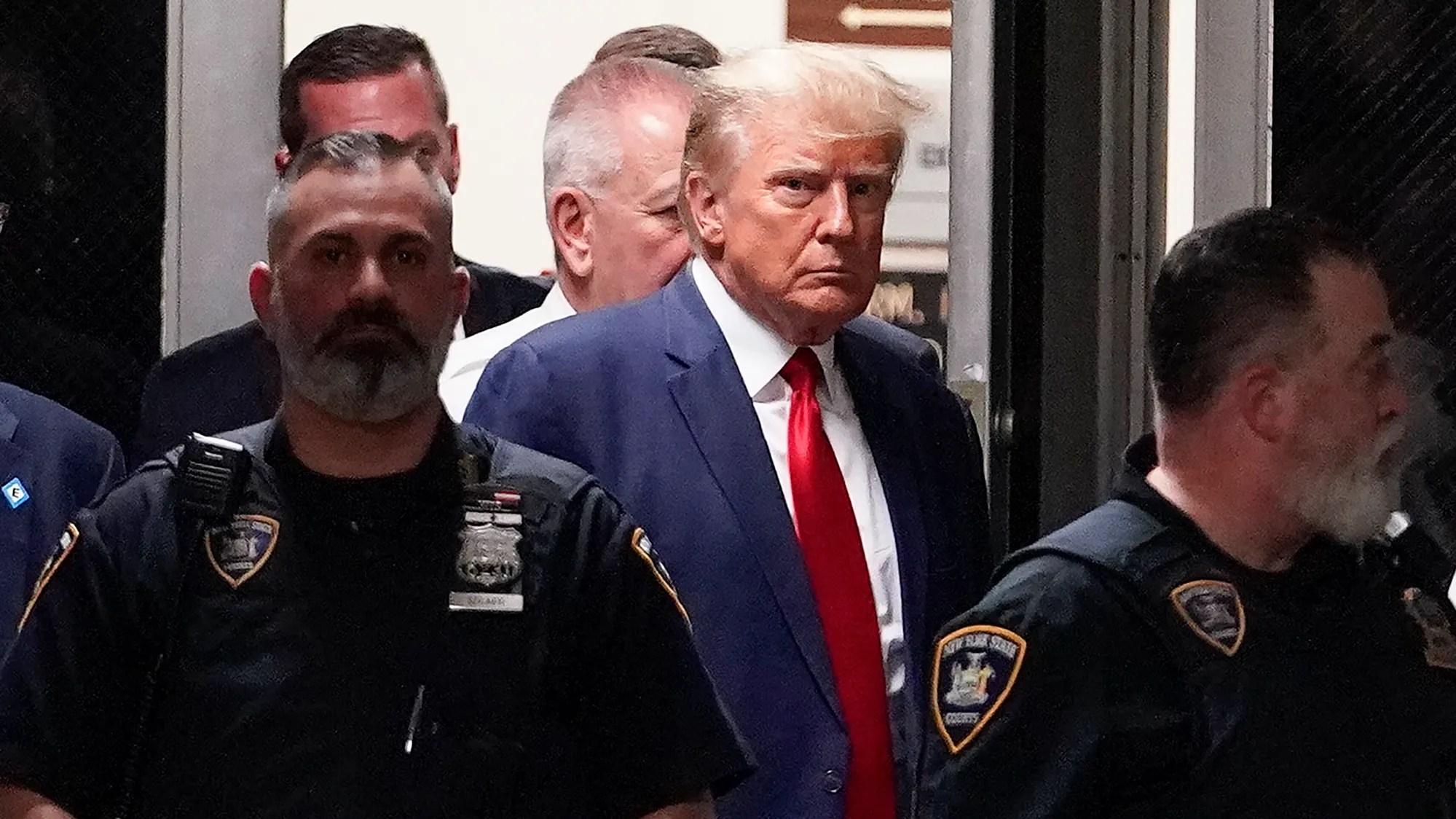







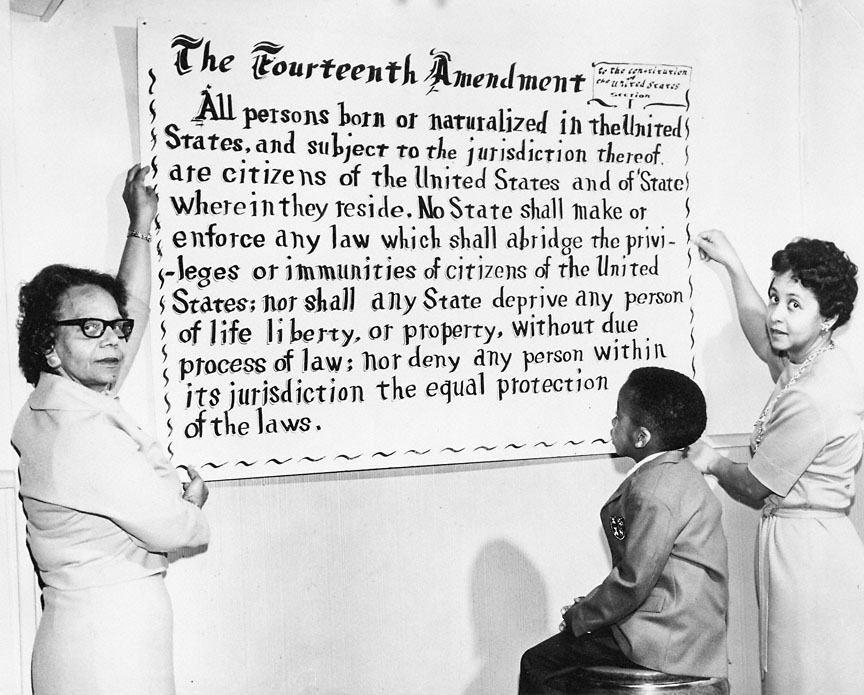


 Forloveofgodandcountry's Blog
